
 Plenty of questions remain about the extent of payouts made to senior executives at the BBC during the tenure of Mark Thompson as Director General. One Conservative MP Chris Heaton-Harris quoted in The Guardian said today’s hearing by the Public Accounts Committee at Westminster was “the most bizarre game of whack-a-mole I’ve ever seen in my life, where you hit something down and it throws up another load of questions”.
At the end of a three hour hearing by the committee, former DG Thompson and the Chair of the BBC Trust Lord Patten disagreed over who knew what about the executive payoffs. In July a report by the National Audit Office found that in nearly a quarter (14) of 60 cases it reviewed, the BBC had paid departing senior managers more salary in lieu of notice than they were contractually entitled to. A total of 150 senior managers had received severance payments totalling £25m. A supplementary report published a week ago confirmed that 22 former executives received £1.4m more than what the Corporation was contracted to offer in the severance payoffs agreed in the three years to December 2012 (NAO). The NAO said weak governance arrangements had led to payments that exceeded contractual requirements and put public trust at risk. The BBC Trust accepted at the time there had been a “fundamental failure of central oversight and control” at the Corporation.
 Speaking before the PAC meeting the General Secretary of the National Union of Journalists Michelle Stanistreet said “this sorry tale is one of a management that became out of touch with its staff and with the ethos of public service broadcasting. The BBC should have put the interests of licence-fee payers first, rather than fill the pockets of its own”. In total more than £25m was given out in redundancy payments to executives.
The written evidence presented in advance to the PAC by former DG Mark Thompson, Lucy Adams BBC HR Director, Andrew Scadding BBC Head of Corporate Affairs, Marcus Agius, non-executive director, BBC Executive Board and former Chairman of the BBC Executive Board Remuneration Committee, as well as by the BBC Trust can be found here.
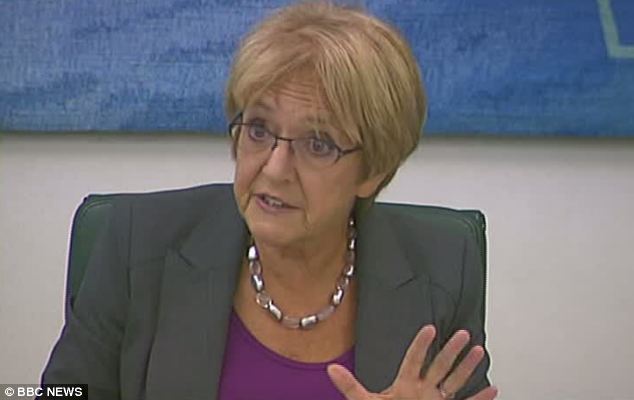
Margaret Hodge MP Photo: BBC News
The PAC Chair Margaret Hodge MP described the appearance by the BBC executives as “grossly unedifying” and said it could only “damage the standing and reputation” of the BBC. “At the best I think what we have seen is incompetence, a lack of central control, a failure to communicate. At its worse we may have seen people covering their backs by being less than open”, she said.
Former BBC Chair Lord Grade told Newsnight the Corporation had “a lost sense of the value of money”.


 Michael Fisher's News