

Ballygawley Bus Bomb Commemoration Photo: © Michael Fisher
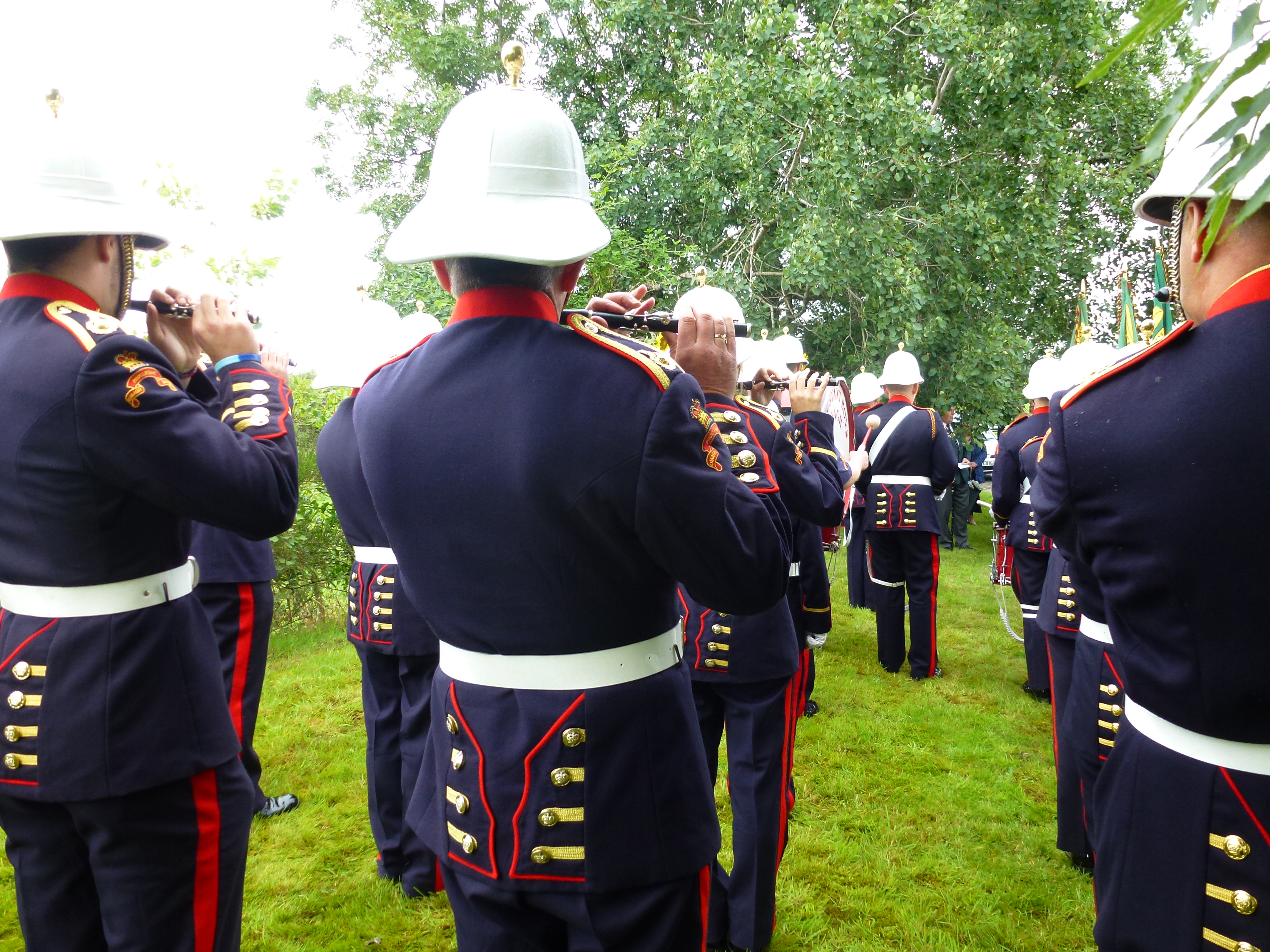
They stood and reflected as the Omagh Protestant Boys Flute Band played solemn music. For some of these women, the last time they were at this spot was 25 years ago. That night, 20th August 1988, they came across a scene of devastation, immediately after an IRA roadside bomb had exploded as a busload of soldiers went past on the main road from Ballygawley to Omagh. It became known as the Ballygawley bus bomb and was one of the worst losses of life sustained by the British Army during the troubles in Northern Ireland. Eight members of the Light Infantry between 18 and 21 were killed.
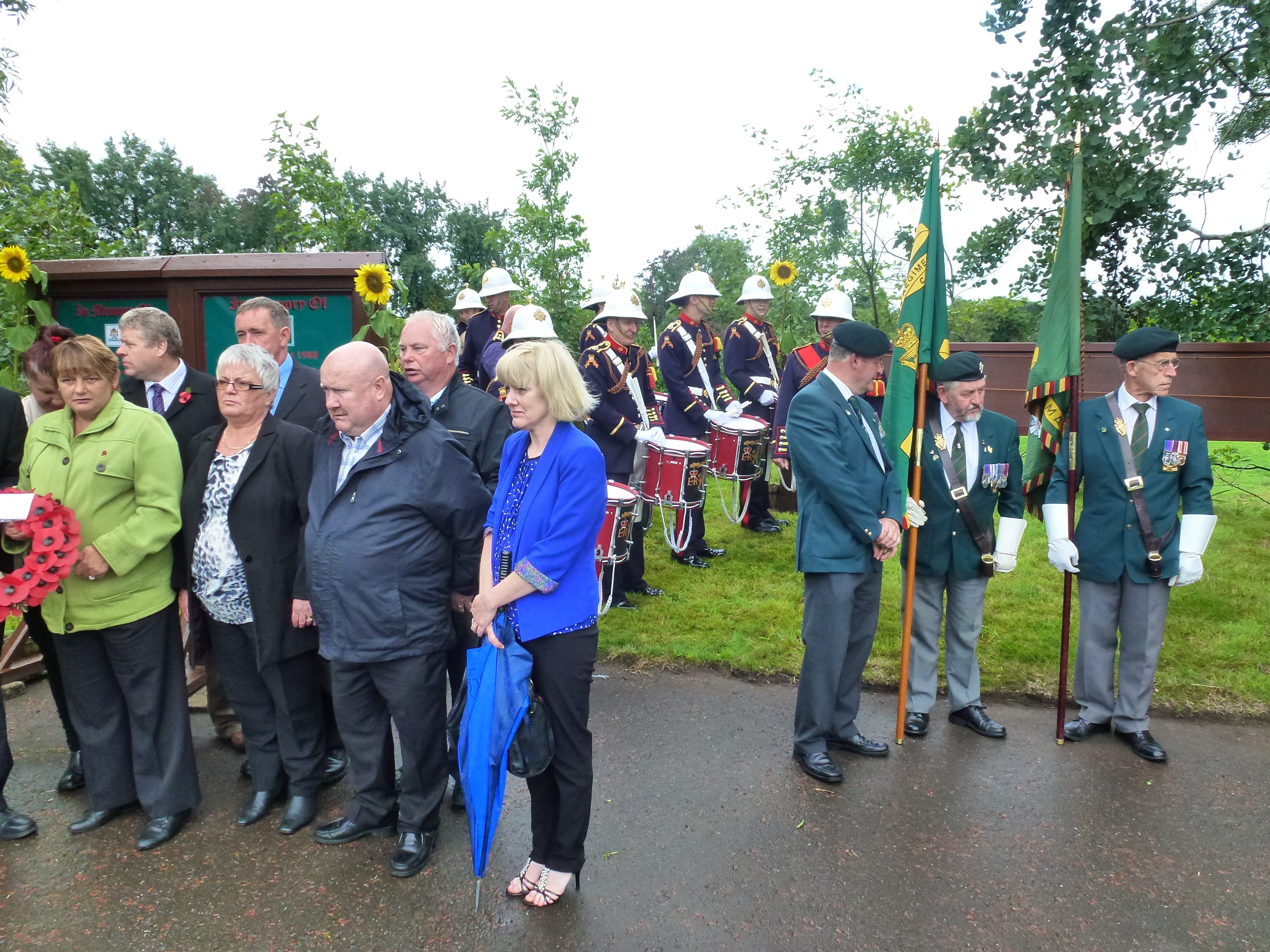
Ballygawley Bus Bomb Commemoration Photo: © Michael Fisher
A witness who arrived at the scene said:-
“There were bodies strewn all over the road and others were caught inside the bus and under it. There were people running around stunned, screaming and bleeding, and shouting for someone to come to their aid.” (Lost Lives, McKittrick et al, p.1141)
Ballygawley Bus Bomb Commemoration Photo: © Michael Fisher
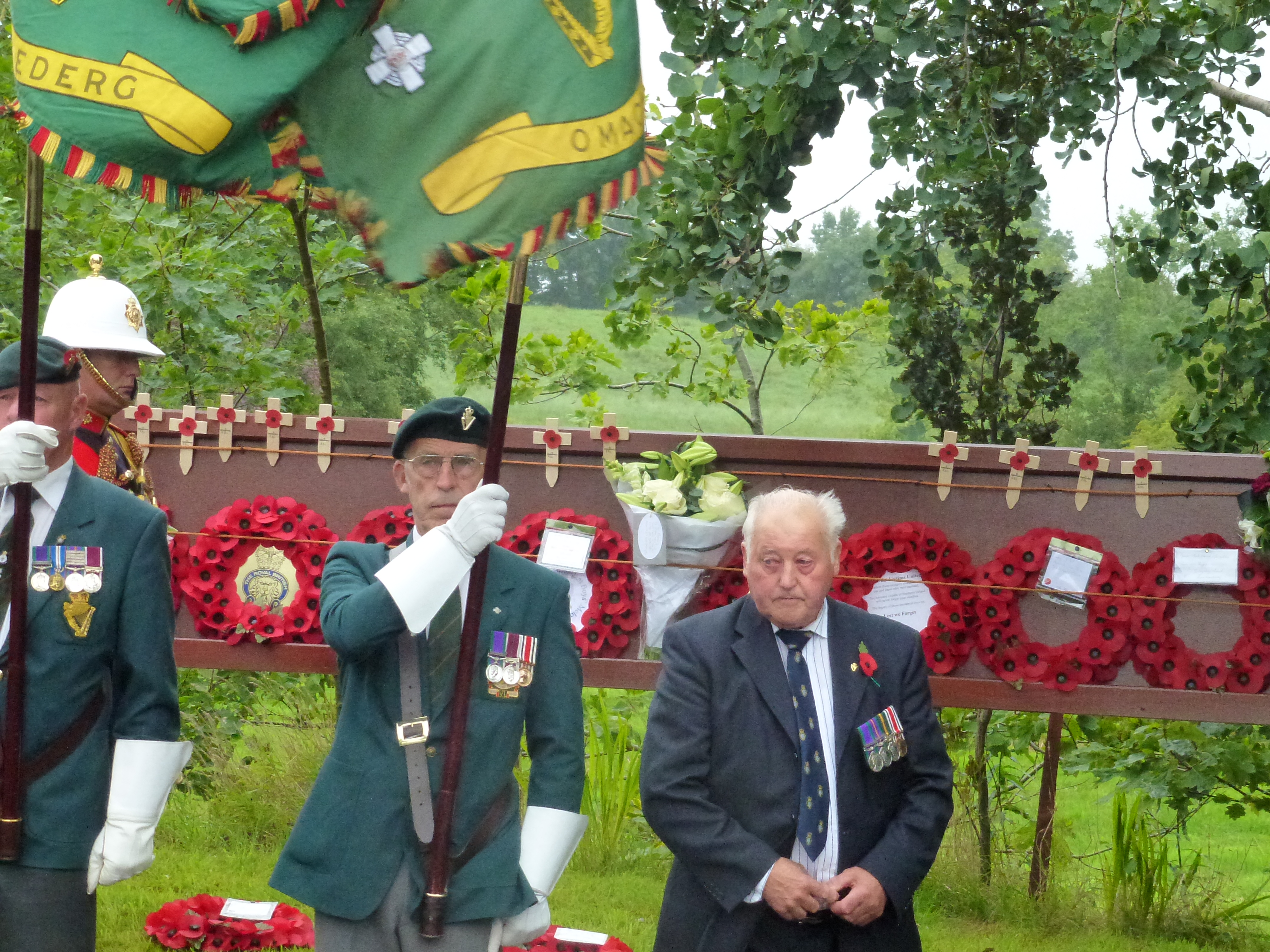
Immediately before the roadside service on Sunday, a local newspaper reporter asked these ladies from Derry about the reason for their presence. They trembled as memories of that dreadful night came back to them. They told how they were with the Star of the Valley band from Tullyally in Londonderry and had been travelling in a bus some distance behind the soldiers. They saw a flash and heard the explosion as the device blew the bus off the road.
One of the ladies explained how she had managed to make a 999 call to the emergency services but the initial response was one of caution, in case it turned out to be a trap. This lady then contacted a relative who worked at a British Army base in Derry and stressed to her the situation was not a hoax, but was unfortunately the real thing and asked her to contact the police.

Piper plays lament Photo: © Michael Fisher
The band members immediately helped to tend the injured, as did the Omagh Protestant Boys flute band, who like the Tullyally members had been returning from a parade in Portadown. One young soldier had managed to find his way across to a barn on the other side of the road, but he died at the scene. Ken Maginnis, an ex-UDR officer and then Ulster Unionist MP recalled how he along with others had found a young soldier who had managed to crawl away from the ruins of the bus and was in a barn on the other side of the road. He tried to reassure the Private he was now safe, but the young lad died at the scene. Mr Maginnis is now an independent member of the House of Lords and was among the gathering on Sunday.
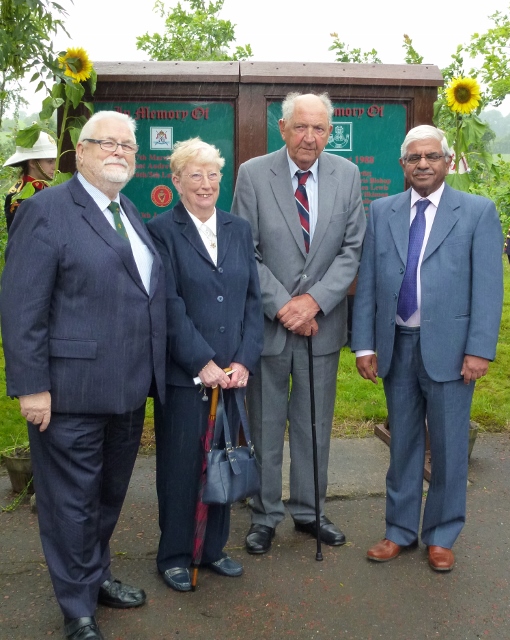
Lord Ken Maginnis, Dr Clifford McCord GP Aughnacloy & Dominic Pinto Omagh
Other soldiers were taken for treatment initially at Tyrone County Hospital, where consultant surgeon Dominic Pinto and his colleagues worked through the night to deal with the injured. Dr Clifford McCord was then a GP in Aughnacloy. He tended to the injured soldiers, helped by Cllr Allan Rainey, who lives not far from the scene and who was one of the organisers of the roadside commemoration.

Cllr Paddy McGowan MBE, former fireman
Another person who witnessed the immediate aftermath of the bomb was Fire Officer Paddy McGowan MBE. He remembers searching the field and hedges beside the bomb crater trying to find any other injured soldiers. This was before the area had been checked by the British Army for any further devices. He described the scene when he and his four colleagues from Omagh answered the emergency call as “pandemonium”. Now a councillor, he said the bombing had strengthened his resolve to oppose violence (Ulster Herald).

Dr Clifford McCord retired GP Aughnacloy & Cllr Allan Rainey MBE Photo: © Michael Fisher
The roadside commemoration was followed by a service at Newtownsaville Church of Ireland church, led by John Irvine. Among the congregation was Michael Gallagher of the Omagh Support & Self-Help Group, whose son Aiden was one of the victims of the 1998 Omagh bomb.
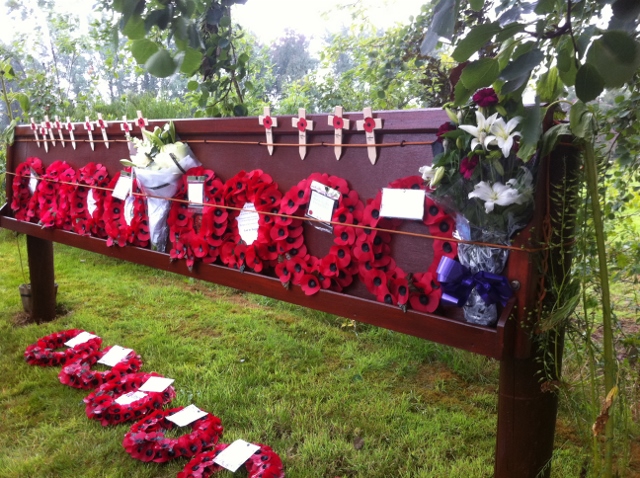


 Michael Fisher's News