ROCK OF CASHEL

Rock of Cashel

Rock of Cashel

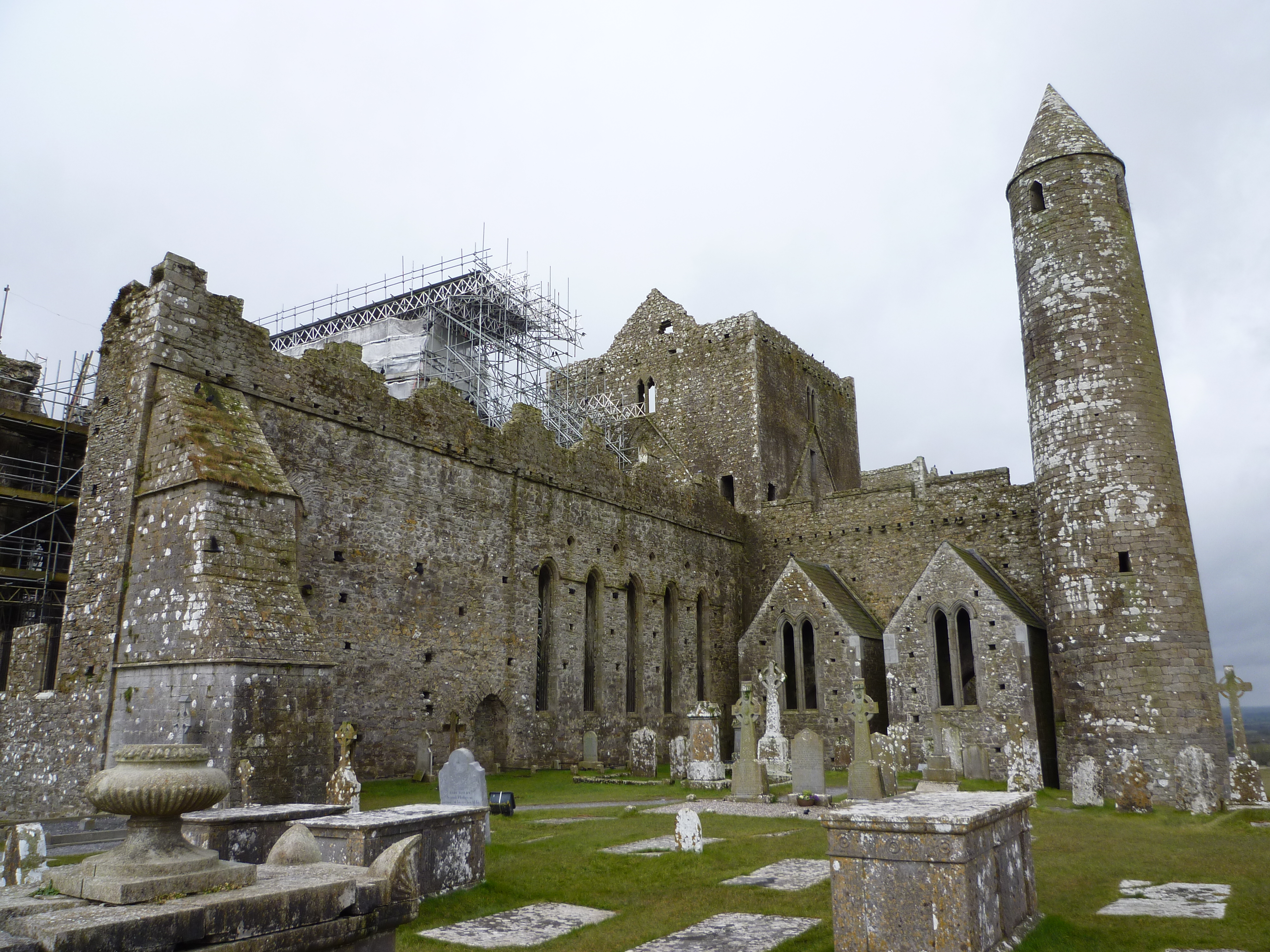
The Rock of Cashel in County Tipperary is one of the finest historical sites in Ireland. It was once the seat of the Kings of Munster. The medieval buildings include a 12thCcentury round tower, High Cross and Romanesque Chapel, 13th century Gothic cathedral, 15th century Castle and the restored Hall of the Vicars Choral. The monument is in the care of the Office of Public Works.
Cormac's Chapel

Cormac’s Chapel

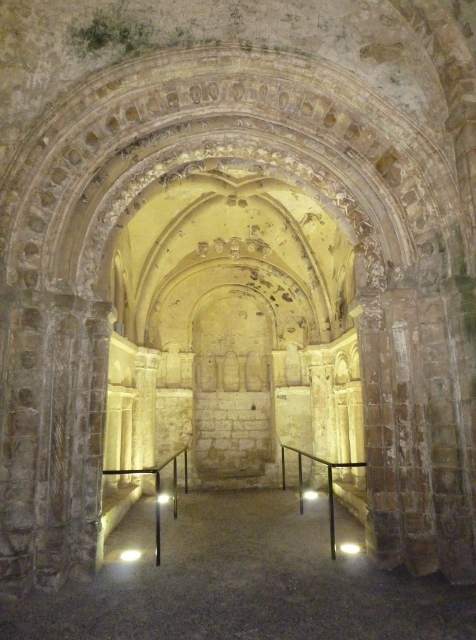
One of the most interesting parts of the site is Cormac’s chapel, (the chapel of King Cormac Mac Carthaigh), which was begun in 1127 and consecrated in 1134. It is undergoing major restoration work as the scaffolding in the picture shows and contains one of the only examples of frescoes in Ireland from this period.

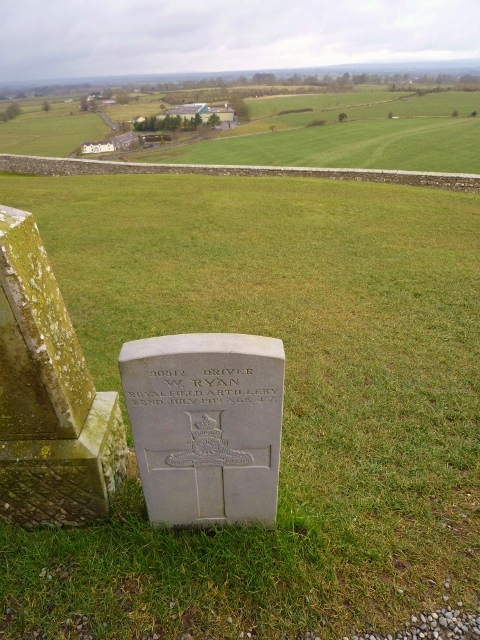
It was one of the sites seen by Queen Elizabeth II during her first state visit to Ireland in May 2011. The visitor book she signed along with Prince Philip is on display, along with the pen she used. It was interesting to note that in the small cemetery beside the ruins of the Cathedral, there are at least four graves of local men who served in the British Army during the First World War, with gravestones provided by the Commonwealth Graves Commission. I have some photographs of them here and at some stage might do some more research into the stories of these soldiers. One was a veteran of the Second World War, it seems, Sergeant Martin O’Brien MM, who served in the 2nd Royal Irish Regiment and died in 1965, aged 84.
Driver W.Ryan RFA

Driver W.Ryan RFA

Grave of Sgt Martin O'Brien MM

Grave of Sgt Martin O’Brien MM

Pte J O'Donohue Leinster Regiment

Pte J. O’Donohue Leinster Regiment

KINSALE FORTS

Kinsale Harbour from Charles Fort

Kinsale Harbour from Charles Fort

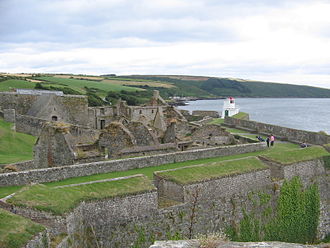
Two 17thC forts guard the entrance to Kinsale harbour in County Cork. The view shown here is from Charles Fort, built later than James’ Fort, a similar star-shaped stronghold on the other side of the inlet. This was designed to resist attack by cannon.

Entrance to Charles Fort

Entrance to Charles Fort

Charles Fort is built on the site of an earlier defence, Ringcurran Castle, which featured prominently during the Siege of Kinsale in 1601. The fort, named after King Charles II, was designed in the 1670/80 period by the Surveyor-general Sir William Robinson, who also designed the Royal Hospital in Kilmainham, Dublin.  It was one of the largest forts built in Ireland and had three bastions, projecting outwards from the main wall, facing the land, and two half-bastions where the walls reached the water. When combined with the guns on the opposite side of the approach to Kinsale, these guns would be a serious deterrent to any potential invading force.

Charles Fort (Wikimedia Commons)

Charles Fort (Wikimedia Commons)

The fort was besieged by John Churchill, 1st Duke of Marlborough (a relative of Winston Churchill) in 1690 during the Williamite War. Repairs were made following the siege, and the fort remained in use as a British Army barracks for several hundred years afterwards. It had its own hospital block as well as a parade ground. A very helpful guide from the Office of Public Works gave a very interesting presentation on the history of the site.

An early lighthouse was established here in the 17th century. British forces left the fort following the Anglo-Irish Treaty in 1921, but it fell out of use after being burned by the retreating anti-Treaty forces during the Irish Civil War in 1922. The complex was declared a National Monument in 1971 and has been partly restored by the heritage service, Dúchas.

Abandoned buildings, Charles Fort

Abandoned buildings, Charles Fort