
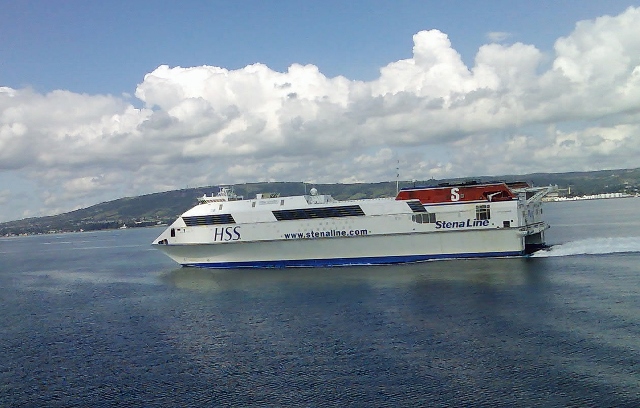
Stena HSS craft in Belfast Lough
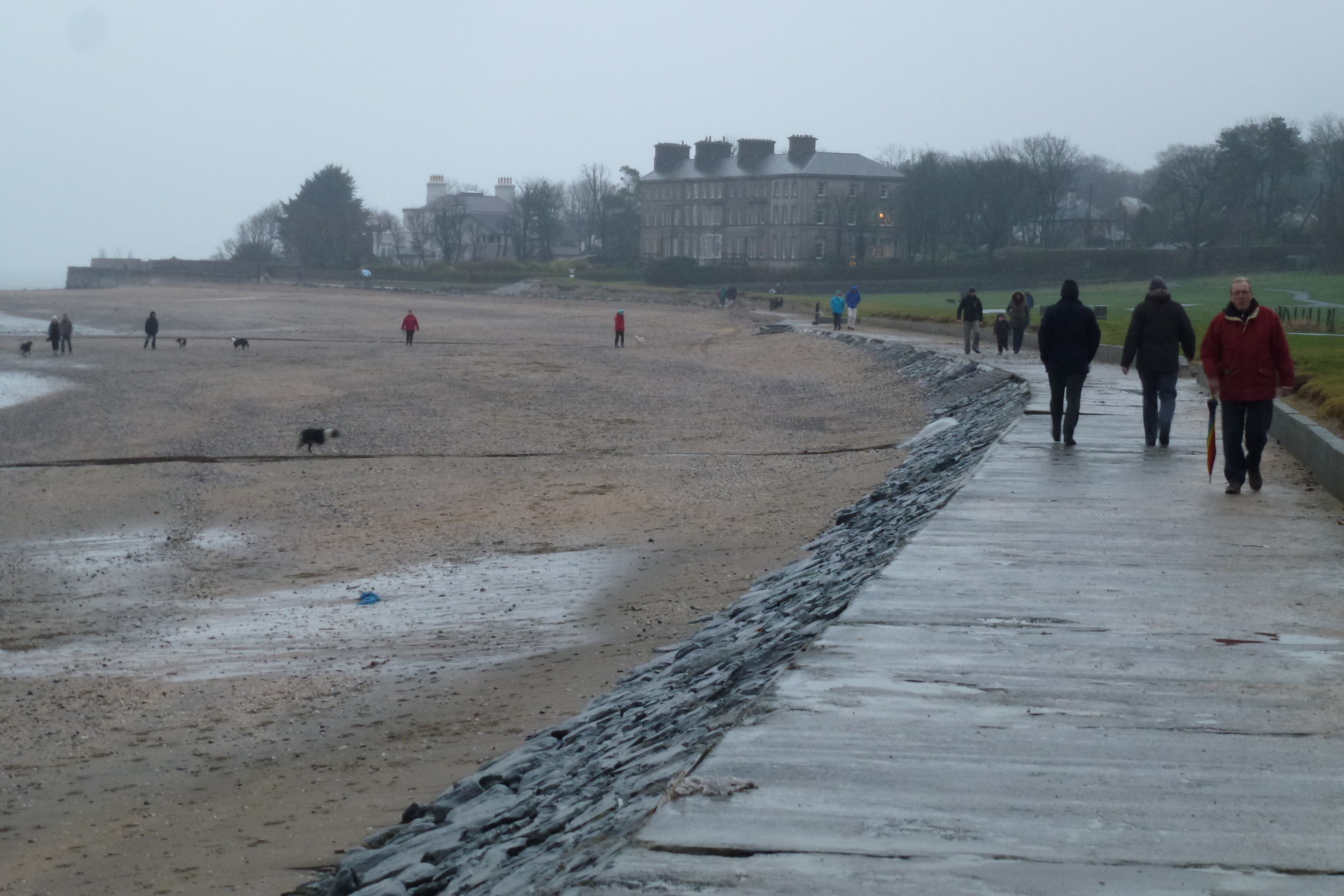
Built to compete with air travel on the short hop across the North Channel, the high-speed craft introduced by Stena Line in 1996 could do the the trip from Belfast to Stranraer in 85 minutes. But rising fuel costs meant a slower speed to reduce oil consumption and a journey time of two hours. The wash created by the craft entering Belfast Lough also caused problems for those walking along the shoreline in places like Holywood, Co.Down. ‘Stena Voyager’ and her sisters ‘Stena Explorer’ and ‘Stena Discovery’ took much of their technology from the world of aviation. They were described as being to the ferry industry what the jet plane was to aviation in the era of propeller aircraft. Now, preparations are being made for the departure from Belfast of the HSS ‘Stena Voyager’ on a one-way trip to the recycling yard in Sweden. The final journey was meant to take place this afternoon but the BBC (NI) reports it has been delayed until the weekend. The operation went ahead on Sunday (May 5th) and the vessel is now being towed away for “upphuggning” (that’s what the Swedish version is as you can see here). Sounds much nicer than being scrapped!
The vessels are each powered by the maritime versions of four GE Aviation gas turbines, fuelled by a light diesel oil with low sulphur content. They have four Kamewa waterjets for propulsion. The HSS ferries were designed to allow quick turnarounds at port. Vehicles could be loaded via two of the four stern doors and park in a “U” configuration. When disembarking, vehicles drove straight off through the other two doors. When the HSS started operating in 1996, oil was just $18 a barrel. Fuel costs rose by 600% since the introduction of the ‘Stena Voyager’ and consequently slower running became the norm. In November 2011, the Voyager was withdrawn from service. With the earlier sale of the HSS ‘Stena Discovery’ to Venezuela, this leaves the ‘Stena Explorer’ as the remaining craft in service. Her deployment out of Holyhead is reduced to just one round trip a day, down from a peak of five, on a seasonal basis. The service to Dun Laoghaire will run until Tuesday September 10th and the crossing time is two and a quarter hours.

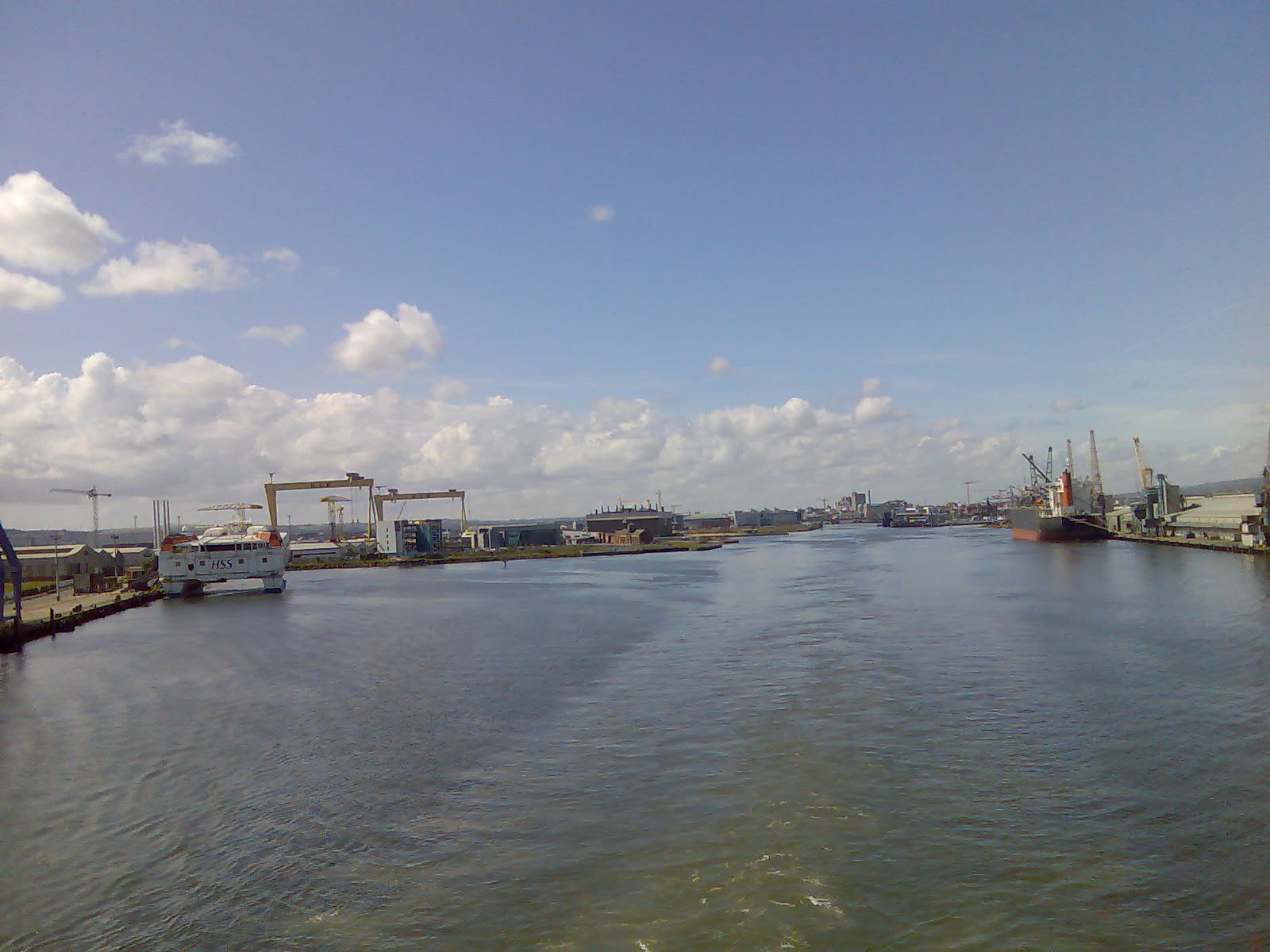
Belfast Port
When the Stena Voyager was first introduced, the ferry was unique in its class and since its first sailing it carried over 17 million passengers and made over 45,000 sailings between Northern Ireland and Scotland. When commissioned by Stena Line, the HSS series of three ships, including the Stena Voyager, helped to revolutionise the look of the ferry industry. With its top speed of 40 knots, a high quality onboard travel experience for 1,500 passengers and its freight capacity of 375 vehicles, the HSS became an instant hit with customers. I used it on a number of occasions and found it very comfortable. In recent years, it was also fitted with wifi, which was an added bonus.
Stena Line’s Chief Operating Officer Michael McGrath said whilst the HSS class was a unique and highly innovative development, unfortunately the spiralling costs of operating the Stena Voyager had become all too high. “When the Voyager was first put into service fuel was approximately $20 per barrel and now the price is around $110 dollar, for a fuel hungry vessel this is simply untenable“, he said. “We live in different times now and we have to invest in more fuel efficient services for our freight and travel passengers. As a result we have now introduced two Superfast ferries on the service between Northern Ireland and Scotland and have constructed new ports in both Cairnryan and Belfast to give our customers one of the best ferry experiences on the Irish Sea.”
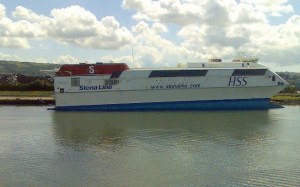
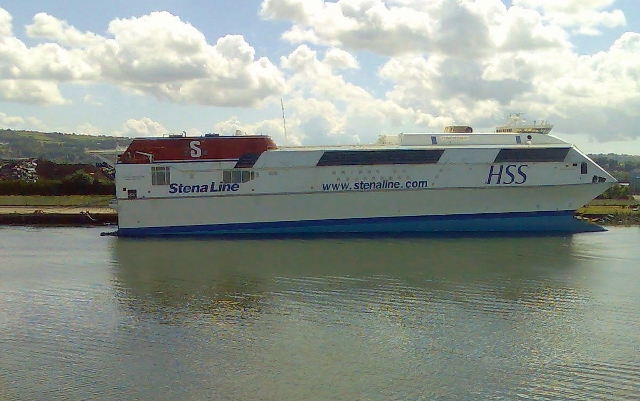
Stena HSS Craft at Queen’s Island, Belfast
The Stena Voyager is being moved to the Öresundsvarvet shipyard in Landskrona, Sweden, where she will be recycled by Stena Line’s sister company, Stena Recycling. All of the Voyager’s various components will be recycled, as far as possible, helping the company to maintain its environmentally responsible reputation. Staffan Persson, MD Stena Recycling, said this would be a unique and interesting project. “There are many different types of material to recycle, and this will be done in several stages. The project requires highly experienced personnel and efficient recycling processes, which we possess. Recycling the large quantities of aluminium in the Stena Voyager will save up to 150 metric tonnes of carbon dioxide and the metal can be reused in the form of car parts or furniture for example“, he said.
The Stena Voyager was designed by another company in the Stena Sphere Group, Stena Teknik and at the time was one of the most revolutionary designed and constructed ships in the world.



 Michael Fisher's News