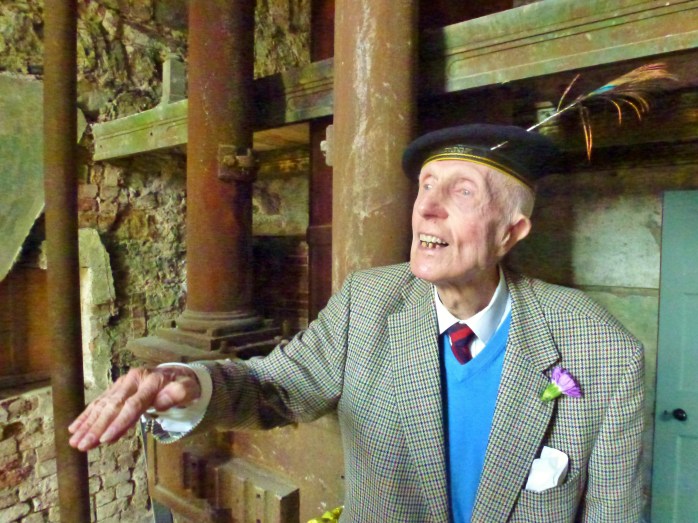
Sir John (Jack) Leslie in Caledon Photo: © Michael Fisher
Among the family stories examined in a new World War One exhibition at the National Library in Dublin is that of the Leslies of Castle Leslie, Glaslough, County Monaghan. Sir John (Jack) Leslie now 98 and a veteran of the Second World War was there to help with the opening of the exhibition. It was attended by the British Ambassador Dominick Chilcott and the Minister for Arts, Heritage and the Gaeltacht Heather Humphreys TD, from County Monaghan.
The display will run for four years and features letters, diaries, newspapers, leaflets and photographs from the library’s archives and aims to depict the various aspects of the Irish experience of the war, and Ireland’s response to the conflict. It is supported by the British Embassy and is part of the National Library’s programme for the Decade of Commemorations.
Nikki Ralston, exhibition curator for the NLI, said: “Irish people had very diverse and complex reactions to World War I. This exhibition captures those sentiments, and also recounts the tense domestic situation in the Ireland of 1914. We felt one of the best ways to illustrate how Ireland experienced the war was to explore a range of themes through real-life stories. We have chosen to focus on four people who had very different experiences, and we have featured their writings – including personal diaries and letters– in this exhibition. These primary sources are complemented by audio, video and touchscreen installations to create a multi-layered, multimedia experience for all visitors.”
The four real-life stories featured in the new exhibition focus on:
Sir John (Jack) Leslie at Monaghan County Museum Photo: © Michael Fisher
**Captain Norman Leslie, 28 Rifle Brigade, second son of the well-known Leslie family from Castle Leslie, had become heir to the family estate when his elder brother, Shane, converted to Catholicism and became a supporter of Irish Home Rule. An experienced soldier when the war broke out, Norman was shot and killed in October 1914, while charging a German machine gun armed only with a sword (it was considered ungentlemanly for officers to carry guns). He is buried in France at Chapelle d’Armentieres Old Military Cemetery. The sword he was carrying when he died was eventually returned to the Leslie family, and now hangs in the gallery of Castle Leslie. It was carried by Jack, his nephew, for the opening of the exhibition.
Jack’s nephew, Mark Leslie; and Mark’s son, Luke were also present. The family spoke of how Norman’s memory is kept alive at Castle Leslie, where his sporting trophies adorn the entrance hall and his sword – considered a symbol of good luck – is used to cut all wedding cakes at the Castle.
**Joseph Mary Plunkett, the poet, journalist and revolutionary, best known as a leader of the 1916 Rising and a signatory of the Proclamation of the Irish Republic. In April 1915, he accompanied Roger Casement to Germany to seek German support for an uprising in Ireland. He subsequently fought alongside Pearse and Connolly in the GPO in 1916. Imprisoned in Kilmainham Gaol, he married Grace Gifford just hours before his execution in May 1916.
**Mary Martin, a widow and mother of 12 from Monkstown, Co. Dublin. Three of her children served overseas during the war, including her son, Charlie, who was reported wounded and missing in late 1915. Believing he had been taken prisoner, Mary began keeping a diary in the form of a letter to Charlie. She subsequently discovered he had died of his wounds soon after his capture. Her other children, including her daughter Marie, survived the war. Marie, who had served as a nurse in Malta and France, went on to found the Medical Missionaries of Mary in 1937. Mary’s wartime diary is included in the NLI exhibition.
**Michael O’Leary, a farmer’s son from Co. Cork, who served with the Irish Guards on the Western Front. In February 1915, he single-handedly charged two German barricades in France, killing eight men and taking two prisoner. He was awarded the Victoria Cross, and became internationally famous, with journalists even thronging to the O’Leary family farm in Cork. The story of his wartime exploits was put to very different uses, inspiring both a recruiting campaign and a satirical play by George Bernard Shaw. He retired from the army in 1921, but re-joined during World War Two. He died in 1961.
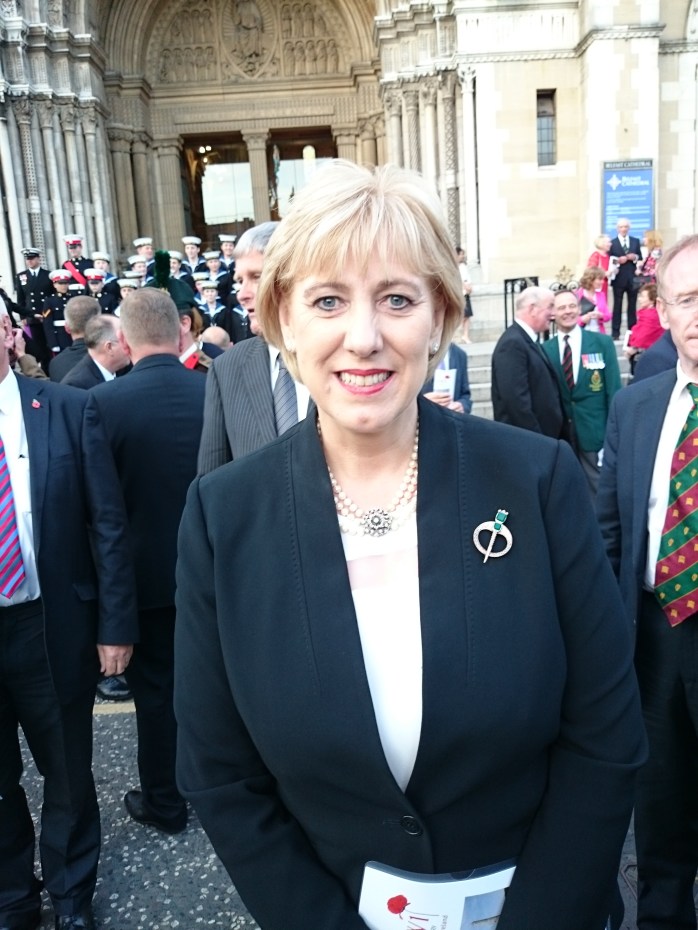
Minister for Arts, Heritage & Gaeltacht Heather Humphreys TD Photo: © Michael Fisher
Launching the exhibition, Minister Heather Humphreys said: “This exhibition in the National Library allows us to understand the sheer magnitude of the First World War through very personal stories. By choosing to focus on four people and their different experiences, the Library has brought to life the real-life challenges and dilemmas which they faced 100 years ago. We can walk in their shoes, hear their words and see their hand-written letters. I was interested to see the Leslie family from Co Monaghan featuring in the exhibition. The story of the tragic death of Norman Leslie in 1914 gives us just one of example of the brutal way in which tens of thousands of Irish men lost their lives during the War. This fascinating exhibition is part of the Library’s programme for the Decade of Commemorations, and I would encourage as many people as possible to check it out.”
The NLI exhibition includes an audio module, ‘Words and Music: the Sounds of War’, supported by the British Embassy in Ireland. This features Irish poetry of World War I, interspersed with popular songs of the period and recorded readings of original letters from those affected by the conflict.
Addressing the launch, British Ambassador Dominick Chilcott said: “The British government are very pleased to be supporting the National Library of Ireland’s excellent work of commemorating the events of 100 years ago. The National Library’s archive of First World War documents is a rich one; and our understanding of the Great War and the Irish experience of it benefits hugely from this collection. The part of this exhibition that the British government helped to fund is the ‘listening post’, where you can hear period songs and readings of poetry and letters. The generation that went to war was a highly literary one. They wrote huge numbers of letters as well as much poetry and many books and diaries recording their experiences at the Front. We are fortunate in having so much material to explore.”
More details of the exhibition can be found here.




 Michael Fisher's News