TIP FOR THE TOP: KATE BEAGAN

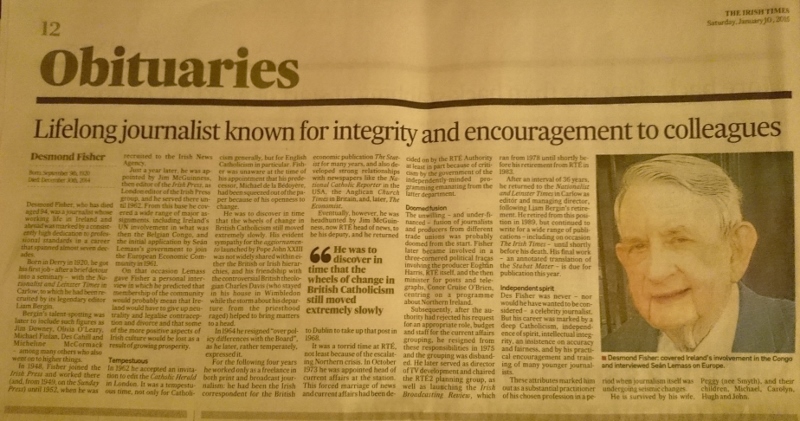
Kate Beagan in her studio Photo: facebook

Kate Beagan in her studio Photo: facebook

LOCAL ARTIST TIPPED FOR ART BUYERS
Michael Fisher

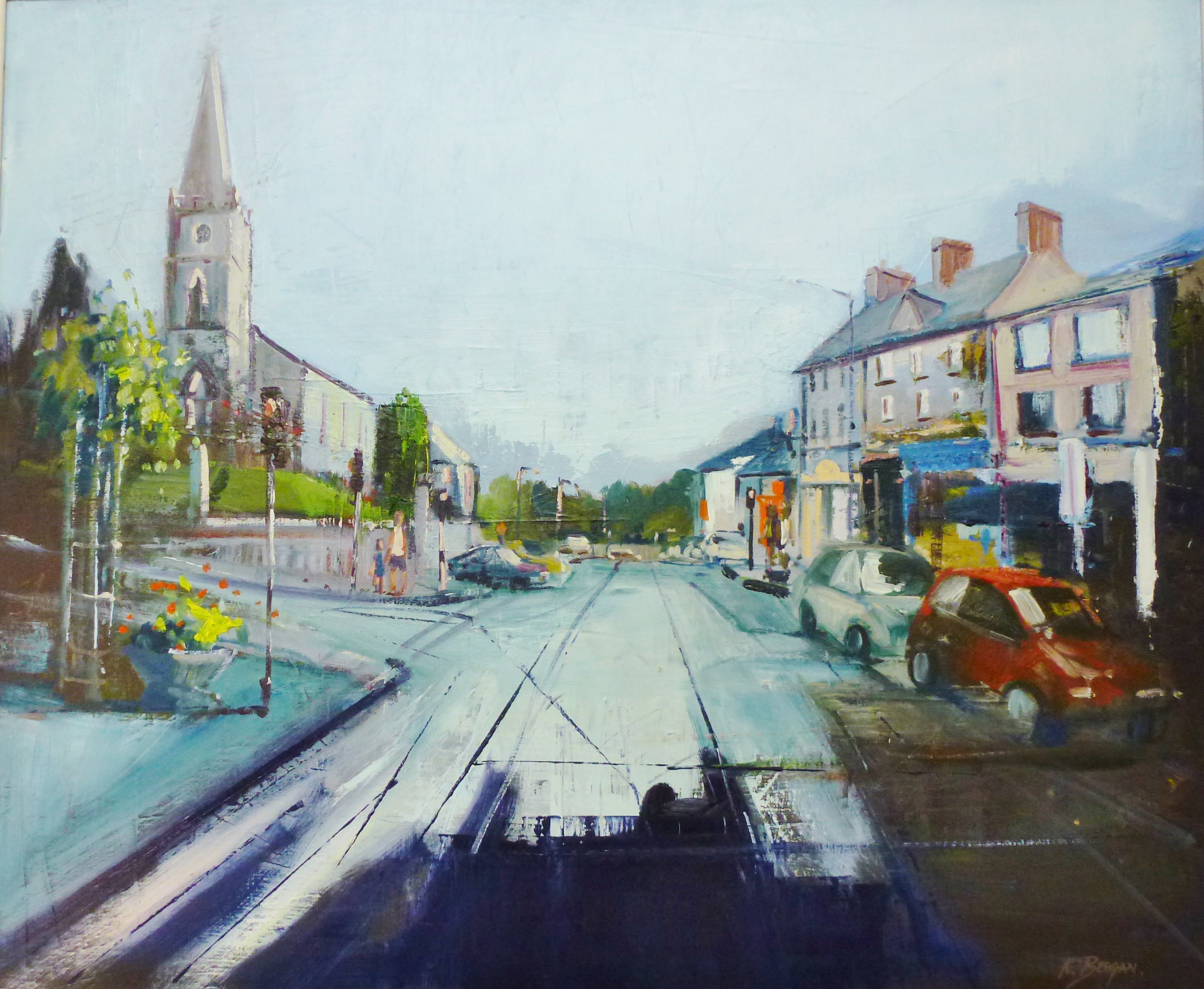
At her studio beside her house in Donaghmoyne overlooking the fairways of the Manaan Castle golf course, artist Kate Beagan is busy preparing to exhibit her work in London and Dublin in the coming months. She concentrates on painting contemporary landscapes, inspired by scenes close to where she lives. Old houses and fields provide the inspiration for much of her work. As she spoke to me, she was working on a large canvas.
This type of oil painting takes a couple of weeks to complete. Some have been sold privately such as a Carrickmacross street scene. Others have been sold to clients in the public sector such as the Office of Public Works, which bought eight of her paintings, and the business sector including a bank. Kate’s family home where she grew up was close by and she went to the St Louis Convent in Carrickmacross. She went to art college in Galway but did not finish her degree. She emigrated to Australia, where she spent ten years before returning to Ireland. Kate is married to Kevin and they have two daughters in their early 20s and a son aged 17. Twelve of her paintings will be displayed at the affordable art fair in Battersea Park in London in March and will also be shown in Hampstead in June.

Carrickmacross painting Photo:  © Kate Beagan

Carrickmacross painting Photo: © Kate Beagan

Her other main project is preparing for a solo exhibition in April at the Doorway Gallery in Dublin, with the theme ‘I came upon a place’. Another exhibition is due  to be held in Mullingar in September. In the past her works have been displayed in Amsterdam, Brussels, New York, Newcastle on Tyne and London. But she believes Monaghan as a county could give more support to the visual arts, as literature and theatre seem to get more attention. She is hoping to set up a visual arts festival with workshops during the weekend of the Patrick Byrne festival in Carrick at the end of March. Kate has also produced some work for charity. She is one of two County Monaghan artists contributing to the ‘Pig Parade’ next month in aid of the Jack and Jill foundation, but that work is still under wraps at the moment. She is also contributing work for a Paolo Tullio cookbook that will be sold to raise funds for schools in Nepal. In 2007 she illustrated the book ‘Monaghan: County of the Little Hills’, authored by Brian Deery. It seems her star is very much in the ascendant as she is due to be included in an art buyers’ catalogue as one of four or five Irish artists tipped by the auction houses to invest in. So Kate is hoping that 2015 will prove to be a good year.

Carrickmacross News, Northern Standard  14/01/15

Carrickmacross News, Northern Standard 14/01/15

P1180715 (800x141)

DESMOND FISHER (13)

Desmond Fisher  Photo:  Nationalist & Leinster Times

Desmond Fisher Photo: Nationalist & Leinster Times

Nationalist and Leinster Times obituary (courtesy Tom Geoghegan) January 13 2015

Des Fisher: broadcaster and former editor of The Nationalist
DESMOND M (Des) Fisher passed away peacefully at the Blackrock Hospice early on Tuesday 30 December. He was a former head of current affairs with RTÉ and deputy head of news at the national broadcaster. Des Fisher had a lifelong association with The Nationalist & Leinster Times in Carlow, of which he was managing editor for a five-year period during the 1980s.

Aged 94, he was one of the last-surviving journalists to have reported from Rome at the Second Vatican Council, which ended half a century ago.

He had been in failing health over recent years. Despite his declining health, Des retained a keen interest in newspapers and the media in general, maintaining his link with Carlow in retirement through reading The Nationalist online every week.

Having lived in retirement with his wife Peggy (née Smyth) from Co Monaghan for the final 26 years of his life, he had remained in close contact over that period with Tom Geoghegan, retired managing director of The Nationalist.

At the time of his death, he had just completed work on a new book, Stabat Mater. Other publications of Des Fisher’s included Broadcasting in Ireland (1978) and The right to communicate: a status report (1981).

A native of Derry city, Des Fisher was a highly-accomplished journalist and broadcaster who was regarded as a theological (sic) heavyweight. He started his journalistic career with The Nationalist, being appointed assistant editor in 1945, a position he held until 1948. While working in Carlow, he met his wife-to-be, who was employed in the Bank of Ireland branch at Court Place. In his early years in Carlow, Des forged close working links with Liam D Bergin, managing editor of the The Nationalist and a doyen of Irish provincial journalism. It was to develop into a lifelong friendship.

In 1948, Des moved to The Irish Press as a sub-editor and London editor to the Press Group until 1964, when, while still based in the English capital, he was appointed editor of the Catholic Herald newspaper.

Des believed that his best work as a journalist was the coverage of Vatican II for the Catholic Herald, which was held from 1962 to 1965, having been called by Pope John XXIII. In 1967, his book on the Second Vatican Council, The Church in transition, was published by Fides. He was Irish correspondent for The Economist and a trustee of the International Institute of Communications as well as being a member of the international advisory board of the Media Institute, Washington DC.

During the late 1980s, Des Fisher fronted the RTÉ One television religious programme Newman’s People. Having given 16 years to the realm of public broadcasting, Des’s next port of call was to return to The Nationalist in Carlow. He was appointed managing editor in 1983 and subsequently managing director, succeeding Liam D Bergin. He also served as a member of the newspaper’s board of directors for a long number of years.

For the first two years of his editorship in Carlow, Des was backed up by the professional vision, expertise and innovation of the late Seamus O’Rourke, particularly in the area of layout and design. Seamus, who passed away in early January 2014, served The Nationalist as news editor for some 20 years. Des Fisher held the position of managing director and editor until 1988, when he formally retired from the fourth estate.

In an editorial in 1983, marking the centenary of The Nationalist & Leinster Times, he wrote of the publication that meant so much to him: “It (Nationalist) can fairly claim to have lived up to the highest ideals of the journalistic and printing crafts and to have served the community of which it forms a part.” In the same editorial, he stated: “In performing its role as the public watchdog, the press must observe one over-riding role first enunciated by the great editor of The Manchester Guardian (now The Guardian) CP Scott: ‘Comment is free but facts are sacred’.”

Extracts relating to RTÉ from Desmond Fisher’s own summary of his 70-year career in journalism have been released…

They recall that one year after the Vatican Council ended he left the Catholic Herald and freelanced to support his family in London. But 18 months later, his former Irish Press colleague and fellow Derry man Jim McGuinness,  head of news at RTÉ, suggested he should apply for a job as his deputy. After short attachments with the BBC and ITV in London in 1967, he came to Dublin early the following year to take up the job and to live full time with his family, which had moved to Dublin months earlier. In October 1973, he was appointed head of the current affairs grouping, a new area in RTÉ with responsibility for all current affairs programmes on radio and television.

He wrote of this period: “What I do remember most about my time in RTÉ is that it was the most stressful time in my working life. My time there coincided with external pressure on RTÉ from a government intent on denying publicity to the IRA and internal conflict between RTÉ producers and journalists working on current affairs programmes.”

Those twin pressures soon took their toll: “In the circumstances of the time, however, it was probably inevitable that a disaster would occur. The current affairs area is the most vulnerable in broadcasting, especially in a public service organisation with staff of divided political and trade union loyalties at a time when the country is in turmoil.

“On the night of 17 October 1974 while I was in Galway at the annual conference of the Labour Party, a 7 Days programme on internment in the North was rushed on to the air … replacing the programme which I had cleared for transmission. It later transpired that the filmed programme included a sequence from a London agency, which had been brought in a short time before transmission, edited at the last moment and put out without my clearance.

“This led to a public attack on me on two successive evenings by the then minister in charge of RTÉ, Dr Conor Cruise O’Brien. The enquiries that followed judged that I should have previewed the programme which, in my view, had been deliberately put out in my absence. I offered to resign ‘if this would serve the institutional interests of RTÉ’. This was refused, but in April I told the then director-general Oliver Maloney that the grouping would have either to be established as a full division with its own resources or closed down. He rejected the first alternative so I resigned and the grouping was disbanded.

“Following my resignation, I was appointed director of TV development, a title later changed to director of broadcasting development, a sideways move that really left it to me to determine what I would make of the job.”

He chaired the planning group for the station’s second television channel and continued to research and publish material for the public service broad-caster on a wide range of topics, including its relation-ship with government. This was a particularly thorny subject, given that in 1972 while he was deputy head of news, a Fianna Fáil government had fired the RTÉ Authority after the news division broadcast a radio interview recorded with Seán Mac Stíofáin, then chief of staff of the Provisional IRA.

The then Taoiseach Jack Lynch justified the dismissal by saying the authority had breached a government directive under section 31 of the Broadcasting Act, ordering them “not to project people who put forward violent means for achieving their purpose”.

The Fine Gael-Labour administration elected in 1973 had continued to implement the directive. And this was the context in which Fianna Fáil’s new appointees to the RTÉ Authority and senior RTÉ management figures like Des Fisher had to handle the 7 Days debacle in October 1974.

Des Fisher left the national broadcaster in 1983, less than two years before reaching the mandatory retirement age. He then became managing editor and managing director of The Nationalist and Leinster Times.

In 2009, approaching the age of 90, he contributed to the RTÉ documentary If Lynch had invaded about his role with RTÉ in 1969 when the Taoiseach Jack Lynch made a dramatic television broadcast to outline the government’s response to the security forces attacking nationalist communities in Derry.

His family had asked that his passing on 30 December should not be made public until after his cremation which, in accordance with his wishes, took place after a private family requiem Mass was celebrated on Friday 2 January.

He is survived by his wife Margaret (Peggy), daughter Carolyn, and sons Michael, John and Hugh, other close relatives and a wide circle of friends.

DEFENCE CO-OPERATION IRELAND & UK

Michael Fallon M.P., British Defence Secretary and Irish Defence Minister Simon Coveney T.D. sign the memorandum  Photo:  Department of Defence

Michael Fallon M.P., British Defence Secretary and Irish Defence Minister Simon Coveney T.D. sign the memorandum Photo: Department of Defence

Irish Defence Minister Simon Coveney T.D. welcomed the British Defence Secretary Michael Fallon M.P. to Dublin Castle where they signed a Memorandum of Understanding between the Department of Defence, Ireland and the United Kingdom Ministry of Defence on enhancement on certain aspects of Security and Defence Cooperation. The visit marked a historic moment for both countries, with Mr Fallon, being the first UK Defence Minister ever to make an official visit to Ireland.

The signing of the Memorandum represents a major step forward in the process of formalising the already broad and strong relationship the the two countries have. recognising their shared interests, values and responsibilities. It will provide both the d Ireland and the UK with a means for developing and furthering their already excellent defence and security relations and will help to enhance cooperation in exercises, training as well as peacekeeping and crisis management operations.

Examples of the UK and Irish Armed Forces already working together include peacekeeping missions in Mali during 2013, and more recently, alongside each other in Sierra Leone, where the United Kingdom is leading international efforts to halt the spread of the Ebola Virus.

Mr Coveney said “the signing of the Memorandum of Understanding places existing cooperation arrangements in the Defence area between Ireland and the UK on a more formal and enduring footing.  The Memorandum of Understanding is a voluntary, non-binding arrangement between the Department of Defence and the UK Ministry of Defence and does not affect or prejudice the position, policy or security arrangements of either country”. 

The drafting of the Memorandum arose from the initiative for increased co-operation across all areas of Government in the East-West relationship between Ireland and the UK which is led by the Taoiseach and British Prime Minister at Head of Government level. The signing of the Memorandum of Understanding will be followed by the drafting of a three-year Action Plan that will contain the detailed programme of bilateral co-operation activities for the forthcoming year and set the objectives for the succeeding two years. This may include military forces training, exercises and education, joint procurement and general sharing on reform in defence services.

The Minister went on to say that, “the Memorandum of Understanding and the associated Work Programme will also support the development of a greater mutual understanding of the policy considerations underlying our respective actions and engagement in multilateral arrangements for collective security such as the UN. It provides opportunities for more joint and collaborative work in support of international peace and security. It will also enhance the potential for further joint contributions to UN peacekeeping operations”.

British Defence Secretary, Michael Fallon, said he welcomed the opportunity to sign the Memorandum of Understanding with Ireland. He said it very much reaffirmed the British government’s resolve to build on and strengthen the existing strong links between the Armed Forces of Ireland and the UK. Looking to the future, this agreement will importantly help us both to improve our defence and security cooperation, including conflict prevention and crisis management, he said.

Irish & British soldiers taking part in WW1 Centenary commemoration at Glasnevin cemetery, August 2014  Photo:   © Michael Fisher

Irish & British soldiers taking part in WW1 Centenary commemoration at Glasnevin cemetery, August 2014 Photo: © Michael Fisher

DESMOND FISHER (12)

Desmond Fisher  Photo:  Nationalist & Leinster Times

Desmond Fisher Photo: Nationalist & Leinster Times

This obituary appeared in the Irish Examiner the day after my father’s funeral:

Journalist Desmond Fisher left archive of a life serving the public

Derry-born and Dublin-raised, his career commenced in the provincial press in Carlow and he went on to work for the Irish Press, becoming its London editor, as well as being a correspondent for the Economist and both a deputy head of news and current affairs editor of RTÉ.

He was editor of Britain’s Catholic Herald and, during his reign, covered the Second Vatican Council.

He married Margaret (Peggy) in 1948 and they had four children.

In a substantial archive piece that he prepared for Dublin City University, Mr Fisher recalled developments which concerned him most during his years as a journalist: The threat of nuclear war; the progress of the European ideal from its start as the European Coal and Steel Community to its present 27-member EU; the Troubles in the North; and, above all, the inspired but so far unsuccessful attempt of Pope John XXIII and many of the world’s bishops to pioneer a new Pentecost in the Roman Catholic Church.

In his archive submission, he noted: “As I wrap up this work of preparing my archive, I look back over a life of hard work, a fair deal of satisfaction and a greater amount of dissatisfaction about the fact that I had to resign from two of the most important and prestigious jobs I had in my career — the editorship of the Catholic Herald and the Head of the Current Affairs Grouping in RTÉ.

“Both of these events caused me a lot of mental suffering at the time and resulted in making me feel that I had been, in some sense, a failure. It was much later that I realised I had resigned on points of principle and could — to my own satisfaction at least — fairly.

“As far as the Catholic Herald was concerned, I preferred to resign than to suppress my own deepest beliefs and adopt a policy I considered wrong. In the case of RTÉ, I resigned because I had been the victim of a politically inspired intrigue by ideologues in the station and because the director general of the time would not accept the terms I laid down for my continued tenure in the post.”

Standing up for one’s principles sometimes comes at a price, he stated. “I end by saying that I am glad to have had journalism as a career. It is — or it can be — a satisfying life, especially if one works for the more serious publications or in public service broadcasting. What I am not sure of is whether anything I wrote or initiated has done any good or helped any of my fellow creatures the better to understand or appreciate the world we live in. I must leave that to anyone who sifts through this archive to determine.”

After attending University College Dublin, his career in journalism began and ended at The Nationalist and Leinster Times.

He had joined as an assistant to the editor in 1945 and rejoined the paper in 1984, as editor.

Mr Fisher died in Dublin on Tuesday.

THE RIGHT TO COMMUNICATE

contentDesmond Fisher of Dublin

(My father’s work with the Right to Communicate Group, who published a website in 2002)

I first became interested in the right to communicate during the meeting of the International Institute of Communications (IIC) in Cologne back in 1975. My interest stems from two sources. As a Northern Irish Catholic, I have a commitment to human rights and I saw in the right to communicate a worthwhile cause. Secondly, I am interested in philosophy and once I read the existing material I saw the task of defining the rtc as a sort of philosophical challenge. My first article on the right was ‘The Right to Communicate: A philosophical Framework for the Debate’.

My membership of the IIC brought me into close contact with Jean d’Arcy, the ‘father’ of the rtc and I became both his disciple and his friend. It was an honour for me to have been chosen to give an address in his memory at an IIC annual conference following his death.

It was a cause of regret that work on the right both at IIC and Unesco level came to a halt for several years. Now, with the launch of a new website devoted to the work, there are hopes of a new impetus being given to the task.

I felt from the beginning that the rtc is both a great idea and a great ideal. I still think so even though I realize that it will be very difficult to get the right enshrined in an international agreement and probably impossible to be put into general practice throughout the world. This is why the new website is an essential tool in getting the research and debate moving forward once more. I have contributed a new article to the website which gives my thoughts on why the earlier work was halted and on how it can best be progressed now.

Many things continue to interest me about the right to communicate I would like to help get the research and debate moving again before I hang up my computer. As to what will keep me interested: as always, if someone else writes a piece challenging anything I have written on the rtc, I will be ‘coaxed’ into a reply. At 82, I have only a limited amount of physical movement, but I would love to be able to meet a few of the early rtc-ers – I think particularly of Aldo Armando Cocca, Mohamed el Sheriff, Tomo Martelanc, Henri Pigeat and others – to chew over old ideas and refresh past memories. And I would especially like to renew on a face-to-face level a happy acquaintance with Stan Harms, to whose commitment and assiduity the new website owes its being.

About The Right to Communicate

The right to communicate was first proposed by a French public servant, Jean d’Arcy, in 1969. He wrote:

The time will come when the Universal Declaration of Human Rights will have to encompass a more extensive right than man’s right to information, first laid down … in Article 19. This is the right of man to communicate. This is the angle from which the future development of communication will have to be considered to be understood.

Later, Jean d’Arcy saw the Universal Declaration as encompassing several communication rights beyond those enshrined in Article 19 including assembly, participation and privacy. Four long-range goals are pursued in this website:

Goal 1. Describe and define the human right to communicate.

The human right to communicate requires, for many purposes, a clear description and a common understanding. Later, within a new human rights instrument, a formal definition may become possible that specifies a standard of achievement. At present, some persons devote a significant percentage of their lives to the advancement of this right. Diverse groups claim this right is a precondition for the exercise of all the other human rights.

Human Rights, Human Aspects

Goal 2. Collect, organize and expand the literature on the right to communicate.

The literature on the right to communicate is collected here. Page long summaries of out-of-print papers have been prepared along with brief reviews of out-of-print and in-print books. Links are established to selected websites. Two new collections of papers are available here. This searchable knowledgebase can facilitate the preparation of new papers, technical reports, policy studies, theses, books and web-based materials.

Publications

Goal 3. Facilitate activities on the right to communicate in research and education.

For the right to communicate to evolve, activities are needed that test old and generate new knowledge. One section of the website will focus on basic and policy research and another on education programs. The intent is to undertake both independent and collaborative activities and, when possible, to make information available on activities underway elsewhere.

Research, Education

Goal 4. Advance the right to communicate — personal to universal — for everyone.

From the earliest discussion of the right to communicate, it was recognized that the process of advancing this right would be both long and hard. The launch of this website marks the beginning of an effort to speed up implementation by designing and testing new approaches and by collaboration with other organizations with related interests. You are cordially invited to participate in work on these goals; this website can help you do so.

Organizations

In summary of the Unesco decade long right to communicate program, the 1985 Report of the Director General states:

‘ … the fundamental importance of the right to communicate stems from the fact that all of the major established human rights can be fully exercised and enjoyed only on the basis of genuine, comprehensive communication understood as an inalienable right of each human being. This dependence between the established human rights and the as yet undefined right to communicate asks for further endeavours in this area.’

For this right to be viewed as a common standard of achievement for all peoples, it will be necessary to define this right in a binding Convention on the Right to Communicate or equivalent instrument.

The Right to Communicate Group


DESMOND FISHER (11)

image

My father Desmond Fisher edited the Catholic Herald in London’s Fleet Street in the mid-1960s at the time of Vatican II, which he reported on. I wrote the following obituary which is included in the latest edition of the new Catholic Herald magazine. My thanks to the current Editor Luke Coppen for suggesting a few changes at the start. I am glad to say that the rift between my father and the paper was put aside in recent times and that he was encouraged by Luke to contribute once again to this publication.

image

The Editor who brought Vatican II to Britain
It took half a century for a pope to address the need for reform of the Roman Curia. It was to have been tackled at the time of Vatican II, when many other changes were made in the Catholic Church. Days before my father Desmond Fisher died on December 30, I read him Pope Francis’s address to the Curia, outlining 15 ailments they suffered, including “spiritual Alzheimer’s”, which the Pontiff wanted to be cured. It was, my father said, the best news he had heard in 50 years. He was deeply involved with the progressive movement at Vatican II, where he made many friends, including Belgian Cardinal Leo Suenens and theologian Karl Rahner.

My father grew up in Ireland at a time when Catholic lay people were deferential to the clergy and especially the hierarchy. All that changed – or was supposed to – when Pope John XXIII summoned the Second Vatican Council to begin a reform of the Church. My father travelled to Rome before the opening and covered the later three sessions. He had been appointed editor of the Catholic Herald in 1962, in succession to Count Michael de la Bédoyère. Joining the Catholic Herald meant exchanging one Fleet Street office – that of the Irish Press, where he had been London editor since 1954 – for another.

In his first editorial he wrote that, as a lay-owned and independent paper, the Catholic Herald had “a freedom which is journalistically necessary if it is to carry out what it conceives to be its function and which relieves the hierarchy and the clergy generally of any responsibility for opinions expressed in these columns”. He built a team of new journalists around him, including John Horgan (later  Press Ombudsman in Ireland) and future Tablet editor John Wilkins. He has left behind a large archive of articles spanning 70 years. He considered that some of his best writing was published in the Catholic Herald and elsewhere in 1962-65.

“Early in the Council,” he recalled, “some 15 English-speaking journalists … organised an informal group, mainly for friendship but also to pool information and ideas… Our group frequently dined together, occasionally inviting bishops (among them Cardinal Suenens) … to join us to explain Council issues and interpret what was going on.” Cardinal Franz König of Vienna wrote to my father that he had learned “more of what is going on at the Council from your superb reports” than he heard “while on the spot”.

My father reckoned he was probably the first working journalist to be admitted to St Peter’s during a Council meeting, carrying a one-day pass for a Protestant observer and dressed in a dark grey suit, white shirt and black pullover. His good knowledge of Latin (from secondary school and his short time as an Augustinian novice) came in extremely useful on that occasion. He remembered two English bishops inviting him for a coffee in Rome. When Bishop Farren of Derry, his former headmaster at St Columb’s College, entered, he was invited to join them but refused, saying he would have nothing to do with him. My father noted that this animosity was shared by some of the English and Scottish bishops because of his reportage on the Council. Archbishop McQuaid of Dublin thought his articles were “very objectionable”.

Halfway during the fourth session, in 1965, my father was criticised by Cardinal Heenan because of a Catholic Herald  headline (not written by him): “Bishops clash at Council.” The cardinal claimed  the Catholic bishops did not “clash” since the Holy Spirit guided their deliberations. His Eminence was very annoyed and contacted the main owner of the paper, a conservative in his religious views. My father was recalled from Rome on the grounds that the bulk of the Council’s work had been done. It was, he said, one of the bitterest blows of his life and led to his resignation as editor “without regret” in May 1966.

Archbishop Hurley of Durban expressed “terrible dismay at the bitter news” of my father’s departure. “You did a wonderful job on the Catholic Herald,” he wrote, “and produced perhaps the best reporting of the Council that appeared in an English-language newspaper.” Trevor Beeson, a Canon of Westminster Abbey, wrote in his 1972 book An Eye for an Ear: “Almost certainly the most able journalist in the religious field in the past two decades, Fisher was deeply influenced by the spirit of Vatican II and, not surprisingly, this found expression in the pages of his paper. But Fisher was too far ahead of those holding the reins of power in English Catholicism. He urged reforms, which they were not ready to accept or implement.”

During a year as a freelance, one of my father’s tasks was to handle the copious media enquiries he received regarding Charles Davis. In December 1966 Fr Davis, then the best-known Catholic theologian in Britain, announced he was leaving the Church. Our phone at the house in Wimbledon, where he stayed for a short while, never stopped ringing for three days, with enquiries from local, national and international media.

It was then that my father wrote The Church in Transition, published in 1967 by Geoffrey Chapman, a friend and neighbour. When he wrote it, he predicted it would take 100 or 200 years to decide whether Vatican II was a failure. By 2010, his view was that the Church, at least in Europe, would not get anything like that length of time for reflection and it seemed more likely the future structure of Christianity would be determined in Africa or Latin America. He wrote that verdict three years before an Argentine Jesuit was elected to the See of St Peter.

In his final years, when his mobility was limited, a correspondence by email with Dom Mark Hederman, the Abbot of Glenstal, as well as renewed contact with Fr Enda McDonagh, a well-known liberal, and the inauguration of the new priests’ conference in Ireland gave my father some hope that the spirit of Vatican II had not died. His final project, at the age of 94, was to finish a book on the Stabat Mater, including his own translation of the original Latin poem. He was still working on it on his laptop when he became ill. The work is due to be published later this year.

Michael Fisher  

STATE OF THE IRISH CATHOLIC CHURCH

Desmond Fisher  Photo: © Margie Jones

Desmond Fisher Photo: © Margie Jones

Arthur Jones is a former Editor of the US publication, National Catholic Reporter. He has just published a history of the paper, marking its fiftieth anniversary. He worked for my late father Desmond Fisher in the Catholic Herald in London in the 1960s and they kept up a friendship since then. He wrote an obituary when my father died and his report was taken up by many other outlets including L’Osservatore Romano. In October 2011 Arthur and his wife Margie visited Ireland and he interviewed Des for an article in NCR about the state of the Irish Catholic Church.

Ireland’s struggle to become ‘a mature society’

 | 

Boys work at the Artane Industrial School in Dublin, Ireland, in this undated photo contained in a report released in 2009 by the Commission to Inquire Into Child Abuse. The report stated that physical and sexual abuse occurred at the school, which was run by the Christian Brothers from 1870 to 1969. (CNS/Commission to Inquire Into Child Abuse)


DUBLIN, IRELAND — The Irish Free State was founded in 1922. Irish journalist Desmond Fisher was then 2 years old. Now 91, Fisher, grew up with the state. A former editor of the London Catholic Herald, Fisher covered the Second Vatican Council (1962-65), later joined Radió Telefís Éireann as deputy director of news and became head of current affairs.

To Fisher, “Irish culture has always had a large complement of religion in it. Traces of Druidism and nature worship are probably still there. St. Patrick contributed the solid core. The rest is a mishmash of superstition, pietism, a sugary sentimentalism, a streak of Puritanism, and a bleak authoritarianism borrowed from Victorian England.

“It was well into the 1960s when the changes, now accelerating rapidly, in Irish culture began to manifest themselves. This was the time that Irish bishops and the whole Catholic church needed to realize that religious practice needed to change to match the cultural changes. The mistake the Irish bishops made — and are still making — is to regard theology, like the basics of the faith itself — as uniform and immutable.”

Desmond Fisher           Photo:           © Margie Jones

Nothing reflects Fisher’s remark on “bleak authoritarianism borrowed from Victorian England” more than the horror story that is Ireland’s “institutional abuse” in the religious congregations-run industrial training schools and reformatories for boys, and institutions and laundries for women and girls.

The 2009-released Ryan Report by the Commission to Inquire Into Child Abuse is a five-volume catalog of page after page of gross and widespread “sexual abuse” of “poorly clothed, undernourished” boys who were subject to “brutal beatings and punishments” and “poor, inadequate, overcrowded living conditions, and were “emotionally deprived and psychologically” maltreated.

Ireland’s clerical sexual file begins with a suit against the Ferns diocese and the papal nuncio (he claimed diplomatic immunity) by Colm O’Gorman, sexually abused as an adolescent in the Ferns diocese in County Wexford. O’Gorman, later an Irish senator, now Amnesty International Ireland president, was awarded some $450,000 damages. He founded an abuse-victim advocacy group, One in Four, in England and Ireland, and his subsequent BBC documentary “Suing the Pope,” helped his campaign for a Ferns diocesan investigation. The report finally disclosed more than 100 allegations of abuse against 21 Ferns priests. His BBC documentary, “Sex Crimes and the Vatican,” aired in 2006.

“We in Ireland now are struggling with ways to have the kind of public conversation we needed to have at the time of the foundation of the state,” O’Gorman said. “If you look at some of the principles that underpinned the notion of what this republic might be, its first duty (incorporated into the 1937 Irish Constitution) is to safeguard its children. But can you have a common morality if that morality is dogmatically enforced, rather than considered and engaged with and developed? Without these steps we cannot have a mature society, and we don’t have one. Yet.”

After Ferns (2008), came reports on the Dublin archdiocese (2009), and the Cloyne diocese (2011) — the latter triggered Taoiseach Enda Kenny’s attack on the Vatican. The same litany of sexual abuse in Ireland is familiar to all countries dealing with it: denial and cover-up, and hovering over all, papal, Vatican and local hierarchical obfuscation or worse. Due next: a report on the Raphoe diocese in Donegal.

Next is the unresolved Magdalene laundries abuse. The account of decades-long institutional incarceration of women in these laundries sears the soul: Women slaved away, unpaid, bullied, often underfed, and basically unappreciated. This because they had children out of wedlock, or were prostitutes, or girl children considered “at risk” — their families couldn’t control them or didn’t want them — and first offenders were sent to laundries rather than reformatories. Many lived and died there in these institutions, unmourned, relatives never notified, buried in unmarked graves.

A subtext to the laundries’ shame is the suppression of women’s rights in Ireland. Contraceptive use was a criminal offense from 1935 until 1985. Women could not collect their own children’s state allowance until 1974, their husbands did; nor could women sit on juries until 1976. Divorce was constitutionally prohibited until 1995, five years after marital rape was criminalized. If women’s rights were delayed, adoptees’ rights were nonexistent. Adoption was secret; babies were secretly sent to the United States. Files remain closed.

In the past eight years, as the group Justice for Magdalenes stepped up its pressure on religious congregations and the Irish government for apologies and restitution for Magdalene victims, the organization has made adoptees’ rights a companion issue to laundries’ redress. Magdalene laundries exposés in books, television programs, newspaper investigations and Peter Mullan’s 2002 movie, “The Magdalene Sisters,” keep the topic before the public.

Finally, in 2009, a parliamentary all-party investigation into the Magdalene laundries was announced. Its report is pending. The Conference of Religious of Ireland, an association of 136 religious orders of men and women, this year stated on behalf of the four congregations who operated Magdalene laundries (Sisters of Our Lady of Charity, Religious Sisters of Charity, Sisters of Mercy and the Good Shepherd Sisters), “As the religious congregations, who, in good faith, took over and ran 10 Magdalene homes during part or most of that time, and as congregations still in relationship with many residents and former residents, we are willing to participate in any inquiry that will bring greater clarity, understanding, healing and justice in the interests of all the women involved.”

No governmental or congregational redress, compensation or apology has yet been made, said Justice for Magdalenes.

In a statement to NCR, Mercy Sr. Coirle McCarthy, her order’s congregational leader, said, “The sisters believe they have been misrepresented and demonized in recent years and portrayed in a way that seeks to undermine their voluntary service.”

To further the sisters’ earlier offer contribute to an independent fund for Magdalene survivors, the Mercy Sisters have requested a meeting with Education Minister Ruairi Quinn, she said. (Quinn’s office confirmed to NCR he would meet with them.) McCarthy said their 2009 offer includes (in approximate U.S. dollars) $27 million to an independent fund and properties valued at $15 million. Properties worth a further $110 million have been offered to the state, and $20 million in property offered to the voluntary sector.

“In the last 10 years alone,” she said, “the sisters have [also] donated cash and property in excess of $1.4 billion to ensure [their other] voluntary services continue for present and future generations.”

If, as Fisher said, the bishops continue to regard theology as “uniform and immutable,” what then? Mary Condren of the Dublin-based Institute for Feminism and Religion contends Ireland will retain “the same scapegoat theology that brought us 35 years of terror, clerical abuse and the Magdalene laundries.” Even worse, she said, such a theology “is likely to be reinvigorated with the forthcoming centenary celebrations of the Irish 1916 Easter Rising, at a time when what’s still needed is a theology of mercy, not sacrifice.”

What is also needed is latitude for theologians to deal with the issues of the time, whether in the church, in Ireland, or in the broader West with its rising evangelical fundamentalism and atheism. According to Dominican Sr. Margaret MacCurtain, for centuries it was the religious orders that provided the men and women “with the intellectual and spiritual energy” to meet society’s and the church’s contemporary major challenges.

The major losses in vocations to the religious orders, then, remain one problem, Rome’s penchant for silencing dialogue and debate, the other.

 

CARRICKMACROSS NEWS

P1180715 (800x141)My job for the next few months is to represent the Northern Standard as Carrickmacross correspondent in South Monaghan while the staff journalist is on maternity leave (congratulations Veronica on the new arrival!). I enclose the first two pages of Carrickmacross news from last Thursday’s edition (January 8th 2015). Pictures are by Pat Byrne. P1180705

P1180707 (602x800)

If you have a story from the area you can contact me at standardcarricknews@yahoo.ie or telephone (042) 9663890 on a Monday/Tuesday or contact the Monaghan office on a Wednesday (047) 82188.  P1180710 (777x800)

JB THE FUNDRAISER FROM KILLANNY

John Byrne, Killanny  Photo:  © Michael Fisher

John Byrne, Killanny Photo: © Michael Fisher

Around the parish of Killanny and further afield everyone knows him simply as ‘JB’. John Byrne from Lannatt is a former mechanic who used to repair and sell cars. Once it was easy work for him to lift an engine out of a car. But a heart attack thirteen years ago which he was lucky to survive meant he would have difficulty for a time lifting small objects such as a can of peas. He is now doing everything he can to ensure that potentially life-saving equipment is readily available at strategic points throughout the parish such as the parochial hall and a local restaurant.
Chatting to him at his house he told me how he had once been an active sportsman. He played football for Killanny GAA Club and also represented the county mainly at under-21 and minor level. He captained the Killanny side that won the double (championship and league) in 1979 earning them promotion from junior to intermediate and eventually senior level. He went on to become chairman and also manager of the club. But in February 2002 at a time when his work was becoming more and more pressurized he had a heart attack. He was taken to hospital in Dundalk and transferred to Dublin for treatment. Three months later he knew he was beginning to recover when he was able to walk from his house along the laneway that leads to the main road. But it would take nearly two years before he could resume work. His wife Noeleen and daughter Aoife (a keen footballer) were then able to help him in his next project. During his rehabilitation in Dundalk hospital JB noticed there was a need for equipment in a small gym that had been established there. So he helped to raise IR£4500 by asking a number of friends to do a bunjee jump at a parish sports day. Then in 2007 a stroll near the River Glyde inspired him to do a river walk, not alongside but in the water itself. Dressed as James Bond and wearing a dry suit over his tuxedo and bow tie, he managed to walk two miles in the river, ending up by killing off a crocodile-like figure that had been put in the water to introduce a bit of drama. His friends at the Riverbank pub provided sustenance after he successfully completed his task. The money raised was enough to provide six defribrillators which were installed at the GAA pitch and other public areas around the parish. They are kept inside specially marked boxes and cost around IR£3000 each. Now the emphasis is on training people in how to use them. JB’s target is to get two people in every household in Killanny  (population around 1200) trained in the use of these devices. The youngest person trained so far is 15 and the oldest 85. As the man himself put it: ‘the fun part was the fundraising, the work is only starting now’.

DESMOND FISHER (10)

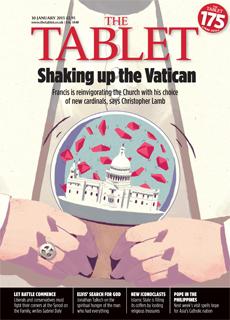
tablet30016_123747704330865_2770159_nJOHN WILKINS OBITUARY OF DESMOND FISHER JANUARY 10 2015

The former editor of The Tablet, John Wilkins, cut his teeth as a Catholic journalist with contributions to the Catholic Herald under Desmond Fisher, who has died in Dublin at the age of 94. Fisher was the Herald’s editor from 1962-1966, the years of the Second Vatican Council, in succession to the great Michael de la Bédoyère.

For Fisher the Council came as a liberation. He once sent Wilkins a postcard from Rome of St Peter’s with its famous dome. On the back he had written: “This is what needs the lid taken off it.” He could not have foreseen that Pope Francis would oblige.

He stood four square with the progressives, and he went at it full tilt. Another journalist indebted to Fisher is Senator John Horgan. Fisher gave him his first job. It was “fun” at the Herald, says Horgan. “Everyone did everything – writing leaders, articles, reports, taking photographs.”

Inevitably, however, the authorities took fright, and Fisher resigned. His reputation remained high, especially in the US, and from 1966 to 1974 he was a regular contributor to the Church Times. Back in Ireland, he filled senior posts with newspapers and with Ireland’s national broadcaster RTE.

Right up to a year or two ago he was still writing. His last work was an examination of the translations of the Stabat Mater, together with one of his own. In the hospice as he succumbed to cancer, ever the perfectionist, he was still putting the final touches to his text.

(John Wilkins is a former Editor of The Tablet)

tabletcover100115

DESMOND FISHER (9)

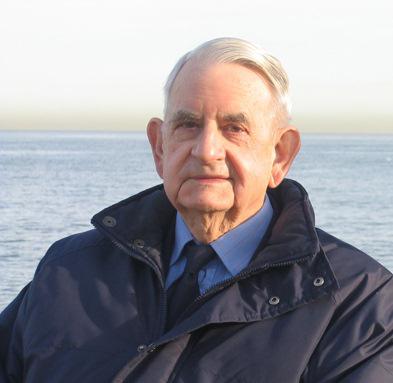
Desmond Fisher  Photo:  © Michael Fisher

Desmond Fisher Photo: © Michael Fisher

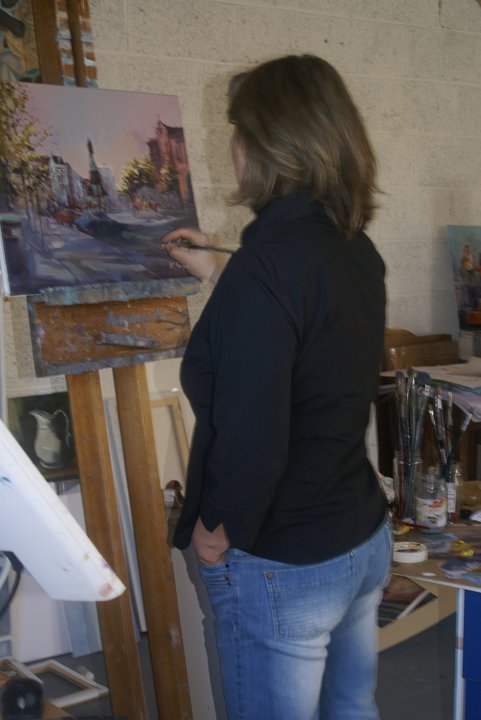
Irish Times Obituary Saturday 10th January 2015 p.12

Lifelong journalist known for integrity and encouragement to colleagues

Desmond Fisher  Born: September 9th 1920  Died: December 30th 2014

Desmond Fisher, who has died aged 94, was a journalist whose working life in Ireland and abroad was marked by a consistently high dedication to professional standards in a career that spanned almost seven decades.

Born in Derry in 1920, he got his first job — after a brief detour into a seminary — with the Nationalist and Leinster Times in Carlow, to which he had been recruited by its legendary editor Liam Begin.

Bergin’s talent-spotting was later to include such figures as Jim Downey, Olivia O’Leary, Michael Finlan, Des Cahill and Micheline McCormack — among many others who went on to higher things.

In 1948 Fisher joined the Irish Press and worked there (and, from 1949, on the Sunday Press) until 1952, when he was (also) recruited to the Irish News Agency.

Just a year later , he was appointed by Jim McGuinness, then editor of the Irish Press, as London editor of the Irish Press group, and he served there until 1962. From this base he covered a wide range of foreign assignments, including Ireland’s UN involvement in what was then the Belgian Congo, and the initial application by Seán Lemass’s government to join the European Economic Community in 1961.

On that occasion Lemass gave Fisher a personal interview in which he predicted that membership of the community would probably mean that Ireland would have to give up neutrality and legalise contraception and divorce and that some of the more positive aspects of Irish culture would be lost as a result of growing prosperity.

Tempestuous

In 1962 he accepted an invitation to edit the Catholic Herald in London. It was a tempestuous time, not only for Catholicism generally, but for English Catholicism in particular. Fisher was unaware at the time of his appointment that his predecessor, Michael de la Bédoyère, had been squeezed out of the paper because of his openness to change.

He was to discover in time that the wheels of change in British Catholicism still moved extremely slowly. His evident sympathy for the aggiornamento launched by Pope John XXIII was not widely shared within either the British or Irish hierarchies, and his friendship with the controversial British theologian Charles Davis (who stayed in his house in Wimbledon while the storm about his departure from the priesthood raged) helped to bring matters to a head.

In 1964 he resigned “over policy differences with the Board”, as he later, rather temperately, expressed it.

For the following four years he worked only as a freelance in both print and broadcast journalism: he had been the Irish correspondent for the British economic publication The Statist for many years, and also developed strong relationships with newspapers like the National Catholic Reporter in the USA, the Anglican Church Times in Britain, and later, The Economist.

Eventually, however, he was headhunted by Jim McGuinness, now RTÉ head of news, to be his deputy, and he returned to Dublin to take up that post in 1968.

“He was to discover in time that the wheels of change in British Catholicism still moved extremely slowly” 

It was a torrid time at RTÉ, not least because of the escalating Northern crisis. In October 1973 he was appointed head of current affairs at the station. This forced marriage of news and current affairs had been decided on by the RTÉ Authority at least in part because of criticism by the government of the independently-minded programming emanating from the latter department.

Doomed fusion

The unwilling — and under-financed fusion of journalists and producers from different trade unions was probably doomed from the start. Fisher later became involved in a three-cornered political fracas involving the producer Eoghan Harris, RTÉ itself, and the then minister for posts and telegraphs, Conor Cruise O’Brien, centring on a programme about Northern Ireland.

Subsequently, after the authority had rejected his request for an appropriate role, budget and staff for the current affairs grouping, he resigned from these responsibilities in 1975 and the grouping was disbanded. He later served as director of TV development and chaired the RTÉ2 planning group, as well as launching the Irish Broadcasting Review, which ran from 1978 until shortly before his retirement from RTÉ in 1983.

After an interval of 36 years, he returned to the Nationalist and Leinster Times in Carlow as editor and managing director, following Liam Bergin’s retirement. He retired from this position in 1989, but continued to write for a wide range of publications — including on occasion The Irish Times — until shortly before his death. His final work — an annotated translation of the Stabat Mater — is due for publication this year.  DSC_0941 (800x421)

Independent spirit

Des Fisher was never — nor would he have wanted to be considered — a celebrity journalist. But his career was marked by a deep Catholicism, independence of spirit, intellectual integrity, an insistence on accuracy and fairness, and by his practical encouragement and training of many younger journalists.

These attributes marked him out as a substantial practitioner of his chosen profession in a period when journalism itself was undergoing seismic changes.

He is survived by his wife, Peggy (nee Smyth), and their children, Michael, Carolyn, Hugh and John.