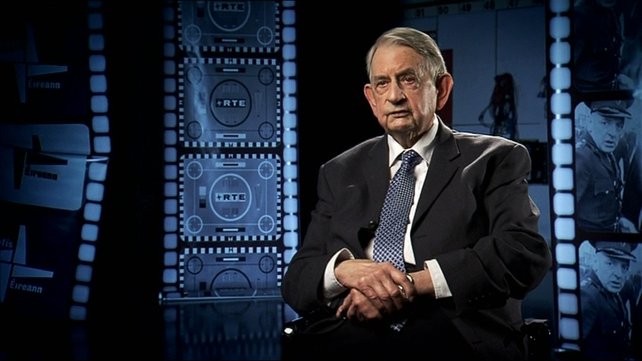
DESMOND FISHER (8)

DSC_0907 (2) (612x800)CATHOLIC HERALD:  January 9 2015      Home News  p.8 Revered ex-Catholic Herald editor is mourned

Herald editor who reported on Vatican II dies aged 94

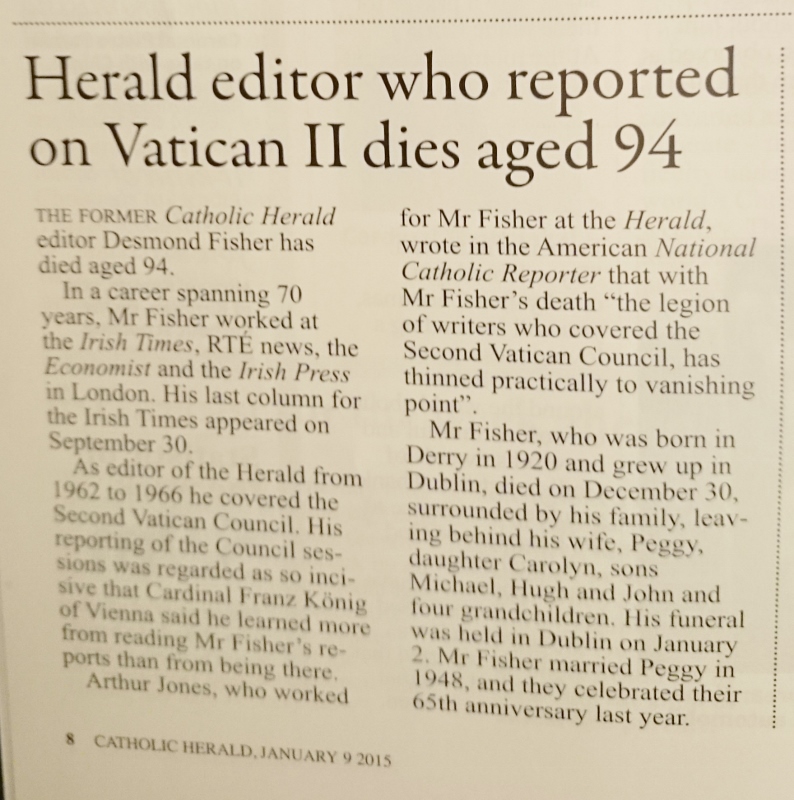
THE FORMER Catholic Herald editor Desmond Fisher has died aged 94.

In a career spanning 70 years, Mr Fisher worked at the Irish Times, RTÉ news, the Economist and the Irish Press in London. His last column for the Irish Times appeared on September 30.

As editor of the Herald from 1962 to 1966 he covered the Second Vatican Council. His reporting of the Council sessions was regarded as so incisive that Cardinal Franz König of Vienna said he learned more from reading Mr Fisher’s reports than from being there.

Arthur Jones, who worked for Mr Fisher at the Herald, wrote on the American National Catholic Reporter that with Mr Fisher’s death “the legion of writers who covered the Second Vatican Council has thinned practically to vanishing point”.

Mr Fisher, who was born in Derry in 1920 and grew up in Dublin, died on December 30, surrounded by his family, leaving behind his wife Peggy, daughter Carolyn, sons Michael, Hugh and John and four grandchildren. His funeral was held in Dublin on January 2. Mr Fisher married Peggy in 1948, and they celebrated their 65th anniversary last year. (2013)  DSC_0909 (2) (794x800)

DESMOND FISHER (7)

image

Lives Remembered: The Irish News Saturday 10th January
Desmond Fisher 1920-2014

My father was one of two Derrymen heading RTÉ News on the day of the banned Civil Rights march in the city on October 5 1968. The other was his former Irish Press boss Jim McGuinness, who had been instrumental in bringing him back to Dublin in 1967. That was eighteen months after my father’s resignation on a matter of principle as Editor of the Catholic Herald over his coverage of Vatican II. His articles from Rome, although acclaimed internationally, were regarded as too progressive by members of the English and Irish hierarchy, including Bishop Farren of Derry, his former headmaster at St Columb’s College.

Jim McGuinness, according to my father, “made the cogent argument that posterity would never forgive RTÉ if it failed to cover, as well as the BBC did, the historic developments in the North, which we claimed to be part of our own country”. Thus it was that news cameraman Gay O’Brien obtained remarkable footage of the Derry demonstration including protestors being hit with batons by the RUC.  The film was offered by RTÉ to other television stations via the Eurovision news exchange. Those scenes put the North’s problems on the international agenda.

In August 1969 my father was the senior RTÉ executive on duty when Taoiseach Jack Lynch arrived to address the nation, following the outbreak of serious rioting in Derry. He arranged for the annotated script to be typed out. For the record Mr Lynch said: “It is clear…that the Irish Government can no longer stand by and see innocent people injured and perhaps worse” (not using the word ‘idly’). Many years later my father recalled how Mr Lynch had privately asked him what he thought would happen if he ordered the (Irish) army to go into the North, as some had advised. Des told Lynch he thought the army would get some 20 miles across the border into Derry or Co. Down before suffering heavy casualties in a fight with the British. Mr Lynch told him he had come to the same conclusion.

My father’s parents lived in West End Park, Derry, and moved to Dublin with their three children when he was 11. He won an all-Ireland scholarship for Good Counsel College in New Ross. He took the education, but decided the Augustinian priesthood was “not for me”. He began and ended his active career with the Carlow Nationalist. His knowledge of Irish, Greek and Latin was exceptional. At 94, he had just completed a book, typed by himself, containing a new translation of the Stabat Mater.

DESMOND FISHER who died in Dublin on December 30 is survived by his wife Peggy and four children: Michael, Carolyn, Hugh and John.

DESMOND FISHER (6)

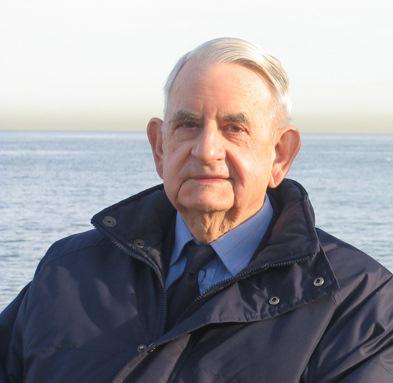
Desmond Fisher  Photo:  © Michael Fisher

Desmond Fisher Photo: © Michael Fisher

Desmond Fisher 1920-2014

An appreciation (in The Irish Catholicic-logo

Michael Fisher

It was, my father said, the best news he heard in 50 years. Days before his death, I read him Pope Francis’ address to the Curia, outlining 15 diseases they suffered. He had a progressive view of the Catholic Church, inspired by the time he reported from Rome on Vatican II, where he made many friends including Belgian Cardinal Leo Suenens and theologian Fr Karl Rahner.

The Vatican II version of the Church, he pointed out, is a “communion” of members sharing a common task, rather than a pyramid structure. As Editor of The Catholic Herald, his authoritative coverage of Pope John XXIII’s initiative for change was widely praised in the English-speaking Catholic world. However, it annoyed Archbishop John Charles McQuaid of Dublin who found his articles “very objectionable”.

The conservative English hierarchy, led by Cardinal John Heenan, complained to the newspaper’s directors, who recalled him to London. His archive notes describe this as one of the bitterest blows of his life. It was, he said, a consolation that history seemed to have supported his version of Vatican II rather than the Cardinal’s.

He resigned from the paper and freelanced for a year. One of his tasks was to handle the copious media enquiries he received regarding Charles Davis. In December 1966 Fr Davis, then the best-known Catholic theologian in Britain, announced he was leaving the Church.

My father was proud of his roots in Derry, where he was born in 1920. His parents (a mixed marriage) moved to Dublin and aged 11, he won an all-Ireland scholarship for secondary schooling at Good Counsel College in New Ross, run by the Augustinians. He took the education, but decided the priesthood was “not for me”.

Translation

His knowledge of Irish, Greek and Latin was exceptional, and at 94 he had just completed a book, typed by himself on his laptop, containing a new translation of the Stabat Mater. It is due to be published by Gracewing later this month. With a BA from UCD, his first job, at age 25, was assistant to the editor of The Nationalist and Leinster Times, Liam Bergin, who became a lifelong friend. In 2011 he stepped down as Vice-Chairman of the same paper.

My first memories of my father are from the time he was London Editor of the Irish Press in Fleet Street. He acted as the Group’s Diplomatic Correspondent, and in 1960 spent three months covering the UN when Frank Aiken chaired the General Assembly. The same year he reported from the Congo on Irish soldiers on UN duty being held prisoner in Jadotville.

Desmond Fisher returned to Ireland in 1967 as RTÉ’s Deputy Head of News, joining fellow Derryman Jim McGuinness.

He later became Head of Current Affairs in RTÉ and after a second resignation on a point of principle was appointed Director of Broadcasting Development. He became involved in the birth of Raidió na Gaeltachta and later RTÉ2.

On retirement from RTÉ in 1983 he returned to Carlow as Editor and Managing Editor of The Nationalist until 1989. He was author of The Church in Transition, a book on the Vatican Council, Broadcasting in Ireland, The Right to Communicate and several pamphlets.

Michael Fisher is a journalist.

DESMOND FISHER (5)

Desmond Fisher

Desmond Fisher

The Editor of The Irish Catholic Michael Kelly, who was in contact with my father in recent years, has written the following summary of his life. It was only since 2011 that my father started to read the paper when he became ‘reconciled’ with the parish of Mount Merrion and a new Parish Priest, thanks to a Eucharistic Minister who brought him a copy every week. Ironically, the paper used to be owned by the Catholic Herald group, with whom my father had parted company ‘without regret’ in May 1966, having had ‘policy differences’ with the Board of Directors relating to his progressive coverage of the Vatican Council.

ic-logo
Death of Vatican II and RTE journalist Desmond Fisher

The death of journalist Desmond Fisher on December 30 at the age of 94 can truly be described as the end of an era. For decades, Mr Fisher was a prominent journalist who travelled extensively. He made a remarkable contribution to religious affairs, particularly during the Second Vatican Council (1962-65) where he reported from Rome for a time. In retirement, he was an occasional contributor to The Irish Catholic.

His reporting was acknowledged as incisive, with Vienna’s Cardinal Franz König reportedly saying that he learned “more of what is going on at the council from your superb reports” than he heard “while on the spot”.

Mr Fisher, as editor of The Catholic Herald, was in Rome in 1962 before the council opened. He also wrote for the Irish Press, giving Irish Catholics an insight into the momentous event that was Vatican II.

Article

According to Arthur Jones, who worked closely with Mr Fisher, when the latter resigned in 1966, an anonymous article in Herder Correspondence described the backdrop.

“Many bishops in England and Scotland, plus Dublin’s overbearing Archbishop John Charles McQuaid, had strongly opposed Fisher’s interpretation of council events – McQuaid called it ‘very objectionable.’

“When Fisher resigned, dozens of other bishop-attendees wrote to say quite the opposite,” according to Mr Jones.

He was born in Derry in 1920 and his first foray in to journalism was at the age of 25.

Mr Fisher and his wife, Margaret (Peggy), wed in 1948 and marked their 65th wedding anniversary in 2013. (66th in 2014)

For four years, Mr Fisher was with the Irish Press, and in 1954 became its London editor and daily columnist. He became the Press political correspondent and travelled widely in the early 1960s.

In 1962, he wrote in The Catholic Herald that a lay-owned and independent Catholic paper had “a freedom that is journalistically necessary if it is to carry out what it conceives to be its function and which relieves the hierarchy and the clergy generally of any responsibility for opinions expressed in its columns”.

It is a sentiment very close to the heart of The Irish Catholic.

He began working for RTÉ in 1967 and was, for 14 years, Ireland correspondent for The Economist.

Desmond Fisher died peacefully in Blackrock Hospice after a short illness. He is survived by his wife Peggy, daughter Carolyn, sons Michael, Hugh and John, daughters-in-law Evelyn, Ruth and Carmel, grandchildren Sarah, Clare, Sam and Lucy, sister Deirdre, sisters-in-law Nuala Fisher and Sr Nora Smyth, nephews, nieces and a wide circle of friends.

Anima eius et animae omnium fidelium defunctorum per Dei misericordiam requiescant in pace.

DESMOND FISHER (4)

My father Des Fisher was Editor of the Catholic Herald when Arthur Jones worked there. Their paths crossed again when Dad was guest Editor of the National Catholic Reporter in Kansas City MO in 1980. Arthur kept in touch over the years and recently sent my father a copy of his new book on the history of NCR, which he read with interest.

In September 2011 Arthur Jones visited Desmond Fisher in Dublin. He then travelled to Belfast to meet me and he gave an interview to the BBC Radio Ulster ‘Sunday Sequence’ programme presented by William Crawley. He wrote to me before departing from Baltimore, Maryland, on the trip:

ARTHUR JONES:

Liverpool-born journalist Arthur Jones entered Catholic journalism in America in 1962 on the Catholic Star Herald in New Jersey, before the 1962-65 Second Vatican Council began. The Ruskin College, Oxford-educated Jones was soon covering the “social gospel” issues: poverty, racism, traveling with the migrant farmworkers. At the highest levels he covered the first meetings between the US and Latin American hierarchies. In 1963 he used his British passport to report from Cuba on the suppression of the church under Castro. The following year he wrote the first extensive coverage of the Pius XII and the Jews drama. In 1965 he was on Fleet Street writing for the Catholic Herald where Irish journalist Desmond Fisher, later RTÉ Head of Current Affairs, was editor. Forty five years later, “we’re still fighting with one another, trying to outdo each other’s stories and jibes.” They lunched together in Dublin last Saturday (September 3rd **2011**): combined ages 166.

In 1975 he became editor of the independent National Catholic Reporter and expanded the newspaper’s range and investigative reporting in Central and Latin America, Rome and, most particularly, the United States. After serving also as the paper’s publisher and president of the company, in 1980 he stepped aside to return to reporting as editor-at-large, covering the globe, acting periodically as Washington correspondent, moving back to national and by the mid-1980s,  building the case regarding clerical sexual abuse.

in June 1985, seventeen years before the first secular U.S. national coverage, Jones broke wide open the American sexual abuse crisis in the National Catholic Reporter…Jones is the author of a dozen books, and has a separate career world as an economic and financial writer. He’s a former New York associate editor and European bureau chief of Forbes Magazine, a business magazine, a former FT correspondent, and, he says, “more besides.” He has worked for the National Catholic Reporter for 35 years, beginning as editor and after serving as editor-and-publisher, slowly worked his way down the ladder to become a reporter again.

Vatican II reporter Desmond Fisher dies at age 94

With the death on Dec. 30 of the noted Irish Catholic writer Desmond Fisher at age 94, the legion of writers who covered the Second Vatican Council (1962-65), has thinned practically to vanishing point.
Desmond Fisher  Photo: NCR/Pam Bauer

Desmond Fisher Photo: NCR/Pam Bauer

Fisher, as editor of The Catholic Herald on London’s Fleet Street, was in Rome in 1962 before the council opened to set up the Herald’s coverage. (His anecdote of Pope John XXIII from that time appeared in NCR’s 2012 Vatican II anniversary special. Fisher was also NCR guest editor for three weeks in 1980 and an occasional contributor.)

Fisher himself covered the 1963 and 1964 sessions of the council for the Herald and the Irish Press Group. Vienna’s Cardinal Franz König said in a note to Fisher that he learned “more of what is going on at the council from your superb reports” than he heard “while on the spot.”

In equal measure, Fisher’s council coverage offended some cardinals, not least Cardinal John Heenan of Westminster, England. The Catholic Herald’s owners — whether pressured by Heenan or not — recalled Fisher to London.

When Fisher resigned in 1966, an anonymous article in Herder Correspondence described the backdrop. Many bishops in England and Scotland, plus Dublin’s over-bearing Archbishop John McQuaid, had strongly opposed Fisher’s interpretation of council events — McQuaid called it “very objectionable.” When Fisher resigned, dozens of other bishop-attendees wrote to say quite the opposite.

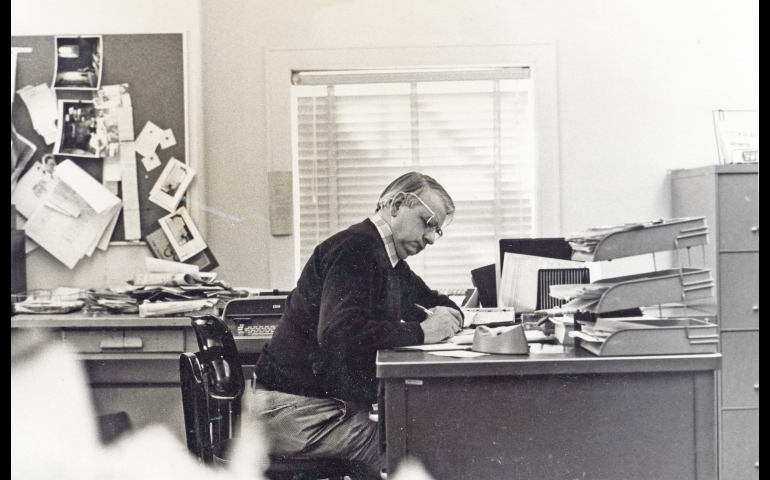
Desmond Fisher in NCR Newsroom 1980  Photo: NCR/Pam Bauer

Desmond Fisher in NCR Newsroom 1980 Photo: NCR/Pam Bauer

Fisher was born Derry, Ireland, on Sept. 9, 1920. Ireland was still a united land: This was prior to the “partition” that created Northern Ireland.

His father, who worked for a firm of wholesale wine and tea shippers — which explains in part Fisher’s own fondness for and knowledge of wine — moved to Dublin to establish an office there.

At age 11, Fisher won the all-Ireland scholarship that provided five years of secondary education at a school run by a religious order. He took the education, but not religious orders. His Irish, Greek and Latin were exceptional, and at 91 he completed a new translation of the Stabat Mater.

With a bachelor’s degree from University College Dublin, his first job, at age 25, was assistant to the editor of The Nationalist and Leinster Times. He became an experienced copy editor and reporter. His first editorial said, “True peace cannot be based on fear. For true peace transcends the bounds of policy and diplomacy. … It must be founded on freedom and justice, on the recognition that man is a spiritual being created for an eternal destiny and not a pawn in the game of power politics.”

Sixty-five years later, Fisher remarked, “It was a bit full-blown for an Irish provincial newspaper. But I would change very little. Pope John XXIII said much the same 18 months later in Pacem in Terris.”

Fisher and his wife, Margaret (Peggy), wed in 1948 and marked their 65th wedding anniversary in (September) 2013.

For four years, Fisher was with the Irish Press, and in 1952 became its London editor and daily columnist. He became the Press political correspondent and traveled widely overseas in the early 1960s. That began with a three-month United Nations Fellowship. He was present at the U.N. General Assembly during the famous scene when Nikita Khrushchev banged his shoe on the desk.

In 1962, in his first Catholic Herald editorial, he wrote that a lay-owned and independent Catholic paper had “a freedom that is journalistically necessary if it is to carry out what it conceives to be its function and which relieves the hierarchy and the clergy generally of any responsibility for opinions expressed in its columns.”

Recruited by RTÉ (Raidió Teilifís Éireann) as deputy head of news, by 1973 Fisher was head of current affairs. There, after several years of bureaucratic infighting over an unhonored agreement to make current affairs its own division, Fisher was promoted sideways to director of TV development.

For 14 years, he was also Ireland correspondent for The Economist. He left RTÉ on “early” retirement and returned to his origins, as editor and managing director of The Nationalist and Leinster Times, where his career had begun.

The Fishers lived in Dublin. Survivors include Peggy, four children and four grandchildren. Desmond Fisher had outlived practically all his journalistic contemporaries.

[Arthur Jones, NCR editor from 1975 to 1980, worked for Fisher at The Catholic Herald from 1964 to 1966.]

DESMOND FISHER (3)

Des Fisher interviewed by John Bowman Sept. 2011 Photo: RTÉ

Des Fisher interviewed by John Bowman Sept. 2011 Photo: RTÉ

Desmond Fisher was not just a noted Catholic religious commentator. He was also a senior RTÉ executive during an important time in Irish history that saw the outbreak of the troubles in 1969. He was a former Head of Current Affairs and Deputy Head of News at RTÉ and died last week, aged 94. In this article specially written for RTÉ News Online, RTÉ’s Religious and Social Affairs Correspondent Joe Little looks back at his career… 

Mr Fisher was one of the last surviving journalists to have reported from Rome on the Second Vatican Council which ended half a century ago.

His family had asked that his passing on 30 December last should not be made public until after his cremation which, in accordance with his wishes, took place after a private family Requiem Mass was celebrated last Friday, 2 January.

In a document released by his family, he described his experiences as a senior editorial manager at RTÉ in the early years of the Northern Troubles as the most stressful time in his working life.

Before coming to broadcasting, Des as he was widely known, had worked on the Nationalist and Leinster Times and with the Irish Press where he served as London Editor and Political Correspondent.

In 1962, as Pope John XXXIII was convening the Second Vatican Council, he took the helm at the Catholic Herald in London.

A graduate of UCD, he belonged to a post-revolutionary generation of thinkers hungry to learn about the wider world and particularly about stirrings of change in the universal Catholic Church which were stifled by the hierarchy here, thanks largely to the ultra-conservative Archbishop of Dublin, John Charles McQuaid, who was appointed in 1940 when Des Fisher was 20 years old.

“It was alienating modern men and women and losing many existing members…”

Writing for this website two years ago, he described Pope John’s motivation in calling the Vatican Council which was to bring the Church face-to-face with the modern world: “He had seen that the Roman Catholic Church was not fulfilling the task for which Christ established it.

“Instead of motivating more and more new members to follow Christ and come to love and worship God, it was alienating modern men and women and losing many existing members.”

He described how most of the 2,500 Council Fathers or church leaders who favoured change had to reckon with a highly regimented traditionalist minority: “They took their lead from the Roman Curia, which was against change from beginning to end of the Council and is still opposed to implementing the Council’s decisions.
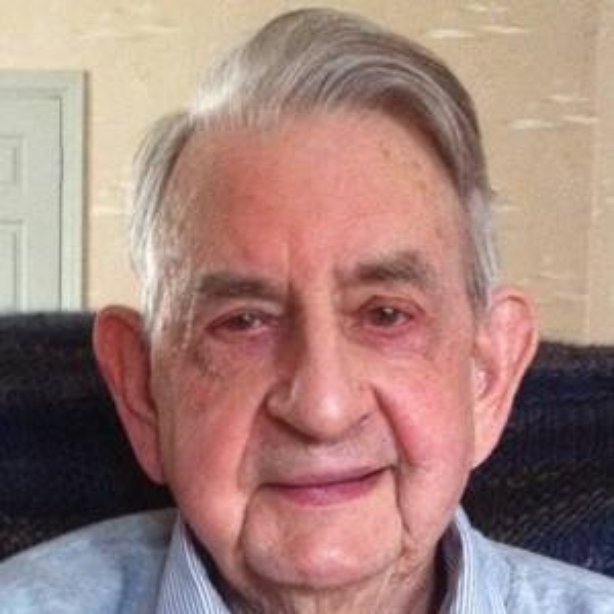
Desmond Fisher photo for RTÉ News Online article taken on his laptop Oct. 2012

Desmond Fisher photo for RTÉ News Online article taken on his laptop Oct. 2012

Despite the obstacles the Council produced five major documents.

Taken together, they portray a new kind of Catholic Church very different from the 16th century Counter-Reformation version that still prevails.

The Vatican II Church abandons the existing portrayal of the Church as a pyramid with the Pope on top of descending tiers of cardinals, bishops and priests sitting on a bottom layer of lay Catholics whose only function, as a bishop told the Council, seems to be “to pray, to obey and to pay”.

The Vatican II version of the Church is a “communion” of members sharing a common task to convince all the people of the world that God loves them and that Christ is the example of how to love and serve him.

In this Church lay people are not the passive onlookers they are seen as now but the most active workers at the coalface.”

Mr Fisher’s reference to the Curia’s ongoing opposition to reform foreshadowed the yet-to-be-elected Pope Francis’ scathing attack last month on Vatican’s administrators for being infected with careerism, scheming, greed and “spiritual Alzheimer’s”.

Not surprisingly, the veteran journalist welcomed the Argentine Popes election in 2013.
Des Fisher interviewed by John Bowman about RTÉ Sep. 28 2011 Photo:  © Michael Fisher

Des Fisher interviewed by John Bowman about RTÉ Sep. 28 2011 Photo: © Michael Fisher

Extracts relating to RTÉ from Desmond Fisher’s own summary of his 70-year career in journalism have been released by his family.

They recall that one year after the Council ended, he left the Catholic Herald and freelanced to support his family in London.

But 18 months later, his former Irish Press colleague and fellow Derry man Jim McGuinness, Head of News at RTÉ, suggested he should apply for a job, about to be advertised, as his deputy.

After short attachments with the BBC and ITV in London in 1967 he came to Dublin in early 1968 to take up the job and to live full-time with his family which had moved to Dublin months earlier.

In October 1973, he was appointed Head of the Current Affairs Grouping, a new area in RTÉ responsible for all current affairs programmes on radio and television.

He wrote of this period: “What I do remember most about my time in RTÉ is that it was the most stressful time in my working life. My time there coincided with external pressure on RTÉ from a Government intent on denying publicity to the IRA and internal conflict between RTÉ producers and journalists working on current affairs programmes.”

“It was probably inevitable that a disaster would occur…”

Those twin pressures soon took their toll: “In the circumstances of the time, however, it was probably inevitable that a disaster would occur. The Current Affairs area is the most vulnerable in broadcasting, especially in a public service organisation with staff of divided political and trade union loyalties at a time when the country is in turmoil.

“On the night of October 17, 1974 while I was in Galway at the Annual Conference of the Labour Party, a seven Days programme on internment in the North was rushed on to the air…replacing the programme which I had cleared for transmission. It later transpired that the filmed programme included a sequence from a London agency, which had been brought in a short time before transmission, edited at the last moment and put out without my clearance.

“This led to a public attack on me on two successive evenings by the then minister in charge of RTÉ, Dr Conor Cruise O’Brien.

The inquiries that followed judged that I should have previewed the programme which, in my view, had been deliberately put out in my absence.

“I offered to resign if this would serve the institutional interests of RTÉ.

“This was refused but in April 1975 I told the then Director-General, Oliver Maloney, that the grouping would have either to be established as a full division with its own resources or closed down.

“He rejected the first alternative so I resigned and the Grouping was disbanded.

“Following my resignation, I was appointed Director of TV Development, a title later changed to Director of Broadcasting Development, a sideways move that really left it to me to determine what I would make of the job.”

He chaired the Planning Group for the station’s second television channel and continued to research and publish material for the public service broadcaster on a range of topics, including its relationship with government.

This was a particularly thorny subject given that in 1972, while he was Deputy Head of News, a Fianna Fáil government had fired the RTÉ Authority after the News Division broadcast a radio interview recorded with Seán Mac Stíofáin, then chief of staff of the Provisional IRA.

The then Taoiseach, Jack Lynch, justified the dismissal saying the Authority had  breached a government directive, given under Section 31 of the Broadcasting Act, ordering them “not to project people who put forward violent means for achieving their purpose”.

The Fine Gael-Labour administration, elected in 1973, had continued to implement the directive.

And this was the context in which Fianna Fáil’s new appointees to the RTÉ Authority and senior RTÉ management figures like Des Fisher, had to handle the seven days debacle in October 1974.

Des Fisher left the national broadcaster in 1983, less than two years before reaching the mandatory retirement age.

He became Editor and Managing Director of the Carlow Nationalist and Leinster Times.

In 2009, approaching the age of 80, he contributed to the RTÉ documentary “If Lynch Had Invaded” about his role with RTÉ in 1969 when the Taoiseach Jack Lynch made a dramatic television broadcast to outline the Government’s response to the security forces attacking nationalist communities in Derry.

In 1967, his book on the Second Vatican Council, “The Church in Transition” was published by (Geoffrey Chapman and) Fides.

He is survived by his wife Margaret (Peggy), daughter Carolyn, and sons Michael, John and Hugh, other close relatives and a wide circle of friends.

Extracts relating to RTÉ from Desmond Fisher’s own summary of his 70-year career in journalism are kindly reproduced courtesy of the Fisher family and are copyright  © 2015 

DESMOND FISHER (2)

Desmond Fisher  Photo:  © Michael Fisher

Desmond Fisher Photo: © Michael Fisher

My father Des Fisher was Editor of the Catholic Herald newspaper in London (1962-66) at the time of the Second Vatican Council. He reported from Rome and managed to attend one of the sessions dressed as a Protestant clergyman observer. Since his mother from Portstewart Co. Londonderry came from a Church of Ireland background, that was probably very appropriate and he was able to use his knowledge of Latin to goof effect. His last work as a writer was to finish a book on the Stabat Mater, and he produced his own English translation of this 14thC poem. I was helping him to finish the work by reading the first proofs up to a few days before his death at the hospice in Blackrock, Co. Dublin on Tuesday 30 December.

The Catholic Herald has published this story, based on the obituary written by Arthur Jones of the National Catholic Reporter. Arthur worked for my father in the Herald. There is a minor error in the last sentence. He had been married to my mother for 66 years. Their wedding was at St Macartan’s Cathedral in Monaghan on September 8 1948.

Former Catholic Herald editor Desmond Fisher dies….He covered Second Vatican Council during his time in charge of the paper…..

Former Catholic Herald editor Desmond Fisher has died, aged 94.

He passed away at Blackrock Hospice in Dublin on December 30, surrounded by his family, leaving behind his wife Peggy, daughter Carolyn, sons Michael, Hugh and John and four grandchildren. His funeral was held on January 2, in accordance with his wishes.

In a career spanning 70 years, Mr Fisher worked at the Irish Times, RTE news, Economist and the Irish Press in London, and his last article for the Irish Times’s Rite and Reason column appeared on September 30.

As editor of the Herald from 1962 to 1966 he covered the Second Vatican Council, after which he worked for RTE. He was in Rome in 1962 before the council was set up and covered the 1963 and 1964 sessions.

Born in Derry on September 9, 1920, during the troubles that led to partition in 1922, his father soon moved their wine and tea wholesalers business to Dublin, where Mr Fisher grew up. He won an all-Ireland scholarship at the age of 11 and throughout his life he had excellent Greek, Latin and Irish, writing a new translation of the Stabat Mater in his 90s. After graduating from University College Dublin he took his first job in journalism at 25, and moved to London in 1952 to become London editor of the Irish Press.

His reporting of the Second Vatican Council was said to be so incisive that Cardinal Cardinal Franz König of Vienna said he learned more from reading Mr Fisher’s reports than from being there.

Arthur Jones, who worked for Mr Fisher on the Herald, wrote in the National Catholic Reporter that with Fisher’s death “the legion of writers who covered the Second Vatican Council (1962-65), has thinned practically to vanishing point”.

Mr Fisher married Peggy in 1948, and the pair celebrated their 65th (sic.) anniversary last year.

DESMOND FISHER 1920-2014

Desmond Fisher  Photo:  © Michael Fisher

Desmond Fisher Photo: © Michael Fisher

My father Des Fisher died on Tuesday 30 December, aged 94. His career in journalism spanned 70 years. During that time he worked for various media organisations, including the Nationalist and Leinster Times (Carlow), the Irish Press (London Editor), the Catholic Herald (Editor) and RTÉ (appointed Deputy Head of News in 1967). At his request, the family held a private Requiem Mass followed by cremation on Friday. Also in accordance with his wishes, the following death notice (now on rip.ie) will be published in The Irish Times tomorrow, Monday 5 January.

I would like to thank all those people who have been in touch to pass on their condolences. Over the coming weeks I will be publishing more details of his long career. He was an NUJ Life Member and helped to set up the Irish South-East Branch of the union.

The death has occurred of Desmond FISHER
Dublin

Dublin 14, journalist and author, aged 94,  peacefully, after a short illness, in the care of the wonderful staff at Blackrock Hospice and surrounded by his loving family. Very deeply missed by his wife Peggy, daughter Carolyn, sons Michael, Hugh and John, daughters-in-law Evelyn, Ruth and Carmel, grandchildren Sarah, Clare, Sam and Lucy, sister Deirdre, sisters-in-law Nuala Fisher and Sr Nora Smyth, nephews, nieces and a wide circle of friends. 

In accordance with his wishes, a private family Requiem Mass was held on Friday 2 January, followed by cremation.

Date Published: Saturday 3rd January 2015
Date of Death: Tuesday 30th December 2014

SEARCH FOR KIERAN MCAREE

Kieran McAree  Photo:  PSNI website

Kieran McAree Photo: PSNI website

Since before Christmas, the thoughts and prayers of many people in North Monaghan and beyond have been focused on the family of Kieran McAree from Emyvale. With police in the North believing the 23 year-old is dead, after claims he entered the river near Enniskillen Castle, the focus now is on retrieving his body.

The PSNI and other agencies continue to conduct a search operation in the Round ‘O’ area, which began following the report on Wednesday, December 17th, that he was missing. Kieran is described as 5’7” tall, with short curly brown hair, and wore glasses. He may have been driving a Volkswagen Golf car prior to going missing.

PSNI Chief Inspector Brian Foster said, “Significant water-based and land-based searches are continuing.  Police have appealed for anyone who can help with their enquiries to contact them. We are also appealing for anyone in the vicinity to check outbuildings and land.”

Police divers searched the lake bed near to the Lough Gates at Lough Erne, eliminating areas of interest located by specialised sonar equipment. A police helicopter and victim recovery dog have also been used to check the surrounding area. Kieran McAree’s family and friends searched the river banks and kayakers along with private boats checked the Lough.

Boyne Fishermen’s Rescue and Recovery divers stayed overnight and were out on the lough at first light. Many dives where carried out in the fast river current making this a very difficult and dangerous task. Other dive teams attended for the family and worked till dark. Three police boats assisted in the tasks and will be back on the water in the morning.

PSNI launch  Photo:  PSNI Fermanagh facebook

PSNI launch Photo: PSNI Fermanagh facebook

Thomas Daly, a volunteer with the Boyne Fishermen’s Rescue and Recovery Service, has said his team which has included up to 37 people will not leave Lough Erne “until we have found Kieran”.

“We have spent the last two weeks searching from where the car was last seen, where the shoes were found. We have been studying the river and there was a fair flow on the river the morning he entered it. We are searching along the spots where we believe he could be”.

“We will not be leaving yet, no, not until we have found Kieran. We are thinking about the family and are here to help put an end to this, to help them move on,” he said.

Scores of people joined the search on Christmas Day and St Stephen’s Day following appeals by family members on Facebook and Twitter.

“This is the biggest search I have ever witnessed on Lough Erne. The community in Fermanagh is really pulling together to help Kieran’s family,” Constable Gavin Huey told The Impartial Reporter.

“We have been using a helicopter, boats and sonar. The divers have been searching in very cold, fast flowing water. The speed of the river and poor visibility has made it difficult but we are determined to keep going for as long as we can. I have never seen a search of this nature last as long,” he said.

Rodney Edwards in his excellent reports from the scene says it is believed that Kieran entered the water after abandoning his Volkswagen Golf near Henry Street in the early hours of December 17. Some of his belongings, including his shoes, have been recovered close to the scene. For his father Martin, mother Geraldine, brother Damien and sister Aisling from Emyvale the wait is an agonising one and there has been a sombre mood at the Round ‘O’ where they have been standing every day since he disappeared. They wait and hope. There are tears, prayers and emotional scenes. Yet among all the sadness, there is a strong sense of community.

“The level of support from across the county and across Ireland has been quite extraordinary. From taking part in the search to making food. The Anchorage Coffee Shop at the Round ‘O’ have been making tea and sandwiches and other food for free. Everybody has been out in force; all types of groups, organisations and people – all eager to help,” explained Constable Huey.

psnifermanagh“All our thoughts and prayers must continue to be with Kieran’s family. I know so many people are thinking about them and want to help and you can see that through this search and the reaction on Facebook. Many people have been getting emotional during all of this. We would just love to get a resolution so we can bring the family some closure. They really do appreciate all the help and support of the people in Fermanagh,” he said.

ON THIS DAY: 1979

RTElogo1979On this day 35 years ago, Tuesday 2nd January 1979, my career as a reporter with RTÉ News began in the newsroom in Dublin. I had returned in December 1978 to Ireland from England, where I had worked for the BBC for nearly five years in London and Birmingham.

The Met Éireann records show that the lowest air temperature recorded in the 20th century was -18.8°C at Lullymore, Co. Kildare on that day. I can remember being assigned to do a radio report about the weather conditions, which were causing severe transport difficulties such as the cancellation of ferries. I remembered to include the Northern element, namely the sailings from Larne to Stranraer (as the two shipping companies then served). The detail of my reporting was subsequently praised by the editorial committee that met to review news coverage.

I joined RTÉ News on the same day as Conor Fennell, author of a book on ‘James Joyce in Paris’ (June 2011).

Conor Fennell at the launch of his book  Photo:  © Michael Fisher

Conor Fennell at the launch of his book Photo: © Michael Fisher

Today was a very different day. The weather was much better, with clouds and sunshine and a temperature reaching 8°C.