
The late Liam Clarke
Sudden death is always difficult for relatives to come to terms with. Liam Clarke had made known his illness (a rare form of stomach cancer) but it was nevertheless a shock to hear that he had passed away peacefully at his home in Ballymena in the early hours of Sunday 27th December just after Christmas. Condolences to his wife Kathryn, his three children and extended family members.
Liam was a practising Zen Buddhist and in June 2014 when he wrote in the Belfast Telegraph about being diagnosed with Pseudomyxoma Peritonei he said: “the beauty of life in the face of death is a very Zen concept. Every moment should be lived as if it was our last – as it could be. It isn’t a delay to be endured while waiting for something better, it is complete in itself.”
The funeral service took place in Roselawn Crematorium outside Belfast on Tuesday afternoon, as reported in the News Letter. Yesterday there was a simple Zen Buddhist service at his home, led by Ingen K. Breen.
Liam was one of the best-known journalists in Ireland. His most recent position was as political editor of the Belfast Telegraph, which he took up in 2011. He had previously worked for the Sunday Times as its Northern Ireland editor for twenty years before becoming a columnist for the paper. In 2014, he was named journalist of the year by the Chartered Institute of Public Relations.
The Irish Secretary of the National Union of Journalists, Seamus Dooley said: “I would like to extend sympathy to the family, colleagues and friends of Liam Clarke Political Editor, The Belfast Telegraph and a former officer of Belfast and district branch of the NUJ, who has died.”
“Liam was a fearless journalist. He was never afraid to challenge authority and was always prepared to stand up for the principle of media freedom. In the Sunday Times and, more recently in the Belfast Telegraph he covered some of the most significant events in the history of Northern Ireland.”
“As a columnist he was insightful, authoritative and, at times provocative. He commanded respect across the political divide and his death is a loss to journalism in Northern Ireland.”
The editor of the Belfast Telegraph, Gail Walker, said Mr Clarke had been the pre-eminent political journalist of his generation.
“Just a few days ago, Liam delivered what was to sadly prove his last big exclusive, a brilliant in-depth interview with first minister-in-waiting Arlene Foster. Liam told me how much he’d enjoyed the encounter and I know he got a great buzz from landing yet another scoop”, she said.
Arlene Foster, the DUP leader, said her thoughts and prayers were with Mr Clarke’s family.
“As a journalist Liam had an ability to cut through all the padding and get right to the core of a story. He will be missed by us as politicians, but of course our grief is overshadowed by that of his family whom he loved dearly and often spoke”, she said.
Sinn Féin’s Martin McGuinness, the deputy First Minister, said he was sorry to learn of Mr Clarke’s passing. Traditional Unionist Voice leader Jim Allister said Mr Clarke had been a household name for many.
SDLP leader Colum Eastwood said Mr Clarke was a good journalist and a good man. “Liam Clarke is one of the most recognisable names in Irish journalism,” he said.
“That’s due not only to his distinguished career and remarkable work ethic, but to his warm character and his good nature. Never one to give any politician an easy ride, Liam’s enduring professional qualities were his straight-talking style and his dogged determination”, he said.
The Ulster Unionist Party leader Mike Nesbitt, a former broadcasting journalist, said he was “stunned and deeply saddened” by Mr Clarke’s death. He said Liam was hugely professional, always probing and persistent, yet also totally trustworthy.
“He was someone worth reading, listening to and following. News journalists do a job that some people do not always like, so the journalist’s ambition must be to earn respect, which is quite a challenge in a divided society like ours. Liam won that universal respect, deservedly so”, Mr Nesbitt said.
Rest in Peace.
The Monaghan Connection
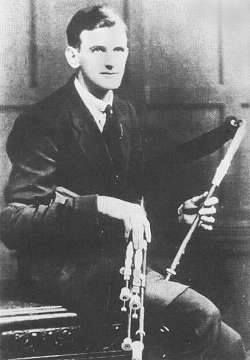
William Clarke, Ballybay Piper
Liam explored his family history and wrote about his grandfather from County Monaghan, William Clarke, known as the Ballybay Piper because of his skills as a musician playing the uilleann pipes. Local historian the late Peadar Murnane wrote about William in an article published six years ago by the Ireland Newsletter:
==================================
WILLIAM CLARKE, THE BALLYBAY PIPER
by Peadar Murnane
===================================
The son of a third generation Scottish Presbyterian family who settled in Cornahoe, near Ballybay, County Monaghan where Robert William Clarke was born on 29th. October 1889. The family moved to thetownland of Carga and later to Dunmaurice where the family was reared. The probability is that they all attended the National School at Cornanure until they were old enough to walk to the town school in Hall Street. At this time Cornanure was an interdenominational school. Although the only son and the one best entitled to inherit and work the farm, young Willie opted for a less laborious and more interesting occupation.
On leaving school, he ‘went to serve his time’ to the Ballybay jeweller and watchmaker, Patrick Duffy. He finished his apprenticeship with Mercers of Enniskillen and returned to Ballybay to commence business in Main St. in premises formerly occupied by Marcella Brown. He married Margaret Johnston from Clontibret and they had a family of two boys, Thomas and William and a daughter, Nancy. Thomas (Tom) joined the RAF during World War Two and was killed in action. William (Willie) is a Minister of the Presbyterian Church, now retired in Eglinton, Co. Derry [Liam’s father]. Nancy is married and lives in England.
There was no musical tradition in the Dunmaurice Clarkes but when young Willie by chance met up with ‘The Piper Ward’ from Oghill, his latent talent soon surfaced. Ward introduced Clarke to the Uilleann pipes and Highland Bagpipes and gave him a sound grinding on the rudiments of both instruments and taught him the skills of reading and writing music. Pipe bands and fife and drum bands were a common feature of parish life in Co. Monaghan in the early 1900’s. The Orange Lodges, the Hibernians, the Foresters, Land Leaguers and Home Rulers sustained their faith and enthusiasm through their bands and banners. Willie Clarke was responsible for the formation of the Ballybay Pipe Band in 1919. He brought the recruits together, trained them and raised funds to procure instruments and uniforms. One of their first public appearances was at the Peace Celebrations held in Leslie Demesne (Ballybay) in August 1919. Their band room was in Church St., opposite the old National School which later became their headquarters. This was also the meeting place of the local Orange Lodge No. 211. It was inevitable that an amalgamation would take place. Not every member of the band was an Orangeman. Many like Fred Braden, were members of the band for the sheer love of pipe music. Fred was a Methodist.
It was very appropriate that when Willie Clarke died in 1934 the name of the band was changed to the “William Clarke Memorial Pipe Band”. During his short life, Willie soon attracted the company of such noted Uilleann and Warpipe players as the Carolans of Dopey Mills, near Newbliss; Michael Keenan of Glassleck, near Shercock; Philip Martin of Kilturk, near Newtownbutler who used to cycle to Ballybay for piping sessions with Clarke and the Moorheads from Doohamlet.
Robert William Clarke died in 1934 aged 45. His remains lie buried in the graveyard of Second Ballybay Presbyterian Church.
Peadar Murnane, local historian, Ballybay.

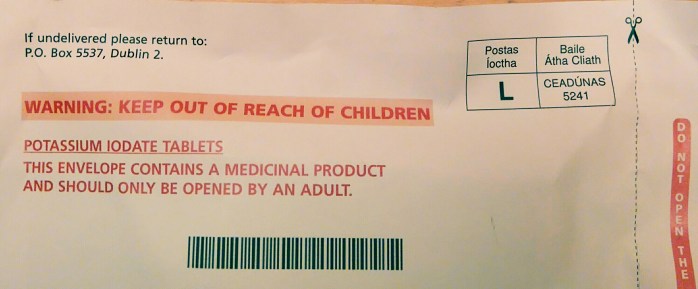 Having just spotted this article from 2002 by Science Editor Dick Ahlstrom republished in The Irish Times on Wednesday, I was surprised to find my unopened envelope containing the tablets posted out to homes in 2002…..

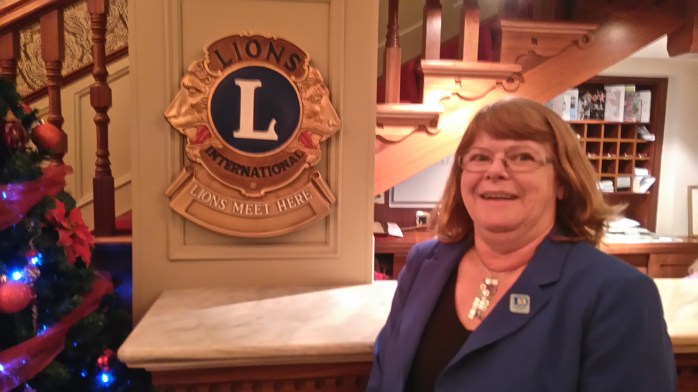
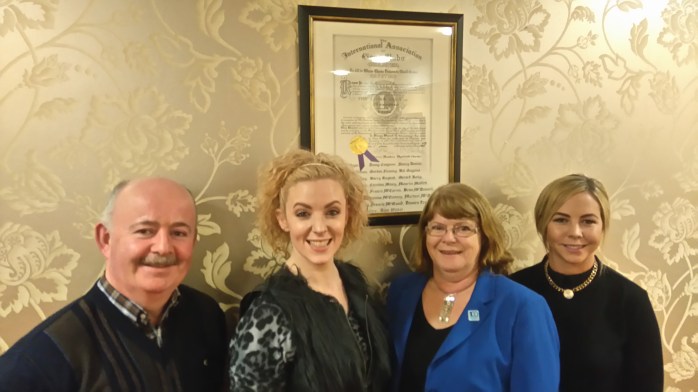

 New Year 2016 was rung in with friends at




 Michael Fisher's News
