IODINE TABLETS

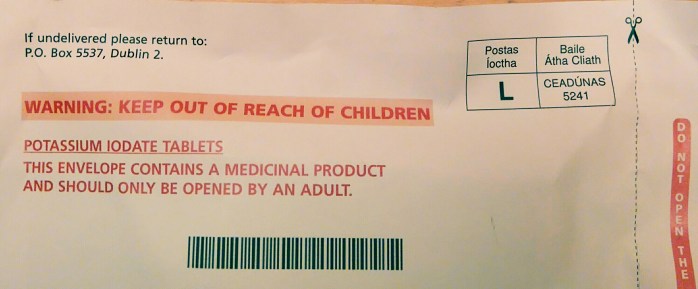
IMG_20160108_001545Having just spotted this article from 2002 by Science Editor Dick Ahlstrom republished in The Irish Times on Wednesday, I was surprised to find my unopened envelope containing the tablets posted out to homes in 2002…..  IMG_20160108_001336

THE IRISH TIMES
What are the iodine tablets for and what should we do with them? DickAhlstrom, Science Editor, provides some of the answers
What are these tablets?
They contain iodine, an element which tends to accumulate in the thyroid gland in the neck.
Why was I given them?
They form part of the Government’s National Emergency Plan for Nuclear Accidents. You would take them if instructed to do so by notices on radio and television to protect against radioactive iodine, a substance which sometimes arises in nuclear accidents.
What should I do with them?
They will arrive in a specially marked envelope with six tablets in each envelope. Do not open them, just put them away in a cool, dry place out of the reach of children. They are no use for anything other than a nuclear emergency.
When should I take them?
Only take them in the event of a nuclear emergency and if instructed to do so by radio and television warnings. They only work against radioactive iodine, not other radioactive substances.
How do they work?
They work by “topping up” the thyroid gland with iodine. This blocks the absorption of radio- active iodine if there is any about in fallout after a nuclear accident.
Why don’t I just take few tablets a week?
This would keep thyroid iodine levels high but there is no benefit in doing this other than to protect against radioactive iodine. It is also possible to have too much iodine in the system.
How should I take them and will they make me feel sick?
Take the tablets with plenty of water. They won’t make you feel sick nor are there any side effects if taken at the recommended dosage as printed on the package. Prolonged usage can cause side effects but this is very rare and these packs only represent a single dose.
How much warning will I have and how quickly to they take effect?
News of a nuclear accident, say at Sellafield, would reach us very quickly. If radioactive iodine was released, then how much time we have to react depends on the weather. If the wind is from the west then it will all be blown across Britain, but an easterly wind would bring it to us within a few hours. The tablets would start working more quickly than this.
How long does the protection last?
One dose is expected to provide protection for up to 72 hours. The dose would have to be repeated for the protection to last longer than this.
Will they protect me from all radiation?
No, only from radioactive iodine, and not all accidents produce radioactive iodine. Fallout from a nuclear accident would release other dangerous substances such as radioactive caesium, which could get onto fresh food, into meat and milk and into water supplies. The Government’s emergency plan recommends sheltering indoors and avoiding consumption of contaminated foodstuffs.
Would they protect me from one of these dirty nuclear bombs being talked about on the news?
Iodine tablets would not protect against a dirty bomb unless it produced radioactive iodine and the protection would only be against the radioactive iodine.
How long do these tablets last when stored?
They are good for three years, up to March 2005. They will have to be replaced after that time with fresh tablets. IMG_20160108_001227

SO NOW YOU KNOW: the tablets are long past their effective date!!

LIAM CLARKE

LIAMCLARKE

The late Liam Clarke

Sudden death is always difficult for relatives to come to terms with. Liam Clarke had made known his illness (a rare form of stomach cancer) but it was nevertheless a shock to hear that he had passed away peacefully at his home in Ballymena in the early hours of Sunday 27th December just after Christmas. Condolences to his wife Kathryn, his three children and extended family members.

Liam was a practising Zen Buddhist and in June 2014 when he wrote in the Belfast Telegraph about being diagnosed with Pseudomyxoma Peritonei he said: “the beauty of life in the face of death is a very Zen concept. Every moment should be lived as if it was our last – as it could be. It isn’t a delay to be endured while waiting for something better, it is complete in itself.”

The funeral service took place in Roselawn Crematorium outside Belfast on Tuesday afternoon, as reported in the News Letter. Yesterday there was a simple Zen Buddhist service at his home, led by Ingen K. Breen.

Liam was one of the best-known journalists in Ireland. His most recent position was as political editor of the Belfast Telegraph, which he took up in 2011. He had previously worked for the Sunday Times as its Northern Ireland editor for twenty years before becoming a columnist for the paper. In 2014, he was named journalist of the year by the Chartered Institute of Public Relations.

The Irish Secretary of the National Union of Journalists, Seamus Dooley said: “I would like to extend sympathy to the family, colleagues and friends of Liam Clarke Political Editor, The Belfast Telegraph and a former officer of Belfast and district branch of the NUJ, who has died.”

“Liam was a fearless journalist. He was never afraid to challenge authority and was always prepared to stand up for the principle of media freedom. In the Sunday Times and, more recently in the Belfast Telegraph he covered some of the most significant events in the history of Northern Ireland.”

“As a columnist he was  insightful, authoritative and, at times provocative. He commanded respect across the political divide and his death is a loss to journalism in Northern Ireland.”

The editor of the Belfast Telegraph, Gail Walker, said Mr Clarke had been the pre-eminent political journalist of his generation.

“Just a few days ago, Liam delivered what was to sadly prove his last big exclusive, a brilliant in-depth interview with first minister-in-waiting Arlene Foster. Liam told me how much he’d enjoyed the encounter and I know he got a great buzz from landing yet another scoop”, she said.

Arlene Foster, the DUP leader, said her thoughts and prayers were with Mr Clarke’s family.

“As a journalist Liam had an ability to cut through all the padding and get right to the core of a story. He will be missed by us as politicians, but of course our grief is overshadowed by that of his family whom he loved dearly and often spoke”, she said.

Sinn Féin’s Martin McGuinness, the deputy First Minister, said he was sorry to learn of Mr Clarke’s passing. Traditional Unionist Voice leader Jim Allister said Mr Clarke had been a household name for many.

SDLP leader Colum Eastwood said Mr Clarke was a good journalist and a good man. “Liam Clarke is one of the most recognisable names in Irish journalism,” he said.

“That’s due not only to his distinguished career and remarkable work ethic, but to his warm character and his good nature. Never one to give any politician an easy ride, Liam’s enduring professional qualities were his straight-talking style and his dogged determination”, he said.

The Ulster Unionist Party leader Mike Nesbitt, a former broadcasting journalist, said he was “stunned and deeply saddened” by Mr Clarke’s death. He said Liam was hugely professional, always probing and persistent, yet also totally trustworthy.

“He was someone worth reading, listening to and following. News journalists do a job that some people do not always like, so the journalist’s ambition must be to earn respect, which is quite a challenge in a divided society like ours. Liam won that universal respect, deservedly so”, Mr Nesbitt said.

Rest in Peace.

The Monaghan Connection

CLARKEPIPER

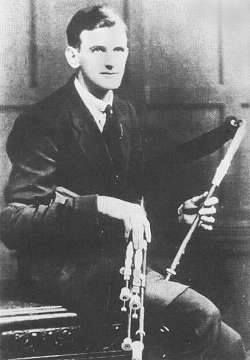
William Clarke, Ballybay Piper

Liam explored his family history and wrote about his grandfather from County Monaghan, William Clarke, known as the Ballybay Piper because of his skills as a musician playing the uilleann pipes. Local historian the late Peadar Murnane wrote about William in an article published six years ago by the Ireland Newsletter:

==================================

WILLIAM CLARKE, THE BALLYBAY PIPER

by Peadar Murnane

===================================

The son of a third generation Scottish Presbyterian family who settled in Cornahoe, near Ballybay, County Monaghan where Robert William Clarke was born on 29th. October 1889. The family moved to thetownland of Carga and later to Dunmaurice where the family was reared. The probability is that they all attended the National School at Cornanure until they were old enough to walk to the town school in Hall Street. At this time Cornanure was an interdenominational school. Although the only son and the one best entitled to inherit and work the farm, young Willie opted for a less laborious and more interesting occupation.

On leaving school, he ‘went to serve his time’ to the Ballybay jeweller and watchmaker, Patrick Duffy. He finished his apprenticeship with Mercers of Enniskillen and returned to Ballybay to commence business in Main St. in premises formerly occupied by Marcella Brown. He married Margaret Johnston from Clontibret and they had a family of two boys, Thomas and William and a daughter, Nancy. Thomas (Tom) joined the RAF during World War Two and was killed in action. William (Willie) is a Minister of the Presbyterian Church, now retired in Eglinton, Co. Derry [Liam’s father]. Nancy is married and lives in England.

There was no musical tradition in the Dunmaurice Clarkes but when young Willie by chance met up with ‘The Piper Ward’ from Oghill, his latent talent soon surfaced. Ward introduced Clarke to the Uilleann pipes and Highland Bagpipes and gave him a sound grinding on the rudiments of both instruments and taught him the skills of reading and writing music. Pipe bands and fife and drum bands were a common feature of parish life in Co. Monaghan in the early 1900’s. The Orange Lodges, the Hibernians, the Foresters, Land Leaguers and Home Rulers sustained their faith and enthusiasm through their bands and banners. Willie Clarke was responsible for the formation of the Ballybay Pipe Band in 1919. He brought the recruits together, trained them and raised funds to procure instruments and uniforms. One of their first public appearances was at the Peace Celebrations held in Leslie Demesne (Ballybay) in August 1919. Their band room was in Church St., opposite the old National School which later became their headquarters. This was also the meeting place of the local Orange Lodge No. 211. It was inevitable that an amalgamation would take place. Not every member of the band was an Orangeman. Many like Fred Braden, were members of the band for the sheer love of pipe music. Fred was a Methodist.

It was very appropriate that when Willie Clarke died in 1934 the name of the band was changed to the “William Clarke Memorial Pipe Band”. During his short life, Willie soon attracted the company of such noted Uilleann and Warpipe players as the Carolans of Dopey Mills, near Newbliss; Michael Keenan of Glassleck, near Shercock; Philip Martin of Kilturk, near Newtownbutler who used to cycle to Ballybay for piping sessions with Clarke and the Moorheads from Doohamlet.

Robert William Clarke died in 1934 aged 45. His remains lie buried in the graveyard of Second Ballybay Presbyterian Church.

Peadar Murnane, local historian, Ballybay.

TYRONE4SAM2016

DSC_1202

Michael Fisher in Tyrone GAA jacket borrowed at the secret training location in Co. Wicklow

EXCLUSIVE! A New Year exclusive from fisherbelfast news! I have been on a secret mission today and have been shown the mountain hideaway where the Tyrone GAA senior footballers have begun training since St Stephen’s Day in their mission to win the Sam Maguire Cup. I am under strict instructions not to reveal the exact location in case of infiltration by spies from Kerry and Dublin. A full report will however be provided on request for Monaghan GAA whose supporters accompanied me this afternoon on an 8km walk in the pouring-rain.

GlenmalureMoyne

Section of the Wicklow Way from Glenmalure to Moyne

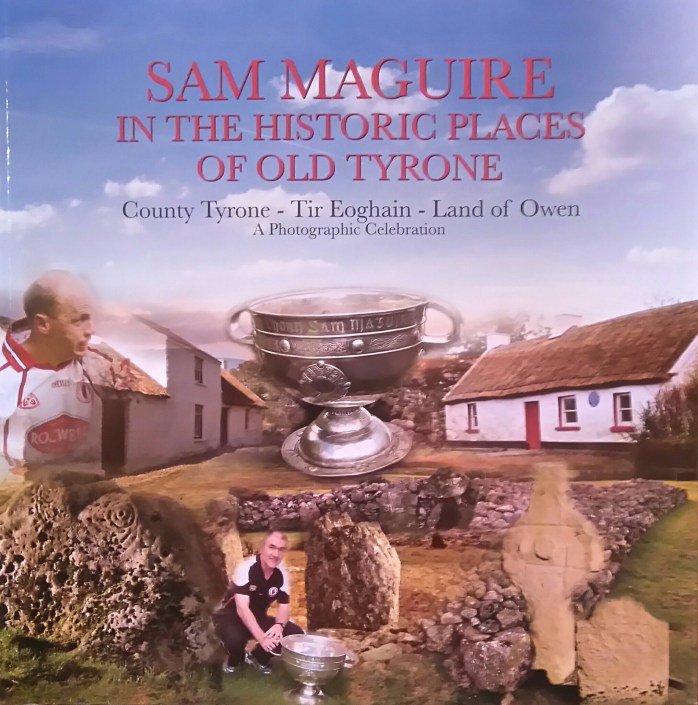
The two hour trek led along the Wicklow Way up a mountain, Slieve Maan. But in the pouring rain and wind there was in the end no evidence of a Red Hand. The only one in sight was on the jacket I borrowed from the legendary Frank Quinn from Pomeroy. He even leaves copies of his beautiful Sam Maguire book with his photos of historic places such as Knockmany and Carleton’s cottage as an inspiration for all who make their way for wilderness adventures to deepest Wicklow, not far from the Glen of Imaal where the Irish army trains.

IMG_20160101_162250.JPG

Sam Maguire book edited and with photos by Frank Quinn

Asked to compare his native ground around the Sperrins with the likes of Lugnaquilla, Mr Quinn, whose adventures to the Antarctic Circle featured in the Irish News a few years ago, replied: “sure the Sperrins are wee buns compared to the landscape we have here!!” Memories of the 1798 rebellion all around. So be prepared for a new wave of Tyrone football as the McKenna Cup gets underway in the coming weeks. It remains to be seen whether Wicklow GAA footballers will head Northwards for their training…….!

IMG_20160101_174039

Sam Maguire Cup at Knockmany near Augher Photo: Copyright Frank Quinn

Update: Obviously this extra training over New Year at the secret location in County Wicklow has already paid dividends for the Tyrone team. Their first outing in the Dr McKenna Cup was on Sunday (3rd January) and this was the result at St Enda’s Park in Omagh:

Tyrone 3-17 Queens University 0-11  

IMG_20160101_162402


HAPPY NEW YEAR

DSC_3456

Gabriel D’Arcy, Chief Executive of newly formed LacPatrick Co-op and Aidan McCabe, Dairy Adviser, with the new LacPatrick logo Photo: © Michael Fisher

34,000 views for fisherbelfast news in 2015

The announcement of the new LacPatrick Co-Op in July was my most viewed story with 537 hits. It was written for the Northern Standard in Monaghan. I am delighted to know that 2015 was a record year for my blog with 34,000 views in different parts of the world, especially the UK, Ireland and the US. This is significant because I blogged only for seven months, publishing 212 posts until the end of July. I will now have to re-assess whether to resume blogging in 2016. The great thing is that many of the articles I posted since 2013 are being read. So a big THANK YOU to anyone who has taken the time to click on any of my stories and I wish all readers a Happy New Year. The full statistics can be seen here thanks to WordPress.

C-TEK CARRICKMACROSS

Computer-generated image of C-TEK Carrickmacross  Photo: O'Hanlon Property

Computer-generated image of C-TEK Carrickmacross Photo: O’Hanlon Property

C-TEK BUILDING NEARS COMPLETION

Michael Fisher  Northern Standard  Thursday 2nd July

The C-Tek building beside the Civic Offices will represent the new face of Carrickmacross when it opens in the coming weeks. This will give hope for the future, at a time when the town is still reeling from the loss of a major manufacturing facility, Bose, with the loss of 140 jobs. The team behind the development of this site hope it will bring the same success as the M-Tek building in Monaghan town, where a second similar building had to be added to meet demand.

The workspace, designed to attract start-ups and new companies, consists of a two-storey building, offering 10,000 square feet of space with nine units. A number of tenants have already been found. The idea for the project came about following a study which identified a need for modern workspace in Carrickmacross. Work began last August on the building which cost €1.4 million.

It’s hoped the workspace, which will have units ranging from 250 square feet to 1,000 square feet, will appeal to business start-ups and will attract anyone with new ideas.

Councillor Padraig McNally said the County Council were not looking for businesses that are long-established and are well able to pay the going rate. This would be very affordable accommodation, he said and every application would be decided on its merits. Up to now the schemes in both Carrickmacross and Monaghan were not being abused by long-established businesses, he said. He also pointed out that a start-up could mean someone who had been in business for five years but it could take twenty years before they were successful.

The building offers an opportunity to locate a business in a newly constructed modern office facility with outstanding features, location and flexibility. C-Tek (standing for Carrickmacross Technology Education and Knowledge) is designed and built to offer an enhanced commercial working environment in the town. It has been developed by Monaghan County Enterprise Fund and Monaghan County Council. The space offers new and established businesses an opportunity to move to a landmark building and pleasant working environment, complemented by modern facilities including excellent Information Technology infrastructure, dedicated fibre optic broadband, security, ample car parking and easy access to the town centre and main roads. It’s also an hour from Dublin and could appeal to business people in the greater Dublin area who are looking for start-up space or providing professional services.

It’s a two-storey building, with flexible size office suites available starting at 250 square feet up to 1,000 square feet. Its features include a high standard of construction, quality finish, elevator to first floor, high quality electrical and fibre optic cabling, canteen and toilet facilities.

Flexible lease terms, exceptionally keen rent and service charge.

Carrickmacross offers a wide variety of amenities and community facilities including shops, schools, sports, leisure clubs, hotels and restaurants. For enquiries, please contact Shane O’Hanlon of O’Hanlon Property on (042) 9662222 or mobile (086) 2374261 or email shane@ohanlonproperty.ie.

LACPATRICK: THE NEW ULSTER DAIRY BRAND

Gabriel D’Arcy, Chief Executive of newly formed LacPatrick Co-op and Aidan McCabe, Dairy Adviser, with the new Lacpatrick logo  Photo:  © Michael Fisher

Gabriel D’Arcy, Chief Executive of newly formed LacPatrick Co-op and Aidan McCabe, Dairy Adviser, with the new Lacpatrick logo Photo: © Michael Fisher

END OF AN ERA FOR TOWN OF MONAGHAN CO-OP AS MERGER APPROVED WITH BALLYRASHANE

Lacpatrick: Dairy by Ireland Since 1896 is the new brand

Michael Fisher  Northern Standard  Thursday 23rd July p.2

Town of Monaghan Co-Op is to enter a new era in September following the virtually unanimous approval on Tuesday of its merger with the Ballyrashane Co-Op in North Antrim. The new company to be known as LacPatrick is said to be a platform for growth, against a backdrop of a challenging global market. It is described by the two Chief Executives as a ‘game-changing’ merger, which includes plans for further significant new investment later this year at Artigarvan near Strabane as a critical part of the new Co-op’s growth strategy.

New logo and brand name for the two merged co-ops in Monaghan and Ballyrashane

New logo and brand name for the two merged co-ops in Monaghan and Ballyrashane

The name LacPatrick reflects the size and scale of the new operation and its strong global ambitions to grow the business in Ireland and beyond. The new entity will be led by a new Board of Directors comprising the former two Boards, with a new management team headed up by Gabriel D’Arcy and Nigel Kemps – former CEOs of Town of Monaghan Co-op and Ballyrashane Co-op respectively.  Mr D’Arcy will be the new Chief Executive, with Mr Kemps appointed as Deputy Chief Executive. Monaghan will continue to be a headquarters for the new entity and it will also be the site for research and development. Tuesday’s meeting in Monaghan was attended by around 200 shareholders/suppliers and 93% of them voted in favour, slightly more than had endorsed the plan at the first special meeting at the start of this month. In Ballyrashane the vote was 100% in favour.

Standing are Gabriel D’Arcy (Chief Executive of newly formed LacPatrick Co-op) and Nigel Kemps (Deputy Chief Executive LacPatrick Co-op), with (seated) Hugo Maguire (Chairman, LacPatrick Co-op) and Roy Irwin Deputy Chairman. Photo: © Brian Thompson Photography

Standing are Gabriel D’Arcy (Chief Executive of newly formed LacPatrick Co-op) and Nigel Kemps (Deputy Chief Executive LacPatrick Co-op), with (seated) Hugo Maguire (Chairman, LacPatrick Co-op) and Roy Irwin Deputy Chairman. Photo: © Brian Thompson Photography

Gabriel D’Arcy told the Northern Standard he was delighted with the strong confirmatory vote from both sets of shareholders, and the decision for the two companies to come together to become a powerful new force in the Ulster dairy sector.  “We now have the scale and ambition to win in what is currently a very challenging and competitive marketplace.  Given the volatility of global dairy markets, this merger further underlines the importance and significance of this ambitious move by our two companies”, he said.

“Our shared geography and production facilities, technologies and customer listings, together with the combined balance sheet strength, offers a unique opportunity to create a true leader in the Ulster dairy food sector, focused on innovation and competitiveness.  This potential for clear and endurable market leadership will ensure that the new merged entity will continue to make competitive and sustainable returns to our members, the dairy farmers of Ulster.  This merger is a platform for future growth for all associated with LacPatrick and, we look forward to making further announcements in the weeks and months ahead regarding future investment.”

Nigel Kemps of Ballyrashane said: “This merger is particularly necessary when we look at the state of the market and especially the poor returns paid to producers. The size and scale that we now have as a merged entity will ensure we can be more competitive, and achieve better returns. Our aim is to give dairy farmers in the north of the island confidence to grow their own businesses and herds.  LacPatrick as a combined entity can achieve scale and volumes, delivering more than the two separate companies could have done on their own.”

The name LacPatrick has been chosen to reflect the core ethos of the newly merged Co-op, which is to bring its innovative and excellent dairy products to consumers at home and internationally. Lac is a Latin word for milk, and Patrick is synonymous with the island of Ireland. The two combine to create a name which underpins the newly birthed Co-op’s rich heritage, but also speaks of its ambitions to grow and develop.

The added strap-line ‘DAIRY BY IRELAND Since 1896’ is a clear statement of its longevity in its markets and communities and defines the solidity of the new entity. The new logo features a modern red map pin to celebrate LacPatrick’s location in the rich and fertile northern part of the island.  A four- leafed clover emphasises its good fortune in being situated in an area of such natural bounty and the milk drop symbolises the central focus of the business.  The green colour is reflective of the nutritious grass of Ulster’s pastures and the natural goodness of the island of Ireland.

The new name will be used at trade fairs and to market the new company on the global milk market.  It will also appear on tankers in conjunction with the individual consumer brands of the two former Co-ops.  Existing product brands such as Champion milk and Ballyrashane Butter will remain. LacPatrick will officially commence trading on September 1st 2015.

Town of Monaghan Co-op employs 150 people and is a farmer owned co-operative with a turnover of approximately €250m.  It has approximately 950 farmers supplying 460 million litres annually.  The milk is processed at Coolshannagh, Monaghan and at TMC Dairies (NI) Ltd in Artigarvan, Co. Tyrone.  Yogurt, liquid milk, cream, butter, bulk skim milk and bulk evaporated skim milk are produced at its Monaghan headquarters with spray dried, whole milk and skim milk dairy powders being produced at Artigarvan.

Ballyrashane Co-op’s main site is located close to the world famous Giant’s Causeway on the North Antrim Coast.  Renowned for its innovation, the company has in recent years expanded to its current position as a leading dairy supplier within the global market, boasting a wide portfolio of products and employing approximately 150 staff. Ballyrashane remains true to its roots as an independent co-operative still owned by local farmers and contributes financially, socially and environmentally to the local rural community. It has an annual turnover of approximately £80m and buys 100m litres of milk from around 100 local farmers.

Gabriel D’Arcy told me he had been truly humbled with the turnout and engagement at the recent shareholders’ meetings regarding the merger. The strong endorsement of our plans reflected the common sense approach of the Monaghan shareholders and  the shared vision and ambition of our community, he said. The current weakness and difficulties in the dairy sector underlined the importance and necessity of this plan and already it was being put forward as a shining light for the sector in Ireland and the need to consolidate for the benefit of suppliers and customers alike.

Asked about the new name, brand and image for the new entity, he said it had been an energising exercise to find something that reflected the shared heritage, the fertile region, the skilled and committed suppliers and the global vision of the co-op, with the vast majority of output destined for outside the European Union. “We want to tell the world what we do and what makes us special and distinctive, and firmly establish ourselves on the global dairy market in terms of quality and innovation. We want to highlight our region while maintaining a quintessentially Irish image, with its strong positive dairy connotation”, Mr D’Arcy said.

Out of these many desires emerged the name LacPatrick.

  • Lac meaning Milk
  • Patrick , with its strong Irish association
  • Dairy by Ireland – where else !
  • Since 1896 – our heritage

This new imagery will be used on all of milk tankers, uniforms, stationery, website and all outdoor and indoor signage. The existing and award winning brands, Ballyrashane, Champion and LP will be retained, while providing a common and exciting platform for growth, at home and abroad.

Mr D’Arcy believes both businesses complement each other. He said Ballyrashane had a specialised fractionated butter business while Town of Monaghan was committed to new processing technologies, which will allow them to add value to the non-butter components of milk. With this in mind a commitment has already been made to invest between €25m and €30m at the Artigarvan plant in Tyrone.

“Both businesses also have a robust brand profile in the marketplace. Ballyrashane has strong liquid milk, butter and cheese lines. The Champion liquid milk and yoghurt brand is synonymous with Town of Monaghan while our Leckpatrick milk powders are amongst the most sought after on the African market”, he said.

“It has been my experience that only those businesses with a strong balance sheet will survive the ups and downs of a volatile marketplace. And this is exactly what the new business brings to the table. The ability to simply generate profits is not enough when it comes to long term, commercial survival,” Mr D’Arcy said.

The merger has been welcomed by the Irish Farmers Association. IFA President Eddie Downey, who said it would help to improve the efficiency and sustainability of the dairy sector in the North of the island. “I have no doubt this will benefit dairy farmers on both sides of the border, by strengthening milk processing in the Northern region, by taking out cost and duplication, and by allowing for synergies, he said. Mr Downey said he hoped it would encourage the rest of the industry to examine the efficiency of its structures carefully, as producer milk prices had now reached unsustainable levels, and co-ops needed to arrest the slide.

The Town of Monaghan Agricultural and Co-Operative Dairy Society Ltd opened on May 15th 1901. Ballyrashane had been going for five years at that stage. The Northern Standard of Saturday May 18th 1901 reported how the new Monaghan Co-Operative Creamery had opened on Wednesday last and was devoted altogether to the reception of whole milk which was dispatched to Belfast. There was a great deal of interest excited in the town in connection with the opening, and large numbers visited it during the week, some people being rather astonished that so much machinery was required in connection with the management of milk, which heretofore had seemed so simple in the farm houses…It is to be trusted that the society…will be successful in its efforts to revive this decaying industry in our county. If anything should induce the farmers to support the creameries throughout the county it is the wretched price paid for butter and eggs in Monaghan market last week.

The article is carried in the history of the creamery produced in 2001 to celebrate its centenary by the late John O’Donnell, its former Manager. He took up the position in 1947 and during the course of a long and challenging career, he initiated a number of new departures, including the development of pasteurised milk sales at retail and wholesale level. He became the leader in milk distribution over long distances outside of Dublin. In the book he recalled how the amalgamation of the Clones and Monaghan Societies in 1963 consolidated the future of the new Society, with odern butter-making facilities and packaging lines for home and export.

He pioneered the experiment with plastic sachet milk in Ireland, followed by the elimination of glass milk bottles and the introduction in 1969 of the pint tetrahedron container, later to become a litre size. By the mid-1980s a link was established with Melkunie in the Netherlands to produce under licence their range of “Mona” yogurts and desserts for the Irish market in a new factory at Coolshannagh which opened in 1984. Boxer Barry McGuigan became the successful face of “Champion” milk.

Under the stewardship of Vincent Gilhawley since 1988, Town of Monaghan expanded into Northern Ireland purchasing Strathroy from the Cunningham family and then Leckpatrick from the Kerry Group in 2002, paving the way for this merger with Ballyrashane.

FAREWELL TMC: HELLO LACPATRICK

Standing are Gabriel D’Arcy (Chief Executive of newly formed LacPatrick Co-op) and Nigel Kemps (Deputy Chief Executive LacPatrick Co-op), with (seated) Hugo Maguire (Chairman, LacPatrick Co-op) and Roy Irwin Deputy Chairman. Photo: © Brian Thompson Photography

Standing are Gabriel D’Arcy (Chief Executive of newly formed LacPatrick Co-op) and Nigel Kemps (Deputy Chief Executive LacPatrick Co-op), with (seated) Hugo Maguire (Chairman, LacPatrick Co-op) and Roy Irwin Deputy Chairman. Photo: © Brian Thompson Photography

TWO OF IRELAND’S OLDEST DAIRIES CONFIRM COMPLETION OF ‘GAME CHANGING’ MERGER

Town of Monaghan and Ballyrashane Co-ops have confirmed their merger, announced a new company name and have described the merged entity as a ‘platform for growth’, against a backdrop of a challenging global market.

At separate meetings of shareholders yesterday in Monaghan and Ballyrashane, the members almost uananimously confirmed completion of what has been described as a ‘game-changing’ merger with plans for further significant new investment at Artigarvan near Strabane as a critical part of the new Co-op’s growth strategy.

The newly merged company will be called LacPatrick to reflect its size and scale, and its strong global ambitions to grow the business in Ireland and beyond. It will officially commence trading on September 1st. LacPatrick will be led by a new Board of Directors comprising the former two Boards, with a new management team headed up by Gabriel D’Arcy and Nigel Kemps – former CEOs of Town of Monaghan Co-op and Ballyrashane Co-op respectively. Gabriel D’Arcy will be the new Chief Executive, with Nigel Kemps appointed as Deputy Chief Executive.

Gabriel D’Arcy, Chief Executive of newly formed LacPatrick Co-op and Aidan McCabe, Dairy Adviser, with the new Lacpatrick logo  Photo:  © Michael Fisher

Gabriel D’Arcy, Chief Executive of newly formed LacPatrick Co-op and Aidan McCabe, Dairy Adviser, with the new Lacpatrick logo Photo: © Michael Fisher

Gabriel D’Arcy said: “I am delighted with the strong confirmatory vote from both sets of shareholders, and that our companies are coming together to become a powerful new force in the Ulster dairy sector. We now have the scale and ambition to win in what is currently a very challenging and competitive marketplace. Given the volatility of global dairy markets, this merger further underlines the importance and significance of this ambitious move by our two companies.

“Our shared geography and production facilities, technologies and customer listings, together with the combined balance sheet strength, offers a unique opportunity to create a true leader in the Ulster dairy food sector, focused on innovation and competitiveness. This potential for clear and endurable market leadership will ensure that the new merged entity will continue to make competitive and sustainable returns to our members, the dairy farmers of Ulster. This merger is a platform for future growth for all associated with LacPatrick and, we look forward to making further announcements in the weeks and months ahead regarding future investment.”

Nigel Kemps said: “This merger is particularly necessary when we look at the state of the market and especially the poor returns paid to producers. The size and scale that we now have as a merged entity will ensure we can be more competitive, and achieve better returns. Our aim is to give dairy farmers in the north of the island confidence to grow their own businesses and herds. LacPatrick as a combined entity can achieve scale and volumes, delivering more than the two separate companies could have done on their own.”

The name LacPatrick has been chosen to reflect the core ethos of the newly merged Co-op, which is to bring its innovative and excellent dairy products to consumers at home and internationally.

Lac, which is Latin for milk, and Patrick, which is synonymous with the island of Ireland, combine to create a name which underpins the newly birthed Co-op’s rich heritage, but also speaks of its ambitions to grow and develop. Its strap-line ‘DAIRY BY IRELAND Since 1896’ is a clear statement of its longevity in its markets and communities and defines the solidity of the new entity.

The logo features a modern red map pin to celebrate LacPatrick’s location in the rich and fertile northern part of the island. A four leaved clover emphasises its good fortune in being situated in an area of such natural bounty and the milk drop symbolises the central focus of the business. The green colour is reflective of the nutritious grass of Northern Ireland’s pastures and the natural goodness of Ireland.

The new name will be used at trade fairs and to market the new company on the global milk market. It will also appear on tankers in conjunction with the individual consumer brands of the two former Co-ops. Existing product brands – e.g. Champion, Ballyrashane Butter – will remain.

Town of Monaghan Co-op, which was established in 1901 and employs 150 people, is a farmer owned co-operative with a turnover of approximately €250m. It has approximately 950 farmers supplying 460 million litres annually. The milk is processed at Coolshannagh, Monaghan and at TMC Dairies (NI) Ltd in Artigarvin, Co. Tyrone. Yogurt, liquid milk, cream, butter, bulk skim milk and bulk evaporated skim milk are produced at its Monaghan HQ site with spray dried, whole milk and skim milk dairy powders being produced at Artigarvin.

Ballyrashane Co-op’s main site is located close to the world famous Giant’s Causeway on the North Antrim Coast. Renowned for its innovation, the company has in recent years expanded to its current position as a leading dairy supplier within the global market, boasting a wide portfolio of products and employing approximately 150 staff. Ballyrashane remains true to its roots as an independent co-operative still owned by local farmers and contributes financially, socially and environmentally to the local rural community. Ballyrashane has an annual turnover of approximately £80m and buys 100m litres of milk from around 100 local farmers.

MASS OF HEALING

image

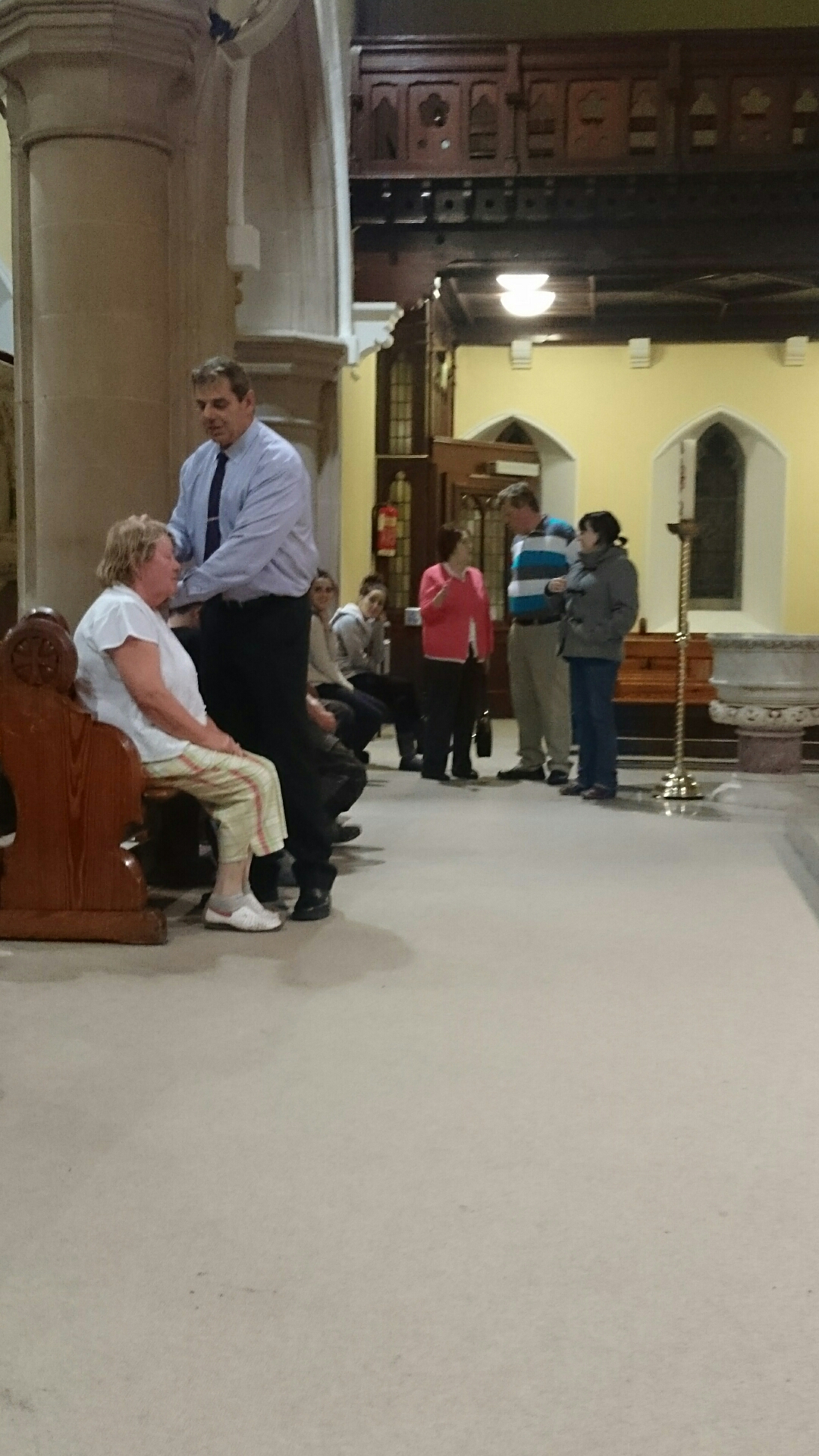
Pat Clarke from Delvin in Co. Westmeath brought his gifts of healing to Carrickmacross tonight. St Joseph’s church was packed out for a Mass of Healing celebrated by Fr Larry Duffy PP.

image

Afterwards Pat Clarke spent two hours meeting hundreds of people and praying over each individual. Some of those present ‘swooned’ or fell backwards after the faith healer had touched them and helped by Pat’s team then lay on the floor for a short time before sitting up again.

image

Pat does not advertise his ministry and has to be invited to parishes. He told me he has been carrying out this work for seventeen years. He is a carpenter by trade and is married, with four children.

image

A great atmosphere of peace and quiet devotion from before the Mass at 7:30pm until 10:30pm when Pat was seeing some latecomers. Beautiful singing by the choir and organ music as well.

image

MEMORIAL TO DR PADDY MAC CARVILL

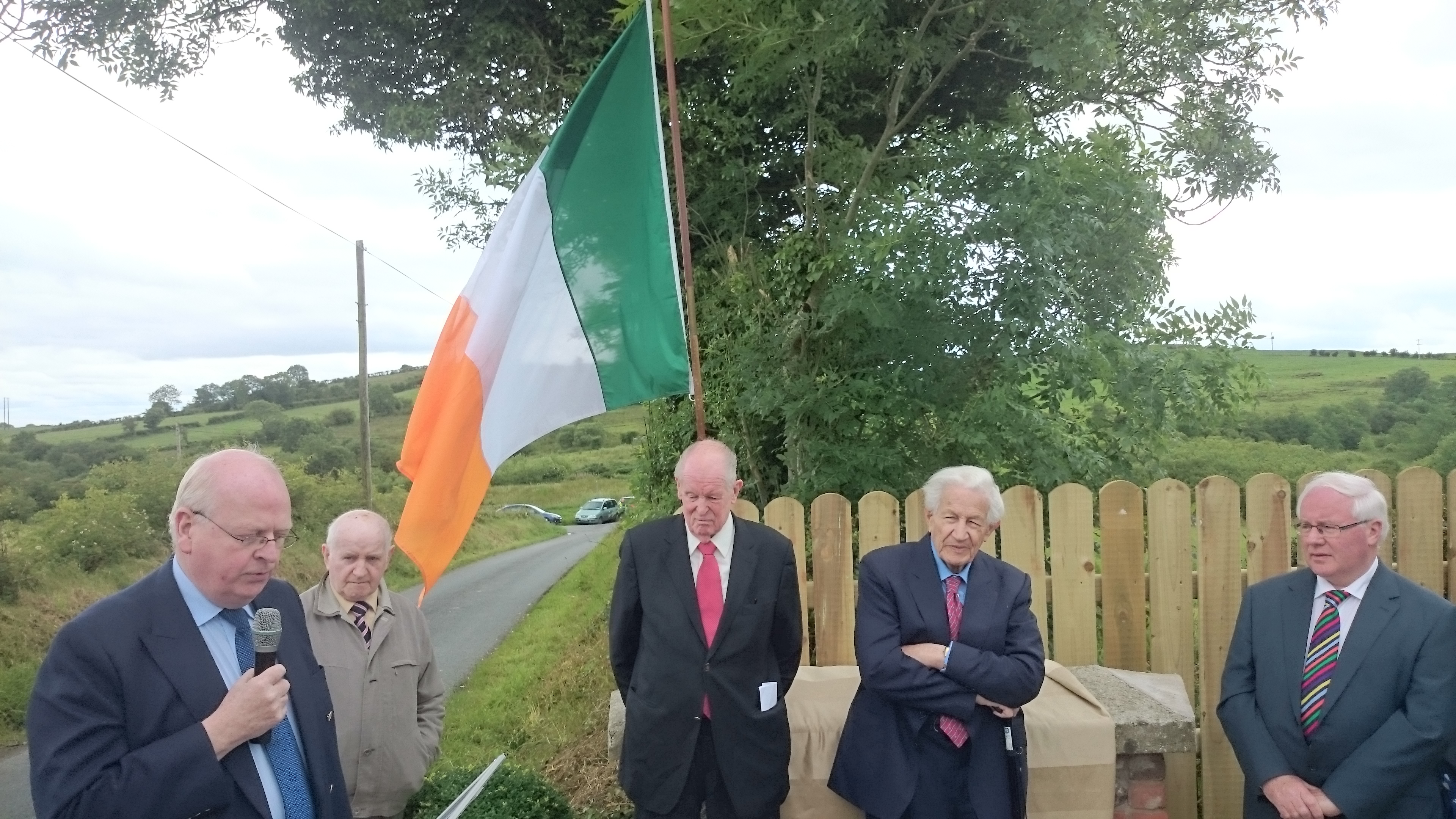
Guest speaker Michael McDowell SC with Eamonn Mulligan, Niall Mac Carvill (Pady's son), his cousin Mackie Moyna and Brendan Smith T.D. Photo:  © Michael Fisher

Guest speaker Michael McDowell SC with Eamonn Mulligan, Niall Mac Carvill (Pady’s son), his cousin Mackie Moyna and Brendan Smith T.D. Photo: © Michael Fisher

MEMORIAL UNVEILED TO FORMER MONAGHAN T.D. DR PADDY MAC CARVILL

Michael Fisher   Northern Standard   Thursday  16th July
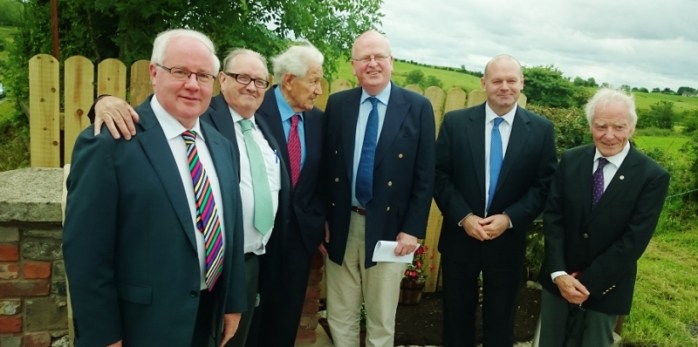
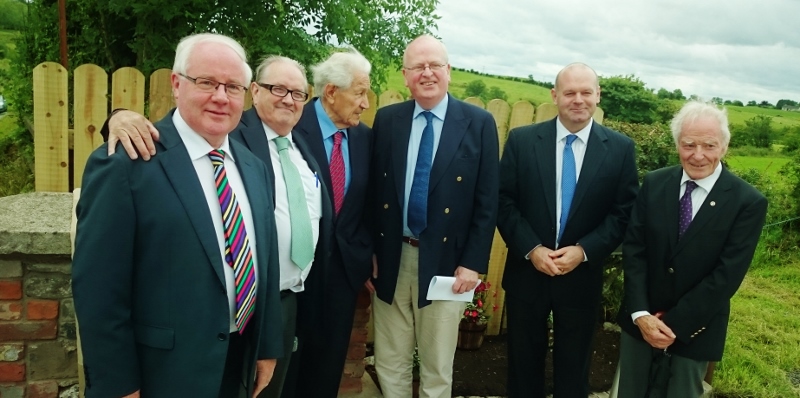
Brendan Smith T.D. with Mackie Moyna Jnr., Mackie Moyna, guest speaker Michael McDowell S.C., Senator Diarmuid Wilson and Dr Rory O'Hanlon, former Ceann Comhairle  Photo:  © Michael Fisher

Brendan Smith T.D. with Mackie Moyna Jnr., Mackie Moyna, guest speaker Michael McDowell S.C., Senator Diarmuid Wilson and Dr Rory O’Hanlon, former Ceann Comhairle Photo: © Michael Fisher

Memories of the War of Independence in County Monaghan and Civil War which divided the allegiances of some families were evoked during the unveiling near Threemilehouse on Sunday of a memorial plaque to honour former Monaghan TD Dr Paddy Mac Carvill.
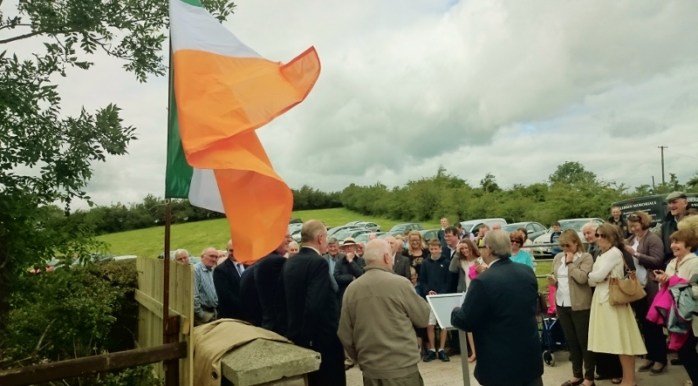
Crowd listens as Mackie Moyna Jnr addresses the gathering Photo:  © Michael Fisher

Crowd listens as Mackie Moyna Jnr addresses the gathering Photo: © Michael Fisher

The ceremony was performed by the former Tánaiste and Minister for Justice, Michael McDowell S.C., who is married to Niamh Brennan, a granddaughter of Dr Mac Carvill. The former leader of the Progressive Democrats said Dr Mac Carville whose background and history, elected three times to Dáil Éireann, contained lessons for us all. He told the assembled crowd he was proud that his three sons had the blood in their veins of such a patriot, scholar and gentleman. It was most important that his memory and great patriotism be kept and observed in his native county, especially in this decade of centenaries.
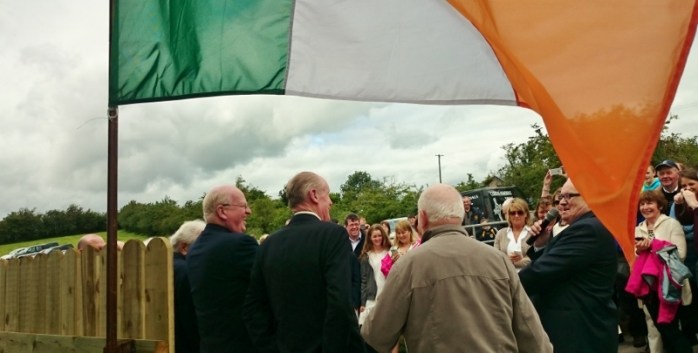
Mackie Moyna Junior (Dublin) raises a laugh as he addresses the gathering Photo:  © Michael Fisher

Mackie Moyna Junior (Dublin) raises a laugh as he addresses the gathering Photo: © Michael Fisher

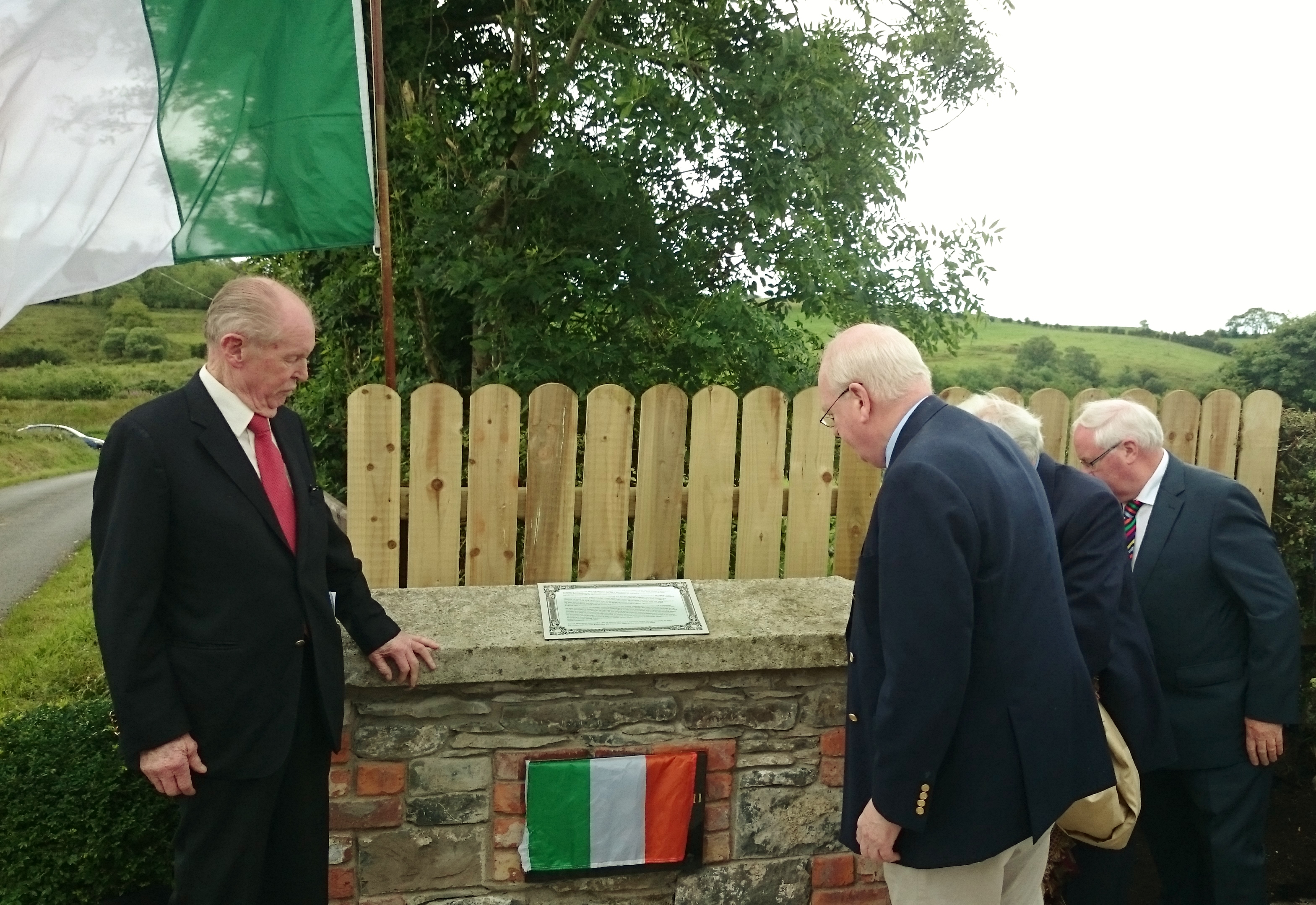
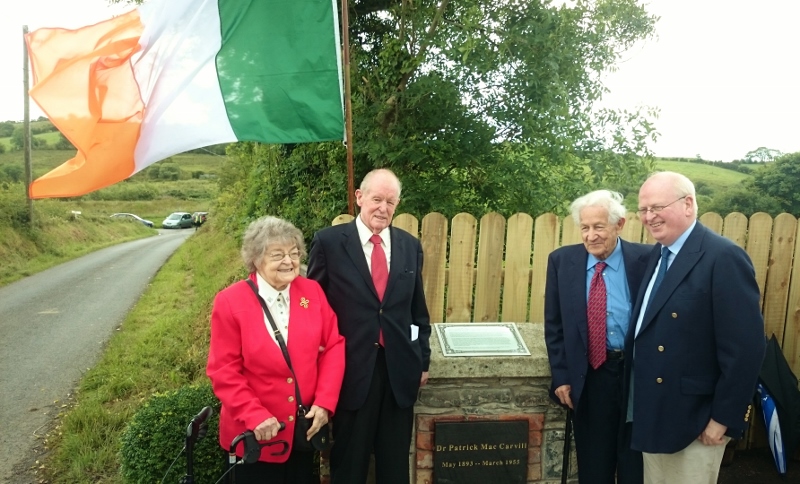
The simple black stone plaque is engraved with the name of Dr Mac Carvill and the dates May 1893 – March 1955. The plaque is set into a rebuilt stone wall at the entrance to the former MacCarvill homestead at Blackraw in the parish of Corcaghan.

Michael McDowell SC is watched by Paddy Mac Carvill's son Niall (left) and Brendan Smith T.D. (right) as he unveils the plaque and memorial at Blackraw  Photo:  © Michael Fisher

Michael McDowell SC is watched by Paddy Mac Carvill’s son Niall (left) and Brendan Smith T.D. (right) as he unveils the plaque and memorial at Blackraw Photo: © Michael Fisher

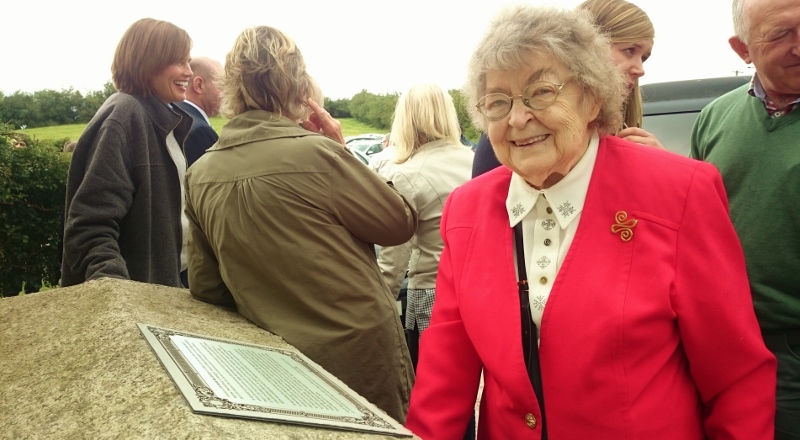
Dr Mac Carvill’s daughter, 90 year-old Maire Brady from Cork, travelled to Monaghan for the occasion as did his son Niall from Dublin. Two of his five children, Éilish and Éimhear (also a medical doctor) passed away in recent years. The Moyna family were also represented, with twins Mackie (Dublin) and Tommy both present, as well as Tommy (junior), Scotstown. Mackie Moyna (junior) read a speech on behalf of his uncle.
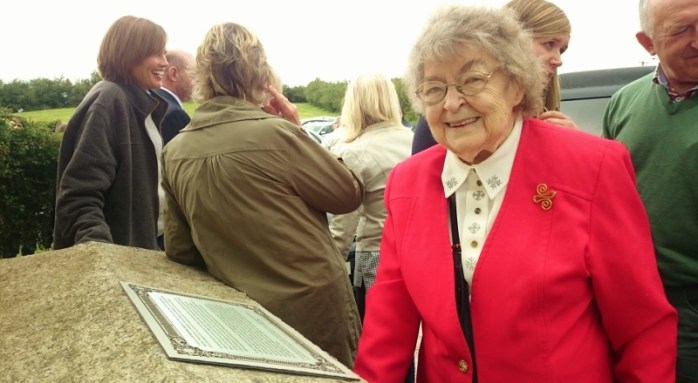
Dr Mac Carvill's daughter Maire Brady from Cork at the memorial to her father Photo:  © Michael Fisher

Dr Mac Carvill’s daughter Maire Brady from Cork at the memorial to her father Photo: © Michael Fisher

Following the unveiling, some of the relatives took the opportunity to stroll up the lane and visit the former family homestead, now derelict and owned by the Reilly family. It used to be a thatched house with two bedrooms and the sleeping accommodation for Paddy and his four brothers was in the loft.

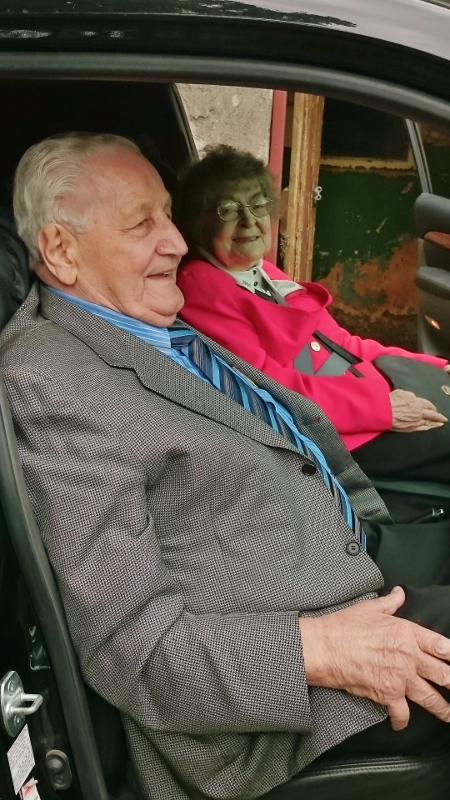
Two of Dr Mac Carvill's children, Maire Brady (Cork) and Niall Mac Carvill (Dublin), with their cousin Mackie Moyna (Dublin) and guest speaker Michael McDowell Photo:  © Michael Fisher

Two of Dr Mac Carvill’s children, Maire Brady (Cork) and Niall Mac Carvill (Dublin), with their cousin Mackie Moyna (Dublin) and guest speaker Michael McDowell Photo: © Michael Fisher

In the speech read out on behalf of Mackie Moyna, he detailed how Paddy’s mother Susan was a Moyna before marriage and it was thanks to the generosity of her brother Fr Michael Moyna, Dean of the diocese of Toronto, that the ten children of John and Susan Mac Carvill received an education.

Caoimhghín Ó Caokain T.D. speaking to Mackie Moyna after the unveiling of the plaque  Photo:  © Michael Fisher

Caoimhghín Ó Caokain T.D. speaking to Mackie Moyna after the unveiling of the plaque Photo: © Michael Fisher

Paddy, the youngest of the clan, attended Drumsheeny National School until he was twelve and then entered St Macartan’s College in Monaghan as a boarder, followed by St Michael’s in Enniskillen, where his older brother, Fr Michael, was a curate. At 18 he entered UCD as a medical student and took first place in Ireland in his final exams.

Two of Dr Mac Carvill's children, Maire Brady (Cork) and Niall Mac Carvill (Dublin), with Brendan Smith T.D. (left)  Photo:  © Michael Fisher

Two of Dr Mac Carvill’s children, Maire Brady (Cork) and Niall Mac Carvill (Dublin), with Brendan Smith T.D. (left) Photo: © Michael Fisher

As a young doctor Patrick Mac Carvill and his brother Johnny were involved in the IRA in Monaghan in 1919 in the war against the Black and Tans. He was elected as a Republican TD, imprisoned at different times by the British and Free State governments in Belfast, Wormwood Scrubs in London, Dartmoor, as well as Mountjoy and Kilmainham in Dublin. He also went on hunger strike at one stage. His fiancée and future wife, Eileen McGrane, was Michael Collins’s secretary when he was on the run, was captured and imprisoned by the British and later by the Free State government, joining McCarvill on hunger strike.
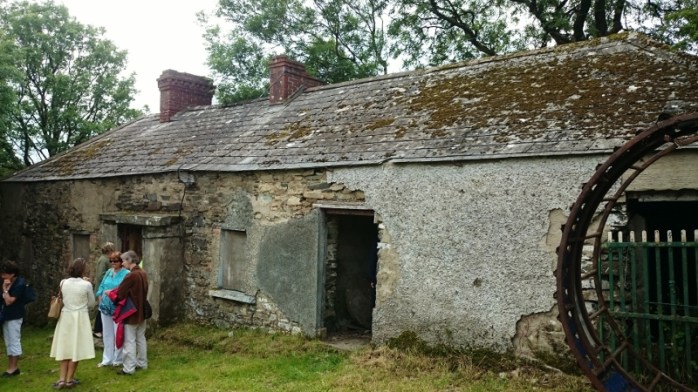
Some of Dr Mac Carvill's relatives visiting the family home after the unveiling of the plaque  Photo:  © Michael Fisher

Some of Dr Mac Carvill’s relatives visiting the family home after the unveiling of the plaque Photo: © Michael Fisher

Paddy Mac Carvill was medical officer to the 5th Northern Division of the IRA and was at the rescuing of Matt Fitzpatrick from the County Hospital in Monaghan.

In August 1923 President Cosgrave dissolved the Dáil and announced a snap General Election for the fourth Dáil.  This election caught the anti-Treaty Sinn Féin party unprepared, yet 44 members were elected and one of those was Paddy Mac Carvill, representing his county of Monaghan as he had also done in the election of June 1922.

In 1924 Paddy Mac Carvill returned to live in Dublin and in 1925 he married his fiancée Eileen McGrane, who hailed from Co Westmeath and who had been a prisoner in Mountjoy when Paddy was transferred there from Dartmoor.

In the June 1927 eletion Paddy Mac Carvill stood as a Fianna Fáil candidate and again was elected for County Monaghan.  He took his seat in August but when a snap election was called the following month he decided to retire from politics and concentrated on his medical practice.  .

Paddy Mac Carvill gained eminence in his profession, becoming a specialist in dermatology and lecturing on the subject in UCD. He was a consultant to St Anne’s and St Luke’s Hospitals as well as Temple Street Children’s Hospital and the National Maternity Hospital at Holles Street.

On May 22 1946, Paddy Mac Carvill wrote to de Valera regarding the sacking of his brother Johnny from his position as manager and secretary of Monaghan Bacon Company, of which Dr Con Ward T.D. was managing director.  Mr de Valera established a tribunal to investigate the allegations. The tribunal did not report that Dr. Ward was guilty of any improper conduct in the actual execution of the duties that pertained to his role as Parliamentary Secretary in the Department of Local Government and Public Health but he offered his resignation and it was accepted on July 12th 1946, exactly 69 years ago on Sunday.

Éamon de Valera called a snap general election in February 1948.  Paddy Mac Carvill came out of political retirement and stood again in Monaghan as a candidate for Séan Mac Bride’s Clann na Poblachta, as did his brother-in-law Aodh de Blacam for Co Louth.  Neither was elected. Representatives of the de Blacam family attended the plaque unveiling.

Tommy Moyna and his cousin Maire Brady (Mac Carvill) visiting the old family home  Photo:  © Michael Fisher

Tommy Moyna and his cousin Maire Brady (Mac Carvill) visiting the old family home Photo: © Michael Fisher

Reflecting on his other family connections, Michael McDowell, whose grandfather was Eoin Mac Neill, commented: “From the constitutional, nationalist Redmondite lawyer to the anti-Treaty Republican hunger strikers, my three sons’ eight great-grandparents span a broad spectrum of nationalist and separatist activity in those years (around 1919-22). Three of them became parliamentarians; three served multiple prison terms. They each endured a great deal of personal tragedy and sacrifice.”

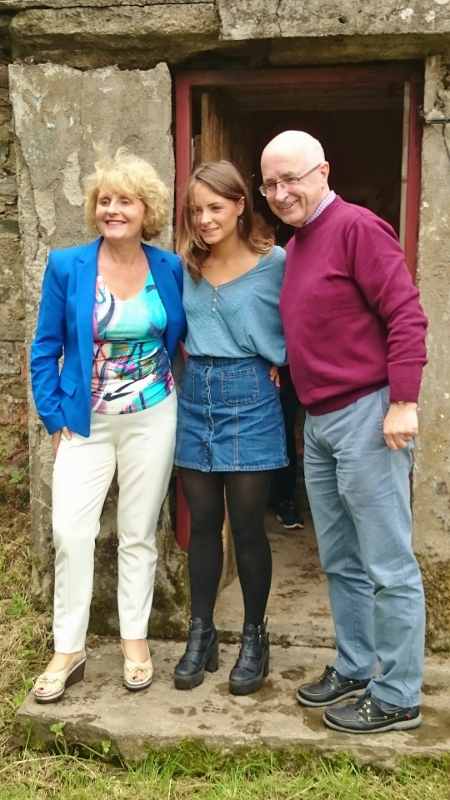
Patrick Brady from Cork, grandson of Dr Mac Carvill, with his wife and daughter at the former Mac Carvill home   Photo:  © Michael Fisher

Patrick Brady from Cork, grandson of Dr Mac Carvill, with his wife and daughter at the former Mac Carvill home Photo: © Michael Fisher

In the Bureau of Military History records for 1913-21 there is a statement made in 1954 by a Monaghan man James McKenna, then a Garda Superintendent in Bandon Co. Cork, and a native of Aughaloughan, Glaslough. He was Captain of Donagh Company IRA, O/C North Monaghan Brigade, 5th Northern Division, in which Dr Paddy Mac Carvill served. Superintendent McKenna recounts the activities of the North Monaghan Flying Column:

“In September 1920 I joined a Flying Column which was organised by Comdt. D. Hogan who was i/c of the unit. It consisted of about sixteen men. Tom Coffey, Clones, was one Section Leader and I was the other. The other members were Matt Fitzpatrick, Frank Tummin, John Donohue, James Murphy, James Winters, Dr. P. McCarville, Phil Marron, Paddy McCarron, Tom Cosgrave, Billy McMahon, Paddy McGrory, Tom Clerkin and James Flynn. As a column we lay in position awaiting patrols on the Clones/Newbliss road, around Scotstown and near Clogher, Co. Tyrone, but in vain. We took the mails off the Belfast 8. to Clones; train at Smithboro and burned a military repair van at Bragan. The three members of the Column from Newtownbutler, Co. Fermanagh, Matt Fitzpatrick, Frank Tümmin and John Donohue, also John McGonnell, expressed their desire to return to their respectiye units as they felt that While our living quarters were in the Knockatallon Mountains we could not contact the enemy except in units too strong for our strength and equipment. Dan Hogan consented to their request and they immediately left for their units. Early next morning we heard the sound of army lorries coming. Some of them rushed up a mountain road (leading to a shooting lodge of Lord Rossmore) in an effort to cut us off. We all escaped except Dr. McCarville. He and Billy McMahon had stayed the previous night in a house which was nearer the main road than the house we: occupied. The Company Captain, John Brennan, who lived up the mountainside, rushed inland (on hearing the sound of the lorries) to guide the doctor and McMahon to safety. He took them by the course we had gone. As they approached a gap in a mountain ridge the military had advanced more than when we had passed, and fired an occasional shot at the three men. The doctor got nervous and took cover behind the bank of a mountain stream and was captured. Brennan and McMahon continued on and escaped safely. We were also under long range fire when retreating. There was snow on the mountains, not sufficient to completely cover the heather, which made visibility poor and favoured us. We fired an occasional shot on the military to delay their advance as we expected the doctor and McMahon to follow us. The military burned our living quarters and we all returned to our units.”  

Plaque and Memorial to Dr Patrick Mac Carvill at the family homestead in Blackraw, Threemilehouse, Co. Monaghan Photo:  © Michael Fisher

Plaque and Memorial to Dr Patrick Mac Carvill at the family homestead in Blackraw, Threemilehouse, Co. Monaghan Photo: © Michael Fisher

NLI PUTS PARISH REGISTERS ONLINE

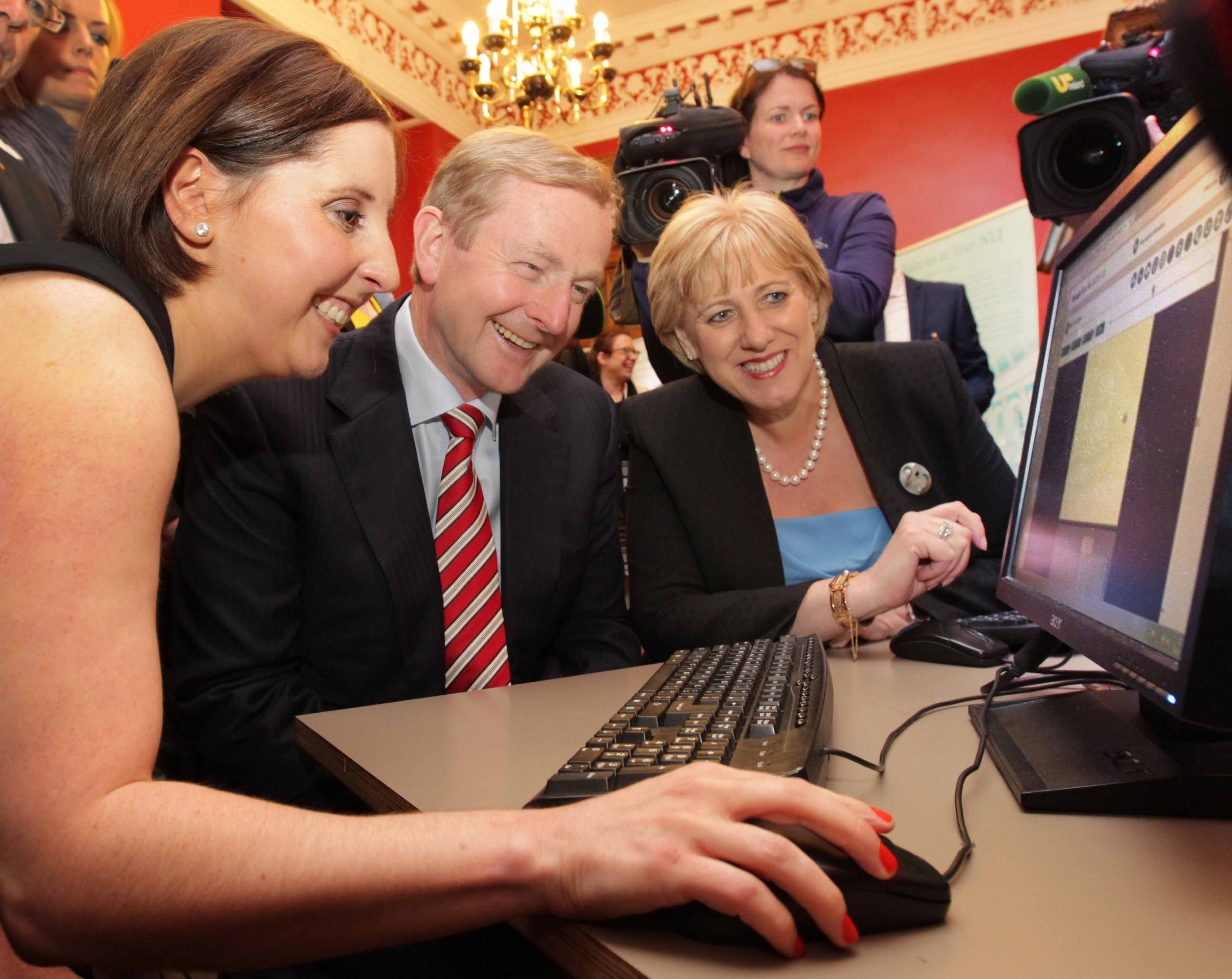
Pictured at the launch of the National Library of Ireland's new web-repository of parish records are Taoiseach, Enda Kenny T.D. and Minister for Arts, Heritage and the Gaeltacht, Heather Humphreys T.D., talking to Ciara Kerrigan, project manager of the digitisation of parish registers NLI. Photo Mark Stedman, Photocall Ireland

Pictured at the launch of the National Library of Ireland’s new web-repository of parish records are Taoiseach, Enda Kenny T.D. and Minister for Arts, Heritage and the Gaeltacht, Heather Humphreys T.D., talking to Ciara Kerrigan, project manager of the digitisation of parish registers NLI. Photo Mark Stedman, Photocall Ireland

National Library of Ireland Launches Parish Records Website

Michael Fisher  Northern Standard   Thursday 9th July

A new digital archive of Catholic parish records which is being made available free online by the National Library of Ireland should transform and greatly enhance the task of anyone tracing family history, according to the Minister for Arts, Heritage and the Gaeltacht, Heather Humphreys T.D. She was speaking at the launch by the Library of a web-repository of parish records, dating from the 1740s to the 1880s.

The Library’s holding of parish records is considered to be the single most important source of information on Irish family history prior to the 1901 Census. Up to now, they have only been accessible on microfilm, which meant that those interested in accessing the records had to visit the National Library. This new web resource provides unlimited access to all members of the public to records covering 1,086 parishes throughout the island of Ireland, including all parishes in the Catholic diocese of Clogher (although I could find no record for Eskra, near Newtownsaville, which was once part of Clogher parish in County Tyrone.

Minister Humphreys said: “This new digital resource will help people at home and abroad who are interested in tracing their ancestry. The website provides access to church records dating back up to 270 years and includes details like the dates of baptisms and marriages, and the names of the key people involved. The records feature the baptisms of some very well-known historical figures, such as the 1916 Leaders Padraig Pearse and Thomas MacDonagh.”

“Making this kind of material available online should help to boost genealogy tourism, and will complement the work of local historical centres in communities around the country. As we approach the centenary of the 1916 Rising next year, I am keen to make as much historical material as possible available online, so we can encourage people around the world to reconnect with their Irish roots”, she said.

Acting Director of the National Library, Catherine Fahy, said:

“This access to the parish records will be transformative for genealogy services, in particular as they will allow those based overseas to consult the records without any barriers.  Effectively, the digitisation of the records is an investment in community, heritage and in our diaspora-engagement.”

Pictured at the launch of the National Library of Ireland's new web-repository of parish records are Taoiseach, Enda Kenny T.D. and Minister for Arts, Heritage and the Gaeltacht, Heather Humphreys T.D., talking to former Taoiseach Liam Cosgrave. Photo: Mark Stedman, Photocall Ireland

Pictured at the launch of the National Library of Ireland’s new web-repository of parish records are Taoiseach, Enda Kenny T.D. and Minister for Arts, Heritage and the Gaeltacht, Heather Humphreys T.D., talking to former Taoiseach Liam Cosgrave. Photo: Mark Stedman, Photocall Ireland

The parish registers website contains more than 370,000 high-quality, digital images of microfilm reels.  The National Library microfilmed the parish records in the 1950s and 1960s.  Some additional filming of registers from a small number of Dublin parishes took place during the late 1990s.

As a result of this work, the NLI holds microfilm copies of more than 3,550 registers from the vast majority of Catholic parishes throughout Ireland. The start date of the registers varies from the 1740/50s in some city parishes in Dublin, Cork, Galway, Waterford and Limerick, to the 1780/90s in counties such as Kildare, Wexford, Waterford and Kilkenny. Registers for parishes along the western seaboard generally do not begin until the 1850/1860s.

Catherine Fahy said: “In using the website for family or community searches, we would recommend that members of the public consult with their local family history resource to help them refine their search.  The website does not contain any transcripts or indexes, so for a search to be successful, some known facts about a person’s life will be necessary.  Effectively, those who access the new online resource will be able to cross-reference the information they uncover, and identify wider links and connections to their ancestral community by also liaising with local genealogical services or family history resources.”

Speaking at the launch An Taoiseach, Enda Kenny T.D., said: “I would like to congratulate the National Library on their project to make the Catholic parish registers available online.  Given the devastating fire in the Four Courts in 1922, in which so many records were lost, these registers are considered the single most important record of Irish life prior to the 1901 census.

“They will be of great value to experts in the areas of history and genealogy, but also of tremendous interest to people here in Ireland and the Irish diaspora around the world.  No doubt the registers will contribute to the number of genealogical tourists to Ireland, as people of Irish descent access these records online and decide to visit their ancestral home place.”

Online access to the new website is free of charge. For more information, visit http://registers.nli.ie/.

In 1949, Dr Edward MacLysaght, Chief Herald of Ireland and Keeper of Manuscripts at the National Library of Ireland, approached the Bishop of Limerick offering the NLI’s services to help in the permanent preservation of the genealogical information contained within the Catholic Church’s collection of parish registers. The NLI’s offer to microfilm parochial registers was taken up by every member of the Hierarchy. Although civil registration of births, marriages and deaths began in 1864, records were not accurately kept for a number of years, so a cut-off date of 1880 was applied for the microfilming of registers.

The usual procedure followed in relation to the microfilming was to send a senior member of NLI staff to a diocese to collect the registers, bring them to the NLI in Kildare Street for filming, and then return the registers to the diocese. The filming of registers diocese by diocese began in the 1950s and was completed over a period of twenty years. Additional filming of registers from a small number of Dublin parishes took place during the late 1990s. As a result of this work, the NLI held microfilm copies of over 3500 registers from 1086 parishes on the island of Ireland. The start dates of the registers vary from the 1740/50s in some city parishes in Dublin, Cork, Galway, Waterford and Limerick, to the 1780/90s in counties such as Kildare, Wexford, Waterford and Kilkenny. Registers for parishes along the western seaboard do not generally begin until the 1850/60s.

Church registers of marriage and baptism are considered to be the single most important source for family history researchers prior to the 1901 census. In many cases, the registers contain the only surviving record of particular individuals and families. With growing numbers of people engaged in family history research and limited on-site facilities at the NLI in Dublin, the decision was taken in 2010 to digitise the parish register microfilms. Following a tender process, the contract for digitisation was awarded to AEL Data who converted 550 microfilm reels, containing over 3500 registers into approximately 373,000 digital images. These images correspond to a page or two-page opening within a register volume.

In October 2014 the NLI Board formally approved the making available of the microfilm images online on a dedicated free-to-access website. The individual registers have been reassembled virtually and made available to users via a topographical database. The development of the parish register website has been carried out by a small team in the NLI’s Digital Library section. The digitisation of the Catholic parish register microfilms is the NLI’s most ambitious digitisation project to date. It demonstrates the NLI’s commitment to enhancing accessibility through making its collections available online.

Information can be obtained relating to the following parishes in the diocese of Clogher:

Aghavea   (Brookeborough)    

Aughalurcher (Lisnaskea)

Aughintaine     (Fivemiletown)

Aughnamullen East

Aughnamullen West (Latton)

Carn (Devenish West, Belleek & Pettigo)

Cleenish  (Arney, Belcoo)

Clogher   

Clones

Clontibret

Devenish (Botha, Derrygonnelly)

Garrison

Donacavey (Fintona)       

Donagh (Emyvale, Glaslough)

Donaghmoyne

Dromore (Co. Tyrone)    

Drumsnat and Kilmore (Corcaghan)       

Drumully (Currin, Scotshouse)

Ematris (Rockcorry)       

Enniskillen (Inis Caoin Locha Eirne)

Errigal Truagh        

Galloon (Drumully, Newtownbutler)       

Garrison 

Inniskeen (Killanny)

Innismacsaint (Maghene, Bundoran)       

Irvinestown      (Devenish)

Killany (Inniskeen)

Killeevan (Currin, Aghabog)

Kilskeery (Kilskerry, Trillick)

Maghaire Rois (Carrickmacross)

Magheracloone        

Magheraculmany (Cúl Máine, Ederney)

Monaghan (Rackwallace)

Muckno (Castleblayney)

Roslea

Tempo (Pobal)

Tullycorbet (Ballybay)    

Tydavnet

Tyholland