UNIONIST DIS-UNITY

Mike Nesbitt

Mike Nesbitt

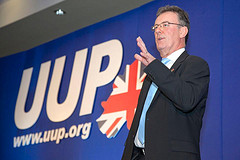
What happens next is what happens next”   That’s my nomination for quote of the week. You can now see why ex media star Mike Nesbitt is leader of the Ulster Unionist Party. His ability to state the obvious with ease and not answer any difficult questions from interviewers, now that he is on the other side of the microphone or the camera. Mike had been asked on BBC’s Good Morning Ulster (1:58:00) about the future direction of the UUP and whether there would be other agreed unionist candidiates in future elections. The question arose following the resignation from the party last night of former deputy leader John McCallister MLA, over the UUP/DUP decision to run an agreed unionist candidate in the Mid-Ulster by-election, which I wrote about yesterday. Mr Nesbitt described the move as a “one-off”, but some wondered if it would just be the start of the end for the UUP and its amalgamation with the larger party led by Peter Robinson.

Then came a second bombshell for the UUP. Lagan Valley Basil McCrea MLA did an interview with the Nolan Show on BBC Radio Ulster in which he announced his resignation. He hinted that plans were underway for the formation of a new “opposition” party along with Mr McCallister and the East Londonderry independent MLA David McClarty (formerly UUP).

Mr McClarty told the same programme on the BBC anybody who was a betting person would have put their money on John and Basil going at some stage. It happened extremely quickly, and it wrong-footed an awful lot of people, he said.  Mr McClarty said the UUP had lost its way. The Ulster Unionist Party is sending out mixed messages; they want to be progressive and pluralist, he said, yet they really have now turned this bye-election into a sectarian head count and we’re back to tribal politics. The three will be keeping in contact over the next few weeks and it remains to be seen what plans they will come up with.

One of the criticisms made by Basil McCrea was that the choice of one candidate on the unionist side (who is unlikely to win the seat anyway, given the current level of support for nationalist parties) would lead to a sectarian dogfight on the campaign trail. DUP leader Peter Robinson rejected this and said unionism was not sectarian.

The agreed unionist representative is Nigel Lutton, an orangeman who has worked with Protestant victims’ groups and whose father was shot dead by the IRA in 1979, shortly after he had left the RUC Reserve. Sinn Féin are putting forward Francie Molloy and the SDLP candidate is deputy party leader Patsy McGlone.

Patsy McGlone

Patsy McGlone

He hit out at the decision by the two unionist party leaders to back Mr Lutton and said it had the potential to reduce the by-election into a bitter sectarian struggle, echoing the views of Basil McCrea. He felt it would only create deeper tribalism. He claimed that Mike Nesbitt was leading the Ulster Unionist Party into electoral oblivion and was denying the electorate a choice. Eric Bullick will run for the Alliance party.

UNIONIST UNITY?

ToryUUPAnyone remember UCUNF? An electoral pact reuniting the Conservative and Ulster Unionist parties in 2009 for the European Parliament election. Jim Nicholson was elected an MEP under this banner of Ulster Conservatives and Unionists — New Force. Although he is a member of the ECR group, his personal website now lists him as a UUP member, following the demise of the arrangement in June 2012.  The UCUNF banner was also used in the Westminster general election in 2010, but the alliance failed to deliver even one MP.

Reg Empey resigned as UUP leader and is now  on the Conservative benches in the House of Lords along with a predecessor, David Trimble. Sir Reg was replaced by Fermanagh/South Tyrone MLA Tom Elliott, who stood down in 2012. The UUP elected former UTV presenter Mike Nesbitt as leader. He has had a difficult job to keep the party together. An ongoing row with Basil McCrea that resulted in the Lagan Valley MLA being ticked off after an internal disciplinary hearing.

Basil McCrea MLA

Basil McCrea

Then there was the loss of moderate unionist David McClarty, who was deselected by the party for the Assembly election in May 2011. David McNarry resigned from the party in January 2012 and now sits in the Assembly as a member of UKIP. Tonight comes the news that South Down MLA John McCallister has resigned from the UUP and will sit as an independent unionist. He told the party leader:

“Your determination to act in concert with the DUP – over parades, flags and Forum – has significantly contributed to forcing Northern Ireland politics back into the sectarian trenches”.

Mr McCallister made a very interesting speech last month to a heritage group across the border in Killanny, Co.Louth (near Carrickmacross, Co.Monaghan) in which he hit out at plans for a unionist forum to deal with the flags issue. He described it as a “cul-de-sac” for unionism.

At the same time as this leakage from the Ulster Unionist Assembly mainstream, the UUP leader is talking to the DUP leader Peter Robinson, first of all in the context of the Forum and now in a move towards electoral unity in a constituency west of the Bann. The two leaders announced their selection of a joint unionist candidate for the Mid-Ulster bye-election. This is the Westminster “seat” held, but not taken up by, Sinn Féin’s Martin McGuinness, the deputy First Minister. The man who has the backing of Mr Robinson and Mr Nesbitt is Nigel Lutton, whose father, a 39 year-old RUC Reservist, was shot dead by the IRA in 1979.

Nigel Lutton (centre) -- DUP picture

Nigel Lutton (centre) — DUP picture

Francie Molloy has been chosen by Sinn Féin to contest the election.  I look forward to reading some of the analysis in the morning about the implications of the latest developments within unionist politics.

BUSBY BABES

Old Trafford Memorial

Old Trafford Memorial

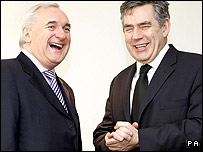
Five years ago when then Taoiseach Bertie Ahern needed a quick summit meeting with the British Prime Minister Gordon Blair to discuss the problem over the devolution of  justice and policing powers in Northern Ireland, he went to Manchester. They met on a Sunday morning in a conference room at Manchester airport. Mr Ahern was accompanied by the Irish government press secretary Eoghan Ó Neachtain (now TG4 rugby pundit). Myself and an RTÉ News cameraman from Belfast were the only ones allowed to do the “pool” pictures, along with a local stills photographer from PA.

Bertie Ahern & Gordon Brown (PA Pool Picture)

      Bertie Ahern & Gordon Brown (PA Picture)

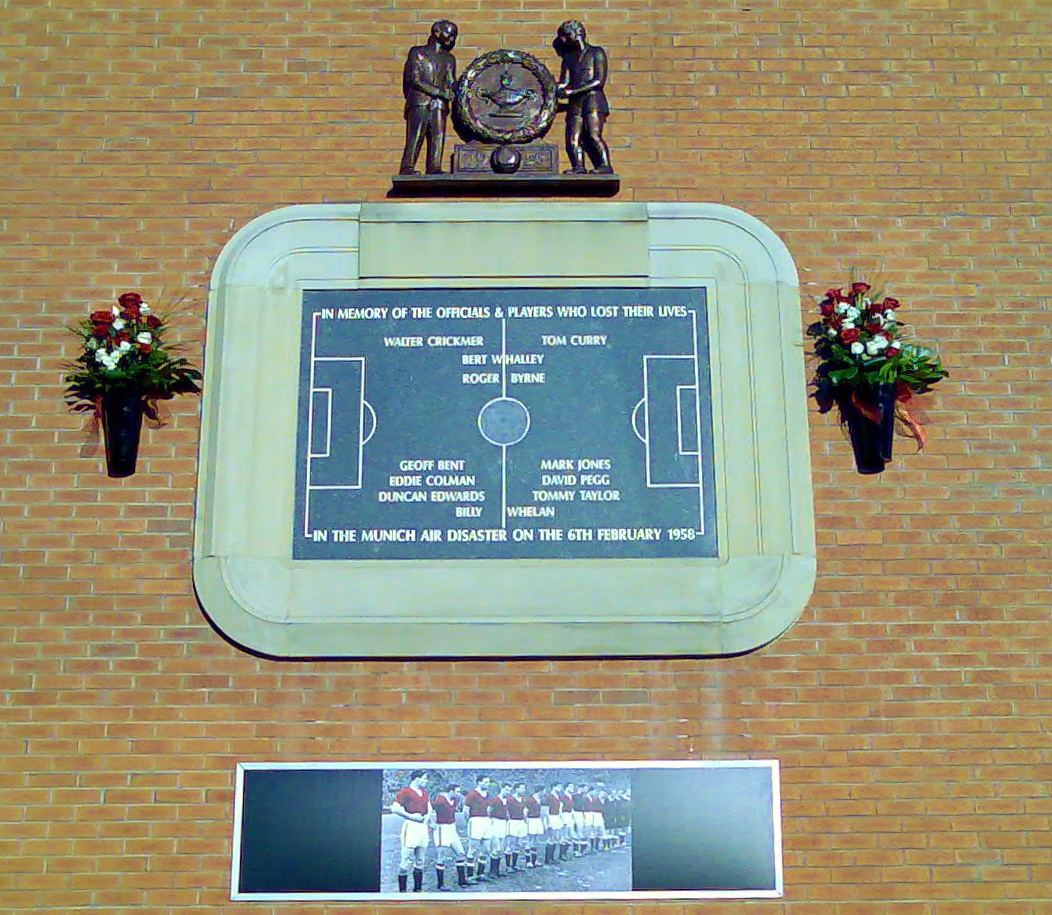
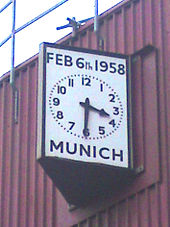
No questions were allowed to be asked as they sat down together, it was just a photocall. An Taoiseach however did agree to answer a couple of questions for me after the meeting. Both he and Mr Brown then left separately to go to Old Trafford, where Manchester United were remembering the 50th anniversary of the Munich plane crash. I did not get into the ground, where the two leaders were sitting in a VIP box, but spoke to some supporters as they arrived for the game. It gave me a chance to see the Munich memorial attached to a wall at the side of one of the stands, and the memorial clock attached to the south-east corner of the stadium. A special match programme was also issued to remember those who died.

Munich Clock

Munich Clock

Eight Manchester United players from the “Busby Babes” team, among them Billy Whelan from Cabra in Dublin, lost their lives when the Airspeed Ambassador plane they were travelling back to England in crashed on the runway during snowy conditions at Munich airport. Three staff from the club and a number of well-known English sports journalists were also killed. Others were lucky to survive, such as Bobby Charlton and goalkeeper Harry Gregg (then 24) from Northern Ireland. He attended the funeral of veteran sports journalist Malcolm Brodie in Belfast on Monday. Thinking now of the victims and survivors of the crash.

The Flowers of Manchester

One cold and bitter Thursday in Munich Germany

Eight great football stalwarts conceded victory

Eight men will never play again who met destruction there

The Flowers of English football the Flowers of Manchester

Matt Busby’s boys were flying home returning from Belgrade

This great United family all masters of their trade

The pilot of the aircraft the skipper Captain Thain

Three times they tried to take off and twice turned back again

The third time down the runway disaster followed close

There was slush upon that runaway and the aircraft never rose

It ploughed into the marshy ground it broke it overturned

And eight of the team were killed as the blazing wreckage burned

Roger Byrne and Tommy Taylor who were capped for England’s side

And Ireland’s Billy Whelan and England’s Geoff Bent died

Mark Jones and Eddie Colman and David Pegg also

They all lost their lives as it ploughed on through the snow

Big Duncan he went too with an injury to his brain

And Ireland’s brave Jack Blanchflower will never play again

The great Matt Busby lay there the father of his team

Three long months passed by before he saw his team again

The trainer, coach and secretary and a member of the crew

Also eight sporting journalists who with United flew

and one of them Big Swifty who we will ne’er forget

the finest English ‘keeper that ever graced the net

Oh England’s finest football team its record truly great

its proud successes mocked by a cruel turn of fate

Eight men will never play again who met destruction there

the Flowers of English football the Flowers of Manchester

Author: Eric Winter (1958)

POLITICS OF BROADCASTING

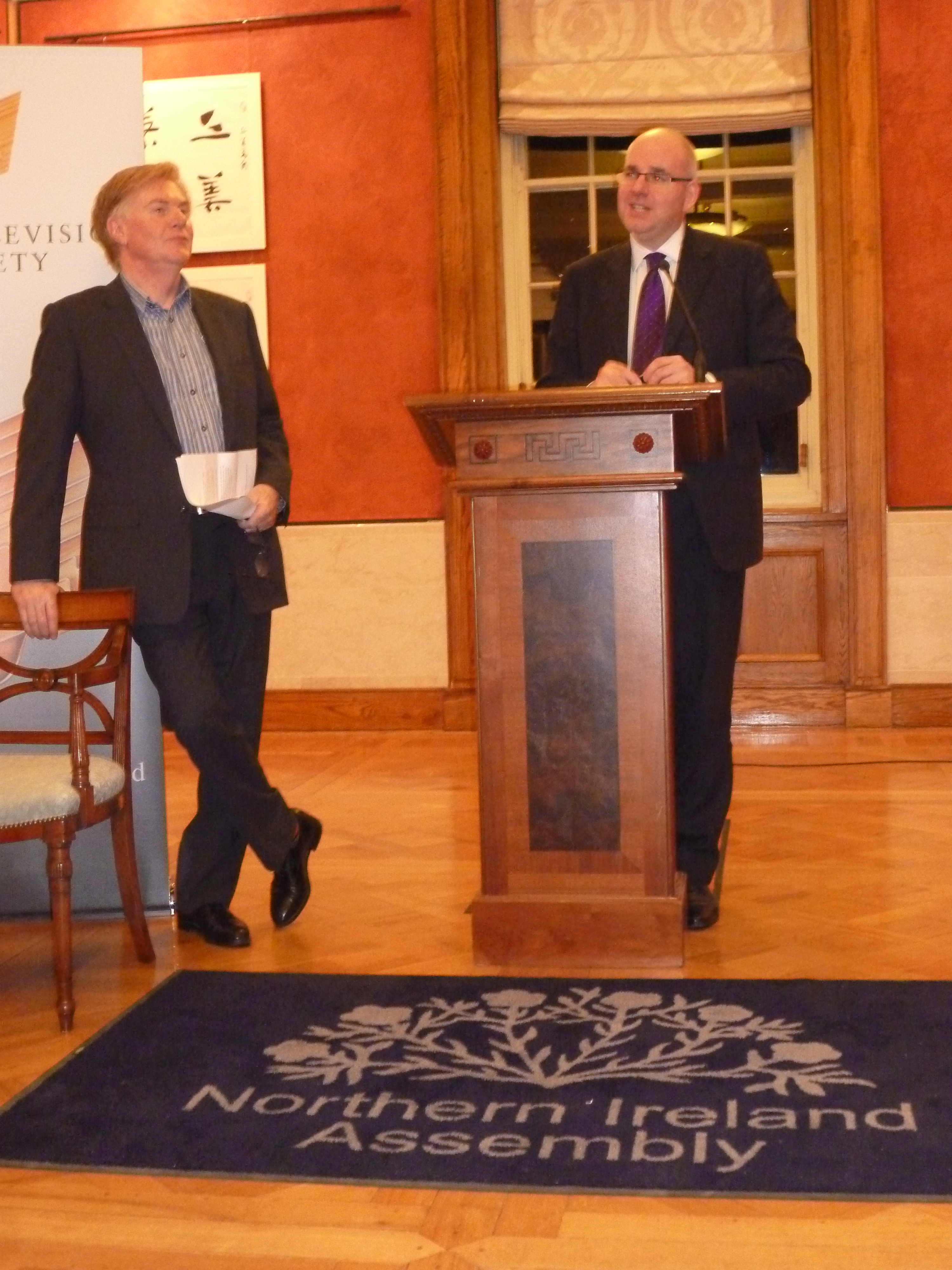
P1100145 - Copy (263x350)Martina Purdy political correspondent of BBC NI said she would never go into politics. Tracey Magee acting political editor of UTV believed the skills of journalism does not translate into politics. Both were asked if it was time for a female journalist to go into politics during a discussion at the Long Gallery at Parliament Buildings in Stormont, hosted by the Royal Television Society NI. Martina told the audience that journalists (with few exceptions) do not make good politicians. Those who remember the experience of RTÉ’s George Lee who was elected as a Fine Gael TD in June 2009 and resigned nine months later will agree with that.

If you want to gain a further insight into the discussion for which former UTV News Editor Rob Morrison acted as question master, you can follow it on twitter @RTS_NI. Twitter itself was the subject of one of the questions about the role of social media in coverage of politics in Northern Ireland. Tracey’s view was that twitter is far more immediate and can make things very difficult for journalists covering a story. She felt there was a lack of understanding about how it works. When she tweeted the words of a politician, she was reporting and was not giving her own opinion. Yet some users failed to make the distinction.    P1100147 - Copy

For Martina as a working journalist, twitter can be “a bit of a nightmare”. It can be very very annoying at news conferences in her view, and she would like to ban it on such occasions. She gave one example when Jim Allister of the TUV referred to Eamon Mallie as a “tweet freak”.  Michael Wilson managing director of UTV who organised the meeting on behalf of the RTS said he believed there was a good balance of political coverage in Northern Ireland and some of the Assembly’s best work goes unreported.

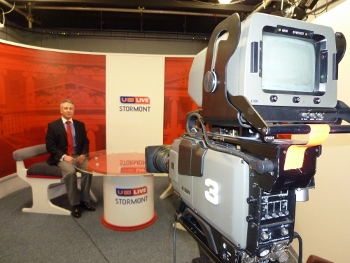
Earlier the visitors were given a briefing in the Senate chamber by Susie Brown, Head of Communications of the NI Assembly and Norah Anne Baron MD of Pi Communications, which has the contract for the broadcasting of proceedings. The group was then given a tour of the studios, including the Pi Communications control room and the UTV studio, which Tracey Magee broadcasts from.

Aidan Browne in UTV Studio

Aidan Browne in UTV Studio

MIXED MARRIAGE

P1050918 (2)When the Lyric Theatre decided last year to put on “Mixed Marriage” as the first of four in the Tales of the City series, little did they think that a drama set in Belfast over 100 years ago would have a modern resonance. The play was written by St John Ervine, a distant relative of playwright Brian Ervine and his late brother David of the PUP. The backdrop was the 1907 lockout strike led by James Larkin. For a time, Catholics and Protestants joined together in a common cause but later on sectarian tensions were stoked up and rioting broke out, which the police (RIC) and military had to deal with.P1050919

The play is directed by Jimmy Fay, associate artist with the Abbey Theatre in Dublin, where Mixed Marriage had its first performance in March 1911, before moving to London and then New York. Ervine who was born in Belfast in 1883 went on to become General Manager of the theatre in 1915 but did not last long in the post,  becoming disillusioned and resigning in 1916 soon after the Easter Rising.

Royal Dublin Fusiliers Memorial Window

Royal Dublin Fusiliers Memorial Window

He then joined the Dublin Fusiliers regiment in the British Army and fought during world war I in Flanders, losing a leg. As well as writing Mixed Marriage (1911), Ervine also authored two other plays, Anthony and Anna (1926) and The First Mrs Fraser (1929). He also wrote a biography of George Bernard Shaw, which was awarded the James Tait Black Memorial prize in 1956.

Post-performance discussion

Post-performance discussion

Following the performance, the cast returned to the stage along with Jimmy Fay and held a very interesting discussion with the audience, of which more later. By chance this morning I received a newsletter “What’s on at Queen’s” from the QUB Alumni office. The first item on the agenda is a seminar being held on Monday 4th February at 6pm by the School of Creative Arts: “In Conversation with Jimmy Fay”. He didn’t mention it to me as we chatted while leaving the theatre last night, when he was returning briefly to Dublin. But I am glad to get the opportunity to mention the event here as the interaction with him at the Lyric was very useful. Admission is free.

Jimmy Fay

Jimmy Fay


INEZ MCCORMACK: TRADE UNIONIST

Inez McCormack: ICTU Picture

Inez McCormack: ICTU Picture

Sad news this evening (Monday) about the death at the Foyle hospice in Derry of the leading trade unionist and human rights activist Inez McCormack, aged 69. As a trade union lay representative in the NUJ I met her on a number of occasions. The most memorable event I connect her with is when through her work behind the scenes President Mary Robinson came to a community function on the Whiterock Road in West Belfast in June 1993 and shook hands with the Sinn Féin President Gerry Adams. The gesture was made away from the glare of the media. It was one of the moments recalled by Mary Robinson in her autobiography published last year. The significance of the event was that at the time Sinn Féin were still out in the cold, subject to censorship, and the IRA ceasefire would not happen until the following year.

Inez McCormack with Patricia McKeown, Alan McBride & Geraldine Finucane

Inez McCormack with Patricia McKeown, Alan McBride & Geraldine Finucane

The last time I saw Inez was at a fringe meeting in Derry in April last year during the ICTU (NIC) biennial conference. She was sharing a platform with Geraldine Finucane, Patricia McKeown her understudy and successor at UNISON and ICTU, and Alan McBride of WAVE. I wrote about it in a blog “Pat Finucane case and dealing with the past”. I recalled how as NI Secretary of UNISON Inez had helped to set up the handshake between Gerry Adams and President Robinson at Rupert Stanley College. I remembered that occasion as one when the media were kept firmly outside the door in order to ensure that no pictures of the handshake were taken. Yet it was a defining moment in the lead-up to the IRA ceasefire the following year. Here is one account of the occasion from the Independent.

In 1999 Inez McCormack became the first female President of the Irish Congress of Trade Unions since its formation in 1959. She held the post for two years. She was the first woman full-time official of the National Union of Public Employees (NUPE) from 1976-90. She became the first female regional secretary of UNISON in 1993. Inez was the first woman to be elected to the Northern Ireland Committee of Congress in 1980 and four years later became the first woman to succeed to the post of Chair.

During US President Bill Clinton’s first visit to Ireland, the First Lady Hilary Clinton paid tribute to her work and ever since then they remained friends. Mrs Clinton also mentioned Inez when she was in Belfast last month.

Inez stands out amongst the extraordinary people I have worked with over the last 17 years. She inspired and motivated me, challenged me often. One of Inez’s comments will always remain with me: there are so many more ties that bind us than divide us”,  she said.

A BBC Northern Ireland report recalls how in 2011, Ms McCormack, along with Michelle Obama, Hillary Clinton, Meryl Streep and Mu Sochua (a Nobel Peace Prize nominee from Cambodia), was named by US publication Newsweek as one of ‘150 Women Who Shake the World’. Her lifetime work enabling women to improve their lives by spreading the values of human rights was immortalised when the Holywood legend Meryl Streep played her in a Broadway play. At the time Ms McCormack said: “It is very humbling to have your life story represented in this way and a privilege to have an Oscar-winning actress and strong female character like Meryl Streep involved in the dramatisation. I have had the privilege of spending a lifetime at the service of warm strong women, who challenged injustice not just for themselves but for the people and communities they cared for and whose only affirmation has been that of their own conscience.”

Mary Robinson, former President of Ireland and UN Human Rights commissioner:

“Inez was a remarkable woman with a remarkable capacity for friendship. It was from Inez I learned that you can achieve much more if you don’t need the credit. Her support to me as a close advisor when I served as President was invaluable, but she never appeared in photographs or in the front row.”

Mrs Robinson has also written an obituary, which appeared in The Guardian.

Mark Durkan, former SDLP leader:

“Inez McCormack was impressive and effective in all she did. She stood for workers’ rights, for women’s rights, for equality and public services. As an organiser and as an advocate she championed the right of those serving others for lower pay than they deserved. She was articulate, compassionate and steadfast.  She was immensely charming as well as being intense in her convictions.  Her contribution to public life went beyond her primary role as a worker’s defender as she helped to benchmark the values, principles and protections that were needed for a fair and stable society. Her positive outlook, compelling analysis and valid stances won international recognition as a standard bearer for social justice and a role model for all who seek economic emancipation.”

ICTU President Eugene McGlone:

“Her track record in women’s and human  rights was unequalled. Her work in promoting the cause of labour and social justice in Northern  Ireland was known world-wide. Inez’s commitment to social justice began in the ’60s when she became active  in the Northern Ireland civil rights movement. She followed this on when she became a trade union and equality activist  before becoming the full-time official of the National Union of Public  Employees.  She also held the post when NUPE was reconstituted in a merger as Unison. Her unstinting passion was recognised and she received many justifiable  accolades. Her work included campaigning to organise and revalue the work and contribution of the ‘forgotten’ workers, most of whom were women. Inez also led major campaigns for strong equality laws and to assert the rights of the most disadvantaged. In 1998, she led a successful campaign for such inclusive equality and human rights provisions to be included in the Good Friday Agreement.”

Patricia McKeown, regional secretary of UNISON:

“The sad day thousands  of workers and trade union members have been dreading has come and Inez  McCormack, has left us – but only in the flesh. Inez will never leave us in  spirit. She has touched the lives of thousands of ordinary women and men and she has succeeded in what she set out to do. She has made a difference.”

Inez McCormack recalled in the Belfast Telegraph five years ago how her participation in the famous civil rights march at Burntollet in County Derry, in which she accompanied her boyfriend and later husband Vincent, would be an inspiration to campaign for justice. Truly one of the remarkable mná na hÉireann. Ar dheis Dé go raibh a hanam dílis. Rest in peace.

Funeral arrangements: Inez will be buried at the City Cemetery, Derry tomorrow afternoon (Wednesday 23rd January). Her remains will be removed at 2pm from her brother-in-law’s house at 18 Belmont Crescent, Culmore Road (not far from the Foyle Bridge). The death notice says family flowers only and house private.

Memorial Service: The Londonderry Sentinel reports that a celebration for the life of Inez will be held on Saturday 23rd March at the Elmwood Hall in the University Road area of South Belfast from 2pm to 4pm. The ‘Out of the Ballrooms; Peace, Participation and Equality’ event is being organised by Participation and the Practice of Rights organisation (PPR), which Inez founded in 2006.  Seats are available by registration at www.pprproject.org.

STRABANE COUNCIL

Anyone who has reported on council business will know how important it is to have access to different sub committees and minutes of meetings, as well as to the full council meetings. Increasingly, some councils attempt to keep sensitive issues private by discussing them in committee. The role of the media to report on democracy in action and although district (or local) councils have limited powers, the press have a duty to report on the actions of councillors and to take them to task when necessary. I was therefore surprised to see that there is a proposal by Strabane District Council to restrict the attendance of press representatives at its weekly committee meetings. According to the interim chief executive Daniel McSorley

Daniel McSorley

Daniel McSorley (Council photo)

(for whom I have a lot of admiration following the excellent job he has done during often difficult times in Omagh) quoted in the Strabane Chronicle, the proposed change in committee proceedings “would lead to more openness and transparency”. He added that no decision has yet been taken. I for one hope that the council does not decide to go down this route. I am glad to see a statement on the issue from the President of the National Union of Journalists, Barry McCall.

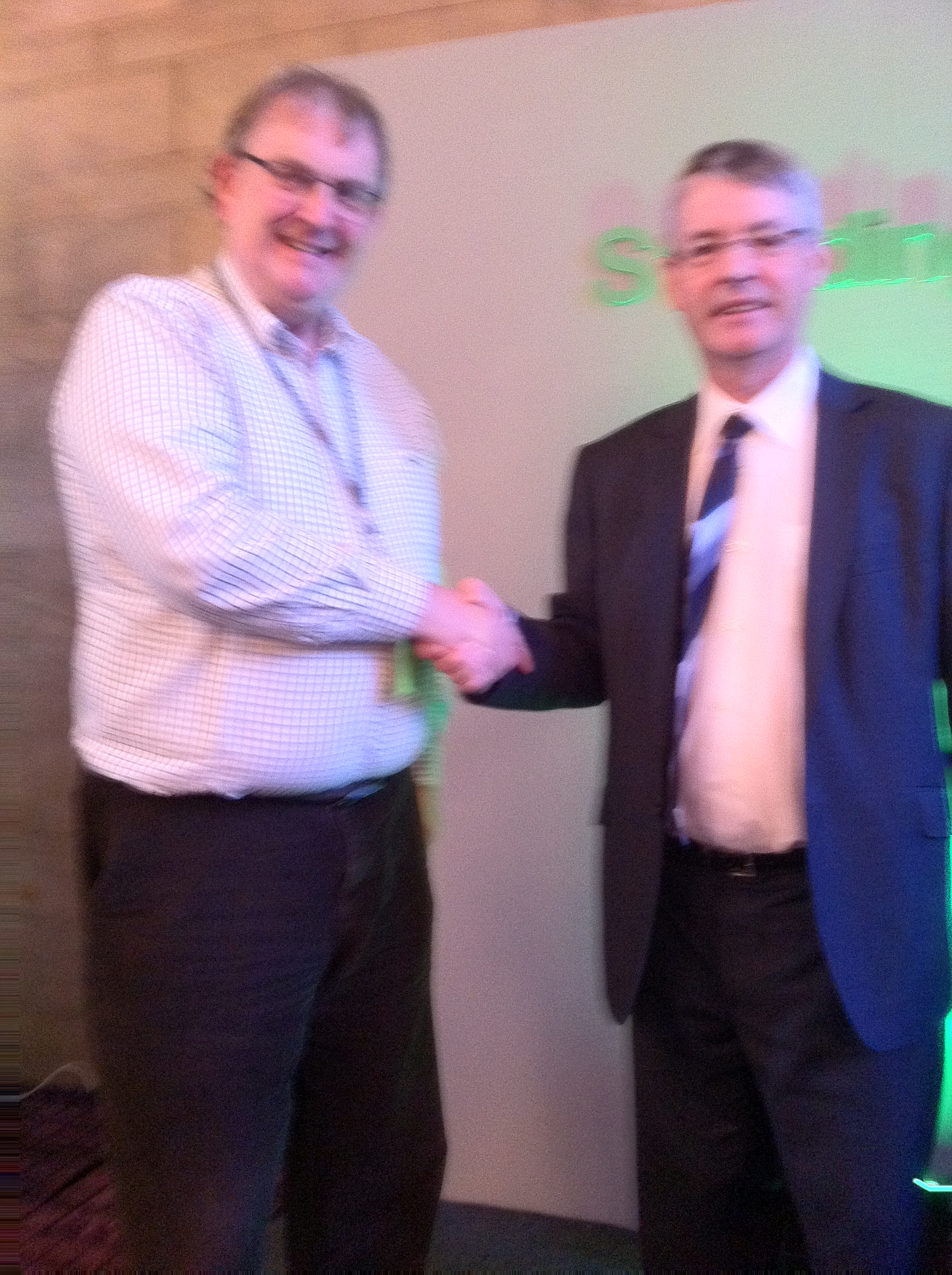
Michael Fisher & NUJ President Barry McCall

Michael Fisher & NUJ President Barry McCall

Mr McCall says that any attempt to exclude the press from council matters is “an attack on democracy” and he has vowed to take it up with Mr McSorley as a matter of urgency. He said any plans to ban the press from local council committee meetings would be a direct attack on democracy and an attack on press freedom. They are repugnant to an open and democratic society, he said, and would be strongly resisted by the NUJ. The union will raise its concerns with the District Council immediately.

Strabane Chronicle reporter Conor Sharkey said the paper had not submitted an objection at this stage but would probably do so. He told Hold the Front Page:-

 “It would be a big deal for ourselves as a newspaper but I think it would be a bigger deal for the ratepayers. The issues that are being discussed are not national security, it is bread and butter issues such as waste management and leisure. It is ordinary issues that affect the men and women in the street. I think the ratepayers have a right to know about them. It is a huge concern to us. We pick up a lot of news stories from these meetings.”

Only eight local authorities in Northern Ireland are believed to restrict access to such committee meetings at the moment.

MICHAEL FISHER is Chair of the NUJ Irish Executive Council Northern Ireland sub-committee

IRISH HISTORY: ROBERT KEE RIP

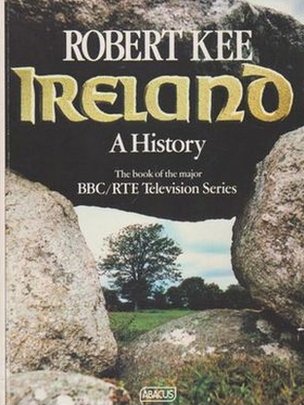
Ireland: A History

Ireland: A History

The death of writer, journalist and historian Robert Kee who died on Friday January 11th aged 93 is an opportune moment to look back not just at the television series he presented on Irish history, but on other similar series. First I acknowledge the assistance of a very useful article by Cathal Brennan in The Irish Story about how important events in Irish history such as the Easter Rising in 1916 have been covered by Irish television, starting in the 1960s when Telefís Éireann had opened.

1965 saw Telefís Éireann attempt their first history series entitled The Irish Battles. 1966 began with a new television series called The Course of Irish History edited by F.X. Martin and T.W. Moody. The series dealt with Irish history from prehistoric times up to the present and finished with a debate between the contributors involved” (Brennan).

F.X.Martin was an Augustinian priest who was Professor of Medieval History at UCD from 1962 to 1988. I remember seeing him occasionally in the corridors when I was a student at Earlsfort Terrace and Belfield. He was deeply involved in the campaign to preserve the Viking site at Wood Quay in Dublin. More details about him can be found in Charles Lysaght’s “Great Irish Lives: An Era in Obituaries” p.260. Certainly I remember the impact that the black-and-white televised series had. I only moved back to Dublin in 1967, with little or no knowledge of Irish history at the time, so I found the Martin/Moody book a very useful educational aid. T.W.Moody was a Quaker and was Professor of Modern History at Trinity College.

The eruption of the troubles in the North in 1969 and the introduction of censorship through Section 31 legislation meant a lack of any further series on history on RTÉ until the 1980s. However in 1969/70 I remember attending an hour-long programme about Northern Ireland recorded at the RTÉ studios at Donnybrook and presented by the late Liam Hourican, who was then Northern Editor for RTÉ News, based at Fanum House in Belfast.

Robert Kee’s thirteen-part series on Ireland: A Television History was broadcast in 1980/81 on RTÉ and BBC. It charted the history of the island from the time of Brian Boru up to the struggle for independence. It won a Jacob’s award for Kee, as the BBC obituary noted. Ruth Dudley Edwards has written an obituary for the Sunday Independent which sums up his achievements during a long and successful career.

In 1981 Thames Television produced a six-part documentary series The Troubles, which was shown on UTV. In more recent times there have been programmes on RTÉ such as Hidden History (2007) and in 2011 a five-part series presented by my former colleague in RTÉ News Belfast, Fergal Keane, entitled The Story of Ireland and broadcast on RTÉ and BBC. For those interested in pursuing the subject further, I notice that UCD is running an adult education course starting later this month on “Television and Irish History“. The tutor is David Ryan. I wonder what the tv historians will make of the current flags protest in Belfast and other parts of the North. Will the restriction placed on the flying of the union flag at Belfast City Hall in December become one of the most significant dates in Northern Ireland history since the signing of the Good Friday agreement?

UNIONIST FORUM

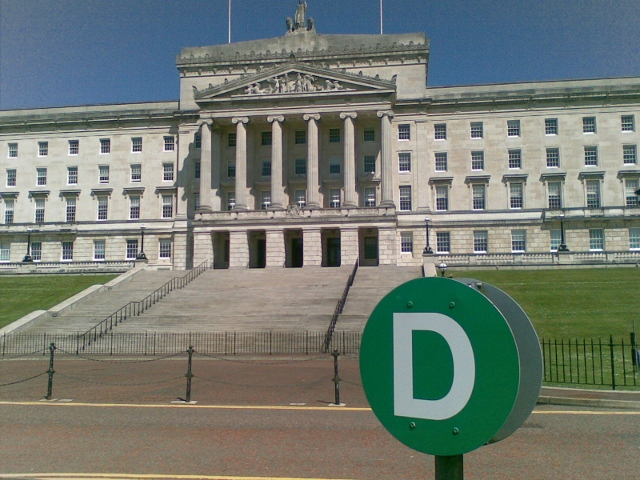
Parliament Buildings

Parliament Buildings

Up on the hill the unionist talking shop was put in place. The most representative unionist group in fifty years, according to the DUP leader and First Minister Peter Robinson. But what exactly is the purpose of this forum and will it do anything except allow the DUP to continue to make their mark as the leading representatives of unionism? There are no violent scenes in East Belfast tonight so perhaps the forum has made a start in trying to bring in some loyalist voices who think they have been left behind by the peace process. There were reports of some small protests this evening and according to reports on social media more demonstrations are planned tomorrow night. Businesses in Belfast reckon they have lost £15 million pounds as a result of the protests over the decision by Belfast City Council to fly the union flag on designated days only (a subject I touched on yesterday) although it was noticeable that on a Saturday just before Christmas the shoppers had taken over the streets again while the protestors walked around City Hall in what seemed to be a circle, except that it’s a rectangular shape! So there is a major challenge facing not just unionists but nationalists as well.

Sinn Féin pointed out that unionists talking to themselves would not solve the problem of mutual respect for people’s national identity and culture. John O’Dowd said there needed to be an open discussion on how people’s Irishness and Britishness could be respected and valued. He also made the point that unionism needed to face the reality that Northern Ireland has changed since the Good Friday agreement and will continue to change. The SDLP leader Alasdair McDonnell criticised the narrow nature of the talks, which are thought to have taken place in DUP offices at Stormont. Like Mr O’Dowd he stressed the principles of equality and parity of esteem and said he believed that if a new accommodation of identities is not at the heart of the conversations then the outcome would be lopsided or one sided and would not lead to a resolution of the issues of identity.

December protest: Bruce Street

December protest: Bruce Street

Young loyalists on the streets however from working class areas like Sandy Row have a very different perspective. They see the move to restrict the flying of the union flag as an attack on their Britishness. They have not yet been convinced that Northern Ireland’s constitutional position within the United Kingdom has been secured for as long as the majority wishes it to remain so. They are strongly critical of the folks on the hill, especially the DUP. I will refrain from printing the exact reply I got when I asked a 14 year-old why he was protesting as minor trouble began at Sandy Row last month. No peace dividend for their areas. While the attacks on police cannot be justified, the reasons why young people some not even teenagers took to the streets deserve to be examined. A sense of excitement was one of the explanations put forward. This is a new generation who did not experience the troubles and many were born after the Belfast agreement was signed. There was no one spokesperson for the protestors who could explain exactly what they wanted. William Fraser from South Armagh (the same person who organised the Love Ulster protest in 2006 that led to violence) aligned himself to the cause and talked about bringing 150 protestors to Dublin.

I was sitting in suburban South Dublin when I noticed a tweet about the now on hold Dublin protest that suggested “maybe it’s planned as one of the Gathering events”. My immediate reaction was that comments like that did little to help the situation and I tweeted that it was necessary to address the underlying reasons sensitively. Another person asked why should anyone in the Republic care about helping the situation and claimed it had nothing to do with the Republic how often the union flag was flown outside City Hall. People like these seem to have completely ignored what exactly the Good Friday agreement was about and how it involved a referendum in the Republic (94.4% in favour) and changes to Articles 2 & 3 of the Constitution. Even more interesting was the result today of a redC/PaddyPower.com poll that questioned 1000 voters in the Republic earlier this week about the flags issue. It found that over half of those that expressed an opinion (57%) suggested they felt Belfast City Council was wrong to restrict the flying of the Union flag at Belfast City Hall “as Belfast is in the UK and the flag should be able to be flown there”. According to the figures, in total, just over one-third of Irish voters (35%) believed the Council was right to restrict the flying of the flag, “as it will be flown on specific occasions”. 47% thought they were wrong to restrict it. No view was expressed by 18%. In terms of party support, nealy half (48%) of Sinn Féin voters were in agreement that it was the right decision. An interesting number (44%) of SF voters said it was wrong and 8% answered “don’t know”.

As protestors make plans for a number of demonstrations across Northern Ireland this evening (Friday) at 6pm, it’s reported by RTÉ News and others that the DUP has taken the first step in what may become a legal challenge to Belfast City Council’s decision about the flying of the Union flag. DUP councillor John Hussey has submitted a formal complaint to the Council claiming the decision to end the practice of flying the Union flag throughout the year is in breach of equality provisions. In an alternative to the protests, a number of people are using social media to show their support for a sit-in at a pub or cafe or restaurant around the same time. Ulster rugby fans will also be focusing on tonight’s Heineken Cup match at Ravenhill against Glasgow Warriors (8pm).


FLAG ROW

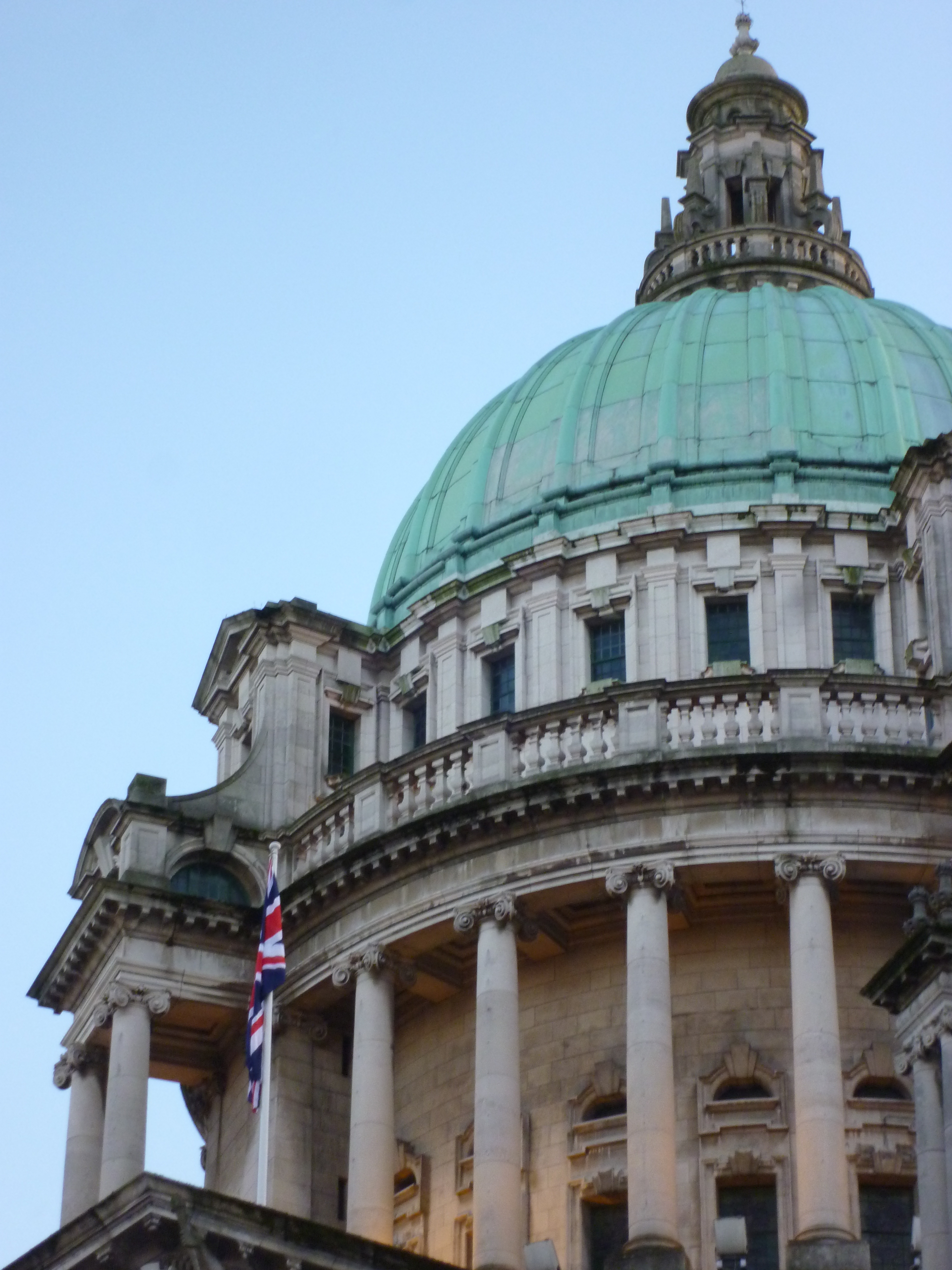
Union Flag at City Hall

Union Flag at City Hall

Now you see it…now you don’t. Today (the birthday of the Duchess of Cambridge) was one of the eighteen designated days in 2013 when the union flag is being flown at Belfast City Hall. The decision last month by the Council, taken democratically, to stop flying it 365 days of the year has unleashed a wave of protest by loyalists, many of them schoolchildren. It remains to be seen how long the protests will continue. The union flag will be hoisted again on January 20th, birthday of the Countess of Wessex. This was a position agreed by the SDLP and Sinn Féin and supported by the Alliance party, which seems to have borne much of the brunt from the protests. What struck me most was the age of the protestors. Some of them not even teenagers. Most of them were born after the troubles and the signing of the Good Friday agreement in 1998. But in terms of religion and politics the city they are living in is very different from that of thirty or forty years ago. The police service now finds itself stretched as it tries to deal with what remains a highly-charged atmosphere, which has put Belfast back in the international headlines for all the wrong reasons. The flag was taken down again at 6:45pm according to the News Letter and so far there have been none of the scenes of rioting that happened in the Newtownards Road area over the past week.

The DCMS lists the eighteen designated days for Northern Ireland as follows:

Dates for Hoisting Flags on UK Government Buildings in 2013

9 January Birthday of The Duchess of Cambridge
20 January Birthday of The Countess of Wessex
6 February Her Majesty’s Accession
19 February Birthday of The Duke of York
10 March Birthday of The Earl of Wessex
11 March Commonwealth Day (second Monday in March)
17 March St. Patrick’s Day (Northern Ireland: union flag only should be flown)
21 April Birthday of Her Majesty The Queen
9 May Europe Day
2 June Coronation Day
10 June Birthday of The Duke of Edinburgh
15 June Official Celebration of Her Majesty’s Birthday
21 June Birthday of The Duke of Cambridge
17 July Birthday of The Duchess of Cornwall
15 August Birthday of The Princess Royal
10 November Remembrance Day (second Sunday in November)
14 November Birthday of The Prince of Wales
20 November Her Majesty’s Wedding Day