UCD BELFIELD CAMPUS

Michael Fisher in Belfield

Michael Fisher in Belfield

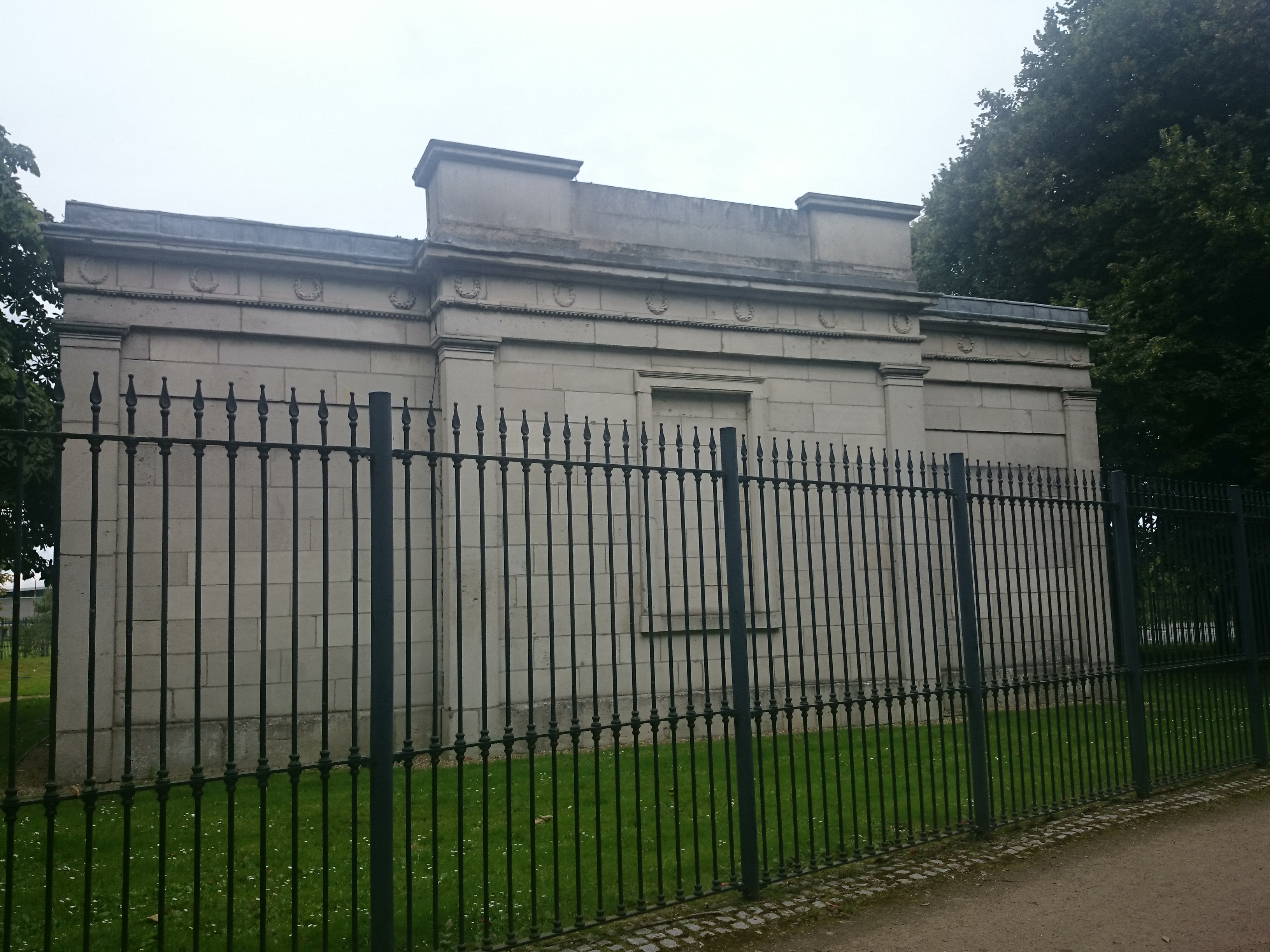
Walking through the grounds of Belfield recently on one of the woodland walks in the direction of Roebuck Road, I came across what looked like a Grecian temple. I was not sure what it was used for. But finding a useful leaflet on UCD’s period houses and the history of the vast campus, I discovered that it is known as the Magnetic Observatory.

Magnetic Observatory, Belfield  Photo: © Michael Fisher

Magnetic Observatory, Belfield Photo: © Michael Fisher

The brochure explains this is not an original feature of the Belfield campus, as it was first built in the 1830s in the Fellows’ Garden of Trinity College Dublin.

Magnetic Observatory, Belfield  Photo: © Michael Fisher

Magnetic Observatory, Belfield Photo: © Michael Fisher

To facilitate the construction of Trinity’s new Arts and Social Science Building, the Magnetic Observatory was gifted to UCD in the 1970s, where it was rebuilt stone-by-stone. It was designed by architect Frederick Darley (1764-1841), who was once described as “among the most eminent architects of the kingdom”. The building is in the form of a classical Grecian Doric temple.

Magnetic Observatory, Belfield  Photo: © Michael Fisher

Magnetic Observatory, Belfield Photo: © Michael Fisher


FIVEMILETOWN CLOCK

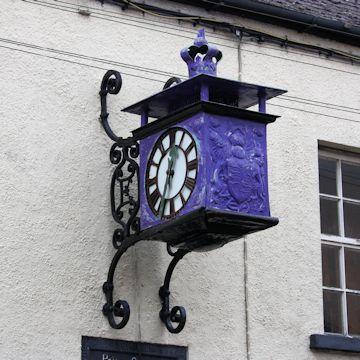
Fivemiletown Clock  Photo: Heritage Lottery Fund

Fivemiletown Clock Photo: Heritage Lottery Fund

Fivemiletown’s historic clock which has been a distinctive local landmark on Main Street for over 100 years has been restored. The Heritage Lottery Fund awarded a grant of £18,400 earlier this year for the repair of the timepiece . It was erected in 1903 to mark the coronation of King Edward VII and is one of the remaining physical links to the history of the village.

The refurbished Village Clock will be unveiled tomorrow, Wednesday 3rd December. To mark the occasion a celebratory event will take place in the Valley Hotel starting at 11am. This will consist of music song and dance by local artists. At 12.30pm the refurbished clock will be unveiled by the Lord Lieutenant for County Tyrone, Mr Robert Scott OBE. Everyone is very welcome to attend.

The intricately-wrought copper casing was made in Fivemiletown itself, making it a unique part of the local heritage. The funding enabled the clock to be returned to its former glory. A leaflet and education resource pack have also been produced.

It was one of five grants awarded by the HLF to smaller or more modest projects. The head of the HLF in Northern Ireland Paul Mullan said: “these grants really help local people to dig into their past to explore, record, or share their heritage. We are delighted to support this project in Tyrone which will preserve such an iconic local landmark. With HLF’s investment in Northern Ireland reaching a huge £184million for over 1000 projects, we are proud of our role in helping to protect and celebrate our heritage over the last 19 years and look forward to supporting many more local projects.”

Fivemiletown Clock before restoration Photo: Fivemiletown Chamber of Commerce facebook

Fivemiletown Clock before restoration Photo: Fivemiletown Chamber of Commerce facebook

Michael Callaghan from Fivemiletown Chamber of Commerce added: “We are absolutely delighted at the news of this award. There is already a great deal of interest and enthusiasm among the people of Fivemiletown and we see it as a legacy project which will be a source of civic pride for future generations”.

A century ago, before everyone had a watch to synchronise or a mobile phone to swipe, the time piece above the old Petty Sessions building was a focal point in village life and a way of making sure you were on time. Its finely-wrought copper casing developed that distinctive patina, or verdigris, that comes from weathering, and its hands turned the hours faithfully, driven by the mechanism that was wound from inside the Petty Sessions building. As the years ticked by, it gradually fell into disrepair and eventually stopped working altogether.

Blessingbourne, Fivemiletown, Co.Tyrone  Photo:  © Michael Fisher

Blessingbourne, Fivemiletown, Co.Tyrone Photo: © Michael Fisher

The Impartial Reporter describes how, at the time of the clock’s initial installation, a local copper-working class was thriving in the area. Mrs Mary Montgomery of the local Blessingbourne Estate

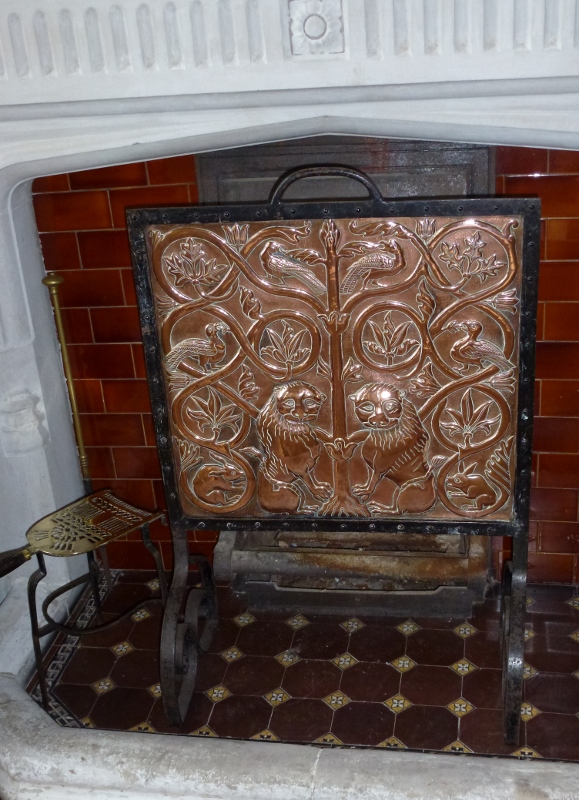
Copper Firescreen in Blessingbourne: Fivemiletown Arts & Crafts School

Copper Firescreen in Blessingbourne: Fivemiletown Arts & Crafts School

set up the class in 1891 through the Home Arts and Industries Association and initially taught the class herself in the Petty Sessions building. To begin with, they made items such as candlesticks, tea trays, fenders for fireplaces and newspaper racks.

These artisans became so successful that their work was shown at exhibitions in London, Dublin and St Louis.  in 1893, at the St. Louis World Fair in 1904 and at the Dublin International Fair in 1907. It was these skilled craftsmen who made the copper casing of the clock, which was erected in 1903 to commemorate the coronation in 1902 of King Edward VII and Queen Alexandra.

Clogher Valley Railway train in Main Street Fivemiletown: from painting by Viktor Welch

Clogher Valley Railway train in Main Street Fivemiletown: from painting by Victor Welch

The mechanical works of the clock were made by Sharman D. Neill of Belfast and it is thought that the iron scroll-work was completed by Harland and Wolff. Another iconic feature of the era, the Clogher Valley Railway, was used to transport the raw materials and the finished artefacts. One of the best-known photos of the old railway is of the train in the Main Street, with the clock in the background.

For an update on the official unveiling of the restored clock see Julian Fowler’s report ‘Changing Chimes’ on BBC Newsline.

PTE ROBERT HAMILTON: WW1 TALK BALLINODE

***DON’T FORGET TO BUY YOUR COPY OF THIS WEEK’S NORTHERN STANDARD FOR ALL THE NEWS FROM COUNTY MONAGHAN. AVAILABLE IN NEWSAGENTS, SUPERMARKETS, PETROL STATIONS AND MANY OTHER OUTLETS. PRICE €2:00*** 

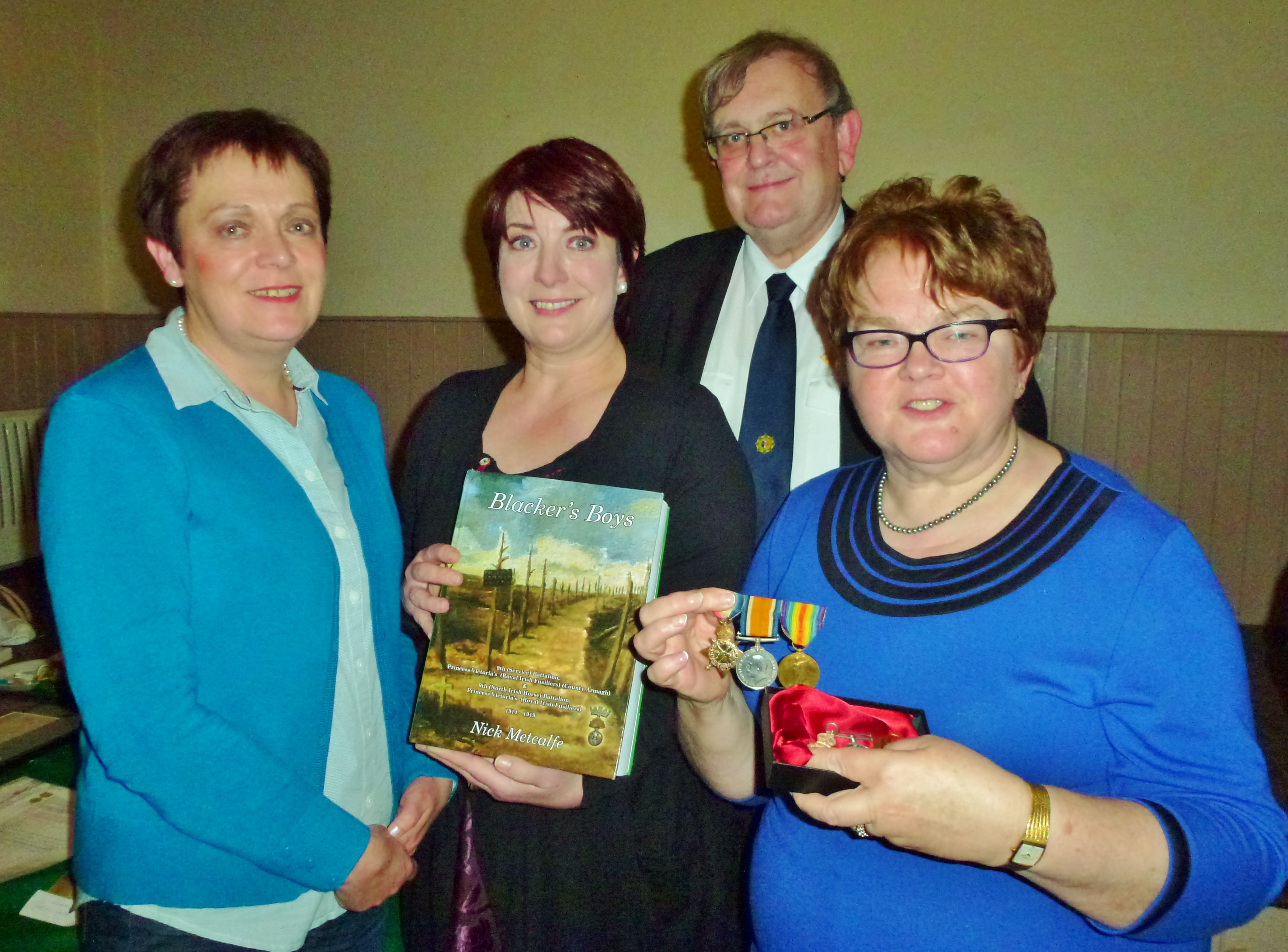
Heather Stirrat, Marie McKenna, Michael Fisher and Ruby Heasty with the three WW1 medals Photo: © Evelyn Fisher

Heather Stirrat, Marie McKenna, Michael Fisher and Ruby Heasty with the three WW1 medals Photo: © Evelyn Fisher

Michael Fisher at the plaque for Robert Hamilton at St Dympna's Church, Ballinode Photo: © Evelyn Fisher

Michael Fisher at the plaque for Robert Hamilton at St Dympna’s Church, Ballinode Photo: © Evelyn Fisher

A WORLD WAR I SOLDIER FROM BALLINODE

Private Robert Hamilton from Kilmore East in Ballinode is one of the thousands of Irishmen killed in World War I whose stories were forgotten for nearly 100 years. Now to coincide with the centenary of the start of the Great War in August 1914, his story was recalled in a talk by local journalist Michael Fisher at St Dympna’s hall in Ballinode on Friday evening.

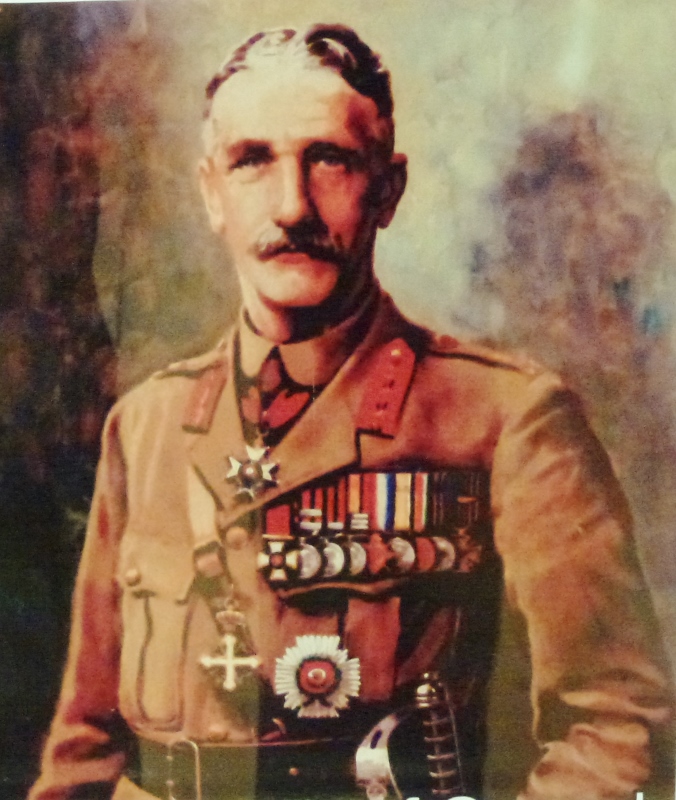
According to his obituary in the Northern Standard in May 1918, Private Hamilton was a member of the Ulster Volunteer Force in County Monaghan. He had signed the Ulster Covenant in Ballinode in September 1912. The UVF ranks joined the British Army to fight in World War I and became part of the 36th (Ulster) Division, headed by a Cavan man, Major General Oliver Nugent.

General Sir Oliver Nugent: Photo courtesy Cavan County Museum

General Sir Oliver Nugent: Photo courtesy Cavan County Museum

Ballinode Parochial Hall Photo:  © Michael Fisher

Ballinode Parochial Hall Photo: © Michael Fisher

Robert Hamilton enlisted in Monaghan in the 9th  Battalion Royal Irish Fusiliers (the ‘Faugh-a-Ballaghs’) when a recruitment party came to town in February 1915. The Johnston and Madden Memorial Orange Hall on North Road was one of the places used by the British Army, along with the Town Hall. The recruits were sent to a barracks in Belfast and then to England for training. In October 1915 the regiment was on the move from Southampton across the English Channel to France.

Robert fought at the Battle of the Somme in July 1916 but was invalided with a fever at some stage and appears to have been sent back to England to recuperate. He left Ballinode on Easter Saturday at the end of March 1918 and returned to his unit on the western front. Three weeks later he was killed in the fighting during a German offensive in the Ypres Salient at Kemmel Hill in Belgium. He was 26, not 24 as some records show. His body was never identified, so he has no grave, but his name is included in the vast Tyne Cot memorial near Ypres.

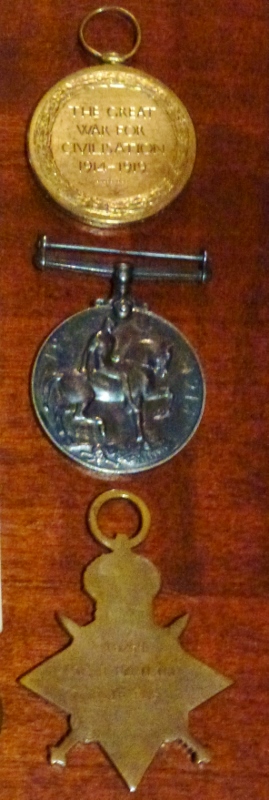
There is also a plaque in his memory at St Dympna’s Church in Ballinode, which provided the springboard for the talk. It would not have been possible without the interest shown by Marie McKenna and her research along with two distant Hamilton relations, Ruby Heasty and Heather Stirratt. Ruby still has the three war medals awarded to Private Hamilton.

Private Robert Hamilton world war one medals Photo: © Michael Fisher

Private Robert Hamilton world war one medals Photo: © Michael Fisher

THANKS – AGAIN! 50,000 TIMES!

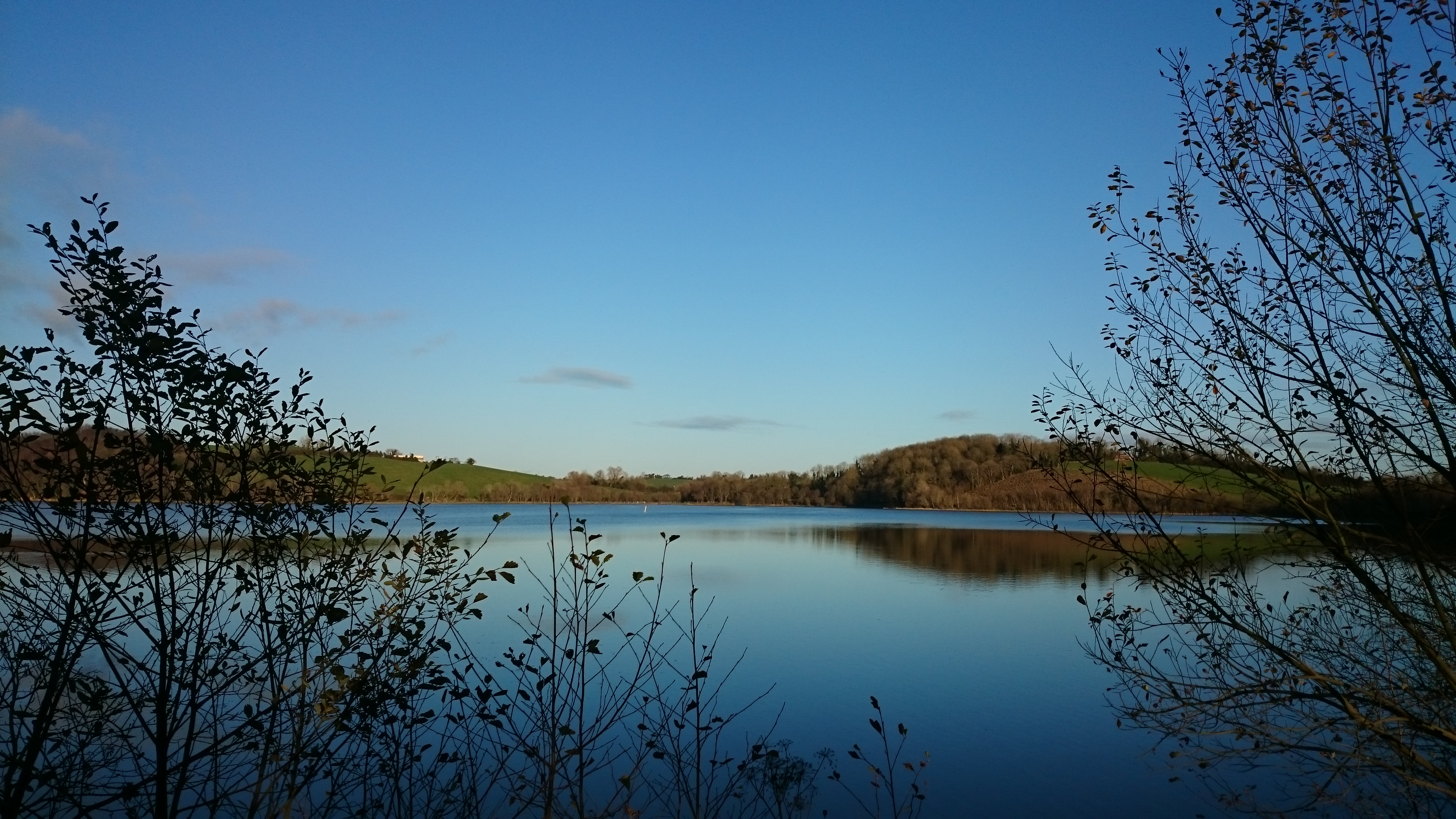
Emy Lough Photo:  © Michael Fisher

Emy Lough, Emyvale  Photo: © Michael Fisher

A week ago when I resumed blogging I expressed the hope that it would enable me to achieve a total of over 50,000 views for my pages. That target has now been passed, thanks to your support. Please keep on reading. I have a few more articles to add on Private Robert Hamilton from Ballinode, County Monaghan, and these will appear in the next few days.

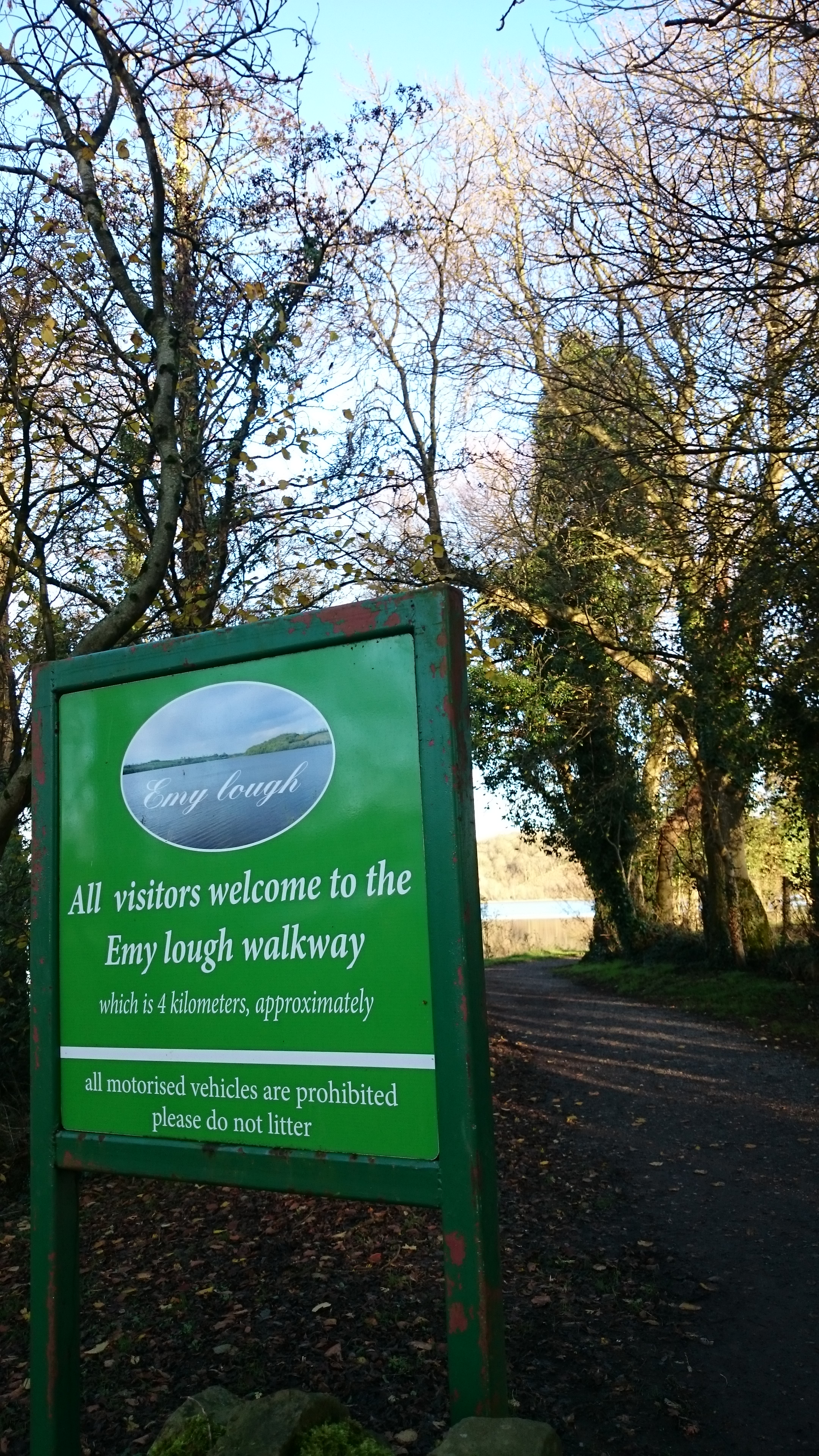
Emy Lough Walkway, Emyvale Photo:  © Michael Fisher

Emy Lough Walkway, Emyvale Photo: © Michael Fisher

Donation box made by McCarron Engineering at Emy Lough Walkway, Emyvale  Photo:  © Michael Fisher

Donation box made by McCarron Engineering at Emy Lough Walkway, Emyvale Photo: © Michael Fisher

The beautiful view that I use as the background for FisherBelfast’s Blog (see above) is of a lake: in this case Emy Lough outside Emyvale in County Monaghan. I went there to do the walk around the Lough at the weekend and took some new photographs, which I will share with you later on these pages. A beautiful spot and congratulations to the team of volunteers from Donagh Development Association which ensures the walkway is kept in tidy and good condition. The next big event there will be the Christmas Day swim for a local charity. Please  note the newly installed donation box is cleared regularly.

THANKS

Michael Fisher speaking at the William Carleton Summer School, Emyvale, August 2013

Michael Fisher speaking at the William Carleton Summer School, Emyvale, August 2013

MESSAGE FROM THE PUBLISHER

Thanks to all those readers who have continued to peruse my blog pages while I took a pause for eight months. I am delighted to see that all the various articles were receiving around 60+ hits per day. My next target therefore is to bring my total views beyond the current 49,350 to over 50,000. With your support this can be achieved. If you like the content of these pages please feel free to submit a comment using the link provided. Spread the word among your friends and give them the link to www.fisherbelfast.wordpress.com. Many thanks. Michael Fisher November 19th 2014

AEJ THERESA VILLIERS

NI Secretary of State Theresa Villiers MP  Photo: © Michael Fisher

NI Secretary of State Theresa Villiers MP Photo: © Michael Fisher

This is the text of the speech which the Secretary of State for Northern Ireland Theresa Villiers MP delivered at a lunch in Belfast I organised last Friday on behalf of the Association of European Journalists (Irish Section). Most of the AEJ members are based in Dublin.   

NI Secretary of State Theresa Villiers MP  Photo: © Michael Fisher

NI Secretary of State Theresa Villiers MP Photo: © Michael Fisher

“It is a great pleasure to speak to the Association of European Journalists here in Belfast this afternoon and I am grateful to Eileen Dunne, Martin Allioth and Michael Fisher for their kind invitation to do so. In my remarks today I’d like to set out the government’s position in relation to the so-called ‘On the Runs’. And I’d like to highlight some of the challenges facing both the government and the executive as we work together to build a better future for everyone in Northern Ireland.

Victims

As regards ‘on the runs’, I’d like to start by reiterating just how much the government appreciates the deep sense of anger felt about what has happened. For many people the judgement in the Downey case accompanied as it was by details of the scheme put in place by the last government to deal with on the runs has been a cause of considerable distress and grave concern. I recognise that the people who must be feeling that distress and concern at its most intense levels are the families of those murdered in the appalling terrorist atrocity in Hyde Park over 30 years ago who hoped that justice might at long last be done.
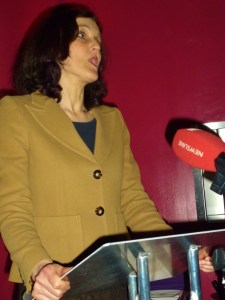
NI Secretary of State Theresa Villiers MP  Photo: © Michael Fisher

NI Secretary of State Theresa Villiers MP Photo: © Michael Fisher

But this issue affects victims of terrorism more widely people, like the relatives of the Kingsmill massacre who I met last week – people who have never seen the killers of their loved ones brought to justice. Nobody who meets the victims of terrorism here in Northern Ireland can fail to be deeply moved by the pain and suffering that many of them still feel long after the events that caused their terrible loss and bereavement.

And I am very, very sorry that what’s happened in recent days will have revived painful memories for many victims, putting them through the agony of loss all over again. This controversy is a reminder to us all that in any process for dealing with the past, it is the interests of victims that must come first.

NI Secretary of State Theresa Villiers MP  Photo: © Michael Fisher

NI Secretary of State Theresa Villiers MP Photo: © Michael Fisher

On the Runs

The arrangements for dealing with OTRs were put in place by the previous government beginning in 2000 and then accelerated after the failure of the Northern Ireland Offences Bill in 2006.

Essentially the process involved Sinn Fein submitting a list of individuals living outside the United Kingdom who believed that if they returned here to Northern Ireland or any other part of the UK that they might be wanted by the police in connection with terrorist offences committed before the 1998 Belfast Agreement. These names were then checked by the police and in some cases by the Public Prosecution Service.

If that checking process concluded that the lack of evidence available at the time meant that there was no realistic prospect of prosecution, then the individuals concerned were informed that they were no longer wanted by police in a letter signed by a Northern Ireland Office official. Yet the recipients of these letters were also made aware that should sufficient evidence subsequently emerge connecting them with terrorist offences, then they would still be liable for arrest and prosecution in the normal way.

AEJ Chair Martin Alioth and Secretary of State Theresa Villiers MP  Photo: © Michael Fisher

AEJ Chair Martin Alioth and Secretary of State Theresa Villiers MP Photo: © Michael Fisher

Support for the rule of law

So I want to be very clear. No one holding one of these letters should be in any doubt. They are not “get out of jail free cards”.

They will not protect you from arrest or from prosecution and if the police can gather sufficient evidence, you will be subject to all the due processes of law, just like anybody else. The letters do not amount to any immunity, exemption or amnesty something that could only ever be granted by legislation passed by Parliament.

They were statements of fact at the time regarding an individual’s status in connection with the police and prosecuting authorities. It was on that basis that when the current government took office and was made aware of these arrangements that we allowed the list of names submitted to our predecessors  – by that stage coming towards its end  – to continue to be checked.

In total, of the 200 or so cases considered under the scheme, 38 have been looked at since May 2010 and of these 12 received letters saying they were no longer wanted. No letters have been issued by the NIO since December 2012 and as far as this government is concerned, the scheme is over. If at any time we had been presented with a scheme that amounted to immunity, exemption or amnesty from prosecution implied or otherwise we would have stopped it immediately.

This government does not support, and has never supported, immunities, exemptions or amnesties from prosecution. That is we vigorously opposed the Northern Ireland Offences Bill in 2005, that would have introduced what amounted to an amnesty and which was abandoned in the face of widespread condemnation. We believe in the application of the rule of law and due process. And that applies across the board to anyone,  including those who are in possession of a letter under the OTR scheme.

So for the avoidance of any doubt, it needs to be clearly understood by all recipients that no letters which have been issued can be relied on to avoid questioning or prosecution for offences where information or evidence becomes available now or later. And in the case of Mr Downey, it was the fact that the letter he was sent was factually incorrect and misleading that led the judge to rule that an abuse of process had occurred. John Downey should never have been sent a letter saying he wasn’t wanted by the police because at all times he was wanted by the Metropolitan police in relation to the Hyde Park bombing.

NI Secretary of State Theresa Villiers MP  Photo: © Michael Fisher

NI Secretary of State Theresa Villiers MP Photo: © Michael Fisher

Independent review

The Prime Minister reacted swiftly to the concerns about the scheme expressed by the First Minister, the Justice Minister and the broader public by announcing a judge-led investigation of the scheme. Its terms of reference require the inquiry to provide a full public account of the operation and extent of the scheme establish whether other mistakes were made and to make recommendations.

This will be a meaningful, exacting and rigorous process to get to the truth of what happened to provide the answers for which the public are calling, and do everything possible to remove any impediments to the future operation of justice, perceived or real. I expect the judge’s report to be provided to me by the end of May. Until that time there are limits on what I can say because I do not wish to cut across the judge’s work or pre-empt his or her conclusions.

But I do want to say this. No more side deals.

As you will all here appreciate, the collapse of the Downey case and the revelations on OTRs that came with it occurred at a time when the parties in the Northern Ireland executive were discussing possible ways forward on flags, parading and the past. Both the UK and the Irish governments were very supportive of those efforts and hopeful that progress could be made.

Of course I understand that events of the past few days have caused some to question whether the discussions on the so-called Haass issues have a future. But the reality is that whatever the conclusions of the inquiries into the OTR scheme, the issues under consideration in those leaders’ meetings will still need to be dealt with.

The imperative to make progress on flags and parading remain every bit as strong as it was when the Northern Ireland Executive began this process last year. And on the past, one of the lessons of the last 10 days must surely be that more than ever we need an agreed approach and structures that can operate in a balanced and transparent way that commands public confidence.

We need to see an end the era of secret side deals and evasive parliamentary answers that too often characterised the handling of the political process here and undermined confidence in it. I regret the fact that this government did not discuss the OTR scheme with ministers in the executive, particularly when we concluded in August 2012 that anyone wanting to raise new cases should direct them to the devolved authorities. And I have made that clear both to the First Minister and the Justice Minister.

I believe that the way in which the previous government withheld the scheme from Northern Ireland’s politicians, from parliament and from the public in the aftermath of the failure of the legislation in 2005 was wrong and I welcome the apology Labour gave for that earlier this week.

Politics of delivery 

NI Secretary of State Theresa Villiers MP  Photo: © Michael Fisher

NI Secretary of State Theresa Villiers MP Photo: © Michael Fisher

Making progress on flags, parading and the past could free up the space for politicians to focus more on other issues that are critical to our future, such as rebalancing the economy, reforming the public sector and building a genuinely shared future. Because let’s face it, the vast majority of people in Northern Ireland do not wake up on a Monday morning worrying about the past, flags or parades.

While these are important matters, the priorities for most people are issues like jobs, pensions, transport, schools and hospitals and that’s where they expect their politicians to focus their energies. Today we are over half way through the second term of the second Assembly since devolution was restored in May 2007. That’s the longest period of unbroken devolved government in Northern Ireland since the closure of the Stormont Parliament in 1972. And that’s not bad when one considers the number of commentators who predicted that a coalition led by the DUP and Sinn Fein couldn’t last six months let alone more than six years.

And the executive here can cite a number of real achievements, not the least of which is its continued success in bringing foreign direct investment into Northern Ireland. This has helped make Belfast the second most popular city in the UK for FDI.

The First and deputy First Minister have also published Northern Ireland’s first ever locally agreed community relations strategy, Together: Building a United Community. But for all that the executive has proven stable and delivered in a number of areas, I believe that there is a clear public perception out there that more still needs to be done. That comes across in successive opinion polls but also in many conversations I’ve had with business people, journalists and others across Northern Ireland.

Of course I understand that a mandatory coalition that embraces 5 parties with fundamentally divergent views on constitutional, economic and social issues was never going to be easy to operate. Yet one of the central features of the 1998 settlement, as amended at St Andrews in 2006, was precisely to bring together politicians from different traditions and show that they could deliver for the good of the people of Northern Ireland as a whole. And it’s crucial that we make it work. Of course the UK government as guarantor of the devolution settlement under strand one of the Belfast Agreement can encourage and help.

AEJ President Eileen Dunne and Secretary of State Theresa Villiers MP  Photo: © Michael Fisher

AEJ President Eileen Dunne and Secretary of State Theresa Villiers MP Photo: © Michael Fisher

Making difficult choices

But Northern Ireland’s politicians also need to move beyond the issues that have dominated political debate here and recognise that difficult choices are often needed in order to deliver the services the public want and expect. So we have to press ahead with implementing the economic pact we agreed jointly last summer just before the G8.

For the government that means delivering on issues like start-up loans, access to finance and the necessary preparatory work needed to enable a decision to be made in the autumn on whether to devolve corporation tax powers. But the executive too needs to move forward on economic reform such as tackling business red tape, streamlining planning, investing in infrastructure and reforming the public sector.

We want Northern Ireland to be an even more attractive place to do business and to be able to take full advantage of the recovery that is underway as a result of our long term economic plan. And that requires difficult choices on reforming welfare so that Northern Ireland has a system that rewards work, tackles the causes of dependency, and continues to protect those in genuine need while being fair to taxpayers whose money funds the system. And difficult choices are also needed if people in Northern Ireland are to be given the same protection from organised crime as people in Great Britain now have through the work of the National Crime Agency.

In this long running debate I believe that protecting the public from serious organised crime should now be the overriding priority and that the time has therefore come for executive to press ahead on the NCA, so that it is allowed to work properly in Northern Ireland for the good of everyone who lives here.
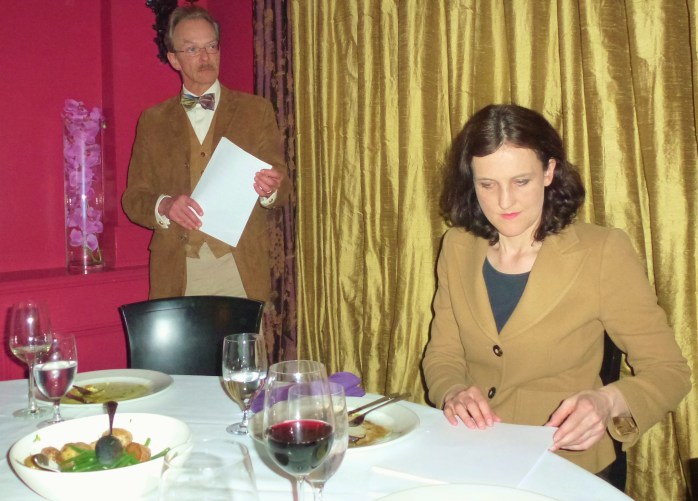
AEJ Chair Martin Alioth and Secretary of State Theresa Villiers MP  Photo: © Michael Fisher

AEJ Chair Martin Alioth and Secretary of State Theresa Villiers MP Photo: © Michael Fisher

The role of UK government in today’s Northern Ireland 

I want to conclude with a word about the UK government’s role here. Of course devolution has significantly altered that role.

We are no longer responsible for the day to day delivery of public services which is now rightly the responsibility of the executive. But we do remain fully engaged. That’s why despite the deficit we have responded positively to requests from the Chief Constable for significant additional funding for the PSNI in order to combat terrorism and help keep people here safe and secure. It’s why we agreed the economic pact last May enabling us to work more closely with the executive here than any other devolved administration in the rest of the UK.

It’s why we brought the G8 Summit of world leaders here so that the eyes of the world could focus on Northern Ireland as a great place to visit and invest. It’s why we responded swiftly to the request to devolve long haul air passenger duty to help save Northern Ireland’s vital direct transatlantic link. It’s why we fulfilled our pledge to bring about a fair solution for those investors in the Presbyterian Mutual Society who were unable to access their money.

It’s why we’ve safeguarded Northern Ireland’s Assisted Area Status a key priority for the executive and a status which significantly enhances Northern Ireland’s ability attract jobs and investment. It’s why we introduced tax relief for high end film and TV production that was crucial to securing a fourth series of Game of Thrones for the Paint Hall studios in Belfast. And it’s why we’ve supported the executive by maintaining public spending here at 2% per head higher than the UK average. And all of this is underpinned by a government that is not neutral about Northern Ireland’s position in the UK.

Of course, as the agreements make clear, the consent principle is paramount and the future of Northern Ireland will only ever be determined by the people in Northern Ireland. But while the UK government might not have a vote, we do have a voice. And that voice is resoundingly for the United Kingdom with Northern Ireland playing a full and active role within it.

A United Kingdom in which we are all stronger and better together. And in carrying out our responsibilities we are mindful at all times of our duty to work on behalf of the whole community here, in helping to build a stronger economy and a shared future, and a peaceful, stable and prosperous Northern Ireland for everyone.

And that’s a commitment that we’ll continue to deliver with determination and with enthusiasm. Thank you.

SECRETARY OF STATE

Theresa Villers MP  Photo: Conservative Party

Theresa Villers MP Photo: Conservative Party

This is the text of the speech which the Secretary of State for Northern Ireland Theresa Villiers MP is due to deliver at a lunch in Belfast I have organised on behalf of the Association of European Journalists (Irish Section). Most of the AEJ members are based in Dublin. The speech was released in advance last night by the Northern Ireland Office:

“In my remarks today I’d like to set out the Government’s position in relation to the so-called ‘On the Runs’. And I’d like to highlight some of the challenges facing both the Government and the Executive as we work together to build a better future for everyone in Northern Ireland.

Victims

As regards ‘On the Runs’, I’d like to start by reiterating just how much the Government appreciates the deep sense of anger felt about what has happened. For many people the judgement in the Downey case … accompanied as it was by details of the scheme put in place by the last government to deal with On the Runs … has been a cause of considerable distress and grave concern. I recognise that the people who must be feeling that distress and concern at its most intense levels are the families of those murdered in the appalling terrorist atrocity in Hyde Park over 30 years ago … who hoped that justice might at long last be done.

But this issue affects victims of terrorism more widely … people like the relatives of the Kingsmill massacre who I met last week … people who have never seen the killers of their loved ones brought to justice. Nobody who meets the victims of terrorism here in Northern Ireland can fail to be deeply moved by the pain and suffering that many of them still feel long after the events that caused their terrible loss and bereavement.

And I am very, very sorry that what’s happened in recent days will have revived painful memories for many victims, putting them through the agony of loss all over again. This controversy is a reminder to us all that in any process for dealing with the past, it is the interests of victims that must come first.

On the Runs

The arrangements for dealing with OTRs were put in place by the previous government … beginning in 2000 and then accelerated after the failure of the Northern Ireland Offences Bill in 2006. Essentially the process involved Sinn Fein submitting a list of individuals living outside the United Kingdom who believed that if they returned here to Northern Ireland … or any other part of the UK … that they might be wanted by the police in connection with terrorist offences committed before the 1998 Belfast Agreement. These names were then checked by the police and in some cases by the Public Prosecution Service.

If that checking process concluded that the lack of evidence available at the time meant that there was no realistic prospect of prosecution the individuals concerned were informed of that they were no longer wanted by police in a letter signed by a Northern Ireland Office official. Yet the recipients of these letters were also made aware that should sufficient evidence subsequently emerge connecting them with terrorist offences … then they would still be liable for arrest and prosecution in the normal way.

Support for the rule of law

So I want to be very clear. No one holding one of these letters should be in any doubt.

They are not “get out of jail free cards”.

They will not protect you from arrest or from prosecution and if the police can gather sufficient evidence, you will be subject to all the due processes of law, just like anybody else. The letters do not amount to any immunity, exemption or amnesty … something that could only ever be granted by legislation passed by Parliament.

They were statements of fact at the time regarding an individual’s status in connection with the police and prosecuting authorities. It was on that basis that when the current Government took office and was made aware of these arrangements … that we allowed the list of names submitted to our predecessors … by that stage coming towards its end … to continue to be checked. In total of the 200 or so cases considered under the scheme 38 have been looked at since May 2010 … and of these 12 received letters saying they were no longer wanted.

No letters have been issued by the NIO since December 2012 … and as far as this Government is concerned, the scheme is over.

If at any time we had been presented with a scheme that amounted to immunity, exemption or amnesty from prosecution … implied or otherwise … we would have stopped it immediately. My party and this Government do not support, and have never supported, immunities, exemptions or amnesties from prosecution.

That is why the Conservative Party, the Liberal Democrats and many others vigorously opposed Peter Hain’s Northern Ireland Offences Bill in 2005 that would have introduced what amounted to an amnesty and which was abandoned in the face of widespread condemnation. We believe in the application of the rule of law and due process … and that applies across the board to anyone … including those who are in possession of a letter under the OTR scheme.

So for the avoidance of any doubt … it needs to be clearly understood by all recipients that no letters which have been issued can be relied on to avoid questioning or prosecution for offences where information or evidence becomes available now or later. And in the case of Mr Downey it was the fact that the letter he was sent was factually incorrect and misleading that led the judge to rule that an abuse of process had occurred. John Downey should never have been sent a letter saying he wasn’t wanted by the police because at all times he was wanted by the Metropolitan police in relation to the Hyde Park bombing.

Independent review

The Prime Minister reacted swiftly to the concerns about the scheme expressed by the First Minister, the Justice Minister … and the broader public … by announcing a judge-led investigation of the scheme. Its terms of reference require the inquiry to provide a full public account of the operation and extent of the scheme … establish whether other mistakes were made … and to make recommendations.

This will be a meaningful, exacting and rigorous process to get to the truth of what happened … to provide the answers for which the public are calling … and do everything possible to remove any impediments to the future operation of justice, perceived or real. I expect the judge’s report to be provided to me by the end of May. Until that time there are limits on what I can say because I do not wish to cut across the judge’s work or pre-empt his or her conclusions.

But I do want to say this.  No more side deals.  As you will all here appreciate, the collapse of the Downey case … and the revelations on OTRs that came with it … occurred at a time when the parties in the Northern Ireland Executive were discussing possible ways forward on flags, parading and the past. Both the UK and the Irish Governments were very supportive of those efforts … and hopeful that progress could be made.

Of course I understand that events of the past few days have caused some to question whether the discussions on the so-called Haass issues have a future. But the reality is that whatever the conclusions of the inquiries into the OTR scheme, the issues under consideration in those leaders’ meetings will still need to be dealt with.

The imperative to make progress on flags and parading remain every bit as strong as it was when the Northern Ireland Executive began this process last year.  And on the past, one of the lessons of the last 10 days must surely be that more than ever we need an agreed approach and structures that can operate in a balanced and transparent way that commands public confidence. We need to see an end the era of secret side deals and evasive parliamentary answers that too often characterised the previous government’s handling of the political process here … and undermined confidence in it.

I regret the fact that this Government did not discuss the OTR scheme with ministers in the Executive … particularly when we concluded in August 2012 that anyone wanting to raise new cases should direct them to the devolved authorities … and I have made that clear both to the First Minister and the Justice Minister.

I believe that the way in which Labour withheld the scheme from Northern Ireland’s politicians, from parliament and from the public in the aftermath of the failure of the legislation in 2005 was wrong … and I welcome the apology Labour gave for that earlier this week.

Politics of delivery

Making progress on flags, parading and the past could free up the space for politicians to focus more on other issues that are critical to our future … such as rebalancing the economy, reforming the public sector and building a genuinely shared future…. because let’s face it … the vast majority of people in Northern Ireland do not wake up on a Monday morning worrying about the past, flags or parades. While these are important matters, the priorities for most people are issues like jobs, pensions, transport, schools and hospitals … and that’s where they expect their politicians to focus their energies.

Today we are over half way through the second term of the second Assembly since devolution was restored in May 2007. That’s the longest period of unbroken devolved government in Northern Ireland since the closure of the Stormont Parliament in 1972. And that’s not bad when one considers the number of commentators who predicted that a Coalition led by the DUP and Sinn Fein couldn’t last six months … let alone more than six years.

And the Executive here can cite a number of real achievements … not the least of which is its continued success in bringing foreign direct investment into Northern Ireland.  This has helped make Belfast the second most popular city in the UK for FDI.

The First and deputy First Minister have also published Northern Ireland’s first ever locally agreed community relations strategy … Together: Building a United Community.  But for all that the Executive has proven stable and delivered in a number of areas … I believe that there is a clear public perception out there that more still needs to be done. That comes across in successive opinion polls … but also in many conversations I’ve had with businesspeople, journalists and others across Northern Ireland.

Of course I understand that a mandatory coalition … that embraces five parties with fundamentally divergent views on constitutional, economic and social issues … was never going to be easy to operate. Yet one of the central features of the 1998 settlement … as amended at St Andrews in 2006 … was precisely to bring together politicians from different traditions and show that they could deliver for the good of the people of Northern Ireland as a whole. And it’s crucial that we make it work.

Of course the UK Government … as guarantor of the devolution settlement under strand one of the Belfast Agreement … can encourage and help.

Making difficult choices

But Northern Ireland’s politicians also need to move beyond the issues that have dominated political debate here and recognise that difficult choices are often needed in order to deliver the services the public want and expect. So we have to press ahead with implementing the economic pact we agreed jointly last summer just before the G8.

For the Government that means delivering on issues like start up loans, access to finance and the necessary preparatory work needed to enable a decision to be made in the autumn on whether to devolve corporation tax powers. But the Executive too needs to move forward on economic reform such as tackling business red tape, streamlining planning, investing in infrastructure and reforming the public sector.

We want Northern Ireland to be an even more attractive place to do business … and to be able to take full advantage of the recovery that is underway as a result of our long term economic plan. And that requires difficult choices on reforming welfare so that Northern Ireland has a system that rewards work, tackles the causes of dependency, and continues to protect those in genuine need … while being fair to taxpayers whose money funds the system.

And difficult choices are also needed if people in Northern Ireland are to be given the same protection from organised crime as people in Great Britain now have through the work of the National Crime Agency. In this long running debate I believe that protecting the public from serious organised crime should now be the overriding priority … and that the time has therefore come for Executive to press ahead on the NCA so that it is allowed to work properly in Northern Ireland for the good of everyone who lives here.

Conclusion – role of UK Government in today’s Northern Ireland

I want to conclude with a word about the UK Government’s role here. Of course devolution has significantly altered that role.  We are no longer responsible for the day to day delivery of public services … which is now rightly the responsibility of the Executive. But we do remain fully engaged.

That’s why … despite the deficit … we have responded positively to requests from the Chief Constable for significant additional funding for the PSNI in order to combat terrorism and help keep people here safe and secure. It’s why we agreed the economic pact last May enabling us to work more closely with the Executive here than any other devolved administration in the rest of the UK. It’s why we brought the G8 Summit of world leaders here … so that the eyes of the world could focus on Northern Ireland as a great place to visit and invest. It’s why we responded swiftly to the request to devolve long haul air passenger duty to help save Northern Ireland’s vital direct transatlantic link.

It’s why we fulfilled our pledge to bring about a fair solution for those investors in the Presbyterian Mutual Society who were unable to access their money and were so cruelly abandoned by the previous government. It’s why we’ve safeguarded Northern Ireland’s Assisted Area Status … a key priority for the Executive and a status which significantly enhances Northern Ireland’s ability attract jobs and investment.

It’s why we introduced tax relief for high end film and TV production that was crucial to securing a fourth series of Game of Thrones for the Paint Hall studios in Belfast. And it’s why we’ve supported the Executive by maintaining public spending here at 20 per cent per head higher than the UK average.

And all of this is underpinned by a Government that, unlike its predecessor, is not neutral about Northern Ireland’s position in the UK. Of course … as the agreements make clear … the consent principle is paramount and the future of Northern Ireland will only ever be determined by the people in Northern Ireland. But while the UK Government might not have a vote … we do have a voice. And that voice is resoundingly for the United Kingdom … with Northern Ireland playing a full and active role within it … a United Kingdom in which we are all stronger and better together.

And in carrying out our responsibilities we are mindful at all times of our duty to work on behalf of the whole community here … in helping to build a stronger economy and a shared future … and a peaceful, stable and prosperous Northern Ireland for everyone … And that’s a commitment that we’ll continue to deliver with determination and with enthusiasm”.

AEJ background:  The AEJ is an independent, self-funding association for journalists, writers and specialists in European affairs. We also organise other seminars and special events from time to time. 

The AEJ offers journalists in Ireland the chance to be part of a professional and social network of media professionals and experts on European issues. Membership can provide valuable mutual support for individual journalists.   

We are not tied to any institutional or political group but are recognised by the Council of Europe, the OSCE and UNESCO. Our goals are to advance knowledge and debate on European affairs and to uphold media freedom.    

The AEJ Irish Section is part of a Europe-wide network of some 20 national sections across Europe, with more than 1000 members in all. Internationally, the AEJ has an active programme of professional activities and the annual AEJ Congress is a forum for debate on matters of common concern to journalists across the continent.

MIDWIVES’ TALES

Midwives are in the news today on both sides of the Irish Sea. In Ireland, it has emerged that midwifery staff at the Midland Regional Hospital in Portlaoise had written to two Irish government ministers in 2006 expressing concern over staffing levels at the hospital. In the 2006 letter to then minister for finance Brian Cowen and then minister for health Mary Harney, the hospital’s midwifery staff said they had “a real fear” that a mother or baby will die in their care before these issues are addressed. In the letter, seen by RTÉ’s Investigation Unit, they also said they had made their concerns known to management on a number of occasions but that nothing had happened.

The letter was written prior to all of the deaths of four babies examined in last night’s documentary ‘Fatal Failures’. The babies died in similar circumstances over a six-year period at the hospital. They were all alive at the onset of labour, but died either during labour or within seven days of birth. The Irish Health Service Executive has apologised unequivocally to the families.

In an unrelated development, RTÉ News also reported on the last baby being born at Mount Carmel Hospital in South Dublin on the day that 200 staff members have been made redundant. Another 128 staff will lose their jobs over the coming weeks. Staff attended a mass this evening to mark the closure of the hospital. Afterwards around 20 staff said they were planning a sit-in at the premises. The provisional liquidators confirmed that 572 maternity patients have been affected since the hospital went into liquidation last Friday. Four babies were born today and the final arrival was a girl.

In Westminster, the House of Commons Public Accounts Committee, like its Oireachtas counterpart, is playing an important role on the issue of health services, especially maternity. Channel 4 News reports that in a damning investigation into the state of maternity care, the Public Accounts Committee criticised both the British Department of Health and NHS England for being unable to tell it who is accountable for “ensuring something as fundamental” as whether the NHS has enough midwives. It said it had gathered evidence that “many maternity services are running at a loss, or at best breaking even, and that the available funding may be insufficient for trusts to employ enough midwives and consultants to provide high quality, safe care”.

The report added that “although there has been a welcome increase in midwives, there is still a national shortage in Britain of some 2,300 midwives required to meet current birth rates. Pressure on staff leads to low morale and nearly one-third of midwives with less than 10 years’ work experience are intending to leave the profession within a year. Over half of obstetric units do not employ enough consultants to ensure appropriate cover at all times.

The committee reported that rates of infection among new mothers, infection to the baby and injury to the baby “are all higher at the weekend”. It added: “Although there have been substantial improvements in levels of consultant presence on labour wards in recent years, over half of obstetric units were still not meeting the levels recommended by the Royal College of Obstetricians and Gynaecologists at September 2012.”

Labour MP, Margaret Hodge, who chairs the committee, said: “The vast majority of women who use NHS services to have their babies have good experiences, but outcomes and performance could still be much better. Despite an overall increase in the number of midwives there is still a shortage of 2,300 that are required to meet current birth rates – a truly worrying figure. What’s more, the Department of Health and NHS England struggled to tell my committee who is accountable for ensuring something as fundamental as whether the NHS has enough midwives. As things stand, there is evidence that many maternity services are running at a loss, or at best breaking even, and that the available funding may be insufficient for trusts to employ enough midwives and consultants to provide high quality, safe care.”

Royal College of Midwives

Royal College of Midwives logo

Cathy Warwick, chief executive of the Royal College of Midwives (RCM), said: “Maternity services are many thousands of midwives short of the number needed to deliver safe, high quality care. The birthrate remains exceptionally high and as this and the National Audit Office report states, births are also becoming increasingly complex. This puts even more demands on midwives and maternity services. We are seeing areas such as antenatal and postnatal care in particular suffering because trusts often do not have enough midwives to provide consistent and high quality care before and after pregnancy.”

RCM Chief Executive Cathy Warwick  Photo: © Jess Hurd/RCM

RCM Chief Executive Cathy Warwick Photo: © Jess Hurd/RCM

RCM campaign badge

RCM campaign badge

She added: “At the moment there seems to be a gap between the actual cost of maternity care and the amount of money hospitals get to provide it. This cannot continue and maternity services need to see the money they receive meet the cost of care. If this does not happen I fear services will be cut, choice will be reduced and care will suffer.” Details of the RCM’s report on the state of maternity services in the UK (2013) can be found here and the full report is available here. It was launched in London on December 11th.

MAYOR OF MANY COLOURS

Launch of Belfast Children's Festival  Photo: Arts Council via twitter

Launch of Belfast Children’s Festival Photo: Arts Council via twitter

Lord Mayor of Belfast Máirtín Ó Muileoir showed he is a man of many colours…or at least his hair is…when he launched the Belfast Children’s Festival (March 7th-14th) in the city centre this morning along with the Chair of the Arts Council Bob Collins. Hairdressing meets art by Sienta La Cabeza, a Catalan group from Barcelona.

Lord Mayor with Marie-Louise Muir, BBC Radio Ulster

Lord Mayor with Marie-Louise Muir, BBC Radio Ulster

The Lord Mayor even gave an interview to Marie-Louise Muir of BBC Radio Ulster’s Arts Extra programme while his hair was being reconfigured!

New-style Lord Mayor of Belfast Máirtín Ó Muileor

New-style Lord Mayor of Belfast Máirtín Ó Muileor

The Lord Mayor attended a number of other engagements throughout the day but was perhaps lucky that he did not have to chair a Council meeting! How long we have to wait until he reverts to his traditional look remains to be seen! Here’s a reminder of how things looked in the Lord Mayor’s parlour yesterday (Tuesday) when I was among a group of Lions Clubs representatives to be welcomed by him at City Hall.

Lord Mayor of Belfast Máirtín Ó Muileor with Lions 105I District Governor Liam Lyons, PDG Sean Sandford, PDG James O'Sullivan & Michael Fisher (Belfast Club)

Lord Mayor of Belfast Máirtín Ó Muileor with Lions 105I District Governor Liam Lyons, PDG Sean Sandford, PDG James O’Sullivan & Michael Fisher (Belfast Club)

TABLE QUIZ IN BELFAST

Image


BELFAST LIONS CLUB are holding a table quiz on

   THURSDAY  6th MARCH  

Malone Road, Belfast

at 7.30pm.


Image


Entry £20 per team (max 6 per team)        Prize for the winning team  £100

The quiz night is part of our drive to recruit new members to  Belfast Lions Club.

Please come along on the evening when we will be available to chat about our plans for the year ahead. There will be a raffle to raise funds for our charitable account and to support the work of our nominated charity for 2014 Diabetes UK (NI). We look forward to seeing you there.  diabetes-logo-news-page