A BRIDGE TOO FAR?

Proposed Narrow Water Bridge

Proposed Narrow Water Bridge

First things first. If you came here looking for a commentary on the Allied advance in the Second World War and battles such as the bridge at Arnhem, then you will be disappointed. I am sorry if I misled you. But the title seemed appropriate for the ongoing controversy over the proposed bridge at Narrow Water at the head of Carlingford Lough. They have been talking about the project since 1976 when the East Border Region committee was formed by ten councils on both sides of the border, years before the Anglo-Irish agreement or the Good Friday agreement.

The proposed structure would link County Down just beyond Narrow Water Castle with the opposite side of the shore near Omeath in County Louth. The project eventually received planning permission and the prospect of EU funding of €17.4m last year. This green light was welcomed by the East Border Region Committee Chair, Councillor Jackie Crowe, a Sinn Féin member from Monaghan.

Proposed Bridge

Proposed Bridge

The approved scheme is for a single carriageway cable-stayed bridge across Carlingford Lough, which will be able to open to enable tall ships, leisure craft and other marine vessels access to Victoria Lock and the Albert Basin in Newry. The total length of the scheme is 620m while the towers have a height of 90m and 37m respectively. The design is by Roughan O’Donovan Consulting Engineers, who were also responsible for the new Boyne Bridge on the M1 near Drogheda.In his statement welcoming the project on 24th October 2012, Councillor Crowe is quoted as saying that the proposed bridge was:-

a genuinely symbolic cross border project providing the first bridge linking Ireland and Northern Ireland and will provide a momentous tourism and economic catalyst for the whole of the region. The Bridge development will provide much needed jobs in the construction sector in the short term and will undoubtedly enhance the tourism potential of the region as it acts as a gateway to the Mournes and Cooley Mountains”.

And I thought Sinn Féin always referred to the island of “Ireland” as a 32-county entity……but perhaps this was a statement drawn up by someone else. It also seems to contain an error often repeated by others that this is the first such cross-border bridge. Surely Councillor Crowe has heard of the projects successfully pursued with the Irish government by his party colleagues in Monaghan to get two small cross-border bridges rebuilt which the British Army had blocked in the early 1970s? Annaghroe and Knockaginny bridges across the River Blackwater connected Glaslough in County Monaghan and Caledon in County Tyrone and were re-opened in October 2010 by the then Transport Minister Noel Dempsey, whose colleague in government Dermot Ahern was very supportive of the Narrow Water project as a Louth TD and Minister for Justice.

It seems the progress of the Narrow Water project, described by its promoters as “iconic” and “histooric”, is not going to be as smooth as they hoped. Is it a bridge too far for unionists? Last November the First Minister and DUP leader Peter Robinson requested an investigation into the decision to grant EU funding. He rejected a claim by the SDLP MP for South Down Margaret Ritchie that he wanted money channelled away from North-South infrastructure schemes towards community projects involving former loyalist paramilitaries. The following month, Finance Minister Sammy Wilson told the Assembly there was a “political smell” about the application for funding. He questioned the speed with which the Stormont Environment Minister, Alex Attwood of the SDLP, had granted planning permission for the bridge.
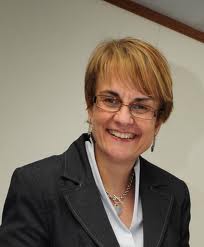
Margaret Ritchie MP

Margaret Ritchie MP

Now Margaret Ritchie has accused Sammy Wilson of dragging his feet and hiding behind other government departments when it comes to approving funding for the project. She quoted Mr Wilson’s argument that he could not approve the outstanding £2m for the Narrow Water Bridge until the Department of Regional Development had prepared a Roads Order. Ms Ritchie said she had now received confirmation from the Department for Regional Development that it is currently preparing the draft Roads Order, which is expected to published next month. But according to the Minister Danny Kennedy, she said, the formal making of the Order will not happen until the Department for Finance approves the business case.

Ms Ritchie said this response clearly states that the Minister for Finance can make the decision to approve the Narrow Water Bridge funding now and that this decision is not held back by the work of the Department of Regional Development, despite claims to the contrary. She said if it remained the case that Sammy Wilson is not prepared to approve the funding then the First and Deputy First Ministers must ensure a decision is taken without further delay, in the interests of the wider community and the tourism industry in the Mourne area and throughout the island. Furthermore as this is an important North-South economic development project there is now a clear need for the direct intervention of the British and Irish Governments to ensure that this project faces no more unnecessary delay, she added.

The MP has taken a keen interest in the project since her involvement with the East Border Region Committee as a Councillor in 1985. She paid tribute to people such as her predecessor Eddie McGrady, Jim McCart, Donal O’Tierney and Barney Carr, who she said had never faltered from their belief in the bridge and who had shaped the economic debate for it and kept the project alive during very difficult political times in the North.

Narrow Water project
Narrow Water project

SPIRIT OF ENNISKILLEN

Remembrance Sunday, Enniskillen 2012

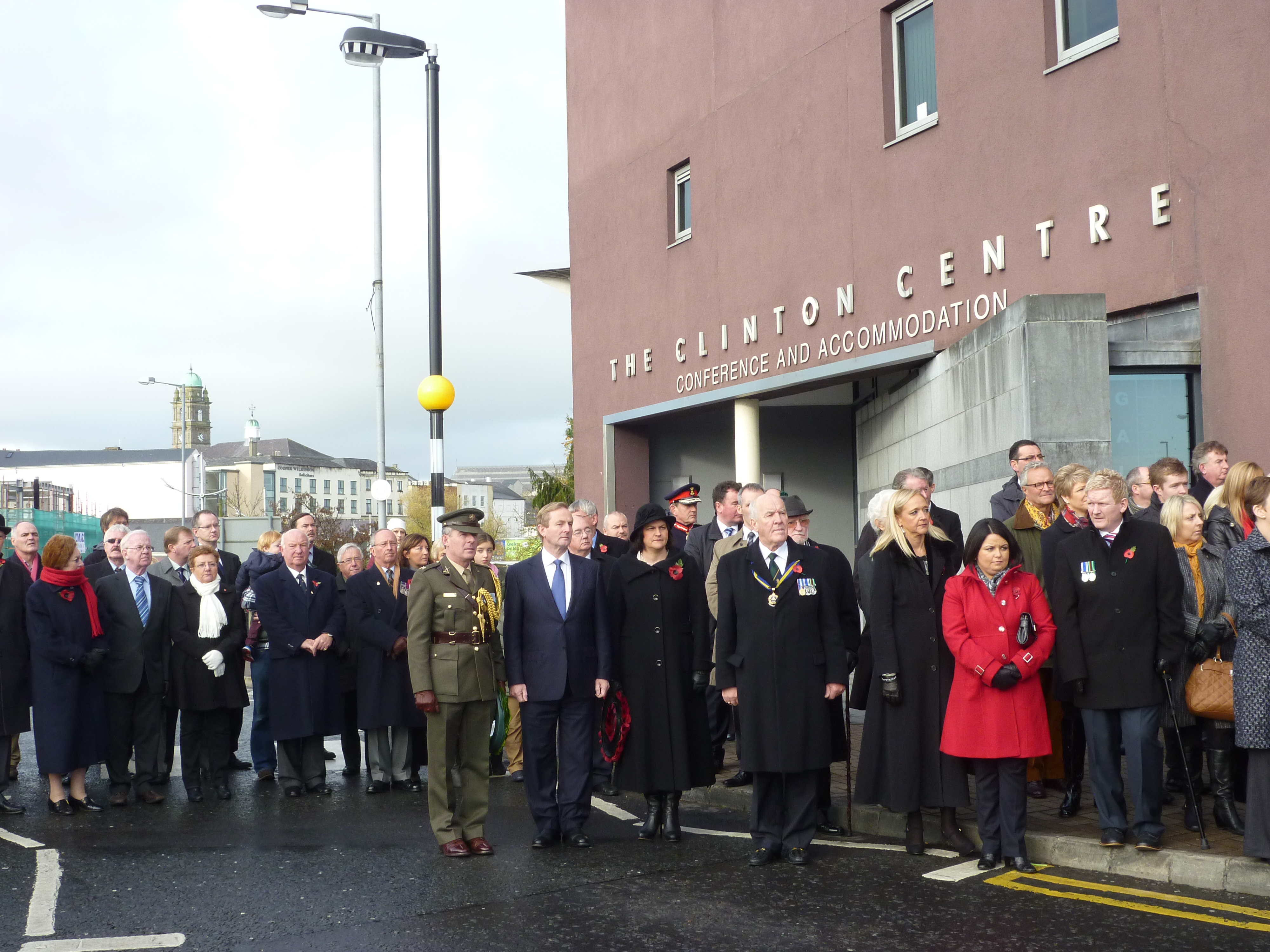
Taoiseach at Remembrance Sunday, Enniskillen 2012

Enniskillen has come a long way since the terrible attack at the war memorial in 1987 as people gathered for a Remembrance Sunday commemoration. The peace process has helped society to move on, to the extent that the Taoiseach Enda Kenny was able to paticipate in last year’s service on the 25th anniversary of the IRA bomb, in which 11 people were killed and over 60 were injured. Mr Kenny laid a green laurel wreath at the war memorial on behalf of the people of Ireland.

One of the outstanding memories after that horrific day on November 8th 1987 was the compassion and public expression of forgiveness to those who planted the bomb shown by Gordon Wilson. His daughter Marie was among the dead and he himself was injured in the blast. A local businessman, he went on to become a peace campaigner and served for a time as a member of Seanad Éreann.

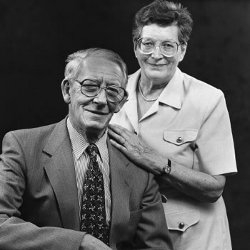
Gordon & Joan Wilson

Gordon & Joan Wilson

Inspired by Gordon’s words and his great desire for reconciliation following the Poppy Day bomb, a Trust was established in 1989. Its aim was to encourage young people from Northern Ireland aged from 16 to 19 to travel outside the island and to use their experience to help build community bridges at home. The Spirit Of Enniskillen Trust worked to encourage young people from both Catholic and Protestant backgrounds to come together and work towards a shared society and to learn from their experiences of visiting other areas of conflict. It supported a number of inter-linked projects working with young people in their schools, communities and other divided regions internationally. The Trust facilitated background leadership training, mentoring and resource support for school pupils, young volunteer facilitators, parents and teachers.

Wendy Austin

Wendy Austin

I remember attending the news conference when the Trust was launched and Wendy Austin was appointed as Chair. She proved to be an excellent mentor for the young ambassadors and any time I heard her speak, she always had words of encouragement for the teenage participants. She went on to become a life President of the group. When she launched the group’s millenium programme in 1998, she said its good work which had taken participants to countries such as Cyprus, Israel and the USA, was only just beginning.  She said it was a very exciting time to be involved in this kind of work. At this stage in the peace process there is almost more need for it now than ever before, she added.

spirit_of_enniskillen_logoThe Spirit of Enniskillen Trust supported groupings of young people from differing cultural traditions both locally and overseas  into discussion of their own contentious and contemporary issues, finding areas of commonality and cooperation, as well as learning to ‘agree to disagree’. Alongside this process, it provided personal feedback, training and support to nurture the critical understanding, awareness and skills that enable positive dialogue. Most of the Trust’s learning projects and workshops were facilitated and run by young people who had themselves been trained through Trust programmes. During its 23 years, over 16,000 young people participated in the various programmes, such as Future Voices and Building Citizenship and Diversity, working in 100 destinations abroad and fifty schools.

Now all the achievements of the project have sadly been brought to an end. The news emerged in The Detail (Kathryn Torney) following a decision by the trustees a week ago. Financial problems caused by a fall in property values and a deficiency of £250,000 in the Trust’s pension commitments led to the closure, according to its solicitor. Even when the Trust’s only property in the Malone Road area of Belfast is sold, there will still be a deficit, but this is expected to be met by the Pensions Trust. It is not the only charity in Northern Ireland in this situation.

The umbrella body NICVA said it had engaged expert pensions advice and it does not face closure. Its deputy chief executive said the SoE situation should act as a wake-up call to other charities to pay sharp attention to their finances.  nicva_logo

The Spirit of Enniskillen website containing details of all its activities has already been closed down. So one of the only places to find out more information about the work done by Chuck Richardson (director until May 2011) and the team of five is on the CredNI website. The ‘Spirit of Enniskillen Alumni’, a group of former participants in the scheme, has set up a facebook page, with over 320 likes so far and has published a statement endorsed by all:-

“At a time of limited prospects for young people, [the Trust] offered a rare opportunity for participants to lead change in their communities. It engaged the energy, idealism and commitment of young people to make a difference. The programmes provided a safe space for young people to address their own prejudices and confront sectarian attitudes, fears and misconceptions within our society…..The 375 individuals who endorse this statement wish to see Northern Ireland continue to progress. It is a tragedy that an organisation which was making a tangible contribution to this has not been saved. They wish to commemorate the legacy of the Trust and celebrate what it achieved. However as an organisation with much more to give, its premature and sudden closure is a great loss for Northern Ireland.”

Fourteen secondary school principals also expressed their concern at the closure of the Trust. To get some idea of just how successful the work of the charity was, this article last October by Brian Donaldson in the Impartial Reporter gives a good idea. As the 25th anniversary of the Enniskillen bomb approached, the widow of Gordon Wilson said she was thrilled that the Spirit of Enniskillen Trust was still flourishing. Joan Wilson, who attended a special presentation by young people who had been on the international exchange programme last summer, said Gordon would have been delighted at how the Trust had developed over the years.

Four young people from Fermanagh were among the forty who took part in last year’s Explore programme for international exchange and leadership: Michael Richmond and Jillian Ellis, who travelled to Berlin, Ashley Robinson, who travelled to the South of France and Donnchadh Tierney, who was in Sweden. Now the curtain has come down on these opportunities for young people to travel and broaden their horizons.

BALMORAL AT THE MAZE

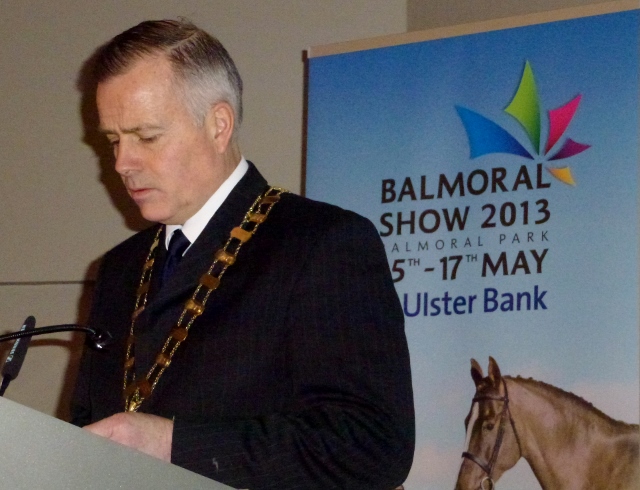
Balmoral Show Launch

Irish Moiled Breed back at Balmoral Show

Getting ready for Balmoral Show 2013. The launch was at the King’s Hall complex, where it has been held since 1896. But this year the Royal Ulster Agricultural Society’s premier event is moving to a new 65 acre complex at the former high security Maze prison site near Lisburn. The space is more than double the size of the Balmoral showgrounds in South Belfast. The move which Society members approved last June is quite historic and it’s going to be a phenomenal success, according to the RUAS President, John Bamber.

RUAS President John Bamber

RUAS President John Bamber

It’s Ireland’s largest agri-food show and attracts exhibitors and visitors from throughout the island. The organisers are hoping to surpass the 70,000 crowd they had last year. The new showgrounds is called Balmoral Park and will have most of the usual attractions as well as a funfair for the first time.  They say it will be bigger and better than previous shows.

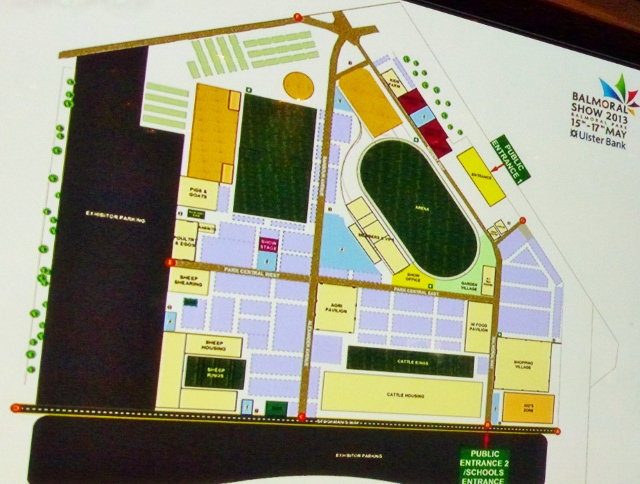
Balmoral Park, designed  by the London architects Studio Egret West, with its well laid out walkways and paths (many bearing street names with a respectful nod to the past), green spaces and landscaped areas, allows a greater space for trade exhibitors, larger facilities and warm up/practice areas for competitors. The arena increases in size by 25%. Adjacent to this is an area of tiered seating and landscaped banks allowing spectators to view show jumping, pony club games, the inter hunt chase as well as the headline attraction – The Kangaroo Kid.  The cattle lawn, sheep, horse and pig & goat rings also boast larger exhibiting areas.

Balmoral Park, The Maze

Balmoral Park, The Maze

The Show (map here) can now accommodate further livestock, making room for a number of other breeds including cattle with European Angus, Beef Shorthorns, Dexters and Irish Moiled, horses with Coloured Horses and Connemara Working Hunter and sheep with the addition of Swaledale and Lanark Type Blackface.

Greater acreage has led to a greater number, size and range of exhibits, as RUAS Chief Executive, Colin McDonald explained, “We are very excited about the new Showgrounds and the amazing opportunities it presents to expand and enhance the Show.  The move has allowed us not only to safeguard the future of this event and the Society but also to build upon our century long track record of showcasing food and farming excellence.” There will now be room to bring back plant machinery exhibits. Two of the most popular attractions – the Garden Village and the NI Food Pavilion have both expanded.

Food, a key component of the Balmoral Show, will be available in abundance throughout the Showgrounds and in the NI Food Pavilion which will offer more local variety than ever before.  The Garden village will be the location of the Womens’ Institute tea rooms, where you can enjoy a relaxing break while enjoying their new home industries section.  The new feature show garden will be a combination of contemporary gardens, an elegant classical garden, a Japanese garden and an open countryside.

Plenty of Parking at Maze Showgrounds

Plenty of Parking at Maze Showgrounds

There will be four official car parks around the Showgrounds, in addition to dedicated exhibitor car parks and disabled facilities. Provision has been made for up to 10,000 cars. Public transport will be available and more details will be released later by Translink. Balmoral Show will take place at Balmoral Park at the Maze near Lisburn on Wednesday 15th to Friday 17th May 2013. The Show runs from 9.30am to 8.30pm on the first two days and until 8pm on the final day.  Further details can be found here.

The question  now is what will happen to the King’s Hall complex, where some of the older pavilions used by the RUAS and the grandstand have been demolished. There was planning permission a few years ago for around 140 houses on a section of the site. The Hall itself which was opened in 1934 is a grade B1 listed building. It remains the largest exhibition area in Northern Ireland. It was also a famous boxing venue. Rinty Monaghan boxed several times in the hall. A blue plaque was unveiled in his memory at the hall in 2007. In 1985 the Clones Cyclone Barry McGuigan made his first title defence against Bernard Taylor at the Hall, having fought there on six previous occasions.

King's Hall, Belfast

King’s Hall, Belfast

CLOGHER CELEBRATES

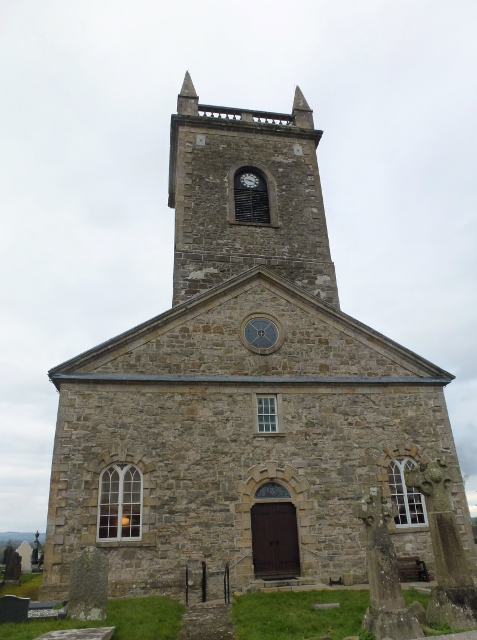
St Macartan's Cathedral, Clogher

St Macartan’s Cathedral, Clogher

Saint Patrick might be known widely for the foundation of his see in Armagh, of which he was the first Bishop. But it is predated by his legacy in Clogher. To mark Saint Patrick’s Day, archivist Jack Johnston gave a talk on the history of Saint Macartan’s Anglican Cathedral. He pointed out that Saint Patrick came to Clogher and established a church there under Macartan before he went to Armagh, which is now the seat of the all-Ireland Primate in both the Church of Ireland and Catholic churches. The see of Clogher was founded by Saint Patrick, who appointed one of his household, Macartan, as first bishop in 454. Macartan was the ‘strong man’ of Patrick, who established the church in Clogher and spread the gospel in Tyrone and Fermanagh. It is said that Saint Brigid, Macartan’s niece, was present at the founding of the see.

Jack Johnston talk

Jack Johnston talk

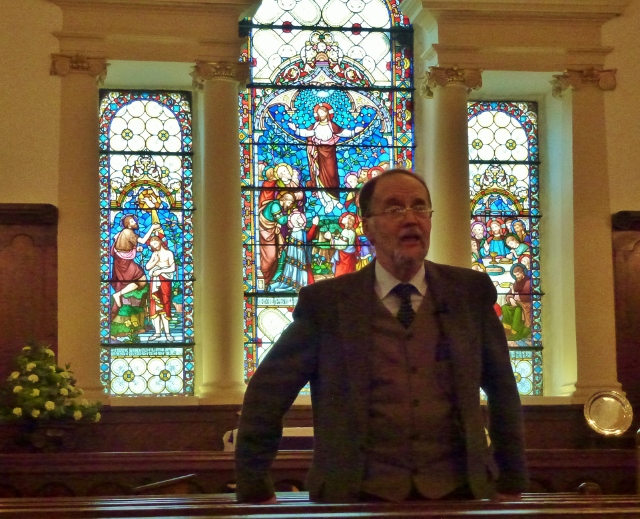
Jack Johnston's talk

Jack Johnston’s talk

The Precentor of Saint Macartan’s Cathedral Chapter, Reverend Noel Regan, who is originally from Sligo, organised a series of events to mark Saint Patrick’s Day, starting with the weekly Sunday morning Holy Communion service. There was a Lenten lunch to raise funds for  the Us missionary organisation. It was followed by some musicians playing in the Cathedral, including a chance to hear the wonderful organ played by Glenn Moore, Director of Music at the other (later) diocesan Cathedral, St Macartin’s in Enniskillen.

The day was rounded off with an ecumenical evensong, featuring the choir of the Cathedral group of parishes and members of the choir from St Patrick’s Catholic church in Clogher, to a setting by Thomas Tallis. Canon Regan said, “As members of the Church of Ireland we have the great privilege of worshipping in some of the most significant and important sites in the Christian history of this land. In Clogher we have a fine Cathedral which stands on one of the most important Christian sites in the area. We are delighted to open our doors that others might come and together with us learn something of our common heritage and enjoy the surroundings of this holy and special place”.

St Macartan's Cathedral, Clogher

St Macartan’s Cathedral, Clogher

IN PATRICK’S PATHS

Fr Denis Hartnett MHM

Fr Denis Hartnett MHM

Imagine the surprise of the congregation at Mass this morning when instead of the usual (retired) priest or the parish priest, they saw someone who looked a bit like St Patrick himself! Long grey-white hair and a plentiful beard. The usual celebrant had been temporarily replaced by someone who, appropriately for the feast day of the patron saint, turned out to be a missionary priest.

Massgoers in Tydavnet, County Monaghan in the Clogher diocese, listened with interest as Fr Denis Hartnett MHM introduced himself. He was there to promote the St Joseph’s Advocate magazine of the Mill Hill Missionaries, who took that name from the location of their motherhouse in North London and were founded by Cardinal Vaughan in the late 19thC. But it wasn’t a hard sell.

Instead, Fr Hartnett shared with the congregation his story of being a missionary in Sudan for over twenty years. His order came there in the 1930s. It was a fascinating story of life in this African country. He explained in a very vivid way how the peaceful existence of village life was suddenly shattered by war. Clapping his hands once to produce a startling “bang!” that would have awoken anyone not paying attention, he explained how one day he was  startled by the sound of gunfire and came out to discover that all the surrounding huts had been set on fire.

At this stage, he said all he could do was run for his life as men armed with AK47 rifles descended on the village. The local women were rounded up, taken to a stockade and were raped. Plunder, rape and pillage: a very different story than usual for Saint Patrick’s Day!

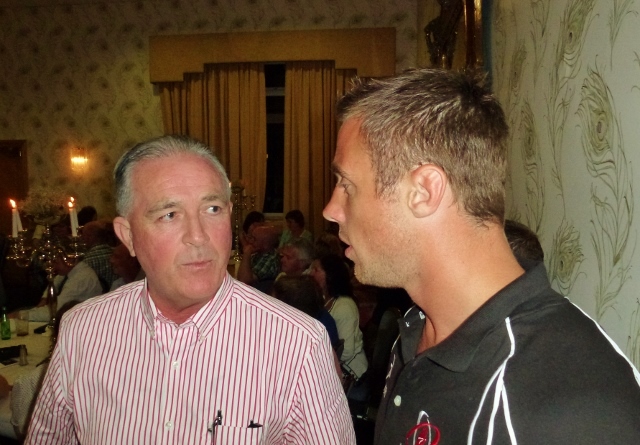
Fr John Skinnader & Tommy Bowe

Fr John Skinnader & Tommy Bowe

After the Mass, I asked Fr Hartnett if he had come across Fr John Skinnader CSSp, a missionary priest who comes from the neighbouring parish of Donagh (Emyvale) and who returned last October to Southern Sudan. During his time back in County Monaghan he attended the celebrations for the centenary of Edenmore national school, of which rugby international Tommy Bowe is also a past pupil. Fr Hartnett knows him but his work was in a different area. Fr Hartnett has been going around the country telling his story on behalf of his missionary order. After saying Mass in Tydavnet, he immediately went to another chapel in the parish to say Mass, at Urbleshanny in Scotstown. So if you did not get a chance to hear him, you can find out more about St Joseph’s Missionary Society here.

GRAND CANAL QUAY DUBLIN

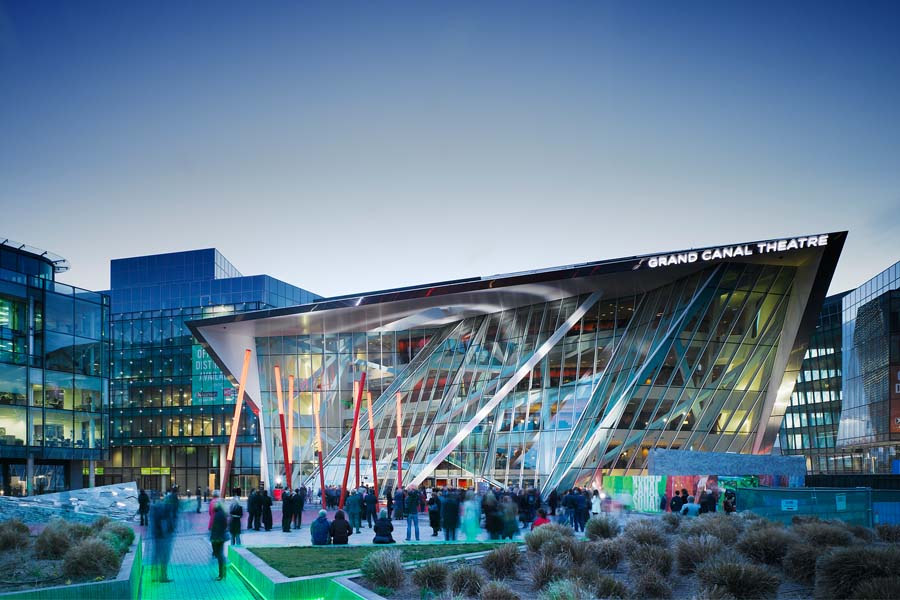
Grand Canal Theatre: Photo: Arup/Ros Cavanagh

Grand Canal Theatre: Photo: Arup/Ros Cavanagh

Just as the old dockside at Bristol has been rejuvenated through projects such as the M-Shed and the SS Great Britain, so too in Dublin. The Jeanie Johnston Tall Ship and Famine Museum is located at Custom House Quay. Through the Docklands Development Authority (DDA), a number of regeneration projects were initiated during the boom time of the Celtic Tiger economy. The  Convention Centre was built at Spencer Dock. On  the southern side of the River Liffey, the area around Grand Canal Dock has been transformed, with the building of an iconic theatre, seating over 2,000.

It was designed by the internationally renowned architect from New York, Daniel Liebeskind and was his first such project. Last year he was awarded the contract for designing a conflict resolution centre on part of the site of the former high security Maze prison outside Lisburn. His other projects have included  the Jewish Museum in Berlin and the redevelopment of the World Trade Centre site in Manhattan.

The consultants for the Grand Canal Theatre were Arup, for whom my daughter works in London. Arup were appointed to provide acoustic design and technical theatre systems, as well as civil, structural, building services and traffic engineering. Ove Arup, a Danish engineer, began his connection with Dublin in the late 1940s when he was invited by the architect Michael Scott to join him in the construction of Donnybrook bus garage for CIÉ. It was the first building in the world to have a concrete shell roof, lit by natural light from one end to the other. Arup’s Dublin office, its first overseas one, was set up in 1946 to work on the project.

BGE Grand Canal Theatre

BGE Grand Canal Theatre

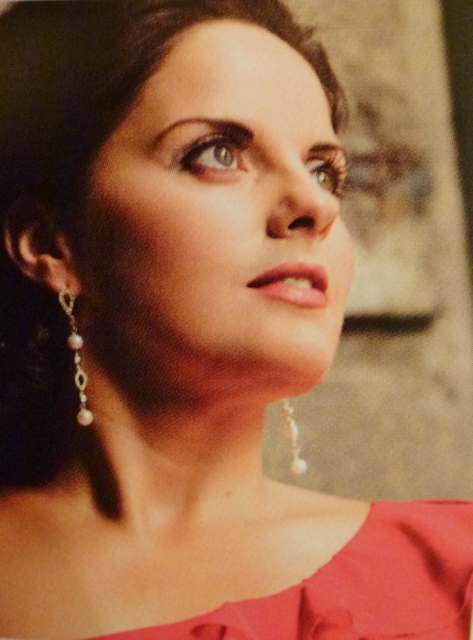
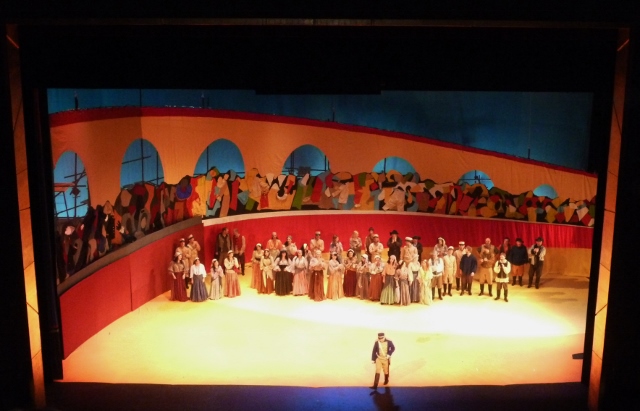
The Grand Canal Theatre opened in March 2010 with a performance of Swan Lake by the Russian State Ballet. It has been designed to take large shows including operas, concerts and musicals. Now following a commercial deal for the naming rights, it is referred to as the Bord Gáis Energy (BGE) Theatre. My first visit there was last night to watch a performance of Bizet’s opera Carmen by the Moscow State Opera, with a guest performance in the role of Micaëla by leading Irish soprano Celine Byrne from Naas.

Celine Byrne

Celine Byrne

Carmen programme

Carmen programme

I look forward to returning to the theatre at some stage in the future. For a list of forthcoming shows and information about ticket prices, check the BGE Theatre website.P1100735 (640x411)

ADRIAN: ADVENTUROUS ARTIST

Adrian Margey

Adrian Margey

Adrian Margey is a young artist who comes from Kilrea in County Derry. This is also the home village of the former Northern Ireland soccer international and now Sunderland manager, Martin O’Neill, as well as the well-known journalist and writer Paddy Agnew, the Irish Times Rome correspondent (thanks to Seamus Martin for pointing this out!).

I first met Adrian when he was a student of Communications, Advertising and Marketing at the University of Ulster, where my daughter was also studying. He graduated with a BSc Honours in 2007 (see Class Notes). In 2005 he was awarded a scholarship under the Washington Ireland programme and spent two months as an intern in the USA.

Queen's University © Adrian Margey

Queen’s University by Night © Adrian Margey €1200

He juggled his studies with a burgeoning career as a visual artist. Since graduating, he has exhibited widely. His pictures include contemporary depictions of familiar Ulster landmarks and Irish traditional musicians and dancers. He received funding in 2010 from the Arts Council of Northern Ireland to run a series of high profile solo exhibitions, which have been well received.

Iconic Dunluce © Adrian Margey

Iconic Dunluce © Adrian Margey €2550

The Guild Hall, Derry City © Adrian Margey

The Guild Hall, Derry City © Adrian Margey €645 SOLD

In 2011 he developed two new bodies of work which went on show at the Radisson Hotel, Limavady at the end of August and at the Culloden Hotel, Cultra. For St Patrick’s weekend 2013, he is holding his first exhibition in the Republic of Ireland, at the Radisson Blu Hotel at St Helen’s on the Stillorgan Road in South Dublin, close to where I am wrote this article. Admission is free and around seventy works are on sale, some of which were purchased on the opening evening.

Sorrento Terrace (Dalkey)  © Adrian Margey €695 SOLD

Sorrento Terrace (Dalkey) © Adrian Margey €695 SOLD

I notice from Adrian’s website that he has painted some Dublin scenes specially for the exhibition, some of them featuring the Ha’penny Bridge across the River Liffey, Trinity College Dublin and others of the Bray area in County Wicklow, including Bray Head and the Sugar Loaf mountain.

Carrickfergus Castle  © Adrian Margey €495

Carrickfergus Castle © Adrian Margey €495

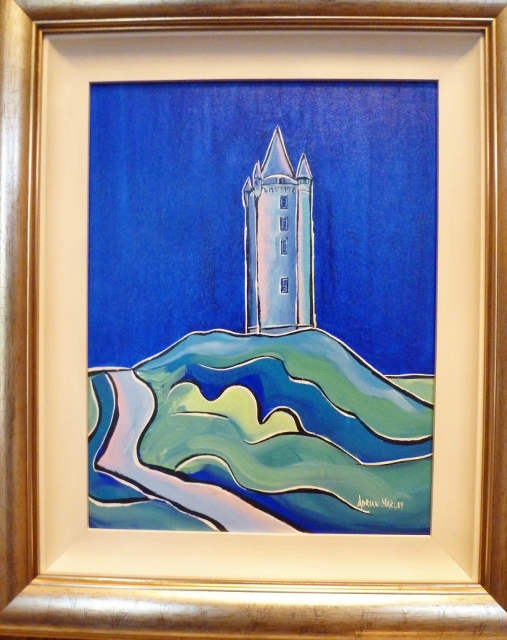
Scrabo Tower  © Adrian Margey €475 SOLD

Scrabo Tower © Adrian Margey €475 SOLD

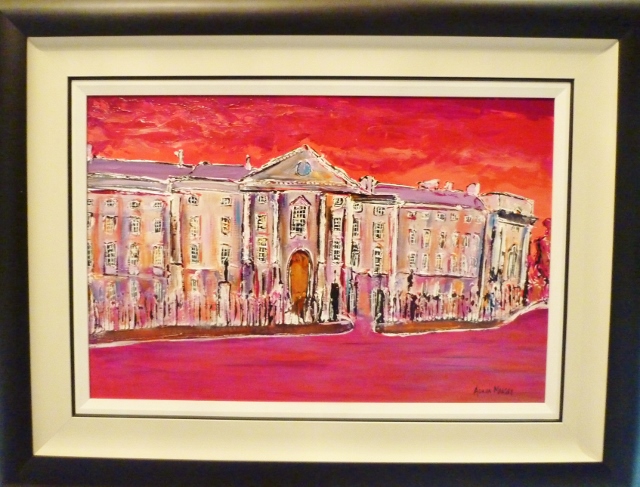
It all adds up to a very colourful exhibition, which remains open until Monday afternoon (18th). One of the largest pictures (and therefore more expensive) is entitled “Time Stands Still at Trinity College”. It might appeal to a TCD graduate or someone connected with the College, or perhaps a collector who likes pictures of famous buildings in Dublin. The price tag is €895. When Adrian exhibited his work last year at my local parish hall, St Brigid’s in South Belfast, I did not get an opportunity to visit the display. So I am pleased to have been able to catch up with him on my original “home” ground at the bottom of Foster Avenue in Mount Merrion parish.

Trinity College © Adrian Margey €895

Trinity College © Adrian Margey €895

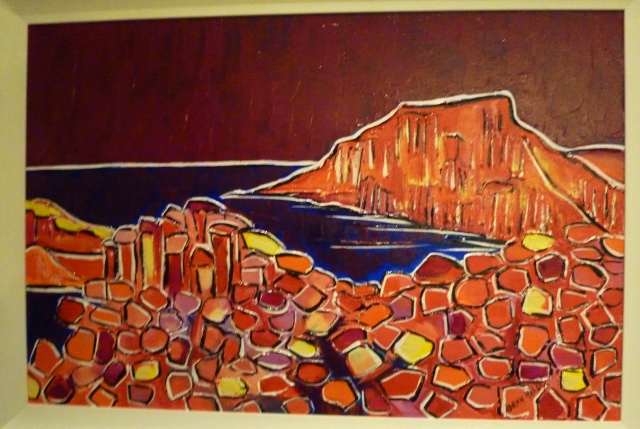
Causeway Trinity College © Adrian Margey €795

Causeway © Adrian Margey €795

BRISTOL BUILT BY BRUNEL

Brunel's original station

Brunel’s original station

Look around you in Bristol and the influence of one man is clear to see: the engineer, Isambard Kingdom Brunel (1806-59). If you arrive by train at Temple Meads station, you will see on your right hand side as you leave the main entrance to walk down to the main road the original station built by Brunel for the Great Western Railway of which he was chief engineer. Opened in 1840, it served the route to London Paddington and continues to do so. I noticed there is now also a connection run by South Western trains to London Waterloo, taking an hour longer but possibly cheaper, depending on the time of travel.

Brunel's station

Brunel’s station

Brunel built his railway using a broad gauge  measuring 7 feet 0 14 inches. This helped to provide additional comfort for passengers but made construction more expensive. Later a standard gauge was introduced of  4 feet 8 12 inches, although in Ireland a slightly wider gauge was chosen of 5 feet 3 inches. Temple Meads station is now owned by Network Rail and is one of the busiest railway hubs outside London.  It is operated under a franchise by First Great Western, who provide the majority of trains to London, along with local services and routes to destinations such as Cardiff, Southampton, Portsmouth and Weymouth.

Clifton Suspension Bridge

Clifton Suspension Bridge

One of Brunel’s best known projects is the Clifton Suspension Bridge, spanning the gorge above the River Avon and linking Clifton in Bristol with Leigh Woods in North Somerset, a National Trust property. With a span of over 700 feet, this made it the longest span of any bridge in the world at the time of its construction, which started in 1831. Brunel did not live to see its completion in 1864, five years after his death. Work had been suspended for a number of years owing to a lack of funding. At the bottom of the cliff where there is a winding path up to the level of the bridge, there is a derelict building. It still carries the sign “Clifton Rocks Railway”.

Clifton Rocks Railway

Clifton Rocks Railway

This was a water-powered funicular railway to take visitors up to the top of the cliff.  I have just noticed that I was passing the site almost to the day that coincided with the 120th anniversary of its opening. It closed in 1934 and during the second world war it was used a a secret transmission base for the BBC. I never realised that when I was working for the BBC in Bristol! The information can be found on the website of the trust which is trying to restore the railway, the top entrance to which is located beside the Avon Gorge Hotel. Details of the trust’s open days can be found here.

SS Great Britain

SS Great Britain Stern

The other significant project for which Brunel is known is the construction of the SS Great Britain. Brunel had become convinced of the superiority of propeller-driven ships over paddle wheels. After tests, he incorporated a large six-bladed propeller into his design for the 322-foot Great Britain, which was launched in 1843. She is considered to be the first modern ship, being built of metal rather than wood, powered by an engine rather than wind or oars, and driven by propeller rather than paddle wheel. She was the first iron-hulled, propeller-driven ship to cross the Atlantic Ocean. Her maiden voyage was made in August and September 1845, from Liverpool to New York. In 1846, she ran aground at Dundrum Bay, off the County Down coast. She was salvaged and then re-entered service  for the route to Australia. The ship was also used to carry troops such as the 57th Regiment of Foot, along with their horses and supplies, heading to the Crimean campaign.

SS Great Britain Dundrum Bay 1846

SS Great Britain Dundrum Bay 1846

There are a number of statues dotted throughout Britsol. I saw one for the Irish orator and MP Edmund Burke, one of Queen Victoria and another for Edward Colston, a businessman and benefactor. But I did not see any memorial for Brunel, apart from his works. There is one at Temple in London. So reader, if you seek his monument, look around you, or as the Latin inscription  on the tomb of Sir Christopher Wren at St Paul’s Cathedral states ” LECTOR SI MONUMENTUM REQUIRIS CIRCUMSPICE“.

WHAT IF?

CAFOD campaign

CAFOD campaign

During a visit to Bristol, I heard about the Enough Food for Everyone IF campaign. I saw a banner on display near Bristol’s Anglican Cathedral, a fine building. CAFOD along with over 100 charities in the UK is part of a coalition pushing for action by the G8 on the issue of global hunger, so that 2013 can be the beginning of the end of global hunger. The G8 leaders are due to meet at the Lough Erne resort, near Enniskillen in County Fermanagh in June.

Deacon David Brinn

Deacon David Brinn

CAFOD is the official overseas aid agency of the Catholic church in England and Wales. The group’s organiser in the Diocese of Clifton is Deacon David Brinn, who is based in the parish of Frome in Somerset. He was invited to speak at a Mass at the university chaplaincy in Bristol, at which he set out the aims of the campaign. He said there are four main “ifs”:-

There is Enough Food for Everyone….

IF  we force governments and investors to be honest and open about the deals they make in the poorest countries that stop people getting enough food.

IF  governments keep their promises on aid, invest to stop children dying from malnutrition and help the poorest people feed themselves through investment in small farmers.

IF  we stop poor farmers being forced off their land, and use the available agricultural land to grow food for people, not biofuels for cars.

IF  governments stop big companies dodging tax in poor countries, so that millions of people can free themselves from hunger.

CAFOD is a sister organisation of Trócaire, set up by the Irish Catholic Bishops forty years ago for overseas aid. This week representatives of Trócaire are at the 57th session of the Commission on the Status of Women at the United Nations. Both groups are affiliates of Caritas International. More details of the CAFOD campaign including details of how to lobby MPs can be found here. One in eight people in the world go hungry.

One final observation about the Catholic community in Bristol. While walking around the city centre I came across the church of St Mary on the Quay, Colston Street. In the pastoral care of the Divine Word Missionaries (SVD), it was a Jesuit parish from 1861 until 1996, when a lack of priests meant that the order had to withdraw their services. Now, for similar reasons, the Jesuits are leaving the Sacred Heart parish in Wimbledon, where I used to live.

St Ignatius of Loyola SJ

St Ignatius of Loyola SJ

Among the statues there which shows the Jesuit influence is one of St Ignatius of Loyola, founder of the Society of Jesus. Perhaps I should have taken the hint and speculated what if the new Pope were to be a Jesuit! Certainly the election of Cardinal Bergoglio from Buenos Aires as Pope Francis I is very welcome. I hope the first Jesuit to become Pontiff will bring a wind of change with him, as we were promised during the Papacy of John XXIII.

OPERATION SOUTHEND

Operation Southend

Operation Southend

Southend FC 1 AFC Wimbledon 3
Three well deserved points for the Dons. The win takes them up to 18th in League 2. The work I helped to do clearing snow from the pitch this morning paid dividends! Flying into Southend airport on Tuesday morning, all I could see from the plane window was a blanket of snow covering streets, gardens and playing pitches. A quick phone call to Southend FC established that they were still hopeful the match against my club AFC Wimbledon would go ahead, but expected there would not be any definite news until lunchtime.

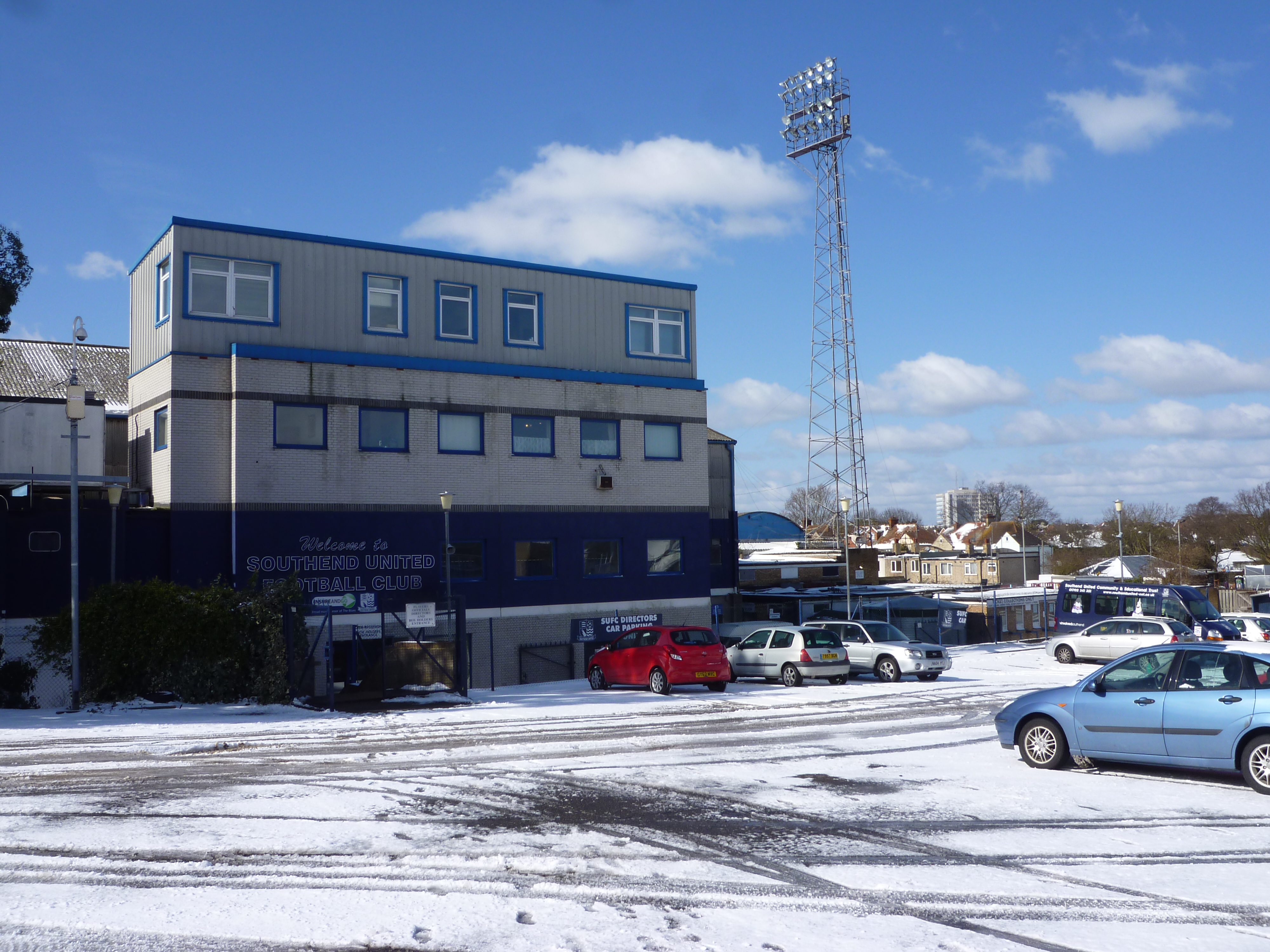
I asked if the pitch was being cleared and the receptionist confirmed that an operation was underway and that volunteers had been called in to help. She confirmed that an AFC Wimbledon helper would be welcome, when I offered my services. I had booked my match ticket in advance via the Dons’ online service, so I was hoping my flight over to England would not be wasted. A three minutes journey on the train from the airport to the next stop along the line brought me to Prittlewell, and I could see the floodlights of the Club in the distance. On arrival at Roots Hall, this was the scene that greeted me in the car park and inside the stadium:-

Roots Hall Stadium

Roots Hall Stadium

Roots Hall Pitch 11am

         Roots Hall Pitch 11am       

One of the first people I met outside the main entrance was the chief executive of the club, Steve Kavanagh, who acknowledged my offer of help. I was the first to add my name to the list of volunteers. On entering the pitch, the first person I spoke to turned out to be a fellow Dub, assistant manager Graham Coughlan from Clondalkin.  He started playing soccer as a youth for Cherry Orchard and his first senior club was Bray Wanderers in the League of Ireland. He also plays in the team as a central defender, but did not line out last night.

Snow clearance

Snow clearance

At this stage (11am), most of the snow had been removed from the covers in the penalty box area at one goalmouth, so over three-quarters of the pitch was still covered with a layer of white. Using snow shovels and wheelbarrows, the snow was removed section by section and more volunteers arrived to help. By noon, almost half the pitch had been cleared and I was able to send a photo to AFC Wimbledon and keep them updated via twitter. The sun was shining and the white of the snow was being gradually replaced by the green of the pitch, which remained soft underneath.

Another two hours’ work ensured that the remaining areas of the pitch were cleared and work began to ensure that the stand on one side of the ground where the snow had drifted in was cleared and made safe for spectators. As a “thank you” for their work, each volunteer was offered a free ticket for the game (although there seemed to be more interest in the tickets for the Johnstones Paint FA Trophy final against Crewe at Wembley next month: Southend have sold their allocation of 20,000 seats). I was given a refund for my ticket and the gesture was appreciated.