WW1 TALK: PTE ROBERT HAMILTON – PART 1

DSC_0253~2COPYRIGHT NOTICE: THE PHOTOGRAPHS AND RESEARCH EXCEPT WHERE STATED ARE © COPYRIGHT  © OF THE AUTHORS   MICHAEL FISHER/MARIE McKENNA/RUBY HEASTY/HEATHER STIRRAT    AND MAY NOT BE REPRODUCED WITHOUT THEIR PERMISSION

Plaque for Robert Hamilton, St Dympna's Church Ballinode  Photo:  © Michael Fisher

Plaque for Robert Hamilton, St Dympna’s Church Ballinode Photo: © Michael Fisher

My talk has been sparked off by this plaque in St Dympna’s church of Ireland church, Ballinode, which will be open afterwards. Some have wondered why I have taken up the very kind invitation to give this presentation by Marie McKenna and others. I myself do not have any direct relatives who died in the Great War. I have however taken an interest in history and in commemoration mainly because of my childhood in England, including part of my secondary education up to ‘O’ level at a Jesuit school, Wimbledon College.

WW1 Memorial in chapel at Wimbledon College SJ  Photo:  © Michael Fisher

WW1 Memorial in chapel at Wimbledon College SJ Photo: © Michael Fisher

During my four years there I often passed this memorial at the back of the chapel when we attended Mass. I was proud of the story of an Irishman who won a Victoria Cross in the Second World War: Royal Navy Lt Commander Eugene Esmonde, the naval pilot who led the attack on the Bismarck. But there is one other VC on that list, also an Irishman, whose Wimbledon College connection I became aware of only recently in the Jesuit Missions magazine. He is Lieutenant Maurice Dease VC, born in Coole, Co. Westmeath. Dease attended Stonyhurst College SJ and then transferred to the Army Class at Wimbledon, before going on to Sandhurst to complete  training as an officer. The memorial is one of thousands you will see throughout Britain, Northern Ireland and in some parts of the Republic.

Ballinode Parochial Hall Photo:  © Michael Fisher

Ballinode Parochial Hall Photo: © Michael Fisher

I am particularly pleased that the meeting tonight is in Ballinode parochial hall. The plaque near the entrance shows the former school was renovated and extended in 1906. It was just over 100 years ago when members of the local community gathered here shortly after the start of the Great War in August 1914. The purpose was to support the war effort by raising money for the National and Belgian relief funds. Heather Stirrat will read the extract from the Northern Standard for us:

SUCCESSFUL CONCERT IN BELLANODE
 On Friday evening 30th ult; (=last) a most successful concert under the auspices of Bellanode & Scotstown Work Party was held in the Parochial Hall, Bellanode, in aid of the National and Belgian Relief funds. The promoters, Mrs Greene, Cappagh Lodge; Miss Richardson, Poplar Vale, and Miss Reid, Lemaculla, deserve congratulations on the success attending their efforts, as from every point of view it was the most successful concert ever held in the building.

Northern Standard  report November 1914 Courtesy of Kevin Cullen: Co. Monaghan Great War Roll Book

Northern Standard report November 1914 Courtesy of Kevin Cullen: Book of Honour for Co. Monaghan 1914-18

The chair was occupied by Colonel Lucas Scudamore, who referred in touching terms to the objects  for which the entertainment had been promoted, and pointed out the necessity for each and every one doing their very best to relieve the suffering of the unhappy Belgians driven from their homes by the Germans, who had shown a barbarism in the present war that was utterly astounding, and also to relieve the necessities of   the dependents of our soldiers and sailors. The programme, which was of a highly appreciative character, was contributed to by Miss Richardson, Miss Jamieson, Miss Lucas Scudamore (fancy dance), Miss Brydon, Miss Turley, Miss Wright (recitation), Miss Rea, Revs. R.H.Robinson and I. a G.Eccles, Messrs.J.C.Wood, D.Hanna, A. Wilson, —  Scarisbrick, A. Begas (pianoforte solo), and T.J.Kennedy, and Masters J.Wright, K. McAlpine, and E. McAlpine. An interesting feature was the patriotic songs illustrated by lime light pictures and a series of war pictures. The programme concluded with the Belgian, French, Russian and British National Anthems, played by Mr. Begas. The thanks of the concert committee are tendered to Miss Jamieson for the use of her splendid piano, to Mr W.J. Crawford J.P., who provided and manipulated the magic lantern, and to Mr. Robt. Moffett and Mr. Ross Kennedy for the use of their motor cars in conveying the performers from a distance.  
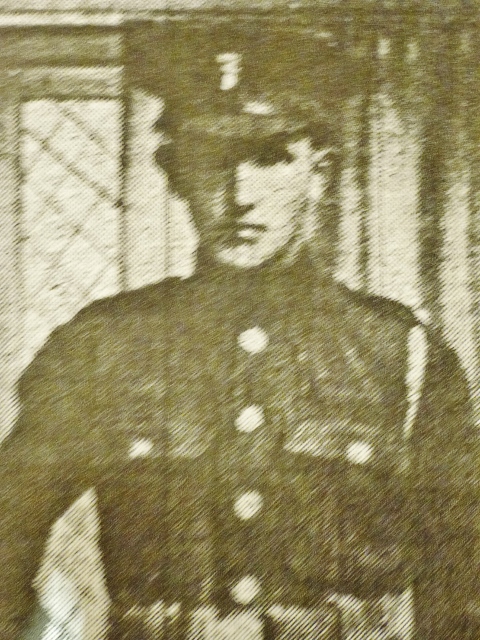
Private Robert Hamilton Photo from Northern Standard obituary May 1918

Private Robert Hamilton Photo from Northern Standard obituary May 1918

At that stage Robert Hamilton had not yet joined the British Army and was residing in Ballinode. So how do we put together a picture of his life? Let’s start at the beginning.

Robert Hamilton was born on February 21st 1892 in Clabby, County Fermanagh. The death notice and anniversary notices in the Northern Standard show he was the son of Mary Hamilton of Kilmore East, Ballinode. Tonight I can reveal more details about this soldier of the Great War.

Mary Hamilton was unmarried at the time of his birth. So she must have been faced with a difficult choice given the mores or social conventions of society at the end of the 19th Century. Pregnant single women in her situation would have been ostracised and had to give birth possibly in a home or the local workhouse. Cliona Rattigan in her book (2012) on Single Mothers 1900-1950 reminds us that:-

“Unmarried mothers were shunned by society.While many women concealed their pregnancies from their employers because they would have been fired, others hid it from their family for fear of being put out or in some cases a more violent reactionThe law itself conspired to create unfavourable conditions for unmarried mothers…There was no law that allowed for legal adoption and the foster services that did exist were private arrangements, which had to be paid for.

Very different from today where one-parent families make up 11% of the total of all households in County Monaghan (2011 figures onefamily) “there are 2,430 lone parent households in Monaghan; 84% lone mothers, 16% lone fathers. One-parent families make up 11% of all households in Monaghan”.

1901 Census Ballinode: Thomas Hamilton household

1901 Census Ballinode: Thomas Hamilton household

Mary Hamilton carried her baby apparently for the full nine months term and was then faced with the reality of how she was to bring up her son Robert. Before giving birth, she might have been residing in Kilmore East in the house of her younger brother Thomas, a single man, and head of household, along with his uncle John who is listed as a farm servant. This is an assumption however based on the 1901 census return.
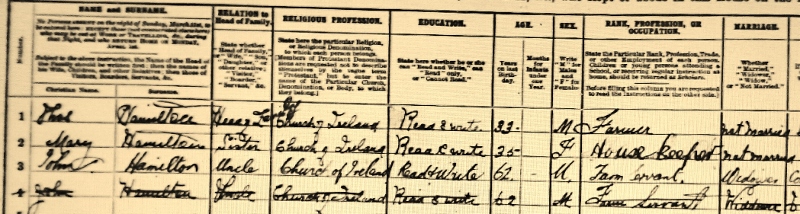
Close-up 1901 Census Ballinode: Thomas, Mary and John Hamilton

Close-up 1901 Census Ballinode: Thomas, Mary and John Hamilton

We now know that some time before she gave birth, she went to a couple about thirty miles away in Brockagh, Clabby, beyond Fivemiletown, – John and Jane Keys. Thanks to Jean Armstrong (wife of the local rector) we now have details of the birth. Her husband Reverend Maurice Armstrong tells us that Robert must have been a very delicate baby, ‘poorly and weak’ as he was baptized just three days after his birth.
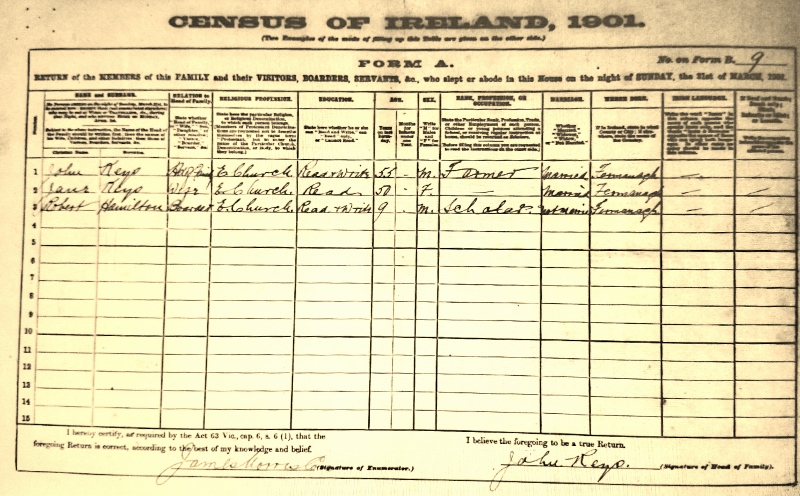
1901 Census Clabby: John Keys household

1901 Census Clabby: John Keys household

The 1901 Census reveals that Robert then aged 9 had been boarded out and given into what amounted to foster care by the Keys. John Keys was a small farmer at Brockagh, a mountain area near Clabby. Robert is listed as a scholar, so he must have attended a local school. John Keys and his wife Jane were in their mid-50s, possibly childless, and both were members of the E(stablished) Church, the same denomination as the Hamiltons (Church of Ireland).

Close-up 1901 Census Clabby: John & Jane Keys; Robert Hamilton

Census Clabby: John & Jane Keys; Robert Hamilton

So although Robert’s birthplace was Fermanagh, I think he can truly be regarded as a Monaghan man. Jane Keys died in 1906 at the age of 65. Her husband John followed months later. Having been admitted to the workhouse in Enniskillen shortly after Christmas 1906, he died there on June 1st 1907 at the age of 52. According to Reverend Armstrong, it appears that Mr Keys was destitute and not coping after his wife’s death. Young Robert would have been sent back to live with his mother in Ballinode in 1906, aged 14.

1911 Census Ballinode: Hamilton household

1911 Census Ballinode: Hamilton household

The 1911 Census confirms he has been brought back to Ballinode and is living with his mother Mary in Kilmore East.

1911 Census Ballinode: Thomas, Mary & Robert Hamilton

1911 Census Ballinode: Thomas, Mary & Robert Hamilton

He was then 19 and like his mother is listed as a servant in the household of Thomas Hamilton, a farmer and Mary’s younger brother. Mary was 52. This edited picture kindly supplied by the Mohan family shows the house at Kilmore East after they had extended it many years ago. The original building was a single storey, as can be seen on the left hand side.
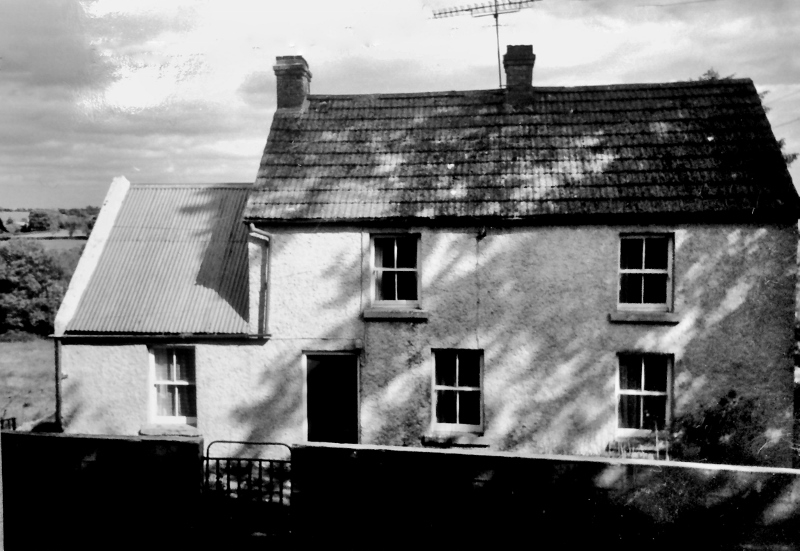
House at Kilmore East, Ballinode Photo: courtesy of Mohan family

House at Kilmore East, Ballinode Photo: courtesy of Mohan family

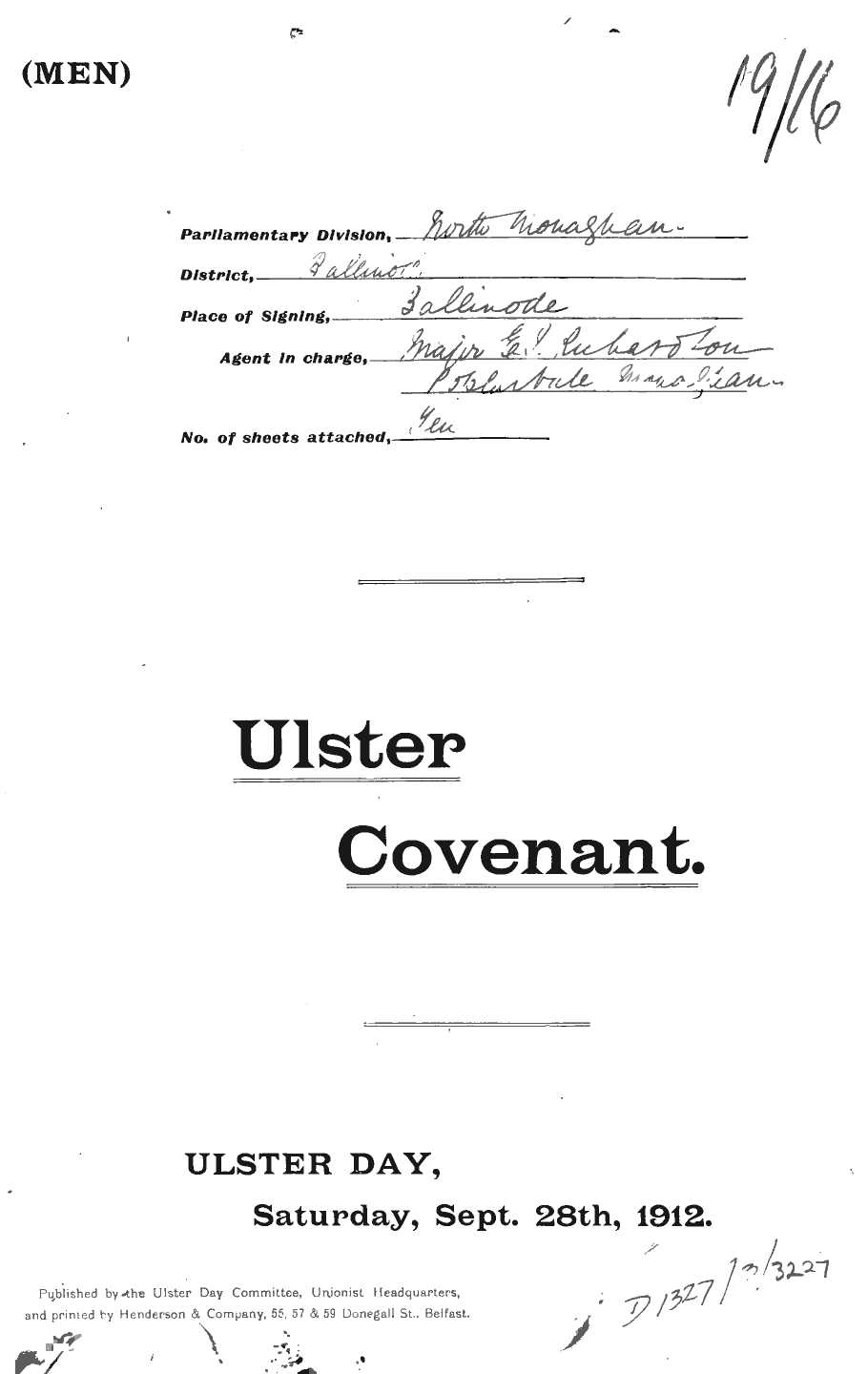
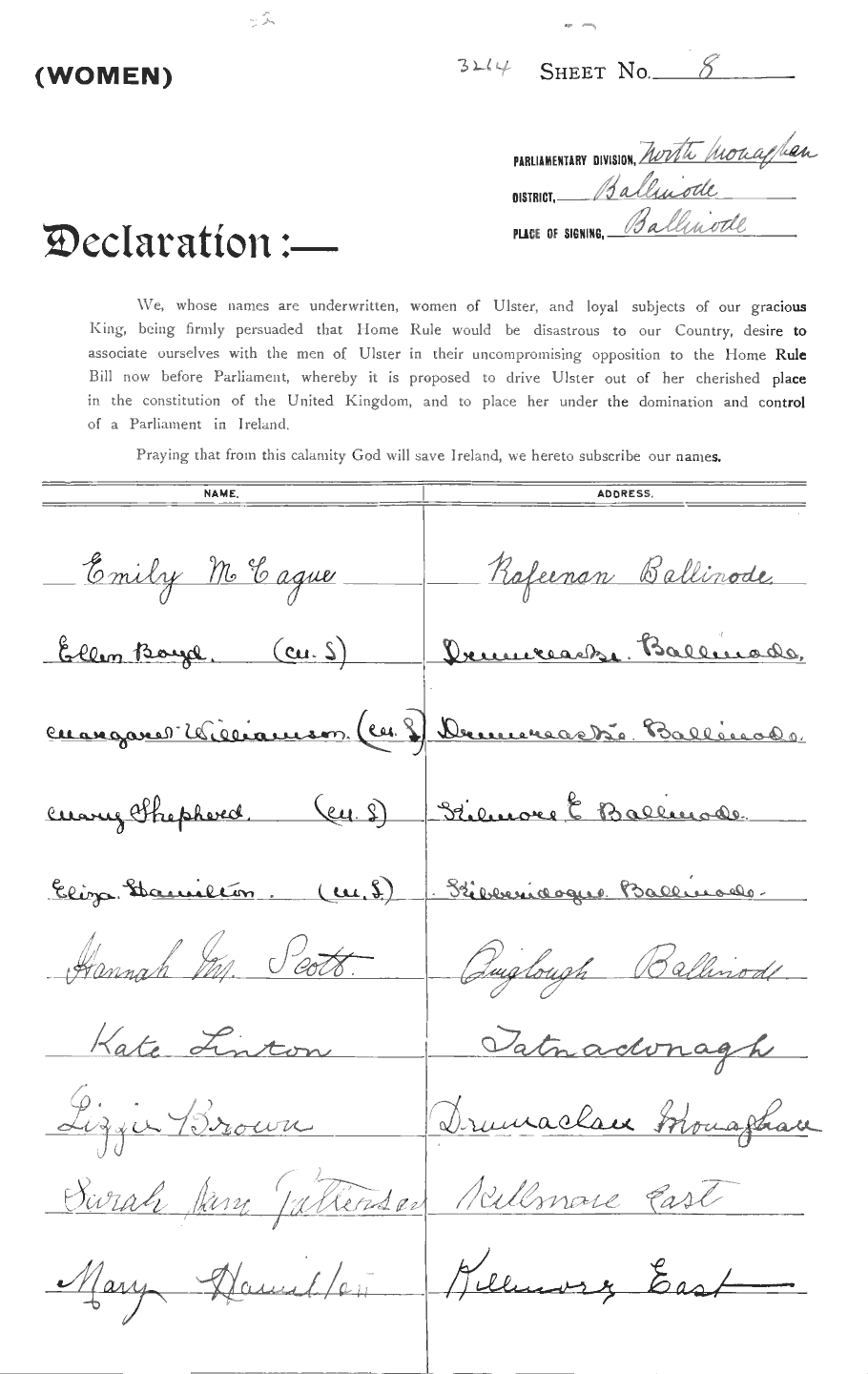
 The following year, Robert’s signature and that of his uncle are among those of nearly quarter of a million men included in the Ulster Covenant. HamiltonCovenantHamiltonCovenant2They signed in Ballinode on September 28th 1912 and the declaration was signed on the same day by Mary Hamilton.  HamiltonCovenant3This was the time when leading Protestant landlords in County Monaghan such as Major Edward Richardson of Poplar Vale were supporting the establishment of the Ulster Volunteer Force in opposition to nationalist demands for Home Rule. Quincey Dougan in a talk last year has described how the UVF formed two battalions in County Monaghan between 1912 and 1914.
Quincey Dougan talk on UVF: Sir John Leslie inspects the UVF at Glaslough

Quincey Dougan talk on UVF: Col John Leslie inspects the UVF at Glaslough (Monaghan Co. Museum)

(to be continued) DSC_0191 (778x800)

PLEASE NOTE: EXCEPT WHERE STATED THE PHOTOGRAPHS AND THE RESEARCH ARE © COPYRIGHT 2014 MICHAEL FISHER/MARIE McKENNA/RUBY HEASTY/HEATHER STIRRAT AND MAY NOT BE REPRODUCED WITHOUT THE AUTHORS’ PERMISSION
PRIVATE ROBERT HAMILTON

Ballinode Parochial Hall Photo:  © Michael Fisher

Ballinode Parochial Hall Photo: © Michael Fisher

Many thanks to all those who attended my talk tonight in Ballinode, County Monaghan, about a soldier who died in the Great War, Private Robert Hamilton. Thanks to Claire Noble of Northern Sound for recording an interview with me about the subject in The Wider View programme this afternoon. The interest shown by people who attended who came from Holywood (Co. Down) and Castleblayney as well as the parish of Tydavnet shows that there are many other similar stories out there waiting to be told. Thanks are also due to Jonathan Maguire in the Royal Irish Fusiliers Museum in Armagh, who helped me to find records relating to Private Hamilton of the 9th Battallion, Royal Irish Fusiliers, known as the Faugh-a-Ballaghs or Blacker’s Boys (see the excellent record by Nick Metcalfe, a great source of information).

WWI EXHIBITION

Sir John (Jack) Leslie in Caledon Photo:  © Michael Fisher

Sir John (Jack) Leslie in Caledon Photo: © Michael Fisher

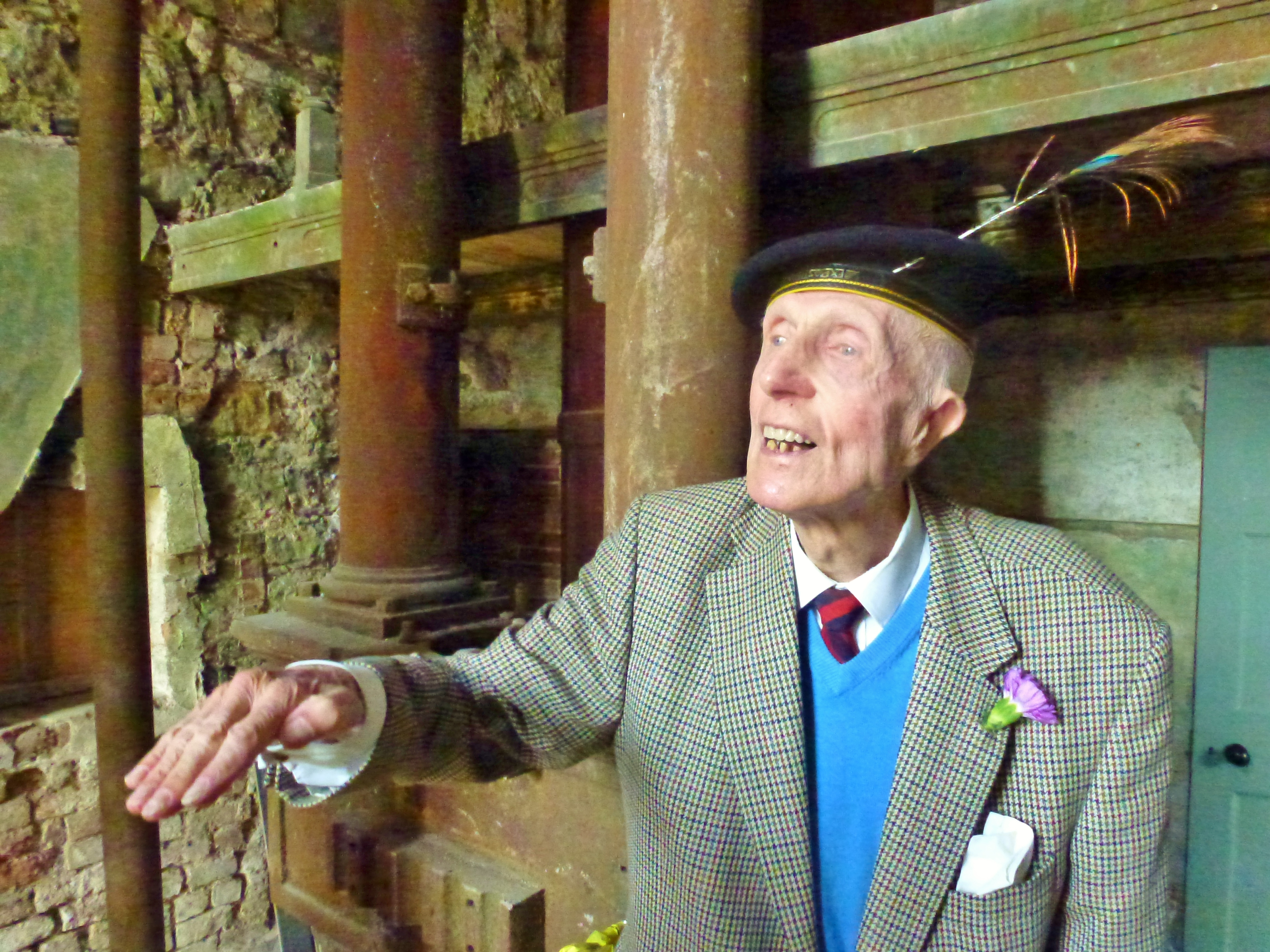
Among the family stories examined in a new World War One exhibition at the National Library in Dublin is that of the Leslies of Castle Leslie, Glaslough, County Monaghan. Sir John (Jack) Leslie now 98 and a veteran of the Second World War was there to help with the opening of the exhibition. It was attended by the British Ambassador Dominick Chilcott and the Minister for Arts, Heritage and the Gaeltacht Heather Humphreys TD, from County Monaghan.

The display will run for four years and features letters, diaries, newspapers, leaflets and photographs from the library’s archives and aims to depict the various aspects of the Irish experience of the war, and Ireland’s response to the conflict. It is supported by the British Embassy and is part of the National Library’s programme for the Decade of Commemorations.

Nikki Ralston, exhibition curator for the NLI, said: “Irish people had very diverse and complex reactions to World War I. This exhibition captures those sentiments, and also recounts the tense domestic situation in the Ireland of 1914. We felt one of the best ways to illustrate how Ireland experienced the war was to explore a range of themes through real-life stories. We have chosen to focus on four people who had very different experiences, and we have featured their writings – including personal diaries and letters– in this exhibition. These primary sources are complemented by audio, video and touchscreen installations to create a multi-layered, multimedia experience for all visitors.”

The four real-life stories featured in the new exhibition focus on:

DSC_0077

Sir John (Jack) Leslie at Monaghan County Museum Photo: © Michael Fisher

**Captain Norman Leslie, 28 Rifle Brigade, second son of the well-known Leslie family from Castle Leslie, had become heir to the family estate when his elder brother, Shane, converted to Catholicism and became a supporter of Irish Home Rule. An experienced soldier when the war broke out, Norman was shot and killed in October 1914, while charging a German machine gun armed only with a sword (it was considered ungentlemanly for officers to carry guns). He is buried in France at Chapelle d’Armentieres Old Military Cemetery. The sword he was carrying when he died was eventually returned to the Leslie family, and now hangs in the gallery of Castle Leslie. It was carried by Jack, his nephew, for the opening of the exhibition.

Jack’s nephew, Mark Leslie; and Mark’s son, Luke were also present. The family spoke of how Norman’s memory is kept alive at Castle Leslie, where his sporting trophies adorn the entrance hall and his sword – considered a symbol of good luck – is used to cut all wedding cakes at the Castle.

**Joseph Mary Plunkett, the poet, journalist and revolutionary, best known as a leader of the 1916 Rising and a signatory of the Proclamation of the Irish Republic. In April 1915, he accompanied Roger Casement to Germany to seek German support for an uprising in Ireland. He subsequently fought alongside Pearse and Connolly in the GPO in 1916. Imprisoned in Kilmainham Gaol, he married Grace Gifford just hours before his execution in May 1916.

**Mary Martin, a widow and mother of 12 from Monkstown, Co. Dublin. Three of her children served overseas during the war, including her son, Charlie, who was reported wounded and missing in late 1915. Believing he had been taken prisoner, Mary began keeping a diary in the form of a letter to Charlie. She subsequently discovered he had died of his wounds soon after his capture. Her other children, including her daughter Marie, survived the war. Marie, who had served as a nurse in Malta and France, went on to found the Medical Missionaries of Mary in 1937. Mary’s wartime diary is included in the NLI exhibition.

**Michael O’Leary, a farmer’s son from Co. Cork, who served with the Irish Guards on the Western Front. In February 1915, he single-handedly charged two German barricades in France, killing eight men and taking two prisoner. He was awarded the Victoria Cross, and became internationally famous, with journalists even thronging to the O’Leary family farm in Cork. The story of his wartime exploits was put to very different uses, inspiring both a recruiting campaign and a satirical play by George Bernard Shaw. He retired from the army in 1921, but re-joined during World War Two. He died in 1961.

Minister for Arts, Heritage & Gaeltacht Heather Humphreys TD Photo: Sir John (Jack) Leslie in Caledon Photo:  © Michael Fisher

Minister for Arts, Heritage & Gaeltacht Heather Humphreys TD Photo:  © Michael Fisher

Launching the exhibition, Minister Heather Humphreys said: “This exhibition in the National Library allows us to understand the sheer magnitude of the First World War through very personal stories. By choosing to focus on four people and their different experiences, the Library has brought to life the real-life challenges and dilemmas which they faced 100 years ago. We can walk in their shoes, hear their words and see their hand-written letters. I was interested to see the Leslie family from Co Monaghan featuring in the exhibition. The story of the tragic death of Norman Leslie in 1914 gives us just one of example of the brutal way in which tens of thousands of Irish men lost their lives during the War. This fascinating exhibition is part of the Library’s programme for the Decade of Commemorations, and I would encourage as many people as possible to check it out.”

The NLI exhibition includes an audio module, ‘Words and Music: the Sounds of War’, supported by the British Embassy in Ireland. This features Irish poetry of World War I, interspersed with popular songs of the period and recorded readings of original letters from those affected by the conflict.

Addressing the launch, British Ambassador Dominick Chilcott said: “The British government are very pleased to be supporting the National Library of Ireland’s excellent work of commemorating the events of 100 years ago. The National Library’s archive of First World War documents is a rich one; and our understanding of the Great War and the Irish experience of it benefits hugely from this collection. The part of this exhibition that the British government helped to fund is the ‘listening post’, where you can hear period songs and readings of poetry and letters. The generation that went to war was a highly literary one. They wrote huge numbers of letters as well as much poetry and many books and diaries recording their experiences at the Front. We are fortunate in having so much material to explore.”

More details of the exhibition can be found here.

THANKS

Michael Fisher speaking at the William Carleton Summer School, Emyvale, August 2013

Michael Fisher speaking at the William Carleton Summer School, Emyvale, August 2013

MESSAGE FROM THE PUBLISHER

Thanks to all those readers who have continued to peruse my blog pages while I took a pause for eight months. I am delighted to see that all the various articles were receiving around 60+ hits per day. My next target therefore is to bring my total views beyond the current 49,350 to over 50,000. With your support this can be achieved. If you like the content of these pages please feel free to submit a comment using the link provided. Spread the word among your friends and give them the link to www.fisherbelfast.wordpress.com. Many thanks. Michael Fisher November 19th 2014

PRIVATE ROBERT HAMILTON, BALLINODE

Talk on Private Robert Hamilton, Ballinode

Talk on Private Robert Hamilton, Ballinode

Private Robert Hamilton from Ballinode is one of the thousands of Irishmen killed in World War I whose stories have been forgotten for nearly 100 years. Now to coincide with the centenary of the start of the Great War in August 1914, his story deserves to be told. According to his obituary in the Northern Standard, he was a member of the Ulster Volunteer Force in County Monaghan. He had signed the Ulster Covenant in Ballinode in September 1912. The UVF ranks joined the British Army to fight in World War I and became part of the 36th (Ulster) Division, headed by a Cavan man, Major General Oliver Nugent.

Private Robert Hamilton (from Northern Standard May 1918)

Private Robert Hamilton (from Northern Standard May 1918)

Hamilton enlisted in Monaghan in the Royal Irish Fusiliers (the ‘Faugh-a-Ballaghs’) when a recruitment party came to town in February 1915. He fought at the Battle of the Somme in July 1916 and was invalided at some stage so he would have returned home to Kilmore East. He left Ballinode on Easter Saturday at the end of March 1918 and returned to his unit on the western front in France, only to be killed in action three weeks later. His name is engraved on the vast Tyne Cot memorial near Ypres/Ieper in Belgium.

Tyne Cot Memorial Wall (CWGC Picture)

Tyne Cot Memorial Wall (CWGC Picture)

There is also a plaque in his memory in St Dympna’s Church of Ireland church, Ballinode which has provided the springboard for my talk on Friday 21st November 8pm in Ballinode. The talk would not have been possible without the research and interest shown by Marie McKenna and two distant Hamilton relations Ruby Heasty and Heather Stirratt.

Plaque to Robert Hamilton in St Dympna's Ballinode Photo: @ Michael Fisher

Plaque to Robert Hamilton in St Dympna’s Ballinode Photo: @ Michael Fisher

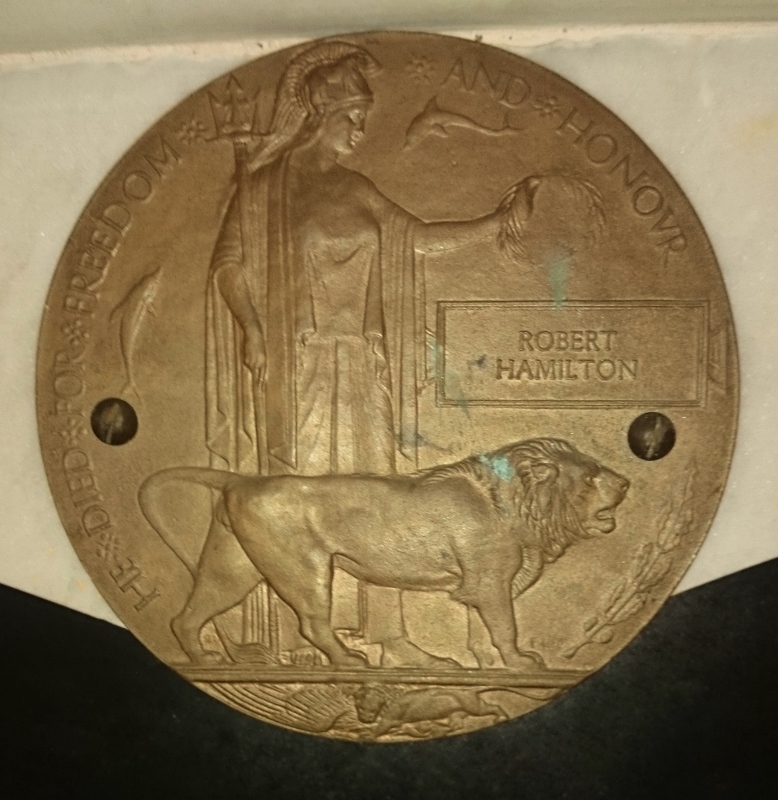
'Dead Man's Penny' with Robert Hamilton's name in the plaque in Ballinode

‘Dead Man’s Penny’ with Robert Hamilton’s name in the plaque in Ballinode

AEJ THERESA VILLIERS

NI Secretary of State Theresa Villiers MP  Photo: © Michael Fisher

NI Secretary of State Theresa Villiers MP Photo: © Michael Fisher

This is the text of the speech which the Secretary of State for Northern Ireland Theresa Villiers MP delivered at a lunch in Belfast I organised last Friday on behalf of the Association of European Journalists (Irish Section). Most of the AEJ members are based in Dublin.   

NI Secretary of State Theresa Villiers MP  Photo: © Michael Fisher

NI Secretary of State Theresa Villiers MP Photo: © Michael Fisher

“It is a great pleasure to speak to the Association of European Journalists here in Belfast this afternoon and I am grateful to Eileen Dunne, Martin Allioth and Michael Fisher for their kind invitation to do so. In my remarks today I’d like to set out the government’s position in relation to the so-called ‘On the Runs’. And I’d like to highlight some of the challenges facing both the government and the executive as we work together to build a better future for everyone in Northern Ireland.

Victims

As regards ‘on the runs’, I’d like to start by reiterating just how much the government appreciates the deep sense of anger felt about what has happened. For many people the judgement in the Downey case accompanied as it was by details of the scheme put in place by the last government to deal with on the runs has been a cause of considerable distress and grave concern. I recognise that the people who must be feeling that distress and concern at its most intense levels are the families of those murdered in the appalling terrorist atrocity in Hyde Park over 30 years ago who hoped that justice might at long last be done.

NI Secretary of State Theresa Villiers MP  Photo: © Michael Fisher

NI Secretary of State Theresa Villiers MP Photo: © Michael Fisher

But this issue affects victims of terrorism more widely people, like the relatives of the Kingsmill massacre who I met last week – people who have never seen the killers of their loved ones brought to justice. Nobody who meets the victims of terrorism here in Northern Ireland can fail to be deeply moved by the pain and suffering that many of them still feel long after the events that caused their terrible loss and bereavement.

And I am very, very sorry that what’s happened in recent days will have revived painful memories for many victims, putting them through the agony of loss all over again. This controversy is a reminder to us all that in any process for dealing with the past, it is the interests of victims that must come first.

NI Secretary of State Theresa Villiers MP  Photo: © Michael Fisher

NI Secretary of State Theresa Villiers MP Photo: © Michael Fisher

On the Runs

The arrangements for dealing with OTRs were put in place by the previous government beginning in 2000 and then accelerated after the failure of the Northern Ireland Offences Bill in 2006.

Essentially the process involved Sinn Fein submitting a list of individuals living outside the United Kingdom who believed that if they returned here to Northern Ireland or any other part of the UK that they might be wanted by the police in connection with terrorist offences committed before the 1998 Belfast Agreement. These names were then checked by the police and in some cases by the Public Prosecution Service.

If that checking process concluded that the lack of evidence available at the time meant that there was no realistic prospect of prosecution, then the individuals concerned were informed that they were no longer wanted by police in a letter signed by a Northern Ireland Office official. Yet the recipients of these letters were also made aware that should sufficient evidence subsequently emerge connecting them with terrorist offences, then they would still be liable for arrest and prosecution in the normal way.

AEJ Chair Martin Alioth and Secretary of State Theresa Villiers MP  Photo: © Michael Fisher

AEJ Chair Martin Alioth and Secretary of State Theresa Villiers MP Photo: © Michael Fisher

Support for the rule of law

So I want to be very clear. No one holding one of these letters should be in any doubt. They are not “get out of jail free cards”.

They will not protect you from arrest or from prosecution and if the police can gather sufficient evidence, you will be subject to all the due processes of law, just like anybody else. The letters do not amount to any immunity, exemption or amnesty something that could only ever be granted by legislation passed by Parliament.

They were statements of fact at the time regarding an individual’s status in connection with the police and prosecuting authorities. It was on that basis that when the current government took office and was made aware of these arrangements that we allowed the list of names submitted to our predecessors  – by that stage coming towards its end  – to continue to be checked.

In total, of the 200 or so cases considered under the scheme, 38 have been looked at since May 2010 and of these 12 received letters saying they were no longer wanted. No letters have been issued by the NIO since December 2012 and as far as this government is concerned, the scheme is over. If at any time we had been presented with a scheme that amounted to immunity, exemption or amnesty from prosecution implied or otherwise we would have stopped it immediately.

This government does not support, and has never supported, immunities, exemptions or amnesties from prosecution. That is we vigorously opposed the Northern Ireland Offences Bill in 2005, that would have introduced what amounted to an amnesty and which was abandoned in the face of widespread condemnation. We believe in the application of the rule of law and due process. And that applies across the board to anyone,  including those who are in possession of a letter under the OTR scheme.

So for the avoidance of any doubt, it needs to be clearly understood by all recipients that no letters which have been issued can be relied on to avoid questioning or prosecution for offences where information or evidence becomes available now or later. And in the case of Mr Downey, it was the fact that the letter he was sent was factually incorrect and misleading that led the judge to rule that an abuse of process had occurred. John Downey should never have been sent a letter saying he wasn’t wanted by the police because at all times he was wanted by the Metropolitan police in relation to the Hyde Park bombing.

NI Secretary of State Theresa Villiers MP  Photo: © Michael Fisher

NI Secretary of State Theresa Villiers MP Photo: © Michael Fisher

Independent review

The Prime Minister reacted swiftly to the concerns about the scheme expressed by the First Minister, the Justice Minister and the broader public by announcing a judge-led investigation of the scheme. Its terms of reference require the inquiry to provide a full public account of the operation and extent of the scheme establish whether other mistakes were made and to make recommendations.

This will be a meaningful, exacting and rigorous process to get to the truth of what happened to provide the answers for which the public are calling, and do everything possible to remove any impediments to the future operation of justice, perceived or real. I expect the judge’s report to be provided to me by the end of May. Until that time there are limits on what I can say because I do not wish to cut across the judge’s work or pre-empt his or her conclusions.

But I do want to say this. No more side deals.

As you will all here appreciate, the collapse of the Downey case and the revelations on OTRs that came with it occurred at a time when the parties in the Northern Ireland executive were discussing possible ways forward on flags, parading and the past. Both the UK and the Irish governments were very supportive of those efforts and hopeful that progress could be made.

Of course I understand that events of the past few days have caused some to question whether the discussions on the so-called Haass issues have a future. But the reality is that whatever the conclusions of the inquiries into the OTR scheme, the issues under consideration in those leaders’ meetings will still need to be dealt with.

The imperative to make progress on flags and parading remain every bit as strong as it was when the Northern Ireland Executive began this process last year. And on the past, one of the lessons of the last 10 days must surely be that more than ever we need an agreed approach and structures that can operate in a balanced and transparent way that commands public confidence.

We need to see an end the era of secret side deals and evasive parliamentary answers that too often characterised the handling of the political process here and undermined confidence in it. I regret the fact that this government did not discuss the OTR scheme with ministers in the executive, particularly when we concluded in August 2012 that anyone wanting to raise new cases should direct them to the devolved authorities. And I have made that clear both to the First Minister and the Justice Minister.

I believe that the way in which the previous government withheld the scheme from Northern Ireland’s politicians, from parliament and from the public in the aftermath of the failure of the legislation in 2005 was wrong and I welcome the apology Labour gave for that earlier this week.

Politics of delivery 

NI Secretary of State Theresa Villiers MP  Photo: © Michael Fisher

NI Secretary of State Theresa Villiers MP Photo: © Michael Fisher

Making progress on flags, parading and the past could free up the space for politicians to focus more on other issues that are critical to our future, such as rebalancing the economy, reforming the public sector and building a genuinely shared future. Because let’s face it, the vast majority of people in Northern Ireland do not wake up on a Monday morning worrying about the past, flags or parades.

While these are important matters, the priorities for most people are issues like jobs, pensions, transport, schools and hospitals and that’s where they expect their politicians to focus their energies. Today we are over half way through the second term of the second Assembly since devolution was restored in May 2007. That’s the longest period of unbroken devolved government in Northern Ireland since the closure of the Stormont Parliament in 1972. And that’s not bad when one considers the number of commentators who predicted that a coalition led by the DUP and Sinn Fein couldn’t last six months let alone more than six years.

And the executive here can cite a number of real achievements, not the least of which is its continued success in bringing foreign direct investment into Northern Ireland. This has helped make Belfast the second most popular city in the UK for FDI.

The First and deputy First Minister have also published Northern Ireland’s first ever locally agreed community relations strategy, Together: Building a United Community. But for all that the executive has proven stable and delivered in a number of areas, I believe that there is a clear public perception out there that more still needs to be done. That comes across in successive opinion polls but also in many conversations I’ve had with business people, journalists and others across Northern Ireland.

Of course I understand that a mandatory coalition that embraces 5 parties with fundamentally divergent views on constitutional, economic and social issues was never going to be easy to operate. Yet one of the central features of the 1998 settlement, as amended at St Andrews in 2006, was precisely to bring together politicians from different traditions and show that they could deliver for the good of the people of Northern Ireland as a whole. And it’s crucial that we make it work. Of course the UK government as guarantor of the devolution settlement under strand one of the Belfast Agreement can encourage and help.

AEJ President Eileen Dunne and Secretary of State Theresa Villiers MP  Photo: © Michael Fisher

AEJ President Eileen Dunne and Secretary of State Theresa Villiers MP Photo: © Michael Fisher

Making difficult choices

But Northern Ireland’s politicians also need to move beyond the issues that have dominated political debate here and recognise that difficult choices are often needed in order to deliver the services the public want and expect. So we have to press ahead with implementing the economic pact we agreed jointly last summer just before the G8.

For the government that means delivering on issues like start-up loans, access to finance and the necessary preparatory work needed to enable a decision to be made in the autumn on whether to devolve corporation tax powers. But the executive too needs to move forward on economic reform such as tackling business red tape, streamlining planning, investing in infrastructure and reforming the public sector.

We want Northern Ireland to be an even more attractive place to do business and to be able to take full advantage of the recovery that is underway as a result of our long term economic plan. And that requires difficult choices on reforming welfare so that Northern Ireland has a system that rewards work, tackles the causes of dependency, and continues to protect those in genuine need while being fair to taxpayers whose money funds the system. And difficult choices are also needed if people in Northern Ireland are to be given the same protection from organised crime as people in Great Britain now have through the work of the National Crime Agency.

In this long running debate I believe that protecting the public from serious organised crime should now be the overriding priority and that the time has therefore come for executive to press ahead on the NCA, so that it is allowed to work properly in Northern Ireland for the good of everyone who lives here.

AEJ Chair Martin Alioth and Secretary of State Theresa Villiers MP  Photo: © Michael Fisher

AEJ Chair Martin Alioth and Secretary of State Theresa Villiers MP Photo: © Michael Fisher

The role of UK government in today’s Northern Ireland 

I want to conclude with a word about the UK government’s role here. Of course devolution has significantly altered that role.

We are no longer responsible for the day to day delivery of public services which is now rightly the responsibility of the executive. But we do remain fully engaged. That’s why despite the deficit we have responded positively to requests from the Chief Constable for significant additional funding for the PSNI in order to combat terrorism and help keep people here safe and secure. It’s why we agreed the economic pact last May enabling us to work more closely with the executive here than any other devolved administration in the rest of the UK.

It’s why we brought the G8 Summit of world leaders here so that the eyes of the world could focus on Northern Ireland as a great place to visit and invest. It’s why we responded swiftly to the request to devolve long haul air passenger duty to help save Northern Ireland’s vital direct transatlantic link. It’s why we fulfilled our pledge to bring about a fair solution for those investors in the Presbyterian Mutual Society who were unable to access their money.

It’s why we’ve safeguarded Northern Ireland’s Assisted Area Status a key priority for the executive and a status which significantly enhances Northern Ireland’s ability attract jobs and investment. It’s why we introduced tax relief for high end film and TV production that was crucial to securing a fourth series of Game of Thrones for the Paint Hall studios in Belfast. And it’s why we’ve supported the executive by maintaining public spending here at 2% per head higher than the UK average. And all of this is underpinned by a government that is not neutral about Northern Ireland’s position in the UK.

Of course, as the agreements make clear, the consent principle is paramount and the future of Northern Ireland will only ever be determined by the people in Northern Ireland. But while the UK government might not have a vote, we do have a voice. And that voice is resoundingly for the United Kingdom with Northern Ireland playing a full and active role within it.

A United Kingdom in which we are all stronger and better together. And in carrying out our responsibilities we are mindful at all times of our duty to work on behalf of the whole community here, in helping to build a stronger economy and a shared future, and a peaceful, stable and prosperous Northern Ireland for everyone.

And that’s a commitment that we’ll continue to deliver with determination and with enthusiasm. Thank you.

SECRETARY OF STATE

Theresa Villers MP  Photo: Conservative Party

Theresa Villers MP Photo: Conservative Party

This is the text of the speech which the Secretary of State for Northern Ireland Theresa Villiers MP is due to deliver at a lunch in Belfast I have organised on behalf of the Association of European Journalists (Irish Section). Most of the AEJ members are based in Dublin. The speech was released in advance last night by the Northern Ireland Office:

“In my remarks today I’d like to set out the Government’s position in relation to the so-called ‘On the Runs’. And I’d like to highlight some of the challenges facing both the Government and the Executive as we work together to build a better future for everyone in Northern Ireland.

Victims

As regards ‘On the Runs’, I’d like to start by reiterating just how much the Government appreciates the deep sense of anger felt about what has happened. For many people the judgement in the Downey case … accompanied as it was by details of the scheme put in place by the last government to deal with On the Runs … has been a cause of considerable distress and grave concern. I recognise that the people who must be feeling that distress and concern at its most intense levels are the families of those murdered in the appalling terrorist atrocity in Hyde Park over 30 years ago … who hoped that justice might at long last be done.

But this issue affects victims of terrorism more widely … people like the relatives of the Kingsmill massacre who I met last week … people who have never seen the killers of their loved ones brought to justice. Nobody who meets the victims of terrorism here in Northern Ireland can fail to be deeply moved by the pain and suffering that many of them still feel long after the events that caused their terrible loss and bereavement.

And I am very, very sorry that what’s happened in recent days will have revived painful memories for many victims, putting them through the agony of loss all over again. This controversy is a reminder to us all that in any process for dealing with the past, it is the interests of victims that must come first.

On the Runs

The arrangements for dealing with OTRs were put in place by the previous government … beginning in 2000 and then accelerated after the failure of the Northern Ireland Offences Bill in 2006. Essentially the process involved Sinn Fein submitting a list of individuals living outside the United Kingdom who believed that if they returned here to Northern Ireland … or any other part of the UK … that they might be wanted by the police in connection with terrorist offences committed before the 1998 Belfast Agreement. These names were then checked by the police and in some cases by the Public Prosecution Service.

If that checking process concluded that the lack of evidence available at the time meant that there was no realistic prospect of prosecution the individuals concerned were informed of that they were no longer wanted by police in a letter signed by a Northern Ireland Office official. Yet the recipients of these letters were also made aware that should sufficient evidence subsequently emerge connecting them with terrorist offences … then they would still be liable for arrest and prosecution in the normal way.

Support for the rule of law

So I want to be very clear. No one holding one of these letters should be in any doubt.

They are not “get out of jail free cards”.

They will not protect you from arrest or from prosecution and if the police can gather sufficient evidence, you will be subject to all the due processes of law, just like anybody else. The letters do not amount to any immunity, exemption or amnesty … something that could only ever be granted by legislation passed by Parliament.

They were statements of fact at the time regarding an individual’s status in connection with the police and prosecuting authorities. It was on that basis that when the current Government took office and was made aware of these arrangements … that we allowed the list of names submitted to our predecessors … by that stage coming towards its end … to continue to be checked. In total of the 200 or so cases considered under the scheme 38 have been looked at since May 2010 … and of these 12 received letters saying they were no longer wanted.

No letters have been issued by the NIO since December 2012 … and as far as this Government is concerned, the scheme is over.

If at any time we had been presented with a scheme that amounted to immunity, exemption or amnesty from prosecution … implied or otherwise … we would have stopped it immediately. My party and this Government do not support, and have never supported, immunities, exemptions or amnesties from prosecution.

That is why the Conservative Party, the Liberal Democrats and many others vigorously opposed Peter Hain’s Northern Ireland Offences Bill in 2005 that would have introduced what amounted to an amnesty and which was abandoned in the face of widespread condemnation. We believe in the application of the rule of law and due process … and that applies across the board to anyone … including those who are in possession of a letter under the OTR scheme.

So for the avoidance of any doubt … it needs to be clearly understood by all recipients that no letters which have been issued can be relied on to avoid questioning or prosecution for offences where information or evidence becomes available now or later. And in the case of Mr Downey it was the fact that the letter he was sent was factually incorrect and misleading that led the judge to rule that an abuse of process had occurred. John Downey should never have been sent a letter saying he wasn’t wanted by the police because at all times he was wanted by the Metropolitan police in relation to the Hyde Park bombing.

Independent review

The Prime Minister reacted swiftly to the concerns about the scheme expressed by the First Minister, the Justice Minister … and the broader public … by announcing a judge-led investigation of the scheme. Its terms of reference require the inquiry to provide a full public account of the operation and extent of the scheme … establish whether other mistakes were made … and to make recommendations.

This will be a meaningful, exacting and rigorous process to get to the truth of what happened … to provide the answers for which the public are calling … and do everything possible to remove any impediments to the future operation of justice, perceived or real. I expect the judge’s report to be provided to me by the end of May. Until that time there are limits on what I can say because I do not wish to cut across the judge’s work or pre-empt his or her conclusions.

But I do want to say this.  No more side deals.  As you will all here appreciate, the collapse of the Downey case … and the revelations on OTRs that came with it … occurred at a time when the parties in the Northern Ireland Executive were discussing possible ways forward on flags, parading and the past. Both the UK and the Irish Governments were very supportive of those efforts … and hopeful that progress could be made.

Of course I understand that events of the past few days have caused some to question whether the discussions on the so-called Haass issues have a future. But the reality is that whatever the conclusions of the inquiries into the OTR scheme, the issues under consideration in those leaders’ meetings will still need to be dealt with.

The imperative to make progress on flags and parading remain every bit as strong as it was when the Northern Ireland Executive began this process last year.  And on the past, one of the lessons of the last 10 days must surely be that more than ever we need an agreed approach and structures that can operate in a balanced and transparent way that commands public confidence. We need to see an end the era of secret side deals and evasive parliamentary answers that too often characterised the previous government’s handling of the political process here … and undermined confidence in it.

I regret the fact that this Government did not discuss the OTR scheme with ministers in the Executive … particularly when we concluded in August 2012 that anyone wanting to raise new cases should direct them to the devolved authorities … and I have made that clear both to the First Minister and the Justice Minister.

I believe that the way in which Labour withheld the scheme from Northern Ireland’s politicians, from parliament and from the public in the aftermath of the failure of the legislation in 2005 was wrong … and I welcome the apology Labour gave for that earlier this week.

Politics of delivery

Making progress on flags, parading and the past could free up the space for politicians to focus more on other issues that are critical to our future … such as rebalancing the economy, reforming the public sector and building a genuinely shared future…. because let’s face it … the vast majority of people in Northern Ireland do not wake up on a Monday morning worrying about the past, flags or parades. While these are important matters, the priorities for most people are issues like jobs, pensions, transport, schools and hospitals … and that’s where they expect their politicians to focus their energies.

Today we are over half way through the second term of the second Assembly since devolution was restored in May 2007. That’s the longest period of unbroken devolved government in Northern Ireland since the closure of the Stormont Parliament in 1972. And that’s not bad when one considers the number of commentators who predicted that a Coalition led by the DUP and Sinn Fein couldn’t last six months … let alone more than six years.

And the Executive here can cite a number of real achievements … not the least of which is its continued success in bringing foreign direct investment into Northern Ireland.  This has helped make Belfast the second most popular city in the UK for FDI.

The First and deputy First Minister have also published Northern Ireland’s first ever locally agreed community relations strategy … Together: Building a United Community.  But for all that the Executive has proven stable and delivered in a number of areas … I believe that there is a clear public perception out there that more still needs to be done. That comes across in successive opinion polls … but also in many conversations I’ve had with businesspeople, journalists and others across Northern Ireland.

Of course I understand that a mandatory coalition … that embraces five parties with fundamentally divergent views on constitutional, economic and social issues … was never going to be easy to operate. Yet one of the central features of the 1998 settlement … as amended at St Andrews in 2006 … was precisely to bring together politicians from different traditions and show that they could deliver for the good of the people of Northern Ireland as a whole. And it’s crucial that we make it work.

Of course the UK Government … as guarantor of the devolution settlement under strand one of the Belfast Agreement … can encourage and help.

Making difficult choices

But Northern Ireland’s politicians also need to move beyond the issues that have dominated political debate here and recognise that difficult choices are often needed in order to deliver the services the public want and expect. So we have to press ahead with implementing the economic pact we agreed jointly last summer just before the G8.

For the Government that means delivering on issues like start up loans, access to finance and the necessary preparatory work needed to enable a decision to be made in the autumn on whether to devolve corporation tax powers. But the Executive too needs to move forward on economic reform such as tackling business red tape, streamlining planning, investing in infrastructure and reforming the public sector.

We want Northern Ireland to be an even more attractive place to do business … and to be able to take full advantage of the recovery that is underway as a result of our long term economic plan. And that requires difficult choices on reforming welfare so that Northern Ireland has a system that rewards work, tackles the causes of dependency, and continues to protect those in genuine need … while being fair to taxpayers whose money funds the system.

And difficult choices are also needed if people in Northern Ireland are to be given the same protection from organised crime as people in Great Britain now have through the work of the National Crime Agency. In this long running debate I believe that protecting the public from serious organised crime should now be the overriding priority … and that the time has therefore come for Executive to press ahead on the NCA so that it is allowed to work properly in Northern Ireland for the good of everyone who lives here.

Conclusion – role of UK Government in today’s Northern Ireland

I want to conclude with a word about the UK Government’s role here. Of course devolution has significantly altered that role.  We are no longer responsible for the day to day delivery of public services … which is now rightly the responsibility of the Executive. But we do remain fully engaged.

That’s why … despite the deficit … we have responded positively to requests from the Chief Constable for significant additional funding for the PSNI in order to combat terrorism and help keep people here safe and secure. It’s why we agreed the economic pact last May enabling us to work more closely with the Executive here than any other devolved administration in the rest of the UK. It’s why we brought the G8 Summit of world leaders here … so that the eyes of the world could focus on Northern Ireland as a great place to visit and invest. It’s why we responded swiftly to the request to devolve long haul air passenger duty to help save Northern Ireland’s vital direct transatlantic link.

It’s why we fulfilled our pledge to bring about a fair solution for those investors in the Presbyterian Mutual Society who were unable to access their money and were so cruelly abandoned by the previous government. It’s why we’ve safeguarded Northern Ireland’s Assisted Area Status … a key priority for the Executive and a status which significantly enhances Northern Ireland’s ability attract jobs and investment.

It’s why we introduced tax relief for high end film and TV production that was crucial to securing a fourth series of Game of Thrones for the Paint Hall studios in Belfast. And it’s why we’ve supported the Executive by maintaining public spending here at 20 per cent per head higher than the UK average.

And all of this is underpinned by a Government that, unlike its predecessor, is not neutral about Northern Ireland’s position in the UK. Of course … as the agreements make clear … the consent principle is paramount and the future of Northern Ireland will only ever be determined by the people in Northern Ireland. But while the UK Government might not have a vote … we do have a voice. And that voice is resoundingly for the United Kingdom … with Northern Ireland playing a full and active role within it … a United Kingdom in which we are all stronger and better together.

And in carrying out our responsibilities we are mindful at all times of our duty to work on behalf of the whole community here … in helping to build a stronger economy and a shared future … and a peaceful, stable and prosperous Northern Ireland for everyone … And that’s a commitment that we’ll continue to deliver with determination and with enthusiasm”.

AEJ background:  The AEJ is an independent, self-funding association for journalists, writers and specialists in European affairs. We also organise other seminars and special events from time to time. 

The AEJ offers journalists in Ireland the chance to be part of a professional and social network of media professionals and experts on European issues. Membership can provide valuable mutual support for individual journalists.   

We are not tied to any institutional or political group but are recognised by the Council of Europe, the OSCE and UNESCO. Our goals are to advance knowledge and debate on European affairs and to uphold media freedom.    

The AEJ Irish Section is part of a Europe-wide network of some 20 national sections across Europe, with more than 1000 members in all. Internationally, the AEJ has an active programme of professional activities and the annual AEJ Congress is a forum for debate on matters of common concern to journalists across the continent.

DEREK RYAN

Derek Ryan & Michael Fisher at Hillgrove Hotel, Monaghan

Derek Ryan & Michael Fisher at Hillgrove Hotel, Monaghan

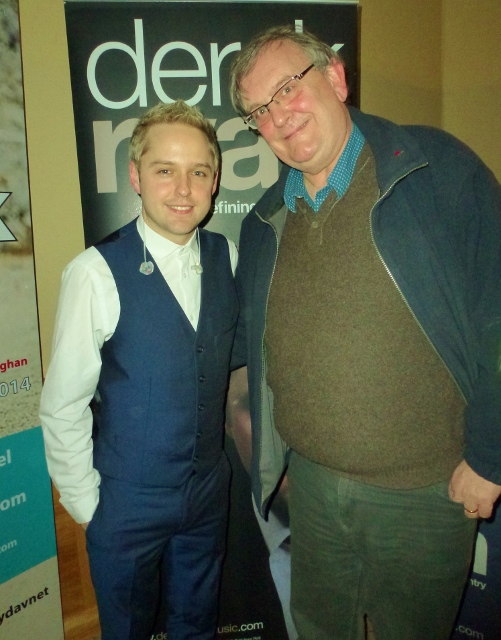
Delighted to meet Derek Ryan after his great show at the Hillgrove Hotel Monaghan in aid of Tydavnet National School. There are not many performers who can pack in a crowd of around 900 aged from 5/6 year-olds right up to 70+. I was also glad to renew a Carlow connection with Monaghan. Derek told me his mother used to work for the Nationalist & Leinster Times in Tullow Street, where my father started work in 1945 and went on to become Managing Director after his retirement from RTÉ. He met my mother (born in Castleblayney, the country music capital of Ireland) when she was working in a local bank in Carlow!

Derek Ryan at Hillgrove Hotel, Monaghan Photo; © Michael Fisher

Derek Ryan at Hillgrove Hotel, Monaghan Photo; © Michael Fisher

TRUAGH CHAMPIONS

Truagh Gaels Photo: © Michael Fisher

Truagh Gaels Photo: © Michael Fisher

Congratulations to Gaeil Triucha GAA club from North Monaghan, All-Ireland intermediate club champions 2014. In the final at Croke Paek they beat Kiltane from Mayo by an eight points margin, 2-21 to 2-13. Truagh lead by four points at half time, 2-10 to 2-06. The Monaghan men got off to a flying start with two well-taken scores from play but then conceded a penalty when Tommy Conroy was fouled. Mikey Sweeney then added a goal for Kiltane, putting them four points in the lead, before Truagh took control again. I was impressed with the performance of Mark Counihan up front. Plenty of celebration tonight no doubt North of Emyvale, towards Carrickroe and Clara! I was glad to see some of my Tydavnet neighbours there in support of the North Monaghan representatives. Also present was the President of the GAA’s Ulster Council Martin McAviney from Ballybay. Just a pity that Emyvale narrowly missed qualifying for the junior club championship final which was the curtain-raiser. Their semi-final victors Twomilehouse from Kildare saw of the challenge of Fuerty from Roscommon in another high-scoring game 5-7 to 1-11. Both were great advertisements for club football. More details of the match on the official GAA site here and you can find more pictures on the Monaghan GAA site here.

MIDWIVES’ TALES

Midwives are in the news today on both sides of the Irish Sea. In Ireland, it has emerged that midwifery staff at the Midland Regional Hospital in Portlaoise had written to two Irish government ministers in 2006 expressing concern over staffing levels at the hospital. In the 2006 letter to then minister for finance Brian Cowen and then minister for health Mary Harney, the hospital’s midwifery staff said they had “a real fear” that a mother or baby will die in their care before these issues are addressed. In the letter, seen by RTÉ’s Investigation Unit, they also said they had made their concerns known to management on a number of occasions but that nothing had happened.

The letter was written prior to all of the deaths of four babies examined in last night’s documentary ‘Fatal Failures’. The babies died in similar circumstances over a six-year period at the hospital. They were all alive at the onset of labour, but died either during labour or within seven days of birth. The Irish Health Service Executive has apologised unequivocally to the families.

In an unrelated development, RTÉ News also reported on the last baby being born at Mount Carmel Hospital in South Dublin on the day that 200 staff members have been made redundant. Another 128 staff will lose their jobs over the coming weeks. Staff attended a mass this evening to mark the closure of the hospital. Afterwards around 20 staff said they were planning a sit-in at the premises. The provisional liquidators confirmed that 572 maternity patients have been affected since the hospital went into liquidation last Friday. Four babies were born today and the final arrival was a girl.

In Westminster, the House of Commons Public Accounts Committee, like its Oireachtas counterpart, is playing an important role on the issue of health services, especially maternity. Channel 4 News reports that in a damning investigation into the state of maternity care, the Public Accounts Committee criticised both the British Department of Health and NHS England for being unable to tell it who is accountable for “ensuring something as fundamental” as whether the NHS has enough midwives. It said it had gathered evidence that “many maternity services are running at a loss, or at best breaking even, and that the available funding may be insufficient for trusts to employ enough midwives and consultants to provide high quality, safe care”.

The report added that “although there has been a welcome increase in midwives, there is still a national shortage in Britain of some 2,300 midwives required to meet current birth rates. Pressure on staff leads to low morale and nearly one-third of midwives with less than 10 years’ work experience are intending to leave the profession within a year. Over half of obstetric units do not employ enough consultants to ensure appropriate cover at all times.

The committee reported that rates of infection among new mothers, infection to the baby and injury to the baby “are all higher at the weekend”. It added: “Although there have been substantial improvements in levels of consultant presence on labour wards in recent years, over half of obstetric units were still not meeting the levels recommended by the Royal College of Obstetricians and Gynaecologists at September 2012.”

Labour MP, Margaret Hodge, who chairs the committee, said: “The vast majority of women who use NHS services to have their babies have good experiences, but outcomes and performance could still be much better. Despite an overall increase in the number of midwives there is still a shortage of 2,300 that are required to meet current birth rates – a truly worrying figure. What’s more, the Department of Health and NHS England struggled to tell my committee who is accountable for ensuring something as fundamental as whether the NHS has enough midwives. As things stand, there is evidence that many maternity services are running at a loss, or at best breaking even, and that the available funding may be insufficient for trusts to employ enough midwives and consultants to provide high quality, safe care.”

Royal College of Midwives

Royal College of Midwives logo

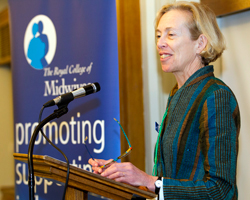
Cathy Warwick, chief executive of the Royal College of Midwives (RCM), said: “Maternity services are many thousands of midwives short of the number needed to deliver safe, high quality care. The birthrate remains exceptionally high and as this and the National Audit Office report states, births are also becoming increasingly complex. This puts even more demands on midwives and maternity services. We are seeing areas such as antenatal and postnatal care in particular suffering because trusts often do not have enough midwives to provide consistent and high quality care before and after pregnancy.”

RCM Chief Executive Cathy Warwick  Photo: © Jess Hurd/RCM

RCM Chief Executive Cathy Warwick Photo: © Jess Hurd/RCM

RCM campaign badge

RCM campaign badge

She added: “At the moment there seems to be a gap between the actual cost of maternity care and the amount of money hospitals get to provide it. This cannot continue and maternity services need to see the money they receive meet the cost of care. If this does not happen I fear services will be cut, choice will be reduced and care will suffer.” Details of the RCM’s report on the state of maternity services in the UK (2013) can be found here and the full report is available here. It was launched in London on December 11th.