MASS OF HEALING

image

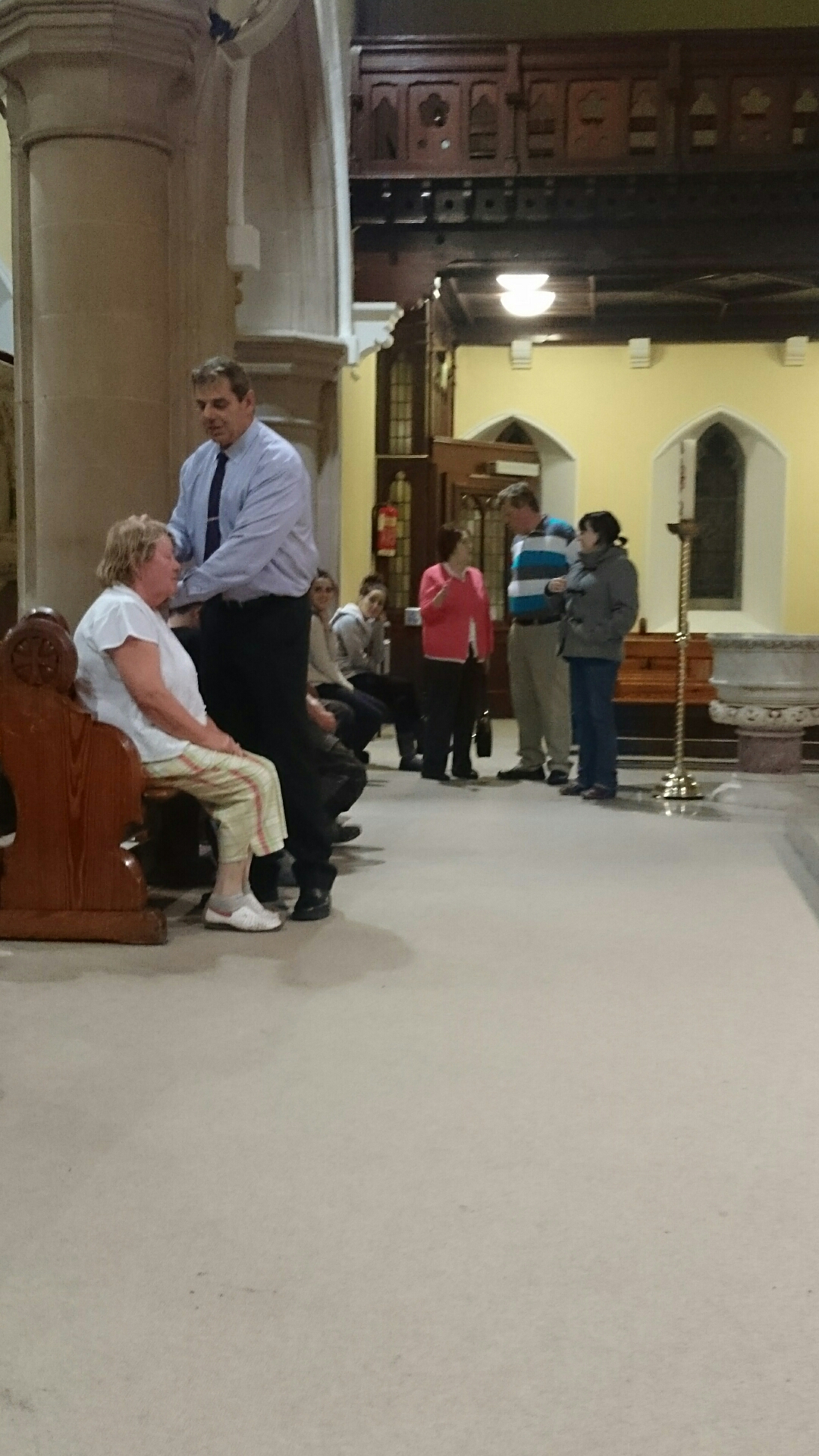
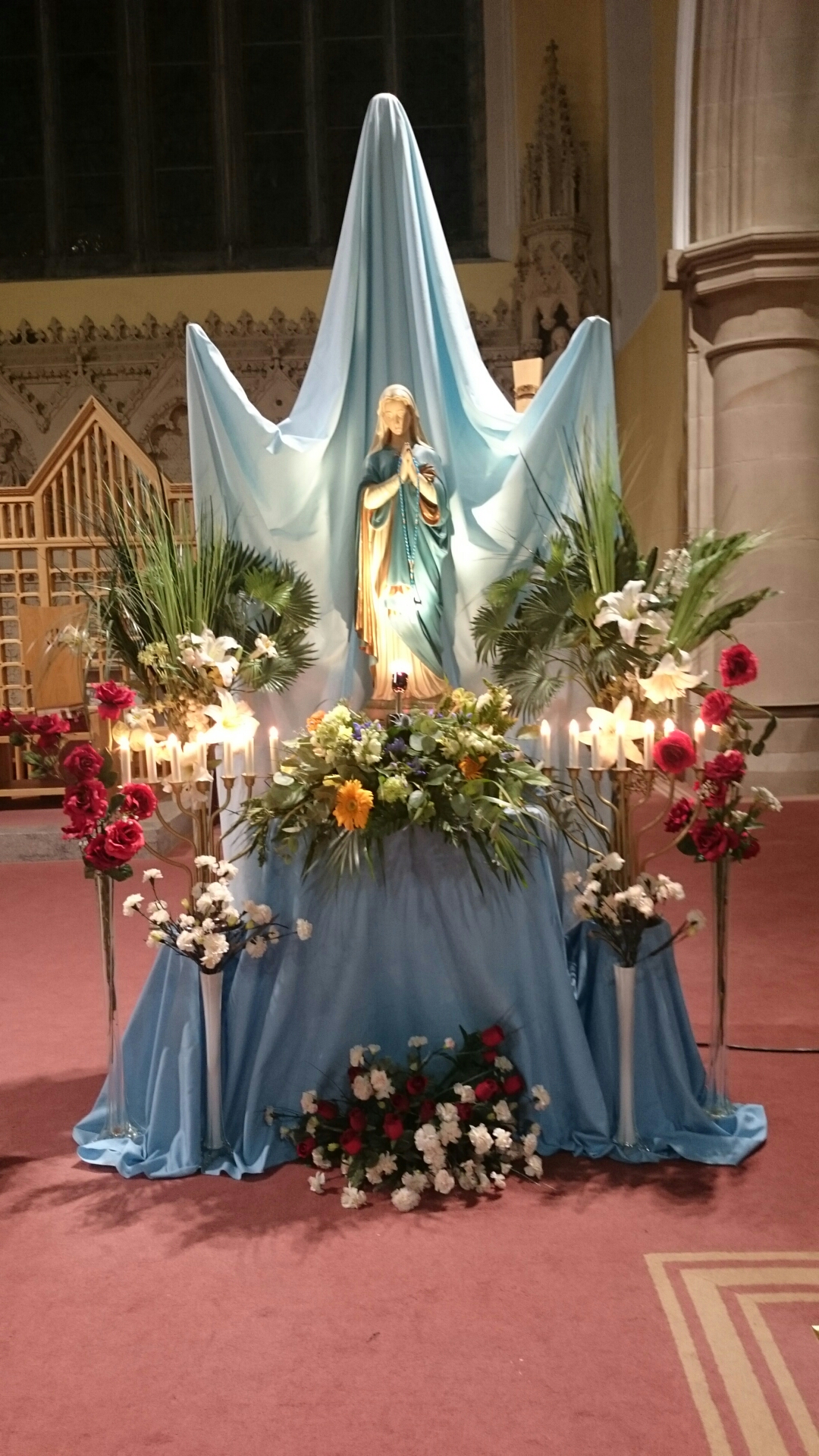
Pat Clarke from Delvin in Co. Westmeath brought his gifts of healing to Carrickmacross tonight. St Joseph’s church was packed out for a Mass of Healing celebrated by Fr Larry Duffy PP.

image

Afterwards Pat Clarke spent two hours meeting hundreds of people and praying over each individual. Some of those present ‘swooned’ or fell backwards after the faith healer had touched them and helped by Pat’s team then lay on the floor for a short time before sitting up again.

image

Pat does not advertise his ministry and has to be invited to parishes. He told me he has been carrying out this work for seventeen years. He is a carpenter by trade and is married, with four children.

image

A great atmosphere of peace and quiet devotion from before the Mass at 7:30pm until 10:30pm when Pat was seeing some latecomers. Beautiful singing by the choir and organ music as well.

image

REMEMBERING SR PHIL TIERNAN RSCJ

First anniversary of Sister Philomene Tiernan

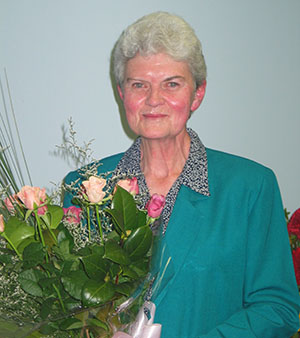
Sr Phil Tiernan  Photo: Diocese of Broken Bay, Australia

Sr Phil Tiernan Photo: Diocese of Broken Bay, Australia

A year ago a Sacred Heart nun with Irish roots, Sr Philomene Tiernan RSCJ, was among the 298 passengers and crew killed when Malaysia Airways flight MH17 was brought down over eastern Ukraine. The Border Mail, a newspaper of the Fairfax Regional Media group based at Wodonga in Victoria, has published this article about her by Paul Mc Geough from the Sydney Morning Herald on the first anniversary of her death:

If your roots are Irish Catholic, you’ll be able to decode the contours to the life of Sister Philomene Tiernan – and you might even ask if its neat bookends are a message from God.

I can say that because I’m Irish-born and was reared in an Australian Catholic home – and I can hear that “bookend” question tripping off my late mother’s tongue. “It’s the providence of God,” she’d say of the inexplicable – like the abrupt end to the life of this living saint who along with 297 others, died when Malaysia Airways flight MH17 disintegrated in the skies over Ukraine on July 17, 2014.

Beneath a gentle, sunny demeanour, Sydney-based Sister Phil, as she was known to so many, was quite a force in Catholic religious and educational politics. She had inherited what her younger sister Madeleine Wright, of Richmond, Victoria, calls her Irish publican father’s charm: “she was patient and charmingly persistent – she knew just how to get her way when she wanted the church community to agree to something.”

Sister Phil was one of the last MH17 victims to be identified and almost a year on, her remains are still in Europe. But a plan is being finalised for three members of her sprawling family to travel to The Netherlands in the coming weeks, to attend her cremation and bring the ashes back to Australia for burial.

“We all still miss her very deeply,” Wright, said in a phone interview, in which she shared tales of family members clinging to mementos of a much admired aunt – one of Wright’s sons says he’ll never launder a scarf that belonged to Sister Phil “because it has her lovely smell”; and when Wright wears a jumper that was Sister Phil’s, her five-year-old granddaughter snuggles in, telling Wright that she “smells like Aunty Phil”.

Sister Phil was the product of a seriously Irish Catholic family. The marriage of her parents Mary Josephine Carroll and James Bernard Tiernan united two 19th century Irish immigrant families in Queensland. In a eulogy delivered at the memorial mass in July last year, Wright acknowledged the presence of Bishop James Foley and Sister Joan Pender, two of a dozen or more cousins who, like Sister Phil, had become nuns or priests. As Sister Phil was before her, Sister Pender is the current head of the Society of the Sacred Heart order of nuns.

About those bookends … when MH17 crashed to earth, its debris and the remains of the passengers and crew were strewn across the gloriously ripening sunflower crops of Donetsk province, in eastern Ukraine. Recalling the memories of home that the young Sister Phil took with her in 1957, when she entered the Society of the Sacred Heart, a semi-enclosed order of nuns, Wright recalled: “We used to have sunflowers at the house in Murgon [in Queensland] – they grew under the tank-stand every year.”

The cloistered life of the nunnery, with its restrictions on contact with family and the outside world, left some in the Tiernan family feeling as though they had been robbed – “a heaviness descended on our household,” Wright said as she wrote of the family goodbyes in the austere parlour of Sydney’s Rose Bay Convent. “Dad absolutely adored Phil, and missed her happy presence.”

The MH17 crash, it seemed, had snatched Sister Phil from them for a second time, after decades in which the late Pope John XXIII’s command that the church ‘throw open the windows’ had allowed her to return to the bosom of her family, in a dual role as matriarch and counsellor to an Irish mob that, by the time of her death, numbered 63 nieces, nephews and grand-nieces and nephews – all of whose life milestones she marked and most of whom she called weekly by phone. “Phil had returned to the intimacy of family life,” Wright told me.

But perhaps the eeriest echo of family history was in how the manner of Sr Phil’s death mirrored that of her paternal uncle Pat, an RAAF airman whose plane was shot down while returning from a bombing mission over Germany in 1944 – when Sr Phil was a seven-year-old.

Brought down by German anti-aircraft fire, her uncle’s flight ended over The Netherlands – his plane crashed near the Dutch village of Dodewaard. Sr Phil’s fateful flight began at Amsterdam, just 100 kilometres north-west of the village where locals erected a monument to her late uncle and his crew, and it was brought down by missile fire in a separatist war being fought in Ukraine.

One of the very special appointments on Sister Phil’s 2014 European sojourn had been to attend a ceremony at Dodewaard to mark the 70th anniversary of her uncle’s death – for which she was hosted by local families.

One of the few to touch on Sister Phil’s strength as a church politician, was Hobart Archbishop Julian Porteous, who on her death, remarked that Sister Phil was “quite a woman, yet very forceful…” Writing an obituary for Fairfax Media, her nephew Dermot Tiernan noted her “steely focus that typified life in Depression-era country Australia”.

Wright dwelt on the commitment of the Society of the Sacred Heart order of nuns to turning girls into well-educated and strong-minded young women and on Sister Phil’s reading of liberation and feminist theologies. Other family members told of her personal educational philosophy, which emphasised a need for women to play strong roles at all levels in society and about her interest in “cutting-edge theology”.

She was a relentless scholar – studying academically and religiously. She was an inveterate traveller – criss-crossing the globe for work and study and sometimes managing to fit in some play, which usually revolved around catching up with family members in exotic places.

In the Irish catholic way, this was the “big life, the full life” her parents wanted their daughter Philomene to have – and of which they and her siblings were so proud.

“We’ve been so very lucky to have her in our lives,” Wright said. “She was beautiful, clever, strong, determined. She was full of love, and so often full of joy. She made people happy. She helped. She listened. She forgave, she forgot, but most of all, she loved.”
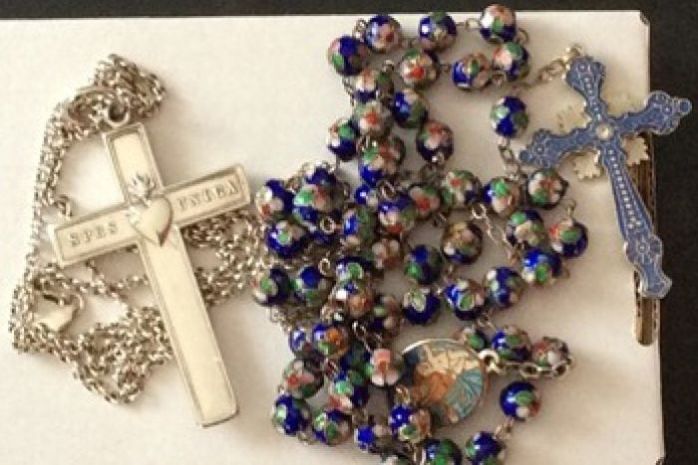
Sr Phil's RSCJ cross and rosary. recovered from the plane wreckage, were among the items stolen last month from her sister's home in Richmond, Victoria  Photo: Victoria Police

Sr Phil’s RSCJ cross and rosary. recovered from the plane wreckage, were among the items stolen last month from her sister’s home in Richmond, Victoria Photo: Victoria Police

The Catholic Archdiocese of Sydney reported that on Friday, a special prayer service was held attended by students and staff at Kincoppal-Rose Bay school to remember Sister Phil. The school observed one minute’s silence as they remembered the nun, who for more than thirty years was associated with Kincoppal-Rose Bay and the Rose Bay community. The variety of roles held by Sr Phil included that of teacher and pastoral care provider both to students inside as well as those outside the school. She was also Director of Boarding at Kincoppal-Rose Bay and from 2002 until 2012 was Director of the Kincoppal-Rose Bay School Board.

“We are all honoured to have known her,” says Hilary Johnston-Croke, Principal of Kincoppal-Rose Bay who says flags at the school will be flown at half-mast on Friday.

“Sr Phil always wanted us to fly the Aboriginal flag alongside Australia’s national flag,” she says, explaining that one of the first things the school did to honour Sr Phil and her memory was to install an additional flagpole so that both flags could be flown together.

The Sydney community of the Sisters of the Sacred Heart of Jesus also remembered Sr Phil on Friday at a Mass at Our Lady of the Sacred Heart, Randwick. The 77-year-old much-loved Queensland-born Sister was among the 298 men, women and children who lost their lives when their flight from Amsterdam to Kuala Lumpur was shot down over East Ukraine. All on board including Sr Phil and 37 other Australian citizens and residents were killed.
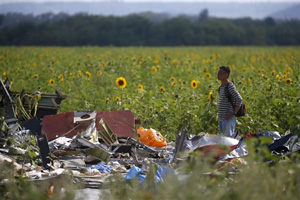
Sunflower seeds from the Ukraine crash site have been collected and will be planted in the school grounds in spring

In one of life’s strange coincidences, Sr Phil had been visiting the Netherlands with other members of the Tiernan family for the memorial service in the Dutch town of Dodwaard Uden for her uncle, Flight Sergeant Patrick Tiernan who was shot down and buried in the town during World War II.

After the memorial service, Sr Phil had travelled to All Hallows College, Dublin where she spent the month of May last year completing a faith and spirituality renewal course. As part of her time abroad, she visited St Francis Xavier Church in Paris where the founder of the Society of the Sacred Heart is buried and spent time in a retreat in Joigny, before returning to Amsterdam for the flight home.

While the horror, shock and loss of so many lives will remain for decades to come, for the students and staff at Kincoppal-Rose Bay, for her close and extended family and for the Community of the Sacred Heart, Sr Phil is remembered not because of the terrible circumstances under which she died, but for her joy, her love, her faith and compassion, and as an ongoing role model and inspiration for students at Kincoppal-Rose Bay.

“We have tried our best to normalise her memory. With each other and with our students, we talk about her in the most natural way, saying Sr Phil would enjoy this, or Sr Phil would have said that,” Ms Johnston-Croke says. “At graduation last year I also spoke of Sr Phil’s wisdom, compassion and joy and how she was a Sacred Heart Woman we aspired to be.”
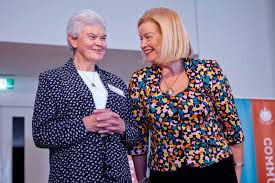
Sister Philomene Tiernan and Principal of Kincoppal-Rose Bay Hilary Johnston-Croke

For the Principal of Kincoppal-Rose Bay, Sr Phil was both a mentor and close personal friend. “She raised me to help me become the Sacred Heart educator that I am today. She was a great role model – as a Sacred Heart woman, educator of great faith and intellect with a strong commitment to social justice and to personal growth. She has left a wonderful legacy for us all to treasure for the rest of our lives,” she says.

While Sr Phil has been remembered on the first anniversary of the downing of Malaysian Flight MH17 by the school and students she loved, and to whom she dedicated so much of her life, a celebration of her remarkable life will take place twelve days later (July 29th) when Kincoppal-Rose Bay’s officially opens a new Learning Centre and a Boarding Bursary program, both of which will bear her name.

The Sister Philomene Tiernan RSCJ Learning Centre will be formally opened by Sr Phil’s first cousin, close friend and fellow religious, Sr Rita Carroll RSCJ and will be blessed by Monsignor Tony Doherty, Parish Priest of St Mary Magdalene, Rose Bay. Invitations to the launch and blessing feature one of Sr Phil’s much-loved sayings: “Darling, you are doing so well!”

Together with Sr Rita, who is also Deputy Chair of the Kincoppal-Rose Bay School Board, the ceremony will be attended by the Provincial of the ANZ (Australia and New Zealand) Sisters of the Sacred Heart of Jesus, Sister Joan Pender and members of the Sydney Sacred Heart community.

The new learning centre named after Sr Phil will provide Kincoppal-Rose Bay with state-of-the-art collaborative learning spaces along with the latest in audio visuals for collaborative teaching and learning.

“The Centre is very much about how Kincoppal-Rose Bay is creating spaces for students so they can develop the skills needed for the future and a 21st Century world,” Ms Johnston-Croke says. Not only would Sr Phil approve of such a Centre being established but she would be equally delighted with the Boarding Bursary, particularly in light of her long and close engagement with boarders, particularly during her time as Director of Boarding at Kincoppal-Rose Bay.

The Sr Philomene Tiernan RSCJ Boarding Busary will means-test applicants and provide the financial support to families on lower incomes to enable their son or daughter attend and board at one of Australia’s oldest private Catholic schools.

Within less than 12 months of the MH17 tragedy efforts by members of the Kincoppal-Rose Bay community and those who knew and loved Sr Phil have not only managed to raise enough money to operate the Boarding Bursary over the next few years, but enough money to operate the Bursary in perpetuity.

“This is not just a tribute to the hard work many people put in to raise these funds but a tribute to Sr Phil, and how much she was loved and the esteem in which she was held,” says Ms Johnston-Croke.
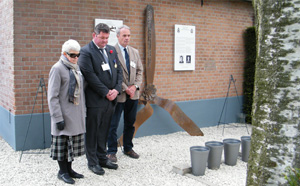
Sr Philomene RSCJ (left) visited the grave of her uncle Patrick Tiernan who died when his plane was shot down over Holland during World War II

Later in spring there will be another ceremony dedicated to Sr Phil when sunflower seeds collected from the field in which the doomed MH17 flight came down in East Ukraine will be planted in the school grounds in her memory. Award-winning Australian journalist Paul McGeogh and photographer Kate Geraghty were among the foreign journalists reporting from East Ukraine after the Malaysian flight was shot down, and who on impulse collected sunflower seeds from the killing fields to give to grieving families to plant as a special keepsake and potent reminder of those they had lost.

“Our seeds are among the second batch to be sent to Australia,” says Ms Johnston-Croke who believes that the garden of sunflowers along with the Boarding Bursary and Learning Centre created in Sr Phil’s name will ensure her legacy is not only meaningful but continues to resonate with students and staff for many years to come.

Sr Phil was among the last of the 298 passengers and crew on the ill-fated Malaysian Airlines’ flight to be identified, and it is understood that members of Sr Phil’s large extended family are currently in the process of organising dates and finalising plans to travel to the Netherlands to attend her cremation and bring the ashes back home to Australia for burial.

Eulogy for Sr Phil Tiernan RSCJ 2014

A Mass of Thanksgiving for the Life of Sr Phil Tiernan RSCJ was held at Our Lady of the Sacred Heart in Randwick on 25th July 2104.  This is the eulogy that Sr Mary Shanahan RSCJ gave for Phil.  The eulogy given by Phil’s sister, Madeleine Wright and her daughter Josephine, can be read here.

Sr Mary Philomene Tiernan, known to us as Sister Phil or simply Phil, entered the Society of the Sacred Heart in 1957.  Apart from her family, the Society became Phil’s life.  In 2004 in a letter to the Society on the feast of the Sacred Heart, the Mother General wrote “As Religious of the Sacred Heart whose mission is to discover and reveal the love of His heart, love has fashioned our identity; it is our desire and our delight.”

Phil’s identity was definitely fashioned by that love which she shared so fully and faithfully with others.

One of her former students when she was Boarder Mistress at Rose Bay in the 70’s wrote on twitter that Phil had ‘sculpted’ her.  It reminded me of the story of the boy who saw a sculptor chipping away at a piece of marble.  Much later as he passed by again he saw, instead of the block, a lion and he asked the sculptor, “how did you know there was a lion in the marble?”  Phil’s work of education was to believe that there was a lion, so to speak, in each one and to help each one to chip away to discover the beauty that is within. It was the same with her religious sisters.  One wrote that she was a very friendly, affectionate and encouraging person who had the ability to let everyone she was with feel worthwhile.  She had a great sensitivity which drew her to those in need.  Another younger RSCJ recalls that when Phil was Provincial she knocked on the door of her room and said, ”I want you to know I’m always available to you. So I’m going to come and see you often so that we get to really know and trust each other.”  “ Phil made a difference to my life,” the religious said, “ and to my commitment as an RSCJ.  Whether knowingly or unknowingly she made me believe I was a beautiful person at the precise time when I was questioning my vocation.  I never wavered again.”

This gracious sensitivity was with Phil all through her life.  One of our English sisters who met Phil when she was last in London wrote of the wonderful impression she made, staying with the elderly sisters before attending the Janet Stuart Conference.  In her words Phil was not only kind and courteous but outstandingly considerate and sensitive.  She gave of herself in her quiet and dignified way to each of us.  “I was”, she said, “especially struck that she took the time and trouble to greet each one in Duchesne House personally.”

Innumerable tributes have been paid to this religious whose identity has been fashioned by love and they all stress this same gift of herself, someone who always knew how to light us all up even when we were at our worst.

Phil loved the Society of the Sacred Heart and her desire and delight was to serve it in every way she could.  She had a number of leadership positions in the Province after she made her final profession in Rome in 1965.    She was named Mistress of Novices in 1984; became a member of the Provincial Council and then Provincial of the Australian-New Zealand Province in 1993. As Provincial, Phil encouraged two of the sisters in Braybrook in Melbourne’s west to open part of the community to care for Vietnamese mothers and children.  And when a call came from the Bishop of Rockhampton for sisters to go to Blackall in Queensland to be a presence there, two of our sisters responded to Phil’s call.  She went with them to ensure they were settled and had what they needed.   Then in 2004, after working in another position, she became the Director of the ANZ Network of Schools, a position that brought her into close contact with the Principals of our four schools.

Though not exactly a leadership position she was a convener of the Madeleine Sophie Programme for six years and gained the love and respect of the many women who participated in that programme.  One who was a participant and then worked with Phil as a convener felt that she walked taller and stronger for having known her. Being recognised in these different roles meant a lot to her and affirmed her in the way she needed.  Another role which gave her an opportunity to carry out her gift as a sculptor was as Boarder Mistress at Rose Bay.  Her experience in boarding enabled her to offer a much appreciated  contribution to the life of boarders at Kincoppal-Rose Bay when she returned a few years ago to be a staff member at KRB.

But Phil used her gifts in a much wider field than the school, dear as that was to her heart.  She was for a time a member of a committee of the Archdiocese of Sydney where the now Archbishop of Hobart found how determined she could be. And Cardinal Pell in sending a message of sympathy through Bishop Comensoli had this to say, ”Sr. Phil will be remembered as a bright spirit and great inspiration to many not only in her school community but also throughout the Sydney Archdiocese. She will be greatly missed.”

After completing her six years as Provincial, which was followed by a sabbatical, she became Chancellor of the Broken Bay Diocese in 2000. She appreciated the opportunity this role gave her to work in a more specialised way for the church. The Bishop relied on her and even when she retired from the position of Chancellor he entrusted to her the guidance of the Ecclesial Women he had established in the diocese and named her Vicar.  She continued in this role along with her other ministries.

She was involved in the spirituality programme at Kerever Park and was a retreat director and spiritual director there.  She continued this work of retreats and spiritual direction.  She reached out to people in her sensitive and compassionate way which drew people to her especially when they needed her guiding hand. Her loving heart drew her to those who did not come to her.  On Thursday evening she went to Cana to cook a meal for the inhabitants there.  Her community would have known though not too many of us knew of this outreach of hers. Phil did indeed have a life which she lived to the full though it was not free of suffering.

Phil was a woman of the heart and for such women suffering comes through the heart.  As one of her religious friends noted she suffered intensely with her loss of work, her family sorrows and any injustice she witnessed.  She suffered, too, because she felt that her gifts were not always acknowledged and used.  She gave richly to others but others also gave to her by affirming her in a way that helped to raise her spirits and enabled her to give of her best.

Phil was well prepared for her different ministries.  She completed her Bachelor of Education at Macquarie University in 1976 and followed this when she was in Melbourne by doing a CPE at Mercy Hospital.  In 1981 and 1982 she was a student at Loyola University, Chicago and completer a Masters in Pastoral Studies.  She spent six months of her last year in the States in the noviceship in Boston and doing a course in spirituality at Boston College.  She was well prepared to be Mistress of Novices when she was appointed to that position in 1984.  She was Vice-Principal of Duchesne College in Queensland University in 1991 but returned to Melbourne to continue her work in the noviceship until she became Provincial in 1993.  Phil continued to do short courses to upgrade her skills.

She gave the same attention to planning her sabbatical in the second term of this year.  She went first to All Hallows College in Dublin to follow a course of some weeks in spirituality/ theology.  She really enjoyed the Celtic spirituality that was part of it.  She knew how to benefit from opportunities offered and her time in London at the celebrations in honour of the centenary of the death of Janet Erskine Stuart opened her not only to studies of Janet’s spirituality and educational philosophy but also to time spent with RSCJ from different parts of the world.  Phil lived through relationships and gave of herself to these.  Everyone who knew her during these days said how happy she was.  It was all a great preparation for her retreat in Joigny, the birth place of Madeleine Sophie Barat and now a centre of spirituality for the Society.  Apart from the retreat there was a four-day workshop on the Constitutions, all part of Phil’s planning.  Her retreat was directed by an Irish RSCJ whom Phil had met in Rome in 1993.  During the retreat the Director suggested to Phil to think about her death and gave her a poem, “So What Will Matter.’  Excerpts of it read:

“Ready or not, some day it will all come to an end.  There will be no more sunrises, no minutes, hours or day.  What will matter is not your memories, but the memories that live in those that loved you. What will matter is how long you will be remembered by whom and for what.”

Phil did pray over that poem and found it wonderful and looked forward to sharing it with friends in Australia.

She left Joigny to go to Paris to catch the train to Amsterdam.  But first in Paris she wanted to visit the church where St Madeleine Sophie rests.  There she arranged to meet a friend at the church and to have lunch with her afterwards Her friend  recounted for us Phil’s adventures in getting to the church – on time!  The taxi took her to the wrong place but happily she met a young tourist, Juliette, whom she called her second angel; the first helped her onto the train with her heavy cases.  Juliette walked with her to the church where she met her friend and her third angel. After praying for some time at the shrine of Madeleine Sophie she talked to an alumna from our school in Tokyo, Rose Bay and 91st Street, New York, a small world but one that touched the internationality of the Society.  Phil lit a candle to Sophie and they left for the train that would take her to Amsterdam.  She began her journey there with a ceremony in honour of her uncle who was shot down during the Second World War and was buried in Holland.  This family connection was very important to Phil as were all her family.  Her love for each one was evident.

The memories of those that loved Phil will be of a woman who loved.  She spent the two months before her tragic death preparing for it in an unintentional way.  An alumna of Stuartholme, where Phil went to school, had married and had lived and worked in England for many years.  A group of Stuartholme alumnae were attending the events honouring Janet Stuart and included a Visit to Joigny.  She joined them and met with Phil in Joigny.  Wanting to find out what Phil was doing and living she asked her, “Where are You?”  “In heaven”, replied Phil.  It seemed that the God to whom Phil had given her love and life wanted to ensure that she was at her best to enter her new life. Phil, the sculptor, had been chipping away at her own piece of marble and the retreat and the experiences of her sabbatical brought to beauty the lion that was within her.

For us the words of Janet Stuart may help us to accept her sudden and tragic leaving us.

I must learn to live by faith.

Like the weaver,

Never seeing the plan of my life,

But trusting to God for it and working on the wrong side as it seems,

But working for a reality.

Not for my reason or the imagination of my own fancies,

But one of which God has not only designed the whole,

But has counted every stitch

And tied every change of thread

From the beginning to the end.

Mary Shanahan RSCJ, 25th July 2014

BELFAST ROSES IN BLOOM

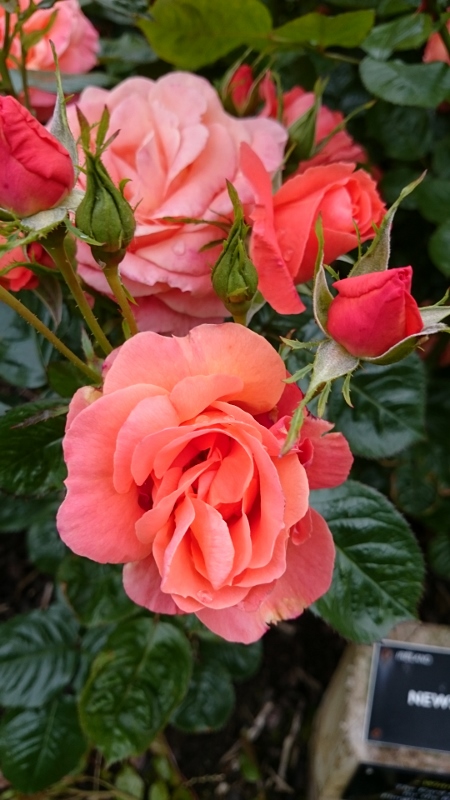
Sexy Rexy Rose   Photo:  © Michael Fisher

Sexy Rexy Rose Photo: © Michael Fisher

Schedule of Perpetual Trophies

These are the awards up for grabs during Rose Week at Sir Thomas and Lady Dixon Park, Upper Malone Road, in South Belfast:

News Flash rose   Photo:  © Michael Fisher

News Flash rose Photo: © Michael Fisher

The Rose Society of Northern Ireland Championship – The Craig Wallace (The Founder’s) Trophy, presented by President of the Rose Society, Craig Wallace, and awarded annually to the exhibitor accumulating most points in the Open classes at the Society’s Summer and Autumn Shows provided that person has gained at least six first prizes in the process and exhibited at both shows.
The Craig Wallace Salver. Miniature Rose Championship, awarded annually to exhibitor accumulating most points in the miniature rose classes in the society’s summer and autumn shows, providing that the person has gained at least four first prizes in the process and exhibited at both shows.
The Plaque. Presented by Samuel McGredy and Son Ltd. Best Large Flowered Bloom in the Show.
The President’s Cup. Presented by Molly Frizzelle. Best exhibit in Class 1.
The Perpetual Challenge Cup. Presented by Alex Dickson and Sons Ltd. Best exhibit in Classes 1 – 34.
The Friendship Plate. Presented by Mr. A. H. Pearson. Exhibitor gaining most points in Classes 1 – 34.
The Rotomar Trophy. Best exhibit in Class 16.
The John Creighton Trophy. Exhibitor gaining most points in
Classes 17 – 21.
The James H. Jess Memorial Trophy. Best exhibit in Classes 17 – 21.
The Abraham Rose Bowl. Presented by Miss E. K. Abraham. Exhibitor gaining most points in Classes 22 – 30.
The Lady O’Neill Cup. Best exhibit in Classes 31 – 34.
The RSNI Miniature Cup. Exhibitor gaining most points in
Classes 35 – 40.
The Australian Prize. Best exhibit in Classes 41 – 46.
The Alison Henry Cup, presented by the Cregagh and District Gardening Society. Best exhibit in Classes 47 – 52.
The Aubrey and Doreen Kincaid Cup. Best exhibit in Classes 53 – 61.
The Cregagh Cup. Best exhibit in Classes 62 – 70.
The Bromage Silver Rose Bowl. Best Bonsai exhibit in Classes 71 – 78.
The Jubilee Cup. Best exhibit in Classes 79 – 86.

Belfast Rose Week  Photo:  © Michael Fisher

Belfast Rose Week Photo: © Michael Fisher

Schedule of Classes
Large Flowered Roses (H.T.)
Class 1
The President’s Cup.
One Box. Six specimen blooms. One variety or mixed.
Class 2
One Vase. Five blooms. One variety or mixed.
Class 3
One Vase. Three blooms. One variety.
Class 4
One Vase. Three blooms. Three varieties.
Class 5
One Vase. Two Blooms. One variety. To be judged as a matching pair.
Class 6
One Vase. One bloom. Main colour Red/Pink.
Class 7
One Vase. One bloom. Main colour Yellow/White.
Class 8
One Vase. One bloom. Any other colour.
Class 9
One Vase. Three blooms. One variety. To show the various stages of development – one opening bud, one specimen bloom and one in the blown stage.
Class 10
Bowl up to 9 in. (229 mm) containing six or more large flowered (H.T.) stems. To be displayed for effect and interest. Bowl to be supplied by the exhibitor.

Molly McGredy rose  Photo:  © Michael Fisher

Molly McGredy rose Photo: © Michael Fisher

Class 11
One Vase. One fragrant bloom. Half marks will be given for quality and half for fragrance.
Class 12
One Vase. Three blown blooms. One variety or mixed. Stamens should be showing.
Class 13
One stem inflorescence bearing a number of blooms.
Class 14
Three stems inflorescence each stem bearing a number of blooms. One variety or mixed.
Class 15
Bowl (supplied by exhibitor). Large flowered (H.T.). One bloom (up to and including blown stage) floating in water.
Large Flowered (H.T.) and Cluster Flowered (Floribunda) Roses
Class 16
Rotomar Trophy.
One Vase. Three Large Flowered (H.T.) specimen blooms.
One Vase. Three stems Cluster Flowered (Floribunda).
Cluster Flowered (Floribunda) Roses
Class 17
One Vase. Five stems. One variety or mixed.
Class 18
One Vase. Three stems. Three varieties.
Class 19
One Vase. Three stems. One variety.
Class 20
One Vase. One stem.
Class 21
One Vase. One fragrant stem. The stem should be typical of the variety. Judged as class 11.

Pride of Scotland rose   Photo:  © Michael Fisher

Pride of Scotland rose Photo: © Michael Fisher

Miniature Roses
(Exhibitors may supply own containers in Classes 22-28)
Class 22
One Box. Six miniature roses. One variety.
Class 23
One Box. Six miniature roses. Mixed.
Class 24
One Vase. Three stems. One variety.
Class 25
One Vase. Three stems. Mixed.
Class 26
One Vase. One stem.
Class 27
Six stems arranged in a bowl not exceeding four inches in diameter (102 mm). One variety or mixed.
Class 28
One small container. Three blooms. One variety. To show the various stages of development — one opening bud, one perfect flower and one in the blown stage.
Class 29
Bowl (small, supplied by exhibitor) one miniature bloom (up to and including blown stage) floating in water.
Class 30
Artist’s palette. Seven blooms in seven distinct colours. (Palette supplied).
Shrubs and Climbing Roses
Class 31
One Vase. Three stems. Old Garden Roses. One variety or mixed.
Class 32
One Vase. Three stems. Modern Shrub Roses. One variety or mixed.
Class 33
One Vase. Three stems. Climber or Rambler Roses. One variety or mixed.
Class 34
One Bowl 9 in. (229 mm) containing four or more stems. Old Garden and/or Modern Shrub Roses. One variety or mixed. (Can be staged irrespective of Rules for Exhibition).
Novice Classes
Confined to less experienced exhibitors and beginners, who have never won a prize in the open rose classes. Following winning three first prizes in the Novice Classes, such exhibitors shall only be permitted to exhibit in the Open Classes.
Class 35
One Vase. One stem. Cluster Flowered (Floribunda).
Class 36
One Vase. Three stems. Cluster Flowered (Floribunda). One variety or mixed.
Class 37
One Vase. One stem. Large Flowered (H.T.)
Class 38
One Vase. Three stems. Large Flowered (H.T.). One variety or mixed.
Class 39
One Vase. One stem. Miniature.

Belfast Rose Week  Photo:  © Michael Fisher

Belfast Rose Week Photo: © Michael Fisher

Class 40
One Vase. Three stems. Miniature. One variety or mixed.
General Flowers
Class 41
Carnations or Pinks. One Vase. Three stems.
Class 42
Annuals and/or Biennials (Sweet Pea excluded). One Vase. One variety or mixed.
Class 43
Shrubs. One Vase. One Kind (roses excluded). Displayed for effect and interest.
Class 44
Shrubs. One Vase. Mixed. (roses excluded). Displayed for effect and interest.
Class 45
Herbaceous Perennials. One Vase. One Kind.
Class 46
Herbaceous Perennials. One Vase. Mixed.
Sweet Pea
Class 47
Sweet Pea. One Vase. Nine stems. Pink/Red shades.
Class 48
Sweet Pea. One Vase. Nine stems. Blue/Mauve shades.
Class 49
Sweet Pea. One Vase. Nine stems. Any other colour.
Class 50
Sweet Pea. One Vase. Twelve stems. Mixed.
Class 51
Bowl of Sweet Pea. Twenty stems. Mixed. Own foliage.
Class 52
Basket of Sweet Pea. Any number of stems and any foliage allowed (exhibitors must provide own basket).
N.B. Sweet Pea used in Classes 51 and 52 only are not required to have been grown by the exhibitor.
Pot Plants
Class 53
Flowering Plant. (Pelargoniums excluded). Up to and including 6 in. pot. (152 mm).
Class 54
Flowering Plant. (Pelargoniums excluded). Over 6 in. pot (152 mm).
Class 55
Foliage Plant. Up to and including 6 in. pot (152 mm).
Class 56
Foliage Plant. Over 6 in. pot (152 mm).
Class 57
Fern. Pot size unrestricted.
Class 58
Collection of three different house plants. Up to and including 6 in. pots (152 mm). (The plants must be suitable for all-year round growing in a house room).

Bright n' Breezy rose by Dickson (NI) from trials 2013/14  Photo:  © Michael Fisher

Bright n’ Breezy rose by Dickson (NI) from trials 2013/14 Photo: © Michael Fisher

Class 59
Orchid. Pot size unrestricted.
Class 60
One box Begonias. Three blooms.
Class 61
One box Begonia. One bloom.
Class 62
Basic Regal Pelargonium. Up to and including 6 in. (152 mm) pot.
Class 63
Basic Zonal Pelargonium single flowered. Up to and including 6 in. (152 mm) pot.
Class 64
Basic Zonal Pelargonium. Double or semi double flowered. (excluding scented leaf). Up to and including 6 in. (152 mm) pot.
Class 65
Fancy Leaf Pelargonium. Up to and including 6.5 in. (165 mm) pot.
Class 66
Species and species Hybrid Pelargonium including scented leaf. Up to and including 6 in. (152mm) pot.
Class 67
Angel including miniature regal. Up to and including 6 in. (152 mm) pot.
Class 68
Stellar Pelargonium. Up to and including 6 in. (152 mm) pot.
Class 69
Dwarf Pelargonium. Up to and including 4.5 in.
(114 mm) pot.
Class 70
Miniature Pelargonium. Up to and including 3.5 in. (89 mm) pot.
Bonsai
A tree which won a First Prize in any class last year may not be exhibited for competition this year but will be eligible for re-entry next year.
Class 71 Bonsai. Evergreen.
Class 72 Bonsai. Deciduous.
Class 73 Bonsai. Forest plantings and landscapes.
Class 74 Bonsai. Mame up to 6 in. (152 mm). Any variety.
Class 75 Bonsai. Coniferous.
Class 76 Bonsai. Indoor.
Class 77 Bonsai. Fruiting, Flowering, Berried.
Class 78 Bonsai. Novice.
Cacti and Succulents
Class 79
Mammillaria. One Plant. Pot size up to and including 6 in. (152 mm).
Class 80
Three Cacti. Pot size up to and including 7 in.
(178 mm).
Class 81
One Cactus. Pot size up to and including 5 in.
(127 mm).
Class 82
One Cactus. Pot size unrestricted
Class 83
Stemless Mesembryanthemaceae. One Plant. Pot size up to and including 4 in. (102 mm).
Class 84
One succulent (Cactus excluded). Pot size up to and including 3.5 in. (89 mm)
Class 85
One Succulent (Cactus excluded). Pot size up to and including 5 in. (127 mm).
Class 86
One Succulent (Cactus excluded). Pot size unrestricted.

Athlone rose   Photo:  © Michael Fisher

Athlone rose Photo: © Michael Fisher

BELFAST ROSE WEEK

City of Belfast Rose in Lady Dixon Park  Photo:  © Michael Fisher

City of Belfast Rose in Lady Dixon Park Photo: © Michael Fisher

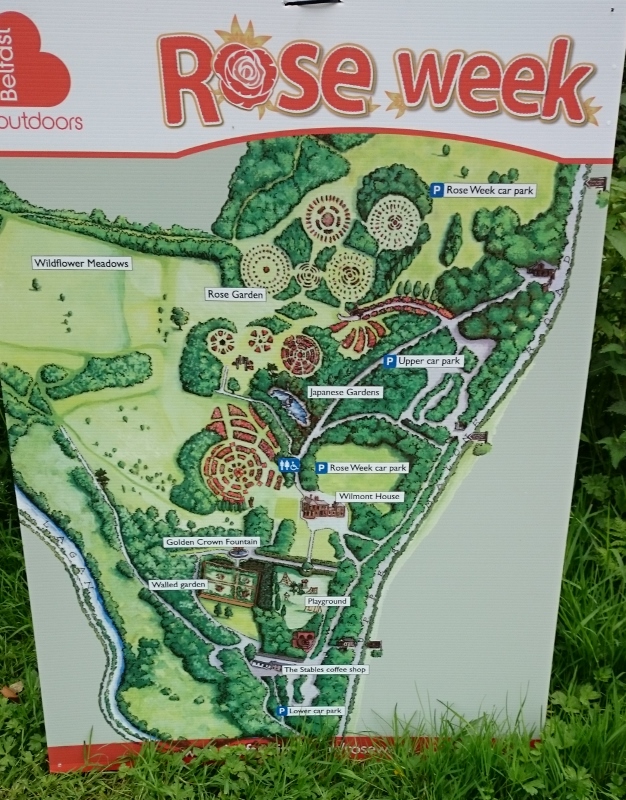
The international rose garden at Sir Thomas and Lady Dixon Park in South Belfast is one of the world’s leading rose gardens, attracting thousands of visitors each year. Rose Week, with its full programme of activities, is a celebration of this spectacular rose garden and is now one of Belfast’s most popular annual events.

Brilliant Korsar rose by Kordes from Germany: Historical section, trials 2011-13  Photo:  © Michael Fisher

Brilliant Korsar rose by Kordes from Germany: Historical section, trials 2011-13 Photo: © Michael Fisher

There were not many visitors this afternoon (Friday), possibly because of the very unsummerlike weather. Maybe there will be more on Saturday and Sunday. But the extensive collection of various types of roses was very colourful, although some of the historical varieties seem to be past their best as their petals have been blown away by the wind.

Rose of Tralee  Photo:  © Michael Fisher

Rose of Tralee Photo: © Michael Fisher

The event promises a week of family fun including:

  • live music and entertainment
  • floral art demonstrations
  • summer rose and flower show exhibitions.

    Dawn Chorus  Photo:  © Michael Fisher

    Dawn Chorus Photo: © Michael Fisher

Getting to Rose Week: Free shuttle bus

During Rose Week a free shuttle bus service direct to Sir Thomas and Lady Dixon Park operates daily at 20 minute intervals from the grounds of Belfast City Hall, Donegall Square East. The service commences at 12 noon and the last bus leaves City Hall at 5pm. The drop-off and collection point at Sir Thomas and Lady Dixon Park is in the upper car park. The return journey from the park begins at 12.20pm and operates every 20 minutes with the last bus leaving the park at 5.20pm.

Benita rose  Photo:  © Michael Fisher

Benita rose Photo: © Michael Fisher

Free park and ride from Drumbo Park

During Rose Week a free park and ride service operates daily between Drumbo Park, Ballyskeagh Road and Sir Thomas and Lady Dixon Park. The service starts at 12noon and the last bus leaves Sir Thomas and Lady Dixon Park at 5.20pm.

La Sevillana climber rose, France   Photo:  © Michael Fisher

La Sevillana climber rose, France Photo: © Michael Fisher

Car parking

Car parking is available in the main car parks and Rose Week car parks at Sir Thomas and Lady Dixon Park. Where possible, cars will be permitted access close to Wilmont House for the purpose of leaving off elderly or disabled visitors. Cars must then be parked in one of the main car parks.

Arthur Bell rose  Photo:  © Michael Fisher

Arthur Bell rose Photo: © Michael Fisher

City of Belfast international rose trials

Yesterday (Thursday) a panel of international judges completed the final judging of the City of Belfast international rose trials. The awards for the winning rose breeders are sponsored by Belfast City Council, the Department of Agriculture and Rural Development, Tourism NI, Clive Richardson Ltd and Eventsec.

Wild Rover rose  Photo:  © Michael Fisher

Wild Rover rose Photo: © Michael Fisher

Daily events

  • Harp music in the rose garden, 2pm – 5pm
  • Belfast Parks photographic exhibition in the marquee, Saturday 11am – 5.30pm and Sunday 1.30pm – 5.30pm
  • Bouncy castle near Wilmont House, Thursday to Sunday
  • Face painting, balloon modelling and children’s tattooing in the playground area, times vary each afternoon
  • Punch and Judy in the playground area, Friday to Sunday at 2.30pm
  • Competitions in the rose garden – competition forms available from the information marquee, adjacent to Wilmont House, Saturday from 11am – 5.30pm and Sunday from 1.30pm – 5.30pm.

    A classic rose:  Romance  Photo:  © Michael Fisher

    A classic rose: Romance Photo: © Michael Fisher

Saturday 18th July

  • Recycling workshop, 1pm – 5pm
  • Bouncy castle, 1pm – 5pm
  • Kiddies safari train, 1pm – 5pm
  • Rodeo bull, 1pm – 5pm
  • Swing chair ride, 1pm – 5pm
  • Magic show for children, 3.45pm
  • Summer stalls, 11am – 5.30pm
  • Summer rose and flower show, 2pm – 5.30pm
  • Ulster-Scots Agency Juvenile Pipe Band, 12noon – 1pm
  • Templemore Silver Band, 1.30pm – 2.30pm
  • Peach Pop, 3pm – 5pm
  • Streetwise Stiltwalker, 1pm – 5pm
  • Babcock and Bobbins, 1pm – 5pm
  • Hugo Cogsmith, 1pm – 5pm

    Bright n' Breezy rose by Dickson (NI) from trials 2013/14  Photo:  © Michael Fisher

    Bright n’ Breezy rose by Dickson (NI) from trials 2013/14 Photo: © Michael Fisher

Sunday 19th July

  • Recycling workshop, 1pm – 5pm
  • Bouncy castle, 1pm – 5pm
  • Kiddies safari train, 1pm – 5pm
  • Rodeo bull, 1pm – 5pm
  • Swing chair ride, 1pm – 5pm
  • Magic show for children, 3.45pm
  • Summer stalls, 1.30pm – 5.30pm
  • Summer rose and flower show, 2pm – 5.30pm
  • Drumlough Pipe Band, 12noon – 1pm
  • 3rd Carrickfergus Silver Band, 1.30pm – 2.30pm
  • Acoustocratz, 3pm – 5pm
  • Streetwise Stiltwalker, 1pm – 5pm
  • Babcock and Bobbins, 1pm – 5pm
  • Captain Morgan, 1pm – 5pm

    Belfast Rose Week in Lady Dixon Park Photo:  © Michael Fisher

    Belfast Rose Week in Lady Dixon Park Photo: © Michael Fisher

MEMORIAL TO DR PADDY MAC CARVILL

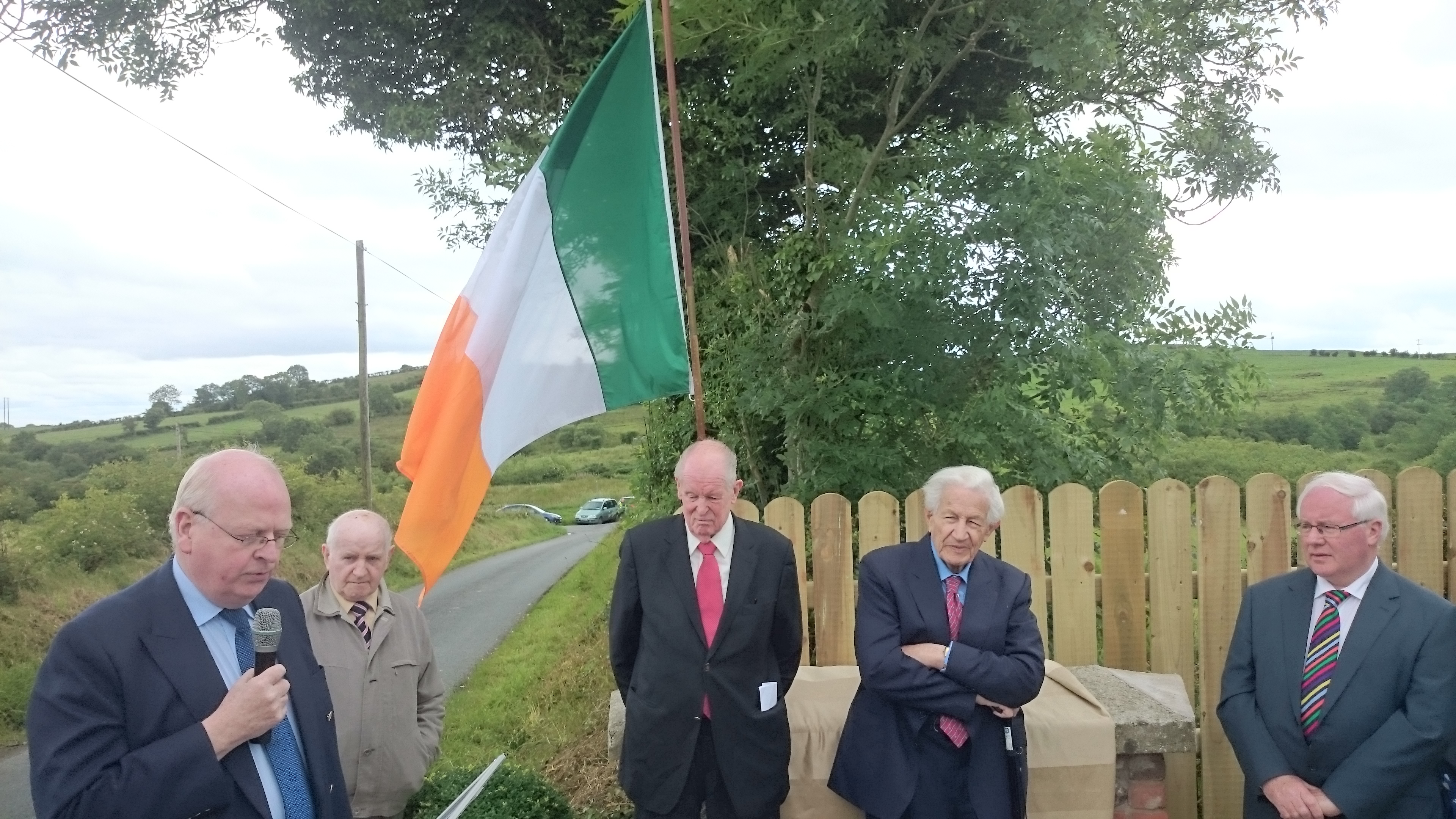
Guest speaker Michael McDowell SC with Eamonn Mulligan, Niall Mac Carvill (Pady's son), his cousin Mackie Moyna and Brendan Smith T.D. Photo:  © Michael Fisher

Guest speaker Michael McDowell SC with Eamonn Mulligan, Niall Mac Carvill (Pady’s son), his cousin Mackie Moyna and Brendan Smith T.D. Photo: © Michael Fisher

MEMORIAL UNVEILED TO FORMER MONAGHAN T.D. DR PADDY MAC CARVILL

Michael Fisher   Northern Standard   Thursday  16th July

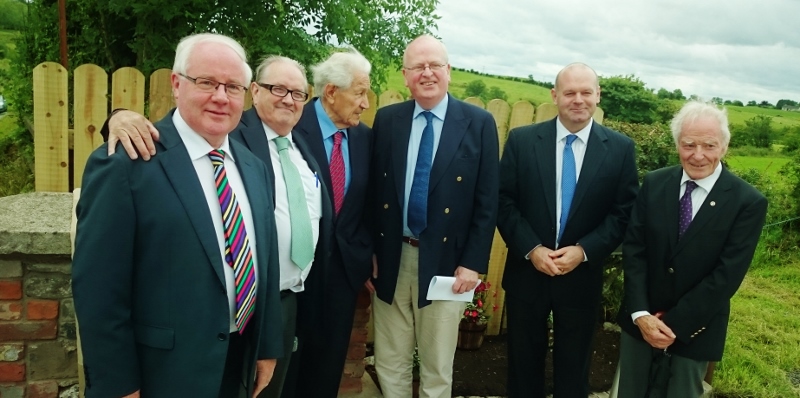
Brendan Smith T.D. with Mackie Moyna Jnr., Mackie Moyna, guest speaker Michael McDowell S.C., Senator Diarmuid Wilson and Dr Rory O'Hanlon, former Ceann Comhairle  Photo:  © Michael Fisher

Brendan Smith T.D. with Mackie Moyna Jnr., Mackie Moyna, guest speaker Michael McDowell S.C., Senator Diarmuid Wilson and Dr Rory O’Hanlon, former Ceann Comhairle Photo: © Michael Fisher

Memories of the War of Independence in County Monaghan and Civil War which divided the allegiances of some families were evoked during the unveiling near Threemilehouse on Sunday of a memorial plaque to honour former Monaghan TD Dr Paddy Mac Carvill.

Crowd listens as Mackie Moyna Jnr addresses the gathering Photo:  © Michael Fisher

Crowd listens as Mackie Moyna Jnr addresses the gathering Photo: © Michael Fisher

The ceremony was performed by the former Tánaiste and Minister for Justice, Michael McDowell S.C., who is married to Niamh Brennan, a granddaughter of Dr Mac Carvill. The former leader of the Progressive Democrats said Dr Mac Carville whose background and history, elected three times to Dáil Éireann, contained lessons for us all. He told the assembled crowd he was proud that his three sons had the blood in their veins of such a patriot, scholar and gentleman. It was most important that his memory and great patriotism be kept and observed in his native county, especially in this decade of centenaries.

Mackie Moyna Junior (Dublin) raises a laugh as he addresses the gathering Photo:  © Michael Fisher

Mackie Moyna Junior (Dublin) raises a laugh as he addresses the gathering Photo: © Michael Fisher

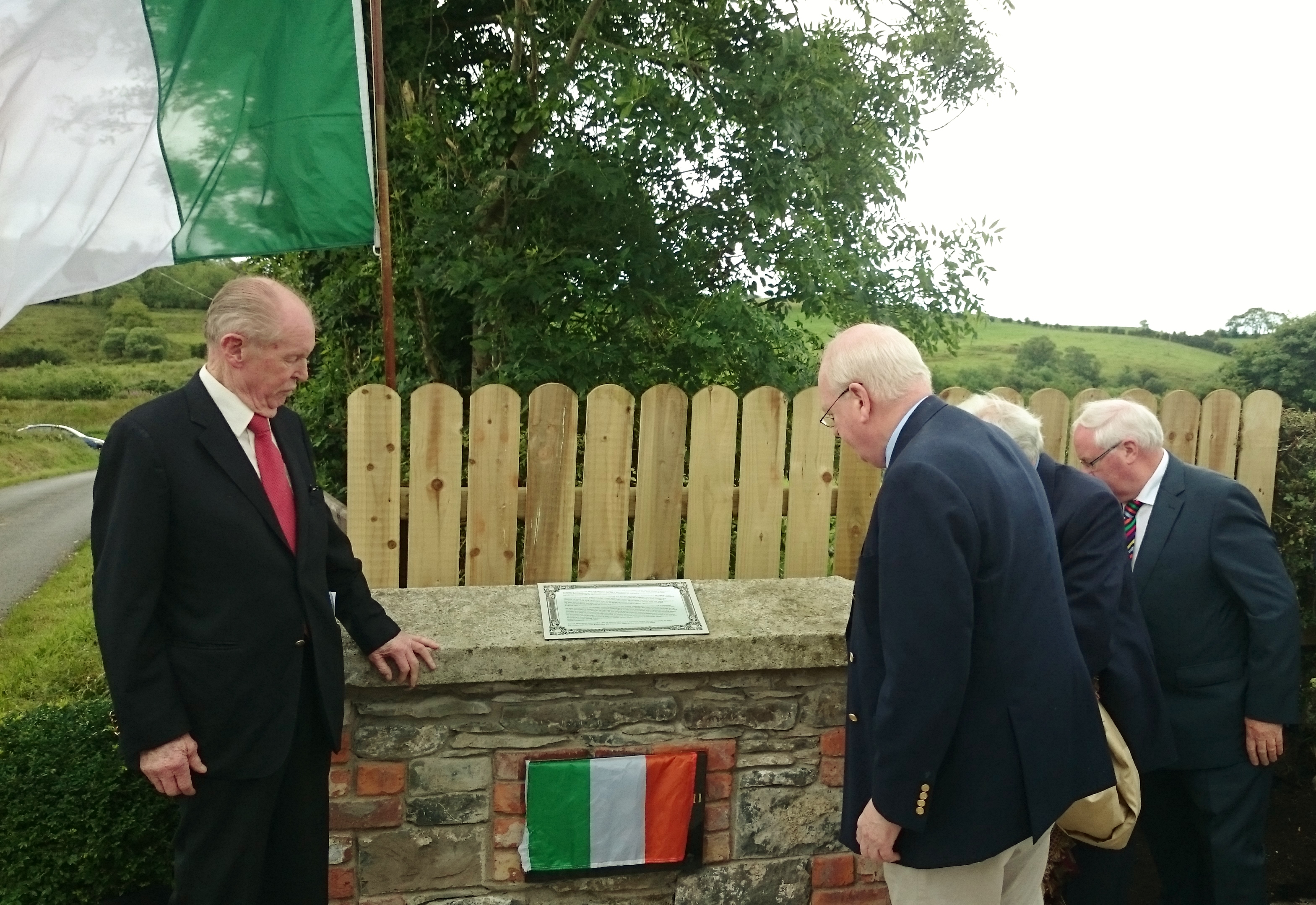
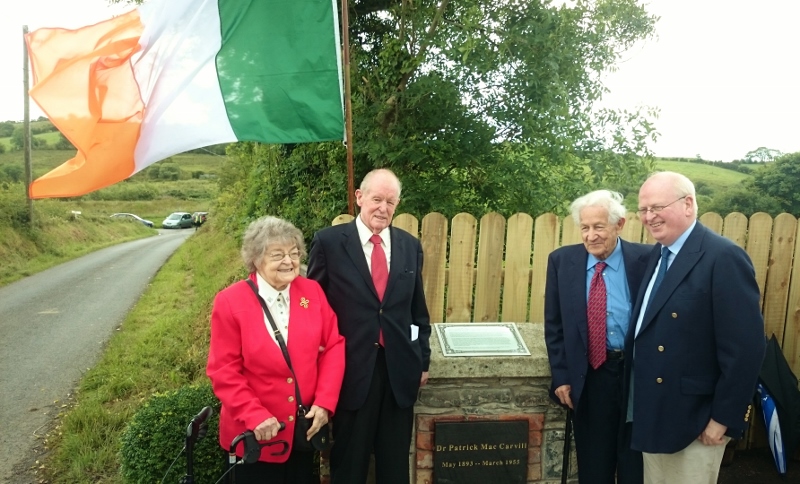
The simple black stone plaque is engraved with the name of Dr Mac Carvill and the dates May 1893 – March 1955. The plaque is set into a rebuilt stone wall at the entrance to the former MacCarvill homestead at Blackraw in the parish of Corcaghan.

Michael McDowell SC is watched by Paddy Mac Carvill's son Niall (left) and Brendan Smith T.D. (right) as he unveils the plaque and memorial at Blackraw  Photo:  © Michael Fisher

Michael McDowell SC is watched by Paddy Mac Carvill’s son Niall (left) and Brendan Smith T.D. (right) as he unveils the plaque and memorial at Blackraw Photo: © Michael Fisher

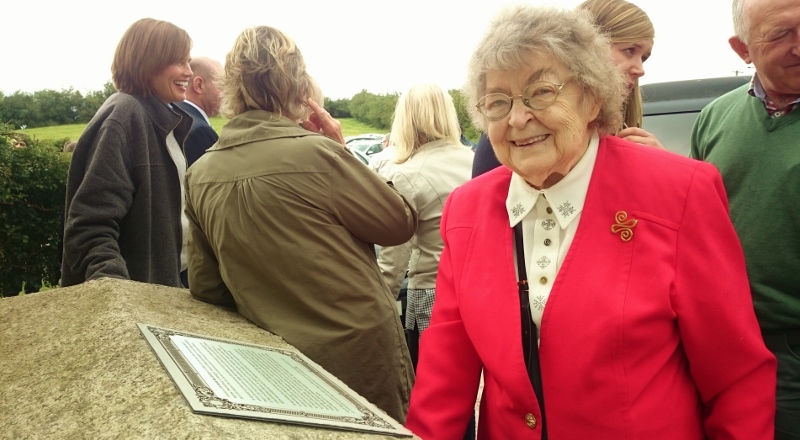
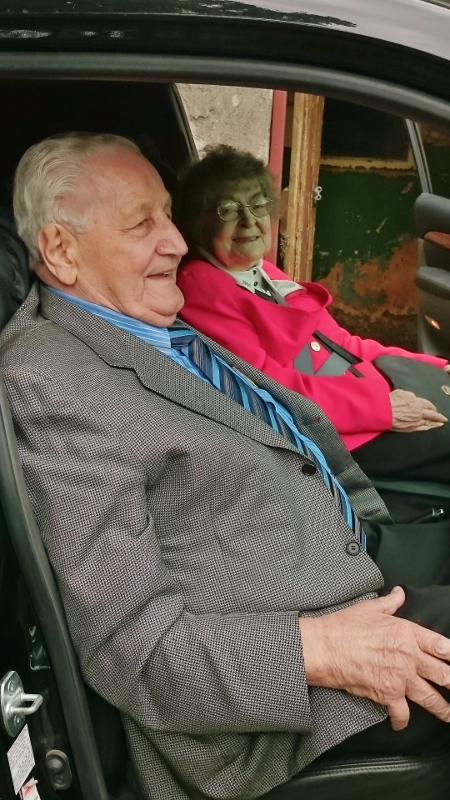
Dr Mac Carvill’s daughter, 90 year-old Maire Brady from Cork, travelled to Monaghan for the occasion as did his son Niall from Dublin. Two of his five children, Éilish and Éimhear (also a medical doctor) passed away in recent years. The Moyna family were also represented, with twins Mackie (Dublin) and Tommy both present, as well as Tommy (junior), Scotstown. Mackie Moyna (junior) read a speech on behalf of his uncle.

Dr Mac Carvill's daughter Maire Brady from Cork at the memorial to her father Photo:  © Michael Fisher

Dr Mac Carvill’s daughter Maire Brady from Cork at the memorial to her father Photo: © Michael Fisher

Following the unveiling, some of the relatives took the opportunity to stroll up the lane and visit the former family homestead, now derelict and owned by the Reilly family. It used to be a thatched house with two bedrooms and the sleeping accommodation for Paddy and his four brothers was in the loft.

Two of Dr Mac Carvill's children, Maire Brady (Cork) and Niall Mac Carvill (Dublin), with their cousin Mackie Moyna (Dublin) and guest speaker Michael McDowell Photo:  © Michael Fisher

Two of Dr Mac Carvill’s children, Maire Brady (Cork) and Niall Mac Carvill (Dublin), with their cousin Mackie Moyna (Dublin) and guest speaker Michael McDowell Photo: © Michael Fisher

In the speech read out on behalf of Mackie Moyna, he detailed how Paddy’s mother Susan was a Moyna before marriage and it was thanks to the generosity of her brother Fr Michael Moyna, Dean of the diocese of Toronto, that the ten children of John and Susan Mac Carvill received an education.

Caoimhghín Ó Caokain T.D. speaking to Mackie Moyna after the unveiling of the plaque  Photo:  © Michael Fisher

Caoimhghín Ó Caokain T.D. speaking to Mackie Moyna after the unveiling of the plaque Photo: © Michael Fisher

Paddy, the youngest of the clan, attended Drumsheeny National School until he was twelve and then entered St Macartan’s College in Monaghan as a boarder, followed by St Michael’s in Enniskillen, where his older brother, Fr Michael, was a curate. At 18 he entered UCD as a medical student and took first place in Ireland in his final exams.

Two of Dr Mac Carvill's children, Maire Brady (Cork) and Niall Mac Carvill (Dublin), with Brendan Smith T.D. (left)  Photo:  © Michael Fisher

Two of Dr Mac Carvill’s children, Maire Brady (Cork) and Niall Mac Carvill (Dublin), with Brendan Smith T.D. (left) Photo: © Michael Fisher

As a young doctor Patrick Mac Carvill and his brother Johnny were involved in the IRA in Monaghan in 1919 in the war against the Black and Tans. He was elected as a Republican TD, imprisoned at different times by the British and Free State governments in Belfast, Wormwood Scrubs in London, Dartmoor, as well as Mountjoy and Kilmainham in Dublin. He also went on hunger strike at one stage. His fiancée and future wife, Eileen McGrane, was Michael Collins’s secretary when he was on the run, was captured and imprisoned by the British and later by the Free State government, joining McCarvill on hunger strike.

Some of Dr Mac Carvill's relatives visiting the family home after the unveiling of the plaque  Photo:  © Michael Fisher

Some of Dr Mac Carvill’s relatives visiting the family home after the unveiling of the plaque Photo: © Michael Fisher

Paddy Mac Carvill was medical officer to the 5th Northern Division of the IRA and was at the rescuing of Matt Fitzpatrick from the County Hospital in Monaghan.

In August 1923 President Cosgrave dissolved the Dáil and announced a snap General Election for the fourth Dáil.  This election caught the anti-Treaty Sinn Féin party unprepared, yet 44 members were elected and one of those was Paddy Mac Carvill, representing his county of Monaghan as he had also done in the election of June 1922.

In 1924 Paddy Mac Carvill returned to live in Dublin and in 1925 he married his fiancée Eileen McGrane, who hailed from Co Westmeath and who had been a prisoner in Mountjoy when Paddy was transferred there from Dartmoor.

In the June 1927 eletion Paddy Mac Carvill stood as a Fianna Fáil candidate and again was elected for County Monaghan.  He took his seat in August but when a snap election was called the following month he decided to retire from politics and concentrated on his medical practice.  .

Paddy Mac Carvill gained eminence in his profession, becoming a specialist in dermatology and lecturing on the subject in UCD. He was a consultant to St Anne’s and St Luke’s Hospitals as well as Temple Street Children’s Hospital and the National Maternity Hospital at Holles Street.

On May 22 1946, Paddy Mac Carvill wrote to de Valera regarding the sacking of his brother Johnny from his position as manager and secretary of Monaghan Bacon Company, of which Dr Con Ward T.D. was managing director.  Mr de Valera established a tribunal to investigate the allegations. The tribunal did not report that Dr. Ward was guilty of any improper conduct in the actual execution of the duties that pertained to his role as Parliamentary Secretary in the Department of Local Government and Public Health but he offered his resignation and it was accepted on July 12th 1946, exactly 69 years ago on Sunday.

Éamon de Valera called a snap general election in February 1948.  Paddy Mac Carvill came out of political retirement and stood again in Monaghan as a candidate for Séan Mac Bride’s Clann na Poblachta, as did his brother-in-law Aodh de Blacam for Co Louth.  Neither was elected. Representatives of the de Blacam family attended the plaque unveiling.

Tommy Moyna and his cousin Maire Brady (Mac Carvill) visiting the old family home  Photo:  © Michael Fisher

Tommy Moyna and his cousin Maire Brady (Mac Carvill) visiting the old family home Photo: © Michael Fisher

Reflecting on his other family connections, Michael McDowell, whose grandfather was Eoin Mac Neill, commented: “From the constitutional, nationalist Redmondite lawyer to the anti-Treaty Republican hunger strikers, my three sons’ eight great-grandparents span a broad spectrum of nationalist and separatist activity in those years (around 1919-22). Three of them became parliamentarians; three served multiple prison terms. They each endured a great deal of personal tragedy and sacrifice.”

Patrick Brady from Cork, grandson of Dr Mac Carvill, with his wife and daughter at the former Mac Carvill home   Photo:  © Michael Fisher

Patrick Brady from Cork, grandson of Dr Mac Carvill, with his wife and daughter at the former Mac Carvill home Photo: © Michael Fisher

In the Bureau of Military History records for 1913-21 there is a statement made in 1954 by a Monaghan man James McKenna, then a Garda Superintendent in Bandon Co. Cork, and a native of Aughaloughan, Glaslough. He was Captain of Donagh Company IRA, O/C North Monaghan Brigade, 5th Northern Division, in which Dr Paddy Mac Carvill served. Superintendent McKenna recounts the activities of the North Monaghan Flying Column:

“In September 1920 I joined a Flying Column which was organised by Comdt. D. Hogan who was i/c of the unit. It consisted of about sixteen men. Tom Coffey, Clones, was one Section Leader and I was the other. The other members were Matt Fitzpatrick, Frank Tummin, John Donohue, James Murphy, James Winters, Dr. P. McCarville, Phil Marron, Paddy McCarron, Tom Cosgrave, Billy McMahon, Paddy McGrory, Tom Clerkin and James Flynn. As a column we lay in position awaiting patrols on the Clones/Newbliss road, around Scotstown and near Clogher, Co. Tyrone, but in vain. We took the mails off the Belfast 8. to Clones; train at Smithboro and burned a military repair van at Bragan. The three members of the Column from Newtownbutler, Co. Fermanagh, Matt Fitzpatrick, Frank Tümmin and John Donohue, also John McGonnell, expressed their desire to return to their respectiye units as they felt that While our living quarters were in the Knockatallon Mountains we could not contact the enemy except in units too strong for our strength and equipment. Dan Hogan consented to their request and they immediately left for their units. Early next morning we heard the sound of army lorries coming. Some of them rushed up a mountain road (leading to a shooting lodge of Lord Rossmore) in an effort to cut us off. We all escaped except Dr. McCarville. He and Billy McMahon had stayed the previous night in a house which was nearer the main road than the house we: occupied. The Company Captain, John Brennan, who lived up the mountainside, rushed inland (on hearing the sound of the lorries) to guide the doctor and McMahon to safety. He took them by the course we had gone. As they approached a gap in a mountain ridge the military had advanced more than when we had passed, and fired an occasional shot at the three men. The doctor got nervous and took cover behind the bank of a mountain stream and was captured. Brennan and McMahon continued on and escaped safely. We were also under long range fire when retreating. There was snow on the mountains, not sufficient to completely cover the heather, which made visibility poor and favoured us. We fired an occasional shot on the military to delay their advance as we expected the doctor and McMahon to follow us. The military burned our living quarters and we all returned to our units.”  

Plaque and Memorial to Dr Patrick Mac Carvill at the family homestead in Blackraw, Threemilehouse, Co. Monaghan Photo:  © Michael Fisher

Plaque and Memorial to Dr Patrick Mac Carvill at the family homestead in Blackraw, Threemilehouse, Co. Monaghan Photo: © Michael Fisher

NLI PUTS PARISH REGISTERS ONLINE

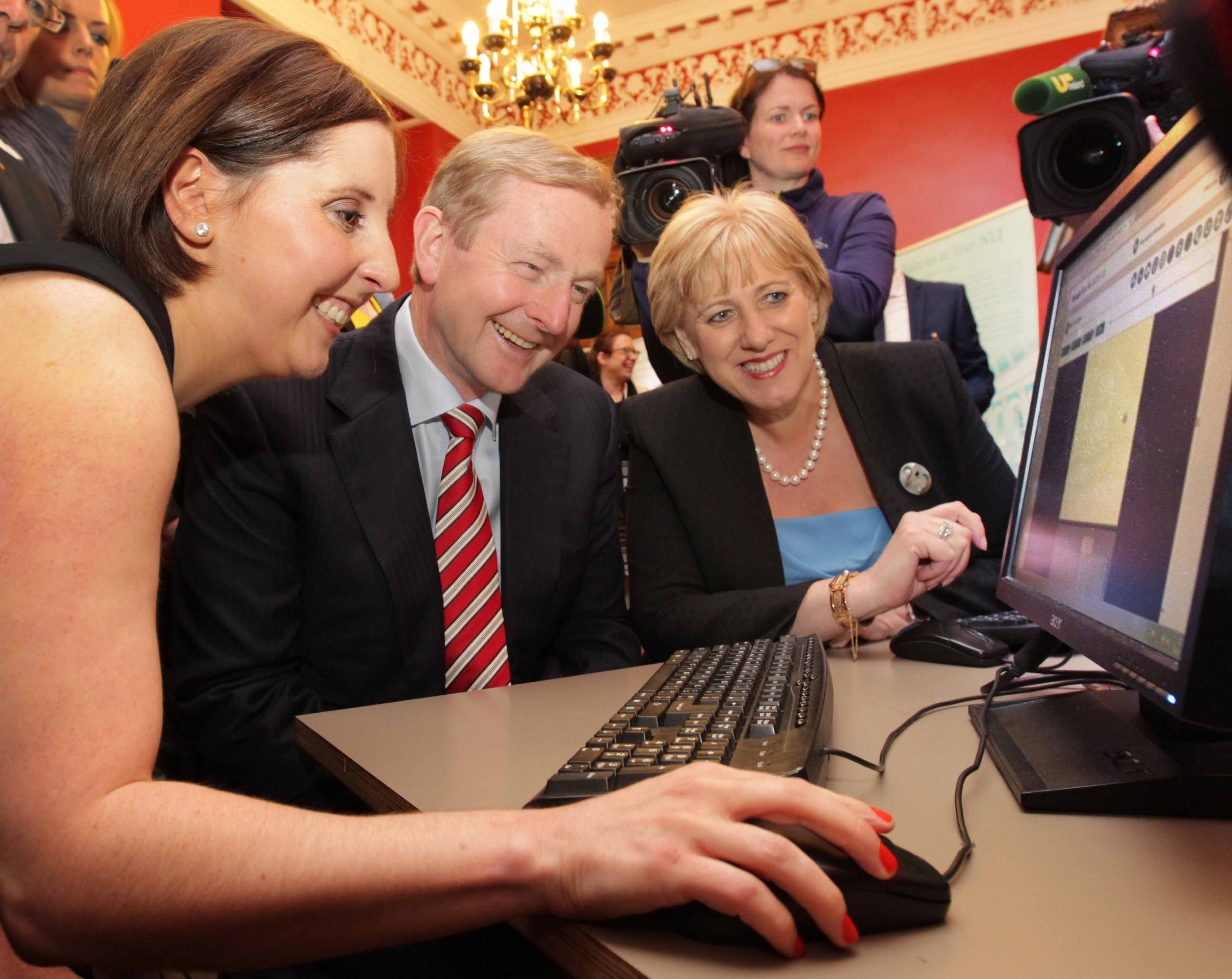
Pictured at the launch of the National Library of Ireland's new web-repository of parish records are Taoiseach, Enda Kenny T.D. and Minister for Arts, Heritage and the Gaeltacht, Heather Humphreys T.D., talking to Ciara Kerrigan, project manager of the digitisation of parish registers NLI. Photo Mark Stedman, Photocall Ireland

Pictured at the launch of the National Library of Ireland’s new web-repository of parish records are Taoiseach, Enda Kenny T.D. and Minister for Arts, Heritage and the Gaeltacht, Heather Humphreys T.D., talking to Ciara Kerrigan, project manager of the digitisation of parish registers NLI. Photo Mark Stedman, Photocall Ireland

National Library of Ireland Launches Parish Records Website

Michael Fisher  Northern Standard   Thursday 9th July

A new digital archive of Catholic parish records which is being made available free online by the National Library of Ireland should transform and greatly enhance the task of anyone tracing family history, according to the Minister for Arts, Heritage and the Gaeltacht, Heather Humphreys T.D. She was speaking at the launch by the Library of a web-repository of parish records, dating from the 1740s to the 1880s.

The Library’s holding of parish records is considered to be the single most important source of information on Irish family history prior to the 1901 Census. Up to now, they have only been accessible on microfilm, which meant that those interested in accessing the records had to visit the National Library. This new web resource provides unlimited access to all members of the public to records covering 1,086 parishes throughout the island of Ireland, including all parishes in the Catholic diocese of Clogher (although I could find no record for Eskra, near Newtownsaville, which was once part of Clogher parish in County Tyrone.

Minister Humphreys said: “This new digital resource will help people at home and abroad who are interested in tracing their ancestry. The website provides access to church records dating back up to 270 years and includes details like the dates of baptisms and marriages, and the names of the key people involved. The records feature the baptisms of some very well-known historical figures, such as the 1916 Leaders Padraig Pearse and Thomas MacDonagh.”

“Making this kind of material available online should help to boost genealogy tourism, and will complement the work of local historical centres in communities around the country. As we approach the centenary of the 1916 Rising next year, I am keen to make as much historical material as possible available online, so we can encourage people around the world to reconnect with their Irish roots”, she said.

Acting Director of the National Library, Catherine Fahy, said:

“This access to the parish records will be transformative for genealogy services, in particular as they will allow those based overseas to consult the records without any barriers.  Effectively, the digitisation of the records is an investment in community, heritage and in our diaspora-engagement.”

Pictured at the launch of the National Library of Ireland's new web-repository of parish records are Taoiseach, Enda Kenny T.D. and Minister for Arts, Heritage and the Gaeltacht, Heather Humphreys T.D., talking to former Taoiseach Liam Cosgrave. Photo: Mark Stedman, Photocall Ireland

Pictured at the launch of the National Library of Ireland’s new web-repository of parish records are Taoiseach, Enda Kenny T.D. and Minister for Arts, Heritage and the Gaeltacht, Heather Humphreys T.D., talking to former Taoiseach Liam Cosgrave. Photo: Mark Stedman, Photocall Ireland

The parish registers website contains more than 370,000 high-quality, digital images of microfilm reels.  The National Library microfilmed the parish records in the 1950s and 1960s.  Some additional filming of registers from a small number of Dublin parishes took place during the late 1990s.

As a result of this work, the NLI holds microfilm copies of more than 3,550 registers from the vast majority of Catholic parishes throughout Ireland. The start date of the registers varies from the 1740/50s in some city parishes in Dublin, Cork, Galway, Waterford and Limerick, to the 1780/90s in counties such as Kildare, Wexford, Waterford and Kilkenny. Registers for parishes along the western seaboard generally do not begin until the 1850/1860s.

Catherine Fahy said: “In using the website for family or community searches, we would recommend that members of the public consult with their local family history resource to help them refine their search.  The website does not contain any transcripts or indexes, so for a search to be successful, some known facts about a person’s life will be necessary.  Effectively, those who access the new online resource will be able to cross-reference the information they uncover, and identify wider links and connections to their ancestral community by also liaising with local genealogical services or family history resources.”

Speaking at the launch An Taoiseach, Enda Kenny T.D., said: “I would like to congratulate the National Library on their project to make the Catholic parish registers available online.  Given the devastating fire in the Four Courts in 1922, in which so many records were lost, these registers are considered the single most important record of Irish life prior to the 1901 census.

“They will be of great value to experts in the areas of history and genealogy, but also of tremendous interest to people here in Ireland and the Irish diaspora around the world.  No doubt the registers will contribute to the number of genealogical tourists to Ireland, as people of Irish descent access these records online and decide to visit their ancestral home place.”

Online access to the new website is free of charge. For more information, visit http://registers.nli.ie/.

In 1949, Dr Edward MacLysaght, Chief Herald of Ireland and Keeper of Manuscripts at the National Library of Ireland, approached the Bishop of Limerick offering the NLI’s services to help in the permanent preservation of the genealogical information contained within the Catholic Church’s collection of parish registers. The NLI’s offer to microfilm parochial registers was taken up by every member of the Hierarchy. Although civil registration of births, marriages and deaths began in 1864, records were not accurately kept for a number of years, so a cut-off date of 1880 was applied for the microfilming of registers.

The usual procedure followed in relation to the microfilming was to send a senior member of NLI staff to a diocese to collect the registers, bring them to the NLI in Kildare Street for filming, and then return the registers to the diocese. The filming of registers diocese by diocese began in the 1950s and was completed over a period of twenty years. Additional filming of registers from a small number of Dublin parishes took place during the late 1990s. As a result of this work, the NLI held microfilm copies of over 3500 registers from 1086 parishes on the island of Ireland. The start dates of the registers vary from the 1740/50s in some city parishes in Dublin, Cork, Galway, Waterford and Limerick, to the 1780/90s in counties such as Kildare, Wexford, Waterford and Kilkenny. Registers for parishes along the western seaboard do not generally begin until the 1850/60s.

Church registers of marriage and baptism are considered to be the single most important source for family history researchers prior to the 1901 census. In many cases, the registers contain the only surviving record of particular individuals and families. With growing numbers of people engaged in family history research and limited on-site facilities at the NLI in Dublin, the decision was taken in 2010 to digitise the parish register microfilms. Following a tender process, the contract for digitisation was awarded to AEL Data who converted 550 microfilm reels, containing over 3500 registers into approximately 373,000 digital images. These images correspond to a page or two-page opening within a register volume.

In October 2014 the NLI Board formally approved the making available of the microfilm images online on a dedicated free-to-access website. The individual registers have been reassembled virtually and made available to users via a topographical database. The development of the parish register website has been carried out by a small team in the NLI’s Digital Library section. The digitisation of the Catholic parish register microfilms is the NLI’s most ambitious digitisation project to date. It demonstrates the NLI’s commitment to enhancing accessibility through making its collections available online.

Information can be obtained relating to the following parishes in the diocese of Clogher:

Aghavea   (Brookeborough)    

Aughalurcher (Lisnaskea)

Aughintaine     (Fivemiletown)

Aughnamullen East

Aughnamullen West (Latton)

Carn (Devenish West, Belleek & Pettigo)

Cleenish  (Arney, Belcoo)

Clogher   

Clones

Clontibret

Devenish (Botha, Derrygonnelly)

Garrison

Donacavey (Fintona)       

Donagh (Emyvale, Glaslough)

Donaghmoyne

Dromore (Co. Tyrone)    

Drumsnat and Kilmore (Corcaghan)       

Drumully (Currin, Scotshouse)

Ematris (Rockcorry)       

Enniskillen (Inis Caoin Locha Eirne)

Errigal Truagh        

Galloon (Drumully, Newtownbutler)       

Garrison 

Inniskeen (Killanny)

Innismacsaint (Maghene, Bundoran)       

Irvinestown      (Devenish)

Killany (Inniskeen)

Killeevan (Currin, Aghabog)

Kilskeery (Kilskerry, Trillick)

Maghaire Rois (Carrickmacross)

Magheracloone        

Magheraculmany (Cúl Máine, Ederney)

Monaghan (Rackwallace)

Muckno (Castleblayney)

Roslea

Tempo (Pobal)

Tullycorbet (Ballybay)    

Tydavnet

Tyholland

EILY O’GRADY RIP

Eily O'Grady with her husband Frank Patterson (right) and singer Martin Flynn in the USA  Photo: Martin Flynn website

Eily O’Grady with her husband Frank Patterson (right) and singer Martin Flynn in the USA Photo: Martin Flynn website

The death has taken place of the concert pianist Eily O’Grady, widow of Frank Patterson, the acclaimed Irish tenor who died in New York in 2000 aged 61. Born in Dublin in 1937, she is survived by her son Éanan, a violinist, who used to perform with his parents, and three sisters, including the violinist Geraldine O’Grady from Dundrum. Her funeral is taking place tomorrow (Wednesday) at 10.30am in the Church of the Holy Cross, Dundrum, Dublin, followed by burial alongside her husband at St. Patrick’s Cemetery, Clonmel, Co. Tipperary.

I remember meeting Frank and Eily during the mid-1970s when they would come over to Birmingham for St Patrick’s Day concerts, performing along with Eily’s relatives, the traditional folk group Na Casaidigh. I recall interviewing them for BBC Radio Birmingham and they were both very friendly and easygoing. Rest in Peace.

An appreciation by Des Keogh appeared in The Irish Times on September 21st 2015.

Frank Patterson achieved international recognition and fame as one of the outstanding tenors of his generation. With a career spanning more than three decades, he was Ireland’s Golden Tenor. Frank attained the pinnacle of his profession and was acclaimed for his artistry in oratorio and in classical song as well as for his Irish and international repertoire.

Frank’s musical career began as a boy soprano in his hometown of Clonmel, County Tipperary. In 1962, the aspiring artist went to Dublin to begin formal vocal studies with Dr. Hans Waldemar Rosen, pursuing at the same time a course of acting at the National Academy of Theater and Allied Arts. After only two years of study, the young performer won all the major awards at Ireland’s national music festival, the Feis Ceoil. Following Frank’s successes, he was in demand for classical recitals around Ireland, but he was particularly noted for his performances in oratorio.

Early in 1966, Frank toured as soloist with Feis Eireann, a group of other young Irish singers and dancers, on an extensive tour of America. The pianist and musical director was Eily O’Grady, an accomplished member of the well-known Dublin musical family. Tenor and pianist fell in love on that tour, which would serve as prelude to a harmonious union and professional partnership. After a three-day honeymoon, the newlyweds left on another four-month tour of the U.S. and Canada. On their return from that tour, Frank and Eily left for London so Frank could continue his vocal studies.

In 1968, Frank was extended an opportunity to study with the famous French soprano Janine Micheau. Seizing that chance, the young couple moved to Paris. The four years in France would have daunted a less committed team but not Frank and Eily, for both believed fervently in his talent. To help finance Frank’s studies during that period, Frank and Eily gave frequent concerts and radio performances. A broadcast of Purcell’s songs on BBC radio brought Frank to the attention of the Phillips Record Company. Recognizing his talent, Phillips quickly placed the gifted tenor under contract, recording six albums within three years; thus began Frank Patterson’s distinguished and celebrated recording career.

From that favorable beginning, Frank recorded more than 40 albums in six languages, including opera, oratorio, and songs by Purcell, Handel, Beethoven, Mozart, Schubert, and Berlioz. A later Phillips classic compilation featured Frank Patterson singing Handel arias and Hugo Wolf songs with Kiri Te Kanawa, José Carreras, Elly Ameling, and Herman Prey. His worldwide popularity expanded, in part because of the success of his crossover albums featuring Irish ballads, Broadway hits, inspirational songs, and modern international favorites. His numerous sales won him platinum, gold, and silver discs, and two of his American releases reached million-dollar status.

As Frank’s reputation grew, so too did the demand for his talent in concert recitals, radio and television broadcasts, and oratorio performances throughout Europe. His performance as the evangelist in the Bach Passions won particular praise. He performed at many of the great musical festivals of Europe, including the Aix-en-Provence where he sang Beethoven’s Missa Solemnis under the baton of Karl Richter. Additionally, he sang at the famous Promenade Concerts in the Royal Albert Hall in London and appeared as soloist with many of the leading European orchestras, including the London Symphony Orchestra, Academy of St. Martin-in-the-Fields, Liverpool Philharmonic, Rotterdam Philharmonic, Orchestre de Paris, RAI Symphony, Rome, Basle Kammerorchestrer, Switzerland, and the Irish National Symphony.

In America, he performed with the National Symphony in Washington, DC, as well as with the Colorado, St. Louis, Hartford, Syracuse, Rochester, Utah, and Seattle symphonies. In sold-out performances, Frank sang in New York’s Carnegie Hall, Washington’s Kennedy Center, Boston’s Symphony Hall, and Toronto’s Roy Thompson Hall, among others. He was the first Irish artist to have his own show in New York’s famous Radio City Music Hall, selling out its 6,000 seats for six consecutive years. His audiences continued to grow in number and dedication.

His greatest outdoor American performance was at the steps of the Capitol in Washington, DC, when he performed with the National Symphony before an audience of 60,000 enthusiastic listeners. During the centennial celebration of the inauguration of the Statue of Liberty, Frank joined American opera stars Anna Moffo, Simon Estes,and Robert Merrill in a televised performance from St. Patrick’s Cathedral. The quartet ended the program with a moving rendition of Irving Berlin’s God Bless America. This song was to become Frank’s favorite for expressing his great love and appreciation for this country and its people.

As the world took note of Frank Patterson’s remarkable talent, Academy-Award-winning director John Huston invited Frank to play a featured role as the fictional tenor, Bartell D’Arcy, in Huston’s last film The Dead, starring Anjelica Huston and Donal McCann. The New Yorker wrote of Frank’s performance: “The whole world seems still while he sings, and for a few seconds after.” Following that pivotal role, Frank was invited to sing Danny Boy in Joel and Ethan Coen’s Miller’s Crossing and to play an Irish tenor in the Neil Jordan movie Michael Collins, starring Liam Neeson, Julia Roberts, Aidan Quinn, and Stephen Rea.

In addition to his big-screen performances, Frank was a veteran television performer. He hosted his own top-rated TV series, Frank Patterson, For Your Pleasure, on RTE (Irish Television) from 1974 to 1984. When Fox Television asked him to perform with Tracy Ullman on an episode of the Tracy Ullman Show, Frank readily agreed because it not only provided him an opportunity to sing and act, but also it allowed him to showcase his comedic skills. This episode, Real Lace, was nominated for an Emmy Award. Frank’s success in commercial television foreshadowed his achievements on public television stations (PBS). Frank became a PBS phenomenon with his three highly successful specials: Ireland’s Golden Tenor-Ireland in Song; Frank Patterson-Songs of Inspiration; and God Bless America, his final filmed salute to this country.
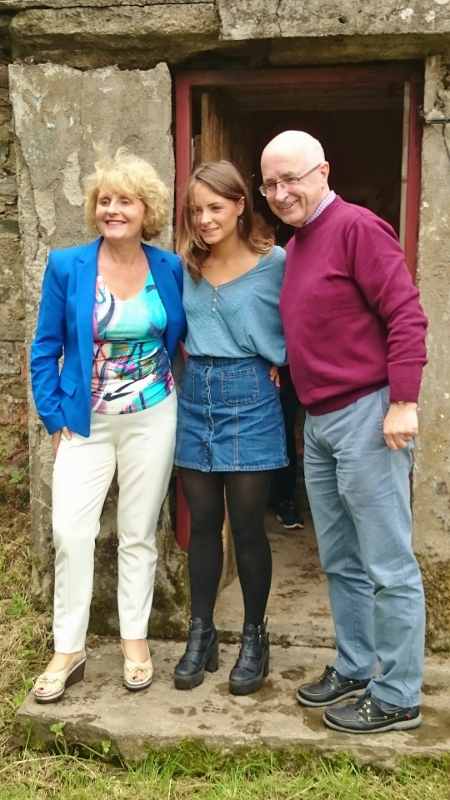
Eily O'Grady and Frank Patterson

Eily O’Grady and Frank Patterson

In 1982, President and Mrs. Ronald Reagan invited Frank and Eily to perform at the White House for them and their distinguished guests. As an Irish-American, President Reagan was proud of Frank’s accomplishments, and as an ex-actor, he appreciated Frank’s talent. On a personal level, President Reagan was pleased that his family also hailed from County Tipperary, only ten miles from Clonmel, Frank’s birthplace. In 1995, Frank and Eily were invited for a return performance to the White House, this time for President and Mrs. Clinton. Éanán, Frank and Eily’s gifted son, joined his parents at their second White House performance, accompanying his father on the violin. Eanan later graduated from the pre-college Juilliard School of Music and Fordham University.

While Frank was honored to perform at the White House, the highlight of his career came in 1979, when he sang at the Papal Mass in the Phoenix Park, Dublin, before a congregation of 1.3 million people and an estimated television audience of 1000 million during Pope John Paul II’s historic visit to Ireland. Frank was privileged to sing for His Holiness a second time when he was chosen as soloist for the Pope’s 1996 visit to New York’s St. Patrick’s Cathedral. On that occasion Frank sang Schubert’s Ave Maria, a performance that was again broadcast on national television.

Of the many awards Frank received, he was proudest of the honor bestowed upon him by His Holiness, Pope John Paul II. In 1984, the Holy Father conferred on Frank the Knighthood of Saint Gregory, the highest honor the Vatican can confer on a layman. Frank was also a Knight of Malta and a Knight Commander of the Holy Sepulcher of Jerusalem, two organizations devoted to helping others for more than nine centuries. He was awarded an Honorary Doctorate of Music from Salve Regina University in Newport, Rhode Island in 1990 as well as an Honorary Doctorate of Fine Arts from Manhattan College of New York in 1996.

In 1998, Frank and Eily were awarded the prestigious gold medal of the Eire Society of Boston, joining a distinguished group of past recipients such as John F. Kennedy, Ronald Reagan, and John Huston. To be given this award as a couple exemplified the unique partnership that Frank and Eily enjoyed in their professional and personal lives. The honors continued as Frank was awarded The 2000 Norman Vincent Peale Award for Positive Thinking in the Arts. Presented by the Blanton-Peale Institute, this award is given to people “whose lives clearly and inspirationally exemplify the power of thinking positively, with faith, deep caring for people and dedicated commitment to improving our world.”

Although Frank Patterson sang for the Pope and Presidents, performed in the great concert halls throughout the world, and entertained movie and television audiences here and abroad, he found his greatest joy in sharing his gift of song in hundreds of small churches and intimate venues throughout Ireland and America. These charitable events provided both spiritual and financial enrichment to causes that continue to sustain life and promote peace and unity among men.

TYDAVNET JAMBOREE AUGUST 7th-9th

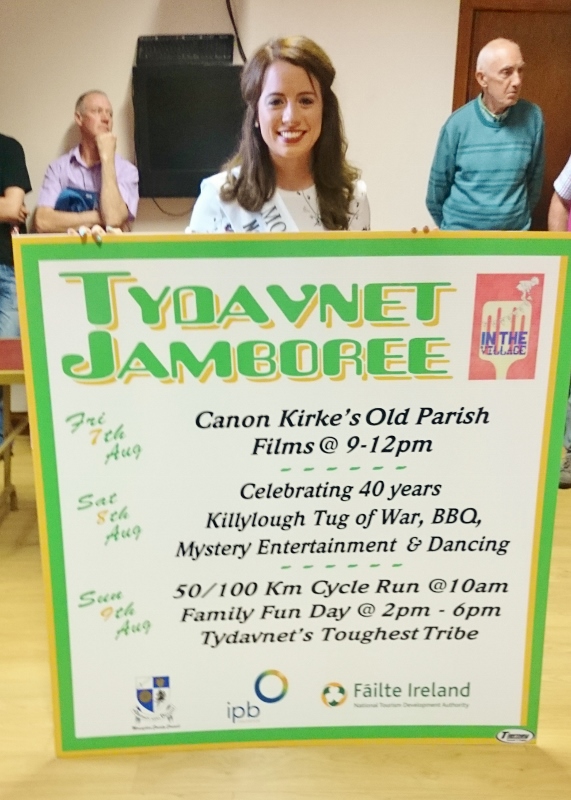
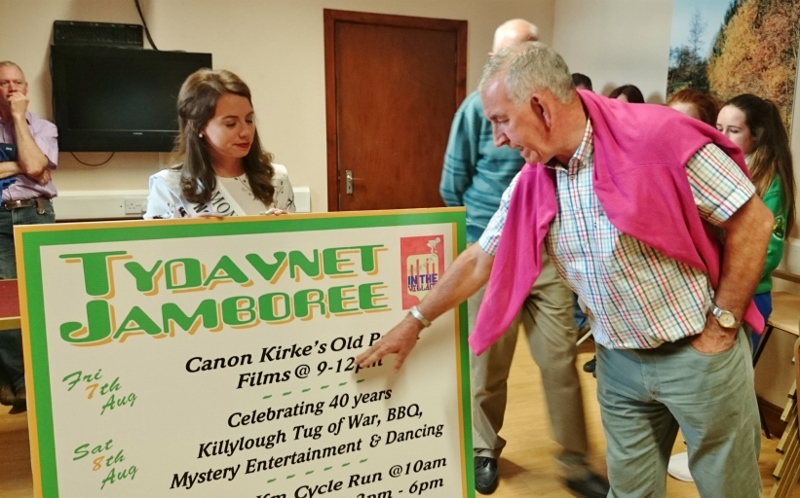
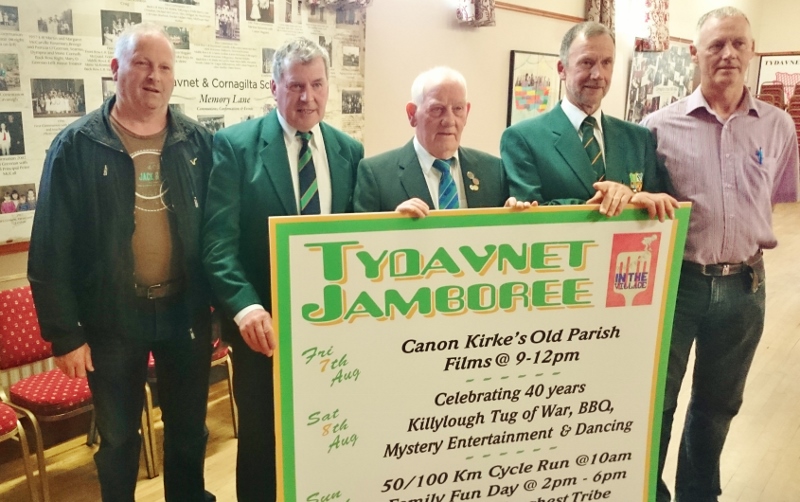
Launch of Tydavnet Jamboree at Community Centre  Photo:  © Michael Fisher

Launch of Tydavnet Jamboree at Community Centre Photo: © Michael Fisher

It will be a busy couple of weeks in Tydavnet, County Monaghan at the start of August. A village jamboree has been organised for the weekend of August 7th-9th. The following weekend the Tydavnet Show takes place at Drumshevra, Scotstown, on Saturday 15th August.

Monaghan Rose Michelle Caulfield from Scotstown launches the Tydavnet Jamboree programme  Photo:  © Michael Fisher

Monaghan Rose Michelle Caulfield from Scotstown launches the Tydavnet Jamboree programme Photo: © Michael Fisher

The jamboree programme was launched tonight at the Community Centre by the Monaghan Rose, Michelle Caulfield from Iterera, Scotstown. Michelle won the Monaghan selection in April and was then one of seven Irish roses chosen to represent different counties at a selection night in Portlaoise at the end of May. She is the oldest of four children and is a junior infants teacher at a national school in Palmerstown, County Dublin.

Michelle told me she would be at the jamboree on Saturday 8th August. But the next day she will travel down to County Kerry as the roses have to be in Tralee a week before the festival starts on August 14th.

Monaghan Rose Michelle Caulfield from Scotstown launches the Tydavnet Jamboree programme  Photo:  © Michael Fisher

Monaghan Rose Michelle Caulfield from Scotstown launches the Tydavnet Jamboree programme Photo: © Michael Fisher

One the Rose of Tralee website Michelle tells us that she moved home to Monaghan this year so she commutes to Dublin each day, but living with her family again and of course Mammy’s home cooking makes the drive worth every minute! She says she knew from a very young age that she really enjoyed working with children and youth work is a huge part of my life. Her involvement with Rainbows Ireland and Focus Ireland has allowed her to meet the most inspirational children.

The 27 year-old says she absolutely loves to travel and has spent summers in California, Miami and Thailand. She has a great interest in fashion and admits she loves to shop a little too much. Her pride and joy is her small poodle-like dog, Holly, and she loves their walks together in the beautiful local parks in Monaghan.

Michelle says she is honoured and proud to be representing the ‘Farney County’ this year and knows this is going to be an unforgettable year of new experiences, new friendships and making a difference.

Logo for Tydavnet Jamboree by Frances and Maeve Treanor, Drumdart  Photo:  © Michael Fisher

Logo for Tydavnet Jamboree by Frances and Maeve Treanor, Drumdart Photo: © Michael Fisher

The jamboree logo was designed by Texaco Children’s Art overall winner Frances Treanor from Drumdart and her sister Maeve, both of them art students in Dublin. It features on the roadside posters for the event and will be used in all publicity.

Pat Deery at the launch of Tydavnet Jamboree   Photo:  © Michael Fisher

Pat Deery at the launch of Tydavnet Jamboree Photo: © Michael Fisher

The launch was compered by actor and local resident Pat Deery. It was also attended by Sean McCaffrey of Northern Sound and Peadar McMahon of emyvale.net. Further details will also be found on the tydavnet.com website.

Seamus McCarville outlines the programme for Tydavnet Jamboree  Photo:  © Michael Fisher

Seamus McCarville outlines the programme for Tydavnet Jamboree Photo: © Michael Fisher

Secretary of the Tydavnet Jamboree committee Seamus McCarville said they had organised a number of activities to appeal to all ages. He hoped there would be an influx of visitors to Tydavnet for the event, including local people who had emigrated to Australia, the USA and Canada.

On the Friday night 7th August the jamboree will begin with the showing of films of local scenes made in the 1950s by the late Parish Priest of Tydavnet, Canon Terence Kirke, from 9pm until midnight in the community centre, with a dance. Saturday afternoon and evening will include a BBQ with mystery entertainment and dancing. Seamus McElwain could not be persuaded to divulge further information! There will be a treasure hunt at 5pm. The day will also feature celebrations in honour of Killylough Tug o’ War, who enjoyed world and European successes in 1986 and 1987, as well as 1996 and also later on in 2007. After forty years of success it was decided that their achievements should be recognised through this community event.

Killylough Tug-o'-War committee Photo:  © Michael Fisher

Killylough Tug-o’-War committee Photo: © Michael Fisher

Killylough Cycling Club will organise a 50km and 100km cycle run on Sunday 9th August, beginning at 10am. There will be a tractor run at 2pm and a family fun day in the field opposite the community centre organised by young people from 2pm to 6pm, including the search for Tydavnet’s toughest tribe. This will see McCruddens testing their skills against McCarras, Meehans and Murphys, and possibly several other families. A very promising and lively programme for the jamboree weekend.

BALLINODE HERITAGE MUSEUM

Open Day at Ballinode Photo:  © Michael Fisher

Open Day at Ballinode Photo: © Michael Fisher

The museum of the late Vincent McAree in Ballinode County Monaghan hosted an open day today (Sunday) from 1.30pm to 5.30 pm. Exhibits included steam and oil driven engines, early tractors, ancient kitchen utensils, old farmhouse furniture, public house artefacts and a door from Monaghan gaol.

Demonstrating the knot-tying machine at Ballinode open day Photo:  © Michael Fisher

Demonstrating the knot-tying machine at Ballinode open day Photo: © Michael Fisher

There was also a book sale (I made some interesting purchases), with funds going to Alzheimer’s Ireland. The afternoon also included live music in the community hall from local star Aidan Clerkin and refreshments. A great day out and everyone was made very welcome.

Open Day at Vincent McAree Museum in Ballinode   Photo:  © Michael Fisher

Open Day at Vincent McAree Museum in Ballinode Photo: © Michael Fisher

CEREMONY AT ISLANDBRIDGE

Heather Humphreys T.D.  Photo:  © Michael Fisher

Heather Humphreys T.D.
Photo: © Michael Fisher

Minister for the Arts, Heritage and the Gaeltacht and Cavan/Monaghan T.D. Heather Humphreys has had a very busy diary of engagements since her appointment to the Cabinet just less than twelve months ago. Yesterday she was with An Taoiseach launching the new online search facility for genealogists at the National Library, where old Catholic parish registers that were on microfilm have been digitised.

Today Minister Humphreys attended the Royal British Legion’s annual ceremony at the National War Memorial Gardens at Islandbridge in Dublin. She read a lesson and also laid a laurel wreath. Tomorrow there will be a national day of commemoration at the Royal Hospital in Kilmainham at 11am. Speaking ahead of the ceremony the Minister said: Speaking ahead of the ceremony Minister Humphreys said:

“This ceremony remembers the Irish men and women who died during the two world wars. Just last week I travelled to the Somme to mark the 99th anniversary of what was the bloodiest battle of World War One, claiming thousands of Irish lives.

“Through the World War One commemorative events, we have gained a much greater understanding of the scale of Irish sacrifice and suffering. Families have, for the first time, discovered that their relatives went to the Front to fight, and many of them never returned home.

“One hundred years on, Ireland is respectfully remembering its sons and daughters who served in what was a horrific conflict. Events such as this one help us not only to pay respect to those who died, but also to recognise how far we have come over the last century.”

Royal British Legion Ceremony of Remembrance

Royal British Legion Ceremony of Remembrance

In the Irish Times, Marie O’Halloran reports as follows:

“The Sinn Féin Lord Mayors of Dublin and Belfast and the Sinn Féin Speaker of the Northern Ireland Assembly have laid wreaths at a ceremony in Dublin to commemorate the dead of the first and second World Wars. Minister for Arts, Heritage and the Gaeltacht Heather Humphreys led the wreath­laying at a ceremony organised by the Royal British Legion in Ireland at the National War Memorial Gardens in Islandbridge, Dublin. Members and veterans of the British Armed Forces, along with members of the Defence Forces, attended the annual commemoration, which was first held in 2006 to mark the 90th anniversary of the Battle of the Somme. It is now held on an annual basis on the Saturday before the National Day of Commemoration.

Ms Humphreys laid a laurel wreath at the cenotaph, as did newly elected Dublin Lord Mayor Cllr Críona Ní Dhálaigh and Lord Mayor of Belfast Cllr Arder Carson. Poppy wreath Ceann Comhairle Sean Barrett laid a poppy wreath, while Speaker of the Assembly Mitchel McLaughlin laid a laurel wreath. Poppy and laurel wreaths were laid by representatives of the diplomatic corps and others from a number of states including the Vatican, Japan, Republic of Cyprus, the UK, the Russian Federation, Netherlands, Australia, India, France, Nigeria, Lithuania, Germany, the US and Kenya. In all more than 100 wreaths were laid during the ceremony, introduced by Lt Col Ken Martin, chairman of the Royal British Legion in the south.

He told almost 1,000 people in attendance that they were in a “garden of exquisite beauty” in the centre “of what can only be described as the finest national memorial to the sacrifice of a nation, in Europe”. They were there, he said, to remember the sacrifice for the defence of small nations. Archdeacon of Ferns Christopher Long said that every war was cruel, but the first World War “was unlike any other ­ unspeakable carnage, the unbearable loss, the almost unbelievable bravery”. He said it was a conflict that spread from the western front to the deserts of the Mediterranean, from the plains of Poland to the frozen mountains of Austria, touching and ending millions of lives. Dismissed as ‘pointless war’ “Too often it is dismissed as a pointless war, wrought by people who didn’t know why they were fighting. I believe that to be wrong. Men signed up to prevent the domination of a continent, to preserve the principle of freedom that we cherish today.” He added that “we should never fail to cherish peace in our country, and never underestimate the patient work it has taken to build and to maintain that peace”.

Members of the Royal British Legion paraded at the start of the ceremony to the accompaniment of the Army No 1 Band, and during the ceremony as the wreaths were laid the band was accompanied by the Tramore Ladies Choir. The lament ‘Oft in the Stilly Night’ was played as wreaths were laid at the memorial. Ms Humphreys read a lesson during the ecumenical ceremony.

Head of the Defence Forces Chaplaincy Monsignor Eoin Thynne HCF

Head of the Defence Forces Chaplaincy Monsignor Eoin Thynne HCF

Head chaplain of the Defence Forces, Msgr Eoin Thynne read the bidding prayers for all those who suffered as a result of conflict. He prayed “for peace­makers and peace­keepers who seek to keep this world secure and free”. Minute’s silence The Last Post was played and president of the Royal British Legion in the south Major Gen The O’Morchoe read the exhortation: “They shall grow not old, as we that are left grow old. Age shall not weary them, nor the years condemn. At the going down of the sun and in the morning, we will remember them.” A minute’s silence was observed and the Reveille played and the dedication then read: “When you go home, tell them of us and say, for your tomorrow we gave our today.”

Speaking to reporters after the ceremony, Ms Humphreys said: “So many thousands of Irish men lost their lives in the first World War…It didn’t matter whether they were unionist or nationalist, it didn’t matter whether they were Protestant or Catholic ­ the bombs and the bullets of war treated them all the same. So it’s nice that we’re all here today to remember those who lost their lives in the first World War.”