Get me outta here!

Michael Fisher's News

© Michael Fisher MMXXII

Menu

Skip to content
  • Home
  • About

Author Archives

borderroamerhttps://fisherbelfast.wordpress.comThe Northern Standard, Monaghan. Reporter.
borderroamer's avatar

NEW DEPARTMENT SIGNAGE 

17/08/2016 by borderroamer

Office of the Minister for Arts Heritage Regional Rural and Gaeltacht Affairs at Kildare Street in Dublin

NEW RURAL DEPARTMENT SIGNS ON THE WAY

Bilingual nameplates will reflect new portfolio for Minister Humphreys

Michael Fisher  Northern Standard  Thursday 18th August 2016

Last month the new portfolio for Minister Heather Humphreys was confirmed by An Taoiseach. The Cavan/Monaghan Deputy is now in charge of the Department of Arts, Heritage, Regional, Rural and Gaeltacht Affairs.

This reflects her new responsibility for developing an action plan for rural Ireland including the roll-out of broadband to all rural areas. But several weeks after the announcement the signs at the various offices of the Department have still to be changed.
On July 5th An Taoiseach Enda Kenny TD signed a Statutory Instrument order No. 357/2016 – Arts, Heritage and the Gaeltacht (Alteration of Name of Department and Title of Minister). Notice of the making of this Statutory Instrument was published in “Iris Oifigiúil” of 12th July 2016.
“The Government, in exercise of the powers conferred on them by section 6 (1) of the Ministers and Secretaries (Amendment) Act 1939 (No. 36 of 1939), hereby order as follows:
1. (1) This Order may be cited as the Arts, Heritage and the Gaeltacht (Alteration of Name of Department and Title of Minister) Order 2016.
(2) This Order comes into operation on 7 July 2016.
2. The name of the Department of State, the present name of which is, in the Irish language, an Roinn Ealaíon, Oidhreachta agus Gaeltachta and, in the English language, the Department of Arts, Heritage and the Gaeltacht, is altered, in the Irish language, to that of an Roinn Ealaíon, Oidhreachta, Gnóthaí Réigiúnacha, Tuaithe agus Gaeltachta and, in the English language, to that of the Department of Arts, Heritage, Regional, Rural and Gaeltacht Affairs.
3. The title of the Minister having charge of the Department of State, whose present title is, in the Irish language, an tAire Ealaíon, Oidhreachta agus Gaeltachta and, in the English language, the Minister for Arts, Heritage and the Gaeltacht, is altered, in the Irish language, to that of an tAire Ealaíon, Oidhreachta, Gnóthaí Réigiúnacha, Tuaithe agus Gaeltachta and, in the English language, to that of the Minister for Arts, Heritage, Regional, Rural and Gaeltacht Affairs.
4. In any enactment or any instrument made under an enactment—
(a) references to the Department of Arts, Heritage and the Gaeltacht shall be construed as references to the Department of Arts, Heritage, Regional, Rural and Gaeltacht Affairs;
(b) references to the Minister for Arts, Heritage and the Gaeltacht shall be construed as references to the Minister for Arts, Heritage, Regional, Rural and Gaeltacht Affairs.”
Six weeks later at the entrance to the Minister’s office at 23 Kildare Street near Leinster House you will still be greeted by signs in Irish and English proclaiming the ‘Department of Arts, Heritage and the Gaeltacht”. It’s the same down at The Custom House, where the National Monuments Service is based along with the Built Heritage and Architectural Policy section.
These were once under the wing of the Department of Environment, based at the Custom House. That Department has also been changed and is now the Department of Housing, Planning and Local Government headed by Minister Simon Coveney.
The signs for that Department are the old ones and some of them alongside the DAHG ones are in a poor condition with little maintenance of the surrounding area. So perhaps this will be attended to when the new signage is erected.
The matter is in hand. A spokesperson for Minister Humphreys told The Northern Standard that bilingual signage had been ordered for the Department’s buildings and should be in place shortly.

The other locations include offices in Ely Place (Dublin), Galway, Killarney and Wexford. The Department website has already been updated and can be accessed at: ahgrra.gov.ie. 


Share this:

  • Share on Facebook (Opens in new window) Facebook
  • Share on X (Opens in new window) X
Like Loading...
UNCATEGORISED Leave a comment

RURAL RENEWAL

10/08/2016 by borderroamer

NEW €380,000 FUND TO HELP REVITALISE MONAGHAN TOWNS AND VILLAGES

Minister Humphreys Urges Local Communities to Apply

Michael Fisher   NORTHERN STANDARD   Thursday 11th August 2016 p.1

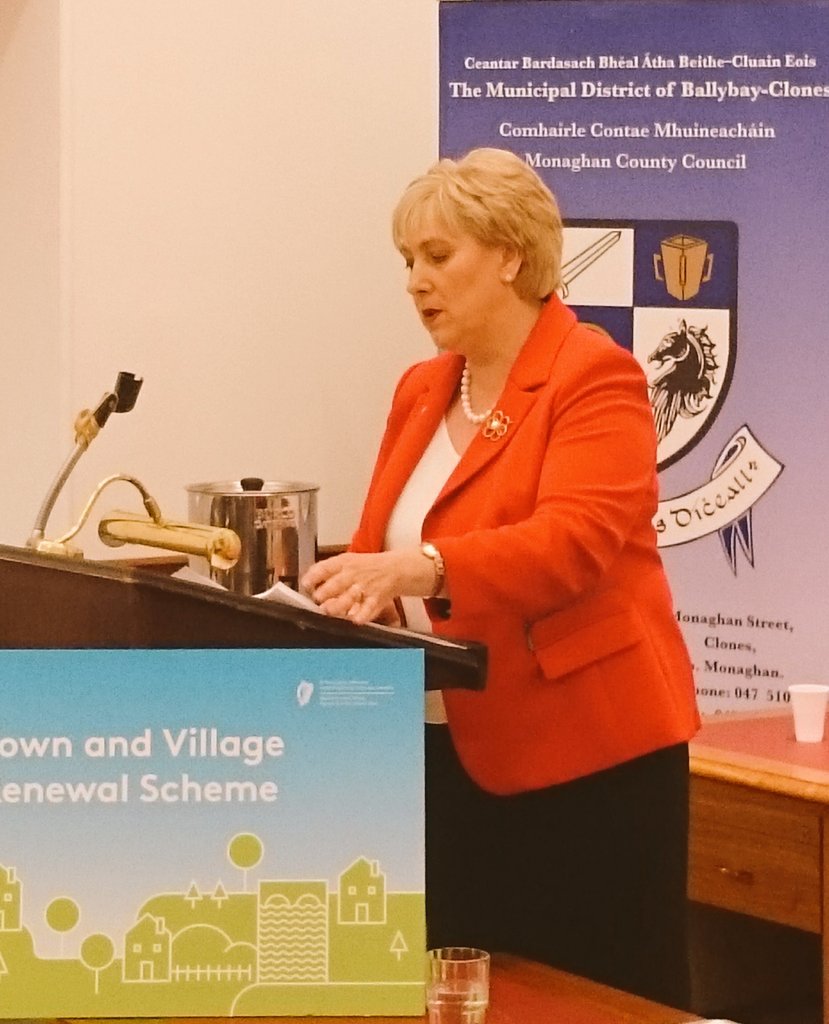
The government aims to publish a new Action Plan for Rural Ireland by the end of this year. This was revealed during a visit to Clones on Tuesday by the Minister for Arts, Heritage, Regional, Rural and Gaeltacht Affairs, Heather Humphreys T.D. She was launching a scheme to assist rural regeneration.

Minister Humphreys announced that her department was making available a fund of €10 million this year to local authorities throughout the state in order to support the renewal of rural towns and villages. An allocation of €380,000 has been set aside for County Monaghan and each of the other 25 counties to go towards projects.
This was by no means a silver bullet to solve all the problems in rural Ireland, but it was a positive start, she said. They would work from the ground up in order to get the best solutions. The Minister said she did not have all the ideas and did not want to be prescriptive about how the funding should be used. She told the Northern Standard it was up to local authorities in conjunction with local groups to sit down and decide the priorities to be tackled, such as derelict buildings. Local people could identify things they needed to make a difference to bring back life to the towns and villages.

The Minister hoped there would be a quick turn-around time for grant approval, with allocations being made before the end of the year. If it brought back people into towns and villages then it would be a success. She said there were many examples of modern day living, with people turning historic sites into accommodation. She wanted to see people living in towns, creating companionship and community spirit.

She said this first tranche of funding under the Town and Village Renewal scheme represented a serious commitment by government to offer support to rural towns and villages. Each county can apply for grants for up to eight separate town or village projects. Minister Humphreys called on local communities and businesses to submit outline plans to her department for approval in September. Up to 200 towns and villages across the country will benefit from the scheme this year.

A particular focus will be placed in 2016 on supporting smaller towns, with populations of less than 5,000. A maximum of two projects can be supported in each county for those towns with a population of up to 10,000. Funding will be allocated to local authorities to meet up to 85% of the total cost of each project.

In County Monaghan, applications for the scheme will be forwarded through the regeneration committees in Clones, Ballybay, Monaghan, and Castleblayney, as well as the Carrickmacross Chamber of Commerce, in conjunction with the respective Municipal Districts. Funding will be released to local authorities once projects are approved by the Department of Arts, Heritage, Regional, Rural and Gaeltacht Affairs. The minimum grant for any single project is €20,000 and the maximum is €100,000. The Department says this phase of the Town and Village Renewal Scheme will be reviewed and adapted as necessary for 2017.
Speaking at the restored courthouse building in Clones, the Minister said rural development was a key priority in the Programme for a Partnership Government. Ireland’s towns and villages were at the heart of our rural communities, but the economic downturn had a significant impact on many of them. She said it was incumbent on them (as a government) to help these areas achieve a recovery.

Minister Humphreys went on: “I am launching the Town and Village Renewal Scheme to begin breathing life back into our rural towns and villages. It is critical that towns and villages become areas where economic activity can flourish, where people can live and work, and where people can meet at a social level.”

The Minister continued: “Consultation and collaboration will be key elements of the scheme. It will be administered through the local authorities, which will be required to partner with local businesses and local communities to develop and implement ideas that can make a real and lasting impact in revitalising rural towns and villages.”

She said the scheme was part of the government’s commitment to ensuring that the benefits of economic recovery were felt in every part of the country. The scheme also addresses one of the recommendations in the Commission for the Economic Development of Rural Areas report, published in 2014.

Measures taken under the Town and Village Renewal Scheme should have a sustainable and visible impact on the area in question. The type of project to be funded under the scheme could include measures to:

  • increase the attractiveness of the town or village as a local commercial and social centre, and increase its sustainability as a place in which to live and work;
  • enhance its environment and amenity in the interests of residents, businesses and visitors;
  • enhance the culture and local heritage assets of the town/village and promote tourism;
  • tackle minor physical infrastructural deficits and land assembly issues.

The Minister was welcomed to the town along with other guests by Finbarr Dunwoody of the Clones Chamber of Commerce. The procedures for applying for the fund were outlined by William Parnell, assistant secretary at the Department of Arts, Heritage, Regional, Rural and Gaeltacht Affairs, whose brief covers regional development and rural affairs, said the roll-out of rural broadband was a priority and the department was working in conjunction with the Minister for Communications Denis Naughten.

Louise Lennon of Irish Rural Link (an organisation based in Moate, Co. Westmeath) stressed that a good broadband infrastructure was needed. She said the scheme announced by the Minister was a first step in the right direction for the development of rural towns and villages that had been hit by the economic crisis a few years ago. She said it was important to bring facilities back into towns so that younger people could remain there.
Peter Hynes, Chief Executive of Mayo County Council, welcomed the initiative on behalf of the County and City Management Association. He said it showed the importance the government attached to rural Ireland. The local authorities, he said, shared that priority. There were big challenges in the areas of building housing, creating employment and climate change. Balanced regional development and rural regeneration was of critical importance, he added.

Mr Hynes said a key part of that was getting people back into towns and villages. The extent of the challenge was daunting: towns and villages were at the eye of the storm, challenged by the spread of online retailing. He reminded the gathering that it would take time, commitment and resources to tackle the problem, but it could be done. He cited the example of Westport in Co. Mayo where he was appointed town manager in 1996 with a brief for regeneration. Twenty years on, it had been a success. He looked forward to local authorities taking on the challenge so that towns and villages could realise their potential. They would be collaborating with businesses, the department and in particular with local communities to make it happen. This scheme was a big step in the right direction, he said.

Patrick McCarville of the Clones Regeneration Partnership said their committee set up last year would probably concentrate initially on the development of the Fermanagh Street and Diamond area. The town renewal scheme would be another potential source of funding in addition to LEADER.

Mr McCarville said the committee would be meeting at the end of the month to try to identify sites that businesses could do up. But the improvements would not happen overnight and as they heard, had taken some twenty years in Westport. One thing they were not going to do was to attempt to cloak the dereliction by erecting fake shop fronts to give the impression the buildings were occupied, as had been done in Enniskillen during the G8 summit in 2013.

Minister Humphreys told them that Clones with its monastic heritage was a fitting location to launch a scheme that aimed to support the revitalisation of towns and villages all over Ireland. Clones was also a town that had suffered more than most down through the years. Its close proximity to the border during the troubles had a severe impact on economic activity locally and sadly that resulted in a legacy of decline in the town. Unfortunately the scars were there for all to see today.

She went on: “while Fermanagh Street is always a hive of activity and thronged with people on Ulster Final day, the sad reality is that when the crowds move off, we are left with a main street that has far too many vacant premises. That’s a pity because it undermines the good work that is taking place in Clones. And there is an awful lot of good work going on here.”

“You have the superb PEACE Link facility, the recently opened Barry McGuigan Park, the new soccer pitch for Clones Town FC, as well as St Tiarnach’s Park – the home of Ulster GAA and of course a state of the art modern secondary school in Largy College. These are amenities that would be the envy of many towns in the country but unfortunately it’s all about first impressions. And the fact is when you walk on to a main street that has a number of empty and derelict premises, that vital first impression is not good.”

In launching the first phase of the Town and Village Renewal Scheme she said it was critical that town centres – and even small villages – became areas where economic activity was supported and encouraged, where people could visit and enjoy themselves and most importantly where people could live and work with a sense of pride of place.

“I have increased the allocation for the scheme in my department’s vote this year, from €4 million to €10 million, reflecting the government’s commitment to the development of rural Ireland. I want to acknowledge the excellent work which is already being carried out by businesses, communities and local authorities throughout the country to revitalise town centres. There are some fine examples of good practice and I hope that this new scheme will help other towns and villages to replicate and adapt those examples, or develop their own unique solutions to town and village renewal. I am encouraging the local authorities to engage fully with the scheme in order to maximise the benefit for the towns and villages in their area”, the Minister said.

She welcomed the presence at the launch of a number of business people and representatives of local community groups from across Monaghan and Cavan. “You are the people who are best placed to know how we can help your local town. We want your ideas and we want you to work with you. In this regard, consultation and collaboration will be key pre-requisites of the scheme”, she told them.

A project committee, representative of local community and business interests and the local authority, should be established for each project to help design a strategy which should be aligned with broader development plans and opportunities for the area. The most important part of the scheme, however, will be taking practical measures to support the town or village’s social, cultural and economic development, Minister Humphreys said.

She told them that a number of other measures would be announced in the Autumn to support rural development. These would be announced in due course by herself and Minister of State for Regional Economic Development Michael Ring. The Minister observed that there were many vacant or partially vacant heritage buildings in town centres all over the country which she believed offered real opportunity to bring life back into town centres.

If a real and lasting impact was to be made on the regions and on rural Ireland, then every government department needed to make a meaningful contribution to the effort, whether it was in relation to jobs, education, transport, housing or other economic or social policy area. With that in mind, her department would shortly commence work on an Action Plan for Rural Ireland. It would include clear objectives, with regular and structured progress reports that would be presented to the Cabinet Committee on Regional and Rural Affairs chaired by An Taoiseach. This would ensure co-ordination of the rural agenda across government, the Minister stated.

Included in this process will be the consideration of regional and rural issues in the design of the National Planning Framework. This framework is the follow-up to the National Spatial Strategy and its development will be led by the Department of Housing, Planning, Community and Local Government. The National Planning Framework (NPF) is a Long-term, 20-year National Plan outlining a high level spatial vision for Ireland. It will be the overarching plan from which other regionally and locally based plans will emanate.

The Action Plan format, successfully developed through the Action Plan for Jobs, takes a strategic approach based on implementation. Government departments are given key objectives which they must meet in the context of regional and local priorities.

Chief Executive of Chambers Ireland Ian Talbot said, “We welcome the commitment by Government to invest €10 million into the regeneration of rural towns and villages with the central aim to improve the living and working environment of local communities and support their potential to increase economic activity. We anticipate that this investment will be a positive step to help revitalise rural Ireland. Ireland has a high number of towns and villages with a population less than 10,000. There are 552 villages with a population of less than 100. Many of these towns and villages across Ireland will benefit from the funding announced by the Minister.”

“Consultation and collaboration with local citizens, business owners and Chambers will be vitally important to the success of the projects chosen for investment under this scheme. We encourage local business to engage with other stakeholders and to work closely with the local authority to develop innovative projects that can deliver long term and sustainable economic benefits, not only for the individual town or village but in turn for the wider county and region.”

Mr Talbot also welcomed the government’s commitment to produce an Action Plan for Rural Ireland similar to the Action Plan for Jobs. He said the courthouse restoration in Clones was a testament to what could be done with a small amount of money towards regeneration.

Mairead McGuinness, MEP for Monaghan and Vice-President of the European Parliament encouraged community groups to avail of the immediate opportunity to work with their local authorities to enhance and upgrade their towns and villages under the new scheme. The MEP said it was a good opportunity for those who had projects and ideas ready to activate to put in their applications by September.

“This funding scheme is due for distribution by the end of the year so those with projects already in mind will be in pole position to benefit. There will be further tranches coming down the line during 2017 and beyond. This part of the scheme will assist those with initiatives to help regenerate their towns and villages and give a boost to those working to bring vibrancy and economic recovery back into communities,” she said.

Mairead McGuinness was joined at the launch by local Fine Gael Councillors Sean Gilliland and Ciara McPhillips (Ballybay/Clones MD). Cllr David Maxwell from Monaghan MD was also present.

In a speech last month Minister Humphreys outlined how she was working closely with the Minster for Communications Denis Naughten, to deliver key elements of the National Broadband Plan and to accelerate and prioritise the rollout of the programme in rural areas. The aim is to deliver high speed broadband to every home, school and business by 2020 through a combination of commercial investment and state intervention.

The state will intervene in areas where commercial providers are failing to reach. The Minister said the Department of Communications was continuing to manage the procurement process for the state contract, which was expected to be awarded in summer 2017. In the meantime, her new Department was working with local authorities to eliminate any roadblocks, so as to ensure that towns and villages and rural areas were ready for broadband when the contract was signed.

She said it was difficult to overestimate the challenge they were facing. The broadband blackspots in need of state intervention accounted for 750,000 addresses, and covered 96% of our landmass. This represented about 100,000km of road network, traversing areas which were home to 1.8 million people. “Put simply: it’s a very big job – it’s akin to rural electrification.

But it will be worth the effort, and it will have a transformative effective on rural Ireland. High quality broadband is one of the many tools we can use to empower rural communities. The revitalisation of rural Ireland must be based on sustainable development”, the Minister added.

“We must learn from the mistakes of the past. We are all well versed on the mistakes of the construction bubble, when our young men were recruited and trained in their droves in an industry which was built on sand. The old approach of ‘an IDA factory for every town’ didn’t work either. It was false promise, and one that was generally never fulfilled.”

“Through the implementation of regional jobs plans, the government is encouraging each region to focus on its strengths. By supporting indigenous businesses and linking education with industry, we can give each region the best possible chance of success. Take for example, a business in my own constituency of Cavan-Monaghan.”

“Combilift is a home grown Monaghan success story – a jewel in the crown of Enterprise Ireland. Since it was first started by Martin McVicar and Robert Moffett 18 years ago, the company has grown into a global leader in forklift manufacturing. It now exports to over 75 countries. Last year, Combilift announced major expansion plans and the creation of 200 new jobs.

Crucially, the company has teamed up with Cavan Monaghan Education and Training Board to develop a series of new apprenticeship programmes, to ensure those jobs can be filled by local graduates. It’s a formula that works, and one I want to see replicated nationwide.”

The Minister told the MacGill Summer School in Glenties that sustainable development should also mean national decisions about rural Ireland were not taken in isolation. The report by the Commission for the Economic Development of Rural Areas – published under the last government – looked at how to revitalise rural Ireland. One of its most important findings was the realisation that in order to fully support sustainable rural development there was a critical need for a more integrated approach across all government departments and agencies. “This is not a new concept and indeed much of the relevant sectoral frameworks accept the need for this kind of approach”, she said.

Minister Humphreys added: “this government’s increased commitment to supporting sustainable rural development in an integrated way has already been formalised through its commitments in the Charter for Rural Ireland published earlier this year and the creation of my new portfolio.”


Share this:

  • Share on Facebook (Opens in new window) Facebook
  • Share on X (Opens in new window) X
Like Loading...
MONAGHAN POLITICS UNCATEGORISED ClonesCo. MonaghanHeather Humphreys T.D.Town & Village Scheme Leave a comment

GEMMA PRINCE

31/07/2016 by borderroamer

Dungannon soprano and harpist, Gemma Prince

Dungannon soprano and harpist Gemma Prince performed some of Thomas Moore’s Irish Melodies at St Macartan’s Cathedral Clogher. “Sing, Sweet Harp” provided a fine opening to the 25th annual William Carleton Society Summer School. The school director Aidan Fee introduced Gemma, with a talk on Moore. Cathedral organist Diane Whittaker provided the music at the start and finish of the performance.

Share this:

  • Share on Facebook (Opens in new window) Facebook
  • Share on X (Opens in new window) X
Like Loading...
CARLETON MONAGHAN MUSIC NEWS UNCATEGORISED Aidan FeeClogherGemma PrinceHarpistSt Macartan's CathedralThomas MooreWilliam Carleton summer school Leave a comment

MONAGHAN MOURNS NICE DEATHS

21/07/2016 by borderroamer

MONAGHAN EXPRESSES SYMPATHY WITH FRANCE IN AFTERMATH OF NICE CARNAGE

President Hollande on Official Visit to Ireland

Michael Fisher  NORTHERN STANDARD  Thursday 21st July 2016

As County Monaghan continued to express condolences with the people of France, President François Hollande arrived in Dublin this morning on an official visit to Ireland. It’s just a week since an attack in Nice claimed by “Islamic State” killed 84 people and injured 200 others during Bastille Day celebrations. A lorry driver deliberately ploughed into the large crowd gathered on the promenade and drove for nearly 2km before being shot dead by police.

The incident came eight months after a series of IS attacks in Paris left 130 dead. On both occasions, the sympathy of Monaghan people has been passed on to the French state.

BOOKS OF CONDOLENCES

Monaghan County Council Cathaoirleach PJ O’Hanlon opened a book of condolences on Monday at the civic offices in Carrickmacross. The Council’s Chief Executive Eamonn O’Sullivan then signed. Books were also made available in Monaghan town (at the Council offices), in Ballybay, Clones and Castleblayney. Both Council representatives had attended Bastille Day celebrations in Dublin at the Ailesbury Road residence of the French Ambassador Jean-Pierre Thébault.

Referring to the attack in Nice, Councillor O’Hanlon said it was very, very hard to comprehend and understand. But it was very important that as a nation we condemned “this horrendous terrorist attack” on what we all represent as Europeans, which is freedom of speech and democracy. We must show sincere and genuine sympathy to the people of France, he added.

 BASTILLE DAY CELEBRATIONS IN DUBLIN

The Monaghan delegation at the Bastille Day celebrations included Eugene O’Gorman of the Carhaix/Carrickmacross twinning committee. The Chief Executive of Lacpatrick Co-op Gabriel D’Arcy represented business interests.

DSC_1310

French Ambassador Jean-Pierre Thébault with Canon Robert Marsden in February 2016 after he received the Légion d’Honneur award  Pic. Michael Fisher

Two men with Monaghan connections had been presented in the past year with France’s main honour, the Légion d’Honneur, for their roles in the British Army in World War Two, helping to liberate France. They were the retired Church of Ireland (Clogher diocese) rector, Canon Robert Marsden from Dublin and the late Sir John (Jack) Leslie of Glaslough. Canon Marsden attended the French National Day celebrations along with Mark Leslie, nephew of Sir Jack. Irish Times columnist Frank McNally from Carrickmacross was also among the invitees.

FRENCH AMBASSADOR ON LINKS WITH IRELAND

The French Ambassador told guests that Ireland must retain its strong trade relationship with France in the wake of the UK vote to leave the European Union. He said the period ahead would be full of challenges and opportunities and also of threats.

“We have learned recently, with great sadness, that a member of the EU will intend to leave this community and this will create challenges. We are all sad because of it,” he said.

“At the same time, we need to manage this tradition in the best way possible, taking into account the interest of our people and we must also pay attention to the voices that are expressing concerns everywhere in Europe, ” he added.

Monsieur Thébault said: “I think it is very important that France and Ireland must contribute actively to the redefinition of what a sensible, pragmatic but meaningful Europe should be.” The United Kingdom voted to leave the EU in a referendum three weeks ago.

The Ambassador said President Hollande’s visit to Ireland would be a significant moment. “This visit could not happen at a better moment because the president of France can pay tribute to Ireland and recognise the Irish people and our shared history”, he said.

Mr Thébault also paid tribute to the Irish soccer fans’ good behaviour while at the Euro 2016 tournament in France. “The green army which peacefully invaded France was fantastic and continued for several weeks”, he said.

VISIT BY PRESIDENT HOLLANDE

President Hollande is here to discuss the impact of Brexit on the island. He will meet President Higgins and will also hold discussions with the Taoiseach. However he will no longer be unveiling a new memorial in Glasnevin dedicated to the Irish who died while fighting in France during his visit. The memorial is a gift by the French government to Ireland. The unveiling has been postponed until a later date.

Speaking last month following the outcome of the British referendum, President Hollande described the British people’s choice to leave the European Union as painful, but one which must be respected and all the consequences fully accepted. He said: “The UK will no longer be a member of the European Union. The procedures set forth in the treaties will be implemented quickly – that is the rule and the consequence. France, for both its own sake and that of Great Britain, will continue to cooperate with this great ally, particularly on defence issues.”

He said this posed a grave test for Europe, which would now have to show solidity and strength by responding as necessary to control the economic and financial risks of the UK’s exit. “Measures are already underway and I am confident they will be effective,” the French President said. To move forward, Europe must also reassert its values of freedom, tolerance and peace, and be a sovereign power taking its own destiny in hand and defending its model. “There is a huge danger in the face of extremism and populism. It always takes less time to undo than to do, to destroy than to build. France – a founding country of Europe – will not accept that,” President Hollande asserted.

France would therefore be leading efforts to ensure Europe focused on the key issues:

  • Security and defence of the European continent, to protect its borders and keep the peace amid the threats its faces;
  • Investment in growth and jobs, to implement industrial policies in terms of new technologies and energy transition;
  • Tax and social harmonisation to shore up European economies with rules and safeguards;
  • Strengthening of the eurozone and its democratic governance.

It is President Hollande’s belief that “Europe […] must bring projects to the table rather than get bogged down in red tape. It must be understood and overseen by its citizens. Where it is expected to make decisions, these must be made swiftly, while decisions that are solely for the Member States to make must be left up to them, once and for all”.

“Europe is more than just a great market: it is a great ideal. This has too often been forgotten and it is surely this fact that has made it lose its way. Europe needs to remain a source of hope for young people, as it is their horizon. Today, history is on our doorstep,” declared François Hollande. “This is a historical turning point and we therefore need to be equal to the situation we are facing.”


Share this:

  • Share on Facebook (Opens in new window) Facebook
  • Share on X (Opens in new window) X
Like Loading...
MONAGHAN NEWS POLITICS UNCATEGORISED Bastille DayCanon Robert MarsdenJean-Pierre ThébaultMonaghan County CouncilNiceP.J. O'HanlonPresident Hollande Leave a comment

THIEPVAL COMMEMORATION

18/07/2016 by borderroamer
13327586_1116707298391527_2727274521458333741_n

Ulster Tower, Thiepval  Pic. IRFU Charitable Trust

REMEMBERING THOSE WHO DIED AT THE SOMME 100 YEARS AGO

 Michael Fisher in Thiepval  Northern Standard  Thursday 7th July 2016

13606789_1155637621124346_7274108435410088020_n.jpg

Northern Standard, Thursday 7th July 2016

As she laid a wreath at the Ulster Tower in France last week, Minister Heather Humphreys stepped back and reflected on the carnage that had taken place on the battlefields of the Somme exactly one hundred years ago. She thought of the young men, including those from Ulster and other parts of Ireland, who had joined the British Army and had gone out to fight for their country and what they believed in. Some had written home to their mothers days before the offensive began and would die in the conflict.

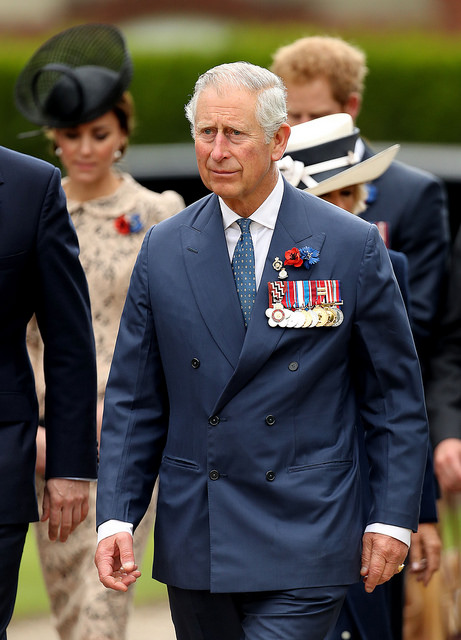
The memorial which is similar to Helen’s Tower at Clandeboye, Co. Down, is beside Thiepval Wood where soldiers from the 36th Ulster Division including some Monaghan men left the trenches at 7.30am on July 1st 1916 to advance towards the German lines. Heather Humphreys laid a wreath along with the North’s First Minister Arlene Foster MLA, the Northern Secretary Theresa Villiers MP and Britain’s Prince Charles.

27917351082_57fb329fa1_z

NI Secretary of State Theresa Villiers M.P. at the Thiepval Memorial commemoration #Somme16

The service included representatives of the four main churches in Ireland. For the first 6time, the Catholic Archbishop of Armagh, Dr Eamon Martin, was present at Thiepval along with his Church of Ireland counterpart, Archbishop Richard Clarke. The Presbyterian Moderator Dr Frank Sellar and the Methodist President Reverend Bill Mullally joined them.

They jointly called for Christians of all traditions in Ireland to pray for peace in these challenging times.  The Church leaders said: “Let us put our faith into action: love our neighbours, reach out to the stranger, care for the vulnerable, build community and be agents for peace, forgiveness and reconciliation.”

Addressing the service Archbishop Clarke referred to how the Somme and Ulster had belonged together in the imagination of succeeding generations over the last century. He noted that the Somme represented “a connectedness for all time with many men and women, and not only in Ulster nor only for one Christian tradition.”

He also recalled the recent pilgrimage to the Somme last month which he jointly led alongside Archbishop Martin, and which included a cross-community group of young people from across the island of Ireland. Archbishop Clarke encouraged the present generation to relate the sacrifice of the Somme to its hopes, prayers and aspirations for the future. “We must believe in a hope of the future for our young people, as they must believe in it for themselves”, he said.

The Presbyterian Moderator, Dr Frank Sellar, spoke afterwards of how for many families like his own, the Battle of the Somme was still personal. He said the Great War had changed the course of human history and a century later the world is still living with the consequences of its aftermath. The Somme, as a particularly poignant part of that conflict, changed the lives of countless thousands and indelibly shaped whole communities in Ulster and throughout the island of Ireland. It was a time of terrible carnage and incredible heroism, he added.

“For us today, 100 years on, it is difficult to imagine, or even contemplate, the shear scale of the loss of life and the impact that it had then. My grandfather lost two of his brothers on the battlefield, while a third, who survived, received the Military Medal for his bravery,” Dr Sellar said.

“For many families, like my own, the events of 1916 are still personal. It is however an enormous privilege and honour to represent the Presbyterian Church in Ireland at such an historic occasion, as we pause and remember those who died and reflect on their loss.”

“I am also reminded of our own fractured society and troubled world we live in and the vital importance of critical reflection and inclusive remembering. I am also very conscious of the necessity to always search for true reconciliation and for the creative reimagining of a civil society humbly modeled on Christ Jesus for the common good,” he said.

The objective of the 36th Ulster division was to dominate the area between Beaucourt to the north and Thiepval to the south, necessitating the capture of all German trench systems in front of them, particularly the strongly defended Schwaben Redoubt. In addition to its twelve battalions, there were four battalions of Tyneside Irish and seven regular Irish battalions distributed in other divisions, giving a total of twenty-three Irish infantry battalions involved on this front.

The Somme campaign lasted 147 days, from 1st July to 24th November 1916. The Allies captured 120 square miles of land, and advanced six miles. They suffered 419,654 casualties: forty men killed or wounded for every yard advanced.

27405808214_d08119522a_z.jpg

Wreaths Laid at the Memorial Stone, Thiepval Memorial

At the start of her visit last Thursday, the Minister laid a wreath at the Ginchy Cross in Guillemont. It remembers the sacrifice of the 16th Irish Division of the British Army, which entered the Battle of the Somme in September 1916. Minister Humphreys will return there for a separate ceremony to mark the centenary in September.

She then visited one of the many cemeteries in the Picardy area maintained by the Commonwealth Graves Commission. Delville Wood contains the graves of over 5,500 servicemen, of whom 3,500 remain unidentified. They include some Irish casualties.

Heather Humphreys also attended a special Abbey Theatre production of ‘Observe the Sons of Ulster Marching Towards the Somme’, which was supported by her Department, at the Maison de la Culture in Amiens. It was attended by the playwright, Frank McGuinness.

On Friday morning the Cavan/Monaghan TD accompanied President Higgins at the Thiepval Memorial for an international service marking the start of the Battle of the Somme on July 1st 1916. This ceremony was attended by a number of senior members of the British royal family, the British Prime Minister David Cameron, and the North’s First Minister Arlene Foster MLA along with her counterparts from Scotland and Wales.

The Minister said it was very important that the Irish Defence Forces led by Chief of Staff Vice Admiral Mark Mellett had been included in the ceremony along with British and Commonwealth servicemen and women.

CQMS Gerry White from Cork read from the last letter of Lt Tom Kettle, journalist and soldier with the 16th Irish Division. Students from St Paul’s community college in Waterford also played a role at the service, which was attended by 10,000 guests, mainly from the United Kingdom. Solicitor Brendan O’Reilly from Cootehill and his son Aoghan from Dernakesh National School travelled from Co. Cavan. They saw the grave of Mr O’Reilly’s grand uncle Rifleman J.P. O’Reilly. He served in the Royal Irish Rifles and was killed in September 1916. He is buried at the nearby Lonsdale Cemetery.

Speaking about her visit to France Minister Humphreys said:

“The Battle of the Somme was a seismic event, which had a huge impact on the island of Ireland. The Somme has particular resonance in my own province of Ulster, due to the very heavy losses suffered by the 36th Ulster Division on the first day of the battle. There were more than 5,500 casualties in the 36th on July 1st 1916, including 2,000 deaths. Over the four years of World War One, it is estimated that 50,000 Irish men were killed while serving in the British, Commonwealth or United States armies.”

“This had a profound effect on the island of Ireland, and almost certainly had an impact on every community across the country. For decades, the stories of these men went largely untold, and many of those who returned home from the Somme and other battles, felt forced to conceal their own experiences. The Decade of Commemorations has allowed us to explore some of these stories for the first time, giving those who fought and those who died their rightful place in Irish history.”

“During 2016, our centenary year, it has been incredibly important to me that we remember those who died fighting abroad, as well as those who died fighting during the Rising here at home. One hundred years on from both the Easter Rising and the Battle of the Somme, we are hearing a more complete narrative on the Irish experience in 1916, and the impact the events of that year had on our culture, our society and our psyche.”

Share this:

  • Share on Facebook (Opens in new window) Facebook
  • Share on X (Opens in new window) X
Like Loading...
MILITARY MONAGHAN NEWS POLITICS UNCATEGORISED 36th Ulster DivisionArchbishop Eamon MartinArchbishop Richard ClarkeBattle of SommeBill MullallyCQMS Gerry WhiteDr Frank SellarHeather Humphreys T.D.Theresa Villiers M.P.ThiepvalUlster TowerWorld War I Leave a comment

DUBLIN MONAGHAN BOMBS

14/07/2016 by borderroamer
12132667_932217406826523_8479667504633800142_o.jpg

Charles Flanagan T.D., Minister for Foreign Affairs and Trade 

GOVERNMENT CONTINUES TO PRESS BRITISH ON ISSUE OF DUBLIN-MONAGHAN BOMBS: FLANAGAN

Michael Fisher  Northern Standard  Thursday 14th July 2016

The Minister for Foreign Affairs Charles Flanagan TD has said pursuing the British government on the issue of the Dublin Monaghan bombings in 1974 was a major priority for him and for the Irish government. He told the Dáil his commitment was reflected in the Programme for a Partnership Government that was agreed in May.

In a written response to questions tabled by the Fianna Fáil leader Micheál Martin and that party’s spokesperson on Foreign Affairs, Deputy Darragh O’Brien, Minister Flanagan said the all-Party Dáil motion on the Dublin-Monaghan bombing that was adopted in the House on 25th May had been conveyed to the British Government. This motion, like the two previously adopted in 2008 and 2011, called on the British Government to allow access by an independent, international judicial figure to all original documents relating to the bombings.

Mr Flanagan continued: “The Government is committed to actively pursuing the implementation of these all-Party Dáil motions relating to the Dublin Monaghan bombing atrocities. To this end, I wrote to the Secretary of State for Northern Ireland in late May, conveying a copy of the recent resolution. In addition, I raised the matter in my bilateral meeting with the Secretary of State for Northern Ireland in Belfast last week. In this meeting I advised the Secretary of State that this latest motion represents the consensus political view in Ireland that an independent, international judicial review of all the relevant documents is required to establish the full facts of the Dublin Monaghan bombings.”

“I underlined that the absence of a response from the British Government was of deep concern to the Government and indeed this House and emphasised the urgent need to respond to the three Dáil motions. Secretary of State Villiers recognised the importance that the Government and Dáil Éireann attach to this case and she indicated that the British Government is considering a response which would adequately address the motions.”

“The Government will continue to raise this matter with the British Government, urging them to provide a satisfactory response to the motions that have been adopted by this House. I have made clear to the Secretary of State that there is a pressing need to provide answers to the families of the victims. The Taoiseach has also raised this issue with Prime Minister Cameron emphasising the Government’s continued support for the Dáil motions.”

“Many families continue to deal not only with the awful pain of losing a loved one, but also with the struggle for answers decades after these traumatic events. Accordingly, the establishment of a new comprehensive framework for dealing with the past, as envisaged in the Stormont House Agreement, is a priority for the Government.”

In conclusion, the Minister said he continued to engage with the British Government, the NI Executive and the Northern Ireland political parties in discussions to find a route to a final agreement on legacy issues. He said the Irish government believed that the legacy institutions agreed under the Stormont House Agreement offered the best hope of helping the thousands of families impacted by the troubles. He was therefore working to secure the necessary political agreement to get the legacy bodies established and up-and-running as soon as possible.

Share this:

  • Share on Facebook (Opens in new window) Facebook
  • Share on X (Opens in new window) X
Like Loading...
MONAGHAN NEWS POLITICS UNCATEGORISED Charles Flanagan T.D.DublinMonaghan Leave a comment

HRH CHARLES LIKED DONEGAL

07/07/2016 by borderroamer
28019297475_f657d212ab_z

Prince Charles at the Somme Centenary Service at the Thiepval Memorial  Pic. PA

PRINCE CHARLES HOPES TO MAKE ANOTHER VISIT TO IRELAND

President and Minister Humphreys Participate in Battle of Somme Centenary

Michael Fisher  NORTHERN STANDARD Thursday 7th July 2016 p.1

Britain’s Prince Charles has told Minister Heather Humphreys during an informal meeting at the Somme Centenary in France he would be happy to return to Ireland on another visit. The Minister who chairs the consultation group on commemorations said the Prince of Wales told her he had been very impressed with Glenveagh National Park in County Donegal.

Six weeks ago Minister Humphreys welcomed Prince Charles and his wife Camilla Duchess of Cornwall to Glenveagh. The Minister described it as one of the jewels of Ireland’s natural heritage. It is one of six national parks in Ireland and is run by the National Parks and Wildlife Service, which comes under the brief of Minister Humphreys.

The Cavan/Monaghan TD accompanied President Higgins at the Thiepval Memorial last Friday for a service marking the start of the Battle of the Somme on July 1st 1916. The Minister said it was very important that the Irish Defence Forces led by Chief of Staff Vice Admiral Mark Mellett had been included in the ceremony along with British and Commonwealth servicemen and women.

ULSTER TOWER

Following the poignant service attended by 10,000 guests Minister Humphreys represented the government at a wreath-laying ceremony at the nearby Ulster Tower. It is beside Thiepval Wood where soldiers from the 36th Ulster Division including some Monaghan men left the trenches at 7.30am on July 1st 1916 to advance towards the German lines. She laid a wreath along with the North’s First Minister Arlene Foster MLA and the Northern Secretary Theresa Villiers MP.

The previous day Heather Humphreys paid tribute to the 16th Irish Division who had entered the battle two months later at Guillemont and also sustained heavy losses. The Minister attended a special performance in Amiens by the Abbey Theatre of the play “Observe the Sons of Ulster Marching Towards the Somme”.

STATE COMMEMORATION

On Saturday, the Minister will attend the main state event to commemorate the Somme Centenary, which is being held in conjunction with the Royal British Legion. It will take place in the Irish National War Memorial Gardens at Islandbridge in Dublin at 12 noon and will be televised live by RTÉ.

Invited guests will include members of the government, Council of State, elected representatives, members of the diplomatic corps and judiciary, and representatives of a large number of veterans’ organisations. It will involve a wreath-laying by the President Higgins. Ambassadors of the countries that fought at the Somme and the Presidents of the Royal British Legion from the Republic and Northern Ireland will also lay wreaths.

Speaking to the Northern Standard on her return from France, Minister Humphreys said the services in Thiepval had been very moving. She said the representation of the Irish government and Defence Forces at the Ulster Tower had been very much appreciated. She met representatives of the Orange Order there, building on contacts developed when she attended the visit by Prince Charles in May to a new Museum of Orange Heritage at Loughgall, Co. Armagh, which had been part-funded by the Irish government.

The Minister said she had wanted the programme of events for the centenary commemorations to be inclusive and respectful and it had been. It had opened up our understanding of events in 1916. It was not about one narrative, but concerned all the narratives and it was important to hear all the personal accounts from that era. People like 18 year-old Katie McGrane from Magheracloone, who in a letter to her mother dated May 2nd, 1916 had described the streets of Dublin city centre in the aftermath of the Easter Rising.

We had matured as a nation in our ability to accept and hear about the events and stories of one hundred years ago, the Minister said. We had reconnected with our history and there was now a great sense of pride, she said. She felt there had been great community engagement for the commemorative programme, including in County Monaghan. This included the distribution of the national flag to national schools with talks on civic duty and citizenship.

She believed it was important to keep the momentum going. She complimented the great work done for the 1916 Centenary by Monaghan County Council, the County Museum, the library service as well as local arts and heritage groups.

MOORE STREET SITE

Minister Humphreys also responded to criticism she was failing to protect buildings at Moore Street in Dublin city centre connected with the Easter Rising. Last month the government decided to bring an appeal to the Supreme Court over a High Court ruling which declared Moore Street to be a 1916 “battlefield site” and was therefore due to be protected. Earlier this year, a court action had been successfully taken by the 1916 Relatives Group which sought to prevent the destruction of buildings on the street.

Sinn Féin leader Gerry Adams TD condemned the decision by the government to appeal the High Court judgement. He said it was scandalous that in the centenary year of the Rising the government would refuse to uphold a court judgement that would protect Moore Street and its environs that were part of the legacy of 1916. Instead of defending and protecting the historical legacy of the Rising the government was putting the rights of developers and profiteers first, Mr Adams claimed.

Minister Humphreys said she was the first Minister to do anything about purchasing the site at 14-17 Moore Street last year. They had then embarked on a programme of conservation for the four buildings, to show what they were like in 1916 with the holes between the houses used by the rebels to move from one room to another. This site was where the Rising’s leaders held their last council of war and decided to surrender.

The Minister argued that other buildings on the street had been constructed after 1916 and were not historically significant. The vast bulk of the surrounding properties were privately owned. Her remit extended to the National Monument, which was being preserved. These houses retained significant 18th-century elements, including staircases, partitions, plasterwork, doors, floors, fittings and fixtures. The development of the wider street was a matter for Dublin City Council, she said.

However in his High Court judgment, Mr Justice Max Barrett said the wealth of evidence before the court pointed to historical significance in some of the other buildings. These included number 10, a portion of the parting wall at number 13 and number 18, as well as the building at 20-21 Moore Street.

Minister Humphreys said owing to the potential widespread implications of the “battlefield” judgement for planning and development nationally, the government had decided to appeal the decision. If the whole street was a national monument, then how would this translate to other historical sites, she asked. She said she fully understood that Moore Street was a location that held great importance for many people.

The Minister said she intended to establish a consultative group on Moore Street with an independent Chair as a means to make positive progress in relation to the future of the street. The group would include cross-party Oireachtas members and other relevant stakeholders including the 1916 relatives. She hoped they would sit down and see how they could progress the situation and make sure the four precious buildings were restored.

The completed project would be a permanent legacy to the leaders of 1916. She hoped the group could chart a way forward. The government was committed to looking after the four buildings with their original fabric, she said.


Share this:

  • Share on Facebook (Opens in new window) Facebook
  • Share on X (Opens in new window) X
Like Loading...
MILITARY MONAGHAN NEWS POLITICS UNCATEGORISED 1916GlenveaghHeather Humphreys TDMoore StreetPrince CharlesSommeThiepvalUlster Tower Leave a comment

DÁIL QUESTIONS ON INTERCONNECTOR

26/06/2016 by borderroamer

CALLS IN DÁIL FOR ELECTRICITY INTERCONNECTOR TO BE PUT UNDERGROUND

Minister awaits decision by An Bord Pleanála

Michael Fisher  Northern Standard  Thursday 23rd June p.14

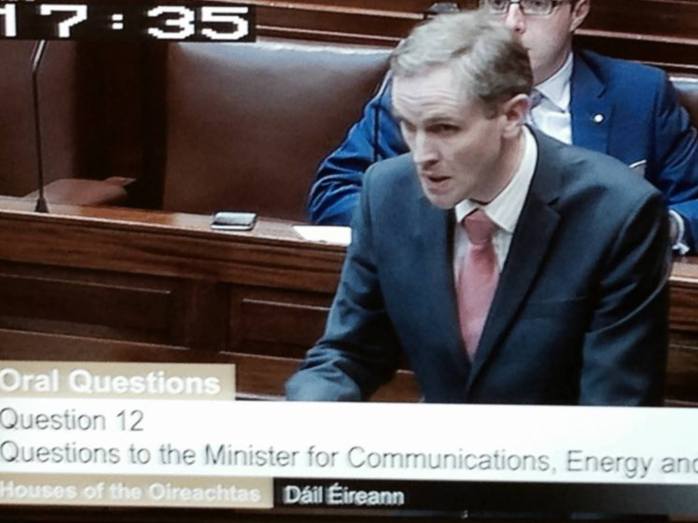
At question time in the Dáil last week, Deputy Seán Fleming (Fianna Fáil, Laois-Offaly) asked the new Minister for Communications, Climate Change and Natural Resources Denis Naughten to support putting the North-South electricity interconnector underground using high-voltage direct current technology. He asked the Minister if he would make a statement on the matter.

13411743_10206605579242715_3461134040631709056_o.jpg

Shane Cassells TD asking question in Dail to Climate Change Minister Denis Naughten TD

Deputy Shane Cassells (Fianna Fáil, Meath West) also asked the Minister if he would support the undergrounding of the North-South interconnector using the technology now available. Will the Minister put a halt to the current plan?, he enquired. Deputy Cassells said the current EirGrid proposal for which planning permission was being sought would destroy the landscapes of Meath, Cavan and Monaghan if monstrous pylons were to be constructed in these three counties.

Deputy Denis Naughten: In fairness, all Deputies in the region have contacted me at this stage on this issue. EirGrid is the designated transmission system operator. Its roles include the operation, maintenance and development of the electricity transmission network in Ireland. As detailed in the government policy statement on the strategic importance of transmission and other energy infrastructure, the government does not seek to direct EirGrid in the development of energy infrastructure to particular sites or routes or technologies.

EirGrid made a formal application for a North-South 400 kV interconnector project to An Bord Pleanála on 9th June 2015. This is the subject of a statutory independent planning process and is currently before An Bord Pleanála. Part of this process included an oral hearing that concluded last month. As the planning process is still ongoing, it would not be appropriate for me to comment further.

Deputy Shane Cassells: I am appealing to the Minister, on behalf of the people of these counties, to become involved because this is a major issue for Meath, Cavan and Monaghan. Not only would it destroy the landscapes of these counties, it would destroy people’s homes. I have sat in the homes of people throughout County Meath. These monstrous pylons will be built beside their homes and will destroy their lives. It is amazing to think that in 2013 the EirGrid chairman, John O’Connor, sat before a Dáil committee and said he would not want to live beside one of these pylons. However, he seems to think it is good enough for the rest of the people in these counties.

The North East Pylon Pressure Campaign is led by Aimée Treacy and Padraig O’Reilly. They have spearheaded a campaign to stop the project but they are being thwarted by the formidable legal people of EirGrid. I was at the High Court hearing some months ago when the project was challenged. The Minister’s office, under the previous officeholder, and EirGrid used powerful legal teams to fight against the community groups. We need the Minister to stand up for the people rather than EirGrid. EirGrid is spending money relentlessly on public relations campaigns to try to curry public favour, but it is destroying people’s lives. I appeal to the Minister to get involved and arrange to put these pylons and cables underground. The people need the Minister to stand up for them.

Deputy Denis Naughten: I understand the frustration among people in this case, but the government does not direct EirGrid on what mechanism it should use. We need an interconnector. People agree that we need an interconnector. The debate has been how that connection would be made. The government has not directed EirGrid in any way in this matter. This project is before An Bord Pleanála at the moment. An Bord Pleanála has weighed up the options and all the arguments on all sides. We are going to get a decision from An Bord Pleanála.

I have read some of the numerous reports into undergrounding. However, the reality is that the North-South transmission project is required to ensure security of supply of electricity to Northern Ireland. The existing 225 kV double circuit overhead transmission line between Louth and Armagh is simply insufficient to meet the needs.

Deputy Shane Cassells: The Minister referred to the An Bord Pleanála hearing. I was there and gave evidence at the hearing in Monaghan as well. Representatives from EirGrid came in on numerous occasions during the hearing and changed aspects of their application during the hearing. They came with images that bore no resemblance to the application. These people are ruthless in the pursuit of their aim and do not care about the people. This Chamber is here to care about the people. The government can most certainly become involved.

The previous two Ministers had no wish to hear from the people’s side. Therefore, I am appealing to the Minister not to read out the material prepared by the Department but to listen to the voices. This can be stopped before the September ruling by An Bord Pleanála. We need to see an intervention by government in this respect.

Deputy Denis Naughten: I have listened to a number of Members from the areas concerned, all of whom have expressed their concerns on this matter. I have not yet come across one person who takes the view that we do not need the interconnector. It is needed because if the existing line were to go down, there simply would not be enough electricity reaching the north east of the island to keep the lights on.

Deputy Shane Cassells: I agree with the Minister.

Deputy Denis Naughten: We have a single electricity market and we need it. It is helping to drive down the cost of electricity for every person throughout the country. 

Deputy Shane Cassells: The point is that it should be done underground.

Deputy Denis Naughten: I hear what Deputy Cassells is saying and I have heard and listened to what other colleagues in the House have said as well. I understand the frustration that exists but a statutory process is ongoing.

Deputy Shane Cassells: The frustrating thing is that Pat Rabbitte said the project would drive up prices.

ENERGY PRICES

In an earlier question on energy prices, Deputy Mick Barry asked the Minister whether the Electricity Supply Board should consider reducing its charges for electricity, given its reported profits of €635 million in 2015; he said high energy prices were being maintained to make the ESB an attractive proposition for privatisation. Surely the Minister is not satisfied with the minimal 6% cut in electricity prices by Electric Ireland. Does he agree that the company must go much further than this? Does he believe the ESB is being fattened up for privatisation?… 

Deputy Denis Naughten: Prices are not being kept high. No one in this country can keep prices high because they are unregulated. There is an open market. Representatives of ESB tell me the company makes little of its money from the Electric Ireland arm. Thankfully, ESB is in the black and making profits a little short of €300 million. A considerable amount of this profit comes from other arms of the company, including the network and electricity generation arms. I am told that of the pre-tax profits generated by the ESB, approximately 14% relate to the retail arm.

Other companies in the sector make margins as well. It does not seem to me to be excessive. The Commission for Energy Regulation is accountable to the House and the relevant Dáil committee. I call on Deputy Barry to make direct contact with the Chairman of that committee and bring the commissioners before the committee to quiz them on the issue.

Deputy Mick Barry: There the Minister goes again. Like Pontius Pilate he is washing his hands of the situation. I will ask the Minister a far simpler question. How does the Minister feel about the fact that consumers in this country are paying the second highest electricity rates in the European Union, while, at the same time, the ESB is making profits which, whether we use the Minister’s figures or my figures, run to hundreds of millions of Euro?

Deputy Denis Naughten: Electricity prices are higher here than in most parts of Europe. However, we need to remember that Ireland is on an island. We have a small electricity market. It includes the North and South and we have had reference to the single electricity market on the island of Ireland. There are geographic issues.

The other point is that we have to important a substantial amount of our energy. We are not self-sufficient in the energy sector and that adds to the costs. As a result of the size of the market, there are additional transmission costs and such costs are not incurred in continental Europe. As a result these particular challenges are built into the cost.

I am not trying to wash my hands of it. By law I cannot directly intervene in this matter. However, Deputies can question the Commission for Energy Regulation. I am calling on Deputy Barry to use the tools available to him in the parliamentary committee to raise these questions.

Share this:

  • Share on Facebook (Opens in new window) Facebook
  • Share on X (Opens in new window) X
Like Loading...
MONAGHAN NEWS POLITICS UNCATEGORISED CavanDenis Naughten TDEirGridelectricityESBMeathMick Barry TDMonaghanNEPPCNorth/South InterconnectorPadraig O'ReillyShane Cassells TD Leave a comment

TYDAVNET SHOW LAUNCH

25/06/2016 by borderroamer

LAUNCH OF 65th TYDAVNET SHOW PROGRAMME

Michael Fisher  Northern Standard   Thursday 23rd June

Tydavnet Show is preparing for its 65th event in August, making it one of the longest running and most successful agricultural shows in Ireland. Once again the hard-working voluntary committee has been working busily behind the scenes since the end of last year’s show. It will be a show with something for everyone, young and old, from the cattle and horse enthusiasts to those competing in home industries and those who just want an enjoyable day out.

Every year at the launch of the show programme, the committee invites a guest speaker. In the past, they have included personalities such as the journalist Frank McNally, Mairead McGuinness MEP and last year the former Governor of Mountjoy prison, John Lonergan.

This year’s speaker they invited Tony Ward from Lough Egish. An accountant by profession, he is Director of Finance at “The Wheel”, the leading support and representative network for the community and voluntary sector in Ireland. In an inspirational address, he spoke about losing most of his sight when he was in his mid-20s, and overcoming the setbacks this impairment had brought. In recent years he has completed five marathons and three long-distance cycles, and has represented Ireland in middle distance races in the European and World Athletic Championships. He won a bronze medal in the word cross-country championships in Portugal in 2001.

Tony reminded the audience how in his earlier years he had played football for Aughnamullen and had suffered a number of bad defeats by Scotstown! He explained how he had grown up on a farm. When he was diagnosed with retinitis pigmentosa (a degenerative eye disease causing severe vision impairment), he said he was not sure what would happen to him in the future.

65 years of the Tydavnet show was an extraordinary and great testament to the local community. Tydavnet, after all, was not the centre of the universe — a comment that brought laughter from the attendance. But it was an incredible record and proof of a lot of hard work by local people. He pointed out that other Monaghan villages such as Latton, Cremartin, Magheracloone or Killanny did not have their own shows. Mr Ward hoped they would get good weather for the show.

He explained how he was really interested in sport and would sometimes get up early in the morning to go training, when he would usually have someone to accompany him. He spoke of how two winning athletes at the Sydney Olympics had explained that the secret of their success amounted to 10% self-belief, 10% talent and 80% hard work.

He said there was clearly a sense of community and dedication in Tydavnet. Their roots were in farming. The one thing he could think of when he received his diagnosis was the work he did on the farm to assist his father at weekends, putting on his wellingtons and doing chores like milking the cows. When his sight deteriorated he could still go out and bring the cattle into the milking parlour.

Tony told the audience it was really important to preserve country and farming life. He recalled how he used to read through the Tydavnet Show results in the Northern Standard. What the show committee had achieved so far was great and he hoped they would pass it on to the next generation.

PRO Barry Sherry welcomed the sponsors and said the show would not be a success without them. He welcomed representatives of the Armagh and Clogher Valley shows. He said Tydavnet remained one of the major shows in the country. It took a lot of effort and commitment for it to happen, with lots of hard work from the beginning of the year.

After a thirty-year absence they had revitalised the Show Queen competition. They held a very successful night in April when Sinéad McCarey from Barratitoppy was selected for the title. Unfortunately she was not able to join them for the launch of the show programme.

Chair of Tydavnet Show Peggy Treanor from Clontybunnia welcomed the national school pupils who were prizewinners in the art competition for designing the cover of the programme. She also thanked the sponsors, advertisers and judges for their support, as well as the landowners at Drumshevra for making the site available for the show. The stewards, helpers, committee members and officers had also shown dedication and enthusiasm and she thanked them all.

Prizes were presented to the designer of the cover for the show competition schedule and catalogue as follows:

1st prize, Aoibhe Genoe, Magherarney N.S., Smithborough. She received a €50 Eason voucher.

2nd prize, Grace Kelly, Tydavnet N.S.

3rd prize, Eimear Treanor, Tydavnet N.S.

MAIN EVENTS AND TIMES

09.30am Sportsman Jumping (clear round format)           10.00am Horse & In-hand Pony & Cob Classes commence
10.00am Riding Pony & Cob Classes commence
10.00am Home Industries & Juvenile Classes judging begins                                                                             11.00am Dairy & Beef Cattle Classes commence
11.00 a.m. Sheep Classes commence
11.00 a.m. Poultry & Eggs Classes commence
11.00 a.m. Trade Stands, Heritage Crafts, Vintage Exhibits, Demonstrations                                                                 1.00pm-2.00pm Fermanagh Harriers demonstration         2.00pm Working Hunter events commence                       2.00pm Bonny Baby Competition, followed by:             Grandparent and Grandchild Competition
Fancy Dress Competition (McELVANEY CUP)
Most Appropriately Dressed Lady (KERRY-LEE TROPHY)
Most Appropriately Dressed Teenagers
Little Miss Monaghan (3-5 years)                                             Little Mr Monaghan (3-5 years)                                            2.30pm Dog and Pet Show                                                     2.30pm Dancing on the Deck                                                                                               3.00pm approx. Riding for people with a Disability          4.00pm Children’s Fun Races                                           4.30pm Presentation of Cups – Home Industries & Juvenile  5.00pm Removal of Home Industries & Juvenile exhibits 5.00pm Tydavnet’s Fittest Family


Share this:

  • Share on Facebook (Opens in new window) Facebook
  • Share on X (Opens in new window) X
Like Loading...
AGRICULTURE MONAGHAN NEWS UNCATEGORISED DrumshevraMonaghanTony WardTydavnet Show Leave a comment

CLONES: HERITAGE TOWN

24/06/2016 by borderroamer

Michael Fisher Northern Standard  Thursday 23rd June p.1

The border town of Clones with its rich monastic past has the potential to be developed as a heritage destination, according to the Minister for Regional Development, Rural Affairs, Arts and the Gaeltacht, Heather Humphreys. She suggested a monastic trail could be established in the borderlands area, linking Ireland’s Ancient East and the Wild Atlantic Way in the west. The Minister was speaking at the launch at the Canal Stores of a digital pictorial record of the High Cross in the Diamond and St Tighernach’s Tomb Shrine.

The laser scan of these important monuments was carried out earlier this year by the Discovery Programme, the national archaeological research body, following a €5,000 grant from the Minister’s department. She said the detailed 3D work would make it easier to preserve and restore the High Cross, which was a focal point in Clones.

“I want to see the cross fully restored, and I would like to see Clones marketed as a monastic heritage town. The Discovery Programme, which carried out this 3D scan, has compiled hundreds of digital images of similar historical objects around the country”, the Minister said. The images are available on various platforms including mobile phones.

Former Bishop of Clogher and medieval expert Dr Joseph Duffy of the Clogher Historical Society said the project showed the importance of our monastic heritage. Clones had been seriously under-estimated in our time, he said. He was particularly interested in the dating of the cross by archaeologist Professor Tadhg O’Keeffe of UCD, showing it was almost contemporary with the Viking invasion., dating possibly between 875AD and 925AD.

Dr Duffy told the Northern Standard the digital models would help to open up a whole new vista of our heritage that had not been previously realised. He said the detailed images of the high cross including the stonework figures captured by the hand-held scanner used brought up the variety of skills and highly developed and refined craftsmanship in medieval Ireland. He was impressed by the images of the cross that had now been recorded for posterity and could be viewed on the 3D-Icons website.

Minister Humphreys said the scanning and digitisation of the Clones cross was a very important first step as part of the project to restore the monument to its former glory. She had officially launched the 3D-Icons project last year in the Royal Irish Academy. She saw how much interest and excitement it had generated amongst some very learned scholars.

The programme promised to make our built heritage much more accessible and appreciated. That promise had been delivered upon in Clones, where our local heritage had literally had new life breathed into it. Clones was rich in monastic heritage and this announcement was a very important step to help us understand more about the high cross.

Historic buildings and archaeological monuments formed an important part of our cultural heritage, a heritage that it was important to value. Historic monuments were the physical testimonies of European history and testified to the diverse cultures that led to the creation of the rich European landscape they knew today. 3D scanning was now becoming an increasingly popular way to document built heritage.

Well over 100 well-known buildings and monuments had now been scanned and modelled, including the Hill of Tara, Derry’s Walls, Skellig Michael, Glendalough, Clonmacnoise, Knowth, Newgrange and over seventy high crosses, including Clones Market Cross. The 3D-Icons project was a great example of how projects could be developed that combined technology with all aspects of heritage.

The Minister congratulated local communities for their co-operation with and facilitation of such projects. In Clones she had had a very constructive meeting on the possibilities of developing Clones as a heritage destination. As a former monastic settlement, Clones had a huge amount to offer. She wanted to look at ways to enhance the town and attract new visitors.

She said there was no intention at the moment to move the cross from its present position and any such change would not be done unless it was in co-operation with the local community. If there was substantial erosion to the stonework in the next twenty years or so, then they now had a digital record that could be used to construct an exact replica. This would also allow them to put the original cross in a place where it was protected from the weather.

“The preservation of our built heritage is a subject about which I am particularly passionate”, the Minister went on, “and it will continue to be a priority under my new portfolio, which encompasses Rural Affairs and Regional Development, including the roll-out of rural broadband. In conclusion, I have no doubt that the Discovery Programme’s ongoing 3D work will prove to be an essential source of guidance and knowledge for everyone interested not only in architectural and archaeological monuments, but also new technology, for many years to come.”

Archaeologist Dr Finbar McCormick who is originally from Rockcorry and attended secondary school in Monaghan is a senior lecturer at Queen’s University Belfast and Chair of the Discovery Programme. He hoped that with the support of the Heritage Council, they could run outreach programmes to promote an appreciation of Ireland’s archaeological past. County Monaghan has a rich heritage, he said.

Dr McCormick praised the work done by Monaghan County Museum since its foundation in 1974 as the first local authority funded museum. He praised the foresight of the late George Cannon, the County Manager at the time, and the work done by the Clogher Historical Society, one of the earliest such groups to be established in Ulster. He explained how the new scanning technology would enable experts to monitor any erosion of monuments and to record them for posterity.

Professor O’Keeffe gave a short lecture on the history of the Market Cross. Standing in the Diamond in Clones, the cross is made up of at least three fragments consisting of the head of one cross and the shaft of another, a stepped stone base and a later fragment on top. He said this was not surprising as Clones was an important medieval religious settlement dedicated to St Tighernach, whose tomb shrine is in the medieval churchyard. It would have had a number of crosses on its boundary and within its domain.

The cross belongs to a northern group of crosses, another example of which is located at Arboe, Co.Tyrone on the shores of Lough Neagh. As with many Irish high crosses it was difficult to date, especially as it was made up of various fragments. In Professor O’Keeffe’s estimation some of the fragments may date to the ninth or tenth centuries, the main period of construction of high crosses.

The iconography follows the pattern found elsewhere: the shaft depicts ‘Daniel in the Lions’ Den’, ‘The Sacrifice of Isaac’, ‘Adam and Eve with the Tree of Life’, ‘The Adoration of the Magi’, ‘The Wedding at Cana’ and ‘The Multiplication of the Loaves and Fishes’. Beaded decoration runs up sides of the two faces and also around distinctive collar at top of the shaft. The head of cross includes a Crucifixion scene while at the centre of south-west of head is another depiction of ‘Daniel in the Lions’ Den’, with ‘Cain slaying Abel’ to left and possibly ‘Pilate washing his hands’ to right.

Professor O’Keeffe pointed out that an enduring paradox of early medieval Christianity in Ireland was that its great works of art such as its high crosses, illuminated gospel books (such as the Book of Kells), and rich altar plate (such as the Ardagh Chalice) had been produced to serve a Church which invested very little in built fabric. Contemporary Irish churches were small, ill-lit buildings, capable at best of holding no more than several dozen people at a time. Viking raids in the late eighth and early ninth centuries certainly disrupted the pattern of production at church sites in Ireland, but their impact was not fatal. In fact, the Viking contribution to medieval Irish civilization was ultimately very positive, he said.

The EU-funded 3D-Icons project aims to create highly accurate 3D models along with images, texts and videos of iconic and internationally important monuments and buildings across Europe and to provide access to this data on line. The pictures from Clones can be accessed at www.3dicons.ie.


Share this:

  • Share on Facebook (Opens in new window) Facebook
  • Share on X (Opens in new window) X
Like Loading...
MONAGHAN NEWS POLITICS UNCATEGORISED 3D-IconsBishop Joseph DuffyClonesDiscovery ProgrammeFinbar McCormickHeather Humphreys TDHigh CrossMonaghanTadhg O'KeeffeUCD Leave a comment

Post navigation

← Older posts
Newer posts →

Recent Posts

  • DESMOND FISHER 1920-2014 30/12/2020
  • GAJ AWARDS 2020 24/12/2020
  • COVID-19 REPORTING AWARD 20/12/2020
  • HAPPY 100TH BIRTHDAY 31/03/2020
  • NUJ VOTING REMINDER 26/01/2020
  • WORLD PRESS FREEDOM 20/01/2020
  • REMINDER TO VOTE 18/01/2020
  • BOND, WE’VE BEEN EXPECTING YOU! 17/01/2020
  • NUJ MEMBERS IN IRELAND 09/01/2020
  • NUJ BLAST FROM THE PAST 08/01/2020

Archives

  • Dec 2020 (3)
  • Mar 2020 (1)
  • Jan 2020 (13)
  • Oct 2019 (10)
  • Sep 2019 (30)
  • Aug 2019 (31)
  • Jun 2019 (2)
  • May 2019 (1)
  • Sep 2018 (1)
  • Jul 2017 (1)
  • Dec 2016 (12)
  • Sep 2016 (2)
  • Aug 2016 (5)
  • Jul 2016 (5)
  • Jun 2016 (10)
  • May 2016 (15)
  • Apr 2016 (19)
  • Mar 2016 (14)
  • Jan 2016 (26)
  • Dec 2015 (2)
  • Aug 2015 (1)
  • Jul 2015 (30)
  • Jun 2015 (30)
  • May 2015 (32)
  • Apr 2015 (30)
  • Mar 2015 (31)
  • Feb 2015 (28)
  • Jan 2015 (31)
  • Dec 2014 (31)
  • Nov 2014 (14)
  • Mar 2014 (2)
  • Feb 2014 (2)
  • Jan 2014 (31)
  • Dec 2013 (19)
  • Nov 2013 (17)
  • Oct 2013 (29)
  • Sep 2013 (30)
  • Aug 2013 (31)
  • Jul 2013 (31)
  • Jun 2013 (30)
  • May 2013 (28)
  • Apr 2013 (32)
  • Mar 2013 (31)
  • Feb 2013 (28)
  • Jan 2013 (31)
  • Dec 2012 (3)
  • Oct 2012 (1)
  • Sep 2012 (1)
  • Aug 2012 (2)
  • Jul 2012 (3)
  • Jun 2012 (3)
  • May 2012 (3)
  • Apr 2012 (5)
  • Mar 2012 (1)
  • Jan 2012 (1)
  • Dec 2011 (1)
  • Nov 2011 (1)
  • Jun 2011 (1)
  • May 2011 (1)
  • Apr 2011 (2)
  • Dec 2010 (1)
  • Nov 2010 (3)
  • Oct 2010 (6)
  • Aug 2010 (1)
  • Jul 2010 (7)

Categories

Meta

  • Create account
  • Log in
  • Entries feed
  • Comments feed
  • WordPress.com

Enter your email address to follow this blog and receive notifications of new posts by email.

36th Ulster Division 2013 WPFG AFC Wimbledon An Bord Pleanála Ballinode Balmoral Show Barry McCall Battle of Somme BBC belfast Belfast Festival Belfast Lions Club Big Music Week Birmingham BOSE Bristol Carlow Carrickmacross Castleblayney Catholic Herald Clogher Clones CMAPC Defence Forces Derry Desmond Fisher Dublin EirGrid Emyvale Fine Gael GAA Geel Glaslough Heather Humphreys TD Iarnród Éireann Ice Hockey Ieper Inniskeen Irish Press Kingsmeadow London Meath Michael Fisher Monaghan Monaghan County Council NEC NEPPC Newbridge North/South Interconnector Northern Standard NUJ Odyssey Arena Patrick Comerford Pope Francis Poperinge Private Robert Hamilton PSNI Royal Irish Fusiliers RTÉ SDLP Shamrock Rovers Shared History Shared Future SIPTU St Macartan's Cathedral Tallaght Tydavnet Tyrone Ulster rugby Vatican II William Carleton William Carleton Society William Carleton summer school WW1 WWI WWII

Blog Stats

  • 242,406 hits
Blog at WordPress.com.
Michael Fisher's News
Blog at WordPress.com.
  • Subscribe Subscribed
    • Michael Fisher's News
    • Join 173 other subscribers.
    • Already have a WordPress.com account? Log in now.
    • Michael Fisher's News
    • Subscribe Subscribed
    • Sign up
    • Log in
    • Report this content
    • View site in Reader
    • Manage subscriptions
    • Collapse this bar
 

Loading Comments...
 

    %d