Get me outta here!

Michael Fisher's News

© Michael Fisher MMXXII

Menu

Skip to content
  • Home
  • About

Author Archives

borderroamerhttps://fisherbelfast.wordpress.comThe Northern Standard, Monaghan. Reporter.
borderroamer's avatar

C-TEK CARRICKMACROSS

24/07/2015 by borderroamer
Computer-generated image of C-TEK Carrickmacross  Photo: O'Hanlon Property

Computer-generated image of C-TEK Carrickmacross Photo: O’Hanlon Property

C-TEK BUILDING NEARS COMPLETION

Michael Fisher  Northern Standard  Thursday 2nd July

The C-Tek building beside the Civic Offices will represent the new face of Carrickmacross when it opens in the coming weeks. This will give hope for the future, at a time when the town is still reeling from the loss of a major manufacturing facility, Bose, with the loss of 140 jobs. The team behind the development of this site hope it will bring the same success as the M-Tek building in Monaghan town, where a second similar building had to be added to meet demand.

The workspace, designed to attract start-ups and new companies, consists of a two-storey building, offering 10,000 square feet of space with nine units. A number of tenants have already been found. The idea for the project came about following a study which identified a need for modern workspace in Carrickmacross. Work began last August on the building which cost €1.4 million.

It’s hoped the workspace, which will have units ranging from 250 square feet to 1,000 square feet, will appeal to business start-ups and will attract anyone with new ideas.

Councillor Padraig McNally said the County Council were not looking for businesses that are long-established and are well able to pay the going rate. This would be very affordable accommodation, he said and every application would be decided on its merits. Up to now the schemes in both Carrickmacross and Monaghan were not being abused by long-established businesses, he said. He also pointed out that a start-up could mean someone who had been in business for five years but it could take twenty years before they were successful.

The building offers an opportunity to locate a business in a newly constructed modern office facility with outstanding features, location and flexibility. C-Tek (standing for Carrickmacross Technology Education and Knowledge) is designed and built to offer an enhanced commercial working environment in the town. It has been developed by Monaghan County Enterprise Fund and Monaghan County Council. The space offers new and established businesses an opportunity to move to a landmark building and pleasant working environment, complemented by modern facilities including excellent Information Technology infrastructure, dedicated fibre optic broadband, security, ample car parking and easy access to the town centre and main roads. It’s also an hour from Dublin and could appeal to business people in the greater Dublin area who are looking for start-up space or providing professional services.

It’s a two-storey building, with flexible size office suites available starting at 250 square feet up to 1,000 square feet. Its features include a high standard of construction, quality finish, elevator to first floor, high quality electrical and fibre optic cabling, canteen and toilet facilities.

Flexible lease terms, exceptionally keen rent and service charge.

Carrickmacross offers a wide variety of amenities and community facilities including shops, schools, sports, leisure clubs, hotels and restaurants. For enquiries, please contact Shane O’Hanlon of O’Hanlon Property on (042) 9662222 or mobile (086) 2374261 or email shane@ohanlonproperty.ie.

Like Loading...
MONAGHAN NEWS UNCATEGORISED C-TEKCarrickmacrossMonaghan Leave a comment

LACPATRICK: THE NEW ULSTER DAIRY BRAND

23/07/2015 by borderroamer
Gabriel D’Arcy, Chief Executive of newly formed LacPatrick Co-op and Aidan McCabe, Dairy Adviser, with the new Lacpatrick logo  Photo:  © Michael Fisher

Gabriel D’Arcy, Chief Executive of newly formed LacPatrick Co-op and Aidan McCabe, Dairy Adviser, with the new Lacpatrick logo Photo: © Michael Fisher

END OF AN ERA FOR TOWN OF MONAGHAN CO-OP AS MERGER APPROVED WITH BALLYRASHANE

Lacpatrick: Dairy by Ireland Since 1896 is the new brand

Michael Fisher  Northern Standard  Thursday 23rd July p.2

Town of Monaghan Co-Op is to enter a new era in September following the virtually unanimous approval on Tuesday of its merger with the Ballyrashane Co-Op in North Antrim. The new company to be known as LacPatrick is said to be a platform for growth, against a backdrop of a challenging global market. It is described by the two Chief Executives as a ‘game-changing’ merger, which includes plans for further significant new investment later this year at Artigarvan near Strabane as a critical part of the new Co-op’s growth strategy.

New logo and brand name for the two merged co-ops in Monaghan and Ballyrashane

New logo and brand name for the two merged co-ops in Monaghan and Ballyrashane

The name LacPatrick reflects the size and scale of the new operation and its strong global ambitions to grow the business in Ireland and beyond. The new entity will be led by a new Board of Directors comprising the former two Boards, with a new management team headed up by Gabriel D’Arcy and Nigel Kemps – former CEOs of Town of Monaghan Co-op and Ballyrashane Co-op respectively.  Mr D’Arcy will be the new Chief Executive, with Mr Kemps appointed as Deputy Chief Executive. Monaghan will continue to be a headquarters for the new entity and it will also be the site for research and development. Tuesday’s meeting in Monaghan was attended by around 200 shareholders/suppliers and 93% of them voted in favour, slightly more than had endorsed the plan at the first special meeting at the start of this month. In Ballyrashane the vote was 100% in favour.

Standing are Gabriel D’Arcy (Chief Executive of newly formed LacPatrick Co-op) and Nigel Kemps (Deputy Chief Executive LacPatrick Co-op), with (seated) Hugo Maguire (Chairman, LacPatrick Co-op) and Roy Irwin Deputy Chairman. Photo: © Brian Thompson Photography

Standing are Gabriel D’Arcy (Chief Executive of newly formed LacPatrick Co-op) and Nigel Kemps (Deputy Chief Executive LacPatrick Co-op), with (seated) Hugo Maguire (Chairman, LacPatrick Co-op) and Roy Irwin Deputy Chairman. Photo: © Brian Thompson Photography

Gabriel D’Arcy told the Northern Standard he was delighted with the strong confirmatory vote from both sets of shareholders, and the decision for the two companies to come together to become a powerful new force in the Ulster dairy sector.  “We now have the scale and ambition to win in what is currently a very challenging and competitive marketplace.  Given the volatility of global dairy markets, this merger further underlines the importance and significance of this ambitious move by our two companies”, he said.

“Our shared geography and production facilities, technologies and customer listings, together with the combined balance sheet strength, offers a unique opportunity to create a true leader in the Ulster dairy food sector, focused on innovation and competitiveness.  This potential for clear and endurable market leadership will ensure that the new merged entity will continue to make competitive and sustainable returns to our members, the dairy farmers of Ulster.  This merger is a platform for future growth for all associated with LacPatrick and, we look forward to making further announcements in the weeks and months ahead regarding future investment.”

Nigel Kemps of Ballyrashane said: “This merger is particularly necessary when we look at the state of the market and especially the poor returns paid to producers. The size and scale that we now have as a merged entity will ensure we can be more competitive, and achieve better returns. Our aim is to give dairy farmers in the north of the island confidence to grow their own businesses and herds.  LacPatrick as a combined entity can achieve scale and volumes, delivering more than the two separate companies could have done on their own.”

The name LacPatrick has been chosen to reflect the core ethos of the newly merged Co-op, which is to bring its innovative and excellent dairy products to consumers at home and internationally. Lac is a Latin word for milk, and Patrick is synonymous with the island of Ireland. The two combine to create a name which underpins the newly birthed Co-op’s rich heritage, but also speaks of its ambitions to grow and develop.

The added strap-line ‘DAIRY BY IRELAND Since 1896’ is a clear statement of its longevity in its markets and communities and defines the solidity of the new entity. The new logo features a modern red map pin to celebrate LacPatrick’s location in the rich and fertile northern part of the island.  A four- leafed clover emphasises its good fortune in being situated in an area of such natural bounty and the milk drop symbolises the central focus of the business.  The green colour is reflective of the nutritious grass of Ulster’s pastures and the natural goodness of the island of Ireland.

The new name will be used at trade fairs and to market the new company on the global milk market.  It will also appear on tankers in conjunction with the individual consumer brands of the two former Co-ops.  Existing product brands such as Champion milk and Ballyrashane Butter will remain. LacPatrick will officially commence trading on September 1st 2015.

Town of Monaghan Co-op employs 150 people and is a farmer owned co-operative with a turnover of approximately €250m.  It has approximately 950 farmers supplying 460 million litres annually.  The milk is processed at Coolshannagh, Monaghan and at TMC Dairies (NI) Ltd in Artigarvan, Co. Tyrone.  Yogurt, liquid milk, cream, butter, bulk skim milk and bulk evaporated skim milk are produced at its Monaghan headquarters with spray dried, whole milk and skim milk dairy powders being produced at Artigarvan.

Ballyrashane Co-op’s main site is located close to the world famous Giant’s Causeway on the North Antrim Coast.  Renowned for its innovation, the company has in recent years expanded to its current position as a leading dairy supplier within the global market, boasting a wide portfolio of products and employing approximately 150 staff. Ballyrashane remains true to its roots as an independent co-operative still owned by local farmers and contributes financially, socially and environmentally to the local rural community. It has an annual turnover of approximately £80m and buys 100m litres of milk from around 100 local farmers.

Gabriel D’Arcy told me he had been truly humbled with the turnout and engagement at the recent shareholders’ meetings regarding the merger. The strong endorsement of our plans reflected the common sense approach of the Monaghan shareholders and  the shared vision and ambition of our community, he said. The current weakness and difficulties in the dairy sector underlined the importance and necessity of this plan and already it was being put forward as a shining light for the sector in Ireland and the need to consolidate for the benefit of suppliers and customers alike.

Asked about the new name, brand and image for the new entity, he said it had been an energising exercise to find something that reflected the shared heritage, the fertile region, the skilled and committed suppliers and the global vision of the co-op, with the vast majority of output destined for outside the European Union. “We want to tell the world what we do and what makes us special and distinctive, and firmly establish ourselves on the global dairy market in terms of quality and innovation. We want to highlight our region while maintaining a quintessentially Irish image, with its strong positive dairy connotation”, Mr D’Arcy said.

Out of these many desires emerged the name LacPatrick.

  • Lac meaning Milk
  • Patrick , with its strong Irish association
  • Dairy by Ireland – where else !
  • Since 1896 – our heritage

This new imagery will be used on all of milk tankers, uniforms, stationery, website and all outdoor and indoor signage. The existing and award winning brands, Ballyrashane, Champion and LP will be retained, while providing a common and exciting platform for growth, at home and abroad.

Mr D’Arcy believes both businesses complement each other. He said Ballyrashane had a specialised fractionated butter business while Town of Monaghan was committed to new processing technologies, which will allow them to add value to the non-butter components of milk. With this in mind a commitment has already been made to invest between €25m and €30m at the Artigarvan plant in Tyrone.

“Both businesses also have a robust brand profile in the marketplace. Ballyrashane has strong liquid milk, butter and cheese lines. The Champion liquid milk and yoghurt brand is synonymous with Town of Monaghan while our Leckpatrick milk powders are amongst the most sought after on the African market”, he said.

“It has been my experience that only those businesses with a strong balance sheet will survive the ups and downs of a volatile marketplace. And this is exactly what the new business brings to the table. The ability to simply generate profits is not enough when it comes to long term, commercial survival,” Mr D’Arcy said.

The merger has been welcomed by the Irish Farmers Association. IFA President Eddie Downey, who said it would help to improve the efficiency and sustainability of the dairy sector in the North of the island. “I have no doubt this will benefit dairy farmers on both sides of the border, by strengthening milk processing in the Northern region, by taking out cost and duplication, and by allowing for synergies, he said. Mr Downey said he hoped it would encourage the rest of the industry to examine the efficiency of its structures carefully, as producer milk prices had now reached unsustainable levels, and co-ops needed to arrest the slide.

The Town of Monaghan Agricultural and Co-Operative Dairy Society Ltd opened on May 15th 1901. Ballyrashane had been going for five years at that stage. The Northern Standard of Saturday May 18th 1901 reported how the new Monaghan Co-Operative Creamery had opened on Wednesday last and was devoted altogether to the reception of whole milk which was dispatched to Belfast. There was a great deal of interest excited in the town in connection with the opening, and large numbers visited it during the week, some people being rather astonished that so much machinery was required in connection with the management of milk, which heretofore had seemed so simple in the farm houses…It is to be trusted that the society…will be successful in its efforts to revive this decaying industry in our county. If anything should induce the farmers to support the creameries throughout the county it is the wretched price paid for butter and eggs in Monaghan market last week.

The article is carried in the history of the creamery produced in 2001 to celebrate its centenary by the late John O’Donnell, its former Manager. He took up the position in 1947 and during the course of a long and challenging career, he initiated a number of new departures, including the development of pasteurised milk sales at retail and wholesale level. He became the leader in milk distribution over long distances outside of Dublin. In the book he recalled how the amalgamation of the Clones and Monaghan Societies in 1963 consolidated the future of the new Society, with odern butter-making facilities and packaging lines for home and export.

He pioneered the experiment with plastic sachet milk in Ireland, followed by the elimination of glass milk bottles and the introduction in 1969 of the pint tetrahedron container, later to become a litre size. By the mid-1980s a link was established with Melkunie in the Netherlands to produce under licence their range of “Mona” yogurts and desserts for the Irish market in a new factory at Coolshannagh which opened in 1984. Boxer Barry McGuigan became the successful face of “Champion” milk.

Under the stewardship of Vincent Gilhawley since 1988, Town of Monaghan expanded into Northern Ireland purchasing Strathroy from the Cunningham family and then Leckpatrick from the Kerry Group in 2002, paving the way for this merger with Ballyrashane.

Like Loading...
MONAGHAN NEWS UNCATEGORISED ArtigarvanBallyrashaneGabriel D'ArcyLacpatrickNigel KempsTMCTown of Monaghan Co-Op 1 Comment

FAREWELL TMC: HELLO LACPATRICK

22/07/2015 by borderroamer
Standing are Gabriel D’Arcy (Chief Executive of newly formed LacPatrick Co-op) and Nigel Kemps (Deputy Chief Executive LacPatrick Co-op), with (seated) Hugo Maguire (Chairman, LacPatrick Co-op) and Roy Irwin Deputy Chairman. Photo: © Brian Thompson Photography

Standing are Gabriel D’Arcy (Chief Executive of newly formed LacPatrick Co-op) and Nigel Kemps (Deputy Chief Executive LacPatrick Co-op), with (seated) Hugo Maguire (Chairman, LacPatrick Co-op) and Roy Irwin Deputy Chairman. Photo: © Brian Thompson Photography

TWO OF IRELAND’S OLDEST DAIRIES CONFIRM COMPLETION OF ‘GAME CHANGING’ MERGER

Town of Monaghan and Ballyrashane Co-ops have confirmed their merger, announced a new company name and have described the merged entity as a ‘platform for growth’, against a backdrop of a challenging global market.

At separate meetings of shareholders yesterday in Monaghan and Ballyrashane, the members almost uananimously confirmed completion of what has been described as a ‘game-changing’ merger with plans for further significant new investment at Artigarvan near Strabane as a critical part of the new Co-op’s growth strategy.

The newly merged company will be called LacPatrick to reflect its size and scale, and its strong global ambitions to grow the business in Ireland and beyond. It will officially commence trading on September 1st. LacPatrick will be led by a new Board of Directors comprising the former two Boards, with a new management team headed up by Gabriel D’Arcy and Nigel Kemps – former CEOs of Town of Monaghan Co-op and Ballyrashane Co-op respectively. Gabriel D’Arcy will be the new Chief Executive, with Nigel Kemps appointed as Deputy Chief Executive.

Gabriel D’Arcy, Chief Executive of newly formed LacPatrick Co-op and Aidan McCabe, Dairy Adviser, with the new Lacpatrick logo  Photo:  © Michael Fisher

Gabriel D’Arcy, Chief Executive of newly formed LacPatrick Co-op and Aidan McCabe, Dairy Adviser, with the new Lacpatrick logo Photo: © Michael Fisher

Gabriel D’Arcy said: “I am delighted with the strong confirmatory vote from both sets of shareholders, and that our companies are coming together to become a powerful new force in the Ulster dairy sector. We now have the scale and ambition to win in what is currently a very challenging and competitive marketplace. Given the volatility of global dairy markets, this merger further underlines the importance and significance of this ambitious move by our two companies.

“Our shared geography and production facilities, technologies and customer listings, together with the combined balance sheet strength, offers a unique opportunity to create a true leader in the Ulster dairy food sector, focused on innovation and competitiveness. This potential for clear and endurable market leadership will ensure that the new merged entity will continue to make competitive and sustainable returns to our members, the dairy farmers of Ulster. This merger is a platform for future growth for all associated with LacPatrick and, we look forward to making further announcements in the weeks and months ahead regarding future investment.”

Nigel Kemps said: “This merger is particularly necessary when we look at the state of the market and especially the poor returns paid to producers. The size and scale that we now have as a merged entity will ensure we can be more competitive, and achieve better returns. Our aim is to give dairy farmers in the north of the island confidence to grow their own businesses and herds. LacPatrick as a combined entity can achieve scale and volumes, delivering more than the two separate companies could have done on their own.”

The name LacPatrick has been chosen to reflect the core ethos of the newly merged Co-op, which is to bring its innovative and excellent dairy products to consumers at home and internationally.

Lac, which is Latin for milk, and Patrick, which is synonymous with the island of Ireland, combine to create a name which underpins the newly birthed Co-op’s rich heritage, but also speaks of its ambitions to grow and develop. Its strap-line ‘DAIRY BY IRELAND Since 1896’ is a clear statement of its longevity in its markets and communities and defines the solidity of the new entity.

The logo features a modern red map pin to celebrate LacPatrick’s location in the rich and fertile northern part of the island. A four leaved clover emphasises its good fortune in being situated in an area of such natural bounty and the milk drop symbolises the central focus of the business. The green colour is reflective of the nutritious grass of Northern Ireland’s pastures and the natural goodness of Ireland.

The new name will be used at trade fairs and to market the new company on the global milk market. It will also appear on tankers in conjunction with the individual consumer brands of the two former Co-ops. Existing product brands – e.g. Champion, Ballyrashane Butter – will remain.

Town of Monaghan Co-op, which was established in 1901 and employs 150 people, is a farmer owned co-operative with a turnover of approximately €250m. It has approximately 950 farmers supplying 460 million litres annually. The milk is processed at Coolshannagh, Monaghan and at TMC Dairies (NI) Ltd in Artigarvin, Co. Tyrone. Yogurt, liquid milk, cream, butter, bulk skim milk and bulk evaporated skim milk are produced at its Monaghan HQ site with spray dried, whole milk and skim milk dairy powders being produced at Artigarvin.

Ballyrashane Co-op’s main site is located close to the world famous Giant’s Causeway on the North Antrim Coast. Renowned for its innovation, the company has in recent years expanded to its current position as a leading dairy supplier within the global market, boasting a wide portfolio of products and employing approximately 150 staff. Ballyrashane remains true to its roots as an independent co-operative still owned by local farmers and contributes financially, socially and environmentally to the local rural community. Ballyrashane has an annual turnover of approximately £80m and buys 100m litres of milk from around 100 local farmers.

Share this:

  • Share on Facebook (Opens in new window) Facebook
  • Share on X (Opens in new window) X
Like Loading...
MONAGHAN NEWS UNCATEGORISED ArtigarvanBallyrashane Co-OpLacpatrickTown of Monaghan Co-Op Leave a comment

TSR2: WE GAVE IT ALL AWAY

21/07/2015 by borderroamer
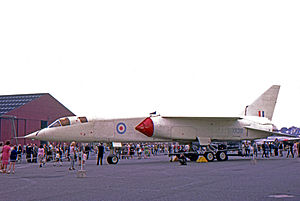
The only TSR-2 to fly, XR219, in anti-flash white finish, at BAC's Warton factory in 1966 Photo: wikipedia

The only TSR-2 to fly, XR219, in anti-flash white finish, at BAC’s Warton factory in 1966 Photo: wikipedia

An opportunity lost: we gave it all away. Some of the sentiments expressed in a fascinating BBC4 series on ‘Cold War, Hot Jets‘. At the end of the second world war, Britain was the leader in the field of jet propulsion. Twenty years of research went into developing the TSR2 strike and reconnaissance airccraft, a light bomber that could reach supersonic speed and could operate both at high and low-level altitude.

Harold Wilson enters No. 10 in October 1964  Photo: thejc.com

Harold Wilson enters No. 10 in October 1964 Photo: thejc.com

Harold Wilson’s win in the October 1964 general election and his elevation to 10 Downing Street as Prime Minister changed all that. The new Labour government initiated cutbacks in the defence programme and the TSR2 was scrapped. I remember (as a grammar school pupil in London) I had a picture postcard of this stunning jet as well as having it on a poster which showed other RAF aircraft.

Denis Healey, Defence Minister in Wilson’s Cabinet said at the time of the cancellation in April 1965: “The trouble with the TSR-2 was that it tried to combine the most advanced state of every art in every field. The aircraft firms and the RAF were trying to get the Government on the hook and understated the cost. But TSR-2 cost far more than even their private estimates, and so I have no doubt about the decision to cancel.”

Aeronautical engineer Sir Sydney Camm said of the TSR-2: “All modern aircraft have four dimensions: span, length, height and politics. TSR-2 simply got the first three right”, a quotation used on the tv documentary.

The TSR2 was developed by the British Aircraft Corporation (BAC) for the Royal Air Force in the late 1950s and early 1960s. The jet was designed to penetrate a well-defended forward battle area at low altitudes and very high speeds, and then attack high-value targets in the rear with nuclear or conventional weapons. Another intended combat role was to provide high-altitude, high-speed stand-off, side-looking, radar and photo imagery and signals intelligence, reconnaissance. Some of the most advanced aviation technology of the period was incorporated in order to make it the highest-performing aircraft in the world in its projected missions. 

The TSR-2 was the victim of ever-rising costs and inter-service squabbling over Britain’s future defence needs, which led to the controversial decision to scrap the programme in 1965. With the election of a new government, the TSR-2 was cancelled due to rising costs, in favour of purchasing an adapted version of the General Dynamics F-111, a decision that itself was later rescinded as costs and development times increased. The replacements included the Blackburn Buccaneer and Mc Donnell Douglas F-4 Phantom II, both of which had previously been considered and rejected early in the TSR-2 procurement process. Eventually, the smaller swing-wing Panavia Tornado was developed and adopted by a European consortium to fulfil broadly similar requirements to the TSR-2.

According to the Flight Envelope diagram, TSR2 was capable of sustained cruise at Mach 2.05 at altitudes between 37,000 ft (11,000 m) and 51,000 ft (16,000 m) and had a dash speed of Mach 2.35 (with a limiting leading edge temperature of 140 degrees Celsius). Its theoretical maximum speed was Mach 3 in level flight at 45,000 ft (14,000 m).

There were considerable problems with realising the design. Some contributing manufacturers were employed directly by the Ministry rather than through BAC, leading to communication difficulties and further cost overruns. Equipment, an area in which BAC had autonomy, would be supplied by the Ministry from “associate contractors”, although the equipment would be designed and provided by BAC, subject to ministry approval. The overall outlay of funds made it the largest aircraft project in Britain to date.

Unlike most previous projects, there were to be no prototypes. Under the “development batch” procedure pioneered by the Americans (and also used by English Electric for the Lightning), there would instead be a development batch of nine airframes, to be built using production jigs. The choice of proceeding to production tooling turned out to be another source of delay, with the first aircraft having to adhere to strict production standards or deal with the bureaucracy of attaining concessions to allow them to exhibit differences from later airframes. Four years into the project, the first few airframes had effectively become prototypes in all but name, exhibiting a succession of omissions from the specification and differences from the intended pre-production and production batches.

Testing

Serial number XR222 was one of only three “flight ready” TSR-2s completed, photographed at the Supermarine Spitfire 60th Anniversary Airshow, Duxford, 1996

Despite the increasing costs (which were inevitable, given the low original estimates), the first two of the development batch aircraft were completed. Engine development and undercarriage problems led to delays for the first flight which meant that the TSR-2 missed the opportunity to be displayed to the public at that year’s Farnborough Airshow. In the days leading up to the testing, Denis Healey, then the Opposition defence spokesman, had criticised the aircraft saying that by the time it was introduced it would face “new anti-aircraft” missiles that would shoot it down making it prohibitively expensive at £16 million per aircraft (on the basis of only 30 ordered).

Test pilot Roland Beamont finally made the first flight from the Aeroplane and Armament Experimental Establishment (A&AEE) at Boscombe Down, Wiltshire, on 27 September 1964. Initial flight tests were all performed with the undercarriage down and engine power strictly controlled—with limits of 250 kn (460 km/h) and 10,000 ft (3,000 m) on the first (15-minute) flight. Shortly after takeoff onXR219’s second flight, vibration from a fuel pump at the resonant frequency of the human eyeball caused the pilot to throttle back one engine to avoid momentary loss of vision.

Only on the 10th test flight was the landing gear successfully retracted—problems preventing this on previous occasions, but serious vibration problems on landing persisted throughout the flight testing programme. The first supersonic test flight (Flight 14) was achieved on the transfer from A&AEE, Boscombe Down, to BAC Warton. Over a period of six months, a total of 24 test flights were conducted. Most of the complex electronics were not fitted to the first aircraft, so these flights were all concerned with the basic flying qualities of the aircraft which, according to the test pilots involved, were outstanding. Speeds of Mach 1.12 and sustained low-level flights down to 200 ft (above the Pennines) were achieved. Undercarriage vibration problems continued, however, and only in the final few flights, when XR219 was fitted with additional tie-struts on the already complex landing gear, was there a significant reduction in them. The last test flight took place on 31 March 1965.

Although the test flying programme was not completed and the TSR-2 was undergoing typical design and systems modifications reflective of its sophisticated configuration, “[t]here was no doubt that the airframe would be capable of accomplishing the tasks set for it and that it represented a major advance on any other type.”

Costs continued to rise, which led to concerns at both company and government upper management levels, and the aircraft was also falling short of many of the requirements laid out in OR.343, such as takeoff distance and combat radius. As a cost-saving measure, a reduced specification was agreed upon, notably reductions in combat radius to 650 nmi (1,200 km), the top speed to Mach 1.75 and takeoff run up increased from 600 to 1,000 yards (550 to 910 m).

Project cancellation

XR220 at the RAF Museum, Cosford, 2007. The two cockpit canopies are coated with a thin film of gold to protect the occupant’s eyes from a nuclear flash

By the 1960s, the United States military was developing the swing-wing F-111 project as a follow-on to the Republic F-105 Thunderchief, a fast low-level fighter-bomber designed in the 1950s with an internal bay for a nuclear weapon. There had been some interest in the TSR-2 from Australia for the Royal Australian Air Force (RAAF), but in 1963, the RAAF chose to buy the F-111 instead, having been offered a better price and delivery schedule by the American manufacturer. Nonetheless, the RAAF had to wait 10 years before the F-111 was ready to enter service, by which time the anticipated programme cost had tripled. The RAF was also asked to consider the F-111 as an alternative cost-saving measure. In response to suggestions of cancellation, BAC employees held a protest march, and the new Labour government, which had come to power in 1964, issued strong denials.

However, at two Cabinet meetings held on April 1st 1965, it was decided to cancel the TSR-2 on the grounds of projected cost, and instead to obtain an option agreement to acquire up to 110 F-111 aircraft with no immediate commitment to buy. This decision was announced in the budget speech of 6 April 1965. The maiden flight of the second development batch aircraft, XR220, was due on the day of the announcement, but following an accident in conveying the airframe to Boscombe Down, coupled with the announcement of the project cancellation, it never happened. Ultimately, only the first prototype, XR219, ever took to the air. A week later, the Chancellor defended the decision in a debate in the House of Commons, saying that the F-111 would prove cheaper.

Source: Wikipedia

Like Loading...
MILITARY NEWS POLITICS UNCATEGORISED BACCold WarDenis HealeyHarold WilsonRAFTSR2 Leave a comment

MASS OF HEALING

20/07/2015 by borderroamer

image

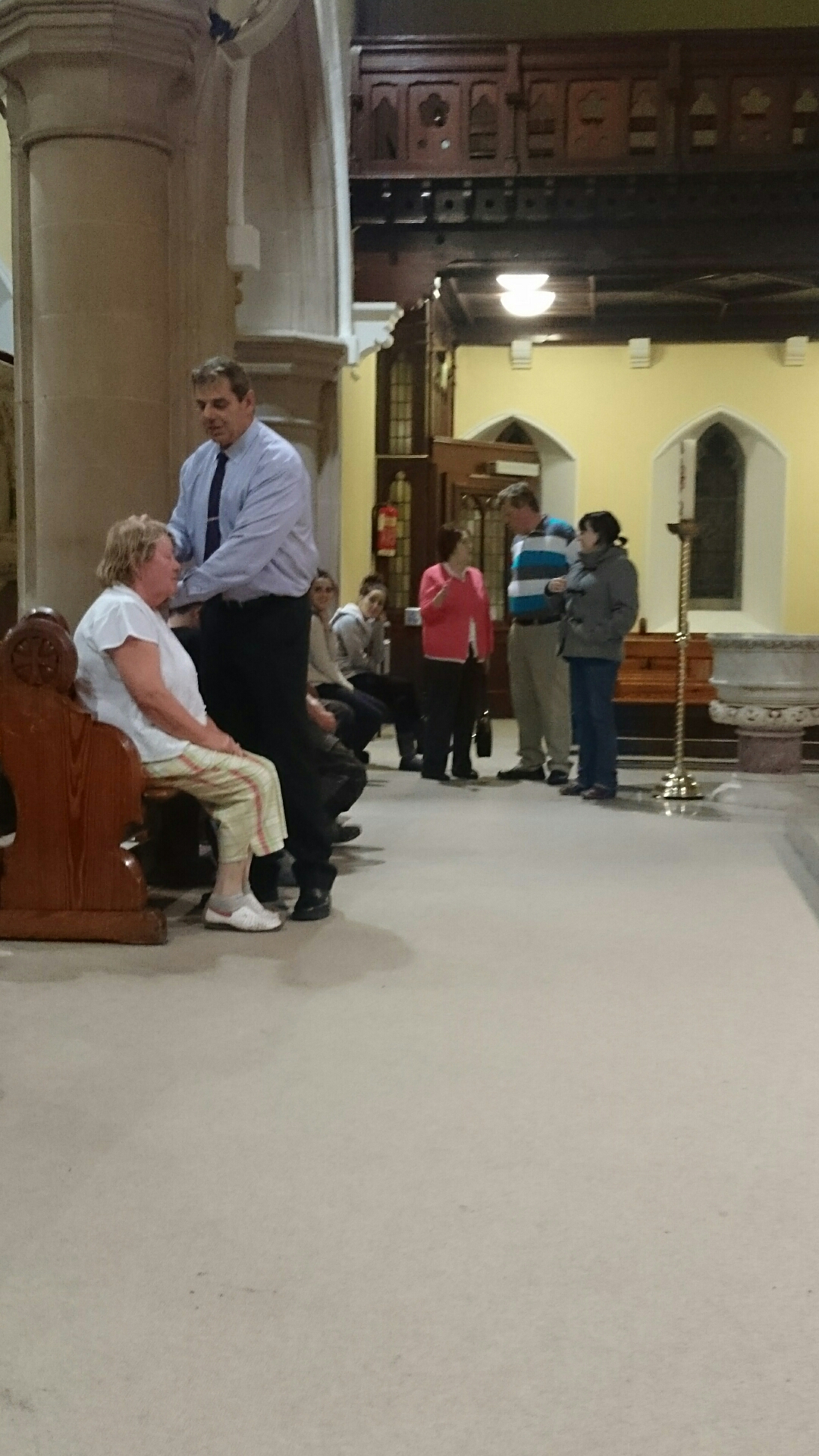
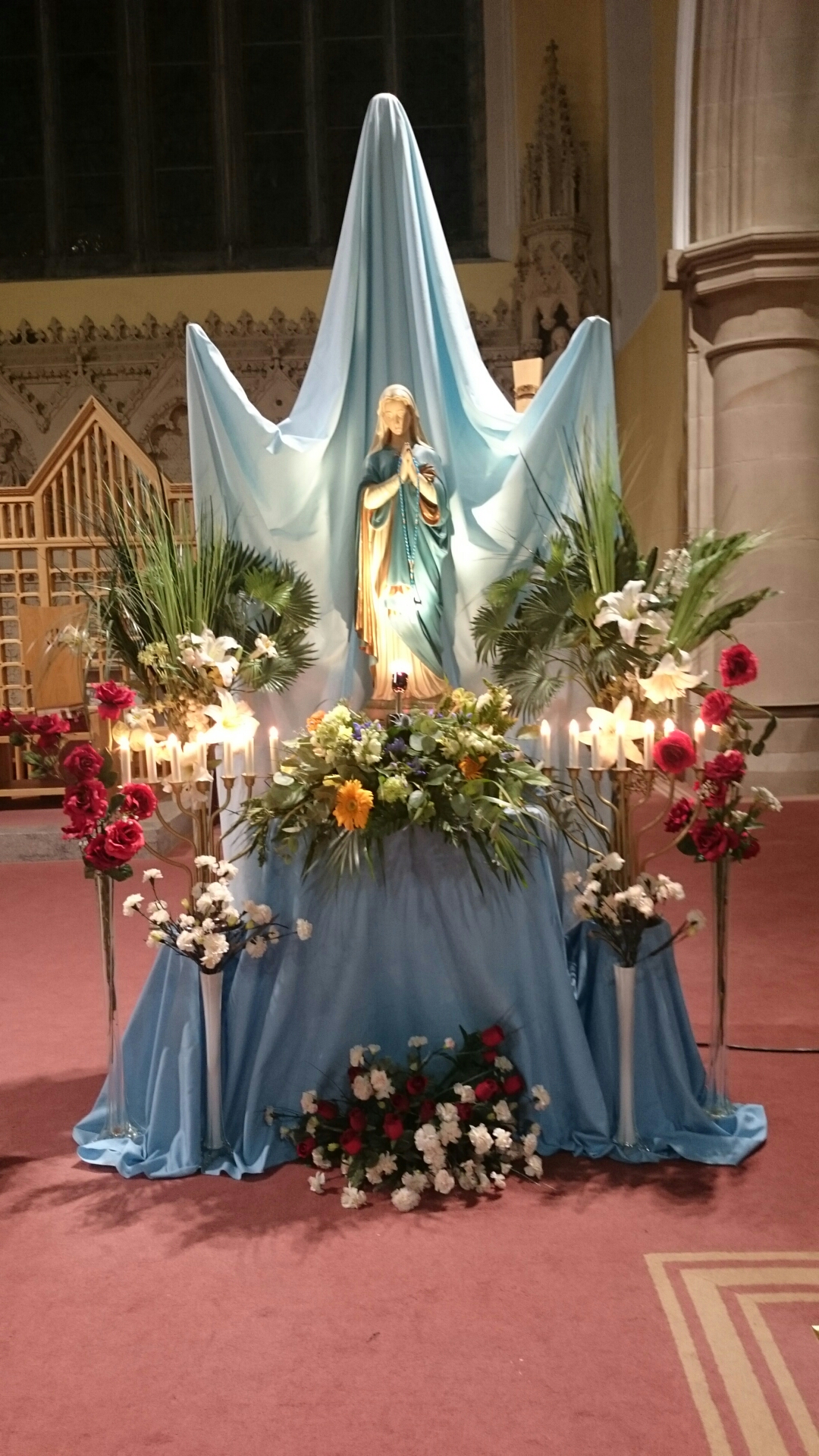
Pat Clarke from Delvin in Co. Westmeath brought his gifts of healing to Carrickmacross tonight. St Joseph’s church was packed out for a Mass of Healing celebrated by Fr Larry Duffy PP.

image

Afterwards Pat Clarke spent two hours meeting hundreds of people and praying over each individual. Some of those present ‘swooned’ or fell backwards after the faith healer had touched them and helped by Pat’s team then lay on the floor for a short time before sitting up again.

image

Pat does not advertise his ministry and has to be invited to parishes. He told me he has been carrying out this work for seventeen years. He is a carpenter by trade and is married, with four children.

image

A great atmosphere of peace and quiet devotion from before the Mass at 7:30pm until 10:30pm when Pat was seeing some latecomers. Beautiful singing by the choir and organ music as well.

image

Share this:

  • Share on Facebook (Opens in new window) Facebook
  • Share on X (Opens in new window) X
Like Loading...
MONAGHAN NEWS UNCATEGORISED CarrickmacrossFaith HealerFr Larry DuffyHealingMassPat ClarkeSt Joseph's 8 Comments

REMEMBERING SR PHIL TIERNAN RSCJ

19/07/2015 by borderroamer

First anniversary of Sister Philomene Tiernan

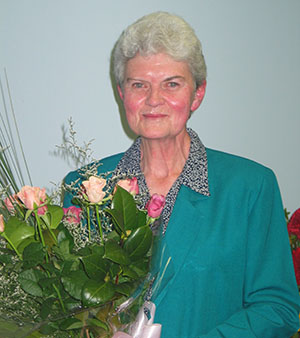
Sr Phil Tiernan  Photo: Diocese of Broken Bay, Australia

Sr Phil Tiernan Photo: Diocese of Broken Bay, Australia

A year ago a Sacred Heart nun with Irish roots, Sr Philomene Tiernan RSCJ, was among the 298 passengers and crew killed when Malaysia Airways flight MH17 was brought down over eastern Ukraine. The Border Mail, a newspaper of the Fairfax Regional Media group based at Wodonga in Victoria, has published this article about her by Paul Mc Geough from the Sydney Morning Herald on the first anniversary of her death:

If your roots are Irish Catholic, you’ll be able to decode the contours to the life of Sister Philomene Tiernan – and you might even ask if its neat bookends are a message from God.

I can say that because I’m Irish-born and was reared in an Australian Catholic home – and I can hear that “bookend” question tripping off my late mother’s tongue. “It’s the providence of God,” she’d say of the inexplicable – like the abrupt end to the life of this living saint who along with 297 others, died when Malaysia Airways flight MH17 disintegrated in the skies over Ukraine on July 17, 2014.

Beneath a gentle, sunny demeanour, Sydney-based Sister Phil, as she was known to so many, was quite a force in Catholic religious and educational politics. She had inherited what her younger sister Madeleine Wright, of Richmond, Victoria, calls her Irish publican father’s charm: “she was patient and charmingly persistent – she knew just how to get her way when she wanted the church community to agree to something.”

Sister Phil was one of the last MH17 victims to be identified and almost a year on, her remains are still in Europe. But a plan is being finalised for three members of her sprawling family to travel to The Netherlands in the coming weeks, to attend her cremation and bring the ashes back to Australia for burial.

“We all still miss her very deeply,” Wright, said in a phone interview, in which she shared tales of family members clinging to mementos of a much admired aunt – one of Wright’s sons says he’ll never launder a scarf that belonged to Sister Phil “because it has her lovely smell”; and when Wright wears a jumper that was Sister Phil’s, her five-year-old granddaughter snuggles in, telling Wright that she “smells like Aunty Phil”.

Sister Phil was the product of a seriously Irish Catholic family. The marriage of her parents Mary Josephine Carroll and James Bernard Tiernan united two 19th century Irish immigrant families in Queensland. In a eulogy delivered at the memorial mass in July last year, Wright acknowledged the presence of Bishop James Foley and Sister Joan Pender, two of a dozen or more cousins who, like Sister Phil, had become nuns or priests. As Sister Phil was before her, Sister Pender is the current head of the Society of the Sacred Heart order of nuns.

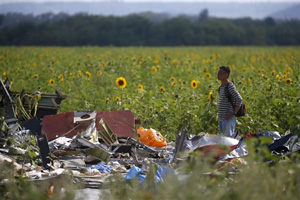
About those bookends … when MH17 crashed to earth, its debris and the remains of the passengers and crew were strewn across the gloriously ripening sunflower crops of Donetsk province, in eastern Ukraine. Recalling the memories of home that the young Sister Phil took with her in 1957, when she entered the Society of the Sacred Heart, a semi-enclosed order of nuns, Wright recalled: “We used to have sunflowers at the house in Murgon [in Queensland] – they grew under the tank-stand every year.”

The cloistered life of the nunnery, with its restrictions on contact with family and the outside world, left some in the Tiernan family feeling as though they had been robbed – “a heaviness descended on our household,” Wright said as she wrote of the family goodbyes in the austere parlour of Sydney’s Rose Bay Convent. “Dad absolutely adored Phil, and missed her happy presence.”

The MH17 crash, it seemed, had snatched Sister Phil from them for a second time, after decades in which the late Pope John XXIII’s command that the church ‘throw open the windows’ had allowed her to return to the bosom of her family, in a dual role as matriarch and counsellor to an Irish mob that, by the time of her death, numbered 63 nieces, nephews and grand-nieces and nephews – all of whose life milestones she marked and most of whom she called weekly by phone. “Phil had returned to the intimacy of family life,” Wright told me.

But perhaps the eeriest echo of family history was in how the manner of Sr Phil’s death mirrored that of her paternal uncle Pat, an RAAF airman whose plane was shot down while returning from a bombing mission over Germany in 1944 – when Sr Phil was a seven-year-old.

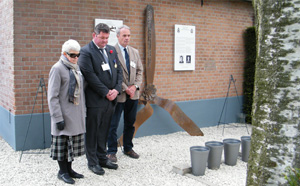
Brought down by German anti-aircraft fire, her uncle’s flight ended over The Netherlands – his plane crashed near the Dutch village of Dodewaard. Sr Phil’s fateful flight began at Amsterdam, just 100 kilometres north-west of the village where locals erected a monument to her late uncle and his crew, and it was brought down by missile fire in a separatist war being fought in Ukraine.

One of the very special appointments on Sister Phil’s 2014 European sojourn had been to attend a ceremony at Dodewaard to mark the 70th anniversary of her uncle’s death – for which she was hosted by local families.

One of the few to touch on Sister Phil’s strength as a church politician, was Hobart Archbishop Julian Porteous, who on her death, remarked that Sister Phil was “quite a woman, yet very forceful…” Writing an obituary for Fairfax Media, her nephew Dermot Tiernan noted her “steely focus that typified life in Depression-era country Australia”.

Wright dwelt on the commitment of the Society of the Sacred Heart order of nuns to turning girls into well-educated and strong-minded young women and on Sister Phil’s reading of liberation and feminist theologies. Other family members told of her personal educational philosophy, which emphasised a need for women to play strong roles at all levels in society and about her interest in “cutting-edge theology”.

She was a relentless scholar – studying academically and religiously. She was an inveterate traveller – criss-crossing the globe for work and study and sometimes managing to fit in some play, which usually revolved around catching up with family members in exotic places.

In the Irish catholic way, this was the “big life, the full life” her parents wanted their daughter Philomene to have – and of which they and her siblings were so proud.

“We’ve been so very lucky to have her in our lives,” Wright said. “She was beautiful, clever, strong, determined. She was full of love, and so often full of joy. She made people happy. She helped. She listened. She forgave, she forgot, but most of all, she loved.”

Sr Phil's RSCJ cross and rosary. recovered from the plane wreckage, were among the items stolen last month from her sister's home in Richmond, Victoria  Photo: Victoria Police

Sr Phil’s RSCJ cross and rosary. recovered from the plane wreckage, were among the items stolen last month from her sister’s home in Richmond, Victoria Photo: Victoria Police

The Catholic Archdiocese of Sydney reported that on Friday, a special prayer service was held attended by students and staff at Kincoppal-Rose Bay school to remember Sister Phil. The school observed one minute’s silence as they remembered the nun, who for more than thirty years was associated with Kincoppal-Rose Bay and the Rose Bay community. The variety of roles held by Sr Phil included that of teacher and pastoral care provider both to students inside as well as those outside the school. She was also Director of Boarding at Kincoppal-Rose Bay and from 2002 until 2012 was Director of the Kincoppal-Rose Bay School Board.

“We are all honoured to have known her,” says Hilary Johnston-Croke, Principal of Kincoppal-Rose Bay who says flags at the school will be flown at half-mast on Friday.

“Sr Phil always wanted us to fly the Aboriginal flag alongside Australia’s national flag,” she says, explaining that one of the first things the school did to honour Sr Phil and her memory was to install an additional flagpole so that both flags could be flown together.

The Sydney community of the Sisters of the Sacred Heart of Jesus also remembered Sr Phil on Friday at a Mass at Our Lady of the Sacred Heart, Randwick. The 77-year-old much-loved Queensland-born Sister was among the 298 men, women and children who lost their lives when their flight from Amsterdam to Kuala Lumpur was shot down over East Ukraine. All on board including Sr Phil and 37 other Australian citizens and residents were killed.

Sunflower seeds from the Ukraine crash site have been collected and will be planted in the school grounds in spring

In one of life’s strange coincidences, Sr Phil had been visiting the Netherlands with other members of the Tiernan family for the memorial service in the Dutch town of Dodwaard Uden for her uncle, Flight Sergeant Patrick Tiernan who was shot down and buried in the town during World War II.

After the memorial service, Sr Phil had travelled to All Hallows College, Dublin where she spent the month of May last year completing a faith and spirituality renewal course. As part of her time abroad, she visited St Francis Xavier Church in Paris where the founder of the Society of the Sacred Heart is buried and spent time in a retreat in Joigny, before returning to Amsterdam for the flight home.

While the horror, shock and loss of so many lives will remain for decades to come, for the students and staff at Kincoppal-Rose Bay, for her close and extended family and for the Community of the Sacred Heart, Sr Phil is remembered not because of the terrible circumstances under which she died, but for her joy, her love, her faith and compassion, and as an ongoing role model and inspiration for students at Kincoppal-Rose Bay.

“We have tried our best to normalise her memory. With each other and with our students, we talk about her in the most natural way, saying Sr Phil would enjoy this, or Sr Phil would have said that,” Ms Johnston-Croke says. “At graduation last year I also spoke of Sr Phil’s wisdom, compassion and joy and how she was a Sacred Heart Woman we aspired to be.”

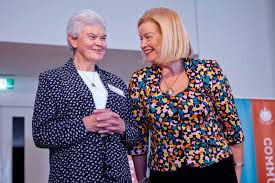
Sister Philomene Tiernan and Principal of Kincoppal-Rose Bay Hilary Johnston-Croke

For the Principal of Kincoppal-Rose Bay, Sr Phil was both a mentor and close personal friend. “She raised me to help me become the Sacred Heart educator that I am today. She was a great role model – as a Sacred Heart woman, educator of great faith and intellect with a strong commitment to social justice and to personal growth. She has left a wonderful legacy for us all to treasure for the rest of our lives,” she says.

While Sr Phil has been remembered on the first anniversary of the downing of Malaysian Flight MH17 by the school and students she loved, and to whom she dedicated so much of her life, a celebration of her remarkable life will take place twelve days later (July 29th) when Kincoppal-Rose Bay’s officially opens a new Learning Centre and a Boarding Bursary program, both of which will bear her name.

The Sister Philomene Tiernan RSCJ Learning Centre will be formally opened by Sr Phil’s first cousin, close friend and fellow religious, Sr Rita Carroll RSCJ and will be blessed by Monsignor Tony Doherty, Parish Priest of St Mary Magdalene, Rose Bay. Invitations to the launch and blessing feature one of Sr Phil’s much-loved sayings: “Darling, you are doing so well!”

Together with Sr Rita, who is also Deputy Chair of the Kincoppal-Rose Bay School Board, the ceremony will be attended by the Provincial of the ANZ (Australia and New Zealand) Sisters of the Sacred Heart of Jesus, Sister Joan Pender and members of the Sydney Sacred Heart community.

The new learning centre named after Sr Phil will provide Kincoppal-Rose Bay with state-of-the-art collaborative learning spaces along with the latest in audio visuals for collaborative teaching and learning.

“The Centre is very much about how Kincoppal-Rose Bay is creating spaces for students so they can develop the skills needed for the future and a 21st Century world,” Ms Johnston-Croke says. Not only would Sr Phil approve of such a Centre being established but she would be equally delighted with the Boarding Bursary, particularly in light of her long and close engagement with boarders, particularly during her time as Director of Boarding at Kincoppal-Rose Bay.

The Sr Philomene Tiernan RSCJ Boarding Busary will means-test applicants and provide the financial support to families on lower incomes to enable their son or daughter attend and board at one of Australia’s oldest private Catholic schools.

Within less than 12 months of the MH17 tragedy efforts by members of the Kincoppal-Rose Bay community and those who knew and loved Sr Phil have not only managed to raise enough money to operate the Boarding Bursary over the next few years, but enough money to operate the Bursary in perpetuity.

“This is not just a tribute to the hard work many people put in to raise these funds but a tribute to Sr Phil, and how much she was loved and the esteem in which she was held,” says Ms Johnston-Croke.

Sr Philomene RSCJ (left) visited the grave of her uncle Patrick Tiernan who died when his plane was shot down over Holland during World War II

Later in spring there will be another ceremony dedicated to Sr Phil when sunflower seeds collected from the field in which the doomed MH17 flight came down in East Ukraine will be planted in the school grounds in her memory. Award-winning Australian journalist Paul McGeogh and photographer Kate Geraghty were among the foreign journalists reporting from East Ukraine after the Malaysian flight was shot down, and who on impulse collected sunflower seeds from the killing fields to give to grieving families to plant as a special keepsake and potent reminder of those they had lost.

“Our seeds are among the second batch to be sent to Australia,” says Ms Johnston-Croke who believes that the garden of sunflowers along with the Boarding Bursary and Learning Centre created in Sr Phil’s name will ensure her legacy is not only meaningful but continues to resonate with students and staff for many years to come.

Sr Phil was among the last of the 298 passengers and crew on the ill-fated Malaysian Airlines’ flight to be identified, and it is understood that members of Sr Phil’s large extended family are currently in the process of organising dates and finalising plans to travel to the Netherlands to attend her cremation and bring the ashes back home to Australia for burial.

Eulogy for Sr Phil Tiernan RSCJ 2014

A Mass of Thanksgiving for the Life of Sr Phil Tiernan RSCJ was held at Our Lady of the Sacred Heart in Randwick on 25th July 2104.  This is the eulogy that Sr Mary Shanahan RSCJ gave for Phil.  The eulogy given by Phil’s sister, Madeleine Wright and her daughter Josephine, can be read here.

Sr Mary Philomene Tiernan, known to us as Sister Phil or simply Phil, entered the Society of the Sacred Heart in 1957.  Apart from her family, the Society became Phil’s life.  In 2004 in a letter to the Society on the feast of the Sacred Heart, the Mother General wrote “As Religious of the Sacred Heart whose mission is to discover and reveal the love of His heart, love has fashioned our identity; it is our desire and our delight.”

Phil’s identity was definitely fashioned by that love which she shared so fully and faithfully with others.

One of her former students when she was Boarder Mistress at Rose Bay in the 70’s wrote on twitter that Phil had ‘sculpted’ her.  It reminded me of the story of the boy who saw a sculptor chipping away at a piece of marble.  Much later as he passed by again he saw, instead of the block, a lion and he asked the sculptor, “how did you know there was a lion in the marble?”  Phil’s work of education was to believe that there was a lion, so to speak, in each one and to help each one to chip away to discover the beauty that is within. It was the same with her religious sisters.  One wrote that she was a very friendly, affectionate and encouraging person who had the ability to let everyone she was with feel worthwhile.  She had a great sensitivity which drew her to those in need.  Another younger RSCJ recalls that when Phil was Provincial she knocked on the door of her room and said, ”I want you to know I’m always available to you. So I’m going to come and see you often so that we get to really know and trust each other.”  “ Phil made a difference to my life,” the religious said, “ and to my commitment as an RSCJ.  Whether knowingly or unknowingly she made me believe I was a beautiful person at the precise time when I was questioning my vocation.  I never wavered again.”

This gracious sensitivity was with Phil all through her life.  One of our English sisters who met Phil when she was last in London wrote of the wonderful impression she made, staying with the elderly sisters before attending the Janet Stuart Conference.  In her words Phil was not only kind and courteous but outstandingly considerate and sensitive.  She gave of herself in her quiet and dignified way to each of us.  “I was”, she said, “especially struck that she took the time and trouble to greet each one in Duchesne House personally.”

Innumerable tributes have been paid to this religious whose identity has been fashioned by love and they all stress this same gift of herself, someone who always knew how to light us all up even when we were at our worst.

Phil loved the Society of the Sacred Heart and her desire and delight was to serve it in every way she could.  She had a number of leadership positions in the Province after she made her final profession in Rome in 1965.    She was named Mistress of Novices in 1984; became a member of the Provincial Council and then Provincial of the Australian-New Zealand Province in 1993. As Provincial, Phil encouraged two of the sisters in Braybrook in Melbourne’s west to open part of the community to care for Vietnamese mothers and children.  And when a call came from the Bishop of Rockhampton for sisters to go to Blackall in Queensland to be a presence there, two of our sisters responded to Phil’s call.  She went with them to ensure they were settled and had what they needed.   Then in 2004, after working in another position, she became the Director of the ANZ Network of Schools, a position that brought her into close contact with the Principals of our four schools.

Though not exactly a leadership position she was a convener of the Madeleine Sophie Programme for six years and gained the love and respect of the many women who participated in that programme.  One who was a participant and then worked with Phil as a convener felt that she walked taller and stronger for having known her. Being recognised in these different roles meant a lot to her and affirmed her in the way she needed.  Another role which gave her an opportunity to carry out her gift as a sculptor was as Boarder Mistress at Rose Bay.  Her experience in boarding enabled her to offer a much appreciated  contribution to the life of boarders at Kincoppal-Rose Bay when she returned a few years ago to be a staff member at KRB.

But Phil used her gifts in a much wider field than the school, dear as that was to her heart.  She was for a time a member of a committee of the Archdiocese of Sydney where the now Archbishop of Hobart found how determined she could be. And Cardinal Pell in sending a message of sympathy through Bishop Comensoli had this to say, ”Sr. Phil will be remembered as a bright spirit and great inspiration to many not only in her school community but also throughout the Sydney Archdiocese. She will be greatly missed.”

After completing her six years as Provincial, which was followed by a sabbatical, she became Chancellor of the Broken Bay Diocese in 2000. She appreciated the opportunity this role gave her to work in a more specialised way for the church. The Bishop relied on her and even when she retired from the position of Chancellor he entrusted to her the guidance of the Ecclesial Women he had established in the diocese and named her Vicar.  She continued in this role along with her other ministries.

She was involved in the spirituality programme at Kerever Park and was a retreat director and spiritual director there.  She continued this work of retreats and spiritual direction.  She reached out to people in her sensitive and compassionate way which drew people to her especially when they needed her guiding hand. Her loving heart drew her to those who did not come to her.  On Thursday evening she went to Cana to cook a meal for the inhabitants there.  Her community would have known though not too many of us knew of this outreach of hers. Phil did indeed have a life which she lived to the full though it was not free of suffering.

Phil was a woman of the heart and for such women suffering comes through the heart.  As one of her religious friends noted she suffered intensely with her loss of work, her family sorrows and any injustice she witnessed.  She suffered, too, because she felt that her gifts were not always acknowledged and used.  She gave richly to others but others also gave to her by affirming her in a way that helped to raise her spirits and enabled her to give of her best.

Phil was well prepared for her different ministries.  She completed her Bachelor of Education at Macquarie University in 1976 and followed this when she was in Melbourne by doing a CPE at Mercy Hospital.  In 1981 and 1982 she was a student at Loyola University, Chicago and completer a Masters in Pastoral Studies.  She spent six months of her last year in the States in the noviceship in Boston and doing a course in spirituality at Boston College.  She was well prepared to be Mistress of Novices when she was appointed to that position in 1984.  She was Vice-Principal of Duchesne College in Queensland University in 1991 but returned to Melbourne to continue her work in the noviceship until she became Provincial in 1993.  Phil continued to do short courses to upgrade her skills.

She gave the same attention to planning her sabbatical in the second term of this year.  She went first to All Hallows College in Dublin to follow a course of some weeks in spirituality/ theology.  She really enjoyed the Celtic spirituality that was part of it.  She knew how to benefit from opportunities offered and her time in London at the celebrations in honour of the centenary of the death of Janet Erskine Stuart opened her not only to studies of Janet’s spirituality and educational philosophy but also to time spent with RSCJ from different parts of the world.  Phil lived through relationships and gave of herself to these.  Everyone who knew her during these days said how happy she was.  It was all a great preparation for her retreat in Joigny, the birth place of Madeleine Sophie Barat and now a centre of spirituality for the Society.  Apart from the retreat there was a four-day workshop on the Constitutions, all part of Phil’s planning.  Her retreat was directed by an Irish RSCJ whom Phil had met in Rome in 1993.  During the retreat the Director suggested to Phil to think about her death and gave her a poem, “So What Will Matter.’  Excerpts of it read:

“Ready or not, some day it will all come to an end.  There will be no more sunrises, no minutes, hours or day.  What will matter is not your memories, but the memories that live in those that loved you. What will matter is how long you will be remembered by whom and for what.”

Phil did pray over that poem and found it wonderful and looked forward to sharing it with friends in Australia.

She left Joigny to go to Paris to catch the train to Amsterdam.  But first in Paris she wanted to visit the church where St Madeleine Sophie rests.  There she arranged to meet a friend at the church and to have lunch with her afterwards Her friend  recounted for us Phil’s adventures in getting to the church – on time!  The taxi took her to the wrong place but happily she met a young tourist, Juliette, whom she called her second angel; the first helped her onto the train with her heavy cases.  Juliette walked with her to the church where she met her friend and her third angel. After praying for some time at the shrine of Madeleine Sophie she talked to an alumna from our school in Tokyo, Rose Bay and 91st Street, New York, a small world but one that touched the internationality of the Society.  Phil lit a candle to Sophie and they left for the train that would take her to Amsterdam.  She began her journey there with a ceremony in honour of her uncle who was shot down during the Second World War and was buried in Holland.  This family connection was very important to Phil as were all her family.  Her love for each one was evident.

The memories of those that loved Phil will be of a woman who loved.  She spent the two months before her tragic death preparing for it in an unintentional way.  An alumna of Stuartholme, where Phil went to school, had married and had lived and worked in England for many years.  A group of Stuartholme alumnae were attending the events honouring Janet Stuart and included a Visit to Joigny.  She joined them and met with Phil in Joigny.  Wanting to find out what Phil was doing and living she asked her, “Where are You?”  “In heaven”, replied Phil.  It seemed that the God to whom Phil had given her love and life wanted to ensure that she was at her best to enter her new life. Phil, the sculptor, had been chipping away at her own piece of marble and the retreat and the experiences of her sabbatical brought to beauty the lion that was within her.

For us the words of Janet Stuart may help us to accept her sudden and tragic leaving us.

I must learn to live by faith.

Like the weaver,

Never seeing the plan of my life,

But trusting to God for it and working on the wrong side as it seems,

But working for a reality.

Not for my reason or the imagination of my own fancies,

But one of which God has not only designed the whole,

But has counted every stitch

And tied every change of thread

From the beginning to the end.

Mary Shanahan RSCJ, 25th July 2014

Like Loading...
NEWS UNCATEGORISED AustraliaMH17RSCJSacred Heart NunSr Philomene TiernanUkraine Leave a comment

BELFAST ROSES IN BLOOM

18/07/2015 by borderroamer
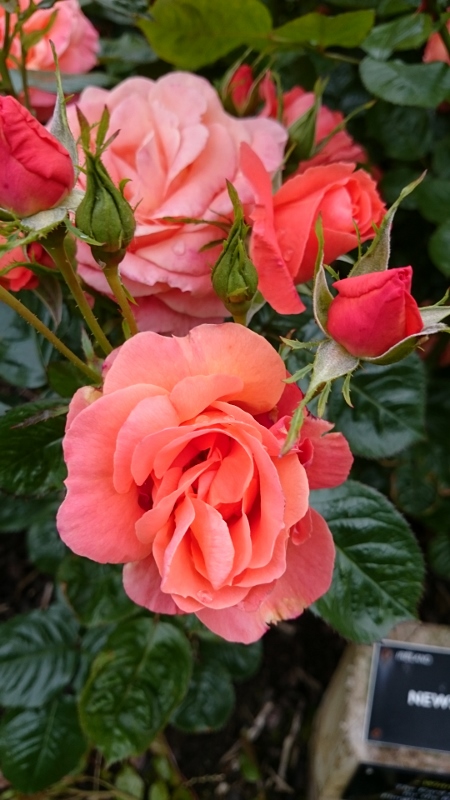
Sexy Rexy Rose   Photo:  © Michael Fisher

Sexy Rexy Rose Photo: © Michael Fisher

Schedule of Perpetual Trophies

These are the awards up for grabs during Rose Week at Sir Thomas and Lady Dixon Park, Upper Malone Road, in South Belfast:

News Flash rose   Photo:  © Michael Fisher

News Flash rose Photo: © Michael Fisher

The Rose Society of Northern Ireland Championship – The Craig Wallace (The Founder’s) Trophy, presented by President of the Rose Society, Craig Wallace, and awarded annually to the exhibitor accumulating most points in the Open classes at the Society’s Summer and Autumn Shows provided that person has gained at least six first prizes in the process and exhibited at both shows.
The Craig Wallace Salver. Miniature Rose Championship, awarded annually to exhibitor accumulating most points in the miniature rose classes in the society’s summer and autumn shows, providing that the person has gained at least four first prizes in the process and exhibited at both shows.
The Plaque. Presented by Samuel McGredy and Son Ltd. Best Large Flowered Bloom in the Show.
The President’s Cup. Presented by Molly Frizzelle. Best exhibit in Class 1.
The Perpetual Challenge Cup. Presented by Alex Dickson and Sons Ltd. Best exhibit in Classes 1 – 34.
The Friendship Plate. Presented by Mr. A. H. Pearson. Exhibitor gaining most points in Classes 1 – 34.
The Rotomar Trophy. Best exhibit in Class 16.
The John Creighton Trophy. Exhibitor gaining most points in
Classes 17 – 21.
The James H. Jess Memorial Trophy. Best exhibit in Classes 17 – 21.
The Abraham Rose Bowl. Presented by Miss E. K. Abraham. Exhibitor gaining most points in Classes 22 – 30.
The Lady O’Neill Cup. Best exhibit in Classes 31 – 34.
The RSNI Miniature Cup. Exhibitor gaining most points in
Classes 35 – 40.
The Australian Prize. Best exhibit in Classes 41 – 46.
The Alison Henry Cup, presented by the Cregagh and District Gardening Society. Best exhibit in Classes 47 – 52.
The Aubrey and Doreen Kincaid Cup. Best exhibit in Classes 53 – 61.
The Cregagh Cup. Best exhibit in Classes 62 – 70.
The Bromage Silver Rose Bowl. Best Bonsai exhibit in Classes 71 – 78.
The Jubilee Cup. Best exhibit in Classes 79 – 86.

Belfast Rose Week  Photo:  © Michael Fisher

Belfast Rose Week Photo: © Michael Fisher

Schedule of Classes
Large Flowered Roses (H.T.)
Class 1
The President’s Cup.
One Box. Six specimen blooms. One variety or mixed.
Class 2
One Vase. Five blooms. One variety or mixed.
Class 3
One Vase. Three blooms. One variety.
Class 4
One Vase. Three blooms. Three varieties.
Class 5
One Vase. Two Blooms. One variety. To be judged as a matching pair.
Class 6
One Vase. One bloom. Main colour Red/Pink.
Class 7
One Vase. One bloom. Main colour Yellow/White.
Class 8
One Vase. One bloom. Any other colour.
Class 9
One Vase. Three blooms. One variety. To show the various stages of development – one opening bud, one specimen bloom and one in the blown stage.
Class 10
Bowl up to 9 in. (229 mm) containing six or more large flowered (H.T.) stems. To be displayed for effect and interest. Bowl to be supplied by the exhibitor.

Molly McGredy rose  Photo:  © Michael Fisher

Molly McGredy rose Photo: © Michael Fisher

Class 11
One Vase. One fragrant bloom. Half marks will be given for quality and half for fragrance.
Class 12
One Vase. Three blown blooms. One variety or mixed. Stamens should be showing.
Class 13
One stem inflorescence bearing a number of blooms.
Class 14
Three stems inflorescence each stem bearing a number of blooms. One variety or mixed.
Class 15
Bowl (supplied by exhibitor). Large flowered (H.T.). One bloom (up to and including blown stage) floating in water.
Large Flowered (H.T.) and Cluster Flowered (Floribunda) Roses
Class 16
Rotomar Trophy.
One Vase. Three Large Flowered (H.T.) specimen blooms.
One Vase. Three stems Cluster Flowered (Floribunda).
Cluster Flowered (Floribunda) Roses
Class 17
One Vase. Five stems. One variety or mixed.
Class 18
One Vase. Three stems. Three varieties.
Class 19
One Vase. Three stems. One variety.
Class 20
One Vase. One stem.
Class 21
One Vase. One fragrant stem. The stem should be typical of the variety. Judged as class 11.

Pride of Scotland rose   Photo:  © Michael Fisher

Pride of Scotland rose Photo: © Michael Fisher

Miniature Roses
(Exhibitors may supply own containers in Classes 22-28)
Class 22
One Box. Six miniature roses. One variety.
Class 23
One Box. Six miniature roses. Mixed.
Class 24
One Vase. Three stems. One variety.
Class 25
One Vase. Three stems. Mixed.
Class 26
One Vase. One stem.
Class 27
Six stems arranged in a bowl not exceeding four inches in diameter (102 mm). One variety or mixed.
Class 28
One small container. Three blooms. One variety. To show the various stages of development — one opening bud, one perfect flower and one in the blown stage.
Class 29
Bowl (small, supplied by exhibitor) one miniature bloom (up to and including blown stage) floating in water.
Class 30
Artist’s palette. Seven blooms in seven distinct colours. (Palette supplied).
Shrubs and Climbing Roses
Class 31
One Vase. Three stems. Old Garden Roses. One variety or mixed.
Class 32
One Vase. Three stems. Modern Shrub Roses. One variety or mixed.
Class 33
One Vase. Three stems. Climber or Rambler Roses. One variety or mixed.
Class 34
One Bowl 9 in. (229 mm) containing four or more stems. Old Garden and/or Modern Shrub Roses. One variety or mixed. (Can be staged irrespective of Rules for Exhibition).
Novice Classes
Confined to less experienced exhibitors and beginners, who have never won a prize in the open rose classes. Following winning three first prizes in the Novice Classes, such exhibitors shall only be permitted to exhibit in the Open Classes.
Class 35
One Vase. One stem. Cluster Flowered (Floribunda).
Class 36
One Vase. Three stems. Cluster Flowered (Floribunda). One variety or mixed.
Class 37
One Vase. One stem. Large Flowered (H.T.)
Class 38
One Vase. Three stems. Large Flowered (H.T.). One variety or mixed.
Class 39
One Vase. One stem. Miniature.

Belfast Rose Week  Photo:  © Michael Fisher

Belfast Rose Week Photo: © Michael Fisher

Class 40
One Vase. Three stems. Miniature. One variety or mixed.
General Flowers
Class 41
Carnations or Pinks. One Vase. Three stems.
Class 42
Annuals and/or Biennials (Sweet Pea excluded). One Vase. One variety or mixed.
Class 43
Shrubs. One Vase. One Kind (roses excluded). Displayed for effect and interest.
Class 44
Shrubs. One Vase. Mixed. (roses excluded). Displayed for effect and interest.
Class 45
Herbaceous Perennials. One Vase. One Kind.
Class 46
Herbaceous Perennials. One Vase. Mixed.
Sweet Pea
Class 47
Sweet Pea. One Vase. Nine stems. Pink/Red shades.
Class 48
Sweet Pea. One Vase. Nine stems. Blue/Mauve shades.
Class 49
Sweet Pea. One Vase. Nine stems. Any other colour.
Class 50
Sweet Pea. One Vase. Twelve stems. Mixed.
Class 51
Bowl of Sweet Pea. Twenty stems. Mixed. Own foliage.
Class 52
Basket of Sweet Pea. Any number of stems and any foliage allowed (exhibitors must provide own basket).
N.B. Sweet Pea used in Classes 51 and 52 only are not required to have been grown by the exhibitor.
Pot Plants
Class 53
Flowering Plant. (Pelargoniums excluded). Up to and including 6 in. pot. (152 mm).
Class 54
Flowering Plant. (Pelargoniums excluded). Over 6 in. pot (152 mm).
Class 55
Foliage Plant. Up to and including 6 in. pot (152 mm).
Class 56
Foliage Plant. Over 6 in. pot (152 mm).
Class 57
Fern. Pot size unrestricted.
Class 58
Collection of three different house plants. Up to and including 6 in. pots (152 mm). (The plants must be suitable for all-year round growing in a house room).

Bright n' Breezy rose by Dickson (NI) from trials 2013/14  Photo:  © Michael Fisher

Bright n’ Breezy rose by Dickson (NI) from trials 2013/14 Photo: © Michael Fisher

Class 59
Orchid. Pot size unrestricted.
Class 60
One box Begonias. Three blooms.
Class 61
One box Begonia. One bloom.
Class 62
Basic Regal Pelargonium. Up to and including 6 in. (152 mm) pot.
Class 63
Basic Zonal Pelargonium single flowered. Up to and including 6 in. (152 mm) pot.
Class 64
Basic Zonal Pelargonium. Double or semi double flowered. (excluding scented leaf). Up to and including 6 in. (152 mm) pot.
Class 65
Fancy Leaf Pelargonium. Up to and including 6.5 in. (165 mm) pot.
Class 66
Species and species Hybrid Pelargonium including scented leaf. Up to and including 6 in. (152mm) pot.
Class 67
Angel including miniature regal. Up to and including 6 in. (152 mm) pot.
Class 68
Stellar Pelargonium. Up to and including 6 in. (152 mm) pot.
Class 69
Dwarf Pelargonium. Up to and including 4.5 in.
(114 mm) pot.
Class 70
Miniature Pelargonium. Up to and including 3.5 in. (89 mm) pot.
Bonsai
A tree which won a First Prize in any class last year may not be exhibited for competition this year but will be eligible for re-entry next year.
Class 71 Bonsai. Evergreen.
Class 72 Bonsai. Deciduous.
Class 73 Bonsai. Forest plantings and landscapes.
Class 74 Bonsai. Mame up to 6 in. (152 mm). Any variety.
Class 75 Bonsai. Coniferous.
Class 76 Bonsai. Indoor.
Class 77 Bonsai. Fruiting, Flowering, Berried.
Class 78 Bonsai. Novice.
Cacti and Succulents
Class 79
Mammillaria. One Plant. Pot size up to and including 6 in. (152 mm).
Class 80
Three Cacti. Pot size up to and including 7 in.
(178 mm).
Class 81
One Cactus. Pot size up to and including 5 in.
(127 mm).
Class 82
One Cactus. Pot size unrestricted
Class 83
Stemless Mesembryanthemaceae. One Plant. Pot size up to and including 4 in. (102 mm).
Class 84
One succulent (Cactus excluded). Pot size up to and including 3.5 in. (89 mm)
Class 85
One Succulent (Cactus excluded). Pot size up to and including 5 in. (127 mm).
Class 86
One Succulent (Cactus excluded). Pot size unrestricted.

Athlone rose   Photo:  © Michael Fisher

Athlone rose Photo: © Michael Fisher

Like Loading...
NEWS TRAVEL UNCATEGORISED Belfast Rose WeekLady Dixon ParkRoses Leave a comment

BELFAST ROSE WEEK

17/07/2015 by borderroamer
City of Belfast Rose in Lady Dixon Park  Photo:  © Michael Fisher

City of Belfast Rose in Lady Dixon Park Photo: © Michael Fisher

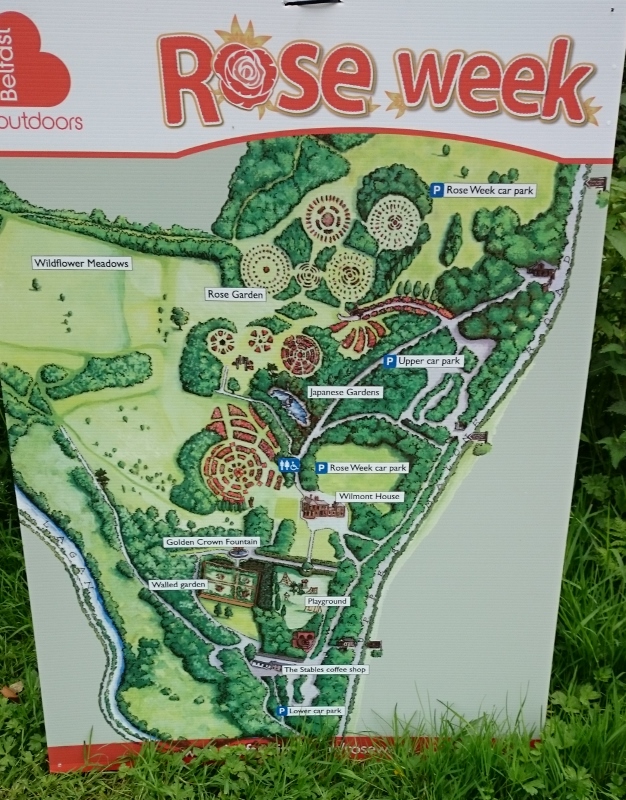
The international rose garden at Sir Thomas and Lady Dixon Park in South Belfast is one of the world’s leading rose gardens, attracting thousands of visitors each year. Rose Week, with its full programme of activities, is a celebration of this spectacular rose garden and is now one of Belfast’s most popular annual events.

Brilliant Korsar rose by Kordes from Germany: Historical section, trials 2011-13  Photo:  © Michael Fisher

Brilliant Korsar rose by Kordes from Germany: Historical section, trials 2011-13 Photo: © Michael Fisher

There were not many visitors this afternoon (Friday), possibly because of the very unsummerlike weather. Maybe there will be more on Saturday and Sunday. But the extensive collection of various types of roses was very colourful, although some of the historical varieties seem to be past their best as their petals have been blown away by the wind.

Rose of Tralee  Photo:  © Michael Fisher

Rose of Tralee Photo: © Michael Fisher

The event promises a week of family fun including:

  • live music and entertainment
  • floral art demonstrations
  • summer rose and flower show exhibitions.

    Dawn Chorus  Photo:  © Michael Fisher

    Dawn Chorus Photo: © Michael Fisher

Getting to Rose Week: Free shuttle bus

During Rose Week a free shuttle bus service direct to Sir Thomas and Lady Dixon Park operates daily at 20 minute intervals from the grounds of Belfast City Hall, Donegall Square East. The service commences at 12 noon and the last bus leaves City Hall at 5pm. The drop-off and collection point at Sir Thomas and Lady Dixon Park is in the upper car park. The return journey from the park begins at 12.20pm and operates every 20 minutes with the last bus leaving the park at 5.20pm.

Benita rose  Photo:  © Michael Fisher

Benita rose Photo: © Michael Fisher

Free park and ride from Drumbo Park

During Rose Week a free park and ride service operates daily between Drumbo Park, Ballyskeagh Road and Sir Thomas and Lady Dixon Park. The service starts at 12noon and the last bus leaves Sir Thomas and Lady Dixon Park at 5.20pm.

La Sevillana climber rose, France   Photo:  © Michael Fisher

La Sevillana climber rose, France Photo: © Michael Fisher

Car parking

Car parking is available in the main car parks and Rose Week car parks at Sir Thomas and Lady Dixon Park. Where possible, cars will be permitted access close to Wilmont House for the purpose of leaving off elderly or disabled visitors. Cars must then be parked in one of the main car parks.

Arthur Bell rose  Photo:  © Michael Fisher

Arthur Bell rose Photo: © Michael Fisher

City of Belfast international rose trials

Yesterday (Thursday) a panel of international judges completed the final judging of the City of Belfast international rose trials. The awards for the winning rose breeders are sponsored by Belfast City Council, the Department of Agriculture and Rural Development, Tourism NI, Clive Richardson Ltd and Eventsec.

Wild Rover rose  Photo:  © Michael Fisher

Wild Rover rose Photo: © Michael Fisher

Daily events

  • Harp music in the rose garden, 2pm – 5pm
  • Belfast Parks photographic exhibition in the marquee, Saturday 11am – 5.30pm and Sunday 1.30pm – 5.30pm
  • Bouncy castle near Wilmont House, Thursday to Sunday
  • Face painting, balloon modelling and children’s tattooing in the playground area, times vary each afternoon
  • Punch and Judy in the playground area, Friday to Sunday at 2.30pm
  • Competitions in the rose garden – competition forms available from the information marquee, adjacent to Wilmont House, Saturday from 11am – 5.30pm and Sunday from 1.30pm – 5.30pm.

    A classic rose:  Romance  Photo:  © Michael Fisher

    A classic rose: Romance Photo: © Michael Fisher

Saturday 18th July

  • Recycling workshop, 1pm – 5pm
  • Bouncy castle, 1pm – 5pm
  • Kiddies safari train, 1pm – 5pm
  • Rodeo bull, 1pm – 5pm
  • Swing chair ride, 1pm – 5pm
  • Magic show for children, 3.45pm
  • Summer stalls, 11am – 5.30pm
  • Summer rose and flower show, 2pm – 5.30pm
  • Ulster-Scots Agency Juvenile Pipe Band, 12noon – 1pm
  • Templemore Silver Band, 1.30pm – 2.30pm
  • Peach Pop, 3pm – 5pm
  • Streetwise Stiltwalker, 1pm – 5pm
  • Babcock and Bobbins, 1pm – 5pm
  • Hugo Cogsmith, 1pm – 5pm

    Bright n' Breezy rose by Dickson (NI) from trials 2013/14  Photo:  © Michael Fisher

    Bright n’ Breezy rose by Dickson (NI) from trials 2013/14 Photo: © Michael Fisher

Sunday 19th July

  • Recycling workshop, 1pm – 5pm
  • Bouncy castle, 1pm – 5pm
  • Kiddies safari train, 1pm – 5pm
  • Rodeo bull, 1pm – 5pm
  • Swing chair ride, 1pm – 5pm
  • Magic show for children, 3.45pm
  • Summer stalls, 1.30pm – 5.30pm
  • Summer rose and flower show, 2pm – 5.30pm
  • Drumlough Pipe Band, 12noon – 1pm
  • 3rd Carrickfergus Silver Band, 1.30pm – 2.30pm
  • Acoustocratz, 3pm – 5pm
  • Streetwise Stiltwalker, 1pm – 5pm
  • Babcock and Bobbins, 1pm – 5pm
  • Captain Morgan, 1pm – 5pm

    Belfast Rose Week in Lady Dixon Park Photo:  © Michael Fisher

    Belfast Rose Week in Lady Dixon Park Photo: © Michael Fisher

Like Loading...
NEWS TRAVEL UNCATEGORISED Belfast Rose WeekLady Dixon ParkRoses Leave a comment

MEMORIAL TO DR PADDY MAC CARVILL

16/07/2015 by borderroamer
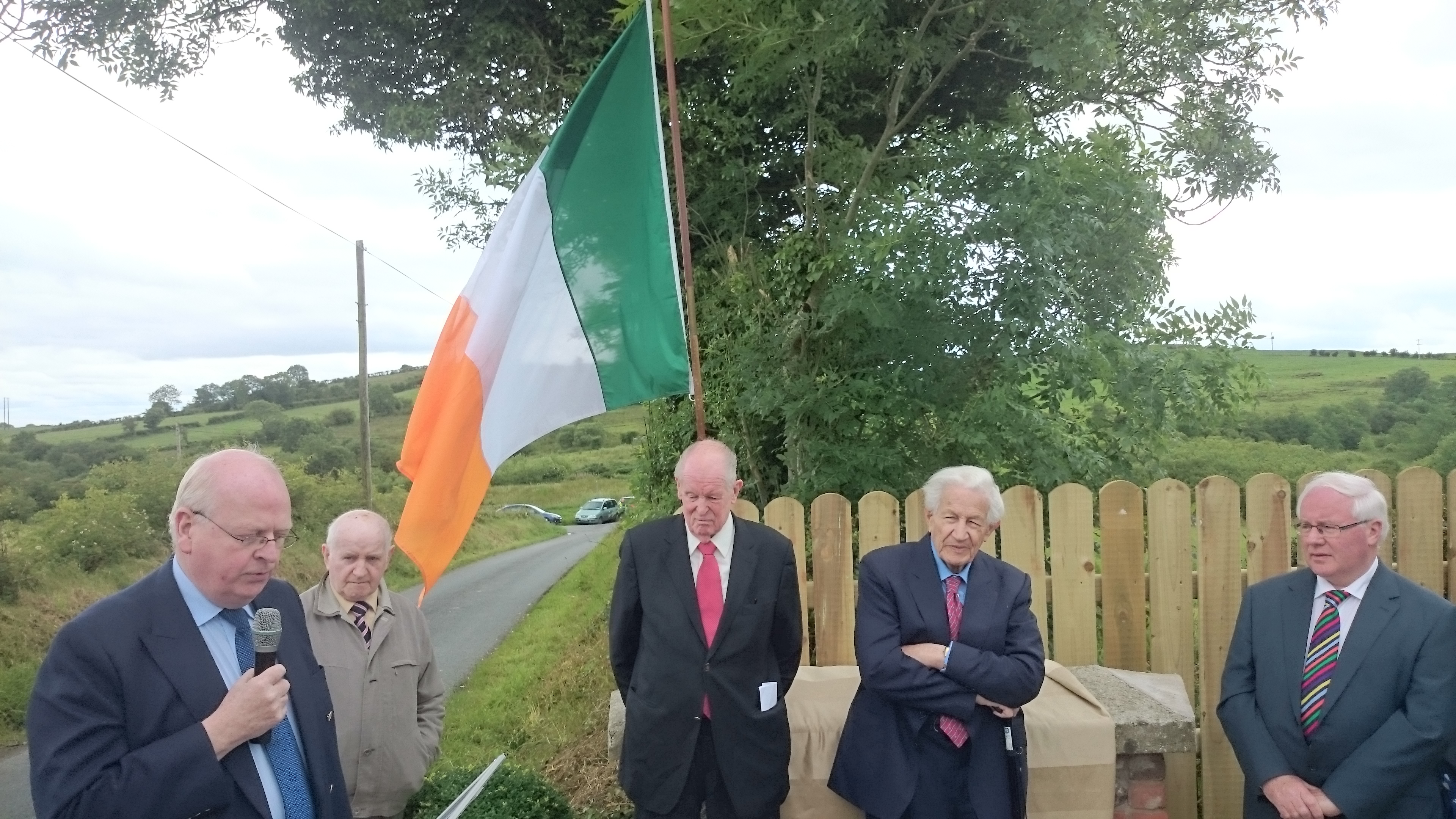
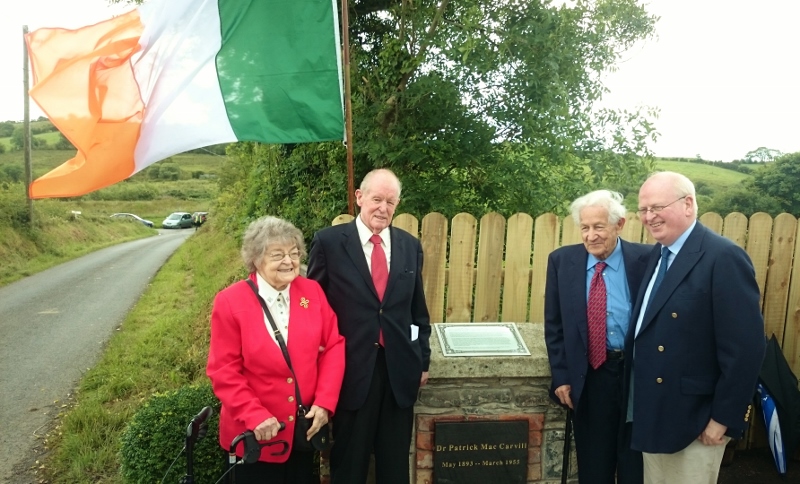
Guest speaker Michael McDowell SC with Eamonn Mulligan, Niall Mac Carvill (Pady's son), his cousin Mackie Moyna and Brendan Smith T.D. Photo:  © Michael Fisher

Guest speaker Michael McDowell SC with Eamonn Mulligan, Niall Mac Carvill (Pady’s son), his cousin Mackie Moyna and Brendan Smith T.D. Photo: © Michael Fisher

MEMORIAL UNVEILED TO FORMER MONAGHAN T.D. DR PADDY MAC CARVILL

Michael Fisher   Northern Standard   Thursday  16th July

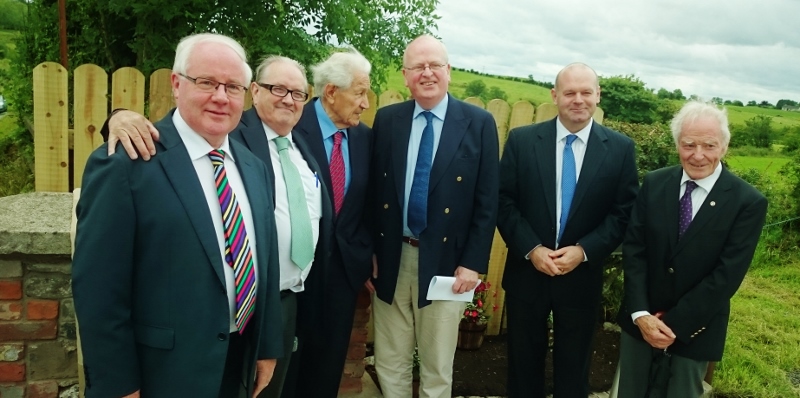
Brendan Smith T.D. with Mackie Moyna Jnr., Mackie Moyna, guest speaker Michael McDowell S.C., Senator Diarmuid Wilson and Dr Rory O'Hanlon, former Ceann Comhairle  Photo:  © Michael Fisher

Brendan Smith T.D. with Mackie Moyna Jnr., Mackie Moyna, guest speaker Michael McDowell S.C., Senator Diarmuid Wilson and Dr Rory O’Hanlon, former Ceann Comhairle Photo: © Michael Fisher

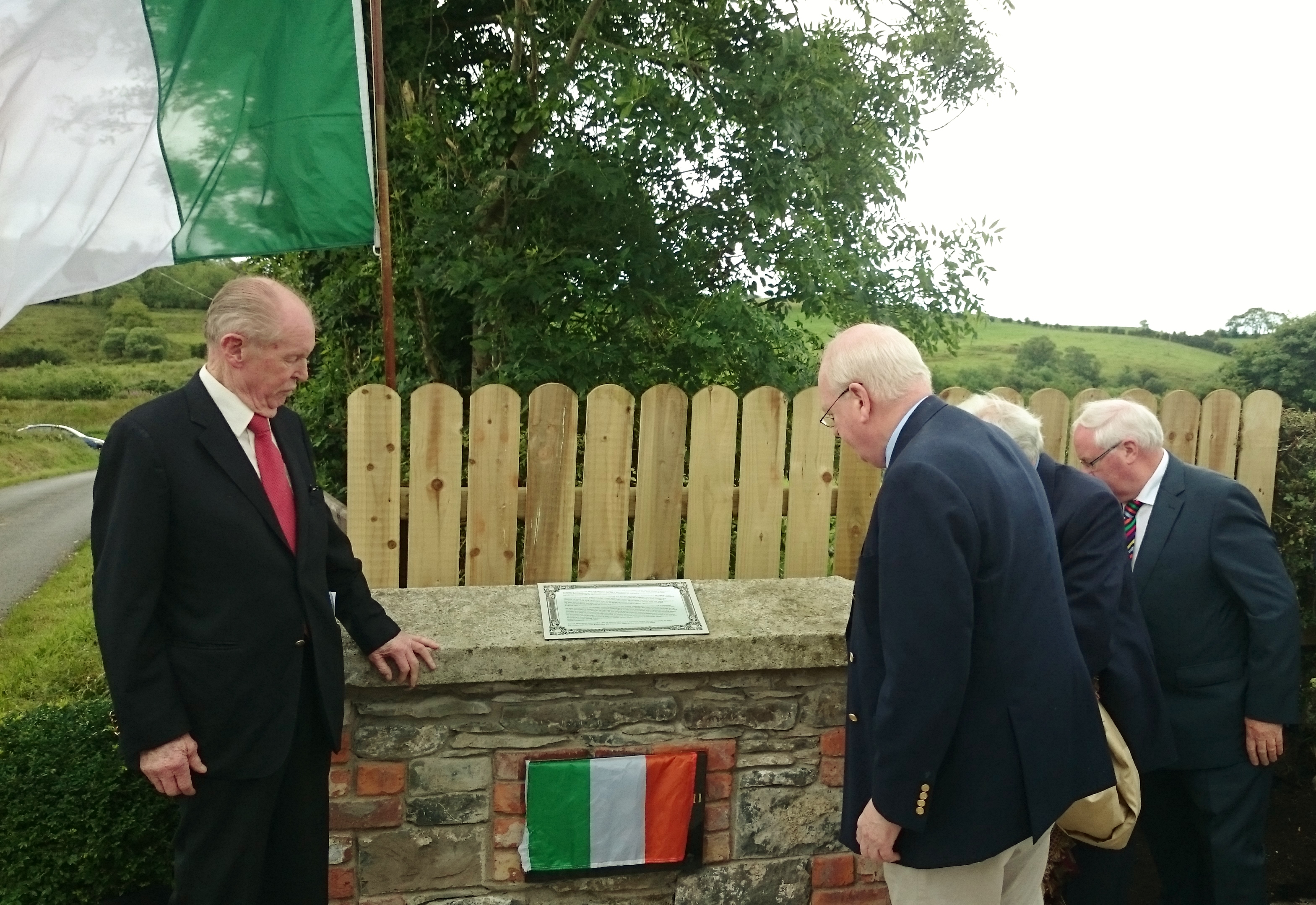
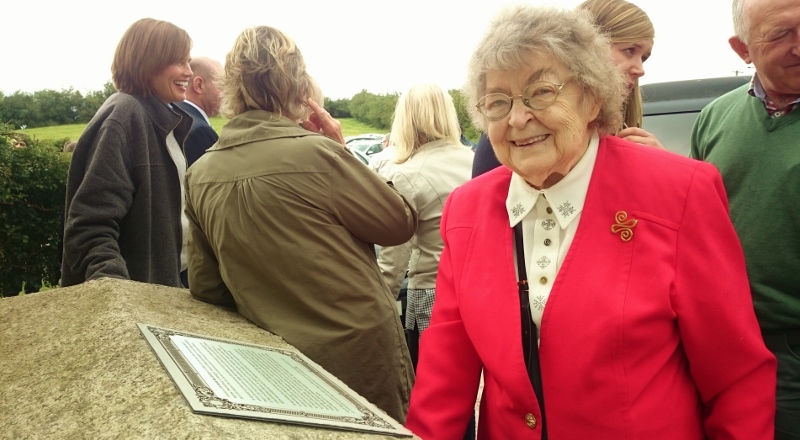
Memories of the War of Independence in County Monaghan and Civil War which divided the allegiances of some families were evoked during the unveiling near Threemilehouse on Sunday of a memorial plaque to honour former Monaghan TD Dr Paddy Mac Carvill.

Crowd listens as Mackie Moyna Jnr addresses the gathering Photo:  © Michael Fisher

Crowd listens as Mackie Moyna Jnr addresses the gathering Photo: © Michael Fisher

The ceremony was performed by the former Tánaiste and Minister for Justice, Michael McDowell S.C., who is married to Niamh Brennan, a granddaughter of Dr Mac Carvill. The former leader of the Progressive Democrats said Dr Mac Carville whose background and history, elected three times to Dáil Éireann, contained lessons for us all. He told the assembled crowd he was proud that his three sons had the blood in their veins of such a patriot, scholar and gentleman. It was most important that his memory and great patriotism be kept and observed in his native county, especially in this decade of centenaries.

Mackie Moyna Junior (Dublin) raises a laugh as he addresses the gathering Photo:  © Michael Fisher

Mackie Moyna Junior (Dublin) raises a laugh as he addresses the gathering Photo: © Michael Fisher

The simple black stone plaque is engraved with the name of Dr Mac Carvill and the dates May 1893 – March 1955. The plaque is set into a rebuilt stone wall at the entrance to the former MacCarvill homestead at Blackraw in the parish of Corcaghan.

Michael McDowell SC is watched by Paddy Mac Carvill's son Niall (left) and Brendan Smith T.D. (right) as he unveils the plaque and memorial at Blackraw  Photo:  © Michael Fisher

Michael McDowell SC is watched by Paddy Mac Carvill’s son Niall (left) and Brendan Smith T.D. (right) as he unveils the plaque and memorial at Blackraw Photo: © Michael Fisher

Dr Mac Carvill’s daughter, 90 year-old Maire Brady from Cork, travelled to Monaghan for the occasion as did his son Niall from Dublin. Two of his five children, Éilish and Éimhear (also a medical doctor) passed away in recent years. The Moyna family were also represented, with twins Mackie (Dublin) and Tommy both present, as well as Tommy (junior), Scotstown. Mackie Moyna (junior) read a speech on behalf of his uncle.

Dr Mac Carvill's daughter Maire Brady from Cork at the memorial to her father Photo:  © Michael Fisher

Dr Mac Carvill’s daughter Maire Brady from Cork at the memorial to her father Photo: © Michael Fisher

Following the unveiling, some of the relatives took the opportunity to stroll up the lane and visit the former family homestead, now derelict and owned by the Reilly family. It used to be a thatched house with two bedrooms and the sleeping accommodation for Paddy and his four brothers was in the loft.

Two of Dr Mac Carvill's children, Maire Brady (Cork) and Niall Mac Carvill (Dublin), with their cousin Mackie Moyna (Dublin) and guest speaker Michael McDowell Photo:  © Michael Fisher

Two of Dr Mac Carvill’s children, Maire Brady (Cork) and Niall Mac Carvill (Dublin), with their cousin Mackie Moyna (Dublin) and guest speaker Michael McDowell Photo: © Michael Fisher

In the speech read out on behalf of Mackie Moyna, he detailed how Paddy’s mother Susan was a Moyna before marriage and it was thanks to the generosity of her brother Fr Michael Moyna, Dean of the diocese of Toronto, that the ten children of John and Susan Mac Carvill received an education.

Caoimhghín Ó Caokain T.D. speaking to Mackie Moyna after the unveiling of the plaque  Photo:  © Michael Fisher

Caoimhghín Ó Caokain T.D. speaking to Mackie Moyna after the unveiling of the plaque Photo: © Michael Fisher

Paddy, the youngest of the clan, attended Drumsheeny National School until he was twelve and then entered St Macartan’s College in Monaghan as a boarder, followed by St Michael’s in Enniskillen, where his older brother, Fr Michael, was a curate. At 18 he entered UCD as a medical student and took first place in Ireland in his final exams.

Two of Dr Mac Carvill's children, Maire Brady (Cork) and Niall Mac Carvill (Dublin), with Brendan Smith T.D. (left)  Photo:  © Michael Fisher

Two of Dr Mac Carvill’s children, Maire Brady (Cork) and Niall Mac Carvill (Dublin), with Brendan Smith T.D. (left) Photo: © Michael Fisher

As a young doctor Patrick Mac Carvill and his brother Johnny were involved in the IRA in Monaghan in 1919 in the war against the Black and Tans. He was elected as a Republican TD, imprisoned at different times by the British and Free State governments in Belfast, Wormwood Scrubs in London, Dartmoor, as well as Mountjoy and Kilmainham in Dublin. He also went on hunger strike at one stage. His fiancée and future wife, Eileen McGrane, was Michael Collins’s secretary when he was on the run, was captured and imprisoned by the British and later by the Free State government, joining McCarvill on hunger strike.

Some of Dr Mac Carvill's relatives visiting the family home after the unveiling of the plaque  Photo:  © Michael Fisher

Some of Dr Mac Carvill’s relatives visiting the family home after the unveiling of the plaque Photo: © Michael Fisher

Paddy Mac Carvill was medical officer to the 5th Northern Division of the IRA and was at the rescuing of Matt Fitzpatrick from the County Hospital in Monaghan.

In August 1923 President Cosgrave dissolved the Dáil and announced a snap General Election for the fourth Dáil.  This election caught the anti-Treaty Sinn Féin party unprepared, yet 44 members were elected and one of those was Paddy Mac Carvill, representing his county of Monaghan as he had also done in the election of June 1922.

In 1924 Paddy Mac Carvill returned to live in Dublin and in 1925 he married his fiancée Eileen McGrane, who hailed from Co Westmeath and who had been a prisoner in Mountjoy when Paddy was transferred there from Dartmoor.

In the June 1927 eletion Paddy Mac Carvill stood as a Fianna Fáil candidate and again was elected for County Monaghan.  He took his seat in August but when a snap election was called the following month he decided to retire from politics and concentrated on his medical practice.  .

Paddy Mac Carvill gained eminence in his profession, becoming a specialist in dermatology and lecturing on the subject in UCD. He was a consultant to St Anne’s and St Luke’s Hospitals as well as Temple Street Children’s Hospital and the National Maternity Hospital at Holles Street.

On May 22 1946, Paddy Mac Carvill wrote to de Valera regarding the sacking of his brother Johnny from his position as manager and secretary of Monaghan Bacon Company, of which Dr Con Ward T.D. was managing director.  Mr de Valera established a tribunal to investigate the allegations. The tribunal did not report that Dr. Ward was guilty of any improper conduct in the actual execution of the duties that pertained to his role as Parliamentary Secretary in the Department of Local Government and Public Health but he offered his resignation and it was accepted on July 12th 1946, exactly 69 years ago on Sunday.

Éamon de Valera called a snap general election in February 1948.  Paddy Mac Carvill came out of political retirement and stood again in Monaghan as a candidate for Séan Mac Bride’s Clann na Poblachta, as did his brother-in-law Aodh de Blacam for Co Louth.  Neither was elected. Representatives of the de Blacam family attended the plaque unveiling.

Tommy Moyna and his cousin Maire Brady (Mac Carvill) visiting the old family home  Photo:  © Michael Fisher

Tommy Moyna and his cousin Maire Brady (Mac Carvill) visiting the old family home Photo: © Michael Fisher

Reflecting on his other family connections, Michael McDowell, whose grandfather was Eoin Mac Neill, commented: “From the constitutional, nationalist Redmondite lawyer to the anti-Treaty Republican hunger strikers, my three sons’ eight great-grandparents span a broad spectrum of nationalist and separatist activity in those years (around 1919-22). Three of them became parliamentarians; three served multiple prison terms. They each endured a great deal of personal tragedy and sacrifice.”

Patrick Brady from Cork, grandson of Dr Mac Carvill, with his wife and daughter at the former Mac Carvill home   Photo:  © Michael Fisher

Patrick Brady from Cork, grandson of Dr Mac Carvill, with his wife and daughter at the former Mac Carvill home Photo: © Michael Fisher

In the Bureau of Military History records for 1913-21 there is a statement made in 1954 by a Monaghan man James McKenna, then a Garda Superintendent in Bandon Co. Cork, and a native of Aughaloughan, Glaslough. He was Captain of Donagh Company IRA, O/C North Monaghan Brigade, 5th Northern Division, in which Dr Paddy Mac Carvill served. Superintendent McKenna recounts the activities of the North Monaghan Flying Column:

“In September 1920 I joined a Flying Column which was organised by Comdt. D. Hogan who was i/c of the unit. It consisted of about sixteen men. Tom Coffey, Clones, was one Section Leader and I was the other. The other members were Matt Fitzpatrick, Frank Tummin, John Donohue, James Murphy, James Winters, Dr. P. McCarville, Phil Marron, Paddy McCarron, Tom Cosgrave, Billy McMahon, Paddy McGrory, Tom Clerkin and James Flynn. As a column we lay in position awaiting patrols on the Clones/Newbliss road, around Scotstown and near Clogher, Co. Tyrone, but in vain. We took the mails off the Belfast 8. to Clones; train at Smithboro and burned a military repair van at Bragan. The three members of the Column from Newtownbutler, Co. Fermanagh, Matt Fitzpatrick, Frank Tümmin and John Donohue, also John McGonnell, expressed their desire to return to their respectiye units as they felt that While our living quarters were in the Knockatallon Mountains we could not contact the enemy except in units too strong for our strength and equipment. Dan Hogan consented to their request and they immediately left for their units. Early next morning we heard the sound of army lorries coming. Some of them rushed up a mountain road (leading to a shooting lodge of Lord Rossmore) in an effort to cut us off. We all escaped except Dr. McCarville. He and Billy McMahon had stayed the previous night in a house which was nearer the main road than the house we: occupied. The Company Captain, John Brennan, who lived up the mountainside, rushed inland (on hearing the sound of the lorries) to guide the doctor and McMahon to safety. He took them by the course we had gone. As they approached a gap in a mountain ridge the military had advanced more than when we had passed, and fired an occasional shot at the three men. The doctor got nervous and took cover behind the bank of a mountain stream and was captured. Brennan and McMahon continued on and escaped safely. We were also under long range fire when retreating. There was snow on the mountains, not sufficient to completely cover the heather, which made visibility poor and favoured us. We fired an occasional shot on the military to delay their advance as we expected the doctor and McMahon to follow us. The military burned our living quarters and we all returned to our units.”  

Plaque and Memorial to Dr Patrick Mac Carvill at the family homestead in Blackraw, Threemilehouse, Co. Monaghan Photo:  © Michael Fisher

Plaque and Memorial to Dr Patrick Mac Carvill at the family homestead in Blackraw, Threemilehouse, Co. Monaghan Photo: © Michael Fisher

Like Loading...
MILITARY MONAGHAN NEWS POLITICS UNCATEGORISED Fianna FáilIRAMackie MoynaMichael McDowell SCMonaghanPaddy Mac CarvillThreemilehouseWar of Independence 2 Comments

NLI PUTS PARISH REGISTERS ONLINE

15/07/2015 by borderroamer
Pictured at the launch of the National Library of Ireland's new web-repository of parish records are Taoiseach, Enda Kenny T.D. and Minister for Arts, Heritage and the Gaeltacht, Heather Humphreys T.D., talking to Ciara Kerrigan, project manager of the digitisation of parish registers NLI. Photo Mark Stedman, Photocall Ireland

Pictured at the launch of the National Library of Ireland’s new web-repository of parish records are Taoiseach, Enda Kenny T.D. and Minister for Arts, Heritage and the Gaeltacht, Heather Humphreys T.D., talking to Ciara Kerrigan, project manager of the digitisation of parish registers NLI. Photo Mark Stedman, Photocall Ireland

National Library of Ireland Launches Parish Records Website

Michael Fisher  Northern Standard   Thursday 9th July

A new digital archive of Catholic parish records which is being made available free online by the National Library of Ireland should transform and greatly enhance the task of anyone tracing family history, according to the Minister for Arts, Heritage and the Gaeltacht, Heather Humphreys T.D. She was speaking at the launch by the Library of a web-repository of parish records, dating from the 1740s to the 1880s.

The Library’s holding of parish records is considered to be the single most important source of information on Irish family history prior to the 1901 Census. Up to now, they have only been accessible on microfilm, which meant that those interested in accessing the records had to visit the National Library. This new web resource provides unlimited access to all members of the public to records covering 1,086 parishes throughout the island of Ireland, including all parishes in the Catholic diocese of Clogher (although I could find no record for Eskra, near Newtownsaville, which was once part of Clogher parish in County Tyrone.

Minister Humphreys said: “This new digital resource will help people at home and abroad who are interested in tracing their ancestry. The website provides access to church records dating back up to 270 years and includes details like the dates of baptisms and marriages, and the names of the key people involved. The records feature the baptisms of some very well-known historical figures, such as the 1916 Leaders Padraig Pearse and Thomas MacDonagh.”

“Making this kind of material available online should help to boost genealogy tourism, and will complement the work of local historical centres in communities around the country. As we approach the centenary of the 1916 Rising next year, I am keen to make as much historical material as possible available online, so we can encourage people around the world to reconnect with their Irish roots”, she said.

Acting Director of the National Library, Catherine Fahy, said:

“This access to the parish records will be transformative for genealogy services, in particular as they will allow those based overseas to consult the records without any barriers.  Effectively, the digitisation of the records is an investment in community, heritage and in our diaspora-engagement.”

Pictured at the launch of the National Library of Ireland's new web-repository of parish records are Taoiseach, Enda Kenny T.D. and Minister for Arts, Heritage and the Gaeltacht, Heather Humphreys T.D., talking to former Taoiseach Liam Cosgrave. Photo: Mark Stedman, Photocall Ireland

Pictured at the launch of the National Library of Ireland’s new web-repository of parish records are Taoiseach, Enda Kenny T.D. and Minister for Arts, Heritage and the Gaeltacht, Heather Humphreys T.D., talking to former Taoiseach Liam Cosgrave. Photo: Mark Stedman, Photocall Ireland

The parish registers website contains more than 370,000 high-quality, digital images of microfilm reels.  The National Library microfilmed the parish records in the 1950s and 1960s.  Some additional filming of registers from a small number of Dublin parishes took place during the late 1990s.

As a result of this work, the NLI holds microfilm copies of more than 3,550 registers from the vast majority of Catholic parishes throughout Ireland. The start date of the registers varies from the 1740/50s in some city parishes in Dublin, Cork, Galway, Waterford and Limerick, to the 1780/90s in counties such as Kildare, Wexford, Waterford and Kilkenny. Registers for parishes along the western seaboard generally do not begin until the 1850/1860s.

Catherine Fahy said: “In using the website for family or community searches, we would recommend that members of the public consult with their local family history resource to help them refine their search.  The website does not contain any transcripts or indexes, so for a search to be successful, some known facts about a person’s life will be necessary.  Effectively, those who access the new online resource will be able to cross-reference the information they uncover, and identify wider links and connections to their ancestral community by also liaising with local genealogical services or family history resources.”

Speaking at the launch An Taoiseach, Enda Kenny T.D., said: “I would like to congratulate the National Library on their project to make the Catholic parish registers available online.  Given the devastating fire in the Four Courts in 1922, in which so many records were lost, these registers are considered the single most important record of Irish life prior to the 1901 census.

“They will be of great value to experts in the areas of history and genealogy, but also of tremendous interest to people here in Ireland and the Irish diaspora around the world.  No doubt the registers will contribute to the number of genealogical tourists to Ireland, as people of Irish descent access these records online and decide to visit their ancestral home place.”

Online access to the new website is free of charge. For more information, visit http://registers.nli.ie/.

In 1949, Dr Edward MacLysaght, Chief Herald of Ireland and Keeper of Manuscripts at the National Library of Ireland, approached the Bishop of Limerick offering the NLI’s services to help in the permanent preservation of the genealogical information contained within the Catholic Church’s collection of parish registers. The NLI’s offer to microfilm parochial registers was taken up by every member of the Hierarchy. Although civil registration of births, marriages and deaths began in 1864, records were not accurately kept for a number of years, so a cut-off date of 1880 was applied for the microfilming of registers.

The usual procedure followed in relation to the microfilming was to send a senior member of NLI staff to a diocese to collect the registers, bring them to the NLI in Kildare Street for filming, and then return the registers to the diocese. The filming of registers diocese by diocese began in the 1950s and was completed over a period of twenty years. Additional filming of registers from a small number of Dublin parishes took place during the late 1990s. As a result of this work, the NLI held microfilm copies of over 3500 registers from 1086 parishes on the island of Ireland. The start dates of the registers vary from the 1740/50s in some city parishes in Dublin, Cork, Galway, Waterford and Limerick, to the 1780/90s in counties such as Kildare, Wexford, Waterford and Kilkenny. Registers for parishes along the western seaboard do not generally begin until the 1850/60s.

Church registers of marriage and baptism are considered to be the single most important source for family history researchers prior to the 1901 census. In many cases, the registers contain the only surviving record of particular individuals and families. With growing numbers of people engaged in family history research and limited on-site facilities at the NLI in Dublin, the decision was taken in 2010 to digitise the parish register microfilms. Following a tender process, the contract for digitisation was awarded to AEL Data who converted 550 microfilm reels, containing over 3500 registers into approximately 373,000 digital images. These images correspond to a page or two-page opening within a register volume.

In October 2014 the NLI Board formally approved the making available of the microfilm images online on a dedicated free-to-access website. The individual registers have been reassembled virtually and made available to users via a topographical database. The development of the parish register website has been carried out by a small team in the NLI’s Digital Library section. The digitisation of the Catholic parish register microfilms is the NLI’s most ambitious digitisation project to date. It demonstrates the NLI’s commitment to enhancing accessibility through making its collections available online.

Information can be obtained relating to the following parishes in the diocese of Clogher:

Aghavea   (Brookeborough)    

Aughalurcher (Lisnaskea)

Aughintaine     (Fivemiletown)

Aughnamullen East

Aughnamullen West (Latton)

Carn (Devenish West, Belleek & Pettigo)

Cleenish  (Arney, Belcoo)

Clogher   

Clones

Clontibret

Devenish (Botha, Derrygonnelly)

Garrison

Donacavey (Fintona)       

Donagh (Emyvale, Glaslough)

Donaghmoyne

Dromore (Co. Tyrone)    

Drumsnat and Kilmore (Corcaghan)       

Drumully (Currin, Scotshouse)

Ematris (Rockcorry)       

Enniskillen (Inis Caoin Locha Eirne)

Errigal Truagh        

Galloon (Drumully, Newtownbutler)       

Garrison 

Inniskeen (Killanny)

Innismacsaint (Maghene, Bundoran)       

Irvinestown      (Devenish)

Killany (Inniskeen)

Killeevan (Currin, Aghabog)

Kilskeery (Kilskerry, Trillick)

Maghaire Rois (Carrickmacross)

Magheracloone        

Magheraculmany (Cúl Máine, Ederney)

Monaghan (Rackwallace)

Muckno (Castleblayney)

Roslea

Tempo (Pobal)

Tullycorbet (Ballybay)    

Tydavnet

Tyholland

Like Loading...
MONAGHAN NEWS POLITICS UNCATEGORISED Clogher dioceseEnda KennyGenealogyHeather HumphreysNational Library of Ireland Leave a comment

Post navigation

← Older posts
Newer posts →

Recent Posts

  • DESMOND FISHER 1920-2014 30/12/2020
  • GAJ AWARDS 2020 24/12/2020
  • COVID-19 REPORTING AWARD 20/12/2020
  • HAPPY 100TH BIRTHDAY 31/03/2020
  • NUJ VOTING REMINDER 26/01/2020
  • WORLD PRESS FREEDOM 20/01/2020
  • REMINDER TO VOTE 18/01/2020
  • BOND, WE’VE BEEN EXPECTING YOU! 17/01/2020
  • NUJ MEMBERS IN IRELAND 09/01/2020
  • NUJ BLAST FROM THE PAST 08/01/2020

Archives

  • Dec 2020 (3)
  • Mar 2020 (1)
  • Jan 2020 (13)
  • Oct 2019 (10)
  • Sep 2019 (30)
  • Aug 2019 (31)
  • Jun 2019 (2)
  • May 2019 (1)
  • Sep 2018 (1)
  • Jul 2017 (1)
  • Dec 2016 (12)
  • Sep 2016 (2)
  • Aug 2016 (5)
  • Jul 2016 (5)
  • Jun 2016 (10)
  • May 2016 (15)
  • Apr 2016 (19)
  • Mar 2016 (14)
  • Jan 2016 (26)
  • Dec 2015 (2)
  • Aug 2015 (1)
  • Jul 2015 (30)
  • Jun 2015 (30)
  • May 2015 (32)
  • Apr 2015 (30)
  • Mar 2015 (31)
  • Feb 2015 (28)
  • Jan 2015 (31)
  • Dec 2014 (31)
  • Nov 2014 (14)
  • Mar 2014 (2)
  • Feb 2014 (2)
  • Jan 2014 (31)
  • Dec 2013 (19)
  • Nov 2013 (17)
  • Oct 2013 (29)
  • Sep 2013 (30)
  • Aug 2013 (31)
  • Jul 2013 (31)
  • Jun 2013 (30)
  • May 2013 (28)
  • Apr 2013 (32)
  • Mar 2013 (31)
  • Feb 2013 (28)
  • Jan 2013 (31)
  • Dec 2012 (3)
  • Oct 2012 (1)
  • Sep 2012 (1)
  • Aug 2012 (2)
  • Jul 2012 (3)
  • Jun 2012 (3)
  • May 2012 (3)
  • Apr 2012 (5)
  • Mar 2012 (1)
  • Jan 2012 (1)
  • Dec 2011 (1)
  • Nov 2011 (1)
  • Jun 2011 (1)
  • May 2011 (1)
  • Apr 2011 (2)
  • Dec 2010 (1)
  • Nov 2010 (3)
  • Oct 2010 (6)
  • Aug 2010 (1)
  • Jul 2010 (7)

Categories

Meta

  • Create account
  • Log in
  • Entries feed
  • Comments feed
  • WordPress.com

Enter your email address to follow this blog and receive notifications of new posts by email.

36th Ulster Division 2013 WPFG AFC Wimbledon An Bord Pleanála Ballinode Balmoral Show Barry McCall Battle of Somme BBC belfast Belfast Festival Belfast Lions Club Big Music Week Birmingham BOSE Bristol Carlow Carrickmacross Castleblayney Catholic Herald Clogher Clones CMAPC Defence Forces Derry Desmond Fisher Dublin EirGrid Emyvale Fine Gael GAA Geel Glaslough Heather Humphreys TD Iarnród Éireann Ice Hockey Ieper Inniskeen Irish Press Kingsmeadow London Meath Michael Fisher Monaghan Monaghan County Council NEC NEPPC Newbridge North/South Interconnector Northern Standard NUJ Odyssey Arena Patrick Comerford Pope Francis Poperinge Private Robert Hamilton PSNI Royal Irish Fusiliers RTÉ SDLP Shamrock Rovers Shared History Shared Future SIPTU St Macartan's Cathedral Tallaght Tydavnet Tyrone Ulster rugby Vatican II William Carleton William Carleton Society William Carleton summer school WW1 WWI WWII

Blog Stats

  • 243,388 hits
Blog at WordPress.com.
Michael Fisher's News
Blog at WordPress.com.
  • Subscribe Subscribed
    • Michael Fisher's News
    • Join 173 other subscribers.
    • Already have a WordPress.com account? Log in now.
    • Michael Fisher's News
    • Subscribe Subscribed
    • Sign up
    • Log in
    • Report this content
    • View site in Reader
    • Manage subscriptions
    • Collapse this bar
 

Loading Comments...
 

    %d