Get me outta here!

Michael Fisher's News

© Michael Fisher MMXXII

Menu

Skip to content
  • Home
  • About

Author Archives

borderroamerhttps://fisherbelfast.wordpress.comThe Northern Standard, Monaghan. Reporter.
borderroamer's avatar

GERALD DAWE: THE STOIC MAN

06/04/2015 by borderroamer
Professor Gerald Dawe Photo: TCD

Professor Gerald Dawe Photo: TCD

Professor Gerald Dawe, Director of the Oscar Wilde School of Irish Writing at TCD,  returned to Orangefield School in East Belfast in August as part of the East Side Arts Festival. During his talk another former pupil looked in the door and stood at the back for a while, before going on to perform in concert: Van Morrison. During his talk Professor Dawe mentioned that he had been a postgraduate student at University College Galway, where he completed an MA thesis on William Carleton. He was a contributor to the William Carleton Society International Summer School in 1994 and 2008. He has now published a new collection of essays and memoirs, ‘The Stoic Man’ (Lagan Press). In today’s Irish Times, he writes about the publication:

‘The Belfast I left behind doesn’t exist anymore’
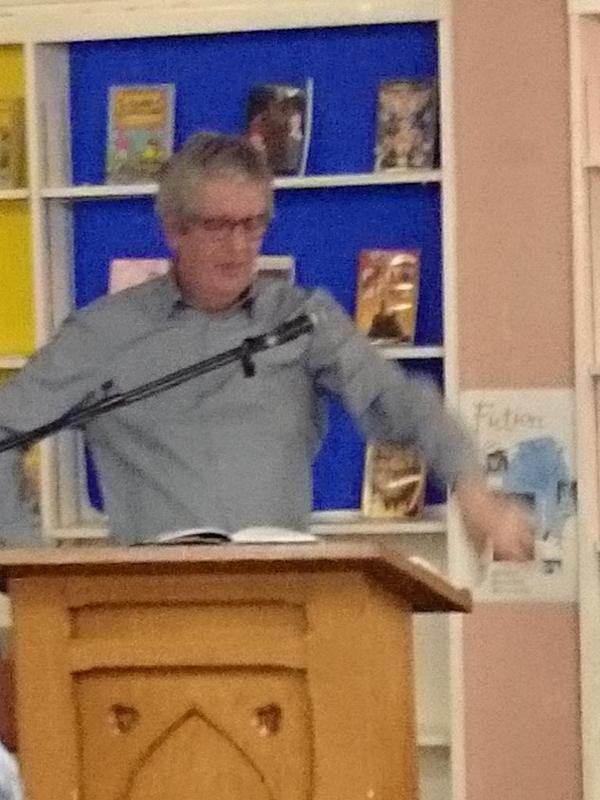
Gerald Dawe       Irish Times  Monday April 6th

Gerald Dawe at East Side Arts Festival 2014 Photo:  © Michael Fisher

Gerald Dawe at East Side Arts Festival 2014 Photo: © Michael Fisher

In the autumn of 1974 as a 22-year-old, I took the Ulsterbus to Monaghan town, and from there boarded the CIE coach that wound its way through several counties before arriving at Eamonn Ceannt Station off Eyre Square in Galway. It was a little over 40 years ago. The Belfast I had left behind doesn’t exist anymore, except in people’s minds and memories. The republic I was travelling through has also been transformed, including the somewhat sleepy market town that was Galway.

How can one ever remember the tone and timbre of the 1970s and the values of the republic that really were on the cusp of lasting change? It was a different world, for sure, but some things remain lodged in the memory of that time. Like the grotesque disfiguring violence inflicted upon ordinary people by the paramilitaries; like the long and arduous battle women of all classes and backgrounds had to endure to achieve basic civil liberties in their own country; like the demeaning deference expected by a male-possessed Church and the preening patronising of many (male) politicians.

But I also have a lasting sense of the edgy, challenging focus of the culture that was calmly self-confident and productive of counter images and contrary views.

I have no nostalgia for that time, although in The Stoic Man, the new collection of essays and memoirs I have just published with Lagan Press, the recalling of life in the west of Ireland in the 70s sounds again like a “sheltering place” from the travails and troubles of the Belfast I had in part left behind. So The Stoic Man is accompanied by a collection of Early Poems written during those years in Galway’s old city, around the streets and canal-ways, the bridges, Lough shore and harbour where we used to live.

It is hard to think of how things could have been so different without making it seem as if things turned out not as well as one had hoped, which is not the case. The fact is though that no one back then that I knew really planned a future. It sort of just happened. Maybe that is the biggest change I can spot between then and now.

Targets, outcomes, graphs and statistics, the numerical volumes of which we seem to be increasingly addicted in post-“Celtic Tiger” Ireland, forecasting everything from weather to economic predictions to just about every facet of social life. These strainings after certainty certainly did not exist. We lived more in the moment. That may have been unwise, I don’t know, but what I can say is that the not knowing about these matters did not halt our growth or stunt our enthusiasm for life.

The petulance, complaint and unceasing quest for factoids and percentages, faults and failings, blame and admonishment which characterises so much of Irish life today did not play any significant part in our life back then, or if it did it hasn’t left any trace behind in my memory. Politics was cut and thrust; business was precisely that, business: nothing more, nothing less but nothing like the current fad for elevating it to a new religion.

There was an intelligent debate going on about literature and art, among many other things, that weren’t in hock to the market-place or the mantra of economy. Perhaps, surprisingly too, there was an openness and appetite in brashly engaging with European ideals, probably because we had only recently joined the European family. This act would prove critical in underpinning the modernisation of our infrastructure like roads, and the liberalisation of our codes of conduct. But also, critically, the opening of our minds as well; no longer being obsessed with England started to take root sometime around the 70s.

The Stoic Man sorts some of these bass notes into a record of personal time. From growing up in a vibrant 60s Belfast, through the blunt decades that at times followed, before the republic soared economically and then crashed unceremoniously leaving the ordinary “Joe” to pick up the tab.

And now what? The book ends with a few more questions than it can possibly answer.

I hope The Stoic Man is a good read, alongside those Early Poems written by a young lad who I kind of remember disembarking from the dewy CIE coach one crisp late afternoon many moons ago.

MEMORY

in memory of Bridget O’Toole

It is a desert of rock
the rain has finally withered
till we are left black
dots on a shrinking island.

We come like pilgrims
wandering at night through
the dim landscape. A blue
horizon lurks behind whin
bushes and narrows to pass
the pitch-black valley.

We are at home. A place as
man-forsaken as this must
carry like the trees a silent
immaculate history. Stones
shift under the cliff’s shadow.

Nearby the tide closes in,
master of the forgotten thing.

GERALD DAWE  (from http://www.ricorso.net)

1952- [Gerald Chartres Dawe; fam. “Gerry”]; b. N. Belfast; ed. Orangefield Boys School (‘an extraordinary school’), East Belfast; worked with Sam McCreadt at Lyric Youth Th.; grad. NUU (Coleraine), BA., 1974; briefly worked at Central Public Library, Belfast; held major state award for research, 1974-77; wrote a thesis on William Carleton under Lorna Reynolds, Galway, MA 1978; lecturer, UCG [1976]; appt. lect. in English and Drama, TCD, 1988; introduced to Padraic Fiacc by Brendan Hamill, 1973; Arts Council Bursary for poetry, 1980; Macauley Fellowship for Literature, 1984; taught at Galway University, 1977-1986; m. Dorothy Melvin; a dg., Olwen, b. 1981; also a son, Iarla; appt. lect in English, TCD, 1988; moved to Dublin, settling in Dun Laoghaire, 1992;

Poems: Sheltering Places (1978) and The Lundys Letter (1985), winner of Macaulay Prize [Fellowship in Literature]; fnd. ed. Krino; ed. with Edna Longley, Across the Roaring Hill: The Protestant Imagination in Modern Ireland (1985) and The Younger Irish Poets (1982, reissued 1991); criticism includes How’s the Poetry Going? (1991), False Faces (1994), and Against Piety: Essays in Irish Poetry (1995); Director of the Oscar Wilde Centre for Irish Writing (TCD); issued The Rest is History (1998), dealing with influence of Belfast culture on Van Morrison and Stewart Parker; issued Lake Geneva (2003), poems; appt. TCD Fellow, 2004; his Collected Criticism was edited by Nicholas Allen in 2007;

Has taught at Boston College and Villanova Univ.; issued Points West (2008), poems, his seventh collection; issued an anthology of Irish poetry of WWI (Earth Whispering, 2009); presents RTE poetry Programme [Sats.]; directs the Oscar Wilde Centre for Irish Writing; gives a talk entitled “From Ginger Man and Borstal Boy to Kitty Stobling: A Brief Look Back at the Fifties”, concluding a public lecture-series on that decade at TCD, March 2011; his wife Dorothea is head of Public Affairs at the Abbey Theatre, Dublin.


Poetry
  • Heritages (Breakish: Aquila/Wayzgoose Press 1976), [20]pp. [also signed ltd. edn. of 25];
  • Blood and Moon (Belfast: Lagan Press 1976) [16pp.; pamph.];
  • Sheltering Places (Belfast: Blackstaff 1978);
  • Dead Loss [Poetry Ireland Poems, No. 9] (Portmarnock: Poetry Ireland 1979) [ 1 sht.; signed copy, TCD Library];
  • The Lundys Letter (Oldcastle: Gallery Press 1985), 49pp.;
  • The Water Table (Belfast: Honest Ulsterman 1991), [6], 18pp.;
  • Sunday School (Oldcastle: Gallery Press 1991), 47pp.;
  • Heart of Hearts (Oldcastle: Gallery Press 1995), 47pp.;
  • The Morning Train (Oldcastle: Gallery Press 1999), 51pp.;
  • Lake Geneva (Oldcastle: Gallery Press 2003), 56pp.;
  • Points West (Oldcastle: Gallery Press), 56pp.
Criticism
  • ‘An Absence of Influence, Three Modernist Poets’, in Tradition and Influence in Anglo-Irish Poetry, ed. Terence Brown & Nicholas Greene (London 1989), pp.119-42;
  • How’s the Poetry Going? (Belfast: Lagan Press 1991) [review essays];
  • A Real Life Elsewhere (Belfast: Lagan Press 1993) 112pp. [essay];
  • False Faces: Essays on Poetry, Politics and Place (Belfast Lagan Press 1994), 104pp.;
  • Against Piety: Essays on Irish Poetry (Belfast: Lagan Press 1995), 193pp. [12 essays];
  • The Rest is History (Newry: Abbey Press 1998), 123pp.;
  • Stray Dogs and Dark Horses: Selected Essays on Irish Writing and Criticism (Newry: Abbey Press 2000), 212pp. [includes essay on William Carleton];
  • The Proper Word: Collected Criticism – Ireland, Poetry, Politics, ed. Nicholas Allen (Creighton UP 2007), 365pp.
Miscellaneous
  • ed., with Edna Longley, Across the Roaring Hill: The Protestant Imagination in Modern Ireland (Belfast: Blackstaff 1985), xviii, 242pp.
  • intro., Faces in a Bookshop: Irish Literary Portraits (Galway: Kennys’ Bookshop 1990), 163pp. [marking 50th Anniversary of Kennys];
  • ed., with John Wilson Foster, The Poet’s Place – Ulster Literature and Society: Essays in Honour of John Hewitt, 1907-87 (Belfast: Institute of Irish Studies 1991), xi, 330pp.;
  • ed., Yeats: The Poems (Dublin: Anna Livia 1993), 160pp.;
  • intro., Literature in Ireland: Studies in Irish and Anglo-Irish [1916] by Thomas MacDonagh (Nenagh, Co. Tipperary: Relay Books 1996) [with profile by Nancy Murphy], xiv, 209pp.
Edited anthologies
  • ed., The Younger Irish Poets (Belfast: Blackstaff Press 1982), and Do. [reiss. as] The New Younger Irish Poets (Belfast: Blackstaff Press 1991), xv, 176pp.
  • ed., Catching the Light: Views and Interviews (Moher: Salmon Press 2008), 184pp.
  • ed., with Jonathan Williams, Krino 1986-1996: An Anthology of Irish Writing (Dublin: Gill & Macmillan 1996), 435pp. incl. 80 writers; critical essays by Susan Schriebman, Hugh Haughton; J. C. C. Mays; Eavan Boland; Nuala Ni Dhomnaill; Terence Brown; Henry Gifford; Eoin Bourke also stories by John McGahern; Peter Hollywood];
  • ed., with Michael Mulreany, The Ogham Stone: An Anthology of Contemporary Ireland (Dublin: IPA 2001), x, 230pp., ill., ports.;
  • ed., Earth Voices Whispering: An Anthology of Irish War Poetry (Belfast: Blackstaff Press 2009), xx, 412pp. [incls. as Postscript Samuel Beckett’s “Capital of the Ruins”]
  • ed., Conversations: Poets & Poetry (q. pub. 2011).
Contributions
  • ‘Checkpoints: The Younger Irish Poets’, in Crane Bag, 6, 1 (1983), pp.85-89;
  • ‘Where Literature Ends and Politics Begins’, in The Linen Hall Review, 5, 3 (1988), cp.26;
  • ‘Brief Confrontations: Convention as Conservatism in Modern Irish Poetry’, in Crane Bag, 7, 2 (1983), pp.143-47;
  • ‘A Question of Imagination: Poetry in Ireland Today’, in Cultural Contexts and Literary Idioms in Contemporary Irish Literature, ed. Michael Keneally (Gerrards Cross: Colin Smythe 1988)
  • ‘Living in Our Time’ [review], in Linen Hall Review (Summer 1990), pp.42-3;
  • “Three Poems” [‘Herald’; ‘Heart of Hearts’; ‘Couplet’] in Canadian Journal of Irish Studies, 17, 2 (Dec. 1991), p.103;
  • interview with W. J. McCormack/Hugh Maxton, Linenhall Review (Spring 1994), pp.14-16;
  • ‘Visiting Chartres’, in Fortnight (Nov. 1994), 32-33 [taking issue with Ronan Bennett’s ‘An Irish Answer’ in the Guardian, Mary Holland, and others, ‘a key feature of Protestantism is precisely its intense individualism and reluctance to nominate itself, or to be exploited, as representative’];
  • ‘Parts of Speech’, in Fortnight Review (May 1995), p.38 [an account of his experience and views of the Irish language and politics relating to same];
  • ‘Praising the Poet’, in Fortnight Review, 344 (Nov. 1995), p.22-23;
  • ‘Civil Codes’ in Fortnight Review (March 1996), pp.26-27) [with cheerful phot. ill.; writing on Ireland and Czechoslovakia];
  • ‘Finding the Language: Poetry, Belfast, and the Past’, New Hibernia Review, 1, 1 (Spring 1997), pp.9-18;
  • ‘Small is Beautiful’, in Fortnight (July-Aug. 1997), p.26;
  • ‘Bring it all back home’, in Fortnight (Jan. 1999) [review of Michael Longley, Selected Poems and Broken Dishes; Denis Sampson, The Chamelion Novelist: Brian Moore];
  • “Raccoons” [a poem], in The Irish Times (10 May 2003), Weekend, p.10;
  • “Midsummer Report” and “The Interface” [two poems], in Fortnight (April 2003), p.31; ‘Francis Ledwidge: A Man of His Time’, in The Irish Times (31 July 2004), p.11 [extract from a lecture given at Slane, Sunday 25th July 2004; see under Ledwidge];
  • Foreword to Facing White: A Collection of New Writing from the Oscar Wilde Centre M Phil in Creative Writing [TCD] (Lemon Soap Press 2007).
  • Review of The Red Sweet Wine of Youth, by Nicholas Murray [on British Poets of WWI], in The Irish Times (12 March 2011) [Weekend Review].
  • Review of Now All Roads Lead to France: The Last Years of Edward Thomas, by Matthew Hollis, in The Irish Times (13 Aug. 2011), Weekend Review, p.10.
See also Graph, No. 1 (Sept. 1995), & No. 2 (March 1996). Also extensive contributions to The Honest Ulsterman, issues 57-97 (see Tom Clyde, ed., Honest Ulsterman, Author Index, 1995).

Bibliographical details
Across the Roaring Hill: The Protestant Imagination in Modern Ireland: Essays in Honour of John Hewitt, ed. Gerald Dawe & Edna Longley (Belfast: Blackstaff 1985), xviii, 242pp.; contains essays, James Simmons, ‘The Recipe for All Misfortunes, Courage’ [on Joyce Cary, S. H. Bell, Forrest Reid], pp.79-98; Michael Allen, ‘Notes on Sex in Beckett’, pp.25-38; W. J. McCormack, ‘The Protestant Strain: A Short History of Anglo-Irish Literature from S. T. Coleridge to Thomas Mann, pp.48-78; Edna Longley, ‘Louis MacNeice, The Walls are Flowing’, pp.99-123; Bridget O’Toole, ‘Three Writers and the Big House, Elizabeth Bowen, Molly Keane, Jennifer Johnston’, pp.124-38; J. W. Foster, ‘The Dissidence of Dissent, John Hewitt and W. R. Rodgers’, pp.161-81; Terence Brown, ‘Poets and Patrimony, Richard Murphy and James Simmons’, pp.182-95; Lynda Henderson, ‘Transcendence and Imagination in Contemporary Ulster Drama, pp.196-217; Dawe, ‘Icon and Lares, Derek Mahon and Michael Longley’, pp.196-217. The title of the collection derives from a poem by John Hewitt (‘across the roaring hill … our indigenous Irish din’). [See Table of Contents in RICORSO Library, “Criticism > Editions”.]

Against Piety: Essays in Irish Poetry (Belfast: Lagan Press 1995), 193pp.; Brief Confrontations: The Irish Writer’s History [19]; A Question of Imagination: Poetry in Ireland [31]; An Absence of Influence: Three Modernist Poets [45]; Heroic Heart: Charles Donnelly [65]; Anatomist of Melancholia: Louis MacNeice [81]; Against Piety: John Hewitt [89]; Our Secret Being: Padraic Fiacc [105]; Blood and Family: Thomas Kinsella [113]; Invocation of Powers: John Montague [127]; Breathing Spaces: Brendan Kennelly [145]; Icon and Lares: Michael Longley and Derek Mahon [153]; The Suburban Night: Eavan Boland, Paul Durcan and Thomas McCarthy [169].

The New Younger Irish Poets, ed. Gerald Dawe (Belfast: Blackstaff 1982; revised edition 1991); contains poems by Thomas McCarthy; Denis O’Driscoll; Julie O’Callaghan; Rita Ann Higgins; Sebastian Barry; Aidan Carl Matthews; Sean Dunne; Mairead Byrne; Michael O’Loughlin; Brendan Cleary; Dermot Bolger; Peter Sirr; Andrew Elliott; John Hughes; Peter McDonald; Patrick Ramsay; Pat Boran; Kevin Smith; Martin Mooney; John Kelly; Sara Berkeley; also biographical and bibliographical notes; select bibliography; poetry publishers; acknowledgements; index of first lines. [Ulster poets are Martin Mooney; Peter McDonald; John Kelly; John Hughes; Andrew Elliot; Brendan Cleary.]

Earth Voices Whispering: An Anthology of Irish War Poetry 1914-1945 (Belfast: Blackstaff Press 2008) – contribs. Katherine Tynan, Stephen Gwynn, W. B. Yeats, AE, Eva Gore-Booth, Lord Dunsany, Thomas McDonagh, William Orpen, Padraic Pearse, Mary Davenport O’Neill, Thomas Kettle, Blanaid Salkeld, Winifred M. Letts, Arnold Bax, D. L. Kelleher, Thomas Carnduff, Joseph Mary Plunkett, Francis Ledwidge, Patrick McGill, Thomas MacGreevy, Austin Clarke, Monk Gibbon, C. S. Lewis, Eileen Shanahan, Jimmy Kennedy, Patrick McDonagh, Franics Stuart, Ewart Milne, George Buchanan, C. Day Lewis, Patrick Kavanagh, Padraic Fallon, Brian Coffey, Samuel Beckett, Sheila Wingfield, Freda Laughton, Louis McNeice, Ruddick Millar, George Reavey, John Hewitt, Denis Devlin, Liam MacGabhann, W. R. Rodgers, Bryan McMahon, Sean Jennett, Leslie Daiken, Donagh McDonagh, Charles Donnelly, Thomas O’Brien, George Hetherington, George M. Brady, Valentin Iremonger, L. J. Fennessy, Maurice J. Craig, Eoghan Ó Tuairisc, Robert Greacen, Roy McFadden, Bruce Williamson, Padraic Fiacc, Patrick Galvin, Pearse Hutchinson, Richard Murphy, Anthony Cronin, Thomas Kinsella, John Montague, James Simmons, Brendan Kennelly, Michael Longley, Seamus Heaney, Seamus Deane, Derek Mahon, Eiléan Ní Chuilleanáin, Eavan Boland, Paul Durcan, Anthony Glavin, Van Morrison.
Like Loading...
UNCATEGORISED Leave a comment

BOOST FOR LOCAL MUSEUMS

05/04/2015 by borderroamer
Minister for the Arts, Heritage and the Gaeltacht, Heather Humphreys T.D. Photo:  © Michael Fisher

Minister for the Arts, Heritage and the Gaeltacht, Heather Humphreys T.D. Photo: © Michael Fisher

A scheme to help local and regional museums in Ireland to carry out small projects to improve their displays and make them more attractive for tourists has been approved by the Minister for Arts, Heritage and the Gaeltacht, Heather Humphreys T.D. The 2015 Local and Regional Museums Scheme is designed to support small and medium-sized museums across the country.  

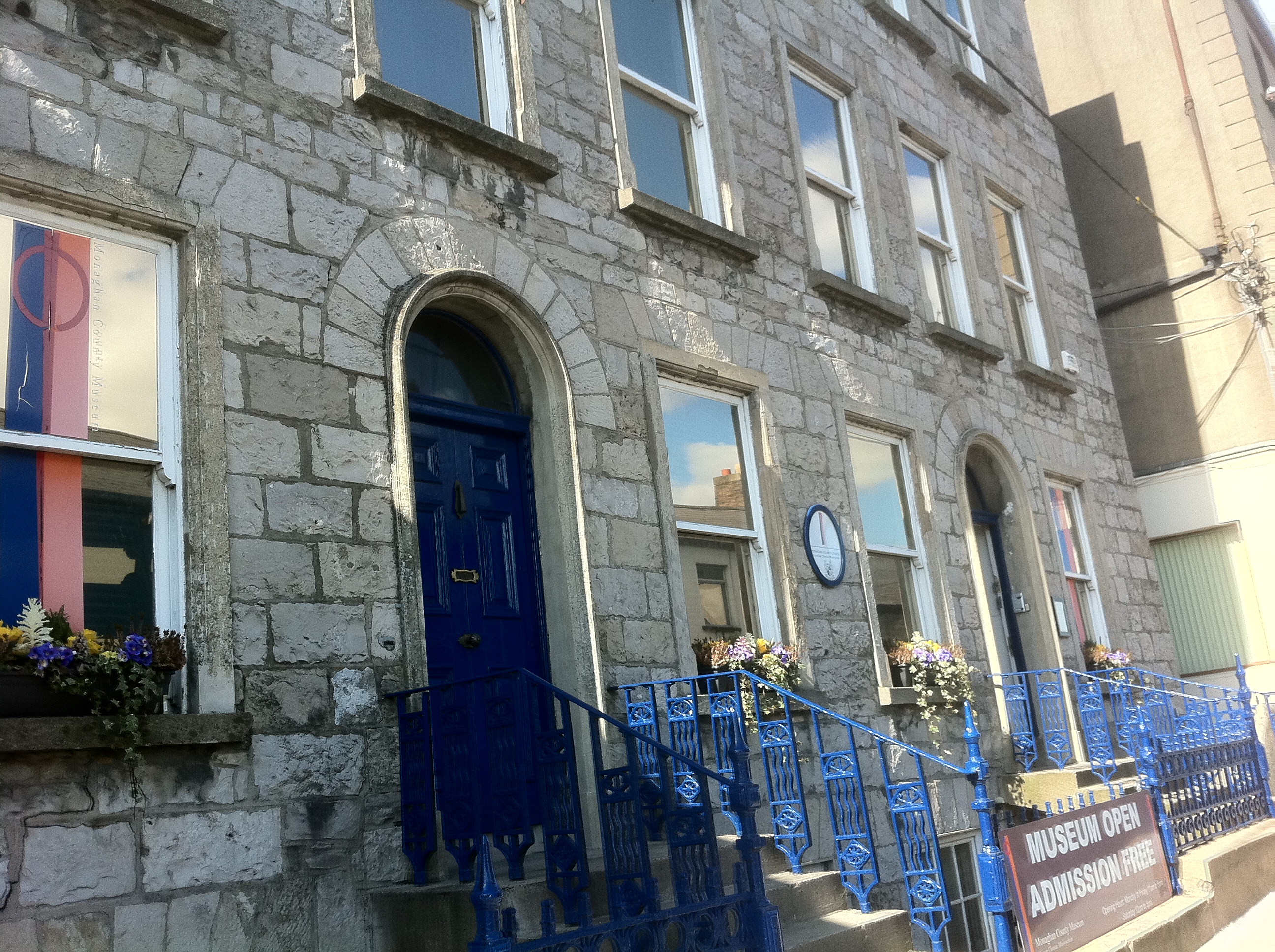
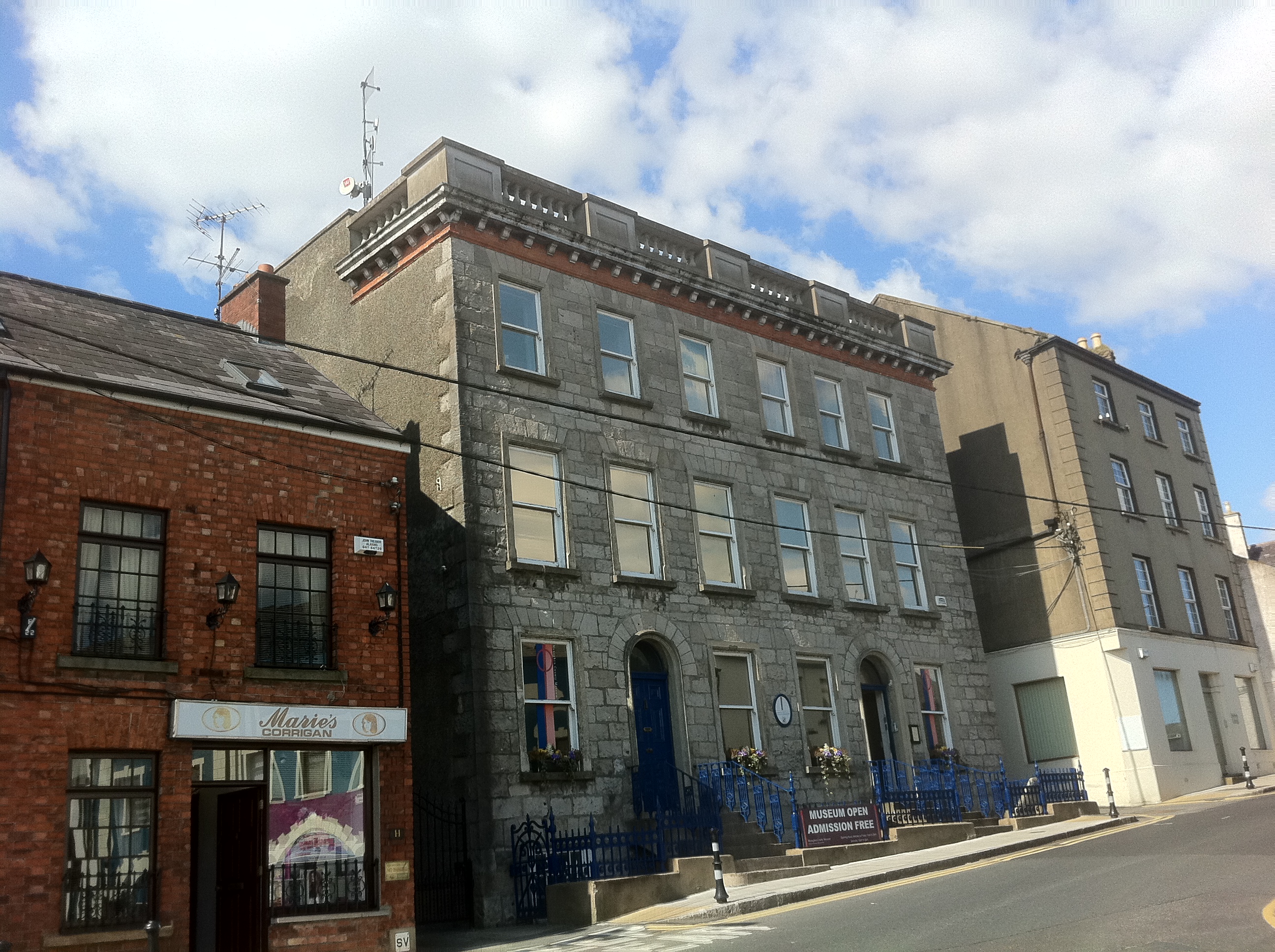
Monaghan County Museum. Hill Street Photo:  © Michael Fisher

Monaghan County Museum. Hill Street Photo: © Michael Fisher

This year, the scheme will allow for the funding of small capital projects on a matched funding basis (75:25).  A total fund of 0,000 is being made available for suitably qualified museum development projects. Projects funded under the Scheme should seek to enhance the cultural offering of museums; to encourage greater access to museums and to promote the use of museums as tourism resources in their locality or region.

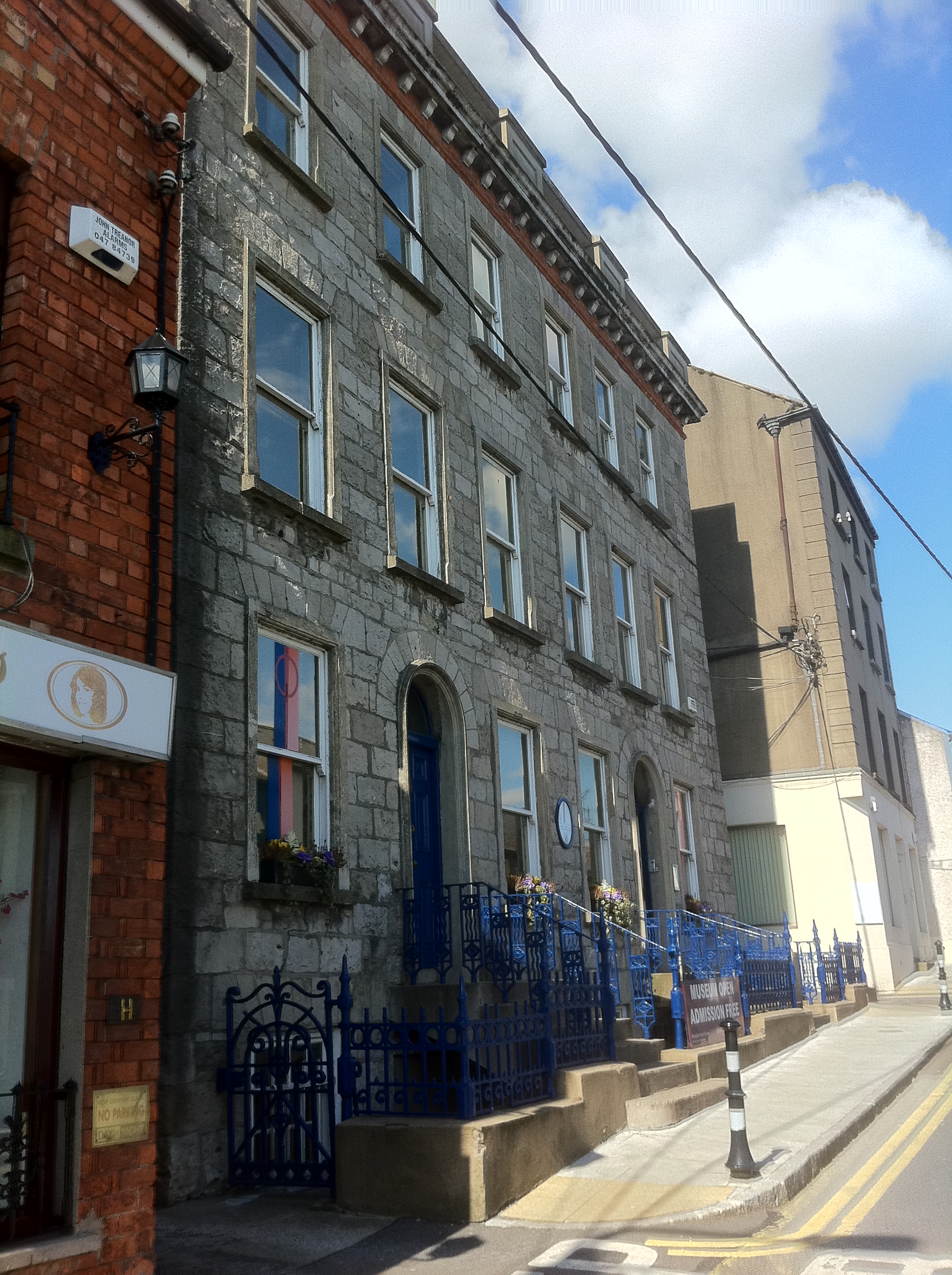
Monaghan County Museum. Hill Street Photo:  © Michael Fisher

Monaghan County Museum. Hill Street Photo: © Michael Fisher

Minister Humphreys said: “the Local and Regional Museums Scheme provides a valuable funding stream for small and medium sized museums throughout the country, allowing them to stage exhibitions, promote and market their museums and generally improve their product offering.  These museums are central focus points within the community and it is vital that they are supported in their role as guardians and narrators of our cultural heritage. The funding provided under this Scheme over the past few years has allowed these museums to continue to enhance the presentation of their exhibitions and premises which in turn improves the cultural offering of the local communities they serve.” 

Monaghan County Museum. Hill Street Photo:  © Michael Fisher

Monaghan County Museum. Hill Street Photo: © Michael Fisher

Monaghan County Museum opened in 1974 becoming the first full time, local authority funded and professionally staffed museum in the country. The first Curator was Aidan Walsh. During its history it has seen many social, cultural and political changes both at a local and national level. These diverse changes are reflected in the museum’s collection of artefacts and displays.

Curator Liam Bradley (left) with author Christopher Fitz-Simon (centre) and Friends of Monaghan Museum Photo:  © Michael Fisher

Curator Liam Bradley (left) with author Christopher Fitz-Simon (centre) and Friends of Monaghan Museum Photo: © Michael Fisher

The museum staff headed by curator Liam Bradley are dedicated to the goal of ensuring that all its exhibitions and events are accessible to everyone. It has received many awards during its existence. It was the first Local Authority Museum in the country to achieve full accreditation under the Heritage Council’s Museum Standards programme for Ireland. This was a very worthwhile process for the museum to be involved in and was a huge testament to the commitment of the museum staff as well as the tremendous support received from Monaghan County Council and the Museum’s other stakeholders including the Museum Advisory Committee that Monaghan County Museum is now officially recognised as one of the most professionally run museums in the Republic of Ireland.

Monaghan County Museum. Hill Street Photo:  © Michael Fisher

Monaghan County Museum. Hill Street Photo: © Michael Fisher

Like Loading...
MONAGHAN NEWS POLITICS UNCATEGORISED DAHGHeaher HumphreysLiam BradleyMonaghan Museum Leave a comment

MONAGHAN ARMY MEMORIAL

04/04/2015 by borderroamer
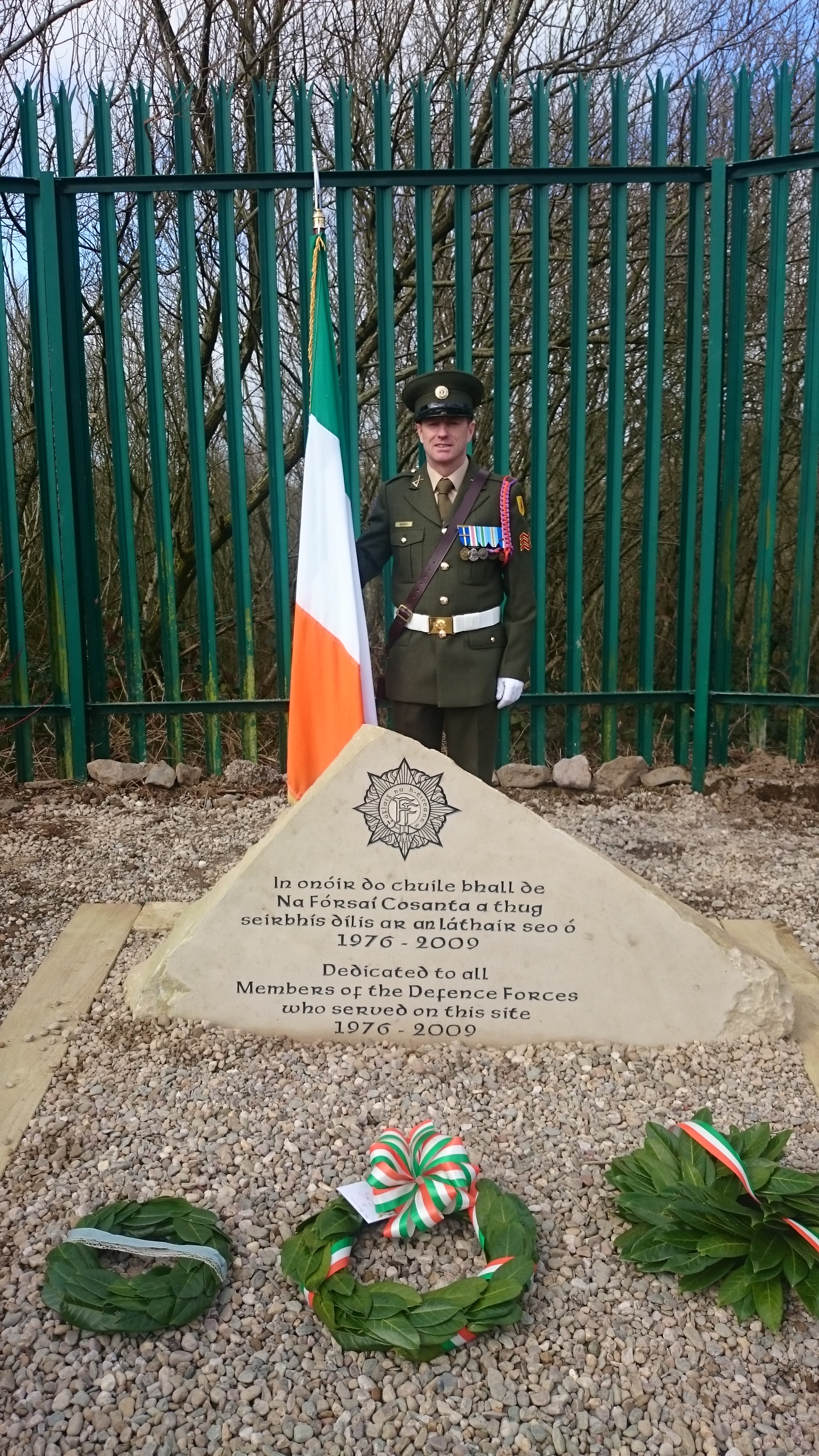
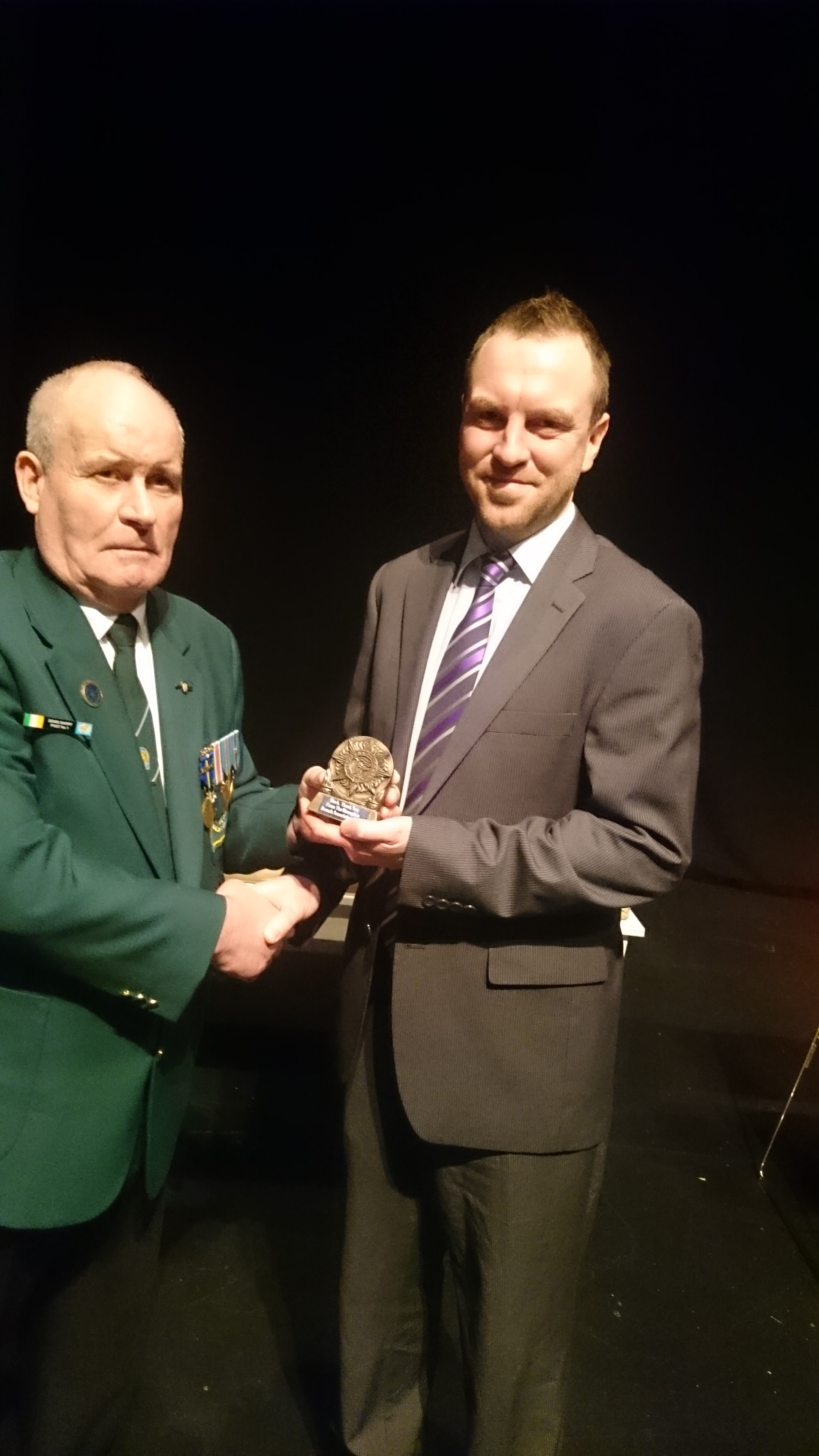
Commemorative stone for DF members who served in Monaghan Barracks 1976-2009, designed by Marc Kelly, Emyvale. Photo:  © Michael Fisher

Commemorative stone for DF members who served in Monaghan Barracks 1976-2009, designed by Marc Kelly, Emyvale. Photo: © Michael Fisher

ARMY’S CONTRIBUTION TO MONAGHAN COMMEMORATED AT FORMER BARRACKS SITE

MICHAEL FISHER  The Northern Standard  Thursday March 26th p.

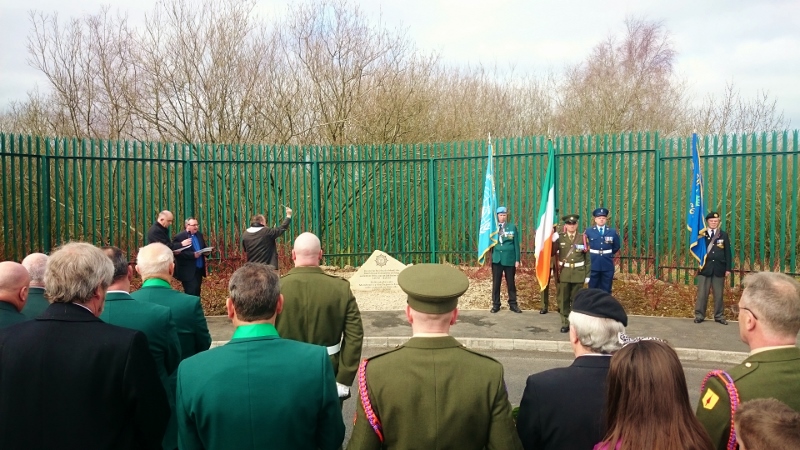
Blessing of commemorative stone by army chaplain Fr Bernard McKay Morrissey, CF Dundalk  Photo:  © Michael Fisher

Blessing of commemorative stone by army chaplain Fr Bernard McKay Morrissey, CF Dundalk Photo: © Michael Fisher

The tricolour was lowered for the last time at Monaghan Army Barracks in January 2009 and the gates were closed as the Defence Forces moved out. It was one of four army posts put up for sale by the government. Most of the soldiers based there transferred to the Headquarters of the 27th Infantry Battalion at Aiken Barracks in Dundalk.

Former Sgt Dennis Barry (centre), Monaghan Barracks Association with colour party: Mick Donoghue IUNVA Post 15 Cavan (left) and Wally Barry ONE Tanagh Branch (right) Photo:  © Michael Fisher

Former Sgt Dennis Barry (centre), Monaghan Barracks Association with colour party: Mick Donoghue IUNVA Post 15 Cavan (left) and Wally Barry ONE Tanagh Branch (right) Photo: © Michael Fisher

It might have remained a derelict site for many years. But it has since been transformed into an Education Campus that includes a new Garage Theatre, as well as two schools and the Monaghan Institute. The complex which was developed by the Cavan Monaghan Education Board under its Chief Executive Martin O’Brien was officially opened last month by An Taoiseach Enda Kenny.

Dennis Barry presents sculptor Marc Kelly with a DF crest to mark the occasion Photo:  © Michael Fisher

Organiser Dennis Barry presents sculptor Marc Kelly with a DF cap badge crest to mark the occasion Photo: © Michael Fisher

In order to remember the contribution of thousands of army personnel who passed through the post, a Monaghan Barracks Association was formed by a former Sergeant, Dennis Barry. A native of Clonmel in County Tipperary, he was stationed at the Armagh Road complex for many years. Their way of marking the contribution of the military and their colleagues from the Air Corps and Navy was to commission a stone from Emyvale sculptor Marc Kelly.

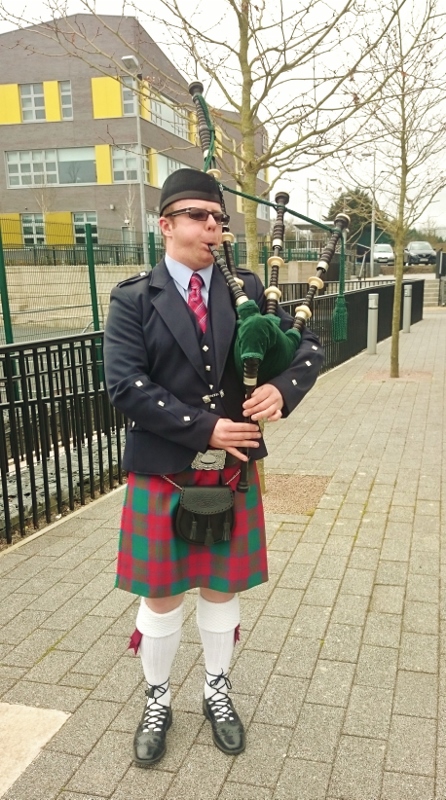
Piper Kevin Murphy, 27 Inf Bn Dundalk, who played a lament as the stone was unveiled Photo:  © Michael Fisher

Piper Kevin Murphy, 27 Inf Bn Dundalk, who played a lament as the stone was unveiled Photo: © Michael Fisher

Last Saturday (March 21st) former army colleagues including UN veterans joined serving members of the 27th Infantry Battalion and the Reserve, along with their families and friends, at the unveiling of the stone.

It was blessed by former Monaghan barracks chaplain, Fr Seán McDermott from Ballinagh, Co. Cavan, Canon Ian Berry, Rector of Monaghan, and Fr Bernard McCay-Morrissey, chaplain of the 27th Infantry Battalion in Dundalk.

Nathan Healy, Castleshane, unveiled the commemorative stone  Photo:  © Michael Fisher

Nathan Healy, Castleshane, unveiled the commemorative stone Photo: © Michael Fisher

The honour of unveiling the stone was given to 10 year-old Nathan Healy from Cavancreevy, Castleshane. His father Private John Healy of the 27th Infantry Battalion came from Dublin and joined the army when he was 19. Private Healy died in October and was given military honours at his funeral in Monaghan.

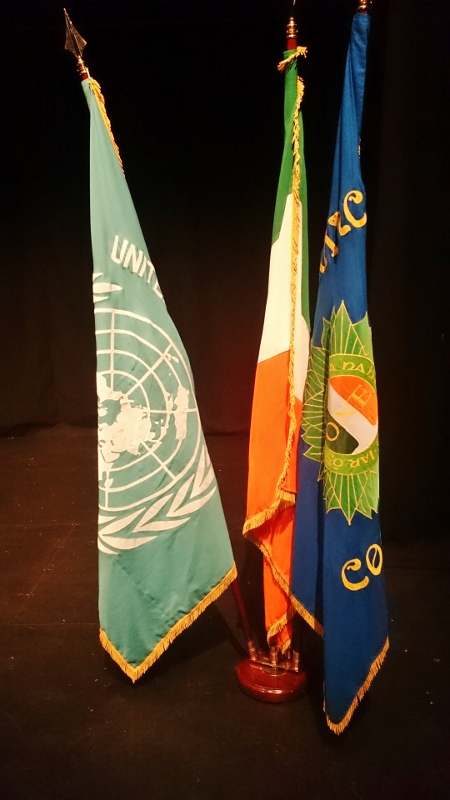
Flags on the stage during the Mass Photo:  © Michael Fisher

Flags on the stage during the Mass Photo: © Michael Fisher

The memorial stone is dedicated to all members of the Defence Forces who served on the site 1976-2009.

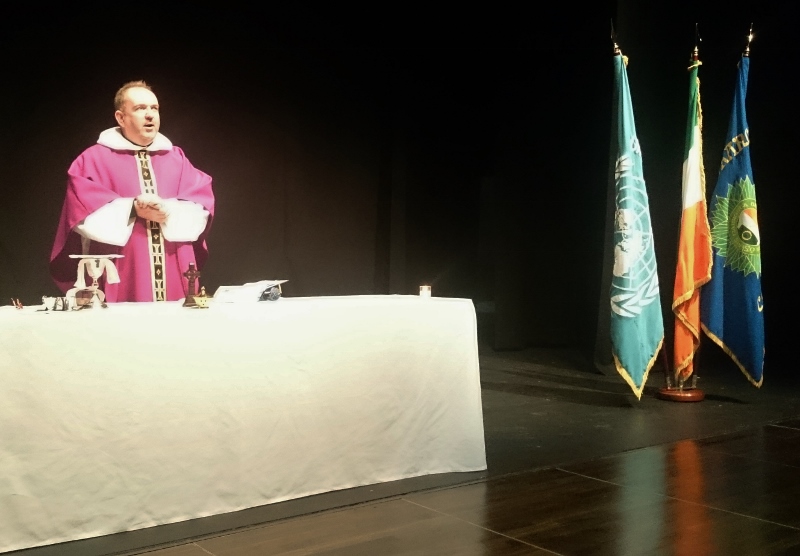
Army Chaplain Fr Bernard McKay Morrissey, CF Dundalk celebrated Mass at the Garage Theatre, Monaghan  Photo:  © Michael Fisher

Army Chaplain Fr Bernard McKay Morrissey, CF Dundalk celebrated Mass at the Garage Theatre, Monaghan Photo: © Michael Fisher

At the start of the commemoration, a Mass was held in the Garage Theatre, celebrated by Fr McCay-Morrissey. He said when the announcement of the closure of the barracks came, it was unexpected. It was a time of anxiety and uncertainty for those affected. But good things had eventually emerged from it, although some were still adapting to the move to Dundalk. Prayers were said for all those who had worked in the barracks, the NCOs and officers and the staff.

Reflection during Mass by John Wilson, remembering all who had been stationed at Monaghan Barracks Photo:  © Michael Fisher

Reflection during Mass by John Wilson, remembering all who had been stationed at Monaghan Barracks Photo: © Michael Fisher

Fr Seán McDermott was chaplain when the barracks closure was announced and recalls that he was with some members of the unit serving overseas at the time.

Colour Party escorting the tricolour Photo:  © Michael Fisher

Colour Party escorting the tricolour Photo: © Michael Fisher

The decision to construct a barracks in Monaghan was made in November 1973 and the complex was opened in December 1976 by then Taoiseach Liam Cosgrave at the height of the troubles in the North. The soldiers who were then part of the 29th Infantry Battalion operated border patrols and served in aid of the civil power (Gardaí). They often found themselves called out to monitor unnapproved border crossings where local residents were filling in craters that had been caused by the British Army. The troops also supported the Department of Agriculture during the foot and mouth, BSE and poultry disease crises.

Not many local people signed up for military service initially, but as the years went by, more recruits came from the Monaghan area. Soldiers of the 27th Infantry Battalion have served in numerous peacekeeping missions around the world, most notably in Lebanon.

Colour party marches off at end of unveiling and blessing Photo:  © Michael Fisher

Colour party marches off at end of unveiling and blessing Photo: © Michael Fisher

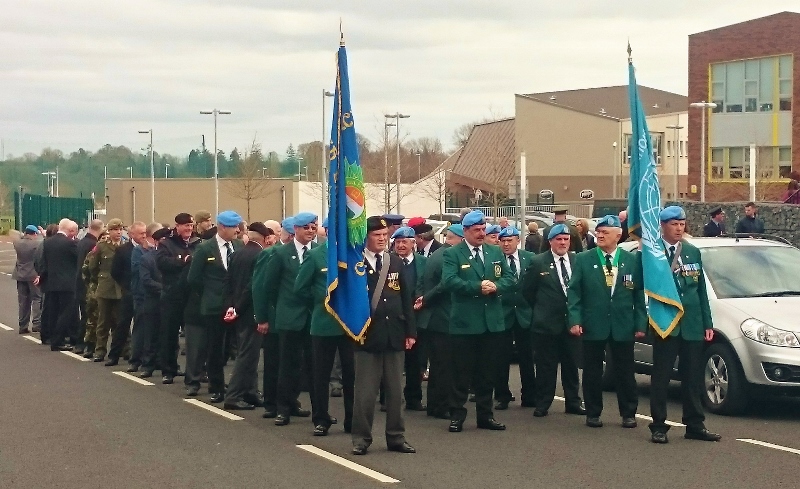
UN veterans were among those who paraded from the Garage theatre to the site of the memorial stone in what was once the transport yard of the barracks.

Parade from Garage Theatre to memorial stone in former transport yard Photo:  © Michael Fisher

Parade from Garage Theatre to memorial stone in former transport yard Photo: © Michael Fisher

Following the ceremony, refreshments were served in the school canteen and young Nathan Healy from Castleshane was given the task of cutting the special cake that had been made for the occasion.

Nathan Healy, Castleshane, cuts the Monaghan Barracks Association cake Photo:  © Michael Fisher

Nathan Healy, Castleshane, cuts the Monaghan Barracks Association cake Photo: © Michael Fisher

Like Loading...
MILITARY MONAGHAN NEWS UNCATEGORISED 27 Inf BnCanon Ian BerryDefence ForcesDennis BarryFr Bernard McCay MorrisseyFr Seán McDermottGarage TheatreMarc KellyMonaghanNathan Healy Leave a comment

ICA MONAGHAN 60 YEARS

03/04/2015 by borderroamer
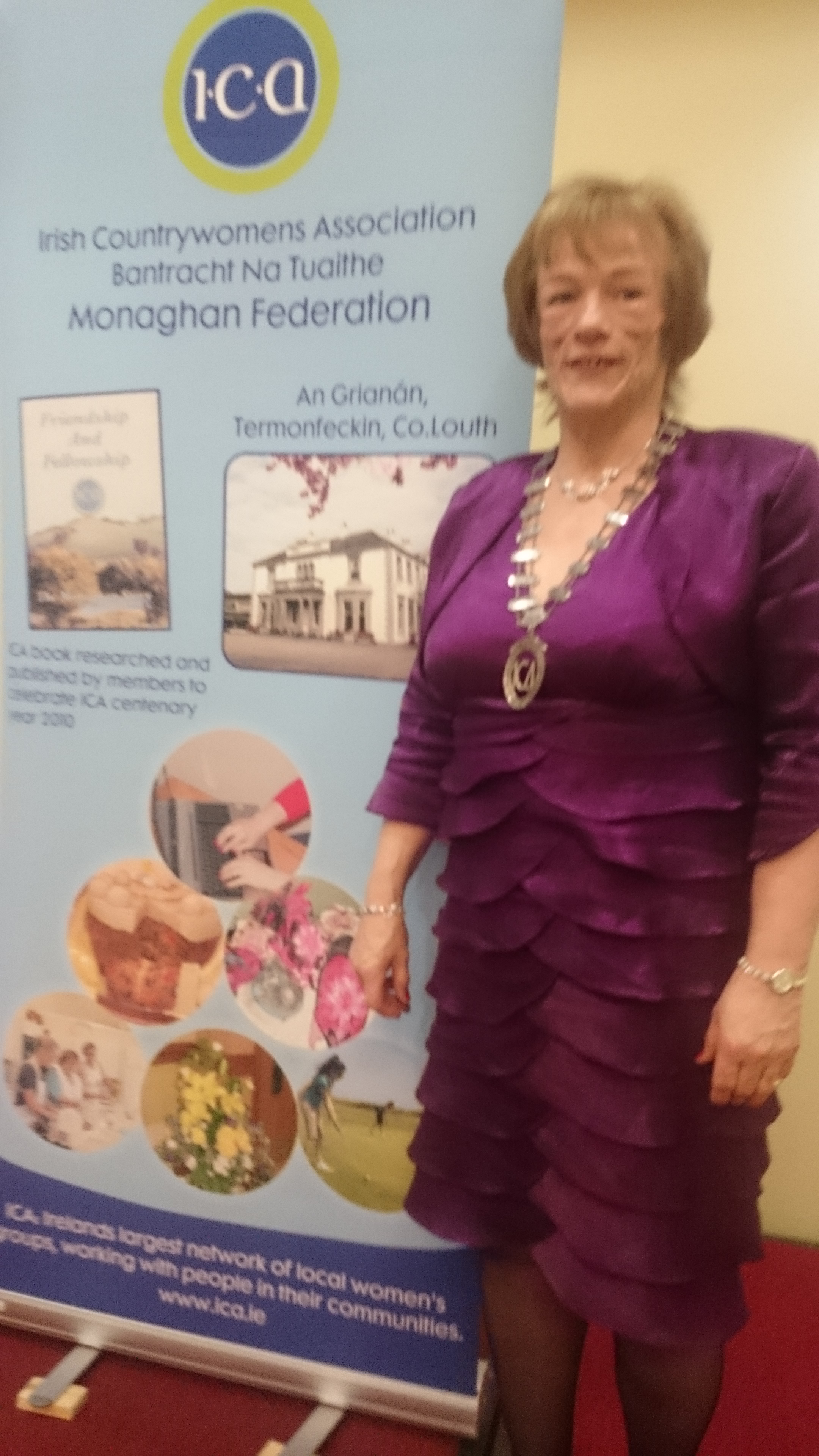
ICA President Liz Wall with her chain of office  Photo:  © Michael Fisher

ICA President Liz Wall with her chain of office
Photo: © Michael Fisher

MICHAEL FISHER   Northern Standard Thursday 26th March

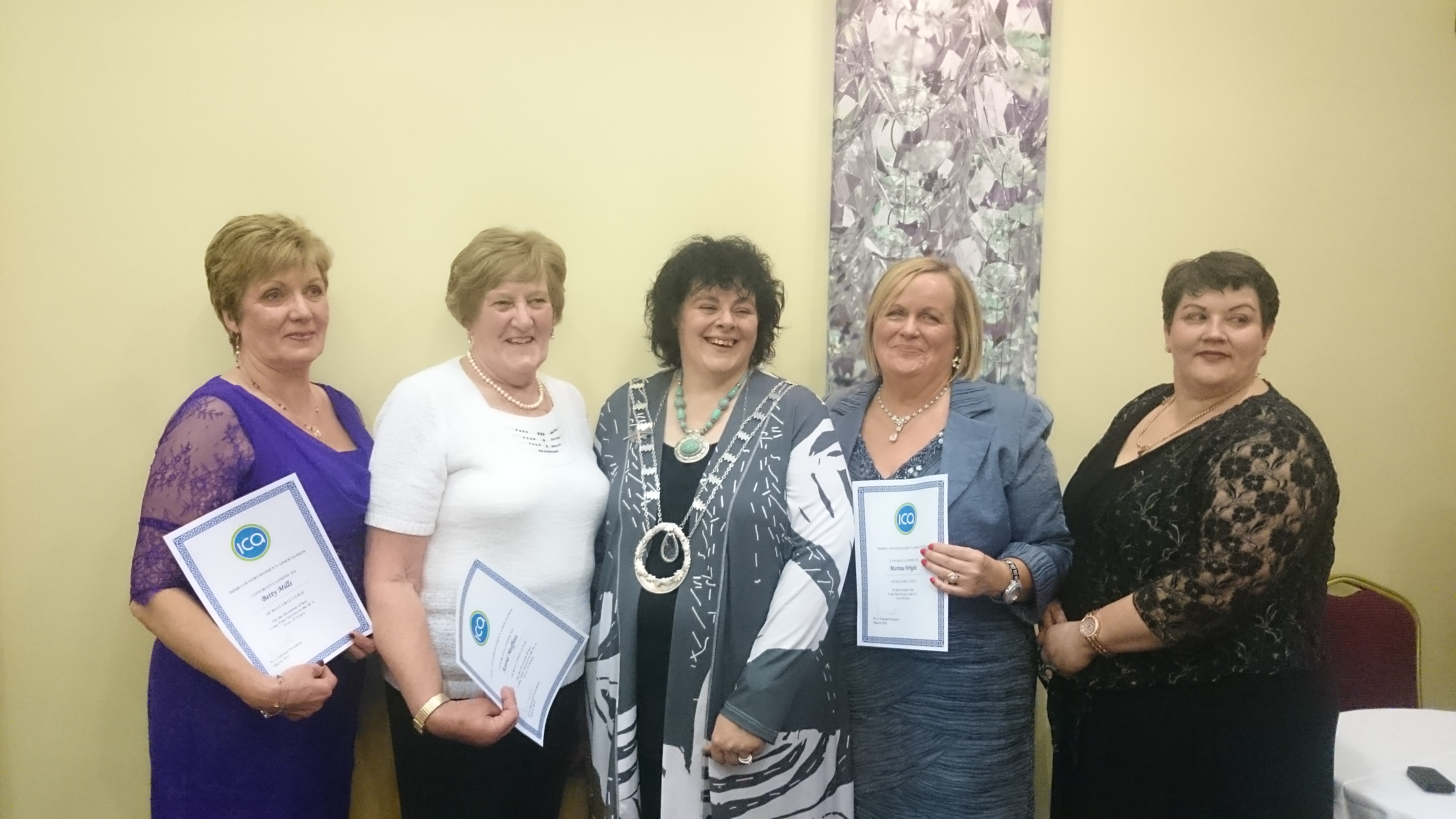
“We are not a group of fuddy-duddies, although many people have that perception. Just look at the number of women out on the dance floor tonight, enjoying themselves”. The President of the Irish Countrywomen’s Association Liz Wall was speaking to me after presenting 161 members in thirteen Monaghan guilds with their long service certificates. When the sums were done, the result was that all these ladies had given a total of 4400 years’ dedication to the aims of the ICA in the county, what seems to be a unique record for any voluntary organisation. Two guilds, Aghabog and Clones, accounted for over a quarter of that figure.

ICA President Liz Wall presents members of Ballybay Guild with their long service certificates  Photo:  © Michael Fisher

ICA President Liz Wall presents members of Ballybay Guild with their long service certificates
Photo: © Michael Fisher

Liz has made three previous visits to the county during her three years in office, which will end in May when her successor will be elected at the AGM in Portlaoise. In October 2013 she opened a conference in Monaghan on Recovery, organised by the Solas Drop-in Centre Monaghan. It was an example of the work the ICA does to promote mental health.

With over 500 guilds throughout the country and around 10,000 members, Liz is very anxious to keep in touch with the members at grassroots level. She finds out their views by sending out questionnaires during the year. These included the Mental Health Survey, the abortion questionnaire, the audit of lace work in Ireland and a rural communities questionnaire.

ICA President Liz Wall presents members of Ballybay Guild with their long service certificates  Photo:  © Michael Fisher

ICA President Liz Wall presents members of Threemilehouse  Guild with their long service certificates
Photo: © Michael Fisher

The ICA National President recently added her  voice to the Save Rural Ireland campaign. “If rural Ireland dies, we won’t be able to bring it back”, she told me. “I think it’s a very important campaign. Unless someone puts down a marker to do something, nothing will happen.” The campaign includes groups such as Muintir na Tire, the Irish Cattle & Sheep Farmers Association, the Irish Postmasters’ Union, Macra na Feirme, and the Irish National Flood Forum.

The issues raised at its launch include the need for high-speed rural broadband, the continued threat of rural post-offices closures, the theft of scrap metal, the unavailability of insurance in flood areas, and the need for more rural GP cover.

The number of post offices has fallen from 2,300 in 1984 to about 1,100 now. “When the post office goes, the shops go, the chemist goes and then the public bus service goes,” Liz Wall says. “Our members feel that rural Ireland is being totally destroyed. It needs help before it is too late for rural communities.”

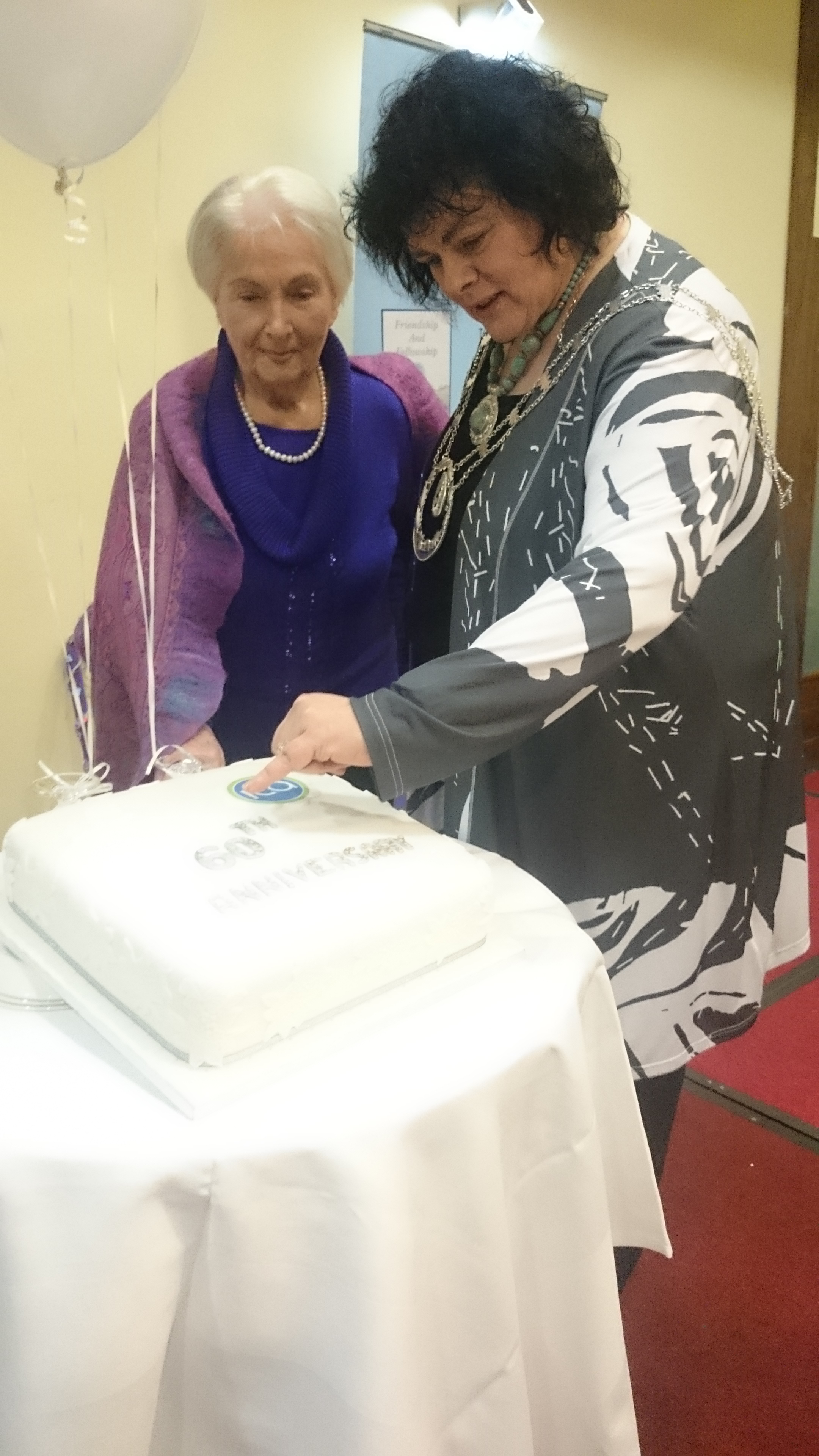
ICA National President Liz Wall cuts the 60th anniversary cake (by Mary Reilly Rockcorry) with one of her predecessors Mamo McDonald from Clones  Photo:  © Michael Fisher

ICA National President Liz Wall admires the 60th anniversary cake (by Mary Reilly Rockcorry) with one of her predecessors Mamo McDonald from Clones
Photo: © Michael Fisher

She paid tribute to one of her predecessors, Mamo McDonald, who helped her cut the cake at the diamond jubilee dinner. She had played a very big role during her term as National President, Liz said.

Before taking on the role of President, Liz Wall served as National Secetary of the ICA. She has visited guilds all over the Republic and has clocked up over 110,000 miles on her car. Last weekend, including the visit to Carrickmacross, she would cover 1500 miles and visit Dundalk and Galway before returning home to Ashford in County Wicklow. She is married and has three daughters who are university students and a 17 year-old son who is in Leaving Certificate year. Before the night concluded at The Shirley Arms Hotel in Carrickmacross, a cheque was presented by the Monaghan Federation to the National President for €2,800 towards the restoration of An Grianán, the Association’s residential college and conference centre in Termonfeckin, County Louth.

ICA Monaghan Federation President Patricia Cavanagh presents cheque to National President Liz Wall for €2800 for restoration of ICA College Termonfeckin  Photo:  © Michael Fisher

ICA Monaghan Federation President Patricia Cavanagh presents cheque to National President Liz Wall for €2800 for restoration of ICA College Termonfeckin Photo: © Michael Fisher

Outgoing ICA Monaghan Federation President Patricia Cavanagh, Ballinode Guild Photo:  © Michael Fisher

Outgoing ICA Monaghan Federation President Patricia Cavanagh, Ballinode Guild Photo: © Michael Fisher

ADDRESS BY OUTGOING ICA MONAGHAN FEDERATION PRESIDENT PATRICIA CAVANAGH
A Uachtarain Naisiunta agus a chombhaill. Ta athas orm faílte a chuir roimh go leir chuig an ocaid speisialta seo anocht.
Madame President, fellow members and special guests, I am delighted to welcome you all here this evening. This year Monaghan Federation ICA celebrates its Diamond jubilee and as part of our celebrations, tonight we will receive our long service certificates for those who are 15 years or longer in ICA in Monaghan. Many thanks to our National President Liz Wall for agreeing to come and be with us on this very special occasion.

Rosa Patterson, founder member of ICA Guild Ballybay 60 years ago Photo: ICA Monaghan book

Rosa Patterson, founder member of ICA Guild Ballybay 60 years ago Photo: ICA Monaghan book

Sixty years ago as Rosa Patterson cycled to and from her work as a primary school teacher in the Ballybay area she stopped and spoke to the local women as they went about their many daily chores on the farm and in the home and realised the need to form a women’s group in the area where women could come together, socialise, learn new crafts and generally discuss items of interest that was common to them all. She maintained that every woman had their own individual potential and skills and encouraged the use of them. Ballybay Guild opened in January 1954 and in June 1955 Monaghan Federation held its first meeting in Hatton’s hotel Ballybay with at least six guilds in the County at this stage. Rosa Patterson became its first President and from there we ventured forward to make our mark in the world of ICA as we know it today.

Monaghan can be proud that two National Presidents were elected from its midst. The first was Josephine Carroll 1972 -1975. Josephine worked tirelessly for the Save Monaghan Hospital campaign and was a skilled craftworker and craft teacher with a keen interest in country markets. She was responsible for the setting up of two branches of country markets, here in Carrickmacross and in Monaghan town. Secondly Mamo McDonald, who joins us here this evening. She became President in 1982.

ICA National President Liz Wall, Honorary President Mamo McDonald and outgoing Monaghan Federation President Patricia Cavanagh Photo:  © Michael Fisher

ICA National President Liz Wall, Honorary President Mamo McDonald and outgoing Monaghan Federation President Patricia Cavanagh Photo: © Michael Fisher

There have been many events and gatherings over the years and many women have gained so much from being part of this wonderful organisation at all levels. In 1993 Monaghan ICA was alarmed by the introduction of probate tax in the budget which was going to involve the surviving spouse where joint ownership did not exist facing a new tax. A resolution was passed and brought to National Council calling for its abolition which was then brought to government. An alliance was formed with other interested parties which led to many exemptions being secured.

ICA Monaghan Federation celebration dinner, Shirley Arms Hotel  Photo:  © Michael Fisher

ICA Monaghan Federation celebration dinner, Shirley Arms Hotel Photo: © Michael Fisher

In 1994 when the teachers’ centre in Monaghan was in danger of being downgraded, the ICA got behind the campaign and petitioned for it to be retained. In 1996 Monaghan Education centre was upgraded to a full-time education centre. At our last Federation meeting we discussed the downgrading of the library service in County Monaghan, where we are going to be amalgamated with County Cavan library services. Once again we hope to petition against this. I could speak of many of our events and achievements, but at this stage I would like to pay tribute to members who are no longer with us. We hope that into the future that ICA will remain strong and vibrant and continue to support women to support each other on their journey through life.

I will finish with this short poem written by a member of Threemilehouse Guild, Kathleen Kieran, who sadly is no longer with us:-
As we celebrate our 60th,
Let’s cast back our thoughts today,
To the women of foresight and courage,
Who founded the ICA,

They gave women a stance in our country,
The voice that was silent now heard,
To speak out for fair play and justice,
That the wealth of our country be shared.

A BUSY THREE YEARS AS FEDERATION PRESIDENT

Patricia Cavanagh from Tullyvogey in Tydavnet was one of the founder members of the ICA’s Ballinode guild at a meeting in the community centre in Otober 1983. Her sister Breege Lenihan also joined. She has had a very busy three years as President of the Monaghan Federation. It is one of five areas in the country that has seen a growth in members, whereas other counties have been in decline. There are around 260 members in the thirteen guilds in the county. The work the Association does to encourage crafts was one of the reasons Patricia joined. Learning skills that can be passed on to a younger generation.

Their trips over the years to the ICA college at An Grianán introduced them to a wide variety of crafts and courses such as cookery, aromatherapy, healthy lifestyle, ballroom dancing and gardening. The Ballinode guild has around thirty members and meets in Tydavnet community centre on the second Thursday of each month. It raises funds annually for different charities and every year their entries feature in Tydavnet Show.

Patricia says the ICA has played a major role in the social, educational and cultural lives of Irish women since its inception. It now aims to attract younger and new members. Any female over 16 is eligible to join. Although it is perceived widely as a predominantly rural group, the “country” in the title stands for Ireland, and the biggest ICA guild is in Blanchardstown, County Dublin.

ICA National President Liz Wall congratulates Killanny Guild members on their long service certificates, among them Mary Callan (right), mother of comedian Oliver Callan  Photo:  © Michael Fisher

ICA National President Liz Wall congratulates Killanny Guild members on their long service certificates, among them Mary Callan (right), mother of comedian Oliver Callan Photo: © Michael Fisher

The outgoing Federation President says she is proud to have been part of the Association and what it stands for. It has brought friendship, fellowship and comradeship, she says. Patricia gained a particular insight into the history of the organisation when she consulted the ICA minute books held in the National Archives in Dublin. Along with a committee, she helped to produce a book “Friendship and Fellowship: ICA, The Monaghan Story” to mark the national centenary in 2010.

During her term Patricia has visited most of the thirteen guilds in Monaghan. As a former psychiatric nurse, one of the highlights for her was when the ICA along with the Solas centre marked World Mental Health Day in 2013 by organising a Recovery conference in Monaghan, which the National President attended. Liz Wall also came to Carrickmacross for a very successful craft day. The ICA has been to the forefront in helping to preserve both Carrickmacross Lace and Clones Lace.

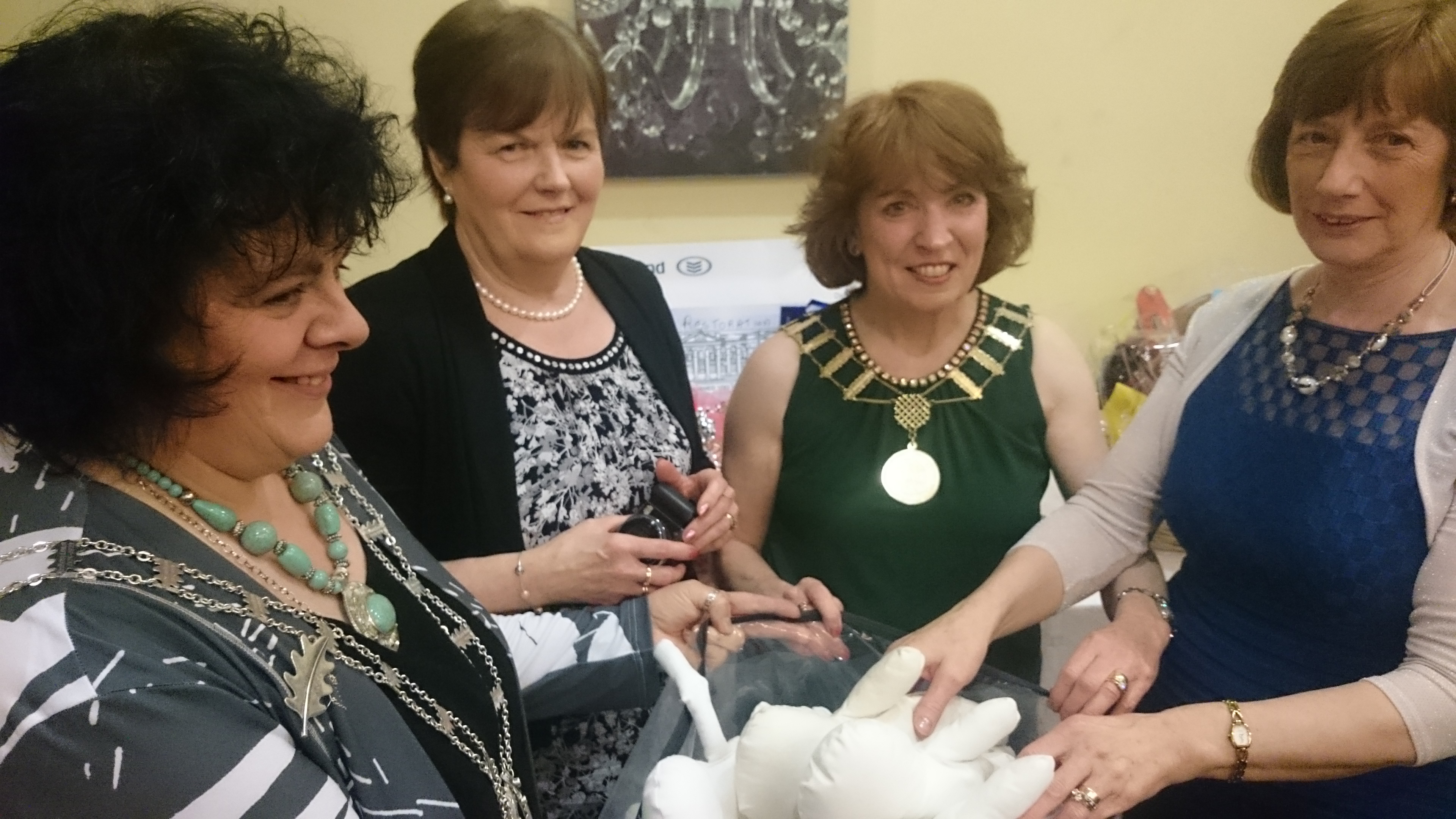
Calico dolls made for Temple St Children's Hospital by members of ICA Guilds in Clones and Ballinode   Photo:  © Michael Fisher

Calico dolls made for Temple St Children’s Hospital by members of ICA Guilds in Clones and Ballinode Photo: © Michael Fisher

During the celebration there was an example of how ICA members can use their skills to help others. The play therapists at Temple Street Children’s Hospital in Dublin contacted the women’s group to see if any members could make calico dolls. These dolls are used with the young patients, allowing them to colour in and make unique to themselves their illness or condition and to explain to them their treatment. Sacks of the dolls were handed over at the dinner and will be forwarded by the ICA to the hospital. As a mark of thanks for her service in Monaghan, Patricia Cavanagh was presented with a silver oak leaf brooch by the National President at the end of a very enjoyable evening marking the achievements of the Irish Countrywomen’s Association.

HONORARY NATIONAL PRESIDENT MAMO McDONALD CLONES GUILD

ICA Honorary President Mamo McDonald, Clones Guild, receives her certificate from National President Liz Wall for 60 years of ICA membership  Photo:  © Michael Fisher

ICA Honorary President Mamo McDonald, Clones Guild, receives her certificate from National President Liz Wall for 60 years of ICA membership Photo: © Michael Fisher

Mamo McDonald from Clones Guild served as National President of the ICA for three years from 1982 to 1985. She said it was the beginning of an adventure that was fulfilling, exciting, educational, exhausting and always challenging. In ‘Friendship and Fellowship’, the history of the ICA in County Monaghan published in 2010, the ICA’s Centenary year, Mamo revealed that it was the leadership of another National President from Monaghan, Josephine Carroll, that encouraged her to run for the position. This was at a time when the ICA membership was at an all-time high of 27,000 members.

“Mamo originally joined the Association in Croom, County Limerick, in 1947 and went on to help found the Clones Guild. It was just after the Second World War and there were many scarcities. Mamo recalled: “In one of my first meetings we learned to cure lamb skins and to make slippers and soft shoes lined with fleece. Today my Guild has lots of younger members, many of whom have joined in the last few years. What do they want to learn? They want to learn to knit, sew, make Clones lace and to learn other craft skills. We have come full circle”.

In another ICA publication Mamo said one of the highlights for her was bridging the gap with the radical feminist movement. “Before my time they were considered “the enemy” and it was a huge challenge for both sides to accept each other and realise that we were usually singing from the same hymn sheet and were able to work more together”, she said. During her presidency the different women’s groups grew closer and closer, supporting each other, and the ICA became more a part of the Irish Women’s movement.

Mamo said she believed the opportunity to travel was one the greatest opportunities she got as National President and the other was the chance to sit on national committees and to really make a difference.

“Before I became President of ICA I had been concentrating on raising my large family and the only holidays I got were short visits to An Grianán”, she said. “Then as President I travelled many times to London working with the Associated Country Women of the World, further afield working with the Confederation of Family Organisations in the EU and I travelled to Canada and to Nairobi in Africa as a delegate to the United Nations International Conference on Women. Being invited to join government- appointed committees was also a great opportunity”.

Mamo recalled: “As a businesswoman with a drapery shop in County Monaghan, I knew a lot about the responsibilities that go with the rights of consumers, so I often spoke out about it. I was invited to join the Committee for Consumer Education. As I was travelling widely at the time, I noticed differences in the welcome received in hotels and establishments in these countries that was often lacking in Ireland. After a visit to Vancouver where I had been very impressed with the customer service I spoke out about the failings in the hospitality sector in a speech entitled ‘Céad Míle Faults?’ and was then invited to join Bord Fáilte”.

The great disadvantage during her presidential term, she said, was being away from home and from her family and that proved very difficult at times. “I have eleven children and I always felt guilty when I was away. When I came in as President some of my children where working, some were in university, some in secondary education and even little ones still in primary school. My husband Eugene died in 1979 so during my presidency, I relied on the wonderful support and great friendship of Patsy our housekeeper and wonderful friend; I couldn’t have done the work of President without her. When I was at home I spent a lot of time baking so that there would be loads of loaves of brown bread in the freezer for everyone and then when I was at home, I felt guilty about not being at work for ICA!”

After her term in office Mamo became involved in the politics of ageing. She is a founder member of Age and Opportunity and the Older Women’s Network. When she was 70, Mamo McDonald returned to full-time education and did a higher diploma followed by a Masters in Women’s Studies in UCD. She delights in her thirty-two grandchildren and four great-grandchildren who visit her regularly.

(from an interview with ICA News)

Irish Countrywomen's Association

Irish Countrywomen’s Association

Like Loading...
MONAGHAN NEWS UNCATEGORISED CarrickmacrossICALiz WallMamo McDonaldMonaghanPatricia Cavanagh 2 Comments

LED LIGHTS CUT ENERGY BILLS

02/04/2015 by borderroamer

COUNCIL ENGINEER SAYS LED LIGHTS CAN CUT ENERGY BILLS BY ONE THIRD  Michael Fisher

Carrickmacross News  The Northern Standard  Thursday 2nd April p.20

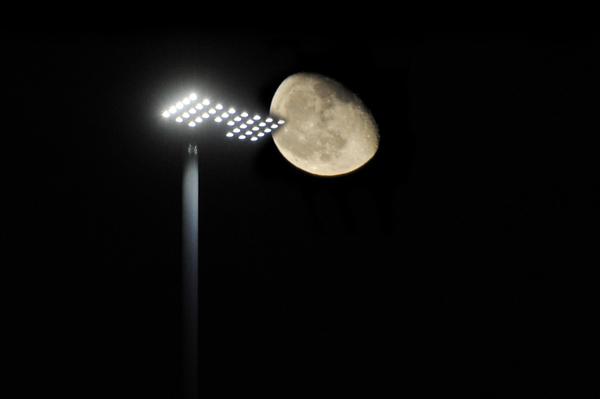
An Amey-installed LED light in England Photo:  @Ameyplc  "We think LED street lights will lead to greener, safer cities"

            An Amey-installed LED light in England Photo: @Ameyplc
           “We think LED street lights will lead to greener, safer cities”

The installation of LED road lighting in parts of Carrickmacross and other areas is helping to reduce significantly Monaghan County Council’s energy bills. The head of a special unit in the Council set up to achieve energy efficiencies told Councillors in the Carrickmacross-Castleblayney Municipal District that the Council intends to reduce its energy use by one-third by 2020. Senior Executive Engineer Alan Hall said the digital LED lights were now the first preference for new public projects, unless there was no advantage. He said they could provide energy savings of between 50% and 60% and the cost of their installation could be paid back through savings within two years.

Since 2011, a number of councils in Britain in cities such as Birmingham and Glasgow have already made the switch to LED lights. They were chosen because they use less energy, and are cheaper to operate and more environmentally friendly than conventional sodium bulbs. The sodium street lamps light up when an electric current is passed through lithium gas, making it glow. Lamps powered by LEDs — light-emitting diodes — glow when current passes through a solid material, known as a semiconductor.

New LED Street Light in England  Photo: www.suttoncoldfieldlocal.co.uk

New LED Street Light in England Photo: http://www.suttoncoldfieldlocal.co.uk

They use up to 60 per cent less energy than sodium lamps and are said to last up to eight times longer, reducing maintenance costs and halving electricity bills. The LED lights are also easy to operate as they produce light immediately when they are switched on rather than taking time to heat up, and can be controlled remotely via digital sensors. It is claimed that their bright ‘floodlight-style’ beams help to deter criminals. But in some housing estates in England, where LED lights have been installed, they have proved to be unpopular with residents, who believe their brightness can interrupt sleep patterns.

Following Mr Hall’s presentation, a motion was proposed by Fianna Fáil Councillor PJ O’Hanlon, seconded by his party colleague Councillor Padraig McNally: “That this Council calls on the Minister for Energy Alex White that additional funding be given to Monaghan County Council as a result of a new section (being) set up, i.e. Corporate Assets and Energy Unit, as in our area we only have €45,000 per year for Public Lighting and the projected saving for our area is approx. €130,000 per year”. The motion was passed unanimously. Another motion on alternative energy put forward by the two Sinn Féin members, Councillor Colm Carthy and Councillor Noel Keelan was also agreed:

“That the Carrickmacross-Castleblayney Municipal District writes to Alex White T.D. (Minister for Communications, Energy and Natural Resources) to request information on any future plans to introduce rebates for consumers to sell energy back to the Grid using PV solar panels. This will allow for cheaper and cleaner energy usage throughout the state if implemented”.

Like Loading...
UNCATEGORISED Alan HallBirminghamCarrickmacrossLED LightsMonaghan County Council 2 Comments

TACKLING DIESEL LAUNDERING

01/04/2015 by borderroamer

NEW DYE TO COMBAT DIESEL LAUNDERING  The Northern Standard Thursday 2nd April p.1

Michael Fisher 

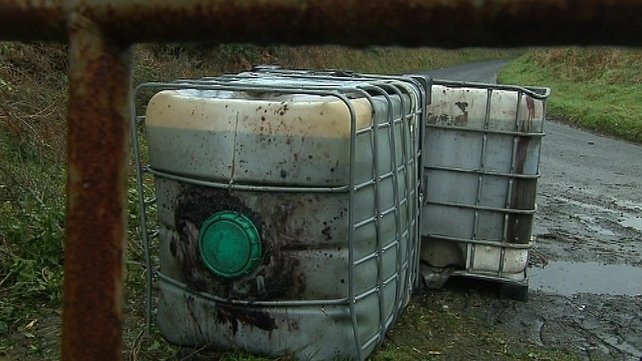
Containers filled with toxic diesel sludge abandoned at a roadside in Co. Monaghan  Photo: RTÉ News 2012

Containers filled with toxic diesel sludge abandoned at a roadside in Co. Monaghan Photo: RTÉ News 2012

New measures to tackle diesel laundering have been introduced on both sides of the border. From yesterday (Wednesday), a new, additional fuel marker for rebated fuel is being introduced following consultation with, and support from, the oil sector.

The illegal dumping of diesel laundering waste has been a huge problem in County Monaghan for over ten years. The hazardous waste has to be sent abroad for disposal. Monaghan County Council estimated the total costs incurred in its area because of diesel wash between 2004 and 2013 totalled over €2.14 million. Last year the clean-up cost was over €600,000 and this was reimbursed by the Department of Environment.

The Irish and British governments say the new fuel marker is now required in addition to the existing mineral oil markers. Producers and suppliers of rebated fuel must ensure that any supply of rebated fuel removed from the warehouse for home use contains the new mix of markers as set out in legislation in the different jurisdictions. revenue

The Revenue Commissioners say action against the illegal use of marked fuel is an integral part of their wide-ranging programme of action against all forms of fuel fraud. An extensive range of new measures have been introduced over recent years to tackle fuel fraud, including enhanced supply chain controls and now the acquisition of a more effective fuel marker.

This marker will help both the Revenue Commissioners and the British Revenue and Customs (HMRC) to tackle the criminal market in off-road diesel, marked with a green dye in Ireland and a red dye in the UK, and also kerosene primarily used for heating oil. Excise duty on rebated diesel is charged at a lower rate than standard fuel duty.

Launderers primarily target red or green diesel, filtering it through chemicals or acids to remove the government marker. The chemicals and acids remain in the fuel and damage fuel pumps in diesel cars.

The new marker is produced by The Dow Chemical Company and is intended to make rebated fuel much harder for fraudsters to remove the dye and to sell on at a profit. Rebated fuel use is strictly limited to specific circumstances, primarily in agriculture, construction and heating.

The new marker does not have any colour and is added in addition to the current markers. There will be no change of colour. Specialised equipment is required to confirm the presence of the new marker.

The exact formation of the new marker is secret, but it only consists of carbon, hydrogen and oxygen. It does not contain any halogens or metals. The manufacturer expects it to be fully compatible with all fuels containing ethanol or biodiesel. It is not expected to affect engine emissions.

Like Loading...
MONAGHAN NEWS POLITICS UNCATEGORISED Diesel LaunderingMonaghan County CouncilRevenue Commissioners Leave a comment

NEW NI SUPER COUNCILS

31/03/2015 by borderroamer

Chris Page of BBC Northern Ireland reports on the new ‘Super’ Councils, that take over tomorrow. There will be eleven of them, with Belfast taking in parts of Castlereagh, which is being combined with Lisburn (LCCC). Dungannon and South Tyrone Borough Council joins up with Cookstown and Magherafelt in the new Mid-Ulster Council, while Strabane has been hitched to Londonderry. Fermanagh is combined with Omagh. The other six authorities are: Antrim and Newtownabbey District, Armagh, Banbridge and Craigavon (ABC) District, Causeway Coast and Glens District, Mid and East Antrim District, Newry, Mourne and Down District and finally North Down and Ards District, whose website appears to be the only one not to have gone ‘live’ so far. It is easy to tell the Sinn Féin-controlled administrations as they have bilingual signs, with Irish often being given first preference above the English. Hardly a very inclusive start to the new structures. Here is an edited version of the report by Chris:

Life in local government will never be the same again. From weddings to waste management (and street cleaning), cemeteries, (parks) and leisure centres: their duties tended to be summed up as “emptying the bins and burying the dead”. Now they are taking on some important new powers. The eleven councils will take most planning decisions. Only those deemed to be “regionally significant” will be retained by the NI Environment Minister. In a year’s time, the local authorities will get powers for urban regeneration.

Tied to that, they will have responsibility for local economic development and tourism. The super-councils will also take over more than 300 off-street car parks from the Department for Regional Development. The idea is that councils will be able to take the lead in shaping towns, cities and rural areas. One example being held up is that of Manchester, where the council has led a striking city regeneration programme in recent years.

The chief executive of the Northern Ireland Local Government Association (NILGA), Derek McCallan, is “unapologetic” about his enthusiasm. “It’s a very compelling change for the average ratepayer and for the average politician. But there’ll be no such thing as an average council, because there’ll be no poverty of ambition from them. You can be sure of that,” he said.

Northern Ireland Local Government Association CEO Derek McCallan

Derek McCallan said the changes would mean that local councils could become real drivers of economic development in Northern Ireland. Photo: BBC NI

According to Mr McCallan, similar models of local government elsewhere in the world have brought more prosperity. “In places like the Netherlands, about 88% of development takes place in towns and cities driving their own development. Here, councils will now be able to be a real driver of economic development, rather than a consultee or a recipient of a grant.”

He, and others at the heart of the transition, believe it will take a few years for the new councils to bed-in and get used to using their new powers effectively. Most politicians will surely agree that working to improve local economies should be high on their priority list. But some political disagreement in council chambers is inevitable.

Already, there has been a row in the Mid-Ulster council, when a meeting in “shadow” format resulted in a ban on the sale of poppies or Easter lilies on council property. There has been controversy over Newry, Mourne and Down Council’s decision to place the Irish language above English on its signs. But on the eve of the handover, the super-councils are emphasising the potential positives rather than the possible pitfalls.

On Wednesday, there will be little, if any, change to council services – the public will probably not see much to suggest that a revolution in local government has begun. It may take several years before the public will see if this huge change in the way Northern Ireland is run will have a truly transformative effect.

Like Loading...
NEWS POLITICS UNCATEGORISED Northern IrelandSuper Councils Leave a comment

WHAT HAPPENS IF YOU GET PREGNANT?

30/03/2015 by borderroamer
Martha Lane Fox CBE Photo: BBC Radio 4 Website

Martha Lane Fox CBE Photo: BBC Radio 4 Website

It was a clever way to grab attention at the start of a televised address about the internet: the question above and the circumstances it was raised (by a potential investor when she was a young entrepreneur in her 20s) were set out in tonight’s BBC annual Dimbleby lecture by Martha Lane Fox, the UK Digital Champion appointed by the British government. She is a crossbench member of the House of Lords, appointed in March 2013. Still a digital entrepreneur, she is Chair of Go On UK, a charity dedicated to promoting computer literacy among the 10.8 million British people who do not use the internet.

She co-founded Europe’s largest travel and leisure website, lastminute.com, with Brent Hoberman in 1998; they took it public in 2000 and sold it in 2005 for £571 million. In March 2014 she was appointed Chancellor of the Open University. Martha co- founded and chairs LuckyVoice, revolutionising the karaoke industry. She chairs MakieLab and Forum for Good. She is a Non-Executive Director at Marks & Spencer, MyDeco.com and the Baileys-sponsored Women’s Prize for Fiction. In 2007 Martha founded her own charitable foundation Antigone.org.uk and also serves as a Patron of AbilityNet, Reprieve, Camfed and Just for Kids Law. In 2013 Martha was awarded a CBE.

In her blog, she gives a taster of her talk on DOT EVERYONE:

We need a new national institution to lead an ambitious charge – to make us the most digital nation on the planet.I don’t say this because I’m a fan of institutions. I say this because the values of the internet have always been a dialogue between private companies and public bodies. And right now the civic, public, non-commercial side of the equation needs a boost. It needs more weight.

We have an opportunity to make Britain brilliant at digital. We’ve been going too slow, being too incremental – in skills, in infrastructure, in public services. We need to be bolder.

A new institution could be the catalyst we need to shape the world we want to live in and Britain’s role in that world. Today, we’re letting big commercial technology platforms shape much of our digital lives, dominating the debate about everything from online privacy to how we build smart cities.

fact, I probably wouldn’t call it an institution at all. This is no normal public body.

It’s time to balance the world of dot com so I would create DOT EVERYONE.

I would prioritise three areas, that I think best demonstrate the opportunities we should be grabbing with both hands: education, women and ethics.

Firstly, DOT EVERYONE has to help educate all of us, from all walks of life, about the internet. The internet is the organising principle of our age, touching all our lives, every day. As the late activist Aaron Swartz put it, “It’s not OK not to understand the Internet anymore”.

We need to make sure that those in power understand how the internet can help us redefine public services, improve the lives of the most vulnerable, bolster our economy. Leaders and legislators cannot lay claim to grasping the power and potential of the internet just because they’re on Twitter.

Crucially, we must ensure that no one is left behind; that the 10 million adults who can’t enjoy the benefits of being online because they lack basic digital skills, no longer miss out.

Secondly, DOT EVERYONE must put women at the heart of the technology sector. Currently there are fewer women in the digital sector than there are in Parliament.

Something that is for everyone should be built by everyone. Do you think that social media platforms would have done more to stop abuse if they had more women in senior positions? I do. And how about the Apple Health Kit that went to market without anything to do with periods? Building an awesome cohort of female coders, designers, creators would help make us the most digitally successful country on the planet and give us a real edge.

Finally, we should aim for a much more ambitious global role in unpicking the complex moral and ethical issues that the internet presents. For example, what are the implications of an internet embedded in your home appliances? Do children need online rights? What is an acceptable use of drones?

Our rule of law is respected the world over; we should be world-leading in answering these questions.

DOT EVERYONE is new – it won’t and shouldn’t feel familiar. No grey suits, no dusty buildings. It will be an independent organisation. It will have a strong mandate from government, but also from the public – we will be setting its agenda, we will be informing it and taking part in it. It might produce written reports but it would also prototype services. It should show what is possible when you put the internet at the heart of design.

We should be making sure that the original promises of the internet – openness, transparency, freedom and universality – are a protected national asset, as integral to our soft power as Adele, JK Rowling, Shakespeare, or even Downton Abbey.

Britain invented the BBC, the NHS – let’s not have a poverty of ambition – we can and should be inventing the definitive public institution for our digital age.

If you like the idea, I have set up a petition at change.org so please sign it.  And please blog, tweet, respond – lets start the debate.

https://www.change.org/p/the-uk-prime-minister-create-dot-everyone-a-public-institution-for-the-digital-age

Like Loading...
NEWS UNCATEGORISED BBCDimbleby LectureDot EveryoneMartha Lane Fox Leave a comment

ARCHBISHOP’S APPEAL ON DISAPPEARED

29/03/2015 by borderroamer
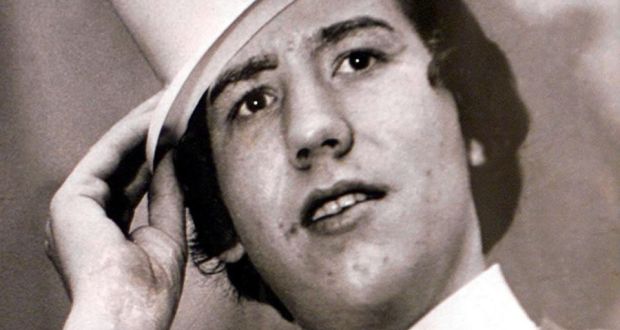
Columba McVeigh, one of the 'disappeared'

Columba McVeigh, one of the ‘disappeared’

The Catholic Primate of All-Ireland and Archbishop of Armagh has made a new appeal for information to help find the remains of the six people known as “The Disappeared”. RTÉ News reported that Archbishop Eamon Martin celebrated Mass with family members of the victims in Armagh this afternoon.

As happened with his predecessor, Cardinal Sean Brady, Archbishop Martin this afternoon celebrated Palm Sunday mass in Armagh with families who had a loved one killed and secretly buried by republicans during the troubles. Since the mid-1990’s ten bodies have been recovered but six are still missing.

A dig for the remains of one of them, Joe Lynskey, began in a County Meath bog earlier this month.

Archbishop Martin said some families are living a long Good Friday. He appealed to the conscience of anyone who has information that might help to come for forward. His hope is the six affected families could, at this late stage, be able to offer a christian burial to their loved ones.

In recent years republicans, through confidential channels set up by the Irish and British governments, gave information that led to the recovery of the remains of several victims.

Annually on Palm Sunday in the College Chapel of Saint Patrick’s Grammar School in Armagh a Mass of Remembrance is held. For the past sixteen years the gathering helps the families to connect with each other in solidarity and compassion. Eleven of the seventeen families have recovered the long-lost bodies of their loved ones.

The text of his homily was published by the Catholic Communications Office:

“Some families are living a long Good Friday, and it is difficult for them to know the Easter promise of resurrection”
“I appeal to the conscience of anyone who has information that might help to come forward to the Independent Commission for the Location of Victims’ Remains”  – Archbishop Martin.

“It is a humbling experience for me to meet and pray for the first time today with families of ‘The Disappeared’. For sixteen years the families of those abducted, murdered and secretly buried, have gathered annually on Palm Sunday here at Saint Patrick’s College in Armagh for a Mass of Remembrance. The gathering helps the families to connect with each other in solidarity and compassion.

Over these sixteen years the families have comforted each other, and consoling friendships have formed among them. There have been moments of hope when fresh information has come forward leading to a new search. There have been great disappointments when some of those searches have proven futile. And, thank God, during that time, eleven of the seventeen families have recovered the long-lost bodies of their loved ones, allowing them to begin at last to find some closure.

For other families the pain, uncertainty and waiting continues. Today, as we begin Holy Week, their sorrowful burden reminds me of how our Saviour had to carry His heavy Cross along the Via Dolorosa. Some families are living a long Good Friday, and it is difficult for them to know the Easter promise of resurrection. The recovery, last October in County Meath, of Brendan Megraw’s body, encourages them not to lose hope. I appeal to the conscience of anyone who has information that might help to come forward to the Independent Commission for the Location of Victims’ Remains so that, even at this late stage, the remaining families can experience the consolation of being able to offer a Christian burial to their loved ones. They come with the assurance that the information can only be used to recover the bodies of those disappeared”.

Archbishop Eamon Martin  Photo: http://www.armagharchdiocese.org/2013/05/13/archbishop-eamon-martin/

Archbishop Eamon Martin Photo: http://www.armagharchdiocese.org/2013/05/13/archbishop-eamon-martin/

Archbishop Martin also issued a Joint Holy Week and Easter 2015 message with the Church of Ireland Archbishop of Armagh,  Archbishop Richard Clarke:

We join in wishing you all, wherever you may be, a blessed Holy Week and a joyful Eastertide.  We invite you to enter with real spiritual seriousness into the powerful story of Holy Week so that you can experience personally and profoundly the joy and happiness of Easter.

Easter Day is far more than a happy ending to the sad tale of Good Friday. Rather it is the celebration of the ultimate victory of God over all that damages, terrifies and destroys us.
On Good Friday it seemed that the worst that the world can do was victorious over the best that there can ever be. The crucifixion was the rejection of all that it is to be truly human. It was the refusal to believe that only in Christ can men and women find their truest identity and fullest humanity. It was the attack of darkness on the reality of a total Love.
All around us today, we still see powerful signs of that same darkness in our world. It is found in in the horrors of cruel and vicious inhumanity to those who are seen as other; in the day to day debasement of the dignity of those who are unable to defend themselves; in physical violence, murder, war and persecution. It issues in the extreme selfishness of some individual lives that have fallen away catastrophically from any generosity and forgiveness.
But in the compassionate cry of abandonment from the cross, Good Friday reminds us that God is to be found not among those who can destroy others most effectively, but rather totally with those who are at the receiving end of the envy, spite and viciousness of others.
Saint Paul describes the resurrection of Christ as the “first fruits” – the evidence that there will be a harvest of hope, and a final victory of love over hatred, injustice and futility.
May we together follow trustfully with Jesus Christ on the way to the Cross, and share fully with him in the joy of his resurrection. Christ is risen. He is risen indeed, Alleluia!

+Eamon Martin​​​​​                                                                             +Richard Clarke

Roman Catholic Archbishop of Armagh                      ​​Church of Ireland Archbishop of Armagh

Like Loading...
MONAGHAN NEWS UNCATEGORISED Archbishop Eamon MartinColumba McVeighDisappeared Leave a comment

EASTER EGG HUNT CARRICKMACROSS

28/03/2015 by borderroamer
The Easter Bunny is in town Photo: Carrickmacross Chamber of Commerce

The Easter Bunny is in town Photo: Carrickmacross Chamber of Commerce

Passing through Carrickmacross? Then take part in the Chamber of Commerce annual Easter Egg hunt which started today and runs until Easter Saturday 4th April.

Photo: Carrickmacross Chamber of Commerce

Photo: Carrickmacross Chamber of Commerce

The hunt takes in shops and businesses from all over town. Each business has two eggs hidden in their window.  Everyone is invited to come along and take part. Entry forms are available from Bits and Bobs, Birdys, and Keegans newsagent’s. There are great prizes for the winner and lots of chances to win something on Easter Saturday if you are around.  Carrickmacross Chamber of Commerce invites you to come along and take part in the hunt.  Remember the safe cross code when crossing the streets, and you are advised to wear a high-viz vest.

On the Easter Egg trail Photo: Carrickmacross Chamber of Commerce

On the Easter Egg trail Photo: Carrickmacross Chamber of Commerce

Like Loading...
MONAGHAN NEWS UNCATEGORISED CarrickmacrossChamber of CommerceEaster Egg Leave a comment

Post navigation

← Older posts
Newer posts →

Recent Posts

  • DESMOND FISHER 1920-2014 30/12/2020
  • GAJ AWARDS 2020 24/12/2020
  • COVID-19 REPORTING AWARD 20/12/2020
  • HAPPY 100TH BIRTHDAY 31/03/2020
  • NUJ VOTING REMINDER 26/01/2020
  • WORLD PRESS FREEDOM 20/01/2020
  • REMINDER TO VOTE 18/01/2020
  • BOND, WE’VE BEEN EXPECTING YOU! 17/01/2020
  • NUJ MEMBERS IN IRELAND 09/01/2020
  • NUJ BLAST FROM THE PAST 08/01/2020

Archives

  • Dec 2020 (3)
  • Mar 2020 (1)
  • Jan 2020 (13)
  • Oct 2019 (10)
  • Sep 2019 (30)
  • Aug 2019 (31)
  • Jun 2019 (2)
  • May 2019 (1)
  • Sep 2018 (1)
  • Jul 2017 (1)
  • Dec 2016 (12)
  • Sep 2016 (2)
  • Aug 2016 (5)
  • Jul 2016 (5)
  • Jun 2016 (10)
  • May 2016 (15)
  • Apr 2016 (19)
  • Mar 2016 (14)
  • Jan 2016 (26)
  • Dec 2015 (2)
  • Aug 2015 (1)
  • Jul 2015 (30)
  • Jun 2015 (30)
  • May 2015 (32)
  • Apr 2015 (30)
  • Mar 2015 (31)
  • Feb 2015 (28)
  • Jan 2015 (31)
  • Dec 2014 (31)
  • Nov 2014 (14)
  • Mar 2014 (2)
  • Feb 2014 (2)
  • Jan 2014 (31)
  • Dec 2013 (19)
  • Nov 2013 (17)
  • Oct 2013 (29)
  • Sep 2013 (30)
  • Aug 2013 (31)
  • Jul 2013 (31)
  • Jun 2013 (30)
  • May 2013 (28)
  • Apr 2013 (32)
  • Mar 2013 (31)
  • Feb 2013 (28)
  • Jan 2013 (31)
  • Dec 2012 (3)
  • Oct 2012 (1)
  • Sep 2012 (1)
  • Aug 2012 (2)
  • Jul 2012 (3)
  • Jun 2012 (3)
  • May 2012 (3)
  • Apr 2012 (5)
  • Mar 2012 (1)
  • Jan 2012 (1)
  • Dec 2011 (1)
  • Nov 2011 (1)
  • Jun 2011 (1)
  • May 2011 (1)
  • Apr 2011 (2)
  • Dec 2010 (1)
  • Nov 2010 (3)
  • Oct 2010 (6)
  • Aug 2010 (1)
  • Jul 2010 (7)

Categories

Meta

  • Create account
  • Log in
  • Entries feed
  • Comments feed
  • WordPress.com

Enter your email address to follow this blog and receive notifications of new posts by email.

36th Ulster Division 2013 WPFG AFC Wimbledon An Bord Pleanála Ballinode Balmoral Show Barry McCall Battle of Somme BBC belfast Belfast Festival Belfast Lions Club Big Music Week Birmingham BOSE Bristol Carlow Carrickmacross Castleblayney Catholic Herald Clogher Clones CMAPC Defence Forces Derry Desmond Fisher Dublin EirGrid Emyvale Fine Gael GAA Geel Glaslough Heather Humphreys TD Iarnród Éireann Ice Hockey Ieper Inniskeen Irish Press Kingsmeadow London Meath Michael Fisher Monaghan Monaghan County Council NEC NEPPC Newbridge North/South Interconnector Northern Standard NUJ Odyssey Arena Patrick Comerford Pope Francis Poperinge Private Robert Hamilton PSNI Royal Irish Fusiliers RTÉ SDLP Shamrock Rovers Shared History Shared Future SIPTU St Macartan's Cathedral Tallaght Tydavnet Tyrone Ulster rugby Vatican II William Carleton William Carleton Society William Carleton summer school WW1 WWI WWII

Blog Stats

  • 243,489 hits
Blog at WordPress.com.
Michael Fisher's News
Blog at WordPress.com.
  • Subscribe Subscribed
    • Michael Fisher's News
    • Join 173 other subscribers.
    • Already have a WordPress.com account? Log in now.
    • Michael Fisher's News
    • Subscribe Subscribed
    • Sign up
    • Log in
    • Report this content
    • View site in Reader
    • Manage subscriptions
    • Collapse this bar
 

Loading Comments...
 

    %d