Get me outta here!

Michael Fisher's News

© Michael Fisher MMXXII

Menu

Skip to content
  • Home
  • About

Author Archives

borderroamerhttps://fisherbelfast.wordpress.comThe Northern Standard, Monaghan. Reporter.
borderroamer's avatar

CLOGHER WALKS WITH POPE FRANCIS

26/01/2015 by borderroamer
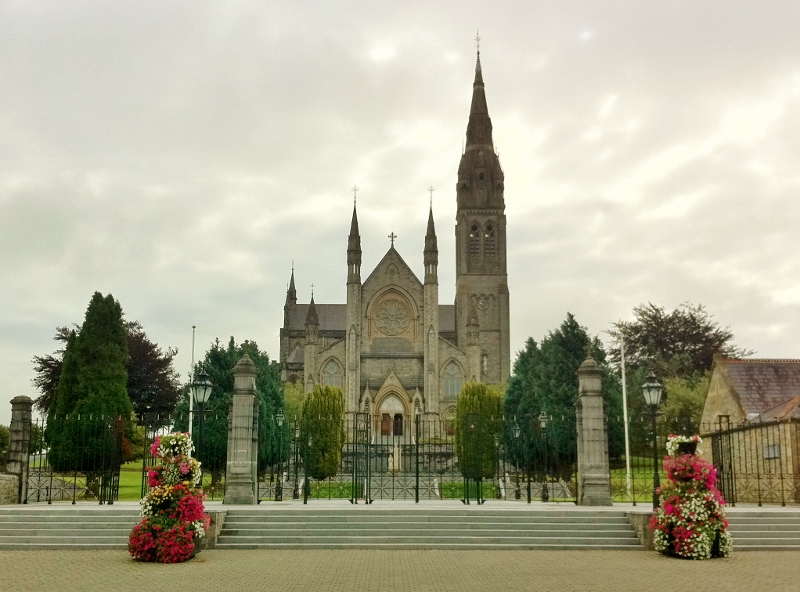
St Macartan's Cathedral. Monaghan  Photo:  © Michael Fisher

St Macartan’s Cathedral. Monaghan Photo: © Michael Fisher

Letter from Bishop Liam MacDaid to the priests and people of Clogher diocese invites discussions in advance of Vatican Synod on the Family

The Catholic Bishop of Clogher Dr Liam MacDaid has invited priests and parishioners of the diocese to take part in a diocesan-wide discussion in advance of the Synod on the Family in the Vatican in October on the theme ‘The Vocation and Mission of the Family in the Church and Contemporary World”.

In a letter to the priests and people of the diocese Bishop MacDaid invites the faithful to walk with Pope Francis saying: “Pope Francis has encouraged us to be honest and frank as we walk with him and he has stated his wish to hear and listen carefully to all voices, even those who might consider themselves to be on or beyond the threshold of faith.  He has stated his wish to hear the voices of young married couples sharing their experiences of joys and sorrows and helping us to learn from both.  Pope Francis is inviting us, in a fuller way than many previous generations, to help him and all Church leaders in “the task of formulating the pastoral responses to the real situation of family life around the world” as it was expressed at last year’s Extraordinary Synod.” Bishop MacDaid asks, “How could we turn our backs to such a respectful and gracious invitation?”

In his letter Bishop MacDaid outlines the timeline for the discussions in the Diocese of Clogher, and introduces a new eight-person steering committee as well as a revision of Pastoral Areas from fourteen to seven to facilitate a speedier pace of work.

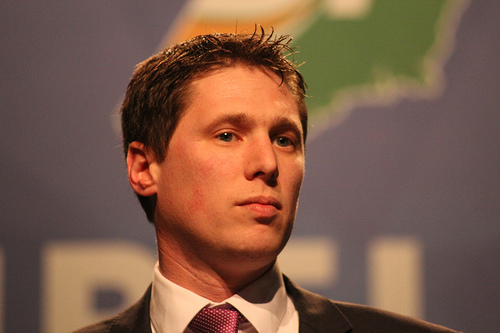
Bishop of Clogher, Dr Liam MacDaid Photo:  © Michael Fisher

Bishop of Clogher, Dr Liam MacDaid Photo: © Michael Fisher

The letter:

My dear friends,

Many of you may have taken an interest in the Extraordinary Synod on the Family which was held in Rome last autumn.  The questions which Pope Francis raised for discussion by our Church leaders were refreshingly honest and pertinent.  What he had to say found its way into our hearts and minds because family is common to us all.  The quality of our lives and the health of our relationships are very closely related to the kind of family life we succeed in making for ourselves.  Whatever damages the family hurts us all and whatever enriches family life is a blessing for us all.

We have a year now to reflect on all that was spoken at the Synod, and to assess the merit of arguments put forward.  The Irish Episcopal Conference has asked that work be done and done quickly to sift and assess the material from the Synod and pass forward our reflections in time for further consideration.  A summary of the content of all that was said last autumn has been put together in what are called Lineamenta.  Each diocese in our country is now asked to devise a means whereby the people of the diocese can have their say and make their contribution to the national and international debate.  Every diocese can make its contribution to the final outcome.  It is envisaged that this conversation will take place over the next two months and come to a conclusion at Easter time.

To assist us, the Secretariat of the Irish Episcopal Conference in Maynooth has put everything in order for us under different headings and has formulated questions for us to answer.  Pope Francis has encouraged us to be honest and frank as we walk with him and he has stated his wish to hear and listen carefully to all voices, even those who might consider themselves to be on or beyond the threshold of faith.  He has stated his wish to hear the voices of young married couples sharing their experiences of joys and sorrows and helping us to learn from both.

Pope Francis is inviting us, in a fuller way than many previous generations, to help him and all Church leaders in “the task of formulating the pastoral responses to the real situation of family life around the world” as it was expressed at last year’s Extraordinary Synod.  How could we turn our backs to such a respectful and gracious invitation?

In tackling the questions put before us, we are asked to share our experience of married and family life and to ask ourselves how well or how badly our local Church supports and provides pastoral care for married couples and families.  Such an examination should help us to strengthen and renew this pastoral care in such a way that the smiles that come from the pram and light up adult faces will always be there, moving everyone to say that life is good.

To assist with the task put before us I have asked eight people to act as a Steering Committee.  To facilitate a speedier pace of work, we have condensed our Pastoral Areas from fourteen into seven.  The first level of consultation will be to converse with the priests within these groupings.  The questions will be formulated by the Steering Committee who will facilitate the consultation process.  It will not be compulsory for each participant to read all the Lineamenta but it is to be hoped that most will read and reflect on the twenty or so pages which can be downloaded from: http://www.vatican.va/roman_curia/synod/index.htm

When the initial phase of consultation has been completed, the Steering Committee will move into a deeper and more comprehensive phase involving a small number of priests and religious and a much bigger number of lay people from all walks and corners of life.  To ensure that the process remains manageable the total number of participants involved in each cluster of pastoral areas will be approximately fifty.  This will include representatives of organisations and bodies which work closely with married couples and children.  The purpose of this restriction is certainly not to exclude.  It will be open to all groups and individuals to make a separate contribution of their own with the guarantee that it will be treated with the same care and respect as all other contributions that are submitted within the time limit which is Friday, 6 March next at 5.00pm.

Truly this is a rather special moment in history when the successor of Saint Peter humbly invites all the baptised to assist in finding solutions to pastoral problems.  Let us be grateful and grasp the opportunity, while we ask the Holy Spirit to guide us in wisdom and love on our pilgrim way.

+Liam S. MacDaid

Dr MacDaid is Bishop of Clogher and Chair of the Bishops’ Council for Marriage and the Family. The diocese has a Catholic population of 84,384 living in 37 parishes and 85 churches. It includes County Monaghan, most of County Fermanagh and portions of Counties Tyrone, Donegal, Louth and Cavan.

Steering Committee:

Chairperson:  Gary Carville, Castleblayney

Vice Chairperson: Noel Murphy, Monaghan

  Anne Balfe, Tydavnet

   Fr. John Chester, Monaghan

Fr. David Donnelly, Enniskillen

Sinead Cullen, Enniskillen

Deborah Lynch, Enniskillen

Claudine Marron, Monaghan

Pastoral Area Groupings for Consultation

1. Monaghan & Rackwalace, Kilmore & Drumsnat, Tyholland/Truagh, Donagh,Tydavnet.

2. Muckno, Clontibret /Tullycorbet, Lough Egish, Latton, Rockcorry.

3. Carrickmacross, Donaghmoyne /Inniskeen, Killanny, Magheracloone.

4. Clones, Killeevan, Roslea /Galloon, Aghalurcher.

5. Enniskillen, Tempo /Arney, Derrygonnelly.

6. Irvinestown, Ederney, Pettigo / Belleek-Garrison, Magh Ene.

7. Clogher, Eskra, Fivemiletown & Brookboro /Trillick, Dromore, Fintona

Share this:

  • Share on Facebook (Opens in new window) Facebook
  • Share on X (Opens in new window) X
Like Loading...
MONAGHAN NEWS UNCATEGORISED Bishop of ClogherDr Liam MacDaidPastoral AreasPope Francis Leave a comment

BOUDICCA CRUISE SHIP FIRE

25/01/2015 by borderroamer
MV Boudicca in Norway  Photo:  © Michael Fisher

MV Boudicca in Norway Photo: © Michael Fisher

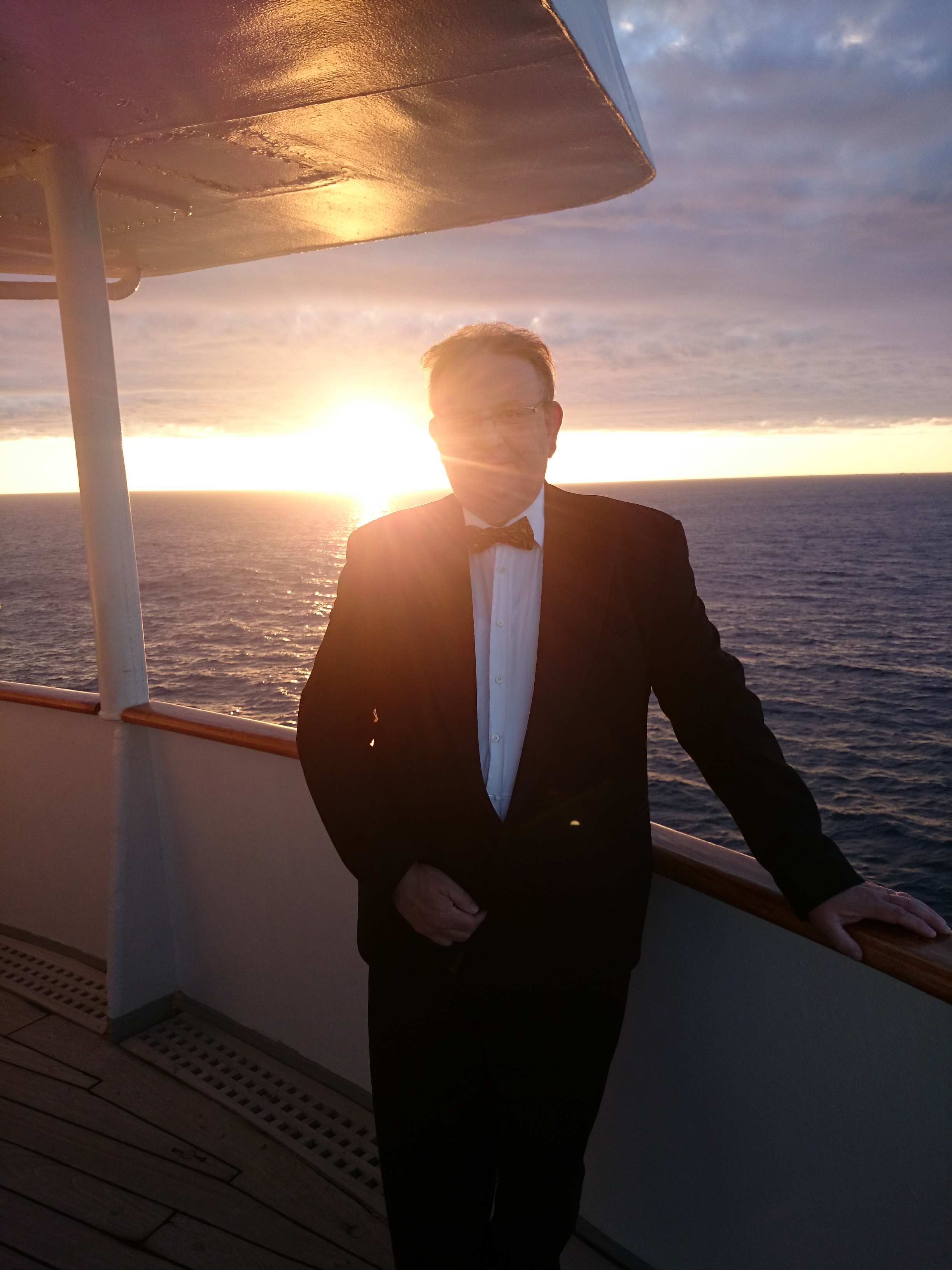
Having cruised to the Norwegian fjords and the Shetland Islands for eight nights on board the Fred Olsen ship Boudicca at the end of August and start of September, I am pleased to see that the crew dealt swiftly with what could potentially have been a very serious incident on board early this morning. One of the first concerns on boarding the liner at Belfast port on August 29th 2014 was for passenger safety. There was a demonstration of the evacuation procedure and use of life jackets before the ship sailed. I felt assured that the crew were all trained in safety measures in the event of an emergency.

Dinner time on board Boudicca Photo:  © E. Fisher

Dinner time on board Boudicca Photo: © E. Fisher

During the cruise there were several opportunities to meet the master and other officers and members of the engine room staff took part in one of the in-house shows that were a feature of the trip. Some passengers on that cruise were so satisfied with the way Olsen staff looked after them that they booked on other cruises, perhaps even this particular one (Cape Verde and Canaries) as they enjoyed the on-board atmosphere and cuisine so much.

It was therefore good to see that it was business as usual for the rest of today for Boudicca, albeit at a slower rate of knots. The vessel was built in Helsinki in 1973 and was acquired by Fred Olsen in 2005. The company will, I hope, be making satisfactory arrangements for the rest of the journey for the nearly 800 passengers on board. Boudicca, incidentally, was in Dublin port overnight on December 20th, on a cruise from Liverpool.

MV Boudicca  Photo: Fred Olsen Cruise Lines

MV Boudicca Photo: Fred Olsen Cruise Lines

The statement from the company was as follows:-

“Following a fire in the Engine Room on board Boudicca at around 4am on Sunday 25th January 2015, sailing off the coast of Casablanca, Morocco, Fred. Olsen Cruise Lines can confirm that the ship is now proceeding towards the Canary Islands, at a slower speed than planned. Guests are being kept informed of the situation at all times. There have been no injuries to any of Boudicca’s 784 guests and 356 crew members, and there is reported to be a good atmosphere on board. The ship’s Master has confirmed that at no point were guests asked to don their lifejackets and gather at the muster stations, as the situation was contained within the Engine Room by our crew members. Services are operating normally, and guests are enjoying the usual activities on board, both inside and out on deck (as is evident from the photographs on the ‘Home’ page of the Fred. Olsen Cruise Lines’ website at http://www.fredolsencruises.com). We are reviewing the itinerary and assessing the extent of the damage to the two main engines and electrical cables, and will make any repairs necessary at the next port of call. A revised itinerary will be advised in due course. The safety and well-being of all guests and crew on board Boudicca is Fred. Olsen Cruise Line’s utmost priority, and we continue to liaise with the relevant maritime authorities. Boudicca is on an 18-night D1502 ‘Cape Verde & the Canaries’ cruise, which departed from Southampton on 20th January 2015. The ship sailed from Cadiz, Spain on Saturday 24thJanuary 2015, and was scheduled to arrive in Arrecife, Lanzarote tomorrow morning, Monday 26th January.”

Like Loading...
NEWS TRAVEL UNCATEGORISED BoudiccaCape VerdeFireFred OlsenMorocco Leave a comment

BOSE CLOSURE REACTION

24/01/2015 by borderroamer
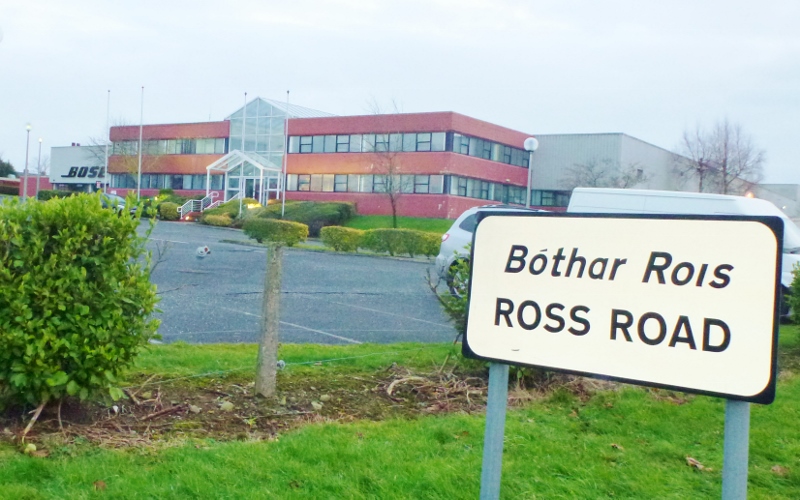
Bose factory, Carrickmacross  Photo:  © Michael

Bose factory, Carrickmacross Photo: © Michael Fisher

Super Junior Minister for Business and Enterprise Ged Nash TD issued the following response on behalf of the government to the news that the BOSE plant in Carrickmacross is to be shut down with the loss of 140 jobs.  wpid-wp-1422023895584.jpeg

“My thoughts are with the workers at Bose and their families  following the regrettable announcement by the company that it will cease operations at its Carrickmacross facility in April.

All the supports of the State will be made available to all of the workers affected by this situation. Despite the much improved news on the job creation front in this country the situation faced by Bose is a reminder that the fight to sustain and win new jobs is a continuous one and the challenge to maintain our attractiveness for investment in an increasingly competitive market is a challenge we must take on each day.

I personally will be following up with our State Agencies including the IDA and Enterprise Ireland to pursue other job creation opportunities in the Carrickmacross area and across the North East region. The IDA is currently contacting their network of offices worldwide to try to find a suitable company to invest in the region and take on this highly skilled workforce.”

Carrickmacross Market House  Photo:  © Michael Fisher

Carrickmacross Market House Photo: © Michael Fisher

Following the announcement the President of Carrickmacross Chamber of Commerce Jim Hand called on the government to find new jobs for the area.

Fianna Fáil TD for Cavan-Monaghan Brendan Smith expressed his serious disappointment following the announcement by BOSE. Mr Smith said “this is a terrible loss to the 140 employees, their families and indeed the local community.  BOSE has been a significant employer in the town for almost 4 decades and the effects of the closure will be felt across the county.  Many of the workers have been there for more than 30 years and have built up extensive skills and experience.”

Brendan Smith TD

Brendan Smith TD

“This Government repeatedly claims that jobs are its number one priority.  However, the border region has been left out of the frame, with few investment opportunities emerging.   In fact last year there were no IDA sponsored visits to sites in Monaghan; a further indication of the Government’s lack of interest in the county.”

“The Minister for Jobs Richard Bruton TD must step up to the mark and ensure that the Government’s dismal record on investment in Monaghan is reversed.  I am urging him to intervene, along with the State’s Industrial Promotion Agencies to engage in immediate discussions with the BOSE Corporation and press strongly for the retention of these jobs in Carrickmacross.”

Bose factory, Carrickmacross  Photo:  © Michael

Bose factory, Carrickmacross Photo: © Michael Fisher

The statement issued by a Dublin PR company on behalf of BOSE is as follows:-

“Bose Corporation has announced it will be consolidating its wholly-owned manufacturing operations, closing its facilities in Columbia, South Carolina, and Carrickmacross, Ireland, to streamline the company’s global supply chain. Operations in South Carolina will continue until September 2015; operations in Ireland will continue until April 2015. During that time, both workforces will be reduced, and work will transfer to other Bose facilities around the world with duplicative capabilities.

The Columbia, South Carolina facility opened in 1996 and currently has approximately 300 Bose employees. It houses a North American distribution/repair center, and does sub- and final-assembly for some headsets, and some remanufacturing for the region. A final decision on a new location for distribution/repair has not yet been made; other operations will transfer to Bose facilities in Arizona and Mexico. All jobs at the Bose South Carolina campus will be eliminated. bose

The Carrickmacross, Ireland facility opened in 1978 and currently has approximately 140 Bose employees. It provides final assembly for select home theater systems and Wave® radios for the European market, and some remanufacturing for the region. Operations will transfer to Bose facilities in Malaysia and Mexico. All work will cease at the Bose Ireland facility. Impacted employees have been informed, and all employees who lose their jobs based on these actions will receive outplacement services and severance support.

‘Our rapid global growth requires us to keep pace with our customers, dealers, distributors, resellers and stores, and serve them as efficiently as possible,’ said Bryan Fontaine, executive vice president of global operations and corporate development engineering. ‘But these are still difficult decisions because they impact our very capable teams in South Carolina and Ireland. We thank all of them for their dedication, and we thank the communities of Columbia and Carrickmacross for their years of support.’ “

Share this:

  • Share on Facebook (Opens in new window) Facebook
  • Share on X (Opens in new window) X
Like Loading...
MONAGHAN NEWS POLITICS UNCATEGORISED BOSEBrendan Smith TDCarrickmacrossfactory closureGed Nash TDJim Hand Leave a comment

BOSE TO CLOSE CARRICKMACROSS PLANT

23/01/2015 by borderroamer
Bose factory, Carrickmacross  Photo:  © Michael Fisher

Bose factory, Carrickmacross Photo: © Michael Fisher

Union representatives will meet management at the BOSE audio systems plant in Carrickmacross  next week, after the multinational suddenly announced it is to close the plant in April, with the loss of 140 jobs. The company has been manufacturing audio products in Monaghan since 1978 but will wind down operations within three months. In a statement on Thursday evening, the US-based business said it would be consolidating its wholly-owned manufacturing operations, closing its facilities in Columbia (South Carolina, USA), and Carrickmacross, Ireland, in order to streamline the company’s global supply chain. boselogo

BOSE which has its headquarters at Framingham in Massachusetts was founded by a college Professor and classical music enthusiast Dr Amar Bose in 1964. Before he died in 2013, Dr. Bose donated a majority stake in his company to MIT, the Boston school where he earned three degrees in electrical engineering and taught a course in acoustics. The company employs around 10,500 people internationally and has sales of $3.3 billion.

Carrickmacross provides final assembly for select home theatre systems and radios for the European market, as well as some remanufacturing for the region. The Irish operation is due to transfer to BOSE facilities in Malaysia and Mexico. Boseheadphone

BOSE executive Vice-President of global operations and corporate development engineering, Bryan Fontaine, said the move came to keep pace with demand from customers and resellers. He said the company’s rapid global growth required them to keep pace with their customers, dealers, distributors, resellers and stores and to serve them as efficiently as possible. These were difficult decisions because they impacted on their very capable teams in Ireland and South Carolina, he said, and he went on to thank the local communities including Carrickmacross for their years of support.

siptuSIPTU Manufacturing Division Organiser Jim McVeigh said the workers were told today by management that the plant was to close in the coming weeks. This came as a complete bolt out of the blue for the workers. It is devastating news for staff, their families and the wider community, he said. Workers have been given a day off today (Friday). Mr McVeigh said he intended to meet the workers and management of the plant on Monday afternoon to discuss what could be done to save their jobs. On Monday evening SIPTU representatives will brief local politicians on the situation and enlist their support in the union’s efforts to save the jobs. He added: “the vast majority of the workforce lives in Monaghan and the plant closure will have a very significant negative impact on the local economy. There are over 140 people employed at this plant and SIPTU is committed to doing everything possible to protect their interests.”

Sean Conlan TD  Photo: FG

Sean Conlan TD Photo: FG

Cavan/Monaghan Fine Gael TD Sean Conlan said he was very sad to hear of the closure of the BOSE plant in Carrickmacross owing to their global restructuring plan.

“The loss of jobs at Bose, which has been a major employer in South Monaghan for many years, is very upsetting for employees and their families, and the fact that this closure is due to take place so soon adds further stress. I have contacted the Minister for Jobs, Enterprise and Innovation, Richard Bruton, to ask that his department coordinates with the IDA in the hope of extending the notice period.”

“It is important now that alternative employment is found for those who have been left out of work due to today’s decision. I can confirm that the IDA is currently contacting their network of offices worldwide to try to find a suitable company to invest in the region and take on this highly skilled workforce. All the supports of the State will be made available to all of the workers affected by this situation”, said Mr Conlan.

Matt Carthy MEP  Photo: SF

Matt Carthy MEP Photo: SF

Midlands North West Sinn Féin MEP Matt Carthy, who is from Carrickmacross, said: “I know many of the 140 full time BOSE staff personally and I am absolutely devastated to hear of the planned closure of this manufacturing plant in Carrickmacross. The plant is a well established local employer and the announcement today will cause widespread disbelief. Today’s announcement is not just a harsh blow to the staff and their families but to the wider community and local economy, which will be severely impacted by the closure of the plant.”

“Unfortunately, this area has been ignored by too long by successive Governments. I recently highlighted the fact that Monaghan has only has two visits by the IDA in the past 5 years and many will remember that Bose was the last significant employer attracted to this region by the IDA in the late 70s. I am calling on Minister Bruton to immediately engage with the senior management at the plant and attempt to preserve these jobs.”

Full report in next week’s Northern Standard.


Share this:

  • Share on Facebook (Opens in new window) Facebook
  • Share on X (Opens in new window) X
Like Loading...
MONAGHAN NEWS POLITICS UNCATEGORISED BOSECarrickmacrossMatt Carthy MEPNorthern StandardSean Conlan TDSIPTU Leave a comment

COLUMBA MCVEIGH

22/01/2015 by borderroamer
Columba McVeigh  Photo: Irish Times

Columba McVeigh Photo: Irish Times

The Bishop of Clogher Dr Liam MacDaid at a special Mass  last night in North Monaghan appealed “in the name of humanity” to anyone with information about where one of the so-called disappeared, Columba McVeigh, is buried to bring it forward to the Independent Commission for the Location of Victims’ Remains (ICLVR).

At the Mass in Carrickroe, near Emyvale, Dr MacDaid urged anyone who might have even a small shred of evidence about where Mr McVeigh was secretly buried to come forward to the Commission and help end the burden the McVeigh family had carried for forty years. Prayers were also said and a candle was lit for Kieran McAree, the Emyvale man who is believed to have gone into the water in Lough Erne in Enniskillen and for whom the search has continued for five weeks.

The Sacred Heart church is a few miles from Bragan mountain, where Mr McVeigh is believed to have been buried after being abducted and murdered by the IRA in November 1975. Four searches, the most recent in September 2013, have been carried out in the bogland since 1999, but Mr McVeigh’s remains have yet to be found. The Commission is hoping former IRA members directly or indirectly involved in the incident would come forward with more specific information to assist in the search.

Family members of the disappeared point to how after an appeal by the Catholic Bishop of Meath, Dr Michael Smith, in September 2013, new information was passed to the Commission. Last October the remains of another of the disappeared, Brendan Megraw, were recovered from Oristown bog in County Meath.

“In the name of humanity and of this community, I would entreat anyone with any information to search their conscience and help bring an end to this suffering,” Bishop MacDaid told the congregation, who included Columba’s brother Oliver and sister Dympna Kerr, as well as other families of the disappeared. Dympna lives at St Helen’s near Liverpool in England and flew over yesterday afternoon to attend.

Frank Murray  Photo: ICLVR

Frank Murray Photo: ICLVR

One of the two Commissioners, Frank Murray, a former Secretary to the Irish government, attended the Mass along with forensic expert Geoff Knupfer, who has led some of the searches carried out by the Commission. Before the service, Mr Murray addressed the congregation. He stressed the independence and confidentiality offered by his office and said anyone who gave information to him was immune from prosecution.

“For almost four decades the McVeigh family have had to bear the pain of the loss of Columba, a pain deepened almost beyond imagination by the fact that they have no grave to tend, no place to grieve,” Bishop MacDaid said.

Oliver McVeigh from Donaghmore in County Tyrone also appealed for anyone with information to bring it forward. “The ICLVR needs more information to narrow down the search area to find Columba, just as they were able to do at Oristown and find Brendan Megraw,” he added. “How can anyone with a shred of humanity about them leave us like this after forty years knowing that they could end our suffering?”

The Chief Executive of the WAVE Trauma Centre in Belfast, Sandra Peake, said the families of the disappeared appreciated the prayers and support of Bishop MacDaid and the wider local community. They will not rest until Columba and all those who have yet to be recovered are returned to their families to bring an end to this cruel torment, she said.

The remains of 11 of the 17 Disappeared have been recovered, including those of Jean McConville from Belfast, whose son Michael attended the Mass along with his wife and daughter. I interviewed Michael at various times as the search was going on for her remains, which were recovered eleven years ago, though it seems a lot less.

The six yet to be recovered are Columba McVeigh; Joe Lynskey, who went missing from Belfast in 1972; Captain Robert Nairac, a British Army officer believed to have been shot dead close to the border in the Louth/South Armagh area in 1977; Kevin McKee and Seamus Wright, who disappeared in 1972 and are believed buried in a bog at Coghalstown, near Wilkinstown in County Meath; and Seamus Ruddy. He was killed in France by the INLA in 1985 during an internal feud and is believed to be buried in a forest near Rouen.

Dympna Kerr and her brother, Oliver McVeigh at the Mass in Carrickroe    Photo:  © Michael Fisher

Dympna Kerr and her brother, Oliver McVeigh, at the Mass in Carrickroe Photo: © Michael Fisher

Share this:

  • Share on Facebook (Opens in new window) Facebook
  • Share on X (Opens in new window) X
Like Loading...
MONAGHAN NEWS POLITICS UNCATEGORISED Bishop MacDaidBragan bogColumba McVeighDisappearedGeoff KnupferMonaghanWAVE Leave a comment

TIP FOR THE TOP: KATE BEAGAN

21/01/2015 by borderroamer
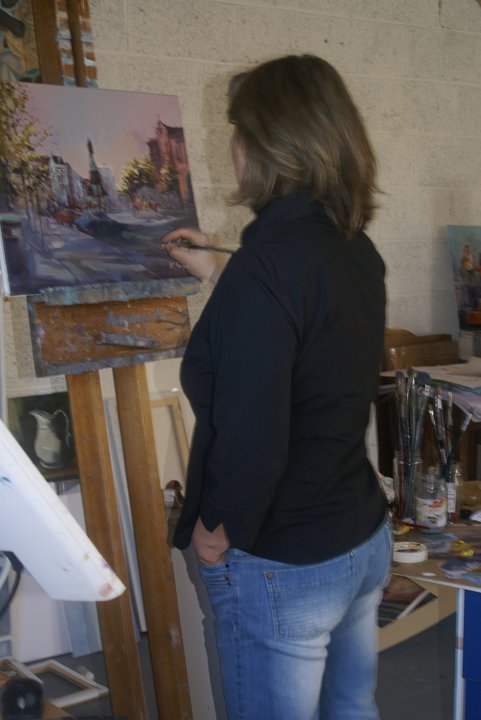
Kate Beagan in her studio Photo: facebook

Kate Beagan in her studio Photo: facebook

LOCAL ARTIST TIPPED FOR ART BUYERS
Michael Fisher

At her studio beside her house in Donaghmoyne overlooking the fairways of the Manaan Castle golf course, artist Kate Beagan is busy preparing to exhibit her work in London and Dublin in the coming months. She concentrates on painting contemporary landscapes, inspired by scenes close to where she lives. Old houses and fields provide the inspiration for much of her work. As she spoke to me, she was working on a large canvas.
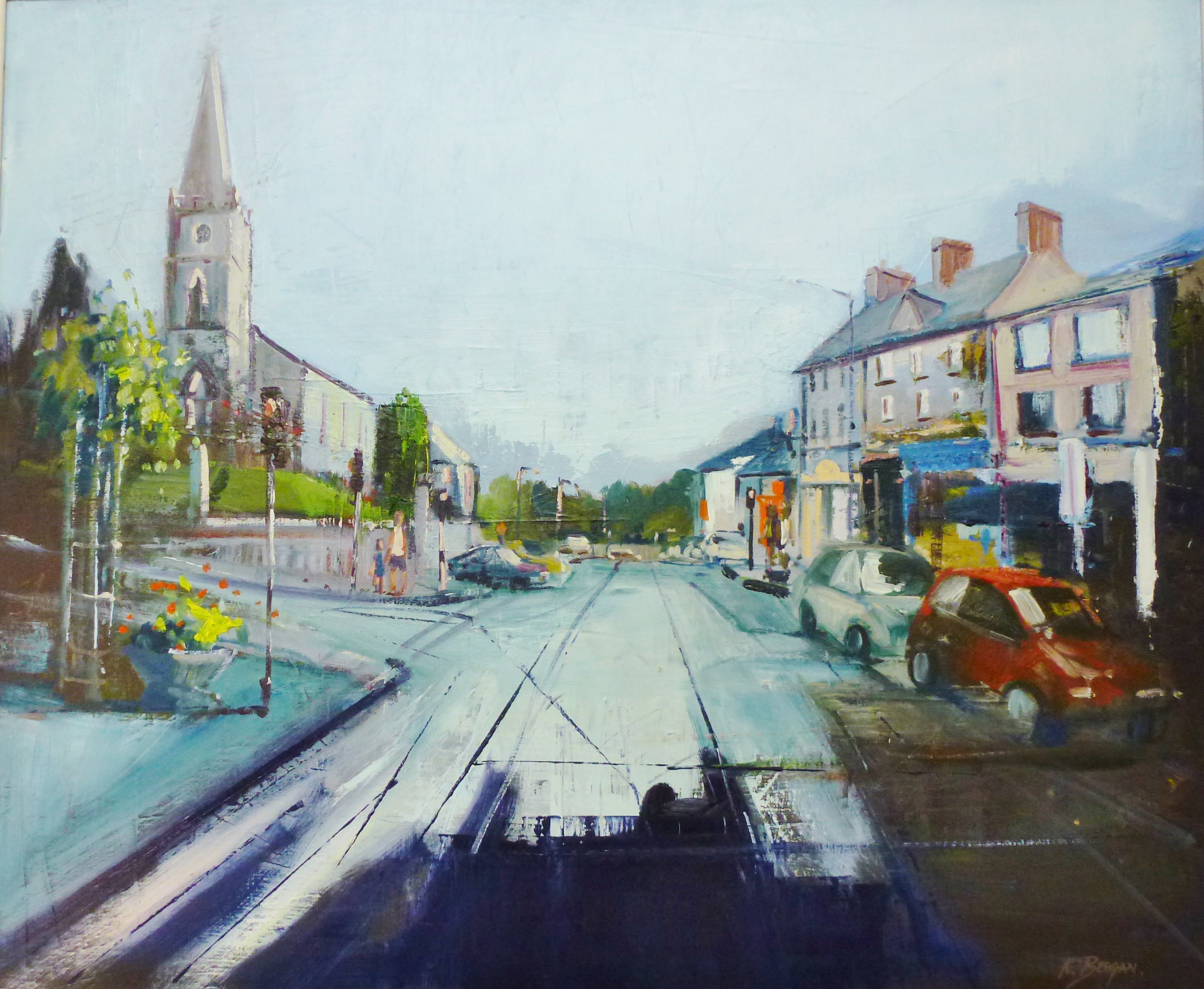
This type of oil painting takes a couple of weeks to complete. Some have been sold privately such as a Carrickmacross street scene. Others have been sold to clients in the public sector such as the Office of Public Works, which bought eight of her paintings, and the business sector including a bank. Kate’s family home where she grew up was close by and she went to the St Louis Convent in Carrickmacross. She went to art college in Galway but did not finish her degree. She emigrated to Australia, where she spent ten years before returning to Ireland. Kate is married to Kevin and they have two daughters in their early 20s and a son aged 17. Twelve of her paintings will be displayed at the affordable art fair in Battersea Park in London in March and will also be shown in Hampstead in June.

Carrickmacross painting Photo:  © Kate Beagan

Carrickmacross painting Photo: © Kate Beagan

Her other main project is preparing for a solo exhibition in April at the Doorway Gallery in Dublin, with the theme ‘I came upon a place’. Another exhibition is due  to be held in Mullingar in September. In the past her works have been displayed in Amsterdam, Brussels, New York, Newcastle on Tyne and London. But she believes Monaghan as a county could give more support to the visual arts, as literature and theatre seem to get more attention. She is hoping to set up a visual arts festival with workshops during the weekend of the Patrick Byrne festival in Carrick at the end of March. Kate has also produced some work for charity. She is one of two County Monaghan artists contributing to the ‘Pig Parade’ next month in aid of the Jack and Jill foundation, but that work is still under wraps at the moment. She is also contributing work for a Paolo Tullio cookbook that will be sold to raise funds for schools in Nepal. In 2007 she illustrated the book ‘Monaghan: County of the Little Hills’, authored by Brian Deery. It seems her star is very much in the ascendant as she is due to be included in an art buyers’ catalogue as one of four or five Irish artists tipped by the auction houses to invest in. So Kate is hoping that 2015 will prove to be a good year.

Carrickmacross News, Northern Standard  14/01/15

Carrickmacross News, Northern Standard 14/01/15

P1180715 (800x141)

Share this:

  • Share on Facebook (Opens in new window) Facebook
  • Share on X (Opens in new window) X
Like Loading...
MONAGHAN NEWS UNCATEGORISED ArtDonaghmoyneKate BeaganMonaghan 3 Comments

DESMOND FISHER (13)

20/01/2015 by borderroamer
Desmond Fisher  Photo:  Nationalist & Leinster Times

Desmond Fisher Photo: Nationalist & Leinster Times

Nationalist and Leinster Times obituary (courtesy Tom Geoghegan) January 13 2015

Des Fisher: broadcaster and former editor of The Nationalist
DESMOND M (Des) Fisher passed away peacefully at the Blackrock Hospice early on Tuesday 30 December. He was a former head of current affairs with RTÉ and deputy head of news at the national broadcaster. Des Fisher had a lifelong association with The Nationalist & Leinster Times in Carlow, of which he was managing editor for a five-year period during the 1980s.

Aged 94, he was one of the last-surviving journalists to have reported from Rome at the Second Vatican Council, which ended half a century ago.

He had been in failing health over recent years. Despite his declining health, Des retained a keen interest in newspapers and the media in general, maintaining his link with Carlow in retirement through reading The Nationalist online every week.

Having lived in retirement with his wife Peggy (née Smyth) from Co Monaghan for the final 26 years of his life, he had remained in close contact over that period with Tom Geoghegan, retired managing director of The Nationalist.

At the time of his death, he had just completed work on a new book, Stabat Mater. Other publications of Des Fisher’s included Broadcasting in Ireland (1978) and The right to communicate: a status report (1981).

A native of Derry city, Des Fisher was a highly-accomplished journalist and broadcaster who was regarded as a theological (sic) heavyweight. He started his journalistic career with The Nationalist, being appointed assistant editor in 1945, a position he held until 1948. While working in Carlow, he met his wife-to-be, who was employed in the Bank of Ireland branch at Court Place. In his early years in Carlow, Des forged close working links with Liam D Bergin, managing editor of the The Nationalist and a doyen of Irish provincial journalism. It was to develop into a lifelong friendship.

In 1948, Des moved to The Irish Press as a sub-editor and London editor to the Press Group until 1964, when, while still based in the English capital, he was appointed editor of the Catholic Herald newspaper.

Des believed that his best work as a journalist was the coverage of Vatican II for the Catholic Herald, which was held from 1962 to 1965, having been called by Pope John XXIII. In 1967, his book on the Second Vatican Council, The Church in transition, was published by Fides. He was Irish correspondent for The Economist and a trustee of the International Institute of Communications as well as being a member of the international advisory board of the Media Institute, Washington DC.

During the late 1980s, Des Fisher fronted the RTÉ One television religious programme Newman’s People. Having given 16 years to the realm of public broadcasting, Des’s next port of call was to return to The Nationalist in Carlow. He was appointed managing editor in 1983 and subsequently managing director, succeeding Liam D Bergin. He also served as a member of the newspaper’s board of directors for a long number of years.

For the first two years of his editorship in Carlow, Des was backed up by the professional vision, expertise and innovation of the late Seamus O’Rourke, particularly in the area of layout and design. Seamus, who passed away in early January 2014, served The Nationalist as news editor for some 20 years. Des Fisher held the position of managing director and editor until 1988, when he formally retired from the fourth estate.

In an editorial in 1983, marking the centenary of The Nationalist & Leinster Times, he wrote of the publication that meant so much to him: “It (Nationalist) can fairly claim to have lived up to the highest ideals of the journalistic and printing crafts and to have served the community of which it forms a part.” In the same editorial, he stated: “In performing its role as the public watchdog, the press must observe one over-riding role first enunciated by the great editor of The Manchester Guardian (now The Guardian) CP Scott: ‘Comment is free but facts are sacred’.”

Extracts relating to RTÉ from Desmond Fisher’s own summary of his 70-year career in journalism have been released…

They recall that one year after the Vatican Council ended he left the Catholic Herald and freelanced to support his family in London. But 18 months later, his former Irish Press colleague and fellow Derry man Jim McGuinness,  head of news at RTÉ, suggested he should apply for a job as his deputy. After short attachments with the BBC and ITV in London in 1967, he came to Dublin early the following year to take up the job and to live full time with his family, which had moved to Dublin months earlier. In October 1973, he was appointed head of the current affairs grouping, a new area in RTÉ with responsibility for all current affairs programmes on radio and television.

He wrote of this period: “What I do remember most about my time in RTÉ is that it was the most stressful time in my working life. My time there coincided with external pressure on RTÉ from a government intent on denying publicity to the IRA and internal conflict between RTÉ producers and journalists working on current affairs programmes.”

Those twin pressures soon took their toll: “In the circumstances of the time, however, it was probably inevitable that a disaster would occur. The current affairs area is the most vulnerable in broadcasting, especially in a public service organisation with staff of divided political and trade union loyalties at a time when the country is in turmoil.

“On the night of 17 October 1974 while I was in Galway at the annual conference of the Labour Party, a 7 Days programme on internment in the North was rushed on to the air … replacing the programme which I had cleared for transmission. It later transpired that the filmed programme included a sequence from a London agency, which had been brought in a short time before transmission, edited at the last moment and put out without my clearance.

“This led to a public attack on me on two successive evenings by the then minister in charge of RTÉ, Dr Conor Cruise O’Brien. The enquiries that followed judged that I should have previewed the programme which, in my view, had been deliberately put out in my absence. I offered to resign ‘if this would serve the institutional interests of RTÉ’. This was refused, but in April I told the then director-general Oliver Maloney that the grouping would have either to be established as a full division with its own resources or closed down. He rejected the first alternative so I resigned and the grouping was disbanded.

“Following my resignation, I was appointed director of TV development, a title later changed to director of broadcasting development, a sideways move that really left it to me to determine what I would make of the job.”

He chaired the planning group for the station’s second television channel and continued to research and publish material for the public service broad-caster on a wide range of topics, including its relation-ship with government. This was a particularly thorny subject, given that in 1972 while he was deputy head of news, a Fianna Fáil government had fired the RTÉ Authority after the news division broadcast a radio interview recorded with Seán Mac Stíofáin, then chief of staff of the Provisional IRA.

The then Taoiseach Jack Lynch justified the dismissal by saying the authority had breached a government directive under section 31 of the Broadcasting Act, ordering them “not to project people who put forward violent means for achieving their purpose”.

The Fine Gael-Labour administration elected in 1973 had continued to implement the directive. And this was the context in which Fianna Fáil’s new appointees to the RTÉ Authority and senior RTÉ management figures like Des Fisher had to handle the 7 Days debacle in October 1974.

Des Fisher left the national broadcaster in 1983, less than two years before reaching the mandatory retirement age. He then became managing editor and managing director of The Nationalist and Leinster Times.

In 2009, approaching the age of 90, he contributed to the RTÉ documentary If Lynch had invaded about his role with RTÉ in 1969 when the Taoiseach Jack Lynch made a dramatic television broadcast to outline the government’s response to the security forces attacking nationalist communities in Derry.

His family had asked that his passing on 30 December should not be made public until after his cremation which, in accordance with his wishes, took place after a private family requiem Mass was celebrated on Friday 2 January.

He is survived by his wife Margaret (Peggy), daughter Carolyn, and sons Michael, John and Hugh, other close relatives and a wide circle of friends.

Share this:

  • Share on Facebook (Opens in new window) Facebook
  • Share on X (Opens in new window) X
Like Loading...
NEWS POLITICS UNCATEGORISED CarlowDesmond FisherNationalist and Leinster TimesRTÉ Leave a comment

DEFENCE CO-OPERATION IRELAND & UK

19/01/2015 by borderroamer
Michael Fallon M.P., British Defence Secretary and Irish Defence Minister Simon Coveney T.D. sign the memorandum  Photo:  Department of Defence

Michael Fallon M.P., British Defence Secretary and Irish Defence Minister Simon Coveney T.D. sign the memorandum Photo: Department of Defence

Irish Defence Minister Simon Coveney T.D. welcomed the British Defence Secretary Michael Fallon M.P. to Dublin Castle where they signed a Memorandum of Understanding between the Department of Defence, Ireland and the United Kingdom Ministry of Defence on enhancement on certain aspects of Security and Defence Cooperation. The visit marked a historic moment for both countries, with Mr Fallon, being the first UK Defence Minister ever to make an official visit to Ireland.

The signing of the Memorandum represents a major step forward in the process of formalising the already broad and strong relationship the the two countries have. recognising their shared interests, values and responsibilities. It will provide both the d Ireland and the UK with a means for developing and furthering their already excellent defence and security relations and will help to enhance cooperation in exercises, training as well as peacekeeping and crisis management operations.

Examples of the UK and Irish Armed Forces already working together include peacekeeping missions in Mali during 2013, and more recently, alongside each other in Sierra Leone, where the United Kingdom is leading international efforts to halt the spread of the Ebola Virus.

Mr Coveney said “the signing of the Memorandum of Understanding places existing cooperation arrangements in the Defence area between Ireland and the UK on a more formal and enduring footing.  The Memorandum of Understanding is a voluntary, non-binding arrangement between the Department of Defence and the UK Ministry of Defence and does not affect or prejudice the position, policy or security arrangements of either country”. 

The drafting of the Memorandum arose from the initiative for increased co-operation across all areas of Government in the East-West relationship between Ireland and the UK which is led by the Taoiseach and British Prime Minister at Head of Government level. The signing of the Memorandum of Understanding will be followed by the drafting of a three-year Action Plan that will contain the detailed programme of bilateral co-operation activities for the forthcoming year and set the objectives for the succeeding two years. This may include military forces training, exercises and education, joint procurement and general sharing on reform in defence services.

The Minister went on to say that, “the Memorandum of Understanding and the associated Work Programme will also support the development of a greater mutual understanding of the policy considerations underlying our respective actions and engagement in multilateral arrangements for collective security such as the UN. It provides opportunities for more joint and collaborative work in support of international peace and security. It will also enhance the potential for further joint contributions to UN peacekeeping operations”.

British Defence Secretary, Michael Fallon, said he welcomed the opportunity to sign the Memorandum of Understanding with Ireland. He said it very much reaffirmed the British government’s resolve to build on and strengthen the existing strong links between the Armed Forces of Ireland and the UK. Looking to the future, this agreement will importantly help us both to improve our defence and security cooperation, including conflict prevention and crisis management, he said.

Irish & British soldiers taking part in WW1 Centenary commemoration at Glasnevin cemetery, August 2014  Photo:   © Michael Fisher

Irish & British soldiers taking part in WW1 Centenary commemoration at Glasnevin cemetery, August 2014 Photo: © Michael Fisher

Like Loading...
MILITARY NEWS POLITICS Defence ForcesMichael FallonSimon Coveney 1 Comment

DESMOND FISHER (12)

18/01/2015 by borderroamer
Desmond Fisher  Photo:  Nationalist & Leinster Times

Desmond Fisher Photo: Nationalist & Leinster Times

This obituary appeared in the Irish Examiner the day after my father’s funeral:

Journalist Desmond Fisher left archive of a life serving the public

Desmond Fisher, a respected commentator on religious matters and a journalist who worked in both the print and broadcast sectors, has died aged 94.

Derry-born and Dublin-raised, his career commenced in the provincial press in Carlow and he went on to work for the Irish Press, becoming its London editor, as well as being a correspondent for the Economist and both a deputy head of news and current affairs editor of RTÉ.

He was editor of Britain’s Catholic Herald and, during his reign, covered the Second Vatican Council.

He married Margaret (Peggy) in 1948 and they had four children.

In a substantial archive piece that he prepared for Dublin City University, Mr Fisher recalled developments which concerned him most during his years as a journalist: The threat of nuclear war; the progress of the European ideal from its start as the European Coal and Steel Community to its present 27-member EU; the Troubles in the North; and, above all, the inspired but so far unsuccessful attempt of Pope John XXIII and many of the world’s bishops to pioneer a new Pentecost in the Roman Catholic Church.

In his archive submission, he noted: “As I wrap up this work of preparing my archive, I look back over a life of hard work, a fair deal of satisfaction and a greater amount of dissatisfaction about the fact that I had to resign from two of the most important and prestigious jobs I had in my career — the editorship of the Catholic Herald and the Head of the Current Affairs Grouping in RTÉ.

“Both of these events caused me a lot of mental suffering at the time and resulted in making me feel that I had been, in some sense, a failure. It was much later that I realised I had resigned on points of principle and could — to my own satisfaction at least — fairly.

“As far as the Catholic Herald was concerned, I preferred to resign than to suppress my own deepest beliefs and adopt a policy I considered wrong. In the case of RTÉ, I resigned because I had been the victim of a politically inspired intrigue by ideologues in the station and because the director general of the time would not accept the terms I laid down for my continued tenure in the post.”

Standing up for one’s principles sometimes comes at a price, he stated. “I end by saying that I am glad to have had journalism as a career. It is — or it can be — a satisfying life, especially if one works for the more serious publications or in public service broadcasting. What I am not sure of is whether anything I wrote or initiated has done any good or helped any of my fellow creatures the better to understand or appreciate the world we live in. I must leave that to anyone who sifts through this archive to determine.”

After attending University College Dublin, his career in journalism began and ended at The Nationalist and Leinster Times.

He had joined as an assistant to the editor in 1945 and rejoined the paper in 1984, as editor.

Mr Fisher died in Dublin on Tuesday.

Share this:

  • Share on Facebook (Opens in new window) Facebook
  • Share on X (Opens in new window) X
Like Loading...
NEWS UNCATEGORISED CarlowDesmond FisherNationalist & Leinster Times Leave a comment

THE RIGHT TO COMMUNICATE

17/01/2015 by borderroamer

contentDesmond Fisher of Dublin

(My father’s work with the Right to Communicate Group, who published a website in 2002)

I first became interested in the right to communicate during the meeting of the International Institute of Communications (IIC) in Cologne back in 1975. My interest stems from two sources. As a Northern Irish Catholic, I have a commitment to human rights and I saw in the right to communicate a worthwhile cause. Secondly, I am interested in philosophy and once I read the existing material I saw the task of defining the rtc as a sort of philosophical challenge. My first article on the right was ‘The Right to Communicate: A philosophical Framework for the Debate’.

My membership of the IIC brought me into close contact with Jean d’Arcy, the ‘father’ of the rtc and I became both his disciple and his friend. It was an honour for me to have been chosen to give an address in his memory at an IIC annual conference following his death.

It was a cause of regret that work on the right both at IIC and Unesco level came to a halt for several years. Now, with the launch of a new website devoted to the work, there are hopes of a new impetus being given to the task.

I felt from the beginning that the rtc is both a great idea and a great ideal. I still think so even though I realize that it will be very difficult to get the right enshrined in an international agreement and probably impossible to be put into general practice throughout the world. This is why the new website is an essential tool in getting the research and debate moving forward once more. I have contributed a new article to the website which gives my thoughts on why the earlier work was halted and on how it can best be progressed now.

Many things continue to interest me about the right to communicate I would like to help get the research and debate moving again before I hang up my computer. As to what will keep me interested: as always, if someone else writes a piece challenging anything I have written on the rtc, I will be ‘coaxed’ into a reply. At 82, I have only a limited amount of physical movement, but I would love to be able to meet a few of the early rtc-ers – I think particularly of Aldo Armando Cocca, Mohamed el Sheriff, Tomo Martelanc, Henri Pigeat and others – to chew over old ideas and refresh past memories. And I would especially like to renew on a face-to-face level a happy acquaintance with Stan Harms, to whose commitment and assiduity the new website owes its being.

About The Right to Communicate

The right to communicate was first proposed by a French public servant, Jean d’Arcy, in 1969. He wrote:

The time will come when the Universal Declaration of Human Rights will have to encompass a more extensive right than man’s right to information, first laid down … in Article 19. This is the right of man to communicate. This is the angle from which the future development of communication will have to be considered to be understood.

Later, Jean d’Arcy saw the Universal Declaration as encompassing several communication rights beyond those enshrined in Article 19 including assembly, participation and privacy. Four long-range goals are pursued in this website:

Goal 1. Describe and define the human right to communicate.

The human right to communicate requires, for many purposes, a clear description and a common understanding. Later, within a new human rights instrument, a formal definition may become possible that specifies a standard of achievement. At present, some persons devote a significant percentage of their lives to the advancement of this right. Diverse groups claim this right is a precondition for the exercise of all the other human rights.

Human Rights, Human Aspects

Goal 2. Collect, organize and expand the literature on the right to communicate.

The literature on the right to communicate is collected here. Page long summaries of out-of-print papers have been prepared along with brief reviews of out-of-print and in-print books. Links are established to selected websites. Two new collections of papers are available here. This searchable knowledgebase can facilitate the preparation of new papers, technical reports, policy studies, theses, books and web-based materials.

Publications

Goal 3. Facilitate activities on the right to communicate in research and education.

For the right to communicate to evolve, activities are needed that test old and generate new knowledge. One section of the website will focus on basic and policy research and another on education programs. The intent is to undertake both independent and collaborative activities and, when possible, to make information available on activities underway elsewhere.

Research, Education

Goal 4. Advance the right to communicate — personal to universal — for everyone.

From the earliest discussion of the right to communicate, it was recognized that the process of advancing this right would be both long and hard. The launch of this website marks the beginning of an effort to speed up implementation by designing and testing new approaches and by collaboration with other organizations with related interests. You are cordially invited to participate in work on these goals; this website can help you do so.

Organizations

In summary of the Unesco decade long right to communicate program, the 1985 Report of the Director General states:

‘ … the fundamental importance of the right to communicate stems from the fact that all of the major established human rights can be fully exercised and enjoyed only on the basis of genuine, comprehensive communication understood as an inalienable right of each human being. This dependence between the established human rights and the as yet undefined right to communicate asks for further endeavours in this area.’

For this right to be viewed as a common standard of achievement for all peoples, it will be necessary to define this right in a binding Convention on the Right to Communicate or equivalent instrument.

The Right to Communicate Group


Share this:

  • Share on Facebook (Opens in new window) Facebook
  • Share on X (Opens in new window) X
Like Loading...
NEWS UNCATEGORISED Desmond FisherRight to CommunicateStan Harms 1 Comment

Post navigation

← Older posts
Newer posts →

Recent Posts

  • DESMOND FISHER 1920-2014 30/12/2020
  • GAJ AWARDS 2020 24/12/2020
  • COVID-19 REPORTING AWARD 20/12/2020
  • HAPPY 100TH BIRTHDAY 31/03/2020
  • NUJ VOTING REMINDER 26/01/2020
  • WORLD PRESS FREEDOM 20/01/2020
  • REMINDER TO VOTE 18/01/2020
  • BOND, WE’VE BEEN EXPECTING YOU! 17/01/2020
  • NUJ MEMBERS IN IRELAND 09/01/2020
  • NUJ BLAST FROM THE PAST 08/01/2020

Archives

  • Dec 2020 (3)
  • Mar 2020 (1)
  • Jan 2020 (13)
  • Oct 2019 (10)
  • Sep 2019 (30)
  • Aug 2019 (31)
  • Jun 2019 (2)
  • May 2019 (1)
  • Sep 2018 (1)
  • Jul 2017 (1)
  • Dec 2016 (12)
  • Sep 2016 (2)
  • Aug 2016 (5)
  • Jul 2016 (5)
  • Jun 2016 (10)
  • May 2016 (15)
  • Apr 2016 (19)
  • Mar 2016 (14)
  • Jan 2016 (26)
  • Dec 2015 (2)
  • Aug 2015 (1)
  • Jul 2015 (30)
  • Jun 2015 (30)
  • May 2015 (32)
  • Apr 2015 (30)
  • Mar 2015 (31)
  • Feb 2015 (28)
  • Jan 2015 (31)
  • Dec 2014 (31)
  • Nov 2014 (14)
  • Mar 2014 (2)
  • Feb 2014 (2)
  • Jan 2014 (31)
  • Dec 2013 (19)
  • Nov 2013 (17)
  • Oct 2013 (29)
  • Sep 2013 (30)
  • Aug 2013 (31)
  • Jul 2013 (31)
  • Jun 2013 (30)
  • May 2013 (28)
  • Apr 2013 (32)
  • Mar 2013 (31)
  • Feb 2013 (28)
  • Jan 2013 (31)
  • Dec 2012 (3)
  • Oct 2012 (1)
  • Sep 2012 (1)
  • Aug 2012 (2)
  • Jul 2012 (3)
  • Jun 2012 (3)
  • May 2012 (3)
  • Apr 2012 (5)
  • Mar 2012 (1)
  • Jan 2012 (1)
  • Dec 2011 (1)
  • Nov 2011 (1)
  • Jun 2011 (1)
  • May 2011 (1)
  • Apr 2011 (2)
  • Dec 2010 (1)
  • Nov 2010 (3)
  • Oct 2010 (6)
  • Aug 2010 (1)
  • Jul 2010 (7)

Categories

Meta

  • Create account
  • Log in
  • Entries feed
  • Comments feed
  • WordPress.com

Enter your email address to follow this blog and receive notifications of new posts by email.

36th Ulster Division 2013 WPFG AFC Wimbledon An Bord Pleanála Ballinode Balmoral Show Barry McCall Battle of Somme BBC belfast Belfast Festival Belfast Lions Club Big Music Week Birmingham BOSE Bristol Carlow Carrickmacross Castleblayney Catholic Herald Clogher Clones CMAPC Defence Forces Derry Desmond Fisher Dublin EirGrid Emyvale Fine Gael GAA Geel Glaslough Heather Humphreys TD Iarnród Éireann Ice Hockey Ieper Inniskeen Irish Press Kingsmeadow London Meath Michael Fisher Monaghan Monaghan County Council NEC NEPPC Newbridge North/South Interconnector Northern Standard NUJ Odyssey Arena Patrick Comerford Pope Francis Poperinge Private Robert Hamilton PSNI Royal Irish Fusiliers RTÉ SDLP Shamrock Rovers Shared History Shared Future SIPTU St Macartan's Cathedral Tallaght Tydavnet Tyrone Ulster rugby Vatican II William Carleton William Carleton Society William Carleton summer school WW1 WWI WWII

Blog Stats

  • 243,505 hits
Blog at WordPress.com.
Michael Fisher's News
Blog at WordPress.com.
  • Subscribe Subscribed
    • Michael Fisher's News
    • Join 173 other subscribers.
    • Already have a WordPress.com account? Log in now.
    • Michael Fisher's News
    • Subscribe Subscribed
    • Sign up
    • Log in
    • Report this content
    • View site in Reader
    • Manage subscriptions
    • Collapse this bar
 

Loading Comments...
 

    %d