PAT FINUCANE ANNIVERSARY

Peter Madden addressing the meeting  Photo: Madden & Finucane

Peter Madden addressing the meeting Photo: Madden & Finucane

Speaking on the 26th anniversary of the killing of the Belfast solicitor Pat Finucane, his partner from the legal practice Peter Madden has renewed the call for an independent, international inquiry into the shooting. At a meeting in North Belfast he also rejected the findings of the 2012 de Silva review into the case ordered by British Prime Minister David Cameron. Mr Madden accused British QC Desmond de Silva of exonerating the secret British army unit Force Research Unit (FRU) of its role in the Finucane killing when he concluded that the unit, based in the British army’s headquarters at Thiepval Barracks, Lisburn, did not know the UDA was targeting Pat Finucane.

Mr Madden also asserted that de Silva was being “selective” in respect of the intelligence material he analysed saying “the de Silva review is one man’s analysis of a large amount of material”. Mr Finucane, who was 39, was shot dead at his home in North Belfast in front of his family by the Ulster Freedom Fighters, a cover name for the UDA, on February 12th 1989.

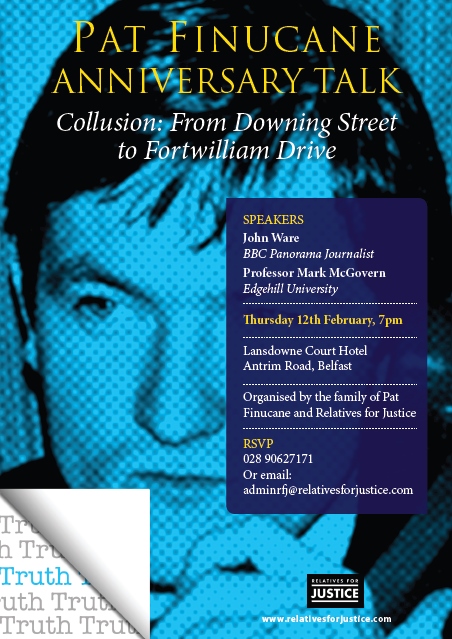
Also speaking at the event organised by the Finucane family and Relatives for Justice (RFJ), held in the Lansdowne Court Hotel on February 12th 2015 was the veteran BBC journalist John Ware, whose Panorama programmes revealed to a sceptical British audience the extent of collusion between the British army, RUC and loyalist paramilitaries.

Geraldine Finucane with Panorama reporter John Ware  Photo: Relatives for Justice

Geraldine Finucane with Panorama reporter John Ware Photo: Relatives for Justice

The first to address the packed hall was Mark McGovern, who for the past number of years has been working with RFJ examining the “patterns of collusion and collusion as a policy” focusing mostly in the Mid-Ulster area. Mr McGovern also raised the need, when analysing collusion, to look at the hundreds of people killed by loyalists in the early 1990s, after the importation of arms from South Africa and the political objectives of that campaign.

Pat Finucane Anniversary Talk  Photo: Madden & Finucane

Pat Finucane Anniversary Talk Photo: Madden & Finucane

TAOISEACH OPENS MONAGHAN CAMPUS

Taoiseach's car passes anti-water tax protestors outside Campus gates  Photo: © Michael Fisher

Taoiseach’s car passes anti-water tax protestors outside Campus gates Photo: © Michael Fisher

There was a small protest by a group of around two dozen demonstraors from the Monaghan Anti-Water Tax group as the Taoiseach Enda Kenny TD arrived to open officially the Monaghan Educational Campus. It was constructed on the site of the former army barracks at Knockaconny, which was decommissioned in 2009. Owing to the protest, the newly installed plaque at the entrance gates was not unveiled by Mr Kenny, as originally planned.

Plaque at entrance gates to Monaghan Educational Campus  Photo: © Michael Fisher

Plaque at entrance gates to Monaghan Educational Campus Photo: © Michael Fisher

The new campus opened its doors in 2013 and was the brainchild of the Cavan and Monaghan Education and Training Board under the leadership of Martin O’Brien. It includes two Irish language schools, Gaelscoil Ultain for primary level and Coláiste Oiriall for secondary level. It also houses a gym, named in honour of Barry McGuigan, sports facilities, the purpose-built Garage Theatre, replacing the small and cramped premises at the old St Davnet’s Hospital, and a building for the Monaghan Institute.

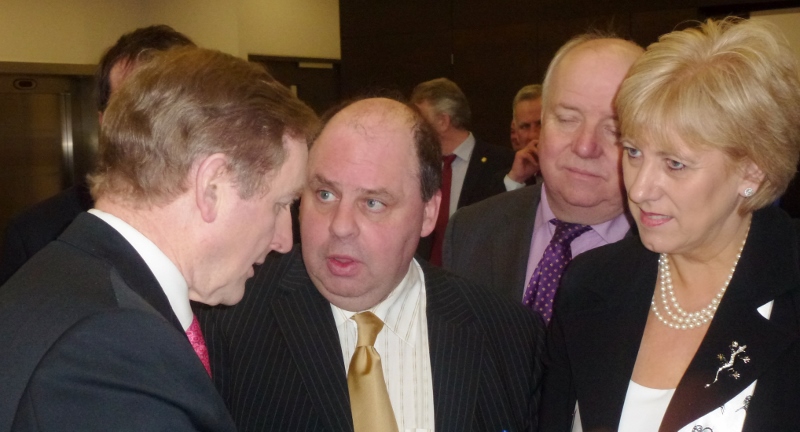
Taoiseach Enda Kenny TD talking to Brendan Ó Dufaigh Principal Coláiste Oiriall and Arts Minister Heather Humphreys TD  Photo: © Michael Fisher

Taoiseach Enda Kenny TD talking to Brendan Ó Dufaigh Principal Coláiste Oiriall and Arts Minister Heather Humphreys TD Photo: © Michael Fisher

Mr Kenny was shown an audiovisual presentation about how the campus had been developed since his previous visit in October 2011, when construction was starting. On that occasion the Taoiseach described it as a brilliant concept and a great decision for the people of County Monaghan.

Taoiseach Enda Kenny TD unveils plaque at Monaghan Educational campus with CEO of CMETB Martin O'Brien and local politicians  Photo: © Michael Fisher

Taoiseach Enda Kenny TD unveils plaque at Monaghan Educational campus with CEO of CMETB Martin O’Brien and local politicians Photo: © Michael Fisher

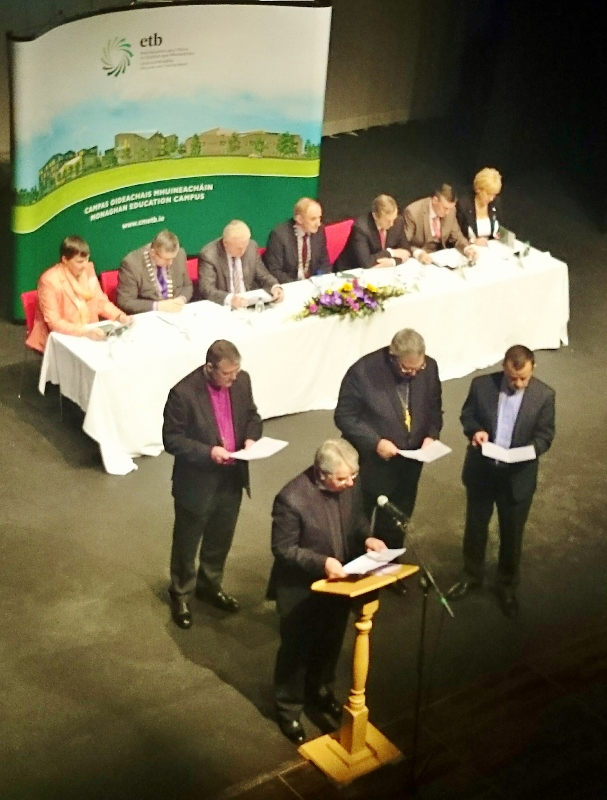
The campus was officially blessed in an ecumenical service that included the two Bishops of Clogher, Dr Liam MacDaid and Most Reverent John McDowell, along with Monaghan Presbytery Moderator Reverend Ronnie Agnew and Methodist District Superintendent Reverend Ken Robinson from Portadown (pictured saying a prayer).

Ecumenical Blessing of Monaghan Educational Campus Photo:  © Michael Fisher

Ecumenical Blessing of Monaghan Educational Campus Photo: © Michael Fisher

Today was an even bigger day for County Monaghan as it coincided with an announcement by local company Combilift that it was moving to new premises beside the Monaghan by-pass and in a €40 million investment creating 200 new jobs over the next five years at what will be its global headquarters. Mr Kenny visited the plant and said the investment would make a profound difference to the local economy and the national export economy. combilogolarge

BAZZI DEPORTED FROM USA

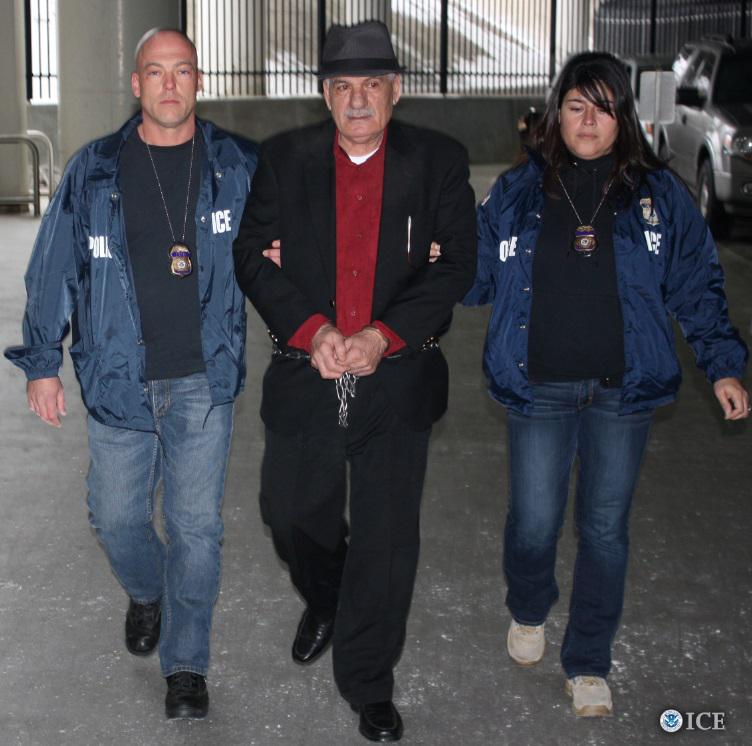
Mahmoud Bazzi deported from US to Lebanon  Photo: US Immigration and Customs Enforcement/RTE News

Mahmoud Bazzi deported from US to Lebanon Photo: US Immigration and Customs Enforcement/RTE News

On RTÉ News last night (Friday), Washington correspondent Caitriona Perry reported on the deportation from the United States to his native Lebanon of 71 year-old Mahmoud Bazzi. He is suspected of murdering two Irish soldiers on UN duty in 1980, Private Derek Smallhorne and Private Thomas Barrett, although he has denied any involvement. Last year a campaign group was set up by family members and former members of the defence forces, some of them veterans of the United Nations Interim Force in Lebanon (UNIFIL), who had served alongside the two men from the 46th Infantry Battalion.

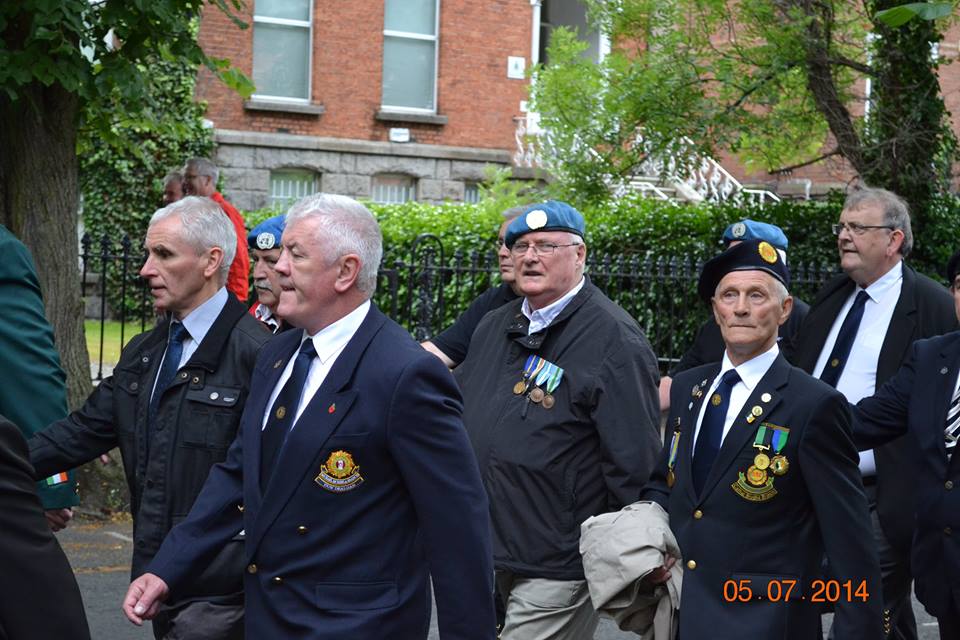
Banner at head of Parade to US Embassy in Ballsbridge July 2014

Banner at head of Parade to US Embassy in Ballsbridge July 2014

Private Smallhorne (31) was from Bluebell in Dublin and served with the 5th Inf Bn Collins Barracks in Dublin. Private Barrett (29) was from Cork and served with the 4th Inf Bn Collins Barracks in Cork. The campaign group website has the following background about the incident:

April 6th – 18th 1980
By April 1980 the 46 Inf Bn was coming to the end of its six month tour in South Lebanon. April however would prove to be a testing time for the battalion. From April 6-12th Irish troops withstood an attack at At-Tiri by the Lebanese De Facto Forces (DFF), the so-called South Lebanon Army (SLA). The DFF were a Christian-Shi’a militia under the leadership of Major Saad Haddad. The village controlled the only road leading north onto what was known as Hill 880. From this hill the surrounding villages and the fertile Tibnin Valley could be dominated by direct fire. Due to the strategic location of At-Tiri the DFF attempted to secure the area on several occasions. During the engagement of April 6-12th one Irish peacekeeper, one Fijian peacekeeper and one DFF militiaman were killed. For the loss of their ‘brother’, DFF Major Haddad pronounced that he wanted $10,000 or two Irish bodies. The engagement became known as the Battle of At-Tiri.

Following the Battle of At-Tiri OGL negotiations secured the safe withdrawal and passage of Irish personnel from Observation Post (OP) Ras; located just outside the village of Maroun Al-Ras. On April 18th Pte Derek Smallhorne (31) a father of three, Pte Thomas Barrett (29), also a father of three and Pte John O’Mahony (28) were tasked to drive a three vehicle convoy from Tibnin to OP Ras and withdraw the Irish OP. Accompanying them were two UN Observer Group Lebanon officers, US Major Harry Klein and French Captain Patrick Vincent. Also accompanying the convoy to write about the event was photographer Zaven Vartan and US press reporter Steve Hindy.

On the outskirts of Bint Jbeil village DFF gunmen stopped the convoy and ordered everyone out. The gunmen disarmed the three Irish drivers and confiscated Zaven’s camera bag. The vehicles were commandeered and all were escorted by the gunmen to an abandoned school.

At the school all seven were questioned about their nationalities. After some time Mahmoud Bazzi allegedly entered wearing a black t-shirt indicating he was in mourning for a brother who had been killed during the recent clash with the Irish battalion at At-Tiri. It’s claimed that Bazzi along with two gunmen ordered the three Irish peacekeepers down a corridor disappearing into a room at the end. Shortly afterwards shots were fired. The OGL officers and the journalist Steve Hindy then saw Private John O’Mahony staggering from the room; it quickly became apparent to the OGL officers and the journalists that he had been badly wounded. At the same time Privates Smallhorne and Barrett bolted from the room into the yard where they were recaptured.

As this was going on, a vehicle pulled up outside carrying several of Haddad’s lieutenants known to the OGL officers. They ordered the OGL officers and the journalists to take the wounded Pte John O’Mahony; however they refused to give up Pte Derek Smallhorne and Pte Thomas Barrett. The last that was seen of the two peacekeepers was as they were driven off apparently by Mahmoud Bazzi and two gunmen. The OGL officers and the journalists raced Pte John O’Mahony back to Tibnin were he was then flown to the UNIFIL hospital in Naquora. Not long after it was announced that the bodies of Pte Derek Smallhorne and Thomas Barrett had been found near Bint Jbail. They had been tortured and executed.

April 18th 1980 to today
Mahmoud Bazzi is believed to have boasted of the incident in the Lebanese press. News reports at the time quoted Haddad as saying, “They took the two Irishmen and took their revenge. That is custom in the Middle East, especially in Lebanon.”

It is known that Mahmoud Bazzi entered the United States shortly after April 18th 1980, being given asylum and a Green Card. He settled in Detroit, Michigan working as an ice-cream man. Two decades later RTÉ Prime Time conducted a special report on the abduction and killing of the Irish peacekeepers. Travelling to the United States they tracked down Mahmoud Bazzi. He denied any involvement in the killings. He claimed that he was the fall guy and blamed Haddad for the Irishmen’s deaths.

In 2005 the then Irish Minister for Defence, Willie O’Dea TD, reopened the investigation into the deaths of Pte Derek Smallhorne, Pte Thomas Barrett and the wounding of Pte John O’Mahony. The reopening of the investigation led to a United States Dept of Justice investigation into the status of Mahmoud Bazzi living in Detroit, Michigan. Steve Hindy gave two depositions to officials, one in New York and the second in Washington D.C. John O Mahony was also interviewed by US officials. No action was taken against Bazzi on foot of this investigation.

SmallhorneBarrett7

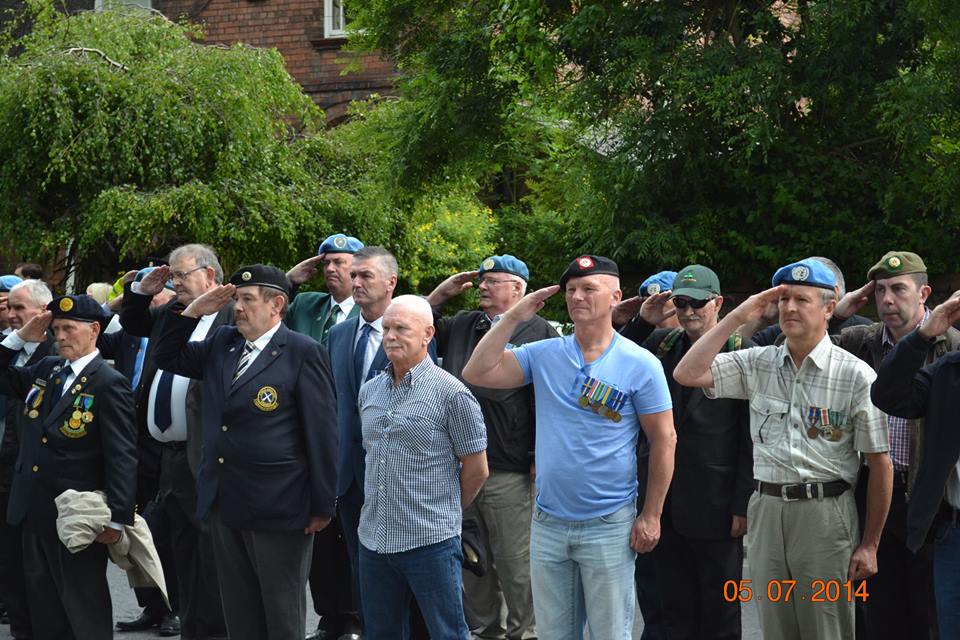
Parade in Ballsbridge July 2014

As a result of Mahmoud Bazzi applying for United States citizenship last year 2013 a new investigation was launched by the United States Department of Homeland Security (Immigration and Customs Enforcement) which found alleged immigration irregularities and possible illegal entry by Mahmoud Bazzi into the United States. The deportation is the latest step in this story.

To raise awareness about the case, the Justice for Smallhorne & Barrett group held two dignified and well-organised protests last year. In April, a Silent Vigil took place at Government Buildings in Dublin, attended by in excess of 500 Irish Veterans.  Another Silent Vigil  Ceremony in which I participated was held by the group on the 5th of July 2014  outside the US Embassy in Ballsbridge. Irish defence forces veterans from IUNVA and ONE were joined on the day by United States American Legion Veterans, French Foreign Legion Veterans, as well as some Dutch and Nordic Veterans. For a report on the protest, you can find Diarmaid Fleming’s package for the This Week programme on Radio 1 on the RTÉ Player. There are also various video clips on youtube

End of Parade at Lansdowne Road stadium with playing of National Anthem

End of Parade at Lansdowne Road stadium with playing of National Anthem


AUSCHWITZ

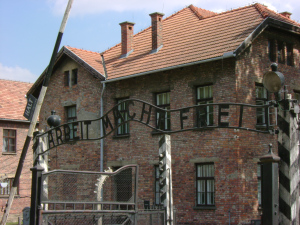
Auschwitz camp entrance  Photo:  © Michael Fisher

Auschwitz camp entrance Photo: © Michael Fisher

“Remembering is not only about (the) past itself, but rather about connecting it to the future”. A view that has much relevance in Northern Ireland, where dealing with the past continues to be a very sensitive issue, including the definition of ‘victims’. The quotation is taken from an interview with Dr. Piotr M.A. Cywiński, director of the Auschwitz-Birkenau State Museum. Today an important commemoration was held, marking the 70th anniversary of the liberation of Auschwitz=Birkenau concentration camp. It was attended by thirty world leaders and heads of state. Ireland was represented by the Minister for Foreign Affairs, Charlie Flanagan TD.

Rail tracks at Birkenau camp Photo:  © Michael Fisher

Rail tracks at Birkenau camp Photo: © Michael Fisher

More than one million people, the overwhelming majority of them Jews, were killed at the death camp, which was liberated by the Soviet Army on 27 January 1945. Speaking from Poland, Minister Flanagan said: “Auschwitz stands as a haunting symbol of one of the darkest periods in Europe’s history. The ceremony to mark the 70th anniversary of the liberation of the camps will be an occasion when all victims of the Holocaust will be remembered, most especially the few remaining survivors of Auschwitz-Birkenau, many of whom will be present at the event. We must never forget the inhuman cruelty and industrial scale murder that took place here and in other death camps across Europe”.

Mr Flanagan added: “We must continue to be alive to the fact that the Holocaust had its origins in intolerance, prejudice and racism. We must be vigilant in our promotion of equality and tolerance and our defence of fundamental human rights which remain under threat in many parts of the world today”.

Ireland will make a further contribution of €10,000 to the Perpetual Capital Fund of the Auschwitz-Birkenau Foundation, in addition to the €5,000 donated in 2013. The Fund was set up in 2009 to ensure the future conservation and preservation of the Auschwitz-Birkenau site, so that future generations can see an authentic space, the scene of one of the biggest crimes in the history of mankind.

Minister Flanagan stated: “It is vital that we ensure the conservation and preservation of the Auschwitz-Birkenau site, so that future generations can see an authentic space, honour the memory of the victims and learn the lessons of the Holocaust. Ireland’s contribution of €10,000 will assist in this.”
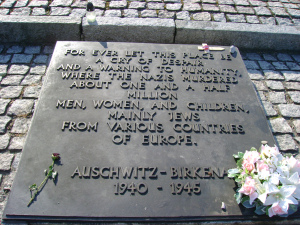
Auschwitz memorial  Photo: © Michael Fisher

Auschwitz memorial Photo: © Michael Fisher

Interview with Dr. Piotr M.A. Cywiński which can be found on the website

The 70th anniversary of the liberation of Auschwitz is approaching. What is the significance and the meaning of this day?

The 70th anniversary will not be the same as previous big anniversaries. We have to say it clearly: it is the last big anniversary that we can commemorate with a numerous group of Survivors. Until now, it has been them who taught us how to look at the tragedy of the victims of the Third Reich and the total destruction of the world of European Jews. Their voices became the most important warning against the human capacity for extreme humiliation, contempt and genocide. However, soon it will not be the witnesses of those years, but us, the post-war generations, who will pass this horrible knowledge and the crushing conclusions that result from it.

On this day, we must understand that the Survivors, the former prisoners, did everything they could to make us realise that the road to the most terrible tragedies is surprisingly simple. All you need is social frustration, a bit of demagoguery, an imaginary enemy, a moment of madness… Peace is a very fragile construct and you can never assume that any acquis communautaire is truly obtained for good. It may be clearly observed in at least several regions of the world, which makes it even more alarming. The future of our civilisation is in our own hands and we must take responsibility for the shape of that future. And a wise vision of future must be rooted in memory.

Ten years ago, the day of Auschwitz liberation was designated by the United Nations General Assembly as the International Holocaust Remembrance Day. Doesn’t that help?

It is an important political signal, as the General Assembly unites representatives of all member states. When I speak of remembrance, however, what I mean is not its institutionalised form. It is also necessary, but not as much as it is important for a sense of awareness of the meaning behind the extermination of European Jews and the whole tragedy of concentration camps to take root in our whole culture, politics and education system. Without internalising and understanding the reality of this atrocity, we will be unable to recognise today’s challenges for what they really are. We will not be even able to understand the post-war efforts to create emergency mechanisms, to build a common Europe or to teach attitudes of empathy, mutuality and respect.

But don’t you have the feeling that today, in the second decade of the 21st century, while the history of Auschwitz becomes more and more distant, similar horrible images reappear in other places, in different ways and contexts?

They do. And it clearly shows that teaching about Auschwitz and the Shoah is not just telling a story which had its beginning and its end, relating an isolated set of facts drifting away in time. It is also a lesson on human nature, society, the power of the media, on the politics. If today, when we see what is happening in some parts of the world, we are reminded of the Second World War, even of Auschwitz, it is because deep inside we feel that, regardless of various factors, we are facing the same pathological passions: hatred, contempt, anti-Semitism, racism, nationalisms… There are still many important steps to be taken in education before teaching about Auschwitz and the Shoah is soundly established in social and civic education or even in teaching about the most recent history.

I sincerely hope that commemoration of this day will take place all over the world, in every place inhabited by people aware of our obligation. We encourage everyone to express this memory everywhere in the world. I have to admit that what alarms me most is the still-present overwhelming passivity in the face of organised evil.

Main commemoration of the 70th anniversary will take place in a tent in front of the Gate of Death of the former Auschwitz II-Birkenau camp. It means that one of the most recognisable visual symbols of Auschwitz will become a symbol of the ceremony. What is the reason behind this choice?

Man is capable of crossing almost every boundary. For those who crossed – most frequently in cattle wagons – the gate of Birkenau, there was no way back. Nowadays, almost one and a half a million people cross the same gate every year in an attempt to face the meaning of Auschwitz. The visit starts in the former Auschwitz I Stammlager camp, where all the educational and exhibition-related aids are located. They introduce visitors to the history. Then, visitors go to Birkenau, where the immensity of the post-camp space, kilometres of barbed wire, rows of barracks, remains of gas chambers and crematoria make them fully realise the size of that tragedy and its undeniable realness. In some way, just like the gate stands today in the middle, all of us are in the middle of something as well. We know the facts, we know what happened, but the most important part still lies ahead: realising the significance of those facts, of the Shoah and of the whole genocidal policy of the Third Reich. Without this awareness we cannot hope for more responsibility.

Why is this immensity of Birkenau so significant?

Because it is authentic. Even if most wooden barracks no longer exist, even if SS officers blew up gas chambers, even if grass has reappeared where it had grown before the war, the presence of the Shoah is still evident. There are almost no museographic installations that would obscure the view. To walk along the unloading ramp, to go inside a brick barracks, to silently look at the undressing room next to the gas chambers – this is much more than any exhibition in the world or the most elaborate memorial. Provided, of course, that one has previous knowledge of history.

Which is why, for the past five years, we have focused on providing this Memorial Site with long-term ways of financing comprehensive preservation works. Thirty countries signed up to contribute to the created Perpetual Fund of the Auschwitz-Birkenau Foundation. We hope that thanks to the support of our exceptional private donators, the “Pillars of Remembrance”, we will complete the Fund by January 2015. At that time, the future of the Memorial Site and the significance of its authenticity will be much more secure. For generations.

The majority of visitors are young people. Why are they so interested in Auschwitz?

Three fourths of the visitors are young people. Their coming here is a part of developed educational programmes. Many of today’s teachers first came to Auschwitz as students themselves, so they know how such an experience can change one’s view of the world and oneself. In many countries decision-makers came to the conclusion that such visits should be planned and financed as a part of special governmental or regional programmes. People who are about to graduate from school or university and begin their adult lives should look deep into the heart of evil which Auschwitz was. It is a rite de passage for a person coming of age nowadays.

The most important guests of the commemoration will be the Survivors, the witnesses. However, the several thousand people attending will include also state delegations: politicians, people who transform the contemporary world. Can Auschwitz be a lesson for them as well?

Auschwitz is a lesson for anyone willing to learn. You might think that the scope of responsibility of a normal, average person is normal and average as well. And that a politician or a decision-maker bears far greater responsibility. That’s not entirely true. A vast majority of the Righteous Among the Nations are normal people, average, you could say, if not for their enormous sacrifice. Nevertheless, in a substantive way they saved the face of humanity. Of course, the influence of a decision a politician makes is disproportionally larger. But it cannot exempt any of us from taking our own responsibility.

Do you see any universal message coming from this place?

The message comes from the Survivors, from their memoirs, books, recordings. The message comes also from the silence of the murdered ones. I would like to recall the voice of a person who did not survive, a prisoner of the Sonderkommando, one of the leaders of the revolt in crematorium IV – the voice of a Polish Jew, Załmen Gradowski. In his notes, which he hid in the ground near the building of the crematorium, he wrote: “We have a dark premonition, because we know”. At that time he meant the fate of his friends taken into an unknown direction. But I would not want to narrow down the meaning of these unsettling words just to that. We today also now, we know perfectly well. Nothing is given forever. We must always be able to sense growing dangers and great challenges of the future. And in place of inactivity and passivity, we must develop a sense of responsibility. Remembering is not only about past itself, but rather about connecting it to the future.

Interview with Dr. Piotr M.A. Cywiński, the director of the Auschwitz-Birkenau State Museum

The 70th anniversary of the liberation of Auschwitz is approaching. What is the significance and the meaning of this day?

The 70th anniversary will not be the same as previous big anniversaries. We have to say it clearly: it is the last big anniversary that we can commemorate with a numerous group of Survivors. Until now, it has been them who taught us how to look at the tragedy of the victims of the Third Reich and the total destruction of the world of European Jews. Their voices became the most important warning against the human capacity for extreme humiliation, contempt and genocide. However, soon it will not be the witnesses of those years, but us, the post-war generations, who will pass this horrible knowledge and the crushing conclusions that result from it.

On this day, we must understand that the Survivors, the former prisoners, did everything they could to make us realise that the road to the most terrible tragedies is surprisingly simple. All you need is social frustration, a bit of demagoguery, an imaginary enemy, a moment of madness… Peace is a very fragile construct and you can never assume that any acquis communautaire is truly obtained for good. It may be clearly observed in at least several regions of the world, which makes it even more alarming. The future of our civilisation is in our own hands and we must take responsibility for the shape of that future. And a wise vision of future must be rooted in memory.

Ten years ago, the day of Auschwitz liberation was designated by the United Nations General Assembly as the International Holocaust Remembrance Day. Doesn’t that help?

It is an important political signal, as the General Assembly unites representatives of all member states. When I speak of remembrance, however, what I mean is not its institutionalised form. It is also necessary, but not as much as it is important for a sense of awareness of the meaning behind the extermination of European Jews and the whole tragedy of concentration camps to take root in our whole culture, politics and education system. Without internalising and understanding the reality of this atrocity, we will be unable to recognise today’s challenges for what they really are. We will not be even able to understand the post-war efforts to create emergency mechanisms, to build a common Europe or to teach attitudes of empathy, mutuality and respect.

But don’t you have the feeling that today, in the second decade of the 21st century, while the history of Auschwitz becomes more and more distant, similar horrible images reappear in other places, in different ways and contexts?

They do. And it clearly shows that teaching about Auschwitz and the Shoah is not just telling a story which had its beginning and its end, relating an isolated set of facts drifting away in time. It is also a lesson on human nature, society, the power of the media, on the politics. If today, when we see what is happening in some parts of the world, we are reminded of the Second World War, even of Auschwitz, it is because deep inside we feel that, regardless of various factors, we are facing the same pathological passions: hatred, contempt, anti-Semitism, racism, nationalisms… There are still many important steps to be taken in education before teaching about Auschwitz and the Shoah is soundly established in social and civic education or even in teaching about the most recent history.

I sincerely hope that commemoration of this day will take place all over the world, in every place inhabited by people aware of our obligation. We encourage everyone to express this memory everywhere in the world. I have to admit that what alarms me most is the still-present overwhelming passivity in the face of organised evil.

Main commemoration of the 70th anniversary will take place in a tent in front of the Gate of Death of the former Auschwitz II-Birkenau camp. It means that one of the most recognisable visual symbols of Auschwitz will become a symbol of the ceremony. What is the reason behind this choice?

Man is capable of crossing almost every boundary. For those who crossed – most frequently in cattle wagons – the gate of Birkenau, there was no way back. Nowadays, almost one and a half a million people cross the same gate every year in an attempt to face the meaning of Auschwitz. The visit starts in the former Auschwitz I Stammlager camp, where all the educational and exhibition-related aids are located. They introduce visitors to the history. Then, visitors go to Birkenau, where the immensity of the post-camp space, kilometres of barbed wire, rows of barracks, remains of gas chambers and crematoria make them fully realise the size of that tragedy and its undeniable realness. In some way, just like the gate stands today in the middle, all of us are in the middle of something as well. We know the facts, we know what happened, but the most important part still lies ahead: realising the significance of those facts, of the Shoah and of the whole genocidal policy of the Third Reich. Without this awareness we cannot hope for more responsibility.

Why is this immensity of Birkenau so significant?

Because it is authentic. Even if most wooden barracks no longer exist, even if SS officers blew up gas chambers, even if grass has reappeared where it had grown before the war, the presence of the Shoah is still evident. There are almost no museographic installations that would obscure the view. To walk along the unloading ramp, to go inside a brick barracks, to silently look at the undressing room next to the gas chambers – this is much more than any exhibition in the world or the most elaborate memorial. Provided, of course, that one has previous knowledge of history.

Which is why, for the past five years, we have focused on providing this Memorial Site with long-term ways of financing comprehensive preservation works. Thirty countries signed up to contribute to the created Perpetual Fund of the Auschwitz-Birkenau Foundation. We hope that thanks to the support of our exceptional private donators, the “Pillars of Remembrance”, we will complete the Fund by January 2015. At that time, the future of the Memorial Site and the significance of its authenticity will be much more secure. For generations.

The majority of visitors are young people. Why are they so interested in Auschwitz?

Three fourths of the visitors are young people. Their coming here is a part of developed educational programmes. Many of today’s teachers first came to Auschwitz as students themselves, so they know how such an experience can change one’s view of the world and oneself. In many countries decision-makers came to the conclusion that such visits should be planned and financed as a part of special governmental or regional programmes. People who are about to graduate from school or university and begin their adult lives should look deep into the heart of evil which Auschwitz was. It is a rite de passage for a person coming of age nowadays.

The most important guests of the commemoration will be the Survivors, the witnesses. However, the several thousand people attending will include also state delegations: politicians, people who transform the contemporary world. Can Auschwitz be a lesson for them as well?

Auschwitz is a lesson for anyone willing to learn. You might think that the scope of responsibility of a normal, average person is normal and average as well. And that a politician or a decision-maker bears far greater responsibility. That’s not entirely true. A vast majority of the Righteous Among the Nations are normal people, average, you could say, if not for their enormous sacrifice. Nevertheless, in a substantive way they saved the face of humanity. Of course, the influence of a decision a politician makes is disproportionally larger. But it cannot exempt any of us from taking our own responsibility.

Do you see any universal message coming from this place?

The message comes from the Survivors, from their memoirs, books, recordings. The message comes also from the silence of the murdered ones…Nothing is given forever. We must always be able to sense growing dangers and great challenges of the future. And in place of inactivity and passivity, we must develop a sense of responsibility. Remembering is not only about past itself, but rather about connecting it to the future.

DEFENCE CO-OPERATION IRELAND & UK

Michael Fallon M.P., British Defence Secretary and Irish Defence Minister Simon Coveney T.D. sign the memorandum  Photo:  Department of Defence

Michael Fallon M.P., British Defence Secretary and Irish Defence Minister Simon Coveney T.D. sign the memorandum Photo: Department of Defence

Irish Defence Minister Simon Coveney T.D. welcomed the British Defence Secretary Michael Fallon M.P. to Dublin Castle where they signed a Memorandum of Understanding between the Department of Defence, Ireland and the United Kingdom Ministry of Defence on enhancement on certain aspects of Security and Defence Cooperation. The visit marked a historic moment for both countries, with Mr Fallon, being the first UK Defence Minister ever to make an official visit to Ireland.

The signing of the Memorandum represents a major step forward in the process of formalising the already broad and strong relationship the the two countries have. recognising their shared interests, values and responsibilities. It will provide both the d Ireland and the UK with a means for developing and furthering their already excellent defence and security relations and will help to enhance cooperation in exercises, training as well as peacekeeping and crisis management operations.

Examples of the UK and Irish Armed Forces already working together include peacekeeping missions in Mali during 2013, and more recently, alongside each other in Sierra Leone, where the United Kingdom is leading international efforts to halt the spread of the Ebola Virus.

Mr Coveney said “the signing of the Memorandum of Understanding places existing cooperation arrangements in the Defence area between Ireland and the UK on a more formal and enduring footing.  The Memorandum of Understanding is a voluntary, non-binding arrangement between the Department of Defence and the UK Ministry of Defence and does not affect or prejudice the position, policy or security arrangements of either country”. 

The drafting of the Memorandum arose from the initiative for increased co-operation across all areas of Government in the East-West relationship between Ireland and the UK which is led by the Taoiseach and British Prime Minister at Head of Government level. The signing of the Memorandum of Understanding will be followed by the drafting of a three-year Action Plan that will contain the detailed programme of bilateral co-operation activities for the forthcoming year and set the objectives for the succeeding two years. This may include military forces training, exercises and education, joint procurement and general sharing on reform in defence services.

The Minister went on to say that, “the Memorandum of Understanding and the associated Work Programme will also support the development of a greater mutual understanding of the policy considerations underlying our respective actions and engagement in multilateral arrangements for collective security such as the UN. It provides opportunities for more joint and collaborative work in support of international peace and security. It will also enhance the potential for further joint contributions to UN peacekeeping operations”.

British Defence Secretary, Michael Fallon, said he welcomed the opportunity to sign the Memorandum of Understanding with Ireland. He said it very much reaffirmed the British government’s resolve to build on and strengthen the existing strong links between the Armed Forces of Ireland and the UK. Looking to the future, this agreement will importantly help us both to improve our defence and security cooperation, including conflict prevention and crisis management, he said.

Irish & British soldiers taking part in WW1 Centenary commemoration at Glasnevin cemetery, August 2014  Photo:   © Michael Fisher

Irish & British soldiers taking part in WW1 Centenary commemoration at Glasnevin cemetery, August 2014 Photo: © Michael Fisher

PRESIDENT HIGGINS’ CHRISTMAS MESSAGE

Uachtarán na hÉireann Michael D. Higgins has issued his Christmas and New Year message. He refers to the improving relations between Ireland and the UK, strengthened by his state visit to Britain earlier this year, the first such official engagement by an Irish President. He also thanks members of the emergency services, the Garda Síochána, and members of Óglaigh na hÉireann. some of whom are on overeas duty. His message which has been recorded for broadcasting is as follows:-

“Christmas is a season of joy and warmth. It is a special time of the year, when so many of us come together with family and friends in a spirit of sharing and celebration. It is an opportunity to revive hope and anticipation, which can encourage us, including those who may be feeling distressed or lonely, to look beyond the long dark nights, to the promise once again, of the dawning light of Spring.

The story of Bethlehem, of the homeless Joseph and Mary anticipating the birth of their child, is at the heart of this holiday and it invites us to reflect on how we relate to the stranger, the vulnerable in our midst. At Christmas we are reminded, not only of how a man and a woman had to leave their familiar surroundings and have their child in a strange place, of how they were joined by unknown shepherds and visitors from faraway lands, but most importantly, of the empowering ethic of hospitality.

I completed, last month, a three-week visit to Africa, where I witnessed first-hand the impressive solidarity of countries such as Ethiopia in responding to the predicament of so many men, women and children from neighbouring countries who were forced to leave behind their homes, communities and livelihoods to seek refuge in their neighbour’s territory. Such willingness to offer shelter to those fleeing persecution or hunger is an issue that should involve us all, and not just the countries first affected.

Christmas is a season of peace, a time to recall all that can be achieved through reflection, forgiveness and reconciliation. Earlier this year, I had the great honour of being Ireland’s first Head of State to pay a State Visit to our nearest neighbour in every sense, the United Kingdom. It was an immense privilege and pleasure to be thus able to manifest the friendship between our two peoples, who no longer “look at each other with doubtful eyes”, but, rather, with the trustful eyes of mutual respect and shared commitments.

As a New Year approaches, and we continue our lives together, may I offer our appreciation to all who make that possible. I know that a commitment to the service of our citizens is shared by all those with a public service mission. May I, on behalf of the Irish people, thank in particular those who are caring for our communities during the holiday season – including the staff in our hospitals and emergency services, An Garda Síochána, and members of our Defence Forces who are supporting peace abroad.

My wish is that 2015 will bring our people a bounty of opportunities for flourishing and renewal. May the caring spirit that infuses these precious few days spent in the company of those we love extend to all and well beyond the Christmas holiday, into the year ahead. Sabina and I wish each and every one of you a very happy Christmas and a peaceful and prosperous New Year.”

The English video of his address can be found here.

WW1 TALK: PTE ROBERT HAMILTON – PART 7

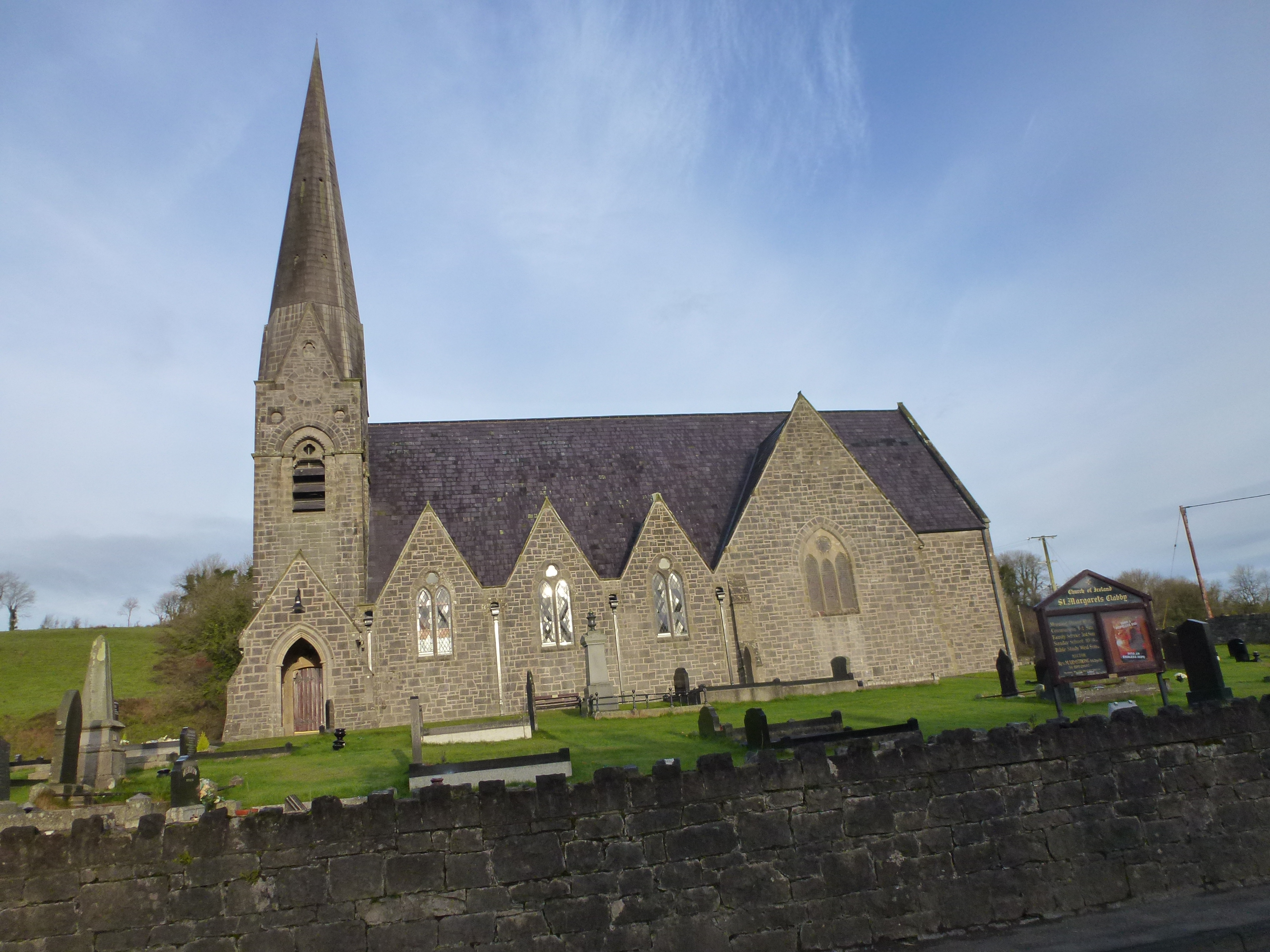
St Margaret's Church of Ireland church, Clabby, Co. Fermanagh Photo:  © Michael Fisher

St Margaret’s Church of Ireland church, Clabby, Co. Fermanagh Photo: © Michael Fisher

Three days after my talk in Ballinode on Private Robert Hamilton, I was passing through Clabby in County Fermanagh, near Fivemiletown. I took the opportunity to call in to see Jean Hamilton at the Rectory, who had been very helpful in finding birth and baptismal records for Robert. Her husband Canon Maurice Armstrong had also helped with the research.

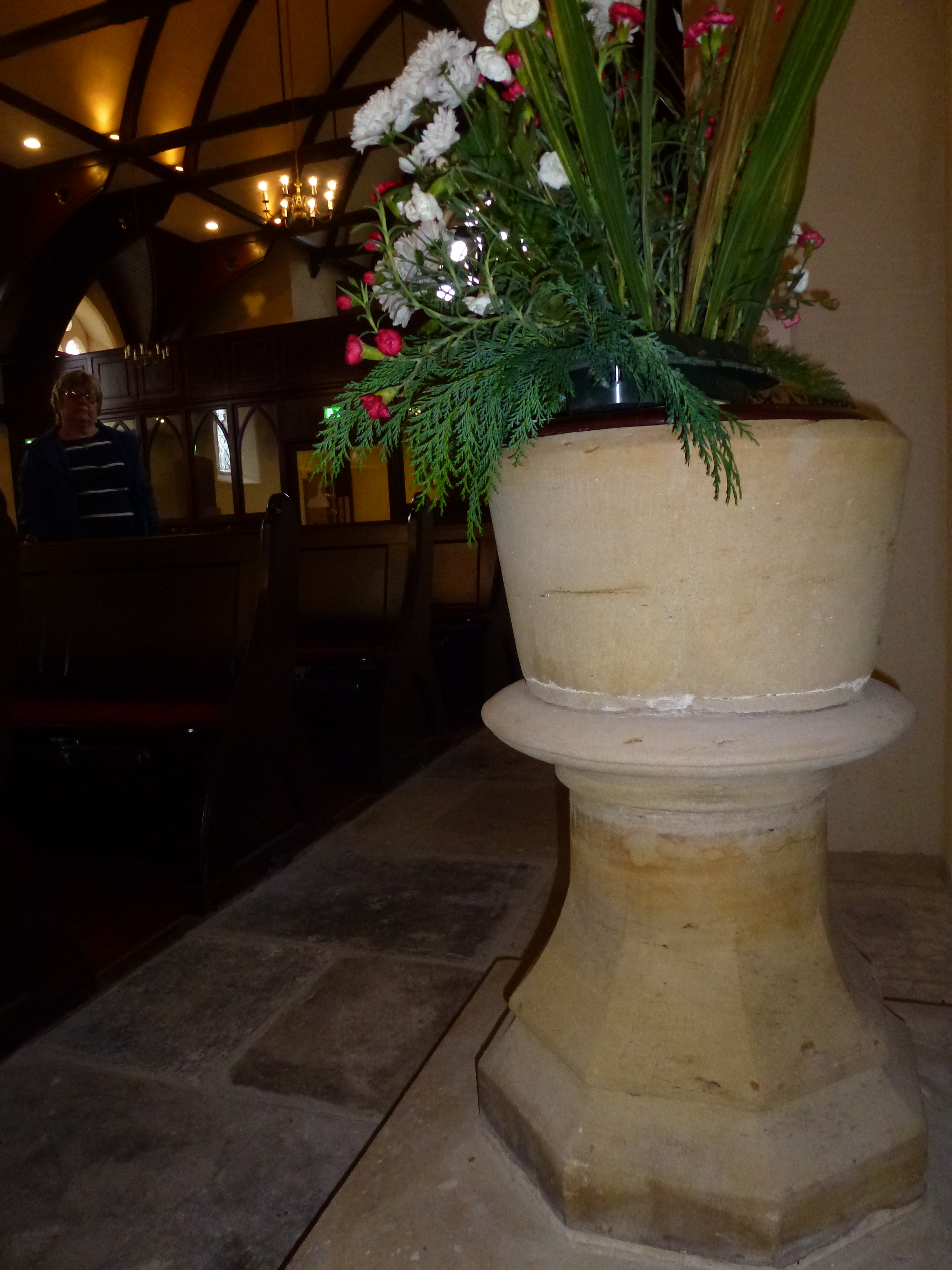
Baptismal Font, St Margaret's Church of Ireland church, Clabby, Co. Fermanagh Photo:  © Michael Fisher

Baptismal Font, St Margaret’s Church of Ireland church, Clabby, Co. Fermanagh Photo: © Michael Fisher

She then invited me into the church, which was re-opened after an extensive renovation in February this year.

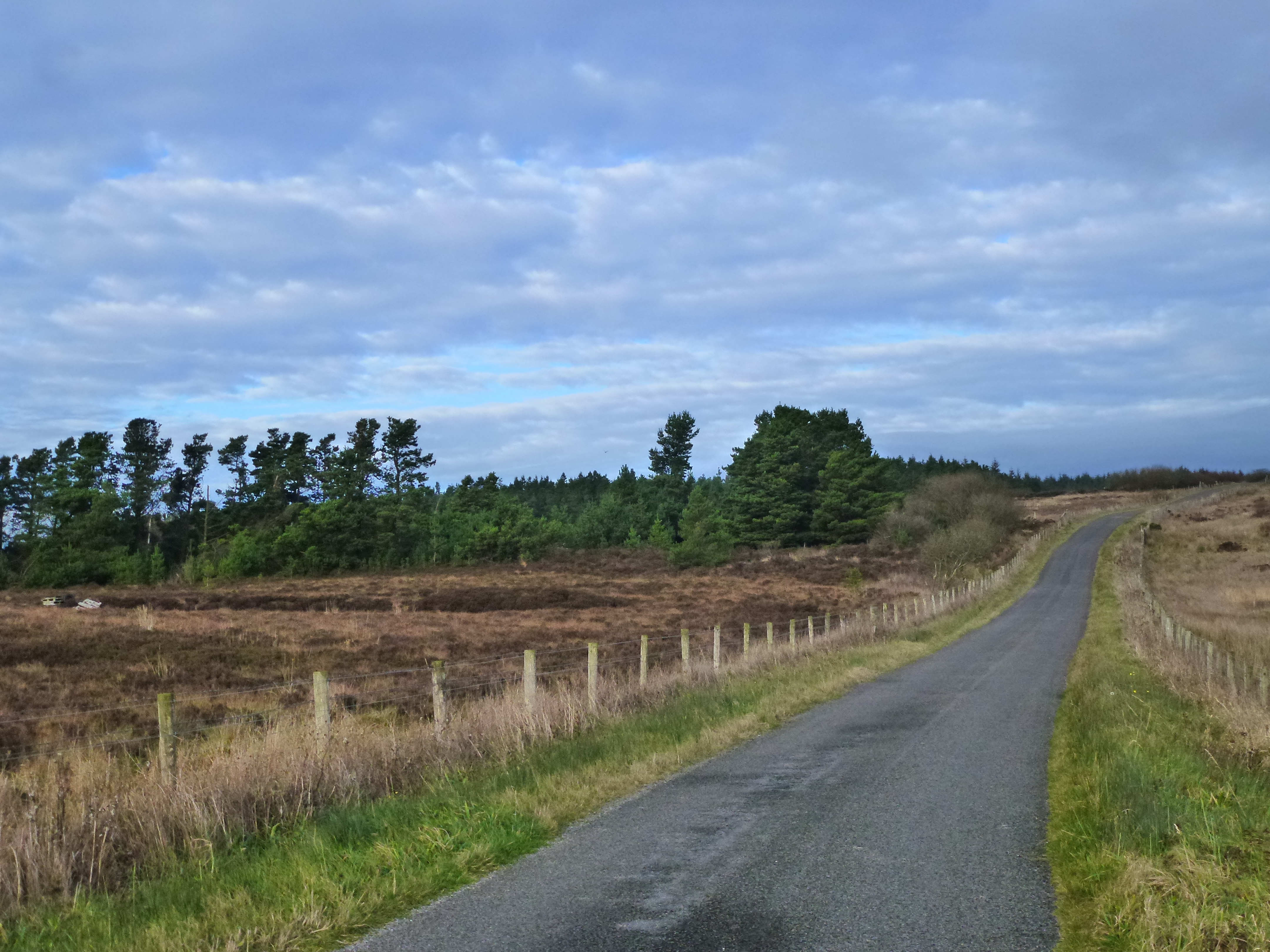
I was able to see the baptismal font where Robert Hamilton would have been baptised a few days after his birth, because he was ‘poorly’ according to Canon Armstrong. The font is in its original position. Afterwards Jean gave me directions for reaching the nearby townland of Brockagh, a mountain area of blanket bog very like Sliabh Beagh. Robert was living with John and Jane Keys, probably in a thatched cottage.

Brockagh, Clabby, Co. Fermanagh Photo:  © Michael Fisher

Brockagh, Clabby, Co. Fermanagh Photo: © Michael Fisher

WW1 TALK: PTE ROBERT HAMILTON – PART 6

Michael Fisher report in Northern Standard Thursday 27th November 2014 p.6

Michael Fisher report in Northern Standard Thursday 27th November 2014 p.6

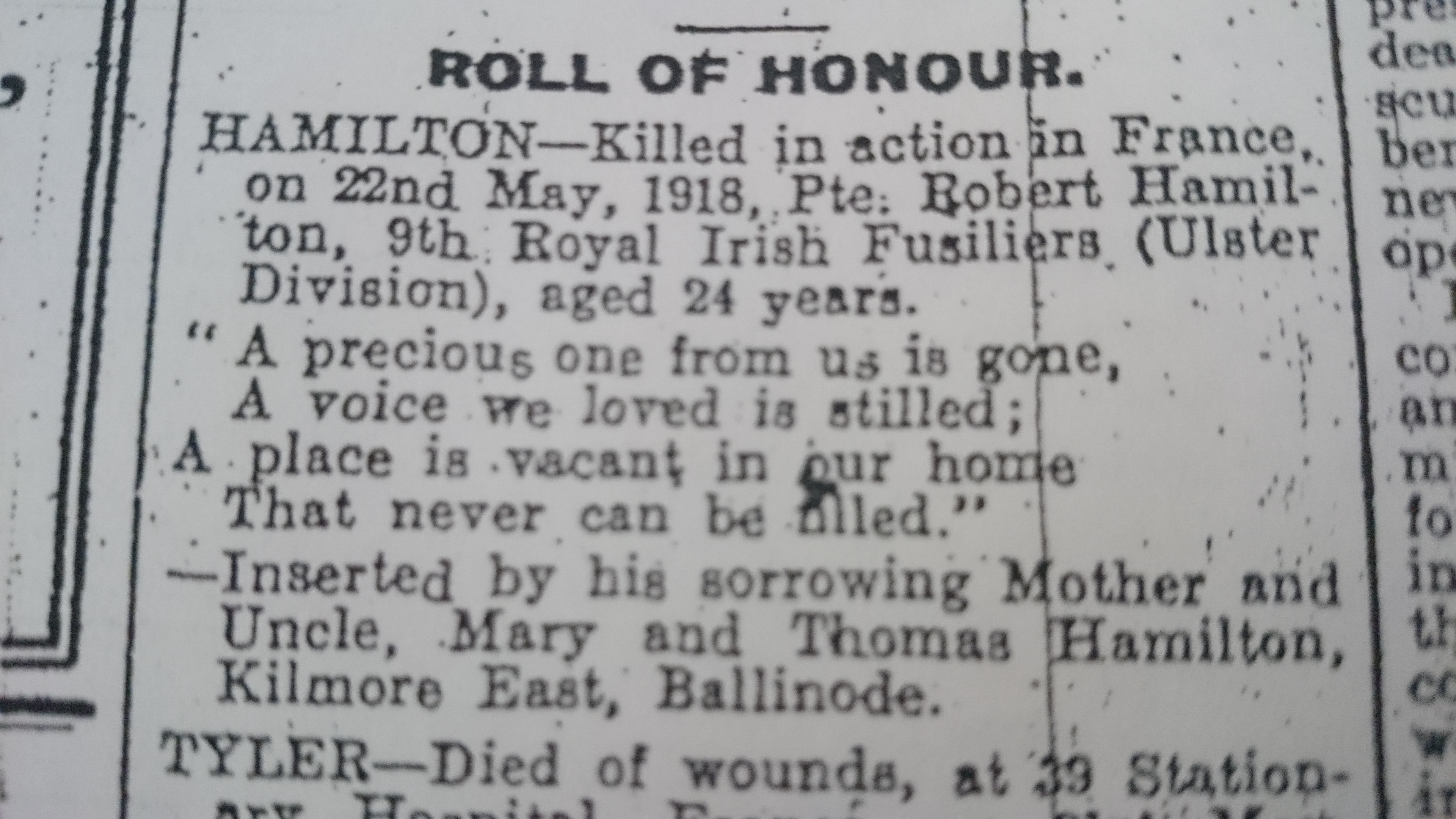
Roll of Honour Death Notice (with incorrect date and age) for Pte Hamilton Northern Standard June 1918

Roll of Honour Death Notice (with incorrect date and age) for Pte Hamilton Northern Standard June 1918

Many of the details discovered about Private Robert Hamilton from Ballinode were taken from the archives of the Northern Standard, the main weekly newspaper for County Monaghan. So it was very appropriate to receive coverage in this week’s edition (still on sale) for my talk a week ago on this member of the Royal Irish Fusiliers (9th Battalion), who was killed in action in Flanders in April 1918.

In Memoriam notice 1st anniversary death of Pte Robert Hamilton. Northern Standard April 1919

In Memoriam notice 1st anniversary death of Pte Robert Hamilton. Northern Standard April 1919


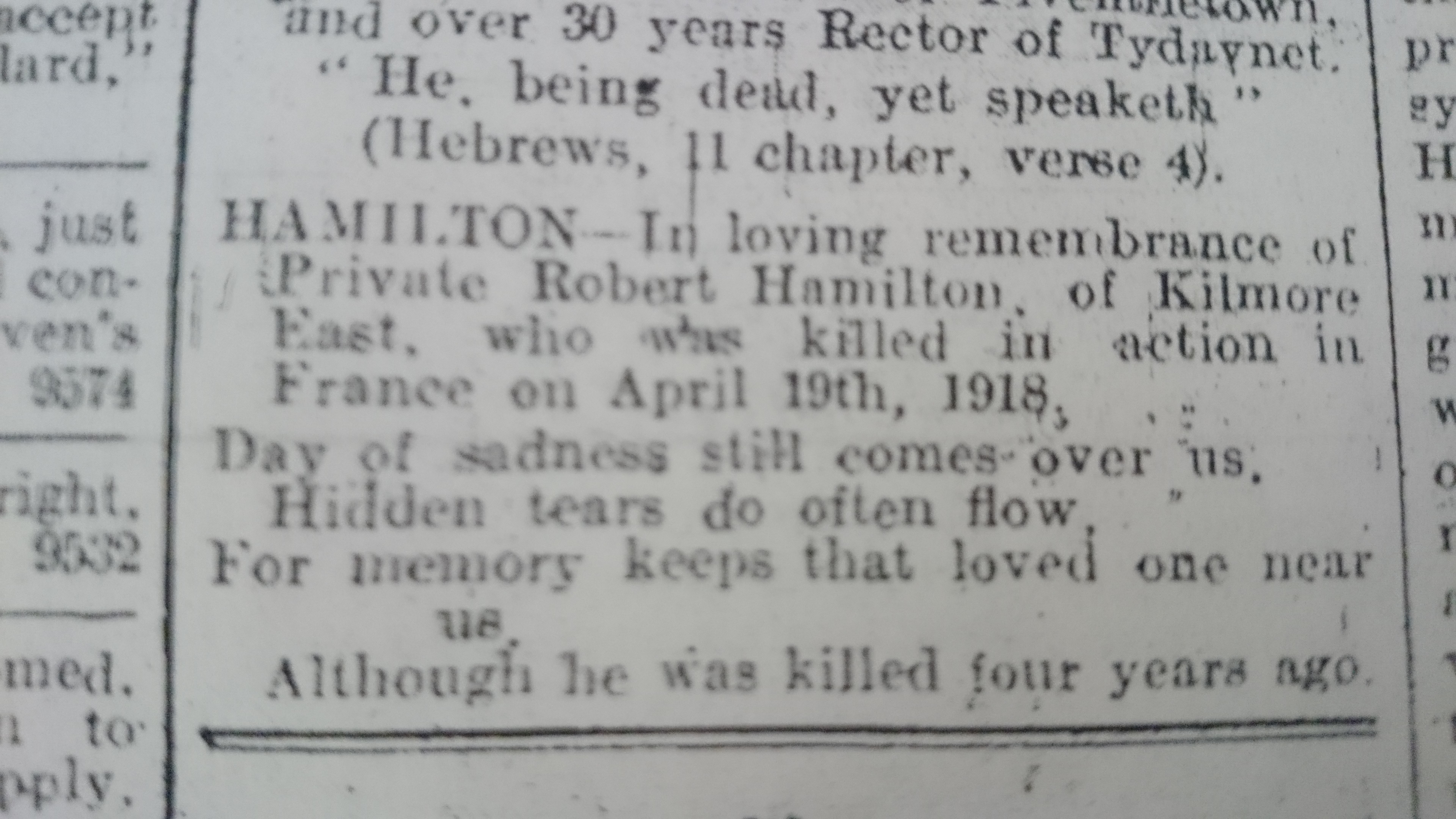
In Memoriam notice 4th anniversary death of Pte Robert Hamilton. Northern Standard April 1922

In Memoriam notice 4th anniversary death of Pte Robert Hamilton. Northern Standard April 1922


In Memoriam 4th anniversary notice for Pte Robert Hamilton. Northern Standard April 1922

In Memoriam 4th anniversary notice for Pte Robert Hamilton. Northern Standard April 1922

PTE ROBERT HAMILTON: WW1 TALK BALLINODE

***DON’T FORGET TO BUY YOUR COPY OF THIS WEEK’S NORTHERN STANDARD FOR ALL THE NEWS FROM COUNTY MONAGHAN. AVAILABLE IN NEWSAGENTS, SUPERMARKETS, PETROL STATIONS AND MANY OTHER OUTLETS. PRICE €2:00*** 

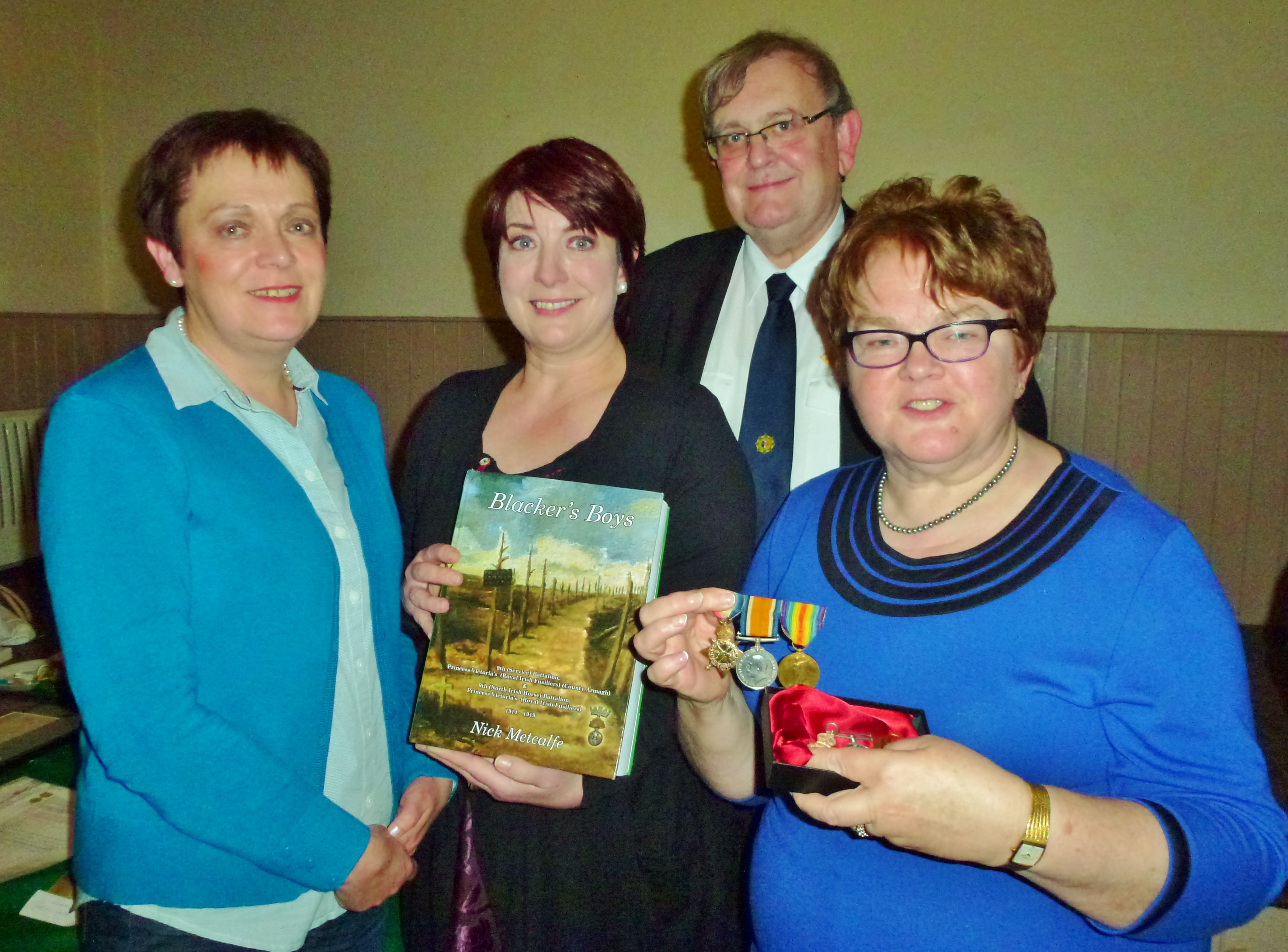
Heather Stirrat, Marie McKenna, Michael Fisher and Ruby Heasty with the three WW1 medals Photo: © Evelyn Fisher

Heather Stirrat, Marie McKenna, Michael Fisher and Ruby Heasty with the three WW1 medals Photo: © Evelyn Fisher

Michael Fisher at the plaque for Robert Hamilton at St Dympna's Church, Ballinode Photo: © Evelyn Fisher

Michael Fisher at the plaque for Robert Hamilton at St Dympna’s Church, Ballinode Photo: © Evelyn Fisher

A WORLD WAR I SOLDIER FROM BALLINODE

Private Robert Hamilton from Kilmore East in Ballinode is one of the thousands of Irishmen killed in World War I whose stories were forgotten for nearly 100 years. Now to coincide with the centenary of the start of the Great War in August 1914, his story was recalled in a talk by local journalist Michael Fisher at St Dympna’s hall in Ballinode on Friday evening.

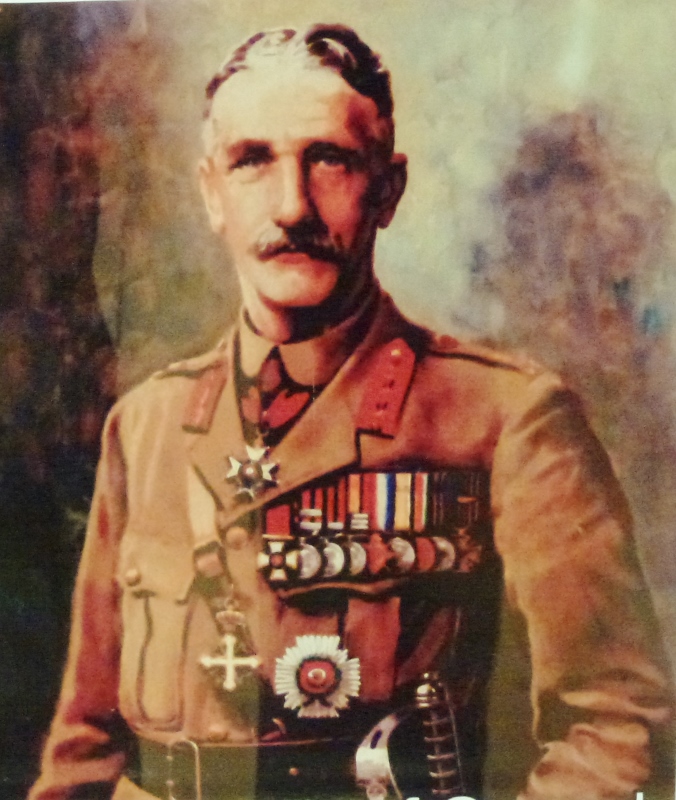
According to his obituary in the Northern Standard in May 1918, Private Hamilton was a member of the Ulster Volunteer Force in County Monaghan. He had signed the Ulster Covenant in Ballinode in September 1912. The UVF ranks joined the British Army to fight in World War I and became part of the 36th (Ulster) Division, headed by a Cavan man, Major General Oliver Nugent.

General Sir Oliver Nugent: Photo courtesy Cavan County Museum

General Sir Oliver Nugent: Photo courtesy Cavan County Museum

Ballinode Parochial Hall Photo:  © Michael Fisher

Ballinode Parochial Hall Photo: © Michael Fisher

Robert Hamilton enlisted in Monaghan in the 9th  Battalion Royal Irish Fusiliers (the ‘Faugh-a-Ballaghs’) when a recruitment party came to town in February 1915. The Johnston and Madden Memorial Orange Hall on North Road was one of the places used by the British Army, along with the Town Hall. The recruits were sent to a barracks in Belfast and then to England for training. In October 1915 the regiment was on the move from Southampton across the English Channel to France.

Robert fought at the Battle of the Somme in July 1916 but was invalided with a fever at some stage and appears to have been sent back to England to recuperate. He left Ballinode on Easter Saturday at the end of March 1918 and returned to his unit on the western front. Three weeks later he was killed in the fighting during a German offensive in the Ypres Salient at Kemmel Hill in Belgium. He was 26, not 24 as some records show. His body was never identified, so he has no grave, but his name is included in the vast Tyne Cot memorial near Ypres.

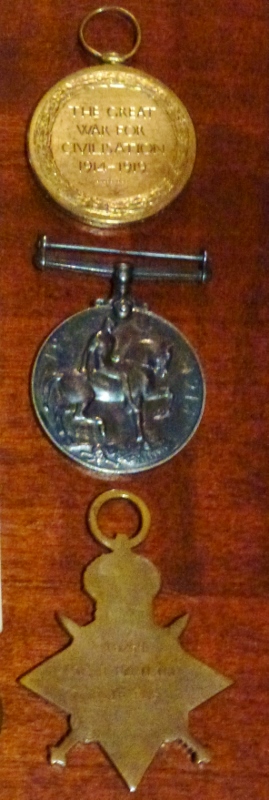
There is also a plaque in his memory at St Dympna’s Church in Ballinode, which provided the springboard for the talk. It would not have been possible without the interest shown by Marie McKenna and her research along with two distant Hamilton relations, Ruby Heasty and Heather Stirratt. Ruby still has the three war medals awarded to Private Hamilton.

Private Robert Hamilton world war one medals Photo: © Michael Fisher

Private Robert Hamilton world war one medals Photo: © Michael Fisher

WW1 TALK: PTE ROBERT HAMILTON – PART 5

Plaque for Robert Hamilton, St Dympna's Church Ballinode  Photo:  © Michael Fisher

Plaque for Robert Hamilton, St Dympna’s Church Ballinode Photo: © Michael Fisher

Private Robert Hamilton is remembered in two plaques in County Monaghan. The first, as mentioned earlier, is in St Dympna’s Church of Ireland church in Ballinode. The stone mason for the memorial was Lendrum of Clones, whose name appears in the bottom left. He seems to have made several other such memorials in the area.

It is also interesting that Private Hamilton is listed as one of the local Orange Order members from Monaghan who gave their lives in the Great War. There is a plaque in a former hall on which his name appears along with six of his contemporaries who were killed. Two of them were also in the 9th Battalion Royal Irish Fusiliers. They are Private Fredrick J. Welsh (17933), died March 1918) and L/Cpl Andrew Moorhead (16121) who was apparently killed on the first day of the Battle of the Somme.

Mullyhara orange hall plaque

Mullyhara orange hall plaque

The names of nine soldiers who survived are included, making a total of fifteen, two names having been added below the original stone. A picture of this memorial also appears in Kevin Cullen’s County Monaghan Book of Honour 1914-18. In the church in Ballinode there are two other memorials to soldiers who served in Canadian regiments and who died in 1916 and 1917.

Memorial for Vivian Abbott St Dympna's Church Ballinode Photo:  © Michael Fisher

Memorial for Vivian Abbott, St Dympna’s Ballinode Photo: © Michael Fisher

 The first, very similar to the one above and also crafted by Lendrum of Clones, is to the memory of Vivian Hartley Church Abbott of British Colombia, of the 29th Canadian Infantry. He was killed at the Battle of Lens, August 22nd 1917. His father was the Archdeacon of Clogher and was the Rector in Ballinode for many years.  A separate plaque commemorates his service to the parish.

The second memorial is a bronze plaque dedicated to Francis Wright Hazlett, who also served in the Canadian Infantry. His father Mathew Hazlett was from Killygavna and he joined up in Vancouver. He was killed in action, also in France, on June 12th  1916.

Searching through extracts from the Northern Standard in the library in Monaghan I picked up one of the death notices books for the period and quite by chance the first page I came to contained a report about the unveiling of this plaque. In the newspaper files we also found the obituary of Private Hamilton and two in memoriam notices which had been placed by his mother Mary on the first and the fifth anniversaries of his death.