CELINE BYRNE

Celine Byrne at the Defence Forces Benefit Concert in Dublin Photo: © Michael Fisher

Celine Byrne at the Defence Forces Benefit Concert in Dublin Photo: © Michael Fisher

Soprano Celine Byrne from Co. Kildare will be singing with tenor José Carreras at the Waterfront Hall in Belfast on Thursday 17th October. The concert marks the start of the Belfast Festival at Queens, which runs until Sunday October 27th. The full programme can be accessed here. I will be blogging on some of the events as a volunteer with the festival. I have already previewed the preparation for the major public art display beside the Titanic Centre, Wish, by Jorge Rodríguez–Gerada.

Celine was the guest artist at the Defence Forces benefit concert in Dublin last Sunday. She will be back in the capital at the weekend to accompany José Carreras again at the Bord Gáis Energy theatre on Sunday. Details can be found here.

IRISH ARMY BANDS HISTORY

Defence Forces Concert Photo: © Michael Fisher

Defence Forces Concert Photo: © Michael Fisher

The Defence Forces annual benefit concert at the National Concert Hall in Dublin with members of the combined army bands marked the 90th anniversary of the Army School of Music. The programme contained some fascinating articles and photos about the history of music in the Irish army, including the appointment in March 1923 of two senior German army officers who were musicians to lead the new school once the Irish Free State was established.

Pipes & Drums at the Concert Photo: © Michael Fisher

Pipes & Drums at the Concert Photo: © Michael Fisher

The Director of the DF School of Music Lt Col Mark Armstrong writes about his predecessor, the first director, Colonel Fritz Brase, who had been a very highly regarded German bandmaster. He led the school until his death in 1940. Brase brought with him another talented musician, Captain Friedrich Christian Sauerzweig. The first public performance by the new army band was on October 14th 1923, exactly ninety years ago, at the Theatre Royal in Dublin.

Celine Byrne and Lt Col Mark Armstrong are applauded  Photo: © Michael Fisher

Celine Byrne and Lt Col Mark Armstrong are applauded Photo: © Michael Fisher

In 1922 when the state was founded General Risteard Mulcahy was the first Minister for Defence. To advise on the formation of an Irish military music school, he appointed Dr John F.Larchet, who was then Professor of Music at University College Dublin.

Therein lies another connection with the past. The National Concert Hall in Earlsfort Terrace was for many years the main building for UCD. Indeed I remember doing first year Arts exams in the Aula Maxima, which has now been transformed into an international concert hall and provided the splendid setting for Saturday night’s concert.

IRISH ARMY BANDS

DF School of Music Crest Photo: © Michael Fisher

DF School of Music Crest Photo: © Michael Fisher

Wonderful Defence Forces benefit concert with combined army bands & soprano Celine Byrne at the National Concert Hall in Dublin on Saturday night. Lt Col Mark Armstrong was the conductor. Members of the pipe bands also played. President Michael D Higgins and his wife Sabina were the guests of honour.

DF Concert Programme

DF Concert Programme

LEINSTER REGIMENT MEMORIAL BIRR

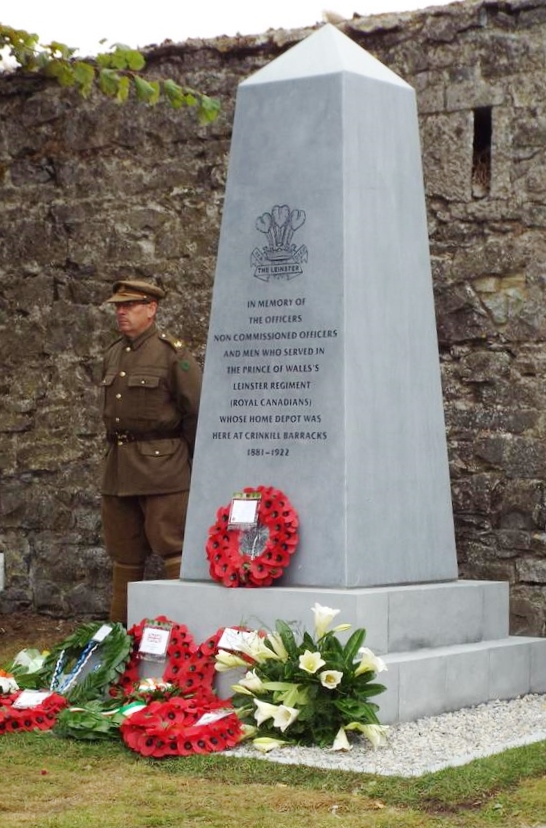
Leinster Regiment Memorial in Birr Photo: © Ray Hayden

Leinster Regiment Memorial in Birr Photo: © Ray Hayden

Having written yesterday about the Menin Gate I am continuing the theme of the involvement of the British Army in the First World War. Courtesy of Ray Hayden who was honouring the memory of relatives, I am publishing these pictures from the ecumenical service in County Offaly where a new memorial was unveiled to the members of the Prince of Wales’s Leinster Regiment (Royal Canadians) based at the former Crinkill Barracks near Birr.

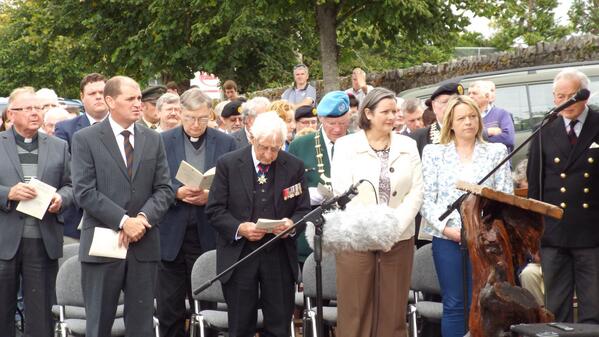
Irish & British Army veterans on parade at Crinkill Photo: © Ray Hayden

Irish & British Army veterans on parade at Crinkill Photo: © Ray Hayden

The regiment was formed in 1881 and their depot was based at Crinkill barracks. The Leinsters occupied one square of the barracks whilst the second square was occupied by visiting regiments. The average length of stay was one year. During the first world war recruitment in Birr resulted in a constant flow of recruits from the surrounding area for the first eighteen months. After that there was a steady decline. Nearly 6.000 men in total were recruited. In 1917 an aerodrome was built on the 14 acres site and three planes were kept there.

Irish & British Army veterans on parade at Crinkill Photo: © Ray Hayden

Irish & British Army veterans on parade at Crinkill Photo: © Ray Hayden

Leinster Regiment Cap Badge

Leinster Regiment Cap Badge

The Regiment raised seven battalions for service with the British Army during World War I, which saw action on the Western Front and in the Middle East. The 1st Battalion served with the 27th Division and the 10th (Irish) Division. The 2nd Battalion with the 6th Division, 24th Division, 16th (Irish) Division and the 29th Division. The 6th Battalion served with the 10th (Irish) Division, 14th (Light) Division, 34th Division and 66th Division. The 7th Battalion with the 16th (Irish) Division.

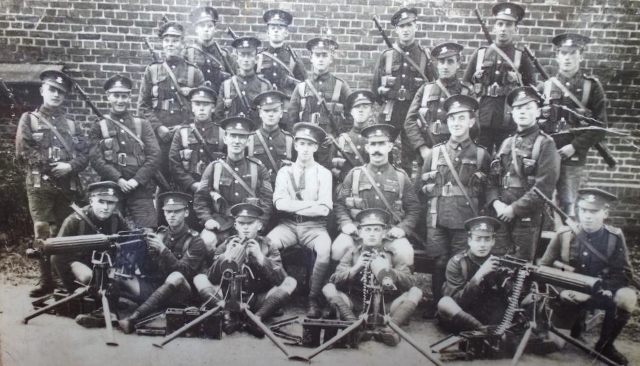
Leinster Regiment soldiers prepare to set off for WWI Archive Photo via Ray Hayden ©

Leinster Regiment soldiers prepare to set off for WWI Archive Photo via Ray Hayden ©

The Anglo-Irish treaty was signed in December 1921 and on March 11th 1922 the British Army issued orders for the disbandment of the Prince of Wales’s Leinster Regiment along with five other corps and infantry battalions. The regimental colours were laid up at St George’s Chapel in Windsor Castle. Soon afterwards the IRA 3rd Southern Division took control of the barracks and on 14th July 1922 they set fire to the barracks.

Paul Kehoe TD and Maj Gen The O'Morchoe at the unveiling Photo: © Ray Hayden

Paul Kehoe TD and Maj Gen The O’Morchoe at the unveiling Photo: © Ray Hayden

The ruins became dangerous and in 1985 all internal buildings were demolished, including the landmark clock tower. All that remains today are the perimeter walls and gates. The new memorial is situated beside one of the walls. Among those who attended the ceremony at Crinkill were the government Chief Whip Paul Kehoe TD and Major General The O’Morchoe CB CBE, President of the Leinster Regiment Association and President of the Royal British Legion (Ireland) and local Fine Gael TD Marcella Corcoran Kennedy.

Stained Glass Window at St Brendan's Church Birr for Leinster Regiment Photo: © Andreas F. Borchert

Stained Glass Window at St Brendan’s Church Birr for Leinster Regiment Photo: © Andreas F. Borchert

This was part of a weekend of events in the Birr area marking the connection with the Leinsters. In Birr there is a memorial window for the Leinster Regiment at St Brendan’s church. A delegation from the Belgian town of Ledegem in Flanders came to Offaly and laid a wreath at the new memorial. On October 14th 1918 in a fierce engagement resulting in the award of two Victoria Crosses to Leinster Soldiers,  the 2nd battalion Leinster Regiment led the advance into Ledegem on the  first day of what is now known as the Battle of Courtrai. In that advance the  Leinsters, supported by the 4/Worcesters, cleared the town of enemy forces and  in so doing ended the four year occupation of a community that had become a  major supply depot for the German occupation in West Flanders.

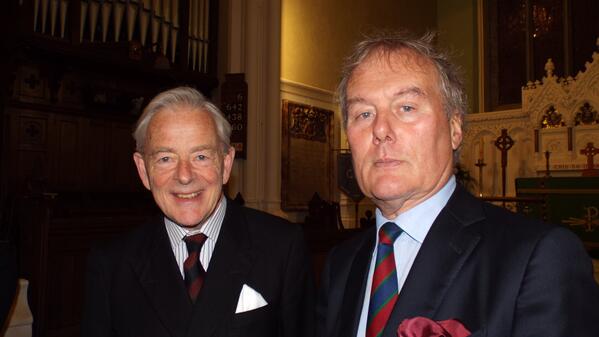
Lord Rosse of Birr Castle and Kevin Myers Photo: © Ray Hayden

Lord Rosse of Birr Castle and Kevin Myers Photo: © Ray Hayden

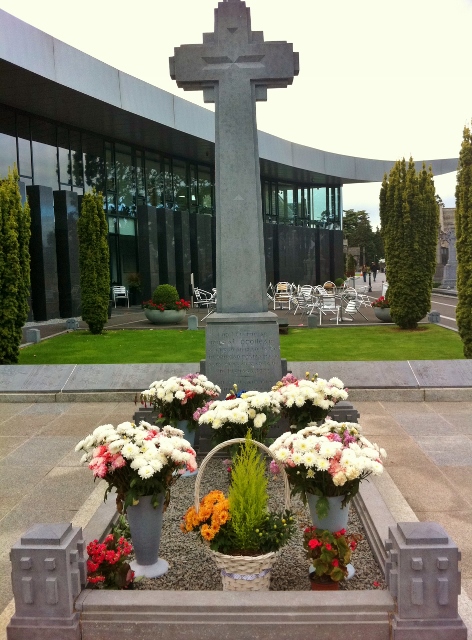
GLASNEVIN CEMETERY

Crest from Memorial at RIC Burial Plot Glasnevin Cemetery Photo: © Michael Fisher

Crest from Memorial at RIC Burial Plot Glasnevin Cemetery Photo: © Michael Fisher

From a distance the crest looks similar to many you will find at graveyards in Northern Ireland: those of Royal Ulster Constabulary members, or possibly a deceased soldier from a British Army regiment. But this photo which I took this afternoon is from Glasnevin Cemetery, the largest in Dublin.

RIC Plot Glasnevin Cemetery Photo: © Michael Fisher

RIC Plot Glasnevin Cemetery Photo: © Michael Fisher

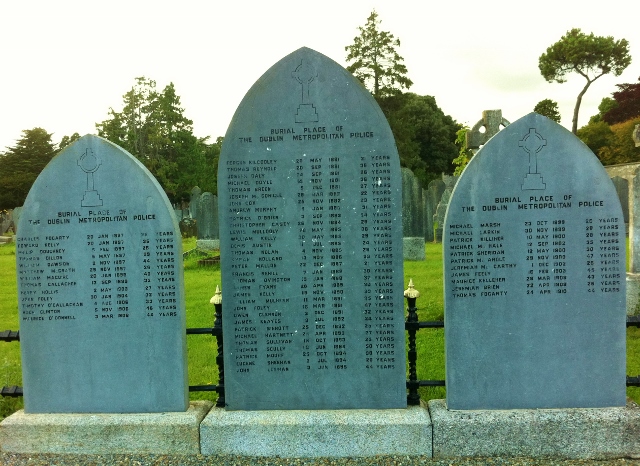
A year ago over one hundred people attended a ceremony at the newly restored graves of a number of RIC members who died during the period from the 1880s and during the War of Independence, before partition when the force was disbanded. The latest burial appears to have been in 1953. Opposite the RIC plot is a separate memorial for members of the Dublin Metropolitan Police from May 1881 up to 1910.

DMP Plot Glasnevin Cemetery Photo: © Michael Fisher

DMP Plot Glasnevin Cemetery Photo: © Michael Fisher

The service last year attracted a bit of controversy. This year the commemoration took place at Mount Argus Church because the organisers, two retired Gardaí, had been told they did not have the required insurance cover. It’s reported that both plots are still the responsibility of the British Home Office. There are many other interesting graves there including those of Michael Collins and the founder of Sinn Féin Arthur Griffith, to name but two.

Grave of Arthur Griffith TD Photo: © Michael Fisher

Grave of Arthur Griffith TD Photo: © Michael Fisher

Grave of Michael Collins Photo: © Michael Fisher

Grave of Michael Collins Photo: © Michael Fisher

REMEMBERING US SERVICEMEN

Lisnabreeny Memorial Photo: © Michael Fisher

Lisnabreeny Memorial Photo: © Michael Fisher

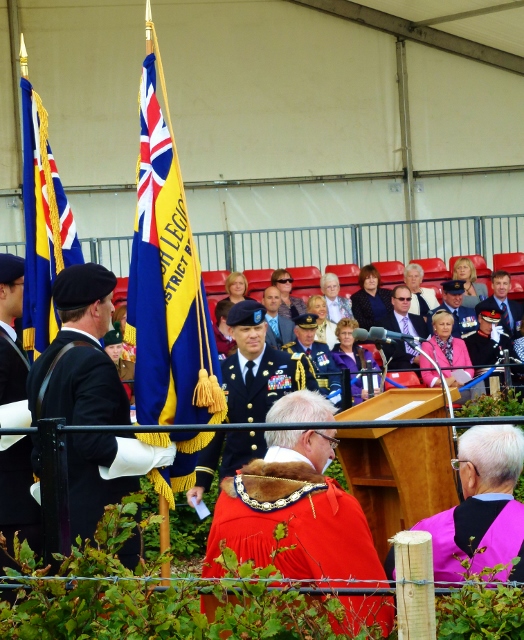
The Mourne granite memorial at the former American military cemetery at Lisnabreeny in Castlereagh has 148 names etched on three sides. As the crowd gathered on Saturday for the dedication of the monument, I noticed a namesake (but not a relation) among them: FISHER, PATRICK A S/Sgt.

Names on Lisnabreeny memorial: Staff Sergeant Patrick A Fisher Photo: © Michael Fisher

Names on Lisnabreeny memorial: Staff Sergeant Patrick A Fisher Photo: © Michael Fisher

I thought of him during the service and afterwards I tried to find out if there was any record of his military service. I found two servicemen of the same name from different states in the USA but both were listed as Privates when they joined in 1942. The older one was from Pennsylvania and would have been around 31 when he enlisted in 1942. In civvy life his occupation was described as “express messenger and railway mail clerk(s)”. I would welcome any further information either via the comments below or by contacting me on twitter @fishbelfast.
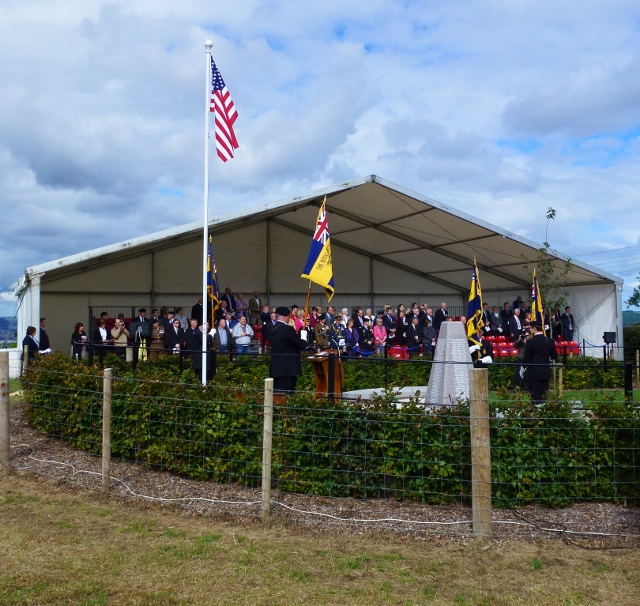
Ceremony at Lisnabreeny Photo: © Michael Fisher

Ceremony at Lisnabreeny Photo: © Michael Fisher

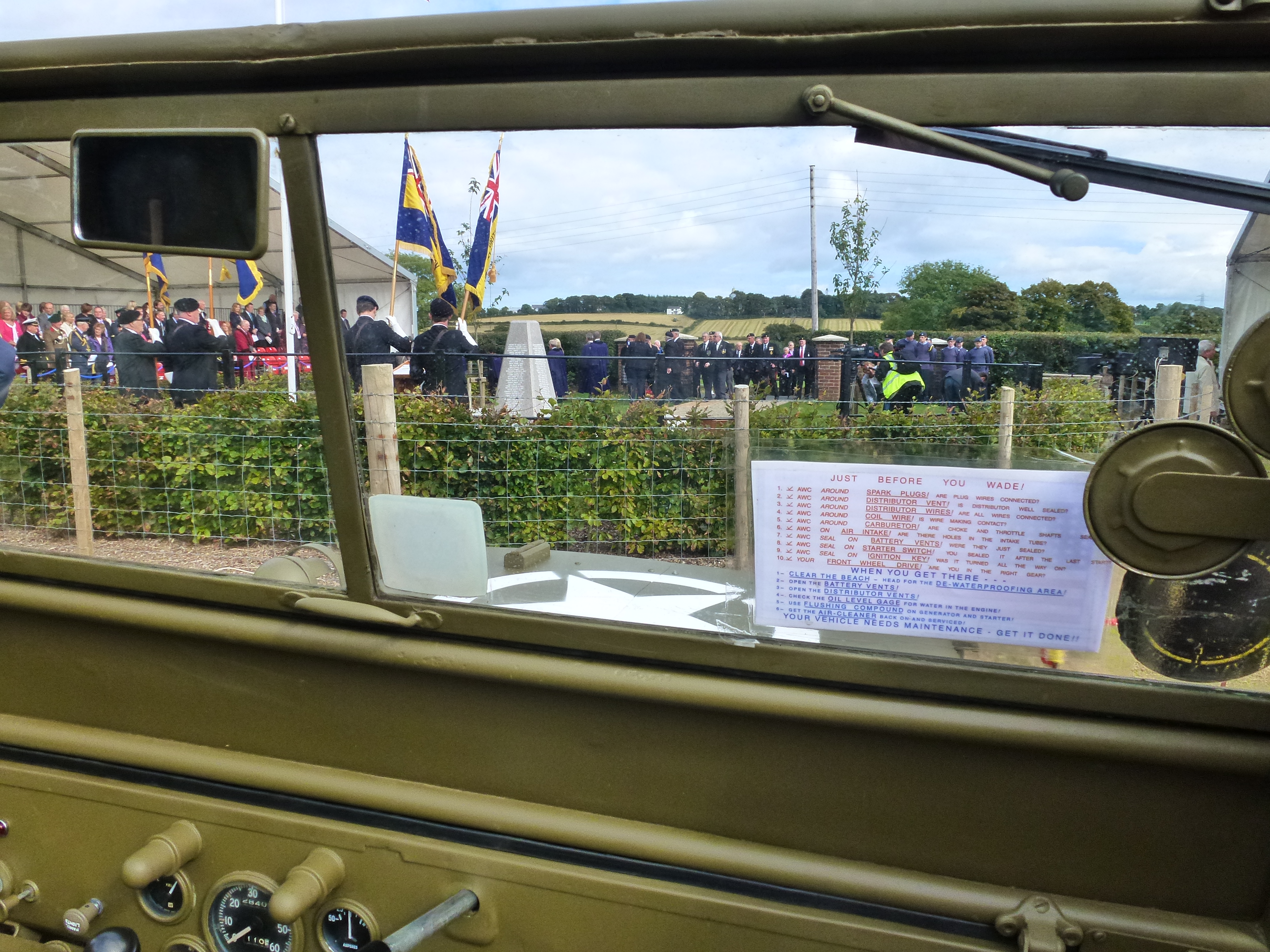
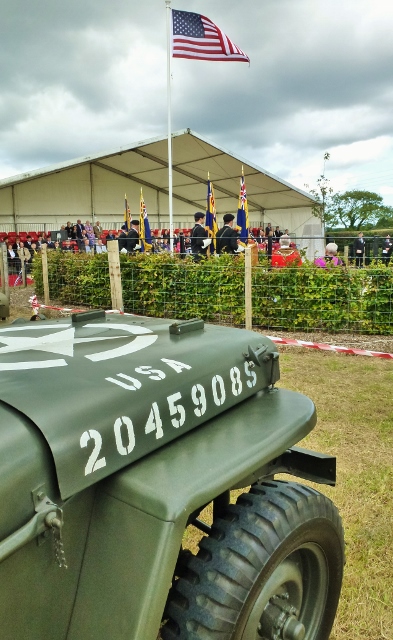
The ceremony was organised by Castlereagh Borough Council, which also reinstated the entrance to the former US military cemetery and provided the monument. It began with a formal parade from Lagan College, headed by the Mayor Councillor David Drysdale, who was driven in a former US Army jeep of the type used in World War II. The pipes and drums of 152 (Ulster) Transport Regiment, Royal Logistics Corps, followed with the other members of the Council, the Air Training Corps Cadets and members of local branches of the Royal British Legion.
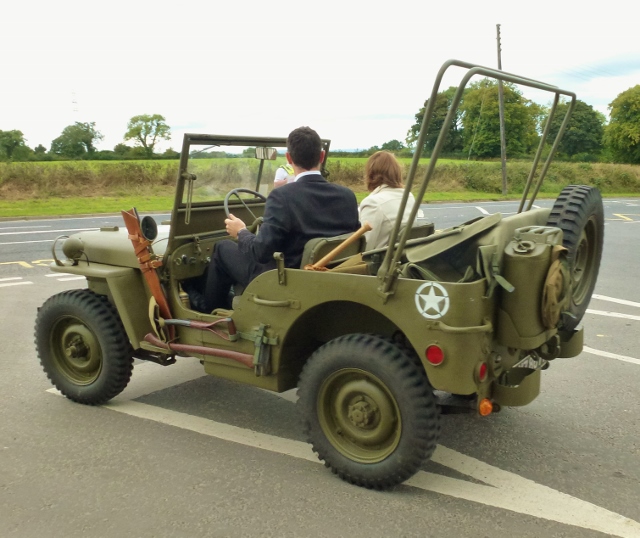
WWII US Army Jeep in Castlereagh Photo: © Michael Fisher

WWII US Army Jeep in Castlereagh Photo: © Michael Fisher

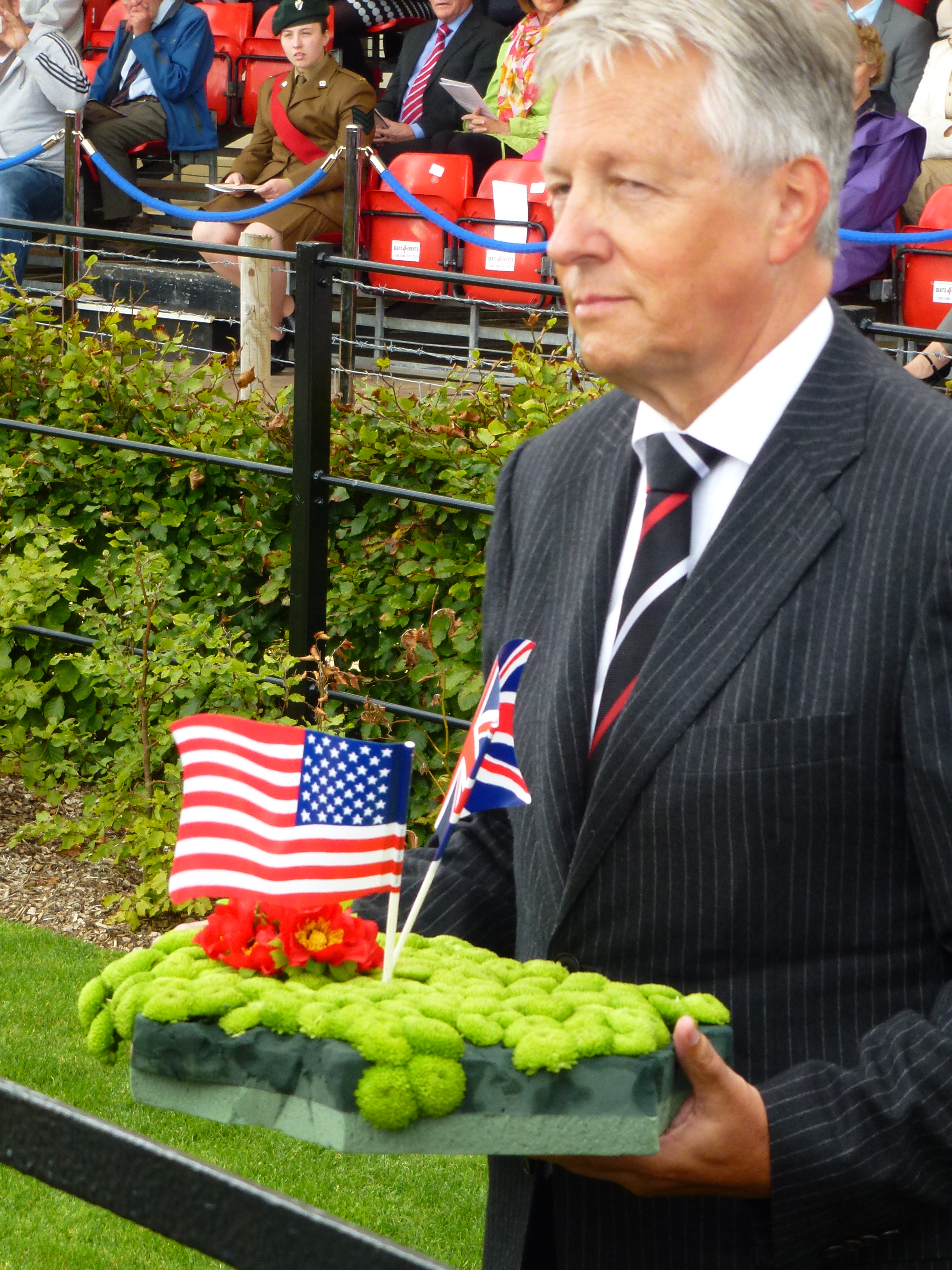
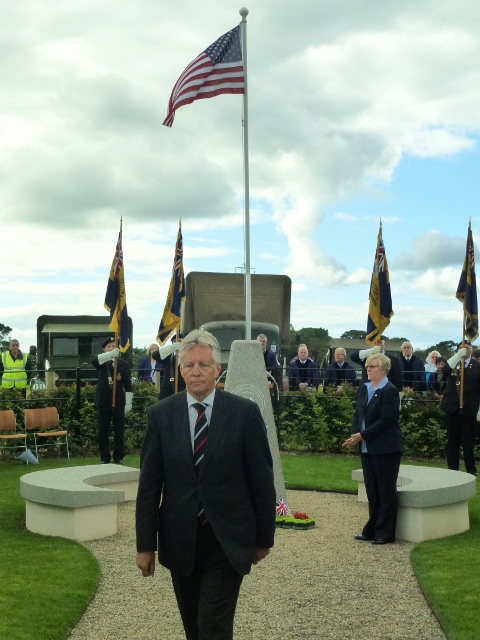
The guests included the Lord Lieutenant of County Down, David Lindsay, the Acting US Consul General Gabrielle Moseley and the First Minister and DUP leader Peter Robinson. Wreaths were laid at the memorial at the end of the dedication service.

NI First Minister Peter Robinson lays a wreath at Lisnabreeny Photo:© Michael Fisher

NI First Minister Peter Robinson lays a wreath at Lisnabreeny Photo:© Michael Fisher

Councillor Drysdale explained the Council’s involvement with the site at the start of the ceremony.  He said:-

“Over the last few years, the Council has been involved in an extensive restoration project to reinstate the original entrance to the former Lisnabreeny American Military Cemetery and create a lasting commemoration to the American servicemen who lost their lives in the Second World War.  A dedicated monument has been erected as part of the project, which will provide an opportunity for the people of Castlereagh to visit the site for generations to come and learn more about these brave servicemen who made the ultimate sacrifice for our freedom today”.  

View of ceremony from jeep Photo: © Michael Fisher

View of ceremony from jeep Photo: © Michael Fisher

The service of dedication of the memorial was led by the Mayor’s chaplain, Pastor George Moffett. Lieutenant Colonel Travis Phillips, Assistant Army Attaché at the US Embassy in London expressed thanks to the Council for acknowledging the legacy of US military personnel who had paid the ultimate sacrifice in the Allied war effort. He said the recent restoration of the former cemetery underpinned the shared history and special ties of kinship between Northern Ireland and the USA. After an American Serviceman’s Medley sung by Donaghadee Male Voice Choir, Lt Col Phillips read the poem ‘His Rest is Won’.

Lt Col Travis Phillips US Army (centre) Photo: © Michael Fisher

Lt Col Travis Phillips US Army (centre) Photo: © Michael Fisher

After the wreath laying ceremony, the Mayor’s Chaplain led the Act of Remembrance, which was followed by a two minutes silence. “They shall grow not old, as we that are left grow old; Age shall not weary them, nor the years condemn. At the going down of the sun, and in the morning, We will remember them”. “When you go home, tell them of us and say, for your tomorrow, we gave our today“.

The ceremony concluded with the singing of the British and US national anthems.

Star Spangled Banner

Oh, say can you see by the dawn’s early light
What so proudly we hailed at the twilight’s last gleaming?
Whose broad stripes and bright stars through the perilous fight,
O’er the ramparts we watched were so gallantly streaming?
And the rocket’s red glare, the bombs bursting in air,
Gave proof through the night that our flag was still there.
Oh, say does that star-spangled banner yet wave
O’er the land of the free and the home of the brave?

Air Vice Marshall, David Niven of the Royal Air Force added:-

I am proud to be asked to place a wreath, on behalf of all three Services, at this dedication ceremony.  We are, in mid-September, commemorating the service and sacrifice of our servicemen during the Battle of Britain, a battle which prevented the invasion of the United Kingdom. We are also remembering, at the Service of Dedication of this cemetery, the sacrifice of our American Allies who served and died, here, in Northern Ireland. They came from the United States to fight alongside us, in our hour of need, when the rest of Europe had been over-run by the Nazi war machine.  The sacrifice of our American Allies, commemorated in granite, and standing proud in the rolling Castlereagh hills, shall never be forgotten.”

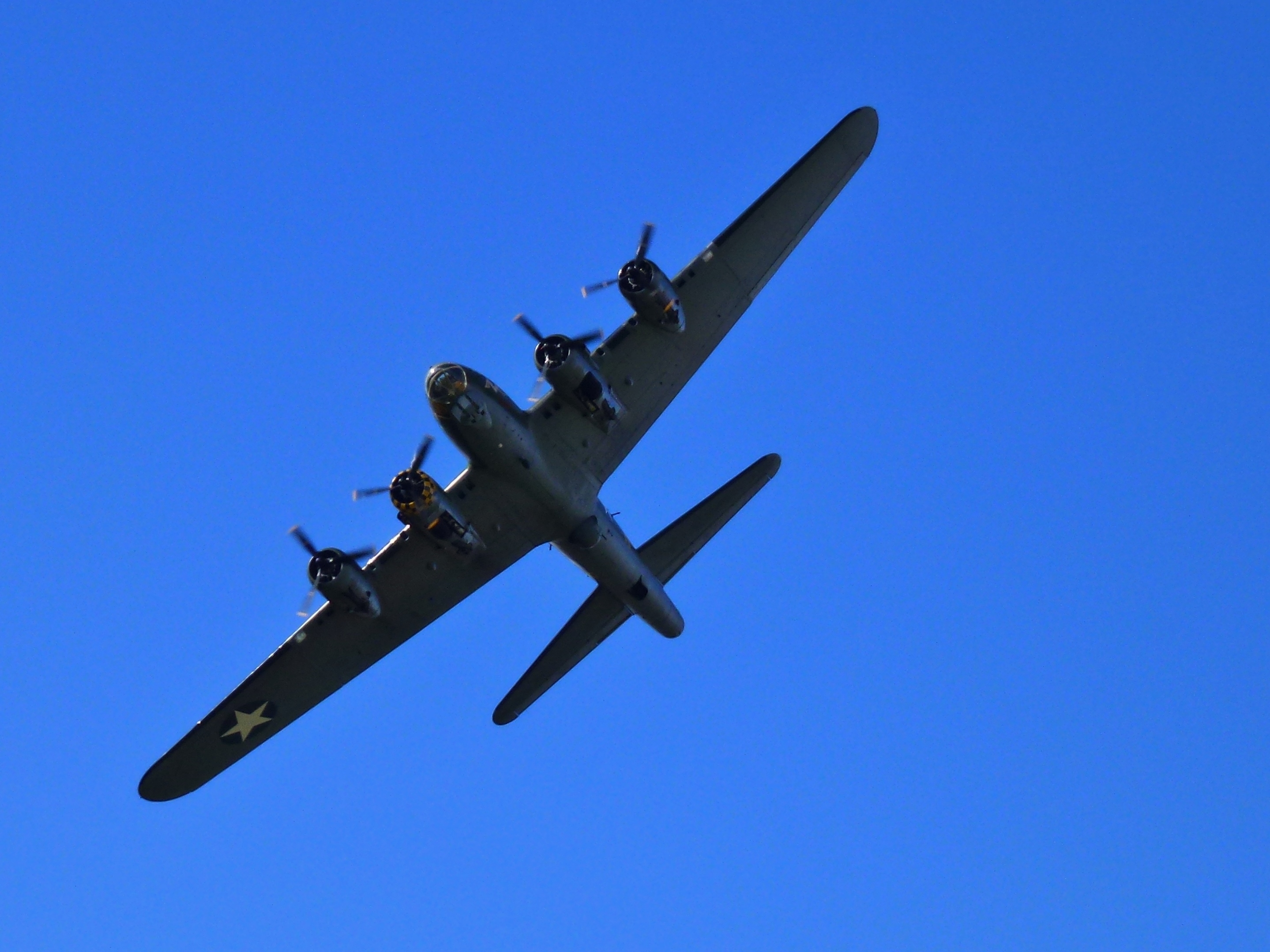
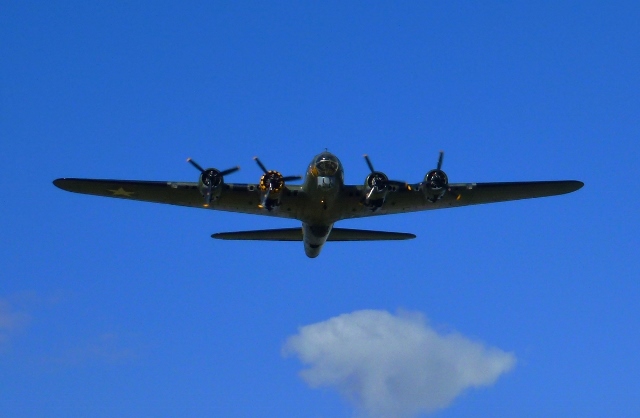
A spectacular end to the ceremony was provided by a restored B-17 Flying Fortress bomber Sally B, which made a number of low level flypasts en route to the Flightfest in Dublin the following day.
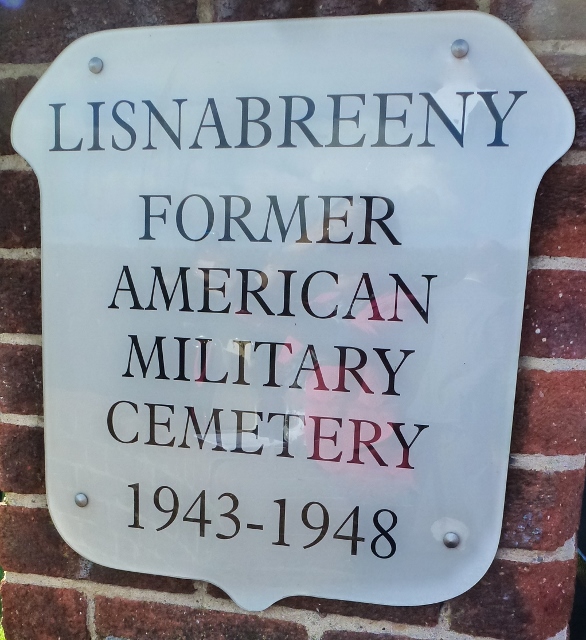
Restored entrance to former US Military Cemetery Photo: © MIchael Fisher

Restored entrance to former US Military Cemetery Photo: © MIchael Fisher

On  26th January 1942 the first American troops arrived at the Dufferin Dock  in Belfast as the first phase of Operation MAGNET, the defence of  Northern Ireland, As agreed between President Roosevelt and Prime  Minister Winston Churchill during a meeting in Washington DC in December 1941. Over the next three years there were seldom less than 120,000 US  servicemen in NI at any one time. A  US Special Army Observer Group had been acting as an American Military  mission in London since 1941. This group approached the war office in  London on 9 December 1941 to obtain burial grounds for American forces  in the United Kingdom.

Two plots were initially set aside for emergency  burials in Northern Ireland, one in Derry and the other in  Belfast. The Belfast plot, located within the City Cemetery, and  extending to one sixth of an acre was chosen. The  first American servicemen to die in Northern Ireland were 3 members of  the US Navy who lost their lives in an accident at the American Naval  Base in Londonderry. The first burial in the Belfast City Cemetery plot took  place on 12th March 1942. From then until October 1942 a total of  41 American servicemen were interred there. At that  stage the plot had reached capacity and it was decided to ship deceased personnel across to England for interment until an alternative  could  be found.
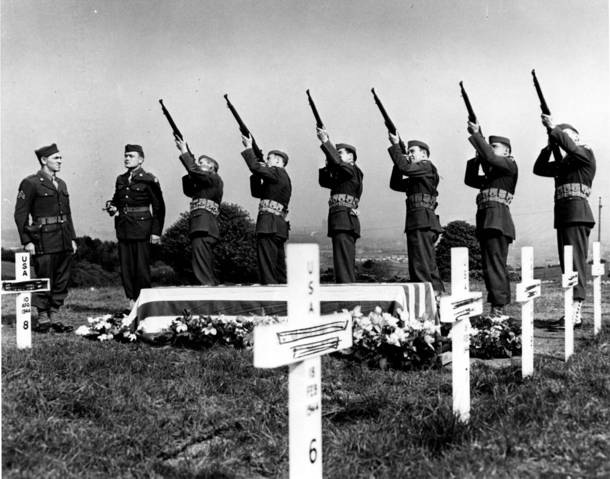
Burial at Lisnabreeny 6th May 1944 of Pte Steve Fellin 56th Field Artillery Bn, 8th Infy Division

Burial at Lisnabreeny 6th May 1944 of Pte Steve Fellin 56th Field Artillery Bn, 8th Infy Division

On  2nd December 1943 a ten and a half acre plot of land at Rocky Road was  officially opened as the (link to photo chimneyrockb26crash.com) Lisnabreeny American Military Cemetery. It  was decided to re-locate all deceased personnel to this new site, and  between 23rd May 1944 and 1st June 1944 all of the 41 bodies previously  interred in the City Cemetery were exhumed and re-interred at  Lisnabreeny. By the end of the war a total of 148 American servicemen  were buried in Lisnabreeny, the majority being Army Air Force but also including US Army and US Navy personnel

The  Cemetery was accessed via a red brick entrance with iron gates on the  Rocky Road. A white gravel driveway, lined with cherry trees, led to a  flagstaff where the Stars and Stripes was hoisted daily. The graves were  laid out in rows with 25 to each row, and each grave had a simple white  marker, either a Cross or a Star of David, depending on religious  denomination, bearing name, rank, unit and date of death.

The Cemetery  was looked after by 5 US Army personnel with a minimum of 2 on duty at  any one time. A Nissan type hut was located on site and provided storage  and office space for maintenance equipment and Cemetery records. The  Cemetery was maintained to a very high standard with grass regularly  mown, trees and shrubs clipped and pruned, and the stone paths borders  whitewashed weekly. Following  the end of the war, the Cemetery continued to be maintained right up to 1948 when all deceased were exhumed, and either transferred to the  permanent American War Cemetery in Cambridge, or repatriated to the  United States, at the request of their families. At that point the  cemetery was deactivated. Some more information on the cemetery can be found on this American source:

Graves registration activities of the Quartermaster Corps in the European Theatre (of WWII) began in December 1941, when the United States asked the British War Office about burial facilities for our military personnel expected to arrive in 1942 in Northern Ireland, where they would aid the British in their defence of that part of Ireland. Sadly, as was expected, American lives were lost after the men arrived. These burials had been in swampy ground in local cemeteries, but the U.S. Army negotiated with the British and secured a plot of land at Lisnabreeny, a suburb of Belfast, where the Americans were reinterred“.

From “A Salute to Patriotism: The Life and Work of Major General Howard L. Peckham”, who worked for the American Graves Registration Command in Paris, quoted by his daughter, Jean Peckham Kavale in A Personal Look at U.S. Army History.

FLYING FORTRESS B-17 SALLY B

Boeing B-17 Flying Fortress Bomber 'Sally B' above Belfast Photo: © Michael Fisher

Boeing B-17 Flying Fortress Bomber ‘Sally B’ above Belfast Photo: © Michael Fisher

After yesterday’s article about the Star Spangled Banner, it is appropriate to continue the American theme. This afternoon in the sky above Belfast you could hear and then see a reminder of the United States role in World War II.

Boeing B-17 Flying Fortress Bomber 'Sally B' above Belfast Photo: © Michael Fisher

Boeing B-17 Flying Fortress Bomber ‘Sally B’ above Belfast Photo: © Michael Fisher

A restored Boeing B-17 Flying Fortress bomber of the type used by the US Air Force in raids on Germany performed a number of flypasts to coincide with the end of a ceremony at the former American military cemetery at Lisnabreeny in the Castlereagh hills, close to Lagan College.

NI First Minister Peter Robinson lays a wreath at the Lisnabreeny memorial Photo: © Michael Fisher

NI First Minister Peter Robinson at the Lisnabreeny memorial Photo: © Michael Fisher

I will write more about the remembrance service tomorrow. It was attended by Northern Ireland’s First Minister Peter Robinson MLA. He laid a wreath at the memorial that carries the names of 148 US Army Air Force, US Army and US Navy servicemen who died in Northern Ireland while in training for deployment to the battlefield. This field had served as an American military cemetery until 1948, when the remains of those interred were repatriated.

WWII US jeep at the ceremony at Lisnabreeny Photo: © Michael Fisher

WWII US jeep at the ceremony at Lisnabreeny Photo: © Michael Fisher

The Flying Fortress is the last remaining airworthy B-17 in Europe and is based at Duxford in England. It takes part regularly in air shows, commemorative events and memorial flypasts such as today in Belfast. The plane passed over low a couple of times and then headed southwards towards Dublin. It landed at the Irish Army Air Corps base at Casement Aerodrome, Baldonnel and tomorrow it will take part in the Flightfest display over the River Liffey around 3:45pm. To make a donation to help keep the B-17 flying please click here.

Birds of a feather... Photo: © Michael Fisher

Birds of a feather… Photo: © Michael Fisher

The B-17 was critical to the USAAF daylight precision bombing campaign and was armed with 13 machine guns, hence the name “Flying Fortress”. Flying in formation, the bombers battled through German defences in daylight raids, suffering heavy casualties until the addition of long-range escort fighters, the P-47 Thunderbolt and P-51 Mustang, and the introduction of the 25-mission limit.

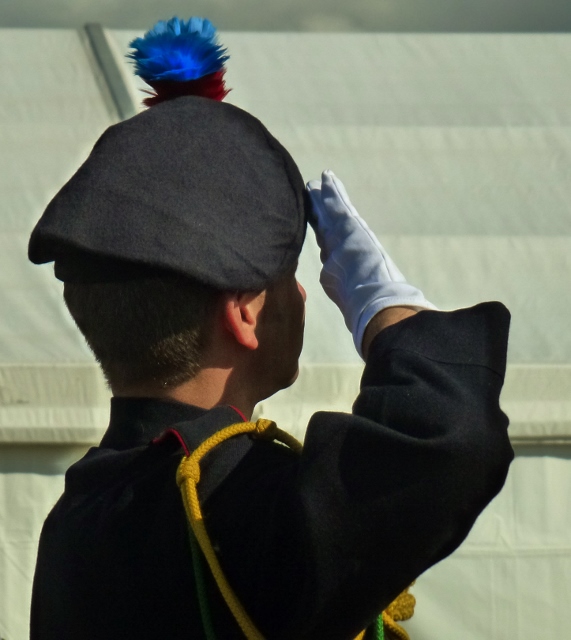
Salute by a member of 152 (Ulster) Transport Regiment Band RLC  Photo: © Michael Fisher

Salute by member of 152 (Ulster) Transport Regt Band RLC Photo: © Michael Fisher

STAR SPANGLED BANNER

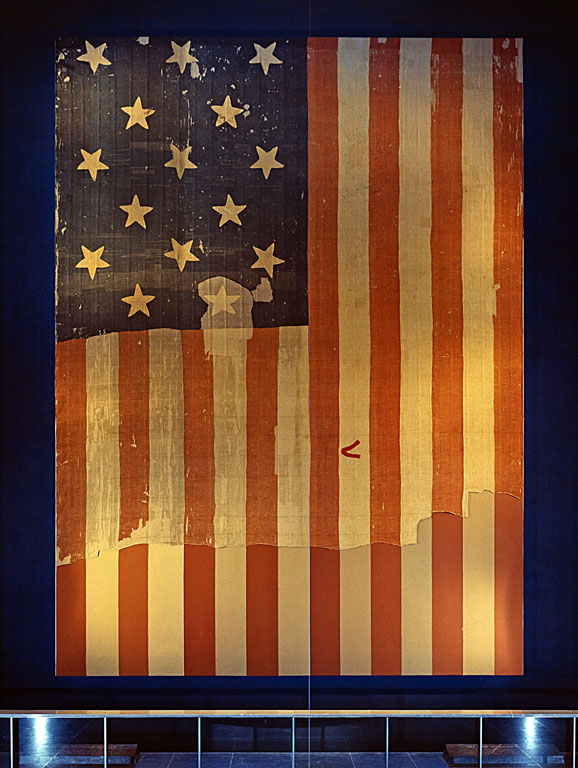
Stars and Stripes Photo: Smithsonian/NMAH

Stars and Stripes Photo: Smithsonian/NMAH

This is the original stars and stripes flag of the United States. You can see it on display at the Smithsonian Institution in Washington DC. It has an interesting history. 200 years ago  in July 1813, during a war between the Americans and the British, Mary Pickersgill, a hardworking widow known as one of the best flag makers in Baltimore, Maryland, received a rush order from American Major George Armistead. He had just taken over as commander of Fort McHenry and wanted an enormous banner, 30 by 42 feet, to be flown over the federal garrison guarding the entrance to Baltimore’s waterfront. I remember visiting Baltimore a few years ago and hearing the story of the star-shaped defensive fort, similar to those built by the British in Ireland such as Charles Fort in Kinsale, County Cork.
The United States had declared war in June 1812 to settle its disputed northern and western borders. During the summer of 1813, the enemies were trading blows across the Canadian border. Then British war vessels appeared in Chesapeake Bay, menacing shipping, destroying local batteries and burning buildings up and down the estuary. As Baltimore prepared for war, Armistead ordered his big new flag, one that the British would be able to see from miles away. It would signal that the fort was occupied and prepared to defend the harbour.

Tall Ship in Baltimore Harbour Photo:  © Adrian Jones Integration and Application Network, University of Maryland Centre for Environmental Science

Tall Ship Baltimore Harbour © Adrian Jones IAN, Uny of Maryland Centre for Environmental Science

With her 13 year-old daughter Caroline and others,  Pickersgill took more than 300 yards of English worsted wool bunting to the floor of Claggett’s brewery, the only space in her East Baltimore neighborhood large enough to accommodate the project, and set to work measuring, snipping and fitting. A rectangle of deep blue, about 16 by 21 feet, formed the flag’s upper left quarter. Sitting on the brewery floor, she stitched a number of five-pointed stars into it. Each one, fashioned from white cotton, was almost two feet across. Then she turned the flag over and snipped out blue material from the backs of the stars, tightly binding the edges; this made the stars visible from either side. (Smithsonian)

In August 1814, General Robert Ross and his seasoned troops landed near the nation’s capital. On August 24th at Bladensburg, Maryland, about 30 miles from Washington, his five-thousand-member British force defeated an American army twice its size. That same night, British troops entered Washington and set fire to the United States Capitol, the President’s Mansion, and other public buildings. With Washington in ruins, the British set their sights once again on Baltimore,  then America’s third-largest city. On the morning of September 12th, General Ross’s troops landed at North Point, Maryland, and progressed towards the city. They soon encountered the American forward line, part of an extensive network of defences established around Baltimore in anticipation of the British assault.

During the skirmish with American troops, General Ross was killed by a sharpshooter. Surprised by the strength of the American defences, British forces camped on the battlefield and waited for nightfall on September 13th, planning to attempt another attack under cover of darkness. Meanwhile, Britain’s naval force was poised to strike Fort McHenry and enter Baltimore Harbor.  At 6:30am on September 13th 1814, Admiral Cochrane’s ships began a 25-hour bombardment of the fort with Congreve rockets and mortar shells. After an initial exchange of fire, the British fleet withdrew to just beyond the range of Fort McHenry’s cannons and continued to bombard the American redoubts for the next 25 hours. Although up to 1,800 cannonballs were discharged at the fort, damage was light owing to recent fortification work.

At 7:30am on the morning of September 14th, Admiral Cochrane called an end to the bombardment and the British fleet withdrew. The successful defence of Baltimore marked a turning point in the War of 1812. Three months later on December 24th  1814, the Treaty of Ghent formally ended the war.

The attack on Baltimore also provided the inspiration for the American national anthem. Prior to the battle, Francis Scott Key, a Georgetown lawyer, had been negotiating for the release of an American prisoner, Dr Beanes. Boarding a British ship, Key dined with General Ross and other officers. Ross agreed to release Dr Beanes. Owing to the imminence of the British attack on Baltimore, Key was not permitted to return ashore and witnessed the massive bombardment unleashed by the Royal Navy on Fort McHenry.

The sight of the Stars and Stripes (or was it the smaller storm flag?) flying from the ramparts of Fort McHenry when the bombardment ceased is said to have inspired him to pen the lyrics of the Star Spangled Banner. These details came from the website ‘The Man who captured Washington‘ and I am grateful to John McCavitt in Belfast (@john_mccavitt) for drawing this anniversary to my attention on twitter.

Tomb of Major General Robert Ross in Halifax Photo: ©  courtesy of Don Sucha, Calgary

Tomb of Major General Robert Ross in Old Burying Ground Halifax Photo: © courtesy of Don Sucha, Calgary

Since writing that last paragraph, my contact who introduced me to Baltimore reminds me that the corpse of Major General Ross who was killed in the Battle of Baltimore was pickled in 129 gallons of Jamaican rum. Although it was due to be returned to Ireland it was transported to Halifax in Nova Scotia, where it rests in the Anglican cemetery (see Don Sucha’s article on the Old Burying Ground).

Major General Robert Ross Photo: Wikimedia Commons

Major General Robert Ross Photo: Wikimedia Commons

A weekend conference is being held in Rostrevor on October 18th-20th focusing on the life and career of Major General Ross of Rostrevor, with BBC veteran Peter Snow as a key speaker. The Ross conference which is free is supported by Newry and Mourne District Council, the Ulster Scots Agency and PEACE III Southern Partnership under the ‘Future Foundations’  programme delivered by Armagh City and District Council. There is an obelisk in memory of Ross in Rostrevor.

General Ross Obelisk Rostrevor Photo: www.carlingfordandmourne.com

General Ross Obelisk Rostrevor Photo: http://www.carlingfordandmourne.com


BALLYGAWLEY BOMB REMEMBERED

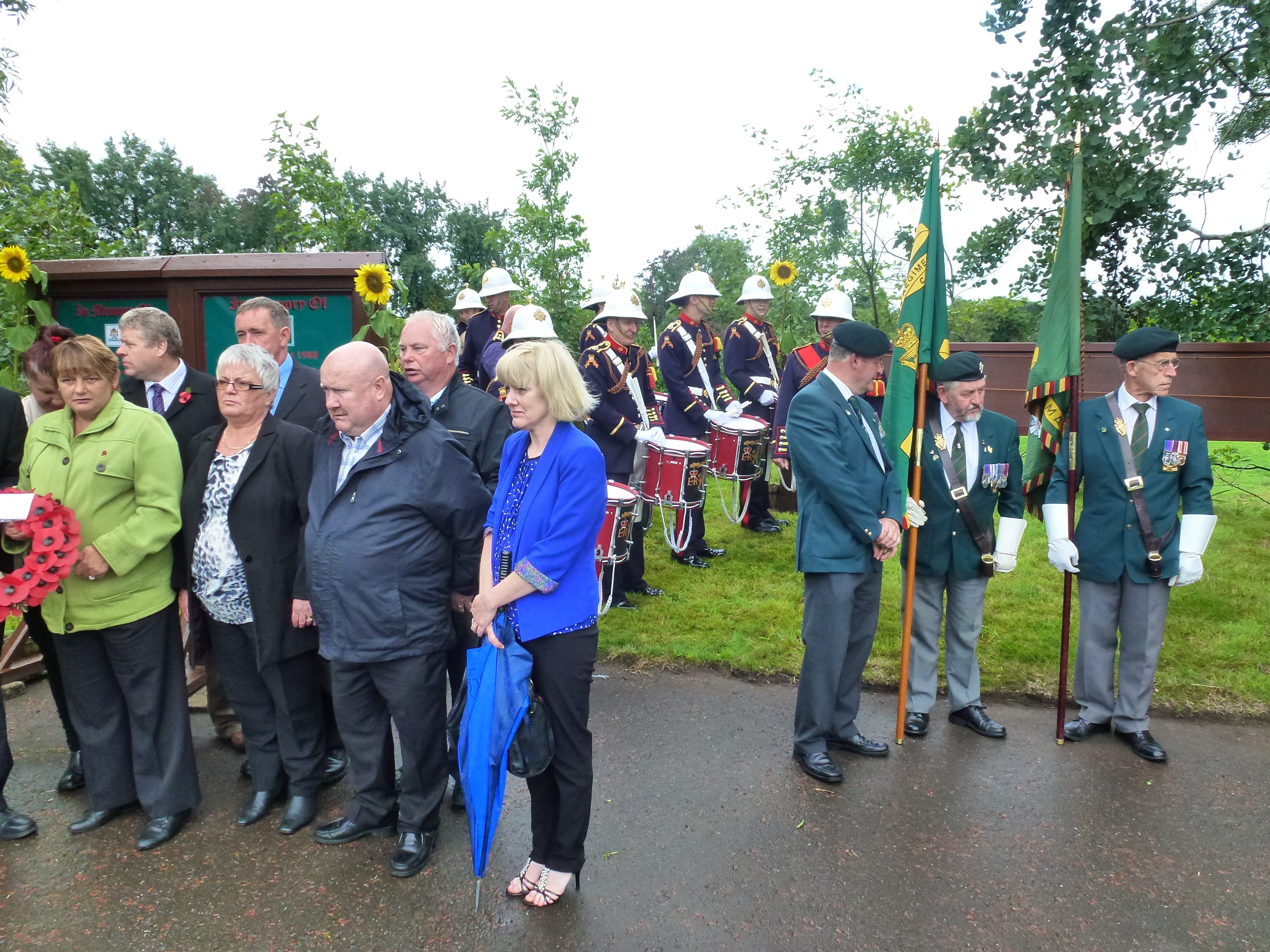
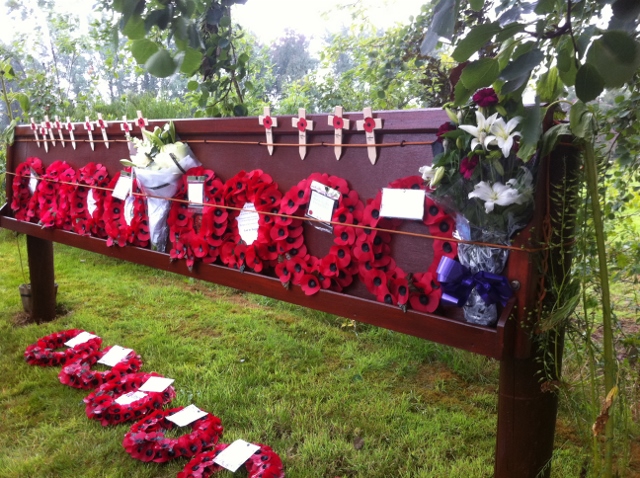
Ballygawley Bus Bomb Commemoration Photo: © Michael Fisher

Ballygawley Bus Bomb Commemoration Photo: © Michael Fisher

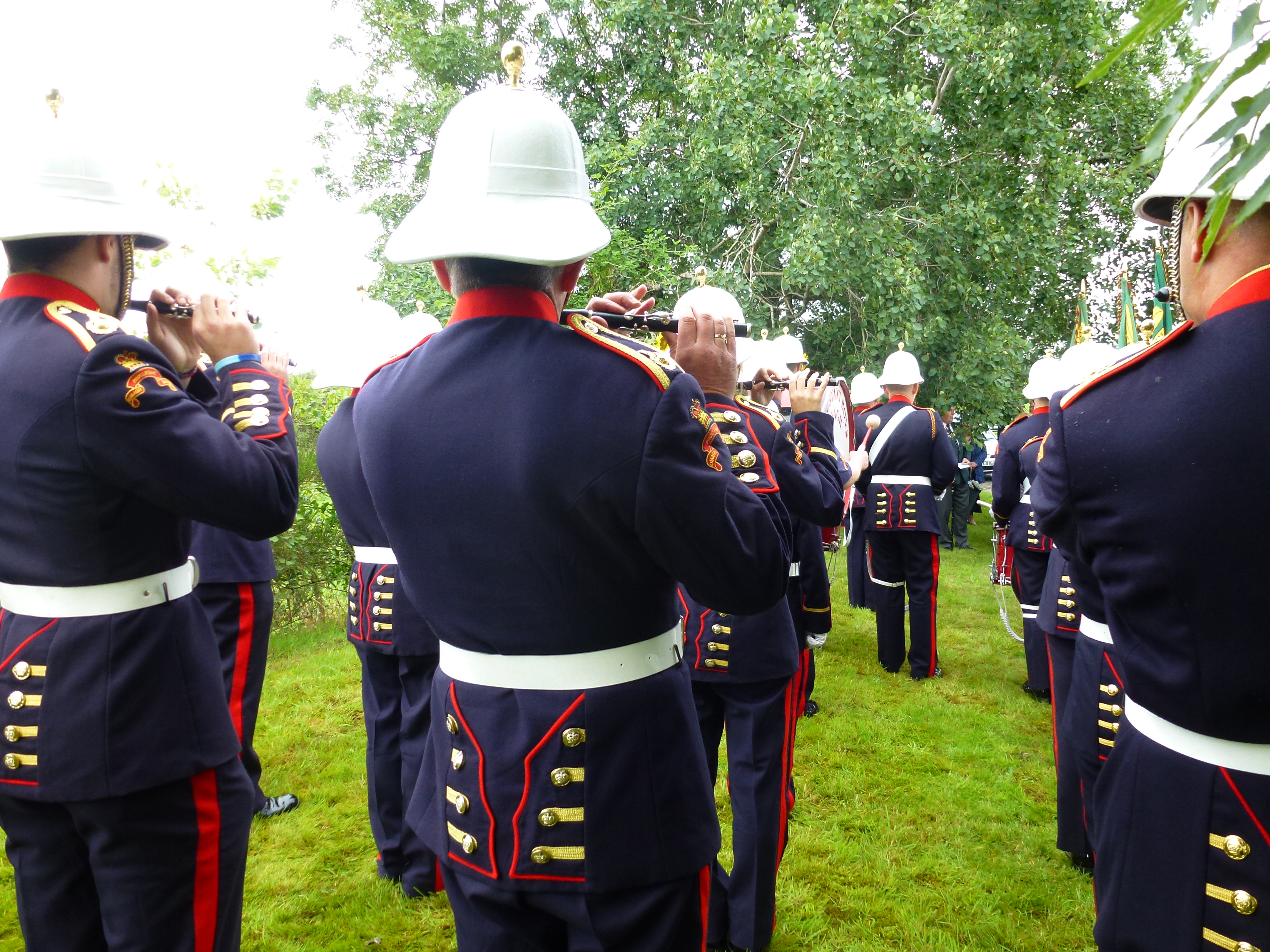
They stood and reflected as the Omagh Protestant Boys Flute Band played solemn music. For some of these women, the last time they were at this spot was 25 years ago. That night, 20th August 1988, they came across a scene of devastation, immediately after an IRA roadside bomb had exploded as a busload of soldiers went past on the main road from Ballygawley to Omagh. It became known as the Ballygawley bus bomb and was one of the worst losses of life sustained by the British Army during the troubles in Northern Ireland. Eight members of the Light Infantry between 18 and 21 were killed.

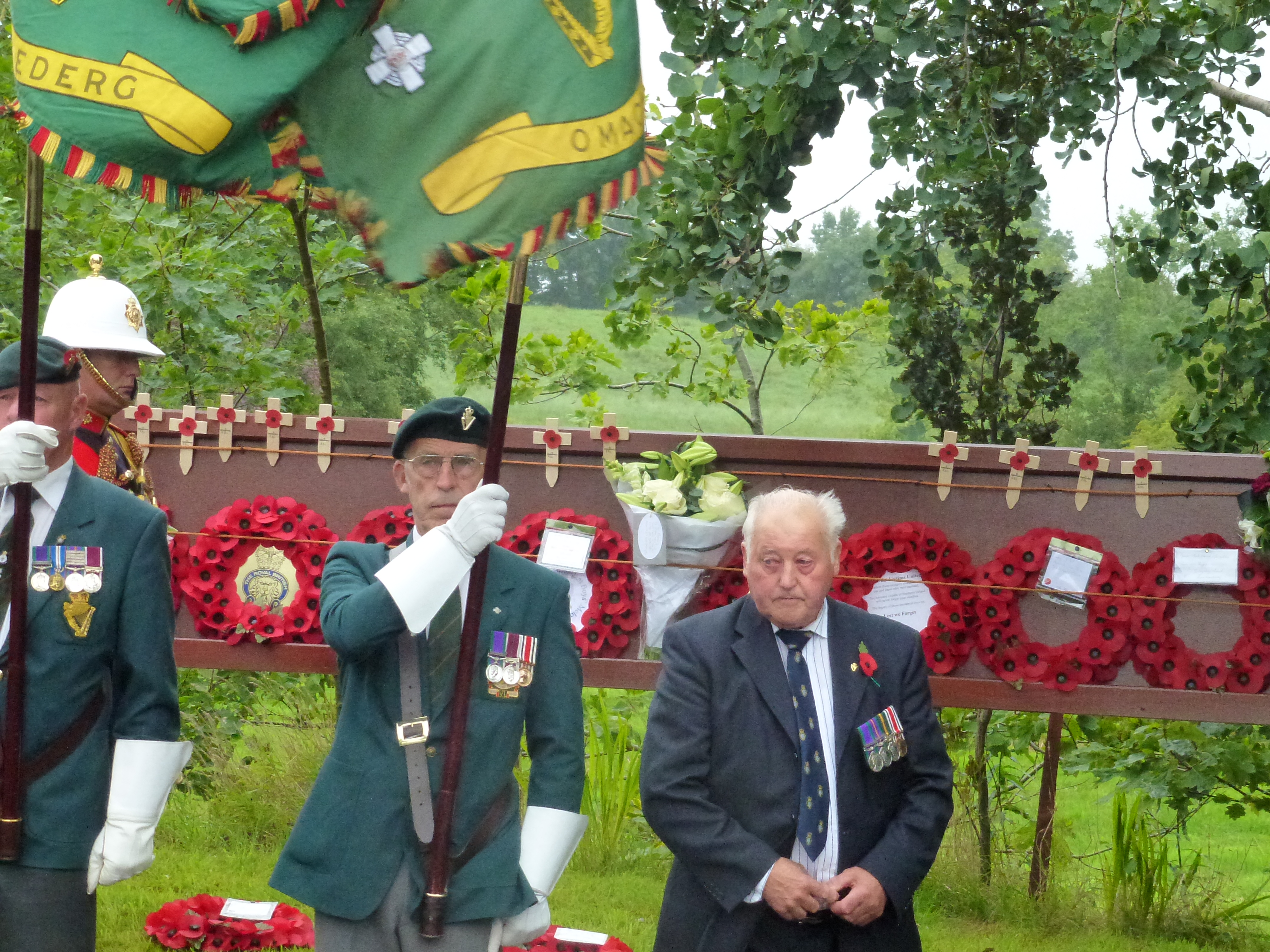
Ballygawley Bus Bomb Commemoration Photo: © Michael Fisher

Ballygawley Bus Bomb Commemoration Photo: © Michael Fisher

A witness who arrived at the scene said:-

“There were bodies strewn all over the road and others were caught inside the bus and under it. There were people running around stunned, screaming and bleeding, and shouting for someone to come to their aid.”  (Lost Lives, McKittrick et al, p.1141)

Ballygawley Bus Bomb Commemoration Photo: © Michael Fisher

Ballygawley Bus Bomb Commemoration Photo: © Michael Fisher

Immediately before the roadside service on Sunday, a local newspaper reporter asked these ladies from Derry about the reason for their presence. They trembled as memories of that dreadful night came back to them. They told how they were with the Star of the Valley band from Tullyally in Londonderry and had been travelling in a bus some distance behind the soldiers. They saw a flash and heard the explosion as the device blew the bus off the road.

One of the ladies explained how she had managed to make a 999 call to the emergency services but the initial response was one of caution, in case it turned out to be a trap. This lady then contacted a relative who worked at a British Army base in Derry and stressed to her the situation was not a hoax, but was unfortunately the real thing and asked her to contact the police.

Piper plays lament Photo: © Michael Fisher

Piper plays lament Photo: © Michael Fisher

The band members immediately helped to tend the injured, as did the Omagh Protestant Boys flute band, who like the Tullyally members had been returning from a parade in Portadown. One young soldier had managed to find his way across to a barn on the other side of the road, but he died at the scene. Ken Maginnis, an ex-UDR officer and then Ulster Unionist MP recalled how he along with others had found a young soldier who had managed to crawl away from the ruins of the bus and was in a barn on the other side of the road. He tried to reassure the Private he was now safe, but the young lad died at the scene. Mr Maginnis is now an independent member of the House of Lords and was among the gathering on Sunday.

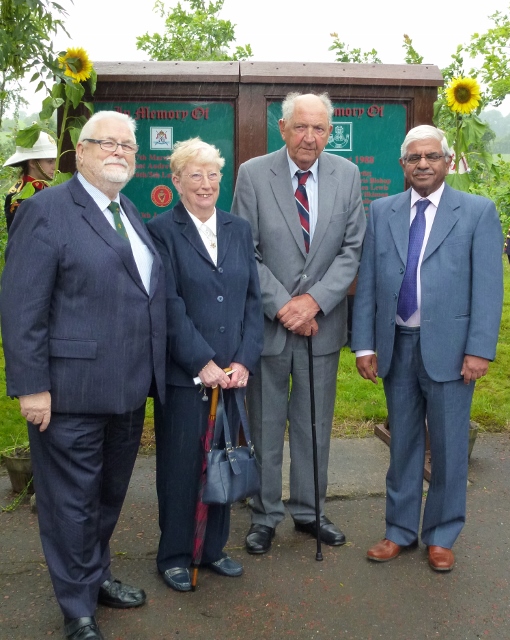
Lord Ken Maginnis, Dr Clifford McCord GP Aughnacloy & Dominic Pinto Omagh

Lord Ken Maginnis, Dr Clifford McCord GP Aughnacloy & Dominic Pinto Omagh

Other soldiers were taken for treatment initially at Tyrone County Hospital, where consultant surgeon Dominic Pinto and his colleagues worked through the night to deal with the injured. Dr Clifford McCord was then a GP in Aughnacloy. He tended to the injured soldiers, helped by Cllr Allan Rainey, who lives not far from the scene and who was one of the organisers of the roadside commemoration.

Cllr Paddy McGowan MBE, former fireman

Cllr Paddy McGowan MBE, former fireman

Another person who witnessed the immediate aftermath of the bomb was Fire Officer Paddy McGowan MBE. He remembers searching the field and hedges beside the bomb crater trying to find any other injured soldiers. This was before the area had been checked by the British Army for any further devices. He described the scene when he and his four colleagues from Omagh answered the emergency call as “pandemonium”. Now a councillor, he said the bombing had strengthened his resolve to oppose violence (Ulster Herald).

Dr Clifford McCord retired GP Aughnacloy & Cllr Allan Rainey MBE Photo: © Michael Fisher

Dr Clifford McCord retired GP Aughnacloy & Cllr Allan Rainey MBE Photo: © Michael Fisher

The roadside commemoration was followed by a service at Newtownsaville Church of Ireland church, led by John Irvine. Among the congregation was Michael Gallagher of the Omagh Support & Self-Help Group, whose son Aiden was one of the victims of the 1998 Omagh bomb.

BALLYGAWLEY BUS BOMB

Ballygawley Bus Bomb Memorial

Ballygawley Bus Bomb Memorial Photo: © Michael Fisher

It was a simple and very dignified ceremony. As motorists were passing by on the main A5 Dublin to Derry road, they might have wondered what was going on at the side of the road at Curr, between Ballygawley and Omagh. People gathered there on Sunday morning to pay their respects to eight British soldiers who had been killed in what became known as the Ballygawley bus bomb, 25 years ago today on August 20th 1988.

Omagh Protestant Boys Flute Band Photo: © Michael Fisher

Omagh Protestant Boys Flute Band Photo: © Michael Fisher

The music by the Omagh Protestant Boys flute band set the mood. You can see my video on youtube here.

Ballygawley Bus Bomb Remembrance Photo © Michael Fisher

Ballygawley Bus Bomb Remembrance Photo © Michael Fisher

The soldiers were returning to their base in Omagh, having flown into RAF Aldergrove. They were being transported in an unmarked coach, driven by a soldier. Reports at the time suggested that although the A5 road was meant to be ‘out of bounds’ for military transport, diversion signs had been put in place and that was why the driver travelled that way from Ballygawley. But that claim was disputed at the inquest. A 200lbs roadside bomb consisting of Semtex and fertiliser exploded, killing eight members of the 1st Battalion, Light Infantry Regiment and injuring 28 of their colleagues.

Roll of Honour read out Photo: © Michael Fisher

Roll of Honour read out Photo: © Michael Fisher

In the brief commemoration at the scene of the blast, the Last Post was sounded and the Roll of Honour was read with the following names:-

Private Blair Bishop (19), Private Peter Bullock (21), Private Jayson Burfitt (19), Private Richard Greener (21), Private Alexander Lewis (18), Private Mark Norsworthy (18),  Private Stephen Wilkinson (18) and Private Jason Winter (19).

In addition, four UDR members killed in a landmine at Gort, Errigal Keerogue, near Ballygawley were also remembered. They died on July 13th 1983, 30 years ago. They were:- Private Ronald Alexander (19), Corporal Thomas Harron (25), Private John Roxborough (19) and Private Oswell Neely (20). 

A thirteenth name was added to the roll of honour, Lieutenant Andrew Somerville (20), a member of 15th/6th Lancers, killed in a landmine attack near Ballymacilroy, Ballygawley on March 27th 1973, 40 years ago.

Ballygawley Bus Bomb Commemoration Photo: © Michael Fisher

Ballygawley Bus Bomb Commemoration Photo: © Michael Fisher