NATIONAL DAY OF COMMEMORATION

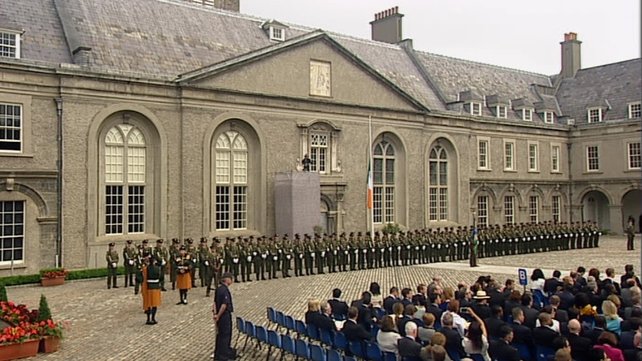
Commemoration at Kilmainham Photo: RTE News

Commemoration at Kilmainham Photo: RTE News

Uachtarán na hÉireann Michael D Higgins led the national Day of Commemoration ceremony this morning at the Royal Hospital Kilmainham in Dublin. Similar ceremonies took place at seven other locations across the state. The multi-faith and military ceremonies honoured all Irishmen and Irishwomen who died in wars or on service with the United Nations. The Dublin event was attended by the President, the Taoiseach, the Government and Council of State, as well as members of the diplomatic corps, Defence Forces, veterans’ organisations, the judiciary and Northern Ireland representatives. In this latter category it was interesting to note the presence of the Ulster Unionist leader Mike Nesbitt along with the Lord Mayor of Belfast, Máirtín Ó Muilleoir of Sinn Féin.

I watched the service which was broadcast live on RTE1 television. The military part of the ceremony was carried out with great precision and the music played by the Army No.1 Band under the baton of Lt Col. Mark Armstrong added to the solemnity of the occasion.

ORANGE BANNERETTE IN TYRONE

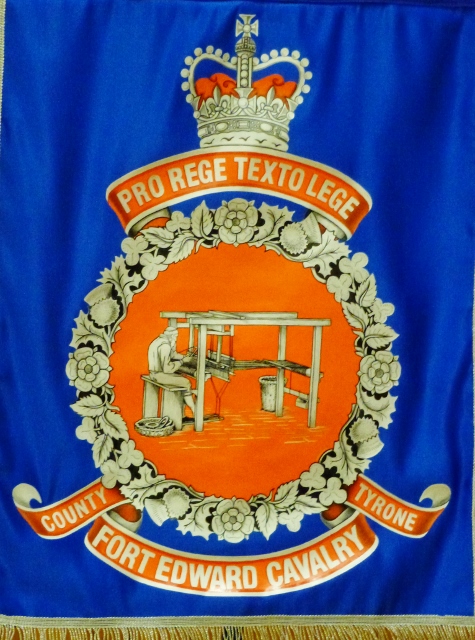
Fort Edward Bannerette, Aughintober LOL 37

Fort Edward Bannerette, Aughintober LOL 38

In April I wrote about the banners and sashes from orange and green traditions on display in an interesting exhibition “Walking the Colours” at Monaghan County Museum until the end of July. Tonight there was an unveiling of a new bannerette at Aughintober orange hall near Castlecaulfield in County Tyrone. The News Letter reports that it uses the description of the original banner dedicated to a former local lodge, Fort Edward Cavalry 677, which was formed from a local Yeomanry unit in 1798. The bannerette was commissioned by Raymond Cuddy, a pig farmer, who is a long-standing member of Aughintober LOL 38  and a past worshipful master and secretary, who gave some 20 years’ service as an officer with the lodge. The unveiling was carried out by the Grand Master of the Grand Orange Lodge of Ireland, Edward Stevenson.

Aughintober Orange Hall

Aughintober Orange Hall

The presentation of Fort Edward Cavalry’s original banner on July 12 1798 was recorded in the News Letter. This was discovered by Raymond Cuddy and fellow historian Jonathan Gray, who was born in Belfast but now lives in Castlecaulfield, following extensive research carried out over the past year. At tonight’s unfurling, which took  place in Aughintober Orange Hall, both Raymond and Jonathan Gray presented a talk on the Fort Edward Cavalry, tracing their origins in the Clonaneese volunteers, their relationship with Lower Clonaneese Presbyterian Church and their legacy in this area. The talk included the military career of their Captain, Waterhouse Crymble Lindsay. Raymond, who along with Jonathan is a member of Killeeshil and Clonaneese Historical Society, has plans to write a book about the legacy of the local lodge. The talk will be repeated next Wednesday 3rd July at 7:30pm at Ranfurly House in Dungannon.

Although tonight’s event is not part of the same programme, the Killeeshil and Clonaneese Historical Society is one of five groups including the William Carleton Society involved in the “Shared History, Shared Future” project supported by Dungannon and South Tyrone Borough Council. It recently held an open day at a former flax mill at Ennish near Lower Clonaneese church.

Bannerette unveiled by Grand Master

Bannerette unveiled by Grand Master

ULSTER & IRISH VOLUNTEERS

Quincey Dougan on the UVF

Quincey Dougan on the UVF

A very interesting night on Wednesday at Monaghan County Museum, where the CaDoLeMo group that promotes orange bands and culture in the border counties of Cavan, Donegal, Leitrim and Monaghan held a talk on the two rival sets of Volunteers that emerged in the early 1900s before partition. It was an appropriate setting as the museum is currently displaying the Walking the Colours exhibition, which I wrote about in April.

Monaghan UVF Flag

Monaghan UVF Flag

Quincey Dougan spoke about Monaghan unionists, in particular their contribution to the formation of the Ulster Volunteer Force. For a more detailed look at the subject, you can find his article on the subject here. One of the flags included in the exhibition comes from the 2nd Battalion of the UVF in Monaghan, which Quincey explained had its headquarters in Clones under the command of Lt Colonel Madden of Hilton Park outside the town. After the outbreak of World War I, Madden was replaced by a prominent solicitor Michael Knight, also Grandmaster of the County Orange.

According to Dougan, in August 1913 it was listed as having just 408 men, but within 12 months it had became bigger than the first battalion with 1058 men enlisted. The main drill areas were Drum, which included Scotshouse, Corrygarry, Drum and Carn; Clones including Clones, Stonebridge and Drumully, and Ballybay which included Laragh and Aughnamullen. Newbliss had a section, as did Dartrey in the form of Doohat and Dartrey. The Castleblayney and Carrickmacross area was not listed on the original returns and appears to have been slow to organise, but by early 1914 it also had men drilling. The Mullyash area of East Monaghan had a large unionist presence, but its natural hinterland was the South Armagh town of Newtownhamilton and it appears that the area drilled with County Armagh.

Professor Terence Dooley

Professor Terence Dooley

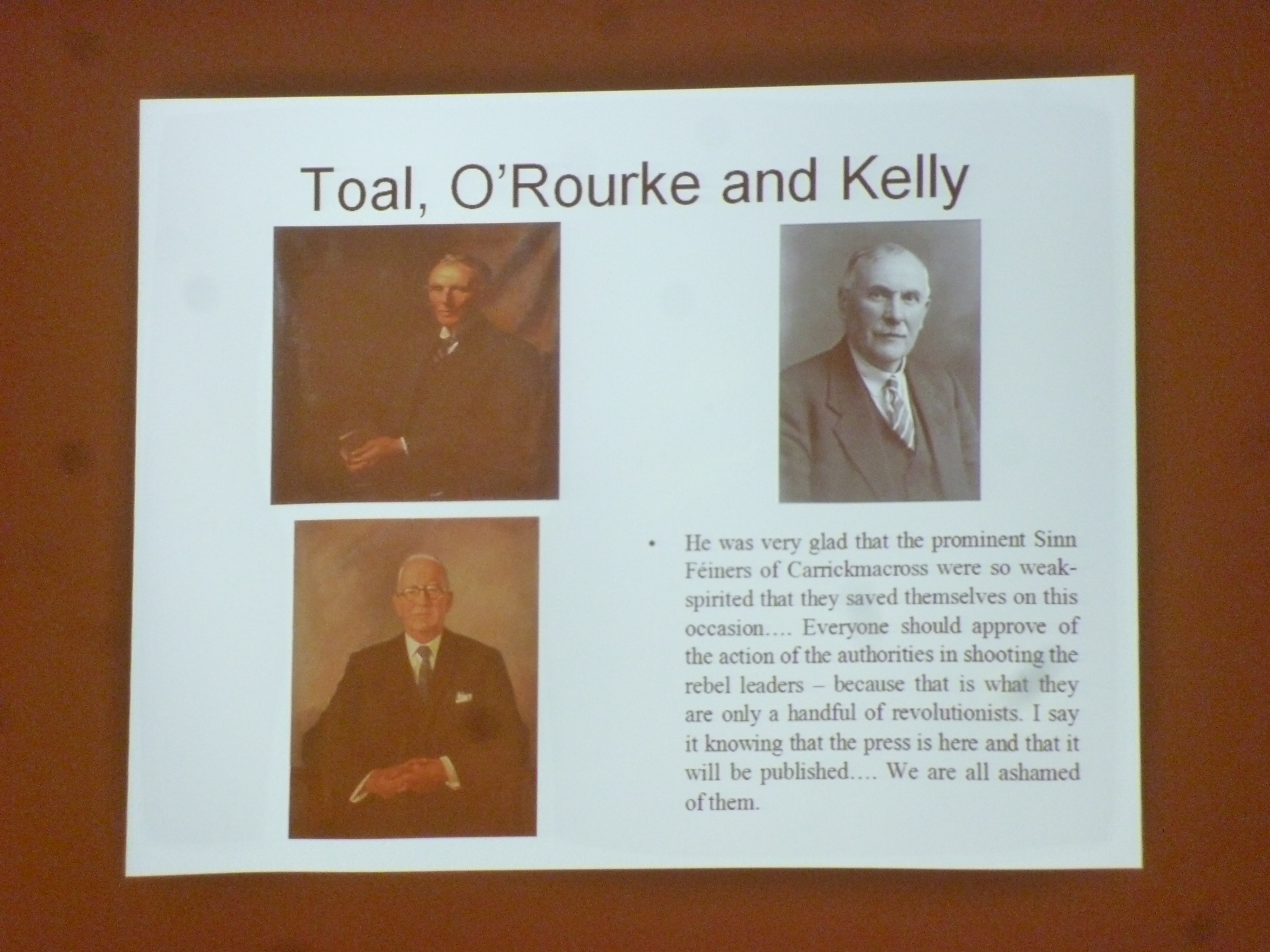
The second part of the evening was devoted to the story of the Irish Volunteers in County Monaghan. The guest speaker was Professor Terence Dooley, NUI Maynooth, who comes from Killanny near Carrickmacross. It was fascinating to hear the story of three Monaghan nationalists who went on to become politicians, Thomas Toal of Smithborough, Edward “twister” Kelly and ? O’Rourke.

Story of Toal, O'Rourke & Kelly

Story of Toal, O’Rourke & Kelly

LOURDES RETURN

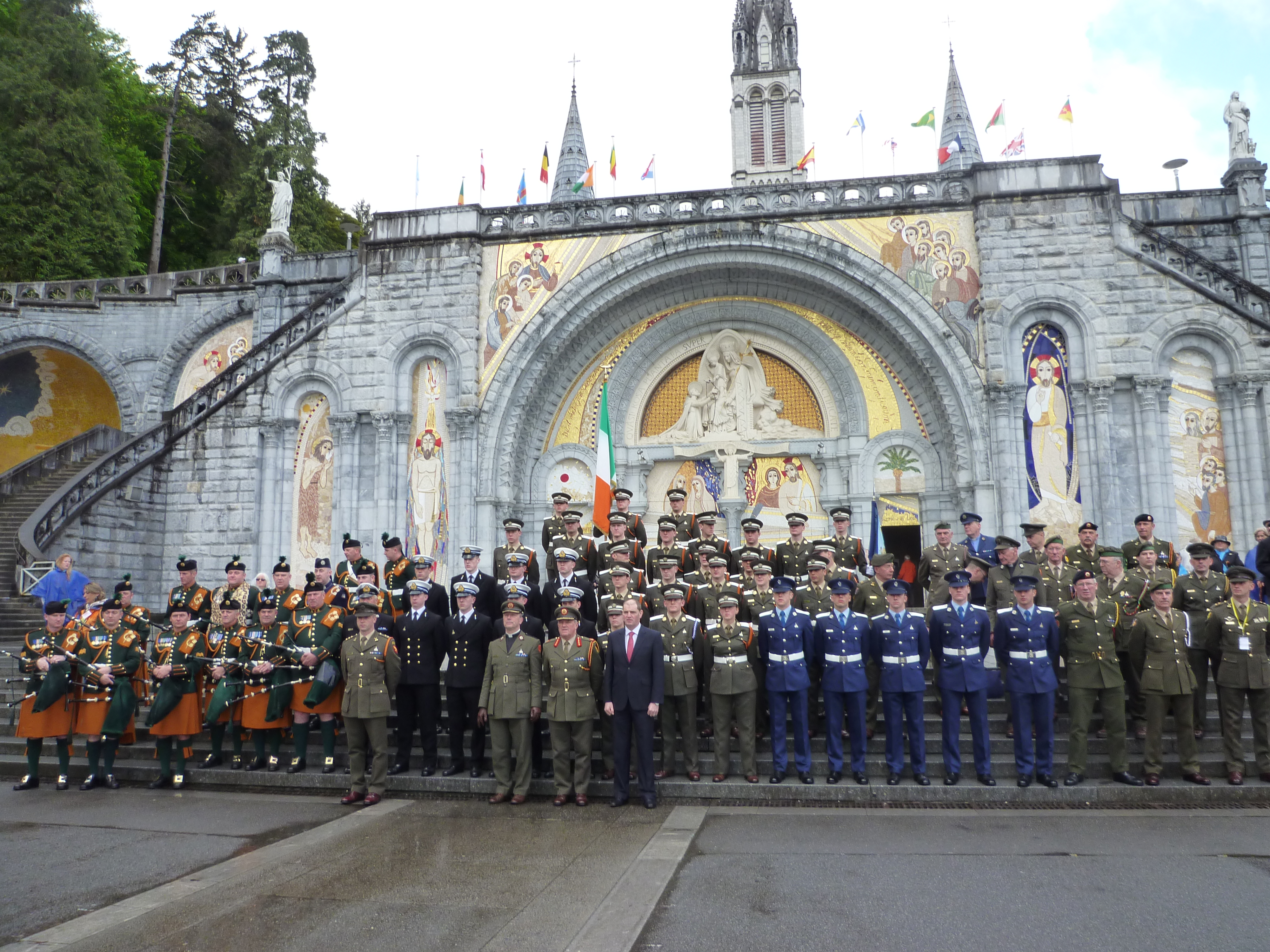
Defence Forces members on International Military Pilgrimage to Lourdes

Defence Forces members & Minister of State Paul Kehoe TD on International Military Pilgrimage to Lourdes

The 300-strong Irish contingent that took part in the 55th international military pilgrimage to Lourdes returned to Dublin this afternoon, having travelled on Wednesday to the famous shrine of Our Lady in the Pyrenees in southern France. Over 25,000 military personnel and their families and friends participated in the 2013 Pilgrimage. Since 1958, the shrine has seen soldiers from all over the world come in peace to venerate Mary. The tradition of the International Military Pilgrimage (IMP) began in 1958, after what was initially a regional then national pilgrimage was made international to recognise officially the many soldiers that had been arriving. The only glitch was a baggage handling delay at Lourdes-Tarbes airport, which meant that the departure of the two Dublin flights was two hours later than expected.

Air Corps cadets & chaplain Fr Gerry Carroll

Air Corps cadets & chaplain Fr Gerry Carroll

Along the way we met groups including young helpers from Ossory (Co.Kilkenny) and Raphoe (Co.Donegal) taking part in their diocesan pilgrimages. From England, there were groups from Middlesborough (staying in our hotel), Birmingham and Plymouth dioceses (staying in the hotel next door, where the UK contingent from the Royal Navy, RAF and British Army were based). The young people were a credit to their respective groups and in the case of the Defence Forces, the cadets from the 89th class at the Curragh Training Centre along with the Navy cadets from Haulbowline and Air Corps cadets from Baldonnell represented Ireland with distinction, along with the DF pipe band, who never seemed to go to bed and a group from the Civil Defence

Parading the Colours: Ireland with UK and Hungary

Parading the Colours: Ireland (Navy) with UK (RMAS) and Hungary

LOURDES

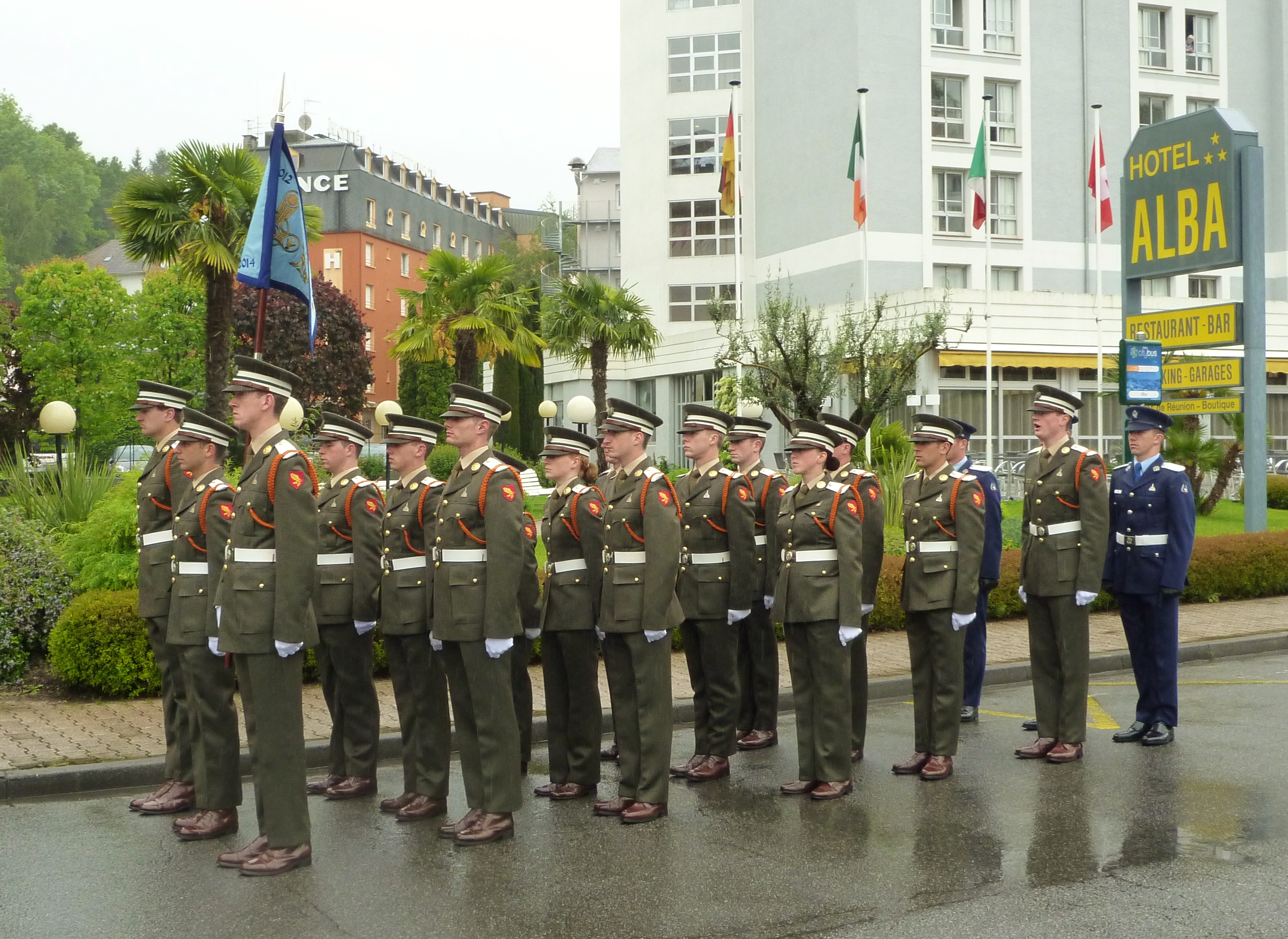
89th Cadet Class ready to march to shrine

89th Cadet Class ready to march to shrine

Brigadier Michael Finn (right) joins parade to shrine at Lourdes

Brigadier Michael Finn (right) joins parade to shrine at Lourdes

I travelled to Lourdes to see the shrine to Our Lady for the first time. I flew from Dublin with a group from the Defence Forces to take part in the 55th international military pilgrimage. Minister of State at the Department of Defence and government Chief Whip Paul Kehoe TD (Wexford) joined the group two days later. The military pilgrims were led by Brigadier Michael Finn GOC 2nd Brigade (formerly Eastern), who was also making his first visit to the shrine in the Pyrenees.

Sgt Liam Bellew helps prepare the DF pilgrimage candle

Sgt Liam Bellew helps prepare the DF pilgrimage candle

 The tradition of the International Military Pilgrimage (IMP) to the French Shrine of Our Lady of Lourdes began in 1958, after what was initially a regional pilgrimage and later national pilgrimage was made international to recognise officially the many soldiers that had been arriving.

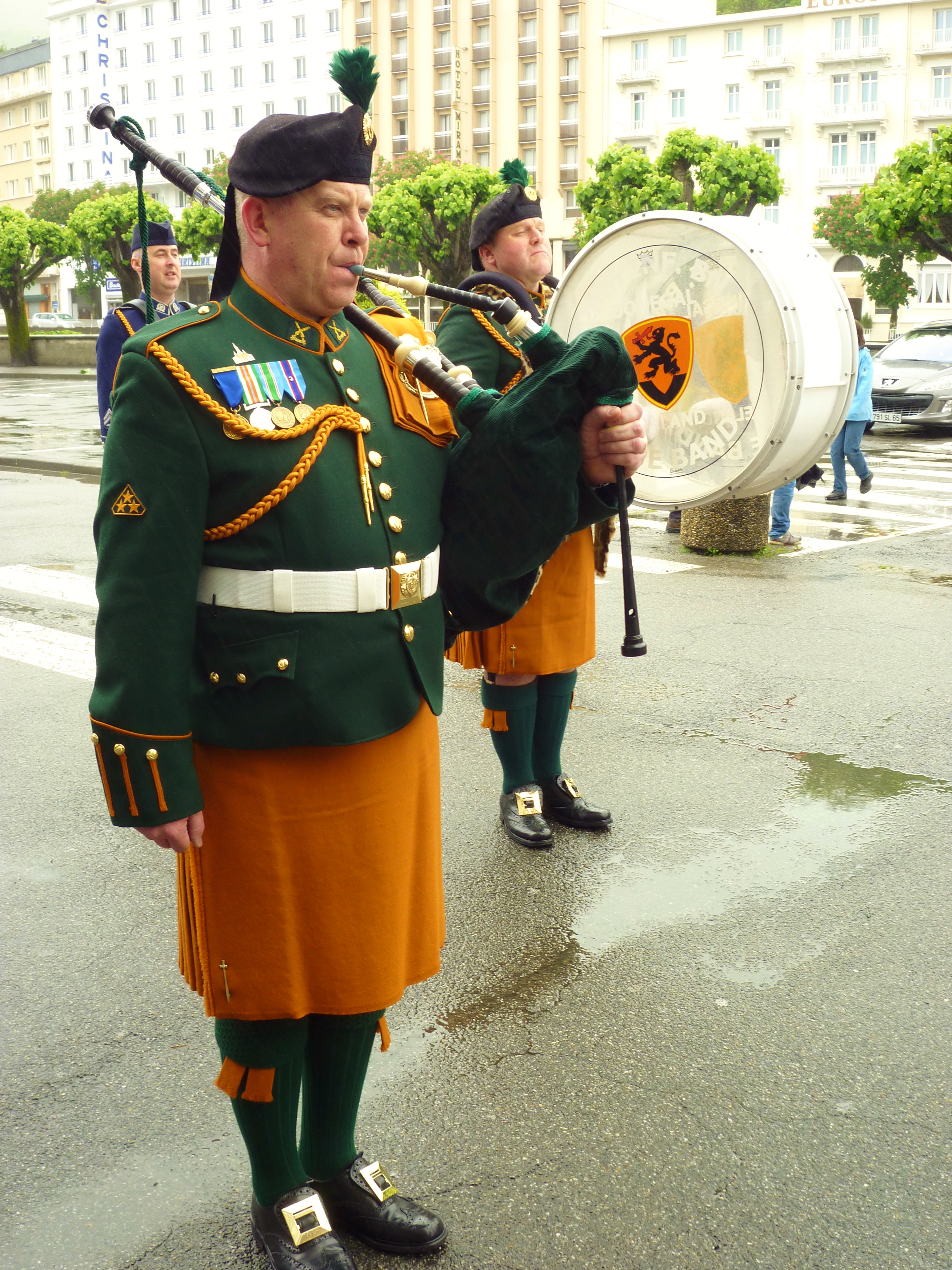
Pipe Band prepare to lead parade to Shrine

Pipe Band prepare to lead parade to Shrine

The Irish contingent arrived on Wednesday 22nd and this year’s international pilgrimage took place from May 24th-26th. I am now updating this blog following my return. Major events during the stay in the foothills of the French Alps included a parade on Friday, adoration in the Basilica of Our Lady of the Rosary and on Sunday a Mass in the large underground Basilica of St. Pius X  followed by a closing ceremony in the afternoon, in which all the bands particpate. Many other activities took place within the individual national groups, including the Irish.

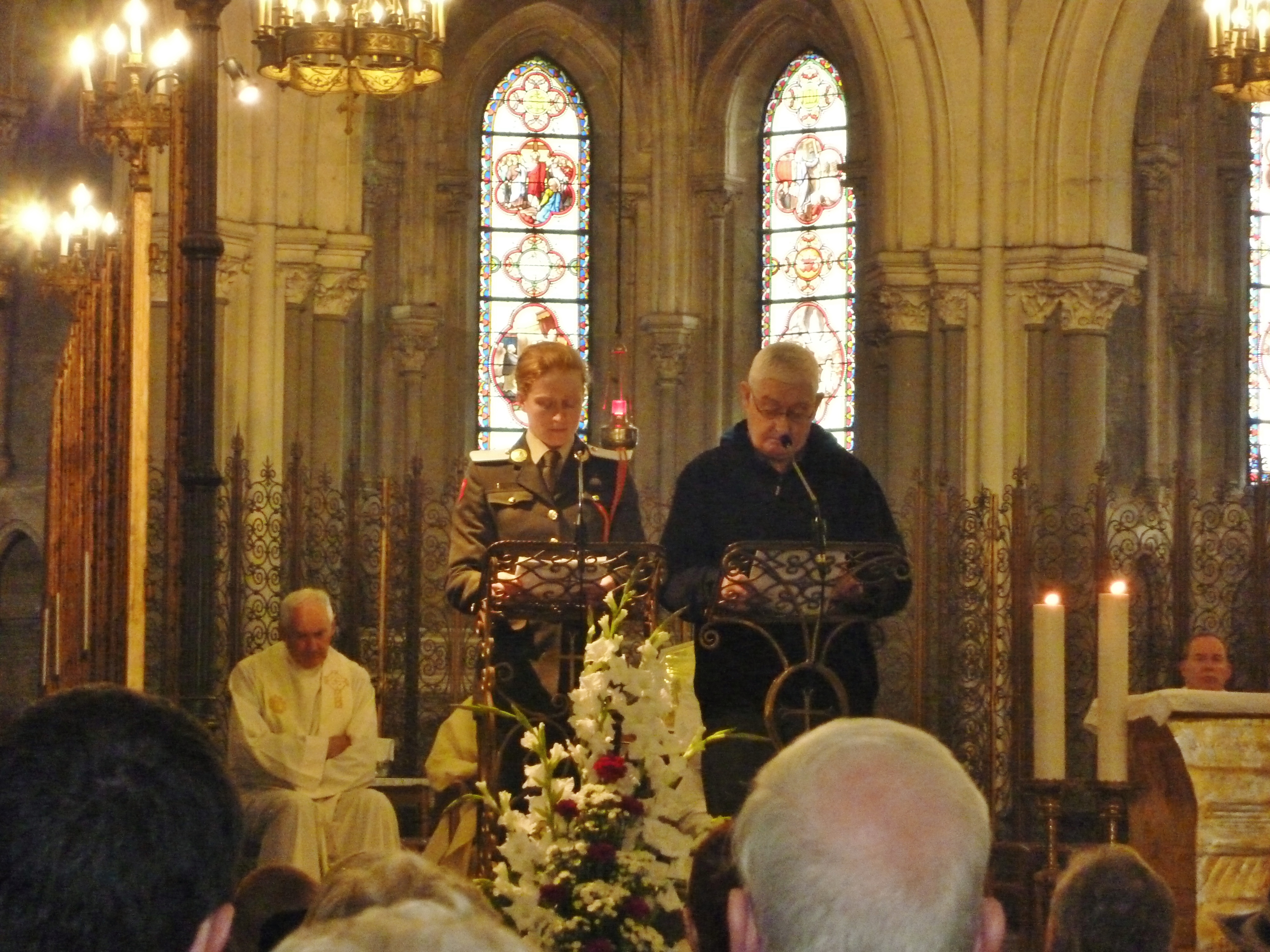
An Army Cadet & Brig. General Carl Dodd read out names on the UN Roll of Honour during Mass in Upper Basilica

An Army Cadet & General Carl Dodd read names on UN Roll of Honour at Mass in Upper Basilica

BALMORAL SHOW AT MAZE

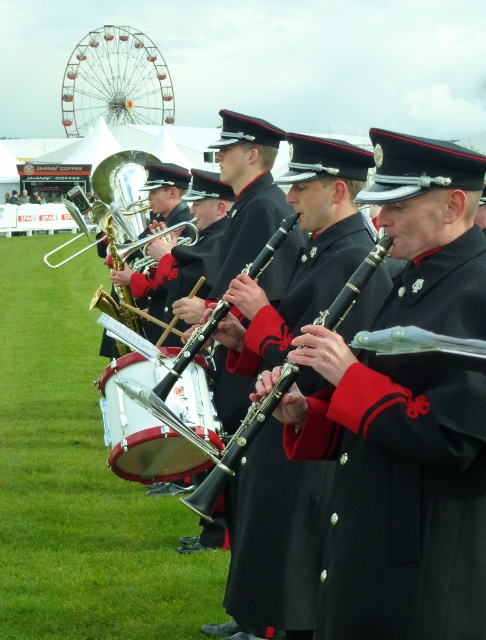
Army No.1 Band at Balmoral Park

Army No.1 Band at Balmoral Park

The Maze was once the site of Northern Ireland’s high security jail, spread out over 360 acres. Today saw a new chapter in its history as thousands made their way to Balmoral Park, the new venue for the annual Royal Ulster Agricultural Society show. Helping to entertain the crowds in the main arena was the Army No.1 Band from Cathal Brugha Barracks in Dublin, under the direction on this occasion of Captain Fergal Carroll.

Who would have thought that 13 years after the closure of the prison in 2000 and the release under the Good Friday agreement of the remaining loyalist and republican paramilitaries who had served sentences, that an Irish Army presence would be welcomed there. In addition, I noticed the tricolour flying alongside the Union flag and the flag of Canada in the same arena, where the showjumping was held.
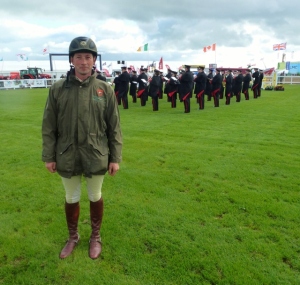
Capt. Geoff Curran & Army No.1 Band

Capt. Geoff Curran & Army No.1 Band

As the band was performing for the second time, the riders were coming out to inspect the course for their competition. Among them was Captain Geoff Curran from the Army Equitation School at McKee Barracks in Dublin, who met Queen Elizabeth during her visit to the National Stud in County Kildare in May 2011.

In the past, the cages on this site were the H-blocks, housing prisoners. Now the only cages and huts are those holding animals and livestock. There is just the hospital wing and part of the H-blocks remaining.

Looking towards remains of prison site with wall and watchtowers © Michael Fisher

Looking towards remains of prison site with wall and watchtowers © Michael Fisher

It has taken many months of planning to get the Balmoral Show to its new site at The Maze. I passed by recently on the M1 motorway and saw in the near distance the extensive tented village and the hard standing for the car park area. Today I was able to enjoy a visit to the complex. Translink had put on special transport arrangements for public transport, including a shuttle bus to and from Balmoral Park from Lisburn station.

Translink shuttle bus service from Lisburn

Translink shuttle bus service from Lisburn

The journey to the show via Hillsborough and Culcavy took half an hour but the return at 6:30pm took half the time. My sister-in-law travelling from Monaghan and others heading from West of the Bann trying to reach the show from the M1 motorway ran into great difficulty. She took four hours, having left at 9am. The former Ulster Unionist leader Tom Ellliott MLA had a similar story. He left Fermanagh at 8:30am along with two children in the car and did not reach the showgrounds until 1:30pm! His successor Mike Nesbitt though had no such problems and told me he had taken less than half an hour to reach Balmoral Park.

Ulster Unionist Leader Mike Nesbitt MLA

Ulster Unionist Leader Mike Nesbitt MLA

 For more background on the move to the Maze site and the programme of events see my post in March.