LIONS & LIONS

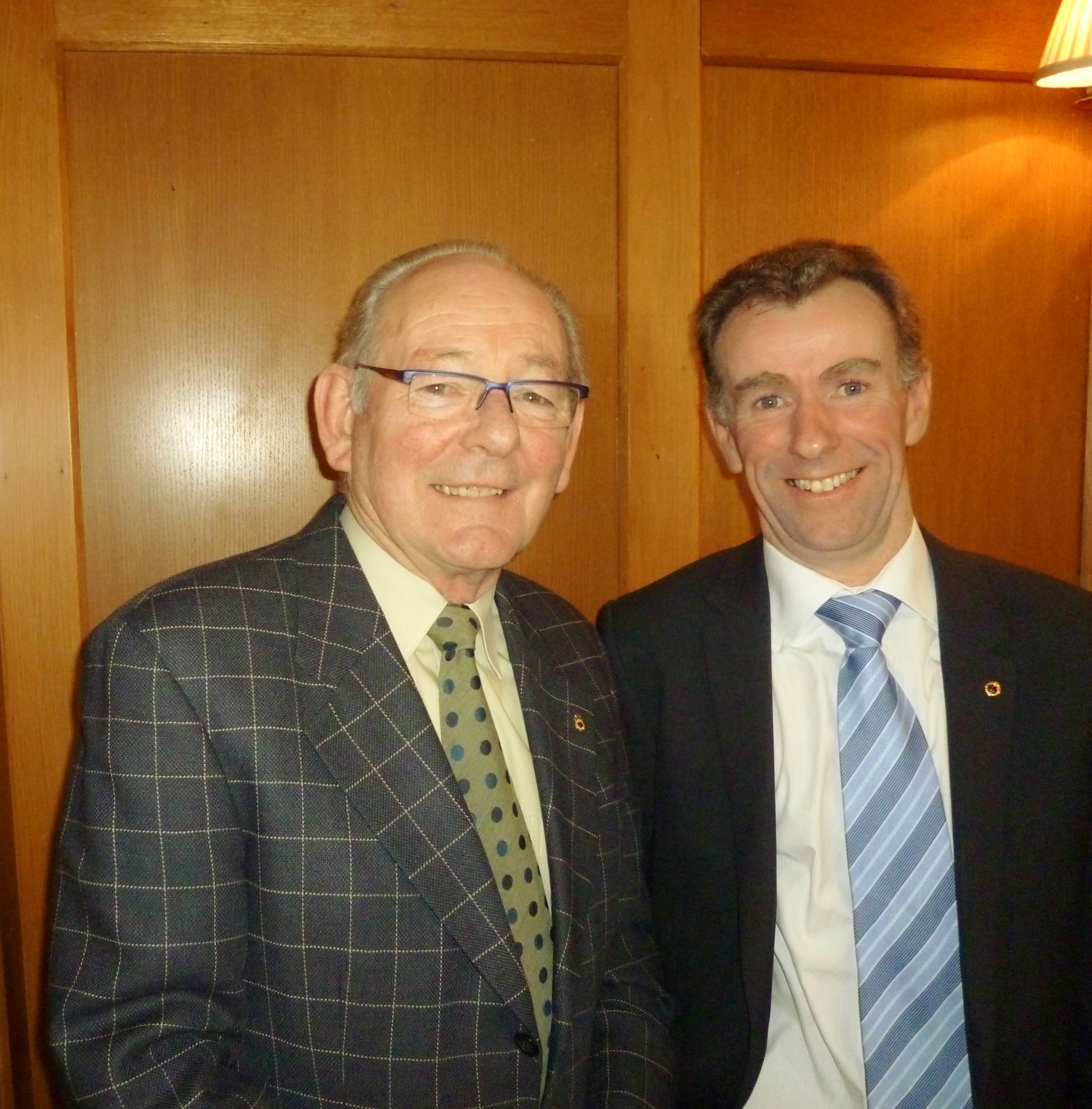
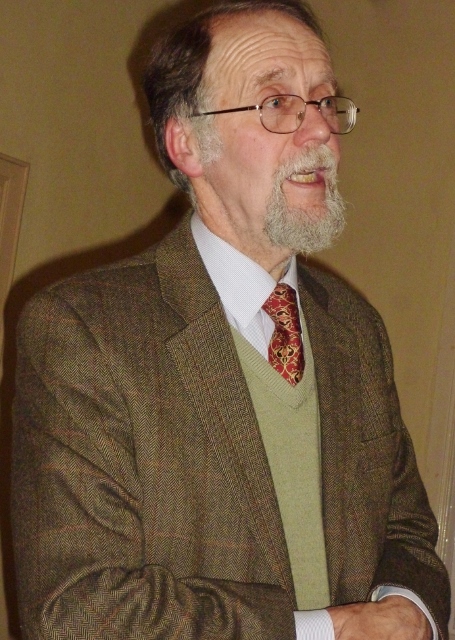
Brian McLaughlin & Antrim Lions President Barry Warwick

Brian McLaughlin & Antrim Lions President Barry Warwick

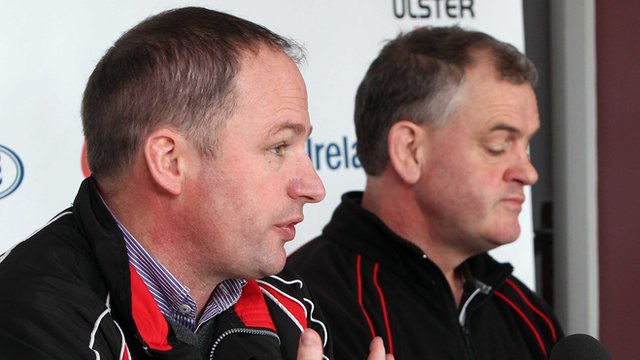
Over a traditional breakfast at the Dunadry Hotel near Templepatick, former Ulster Rugby Head Coach Brian McLaughlin (now Academy Schools Coach) talked about Lions to Lions and their guests from the Antrim Lions Club. In the course of an hour, Brian revealed his passion for rugby and answered questions about his favourite sport (apart from tennis!). Asked if he had sent a Christmas card to the Director of Rugby David Humphreys he quipped “Yes, but I didn’t put a stamp on it!”

David Humphreys & Brian McLaughlin news conference (BBC Sport)

David Humphreys & Brian McLaughlin (BBC Sport)

An indication that the parting of the waves in February last year and the subsequent appointment of New Zealander Mark Anscombe was not entirely amicable. At a media conference at the time,  McLaughlin made it clear he was disappointed at being replaced as senior team boss and described his switch to the academy as a sideways move. A day later he clarified that his new position was an important role he took seriously and to which he would bring extensive experience.

Antrim Lions Ken Oliver & Barry Warwick

Antrim Lions Ken Oliver & Barry Warwick

Brian gave the Antrim Lions an insight into just how experienced he is when it comes to rugby. He started playing with his home town club Ards where he was a back-row forward alongside Ireland stars Philip Matthews and Nigel Carr before injury interrupted his career. He had success at Ulster and Ireland age group level winning the Five Nations Grand Slam alongside O’Sullivan in the early 1990s. His other coaching duties included spells at Malone and Instonians. He also guided then Division Two team Ballynahinch to a series of titles in 2008/09. Hinch won the AIB All-Ireland Cup by beating  Cork Constitution and topped the Ulster Senior League, took the Ulster Senior Cup and won promotion to Division One of the All-Ireland League. They have just won division 1B of what is now the Ulster Bank League and will be back in the top flight (1A) next season.

Michael Fisher & Brian McLaughlin

Michael Fisher & Brian McLaughlin

Brian is most recognised, however, for his work at schools level. He coached Wallace High School (Lisburn) to a couple of cup finals and then guided RBAI (Inst) to seven cup finals in 12 years, winning five of them. He also won the inter-provincial title with the Ulster Under-21 side where he coached Rory Best. McLaughlin was appointed to the top job in Ulster in June 2009. He was supported by the same backroom staff who were in position at Ravenhill under Matt Williams, with Jeremy Davidson and former pupil at Wallace Neil Doak his main assistants.

He gave his views on some of the players he had coached and the one he most admired for his commitment to training was former Ireland captain Brian O’Driscoll, who he hoped would be included in the British and Irish Lions squad later this year. Funds raised from the breakfast go to Lions Club charities. You can find out more about Antrim Lions Club here.

FRANK GARDNER BBC

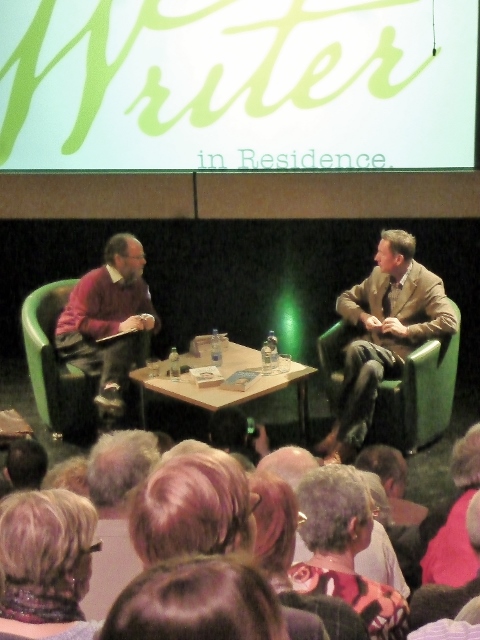
Malachi O'Doherty talks to Frank Gardner

Malachi O’Doherty talks to Frank Gardner

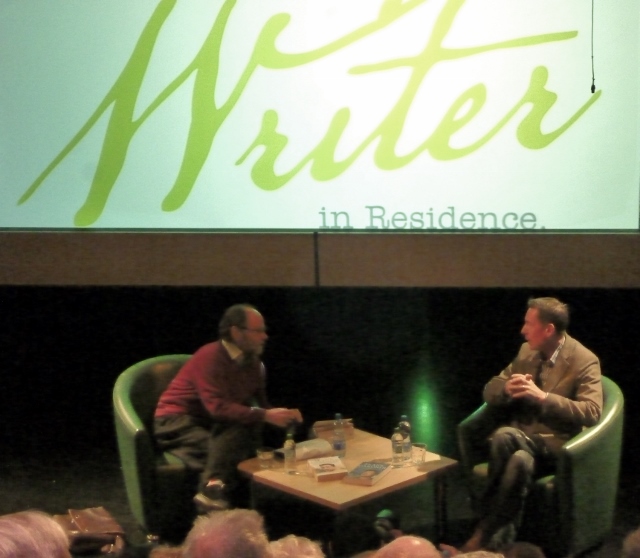
It was a packed audience at the BBC’s Blackstaff studio in Belfast as Malachi O’Doherty resumed his Louis MacNeice QUB Writer in Residence series of interviews with media personalities. His guest was the BBC’s Security Correspondent, Frank Gardner. Gardner almost lost his life in a gun attack nine years ago in Saudi Arabia, in which his cameraman was killed, 36 year-old Simon Cumbers from Navan in County Meath. A media fund has been set up to honour his memory.

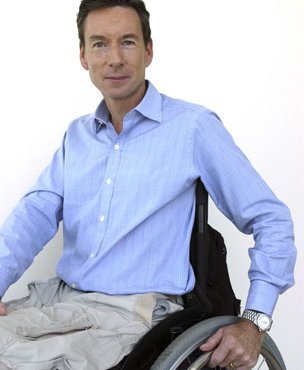
Simon Cumbers was murdered by gunmen while filming a report on an al-Qaeda militant’s house for BBC Television News in June 2004. The attackers opened fire on Simon and Frank Gardner in a suburb of Riyadh. Simon died at the scene and Frank Gardner, then 42, was seriously injured. He was shot six times at point-blank range. One of the bullets, apparently fired from a jeep, severed Gardner’s spinal nerves, leaving him partly paralysed in the legs and now dependent on a wheelchair. After 14 operations, seven months in hospital and months of rehabilitation, he returned to reporting for the BBC in mid-2005.

Frank Gardner, BBC

Frank Gardner, BBC

Gardner was educated at a private school in Kent, St Ronan’s in Hawkhurst and Marlborough College. His parents were both diplomats and he developed an interest in travel and exploration at an early age. He learned Arabic as a teenager and as a student at Exeter he went exploring with a friend. In the conversation with Malachi  he recalled his “daft” adventure through a jungle to a volcano, without a local guide: two explorers with just a biscuit to share to keep them sustained.

Recalling the attack in which he was wounded, Gardner said the gunmen drove off, leaving him bleeding in the dust. He remembers screaming for help. A crowd came out to look, but no-one lifted a finger to help him. There was no word of sympathy or comfort. This was very different from the welcome he had received in previous years while getting to know an Egyptian family from the backstreets of Cairo, with whom he stayed.

Malachi O'Doherty & Frank Gardner

Malachi O’Doherty & Frank Gardner

Gardner went back to Saudi Arabia earlier this year and made a documentary reflecting on why the Arab Spring has not happened in the Kingdom. He has worked with the BBC since 1995. Before that he spent nine years working in and around the Middle East region as an investment banker with Saudi International Bank and Robert Fleming from 1986-95. He became the Corporation’s first full-time Gulf correspondent in the late 1990s and set up an office in Dubai. In 2000 he was appointed Middle East correspondent in charge of the bureau in Cairo, but travelling widely throughout the region. In that role he covered the Palestinian intifada and reaction in the wake of the 11th September New York attacks.

CLOGHER VALLEY RAILWAY

CVR train in Main St Caledon (TG4 photo)

CVR train in Main St Caledon (TG4 photo)

The picture shows a train from the Clogher Valley Railway in the Main Street of the border village of Caledon, County Tyrone. In the middle you can see the clock tower of the courthouse. The train is number 6, called Erne.  It was built by Sharp, Stewart No. 3374 of 1887;  0-4-2 tank. It was in service until the railway closed on December 31st 1941 and was scrapped the following year.  The other engines were Caledon (1), Errigal (2), Blackwater (3), Fury (4), Colebrooke (5) and Blessingbourne (7), built by Hudswell, Clarke & co.

Jack Johnston

Jack Johnston

The story of the railway was told at the restored Caledon courthouse this evening by Jack Johnston, who has written extensively about the history of the Clogher Valley. He illustrated the talk with slides, many of them black and white pictures of the operation of the railway which had been taken in the last century. Jack is also President of the William Carleton Society, one of five groups along with Caledon Regeneration Partnership, Donaghmore Historical Society, Killeeshil and Clonaneese Historical Society and South Lough Neagh Regeneration Association taking part in the EU Peace III-funded “Shared History, Shared Future” project.

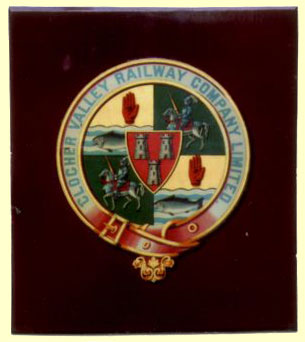
CVR Coat of Arms

CVR Coat of Arms

The 3ft gauge Clogher Valley Tramway was incorporated on 26th May 1884, the second project under the terms of the 1883 Act.  It opened for traffic on 2nd May 1887 linking Tynan in County Armagh and Maguiresbridge in County Fermanagh, both on the broad gauge Great Northern Railway, a distance of 37 miles.  The route covered the Clogher Valley in County Tyrone serving the towns of Caledon, Aughnacloy, Ballygawley, Augher, Clogher and Fivemiletown.  The railway followed public roads for much of its length and ran down the main streets of Caledon and Fivemiletown.

The railway had a dismal financial performance throughout its lifetime, belying the glowing picture of returns painted in its prospectus.  Nevertheless the Company had extremely ambitious plans for expansion aimed at providing access to the port of Newry and connections with the Cavan and Leitrim line.  None came to fruition however and the CVR remained a local line.

The Clogher Valley Railway lay within the six counties of Northern Ireland when partition occurred in 1922.  The new government in Belfast recommended the takeover of the CVR by the broad gauge Great Northern Railway.  The GNR refused to do this and the CVR retained its independence.  In 1927 however the directors were replaced by a Committee of Management appointed by Tyrone and Fermanagh county councils.

Clogher Valley Railway (TG4 picture)

Clogher Valley Railway (TG4 picture)

The Committee did much to revitalise the line with more and speedier services.  In 1932 a pioneering articulated passenger diesel railcar built by Walkers of Wigan was delivered, along with a diesel tractor unit which could tow a coach or a few wagons.  These were successful in cutting costs and speeding up the service but could only postpone the inevitable end of the basically uneconomic line. For almost all of its existence the railway made a loss and it needed a subsidy from local ratepayers. The greatest profit ever made by the company was in 1904, only £791.

Plaque on ceremonial wheelbarrow: cutting first sod in 1885.

Plaque on ceremonial wheelbarrow: cutting first sod in 1885.

It was around this time that my great-grandfather John McCann J.P., an auctioneer in Aughnacloy, became a director of the railway. He served on the board for a number of years, under the chairmanship of Hugh de Fellenberg Montgomery of Blessingbourne, Fivemiletown, I still have a season ticket belonging to him.

CALEDON AND ITS REGENERATION

Caledon Courthouse

Caledon Courthouse

For many years during the troubles in Northern Ireland the border village of Caledon in County Tyrone looked shabby, with many derelict and unused buildings along the main street. It looks very different nowadays, as the restored courthouse building testifies.

In 1984 the village was designated as a Conservation Area and six years later, this was reviewed and the boundary extended. DoE (NI) Planning Service produced a Conservation Area Guide to accompany the original designation, which included design guidance intended to help protect the historic fabric of the village.

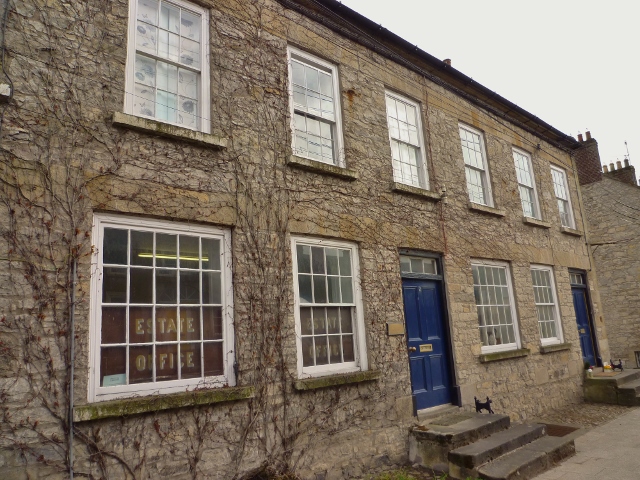
Caledon Estate Office

Caledon Estate Office

The Caledon Regeneration Partnership was formed in 1994 to take forward a planned social, economic and environmental regeneration strategy for the County Armagh village. It is made up of representatives from the local community, local authority and Caledon Estates Company, which has an office in the main street.

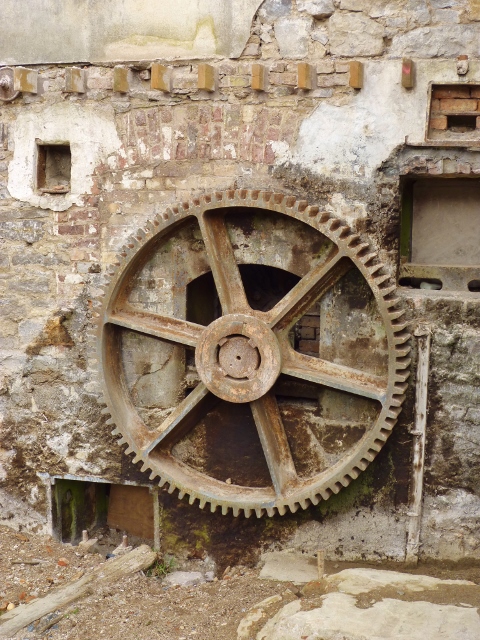
Beam Engine House, Caledon

Beam Engine House, Caledon

One of the projects being undertaken is the restoration of a beam engine and engine house. Last year a total of £220,000 in funding was secured to finance the first phase.  It is hoped that the engine will eventually be restored to a fully operational state, and become a tourist attraction for the area. The unique piece of equipment dates back to the early 1830s and is one of the earliest surviving steam engines in Ireland. It was once used to power the Caledon Flour Mill and then Caledon Woollen Mills.

Beam Engine House, Caledon

Beam Engine House, Caledon

William Beattie of Caledon Regeneration Partnership said he believed the beam engine is unique in these islands:-  “There are only about eight beam engines in Ireland, and this one is the only one which has a housed engine, making it a very important piece of industrial archaeology. This is the only relic remaining of Caledon’s once famous mill industry, which produced quality woollen garments until the 1930s. The mill, which was built in the early 1800s, was demolished in 1985. During the summer, wood and coal was used to power the beam engine, when the water-flow was not strong enough to move the wheel. The hope is to get the engine functioning again, and to create a viable tourism attraction which will also faithfully record the history of the village”, he said.

In addition a Grade B listed property, a former worker’s building on the Caledon Estate, which has lain derelict for years, has received funding worth £30,000 under the Historic Buildings Grant-Aid Scheme.

Caledon estate was bought from the seventh Earl of Cork for £94,400 in 1776 by James Alexander (later first Earl of Caledon), an East India Company Nabob. The Earls of Cork and Orrery had only acquired the estate by marriage from the Hamilton family in 1738, but during the forty years of ownership, they had made it into a by-word for fashionable landscape design, complete with a gate lodge decorated with statues and Latin epigrams, a hermitage and a bone house.

Gate Lodge Caledon Estate

Gate Lodge Caledon Estate

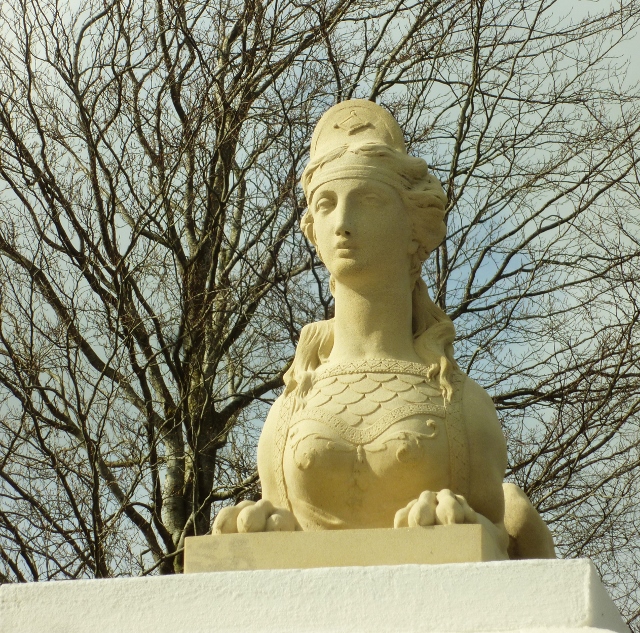
Sphinx Statue at Gate Lodge

Sphinx Statue at Gate Lodge

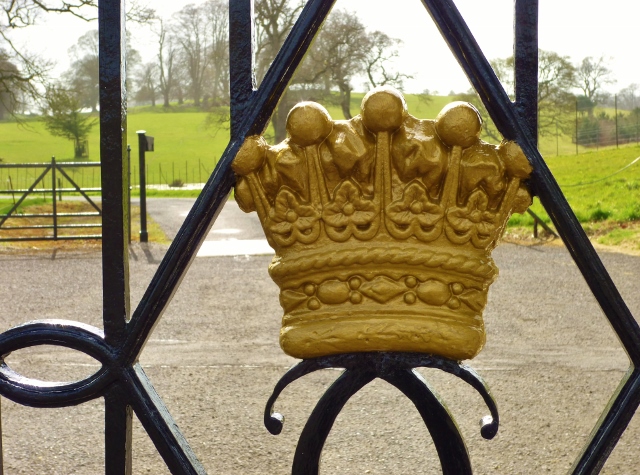
Detail on Gate

Detail on Gate

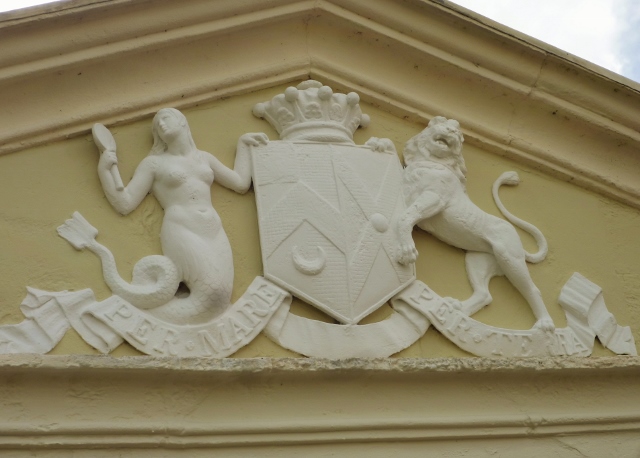
Pediment Relief: Coat of Arms

Pediment Relief: Coat of Arms

Caledon Regeneration is one of five groups taking part in the “Shared History, Shared Future” project under the Peace III programme run by Dungannon and South Tyrone Borough Council. On Thursday evening (25th April) at 7pm, the historian Jack Johnston of the William Carleton Society will give a talk on the Clogher Valley Railway. The narrow gauge line ran through the main street of the village until its closure in 1941.

CVR train in Main St Caledon (TG4 photo)

CVR train in Main St Caledon (TG4 photo)

.

ULSTER ENGLISH AGENCY?

St Macartan's Cathedral, Clogher

St Macartan’s Cathedral, Clogher

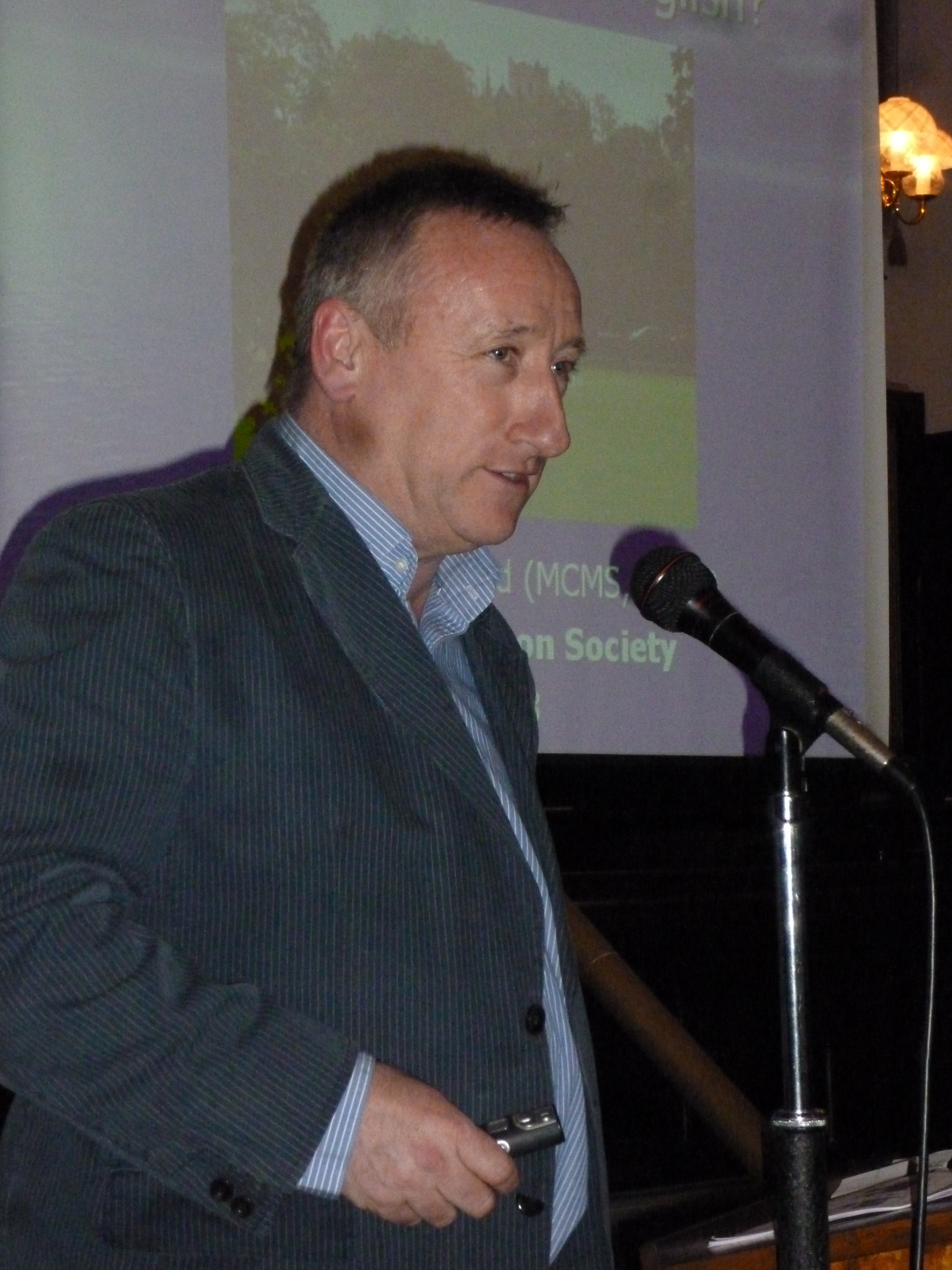
Dr Paddy Fitzgerald

Dr Paddy Fitzgerald

Much of the discussion about the two communities in Northern Ireland refers to the different backgrounds of the Irish (Gaelic) race and Ulster-Scots. But there is little to be found about a third category that dates back to the time of the Plantation in 1607, Ulster-English. This was the subject of a fascinating talk hosted on St George’s Day at St Macartan’s Cathedral in Clogher, County Tyrone and organised by the William Carleton Society.

The speaker was Dr Paddy Fitzgerald of the Centre for Migration Studies at the Ulster-American folk park in Omagh, a member of the Executive Committee of the Society. Earlier this year he gave an interesting talk about Archbishop John Hughes who came from the Augher area.

Dr Fitzgerald gave an outline of his own family history, which he pointed out had an Ulster-English connection. He explained that this was a different strand than the Ulster Scots. English settlers arrived after 1607 in the Belfast Lough area, moving through the Lagan Valley and South Antrim towards North Armagh and then along the Clogher Valley into Fermanagh. At the end of his talk, he posed the question whether we should have an Ulster-English Agency, because he said the authorities seemed to be promoting Ulster-Scots as the only alternative to the Gaelic and nationalist tradition.

Attendance at St Macartan's Cathedral

Attendance at St Macartan’s Cathedral

The British Museum guide on accents and dialects of Northern Ireland says:-

The Plantation of Ulster…was a planned process of settlement aimed at preventing further rebellion among the population in the north of Ireland. This part of the island was at that time virtually exclusively Gaelic-speaking and had shown the greatest resistance to English colonisation. From the early seventeenth century onwards, Irish lands were confiscated and given to British settlers — or ‘planters’ — who arrived in increasing numbers, bringing the English Language with them. Large numbers of settlers came from southwest Scotland and thus spoke a Scots dialect, while the remaining settlers came predominantly from the north and Midlands of England….

For some considerable time the colonists remained surrounded by Gaelic-speaking communities in County Donegal to the west and the counties of Louth, Monaghan and Cavan to the south. Thus English in the northeast of the island developed in relative isolation from other English-speaking areas such as Dublin, while the political situation over the course of the twentieth century has meant that Northern Ireland has continued to develop a linguistic tradition that is distinct from the rest of Ireland. Scots, Irish Gaelic, seventeenth century English and Hiberno-English (the English spoken in the Republic of Ireland) have all influenced the development of (Ulster) Northern Irish English, and this mixture explains the very distinctive hybrid that has emerged.”

Dr Paddy Fitzgerald

Dr Paddy Fitzgerald

The William Carleton Society would like to express its thanks to Precentor Noel Regan, for making the Cathedral available for this event. In his absence, the diocesan Curate Reverend Alistair Warke said the Cathedral enjoyed a good relationship with the annual William Carleton summer school and was pleased to be able to host the Society’s first talk in its programme for 2012/13. The talk was part of the “Shared History, Shared Future” project, supported by the EU Peace III programme delivered by Dungannon and South Tyrone Borough Council.      SWPeaceIII_logo_options_2b

DSTBC LogoEU flag2colors

ULSTER ENGLISH

St Macartan's Cathedral, Clogher

St Macartan’s Cathedral, Clogher

Much of the discussion about the two communities in Northern Ireland refers to the different linguistic backgrounds of Irish (Gaelic) and Ulster-Scots. But there is little to be found about a third category that dates back to the time of the Plantation in 1607, Ulster-English. This is the subject of tonight’s talk (7:30pm) hosted on St George’s Day at St Macartan’s Cathedral in Clogher, County Tyrone and organised by the William Carleton Society.  

Dr Paddy Fitzgerald & Malcolm Duffey

Dr Paddy Fitzgerald & Malcolm Duffey

The speaker is Dr Paddy Fitzgerald of the Centre for Migration Studies at the Ulster-American folk park in Omagh, a member of the Executive Committee of the Society. Earlier this year he gave an interesting talk about Archbishop John Hughes who came from the Augher area. The British Museum guide on accents and dialects of Northern Ireland says:-

 “The Plantation of Ulster…was a planned process of settlement aimed at preventing further rebellion among the population in the north of Ireland. This part of the island was at that time virtually exclusively Gaelic-speaking and had shown the greatest resistance to English colonisation. From the early seventeenth century onwards, Irish lands were confiscated and given to British settlers — or ‘planters’ — who arrived in increasing numbers, bringing the English Language with them. Large numbers of settlers came from southwest Scotland and thus spoke a Scots dialect, while the remaining settlers came predominantly from the north and Midlands of England…. 

For some considerable time the colonists remained surrounded by Gaelic-speaking communities in County Donegal to the west and the counties of Louth, Monaghan and Cavan to the south. Thus English in the northeast of the island developed in relative isolation from other English-speaking areas such as Dublin, while the political situation over the course of the twentieth century has meant that Northern Ireland has continued to develop a linguistic tradition that is distinct from the rest of Ireland. Scots, Irish Gaelic, seventeenth century English and Hiberno-English (the English spoken in the Republic of Ireland) have all influenced the development of (Ulster) Northern Irish English, and this mixture explains the very distinctive hybrid that has emerged.”

Admission to the talk is free. It is part of the “Shared History, Shared Future” project, supported by the EU Peace III programme delivered through Dungannon and South Tyrone Borough Council.    EU flag2colorsDSTBC LogoSWPeaceIII_logo_options_2bpaddyfitz

BANNERS & SASHES

This orange banner comes from Redhills in County Cavan. It belongs to the Stonepark Lodge No.607 and depicts the departure of King William III (of Orange) from the original Hillsborough Castle in County Down in 1690. An unofficial history of the Irish Campaign explains how he had landed at Carrickfergus a few days earlier and on 19th June 1690 at Hillsborough the King “issued an order…granting Presbyterian ministers in Ireland the right to receive the regium donum, an annual grant, paid to nonconformists ministers in England, Scotland and especially Ireland at that time. The payment was made as a reward for their loyalty to him and partly as compensation for their recent losses“.  The following month the crucial Battle of the Boyne took place against the forces of James II.

Stonepark Co.Cavan Orange Lodge Banner

Stonepark Co.Cavan Orange Lodge Banner

Monaghan UVF Flag

Monaghan UVF Flag

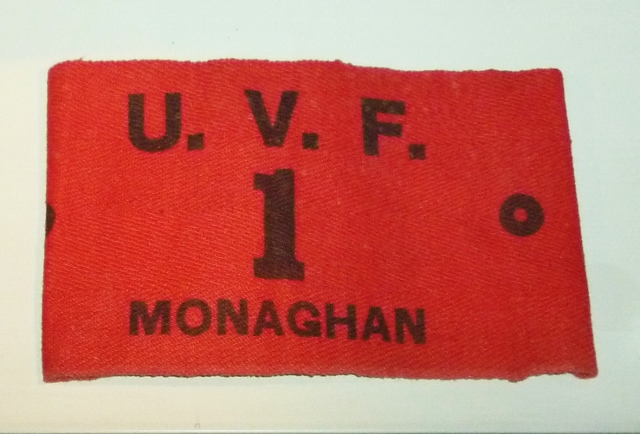
On the reverse side is a picture of Lisburn Cathedral. This suggests that the banner has been re-used by a different orange lodge. The banner is part of “Walking the Colours“, a touring exhibition currently at Monaghan Museum and running until the end of July. Colour is the operative word as there is a varied selection of banners and sashes from both the orange and green traditions. With all the current controversy about UVF centenary flags flying in East Belfast, I was interested to see an original flag of the Ulster Volunteer Force in Monaghan dating back to the period around 1912/13. There was also a UVF armband from the same era.

UVF Monaghan Armband

UVF Monaghan Armband

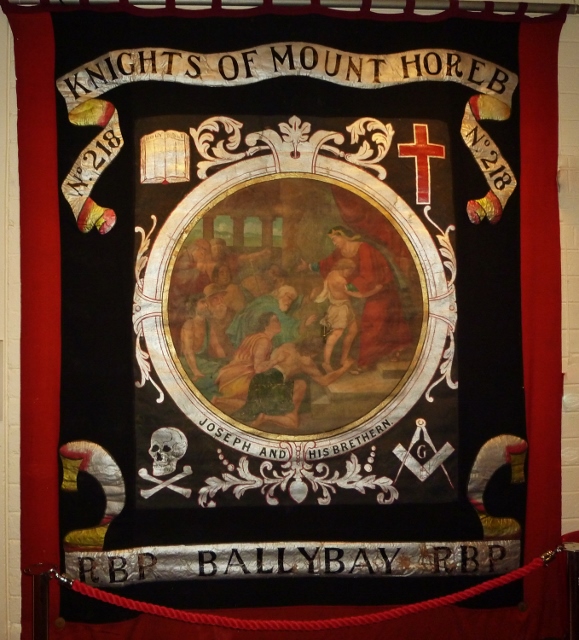
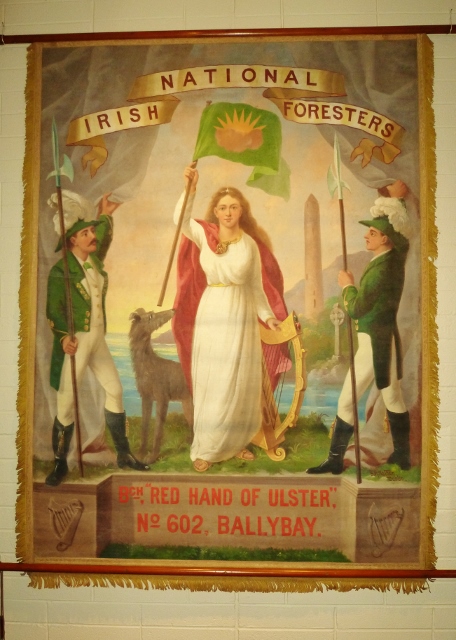
 To complete the display of banners from the Protestant tradition, there is one belonging to the Royal Black Preceptory in Ballybay, named the Knights of Mount Horeb. Biblical scenes were common (and still are) in the black and orange loyal order banners. The teachings of the Royal Black Institution are based on Holy Scripture. The organisation was founded in 1797, two years after the Orange Order came into existence. There are two Royal Black District Chapters in Monaghan and fourteen Preceptories. Donegal is the only Ulster county not represented.

RBP Banner Ballybay

RBP Banner Ballybay

On the nationalist side, there are several local banners of significance. They include one of Terence Bellew MacManus from Tempo, County Fermanagh. The slogan exhorts Men of Monaghan to “Remember MacManus”, who took part in the Young Irelander rebellion in 1848. He is buried in Glasnevin cemetery in Dublin. The banner is thought to have been made in the early 1900s. It was brought to the USA and used by the Monaghan Mens’ Association in the St Patrick’s Day parade in New York. There is a picture of it accompanying the group in 1933.

AOH Donagh

AOH Donagh Monaghan Div.434

Remember MacManus

Remember MacManus

 The Ancient Order of Hibernians was set up in 1838 as a counter to the Orange Order. Division 434 was the designation in Donagh parish, in North Monaghan.

Some more banners from the exhibition:-

AOH Banner, Donagh

AOH Banner, Donagh

Truagh Banner re 1798

Truagh Banner re 1798

INF Banner, Ballybay

INF Banner, Ballybay

ROSALINE KELLY RIP

Rosaline Kelly, Jim Corrigal (President) & Michael Fisher Photo: © Kevin Cooper

Rosaline Kelly (Belfast 2005), Jim Corrigal (President) & Michael Fisher Photo: © Kevin Cooper

Tributes have been paid to Rosaline Kelly, the first woman elected President of the National Union of Journalists.  Ms Kelly (90) died at St Columcille’s Hospital, Loughlinstown, County Dublin following a short illness. Ms Kelly worked as a magazine journalist in London and served as President of the NUJ from 1975 to 1977. On retiring from active journalism she returned to Ireland.  She lived in Wicklow and was instrumental in establishing the retired members section of the NUJ in Ireland. She was also made a Member of Honour of the union.

Barry McCall & Rosaline Kelly at her 90th birthday

Barry McCall & Rosaline Kelly at 90

NUJ President Barry McCall described Ms Kelly as an NUJ institution and said her passing would be mourned throughout the union. Mr McCall said:  “Before the phrase ‘glass ceiling’ was coined Rosaline Kelly was setting a headline for woman activists. She was elected to the union’s National Executive Council in 1972 and quickly established a reputation for commitment, energy and a direct debating style which was to become her hallmark.  Rosaline had a long association with the NUJ Standing Orders Committee and was regarded as an expert on procedures. She had a strong commitment to the welfare of members and this was reflected in her deep involvement in the union’s charities and in the establishment of a retired members section in Ireland.  She never lost her enthusiasm and only ill health prevented her from attending our delegate meeting in Newcastle on Tyne last October. It would have been her 50th consecutive delegate meeting.  Rosaline Kelly was an NUJ institution and her passing will be mourned throughout the union.”

 NUJ General Secretary Michelle Stanistreet also paid tribute to Ms Kelly. She said: “Rosaline Kelly was one of the outstanding characters within the NUJ. She retained throughout her life an abiding commitment to the principles of social justice. Rosaline was fiercely proud of the NUJ and took particular pride in the Code of Conduct.  Rosaline believed in the highest professional standards and was a strong supporter of our work at the Leveson Inquiry. Decades after her retirement from journalism she was sharing her advice and wise counsel. Her presence at union gatherings will be greatly missed.”

Rosaline Kelly 1923-2013

Rosaline Kelly 1922-2013

NUJ Irish Secretary Séamus Dooley expressed sympathy on behalf of the Irish Executive Council. He said: “Rosaline spent her working life in England but in retirement she became active in Ireland, becoming the voice of retired members and ensuring that their interests were represented at all times. She hated the term ‘Woman President’.

“I was a President who happened to be a woman. You won’t find the term ‘Woman President’ in the Rule Book,” she once chided a branch officer who thought he was doing the right thing by referring to Rosaline’s historic role in breaking through the male dominated fortress that was the NEC. But there is no doubt she was a role model for women in a male dominated industry.  She will be remembered for her qualities of integrity, her selfless dedication and her commitment.”

 “In Ireland Rosaline and (former Irish Secretary) Jim Eadie formed and shaped the retired members section.  As Chair for more than a decade she dominated committee meetings.  I recall watching with fascination as she whipped into shape seasoned union activists. She was a stickler for procedure and protocol and refused to grant special dispensations to anyone – President,  General Secretary or committee member, who she deemed to have transgressed  her standing orders.”

“With the former Irish Secretary Jim Eadie she led the way in ensuring that retired members continued to play a role. She will be remembered for her style, her humour and her forthright manner.  Rosaline disliked the term ‘woman president’ but there is no doubt she was a role model for women in a male dominated industry.  Her integrity, her selfless dedication and her commitment made Rosaline a role model for all union members and it’s for those qualities that she will be remembered”, Mr Dooley said.

Imbued with a sense of justice and fairness Rosaline was also a long standing supporter of the union’s charities, which she served with distinction. Kevin Cooper’s picture at the top shows her on a visit to Belfast, when she accepted a cheque for £7000 on behalf of the NUJ Provident Fund, being the proceeds of the Belfast Press Ball 2004. That commitment reflected a deep personal and largely private faith. While delegates recovered from late night carousing Rosaline would inevitably find a church in whatever obscure corner in which ADM or the Irish Delegate Conference was being held to attend Sunday Mass. On her return she would occasionally tease atheistic colleagues that she had prayed  for their souls or lit a candle for members of SOC as they tried to conclude Sunday’s agenda.

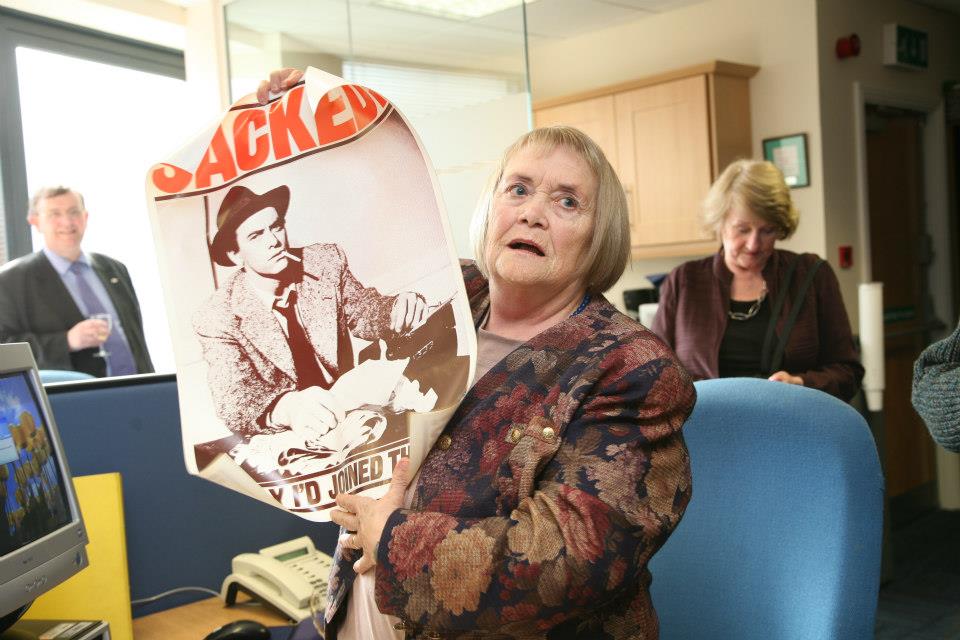
Séamus Dooley also recalled how Rosaline liked visiting the NUJ offices and kept in touch with staff and retired employees. She never arrived empty handed and usually brought boxes of sweets.  When the new Irish office was opened she presented the IEC with her collection of vintage style NUJ posters. Recently the Dublin office got around to framing them and they hang in the foyer in her memory.

Rosaline Kelly presents NUJ posters

Rosaline Kelly presents NUJ posters

Rosaline’s remains were brought on Friday evening to St Patrick’s church in Wicklow town. Requiem Mass was held  at 10am Saturday April 13th in St Patrick’s,  followed by cremation at 12.30pm in Mount Jerome, Harold’s Cross, Dublin.

Among the mourners at the removal were her niece Evelyn and her nephew Patrick, a former NUJ President (1973-74) John Bailey (and his wife Maureen) who was a great friend of Rosaline, John Brophy, Kieran Fagan, Patrick Kinsella and myself representing her many NUJ colleagues.

Damien Tiernan (Irish South East branch) who kept in contact with Rosaline in her latter years was among the mourners at the Mass in Wicklow, where a guard of honour paid her a final NUJ tribute. It included the IEC Cathaoirleach Gerry Curran. John Bailey delivered a eulogy and at the crematorium, Seamus Dooley gave a short oration, followed by former Irish Secretary Jim Eadie. Rest in Peace.

Irish Times death notice: KELLY Rosaline – April 11, 2013, aged 90, Wicklow, London, Drogheda. Member of Honour and first woman elected President of NUJ, (peacefully), after short illness, in St. Colmcille’s Hospital, Loughlinstown. Reposing at McCrea’s Funeral Home Dublin Road, Wicklow Town with removal to St. Patrick’s Church, Wicklow Town today (Friday) at 6.15 o’clock arriving at 6.45 o’clock Funeral Mass tomorrow (Saturday) at 10 o’clock followed by cremation Service at Mount Jerome Crematorium, Harold’s Cross, Dublin at 12.30 o’clock Rosaline will be a force missed by her niece Evelyn and nephew Patrick and the wider family, friends, neighbours and trade union colleagues here and abroad. Family flowers only. Donations, if desired, to Bothar – care of McCrea’s Funeral Directors, Dublin Road, Wicklow Town, County Wicklow. Rest In Peace. 

St Louis Convent Carrickmacross

St Louis Convent Carrickmacross

It was only after we had said our farewells to Rosaline and I was talking to Jim Eadie that I discovered she had a Monaghan connection. Her niece confirmed that her aunt who came from Drogheda had attended the Convent of St Louis in Carrickmacross as a boarder. The boarding school closed in 1979. The nuns who came to the town in 1888 helped to establish the famous Carrickmacross lace by setting up a lace school. So because I was passing Carrickmacross on my way back to Monaghan after the service at Mount Jerome, I stopped at the convent and reflected on whether that was where Rosaline had learned her skills of managing conference standing orders and re-writing motions to ensure they were correct!

Former NUJ President John Devine who was another great friend of Rosaline’s and was among the mourners in Dublin reflected on those skills she had:-

“Rosaline, whom I have know since she came on the NEC, was from a generation that could parse, analyse and conjugate and she did not let anyone forget it. She did The Times crossword up until a couple of months ago and still drove her car through Wicklow Town and did most of her own shopping until last Autumn. Have any of you seen the streets of this historic town? She emerged from Magazine and Book at a time when “the suits” were on the wane. M and B generationally, socially and politically was new order just as Hutt and Heald and co. were orthodox and holding on magnificently to the power they wielded in the NUJ. Rosaline’s trade unionism wasn’t based on whims, or short-term causes, or single issues. Her commitment to the uplifting of wages and conditions for media workers across the board required the discipline she applied to what she did on the shop floor. Sloppiness or populism she discouraged within her sphere of influence, not always successfully but mostly. I worked with her on the NEC and on Standing Orders in the days when the ADM could be an organisational nightmare and learned to admire her ability to spoon-fillet people who tried to be smart-assed when their co-operation was being required when several motions and amendments were being composited. The only combination I saw sharper than Rosaline and the late Phil Cutler were Rosaline and Pauline Norris, both lifetime pals. Towards the end of last summer she invited herself to stay with myself and Fran in Bangor, Co. Down. That was her way. She said soon after arrival: “you know I have never seen Lough Neagh the biggest lake in these islands.” I told her that would be arranged. Next day we went to the shores of Lough Neagh first at Lurgan and then near Maghery. We had lunch, for which she paid, and then she adjourned to the external balcony of Edenmore Golf and Country Club in the middle of beautiful pastoral countryside and puffed and puffed on her cigarettes. The receptionist, after providing the second light of the afternoon, brought her a cigarette lighter which she assured Rosaline she could keep. Her great friend John Bailey, whom she appointed to look after her affairs when the end came, organised for himself, Maureen his wife, Lionel Morrison and Liz his and myself and my wife Fran to go to Wicklow last November to organise a 90th birthday party for Rosaline without her knowledge. We took a house for a week and moved into Wicklow and lived as natives. Rosaline had been expecting Fran and I to come down anyway to take her out for a meal but we never mentioned birthday. Once the party was organised, to which The President, and John Brophy were invited and attended, I phoned Rosaline and told her would be along to pick her up. When driving out of her road I turned right heading out of the town. She said “you’re going the wrong way.” I said I had to make a call and say hello to a few friends for a few minutes and maybe she would be good enough to come with us. She agreed. Liz, whom she did not recognise answered the door, and welcomed her enthusiastically. Then when she entered the room and saw all the old friends she was dumbfounded for all of a minute (some class of a record for Rosaline) before announcing that it was the best birthday she ever had. I had my ups and downs with Rosaline during the long years of our acquaintance but she would never let me quit. She never let anybody quit. On the shores of Strangford Lough she sang: ” The sea oh the sea, is grá geal mo chroi, Long may it roll between England and me, it’s a sure guarantee that some day we’ll be free, Thank God we’re surrounded by water.” When chided about being ungrateful to England, where she made her life and developed some of the great friendships of her life, she just laughed.” (John Devine April 12th 2013)

John Devine, Lionel Morrison & Barry McCall with Rosaline

John Devine, Lionel Morrison & Barry McCall with Rosaline
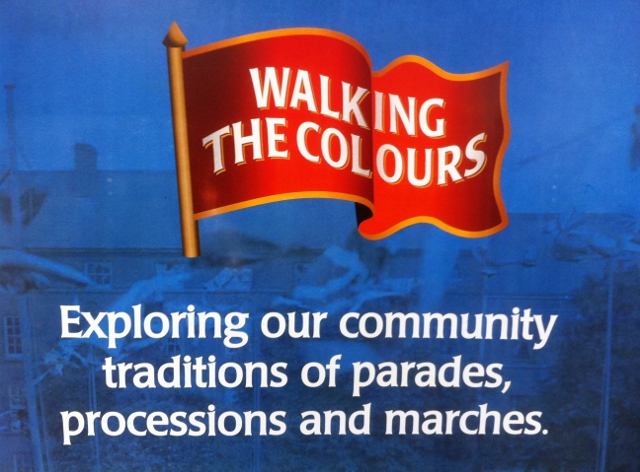
WALKING THE COLOURS

Monaghan Museum

Monaghan Museum

With the marching season now underway, it is perhaps timely that an exhibition is coming to Monaghan Museum about the history and traditions of walking the colours in Ulster, both orange and green. It opens on Wednesday 10th April at 6pm and will run until the end of July. Unfortunately it will have finished by the time the William Carleton Society’s one day conference takes place in Monaghan on Friday 2nd August (Bank Holiday weekend in the Republic), when the issues of a divided community will be raised.
Incidentally, it was noticeable that the usual start of the marching season on Easter Monday (as well as the republican commemorations on Easter Sunday) with the Apprentice Boys of Derry main parade in Enniskillen passed off without incident. I remember standing at the Ormeau Bridge in Belfast or in Ardoyne on previous Easter Mondays and sometimes these feeder parades were highly contentious.     photo (12) (640x472)

Everyone displays their colours in one way or another – hence the title of this ground breaking exhibition; “Walking the Colours”. The cross border exhibition will feature the incredible collection of marching banners held by Monaghan County Museum. This collection has never been displayed together before and will illuminate the gallery with an explosion of colour. This is one exhibition that should not be missed. The display explores the origins of parades looking at the guilds, trades and orders who hark back to the middle ages while also trying to explore the current scene. It includes the role of youth organisations, along with civic parades and public celebrations.

The exhibition forms part of the Cultural Fusions project, which is a heritage based project being delivered by Mid-Antrim Museum Service and Causeway Museum Service across the local councils of Ballymena, Larne, Ballymoney, Coleraine, Limavady and Moyle. It is supported by the PEACE III Programme through funding from the Special EU Programmes Body administered by the North East PEACE III Partnership

NUJ ON UKIP-NI

nujlogo_burgundyThe President of the National Union of Journalists Barry McCall has called on the Chairman of the UK Independence Party in Northern Ireland Cllr Henry Reilly “to clearly and unambiguously” withdraw his description of the local media in Armagh and Down as “Provos”. He said he was shocked and dismayed at the attack on local journalists made last night (Monday 8th April) at a meeting of Newry and Mourne District Council and at the unwarranted accusation of bias against professional journalists employed by newspapers serving their local communities.
Cllr Henry Reilly UKIP

Cllr Henry Reilly UKIP

Cllr Henry Reilly made his comments during a debate on strip-searching in prisons arising from a motion tabled by Cllr Davy Hyland. During the debate Cllr Henry Reilly, speaking in the third person, declared “The press, looking at Reilly with disgust when he talks, they are Provos too probably”.

In response to a request from fellow councillors he declined to fully withdraw the remarks and Cllr Henry Reilly declared: “I haven’t called the press…any particular journalist a Provo. I will make generalised statements that some papers have a nationalist/republican bias. It is a commonly held perception among the unionist community.”
nmdc-logoThe five journalists in attendance presented Mayor John McArdle with a signed request for Cllr Henry Reilly to withdraw the remarks. Cllr Henry Reilly insisted that he had made no charge against any individuals and therefore no precise apology was needed. 
The NUJ President said the journalists concerned had no right of reply at the meeting and should not have been subjected to verbal abuse by Cllr Henry Reilly. “He should clearly and unambiguously withdraw his description of the media as Provos. The media in the area serve the community and to imply that any of the publications represented at the meeting were linked with an illegal organisation was entirely unacceptable.”

NUJ Irish secretary Seamus Dooley also strongly condemned the comments made and said: “This is an outrageous attack on the local media which should not go unchallenged. Elected representatives need to be mindful of the potential implications of public utterances of this type. Cllr Henry Reilly has abused his position and failed to avail of the opportunity given to withdraw his statement. He occupies a leadership position with UKIP Northern Ireland and I call on the party’s MLA David McNarry to disassociated himself from the comments of Cllr Henry Reilly. As a public representative he is entitled to express strong opinions but not in a manner which is unacceptable or seeks to tarnish the reputation of individuals”.