MALCOLM BRODIE RIP

Irish_Football_Association-logo-A3B92E9ED1-seeklogo_comThe green and white army of Northern Ireland football was never a big priority for RTÉ, who always followed the fortunes of the green shirts of the Republic of Ireland. Occasionally there were stories of success, especially the World Cup victory over hosts Spain in 1982 and qualification for the second round. I also remember covering the appointment as NI manager of Lawrie Sanchez, a past hero of mine when he was with Wimbledon FC and who I was glad to see getting the job. There was however always one constant factor when speaking about soccer here in the North: Malcolm Brodie, who has now passed to his eternal reward.

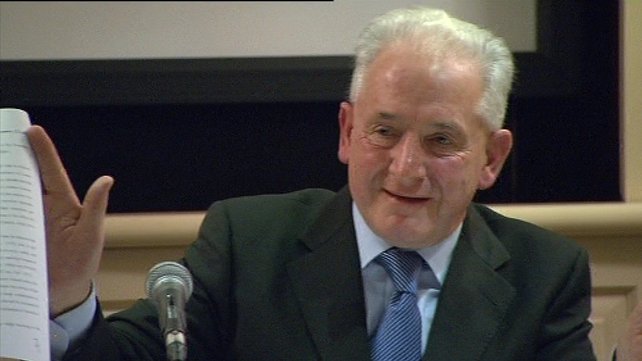
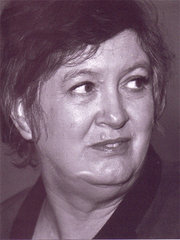
Malcolm Brodie (BBC picture)

Malcolm Brodie (BBC picture)

The former sports editor of the Belfast Telegraph was a fount of knowledge about the international side and reported on fourteen World Cup finals. He was always willing to share that wisdom with other media colleagues, including news reporters who did not specialise in sport. He also looked after junior colleagues. I was interested to hear on Talkback (BBC Radio Ulster around 20:30) yesterday a tribute from Alan Green of the BBC.

Alan is the same age as myself and our paths crossed briefly in London in the 1970s. After graduating from Queen’s, he started as a BBC News Trainee  in April 1975, a year after I had. My traineeeship brought me to local radio Birmingham, where I got my chance to combine sports reporting with news, thanks to Jim Rosenthal and his successor Nick Owen. Alan got an attachment back to BH in Belfast and later moved to Manchester, to begin a lengthy career as a commentator with BBC Radio Sport.

Alan Green

Alan Green (BBC)

Alan mentioned to Wendy Austin how Malcolm had taken him under his wing when he was still a student at Methodist College, interested in sports reporting. He took him on as a “copy boy” at weekends over forty years ago. When Alan landed the sports job in Manchester, Malcolm asked the sports “mafia” there, who held him in high regard, to help the fledgling commentator.

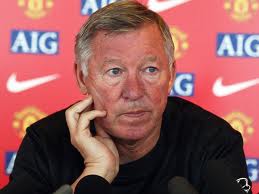
Speaking on the same programme, the Manchester United manager Sir Alex Ferguson said the journalist was a great friend:-

Alex Ferguson (Man.Utd.picture)

Alex Ferguson (Man.Utd.picture)

“He cut to the chase, quite simply that’s how he was, you know. He was straight-talking and one thing I always admired about him, he never changed his accent, which is very difficult living in a place like Belfast. He never lost the energy to do his job and he obviously enjoyed doing it and had enthusiasm about it. It’s very hard to retain enthusiasm for your job right up to your 80s.”
Malcolm was from Scotland and had been evacuated to County Armagh during the second world war. He began his career with a local newspaper in Portadown. He then moved in 1943 to the Belfast Telegraph, where he set up the first sports desk. His achievements as a journalist were recognised with the award of an MBE and the conferring of an honorary doctorate by the University of Ulster. He received the FIFA Jules Rimet award in 2004. The FIFA President Sepp Blatter, who was a personal friend, described him as “one of the true greats of sports journalism”. More tributes can be found here at the Irish Football Association. He was 86 and was a member of the Belfast and District Branch of the National Union of Journalists. However there are some former staff at the Belfast Telegraph who will tell you a very different story about his attitude to the union during a strike. His funeral service will take place on Monday (February 4th) at 12 noon in Cregagh Presbyterian Church, Belfast, then to Roselawn Crematorium for Committal at 2.30 p.m. Family flowers only. Donations in lieu of flowers have been requested to Chest/Heart/Stroke or Guide Dogs for the Blind.

Malcolm Brodie (Belfast Telegraph)

Malcolm Brodie (Belfast Telegraph) 1926-2013

GARDA ADRIAN DONOHUE RIP

Garda Adrian Donohue

Garda Adrian Donohue

There has been widespread public revulsion at the killing of Detective Garda Adrian Donohue in County Louth. His state funeral is taking place in Dundalk. His remains were removed from his home at 11.30am to St Joseph’s Redemptorist Church in  Dundalk arriving at 1.00pm. The main celebrant will be Fr Michael Cusack, who was with Caroline Donohue and her family until late last night, preparing for the funeral. Following requiem Mass, the cortege will proceed to Lordship Cemetery for burial. It was at Lordship credit union that Garda Donohue was shot dead during a raid by an armed gang on Friday night.

The Irish League of Credit Unions has offered a reward of €50,000 for any information leading to arrests and prosecutions in the case. In the Dáil, the Taoiseach led tributes to the 41 year-old detective, a married man with two young children. The Sinn Féin leader Gerry Adams said Garda Donohoe had died in the defence of other citizens. He said the death provoked memories of the killing of Jerry McCabe by the IRA in June 1996. He went on to apologise to Mrs McCabe, the McCabe family and to Garda Ben O’Sullivan, who survived the shooting. The Louth TD also apologised to other members of what he called “state forces” who were killed by republicans in the course of the Northern Ireland conflict.

Books of condolences have been opened at many centres including Dundalk Garda station where Garda Donohue was based and the Mansion House in Dublin. The tricolour has been flown at half mast at Garda stations since the shooting. But it will only be lowered today on government buildings and at Aras an Uachtaraín. On Saturday, passing by the Aras, I was surprised the flag had not been lowered as a mark of respect and again when I was there yesterday it flew at its normal position. I was informed that the Department of the Taoiseach decides the protocol. Yet when Garda McCabe was shot dead, the tricolour (or so we are told) did fly at half mast soon after the killing. Today the nation is in mourning for a dedicated servant of the people. Ar dheis Dé go raibh a anam.

Memorial at Garda HQ Phoenix Park

Memorial at Garda HQ Phoenix Park

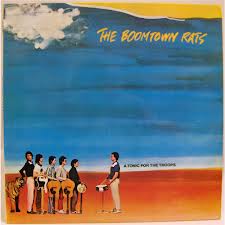
THE BOOMTOWN RATS

Boomtown Rats

Boomtown Rats

The reformation of The Boomtown Rats gives me a chance to boast about my first broadcasting scoop. It was 1977 and no-one had ever heard of this pop group with the strange-sounding name. I interviewed the band (except Bob Geldof) for radio and ensured their first ever broadcast on the BBC. At that stage their single “Looking after No 1” had just appeared on a New Wave LP (first track on the “B” side) along with songs from The Ramones (“Judy is a Punk”; “Suzy is a Headbanger”) and various others of the punk rock variety. John Peel gave it an outing.

I was able to go one better, thanks to my sister in Dublin who knew this up and coming band from the Dún Laoghaire area. The group had completed an Irish tour in 1975 and the following year moved to London. I was working at Pebble Mill as a News Producer (reporter/presenter/producer) with BBC Radio Birmingham at the time. Being a local radio station, it meant that I could contribute to the sports programmes at the weekend. Nuneaton v Wimbledon was my first sports report. But I was also able to do interviews for various music programmes including Norman Wheatley’s “Gentlefolk”. I got to meet The Dubliners, The Chieftains, Frank Patterson and Eily O’Grady and Horslips when they came to the heart of England.

Malcolm Jay presented a Tuesday night rock show, “Heavy Pressure”. When I mentioned that this new rock band from Ireland who had appeared a month earlier at Birmingham town hall with Tom Petty and the Heartbreakers was coming to Wolverhampton and I might be able to get an interview with them, he sounded interested. So on July 20th 1977 my sister came over from Dublin and we drove to the La Fayette night club near the centre of Wolverhampton.

We arrived early and there was no sign of anyone. Eventually a van arrived with five of the Boomtown Rats and their gear. Lead singer Bob Geldof travelled separately. So while the band waited in an empty club, I sat down with the group, having been introduced to them by Carolyn. I had brought my UHER reel-to-reel tape recorder that we used for interviews. I spoke to each in turn, including the man with the funny name. Pete Briquette. Bob Geldof eventually turned up and said hello. The group performed that night to a crowd of less than 100. A few days later the interview (which I still have a copy of) was broadcast, along with Looking after no.1 and another track as well (possibly Mary of the fourth form).

cropped_the%20boomtown%20rats

I am glad I spotted the potential of the band at an early stage and followed their progress over the years. Then this morning courtesy of the John Murray show on RTÉ Radio 1 I listened to Pete Briquette explain the plans by the band (or at least himself, Geldof, Simon Crowe and Garry Roberts) to get back together again in time for the Isle of Wight festival from 13th-16th June at Seaclose Park. The Rats will join a line-up also featuring The Killers and Bon Jovi, who have already been announced as headliners for the first major festival of the summer.

A Tonic for the Troops

A Tonic for the Troops

The BBC reports that Bob Geldof said: “I’ve always fancied playing the Isle of Wight Festival ever since I hitched there in the good/bad days when I was a kid.” The band have been playing live in recent years without Geldof. The Boomtown Rats were  the first Irish band to have a UK number one hit with Rat Trap. They followed that up with another number one with I Don’t Like Mondays, which was a hit around the world. They recorded six albums, three of which made the UK top 10, before splitting up in 1986.

The band’s last major live performance was at the 1985 Live Aid concert at Wembley, organised by Sir Bob Geldof.

HOLOCAUST MEMORIAL

Auschwitz

Auschwitz

The words (or some of them) of Pastor Martin Niemöller have been quoted in various forms as sectarian tensions rose in Belfast over the flags issue.  In World War I, he served as a German naval officer on board submarines. He was a Protestant theologian and his attitude to the Jews has been the subject of debate. In this quotation, he was referring to the inactivity of German intellectuals during the Nazis’ rise to power:

“First they came for the communists,
and I didn’t speak out because I wasn’t a communist.

Then they came for the socialists,
and I didn’t speak out because I wasn’t a socialist.

Then they came for the trade unionists,
and I didn’t speak out because I wasn’t a trade unionist.

Then they came for the Jews,
and I didn’t speak out because I wasn’t a Jew.

Then they came for the Catholics,
and I didn’t speak out because I wasn’t a Catholic.

Then they came for me,
and there was no one left to speak for me.”

Having signed a petition by Protestant churchmen that was critical of Nazi policies, he was put on trial for activities against the state. During the second world war, he was interned in the concentration camps of Dachau near Munich and Sachsenhausen.

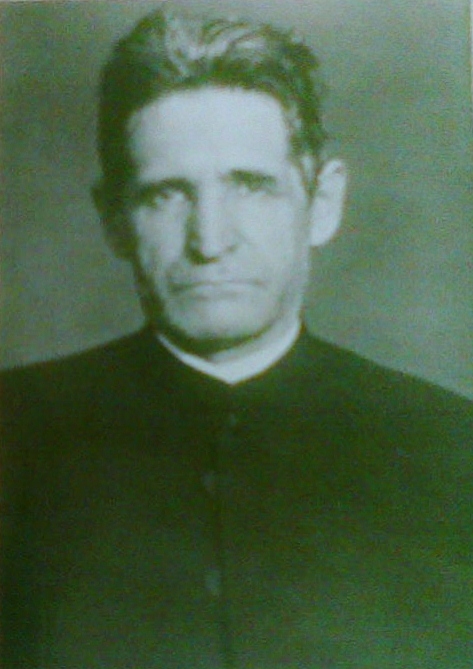
Blessed Rupert Meyer SJ

Blessed Rupert Mayer SJ

Another clergyman to have been imprisoned at Sachsenhausen was a Catholic priest, Blessed Rupert Mayer SJ, known as the Apostle of Munich. A member of the Jesuit order, he was a powerful preacher, who spoke out against the evils of Hitler and Nazism. He too served in the first world war as a military chaplain. He is buried at St Michael’s church in Munich. He was arrested by the Gestapo in November 1939 shortly after the outbreak of the second world war and was deported to Sachsenhausen concentration camp, where he remained for several months. He was then sent to the monastery at Ettal near Garmisch in Bavaria and placed under house arrest. Released in May 1945 he returned to Munich but died in November that year while saying Mass. He was beatified by Pope John Paul II in 1987.

Auschwitz

Auschwitz

Another story of courage by a Catholic priest in a concentration camp is that of Saint Maximilian Kolbe OFM, a Franiscan. He was arrested by the Gestapo at a friary near Warsaw in 1941 and taken to Auschwitz. He celebrated Mass each day in his prison cell, which I saw five years ago when I visited the former camp.  A memorial there says up to 1.5 million men, women and children mainly Jews were murdered there by the Nazis.

Memorial at Auschwitz

Memorial at Auschwitz

St Maximilian Kolbe OFM

St Maximilian Kolbe OFM

Fr Kolbe offered himself in place of a married man when the  deputy commander of the camp ordered ten men to be starved to death, following the escape of three prisoners. A remarkable story of self-sacrifice which was recognised by the Catholic church when he was canonised by Pope John Paul II in 1982. This evening at 7:30pm in the Queen’s Hall at Newtownards, the annual Holocaust Memorial Day Commemoration in Northern Ireland will take place, organised by the Office of the First Minister and deputy First Minister for the past eleven years. It honours those communities destroyed in the Holocaust under Nazi Persecution. But the commemoration has also been extended to remember modern day victims of genocides in Cambodia, Rwanda, Bosnia and Darfur, as well as the atrocities in Armenia.

COMMEMORATION OF CARLETON

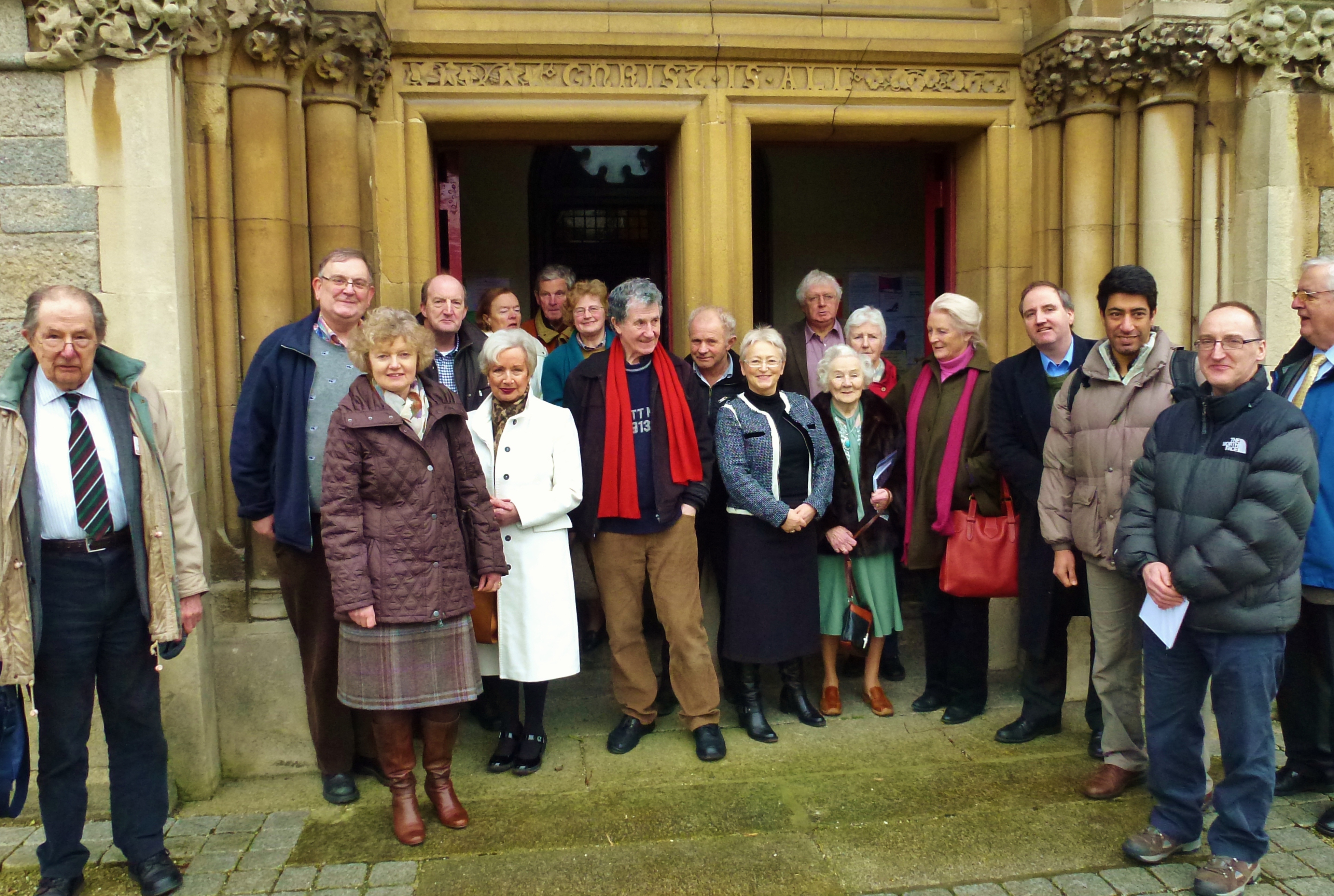
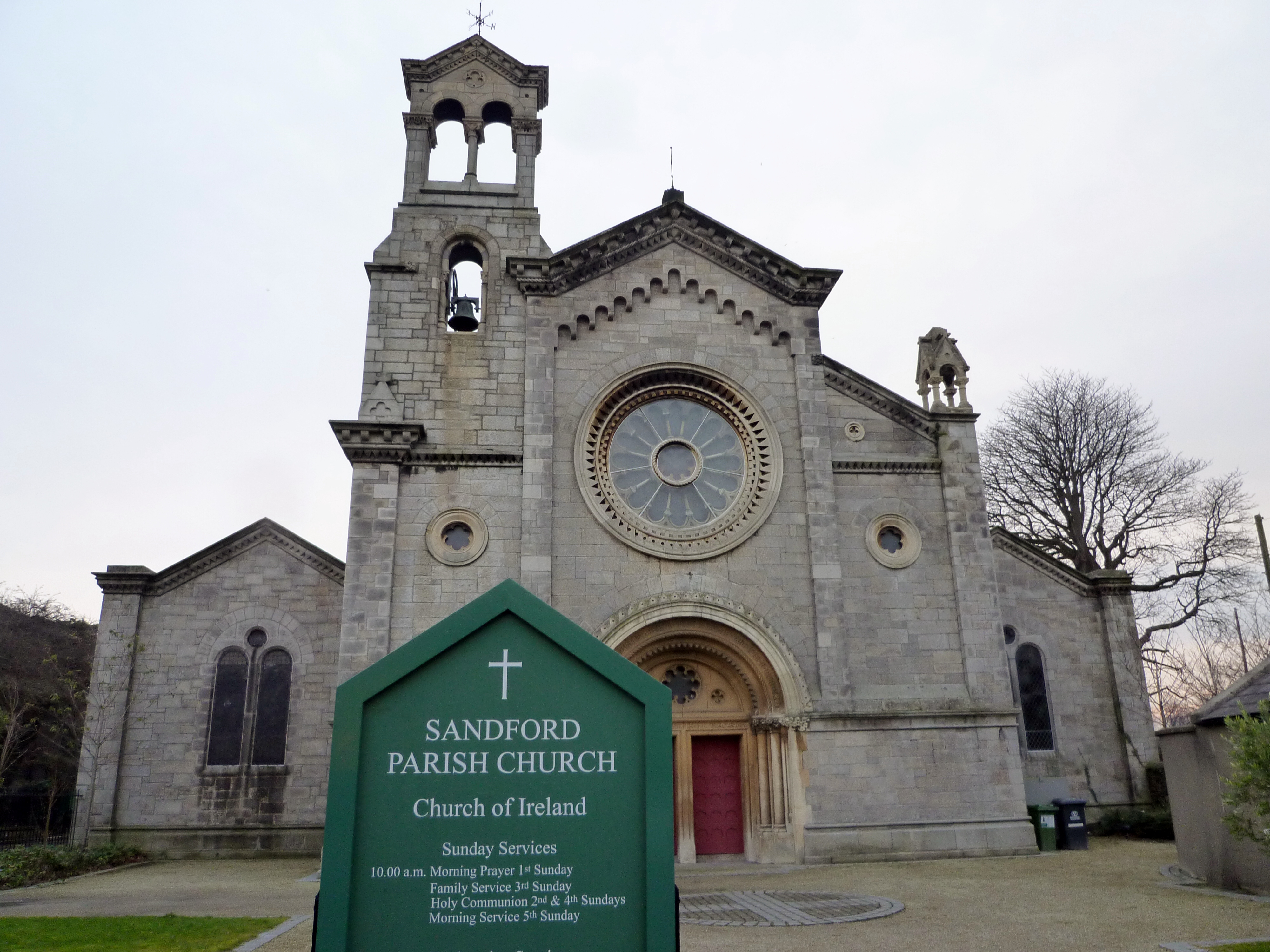
William Carleton Society at Sandford Parish Church

William Carleton Society at Sandford Parish Church

IN THE FOOTSTEPS OF CARLETON:

The William Carleton Society based in the Clogher Valley and Monaghan came to Dublin to mark the 144th anniversary of the death of the famous 19thC Irish author from County Tyrone. Carleton grew up as a Catholic, but would later convert to Protestantism in the Anglican church. He was the youngest of fourteen children born to a small farmer in  Clogher. Dr Frank Brennan a member of the Executive Committee met us at Castleknock and gave our coach party a guided trip through the city centre, starting with the Phoenix Park with its numerous historical monuments and associations going back hundreds of years. We passed Aras an Uachtaráin, the Polo Grounds, Phoenix Cricket Club, the oldest cricket club in Ireland and Dublin Zoo, also taking in the Wellington monument.  We then travelled along Dublin’s quays, with views of Collins Barracks which I have fond memories of, now part of the National Museum of Ireland. On the other side of the Liffey we saw Heuston station and the HSE Headquarters at what was Dr Steevens’ Hospital, with St Patrick’s Hospital and beside it Guinness’ brewery. We saw the Four Courts and crossed Grattan bridge travelling towards City Hall and what was once the headquarters of the British administration In Ireland, Dublin Castle, now in use for the state’s Presidency of the European Union.

P1050799 (2) (960x1280)

Reverend Precentor Noel Regan

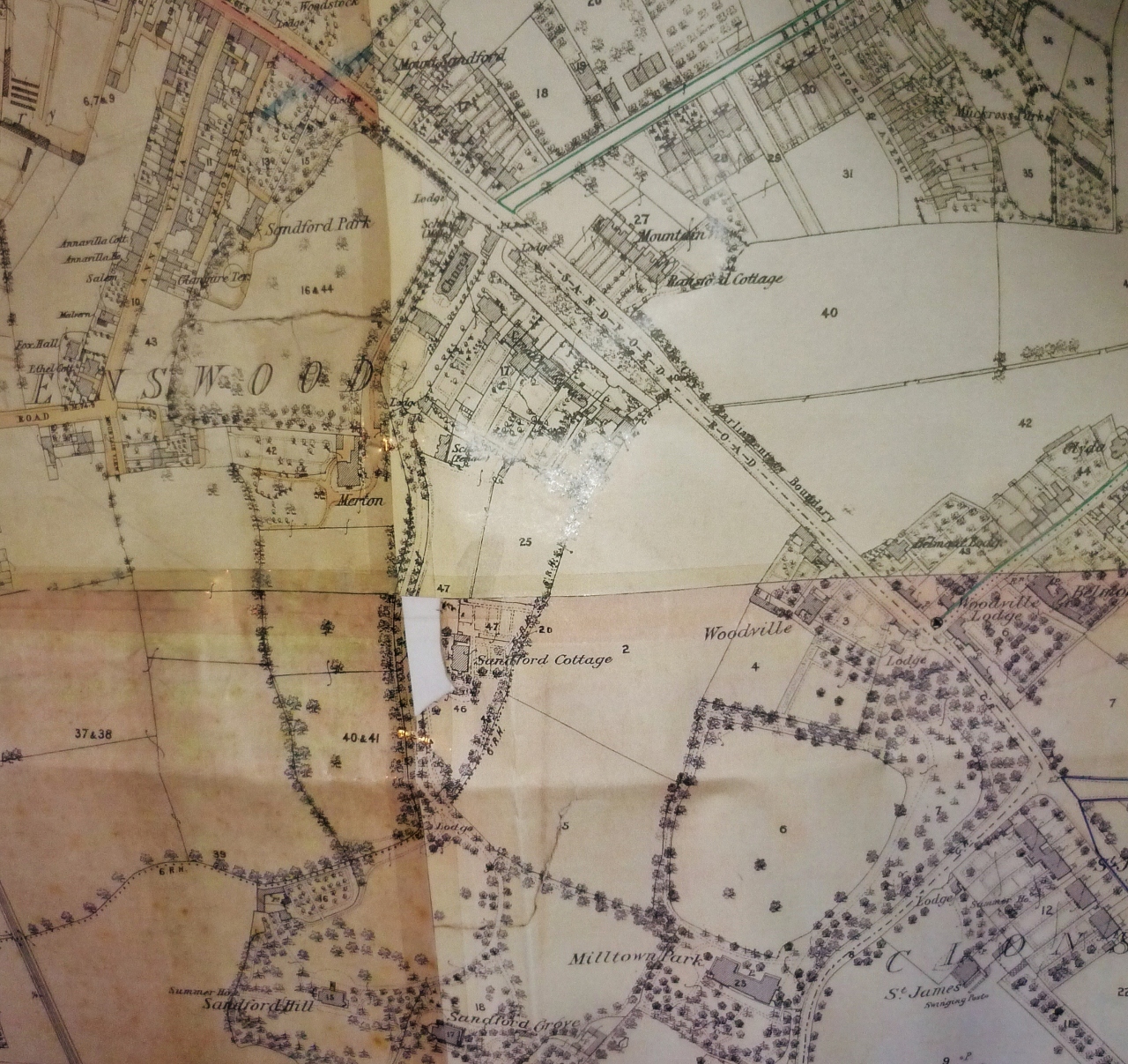
On then to the two cathedrals, Christ Church where there was a festival on in the grounds and St Patrick’s Cathedral where the Reverend Precentor Noel Regan from St Macartan’s Cathedral in Clogher provided some useful background about the two buildings. We moved on through the former Jewish area and into Ranelagh which developed as a genteel middle class suburb after the Act of Union. At Sandford Church we were addressed by a local teacher, who is a member of the congregation, on the history of Sandford church and its connection with Carleton. Susan Roundtree, an architectural historian, also spoke about the development of 19thC Ranelagh and brught along an old map of the area from 1870, which showed Woodville, a row of houses along the Sandford Road close to the entrance to Milltown Park, where Carleton had spent his final years.

1870 map shows Woodville

1870 map shows Woodville

 The residence at Woodville, (beside the entrance to Milltown Park) is now demolished. In his latter years Carleton was friendly with a Jesuit priest Fr Robert Carbery, who was based at Milltown Park. Brian Earls reminded us that in the last weeks before his death in January 1869, the priest offered through Carleton’s wife Jane to give him the last rites of the Catholic church. In response, in one of his last communications, the author told the Jesuit:

“For half a century & more I have not belonged to the Roman Catholic religion. I am now a Protestant and shall will die such”     (LA15/319 DJ O’Donoghue papers, UCD Archives)

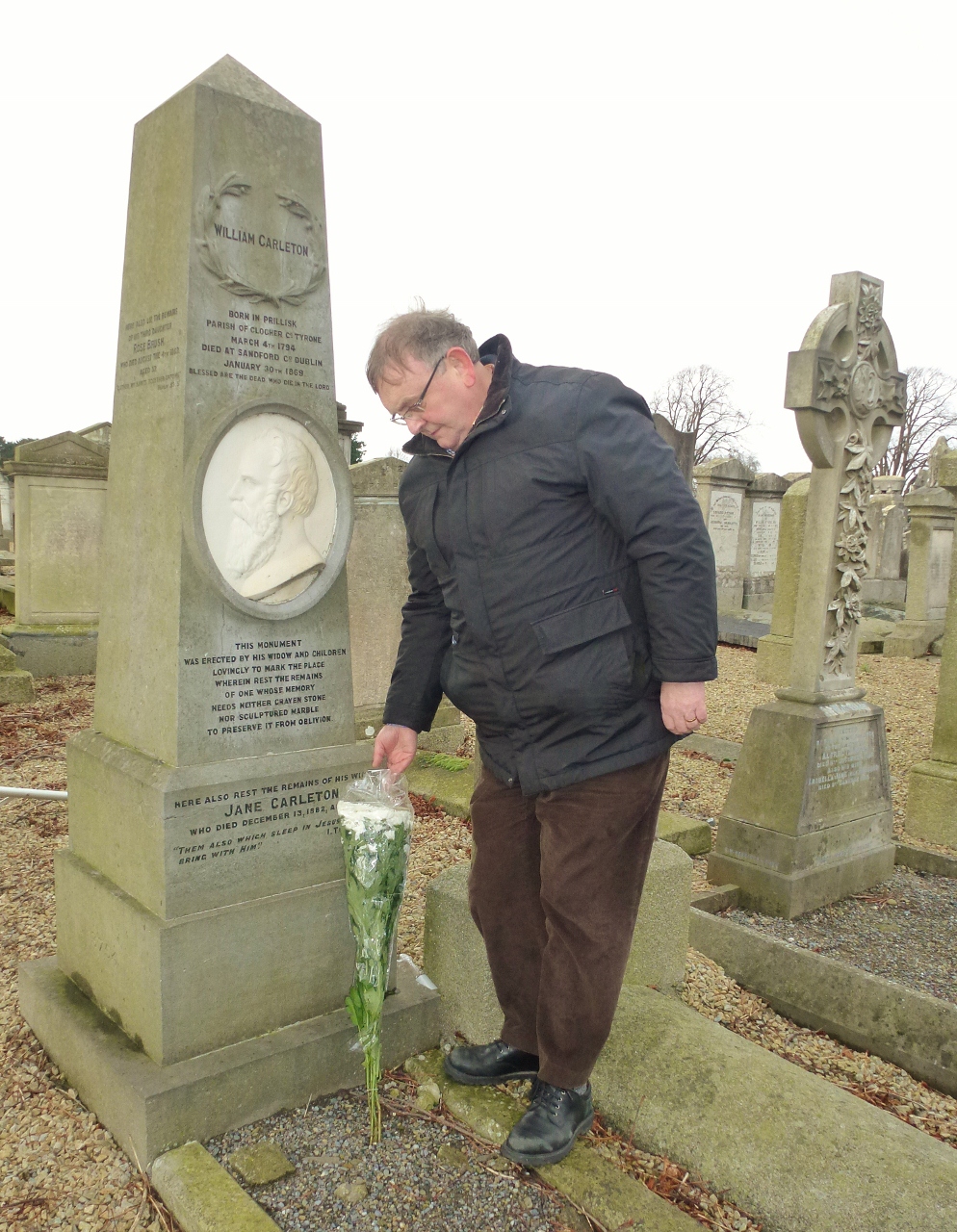
We then went to Mount Jerome cemetery for a short ceremony to commemorate the 144th anniversary of William Carleton’s death, followed by a short tour of the graveyard. We travelled to lunch at O’Briens at Sussex Place, Upper Leeson Street, one of Patrick Kavanagh’s haunts, which as a 1900’s grocery and bar reminded him of Carrickmacross. The journey to lunch took us through two Georgian squares (Fitzwilliam and Merrion) and past Leinster House and Government Buildings. Finally after lunch Frank Brennan brought us into Donnybrook and Ballsbridge, passing the British Embassy, AIB and the Aviva Stadium otherwise known as Lansdowne Road. We passed the Grand Canal Theatre, National Convention Centre, and saw some relics of the Celtic Tiger on our route home. Thanks to all who came and I hope you enjoyed the day.

At grave of William Carleton

At grave of William Carleton

The William Carleton Society is a partner in the Shared History, Shared Future project run by Dungannon and South Tyrone Borough Council through the EU funded South West Peace III Partnership Programme and this activity is being delivered through it.

DSTBC LogoSWPeaceIII_logo_options_2berdfimages

CARLETON IN RANELAGH

CARLETONportrait (2)IN THE FOOTSTEPS OF CARLETON:

I am in Dublin today with a group from the William Carleton Society based in the Clogher Valley and Monaghan to mark the 144th anniversary of the death of the famous 19thC Irish author from County Tyrone. Carleton grew up as a Catholic, but would later convert to Protestantism in the Anglican church. He was the youngest of fourteen children born to a small farmer in  Clogher.  He came to Dublin in 1819 with 2s 9d in his pocket and after trying various occupations, became a clerk in the Church of Ireland Sunday School Office.

Our coach party departs from Enniskillen at 7:30am and is picking up passengers at Maguiresbridge, Clogher, Aughnacloy and Monaghan (at the entrance to St Macartan’s College. 8:15am) for the trip to Dublin. Dr Frank Brennan a member of the Executive Committee will be our guide on reaching Castleknock.

“Frank Brennan will conduct a tour through Phoenix Park with its numerous historical monuments and associations going back hundreds of years, travel along Dublin’s quays, Four Courts, Guinness’ brewery, Dublin Castle, the two cathedrals, Jewish area and into Ranelagh which developed as a genteel middle class suburb after the Act of Union. At Sandford Church we will be addressed by a local teacher, who is a member of the congregation, on the history of Sandford church and its connection with Carleton. The Ranelagh Arts Society will then provide a talk by Susan Roundtree, an architectural historian, on the development of 19thC Ranelagh and the connection with the Plunkett family, who played a major role in Irish history.

We then go to Mount Jerome cemetery for a short ceremony (2pm) to commemorate the 144th anniversary of William Carleton’s death. A member of the Ranelagh Arts Society will then conduct a short tour of the graveyard. We travel to lunch (4pm) at O’Briens at Sussex Place, Upper Leeson Street, one of Patrick Kavanagh’s haunts, which as a 1900’s grocery and bar reminded him of Carrickmacross. The journey to lunch will take us through Dublin’s two Georgian squares  and past Government Buildings. Finally after lunch (which participants will pay for themselves) Frank Brennan will bring us past the Grand Canal Theatre, National Convention Centre, and some other of the better relics of the Celtic Tiger before our return home.”

SANDFORD CHURCH RANELAGH DUBLIN 12:30pm for 1pm   

Sandford Church, Ranelagh

Sandford Church, Ranelagh

Those joining the event in Ranelagh should assemble at the church at Sandford Road Ranelagh (junction with Marlborough Road) around 12:30pm. The group from the bus is hoping to walk from the site of Carleton’s now demolished former residence at Woodville, Sandford Road (beside the entrance to Milltown Park) to the church, weather permitting. In his latter years Carleton was friendly with a Jesuit priest Fr Robert Carbery, who was based at Milltown Park.  In the last weeks before his death in January 1869, the priest offered through Carleton’s wife Jane to give him the last rites of the Catholic church. In response, in one of his last communications, the author told the Jesuit:

“For half a century & more I have not belonged to the Roman Catholic religion. I am now a Protestant and shall will die such”     (LA15/319 DJ O’Donoghue papers, UCD Archives)

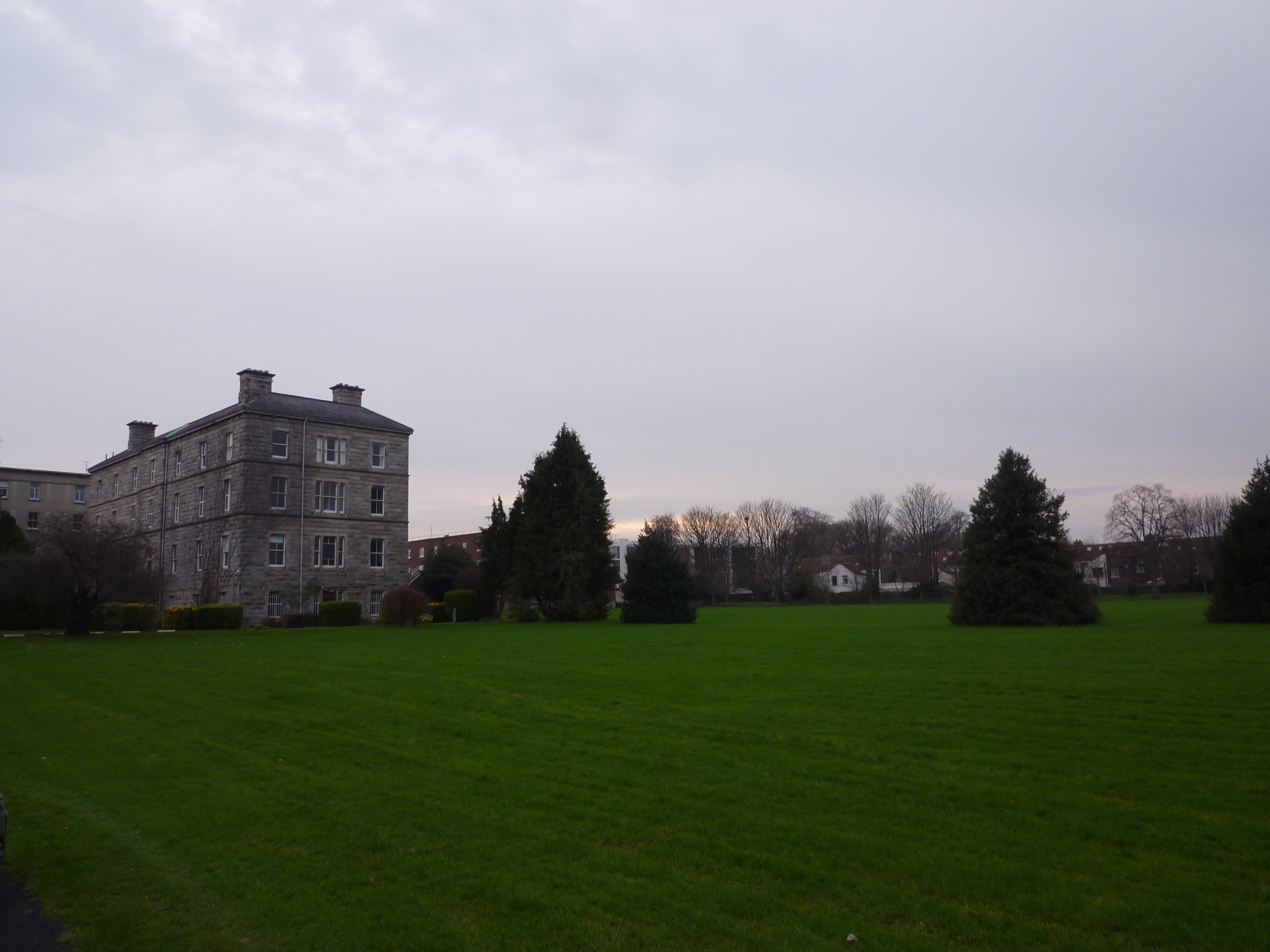
Milltown Park looking towards area where Carleton used to live

Milltown Park looking towards area where Carleton lived

Our thanks to the Reverend Sonia Gyles, Rector of Sandford and St Philip’s Milltown, for making the church available. Admission to the talks is FREE but membership of the William Carleton Society (€5) will be available for those interested. There is no charge for the tour at Mount Jerome cemetery. Participants will pay for their own lunches.

Woodville Ranelagh

House at Sandford, in which Carleton died

It promises to a be stimulating and interesting day.  The coach will return to Enniskillen by 9pm.  The William Carleton Society is a partner in the Shared History, Shared Future project run by Dungannon and South Tyrone Borough Council through the EU funded South West Peace III Partnership Programme and this activity is being delivered through it.

DSTBC LogoSWPeaceIII_logo_options_2berdfimages


MARTIN O’HAGAN

nujlogo_burgundyThe announcement by the Director of Public Prosecutions in Northern Ireland that there will be no prosecution in the case of the killing of NUJ member and former Belfast Branch Secretary Martin O’Hagan is extremely disappointing and has been criticised by the union. I can understand the reaction of his family. His brother Fintan, quoted by BBC NI, said there was a witness who wanted to tell a court who killed Martin, yet the Public Prosecution Service was depriving that witness the opportunity of telling the court his account and further depriving the court of the opportunity to consider the truthfulness or otherwise of that evidence and depriving the family, and indeed the public, of the opportunity to see justice in action. “Justice needs not just to be done, it needs to be seen to be done”, he added.    PPSNI

He was responding to the statement by DPP Barra McGrory that after very careful consideration of all the available evidence, including that of an assisting offender, Neil Hyde, a decision had been taken not to prosecute in the murder case. This was owing to the absence of any corroboration of the evidence. When Hyde was jailed in February 2012 for three years, the judge told him that if he had not agreed to identify the alleged culprits in Mr O’Hagan’s murder and give evidence about the activities of the outlawed LVF, he would have been jailed for 18 years. Mr O’Hagan, a Sunday World journalist, was shot dead as he was walking home with his wife in Lurgan in 2001.

Sunday World Northern Editor Jim McDowell said he was angry and annoyed at Friday’s announcement. “Myself and the staff have worked hard since that black Friday in September 2001 to try to get justice for Martin O’Hagan. It now seems, that old adage, while there there may be law in this country, where is the justice?” He said the decision would not diminish in any way the paper’s resolve to continue to try to get justice for Martin.

The National Union of Journalists (NUJ) has expressed grave disappointment at the announcement by the Director of Public Prosecutions in Northern Ireland that a decision has been taken not to prosecute in the Martin O’Hagan murder case. Irish Secretary Seamus Dooley said the union was disturbed by the announcement. “This union does not accept that the State can walk away from this case. The murder of Martin O’Hagan was an outrageous act of violence which cannot go unpunished. We will continue to campaign for a full investigation leading to the conviction of those responsible for the murder of our friend and colleague“, he said.

FR TONY FLANNERY

Fr Tony Flannery (RTÉ News)

Fr Tony Flannery (RTÉ News) 

The Vatican is threatening to dismiss an Irish priest from the Redemptorist order who has unorthodox views on the question of women priests and contraception. Fr Tony Flannery was told nearly a year ago he was suspended from his ministry in County Galway. He was advised to go to a monastery and in the Latin expression credited to Saint Ignatius of Loyola, to think with the church: “sentire cum ecclesia”. He had been a founding member of the Association of Catholic Priests in Ireland in autumn 2010. Now the 66 year-old cleric who was ordained in 1975 has been given an ultimatum by the Congregation of the Doctrine of the Faith. According to the Irish Times, he told a news conference in Dublin he will only be allowed back into ministry if he writes, signs and publishes an article – to be pre-approved by the CDF – accepting that the Catholic Church can never ordain women to the priesthood and accepting all church stances on contraception, homosexuality, as well as the refusal of the sacraments to people in second relationships.

As Fr Flannery himself summed up his situation: “I either put my name to a document that would be a lie, and would impugn my integrity and my conscience, or I face the reality of never again ministering as a priest”. Fr Flannery says he believes the real aim of the CDF is to suppress the Association of Catholic Priests. But he is adamant that “no matter what sanctions the Vatican imposes on me I will continue, in whatever way I can, to try to bring about reform in the church and to make it again a place where all who want to follow Christ will be welcome”.

The letters columns in the Irish Times contains a number of responses to the situation the priest finds himself in. From another rebel cleric self-styled “Bishop” Pat Buckley from Larne came the following:  “Sir, – Twenty-six years ago they came for me and no one did anything. Today they have come for Fr Tony Flannery. Tomorrow they will come for you”. A lay group called We Are Church Ireland will be staging a vigil at the Papal Nunciature in Dublin on Sunday 27th January at 3pm in support of the Redemptorist. A representative of the group also welcomed the statement from Fr Flannery’s order. They said although not all Redemptorists would accept Fr Flannery’s views on all matters, they do understand and support his efforts to listen carefully to and at times to articulate the views of people he encounters in the course of his ministry. They expressed the hope that even at this late stage, an agreed resolution could be found. Update: THIS STATEMENT TO WHICH I HAD PROVIDED A LINK HAS NOW BEEN REPLACED ON THE IRISH CONGREGATION’S WEBSITE BY A NEW STATEMENT FROM THE SUPERIOR GENERAL (see below).

One correspondent from County Dublin however poses the following question: why does Fr Tony not have the courage of his convictions by officially becoming a Protestant? The writer claims that the cleric’s views are Protestant ones, not Catholic. Fr Tony certainly finds himself now with a very difficult choice to make. Many non-Catholics might be left wondering whether the curia in Rome is more intent on expelling turbulent priests who disagree with some church teachings, rather than cracking down on the problem of clerical sexual abuse in Ireland and elsewhere, which remained hidden for so many years.

In further developments, the Rome-based Superior of the Redemptorist Order, Fr Michael Brehl C.Ss.R., has said he deeply regrets the recent actions by Fr Flannery who as mentioned earlier, had held a news conference in Dublin. The full statement by Fr Brehl in which he asks Fr Flannery to renew efforts to find an agreed solution to the concerns raised by the Congregation for the Doctrine of the Faith can be found here, replacing a statement issued earlier in the week by Fr Flannery’s confreres in the Irish Province.

In the Irish Times, Patsy McGarry reports that documents seen by the paper confirm that Fr Flannery was threatened with excommunication by the Vatican. It looks like there will be more developments in this case over the next few months.

INEZ MCCORMACK: TRADE UNIONIST

Inez McCormack: ICTU Picture

Inez McCormack: ICTU Picture

Sad news this evening (Monday) about the death at the Foyle hospice in Derry of the leading trade unionist and human rights activist Inez McCormack, aged 69. As a trade union lay representative in the NUJ I met her on a number of occasions. The most memorable event I connect her with is when through her work behind the scenes President Mary Robinson came to a community function on the Whiterock Road in West Belfast in June 1993 and shook hands with the Sinn Féin President Gerry Adams. The gesture was made away from the glare of the media. It was one of the moments recalled by Mary Robinson in her autobiography published last year. The significance of the event was that at the time Sinn Féin were still out in the cold, subject to censorship, and the IRA ceasefire would not happen until the following year.

Inez McCormack with Patricia McKeown, Alan McBride & Geraldine Finucane

Inez McCormack with Patricia McKeown, Alan McBride & Geraldine Finucane

The last time I saw Inez was at a fringe meeting in Derry in April last year during the ICTU (NIC) biennial conference. She was sharing a platform with Geraldine Finucane, Patricia McKeown her understudy and successor at UNISON and ICTU, and Alan McBride of WAVE. I wrote about it in a blog “Pat Finucane case and dealing with the past”. I recalled how as NI Secretary of UNISON Inez had helped to set up the handshake between Gerry Adams and President Robinson at Rupert Stanley College. I remembered that occasion as one when the media were kept firmly outside the door in order to ensure that no pictures of the handshake were taken. Yet it was a defining moment in the lead-up to the IRA ceasefire the following year. Here is one account of the occasion from the Independent.

In 1999 Inez McCormack became the first female President of the Irish Congress of Trade Unions since its formation in 1959. She held the post for two years. She was the first woman full-time official of the National Union of Public Employees (NUPE) from 1976-90. She became the first female regional secretary of UNISON in 1993. Inez was the first woman to be elected to the Northern Ireland Committee of Congress in 1980 and four years later became the first woman to succeed to the post of Chair.

During US President Bill Clinton’s first visit to Ireland, the First Lady Hilary Clinton paid tribute to her work and ever since then they remained friends. Mrs Clinton also mentioned Inez when she was in Belfast last month.

Inez stands out amongst the extraordinary people I have worked with over the last 17 years. She inspired and motivated me, challenged me often. One of Inez’s comments will always remain with me: there are so many more ties that bind us than divide us”,  she said.

A BBC Northern Ireland report recalls how in 2011, Ms McCormack, along with Michelle Obama, Hillary Clinton, Meryl Streep and Mu Sochua (a Nobel Peace Prize nominee from Cambodia), was named by US publication Newsweek as one of ‘150 Women Who Shake the World’. Her lifetime work enabling women to improve their lives by spreading the values of human rights was immortalised when the Holywood legend Meryl Streep played her in a Broadway play. At the time Ms McCormack said: “It is very humbling to have your life story represented in this way and a privilege to have an Oscar-winning actress and strong female character like Meryl Streep involved in the dramatisation. I have had the privilege of spending a lifetime at the service of warm strong women, who challenged injustice not just for themselves but for the people and communities they cared for and whose only affirmation has been that of their own conscience.”

Mary Robinson, former President of Ireland and UN Human Rights commissioner:

“Inez was a remarkable woman with a remarkable capacity for friendship. It was from Inez I learned that you can achieve much more if you don’t need the credit. Her support to me as a close advisor when I served as President was invaluable, but she never appeared in photographs or in the front row.”

Mrs Robinson has also written an obituary, which appeared in The Guardian.

Mark Durkan, former SDLP leader:

“Inez McCormack was impressive and effective in all she did. She stood for workers’ rights, for women’s rights, for equality and public services. As an organiser and as an advocate she championed the right of those serving others for lower pay than they deserved. She was articulate, compassionate and steadfast.  She was immensely charming as well as being intense in her convictions.  Her contribution to public life went beyond her primary role as a worker’s defender as she helped to benchmark the values, principles and protections that were needed for a fair and stable society. Her positive outlook, compelling analysis and valid stances won international recognition as a standard bearer for social justice and a role model for all who seek economic emancipation.”

ICTU President Eugene McGlone:

“Her track record in women’s and human  rights was unequalled. Her work in promoting the cause of labour and social justice in Northern  Ireland was known world-wide. Inez’s commitment to social justice began in the ’60s when she became active  in the Northern Ireland civil rights movement. She followed this on when she became a trade union and equality activist  before becoming the full-time official of the National Union of Public  Employees.  She also held the post when NUPE was reconstituted in a merger as Unison. Her unstinting passion was recognised and she received many justifiable  accolades. Her work included campaigning to organise and revalue the work and contribution of the ‘forgotten’ workers, most of whom were women. Inez also led major campaigns for strong equality laws and to assert the rights of the most disadvantaged. In 1998, she led a successful campaign for such inclusive equality and human rights provisions to be included in the Good Friday Agreement.”

Patricia McKeown, regional secretary of UNISON:

“The sad day thousands  of workers and trade union members have been dreading has come and Inez  McCormack, has left us – but only in the flesh. Inez will never leave us in  spirit. She has touched the lives of thousands of ordinary women and men and she has succeeded in what she set out to do. She has made a difference.”

Inez McCormack recalled in the Belfast Telegraph five years ago how her participation in the famous civil rights march at Burntollet in County Derry, in which she accompanied her boyfriend and later husband Vincent, would be an inspiration to campaign for justice. Truly one of the remarkable mná na hÉireann. Ar dheis Dé go raibh a hanam dílis. Rest in peace.

Funeral arrangements: Inez will be buried at the City Cemetery, Derry tomorrow afternoon (Wednesday 23rd January). Her remains will be removed at 2pm from her brother-in-law’s house at 18 Belmont Crescent, Culmore Road (not far from the Foyle Bridge). The death notice says family flowers only and house private.

Memorial Service: The Londonderry Sentinel reports that a celebration for the life of Inez will be held on Saturday 23rd March at the Elmwood Hall in the University Road area of South Belfast from 2pm to 4pm. The ‘Out of the Ballrooms; Peace, Participation and Equality’ event is being organised by Participation and the Practice of Rights organisation (PPR), which Inez founded in 2006.  Seats are available by registration at www.pprproject.org.

WILLIAM CARLETON IN DUBLIN

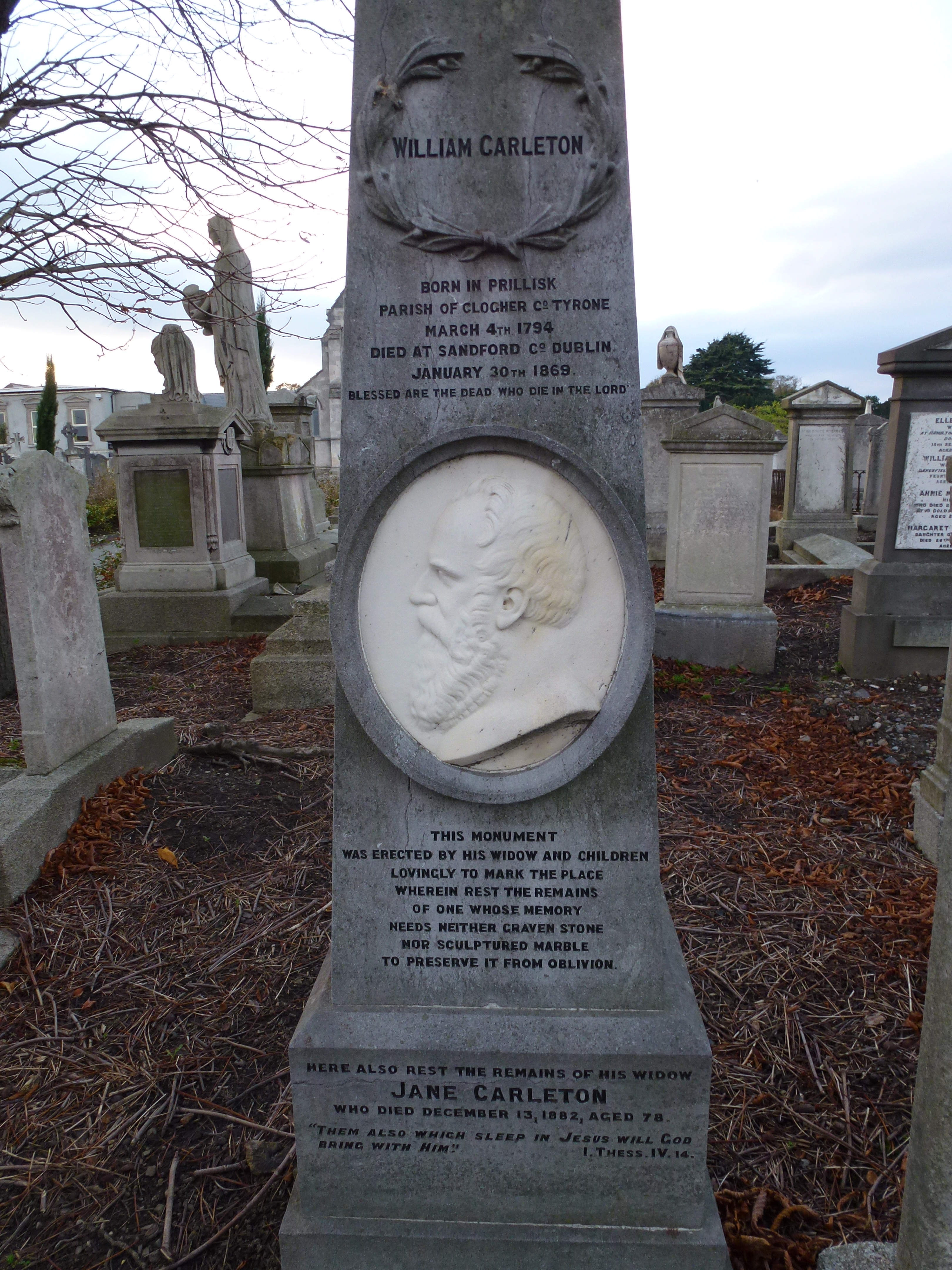
William Carleton's Grave

William Carleton’s Grave

IN THE FOOTSTEPS OF CARLETON:

Next Saturday (26th January) a group from the William Carleton Society travels to Dublin to mark the 144th anniversary of the death of the famous 19thC Irish author from County Tyrone. Carleton grew up as a Catholic, the youngest of fourteen children born to a small farmer in the Clogher area. He was educated at a hedge school near Glaslough in County Monaghan. He came to Dublin in 1819 with 2s 9d in his pocket and after trying various occupations, he became a clerk in the Church of Ireland Sunday School Office. Subsequently he would convert to Protestantism. In his autobiography (second part, finished by DJ O’Donoghue) we are told that:-

he soon became acquainted with the Rev. Caesar Otway, who was personally a most estimable man, a very pleasant writer, an enthusiastic antiquarian, but a determined proselytizer. He was one of a very remarkable group of men in Dublin at that period — when Catholic emancipation was in the air — whose lives were devoted to the task which they described as the rescue of Ireland from Popery“.

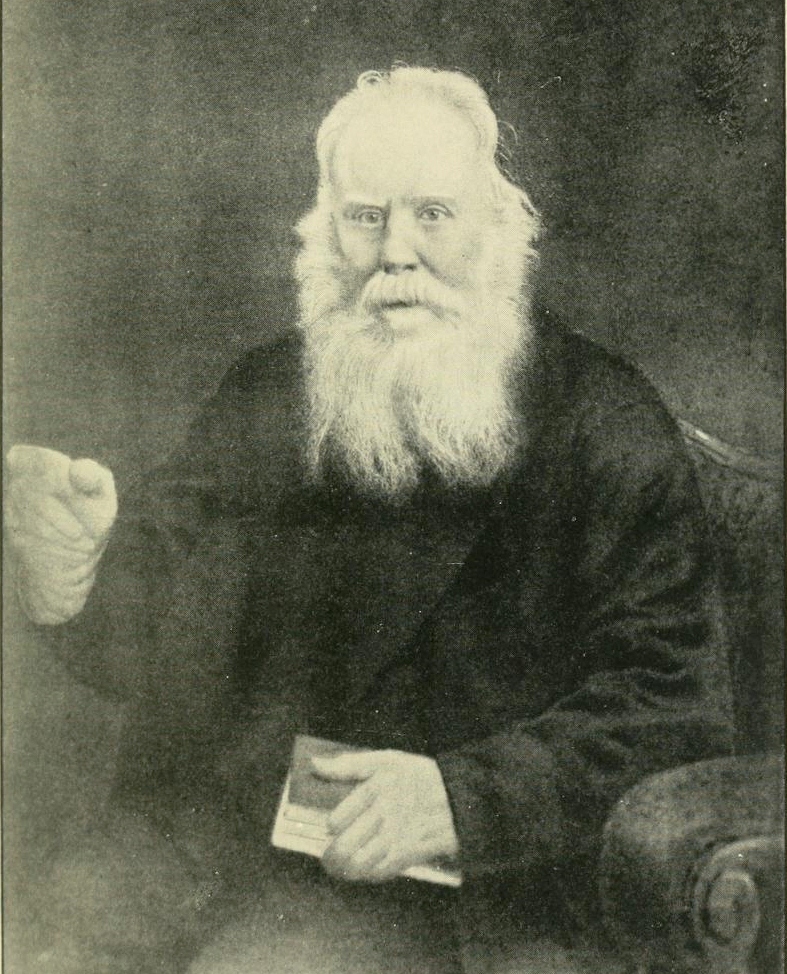
William Carleton aged 72 living in Dublin

William Carleton aged 72 living in Dublin

Otway gave Carleton an opportunity to use his journalistic talents for such proselytising purposes as satirising Catholic pilgrimages to ‘St Patrick’s Purgatory’ at Lough Derg. Further writings in the Christian Examiner & Church of Ireland Magazine led, in 1829 and 1833, to the publication of what is probably Carleton’s best known work: Traits and Stories of the Irish Peasantry – a tableau of the life of the country people of the north of Ireland before the famines of the 1840s altered their pattern of existence forever. There then followed such novels as Fardorougha the Miser (1839), Valentine McClutchy (1845), The Black Prophet (1847), The Emigrants of Ahadarra (1848), The Tithe Proctor (1849), The Squanders of Castle Squander (1852) in which he addresses many of the issues affecting the Ireland of his day such as the influence of the Established Church and landlordism, poverty, famine and emigration.

William Carleton Junior © Glenn Carleton

William Carleton Junior © Glenn Carleton

Carleton married Jane Anderson in 1820 and they had several children. Seven were born in Dublin, the first being Mary Anne in 1821. One of them, William Carleton junior, born in 1826, emigrated to Australia and was a known there as a poet. We are still not sure when and where his second daughter Jane Carleton was born. We know that she lived for time at Balham High Street in South West London, close to Tooting Bec. Deputy director of the summer school Frank McHugh reported on his research on the family tree at the 2012 event in Clogher. Thanks also to Glenn Carleton and Paul Brush in Australia, the William Carleton Society has been able to build up further details of Carleton’s genealogy.

COACH TRIP

On Saturday 26th a coach will be departing from Enniskillen at 7:30am and picking up passengers at Clogher, Aughnacloy and Monaghan (at the entrance to St Macartan’s College. 8:15am) for the trip to Dublin, which will cost £10 and will include membership of the William Carleton Society for those who have not yet joined. There will be a stop at Lusk services on the M1 before travelling into Dublin using a route which will give us an opportunity to see some of the sights, with Dr Frank Brennan as our guide.

“Frank Brennan will conduct a tour through Phoenix Park with its numerous historical monuments and associations going back hundreds of years, travel along Dublin’s quays, Four Courts, Guinness’ brewery, Dublin Castle, the two cathedrals, Jewish area and into Ranelagh which developed as a genteel middle class suburb after the Act of Union. At Sandford Church we will be addressed by a local teacher, who is a member of the congregation, on the history of Sandford church and its connection with Carleton. The Ranelagh Arts Society will then provide a talk by Susan Roundtree, an architectural historian, on the development of 19thC Ranelagh and the connection with the Plunkett family, who played a major role in Irish history.

We then go to Mount Jerome cemetery for a short ceremony (2pm) to commemorate the 144th anniversary of William Carleton’s death. A member of the Ranelagh Arts Society will then conduct a short tour of the graveyard. We travel to lunch (4pm) at O’Briens at Sussex Place, Upper Leeson Street, one of Patrick Kavanagh’s haunts, which as a 1900’s grocery and bar reminded him of Carrickmacross. The journey to lunch will take us through Dublin’s two Georgian squares  and past Government Buildings. Finally after lunch (which participants will pay for themselves) Frank Brennan will bring us past the Grand Canal Theatre, National Convention Centre, and some other of the better relics of the Celtic Tiger before our return home.”

SANDFORD CHURCH RANELAGH DUBLIN 12:30pm

Those joining the event in Ranelagh should assemble at the church at Sandford Road Ranelagh (junction with Marlborough Road) around 12:30pm. The group from the bus is hoping to walk from the site of Carleton’s now demolished former residence at Woodville, Sandford Road (beside the entrance to Milltown Park) to the church, weather permitting. Our thanks to the Reverend Sonia Gyles, Rector of Sandford and St Philip’s Milltown, for making the church available. Admission to the talks is FREE but membership of the William Carleton Society (€5) will be available for those interested.

Woodville Ranelagh

Woodville Ranelagh

It promises to a be stimulating and interesting day.  The coach will return to Enniskillen by 9pm. Please contact us by email, if you are interested or telephone me at (048 code from the Republic) 9066 2945 as there are a limited number of places available on the bus. The William Carleton Society is a partner in the Shared History, Shared Future project run by Dungannon and South Tyrone Borough Council through the EU funded South West Peace III Partnership Programme and this activity is being delivered through it.

DSTBC LogoSWPeaceIII_logo_options_2berdfimages