POPE’S NEW MAN IN ARMAGH

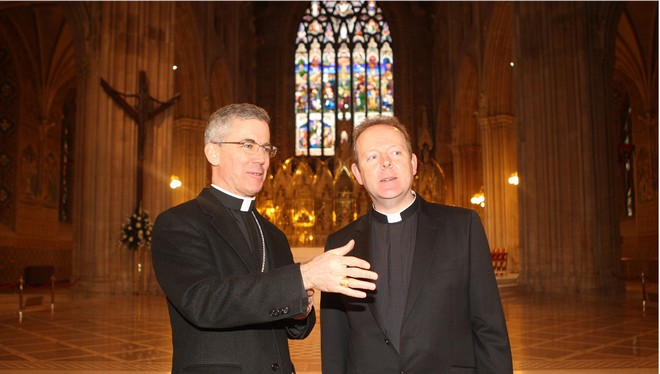
Monsignor Eamon Martin (right) Photo: Irish Bishops' Conference

Monsignor Eamon Martin (right):               Photo Irish Bishops’ Conference

More than two years after Cardinal Seán Brady made a request to the Vatican, Pope Benedict has appointed Monsignor Eamon Martin from Derry as Coadjutor Archbishop of Armagh (an assistant with the right to succeed to the post of Archbishop). I have not met him but he came across in television and radio interviews as a very capable and enthusiastic clergyman. He made clear the Catholic church’s position regarding abortion and the ongoing discussions in the Republic about the “X” case. He also spoke about his upbringing in Derry as one of a family of twelve (six boys and six girls). Monsignor Martin is expected to be ordained as Coadjutor within a few months.

52-year-old Monsignor Martin has been Apostolic Administrator of the Diocese of Derry since November 2011 and the two former Bishops Seamus Hegarty and Edward Daly have welcomed his appointment. Speaking at St Patrick’s Cathedral in Armagh, Cardinal Brady welcomed the man who will take over from him in due course. He described Monsignor Martin as a man of great gifts and great generosity who he said would know how to use those talents in the education of people, young and old.

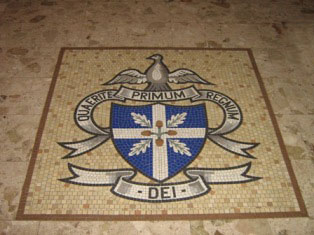
St Columb's College Derry

St Columb’s College Derry

A former pupil of St Columb’s College in Derry, he was ordained in Maynooth in 1987 aged 26. He later became a teacher at St Columb’s and was promoted to President of the College in 2000. He is a director of the National Board for Safeguarding Children, which was established by the Catholic church following revelations about clerical sex abuse in a number of dioceses.

STRABANE COUNCIL

Anyone who has reported on council business will know how important it is to have access to different sub committees and minutes of meetings, as well as to the full council meetings. Increasingly, some councils attempt to keep sensitive issues private by discussing them in committee. The role of the media to report on democracy in action and although district (or local) councils have limited powers, the press have a duty to report on the actions of councillors and to take them to task when necessary. I was therefore surprised to see that there is a proposal by Strabane District Council to restrict the attendance of press representatives at its weekly committee meetings. According to the interim chief executive Daniel McSorley

Daniel McSorley

Daniel McSorley (Council photo)

(for whom I have a lot of admiration following the excellent job he has done during often difficult times in Omagh) quoted in the Strabane Chronicle, the proposed change in committee proceedings “would lead to more openness and transparency”. He added that no decision has yet been taken. I for one hope that the council does not decide to go down this route. I am glad to see a statement on the issue from the President of the National Union of Journalists, Barry McCall.

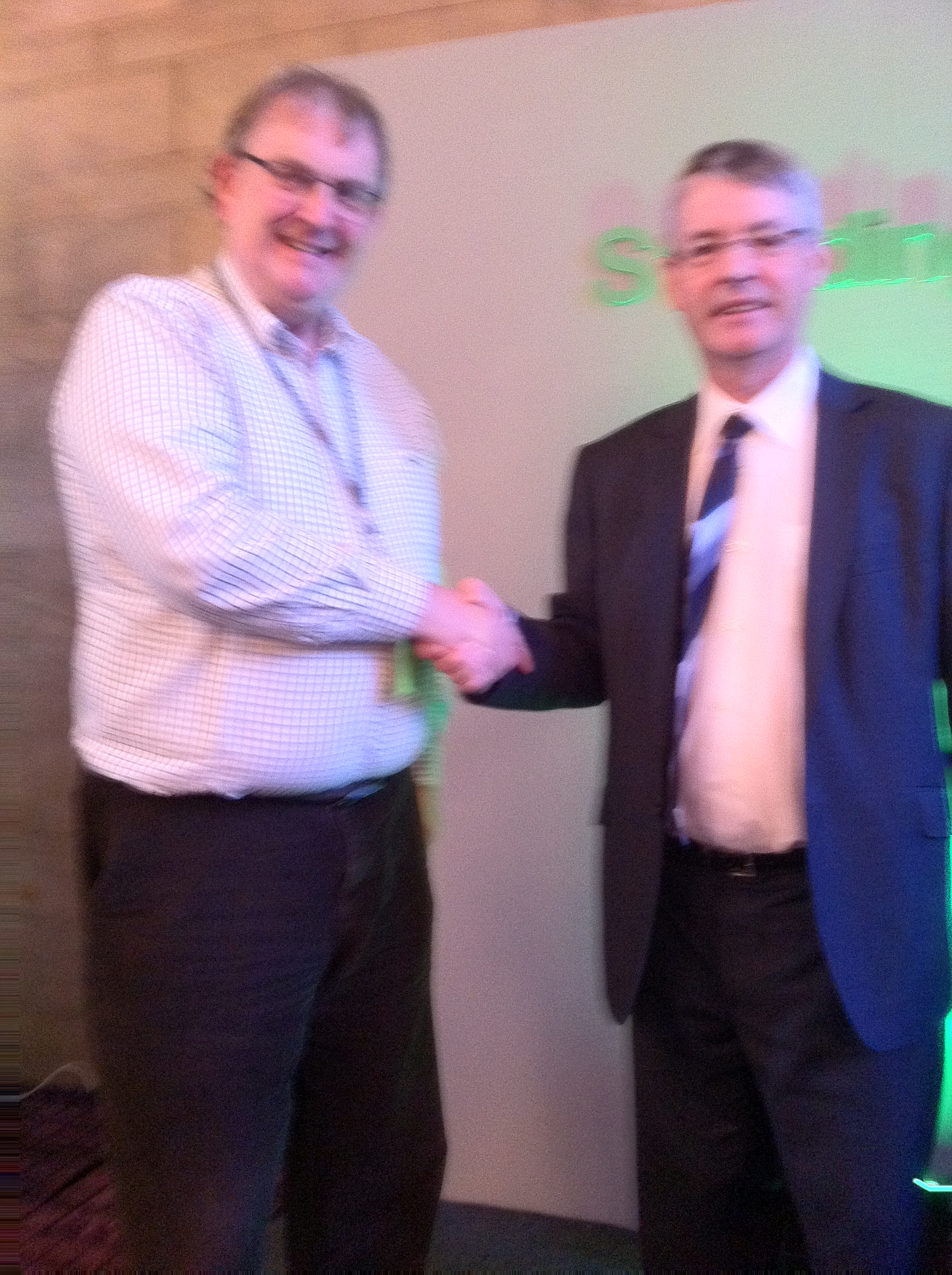
Michael Fisher & NUJ President Barry McCall

Michael Fisher & NUJ President Barry McCall

Mr McCall says that any attempt to exclude the press from council matters is “an attack on democracy” and he has vowed to take it up with Mr McSorley as a matter of urgency. He said any plans to ban the press from local council committee meetings would be a direct attack on democracy and an attack on press freedom. They are repugnant to an open and democratic society, he said, and would be strongly resisted by the NUJ. The union will raise its concerns with the District Council immediately.

Strabane Chronicle reporter Conor Sharkey said the paper had not submitted an objection at this stage but would probably do so. He told Hold the Front Page:-

 “It would be a big deal for ourselves as a newspaper but I think it would be a bigger deal for the ratepayers. The issues that are being discussed are not national security, it is bread and butter issues such as waste management and leisure. It is ordinary issues that affect the men and women in the street. I think the ratepayers have a right to know about them. It is a huge concern to us. We pick up a lot of news stories from these meetings.”

Only eight local authorities in Northern Ireland are believed to restrict access to such committee meetings at the moment.

MICHAEL FISHER is Chair of the NUJ Irish Executive Council Northern Ireland sub-committee

GEEL DISCOVERY

Extraordinary discovery in Geel (Het Nieuwsblad)

Extraordinary discoveries in Geel                   (Het Nieuwsblad)

St Dympna is the connection between Tydavnet (Tigh Damhnait) in Monaghan and the town of Geel in the province of Antwerp in Belgium, with which it is twinned.  I have visited Geel on a number of occasions, most recently in August last year. So I was interested to see an online article in the Belgian paper Het Nieuwsblad about an important archaeological discovery showing evidence of prehistoric remains, including a large graveyard from the Bronze Age. The find was made in the area called Sint-Dimpna, close to the church of that name, I think, at a site being excavated to make room for a new sports centre. I have used Google to attempt to translate the article, to find out a bit more about the discovery. This is what the report says, give or take a phrase or two!

Extraordinary discoveries in Geel (caption for photo).
Unique archaeological traces at St. Dympna:
Geel Historical Society has worked with the city archives to organise a lecture on the results of the excavations at St. Dympna. The archaeologists will explain how their research was done, what traces were found and what they mean. The excavations were carried out for the construction of the new sports and play park. During the investigation many archaeological traces from different periods came to light. The researchers found four main buildings from the Iron Age (circa 800-50BC), a yard from the Middle Ages (10th-12th century AD) and numerous smaller outbuildings or nails that served as storage for food. There were also some wells found (dating from) the Middle Ages. Besides these traces of habitation there were also traces of a large graveyard from the Bronze Age (2000-50 BC) that came to light. And it is this last discovery that makes the archeological site so unique and interesting. Finding such burial sites is extremely rare for archaeologists in Flanders. “The combination of the cemetery and a settlement is truly exceptional. In Geel everything was also very well preserved, “said Connie Leysen from the Geel city archives. The lecture will take place on Friday 25th January at 8pm in the Winery.

GRAFFITI

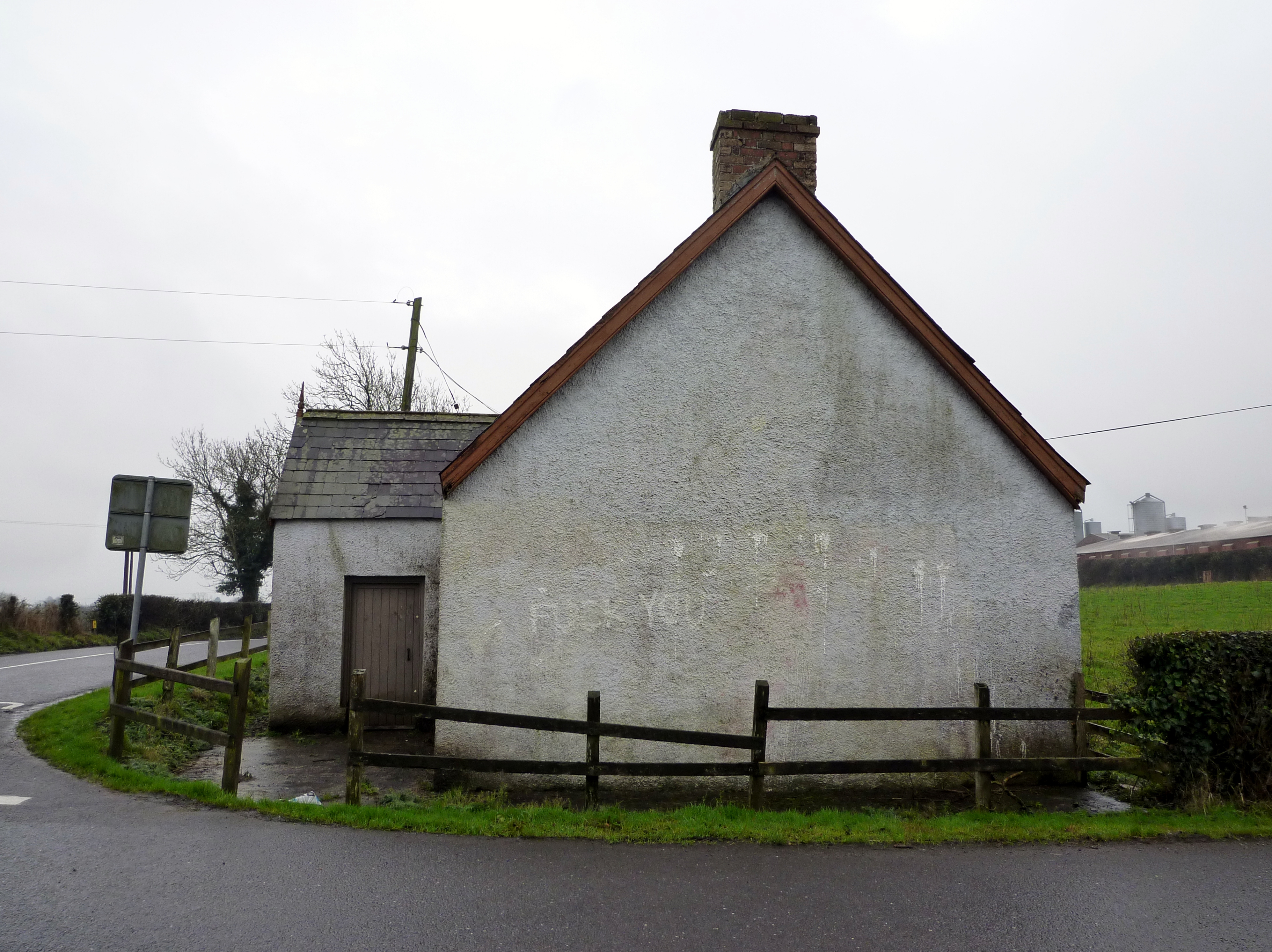
Corragh Orange Hall

Corragh hall

Driving past a small orange hall in a rural part of County Monaghan at Corraghbrack near Tydavnet on Saturday night the car headlights revealed two offensive words “F**K YOU” had been painted on the gable wall and came up very clearly in the car headlights. The hall is used infrequently and does not have any sign outside and I have been past it many times before. My initial reaction posted yesterday and now corrected here was that this could be described as a sectarian act, possibly in reaction to the flags row in the North. Going back to visit the scene in daylight hours, the offensive slogan was not as apparent, depending on what angle you looked at it. But the wall showed signs of previous acts of graffiti having been painted out. Damage was done to the windows and front door of the hall in 2005, when a nearby hall in Glaslough was also attacked. On that occasion the local parish priest in Donagh, Fr Sean Clerkin, spoke out strongly at Mass against the attack.

Hopefully action will be taken to remove the unwanted graffiti. Further enquiries have revealed that the paintwork (which at the time seemed fresh to me) is not recent and there are no slogans accompanying the crude message to suggest it is a political act. It seems it is not intended in any way as a sign to the people who own the property. As I stated previously, Tydavnet and other parts of Monaghan generally have very good relations between Catholics and Protestants. It is to be hoped that this unsightly work will be attended to in due course and that the good relations between all sides of the community will prevail.

IRISH HISTORY: ROBERT KEE RIP

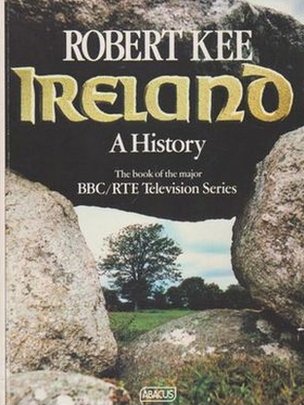
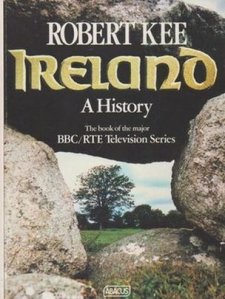
Ireland: A History

Ireland: A History

The death of writer, journalist and historian Robert Kee who died on Friday January 11th aged 93 is an opportune moment to look back not just at the television series he presented on Irish history, but on other similar series. First I acknowledge the assistance of a very useful article by Cathal Brennan in The Irish Story about how important events in Irish history such as the Easter Rising in 1916 have been covered by Irish television, starting in the 1960s when Telefís Éireann had opened.

1965 saw Telefís Éireann attempt their first history series entitled The Irish Battles. 1966 began with a new television series called The Course of Irish History edited by F.X. Martin and T.W. Moody. The series dealt with Irish history from prehistoric times up to the present and finished with a debate between the contributors involved” (Brennan).

F.X.Martin was an Augustinian priest who was Professor of Medieval History at UCD from 1962 to 1988. I remember seeing him occasionally in the corridors when I was a student at Earlsfort Terrace and Belfield. He was deeply involved in the campaign to preserve the Viking site at Wood Quay in Dublin. More details about him can be found in Charles Lysaght’s “Great Irish Lives: An Era in Obituaries” p.260. Certainly I remember the impact that the black-and-white televised series had. I only moved back to Dublin in 1967, with little or no knowledge of Irish history at the time, so I found the Martin/Moody book a very useful educational aid. T.W.Moody was a Quaker and was Professor of Modern History at Trinity College.

The eruption of the troubles in the North in 1969 and the introduction of censorship through Section 31 legislation meant a lack of any further series on history on RTÉ until the 1980s. However in 1969/70 I remember attending an hour-long programme about Northern Ireland recorded at the RTÉ studios at Donnybrook and presented by the late Liam Hourican, who was then Northern Editor for RTÉ News, based at Fanum House in Belfast.

Robert Kee’s thirteen-part series on Ireland: A Television History was broadcast in 1980/81 on RTÉ and BBC. It charted the history of the island from the time of Brian Boru up to the struggle for independence. It won a Jacob’s award for Kee, as the BBC obituary noted. Ruth Dudley Edwards has written an obituary for the Sunday Independent which sums up his achievements during a long and successful career.

In 1981 Thames Television produced a six-part documentary series The Troubles, which was shown on UTV. In more recent times there have been programmes on RTÉ such as Hidden History (2007) and in 2011 a five-part series presented by my former colleague in RTÉ News Belfast, Fergal Keane, entitled The Story of Ireland and broadcast on RTÉ and BBC. For those interested in pursuing the subject further, I notice that UCD is running an adult education course starting later this month on “Television and Irish History“. The tutor is David Ryan. I wonder what the tv historians will make of the current flags protest in Belfast and other parts of the North. Will the restriction placed on the flying of the union flag at Belfast City Hall in December become one of the most significant dates in Northern Ireland history since the signing of the Good Friday agreement?

S-U-F-T-U-M

Ravenhill

An explanation first of all of the title. Rugby fans will I hope recognise it immediately. It means Stand Up For The Ulster Men. The chant could be heard around a rain-soaked Ravenhill tonight as Ulster took on Glasgow Warriors in the Heineken Cup. Despite some protests over the union flag on some of the main roads in Belfast, it was almost a packed house (10,940) and there seemed to be only a handful of visitors from Scotland. The wet conditions were not conducive to good rugby. Ulster dominated the first half. Ruan Pienaar put over a penalty after seven minutes and the out half added the conversion after Nick Williams went over for a try in the nineteenth minute. A 10-0 lead for Ulster at the break. Glasgow came back in the first fifteen  minutes of the second half with two penalties from out half Duncan Weir. Pienaar added another penalty on 62 minutes to give the home side a seven points cushion 13-6. The last quarter saw a determined Ulster side score two tries in the 73rd (Jared Payne) and 78th (Darren Cave) minutes. Neither was converted but coach Mark Anscombe will be satisfied with the result: victory to Ulster by 23-6. With one round of pool matches remaining, Ulster now sit top of Pool 4 on 19 points, five clear of Northampton Saints and six ahead of next weekend’s French opponents Castres. Although qualification for the Cup quarter-final is now secure, a good away result next week would give Ulster the advantage of a home draw in the knockout stages. Man of the match: Tom Court.

ULSTER 23 GLASGOW WARRIORS 6  (HT 10-0)

For the teams, see Ulster Rugby.

UNIONIST FORUM

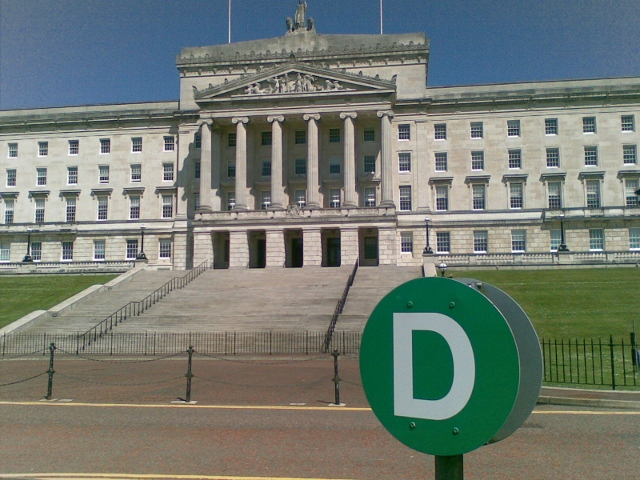
Parliament Buildings

Parliament Buildings

Up on the hill the unionist talking shop was put in place. The most representative unionist group in fifty years, according to the DUP leader and First Minister Peter Robinson. But what exactly is the purpose of this forum and will it do anything except allow the DUP to continue to make their mark as the leading representatives of unionism? There are no violent scenes in East Belfast tonight so perhaps the forum has made a start in trying to bring in some loyalist voices who think they have been left behind by the peace process. There were reports of some small protests this evening and according to reports on social media more demonstrations are planned tomorrow night. Businesses in Belfast reckon they have lost £15 million pounds as a result of the protests over the decision by Belfast City Council to fly the union flag on designated days only (a subject I touched on yesterday) although it was noticeable that on a Saturday just before Christmas the shoppers had taken over the streets again while the protestors walked around City Hall in what seemed to be a circle, except that it’s a rectangular shape! So there is a major challenge facing not just unionists but nationalists as well.

Sinn Féin pointed out that unionists talking to themselves would not solve the problem of mutual respect for people’s national identity and culture. John O’Dowd said there needed to be an open discussion on how people’s Irishness and Britishness could be respected and valued. He also made the point that unionism needed to face the reality that Northern Ireland has changed since the Good Friday agreement and will continue to change. The SDLP leader Alasdair McDonnell criticised the narrow nature of the talks, which are thought to have taken place in DUP offices at Stormont. Like Mr O’Dowd he stressed the principles of equality and parity of esteem and said he believed that if a new accommodation of identities is not at the heart of the conversations then the outcome would be lopsided or one sided and would not lead to a resolution of the issues of identity.

December protest: Bruce Street

December protest: Bruce Street

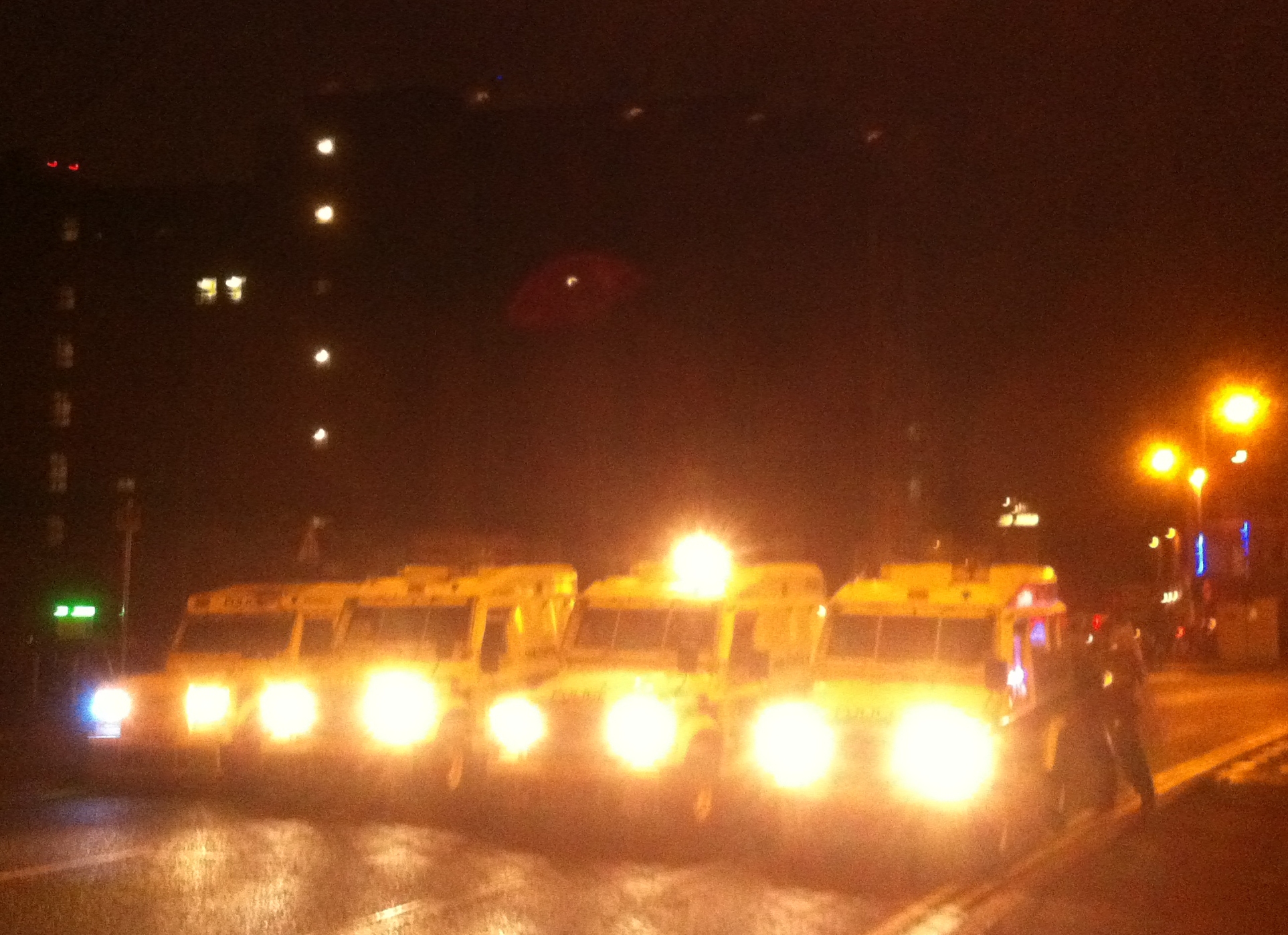
Young loyalists on the streets however from working class areas like Sandy Row have a very different perspective. They see the move to restrict the flying of the union flag as an attack on their Britishness. They have not yet been convinced that Northern Ireland’s constitutional position within the United Kingdom has been secured for as long as the majority wishes it to remain so. They are strongly critical of the folks on the hill, especially the DUP. I will refrain from printing the exact reply I got when I asked a 14 year-old why he was protesting as minor trouble began at Sandy Row last month. No peace dividend for their areas. While the attacks on police cannot be justified, the reasons why young people some not even teenagers took to the streets deserve to be examined. A sense of excitement was one of the explanations put forward. This is a new generation who did not experience the troubles and many were born after the Belfast agreement was signed. There was no one spokesperson for the protestors who could explain exactly what they wanted. William Fraser from South Armagh (the same person who organised the Love Ulster protest in 2006 that led to violence) aligned himself to the cause and talked about bringing 150 protestors to Dublin.

I was sitting in suburban South Dublin when I noticed a tweet about the now on hold Dublin protest that suggested “maybe it’s planned as one of the Gathering events”. My immediate reaction was that comments like that did little to help the situation and I tweeted that it was necessary to address the underlying reasons sensitively. Another person asked why should anyone in the Republic care about helping the situation and claimed it had nothing to do with the Republic how often the union flag was flown outside City Hall. People like these seem to have completely ignored what exactly the Good Friday agreement was about and how it involved a referendum in the Republic (94.4% in favour) and changes to Articles 2 & 3 of the Constitution. Even more interesting was the result today of a redC/PaddyPower.com poll that questioned 1000 voters in the Republic earlier this week about the flags issue. It found that over half of those that expressed an opinion (57%) suggested they felt Belfast City Council was wrong to restrict the flying of the Union flag at Belfast City Hall “as Belfast is in the UK and the flag should be able to be flown there”. According to the figures, in total, just over one-third of Irish voters (35%) believed the Council was right to restrict the flying of the flag, “as it will be flown on specific occasions”. 47% thought they were wrong to restrict it. No view was expressed by 18%. In terms of party support, nealy half (48%) of Sinn Féin voters were in agreement that it was the right decision. An interesting number (44%) of SF voters said it was wrong and 8% answered “don’t know”.

As protestors make plans for a number of demonstrations across Northern Ireland this evening (Friday) at 6pm, it’s reported by RTÉ News and others that the DUP has taken the first step in what may become a legal challenge to Belfast City Council’s decision about the flying of the Union flag. DUP councillor John Hussey has submitted a formal complaint to the Council claiming the decision to end the practice of flying the Union flag throughout the year is in breach of equality provisions. In an alternative to the protests, a number of people are using social media to show their support for a sit-in at a pub or cafe or restaurant around the same time. Ulster rugby fans will also be focusing on tonight’s Heineken Cup match at Ravenhill against Glasgow Warriors (8pm).


FLAG ROW

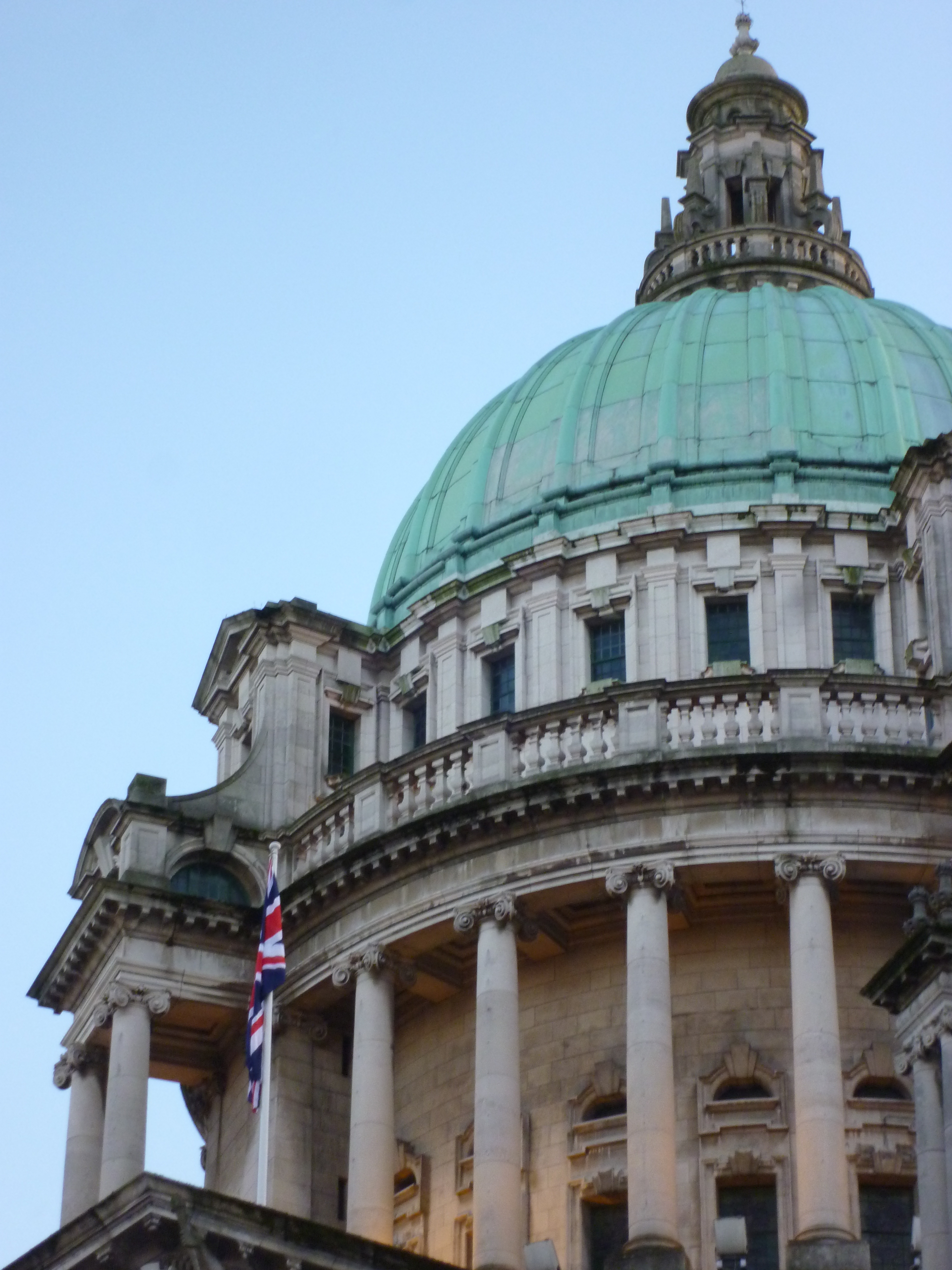
Union Flag at City Hall

Union Flag at City Hall

Now you see it…now you don’t. Today (the birthday of the Duchess of Cambridge) was one of the eighteen designated days in 2013 when the union flag is being flown at Belfast City Hall. The decision last month by the Council, taken democratically, to stop flying it 365 days of the year has unleashed a wave of protest by loyalists, many of them schoolchildren. It remains to be seen how long the protests will continue. The union flag will be hoisted again on January 20th, birthday of the Countess of Wessex. This was a position agreed by the SDLP and Sinn Féin and supported by the Alliance party, which seems to have borne much of the brunt from the protests. What struck me most was the age of the protestors. Some of them not even teenagers. Most of them were born after the troubles and the signing of the Good Friday agreement in 1998. But in terms of religion and politics the city they are living in is very different from that of thirty or forty years ago. The police service now finds itself stretched as it tries to deal with what remains a highly-charged atmosphere, which has put Belfast back in the international headlines for all the wrong reasons. The flag was taken down again at 6:45pm according to the News Letter and so far there have been none of the scenes of rioting that happened in the Newtownards Road area over the past week.

The DCMS lists the eighteen designated days for Northern Ireland as follows:

Dates for Hoisting Flags on UK Government Buildings in 2013

9 January Birthday of The Duchess of Cambridge
20 January Birthday of The Countess of Wessex
6 February Her Majesty’s Accession
19 February Birthday of The Duke of York
10 March Birthday of The Earl of Wessex
11 March Commonwealth Day (second Monday in March)
17 March St. Patrick’s Day (Northern Ireland: union flag only should be flown)
21 April Birthday of Her Majesty The Queen
9 May Europe Day
2 June Coronation Day
10 June Birthday of The Duke of Edinburgh
15 June Official Celebration of Her Majesty’s Birthday
21 June Birthday of The Duke of Cambridge
17 July Birthday of The Duchess of Cornwall
15 August Birthday of The Princess Royal
10 November Remembrance Day (second Sunday in November)
14 November Birthday of The Prince of Wales
20 November Her Majesty’s Wedding Day

WISHIE HACKETT

I passed the GAA Club (St Macartan’s) at Augher on the main Ballygawley to Clogher road twice this evening (Tuesday) so my thoughts were with the Hackett family and their friends and neighbours……

More details have emerged about the death last Friday evening of Wishie (Aloysius) Hackett, a leading member of St Macartan’s GAA Club, who was found dead at his home at Aghindarragh Road near Augher in County Tyrone. His 18 year-old son Sean, a former Tyrone minor footballer, has been remanded in custody charged with murdering his father, aged 60. Omagh magistrates court heard that Sean Hackett initially told police he had returned home to find his father’s body. He later said he had shot him, the court heard. He was granted compassionate bail to attend his father’s funeral at noon on Wednesday at St Macartan’s church, Springtown Road, Ballynagurragh near Augher.

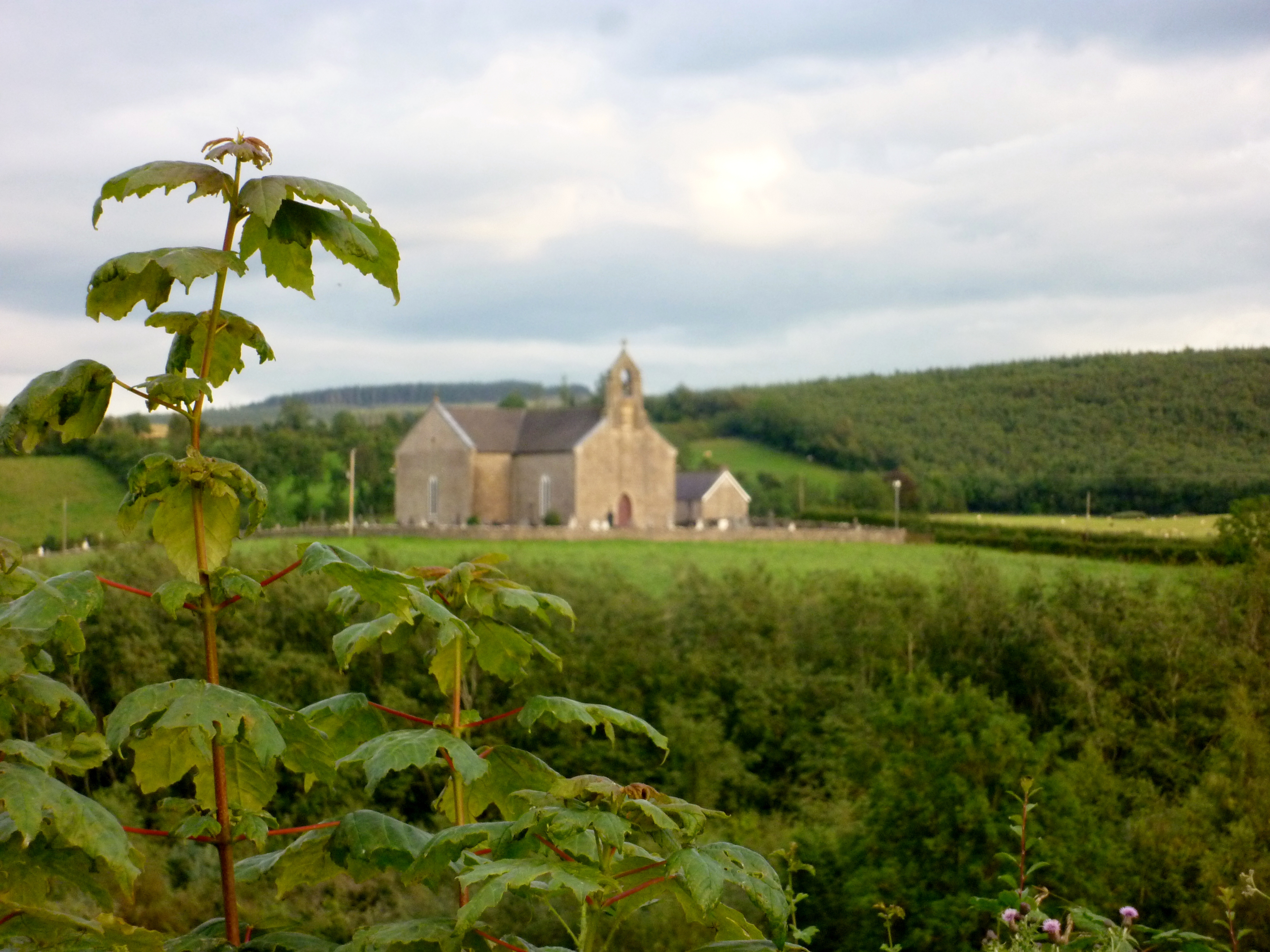
St MacCartan's church, Augher

St Macartan’s church, Augher  © M.Fisher

The BBC reports that “Omagh Magistrate’s Court heard Mr Hackett was being treated for depression and had asked a friend to obtain a gun for him twice in the last two months. The compassionate bail for Wednesday’s funeral has been granted under strict conditions. Mr Hackett is not allowed access to a mobile phone or to the internet while travelling to and from the funeral and is only permitted to speak to two chaperones, including a solicitor and the (Tyrone) GAA manager Mickey Harte. He is not allowed to speak to immediate family members. Sean Hackett, who was arrested shortly after the incident, did not look at his family during the hearing. His mother, two brothers and sister were in court for the hearing along with a large number of supporters who waved to the teenager as he left the dock. His mother was distraught throughout and broke down fully when bail was refused and compassionate bail granted”.

The Public Prosecution Service appealed the decision to grant compassionate bail at the High Court. Refusing the appeal, a judge directed that the accused’s two chaperones must collect him from Hydebank Young Offender’s Centre near Belfast, take him to the requiem Mass  in Augher and immediately afterwards return him to custody. Meanwhile, a 17-year-old youth arrested on Sunday in connection with Mr Hackett’s death has been released pending a report to the PPS.

REPORTER THREATENED

As the union flag protest continues in Belfast, there was another sinister turn when it was revealed that a local journalist who had been writing about the issue was sent a bullet in the post. The bullet was intercepted before it reached the journalist. At the same time a bullet was sent to a leading SDLP politician and the home of an SDLP Councillor in Belfast was attacked. Since the start of the protest, some Alliance party politicians have also been targeted in a similar manner, specifically the East Belfast MP Naomi Long and Jutsice Minister David Ford. Bullets were also sent to two Sinn Féin representatives. Such intimidatory actions need to be condemned without reservation as they are a threat to democracy.     nujlogo_burgundy

In a statement, the National Union of Journalists expressed grave concern at confirmation that the Police Service of Northern Ireland had intercepted a letter containing a bullet addressed to a Belfast-based journalist. The journalist was advised by the PSNI that the letter containing a bullet was intercepted at the weekend. The letter was sent following the journalist’s reporting of Loyalist rioting in Belfast. NUJ President Barry McCall described the letter as the latest in a series of despicable attempts to intimidate journalists working in extremely difficult circumstances in Northern Ireland. He said the posting of a bullet to a newspaper, addressed to a named journalist, represented an attack on journalism and on democracy. “This incident must be seen in the context of recent attacks on journalists and elected public representatives and should be condemned by all who support the democratic process”, he added. NUJ General Secretary Michelle Stanistreet said the incident emphasised the need for vigilance on the part of journalists and media organisations in Northern Ireland. She said employers and journalists – staff and freelance, needed to be alert to the very real dangers which arose when covering conflict situations. She said the lack of respect for the rights of journalists to work unimpeded presented a particular challenge. The bullet sent in the post was clearly indeed to send a signal to the media. “Over many years journalists have stood firm in the face of intimidation and they continue to do so”, she said.