PYLONS CONTROVERSY

ANTI-PYLON GROUP STEPS UP CAMPAIGN AGAINST EIRGRID PLANS FOR ELECTRICITY INTERCONNECTOR
Michael Fisher
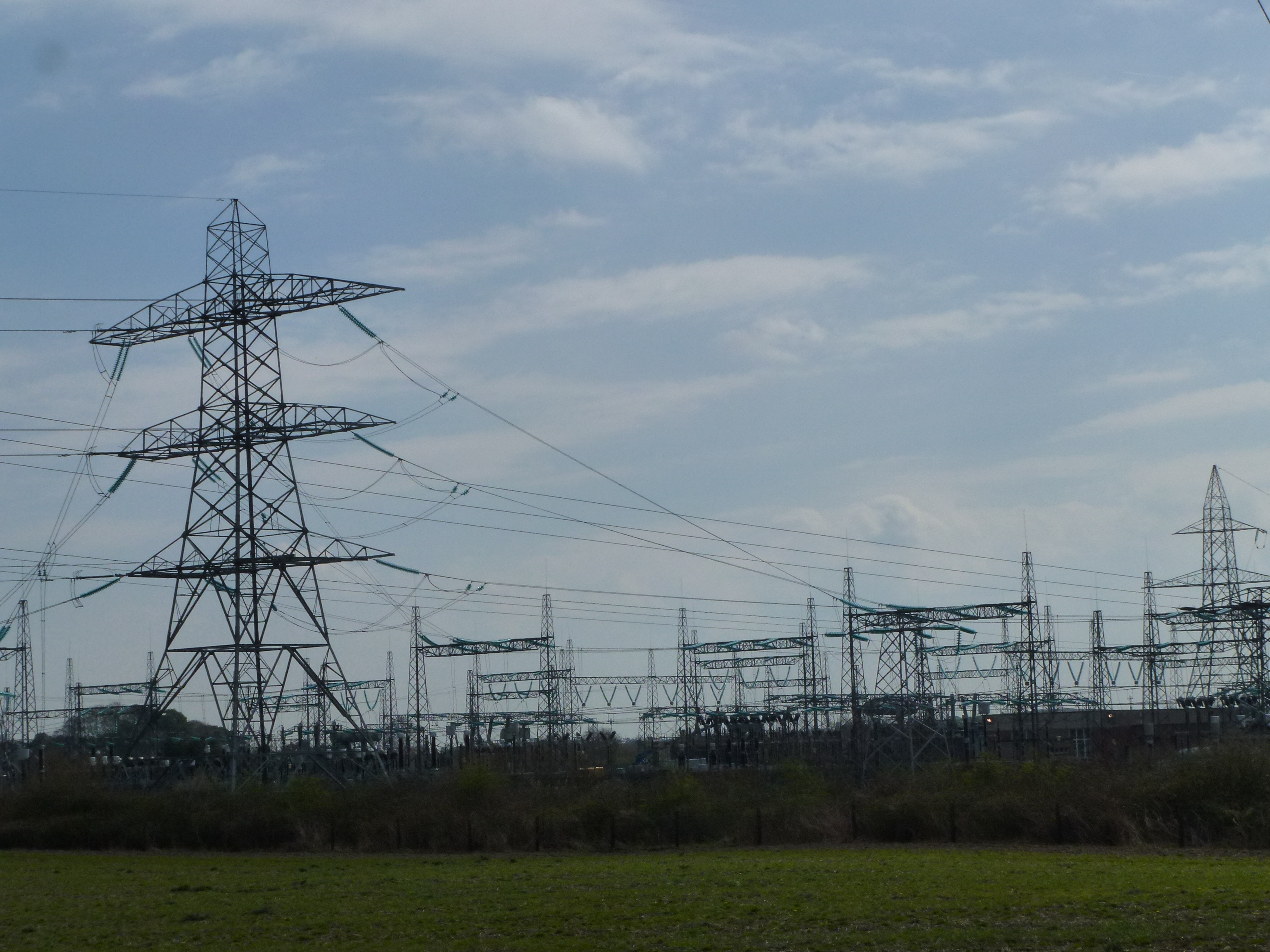
EirGrid substation at Ballykelly, Co. Louth near Inniskeen for North/South Interconnector Photo © Michael Fisher

EirGrid substation at Ballykelly, Co. Louth near Inniskeen for North/South Interconnector Photo © Michael Fisher

A group representing landowners and householders opposed to EirGrid plans for an overhead North/South electricity connector that would be routed through south and mid Monaghan met last night to arrange a fresh campaign against the proposals. A public meeting has been organised by the County Monaghan Anti-Pylon Committee to be held on Monday April 20th at Aughnamullen Community Centre, Lough Egish. All of the county’s TDs and councillors are being invited to attend. Committee member Nigel Hillis told the Northern Standard their opposition to the plans was stronger than before.

Last week EirGrid’s Chief Executive Fintan Slye visited Carrickmacross as the company announced its new draft strategy for the future development of Ireland’s electricity transmission grid. It included updated plans for the North/South 400 kV Interconnection Development that would cross five counties from Meath to Tyrone.

EirGrid banner for North/South Interconnector Photo © Michael Fisher

EirGrid banner for North/South Interconnector Photo © Michael Fisher

EirGrid and its Northern counterpart SONI (System Operator for Northern Ireland) are jointly proposing a new high capacity electricity interconnector between the two networks. The draft strategy says there remains a clear need for the North/South Interconnector, and that the existing preference for a 400kV overhead line is still the most appropriate solution for the project.

The development would link a substation at Woodland, Batterstown in County Meath with a planned substation in Turleenan, in the Dungannon area of County Tyrone. EirGrid intends to submit a planning application for the North/South Interconnector in the coming weeks. Currently there is only a single interconnector, that runs past Ballykelly on the Carrickmacross to Dundalk road in County Louth (a few kilometers from Inniskeen)  to Tandragee in County Armagh.

Shane Brennan of EirGrid (right) points out the route of the proposed interconnector Photo © Michael Fisher

Shane Brennan of EirGrid (right) points out the route of the proposed interconnector Photo © Michael Fisher

At their public information office in Carrickmacross, SONI Eirgrid Project Manager Shane Brennan from Clontibret explained to me that the new interconnector would increase the capacity and reliability of interconnection between the two networks. It would allow the two independent networks to operate together as if they were one system, thus improving competition, and securing the electricity supply throughout the island of Ireland. EirGrid maintains that operating the two networks as if they were one system will bring cost savings for all electricity consumers as larger electricity systems can be operated more efficiently than smaller ones.

The increase in interconnection capacity will also facilitate the development of wind generation, which will help achieve Ireland’s renewable energy targets. Last November EirGrid submitted its draft application to An Bord Pleanála for review.  The following month, An Bord informed EirGrid that it has reviewed the draft and that certain specified missing information was required to be submitted. Last month EirGrid sent in further information, as requested.

EirGrid pylon at Ballykelly, Co. Louth near Inniskeen Photo © Michael Fisher

EirGrid pylon at Ballykelly, Co. Louth near Inniskeen Photo © Michael Fisher

Meanwhile EirGrid has re-published its proposed line route which will form the basis of an application for planning approval to be submitted to the planning authority in the coming months. This follows a review of the December 2013 line design. The review resulted in some of the proposed pylon locations being re-positioned along the proposed route, but the alignment itself was not changed.

Maps have now been made available showing the proposed route in County Monaghan. It takes in parts of Kingscourt, Co. Cavan, Magheracloone, Corduff/Raferagh then on to a controversial section around Lough Egish. The route continues to Drumhowan, Doohamlet, Annyalla and Clontibret where it skirts the battlefield site and then joins the Northern grid in County Armagh.

EirGrid has opened three project information offices, including one at the Workhouse in Carrickmacross where those with an interest can  call in and meet the project team. The Carrick office on the Shercock Road is open on Mondays and Thursdays 12 noon – 6pm.

EirGrid information office Carrickmacross Photo © Michael Fisher

EirGrid information office Carrickmacross Photo © Michael Fisher

According to Fintan Slye of EirGrid, there remains a clear strategic need for a second north-south interconnector.
“We committed last year, to be open with people and find out what it is they want from this most critical of infrastructure.  We are now asking people to give us their views on our draft strategy”, he said. Mr Slye concluded: “EirGrid must ensure the necessary grid is in place to ensure that Ireland remains competitive – fostering economic growth, attracting new investments, and supporting indigenous jobs. It must do this without placing too great a burden on communities, or too high a cost on industry. When we have received people’s feedback we will submit this draft to the Department of Communications, Energy and Natural Resources for its consideration before publishing the final strategy later this year.”

The County Monaghan Anti-Pylon Committee has been campaigning against the overhead route for the past seven years. It has argued that the lines should be placed underground. Nigel Hillis, an engineer, said the need for a new interconnector had not been identified by EirGrid and they had not persuaded people living in the affected area that it was needed. This was not the case with another major infrastructure development when the main N2 road was being improved with by-passes around Castleblayney and Carrickmacross.

He said there was still serious opposition to the plans. One of the main concerns from the start, he said, had been the scale of the project, because the size and topography of the small farms in the county had not been taken into account when the positioning of pylons was being worked out. He said EirGrid had not identified the need for having big pylons on top of hills, close to a farmyard or houses. (The company said the centre of the proposed high voltage line would be no nearer to a residence than 50 metres).

Mr Hillis questioned why EirGrid was suggesting that part of the proposed GridWest scheme (up to 30km) could be situated underground using trenches alongside roads. He claimed that people in Monaghan were being treated as second class citizens and said they wanted to be treated the same as others.

The Dáil Communications Committee chaired by John O’Mahony T.D. has invited EirGrid to appear before them in the coming weeks to answer questions about the North/South interconnector. Mr Hillis hopes his group will also be given a chance to put their views across as well. From the first day of their formation the committee had argued for an underground route and that was now feasible, he said, as this option was being considered for the other two major grid projects.

Eirgrid says there are technical issues with putting 400kV AC lines underground over long distances and there would be operational complexities. It maintains that underground cables for the North/South route would be too expensive and difficult to install. Local residents however think the cost to them, their livelihoods, their homes and to local tourism would be equally damaging.

Northern Standard Thursday April 9th p.31 with pictures by © Pat Byrne

Northern Standard Thursday April 9th p.31 with pictures by © Pat Byrne
BOOST FOR LOCAL MUSEUMS

Minister for the Arts, Heritage and the Gaeltacht, Heather Humphreys T.D. Photo:  © Michael Fisher

Minister for the Arts, Heritage and the Gaeltacht, Heather Humphreys T.D. Photo: © Michael Fisher

A scheme to help local and regional museums in Ireland to carry out small projects to improve their displays and make them more attractive for tourists has been approved by the Minister for Arts, Heritage and the Gaeltacht, Heather Humphreys T.D. The 2015 Local and Regional Museums Scheme is designed to support small and medium-sized museums across the country.  

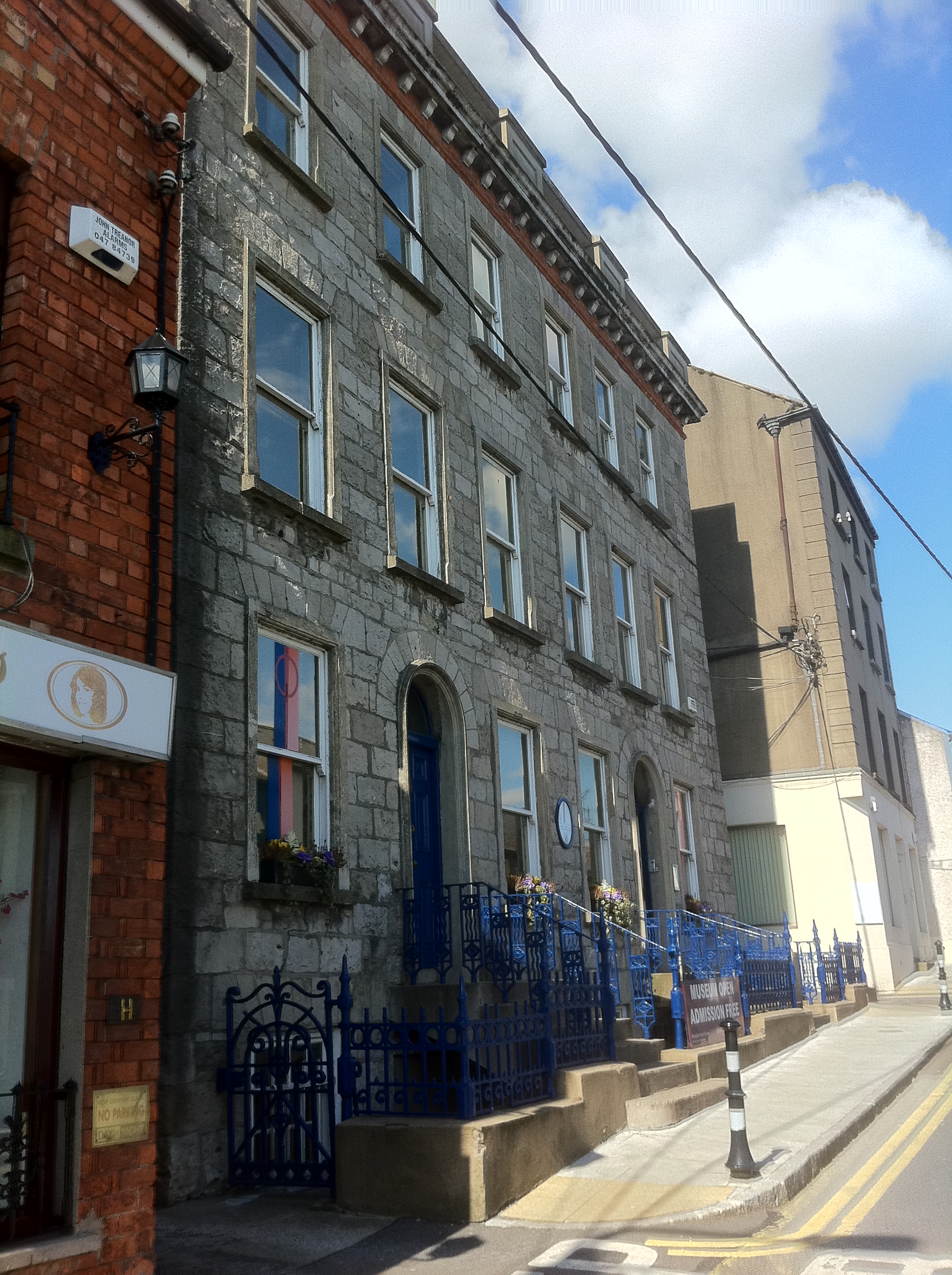
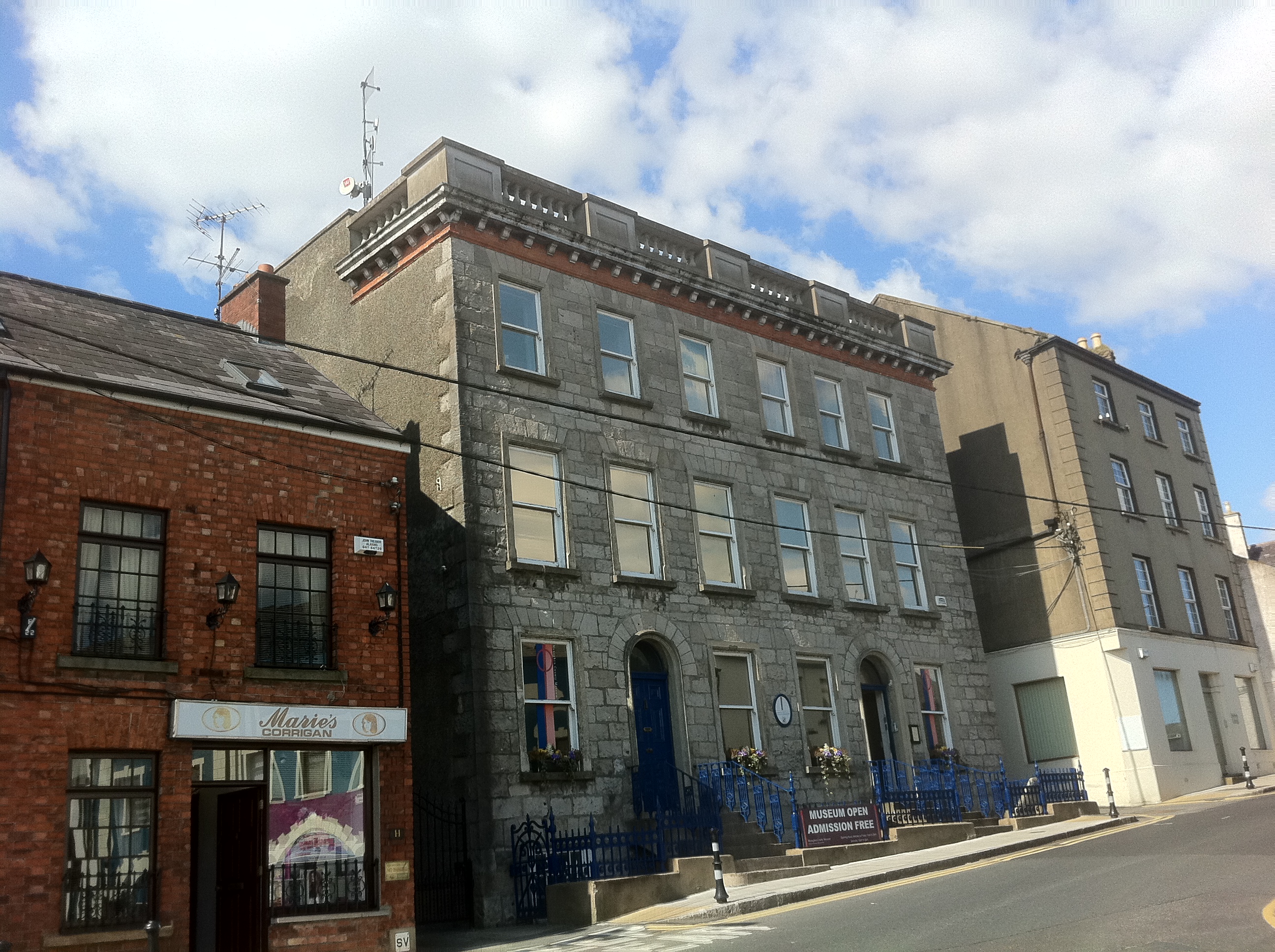
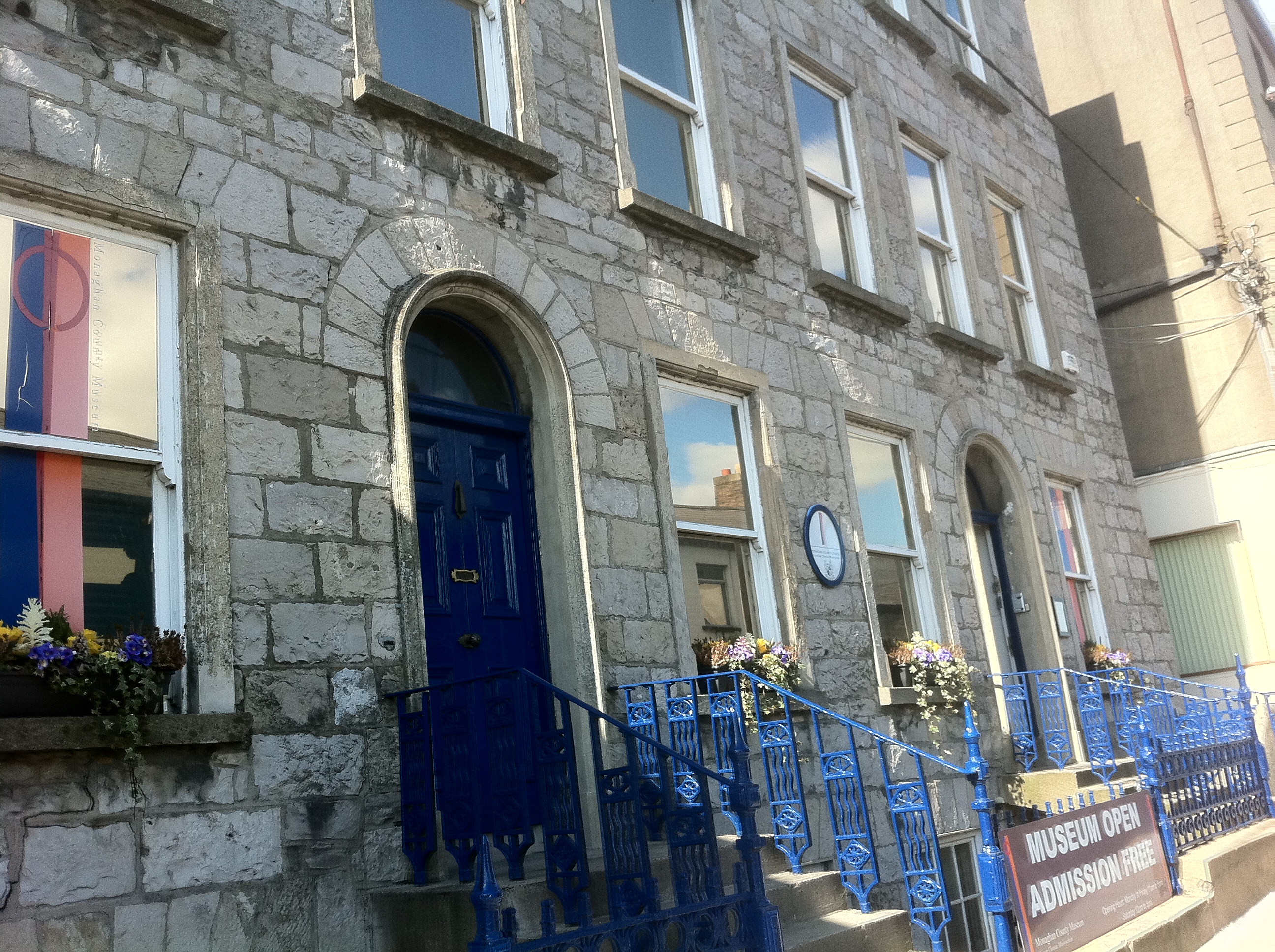
Monaghan County Museum. Hill Street Photo:  © Michael Fisher

Monaghan County Museum. Hill Street Photo: © Michael Fisher

This year, the scheme will allow for the funding of small capital projects on a matched funding basis (75:25).  A total fund of 0,000 is being made available for suitably qualified museum development projects. Projects funded under the Scheme should seek to enhance the cultural offering of museums; to encourage greater access to museums and to promote the use of museums as tourism resources in their locality or region.

Monaghan County Museum. Hill Street Photo:  © Michael Fisher

Monaghan County Museum. Hill Street Photo: © Michael Fisher

Minister Humphreys said: “the Local and Regional Museums Scheme provides a valuable funding stream for small and medium sized museums throughout the country, allowing them to stage exhibitions, promote and market their museums and generally improve their product offering.  These museums are central focus points within the community and it is vital that they are supported in their role as guardians and narrators of our cultural heritage. The funding provided under this Scheme over the past few years has allowed these museums to continue to enhance the presentation of their exhibitions and premises which in turn improves the cultural offering of the local communities they serve.” 

Monaghan County Museum. Hill Street Photo:  © Michael Fisher

Monaghan County Museum. Hill Street Photo: © Michael Fisher

Monaghan County Museum opened in 1974 becoming the first full time, local authority funded and professionally staffed museum in the country. The first Curator was Aidan Walsh. During its history it has seen many social, cultural and political changes both at a local and national level. These diverse changes are reflected in the museum’s collection of artefacts and displays.

Curator Liam Bradley (left) with author Christopher Fitz-Simon (centre) and Friends of Monaghan Museum Photo:  © Michael Fisher

Curator Liam Bradley (left) with author Christopher Fitz-Simon (centre) and Friends of Monaghan Museum Photo: © Michael Fisher

The museum staff headed by curator Liam Bradley are dedicated to the goal of ensuring that all its exhibitions and events are accessible to everyone. It has received many awards during its existence. It was the first Local Authority Museum in the country to achieve full accreditation under the Heritage Council’s Museum Standards programme for Ireland. This was a very worthwhile process for the museum to be involved in and was a huge testament to the commitment of the museum staff as well as the tremendous support received from Monaghan County Council and the Museum’s other stakeholders including the Museum Advisory Committee that Monaghan County Museum is now officially recognised as one of the most professionally run museums in the Republic of Ireland.

Monaghan County Museum. Hill Street Photo:  © Michael Fisher

Monaghan County Museum. Hill Street Photo: © Michael Fisher

TACKLING DIESEL LAUNDERING

NEW DYE TO COMBAT DIESEL LAUNDERING  The Northern Standard Thursday 2nd April p.1

Michael Fisher 

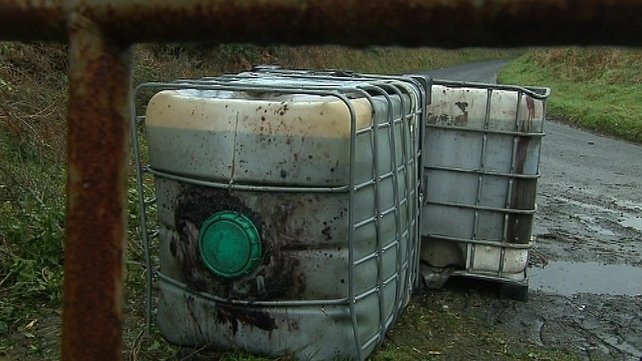
Containers filled with toxic diesel sludge abandoned at a roadside in Co. Monaghan  Photo: RTÉ News 2012

Containers filled with toxic diesel sludge abandoned at a roadside in Co. Monaghan Photo: RTÉ News 2012

New measures to tackle diesel laundering have been introduced on both sides of the border. From yesterday (Wednesday), a new, additional fuel marker for rebated fuel is being introduced following consultation with, and support from, the oil sector.

The illegal dumping of diesel laundering waste has been a huge problem in County Monaghan for over ten years. The hazardous waste has to be sent abroad for disposal. Monaghan County Council estimated the total costs incurred in its area because of diesel wash between 2004 and 2013 totalled over €2.14 million. Last year the clean-up cost was over €600,000 and this was reimbursed by the Department of Environment.

The Irish and British governments say the new fuel marker is now required in addition to the existing mineral oil markers. Producers and suppliers of rebated fuel must ensure that any supply of rebated fuel removed from the warehouse for home use contains the new mix of markers as set out in legislation in the different jurisdictions. revenue

The Revenue Commissioners say action against the illegal use of marked fuel is an integral part of their wide-ranging programme of action against all forms of fuel fraud. An extensive range of new measures have been introduced over recent years to tackle fuel fraud, including enhanced supply chain controls and now the acquisition of a more effective fuel marker.

This marker will help both the Revenue Commissioners and the British Revenue and Customs (HMRC) to tackle the criminal market in off-road diesel, marked with a green dye in Ireland and a red dye in the UK, and also kerosene primarily used for heating oil. Excise duty on rebated diesel is charged at a lower rate than standard fuel duty.

Launderers primarily target red or green diesel, filtering it through chemicals or acids to remove the government marker. The chemicals and acids remain in the fuel and damage fuel pumps in diesel cars.

The new marker is produced by The Dow Chemical Company and is intended to make rebated fuel much harder for fraudsters to remove the dye and to sell on at a profit. Rebated fuel use is strictly limited to specific circumstances, primarily in agriculture, construction and heating.

The new marker does not have any colour and is added in addition to the current markers. There will be no change of colour. Specialised equipment is required to confirm the presence of the new marker.

The exact formation of the new marker is secret, but it only consists of carbon, hydrogen and oxygen. It does not contain any halogens or metals. The manufacturer expects it to be fully compatible with all fuels containing ethanol or biodiesel. It is not expected to affect engine emissions.

NEW NI SUPER COUNCILS

Chris Page of BBC Northern Ireland reports on the new ‘Super’ Councils, that take over tomorrow. There will be eleven of them, with Belfast taking in parts of Castlereagh, which is being combined with Lisburn (LCCC). Dungannon and South Tyrone Borough Council joins up with Cookstown and Magherafelt in the new Mid-Ulster Council, while Strabane has been hitched to Londonderry. Fermanagh is combined with Omagh. The other six authorities are: Antrim and Newtownabbey District, Armagh, Banbridge and Craigavon (ABC) District, Causeway Coast and Glens District, Mid and East Antrim District, Newry, Mourne and Down District and finally North Down and Ards District, whose website appears to be the only one not to have gone ‘live’ so far. It is easy to tell the Sinn Féin-controlled administrations as they have bilingual signs, with Irish often being given first preference above the English. Hardly a very inclusive start to the new structures. Here is an edited version of the report by Chris:

Life in local government will never be the same again. From weddings to waste management (and street cleaning), cemeteries, (parks) and leisure centres: their duties tended to be summed up as “emptying the bins and burying the dead”. Now they are taking on some important new powers. The eleven councils will take most planning decisions. Only those deemed to be “regionally significant” will be retained by the NI Environment Minister. In a year’s time, the local authorities will get powers for urban regeneration.

Tied to that, they will have responsibility for local economic development and tourism. The super-councils will also take over more than 300 off-street car parks from the Department for Regional Development. The idea is that councils will be able to take the lead in shaping towns, cities and rural areas. One example being held up is that of Manchester, where the council has led a striking city regeneration programme in recent years.

The chief executive of the Northern Ireland Local Government Association (NILGA), Derek McCallan, is “unapologetic” about his enthusiasm. “It’s a very compelling change for the average ratepayer and for the average politician. But there’ll be no such thing as an average council, because there’ll be no poverty of ambition from them. You can be sure of that,” he said.

Northern Ireland Local Government Association CEO Derek McCallan

Derek McCallan said the changes would mean that local councils could become real drivers of economic development in Northern Ireland. Photo: BBC NI

According to Mr McCallan, similar models of local government elsewhere in the world have brought more prosperity. “In places like the Netherlands, about 88% of development takes place in towns and cities driving their own development. Here, councils will now be able to be a real driver of economic development, rather than a consultee or a recipient of a grant.”

He, and others at the heart of the transition, believe it will take a few years for the new councils to bed-in and get used to using their new powers effectively. Most politicians will surely agree that working to improve local economies should be high on their priority list. But some political disagreement in council chambers is inevitable.

Already, there has been a row in the Mid-Ulster council, when a meeting in “shadow” format resulted in a ban on the sale of poppies or Easter lilies on council property. There has been controversy over Newry, Mourne and Down Council’s decision to place the Irish language above English on its signs. But on the eve of the handover, the super-councils are emphasising the potential positives rather than the possible pitfalls.

On Wednesday, there will be little, if any, change to council services – the public will probably not see much to suggest that a revolution in local government has begun. It may take several years before the public will see if this huge change in the way Northern Ireland is run will have a truly transformative effect.

COUNCILLORS OPPOSE GAMING OUTLETS

Ground floor unit in Carrickmacross proposed for conversion into a private members gaming club Photo: © Michael Fisher

Ground floor unit in Carrickmacross proposed for conversion into a private members gaming club Photo: © Michael Fisher

COUNCILLORS CONTINUE TO OPPOSE GAMBLING OUTLETS 

Michael Fisher

All six Councillors in the Carrickmacross-Castleblayney Municipal District have again highlighted their opposition to a proposed private members gaming club in Carrickmacross. A fortnight ago planners in Monaghan County Council put on hold an application by Carrick Gold Mine Ltd to set up a private gaming club in a vacant commercial unit off Main Street, beside the car park at the rear of the Shopping Centre at Drummond Etra.

Carrickmacross-Castleblayney MD Councillors PJ O'Hanlon, Aidan Campbell, Colm Carthy and Padraig McNally Photo © Michael Fisher

Carrickmacross-Castleblayney MD Councillors PJ O’Hanlon, Aidan Campbell, Colm Carthy and Padraig McNally Photo © Michael Fisher

The applicants said the proposed use of the premises would be for a professionally managed Private Members Gaming Club. It would provide card games like Baccarat and other games like Texas Holdem etc “for groups of dedicated card players”. It would the Club’s intention to have weekly Poker tournaments, some of which would be for local sports teams and associations, according to the letter. The club’s facilities would be open to members only, who must be over eighteen.

Planning officials have requested additional information about a number of aspects and have given the applicants six months to reply to the Council.

Cllr Jackie Crowe (SF), Cathaoirleach Carrickmacross=Castleblayney Municipal District Council  Photo:  © Michael Fisher

Cllr Jackie Crowe (SF), Cathaoirleach Carrickmacross-Castleblayney Municipal District Council Photo: © Michael Fisher

The March meeting of the Municipal District Council held in Carrickmacross and chaired by Cllr Jackie Crowe heard from District Co-Ordinator Cathal Flynn that because of a loophole in current legislation, there was nothing the District Council could do to prevent the operation of such a club, if the application was approved. Councillor Padraig McNally asked for Standing Orders to be suspended so that he could ask a question seeking additional information, following last month’s decision to write to the Minister for Justice, asking for local authorities to be able to introduce bye-laws that would prohibit gaming facilities, including gaming clubs. He was told that the Council had received a letter from the office of the Minister for Justice and Equality, Frances Fitzgerald T.D., last week. It informed Councillors that the government had approved the general scheme of the Gambling Control Bill in July 2013. The scheme was currently with the Office of the Parliamentary Counsel, awaiting legal drafting. A copy has been made available on the Department’s website. The letter, signed by the Minister’s Private Secretary, said that upon enactment of this proposed legislation, the Minister would assume the sole regulatory function as relates to all forms of gambling, with the exception of the National Lottery. It was not possible to indicate at this point when the Bill is likely to be published, according to the Minister’s Office.

Cllr Padraig McNally (FF) Photo © Michael Fisher

Cllr Padraig McNally (FF) Photo © Michael Fisher

Councillor McNally said this letter should be circulated to local Deputies and they should be asked to help speed up the process of bringing the Bill through the Dáil, so as to ensure this planning application would come under the remit of any new gambling legislation.

Cllr PJ O'Hanlon (FF) Photo: © Michael Fisher

Cllr PJ O’Hanlon (FF) Photo: © Michael Fisher

His party colleague Councillor PJ O’Hanlon said they would do everything in their power through the Council to stop such private members clubs. As public representatives they had a role and a function to represent the views of people on the ground.

Cllr Colm Carthy  Photo: © Michael Fisher

Cllr Colm Carthy Photo: © Michael Fisher

Councillor Colm Carthy said a number of local businesses and residents in Carrickmacross had already been in contact with Oireachtas members and they would push the issue to try to get it resolved. Councillor Noel Keelan said their aim should be to try to close the planning loophole concerning private members gaming clubs. Councillor McNally proposed and Councillor O’Hanlon seconded a motion, which was passed unanimously:

“That this Authority writes to our local TDs to ensure the speedy passage of legislation in Dáil Éireann and to seek their support for measures to stop such gambling outlets from receiving consent for planning authorities and court services”.

Cllr Noel Keelan  Photo: © Michael Fisher

Cllr Noel Keelan Photo: © Michael Fisher

The Northern Standard

                  The Northern Standard

COUNCILLORS DEFEND LIBRARY SERVICE

Carrickmacross-Castleblayney MD Councillors PJ O'Hanlon, Aidan Campbell, Colm Carthy and Padraig McNally Photo © Michael Fisher

Carrickmacross-Castleblayney MD Councillors PJ O’Hanlon, Aidan Campbell, Colm Carthy and Padraig McNally Photo © Michael Fisher

COUNCILLORS OPPOSE PLANS TO CHANGE LIBRARY SERVICE  

Michael Fisher

Moves to amalgamate library services in Monaghan and Cavan by the appointment of a joint librarian will be strongly opposed by Councillors in the Carrickmacross and Castleblayney area. A meeting of the Municipal District Council on Monday discussed a submission received by a Ballybay resident and member of the local library, who expressed her concerns over the issue. She said there was a real fear among members that if the proposal goes ahead then smaller libraries like the one in Ballybay would close. The library service is important to local communities on many levels, she told Councillors, and she asked them to contact Minister Alan Kelly to get him and his department to abolish the proposed amalgamation.

Cllr Padraig McNally (FF) Photo © Michael Fisher

Cllr Padraig McNally (FF) Photo © Michael Fisher

Councillor Padraig McNally said they had been told the only proposal was to share the County Librarian between the two counties. But he said they did not need such a change as they already had a good system in place. He proposed that the District strongly objected to any amalgamation. This was the thin end of the wedge and next thing they would be looking at the fire service, he said. The county had already been stripped of so many services.

Cllr PJ O'Hanlon (FF) Photo: © Michael Fisher

Cllr PJ O’Hanlon (FF) Photo: © Michael Fisher

Councillor PJ O’Hanlon said this was the start of another service being taken away from the county. Councillor McNally proposed and his party colleague Councillor O’Hanlon seconded a motion:

“That this Municipal District rejects any amalgamation of our library services. Monaghan has a proud record of providing library services and does not need to be linked with any other counties or regions”. It was passed unanimously.

Cllr Noel Keelan (SF)  Photo:  © Michael Fisher

Cllr Noel Keelan (SF) Photo: © Michael Fisher

Councillor Noel Keelan said ‘amalgamation’ was another word for cuts and proposed a motion: “That this District Council writes to the Minister, Mr Alan Kelly T.D., requesting that the proposed amalgamation does not proceed, given how important the Library Service is to the people”. Councillor Colm Carthy seconded and this motion was also agreed.

Cllr Jackie Crowe (SF), Cathaoirleach Carrickmacross=Castleblayney Municipal District Council  Photo:  © Michael Fisher

Cllr Jackie Crowe (SF), Cathaoirleach Carrickmacross=Castleblayney Municipal District Council Photo: © Michael Fisher

Cathaoirleach Councillor Jackie Crowe said they were all absolutely opposed to any amalgamation.

Northern Standard

                                                                        The Northern Standard

ON THE RUNS REPORT PUBLISHED

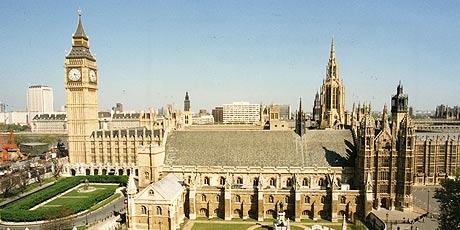
Palace of Westminster Photo: www.parliament.uk

                     Palace of Westminster Photo: http://www.parliament.uk

In a major report the House of Commons’ Northern Ireland Affairs Committee says the administrative scheme of “comfort letters” sent to “on-the-runs” (OTRs) should never have taken place in the manner in which it was developed and run, and its existence has distorted the process of justice. The Committee announced its inquiry into the scheme after the British government appointed its own inquiry led by Dame Heather Hallett. The Committee was concerned that the Government’s inquiry was too narrow in its remit, and also that it was not going to be conducted in public. The Committee conclues that:

  • It is questionable whether the “on-the-runs” scheme was lawful or not, but its existence distorted the legal process.
  • The scheme should never have taken place in the manner in which it was developed and run.
  • It is questionable whether the “on-the-runs” scheme was lawful or not, but its existence distorted the legal process.
  • If it existed at all, it should have been formalised within the various agencies involved with clear lines of reporting and accountabilities, and made public.
  • The Government should set its mind to ensuring that all necessary steps are taken, including, if necessary, introducing legislation to ensure the letters have no legal effect.
  • The judgment in the Downey case served to highlight the inherent risk in the design and subsequent operation of the scheme, and it is regrettable that neither the Judge nor the prosecution sought witness statements on the nature of the OTR scheme from other parties.
  • The refusal of leave to appeal to remove the stay put on the Downey trial placed the balance in favour of preserving the integrity of the criminal justice system over the public interest involved in continuing the trial of someone accused of carrying out multiple murders. The Committee believes the integrity of the criminal justice system, and part of HM Government, has been damaged by the stay.
  • The Secretary of State’s refusal to name which of those recipients of the Royal Prerogative of Mercy are OTRs wholly unacceptable.
  • There was a difficult peace process going on at the time, but there must still be transparency and accountability in government and in the legal process. A more open process could have prevented the letter being sent to Mr John Downey.
  • No letters should have been sent out by the NIO, and they should have had no involvement in the scheme after sending the names on to the AGO. The prosecuting authorities should have sent out the letters, as they would have been in a position to ensure their content was correct by checking the files before the letters were sent.
  • The wording of the letters–”the PSNI are not aware of interest in you by any other police force” should not have been allowed to stand: the writers of the letters should have realised that this was an incomplete assessment of a person’s status.
  • The status of the letters after the devolution of policing and justice should be called into question. Given differing opinions on whether the scheme was devolved or not, the legitimacy of the NIO continuing with the scheme after that point is questionable.
  • The checks being undertaken initially by the PSNI, in relation to OTRs, were not as a result of its normal policing role; they were being carried out at the request of the NIO for political reasons. What has followed, specifically Operation Redfield, was a direct result of that piece of work being commissioned by the NIO.  This needs to be separated out from the wider work around historic investigations and the NIO should commit the funds to ensure the review of the names of all those who received letters is undertaken swiftly.
  • The secrecy of the scheme also meant that aggrieved person has been denied the opportunity to have a decision made by a Minister quashed in judicial review proceedings.
  • The availability of this scheme to only one section of the community, and even then only effectively at the whim of one political party, raises questions about equality rules in Northern Ireland.
  • The letters themselves, and subsequent statements by the PSNI and NIO, have left it unclear quite what “new evidence” would be required for a prosecution to be brought against a recipient of one of the letters. This issue is key and should have been addressed before the text of the letters was decided. This issue exposes again the lack of care that was taken in designing the scheme.
  • This must be clarified, particularly as the PSNI believes that 95 recipients of letters are potentially linked, by intelligence, to almost 300 murders and indeed that the Metropolitan Police wished to speak to some of them. HM Government must provide the resources to enable the police to reassess these cases quickly.
  • A number of Members of the Committee felt that the names of those who had received letters should be published immediately, provided that publication would not prejudice any future trial and would not cause any security risk to the individual named.

The members of the Committee were appointed in July 2010:
Laurence Robertson (Chair), Conservative;  David Anderson, Labour;  Joe Benton, Labour;  Oliver Colvile, Conservative;  Stephen Hepburn, Labour; Lady Hermon, Independent; Kate Hoey, Labour; Naomi Long, Alliance; Jack Lopresti, Conservative; Dr Alasdair McDonnell, SDLP; Nigel Mills, Conservative; Ian Paisley, DUP; Andrew Percy, Conservative; David Simpson, DUP.

Laurence Robertson MP, Chairman NI Select Committee  Photo: www.parliament.uk

Laurence Robertson MP, Chair NI Select Committee Photo: http://www.parliament.uk

The Chair of the Committee, Laurence Robertson MP, said:  “Our priority is to serve the victims and their relatives, whom we believe to have been let down by HM Government by the way in which this scheme has operated. If any scheme had been put in place at all, which is questionable, it should have been properly introduced and correctly administered. It also should have been open and transparent. This scheme was none of those things. Regardless of the intentions, this scheme has caused further hurt to people who have suffered far too much already, and has led to further suspicions being raised. It is therefore very important that Operation Redfield is concluded as quickly as possible and that the government ensures that no letter provides a shield from prosecution ever again. That is the least people can expect, and is the minimum our Committee requires.”

SDLP Leader Dr Alasdair McDonnell MP Photo: www.alasdairmcdonnell.com

SDLP Leader Dr Alasdair McDonnell MP Photo: http://www.alasdairmcdonnell.com

SDLP Leader and Committee member Dr Alasdair McDonnell MP said the report of the Northern Ireland Affairs Select Committee on the On The Runs scandal further emphasised that the scheme was a backroom deal which had undermined the peace and political processes while letting victims down.

Dr McDonnell said: “Today’s report is a further indictment of how a British Government and Sinn Féin colluded together to defeat due process, cause hurt and offence to victims and survivors. The OTR episode is a disturbing insight into the lengths some in London would go to in order to pacify Sinn Féin- from the OTR Bill to the OTR schemes. It was a joint enterprise to derail justice, truth and the needs of victims and survivors”.

“The people of Ireland endorsed the Good Friday Agreement. By engaging in side deals, Sinn Féin and the British Government have betrayed Irish democracy. One response to clear the smog and smell of secrecy around these deals is to restore transparency, accountability and the primacy of victims in all future processes”.

“All of this now begs the question- is there any other secret deal the London, with Sinn Féin or with anyone else, signed up to?”, Dr McDonnell concluded.

CARRICK GAMING CLUB ON HOLD

Ground floor unit in Carrickmacross proposed for conversion into a private members gaming club Photo: © Michael Fisher

Ground floor unit in Carrickmacross proposed for conversion into a private members gaming club Photo: © Michael Fisher

APPLICATION FOR PRIVATE MEMBERS GAMING CLUB PUT ON HOLD

Michael Fisher

Planners in Monaghan County Council have put on hold an application to open a private members gaming club in a vacant commercial unit off the Main Street in Carrickmacross.

The planning application was received by Monaghan County Council on January 21st. It was submitted by a local architect on behalf of Carrick Gold Mine Ltd. It sought full planning permission for a change of use from an existing ground floor commercial unit to a private members gaming club with external signage, and including all other associated site works. The premises is situated beside the car park at the rear of Carrickmacross Shopping Centre at Drummond Etra, Main Street. At last month’s meeting of the Carrickmacross-Castleblayney Municipal District Council, the five members present had expressed their objections to the proposal.

Two people, a man and a woman with an address in Carrickmacross, are described as directors of the registered company that made the application. In a letter to the planners they said that the proposed use of the premises would be for a professionally managed Private Members Gaming Club. It would provide card games like Baccarat and other games like Texas Holdem etc “for groups of dedicated card players”. It would the Club’s intention to have weekly Poker tournaments, some of which would be for local sports teams and associations, according to the letter. The club’s facilities would be open to members only, who must be over eighteen.

A letter sent to the applicants by a planning officer last Friday requested additional information about a number of aspects. It asked them to indicate the proposed opening hours of the proposed gaming club and to submit proposals to demonstrate clearly that the premises can be operated in such a manner that a noise nuisance does not emanate from within the proposed private members gaming club or arise outside in the vicinity of the club. Carrick Gold Mine Ltd has also been asked to submit proposals for external lighting to each elevation of the development and the applicant shall submit revised details indicating a single sign to the front elevation. The applicant must also specify the materials to be used in the proposed sign, which shall not be internally illuminated. The applicants have a timeframe of six months to reply to the Council with the requested information.

THE NORTHERN STANDARD Thursday 19th March Carrickmacross News

ST PATRICK’S AT THE MAZE

Returning from a brief visit to Birmingham yesterday on Saint Patrick’s Day, I flew into Belfast International Airport. I was at the funeral of a former colleague at BBC Radio Birmingham, now Radio WM, Ken Dudeney. I then remembered that 39 years ago in 1976 I had flown into Aldergrove airport as it was then known as a BBC Radio Birmingham reporter on a very different mission. I had been tasked to do a programme about a British Army regiment doing a tour of duty in the North, the Birmingham Gunners. Their correct title was 39 Medium Regiment Royal Artillery. They had been deployed there for four months on December 4th 1975 and served on that occasion until April 6th 1976. The BBC local radio station had been offered the opportunity by the British Army to meet and record interviews with some of the squaddies an their officers. During that tour of duty, H Battery was on duty securing the perimeter of the Maze prison near Lisburn. 132 Battery was on the border at Aughnacloy, manning the checkpoint on the main Dublin to Derry road. A third section 176 Battery covered Lurgan and Criagavon. Thus it was that on St Patrick’s Day in April 1976 I spent the night at the British Army base at HMP Maze. More of this story later.

A DAY WITH HEATHER HUMPHREYS

Heather Humphreys TD at Blayney Blades celebration in Castleblayney  Photo: © Michael Fisher

Heather Humphreys TD at Blayney Blades celebration in Castleblayney Photo: © Michael Fisher

A BUSY SCHEDULE FOR HEATHER 

Michael Fisher

It’s a busy week for local Fine Gael T.D. and Minister for the Arts, Heritage and the Gaeltacht, Heather Humphreys. When this reporter met her in Castleblayney on Monday morning, she had been on the road since 8.30am, leaving her home in Aghabog to start work at her constituency office in Monaghan by 9am. Her first public engagement was at the Íontas Centre, where she was the guest speaker at an event organised by Blayney Blades to celebrate International Women’s Day. In her speech she mentioned how important an influence her mother Emily had been and how two of her secondary school teachers had encouraged her to enter politics. She stayed for two hours, networking with a large group of women and passing on the welcome news that funding a network of 17 women’s groups throughout the country had been secured. Instead of taking lunch at the Centre, the Minister stayed in Castleblayney to meet a constituent before returning to her office in Monaghan around 1:45pm. She just had time for a small snack from a nearby café before heading off to Beech Hill College in Monaghan, where a woodwork room had been refurbished and equipment upgraded with the aid of a grant. She took the opportunity to speak to the principal and teachers as well as some of the students. After an hour at the College she returned once again to the Mall Road office at 3:30pm to carry out constituency work for three hours. By 7pm she was back home, taking the opportunity to do some packing for an official trip she is making to England this week. She is flying to London on Wednesday night and will be the main guest at a number of functions over the St Patrick’s weekend. On Friday evening the Irish ambassador Dan Mulhall hosts a reception at the Irish embassy and there will be a formal dinner to attend on Saturday night. On Sunday the Minister will join fellow Monaghan native Barry McGuigan at the head of the St Patrick’s Day parade in the British capital.

Arts Minister Heather Humphreys TD at Magheracloone Fine Gael Branch AGM  Photo:  © Michael Fisher

Arts Minister Heather Humphreys TD at Magheracloone Fine Gael Branch AGM Photo: © Michael Fisher

The Minister’s third public engagement on Monday was at Magheracloone Community centre (near Carrickmacross), where she attended the AGM of the local Fine Gael branch. It was the first time in recent memory that a government Minister had been present. Over a welcome cup of tea at the end of the meeting, Heather Humphreys explained that the following day (Tuesday) her diary would be taken up with a Cabinet meeting in the afternoon and a meeting of the 1916 Commemoration committee (which is one of her responsibilities) that evening. Wednesday would see her answering questions in the Dáil.

Arts Minister Heather Humphreys TD at Blayney Blades congratulates their Woman of the Year 2015 Sr Catherine Brennan  Photo: © Michael Fisher

Arts Minister Heather Humphreys TD at Blayney Blades congratulates their Woman of the Year 2015 Sr Catherine Brennan Photo: © Michael Fisher

So after putting in a fourteen hour shift on Monday, it was time (10:30pm) for the Minister to return home. She told me she normally tried to keep Sundays free as a family day, a time she could enjoy with her husband Eric and their two daughters. She certainly has a busy schedule.

*******************************************

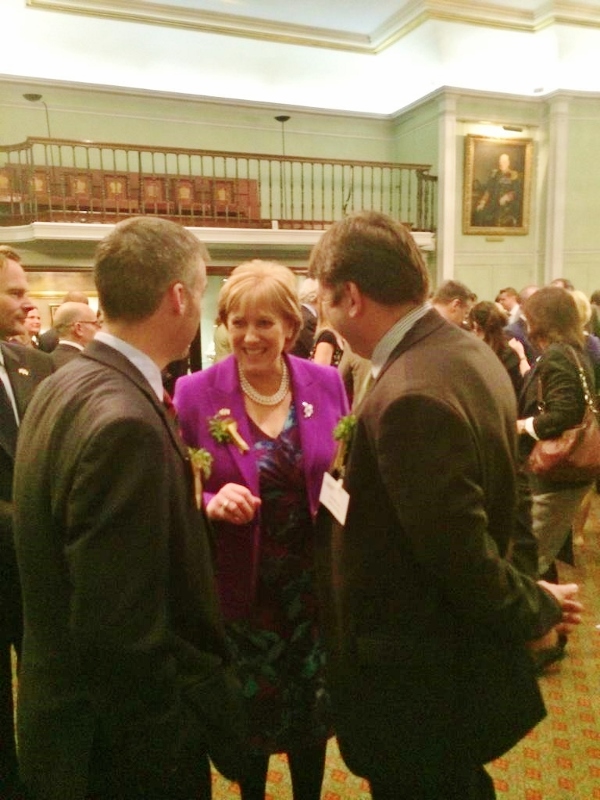
Tonight (Thursday) the Minister is in London, attending an Enterprise Ireland St Patrick’s Day reception at Trinity House (the body responsible for lighthouses). It is an opportunity to network with business people, many of them Irish, and to encourage investment in Ireland. This photo was posted on her twitter account @HHumphreysFG:

Arts Minister Heather Humphreys TD at Enterprise Ireland reception in London  Photo: @HHumphreysFG

Arts Minister Heather Humphreys TD at Enterprise Ireland reception in London Photo: @HHumphreysFG