TALL SHIPS DAY FOUR

Michael Brogan skippers Mac Duach as she leaves Belfast Lough, followed by Naomh Crónán  Photo:  © Michael Fisher

Michael Brogan skippers Mac Duach as she leaves Belfast Lough, followed by Naomh Crónán Photo: © Michael Fisher

On day four of the Tall Ships 2015 festival, it was time for the participants to depart and set sail for Portrush, where the race across to Norway would begin. I was delighted to get the opportunity to go to sea on board a Galway hooker, Mac Duach, which left York Dock on Sunday morning ahead of the main flotilla.

Passing the Stena Line ferry ready for departure from Belfast to Cairnryan Photo:  © Michael Fisher

Passing the Stena Line ferry ready for departure from Belfast to Cairnryan Photo: © Michael Fisher

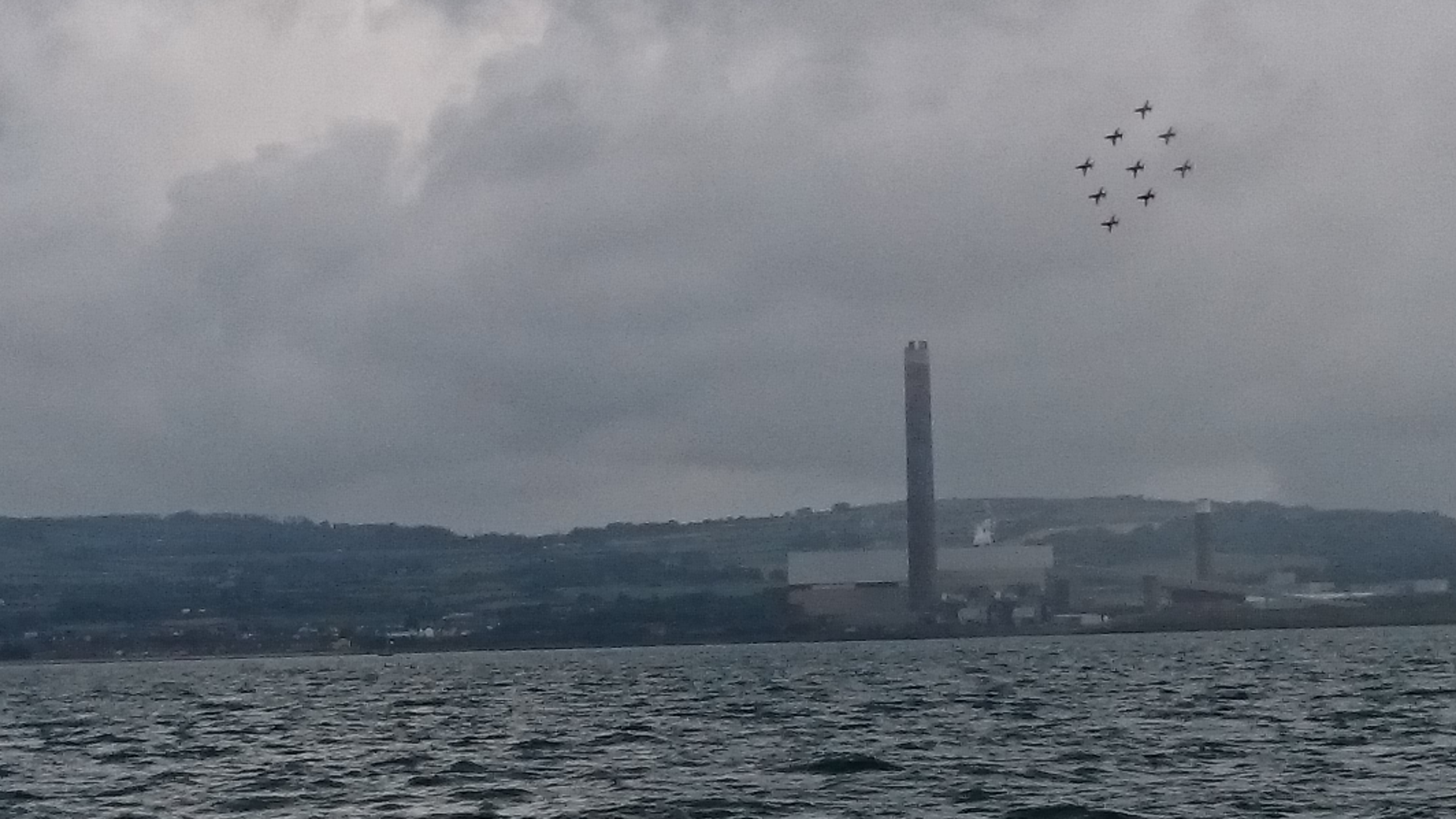
I had never been to sea on such a vessel before and did not know what to expect but skipper Michael Brogan from Kinvara and his crew made me welcome. There was a bit of rain as we left Belfast Lough but by the time we were off Carrickfergus, passing the Kilroot power station, we were in an excellent position to enjoy the aerial acrobatics of the Red Arrows display team.

Red Arrows in formation passing Kilroot Photo:  © Michael Fisher

Red Arrows in formation passing Kilroot Photo: © Michael Fisher

With the sails up, the boat reached a speed of ten knots and made good time past Islanmagee, where the Gobbins coastal path is being repaired, and near Larne.

Is that a plane I see above me? Red Arrows planes pass over Mac Duach in Belfast Lough Photo:  © Michael Fisher

Is that a plane I see above me? Red Arrows planes pass over Mac Duach in Belfast Lough Photo: © Michael Fisher

Eight hours after leaving Belfast, Mac Duach was rounding Fair Head and the small harbour of Ballycastle came into view, where the Rathlin ferry was about to depart. There was some puzzlement about the colour of the water as we arrived: a large brown slick covered the area. This was caused by the heavy rainfall which had washed away sections of the banks along the river and caused manholes along the street in the town to be pushed up, requiring the intervention of the fire service.

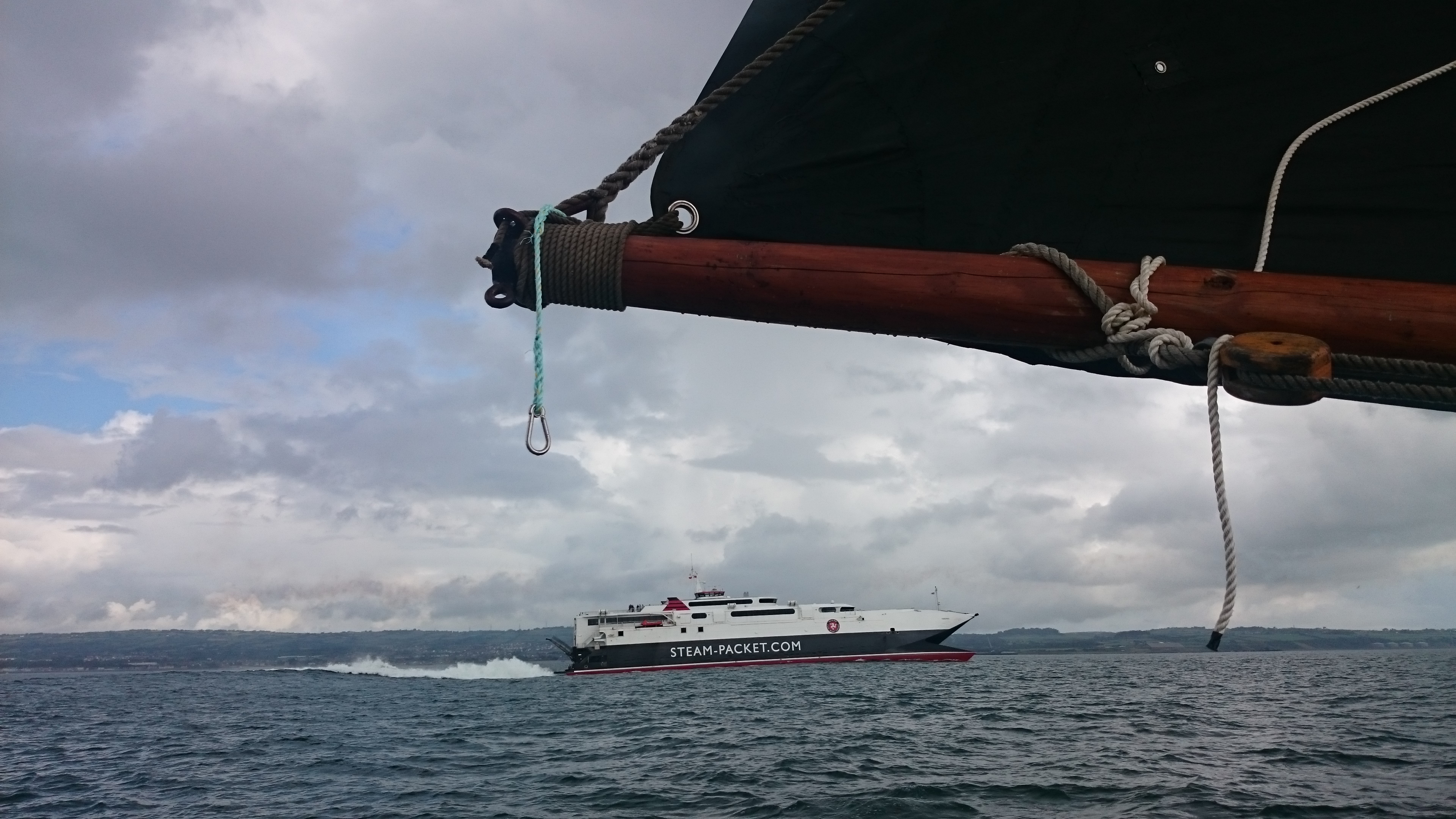
Isle of Man ferry heads towards Douglas   Photo:  © Michael Fisher

Isle of Man ferry heads towards Douglas Photo: © Michael Fisher

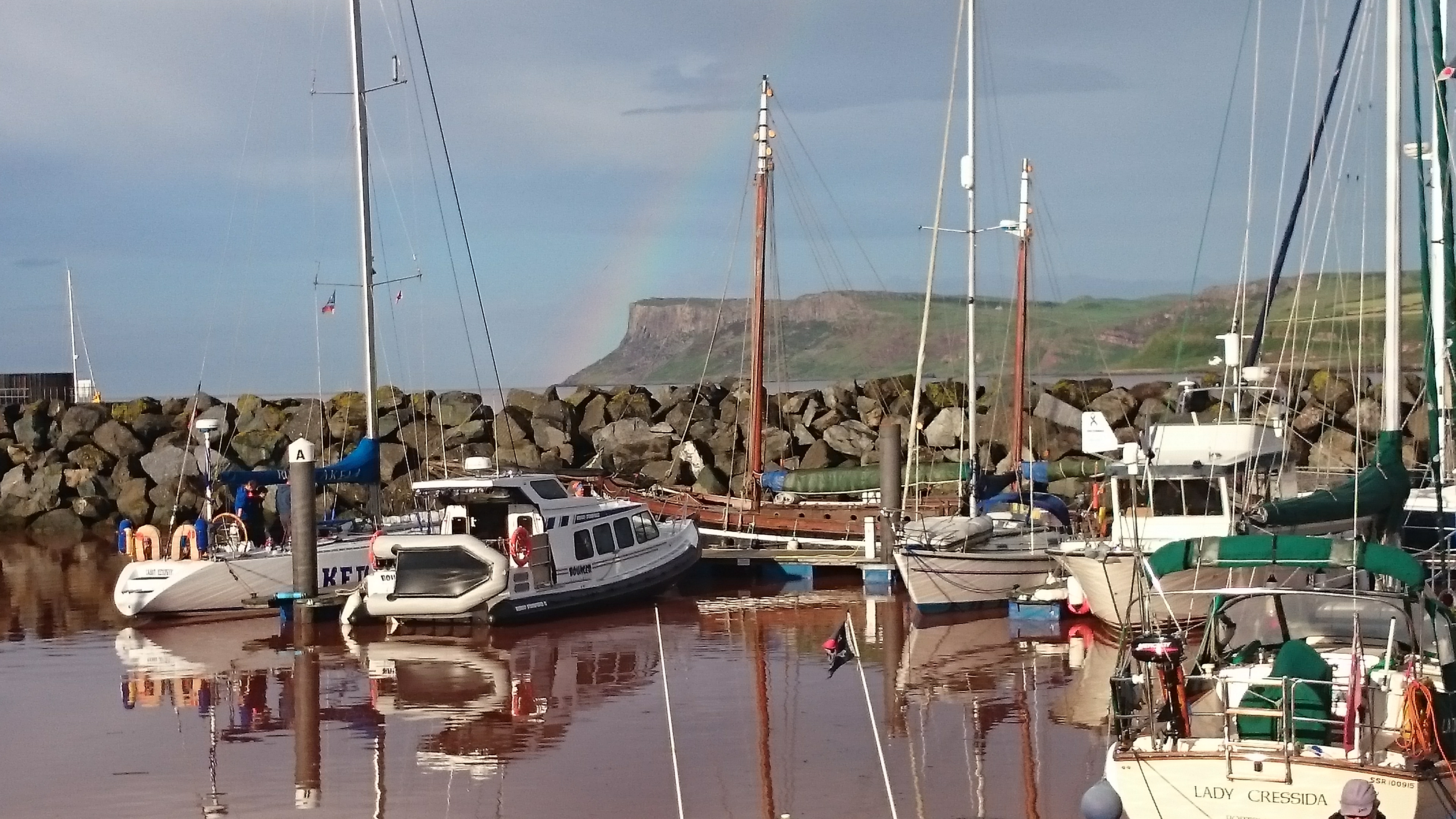
As we stepped onto dry land again, the sun came out and a rainbow could be seen above Ballycastle and also further away at Fair Head.

Ballycastle Harbour with Fair Head in background and Mac Duach in middle Photo:  © Michael Fisher

Ballycastle Harbour with Fair Head in background and Mac Duach in middle
Photo: © Michael Fisher

A nice end to a day’s sailing, marking a great maritime weekend.

Ballycastle Harbour with rainbow    Photo:  © Michael Fisher

Ballycastle Harbour with rainbow Photo: © Michael Fisher

TALL SHIPS DAY ONE

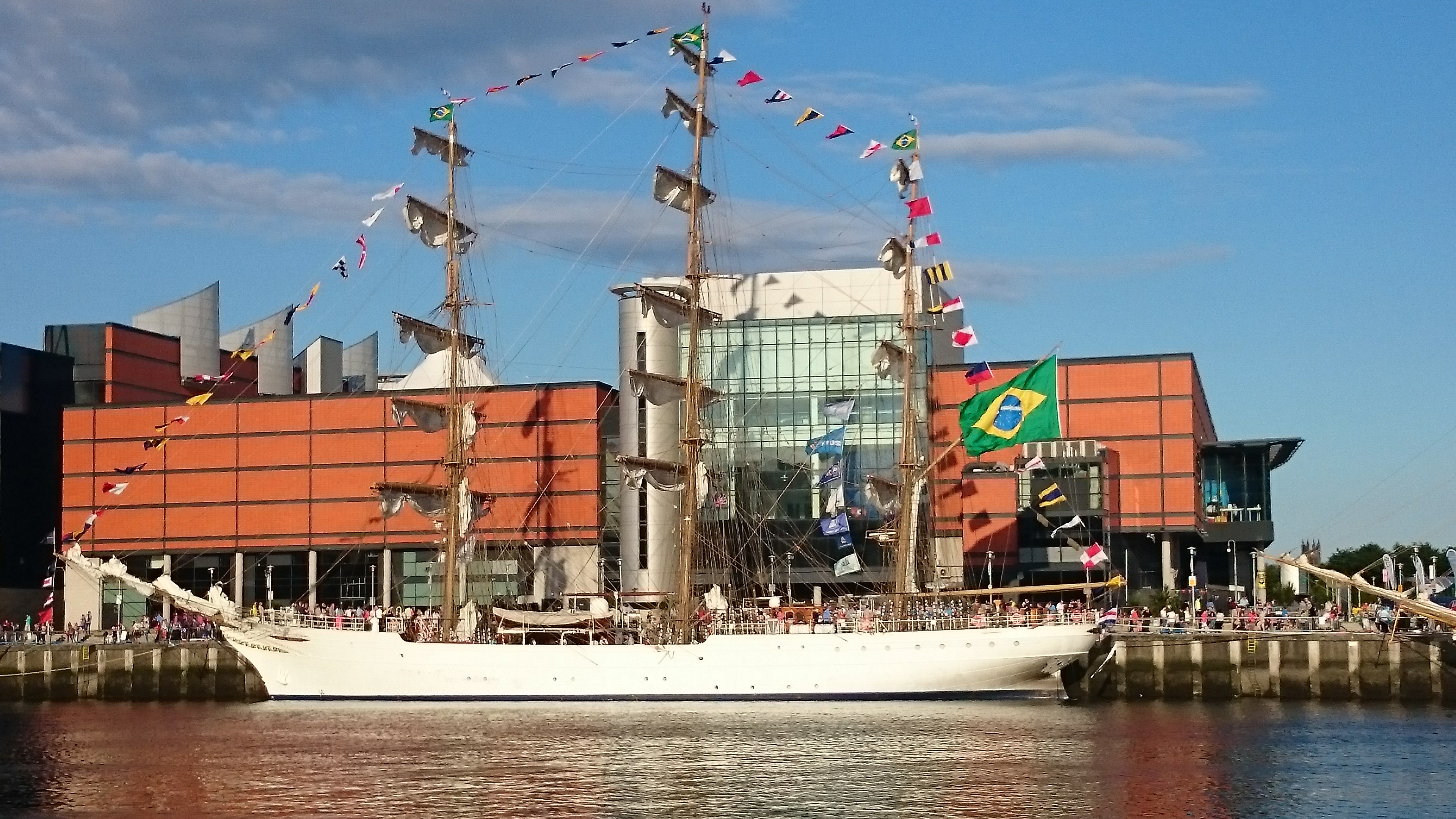
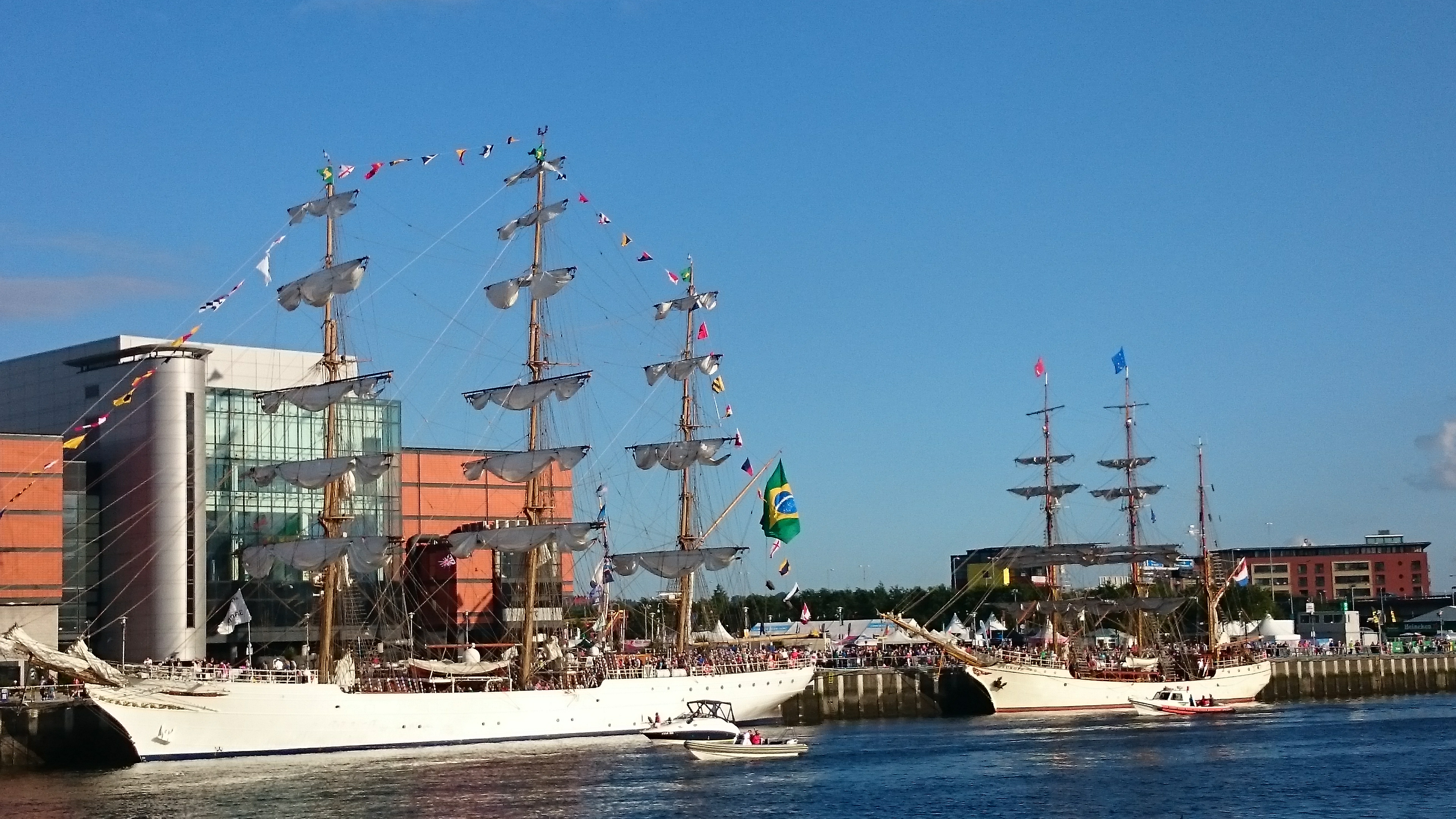
Cisne Blanco from Brazil moored at the SSE Arena drew the crowds on Day 1  Photo:  © Michael Fisher

Cisne Blanco from Brazil moored at the SSE Arena drew the crowds on Day 1
Photo: © Michael Fisher

A great spectacle as the Tall Ships 2015 flotilla arrived in Belfast with crowds packing the area around the Titanic Quarter, over the walkway beside the Lagan Weir and across the quays past Clarendon Dock to York Dock and finally Pollock Dock, where the event was centred in 1991. Quite a contrast with the scale of this year’s truly international event.

Tall Ships 2015 Belfast  Photo:  © Michael Fisher

Tall Ships 2015 Belfast Photo: © Michael Fisher

HERITAGE CONFERENCE IN MONAGHAN

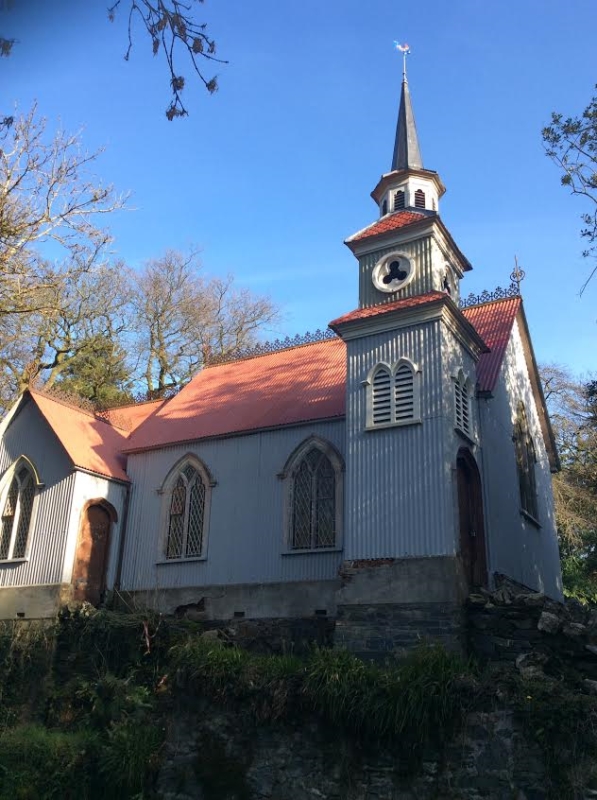
Tin Church, Laragh, Co. Monaghan  Photo: European Heritage Days

Tin Church, Laragh, Co. Monaghan Photo: European Heritage Days

Summer School Explores Historic Buildings of Monaghan and Armagh  Northern Standard Thursday 25th June

The Ulster Architectural Heritage Society and Irish Georgian Society came together in an exciting new initiative to provide a cross border summer school in Monaghan and Armagh from Thursday until Saturday. Conservation without Frontiers explored and discussed built heritage in the context of both counties, showcasing the best they have to offer in terms of their history and historic buildings, such as Castle Leslie in Glaslough and the Tin Church in Laragh.

St Macartan's Cathedral, Monaghan

St Macartan’s Cathedral, Monaghan

The first section of the summer school was opened on Thursday in Armagh by a representative of the Northern Ireland Department of Environment Minister Mark H. Durkan. It then moved to Monaghan, where Minister for the Arts, Heritage and the Gaeltacht opened day two. The Summer School concluded on Saturday at the Tyrone Guthrie Centre in Annaghmakerrig near Newbliss with a celebratory picnic lunch.

In Armagh, the school undertook visits to both Cathedrals, the former Primate’s Chapel and Palace, the Mall and the Market Square. In Monaghan the participants visited Castle Leslie, Glaslough, and community-led projects such the Dawson Mausoleum, Dartrey and St Peter’s Church, Laragh. Tours and visits were guided by experts in the field including well known academics, architectural historians, architects, planners, conservation and heritage officers. A walking tour of Monaghan on Friday will be led by Kevin V. Mulligan from Carrickmacross. Speakers included Dawson Stelfox, Dr Andrew McClelland, Professor Alistair Rowan, and Bishop Emeritus Dr Joseph Duffy. The event brought together local people, enthusiasts, students and practitioners to learn from the unique buildings of both counties.

Twenty students from the the island of Ireland, Britain and Europe benefited from funded places to complement their ongoing studies and help develop their knowledge of conservation issues. They also took part in a heritage based competition proposing new ideas for  the restoration of Hope Castle, Castleblayney and an empty site on Upper English Street in Armagh. The event was supported by Monaghan County Council, Armagh City and District Council, the Heritage Council and the Department of Arts, Heritage and the Gaeltacht.

Minister Durkan said: ‘I am particularly supportive of this initiative as it brings together heritage expertise from both sides of the border to help develop and realise our mutual  interest in conservation and regeneration for community benefit.  Our built heritage is a catalyst for so many things that are vital to the lifeblood of our villages, towns and cities.  It is therefore important that we work together to realise its full potential. My  department  continues to work in partnership with the Ulster Architectural Heritage Society and I commend both it  and the Irish Georgian Society for their vision in arranging this summer school.’

WALK IN CARRICKMACROSS (4)

Holy Well, Carrickmacross   Photo:  © Michael Fisher

Holy Well, Carrickmacross Photo: © Michael Fisher

Walk Around Carrickmacross

Northern Standard Carrickmacross News Thursday 28th June

4. HOLY WELL AND PENNY BRIDGE

Holy Well, Carrickmacross   Photo:  © Michael Fisher

Holy Well, Carrickmacross Photo: © Michael Fisher

Leaving the Fever Hospital, the walk route proceeds from the Shercock Road and turns back towards the town towards Mullinary Street, formerly known as Penny Street as it is close to Penny Bridge. The name was formally changed by referendum in 1956. At the footpath on the right hand side (heading towards town) there was a holy well, the site of which is marked by a large stone. The inscription on the stone contains a cross with the sign ‘IHS’ (a symbol for Jesus) at the top. It proclaims that this water supply was erected by EPS (EP Shirley, the landlord) in the year of 1876. There is also a Bible quotation from John, chapter 4:

“Who drinks hereat shall thirst again

But waters are in store

So pure so deep that all who will

May drink and thirst no more”.

The well was covered in and was replaced by a pump, which now forms an attractive part of the annual Tidy Town display.

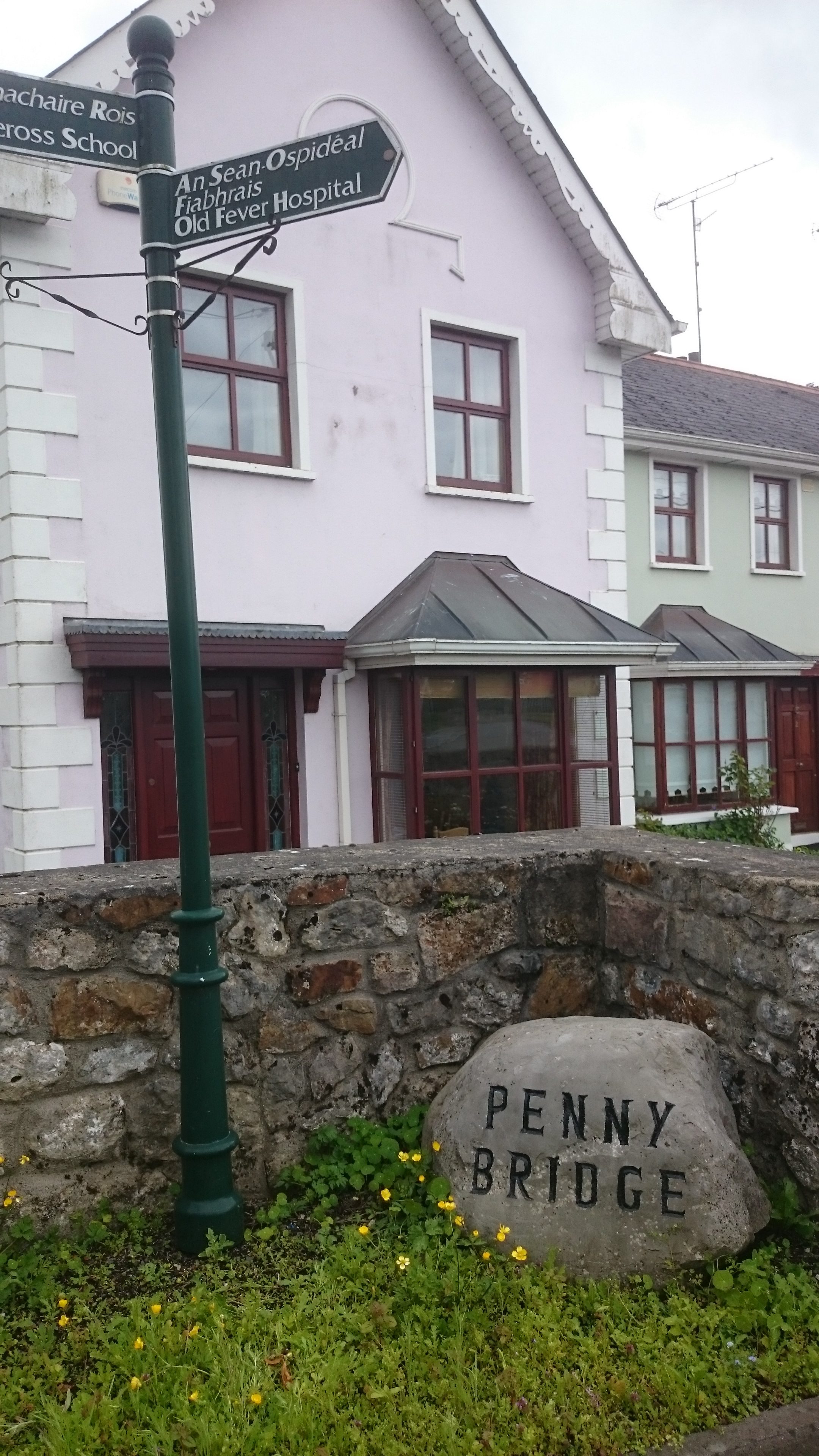
Penny Bridge, Carrickmacross   Photo:  © Michael Fisher

Penny Bridge, Carrickmacross Photo: © Michael Fisher

Nearby a stone marks the site of what was once the Penny Bridge on one of the entrances to the town. It got its name from the one penny cost of the toll that used to be charged for those using the bridge over the river that feeds into Lough na Glack. According to Henderson’s Carrickmacross directory for 1856, boot and shoemaker Patrick Tumelty had a premises at the Penny Bridge and other members of the Tumelty clann were in the same trade at Main Street and Monaghan Street.

WALK IN CARRICKMACROSS (3)

Former Fever Hospital, Carrickmacross  Photo:  © Michael Fisher

Former Fever Hospital, Carrickmacross Photo: © Michael Fisher

WALK AROUND CARRICKMACROSS   Northern Standard  Carrickmacross News  Thursday 18th June

3. FEVER HOSPITAL

Leaving the Toll House the guided walk proceeds through the mall of the new shopping centre and takes the road down the hill towards the Shercock Road roundabout.

Stone Plaque above front entrance at former Fever Hospital, Carrickmacross, showing construction date 1842   Photo:  © Michael Fisher

Stone Plaque above front entrance at former Fever Hospital, Carrickmacross, showing construction date 1842 Photo: © Michael Fisher

The first building on the left hand side is the old fever hospital. It was designed by architect George Sudden and according to the stone plaque above the main entrance, it opened in 1842. Like many other buildings on the tour, it was constructed from local limestone. In those days medical staff had very little training and care was primitive. The nurses and doctors were called to deal with infections such as TB, pneumonia, typhoid, and smallpox.

A plaque recalls the occasion when the Inniskeen poet Patrick Kavanagh, then in his 20s, was treated there for typhoid fever and quotes from his prose work “The Green Fool”. One of the three great laughs he had in his life, he says, was caused by a joke told by the night nurse in the hospital. The hospital was in use until the 1950s. In 1962 the building was purchased by the Fane Valley Co-Operative and was used for a time as a jam factory.

Across the road from the hospital is the restored Workhouse building. Opened in 1843 it was one of 157 that were built in the era of the Great Famine. The Workhouse is not included on the walking tour but is open to visitors during the week.

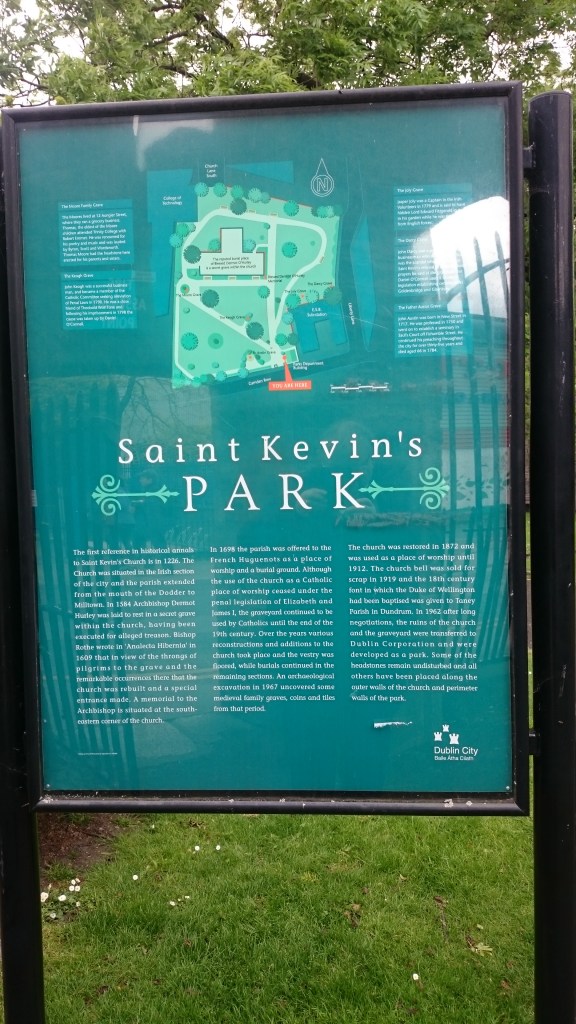
ST KEVIN’S PARK DUBLIN

Saint Kevin's Park, Dublin. Photo:  © Michael Fisher

Saint Kevin’s Park, Dublin. Photo: © Michael Fisher

SAINT KEVIN’S PARK
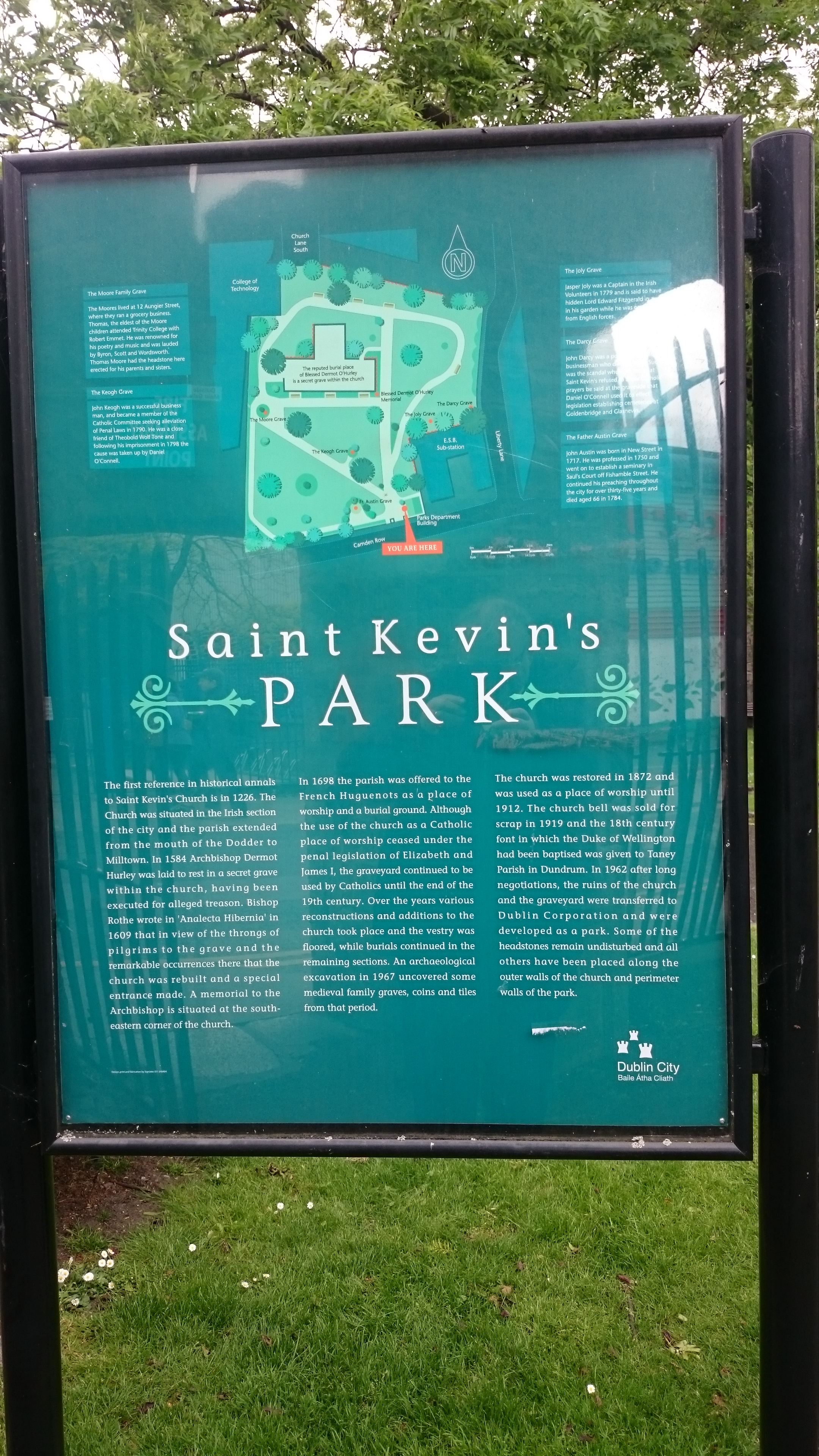
The first reference in historical annals to Saint Kevin’s Church is in 1226. The Church was situated in the Irish section of the city and the parish extended from the mouth of the Dodder to Milltown. In 1584 Archbishop Dermot Hurley was laid to rest in a secret grave within the church, having been executed for alleged treason. Bishop Rothe wrote in ‘Analecta Hibernia’ in 1609 that in view of the throngs of pilgrims to the grave and the remarkable occurrences there that the church was rebuilt and a special entrance made. A memorial to the Archbishop is situated at the south-eastern corner of the church.

In 1698 the parish was offered to the French Huguenots as a place of worship and a burial ground. Although the use of the church as a Catholic place of worship ceased under the penal legislation of Elizabeth and James I, the graveyard continued to be used by Catholics until the end of the 19th century. Over the years various reconstructions and additions to the church took place and the vestry was floored, while burials continued in the remaining sections. An archaeological excavation in 1967 uncovered some medieval family graves, coins and tiles from that period.

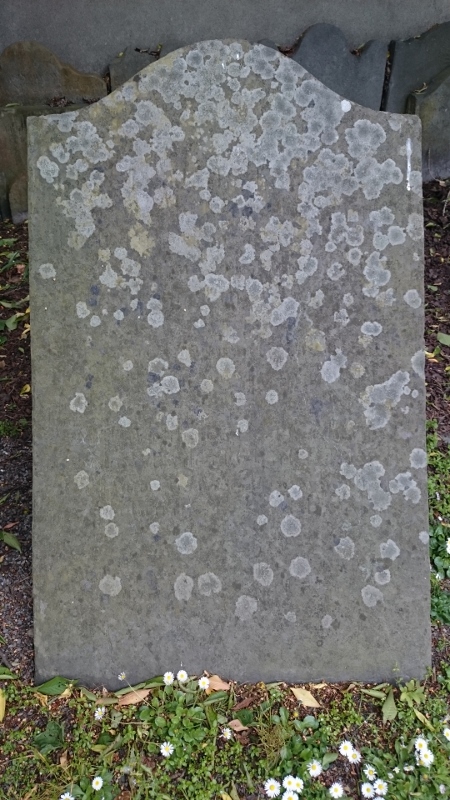
The church was restored in 1872 and was used as a place of worship until 1912. The church bell was sold for scrap in 1919 and the 18th century font in which the Duke of Wellington had been baptised was given to Taney church in Dundrum. In 1962 after long negotiations, the ruins of the church and the graveyard were transferred to Dublin Corporation and were developed as a park. Some of the headstones remain undisturbed and all others have been placed along the outer walls of the church and perimeter walls of the park.
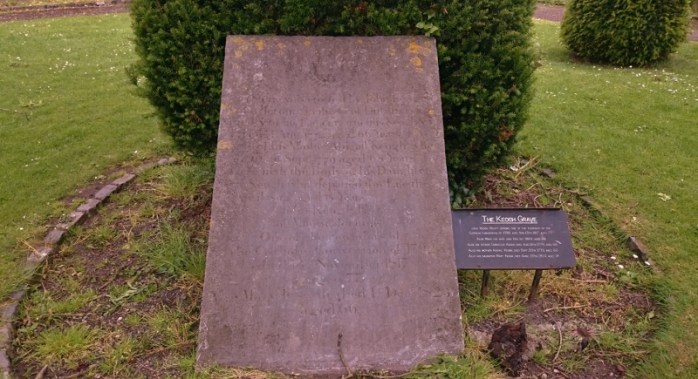
The Keogh Grave, St Kevin's Park Photo:  © Michael Fisher

The Keogh Grave, St Kevin’s Park Photo: © Michael Fisher

THE KEOGH GRAVE
John Keogh, Mount Jerome, one of the founders of the Catholic Convention of 1792, died Nov. 13th 1817, aged 77.
Also his wife Mary, died Dec. 1st 1823, aged 66.
Also his father Cornelius Keogh, died August 19th 1774, aged 66.
Also his mother Abigail Keogh, died Sept. 20th 1779, aged 66.
Also his daughter Mary Keogh, died April 20th 1804, aged 18.
John Keogh was a successful businessman, and became a member of the Catholic committee seeking alleviation of Penal Laws in 1790. He was a close friend of Theobald Wolfe Tone and following his imprisonment in 1798 the cause was taken up by Daniel O’Connell.

The Moore Grave, St Kevin's Park Photo:  © Michael Fisher

The Moore Grave, St Kevin’s Park Photo: © Michael Fisher

THE MOORE GRAVE
John Moore Esq. Formerly Barrack Master at Islandbridge, (in the County of) Dublin, died Dec. 17th 1825, aged 84 (years).
Also Anastasia Moore, alias Coda, his wife, died May 8th 1832, aged 68.
Also six of their children who died young and their daughter Ellen, died Feb. 4th 1846.
Deeply mourned by her brother, Thomas Moore, the bard of his much beloved country, Ireland.
The Moores lived at 12 Aungier Street, where they ran a grocery business. Thomas, the eldest of the Moore children, attended Trinity College with Robert Emmett. He was renowned for his poetry and music and was lauded by Byron, Scott and Wordsworth. Thomas Moore had the headstone here erected for his parents and sisters.

The Darcy Grave, St Kevin's Park Photo:  © Michael Fisher

The Darcy Grave, St Kevin’s Park Photo: © Michael Fisher

THE DARCY GRAVE
Belongs to John Darcy, Brewer, Usher’s St.
His father, Mathew Darcy, died August 6th 1824.
Also his mother, Mrs Mary Darcy, died March 30th 1814.
Also his eldest brother, Arthur Darcy, died Sept. 7th 1823.
John Darcy was a popular Catholic businessman who died in 1825. Such was the scandal when the rector at St Kevin’s refused to allow Catholic prayers be said at the graveside that Daniel O’Connell used it to effect legislation establishing cemeteries at Goldenbridge and Glasnevin.

The Joly Grave, St Kevin's Park Photo:  © Michael Fisher

The Joly Grave, St Kevin’s Park Photo: © Michael Fisher

THE JOLY GRAVE
Jasper Joly, died Nov. 9th 1823, aged 84.
Also his wife Mary, died Dec. 13th 1825, qged 84.
Also Catherine, wife of Charles Joly of Harcourt Tce. Died Feb. 27th 1858, aged 43. Also Charles Joly.
Jasper Joly was a Captain in the Irish Volunteers in 1779 and is said to have hidden Lord Edward Fitzgerald in a well in his garden while he was on the run from English forces.

Memorial to Archbishop of Cashel Dr Dermot O'Hurley in St Kevin's Park, Dublin Photo:  © Michael Fisher

Memorial to Archbishop of Cashel Dr Dermot O’Hurley in St Kevin’s Park, Dublin Photo: © Michael Fisher

BLESSED DERMOT O’HURLEY ARCHBISHOP OF CASHEL 1531-1584 (see article yesterday)
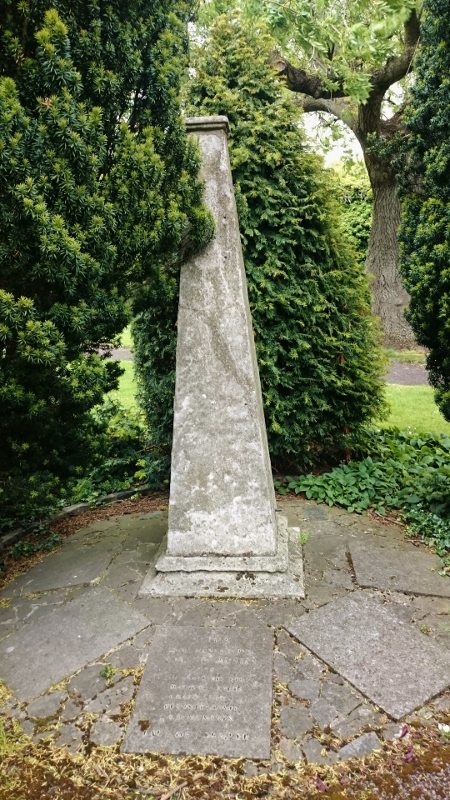
The Fr John Austin Grave, St Kevin's Park Photo:  © Michael Fisher

The Fr John Austin Grave, St Kevin’s Park Photo: © Michael Fisher

FR JOHN AUSTIN SJ GRAVE  (as transcribed by Bowden)
“To the memory of
Rev John Austin
Of the City of Dublin, a Priest,
And until the suppression of the Society of Jesus,
A professed Jesuit;
During six and thirty years
A pious learned and indefatigable labourer
In the vineyard (sic.) of the Lord.
Who after deserving well
Of the rich, whom he admonished,
Of the poor, whom he relieved,
Of youth, whom he instructed,
Of the orphan, to whom he was a father,
Of all ranks of men whom he,
By making himself all in all,
Was active in opening to Jesus Christ.
On the 29th September, 1784
Closed, in the 66 year of his age,
A life, worn out in the sight of the Lord.
Religion
Weeping for her faithful Minister,
On the 8th December 1786,
With grateful hand
Erected this monument”
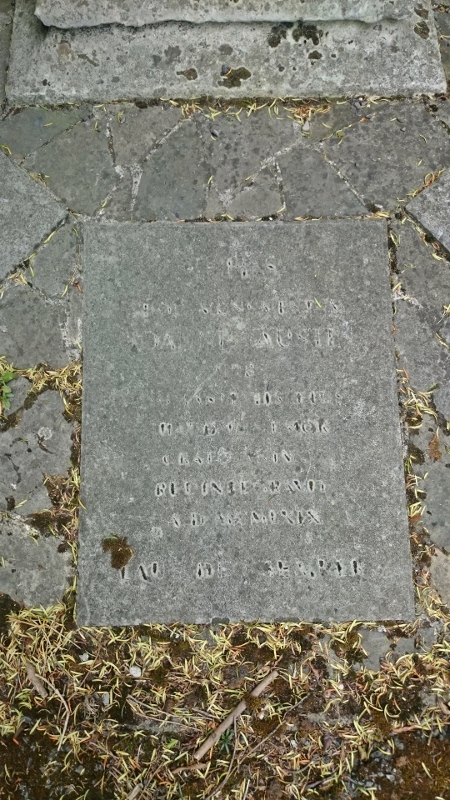
The Fr John Austin Grave, St Kevin's Park Photo:  © Michael Fisher

The Fr John Austin Grave, St Kevin’s Park Photo: © Michael Fisher

John Austin was born in New Street in 1717. He was professed (as a priest) in 1750 and went on to establish a seminary in Saul’s Court, off Fishamble Street. He continued his preaching throughout the city for over thirty-five years and died aged 66 in 1784.

The Fr John Austin SJ Grave, St Kevin's Park Photo:  © Michael Fisher

The Fr John Austin SJ Grave, St Kevin’s Park Photo: © Michael Fisher

Perhaps the Parks Department along with the Jesuits might consider a tidy-up of the grave sign and surrounding this summer, in time for Fr Austin’s anniversary in September. It seems a while since any maintenance was undertaken.

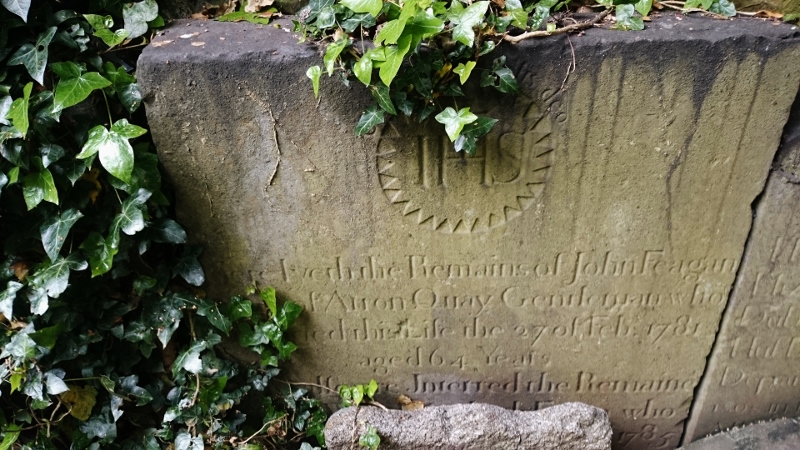
Headstone with 'IHS' sign for grave of nJohn Feagan, Gentleman of Arron (Arran) Quay, Dublin, in St Kevin's Park.  Photo:  © Michael Fisher

Headstone with ‘IHS’ sign for grave of nJohn Feagan, Gentleman of Arron (Arran) Quay, Dublin, in St Kevin’s Park. Photo: © Michael Fisher

HOME BREW IN KAVANAGH COUNTRY

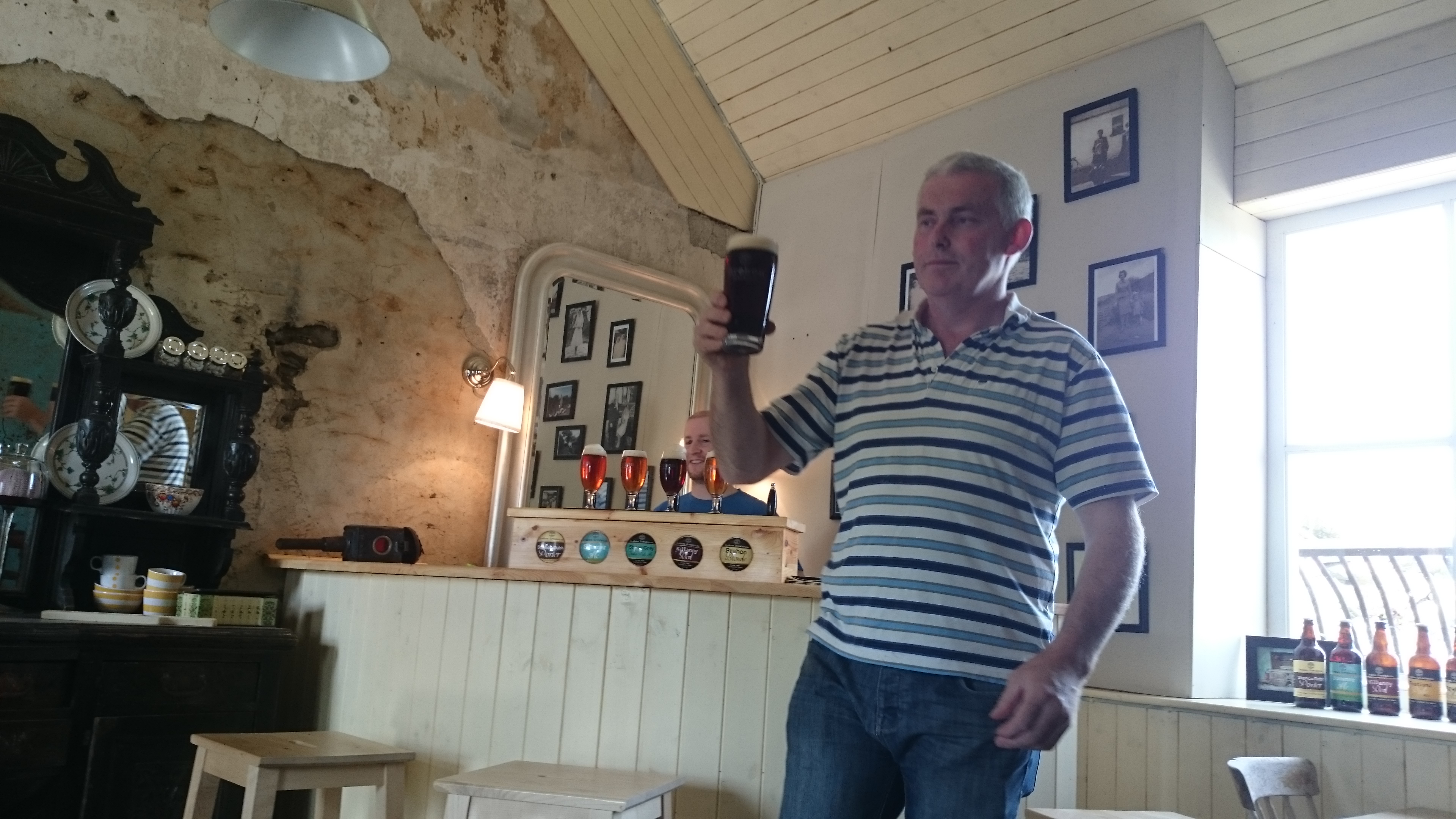
Seamus McMahon in the converted homestead that now serves as a visitor centre at the Brehon Brewhouse, Dunelty  Photo:  © Michael Fisher

Seamus McMahon in the converted homestead that now serves as a visitor centre at the Brehon Brewhouse, Dunelty Photo: © Michael Fisher

CRAFT BREWERY EXPANDS AFTER SUCCESSFUL YEAR 

Michael Fisher Northern Standard  Carrickmacross News  Thursday 11th June

Driving up the laneway to Seamus McMahon’s homestead at Dunelty, Inniskeen, you might think you were entering a dairy farm. On one side there is a large milking parlour for his herd of 120 cows. But a bit further on in what was once a calf shed, there is now an expanding alternative business, the Brehon Brewhouse.

It’s the only brewery of its type on a dairy farm, as Seamus points out. His cows continue to be milked twice daily. But it is beer, rather than milk, which is beginning to bring in more revenue.

The price of milk has continued to fluctuate and milk quotas were abolished two months ago. So this new enterprise was added to reduce the reliance on an income dependent solely on milk.

The Brehon Brewhouse started off as a small-scale venture a year ago, producing four types of bottled beer, crafted by hand. Seamus says their ambition was simple, to produce distinctive beers that reflected the trend towards all things craft and artisan.

After a new roof was put on the shed, along with a roller shutter door, a coat of paint and electrical installation, the space was ready for delivery of plant in April 2014 and the first brew was available in time for the Carrickmacross Festival.

Seamus decided that there was room for expansion and he ordered two large new tanks from China, as the cost was much better. By combining the fermenting and the conditioning processes in the same tank, this will allow the mini brewery to double the production capacity. The new tanks costing €25,000 will make the brewing process a lot more efficient, according to Head Brewer Philip Bizzell from Dublin, who has seven years’ experience of home brew. He said there would be less labour involved and the process would also be more hygienic.

He showed me how they started the brewing process by taking local water and then mashing it with the finest of barley malts.

Some of the malt comes from Germany, some from Britain and some from Ireland. A new malt supplier based nearby in County Louth has just been found. In the copper pans, fragrant hops from around the world are added, depending on the particular beer being produced that day.

The hopped wort is then cooled rapidly through the heat exchanger with chilled water from a nearby lake. After fermentation the beer is filtered and conditioned, if it is to be kegged, or just conditioned if it is to be bottled. One of Seamus’s four daughters Cait was busy working in the bottling area, putting labels on the beer bottles when he showed me the operation. Each blend of beer has a different coloured top, in order to help distinguish it. It usually takes five people two hours to label 3000 bottles when a brew is completed. The beer is left in the bottles to condition, but it can also be supplied in kegs.

Seamus and his wife Siobhán have also converted the old family house just behind the brewery into a visitor centre to host tasting events. Seamus lived there for the first six years of his life. It has its own small bar and some antiques, including the old family range and a vintage bottler and capper. The craft brewery is a potential jewel in the crown for tourism in County Monaghan, according to Bill Cotter of the South Monaghan Tourism Forum.

The beers produced are available in several pubs in County Monaghan, in stores such as SuperValu Carrickmacross and in the Íontas Centre, Castleblayney and the Garage Theatre. They are being distributed nationwide and now the push will be on to export them to the United States and the UK as part of a promotion of Irish craft beers.

The Brehon Blonde is a very pale, golden beer. Ulster Black is a hand crafted Irish stout. Stony Grey IPA takes its name from the stony grey soil of Monaghan. Killanny Red is an Irish ale. A Summer Ale is also available.

This weekend there will be a double celebration for the McMahon family in the old homestead, Coinciding with the expansion and the first year in business, there will be a party to congratulate the couple’s eldest daughter Ellen, who has graduated as a doctor from UCC. They will be joined by Ruth who is studying to be a physiotherapist in Liverpool, Cait, who is training in Dublin to be a national school teacher and by their youngest daughter Bella, a transition year student at St Louis Secondary School, Carrickmacross. It promises to be a busy year ahead for the Brehon Brewhouse.

WALK IN CARRICKMACROSS (2)

WALK AROUND CARRICKMACROSS  

Northern Standard Carrickmacross News Thursday 11th June

The Toll House, Carrickmacross  Photo:  © Michael Fisher
The Toll House, Carrickmacross Photo: © Michael Fisher

2. THE TOLL HOUSE

Just up from The Shirley Arms Hotel on the same side of Main Street and in the forecourt of the modern shopping centre is a small single-storey picturesque building known as ‘The Toll House’. It forms an integral part of the former marketplace, standing across the street from the market buildings. It was built by the Shirley estate, as evidenced by the armorial plaque and the date, 1861, some thirty years after the hotel.

Each gable is surmounted by the fleur-de-lys as a reminder of the fact that the landlords could trace their descent through the Devereux family from the Plantagenets, former Kings of England.

The Toll House, Carrickmacross: Fleur-de-Lys decoration and Shirley crest dated 1861  Photo:  © Michael Fisher

The Toll House, Carrickmacross: Fleur-de-Lys decoration and Shirley crest dated 1861 Photo: © Michael Fisher

The architecture and detail of the Toll House link it with other Shirley estate buildings around the western side town. The other side was owned by the Bath estate. The Tudor-style detailing, with label-mouldings and typical doorway, enhances this modest building. It was used to collect market levies and tolls. Just outside it is a weighbridge platform. The rest of the weighing equipment was inside.

Thursday was traditionally market day in Carrick and a grain market was held on Wednesdays and Saturdays. Fairs were held on the second Thursdays of January, February, March, April, June and October and on predetermined dates during the other months. In 1897 the market weighmaster was J.T.Gibbings. Michael McCabe was the collector of tolls and Henry Russell was the clerk.

The building was used for a number of years to house the Lace Gallery, which then moved across the road to the Market Square in 1991. In the National Inventory of Architectural Heritage, the Toll House is described as having a pitched slate roof with tooled stone fleur-de-lys finials, cut-stone copings, and cast-iron rainwater goods. Exposed random squared sandstone walls with tooled sandstone skew-putts, armorial and date plaque to east elevation, and smooth raised quoins. Square-headed window openings having chamfered tooled sandstone surrounds and label-mouldings, stone sills and barred four-over-four pane timber sliding sash windows with ogee horns. Tudor-arch door opening having chamfered tooled sandstone surround, label-moulding and replacement timber door.

WALK IN CARRICKMACROSS (1)

The Shirley Arms Hotel, Carrickmacross  Photo:  © Michael Fisher
The Shirley Arms Hotel, Carrickmacross Photo: © Michael Fisher

WALK AROUND CARRICKMACROSS 

Northern Standard  Carrickmacross News  Thursday 4th June

The best way of learning about a town or city is to walk around it. So if you want to know more about the history of Carrickmacross, come and join the free walking tours every Saturday during the summer months. The ninety minute journey departs from the Court House at the top of the Main Street at 11am. Booking is not required, except for large groups. Children are welcome and will be given the opportunity to take part in a quiz during the walk. Come prepared for bad weather and wear comfortable walking shoes. For more details email info@carrickmacrosschamber.com or phone the Chamber of Commerce Secretary on (042) 9664833.

Learn about what happened during the War of Independence and about Famine Times in the Workhouse (which does not form part of the tour). Discover clues about the rivalries between the two major landlords who owned the town: the Shirleys of Lough Fea and the Bath Estate. Over the next few weeks, we hope to feature the stories of some of the historical buildings in Carrick.

The Shirley Arms Hotel with Shirley family crest, Carrickmacross  Photo:  © Michael Fisher
The Shirley Arms Hotel with Shirley family crest, Carrickmacross Photo: © Michael Fisher

1. The Shirley Arms Hotel is where the walking tour departs from. This hotel has existed since the early nineteenth century. In 2008 it re-opened after a major refurbishment and extension that included the retention of the original staircase in White’s Bar. The Shirley Arms Hotel is a protected structure and is of national importance.

In 1821 there were three hotels listed in Carrickmacross: the Commercial and Post Hotel and the Shirley Arms Hotel on Main Street and one smaller hotel on Bath Street. The Shirley Arms Hotel is a formal classical composition. The building sits in a prominent position on the former Shirley estate, forming part of the formal set-piece of what is now known as Courthouse Square, a neat and elegant closing of the two vistas of the Main Street and the Castleblayney Road.

In 1835 the hotel appears as a simple block with a small annexe to the north and gardens along Rope Walk. There was a stack yard with large warehouse and ancillary buildings in the courtyard to the west or rear of the hotel. Thirty years later the hotel had expanded to contain a larger annexe to the north, possibly used as a manager’s house and with two returns to the rear. These returns were removed to facilitate the building of the modern extension to the rear. Also in the twentieth century, the yard to the rear had become an enlarged closed courtyard and there was an additional yard surrounded by small store buildings to the west. The Inniskeen poet Patrick Kavanagh’s quote confirms its use as a storage yard, possibly for grain for the town’s many distilleries or for building materials:

Here was a toss-pit going strong in White’s Yard. ‘Heads another 

half-dollar, heads a half-dollar’. I was trusting to luck to lift me out of debt into flush prosperity”.  (from The Shirley Arms Hotel)

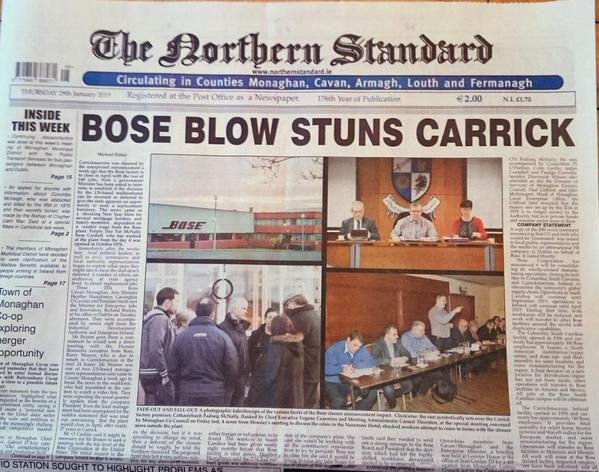
CLOCKING OUT AT BOSE

How I reported the closure of the Bose factory in January in The Northern Standard Photo: © Michael Fisher

How I reported the closure of the Bose factory in January in The Northern Standard Photo: © Michael Fisher
Clocking Out at Bose    Michael Fisher Northern Standard Thursday 28th May p.1
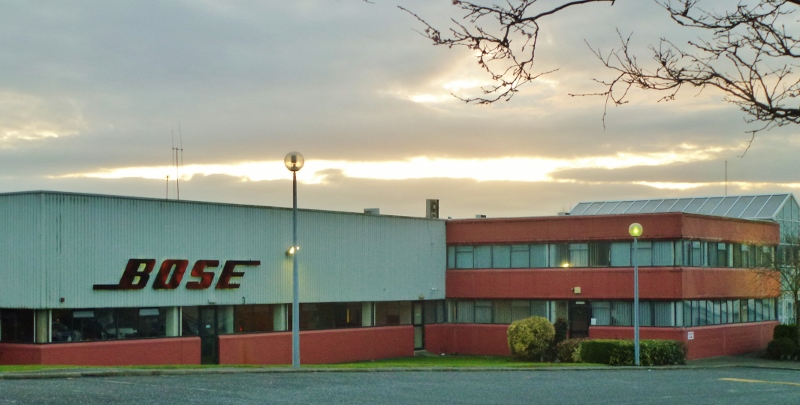
Workers at the Bose factory in Carrickmacross are clocking out for the last time today (Thursday), bringing to an end a proud history of 37 years of manufacturing high quality sound systems. The multinational company unexpectedly announced in January they would be closing the plant in April, with a loss of 140 jobs. Following representations to the management at their headquarters in the USA, the timeline was extended until the end of May.

Bose Factory Carrickmacross  Photo: © Michael Fisher

Bose Factory Carrickmacross Photo: © Michael Fisher

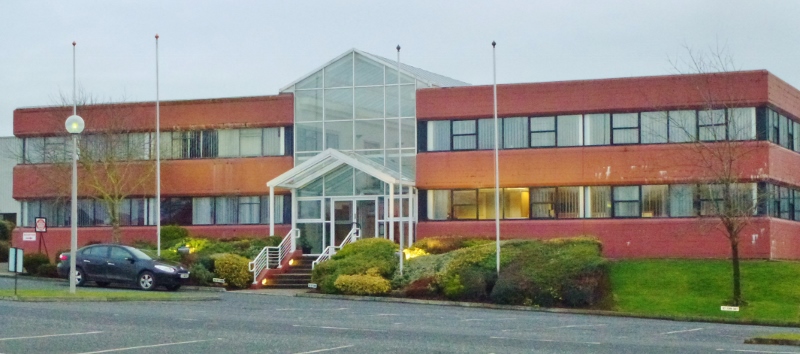
Despite attempts by the IDA and Enterprise Ireland to find a suitable replacement, no new investor has so far been found. The plant and machinery at the factory are due to be auctioned in a fortnight’s time and the building will be left as an empty shell. The site is in private ownership, having been purchased by a consortium of business people fourteen years ago. See story p.7.

Bose Factory Carrickmacross  Photo: © Michael Fisher

Bose Factory Carrickmacross Photo: © Michael Fisher