DESMOND FISHER (5)

Desmond Fisher

Desmond Fisher

The Editor of The Irish Catholic Michael Kelly, who was in contact with my father in recent years, has written the following summary of his life. It was only since 2011 that my father started to read the paper when he became ‘reconciled’ with the parish of Mount Merrion and a new Parish Priest, thanks to a Eucharistic Minister who brought him a copy every week. Ironically, the paper used to be owned by the Catholic Herald group, with whom my father had parted company ‘without regret’ in May 1966, having had ‘policy differences’ with the Board of Directors relating to his progressive coverage of the Vatican Council.

ic-logo
Death of Vatican II and RTE journalist Desmond Fisher

The death of journalist Desmond Fisher on December 30 at the age of 94 can truly be described as the end of an era. For decades, Mr Fisher was a prominent journalist who travelled extensively. He made a remarkable contribution to religious affairs, particularly during the Second Vatican Council (1962-65) where he reported from Rome for a time. In retirement, he was an occasional contributor to The Irish Catholic.

His reporting was acknowledged as incisive, with Vienna’s Cardinal Franz König reportedly saying that he learned “more of what is going on at the council from your superb reports” than he heard “while on the spot”.

Mr Fisher, as editor of The Catholic Herald, was in Rome in 1962 before the council opened. He also wrote for the Irish Press, giving Irish Catholics an insight into the momentous event that was Vatican II.

Article

According to Arthur Jones, who worked closely with Mr Fisher, when the latter resigned in 1966, an anonymous article in Herder Correspondence described the backdrop.

“Many bishops in England and Scotland, plus Dublin’s overbearing Archbishop John Charles McQuaid, had strongly opposed Fisher’s interpretation of council events – McQuaid called it ‘very objectionable.’

“When Fisher resigned, dozens of other bishop-attendees wrote to say quite the opposite,” according to Mr Jones.

He was born in Derry in 1920 and his first foray in to journalism was at the age of 25.

Mr Fisher and his wife, Margaret (Peggy), wed in 1948 and marked their 65th wedding anniversary in 2013. (66th in 2014)

For four years, Mr Fisher was with the Irish Press, and in 1954 became its London editor and daily columnist. He became the Press political correspondent and travelled widely in the early 1960s.

In 1962, he wrote in The Catholic Herald that a lay-owned and independent Catholic paper had “a freedom that is journalistically necessary if it is to carry out what it conceives to be its function and which relieves the hierarchy and the clergy generally of any responsibility for opinions expressed in its columns”.

It is a sentiment very close to the heart of The Irish Catholic.

He began working for RTÉ in 1967 and was, for 14 years, Ireland correspondent for The Economist.

Desmond Fisher died peacefully in Blackrock Hospice after a short illness. He is survived by his wife Peggy, daughter Carolyn, sons Michael, Hugh and John, daughters-in-law Evelyn, Ruth and Carmel, grandchildren Sarah, Clare, Sam and Lucy, sister Deirdre, sisters-in-law Nuala Fisher and Sr Nora Smyth, nephews, nieces and a wide circle of friends.

Anima eius et animae omnium fidelium defunctorum per Dei misericordiam requiescant in pace.

DESMOND FISHER (4)

My father Des Fisher was Editor of the Catholic Herald when Arthur Jones worked there. Their paths crossed again when Dad was guest Editor of the National Catholic Reporter in Kansas City MO in 1980. Arthur kept in touch over the years and recently sent my father a copy of his new book on the history of NCR, which he read with interest.

In September 2011 Arthur Jones visited Desmond Fisher in Dublin. He then travelled to Belfast to meet me and he gave an interview to the BBC Radio Ulster ‘Sunday Sequence’ programme presented by William Crawley. He wrote to me before departing from Baltimore, Maryland, on the trip:

ARTHUR JONES:

Liverpool-born journalist Arthur Jones entered Catholic journalism in America in 1962 on the Catholic Star Herald in New Jersey, before the 1962-65 Second Vatican Council began. The Ruskin College, Oxford-educated Jones was soon covering the “social gospel” issues: poverty, racism, traveling with the migrant farmworkers. At the highest levels he covered the first meetings between the US and Latin American hierarchies. In 1963 he used his British passport to report from Cuba on the suppression of the church under Castro. The following year he wrote the first extensive coverage of the Pius XII and the Jews drama. In 1965 he was on Fleet Street writing for the Catholic Herald where Irish journalist Desmond Fisher, later RTÉ Head of Current Affairs, was editor. Forty five years later, “we’re still fighting with one another, trying to outdo each other’s stories and jibes.” They lunched together in Dublin last Saturday (September 3rd **2011**): combined ages 166.

In 1975 he became editor of the independent National Catholic Reporter and expanded the newspaper’s range and investigative reporting in Central and Latin America, Rome and, most particularly, the United States. After serving also as the paper’s publisher and president of the company, in 1980 he stepped aside to return to reporting as editor-at-large, covering the globe, acting periodically as Washington correspondent, moving back to national and by the mid-1980s,  building the case regarding clerical sexual abuse.

in June 1985, seventeen years before the first secular U.S. national coverage, Jones broke wide open the American sexual abuse crisis in the National Catholic Reporter…Jones is the author of a dozen books, and has a separate career world as an economic and financial writer. He’s a former New York associate editor and European bureau chief of Forbes Magazine, a business magazine, a former FT correspondent, and, he says, “more besides.” He has worked for the National Catholic Reporter for 35 years, beginning as editor and after serving as editor-and-publisher, slowly worked his way down the ladder to become a reporter again.

Vatican II reporter Desmond Fisher dies at age 94

With the death on Dec. 30 of the noted Irish Catholic writer Desmond Fisher at age 94, the legion of writers who covered the Second Vatican Council (1962-65), has thinned practically to vanishing point.
Desmond Fisher  Photo: NCR/Pam Bauer

Desmond Fisher Photo: NCR/Pam Bauer

Fisher, as editor of The Catholic Herald on London’s Fleet Street, was in Rome in 1962 before the council opened to set up the Herald’s coverage. (His anecdote of Pope John XXIII from that time appeared in NCR’s 2012 Vatican II anniversary special. Fisher was also NCR guest editor for three weeks in 1980 and an occasional contributor.)

Fisher himself covered the 1963 and 1964 sessions of the council for the Herald and the Irish Press Group. Vienna’s Cardinal Franz König said in a note to Fisher that he learned “more of what is going on at the council from your superb reports” than he heard “while on the spot.”

In equal measure, Fisher’s council coverage offended some cardinals, not least Cardinal John Heenan of Westminster, England. The Catholic Herald’s owners — whether pressured by Heenan or not — recalled Fisher to London.

When Fisher resigned in 1966, an anonymous article in Herder Correspondence described the backdrop. Many bishops in England and Scotland, plus Dublin’s over-bearing Archbishop John McQuaid, had strongly opposed Fisher’s interpretation of council events — McQuaid called it “very objectionable.” When Fisher resigned, dozens of other bishop-attendees wrote to say quite the opposite.

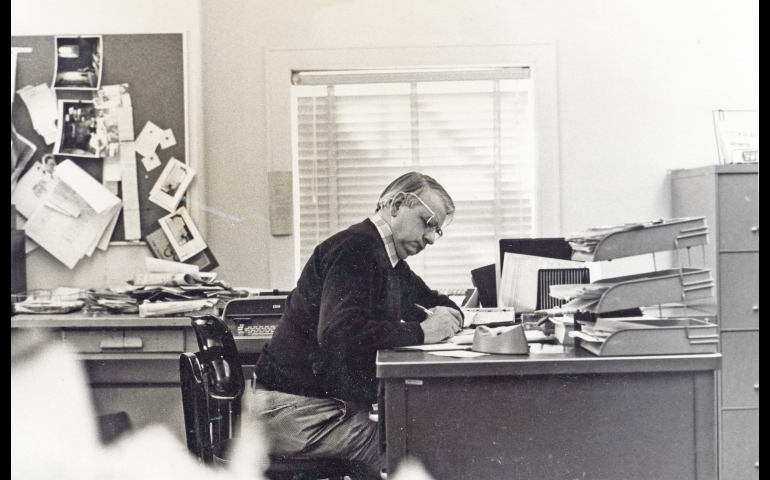
Desmond Fisher in NCR Newsroom 1980  Photo: NCR/Pam Bauer

Desmond Fisher in NCR Newsroom 1980 Photo: NCR/Pam Bauer

Fisher was born Derry, Ireland, on Sept. 9, 1920. Ireland was still a united land: This was prior to the “partition” that created Northern Ireland.

His father, who worked for a firm of wholesale wine and tea shippers — which explains in part Fisher’s own fondness for and knowledge of wine — moved to Dublin to establish an office there.

At age 11, Fisher won the all-Ireland scholarship that provided five years of secondary education at a school run by a religious order. He took the education, but not religious orders. His Irish, Greek and Latin were exceptional, and at 91 he completed a new translation of the Stabat Mater.

With a bachelor’s degree from University College Dublin, his first job, at age 25, was assistant to the editor of The Nationalist and Leinster Times. He became an experienced copy editor and reporter. His first editorial said, “True peace cannot be based on fear. For true peace transcends the bounds of policy and diplomacy. … It must be founded on freedom and justice, on the recognition that man is a spiritual being created for an eternal destiny and not a pawn in the game of power politics.”

Sixty-five years later, Fisher remarked, “It was a bit full-blown for an Irish provincial newspaper. But I would change very little. Pope John XXIII said much the same 18 months later in Pacem in Terris.”

Fisher and his wife, Margaret (Peggy), wed in 1948 and marked their 65th wedding anniversary in (September) 2013.

For four years, Fisher was with the Irish Press, and in 1952 became its London editor and daily columnist. He became the Press political correspondent and traveled widely overseas in the early 1960s. That began with a three-month United Nations Fellowship. He was present at the U.N. General Assembly during the famous scene when Nikita Khrushchev banged his shoe on the desk.

In 1962, in his first Catholic Herald editorial, he wrote that a lay-owned and independent Catholic paper had “a freedom that is journalistically necessary if it is to carry out what it conceives to be its function and which relieves the hierarchy and the clergy generally of any responsibility for opinions expressed in its columns.”

Recruited by RTÉ (Raidió Teilifís Éireann) as deputy head of news, by 1973 Fisher was head of current affairs. There, after several years of bureaucratic infighting over an unhonored agreement to make current affairs its own division, Fisher was promoted sideways to director of TV development.

For 14 years, he was also Ireland correspondent for The Economist. He left RTÉ on “early” retirement and returned to his origins, as editor and managing director of The Nationalist and Leinster Times, where his career had begun.

The Fishers lived in Dublin. Survivors include Peggy, four children and four grandchildren. Desmond Fisher had outlived practically all his journalistic contemporaries.

[Arthur Jones, NCR editor from 1975 to 1980, worked for Fisher at The Catholic Herald from 1964 to 1966.]

DESMOND FISHER (3)

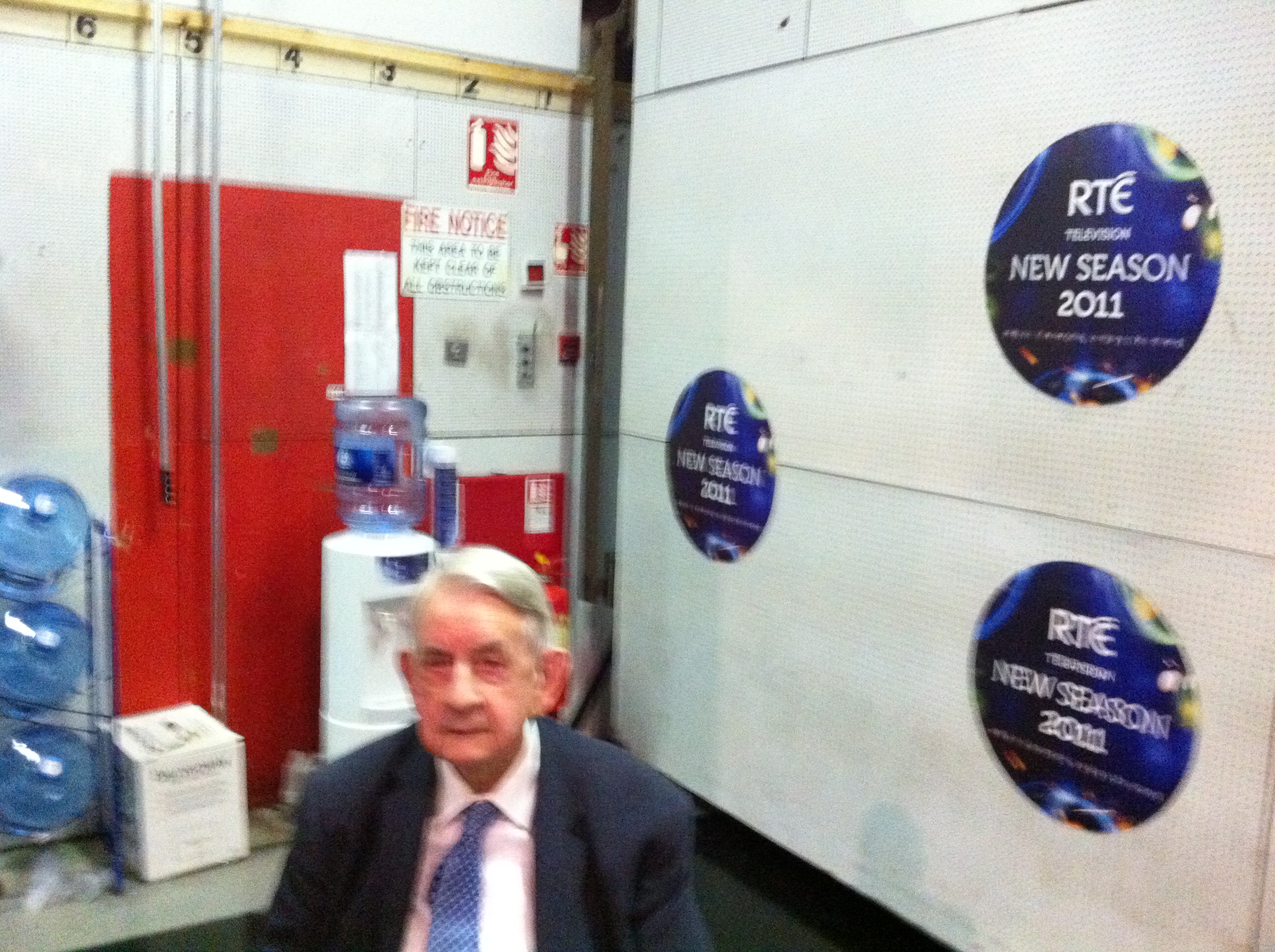
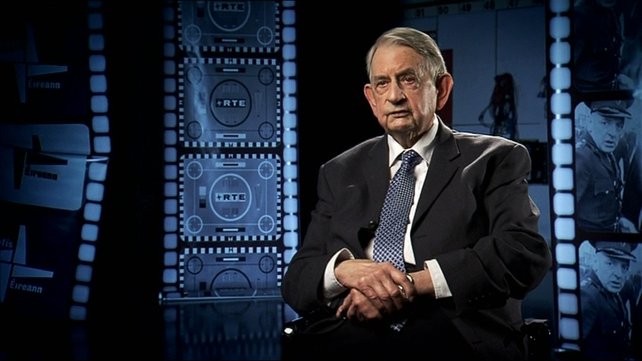
Des Fisher interviewed by John Bowman Sept. 2011 Photo: RTÉ

Des Fisher interviewed by John Bowman Sept. 2011 Photo: RTÉ

Desmond Fisher was not just a noted Catholic religious commentator. He was also a senior RTÉ executive during an important time in Irish history that saw the outbreak of the troubles in 1969. He was a former Head of Current Affairs and Deputy Head of News at RTÉ and died last week, aged 94. In this article specially written for RTÉ News Online, RTÉ’s Religious and Social Affairs Correspondent Joe Little looks back at his career… 

Mr Fisher was one of the last surviving journalists to have reported from Rome on the Second Vatican Council which ended half a century ago.

His family had asked that his passing on 30 December last should not be made public until after his cremation which, in accordance with his wishes, took place after a private family Requiem Mass was celebrated last Friday, 2 January.

In a document released by his family, he described his experiences as a senior editorial manager at RTÉ in the early years of the Northern Troubles as the most stressful time in his working life.

Before coming to broadcasting, Des as he was widely known, had worked on the Nationalist and Leinster Times and with the Irish Press where he served as London Editor and Political Correspondent.

In 1962, as Pope John XXXIII was convening the Second Vatican Council, he took the helm at the Catholic Herald in London.

A graduate of UCD, he belonged to a post-revolutionary generation of thinkers hungry to learn about the wider world and particularly about stirrings of change in the universal Catholic Church which were stifled by the hierarchy here, thanks largely to the ultra-conservative Archbishop of Dublin, John Charles McQuaid, who was appointed in 1940 when Des Fisher was 20 years old.

“It was alienating modern men and women and losing many existing members…”

Writing for this website two years ago, he described Pope John’s motivation in calling the Vatican Council which was to bring the Church face-to-face with the modern world: “He had seen that the Roman Catholic Church was not fulfilling the task for which Christ established it.

“Instead of motivating more and more new members to follow Christ and come to love and worship God, it was alienating modern men and women and losing many existing members.”

He described how most of the 2,500 Council Fathers or church leaders who favoured change had to reckon with a highly regimented traditionalist minority: “They took their lead from the Roman Curia, which was against change from beginning to end of the Council and is still opposed to implementing the Council’s decisions.
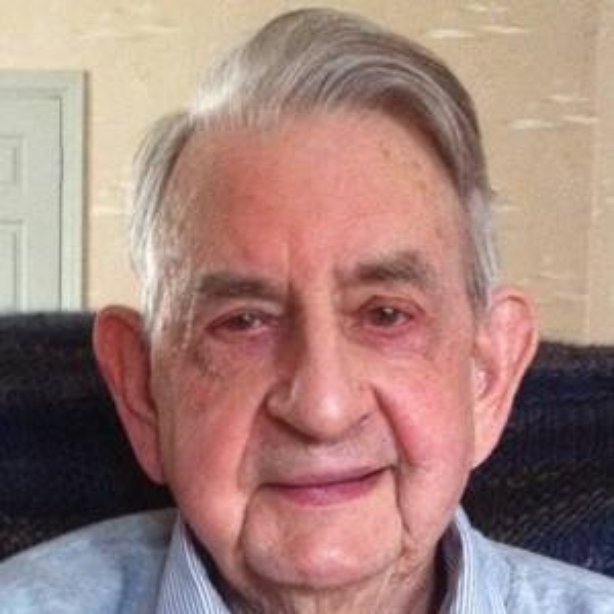
Desmond Fisher photo for RTÉ News Online article taken on his laptop Oct. 2012

Desmond Fisher photo for RTÉ News Online article taken on his laptop Oct. 2012

Despite the obstacles the Council produced five major documents.

Taken together, they portray a new kind of Catholic Church very different from the 16th century Counter-Reformation version that still prevails.

The Vatican II Church abandons the existing portrayal of the Church as a pyramid with the Pope on top of descending tiers of cardinals, bishops and priests sitting on a bottom layer of lay Catholics whose only function, as a bishop told the Council, seems to be “to pray, to obey and to pay”.

The Vatican II version of the Church is a “communion” of members sharing a common task to convince all the people of the world that God loves them and that Christ is the example of how to love and serve him.

In this Church lay people are not the passive onlookers they are seen as now but the most active workers at the coalface.”

Mr Fisher’s reference to the Curia’s ongoing opposition to reform foreshadowed the yet-to-be-elected Pope Francis’ scathing attack last month on Vatican’s administrators for being infected with careerism, scheming, greed and “spiritual Alzheimer’s”.

Not surprisingly, the veteran journalist welcomed the Argentine Popes election in 2013.
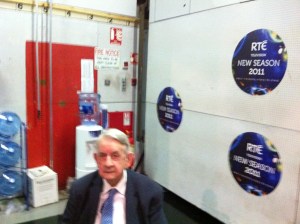
Des Fisher interviewed by John Bowman about RTÉ Sep. 28 2011 Photo:  © Michael Fisher

Des Fisher interviewed by John Bowman about RTÉ Sep. 28 2011 Photo: © Michael Fisher

Extracts relating to RTÉ from Desmond Fisher’s own summary of his 70-year career in journalism have been released by his family.

They recall that one year after the Council ended, he left the Catholic Herald and freelanced to support his family in London.

But 18 months later, his former Irish Press colleague and fellow Derry man Jim McGuinness, Head of News at RTÉ, suggested he should apply for a job, about to be advertised, as his deputy.

After short attachments with the BBC and ITV in London in 1967 he came to Dublin in early 1968 to take up the job and to live full-time with his family which had moved to Dublin months earlier.

In October 1973, he was appointed Head of the Current Affairs Grouping, a new area in RTÉ responsible for all current affairs programmes on radio and television.

He wrote of this period: “What I do remember most about my time in RTÉ is that it was the most stressful time in my working life. My time there coincided with external pressure on RTÉ from a Government intent on denying publicity to the IRA and internal conflict between RTÉ producers and journalists working on current affairs programmes.”

“It was probably inevitable that a disaster would occur…”

Those twin pressures soon took their toll: “In the circumstances of the time, however, it was probably inevitable that a disaster would occur. The Current Affairs area is the most vulnerable in broadcasting, especially in a public service organisation with staff of divided political and trade union loyalties at a time when the country is in turmoil.

“On the night of October 17, 1974 while I was in Galway at the Annual Conference of the Labour Party, a seven Days programme on internment in the North was rushed on to the air…replacing the programme which I had cleared for transmission. It later transpired that the filmed programme included a sequence from a London agency, which had been brought in a short time before transmission, edited at the last moment and put out without my clearance.

“This led to a public attack on me on two successive evenings by the then minister in charge of RTÉ, Dr Conor Cruise O’Brien.

The inquiries that followed judged that I should have previewed the programme which, in my view, had been deliberately put out in my absence.

“I offered to resign if this would serve the institutional interests of RTÉ.

“This was refused but in April 1975 I told the then Director-General, Oliver Maloney, that the grouping would have either to be established as a full division with its own resources or closed down.

“He rejected the first alternative so I resigned and the Grouping was disbanded.

“Following my resignation, I was appointed Director of TV Development, a title later changed to Director of Broadcasting Development, a sideways move that really left it to me to determine what I would make of the job.”

He chaired the Planning Group for the station’s second television channel and continued to research and publish material for the public service broadcaster on a range of topics, including its relationship with government.

This was a particularly thorny subject given that in 1972, while he was Deputy Head of News, a Fianna Fáil government had fired the RTÉ Authority after the News Division broadcast a radio interview recorded with Seán Mac Stíofáin, then chief of staff of the Provisional IRA.

The then Taoiseach, Jack Lynch, justified the dismissal saying the Authority had  breached a government directive, given under Section 31 of the Broadcasting Act, ordering them “not to project people who put forward violent means for achieving their purpose”.

The Fine Gael-Labour administration, elected in 1973, had continued to implement the directive.

And this was the context in which Fianna Fáil’s new appointees to the RTÉ Authority and senior RTÉ management figures like Des Fisher, had to handle the seven days debacle in October 1974.

Des Fisher left the national broadcaster in 1983, less than two years before reaching the mandatory retirement age.

He became Editor and Managing Director of the Carlow Nationalist and Leinster Times.

In 2009, approaching the age of 80, he contributed to the RTÉ documentary “If Lynch Had Invaded” about his role with RTÉ in 1969 when the Taoiseach Jack Lynch made a dramatic television broadcast to outline the Government’s response to the security forces attacking nationalist communities in Derry.

In 1967, his book on the Second Vatican Council, “The Church in Transition” was published by (Geoffrey Chapman and) Fides.

He is survived by his wife Margaret (Peggy), daughter Carolyn, and sons Michael, John and Hugh, other close relatives and a wide circle of friends.

Extracts relating to RTÉ from Desmond Fisher’s own summary of his 70-year career in journalism are kindly reproduced courtesy of the Fisher family and are copyright  © 2015 

SEARCH FOR KIERAN MCAREE

Kieran McAree  Photo:  PSNI website

Kieran McAree Photo: PSNI website

Since before Christmas, the thoughts and prayers of many people in North Monaghan and beyond have been focused on the family of Kieran McAree from Emyvale. With police in the North believing the 23 year-old is dead, after claims he entered the river near Enniskillen Castle, the focus now is on retrieving his body.

The PSNI and other agencies continue to conduct a search operation in the Round ‘O’ area, which began following the report on Wednesday, December 17th, that he was missing. Kieran is described as 5’7” tall, with short curly brown hair, and wore glasses. He may have been driving a Volkswagen Golf car prior to going missing.

PSNI Chief Inspector Brian Foster said, “Significant water-based and land-based searches are continuing.  Police have appealed for anyone who can help with their enquiries to contact them. We are also appealing for anyone in the vicinity to check outbuildings and land.”

Police divers searched the lake bed near to the Lough Gates at Lough Erne, eliminating areas of interest located by specialised sonar equipment. A police helicopter and victim recovery dog have also been used to check the surrounding area. Kieran McAree’s family and friends searched the river banks and kayakers along with private boats checked the Lough.

Boyne Fishermen’s Rescue and Recovery divers stayed overnight and were out on the lough at first light. Many dives where carried out in the fast river current making this a very difficult and dangerous task. Other dive teams attended for the family and worked till dark. Three police boats assisted in the tasks and will be back on the water in the morning.

PSNI launch  Photo:  PSNI Fermanagh facebook

PSNI launch Photo: PSNI Fermanagh facebook

Thomas Daly, a volunteer with the Boyne Fishermen’s Rescue and Recovery Service, has said his team which has included up to 37 people will not leave Lough Erne “until we have found Kieran”.

“We have spent the last two weeks searching from where the car was last seen, where the shoes were found. We have been studying the river and there was a fair flow on the river the morning he entered it. We are searching along the spots where we believe he could be”.

“We will not be leaving yet, no, not until we have found Kieran. We are thinking about the family and are here to help put an end to this, to help them move on,” he said.

Scores of people joined the search on Christmas Day and St Stephen’s Day following appeals by family members on Facebook and Twitter.

“This is the biggest search I have ever witnessed on Lough Erne. The community in Fermanagh is really pulling together to help Kieran’s family,” Constable Gavin Huey told The Impartial Reporter.

“We have been using a helicopter, boats and sonar. The divers have been searching in very cold, fast flowing water. The speed of the river and poor visibility has made it difficult but we are determined to keep going for as long as we can. I have never seen a search of this nature last as long,” he said.

Rodney Edwards in his excellent reports from the scene says it is believed that Kieran entered the water after abandoning his Volkswagen Golf near Henry Street in the early hours of December 17. Some of his belongings, including his shoes, have been recovered close to the scene. For his father Martin, mother Geraldine, brother Damien and sister Aisling from Emyvale the wait is an agonising one and there has been a sombre mood at the Round ‘O’ where they have been standing every day since he disappeared. They wait and hope. There are tears, prayers and emotional scenes. Yet among all the sadness, there is a strong sense of community.

“The level of support from across the county and across Ireland has been quite extraordinary. From taking part in the search to making food. The Anchorage Coffee Shop at the Round ‘O’ have been making tea and sandwiches and other food for free. Everybody has been out in force; all types of groups, organisations and people – all eager to help,” explained Constable Huey.

psnifermanagh“All our thoughts and prayers must continue to be with Kieran’s family. I know so many people are thinking about them and want to help and you can see that through this search and the reaction on Facebook. Many people have been getting emotional during all of this. We would just love to get a resolution so we can bring the family some closure. They really do appreciate all the help and support of the people in Fermanagh,” he said.

ON THIS DAY: 1979

RTElogo1979On this day 35 years ago, Tuesday 2nd January 1979, my career as a reporter with RTÉ News began in the newsroom in Dublin. I had returned in December 1978 to Ireland from England, where I had worked for the BBC for nearly five years in London and Birmingham.

The Met Éireann records show that the lowest air temperature recorded in the 20th century was -18.8°C at Lullymore, Co. Kildare on that day. I can remember being assigned to do a radio report about the weather conditions, which were causing severe transport difficulties such as the cancellation of ferries. I remembered to include the Northern element, namely the sailings from Larne to Stranraer (as the two shipping companies then served). The detail of my reporting was subsequently praised by the editorial committee that met to review news coverage.

I joined RTÉ News on the same day as Conor Fennell, author of a book on ‘James Joyce in Paris’ (June 2011).

Conor Fennell at the launch of his book  Photo:  © Michael Fisher

Conor Fennell at the launch of his book Photo: © Michael Fisher

Today was a very different day. The weather was much better, with clouds and sunshine and a temperature reaching 8°C.

ENNISKILLEN CASTLE

Enniskillen Castle (facebook page photo)

Enniskillen Castle (facebook page photo)

Thanks to my colleague in the William Carleton Society Frank McHugh (Fermanagh Family History Society) for alerting me to the new project at Enniskillen Castle. It involves the demolition of a former health centre, now derelict, at the entrance to the Castle. This also featured in a recent report by Julian Fowler on BBC Northern Ireland.

Exciting plans for the refurbishment of Enniskillen Castle Museums were unveiled at a recent series of information sessions. The project has received generous funding from the Heritage Lottery Fund (HLF), Northern Ireland Tourist Board (NITB), the European Regional Development Fund, the Northern Ireland Environment Agency and Fermanagh District Council. Speaking about the plans, Chairman of Fermanagh District Council, Councillor Bert Johnston said:

“This is an exciting time for Enniskillen Castle Museums. Plans include a new visitor centre, improved amenities and a café as well as tourism, genealogy and heritage services. Four new galleries will interpret Fermanagh’s rich heritage, enhancing the Castle as the main introduction and gateway attraction for the region.”

Aine Kearney, Director of Product Development at NITB said:

“The Northern Ireland Tourist Board is delighted to announce part funding towards the development of this world class visitor centre within the historic grounds of Enniskillen Castle. Upon completion this project will provide the visitor with a unique and exciting experience.”

Enniskillen Castle was built in the 15th century by the Gaelic Maguires who ruled Fermanagh. Situated next to the River Erne and guarding one of the few passes into Ulster, it was strategically important throughout its history.  The Castle is within easy walking distance of the town centre and contributes greatly to the unique character of the area.

The new project will involve the restoration and refurbishment of many of the historic buildings contained within the Castle complex for reuse as exhibition space.  New visitor welcome and orientation spaces will be created to provide a more cohesive experience, hosting services such as a heritage, tourism and genealogy information point.  A digital film archive and history hub will also be created to provide access to the museum’s archives, photographic records and library.  Four new galleries will create additional space to showcase the Museum’s collections which consist of thousands of objects, images and oral histories relating to the region.

Commenting on the award, Head of HLF Northern Ireland, Paul Mullan, said: “Museums have an invaluable role to play in helping us to learn more about our past by using their collections to engage and inspire local communities, which is why HLF has already invested £31million in establishing and transforming our network of local and national museums.

“We are delighted to make this latest announcement of support for the museum sector which will see this hugely important heritage asset become the heritage gateway to the area.  Having been awarded a first-round pass, Fermanagh District Council can now further develop the project to achieve its full potential and go forward to secure the full £2.47million grant.”

Mark Knight, of Kriterion Conservation Architects commented:

“We are delighted to be involved in sensitively transforming this significant heritage asset into a world-class visitor facility which will protect and enrich our built and cultural heritage. Conservation of the iconic buildings and integration of the new visitor centre will give new long-term sustainable uses to the Enniskillen Castle Museums and enhance the region’s rich heritage and tourism offering.”

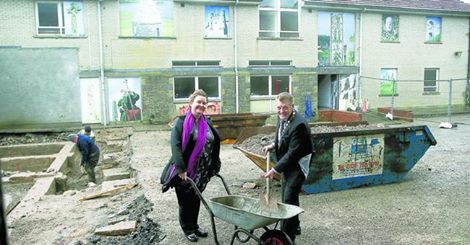
Sarah McHugh, Enniskillen Castle and Cllr Bert Johnston, Cahir, Fermanagh District Council  Photo: Impartial Reporter

Sarah McHugh, Fermanagh County Museum and Cllr Bert Johnston, Cahir, Fermanagh District Council Photo: Impartial Reporter

Speaking about the long term plans of Fermanagh County Museum, Sarah McHugh, Manager of Museum Services said:
“This is a real boon to Fermanagh and will enable the museum service to be even more ambitious. My hope is that we are building an inspirational space where locals and visitors can explore the unique heritage of the region, gain more access to our museum collections and enjoy bigger and better events and activities. During refurbishment, which has now begun and is due for completion in 2016, visitors will still be able to enjoy Fermanagh County Museum’s Medieval Maguires display and The Inniskillings Museum.”

GOLLY! WATCH YOUR LANGUAGE

Black & White Minstrel Show Record Cover  Photo: 991.com

Black & White Minstrel Show Record Cover Photo: 991.com

My comments tonight are sparked by a Channel 4 television show: It was Alright in the 1970s. Episode two focused on old-fashioned Britishness on TV in the 70s. From blacking-up pre-watershed, through to rampant homophobia and xenophobia, it asked whether the 70s was the decade that taste forgot. Narrated by Matt Lucas, this two-part series included interviews with the people who appeared in the programmes, those who watched them and those who made them, and asked them ‘what were you thinking?’ at the time.

The programme included clips of shows I remember watching such as the ‘Black and White Minstrel Show’ and ‘The Goodies’. There were also bits of comedy from the series ‘Mind your Language’. One of the sequences included a flick through pages from a television guide (probably TV Times, as it included adverts). On one page there was an advert that said: ‘Golly it’s Good’.

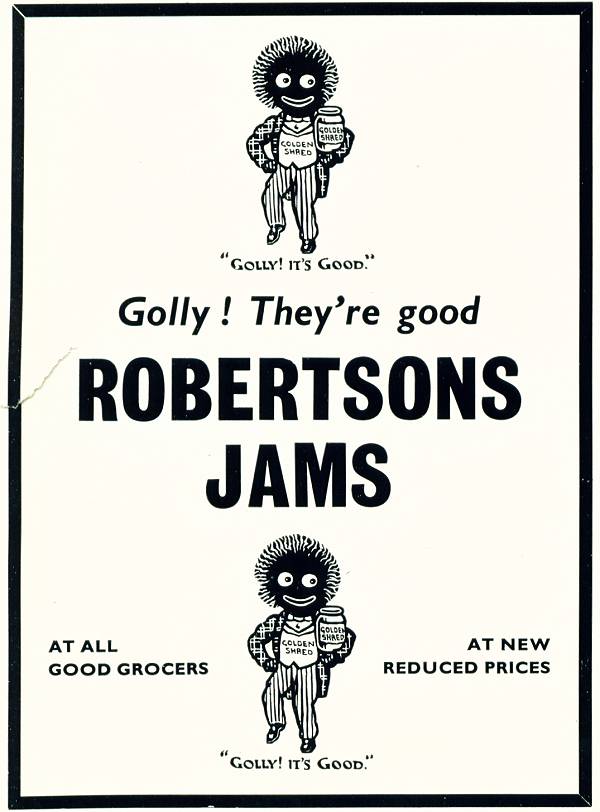
Advert for Robertsons Jams 1959  Photo: historyworld.co.uk  Advert Museum

Advert for Robertsons Jams 1959 Photo: historyworld.co.uk Advert Museum

This included a picture of a golly (it is no longer politically correct to use the full version of the word). This was the marketing symbol for many years for Robertsons jams, made in Scotland. Jars of Golden Shred were a common sight on the breakfast table when I was growing up. But six years ago, after being part of British life since 1864, the jam was phased out. The golly character had become very much non-PC.

The black-faced minstrel doll with his natty red bow tie and trousers, flowing blue jacket and distinctive yellow waistcoat, danced his way across the label on pots for the best part of a century. Critics complained that the image was an offensive caricature of black people and was based on slave dolls.

In 1983 the Greater London Council stopped buying the firm’s jam and marmalade, saying Golly was racist. A year later, councillors in Islington, North London, banned a Golly-bearing road safety poster as ‘offensive’.

Roberstons Jam Lid Photo: ebay

Roberstons Jam Lid Photo: ebay

The Working Group Against Racism in Children’s Resources called it ‘undoubtedly an offensive caricature of black people; it embodies the mythical qualities such as the love of music and rhythm, superstition, large appetites, primitive simplicity and savagery’.

For years, Robertson’s defended Golly as a fictional nurseryland character, not a depiction of a black person. However, the character was axed from television adverts in 1988, and then disappeared from the labels printed in 2002. Premier Foods, who bought the brand from RHM in 2007 got rid of Robertson’s jam forever and promoted its other brand Hartley’s instead.

Golly! I had better watch my language in future in case of causing unintentional offence. However that did not seem to bother a 21st Century comedian on television last night. Des Bishop was very funny in parts but much of his sexually explicit language was in my view offensive.

Cartoon (origin unknown)

Cartoon (origin unknown)


ANN LOVETT

Grave of Ann Lovett in Granard  Photo: Wikimedia commons licence By Vankim (Own work) [CC BY-SA 3.0]

Grave of Ann Lovett in Granard Photo: Wikimedia commons licence by Vankim (Own work) [CC BY-SA 3.0]

It was, in the words of the Irish Examiner in January this year, one of the stories that changed Ireland. A 15 year-old schoolgirl Ann Lovett died after giving birth to a baby beside a grotto dedicated to Our Lady in the grounds of the Catholic church in Granard, in County Longford. Friends discovered her with her dead baby and she bled to death before an ambulance arrived to take her to hospital on January 31 1984.

I remember reporting from Granard on the day of her funeral, a time when the media were not welcome in this Midlands town. I got the cameraman to wait until after the funeral to get some pictures of the flowers covering her grave. No-one wanted to talk about the incident on the day but I did manage to get a radio news piece done from a public telephone box situated inside a local hotel. I tried to speak as softly as I could as I did not want those nearby to hear my report.

Although Ann’s death created huge public debate the only reference to her in the newly released National Archives documents is at the back of a file on the visit of US president Ronald Reagan to Ireland that year.

The Irish Times report from Fiona Gartland is as follows:

(The reference to Ann Lovett) “arises in letters from street poet Christopher Daybell to then Taoiseach Garret FitzGerald and Tánaiste Dick Spring about the death. Mr Daybell enclosed a letter to him from the Archdiocese of Armagh written in response to his correspondence, which is not on file. The letter from the Archdiocese, dated February 23rd, a984, said Mr Daybell did “a grave injustice to the people of Granard and particularly to the teachers” at Ms Lovett’s school.

“It is rather difficult to solve a problem that one does not know exists. Any priest could tell you of similar cases where children came to full-term without it being known to either their parents or their teachers.” It said “it was rather unfortunate” Ann did not “make it known even to her friends who might have been able to help her or did not seek medical assistance independently of her parents or teachers. Why she chose to keep her secret will never be known,” it added. “I think her sad death reflects more on her immaturity than on any lack of Christian charity amongst the family and people with whom she lived.”

The letter was signed by the diocesan secretary to the Catholic primate, cardinal Tomás Ó Fiaich, and noted the cardinal was absent. In Mr Daybell’s covering letter to Dr FitzGerald, dated March 3rd, he told the Taoiseach the girl’s death “coupled with” the letter from the archdiocese, had driven him “almost mad”.

“The letter goes beyond hypocrisy – that man in Armagh is incapable of feeling beyond the walls of his office and the great institution into which he has built his being,” he wrote. Referring to the description of Ms Lovett as immature, he wrote, “Why should she not have been so, at 15?” He also asked what assistance or intervention mechanism existed in Granard “apart from those elements which induce fear”. He included a poem he had written about the death.

In his letter of March 2nd to Mr Spring, he said it could emerge, “considering the hideous attitudes of men toward women in rural Ireland”, that Ms Lovett “was driven by forces other than those within herself”. “I await the result of the enquiry in a now cool anger, and hope that it will stiffen the resolve of your government on divorce and contraception,” the poet wrote.

Only one letter in response to Mr Daybell remains on the file. Dated March 8th, it is signed by the Taoiseach’s then private secretary George Shaw. It thanks him for his “further correspondence”, which he said would be brought to the Taoiseach’s attention. In a different typeface, someone printed ‘locate previous papers and put away'”. (end of article)

I could not find a copy of Mr Daybell’s poem. But I did find a very evocative work written in 1991 by another Dublin poet Paula Meehan and available on the web.

“The Statue of the Virgin at Granard”
By Paula Meehan

It can be bitter here at times like this,
November wind sweeping across the border.
Its seeds of ice would cut you to the quick.
The whole town tucked up safe and dreaming,
even wild things gone to earth, and I
stuck up here in this grotto, without as much as
star or planet to ease my vigil.

The howling won’t let up. Trees
cavort in agony as if they would be free
and take off – ghost voyagers
on the wind that carries intimations
of garrison towns, walled cities, ghetto lanes
where men hunt each other and invoke
the various names of God as blessing
on their death tactics, their night manoeuvres.
Closer to home the wind sails
over dying lakes. I hear fish drowning.
I taste the stagnant water mingled
with turf smoke from outlying farms.

They call me Mary – Blessed, Holy, Virgin.
They fit me to a myth of a man crucified:
the scourging and the falling, and the falling again,
the thorny crown, the hammer blow of iron
into wrist and ankle, the sacred bleeding heart.

They name me Mother of all this grief
Though mated to no mortal man.
They kneel before me and their prayers
fly up like sparks from a bonfire
that blaze a moment, then wink out.

It can be lovely here at times. Springtime,
early summer. Girls in Communion frocks
pale rivals to the riot in the hedgerows
of cow parsley and haw blossom, the perfume
from every rushy acre that’s left for hay
when the light swings longer with the sun’s push north.

Or the grace of a midsummer wedding
when the earth herself calls out for coupling
and I would break loose of my stony robes,
pure blue, pure white, as if they had robbed
a child’s sky for their colour. My being
cries out to be incarnate, incarnate,
maculate and tousled in a honeyed bed.

Even an autumn burial can work its own pageantry.
The hedges heavy with the burden of fruiting
crab, sloe, berry, hip; clouds scud east,
pear scented, windfalls secret in long
orchard grasses, and some old soul is lowered
to his kin. Death is just another harvest
scripted to the season’s play.

But on this All Soul’s Night there is
no respite from the keening of the wind.
I would not be amazed if every corpse came risen
From the graveyard to join in exaltation with the gale,
A cacophony of bone imploring sky for judgement
And release from being the conscience of the town.

On a night like this I remember the child
who came with fifteen summers to her name,
and she lay down alone at my feet
without midwife or doctor or friend to hold her hand
and she pushed her secret out into the night,
far from the town tucked up in little scandals,
bargains struck, words broken, prayers, promises,
and though she cried out to me in extremis
I did not move,
I didn’t lift a finger to help her,
I didn’t intercede with heaven,
nor whisper the charmed word in God’s ear.

On a night like this, I number the days to the solstice
and the turn back to the
light.

O sun,
center of our foolish dance,
burning heart of stone,
molten mother of us all,
hear me and have pity.

from http://www.politicalworld.org Poetry:- ‘The Invitation’ and others

Also Christopher Fox Graham website

http://foxthepoet.blogspot.ie/2008/10/statue-of-virgin-at-granard-by-paula.html

POPE FRANCIS MESSAGE

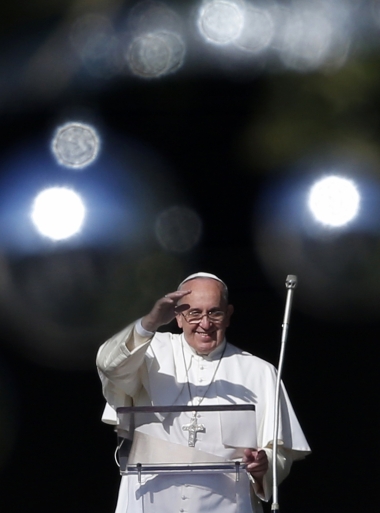
Pope Francis  Photo: Christiantoday.com

Pope Francis Photo: Christiantoday.com

The message of Pope Francis for St Stephen’s Day. This article by Carey Lodge comes from Christiantoday.com.

“Following the Gospel is certainly a demanding path,” but Christians are given peace by God in all circumstances, the Pope said today during his annual St Stephen’s Day address.

Speaking before thousands gathered in St Peter’s Square, Francis highlighted the witness of St Stephen – the first martyr of the Church – who he said “shows us how to live in the fullness of the mystery of Christmas”.

“Stephen honoured the coming into the world of the King of Kings, offering to him the gift of his own life,” the Pope said. “And if not all are called, as Saint Stephen was, to shed their own blood, nonetheless, every Christian is called in every circumstance to be to live a life that is coherent with the faith he or she professes.”

Pointing to Matthew 10:22, which says ‘You will be hated by all because of my name, but whoever endures to the end will be saved’, Francis added that Jesus’ words: “Do not disrupt the celebration of Christmas, but strip it of that false saccharine-sweetness that does not belong to it.

“It makes us understand that in the trials accepted on account of the faith, violence is overcome by love, death by life,” he explained.

“To truly welcome Jesus in our existence, and to prolong the joy of the Holy Night, the path is precisely the one indicated in this Gospel: that is, to bear witness in humility, in silent service, without fear of going against the current.”

The Pope also said that following the Gospel “is certainly a demanding path, but those who travel it with fidelity and courage receive the gift promised by the Lord to men and women of good will.

“At Bethlehem, in fact, the angels announced to the shepherds, ‘on earth peace to those on whom His favor rests’. This peace given by God is able to soothe the conscience of those who, through the trials of life, know to welcome the Word of God and observe it with perseverance to the end,” he said.

The Pope concluded his address by praying for persecuted Christians around the world. “I want to say to each of them: If you carry this cross with love, you have entered into the mystery of Christmas, you are in the heart of Jesus and of the Church,” he said.

“Let us pray also that, thanks to the sacrifices of the martyrs of today, the commitment to recognise and concretely to ensure religious liberty — an inalienable right of every human person — would be strengthened in every part of the world.”

He also greeted “everyone named Stephen or Stephanie” in particular, offering them his best wishes.

“And please, continue to pray for me. Don’t forget!” he finished. “Happy Feast Day, and have a good lunch.”

 http://www.christiantoday.com/article/pope.francis.violence.is.overcome.by.love.death.by.life/44971.htm.

CHRISTMAS VISITOR

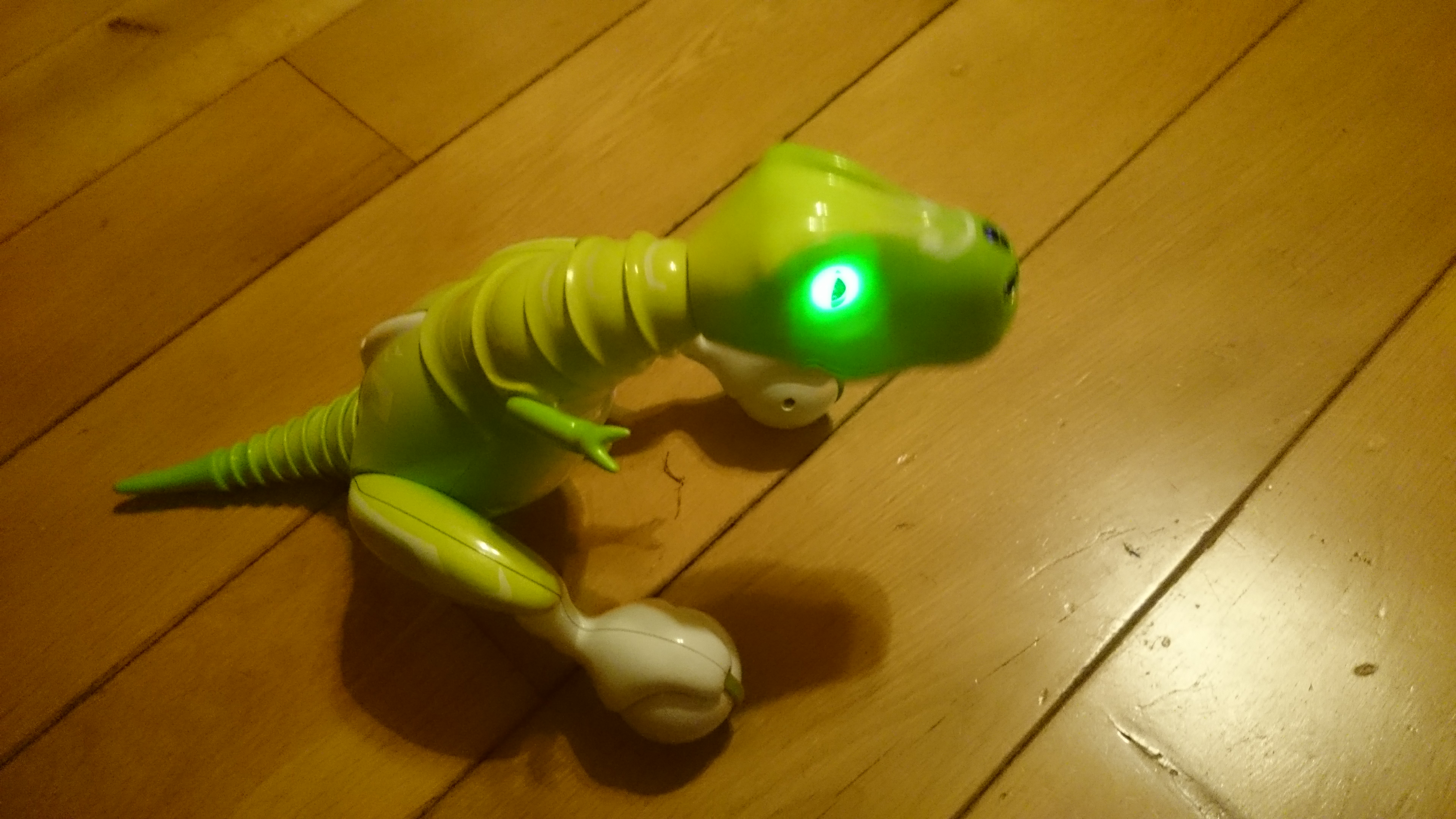
Zoomer the Robot Dinosaur  Photo: © Michael Fisher

Boomer the Robot Dinosaur Photo: © Michael Fisher

Meet my new acquaintance. Boomer Zoomer, the robot dinosaur. I suspect Santa must have been busy delivering these toys aound Ireland and elsewhere for Christmas Day. A similar toy Teksta T-Rex appeared on the annual RTÉ Late Late Show recently.

Thanks to a nephew I was able to explore some of the capabilities of this dinosaur. He will gladly chew a bone or even your finger. If he is enraged his eyes will turn to red!

Boomer the Robot Dinosaur  Photo: © Michael Fisher

Boomer the Robot Dinosaur Photo: © Michael Fisher

The toy is very versatile and comes with a remote, but can also be set in motion without this device. Here are some of the specifications:

A pre-historic pet for the modern age! Boomer is a robotic dinosaur pet that can chase, chomp, guard and of course – ROAR! His eyes change colour with his mood, so make sure you give him all the attention he needs. Standing up on two wheels, he uses ‘True Balance Technology’ to zoom around and maintain balance. You can use your hands to tame him and build up a friendship and make him your loyal pet. Try and control him with the control pod, or even make him dance! But beware – you may lose control! With tons of cool features Boomer is the ultimate pre-historic robotic pet!

Boomer the Robot Dinosaur  Photo: © Michael Fisher

Boomer the Robot Dinosaur Photo: © Michael Fisher

Contents include 1 Zoomer Dino Boomer, 1 Control Pod, 1 Mini USB Cable and 1 set of instructions.

  • Two modes of play
  • Balances on two wheels
  • Boomer’s eyes change colour with his mood
  • Make Boomer speak, sit and tail whip through gesture commands
  • Chomping action
  • Head Sensors to follow you

The robot dinosaur has a super cool and playful personality. This interactive robot dinosaur is almost like a pet and just loves to have fun with kids. It is usually cool but when he gets angry he gets wild which drives kids go wild with more excitement.

This dinosaur toy moves around deftly balancing itself on its two legs with smooth head, neck and tail movements thanks to the Balancing Technology (TM) it possesses. The best part is that it responds to hand gestures. It is a great learner; the more you play around with him the quicker he responds to your commands. You can also command it with a remote control.

Boomer has multiple joints in his neck and he can swing his head from side to side. Same goes for his tail which again is pretty flexible for him to swish merrily. He can open his mouth to display his emotions while he moves around to keep everybody entertained. This charming robotic toy emits realistic sounds which adds to the excitement. It is a rechargeable toy, but the remote does need a battery.

So now you have met my latest Christmas visitor. Luckily the child in question did not receive the burping and farting version of Boomer, which is also available!

Boomer the Robot Dinosaur  Photo: © Michael Fisher

Boomer the Robot Dinosaur Photo: © Michael Fisher