WIND FARMS

Clogher Valley with Knockmany in distance

Clogher Valley with Knockmany in distance

My journey today was close to the Carleton trail, looking towards Knockmany hill near Clogher in County Tyrone. But there was a very different view on the other side of the road between Fintona and Fivemiletown: a wind farm. Opinions about this form of ‘green’ energy are divided. But this is just one of the views I had on top of the mountain (well hill, actually!).

Wind Farm near Fivemiletown, Co. Tyrone

Wind Farm near Fivemiletown, Co. Tyrone

VIRGINIA, Co. CAVAN

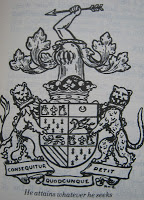
Taylo(u)r Coat of Arms (Marquis of Headfort)

With Cavan beating Fermanagh in the All-Ireland Championship qualifier and with the Virginia Show fast approaching in little over a month’s time, I found a suitable contribution today from blogger ‘Lord Belmont’ on the history of landowners the Marquesses of Headfort. It was originally published in July 2011 and is one of a series of such interesting articles on his website relating the story of the Big Houses of Ulster….
Virginia Park
THE MARQUESSES OF HEADFORT WERE MAJOR LANDOWNERS IN COUNTY CAVAN, WITH 14,220 ACRES

The first of this family who went over to Ireland was:

THOMAS TAYLOUR, who being a close friend of the celebrated Sir William Petty, accompanied him thither, in 1653.

This Thomas was the son of John Taylour, of Battle, in Sussex, and grandson of Thomas Taylour, of Ringmere, in that parish, who died at Stoneham, in that county, in 1629, aged 70.

Thomas, the grandson, jointly undertook, and perfected, the Down Survey, although the maps were published in the name of Sir William Petty only.

In 1660, he sold his lands in England, and purchased others in County Meath; and, after the Restoration, was appointed a sub-commissioner of the court of Claims, 1664-66.

After some intermediate employments, he officiated as vice-treasurer at war, during the suspension of the Lord Ranelagh, in 1681, in which office he died of dropsy and jaundice in 1682, aged 51.

His only surviving son, THOMAS TAYLOUR was created a baronet in 1704 and appointed a member of the Privy Council in 1726.

His grandson, THOMAS, 3rd Baronet, born in 1724, was raised to the peerage as Baron Headfort, in 1760; and advanced to a viscountcy, as Viscount Headfort, in 1762. Lord Headfort was further advanced, in 1766, to the dignity of an earldom, as Earl of Bective, in 1766. His eldest son, THOMAS, 2nd Earl, KP, was created MARQUESS OF HEADFORT in return for his support in passing the Act of Union, in 1800.

His seat, Headfort House, in County Meath, was the only Adam house in Ireland. In 1901 the 4th Marquess, an eminent horticulturist, caused a sensation when he converted to Rome to marry a showgirl called Rosie Boote. A figure of great dignity, she remained the dominant personality in the family during young Michael’s youth and early adult life. Virginia, in the county of Cavan, was named after ELIZABETH I, “the Virgin Queen”. It owes its origin to the plantation of Ulster in 1609. The lands eventually passed into the possession of Lucas Plunkett, Earl of Bective, a Roman Catholic, who was later created Earl of Fingall.

It can also be said that Lucas Plunkett, along with his son Christopher, frustrated the plans of the Government to proceed with the development of the town and its incorporation during his tenure. He was sympathetic to the rebel Irish and sided with them against the planters during the 1641 Rebellion and the Williamite Wars of 1688-91, earning him the label of ‘traitor’.

Consequently it fell to Thomas, 1st Marquess of Headfort, and his successors, to fulfil the patent in relation to the development of the town in the second half of the 18th century and 19th century – the patent which was originally granted to Captain Ridgeway in 1612. Lord Headfort maintained a beautiful park beside Ramor Lough, where he had a hunting lodge (above) in plain, rambling, Picturesque cottage style; a two-storey house with a three-bay centre and single-storey, three-bay wings. The family often stayed here during the summer or autumn months, between 1750 and 1939.

The former hunting lodge is now a hotel, located on the shores of Lough Ramor. The Headforts also owned 12,851 acres in Westmorland and 7,544 acres in County Meath. (Blog: Lord Belmont)

Tom Doorley pointed out on twitter @tomdoorley that the current (7th) Marquis of Headfort, Thomas Michael Ronald Christopher (Taylour), Earl of Bective, born in 1959, is an estate agent in West London. Thanks also to Tom, there’s a bit of family history in an obituary in the Daily Telegraph for the 6th Marquis, who died in December 2005, aged 73. Tom also recommends a book by Lingard Goulding on The Story of Headfort School.

In a further development it was drawn to my attention by @ThisIsCavan that the Anglo-Celt newspaper in Cavan reports that the Park Hotel, recently on the market for €900,000 with its 28 bedrooms and nine-hole golf course in a 93 acre parkland setting beside Lough Ramor, had now been purchased by a leading London restaurateur in Mayfair, Richard Corrigan.

BELFAST LIONS SIGHT PROJECT

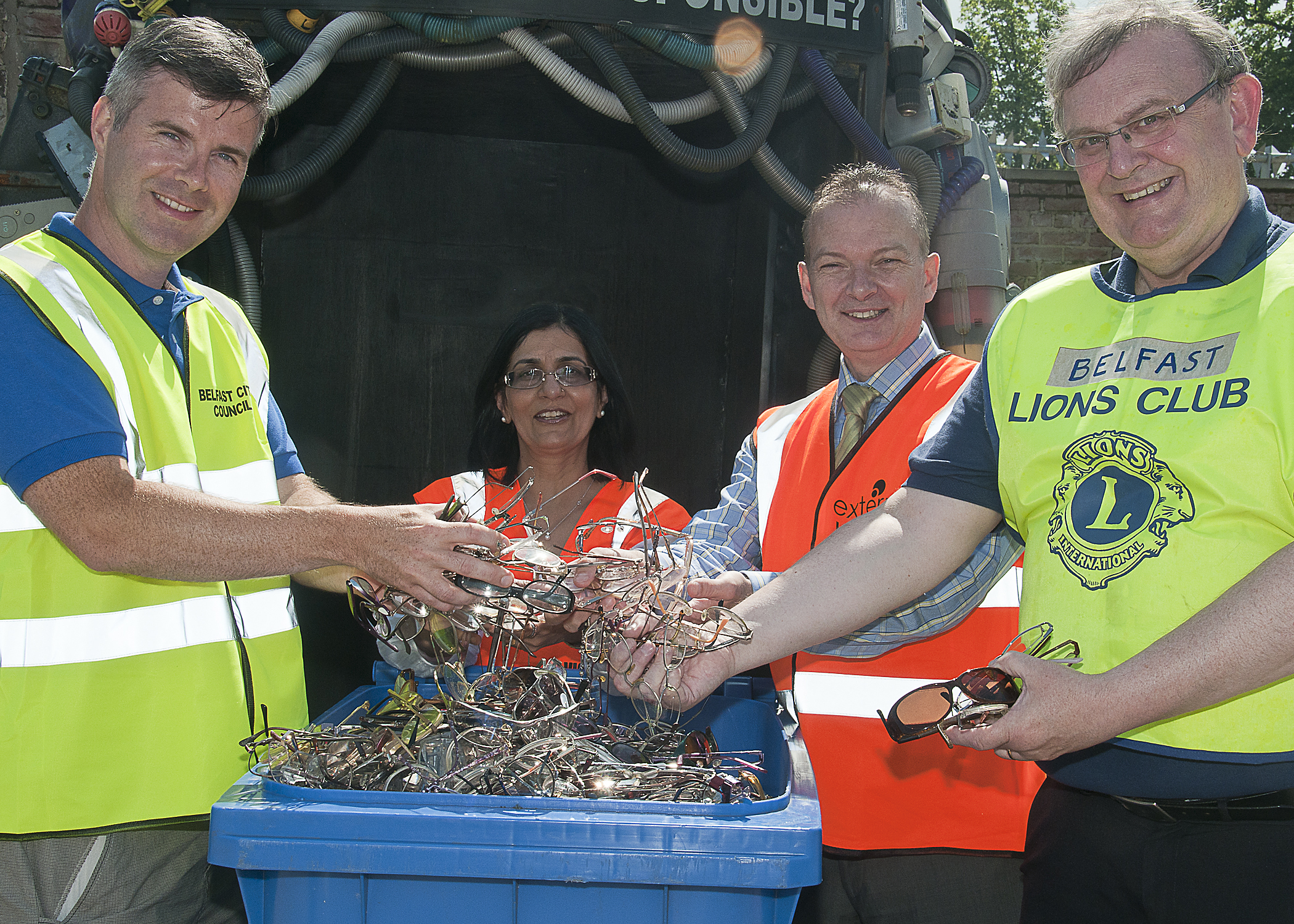
Belfast Lions Club President Michael Fisher with Cllr Steven Corr & representatives of ArtsEkta & Extern Photo: Ken Oliver

Belfast Lions Club President Michael Fisher with Cllr Steven Corr & representatives of ArtsEkta & Extern Photo: Ken Oliver

Charity’s vision sees old spectacles recycled for foreign eye camps

We need your old spectacles! An initiative to recycle old or unwanted pairs of specs is helping people in countries as far afield as Africa and India. Belfast City Council is backing a Belfast Lions Club initiative to send old pairs of glasses to eye camps in developing countries and Eastern Europe where they are matched to the right patient.

Bowlers Jack Boles & Alfy Hanson join Bobby Duke (middle) at Ormeau Park to help launch the scheme Photo: Ken Oliver

Bowlers Jack Boles & Alfy Hanson join Bobby Duke (middle) at Ormeau Park to help launch the scheme Photo: Ken Oliver

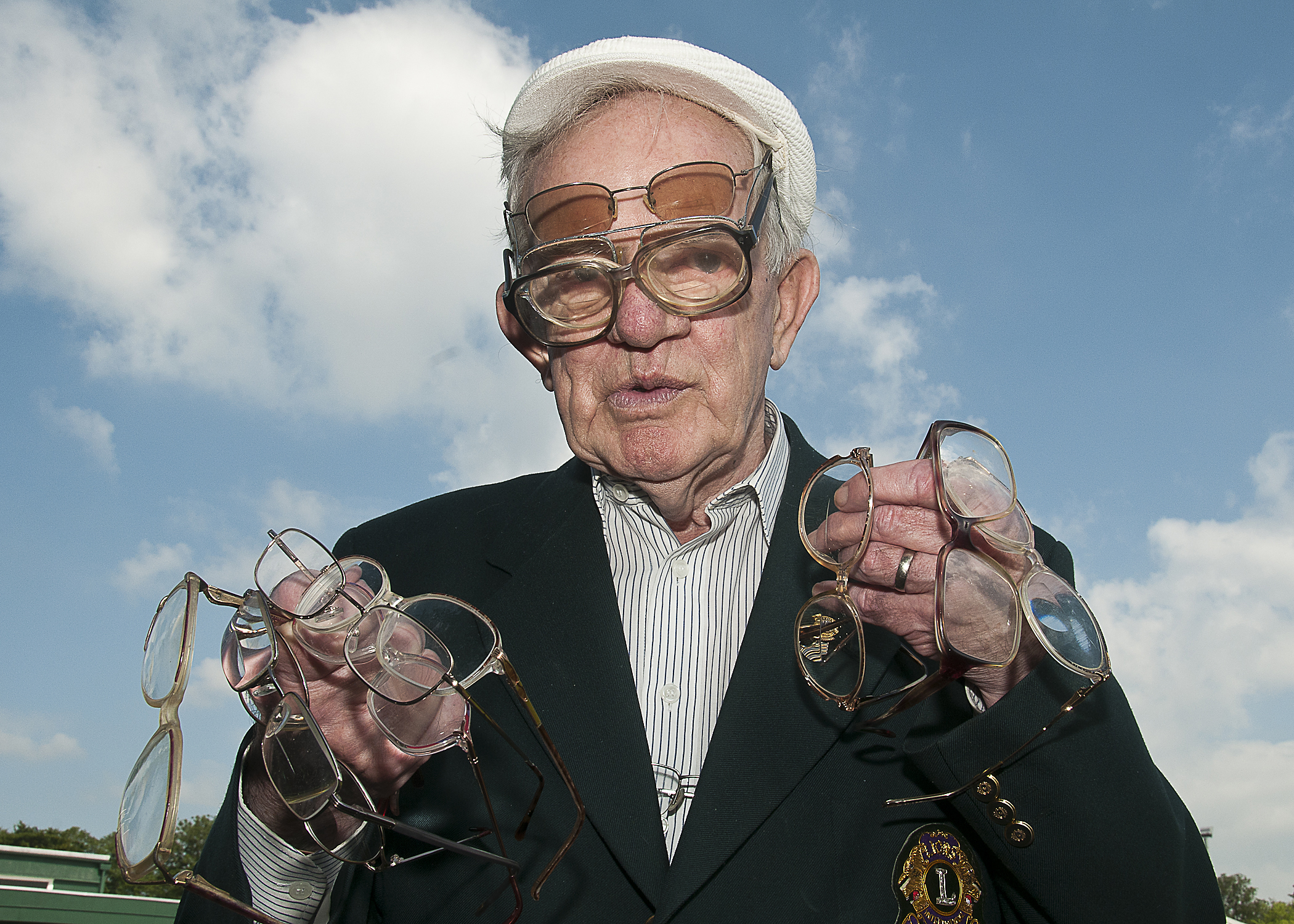
Belfast Lions are co-operating with the charity Extern and social enterprise ArtsEkta on the project. The donated glasses will be shipped to a regional Lions Eyeglass Recycling Centre at Chichester in England, where they will be cleaned and prepared for distribution by Lions and other groups.  Helping to launch the scheme was Bobby Duke, a Lions Club member for nearly fifty years and a Past District Governor of the group. He is a retired teacher from Finaghy.

Past District Governor Bobby Duke, Belfast Lions Club

Past District Governor Bobby Duke, Belfast Lions Club Photo: Ken Oliver

The President of Belfast Lions Club Michael Fisher said the recycling scheme was a good example of how Lions could make a difference in their own communities and worldwide. “In most developing countries, an eye test can cost as much as one month’s wages and a single eye doctor may serve a community of hundreds of thousands of people”, he said. He also hoped the project would help to attract more volunteers to become involved with the work of the Lions, which started up originally in the city in 1959 through the late Bert Mason, a businessman who went on to serve as International President of the organisation.

The Chair of Belfast Council’s Health and Environmental Services Committee, Councillor Steven Corr, said: “This is a really great idea and I’m delighted the Council is involved in such a worthwhile project. We take a lot of things for granted here; people often have more than one pair of glasses and change them quite regularly so to be able to help others in developing countries have the gift of better vision, is really fantastic. I would like to extend my personal thanks to the Belfast Lions Club for taking on this initiative and hopefully through raising awareness, we can encourage people to recycle their old specs.”

Cllr Steven Corr & Extern help to launch the spectacles project

Cllr Steven Corr & Extern help to launch the spectacles project    Photo: Michael Fisher

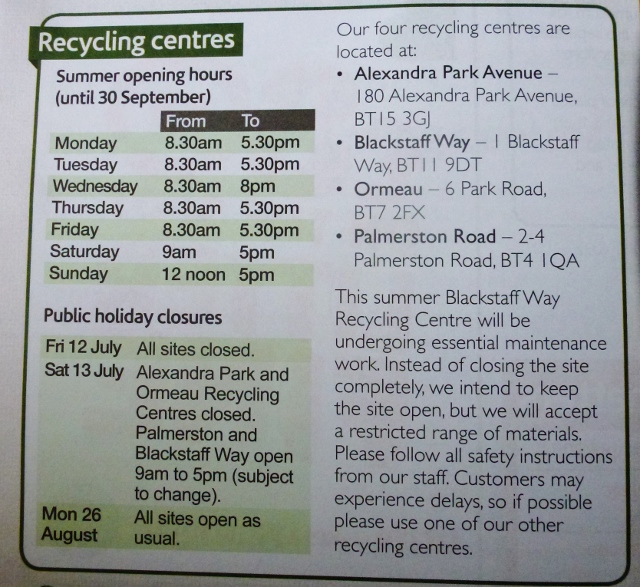
To donate used glasses (including sunglasses and reading glasses), place them in the specially marked blue bins located in the Council’s four main recycling centres in the city. These are located at Ormeau (Park Road), Palmerston Road, Alexandra Park Avenue and Blackstaff Way. You can find out about recycling facilities in your area by visiting www.belfastcity.gov.uk/recycling.

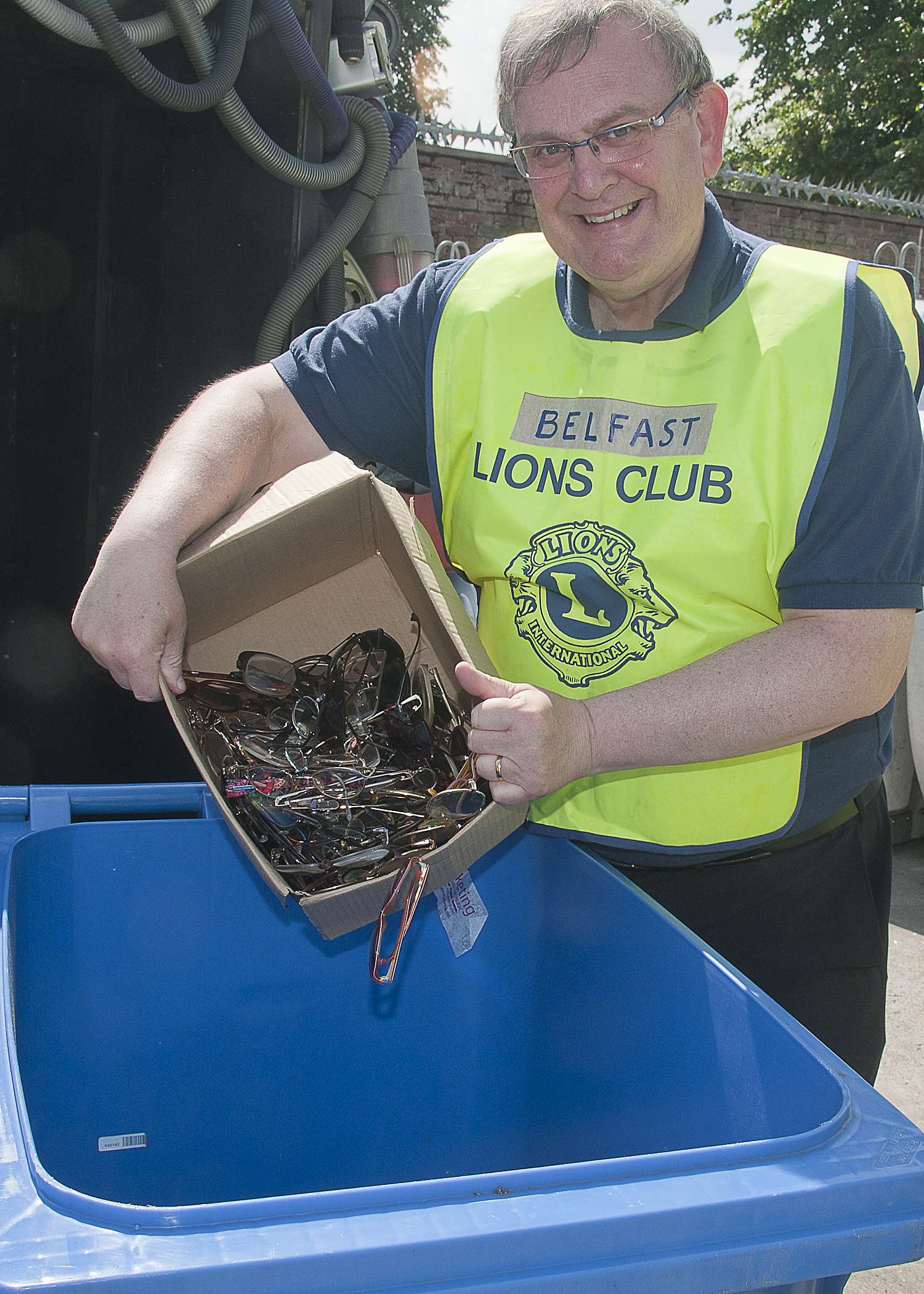
President Belfast Lions Club, Michael Fisher, recycling spectacles at the Ormeau depot

President Belfast Lions Club, Michael Fisher, recycling spectacles at the Ormeau depot  Photo: Ken Oliver

Belfast Lions Club is looking for new members and meets on the first Wednesday of every month at 7:30pm at the Wellington Park Hotel, Malone Road. The next meeting is on Wednesday 4th September when a presentation will be made to one of the charities for which funds are raised, Diabetes UK (NI). Lions Clubs are a group of men and women who identify needs within the community and work together to fulfil those needs. They belong to the world’s largest service club organization with more than 1.3 million members in 45,000 clubs in over 200 countries. For more information about the project or the activities of Belfast Lions Club, contact Michael Fisher.

RecycleFSColor

AMALFI

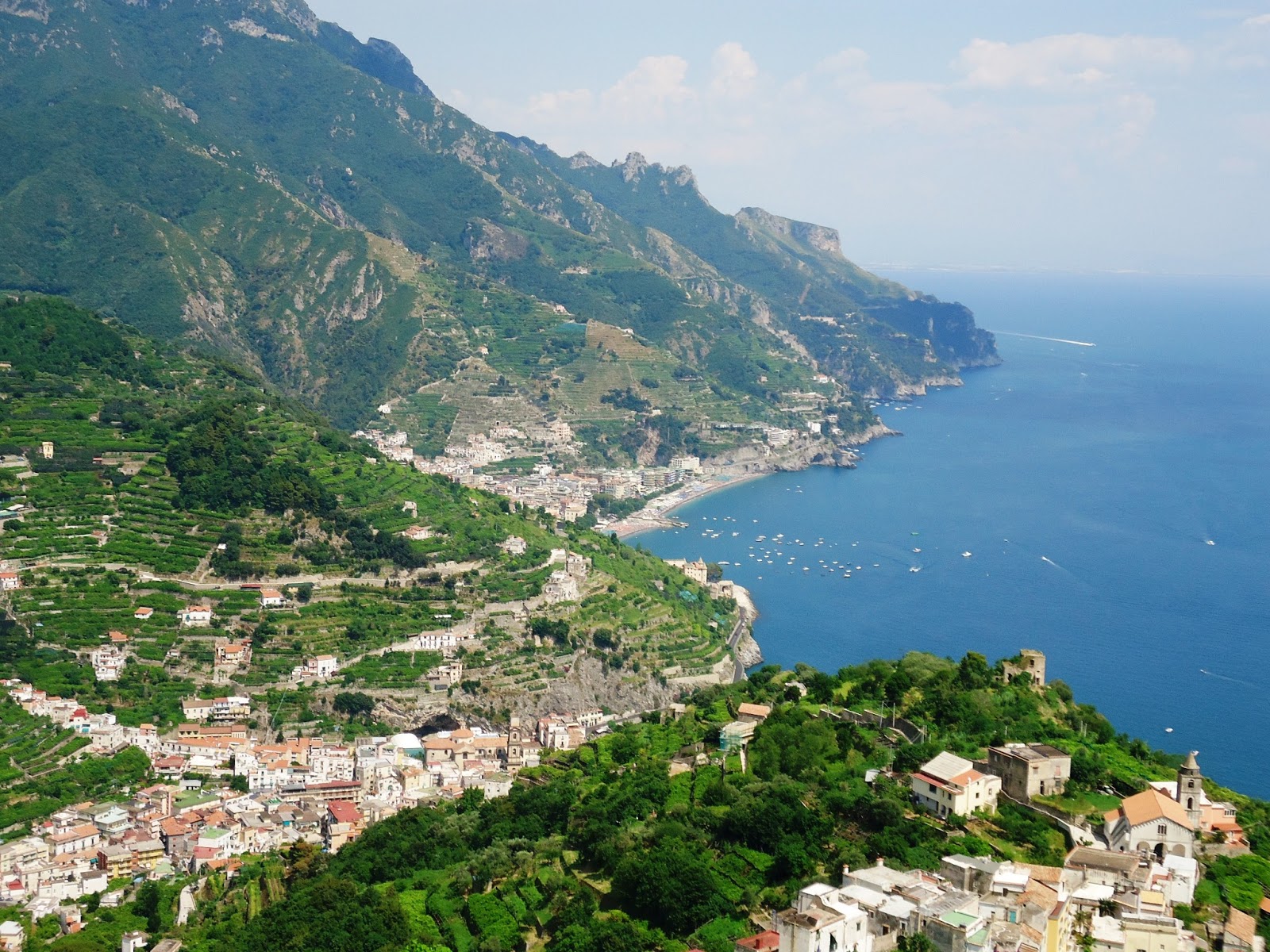
I have enjoyed reading about Patrick Comerford’s  travels in Italy, particularly his blog on “Three weddings and some cathedrals on the Amalfi coast”. I visited many of the same places last year including the Duomo at Amalfi itself. He also made the journey up the mountain to Ravello, where there are some lovely villas and where you get a great view across towards Sorrento and looking down on Maiori (where we stayed) and the Bay of Salerno. He has some nice photographs as well, including the local liqueur, limoncello:

Looking down on the Amalfi coast from Ravello (Photograph: Patrick Comerford (2013)

Patrick Comerford

I spent Saturday [6 July 2013] along the Amalfi Coast, which stretches along the southern coast of the peninsula east of Sorrento. With its steep shoreline, towering cliffs, rocky outcrops, hairpin bends, with the shimmering blue sea below and one pretty coastal town or pastel-coloured village after another, the Amalfi Coast is a popular location for motor advertising shots and the weekend traffic also showed how this a popular destination for both Italians and the thousands of tourists staying in the Naples and Sorrento area. I had no mid-life-crisis, open-topped red sports car for today’s journey. Instead, I travelled by coach with the four dozen or so people in our group along the only land route on the Amalfi Coast – the 40 km stretch along the Strada Statale 163, running along the coastline from Positano in the west to Vietri sul Mare in the east.

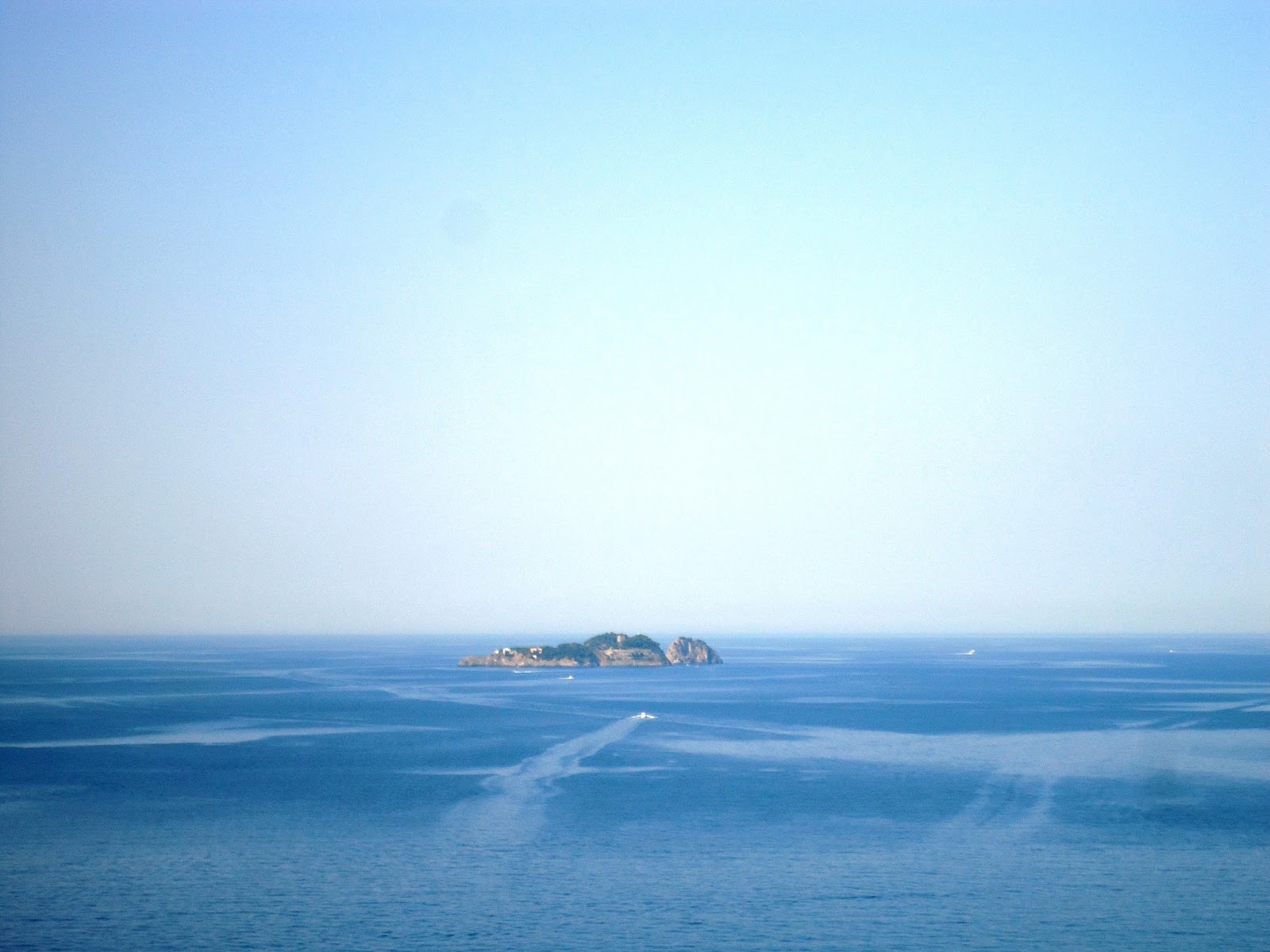
The rocks of Sirenuse … home to the Sirens who may have given their name to Sorrento (Photograph: Patrick Comerford, 2013)

Below us in the blue sea for the most part of the journey we could see the tiny islands that form Li Galli Archipelago. United the 19th century there were known as Sirenuse and the said to be the home of the mythical Sirens who lured sailors unto the rocks and who may have given their name to Surrentum or Sorrento. In the 10th and 11th centuries, the Duchy of Amalfi was an independent statelet based on the town of Amalfi. This coastline was part of the Principality of Salerno, until Amalfi was sacked by the Republic of Pisa in 1137.

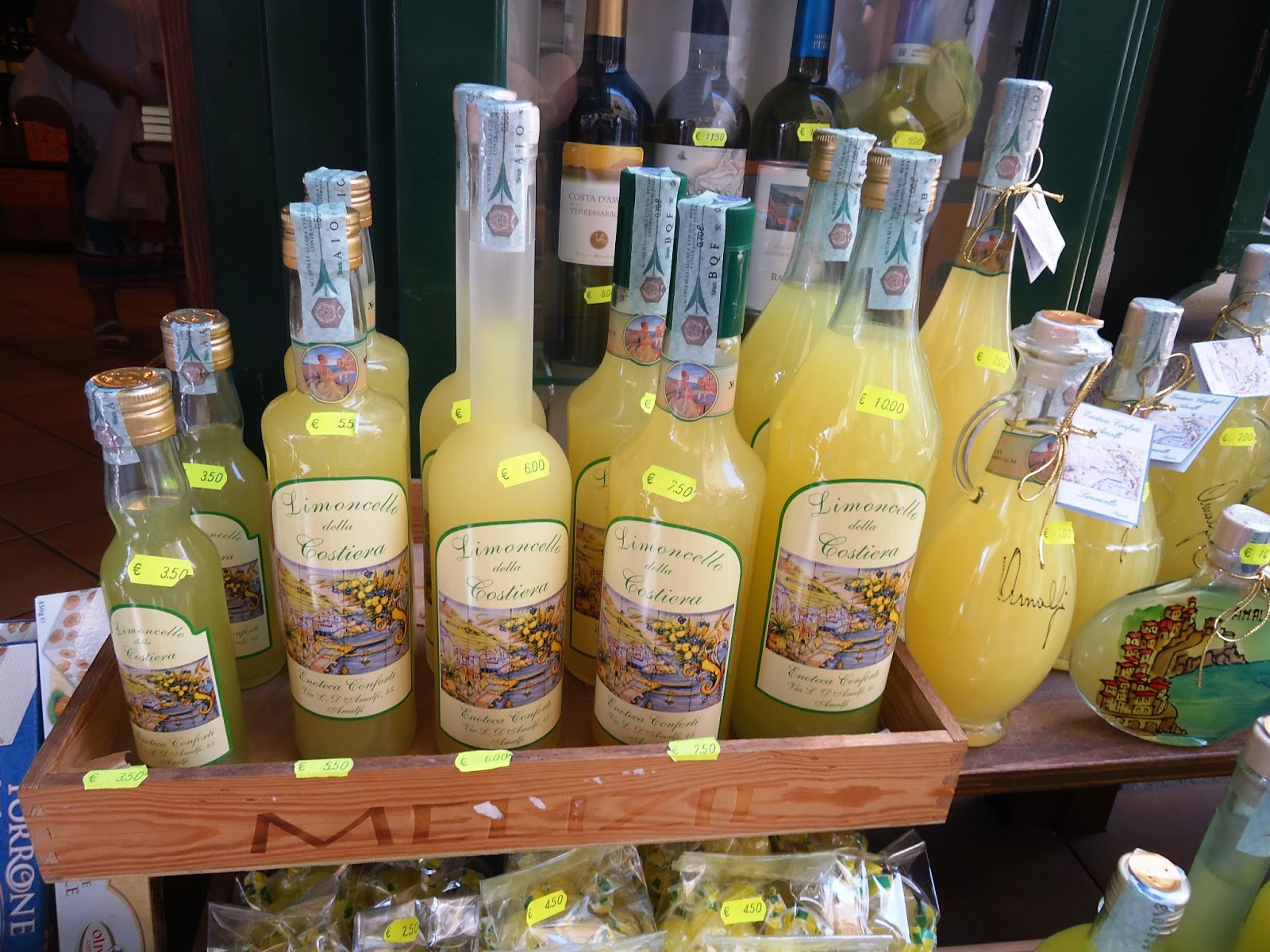
The Amalfi Coast is known for limoncello, a liqueur produced from locally-grown lemons (Photograph: Patrick Comerford, 2013)

In 1997, the Amalfi Coast was listed as a Unesco World Heritage Site and as a cultural landscape. This area is also known for limoncello, a liqueur produced from lemons grown between February and October in the terraced gardens along the coast. After the unification of Italy, the Amalfi coast has enjoyed a huge economic revival, boosted in the late 20th century by international tourism. Our first stop was in Positano, a village and commune , mainly in an enclave in the hills leading down to the coast. It was a port in the mediaeval Amalfi Republic. The church of Santa Maria Assunta has a dome made of majolica tiles and a 13th century Byzantine icon of a black Madonna. According to local legend, the icon was stolen in Byzantium and was being shipped across the Mediterranean by pirates when a terrible storm blew up in the sea near Positano. The frightened sailors heard a voice on board saying: “Posa, posa!” (“Put down! Put down!”) The sacred icon was taken off the boat and carried to the fishing village, and only then the storm abated. Positano prospered in the 16th and 17th centuries. However, by the mid-19th century, the town had fallen on hard times, and more than half the population emigrated, mostly to Australia. By the first half of the 20th century, Positano was a relatively poor fishing village. It began to attract large numbers of tourists in the 1950s, especially after John Steinbeck published his short story ‘Positano’ in Harper’s Bazaar in May, 1953. “Positano bites deep,” he wrote. “It is a dream place that isn’t quite real when you are there and becomes beckoningly real after you have gone.” After we gone through Positano and stopped briefly on the eastern edge of the town for the panoramic view and freshly squeezed orange juice and once again at a ceramic shop at Grotta dello Smeraldo before continuing on to the harbour town of Amalfi. I had an internal debate between boats and architecture: would I go on a boat trip with the others out into the Bay of Salerno? Or would I visit the Duomo in Amalfi on my own?

The portico of the Duomo di Sant’Andrea looks down onto the Piazza Duomo below (Photograph: Patrick Comerford, 2013)

I plan to visit Capri on Monday, so architecture won the day today, and I climbed the broad steep steps to the Duomo di Sant’ndrea. And I was just in time too, for a wedding was about to begin, and by the time the boat-trippers returned the bride had arrived and the cathedral was closed to visitors.

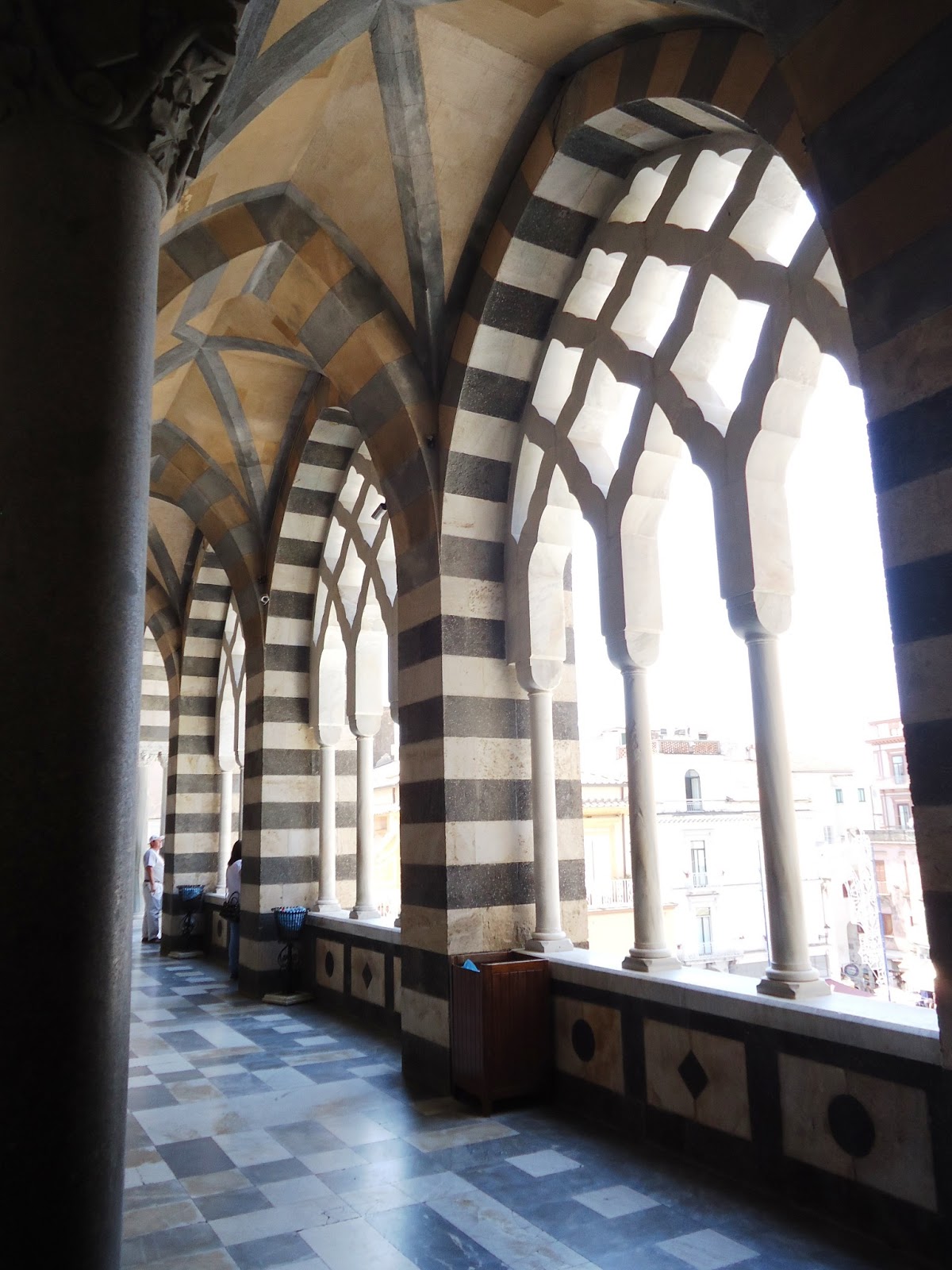
The Cloisters of Paradise with their ornate Moorish-style colonnades (Photograph: Patrick Comerford, 2013)

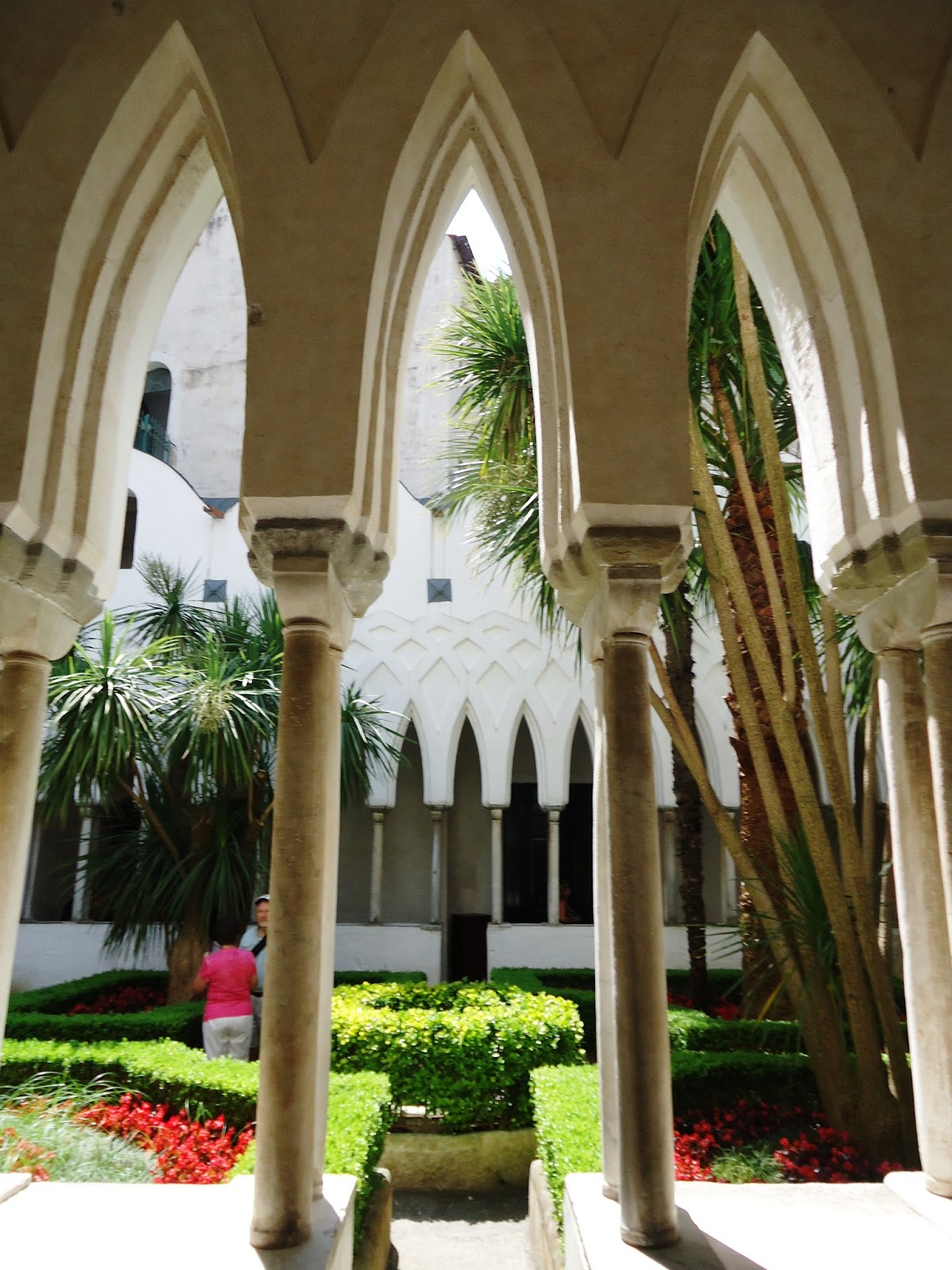
The cathedral doors were cast in bronze in Constantinople in the 11th century. But the entrance to the cathedral is through the beautifully named Chiostro del Paradiso or Cloisters of Paradise, with its ornate Moorish-style colonnades of white-washed, interlaced arches, palm trees, and inner garden. The cloisters lead into the museum in the former Basilica di Crocifissio, with bare walls and an eclectic collection of ecclesiastical artefacts, including a bishop’s sedan chair made in Macao in the 18th century, along with paintings, mitres and vestments.

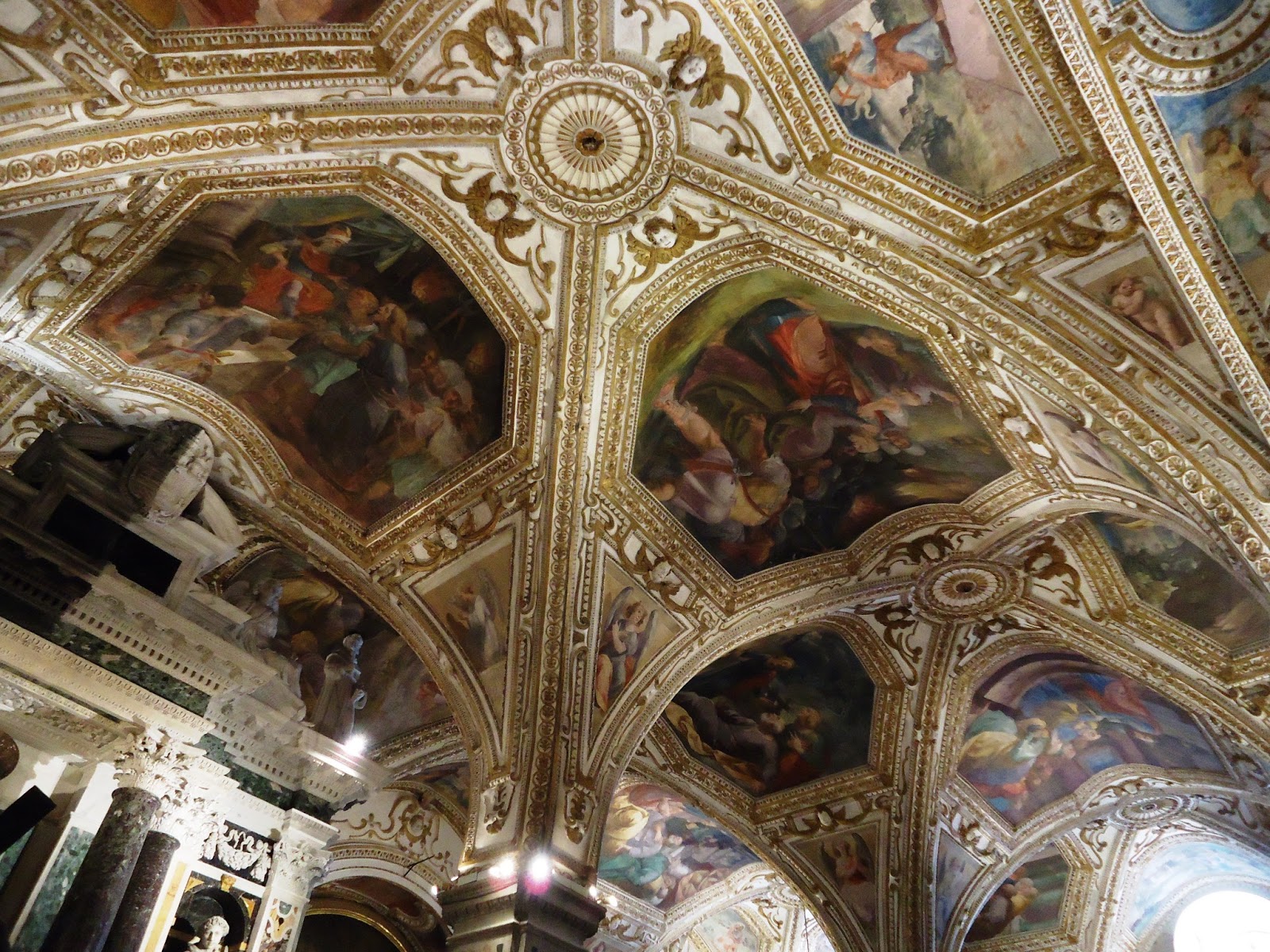
The richly decorated ceiling of the crypt below the Duomo in Amalfi (Photograph: Patrick Comerford, 2013)

Steps lead down to the crypt, with its richly decorated baroque ceiling and a shrine containing the body of Saint Andrew, who gives his name to the cathedral above. The apostle’s body was brought to Amalfi by the Knights of Saint John of Jerusalem, who brought it here in 1204, having plundered it in Constantinople which contains. The body is buried deep beneath the shrine – although the saint’s head is in Patras in Greece – but the shrine includes a small vessel placed above the coffin to catch a miraculous fluid that is said to flow from the saint’s body ever since the 14th century. Away from the bustle of the square in the front of the cathedral and back from the busy beach and harbour, the back streets and the stepped side streets were quiet and cool in the mid-day sun. From Amalfi, we climbed up through the cultivated terraced mountainside and the hairpin bends to Scala, where we had lunch in the Margheritta Hotel, in a balcony looking down on the road we had had climbed in our two small buses.

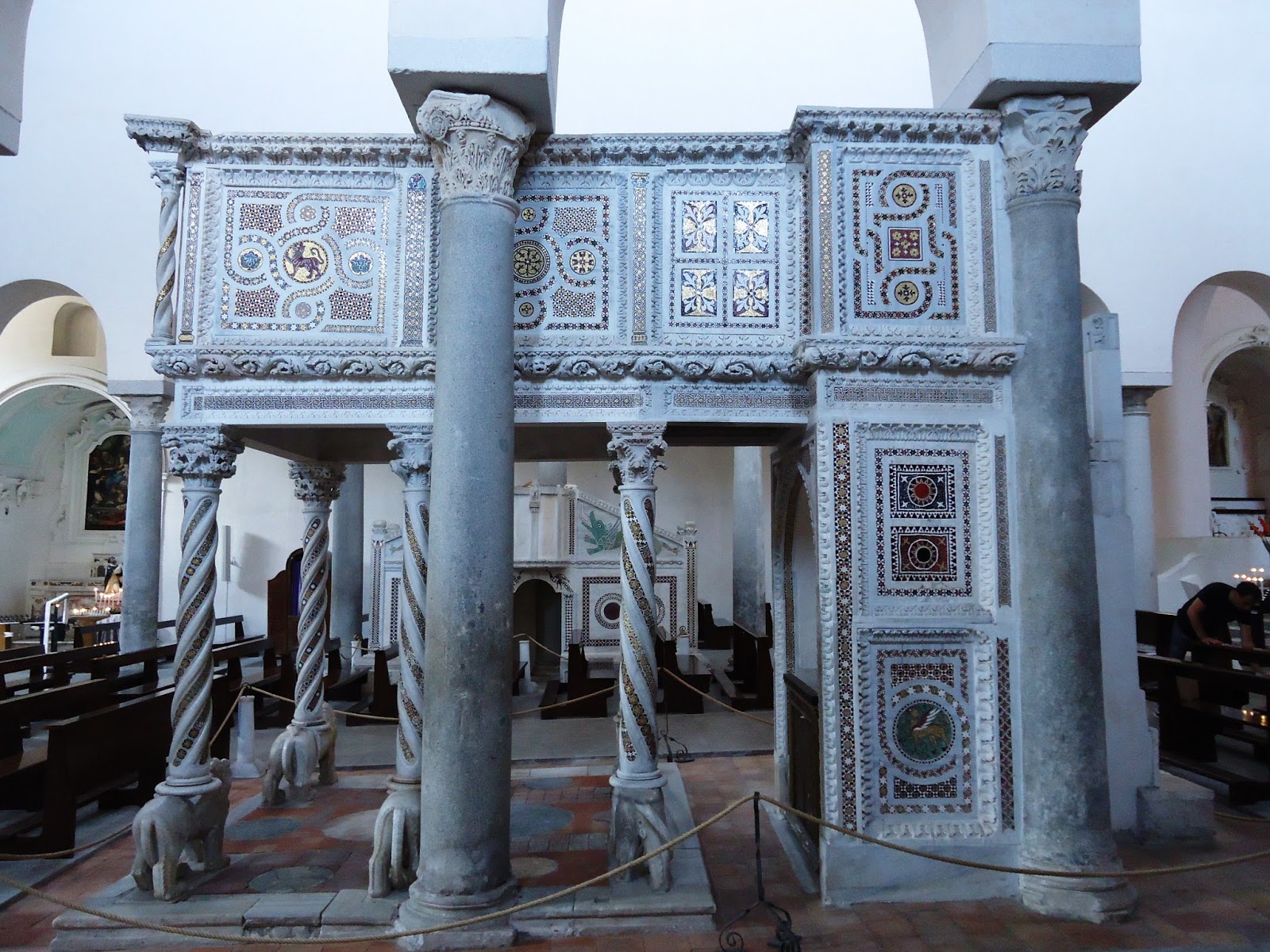
The ornate Gospel pulpit in the Duomo in Ravello (Photograph: Patrick Comerford, 2013)

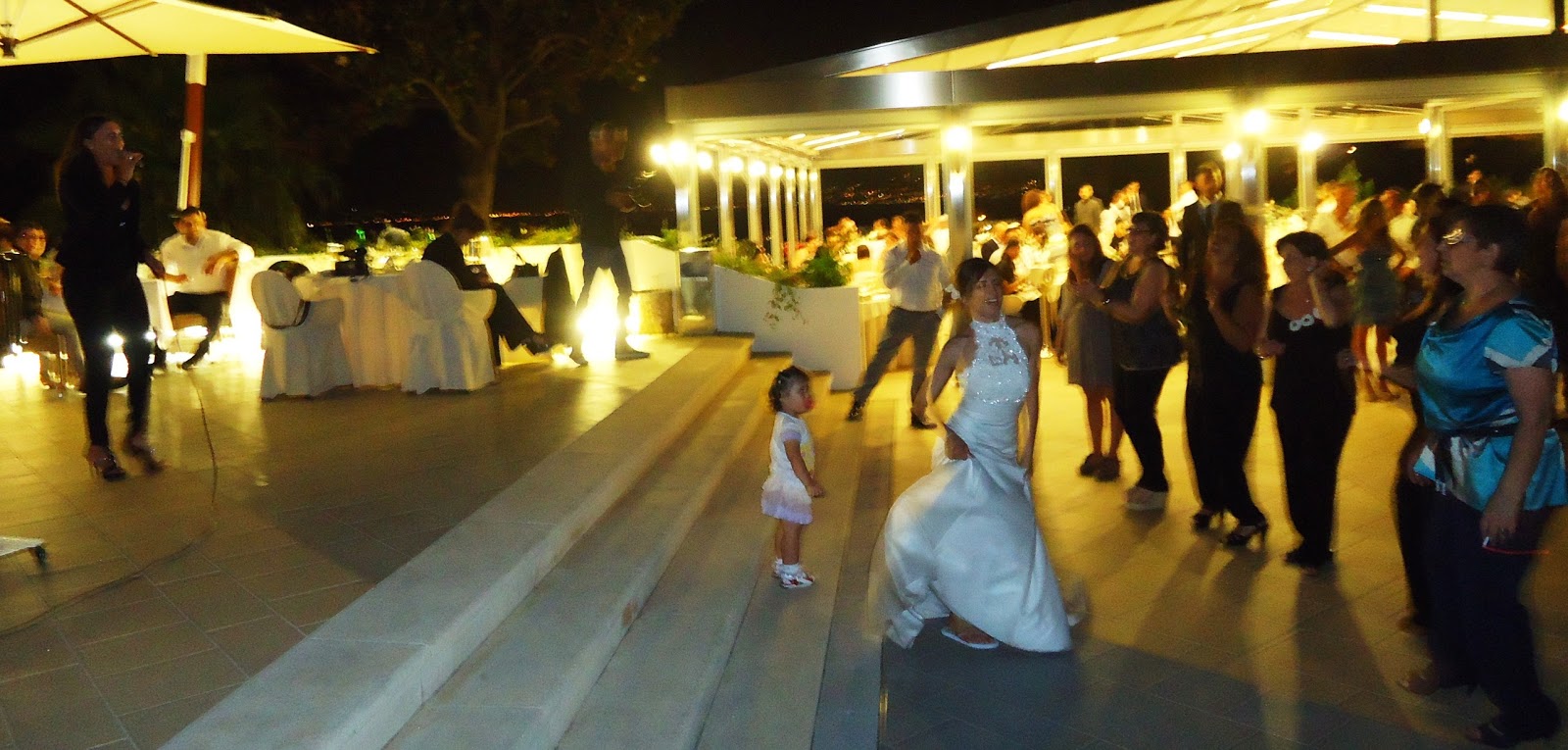
From Scala, we travelled back down to Ravello, once an independent city state. This was also the setting for part of Richard Wagner’s Parsifal, and here DH Lawrence wrote part of Lady Chatterley’s Lover. The Duomo, dedicated to Saint Pantaleone, was being prepared for a wedding, but once again I had arrived in time to see the inside of the cathedral and its museum. The duomo has two ornately decorated pulpits – an Epistle pulpit and a Gospel pulpit. The Gospel pulpit has twisted columns patterned with mosaics resting on six carved lions. There was time to look inside the tropical gardens of the Villa Rufolo, which inspired Klingsor’s magic garden and the stage design of Wagner’s Parsifal. Although we could see it from the balconies of Ravello, we never got as far as Salerno. As we sat to dinner back in the Grand Hotel Moon Valley, a wedding was taking place by the pool, and some of us joined the happy families until late in the evening.

The bride dances at the third wedding in a day (Photograph: Patrick Comerford, 2013)

STOCKTAKING

Former Battersea Power Station beside railway line & River Thames, London

Former Battersea Power Station beside railway line & River Thames, London

After six months of blogging daily as FisherBelfast on various topics (some of them listed on the right-hand side of the page), I am using this opportunity to take stock. The statistics show that since January 1st when I began, I have had over 13,000 page views. It has worked out at over 2,000 every month, with the exception of February, which had 28 days. The average view per day is 71, with the best being last month when it was as high as 83 daily. The majority of viewers come via links on twitter or facebook and are from the UK, followed by Ireland, then the United States, Canada and Australia. I have had single views from 22 countries including Taiwan and Colombia. Hard to know if any of that could be attributed to spammers. So a big thank-you to anyone who has dropped in on these pages in 2013. Please continue to read my posts, sign up for e-mail alerts and tell your friends! Michael Fisher: Belfast, Dublin and Monaghan.

MALLARD RECORD

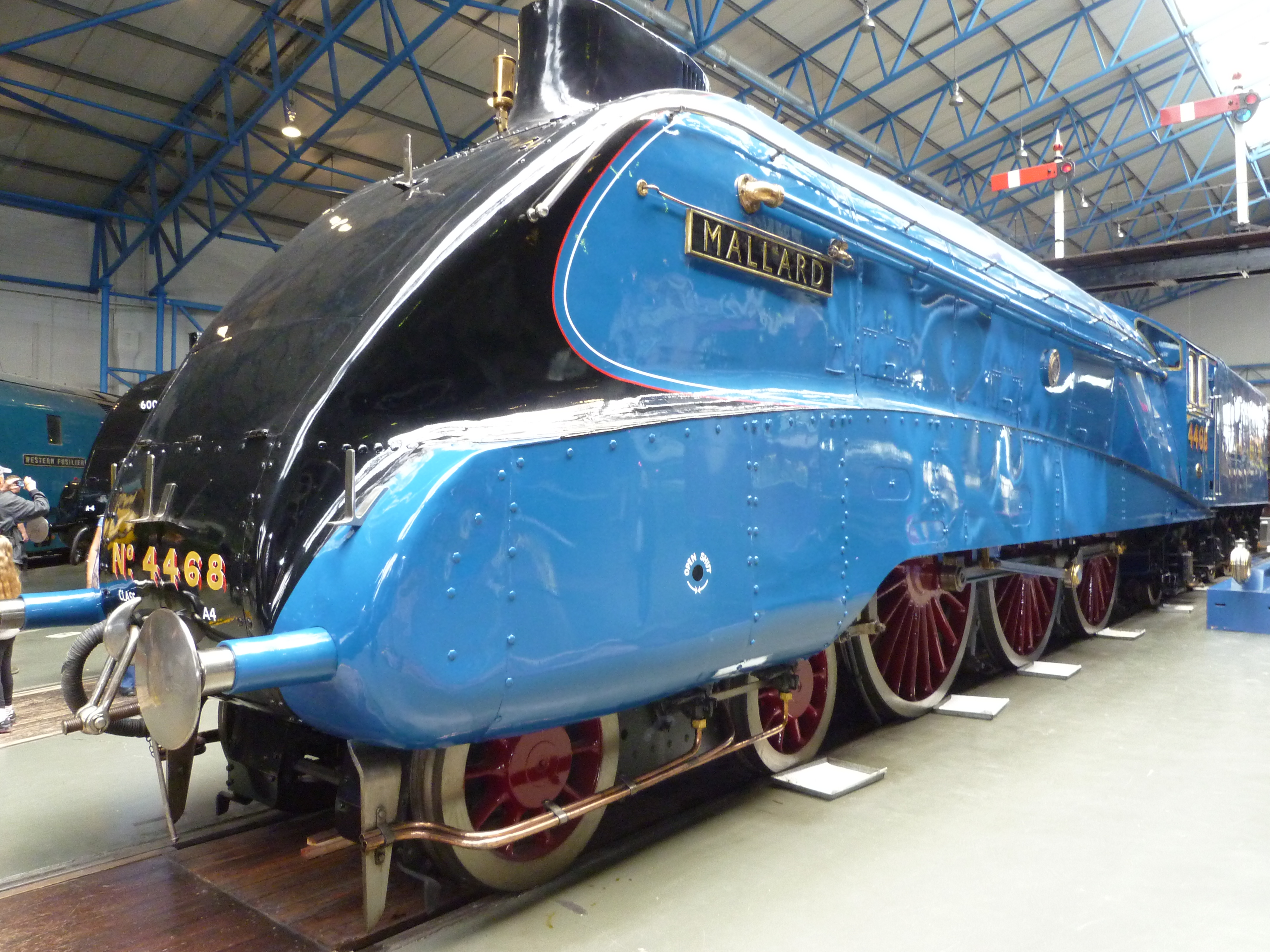
Mallard at National Railway Museum York

Mallard at National Railway Museum York

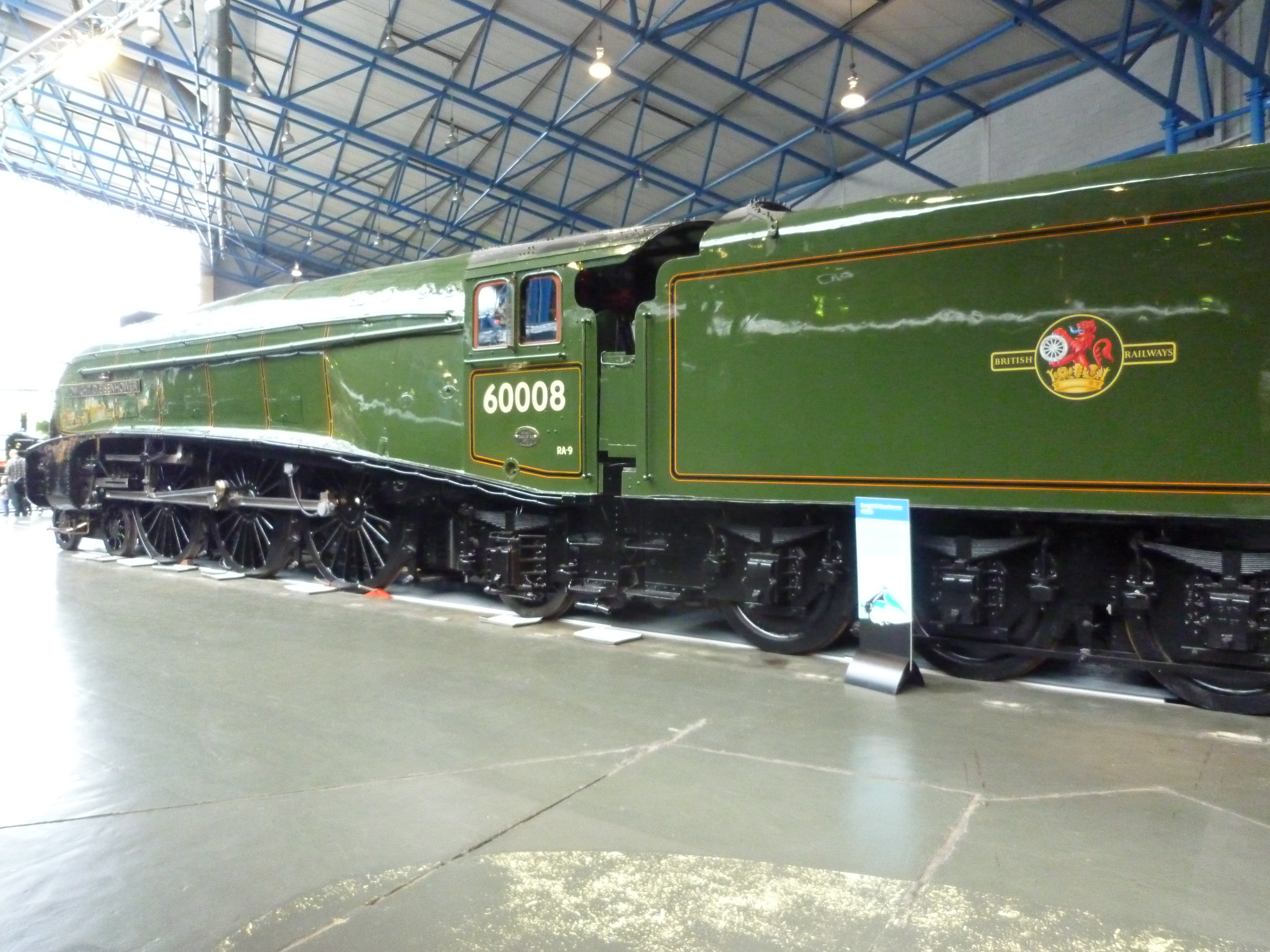
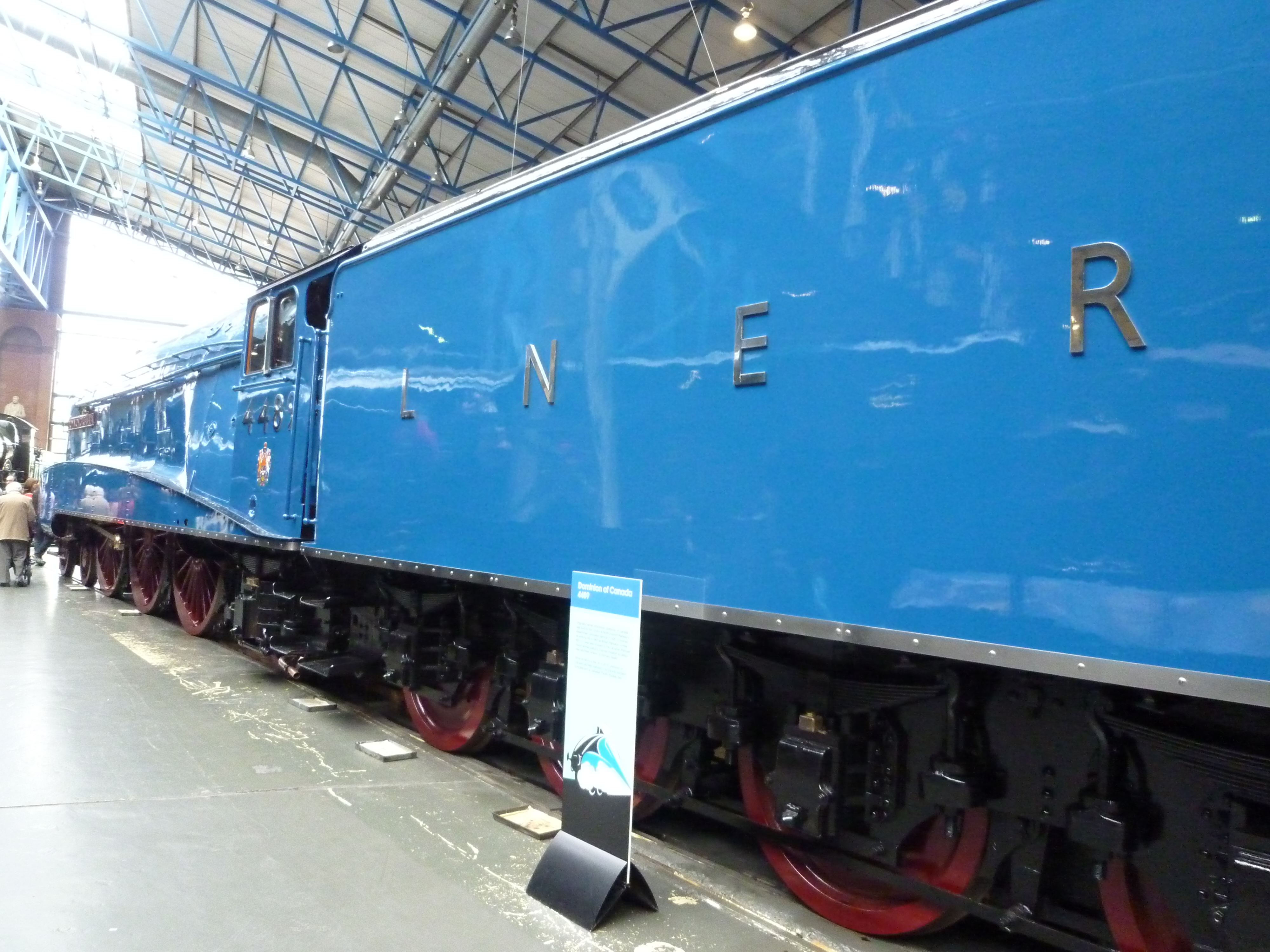
75 years ago today, Mallard set a new record. The A4 Class steam locomotives broke the world speed record for steam on July 3rd 1938 by travelling at 126mph (203km/h) at Stoke Bank near Grantham in Lincolnshire. To mark the occasion a special “Gathering” of the six surviving engines in the class has been organised by the National Railway Museum in York which I visited last month. It’s the first time the six surviving engines, Dwight D Eisenhower, Mallard, Bittern, Union of South Africa, Dominion of Canada and Sir Nigel Gresley  have been seen together.

Dwight D Eisenhower at York in traditional BR green livery

Dwight D Eisenhower at York in traditional BR green livery

It was a huge undertaking for the organisers. with Dwight D Eisenhower and Dominion of Canada having to be shipped from North America for the event. Bittern travelled from London King’s Cross under its own steam on Saturday in a 90mph (145km/h) run up the East Coast Mainline to York. Mallard ran on the East Coast Mainline from the 1930s to the 1960s and on the historic day in 1938 was driven by the late Joe Duddington from Doncaster.

Mallard

Mallard

The A4 Class was designed by Sir Nigel Gresley, who also created the Flying Scotsman. Mallard was thought to have been chosen for the record-breaking run because it was one of the newest locomotives and Sir Nigel wanted to test its new performance exhaust. The locomotive broke down soon after it reached the top speed and was brought back to the workshop to have a bearing replaced.

Mallard

Mallard

A golden plaque on the side of Mallard reads: “On July 3rd 1938 this locomotive attained a world speed record for steam traction of 126 miles per hour.”

British Rail’s modernisation plan began sweeping steam away in 1955 and Mallard was withdrawn from service in 1963. The engine was restored by the National Railway Museum in the mid-1980s.

Visiting Mallard at NRM York

Visiting Mallard at NRM York

LIONS RECYCLE USED SPECTACLES

RecycleFSColor

Have you old or unused spectacles you no longer need? Belfast Lions Club has teamed up with Belfast City Council and Extern as well as ArtsEkta, a social enterprise based in Belfast, to recycle the glasses. They are now being collected in specially provided blue bins at the Council’s four main recycling deports covering North, South, East and West Belfast, at Alexandra Park Avenue, Ormeau, Palmerstown Road and Blackstaff Way.

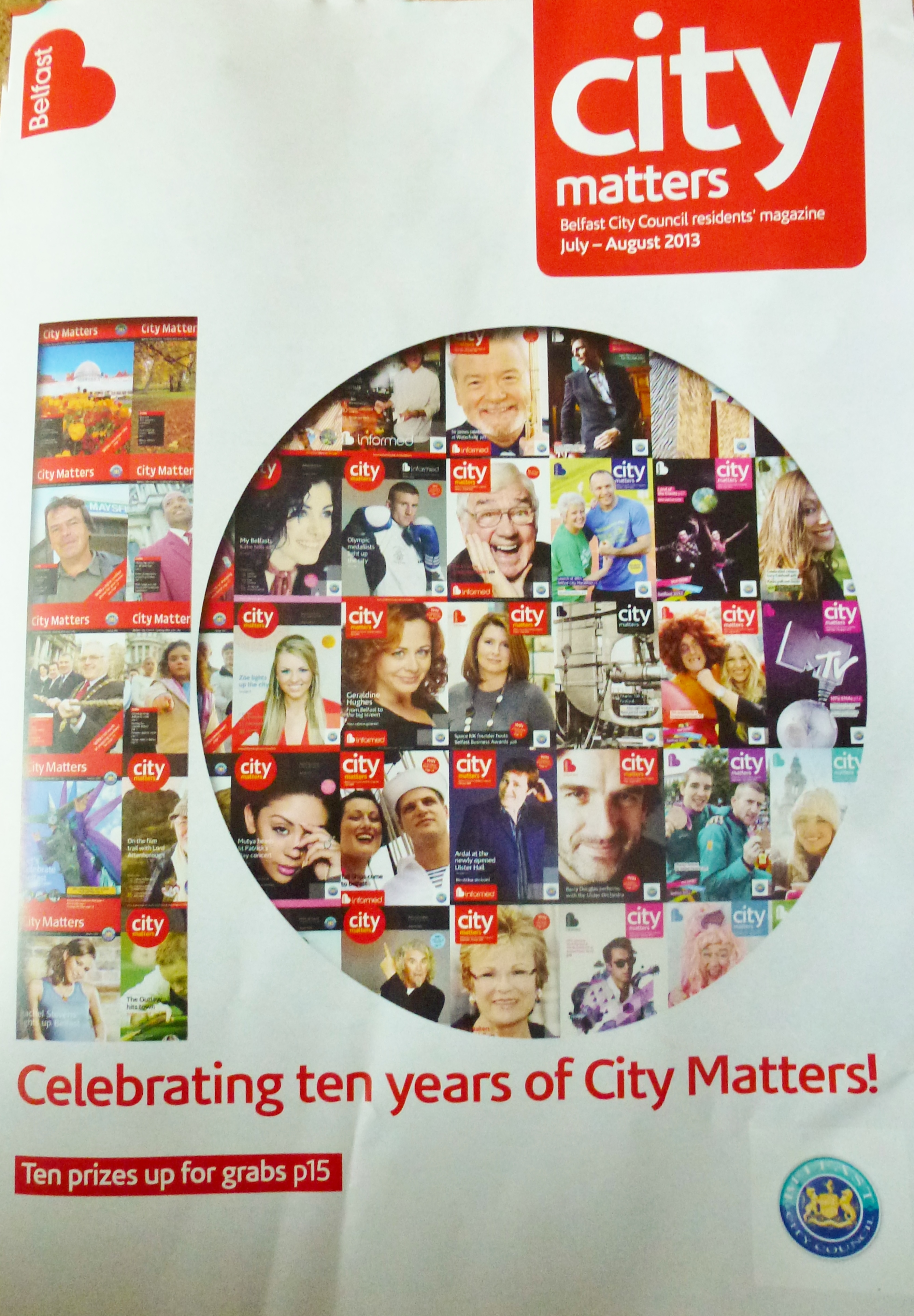
Belfast City Council Magazine: City Matters

Belfast City Council Magazine: City Matters

 lionsspecsThe latest edition of the Council’s City Matters magazine contains details of the location of the depots and the opening hours. Perhaps you know an optician who would like to collect the spectacles and organise the scheme locally, so that the glasses (without the cases) can be passed on to the Council for disposal in the blue bins provided. The charity Extern will collect the spectacles and put them into boxes. They will then be sent to a central depot in England run by Chichester Lions Club. From there, they will be sent for reuse in countries in Africa and in India.

Belfast Lions Club: Recycle your Spectacles

Belfast Lions Club: Recycle your Spectacles

RECYCLE YOUR SPECS

You can now recycle your old glasses at any of our (Belfast City Council) recycling centres.

We’ve teamed up with Belfast Lions Club, local charity Extern and a Belfast-based social enterprise ArtsEkta to send unwanted spectacles to developing countries. The glasses are collected from our recycling centres and sorted into various categories. They are then distributed to eye camps in India, Africa and Eastern Europe, where they are matched to the right patient. The (Chichester) Lions Clubs have run this scheme for over thirty years and last year they sent over 300,000 pairs of spectacles for reuse at eye camps.     LIONSweserve

i: For more information on this and other projects or to get involved with Belfast Lions Club, please call Michael Fisher on 9066 2945.

Belfast City Council Recycling Centres

Belfast City Council Recycling Centres

These schemes operate through Lions Clubs in many parts of the UK and Ireland. When I passed through the town in March I noticed that Southend-on-Sea Lions Club had linked up with the local Council to provide a box at its headquarters where unused spectacles could be recycled. Perhaps we will be able to arrange something similar with the City fathers in Belfast. 

Southend-on-Sea Lions Club Recycling Scheme

Southend-on-Sea Lions Club Recycling Scheme

ROYAL VISITORS IN CALEDON

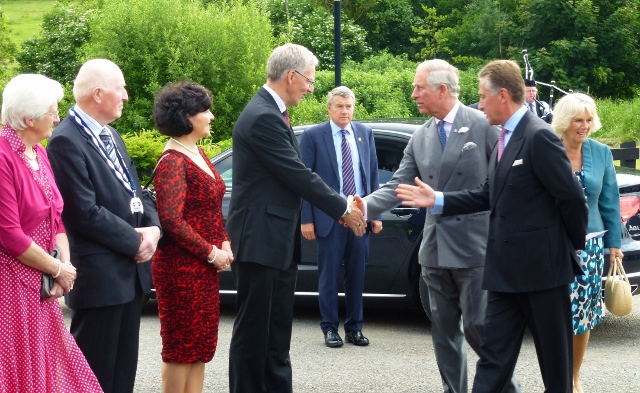
Arrival of Prince of Wales & Duchess of Cornwall in Caledon

Arrival of Prince of Wales & Duchess of Cornwall in Caledon

The border village of Caledon in County Tyrone was looking its best as it welcomed a royal visitor, His Royal Highness the Prince of Wales who is on a two-day visit to Northern Ireland along with Her Royal Highness the Duchess of Cornwall.  It’s a while since any member of the British royal family came here, although the area is the seat of the 7th Earl of Caledon, Lord Lieutenant for County Armagh, which lies on the other side of the River Blackwater and where some of his 5000 acre estate is situated. It adjoins two other estates, Tynan Abbey (Armagh) and Castle Leslie across the border in Glaslough, County Monaghan. Sir Shane Leslie and his parents would have been in contact with their Caledon neighbours, as well as the Stronges. Sir John Leslie arrived to meet the royal visitors and remind them of his family’s connection with Winston Churchill.
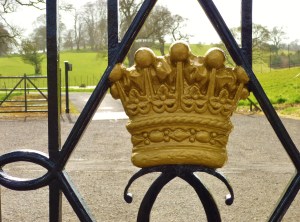
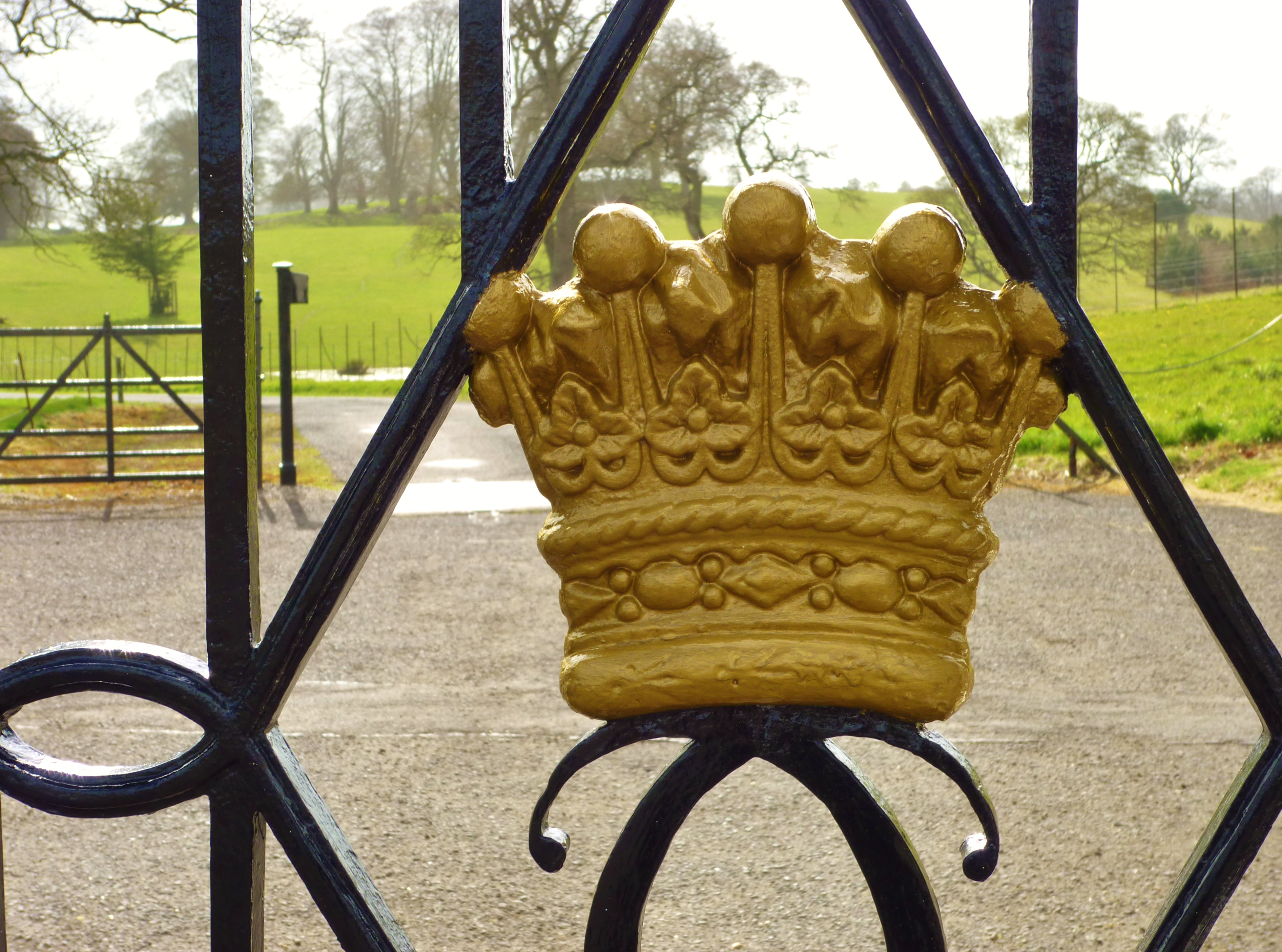
Detail on Gate

Detail on Gate

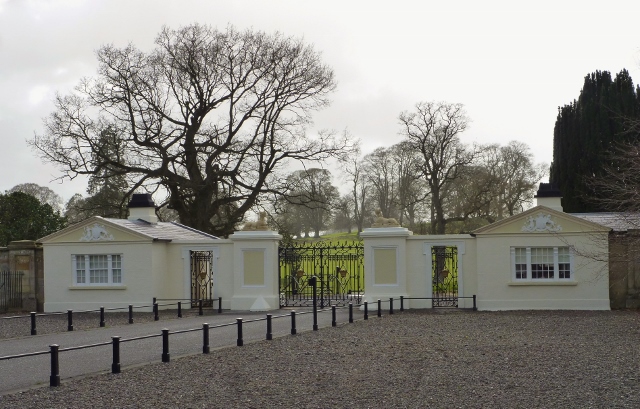
Entrance to Caledon Castle

Entrance to Caledon Castle

Tynan Abbey was destroyed in an IRA gun and bomb attack on January 21st 1981. The elderly Sir Norman Stronge (86), a former Stormont Speaker, Ulster Unionist politician and former British Army officer, was shot dead along with his only son James, a former Grenadier Guards officer and Unionist MP who was also an RUC Reservist.

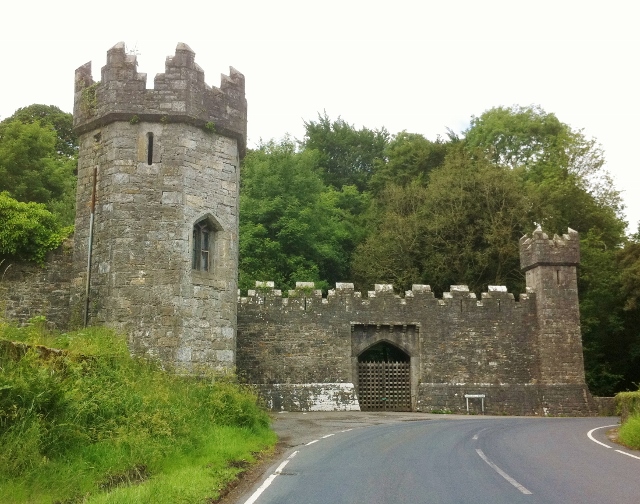
Entrance to Tynan Abbey estate

Entrance to Tynan Abbey estate

There are other reminders that this was one of the areas targeted by the IRA during the “troubles”. In the cemetery beside St John’s parish church, I came across the grave of an RUC Reservist Joshua Willis. The 35 year-old was killed when an IRA landmine containing at least 1000 lbs of explosives was detonated as his armoured patrol car passed along the Killylea Road outside Armagh. Two of his colleagues also died in the attack in July 1990. There was a fourth victim who was passing with a companion in another car, a Catholic nun, Sr Catherine Dunne of the St Louis sisters. She was based at Middletown. The IRA said the nun was the victim of ”unforeseen and fluke circumstances”. One of the nuns from Middletown was at a reception involving community groups who met the VIPs.

Grave of Reserve Constable Joshua Willis

Grave of Reserve Constable Joshua Willis

Not far away on the road towards Aughnacloy there is a memorial erected by local people in memory of the three policemen who were killed. It is close to the site of the former RUC/PSNI barracks, which has now been demolished. The site has now been sold for redevelopment.

Site of former Police Station

Site of former Police Station

Memorial to RUC Reservists

Memorial to RUC Reservists

Prince Charles however was probably concentrating on other parts of this former mill village, where an extensive regeneration project has been carried out over the past few years, led by an enthusiastic committee. I wrote about the work of Caledon Regeneration project last April.

Caledon Regeneration Partnership was formed in 1994 to take forward a planned social, economic and environmental regeneration strategy for the County Armagh village. It is made up of representatives from the local community, local authority and Caledon Estates Company, which has an office in the main street.

Caledon Post Office, Main Street

Caledon Post Office, Main Street

One of the projects being undertaken is the restoration of a beam engine and engine house. Last year a total of £220,000 in funding was secured to finance the first phase.  It is hoped that the engine will eventually be restored to a fully operational state, and become a tourist attraction for the area. The unique piece of equipment dates back to the early 1830s and is one of the earliest surviving steam engines in Ireland. It was once used to power the Caledon Flour Mill and then Caledon Woollen Mills.

Beam Engine, Caledon

Beam Engine, Caledon

In 1984 the village was designated as a Conservation Area and six years later, this was reviewed and the boundary extended. DoE (NI) Planning Service produced a Conservation Area Guide to accompany the original designation, which included design guidance intended to help protect the historic fabric of the village. In November 2001 a unique restoration scheme was officially opened by then Social Development Minister Nigel Dodds of the DUP.
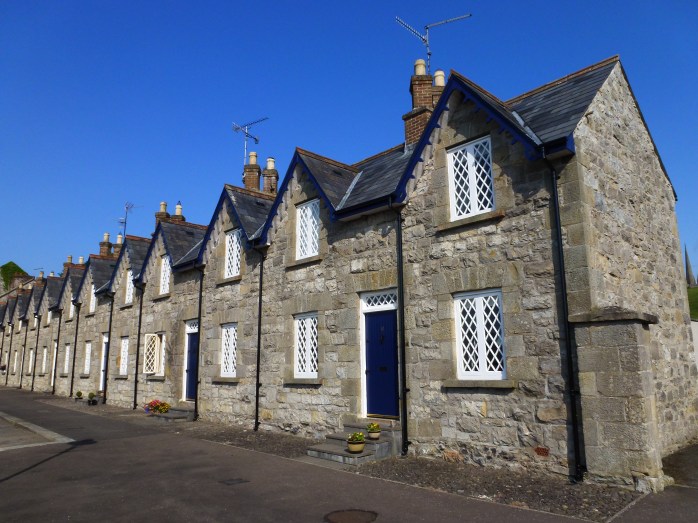
Mill Terrace, Caledon

Mill Terrace, Caledon

The £500,000 project involved the sympathetic restoration of a historic terrace of former mill houses and the implementation of an environmental improvement scheme in the Mill Street area of Caledon. Speaking at the opening ceremony, Mr Dodds said:-

Caledon has a host of unique and beautiful buildings which represent an important part of our architectural heritage. The restoration work and the environmental improvements have made a very significant impact on the appearance and life of the village. The regeneration of towns and villages across Northern Ireland is an important priority for the Department for Social Development. The Mill Street project is an example of what can be achieved through partnerships between local communities, statutory agencies and funding bodies.”

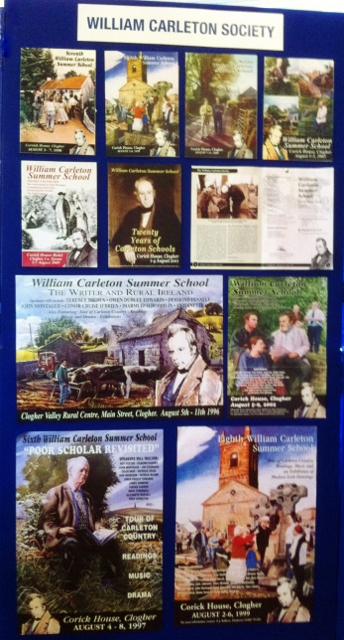
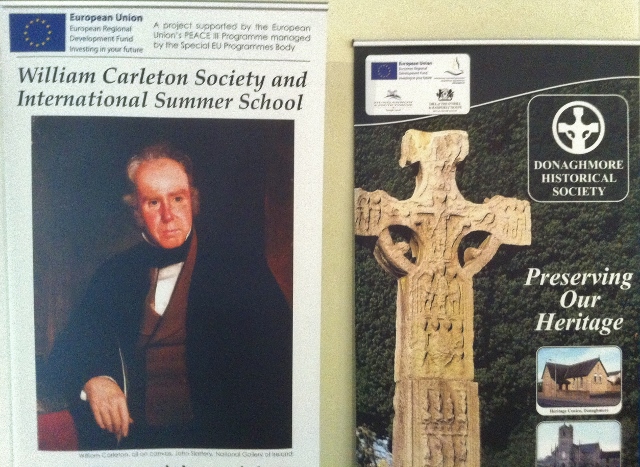
William Carleton Society display

William Carleton Society display

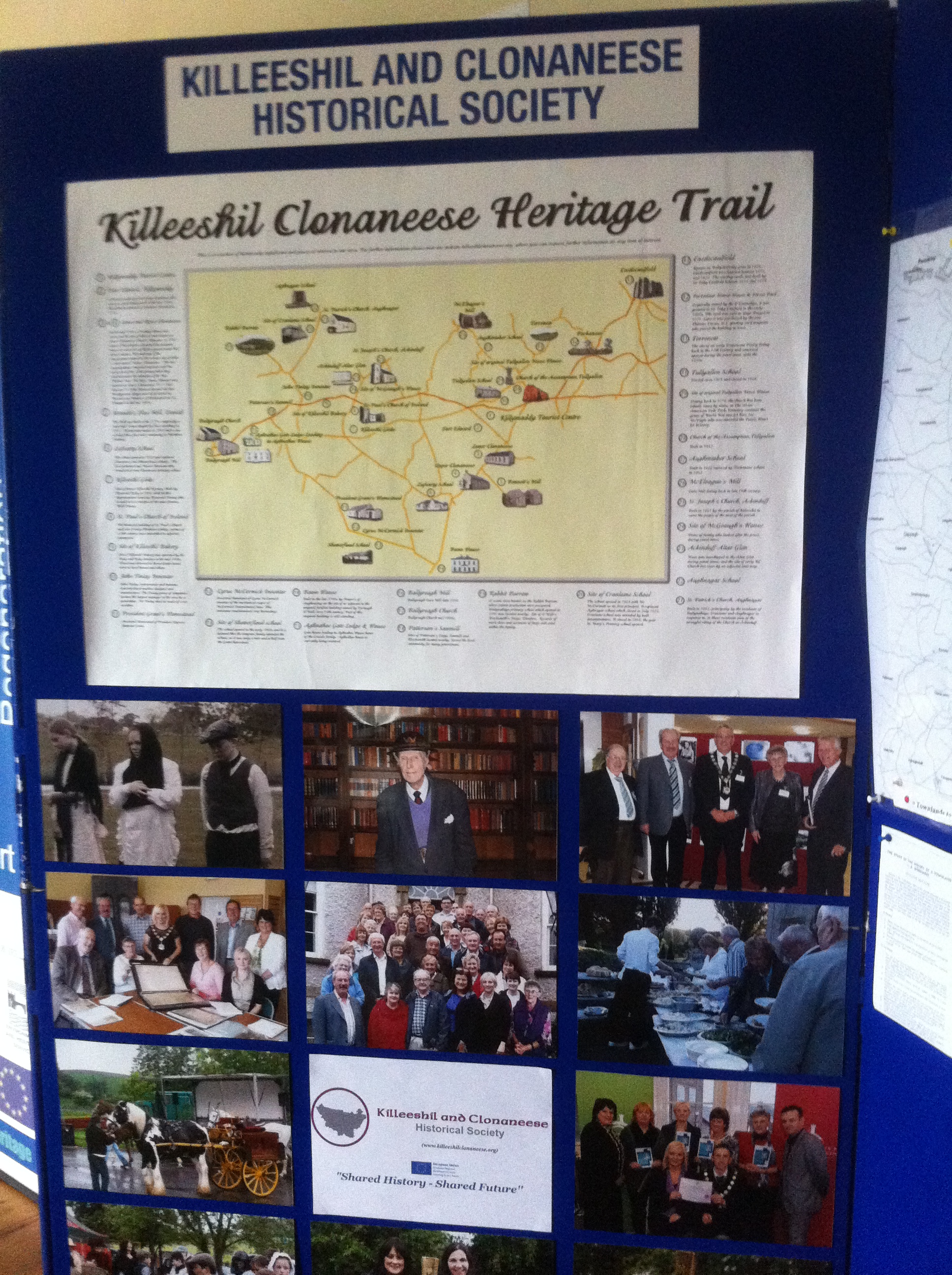
Killeeshil & Clonaneese Historical Society Display

Killeeshil & Clonaneese Historical Society Display

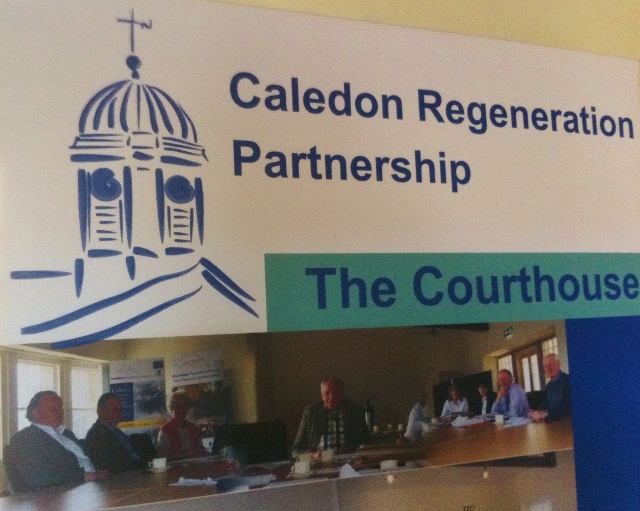
Caledon Regeneration Partnership
Caledon Regeneration Partnership

William Carleton Society & Donaghmore Historical Society

William Carleton Society & Donaghmore Historical Society

Caledon Regeneration is one of five groups taking part in the “Shared History, Shared Future” project under the Peace III programme run by Dungannon and South Tyrone Borough Council. They had a display at the Courthouse along with the William Carleton Society, Killeeshil and Clonaneese Historical Society, Donaghmore Historical Society and South Lough Neagh Historical Society, which is working on a project about the Ulster Canal. The historian Jack Johnston President of the William Carleton Society represented the group at the Caledon event along with Patron Sam Craig and Summer School Director Michael Fisher.
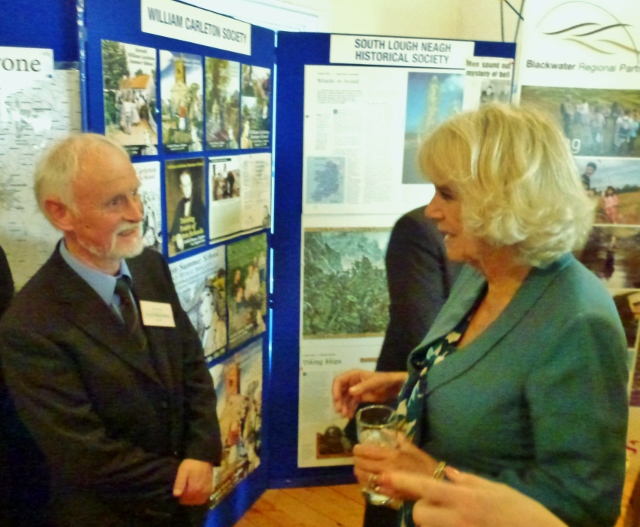
William Carleton Society Patron Sam Craig & Duchess of Cornwall

William Carleton Society Patron Sam Craig & Duchess of Cornwall

The Northern Ireland Office news release:-

On the second day of engagements (in Northern Ireland), TRH The Prince of Wales & The Duchess of Cornwall this morning visited the historical village of Caledon.  They were accompanied by Lord Caledon and his wife, Lady Caledon.

TRHs visited Mill Street Cottage and they met with the owners of one of the refurbished cottages, Denver and Michelle Irvine.  This is one of the first projects to be completed by the regeneration scheme which had lain idle since the early 1970s.  The terraced two-story stone cottage, which was constructed around 1850 to house mill workers and their families, received Grade B1 listing in 1983 and are now the pride of this lovely village.

The Prince of Wales and the Duchess of Cornwall then moved to the Beam Engine and Engine House which dates from the early 1830s and once powered a flour mill and subsequently a woollen mill.  They are now all that remain of what was once a massive mill complex.  TRHs were then presented to members of the Caledon Regeneration Partnership by the founding member, William Beattie.  Following a short overview of the Beam Engine Conservation project, TRHs had the opportunity to view the Beam Engine.  This engine is one of only eight beam engines to survive in Ireland, a rare example of 19th century steam engine technology

Prior to departing the Beam House, William Beattie  invited HRH The Prince of Wales to unveil a plaque to officially open the complex.

TRHs then made the short journey to the centrepiece of the village – the Court House and Clock Tower.  On arrival at the Courthouse they had the opportunity to meet with children and teachers from St Joseph’s and Churchill Primary Schools, as well as representatives of the Blackwater Regional Partnership, South Tyrone Historical Group, local church leaders and members of the Women’s Institute.

Prior to farewells, TRH The Prince of Wales and The Duchess of Cornwall were presented with a Food Hamper by two local school children.

G8 PROTEST ENNISKILLEN

IRSP protestors at G8 security cordon

IRSP protestors at G8 security cordon

So after all the hype about demonstrators converging on Enniskillen. the protest against the G8 summit taking place at the Lough Erne resort outside Enniskillen passed off without major incident. The crowd was nothing like the 3000 forecast, although up to 2000 (a conservative estimate on my part) had marched through the town centre before proceeding the two miles or so out to the steel barrier fence which had been erected to prevent unauthorised access to the summit. By then the numbers had dwindled to less than 1000.
Police lined the route of the G8 protest march

Police lined the route of the G8 protest march

Anti-G8 Protestors: telling the leaders they are not welcome in Fermanagh

Anti-G8 Protestors: telling the leaders they are not welcome in Fermanagh

At the end of the rally at the police outer cordon, a small number of protesters briefly crossed the outer wire perimeter but were warned not to proceed any further by a string of riot police who had assembled beyond the hedge in the next field.

It probably did not disturb the G8 leaders from the United States (President Barack Obama), UK (Prime Minister David Cameron), France (President François Hollande), Germany (Chancellor Angela Merkel), Italy (Prime Minister Enrico Letta), Japan (Prime Minister Shinzō Abe), Russia (President Vladimir Putin) and Canada (Prime Minister Stephen Harper) are taking part in the summit and they were joined this afternoon by Taoiseach Enda Kenny, Chair of the Irish Presidency of the European Council, due to end shortly.

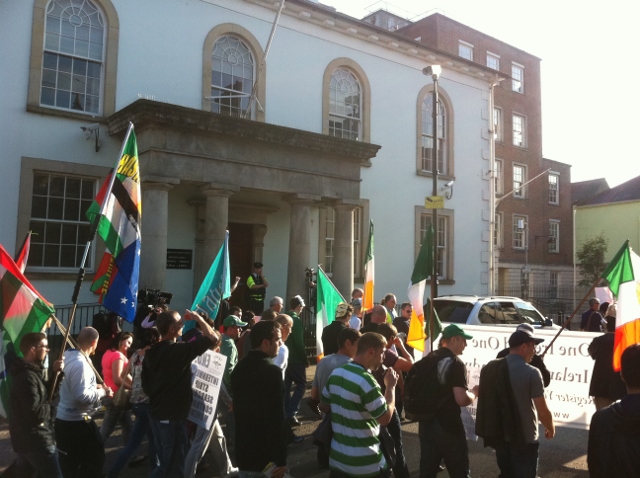
Groups protesting against fracking in Fermanagh and the border counties, tax evasion and world hunger took part in a mainly good-natured six-mile G8 Not Welcome march. Dozens of onlookers stood in shop fronts and at doors in the town centre as the demonstrators passed by. A number of republican groups took part including the IRSP, Éirígí and the Irish Republican Prisoners’ Welfare Association. This latter group paraded past the war memorial, where eleven people were killed in an IRA bomb in November 1987, carrying tricolours and shouting slogans including “Brits out, Brits out now”. The same happened as they walked past the courthouse on East Bridge Street. A complete contrast to the dignity shown when Enda Kenny laid a laurel wreath on Remembrance Sunday last year and former Irish soldiers including a colour party with the Irish flag from the ONE Tanagh branch in Co.Monaghan joined members of the Royal British Legion in a parade after a service at St Macartin’s Cathedral.

IRPWA protestors pass Enniskillen courthouse: their placards called for the release of Martin Corey and an end to "selective internment"

IRPWA protestors at Enniskillen courthouse: their placards called for release of Martin Corey and an end to “selective internment”

Trade unionists were among those who walked the three miles around the town and then out the Belleek road. I bumped into (literally!) Mary Cahillane from the Socialist Party. I walked for a time alongside my #NUJ colleagues from the Derry and North West branch, among them Anton McCabe (Secretary), Darach McDonald who has some great pictures on his Frontier Post blog and Eamonn McCann from Derry, who was one of the speakers at the rally. Dublin photographer Paula Geraghty was busy working on a video.

NUJ Derry & North West Branch taking part in protest

NUJ Derry & North West Branch taking part in protest

Richard Boyd Barrett TD addresses rally

Richard Boyd Barrett TD addresses rally

Jimmy Kelly, UNITE

Jimmy Kelly, UNITE

Other participants and speakers included the Unite union regional secretary Jimmy Kelly, People before Profit TD from Dún Laoghaire, Richard Boyd-Barrett, Socialist Party TD for Dublin West Joe Higgins and a local anti-fracking campaigner Claire Falconer, an artist.

eJoe Higins TD on the march

eJoe Higins TD on the march

YORK RAILWAY MUSEUM

Mallard at NRM York

Mallard at NRM York

Saw Mallard at the National Railway Museum in York. A steam engine I remember from my youth, though its record-breaking run was in 1938. On 3rd July 1938, the A4 class locomotive designed by Sir Nigel Gresley raced down Stoke Bank at 126mph to set a new steam locomotive world speed record, which still stands. This year the Museum is marking the 75th anniversary of Mallard’s achievement with a series of commemorative events, including three special opportunities to see the record breaker united with its five surviving sister locomotives: a family reunion on an international scale. Only six of the 35 A4 locomotives built survive and two of them have been temporarily repatriated from their home museums in Canada and the US. At the moment, visitors can see the cosmetically restored Dwight D Eisenhower and Dominion of Canada alongside Mallard in the Great Hall at York.

The Museum does not charge for admission and its future is according to The Press in York under threat because of budget cutbacks in the Science Museum Group. Over the weekend, a rally was held at the Museum to keep it open. So please do what you can to support this important part of our industrial heritage, begun by George Stephenson and his “Rocket”. The Museum is currently in the process of restoring The Flying Scotsman and it is hoped to have it back on the rails hauling heritage steam trips in 2015.