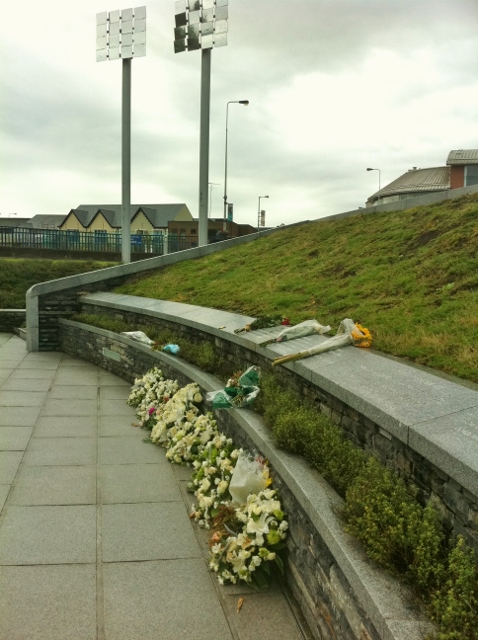
BALLYGAWLEY BOMB REMEMBERED

Ballygawley Bus Bomb Commemoration Photo: © Michael Fisher

Ballygawley Bus Bomb Commemoration Photo: © Michael Fisher

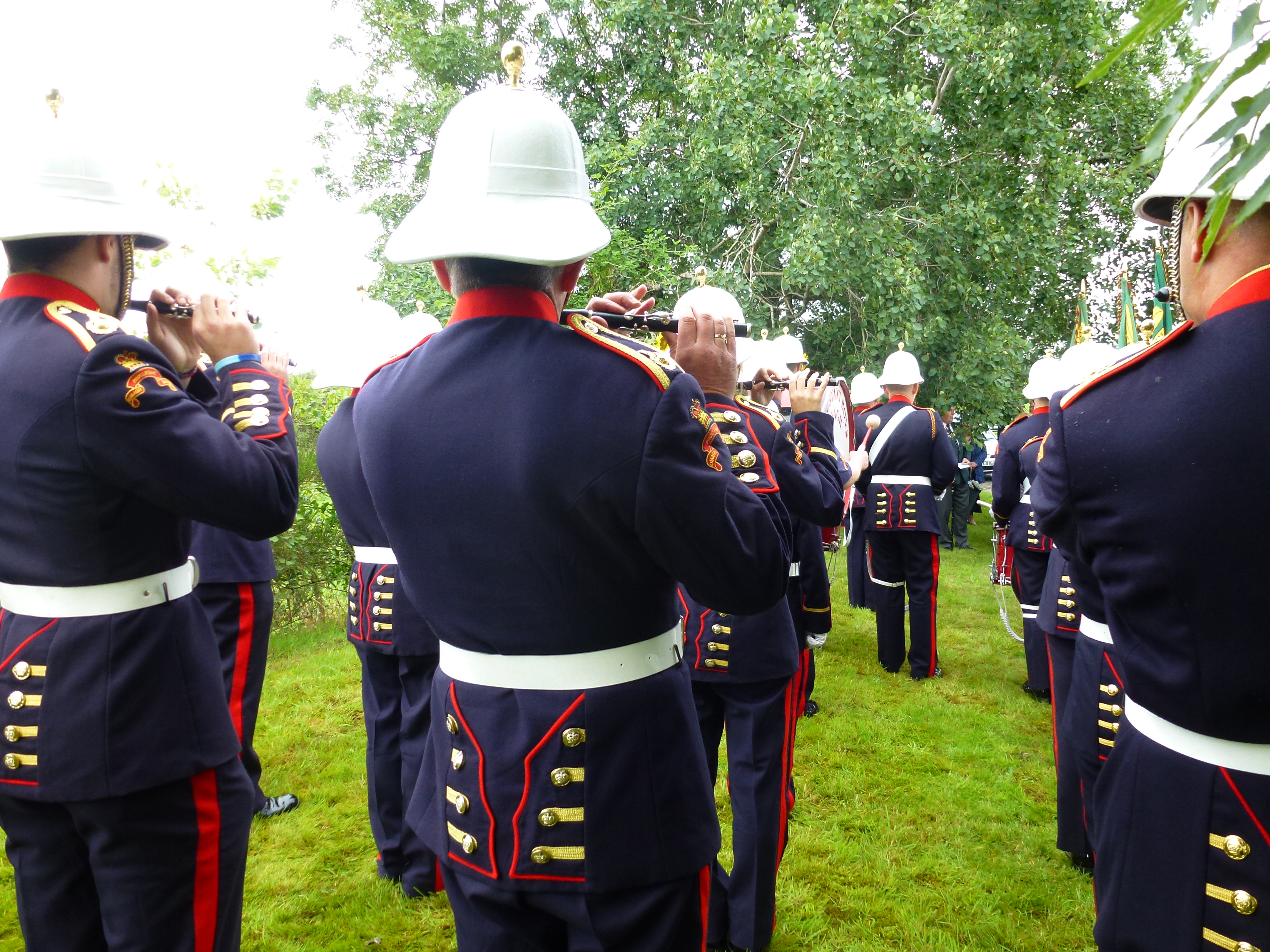
They stood and reflected as the Omagh Protestant Boys Flute Band played solemn music. For some of these women, the last time they were at this spot was 25 years ago. That night, 20th August 1988, they came across a scene of devastation, immediately after an IRA roadside bomb had exploded as a busload of soldiers went past on the main road from Ballygawley to Omagh. It became known as the Ballygawley bus bomb and was one of the worst losses of life sustained by the British Army during the troubles in Northern Ireland. Eight members of the Light Infantry between 18 and 21 were killed.
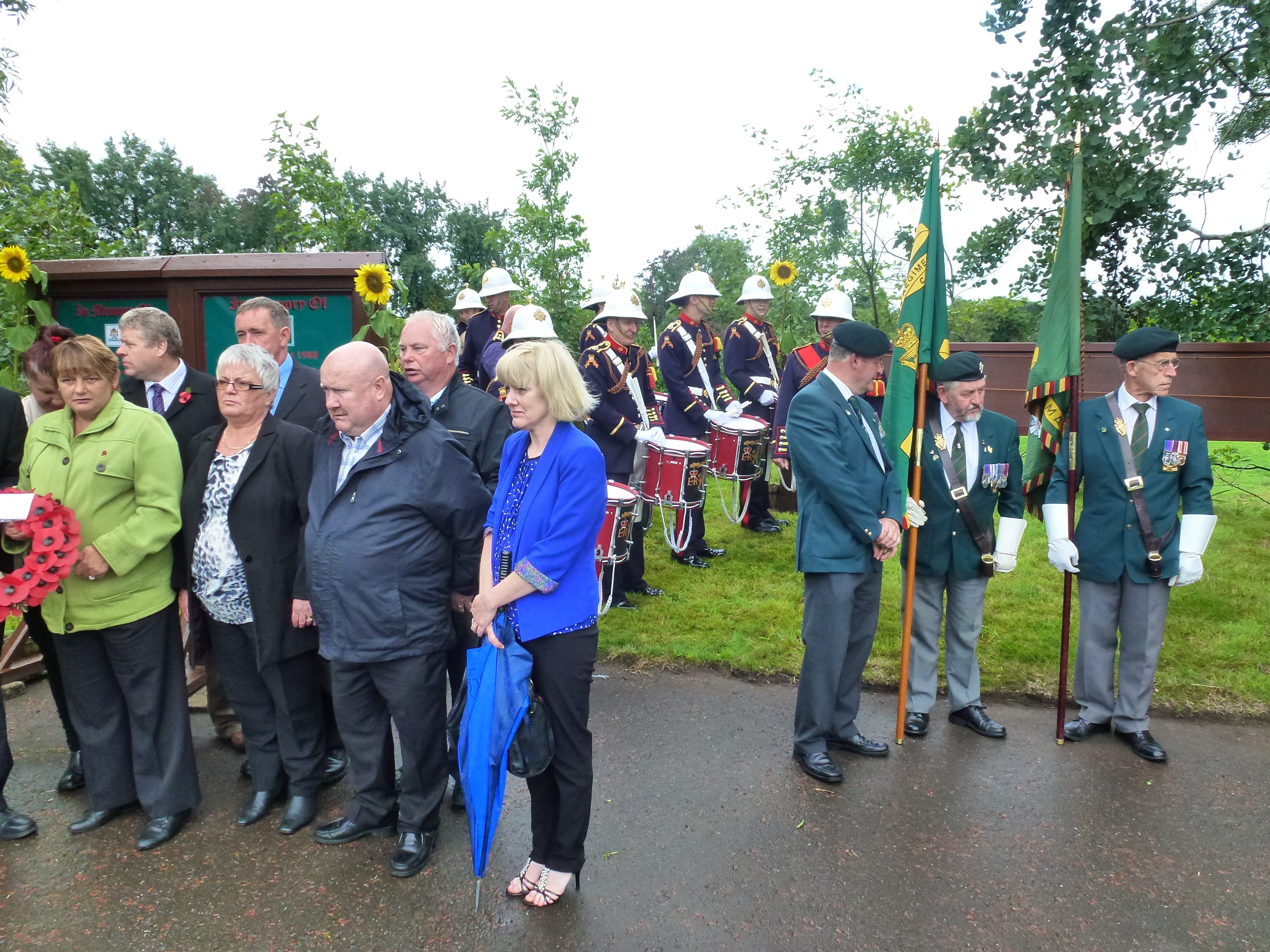
Ballygawley Bus Bomb Commemoration Photo: © Michael Fisher

Ballygawley Bus Bomb Commemoration Photo: © Michael Fisher

A witness who arrived at the scene said:-

“There were bodies strewn all over the road and others were caught inside the bus and under it. There were people running around stunned, screaming and bleeding, and shouting for someone to come to their aid.”  (Lost Lives, McKittrick et al, p.1141)

Ballygawley Bus Bomb Commemoration Photo: © Michael Fisher
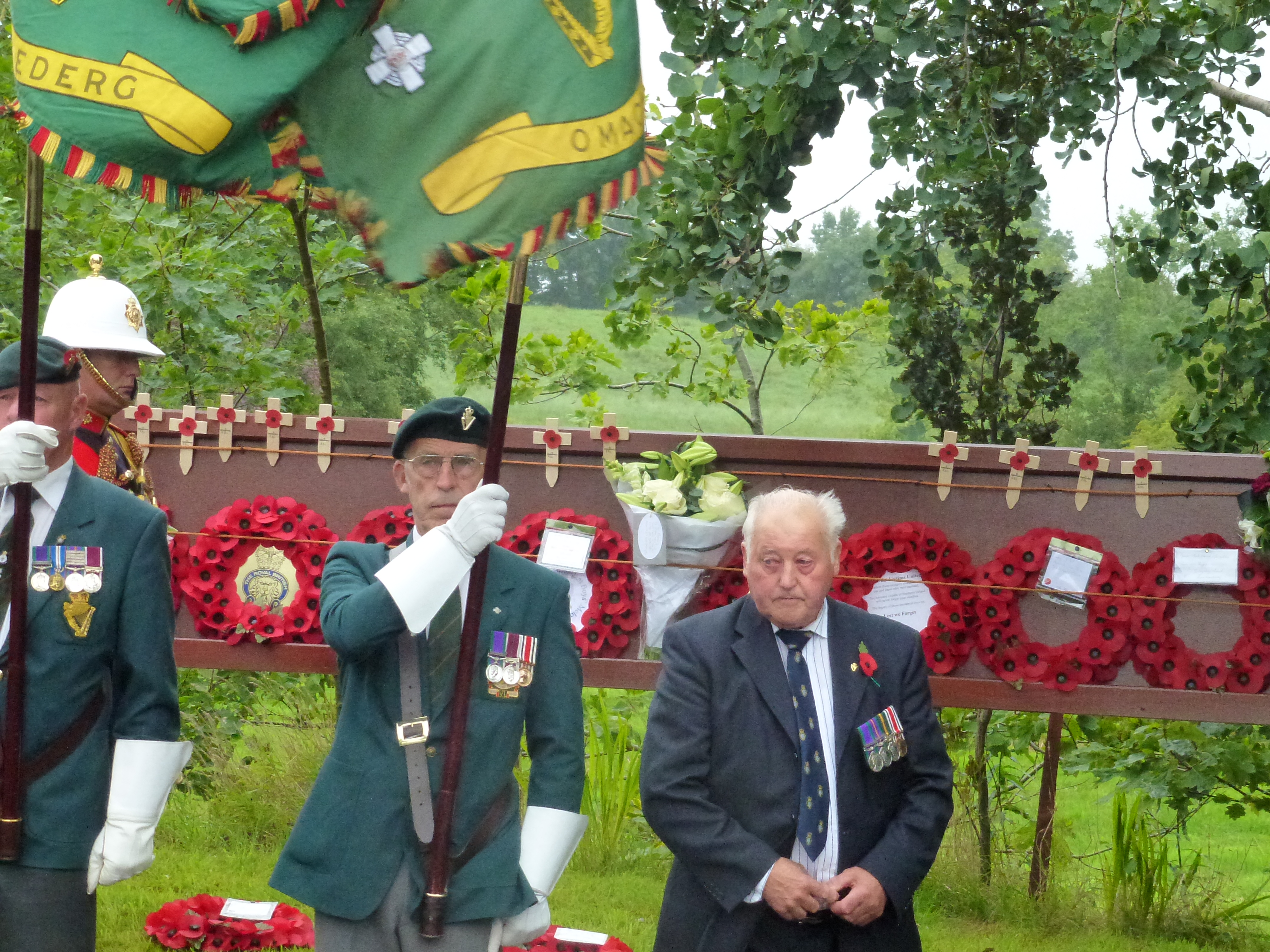
Ballygawley Bus Bomb Commemoration Photo: © Michael Fisher

Immediately before the roadside service on Sunday, a local newspaper reporter asked these ladies from Derry about the reason for their presence. They trembled as memories of that dreadful night came back to them. They told how they were with the Star of the Valley band from Tullyally in Londonderry and had been travelling in a bus some distance behind the soldiers. They saw a flash and heard the explosion as the device blew the bus off the road.

One of the ladies explained how she had managed to make a 999 call to the emergency services but the initial response was one of caution, in case it turned out to be a trap. This lady then contacted a relative who worked at a British Army base in Derry and stressed to her the situation was not a hoax, but was unfortunately the real thing and asked her to contact the police.

Piper plays lament Photo: © Michael Fisher

Piper plays lament Photo: © Michael Fisher

The band members immediately helped to tend the injured, as did the Omagh Protestant Boys flute band, who like the Tullyally members had been returning from a parade in Portadown. One young soldier had managed to find his way across to a barn on the other side of the road, but he died at the scene. Ken Maginnis, an ex-UDR officer and then Ulster Unionist MP recalled how he along with others had found a young soldier who had managed to crawl away from the ruins of the bus and was in a barn on the other side of the road. He tried to reassure the Private he was now safe, but the young lad died at the scene. Mr Maginnis is now an independent member of the House of Lords and was among the gathering on Sunday.
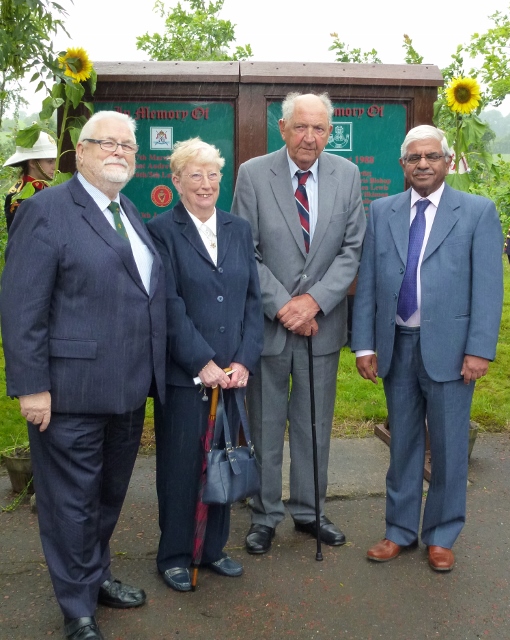
Lord Ken Maginnis, Dr Clifford McCord GP Aughnacloy & Dominic Pinto Omagh

Lord Ken Maginnis, Dr Clifford McCord GP Aughnacloy & Dominic Pinto Omagh

Other soldiers were taken for treatment initially at Tyrone County Hospital, where consultant surgeon Dominic Pinto and his colleagues worked through the night to deal with the injured. Dr Clifford McCord was then a GP in Aughnacloy. He tended to the injured soldiers, helped by Cllr Allan Rainey, who lives not far from the scene and who was one of the organisers of the roadside commemoration.

Cllr Paddy McGowan MBE, former fireman

Cllr Paddy McGowan MBE, former fireman

Another person who witnessed the immediate aftermath of the bomb was Fire Officer Paddy McGowan MBE. He remembers searching the field and hedges beside the bomb crater trying to find any other injured soldiers. This was before the area had been checked by the British Army for any further devices. He described the scene when he and his four colleagues from Omagh answered the emergency call as “pandemonium”. Now a councillor, he said the bombing had strengthened his resolve to oppose violence (Ulster Herald).

Dr Clifford McCord retired GP Aughnacloy & Cllr Allan Rainey MBE Photo: © Michael Fisher

Dr Clifford McCord retired GP Aughnacloy & Cllr Allan Rainey MBE Photo: © Michael Fisher

The roadside commemoration was followed by a service at Newtownsaville Church of Ireland church, led by John Irvine. Among the congregation was Michael Gallagher of the Omagh Support & Self-Help Group, whose son Aiden was one of the victims of the 1998 Omagh bomb.
BALLYGAWLEY BUS BOMB

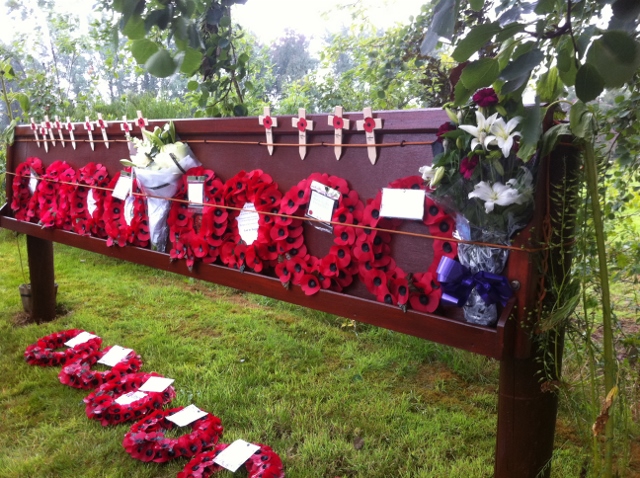
Ballygawley Bus Bomb Memorial

Ballygawley Bus Bomb Memorial Photo: © Michael Fisher

It was a simple and very dignified ceremony. As motorists were passing by on the main A5 Dublin to Derry road, they might have wondered what was going on at the side of the road at Curr, between Ballygawley and Omagh. People gathered there on Sunday morning to pay their respects to eight British soldiers who had been killed in what became known as the Ballygawley bus bomb, 25 years ago today on August 20th 1988.

Omagh Protestant Boys Flute Band Photo: © Michael Fisher

Omagh Protestant Boys Flute Band Photo: © Michael Fisher

The music by the Omagh Protestant Boys flute band set the mood. You can see my video on youtube here.

Ballygawley Bus Bomb Remembrance Photo © Michael Fisher

Ballygawley Bus Bomb Remembrance Photo © Michael Fisher

The soldiers were returning to their base in Omagh, having flown into RAF Aldergrove. They were being transported in an unmarked coach, driven by a soldier. Reports at the time suggested that although the A5 road was meant to be ‘out of bounds’ for military transport, diversion signs had been put in place and that was why the driver travelled that way from Ballygawley. But that claim was disputed at the inquest. A 200lbs roadside bomb consisting of Semtex and fertiliser exploded, killing eight members of the 1st Battalion, Light Infantry Regiment and injuring 28 of their colleagues.

Roll of Honour read out Photo: © Michael Fisher

Roll of Honour read out Photo: © Michael Fisher

In the brief commemoration at the scene of the blast, the Last Post was sounded and the Roll of Honour was read with the following names:-

Private Blair Bishop (19), Private Peter Bullock (21), Private Jayson Burfitt (19), Private Richard Greener (21), Private Alexander Lewis (18), Private Mark Norsworthy (18),  Private Stephen Wilkinson (18) and Private Jason Winter (19).

In addition, four UDR members killed in a landmine at Gort, Errigal Keerogue, near Ballygawley were also remembered. They died on July 13th 1983, 30 years ago. They were:- Private Ronald Alexander (19), Corporal Thomas Harron (25), Private John Roxborough (19) and Private Oswell Neely (20). 

A thirteenth name was added to the roll of honour, Lieutenant Andrew Somerville (20), a member of 15th/6th Lancers, killed in a landmine attack near Ballymacilroy, Ballygawley on March 27th 1973, 40 years ago.

Ballygawley Bus Bomb Commemoration Photo: © Michael Fisher

Ballygawley Bus Bomb Commemoration Photo: © Michael Fisher

BALLYGAWLEY & OMAGH

Market Street Omagh: Bomb Memorial

Market Street Omagh: Bomb Memorial Photo: © Michael Fisher

It was a journey I didn’t want to make. Fifteen years ago on this same Sunday, I left Tydavnet around 8am and headed for Omagh. I attended Mass at St Matthew’s, Garvaghey (the chapel associated with John Montague) and then made my way to the county town. Market Street was full of debris and the whole area was cordoned off as a police investigation got underway. This morning I repeated the journey, passing the chapel at Garvaghey at 8:30am and heading to the Sacred Heart church in Omagh for Sunday Mass.

Omagh Bomb Memorial Park

Omagh Bomb Memorial Park

I was surprised that there was no mention of those who died in the 1998 bomb, although the priest did ask for prayers for those in Egypt and Syria. Perhaps the bomb victims were remembered at Mass last weekend. There was also a commemoration in the town on Thursday 15th, the exact day of the atrocity. This morning there was a very different view along Market Street, looking towards the Courthouse, as my first picture shows.

The previous afternoon in 1998, after coming home from the Tydavnet Show, which I was also at yesterday, the news had come through about a major bomb attack in Omagh, with several casualties. I headed off to Omagh that Saturday evening and reported from Tyrone County Hospital as the extent of the fatalities and the injuries became clear.

Dominic Pinto, former consultant surgeon, Tyrone County Hospital

Dominic Pinto, former consultant surgeon, Tyrone County Hospital

Some Spanish women were desperately trying to find out more information from the hospital staff. In the operating theatres, Dr Dominic Pinto, who I met later this morning at a separate commemoration for the victims of the Ballygawley bus bomb, and his colleagues were working non-stop trying to deal with the injured. Many had to be transferred to other hospitals for further treatment. Mr Pinto described the scene at the time:

When I came to the front of the hospital, it was absolutely quiet. What greeted me when I got into the main corridor was sheer pandemonium. This was not a major incident, but a major disaster of battlefield proportions. There were people lying in corridors of the    accident and emergency department, overflowing into the radiology department. Some 240    injured people arrived within the first 45 minutes“. (www.wesleyjohnston.com)

The Spanish connection later turned out to be a group of students who had been studying English in Buncrana and who had got caught up in the explosion during a trip to Omagh. One 12 year old Spanish boy Fernando Blasco Baselga from Madrid died as well as a 23 year-old teacher from Spain, Rocio Abad Ramos, also from Madrid.  Three young boys from Buncrana, Oran Doherty aged 8, 12 year-old Sean McLaughlin, and James Barker, also 12, were killed in the explosion. In April 2000, the body of James was re-buried in a small graveyard at his former school in England, St George’s in Weybridge. I remember visiting it in 2008 when I interviewed his father Victor.

Rest in Peace: Avril Monaghan

Rest in Peace: Avril Monaghan

Three generations of women from one family in County Tyrone were killed in the Omagh bomb: a 65 year old grandmother, Mary Grimes from Beragh, her 30 year old daughter Avril Monaghan who was expecting twins, and an 18 month-old granddaughter, Maura Monaghan from Aughindarragh in Augher. I remembered them as I visited the peaceful graveyard at the Forth Chapel, Ballynagurragh (St Macartan’s), where my McCann relatives are interred close to Avril’s grave.

British Legion Aughnacloy representative with Michael Gallagher & Stephen Gault

British Legion Aughnacloy representative with Michael Gallagher & Stephen Gault

Then at the Ballygawley bus bomb commemoration I met Michael Gallagher of the Omagh Support and Self Help Group. His 21 year-old son Aiden was killed in the Omagh attack. Michael went on to attend the service at Newtownsaville Church of Ireland church for the Ballygawley bus victims (eight British soldiers) and five other members of the security forces who had been killed in two other incidents in the surrounding area. Another victims’ campaigner to attend the Ballygawley commemoration was Stephen Gault, who was injured and who lost his father in the Enniskillen bomb on Remembrance Sunday in November 1987.