FINBAR FUREY IN BELFAST

Finbar Furey playing tin whistle www.finbarfurey.com

Finbar Furey playing tin whistle http://www.finbarfurey.com

A great concert tonight by Finbar Furey at the Lyric Theatre in Belfast. But as he told Patrick Freyne of The Irish Times in January, he’s on his last big tour and is “winding down the clock” at the age of 68. The outstanding song was probably his rendition of Willie McBride, in which the packed audience joined. He started off with The Lonesome Boatman, playing the large tin whistle. At other stages in the show he played banjo, guitar and the uilleann pipes. He was accompanied by on double bass.
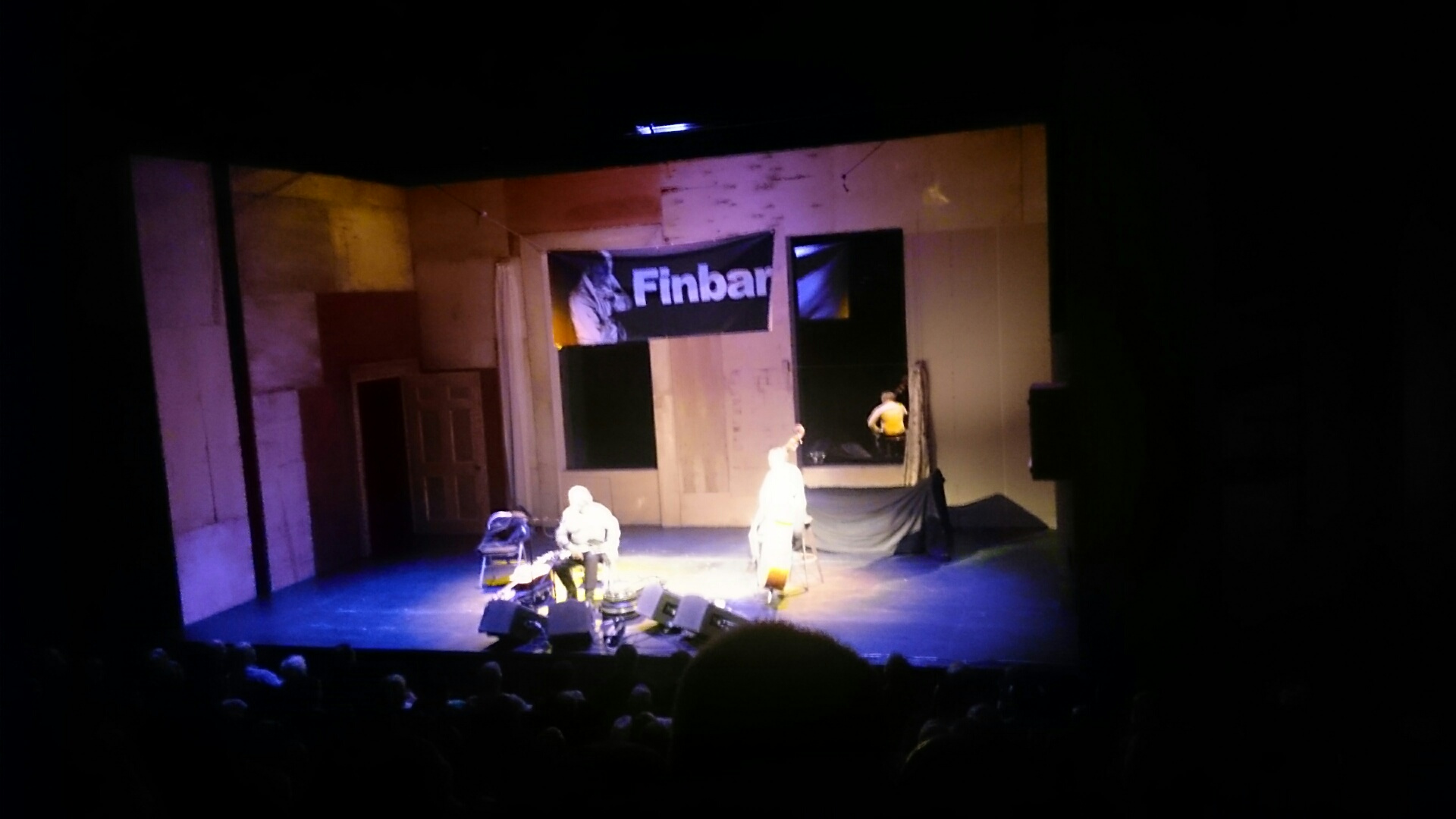
Finbar Furey at the Lyric Theatre Belfast Photo:  © Michael Fisher

Finbar Furey at the Lyric Theatre Belfast Photo: © Michael Fisher

**********

“Finbar Furey loves the idea of his music bringing people together. This happened at theWorld Cup in 1994, he says, when Holland were playing Ireland. “At half time, the Dutch fans started singing ‘Het Kleine Café’,” he says. “And the Irish fans were all saying, ‘Hang on a minute that’s [Fureys’ song] The Red Rose Café, so they started singing it. And Paddy says, ‘Aren’t them Hollish people brilliant, singing one of our songs for us. Fair play.’ They didn’t know it was a Dutch song. And the Dutch are saying, ‘Ah, the Irish have learned one of our songs.’ It was the only time two sets of football fans were seen kissing and cuddling each other.”

He laughs. The 68-year-old is sitting forward in his chair in a Dublin hotel. He’s wearing a white fedora hat and a leather jacket and he’s looking sprightly and tanned. “It’s a bottle tan,” he says. Actually, he’s recently come back from Spain. He’s also just had “a big feed of bacon and eggs”, which may explain the sprightliness. “I’m not supposed to. Not after the bang: the heart attack I had two years ago. I haven’t had a fry-up for 2½ years.”

He’s doing publicity for a spate of gigs across Germany, Ireland and South Africa. He also just completed an album of uilleann pipe music, which he promises will be “an eye-opener”, and he’s hoping to begin another record in South Africa with local musicians. It’s probably his last big tour. “I’m winding down the clock,” he says.

He has been playing music for a long time. “[My father] would take me to different parts of Ireland with him. We’d go into a pub and start a session in the pub, [then] he’d move on to another pub someplace else. He would have taken music from county to county long before there was radio or telephones. Can you imagine two Irishmen sitting down at a crossroads in 1932 writing out sheet music to each other, swapping pieces of music? That’s an amazing scene when you think of it: a fiddler and a piper just swapping tunes.”
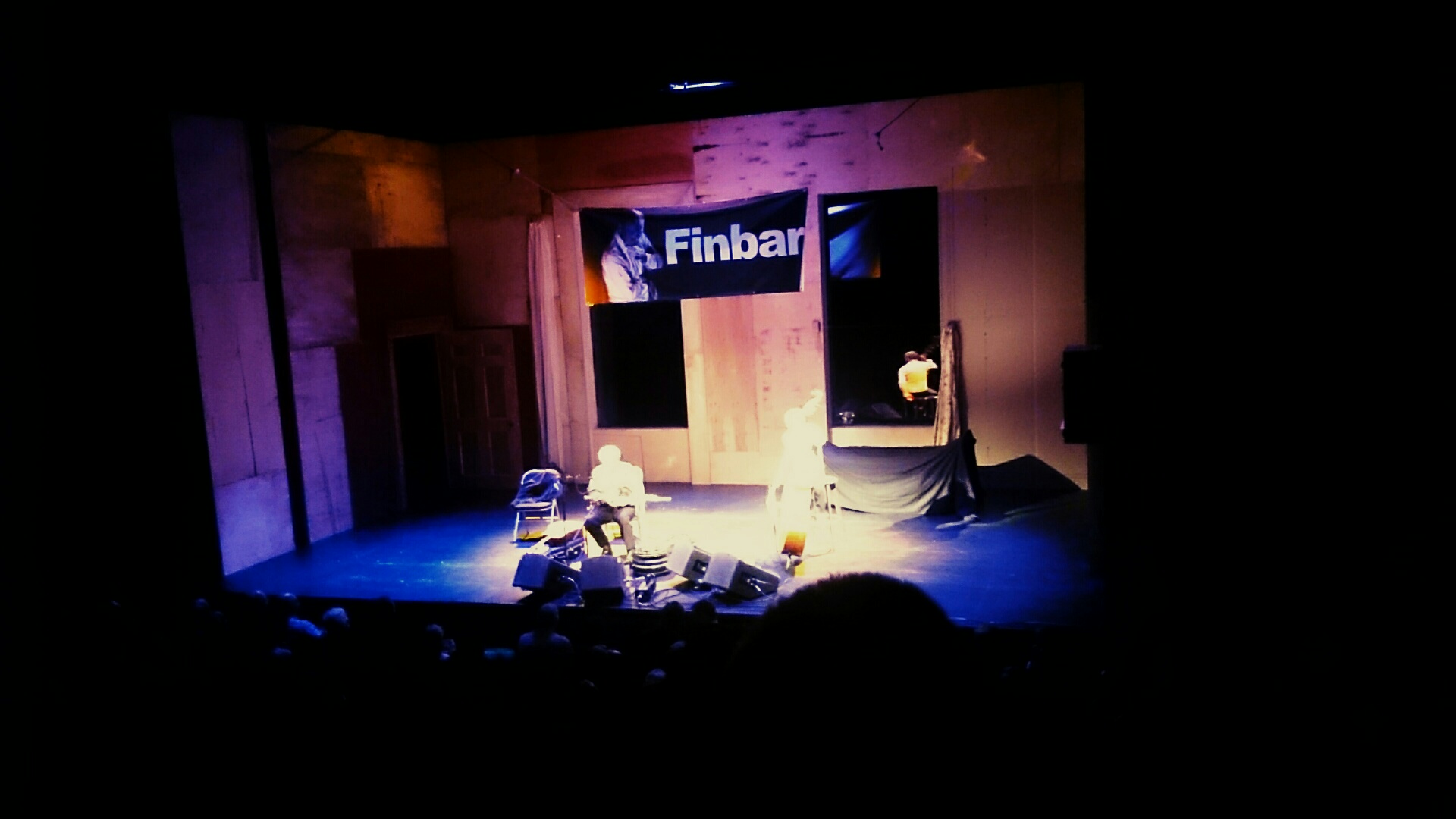
Finbar Furey at the Lyric Theatre Belfast Photo:  © Michael Fisher

Finbar Furey at the Lyric Theatre Belfast Photo: © Michael Fisher

Musical family

His whole family was musical. “My mother played the five-string banjo, a thing called ‘breakdown’, which is done with two fingers.” He mimes the picking and sings softly: “I come fromAlabama with a banjo on my knee, and I’m going to Louisiana, oh my true love for to see.”

As we talk he frequently sings a few lines of music for illustrative purposes. He says that singing a song should be like “when an actor goes on stage in theatre. You’re living the character. You can’t just look around and think, that’s a nice wave I got there from Seamus. You have to live the part until you finish the song.”

He and his brothers and parents would play in O’Donoghue’s pub in Dublin alongside the likes of Ronnie Drew. He and his brother Eddie began playing as a duo in the UK and they were asked to join the Clancy Brothers when Tommy Makem left the band. “It was fantastic,” he says. “The first gig we did with them was in 1968 in Carnegie Hall.”

Touring with the Clancys, he met famous people such as Liza Minnelli and Edward Kennedy, and he appeared on Johnny Carson’s show.

He and Eddie partied, but not too hard. “What saved our lives was that we never went near the top shelf. We never touched spirits. We’d have a couple of beers . . . We were kids. We enjoyed Coca-Cola and pizzas and things kids love.”

But ultimately, playing with the Clancys left him unfulfilled. “There’s only so many times I wanted to sing I’ll Tell Me Ma When I Get Home,” he says. And he missed playing the pipes. “After the concerts would finish, I’d run off to a club somewhere in Chicago and find somebody who was playing a bit of Irish music and start a few tunes.”

Intermission in Edinburgh

After leaving the band he went to Edinburgh where his wife, Sheila (“The most perfect woman I’ve ever met”), was about to have a baby. They rented a railway cottage. “I didn’t do anything for a year,” he says. “I tarred a roof in Scotland. Walked seven miles to work every morning and back.”

He and Eddie were friends with folkies such as Eric Bogle and the Incredible String Band. And they were particularly close to Billy Connolly and Gerry Rafferty, then a duo. Rafferty gave them his song, Her Father Didn’t Like Me Anyway. Their version became John Peel’s song of the year and their careers took off. “We were very experienced with an audience and we knew exactly what we wanted to play. We’d already been to the top and back.”

His brothers George and Paul were following in their footsteps with their friend Davey Arthur in a band called The Buskers. Finbar decided they should all join together – partly, he says, so he could “keep an eye on them”.

They never chased success, he says, but the Furey Brothers and Davey Arthur were nonetheless hugely successful. They appeared on Top of the Pops playing The Green Fields of France, on the bill with Kool and the Gang. They thought it was all hilarious. They had to re-record the backing track because of some obscure union rules.

“We had to join the British Musicians’ Union and then we had to get an orchestra and re-record the song. But I switched the tape and they played the Irish one anyway. They didn’t know. I threw the English one in the Thames.”

He loved working with his brothers. “There was no bosses in the band. We all had a say and we always made room . . . My brother Paul was asked one time what he liked about being an entertainer or musician on the road. He said ‘room service’.”

But he felt the band were repeating themselves, that they weren’t going anywhere. For the second time in his career he got itchy feet and walked away from a successful band. “The boys were happy but I had other things I wanted to do. I had all these songs and ideas of music I wanted to play. I just knew there was something different out there I wanted to play.”

Leaving broke his heart, he says. He couldn’t let go. “I’d watch them from a distance and make sure they were all right.” He would ring venues to make sure they were doing okay. It got worse, he says, after his brother Paul died of cancer in 2002. “I kept blaming myself, thinking that if I’d been there he mightn’t have died. But I know now I couldn’t have helped him anyway.”

The grief coincided with an injury to his shoulder that looked like it might end his career playing the pipes. “I went through a bad time,” he says. “I knew I’d never be able to play the pipes as well again, I’d always be struggling with them. I can only play them for about 20 minutes and then my shoulder starts really aching me again.”

He was also creatively blocked. “My brain was in a knot. Just the guilt of leaving the band and all sorts of things and not spending enough time with Paul before he died. And everybody was disappearing: all our uncles and aunts and people we used to look up to.”

In 2008 he had an operation on his shoulder. Then in 2009 he went on a holiday before going on a short tour in America. “And I went apeshit playing great music again,” he says. “I went around places I’d wandered years ago with the Clancy Brothers. When I came home I decided to get busy and I started writing. I started to think about the future instead of thinking about the past.”

Finbar Furey playing banjo www.finbarfurey.com

Finbar Furey playing banjo http://www.finbarfurey.com

Back in action

The creativity is back, he says, a serious heart attack notwithstanding. He is writing, recording and touring. He and Sheila live in a house that is littered with banjos and guitars and that he makes sound like a drop-in centre for his musically gifted children and their friends (his son Martin is a member of The High Kings). In 2013 he appeared in the TV show The Hit, for which he recorded an actual hit, a number one, with Gerry Fleming’s song The Last Great Love Song. Aren’t reality television talent shows very different from the musical tradition he comes from?

“How would I describe it?” he says. “Take all the great musicians like Joe Heaney andJohnny Doran and the Dubliners and the Clancy Brothers. Now imagine there’s a well and all the heritage goes into the well and every day this well gets bigger and bigger and bigger and all you have to do is take a cup and dip in anywhere you like. The Hit is no different. It’s part of that Irish heritage now and it was a wonderful song.”

After years when the music wasn’t coming, he’s on a roll. “I never want to get into a rut again,” he says. “I have to write about what’s happening now, tomorrow. I have a young man’s life. I never ever stop searching. If I had no hands and still had a brain and I could talk I would still speak about music or hum into a microphone.”

Then it’s time to go and he shakes my hand firmly and warmly. “There’s too much doom and gloom,” he says. “We need more singing.”

Finbar Furey CD cover www.finbarfurey.com

Finbar Furey CD cover http://www.finbarfurey.com

Finbar Furey tours Ireland in February and plays Dublin’s Vicar Street on June 12th. Details here.”  

Irish Times January 19th 2015.
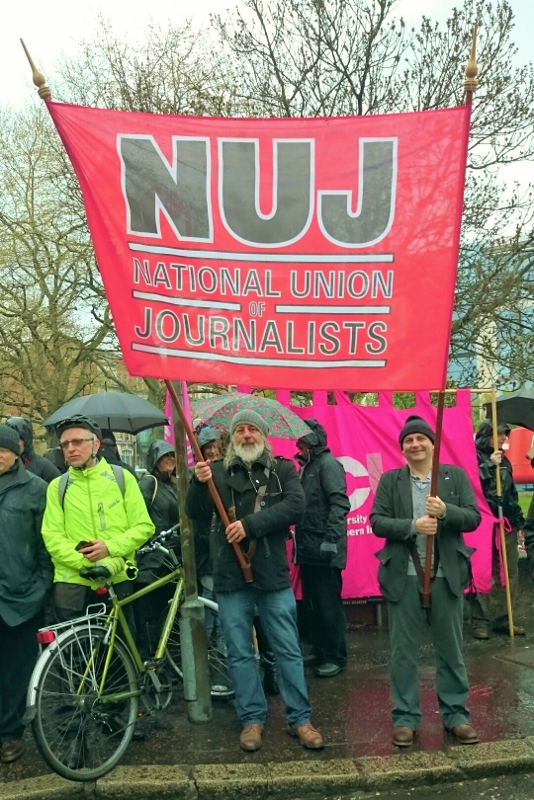
MAY DAY PARADE BELFAST 2015


NUJ Belfast and District Branch: Robin Wilson, Bob Miller (Chair) and Joe Mitchell await the start of the parade Photo:  © Michael Fisher

NUJ Belfast and District Branch: Robin Wilson, Bob Miller (Chair) and Joe Mitchell await the start of the parade Photo: © Michael Fisher

MARCHING FOR A BETTER AND FAIRER WAY – May Day

March for People Jobs and Services.
March for Peace, Progress and Equality.
March for a Better, Fairer Way.

The Northern Ireland Committee of the Irish Congress of Trade Unions is pleased to announce the details of its annual May Parade. The annual parade to celebrate workers’ struggle around the world is being held today, Saturday May 2nd, departing at 12:00 noon from Art College Square in Donegall Street, parading around the centre of Belfast and returning to Donegall St.

Participants in the parade are being asked to assemble at 11:30am at Art College Square (UU Belfast), where the Belfast Lord Mayor Arder Carson will welcome guests and participants, followed by short speeches by trade union leaders, Mick Whelan (General Secretary ASLEF) and Larry Broderick (General Secretary, IBOA – the Finance Union).

The Parade will march off from Donegall St/Academy St at 12:00, passing Royal Avenue, Belfast City Hall and returning to Donegall Street via High St. The Belfast May Day parade is still the largest such workers’ event on the island of Ireland, regularly attracting 5-10,000 marchers from every trade union, as well as myriad campaigning and community organisations. It is uniquely multi-cultural, especially for Northern Ireland, although it always has a political message.

In L’Derry, the annual May Day parade will gather at 1pm in Guildhall Square. March off is at 1:20pm, and will be led by the Jay Dee Jazz Band, with some speeches at the end of the march, back at Guildhall Square.

This year’s message is resistance to the austerity programme of the outgoing Westminster government, and the detemination of the trade union movement to ensure that the failed experiment in heaping the cuts and the blame on working people and the most vulnerable will not be supported by any of the eighteen MPs to be elected next Thursday by the people of Northern Ireland.

For more details, download the full programme from the Congress website or pick up a copy of the leaflet from bars, cafes and trade union offices around the city. Copies of the brochure are also available from the ICTU office, Carlin House, 4-6 Donegall Street Place (Behind the John Hewitt Bar).  siptunujlogo_burgundy

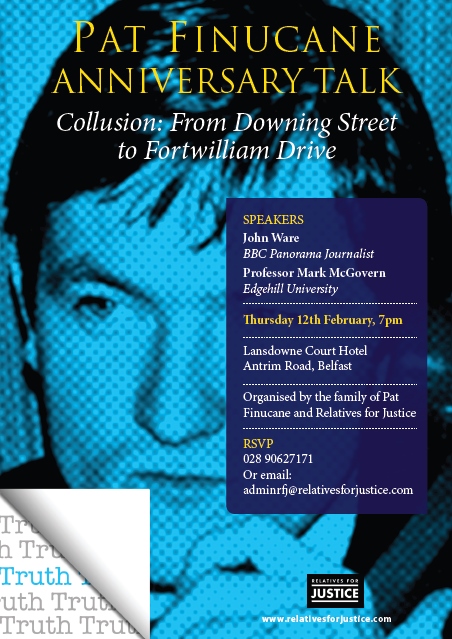
PAT FINUCANE ANNIVERSARY

Peter Madden addressing the meeting  Photo: Madden & Finucane

Peter Madden addressing the meeting Photo: Madden & Finucane

Speaking on the 26th anniversary of the killing of the Belfast solicitor Pat Finucane, his partner from the legal practice Peter Madden has renewed the call for an independent, international inquiry into the shooting. At a meeting in North Belfast he also rejected the findings of the 2012 de Silva review into the case ordered by British Prime Minister David Cameron. Mr Madden accused British QC Desmond de Silva of exonerating the secret British army unit Force Research Unit (FRU) of its role in the Finucane killing when he concluded that the unit, based in the British army’s headquarters at Thiepval Barracks, Lisburn, did not know the UDA was targeting Pat Finucane.

Mr Madden also asserted that de Silva was being “selective” in respect of the intelligence material he analysed saying “the de Silva review is one man’s analysis of a large amount of material”. Mr Finucane, who was 39, was shot dead at his home in North Belfast in front of his family by the Ulster Freedom Fighters, a cover name for the UDA, on February 12th 1989.

Also speaking at the event organised by the Finucane family and Relatives for Justice (RFJ), held in the Lansdowne Court Hotel on February 12th 2015 was the veteran BBC journalist John Ware, whose Panorama programmes revealed to a sceptical British audience the extent of collusion between the British army, RUC and loyalist paramilitaries.

Geraldine Finucane with Panorama reporter John Ware  Photo: Relatives for Justice

Geraldine Finucane with Panorama reporter John Ware Photo: Relatives for Justice

The first to address the packed hall was Mark McGovern, who for the past number of years has been working with RFJ examining the “patterns of collusion and collusion as a policy” focusing mostly in the Mid-Ulster area. Mr McGovern also raised the need, when analysing collusion, to look at the hundreds of people killed by loyalists in the early 1990s, after the importation of arms from South Africa and the political objectives of that campaign.

Pat Finucane Anniversary Talk  Photo: Madden & Finucane

Pat Finucane Anniversary Talk Photo: Madden & Finucane

TITANIC RESTORATION

Harland & Wolff Drawing Offices Photo:  HLF website

Harland & Wolff Drawing Offices Photo: HLF website

Good to see some progress regarding the plans to restore the currently derelict Drawing Offices at the former Harland and Wolff headquarters, where the Titanic was designed. A £4.9 million grant from the Heritage Lottery Fund (HLF) will enable The Titanic Foundation Ltd. to restore the building, unlocking plans to transform the site into a luxury Four Star hotel.

The Harland and Wolff Headquarters Building and Drawing Offices on Queen’s Island in Belfast were the control centre for the largest shipyard in the world.  It was here that Belfast workers created and designed over 1,000 ships including the White Star Olympic Class Liners – Olympic, Titanic and Britannic and naval warships such as HMS Belfast. The Harland and Wolff building has been vacant since 1989 and has been considered ‘at risk’ for almost a decade.

The restoration of the B+ listed building into an 84-bedroom boutique hotel has the potential to create over 100 local jobs. The Lottery grant will specifically focus on developing the two historical drawing offices as spaces for public use. The boutique hotel will also tell the story of Belfast’s industrial heritage, focusing on the authentic spaces – Board Room, Telephony Room and Entrance Lobby – as well as the fixtures and fittings that relate to the local shipbuilding industry.

The grant has been awarded through HLF’s Heritage Enterprise programme. It is designed to help when the cost of repairing an historic building is so high that restoration simply is not commercially viable.

Kerrie Sweeney, Chief Executive of Titanic Foundation, was delighted with the announcement: “Titanic Foundation in partnership with Titanic Quarter Ltd has been working on this project over the last two years. It has been a long process but worth it. With HLF’s support we will safeguard the drawing offices for future generations and unlock the commercial potential of the entire building as a boutique hotel with heritage at its core. This is a truly unique and authentic project for Belfast that could not have happened without the support from Heritage Enterprise Scheme.”

Head of HLF NI, Paul Mullan  Photo:  HLF

Head of HLF NI, Paul Mullan Photo: HLF

Head of the Heritage Lottery Fun in Northern Ireland, Paul Mullan, looks at the history of the building where the Titanic was designed:

By the first half of the 20th century, Belfast was one of the world’s most dynamic industrial centres.  It was within the walls of Harland and Wolff’s HQ where the leading minds in ship design and engineering broke new ground to produce ships that were the envy of the world.

Sadly, the decline of city’s shipbuilding industry was mirrored in the steady decline of Harland and Wolff’s HQ.  Once a symbol of Belfast’s international importance, just over a decade ago it was placed onto Northern Ireland’s buildings at risk register.

But that memory of a dynamic shipyard has awoken in recent years. Today, Titanic Belfast is an incredibly successful tourist attraction. The SS Nomadic, which was built to ferry passengers to and from the Titanic, has been brought back to its former glory and is the highest rated tourism attraction in Belfast.  Close by, HMS Caroline is undergoing a transformation from being a forgotten piece of naval heritage into a museum which will tell a story of sea battles from both the First and Second World Wars.

The result is more than one million visitors to the Titanic Quarter each year. With this success comes a return to fortune for the derelict Harland and Wolff HQ.  £4.9m from our Heritage Enterprise programme will convert the building into an 83 bedroom hotel, with the potential to create over 100 jobs.

The £27m development will bring much wider economic benefits by bringing more visitors and investment to Belfast.  This unique hotel will gives new purpose to an important part of Northern Ireland’s built heritage, building on the Titanic theme of the Quarter whilst providing a stunning setting for visitors.

It also shows how we can use historic buildings creatively, in a way that helps people fully appreciate its past whilst enjoying its present uses and harnessing the collective resolve of both the private and public sector for the benefit of everyone.

We now need to bring this sense of purpose to our many other buildings at risk by challenging not-for-profit groups to partner with commercial operators to bring back into use those buildings which provide us with a direct link to our past.

This isn’t a nice to do but something that has a strong economic and revitalising value. Over two years ago a report on the economic value of Northern Ireland’s historic environment marked out this opportunity, making a strong case for this type of investment.  Today, in the Titanic Quarter and across the UK, Lottery money is helping people to realise the untapped potential of our vacant and underused historic buildings.


CASEMENT PARK

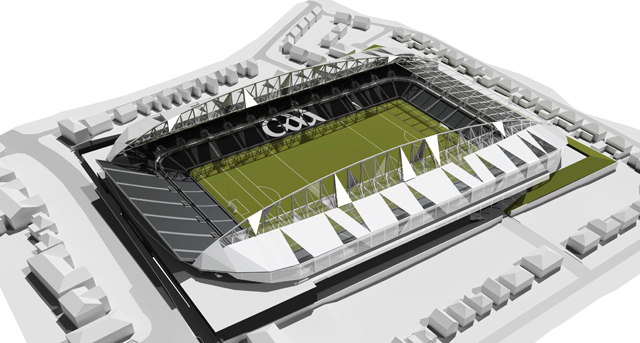
New Casement Park Aerial View  Photo: Casement Park Redevelopment Project

New Casement Park Aerial View Photo: Casement Park Redevelopment Project

It was to be the GAA’s showcase in Ulster: a completely revamped £77m stadium at Casement Park in West Belfast that would seat 38,000 fans. It would take over from Páirc Naomh Tiarnach in the border town of Clones in County Monaghan as the venue for Ulster football finals. Now a judge at the High Court in Belfast has found that the planning application approved by the North’s Environment Minister Mark H. Durkan was “irretrievably flawed“.

The judicial review that lasted thirteen days heard that defects were also identified in the environmental survey, with no assessment of the impact on local residents of extra stadium facilities such as conference suites, bars, restaurants and car parking. A further hearing is expected later this week to decide the final outcome of the case.

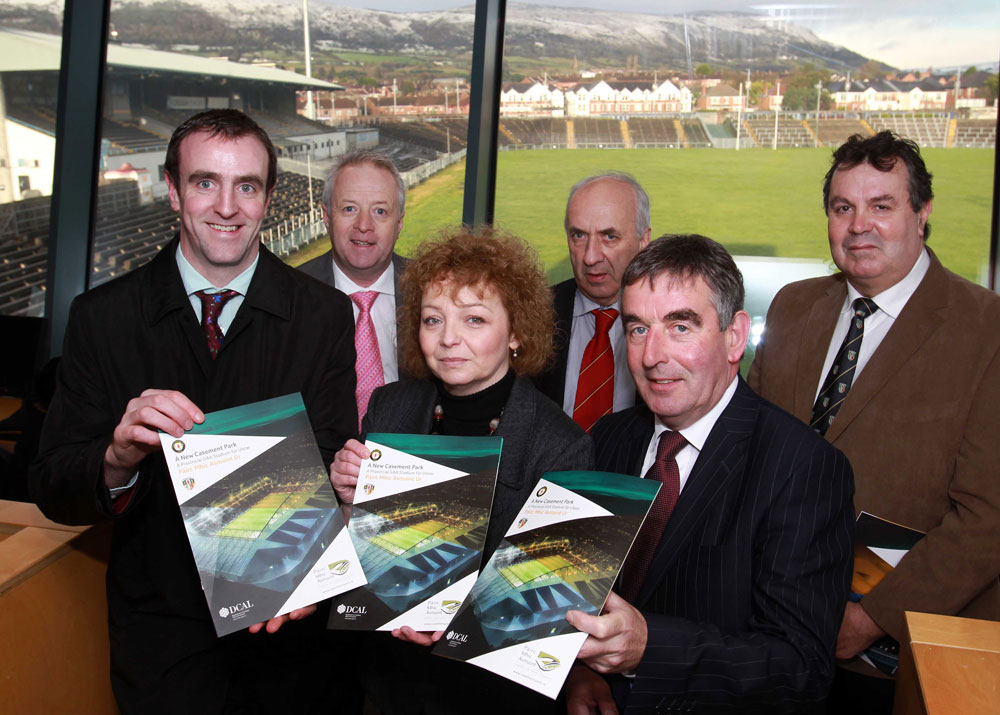
Environment Minister Mark H.Durkan announces approval for project, December 2013  Photo: Casement Park Redevelopment Project

Environment Minister Mark H.Durkan announces approval for project, December 2013 Photo: Casement Park Redevelopment Project

The new stadium was set to be included in the list of GAA venues to be used as one of the Ireland’s bid for the 2023 Rugby World Cup. Hugo McNeill, the chairman of the bid, last month said that the Casement Park upgrade was “crucial” to the Northern Ireland component of its proposal.

Chairman of the Casement Park Project Board, Tom Daly, said they were “deeply disappointed” by the decision. “The proposed redevelopment of Casement Park would have provided the opportunity of a world class provincial stadium for the GAA and the broader community in the heart of Belfast. It would also have provided much needed economic and social benefits to west Belfast and beyond, including financial investment, new jobs, apprenticeships and community projects. Over the coming weeks we will reflect on this decision and consider what the next steps are for Casement Park”, he said.

The redevelopment of Casement Park is part of the Northern Ireland Executive’s policy to upgrade the three major sports grounds in Belfast – soccer’s Windsor Park, Ulster Rugby’s ground at Ravenhill and the GAA stadium at Casement. Three new stands have been constructed at Ravenhill. Work is ongoing on modernising Windsor Park, the home of Irish League club Linfield and the Northern Ireland international team.

I note that former Clones resident Darach MacDonald says he is not going to gloat about this outcome, which he has predicted several times to general disbelief. However, he thinks somebody needs to explain, and quickly, how a planning process described as ‘irretrievably flawed’ was presented to GAA fans and the general public as a fait accompli. From the outset, this was a politically tainted and contrived vanity project to siphon off public funds on a sectarian pretext for an inappropriate development in a place where it was not wanted, he said. 

Ulster Final Clones July 2013 Monaghan v Donegal  Photo:  © Michael Fisher

Ulster Final Clones July 2013 Monaghan v Donegal Photo: © Michael Fisher

Meanwhile, the existing venue for the Ulster Football Final, the provincial showpiece for the sport, has been relegated to a state of neglect pending redundancy (without floodlights or other investment since the early 1990s), disparaged and dismissed by those who pursued their ‘Field of Dreams’. As a life-long supporters of Gaelic games, Darach says he is “disgusted and impatient for answers”.

SECRETARY OF STATE

Theresa Villers MP  Photo: Conservative Party

Theresa Villers MP Photo: Conservative Party

This is the text of the speech which the Secretary of State for Northern Ireland Theresa Villiers MP is due to deliver at a lunch in Belfast I have organised on behalf of the Association of European Journalists (Irish Section). Most of the AEJ members are based in Dublin. The speech was released in advance last night by the Northern Ireland Office:

“In my remarks today I’d like to set out the Government’s position in relation to the so-called ‘On the Runs’. And I’d like to highlight some of the challenges facing both the Government and the Executive as we work together to build a better future for everyone in Northern Ireland.

Victims

As regards ‘On the Runs’, I’d like to start by reiterating just how much the Government appreciates the deep sense of anger felt about what has happened. For many people the judgement in the Downey case … accompanied as it was by details of the scheme put in place by the last government to deal with On the Runs … has been a cause of considerable distress and grave concern. I recognise that the people who must be feeling that distress and concern at its most intense levels are the families of those murdered in the appalling terrorist atrocity in Hyde Park over 30 years ago … who hoped that justice might at long last be done.

But this issue affects victims of terrorism more widely … people like the relatives of the Kingsmill massacre who I met last week … people who have never seen the killers of their loved ones brought to justice. Nobody who meets the victims of terrorism here in Northern Ireland can fail to be deeply moved by the pain and suffering that many of them still feel long after the events that caused their terrible loss and bereavement.

And I am very, very sorry that what’s happened in recent days will have revived painful memories for many victims, putting them through the agony of loss all over again. This controversy is a reminder to us all that in any process for dealing with the past, it is the interests of victims that must come first.

On the Runs

The arrangements for dealing with OTRs were put in place by the previous government … beginning in 2000 and then accelerated after the failure of the Northern Ireland Offences Bill in 2006. Essentially the process involved Sinn Fein submitting a list of individuals living outside the United Kingdom who believed that if they returned here to Northern Ireland … or any other part of the UK … that they might be wanted by the police in connection with terrorist offences committed before the 1998 Belfast Agreement. These names were then checked by the police and in some cases by the Public Prosecution Service.

If that checking process concluded that the lack of evidence available at the time meant that there was no realistic prospect of prosecution the individuals concerned were informed of that they were no longer wanted by police in a letter signed by a Northern Ireland Office official. Yet the recipients of these letters were also made aware that should sufficient evidence subsequently emerge connecting them with terrorist offences … then they would still be liable for arrest and prosecution in the normal way.

Support for the rule of law

So I want to be very clear. No one holding one of these letters should be in any doubt.

They are not “get out of jail free cards”.

They will not protect you from arrest or from prosecution and if the police can gather sufficient evidence, you will be subject to all the due processes of law, just like anybody else. The letters do not amount to any immunity, exemption or amnesty … something that could only ever be granted by legislation passed by Parliament.

They were statements of fact at the time regarding an individual’s status in connection with the police and prosecuting authorities. It was on that basis that when the current Government took office and was made aware of these arrangements … that we allowed the list of names submitted to our predecessors … by that stage coming towards its end … to continue to be checked. In total of the 200 or so cases considered under the scheme 38 have been looked at since May 2010 … and of these 12 received letters saying they were no longer wanted.

No letters have been issued by the NIO since December 2012 … and as far as this Government is concerned, the scheme is over.

If at any time we had been presented with a scheme that amounted to immunity, exemption or amnesty from prosecution … implied or otherwise … we would have stopped it immediately. My party and this Government do not support, and have never supported, immunities, exemptions or amnesties from prosecution.

That is why the Conservative Party, the Liberal Democrats and many others vigorously opposed Peter Hain’s Northern Ireland Offences Bill in 2005 that would have introduced what amounted to an amnesty and which was abandoned in the face of widespread condemnation. We believe in the application of the rule of law and due process … and that applies across the board to anyone … including those who are in possession of a letter under the OTR scheme.

So for the avoidance of any doubt … it needs to be clearly understood by all recipients that no letters which have been issued can be relied on to avoid questioning or prosecution for offences where information or evidence becomes available now or later. And in the case of Mr Downey it was the fact that the letter he was sent was factually incorrect and misleading that led the judge to rule that an abuse of process had occurred. John Downey should never have been sent a letter saying he wasn’t wanted by the police because at all times he was wanted by the Metropolitan police in relation to the Hyde Park bombing.

Independent review

The Prime Minister reacted swiftly to the concerns about the scheme expressed by the First Minister, the Justice Minister … and the broader public … by announcing a judge-led investigation of the scheme. Its terms of reference require the inquiry to provide a full public account of the operation and extent of the scheme … establish whether other mistakes were made … and to make recommendations.

This will be a meaningful, exacting and rigorous process to get to the truth of what happened … to provide the answers for which the public are calling … and do everything possible to remove any impediments to the future operation of justice, perceived or real. I expect the judge’s report to be provided to me by the end of May. Until that time there are limits on what I can say because I do not wish to cut across the judge’s work or pre-empt his or her conclusions.

But I do want to say this.  No more side deals.  As you will all here appreciate, the collapse of the Downey case … and the revelations on OTRs that came with it … occurred at a time when the parties in the Northern Ireland Executive were discussing possible ways forward on flags, parading and the past. Both the UK and the Irish Governments were very supportive of those efforts … and hopeful that progress could be made.

Of course I understand that events of the past few days have caused some to question whether the discussions on the so-called Haass issues have a future. But the reality is that whatever the conclusions of the inquiries into the OTR scheme, the issues under consideration in those leaders’ meetings will still need to be dealt with.

The imperative to make progress on flags and parading remain every bit as strong as it was when the Northern Ireland Executive began this process last year.  And on the past, one of the lessons of the last 10 days must surely be that more than ever we need an agreed approach and structures that can operate in a balanced and transparent way that commands public confidence. We need to see an end the era of secret side deals and evasive parliamentary answers that too often characterised the previous government’s handling of the political process here … and undermined confidence in it.

I regret the fact that this Government did not discuss the OTR scheme with ministers in the Executive … particularly when we concluded in August 2012 that anyone wanting to raise new cases should direct them to the devolved authorities … and I have made that clear both to the First Minister and the Justice Minister.

I believe that the way in which Labour withheld the scheme from Northern Ireland’s politicians, from parliament and from the public in the aftermath of the failure of the legislation in 2005 was wrong … and I welcome the apology Labour gave for that earlier this week.

Politics of delivery

Making progress on flags, parading and the past could free up the space for politicians to focus more on other issues that are critical to our future … such as rebalancing the economy, reforming the public sector and building a genuinely shared future…. because let’s face it … the vast majority of people in Northern Ireland do not wake up on a Monday morning worrying about the past, flags or parades. While these are important matters, the priorities for most people are issues like jobs, pensions, transport, schools and hospitals … and that’s where they expect their politicians to focus their energies.

Today we are over half way through the second term of the second Assembly since devolution was restored in May 2007. That’s the longest period of unbroken devolved government in Northern Ireland since the closure of the Stormont Parliament in 1972. And that’s not bad when one considers the number of commentators who predicted that a Coalition led by the DUP and Sinn Fein couldn’t last six months … let alone more than six years.

And the Executive here can cite a number of real achievements … not the least of which is its continued success in bringing foreign direct investment into Northern Ireland.  This has helped make Belfast the second most popular city in the UK for FDI.

The First and deputy First Minister have also published Northern Ireland’s first ever locally agreed community relations strategy … Together: Building a United Community.  But for all that the Executive has proven stable and delivered in a number of areas … I believe that there is a clear public perception out there that more still needs to be done. That comes across in successive opinion polls … but also in many conversations I’ve had with businesspeople, journalists and others across Northern Ireland.

Of course I understand that a mandatory coalition … that embraces five parties with fundamentally divergent views on constitutional, economic and social issues … was never going to be easy to operate. Yet one of the central features of the 1998 settlement … as amended at St Andrews in 2006 … was precisely to bring together politicians from different traditions and show that they could deliver for the good of the people of Northern Ireland as a whole. And it’s crucial that we make it work.

Of course the UK Government … as guarantor of the devolution settlement under strand one of the Belfast Agreement … can encourage and help.

Making difficult choices

But Northern Ireland’s politicians also need to move beyond the issues that have dominated political debate here and recognise that difficult choices are often needed in order to deliver the services the public want and expect. So we have to press ahead with implementing the economic pact we agreed jointly last summer just before the G8.

For the Government that means delivering on issues like start up loans, access to finance and the necessary preparatory work needed to enable a decision to be made in the autumn on whether to devolve corporation tax powers. But the Executive too needs to move forward on economic reform such as tackling business red tape, streamlining planning, investing in infrastructure and reforming the public sector.

We want Northern Ireland to be an even more attractive place to do business … and to be able to take full advantage of the recovery that is underway as a result of our long term economic plan. And that requires difficult choices on reforming welfare so that Northern Ireland has a system that rewards work, tackles the causes of dependency, and continues to protect those in genuine need … while being fair to taxpayers whose money funds the system.

And difficult choices are also needed if people in Northern Ireland are to be given the same protection from organised crime as people in Great Britain now have through the work of the National Crime Agency. In this long running debate I believe that protecting the public from serious organised crime should now be the overriding priority … and that the time has therefore come for Executive to press ahead on the NCA so that it is allowed to work properly in Northern Ireland for the good of everyone who lives here.

Conclusion – role of UK Government in today’s Northern Ireland

I want to conclude with a word about the UK Government’s role here. Of course devolution has significantly altered that role.  We are no longer responsible for the day to day delivery of public services … which is now rightly the responsibility of the Executive. But we do remain fully engaged.

That’s why … despite the deficit … we have responded positively to requests from the Chief Constable for significant additional funding for the PSNI in order to combat terrorism and help keep people here safe and secure. It’s why we agreed the economic pact last May enabling us to work more closely with the Executive here than any other devolved administration in the rest of the UK. It’s why we brought the G8 Summit of world leaders here … so that the eyes of the world could focus on Northern Ireland as a great place to visit and invest. It’s why we responded swiftly to the request to devolve long haul air passenger duty to help save Northern Ireland’s vital direct transatlantic link.

It’s why we fulfilled our pledge to bring about a fair solution for those investors in the Presbyterian Mutual Society who were unable to access their money and were so cruelly abandoned by the previous government. It’s why we’ve safeguarded Northern Ireland’s Assisted Area Status … a key priority for the Executive and a status which significantly enhances Northern Ireland’s ability attract jobs and investment.

It’s why we introduced tax relief for high end film and TV production that was crucial to securing a fourth series of Game of Thrones for the Paint Hall studios in Belfast. And it’s why we’ve supported the Executive by maintaining public spending here at 20 per cent per head higher than the UK average.

And all of this is underpinned by a Government that, unlike its predecessor, is not neutral about Northern Ireland’s position in the UK. Of course … as the agreements make clear … the consent principle is paramount and the future of Northern Ireland will only ever be determined by the people in Northern Ireland. But while the UK Government might not have a vote … we do have a voice. And that voice is resoundingly for the United Kingdom … with Northern Ireland playing a full and active role within it … a United Kingdom in which we are all stronger and better together.

And in carrying out our responsibilities we are mindful at all times of our duty to work on behalf of the whole community here … in helping to build a stronger economy and a shared future … and a peaceful, stable and prosperous Northern Ireland for everyone … And that’s a commitment that we’ll continue to deliver with determination and with enthusiasm”.

AEJ background:  The AEJ is an independent, self-funding association for journalists, writers and specialists in European affairs. We also organise other seminars and special events from time to time. 

The AEJ offers journalists in Ireland the chance to be part of a professional and social network of media professionals and experts on European issues. Membership can provide valuable mutual support for individual journalists.   

We are not tied to any institutional or political group but are recognised by the Council of Europe, the OSCE and UNESCO. Our goals are to advance knowledge and debate on European affairs and to uphold media freedom.    

The AEJ Irish Section is part of a Europe-wide network of some 20 national sections across Europe, with more than 1000 members in all. Internationally, the AEJ has an active programme of professional activities and the annual AEJ Congress is a forum for debate on matters of common concern to journalists across the continent.

CHURCH DIVISIONS

4Corners Festival at South Belfast Methodist Church  Photo: © Michael Fisher

4Corners Festival at South Belfast Methodist Church Photo: © Michael Fisher

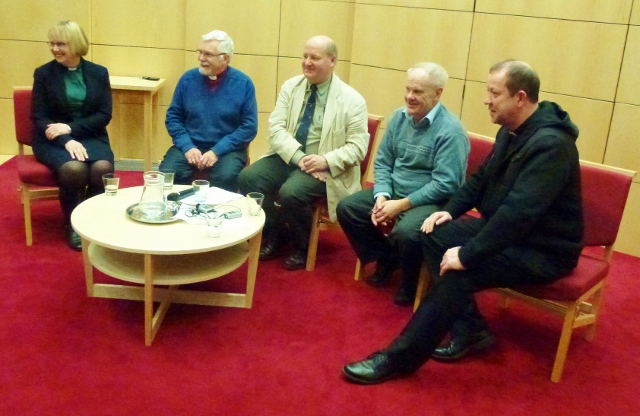
There was an interesting meeting in South Belfast tonight at which representatives of the four main Christian churches in the city explored the topic ‘Is Christ Divided?’. It was held at the new Methodist centre on the Lisburn Road. It was part of the 4Corners Festival: Bringing Belfast Together.

The Church of Ireland Diocese of Connor website has the following details:-

In a special event as part of the Week of Prayer for Christian Unity, church leaders from four different traditions and four corners of Belfast will come together to tell their personal stories.

The theme for this year’s Week of Prayer for Christian Unity is the rhetorical question put by Paul to the church in Corinth: “Is Christ Divided?” and it is against the backdrop of this question  that the church leaders will speak. The four are:

Bishop Harold Miller: Anglican Bishop of Down and Dromore (East Belfast resident)
Rev Dr Norman Hamilton: Former Moderator and Minister of Ballysillan Presbyterian (North Belfast)
Father Ciaran Dallat: Assistant Priest in St. Peter’s Catholic Cathedral (West Belfast)
Rev. Dr. Heather Morris: President of the Methodist Church in Ireland and Director of Ministry at Edgehill Theological College (South Belfast).  Chaired by Professor John Brewer of Queen’s University, Belfast.

4Corners Festival at South Belfast Methodist Church  Photo: © Michael Fisher

4Corners Festival at South Belfast Methodist Church Photo: © Michael Fisher


Bishop Harold Miller at 4Corners Festival Photo: © Michael Fisher

Bishop Harold Miller at 4Corners Festival Photo: © Michael Fisher

TULIPS FROM AMSTERDAM

The Belfast Telegraph Holiday World show is on this weekend at the King’s Hall in Belfast. But this time it is not in the main building. It is in the Pavilions at the rear of the main hall. Usually I would come across a number of exhibitors from County Monaghan such as Castle Leslie but there was no sign of them. The Nuremore Hotel in Carrickmacross was listed in the map of stands but when I visited the stall there was another group of hotels (Maldron) there instead. I did come across Flavour of Tyrone and the Clogher Valley Caravan Park, both of which have been of assistance to the William Carleton international summer school.

The show runs at the RDS Simmonscourt in Dublin next weekend January 24th-26th.

LAGAN STREAM

McConnell Weir, River Lagan, Belfast  Photo: © Michael Fisher

McConnell Weir, River Lagan, Belfast Photo: © Michael Fisher

Having gone into the city centre to tax my car just after New Year’s Day, I decided I would do some walking. I was in the regenerated Gasworks site so I went over towards the Halifax building, under the railway bridge taking trains in and out of the not-so-Central Station, and joined the path alongside the River Lagan, where there is also a cycle lane. The path goes past the remains of the McConnell Weir as far as the Ormeau Bridge, where it is necessary to cross the main road and continue along the footpath beside the embankment, which begins at the Chinese Welfare Association centre.

Ormeau Bridge  Photo: © Michael Fisher

Ormeau Bridge Photo: © Michael Fisher

The route alongside the river goes past the King’s Bridge, where the Lyric Theatre is situated. There is an underpass for cyclists which can also be used by pedestrians at Governor’s Bridge and the path continues up to Lockview Road and the Cutter’s Wharf pub. The road leads up to the roundabout at Stranmillis College where the first turn on the left is Lockview Road. The entrance to the Lagan Valley Regional Park and the start of the towpath walk alongside the river is just past the car park near the entrance to Belfast Boat Club. The Lagan Canal Trust has ambitious plans for the regeneration of the Lagan from Lough Neagh all the way to Belfast.

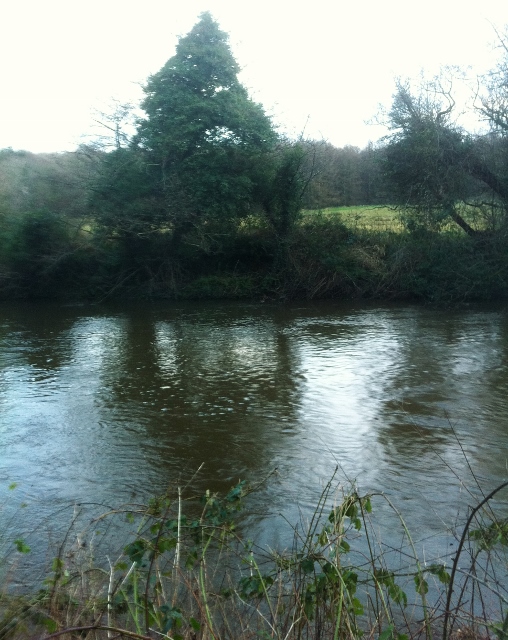
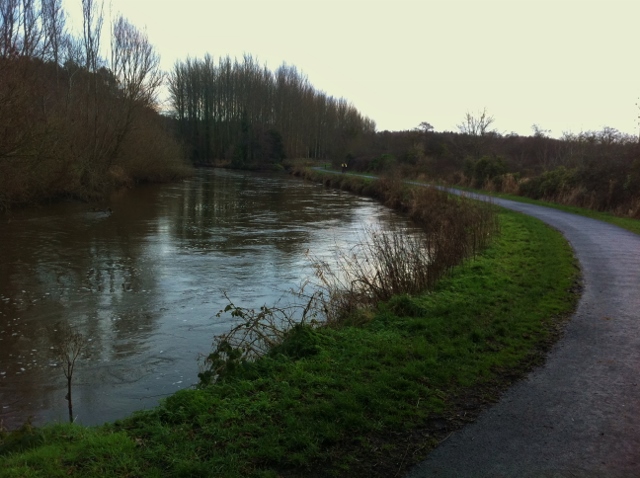
River Lagan near Stranmillis  Photo: © Michael Fisher

River Lagan near Stranmillis Photo: © Michael Fisher

The Lagan Canal offers an opportunity to walk along a forgotten history that helped shape Ulster, encounter wildlife, enjoy peace and tranquillity, and experience this nationally important heritage site. Originally stretching for 27 miles from Lough Neagh to Belfast the Lagan Canal passed through towns and villages transporting goods and materials.

River Lagan near Stranmillis  Photo: © Michael Fisher

River Lagan near Stranmillis Photo: © Michael Fisher

River Lagan near Stranmillis  Photo: © Michael Fisher

River Lagan near Stranmillis Photo: © Michael Fisher

River Lagan near Stranmillis  Photo: © Michael Fisher

River Lagan near Stranmillis Photo: © Michael Fisher

River Lagan near Stranmillis  Photo: © Michael Fisher

River Lagan near Stranmillis Photo: © Michael Fisher

River Lagan near Stranmillis  Photo: © Michael Fisher

River Lagan near Stranmillis Photo: © Michael Fisher

TRAINS BOATS & PLANES

Titanic Belfast New Year's Day 2014  Photo: © Michael Fisher

Titanic Belfast New Year’s Day 2014 Photo: © Michael Fisher

Welcome to 2014 and as travel in its various shapes and forms is very prevalent at this time of year I am starting with trains, boats and planes, as well as Shanks’ mare. On New Year’s Day 2013 my friends introduced me to the delights of a walk along The Flaggy Shore in County Clare and it inspired the development of my (almost) daily blog. Weather conditions were very different this time for the New Year party with the same group of friends, this time gathering at our house in South Belfast. A late brunch today was followed by a card game (gin rummy). The rain kept on coming down but by 3pm it was clear enough to go out for our annual New Year walk. Rather than heading for the Lagan towpath where we walked in the snow four yeas ago, we headed for Holywood along the North Down coast and began our walk on the promenade beside the railway station.

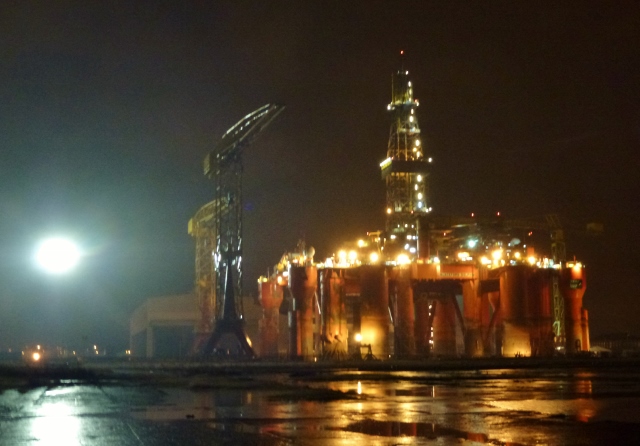
Blackford Dolphin oil rig at Harland & Wolff with plane coming in to land  Photo: © Michael Fisher

Blackford Dolphin oil rig at Harland & Wolff with plane coming in to land Photo: © Michael Fisher

On our way home we went for a drive in the Titanic Quarter where the Titanic Belfast visitor centre had been lit up for the holiday period. We also saw the 360-ft high oil rig Blackford Dolphin which is being re-fitted at the Harland and Wolff yard, having been towed here from Brazil. It has become Belfast’s unofficial Christmas tree!