CARLETON ON TOUR

Jack Johnston at Draperstown

Jack Johnston at Draperstown

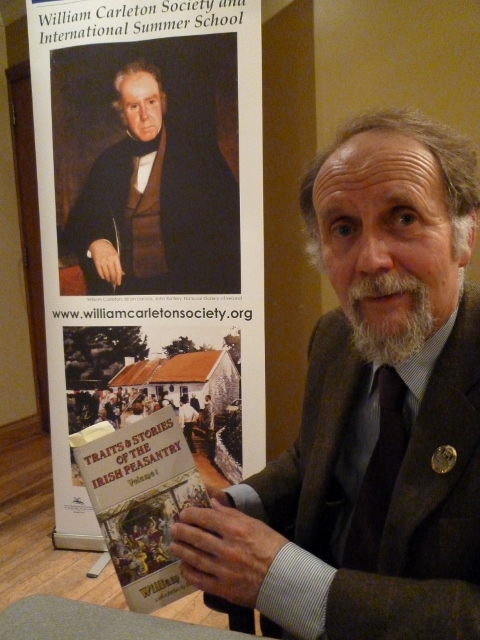
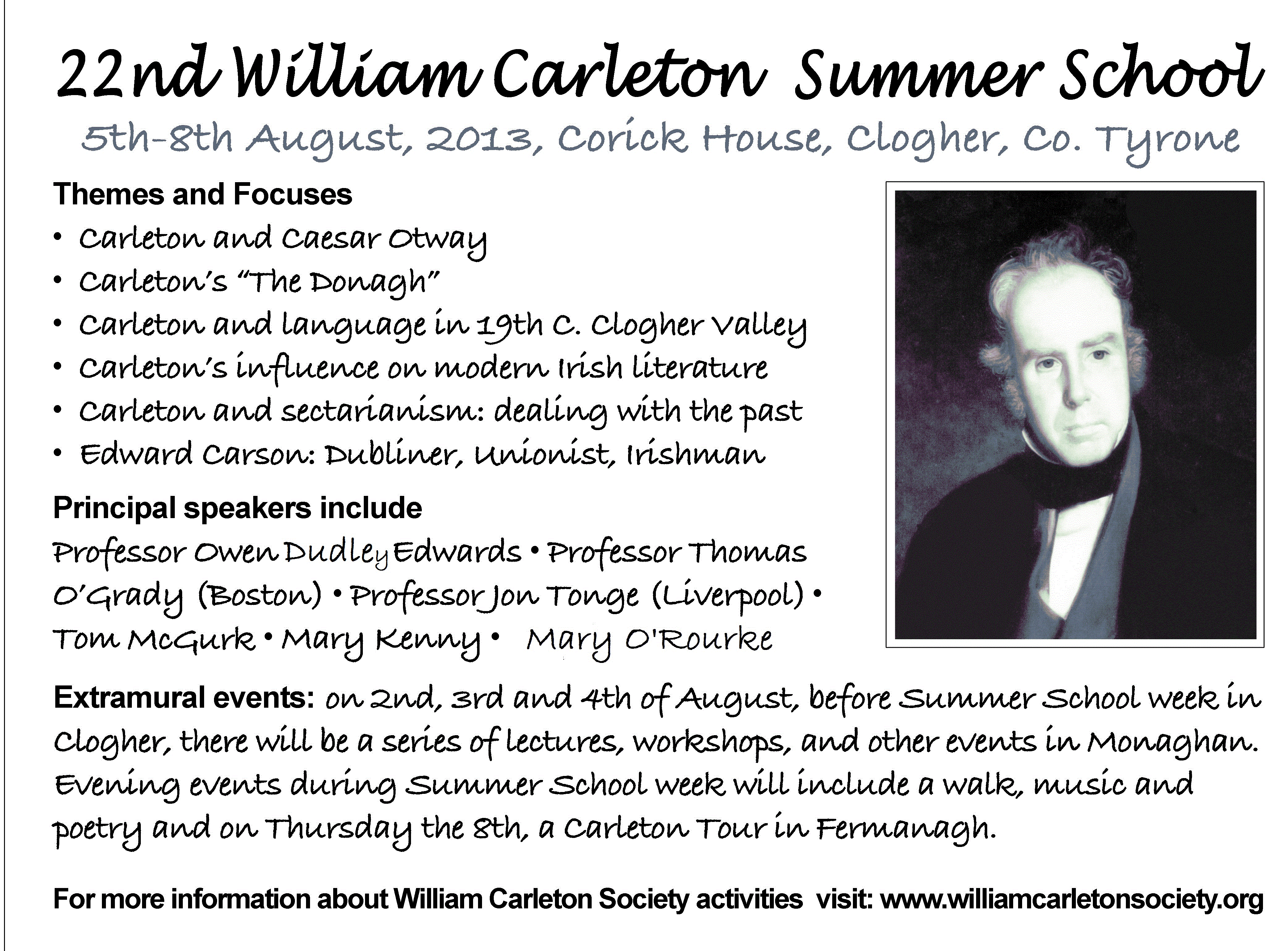
The William Carleton story was told by Jack Johnston at The Shepherd’s Rest pub near Draperstown. The well-attended event was hosted by Ballinascreen Historical Society. It include a reading by the Carleton Players from “The Party Fight and Funeral”, adapted by Liam Foley. William Carleton Society is part of the “Shared History, Shared Future” project financed by the EU Peace III initiative and administered by Magherafelt District Council on behalf of the South West Peace III Partnership. On Tuesday 14th May at 6:30pm at Ranfurly House/Hill of the O’Neill centre in Dungannon we will be launching the programme for the 22nd annual William Carleton international summer school. All welcome.

summerschoolad

CHURCH & STATE

Taoiseach Enda Kenny in Knock (Picture RTÉ News)

Taoiseach Enda Kenny in Knock (Picture RTÉ News)

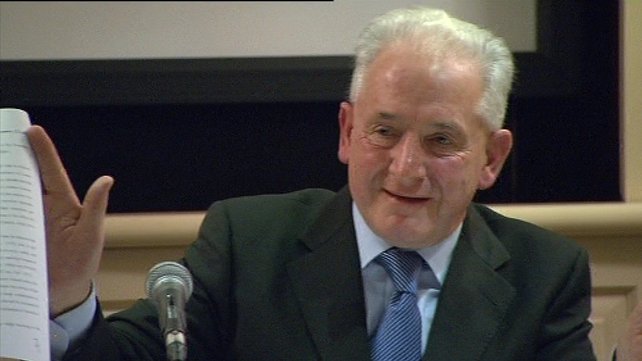
Listening to an interview given by the Taoiseach Enda Kenny to RTÉ News (This Week) at Knock airport in his Mayo constituency, he answered one question with the comment: “I have my own way of speaking to my God”. He had been asked about the Catholic hierarchy’s response to the proposed legislation for limited abortion, the Protection of Life During Pregnancy Bill. Cardinal Brady who was visiting the Marian shrine at Knock held out the threat of refusing communion to politicians who supported the bill, saying “that (excommunication) is down the line at the moment as far as we are concerned”. During a national prayer vigil for the right to life of mothers and babies the Catholic Primate of all-Ireland pointed out that the exact legislation that would be introduced was not yet known. “We know what the law is about excommunication, about abortion, that’s a fact. But…the most important issue at this moment is to win the hearts and minds of the people of Ireland to decide with the pro-life“, he said.

Cardinal Sean Brady (Picture RTÉ News)

Cardinal Sean Brady (Picture RTÉ News)

On Friday, after a meeting of the hierarchy, Cardinal Brady said the scandal involving clerical child sex abuse did not exempt the bishops from the duty of proclaiming the good news of the gift of life. He also said that while the job of TDs and senators was to legislate, they did not have the “power over life”. In response to the Cardinal’s intervention in the debate, Mr Kenny said “My book is the Constitution, the Constitution is determined by the people, it’s the people’s book.”

As Fr Tony Flannery points out in The Journal, many people in this country no longer follow the teaching of the Catholic Church and it is the task of our politicians to legislate for all citizens. He says Cardinal Brady comes across as “stiff and authoritarian” and the choice of him as a spokesperson for the bishops’ campaign is a big mistake. Another good point he makes is that by coming out so strongly, in such an aggressive and black-and-white way against the proposals, the Catholic hierarchy have effectively ruled themselves out of any real engagement in the process from now on. “They will condemn, and they will lobby individual legislators, but their public position is now fixed and unbending. This is not the way to go about influencing a democratic process“, he says.

Fr Tony Flannery (RTÉ News)

Fr Tony Flannery (RTÉ News)

So there we have it. The battle lines are being drawn up for what will be a major turning point in church and state relations in Ireland, a debate that is no doubt occupying the minds of many Fine Gael backbenchers are the moment. I think this has been a particularly important weekend which will show the waning influence of the Catholic hierarchy in Irish politics. Added to the previous debates about contraception and divorce and the ongoing discussions about the level of Catholic religious involvement in education, I think we are witnessing a very significant step in the increasing secularisation of the Republic.

HEINRICH BӦLL

With his permission, I am re-publishing Patrick Comferford’s blog: Remembering Heinrich Böll on Achill Island

Heinrich Böll … commemorated on Achill Island this weekend
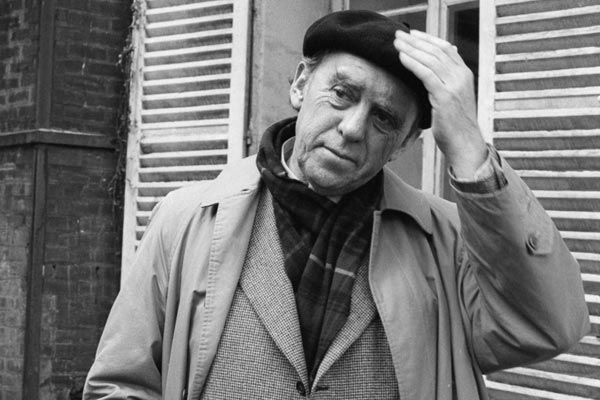
I am staying on Achill Island this weekend, taking part in the ninth annual Heinrich Böll Memorial Weekend which opened on Friday, 3rd May and which continues until Monday 6th May. Heinrich Theodor Böll (1917-1985) was one of Germany’s foremost writers in the aftermath of World War II and was awarded the Nobel Prize for Literature in 1972. He was a leader of the German writers who tried to come to grips with the memory of World War II, the Nazis, and the Holocaust and the guilt that came with them. Böll lived with his wife in Cologne and in the Eifel region, but they also spent time on Achill Island off the coast of Co Mayo during the 1950s and 1960s.

I am staying in Gray’s Guest, close to his cottage in Dugort, which is now used as a guesthouse for international and Irish artists. Many of his experiences in Achill are recalled in his book, Irisches Tagebuch (Irish Journal), which describes in loving detail his journey to Achill and his observations of island life. Heinrich Böll was born into a liberal Catholic and pacifist family in Cologne on 21 December 1917. He was conscripted into the German army during World War II and fought on the Russian and French fronts. He was wounded four times before being captured and held in a US prisoner-of-war camp. He began writing after World War II, drawing on his experiences as a soldier. His first novel was published in 1949 and he went on to publish over 20 books. He also translated Irish writers, including GB Shaw and JM Synge, into German.

Like Paul Henry and Graham Greebe, Böll may have read Synge before he first visited Achill. Böll first travelled to Achill Island in the early 1950s, travelling by train from Dublin to Westport with his family. The details of this visit, along with his observations of Irish ways and customs – from tea drinking to priests wearing safety pins to the popularity of ice cream – are recorded with humorous detail in his Irish Journal.

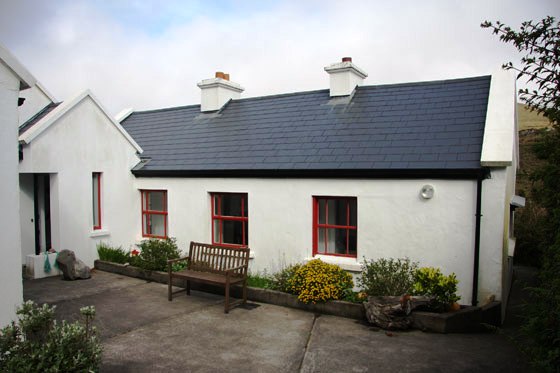
Heinrich Böll’s cottahe near Dugort on Achill Island
Life on Achill in the 1950s gave him plenty of material to indulge his penchant for the absurd and the incongruous, not least the casual relationship with time. His first book was called The Train Was On Time, and that first train from Dublin arrived in Westport right on time. Böll was soon introduced to the Irish saying: “When God made time he made plenty of it.” Achill Island, with its “classless society” and its casual attitude to time, held an immense appeal for him.

Recounting the time he went to a movie in Keel, Böll noted that regardless of the advertised start time the movie could only begin when all the priests – “the local ones as well as the ones on holiday” – were assembled in full strength. In the mid-1950s, Böll wrote in his Irish Journal: “Of the eighty children at Mass on Sundays, only forty-five will still be living here in forty years; but these forty-five will have so many children that eighty children will again be kneeling in church.”

Sixty years later I wonder if 80 people will be kneeling at Mass in the same church in Achill tomorrow morning. Heinrich Böll and his family continued to travel to Achill during the 1950s and 1960s, living in a cottage in Dugort, close to Saint Thomas’s Church. Heinrich Böll died on 16 July 1985. Thanks to his family, the Böll Stiftung in Cologne, and Mayo County Council, his cottage is now an artists’ residence, providing a short-term retreat for writers, poets and artists.

MAY DAY MARCH

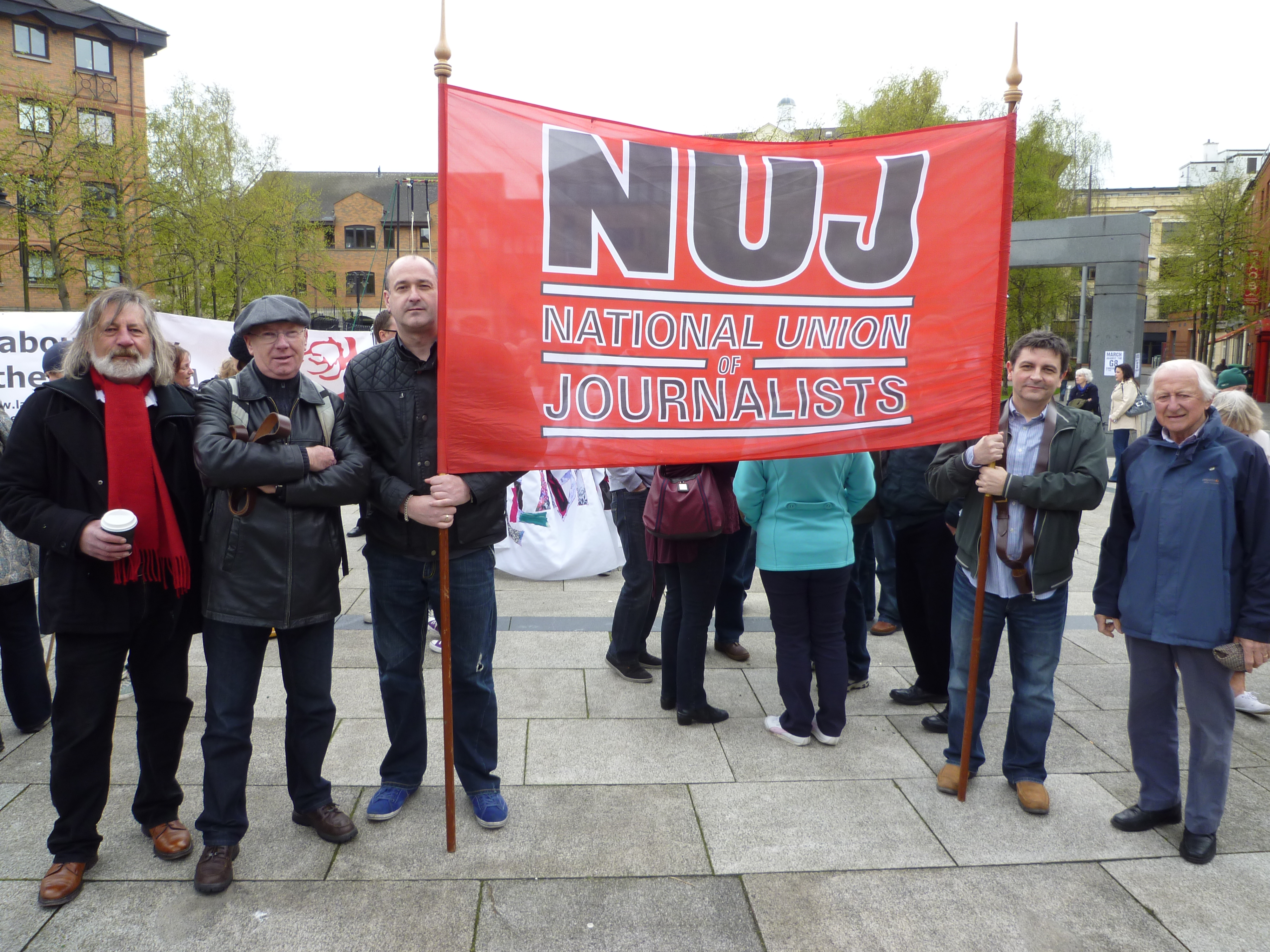
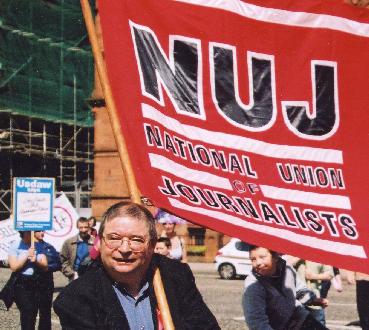
NUJ Members at May Day March

NUJ Members at May Day March

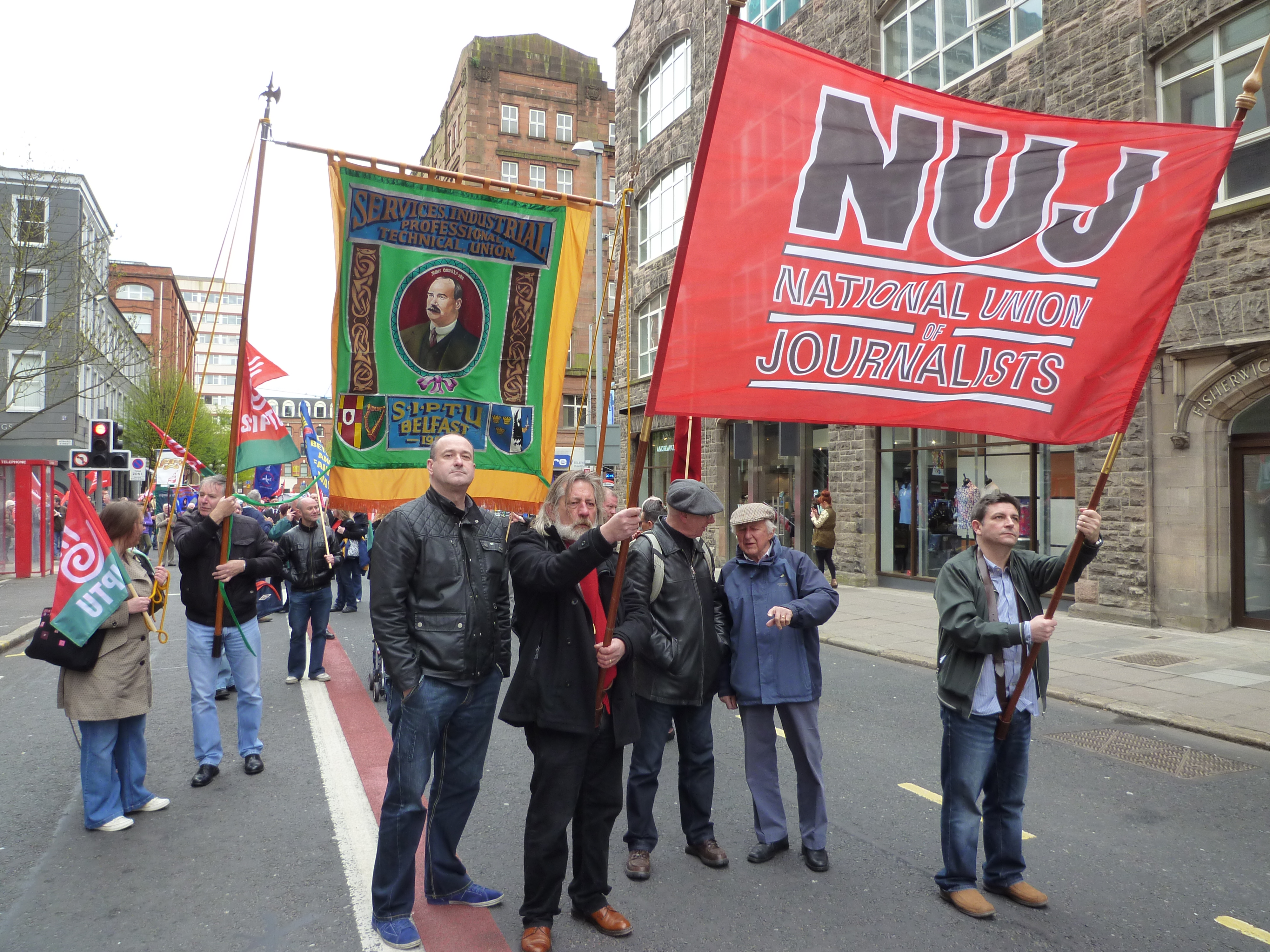
The annual ICTU May Day rally and parade was held in Belfast on Saturday 4th May. A number of members gathered beside the NUJ banner at Writers’ Square near St Anne’s Cathedral at 12 noon for speeches followed by a march through the city centre accompanied by brass, pipe and samba bands. The march took a slightly different route and finished back at Writers’ Square. It was one of a series of events organised by Congress on the occasion of the centenary of the 1913 Dublin lockout.

May Day Rally, Belfast

May Day Rally, Belfast

The May Day march is among the biggest in the UK and Ireland, and featured speeches from leading union activists. With sponsorship from the European Union Regional Development Fund, Belfast City Council and the Community Relations Council, are presenting an extended festival programme with events for everyone, including walking tours, exhibition launches, lectures and the May Day and Diversity Festival.

NUJ & SIPTU

NUJ & SIPTU

Amongst the numerous events taking place will be the collaborative exhibition World of Work (WOW) at the Golden Thread Gallery, to celebrate the essence of May Day and showcase the often hidden value of trade union learning initiatives. The gallery will also host the Through the Lens Photographic Exhibition. Over the last six months groups of trade union members and activists have worked to interpret ‘Diversity’ through digital photography. They have come up with images of diversity in all its forms.

There was a good turnout from the main unions including Unison, Unite, NIPSA and the GMB.

NIPSA contingent

NIPSA contingent

MAY DAY PARADE

maydayThe annual ICTU May Day rally and parade is taking place in Belfast on Saturday 4th May. Gather beside the NUJ banner at Writers’ Square near St Anne’s Cathedral at 12 noon for speeches followed by a march through the city centre accompanied by brass, pipe and samba bands. The march will finish back at Writers’ Square where food and entertainment will be provided. Help celebrate the wins and achievements of the trade union movement over the years and show that we are proud to be trade unionists. It’s one of a series of events organised by Congress on the occasion of the centenary of the 1913 Dublin lockout.

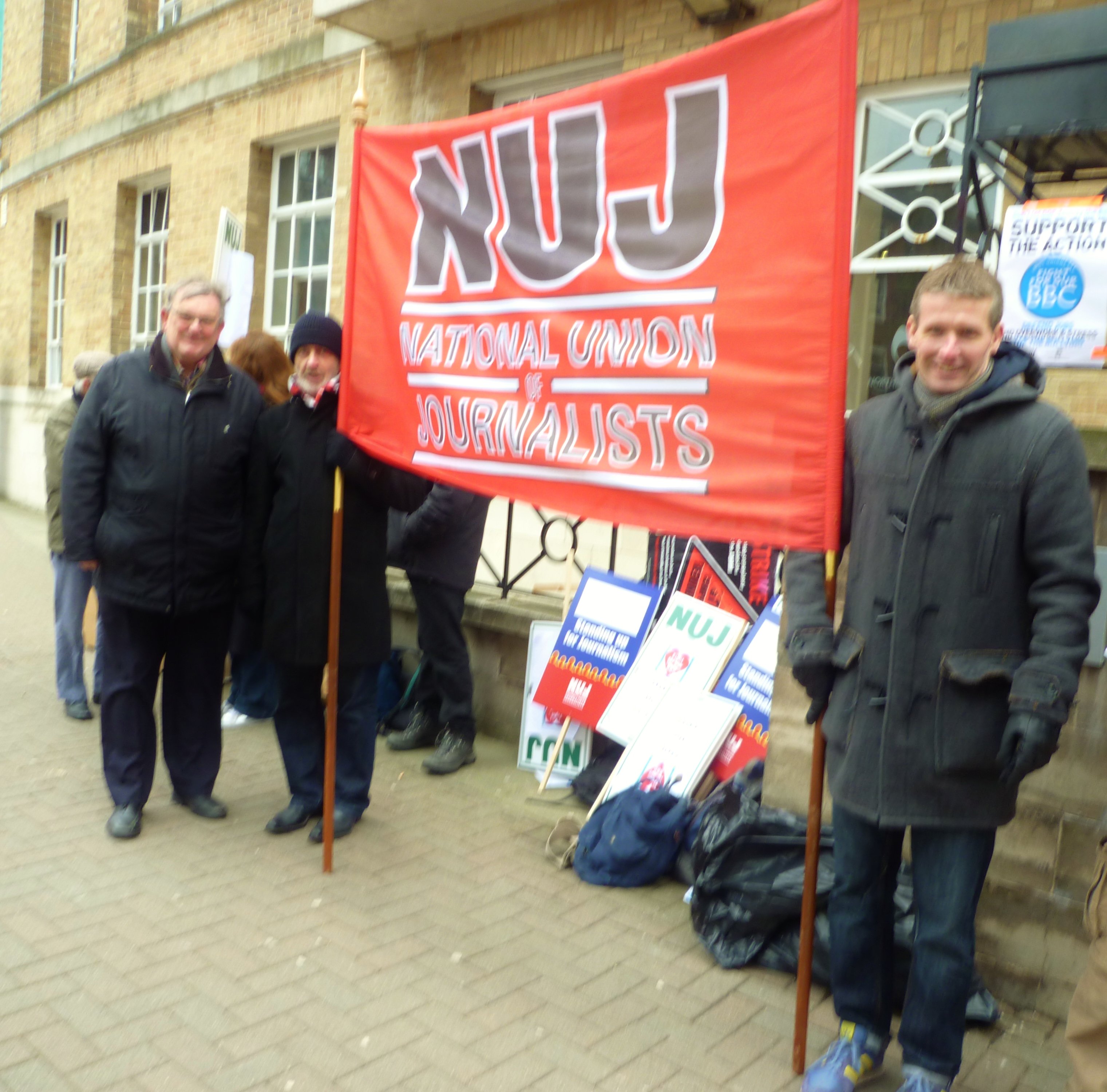
BBC Strike, March 2013

BBC Strike, March 2013

The May Day march is among the biggest in the UK and Ireland, and will feature speeches from leading union activists. With sponsorship from the European Union Regional Development Fund, Belfast City Council and the Community Relations Council, are presenting an extended festival programme with events for everyone, including walking tours, exhibition launches, lectures and the May Day and Diversity Festival. Amongst the numerous events taking place will be the collaborative exhibition World of Work (WOW) at the Golden Thread Gallery, to celebrate the essence of May Day and showcase the often hidden value of trade union learning initiatives. The gallery will also host the Through the Lens Photographic Exhibition. Over the last six months groups of trade union members and activists have worked to interpret ‘Diversity’ through digital photography. They have come up with images of diversity in all its forms. The opening night will include a DJ set from Love Music Hate Racism and a performance piece from Scream Blue Murmur.

PRESS FREEDOM DAY

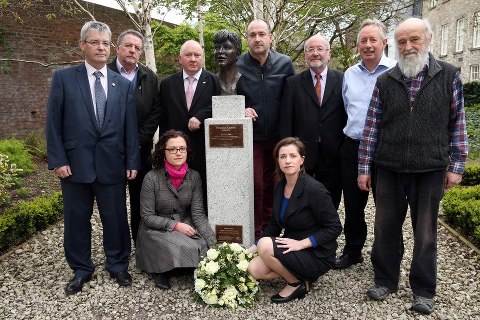
Wreath laid at Veronica Guerin statue

Wreath laid at Veronica Guerin statue

Representatives of journalists in Ireland have been marking world press freedom day. In Dublin the President of the National Union of Journalists Barry McCall demanded action to protect media plurality across Europe. He joined senior NUJ and Amnesty International Ireland figures in laying a wreath at the Veronica Guerin statue in Dublin Castle in memory of all the journalists who have been killed in the course of their work. He said: “It is our duty to ensure that each one of those journalists is remembered. Here in Ireland we know the pain felt by the murders of Martin O’Hagan and Veronica Guerin, both NUJ members committed to the highest principles of journalism. We salute those who have died in the cause of the truth. We also need to protect our ability to communicate the truth on a global basis and across all platforms in the future.”
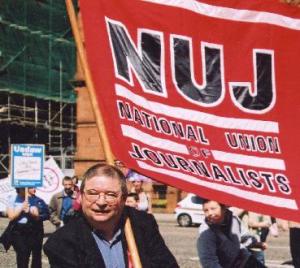
Martin O'Hagan at Belfast May Day March:            Photo © Kevin Cooper

Martin O’Hagan at Belfast May Day March:                          Photo © Kevin Cooper

The International Federation of Journalists (IFJ) who will hold their triennial Congress at Dublin Castle next month and the NUJ have also written to the embassies of the four countries in the world with the highest numbers of imprisoned journalists to demand their release. Signed by IFJ President Jim Boumelha the letters have been sent to the embassies of China, Iran, Turkey and Eritrea, to express the IFJ’s concern about the lack of press freedom in these countries, where journalists are routinely detained in violation of  their fundamental freedoms and human rights. As a sign of unity and solidarity, the IFJ is also calling on its affiliates to send similar letters to the embassies of the same countries in their regions. General Secretary Michelle Stanistreet has written on behalf of the NUJ.

This year the IFJ is marking world press freedom day by focusing on the issue of journalist safety and journalists imprisoned around the world. This reflects the ongoing concern over the numbers of our colleagues who continue to languish in prisons in many countries as a result of their profession. In Iran, according to the Association of Iranian Journalists (AoIJ), at least 24 journalists are currently in prison on charges of allegedly violating Iranian laws. In Turkey, the Turkish Union of Journalists, estimates that at least 66 journalists are currently in prison, awaiting trial on charges of allegedly isolating the Turkish penal code or anti-terror laws. The European Federation of Journalists is running a campaign with the Turkish Union of Journalists to ‘Set Journalists Free in Turkey’. In Eritrea, according to reliable sources, at least 18 journalists have been detained without charges since the authorities imposed a ban on independent media in September 2001. In China, it was reported in 2012 that potentially over 30 journalists were imprisoned, awaiting trial on charges of allegedly violating the Chinese penal code or anti-terror laws.

At a meeting of Dublin branch in Liberty Hall the NUJ President Barry McCall called for public support for the European Citizens Initiative which calls on the European Commission to bring forward measures to protect media pluralism and press freedom. Mr McCall said: “It is standard practice for governments and competition authorities to intervene when a firm becomes dominant in any sector. But the media industry is even more sensitive to such dominance as with it comes potentially immense political power and influence. This is why different standards and thresholds must be applied to this bulwark of democracy and why the NUJ is supporting the European Citizens’ Initiative aimed at gathering a million signatures to a petition calling on the European Commission to bring forward to protect media pluralism and press freedom. We need 9,000 signatures from Ireland to play our part in this critically important initiative. The NUJ will be campaigning to get its own members to sign up to the petition and we are calling on all trade unions, political parties, and the Irish people generally to get behind it so that we can prevent abuses of media power in this country in future.”

Irish Executive Council Cathaoirleach Gerry Curran told the branch that media freedom involved taking a stand in defence of journalism at home and abroad. Highlighting the fact that the NUJ will host the IFJ World Congress in Dublin next month he said the international focus on Ireland would give the NUJ a special role in highlighting the abuse of journalists throughout the world. NUJ Irish secretary Séamus Dooley joined Amnesty International Ireland in calling for the release of journalists like Ali Mahmoud Othman who are detained in Syria. Noeleen Hartigan, Programmes Director of Amnesty International Ireland, said: “Syria is now the world’s most dangerous place to be a journalist. Scores of journalists have been detained, tortured or killed over the last two years. Others, like Ali Mahmoud Othman are detained in secret locations. Together with the NUJ we are today calling for the release of all journalists detained solely for their work to tell the world what is happening in Syria today.”

Adrián Silva Moreno

Adrián Silva Moreno: Photo Proyecto Impunidad

In 2012, 84 journalists in 25 countries died while covering the news. On May 13, their names will be added to the Journalists’ Memorial at the Newseum in Washington DC. In Mexico, Adrián Silva Moreno, a freelance journalist and contributor to the newspaper Puntual, was shot to death while covering a raid of a warehouse near Tehuacan. Silva was leaving when his car was fired on by unknown gunmen.

In a ceremony at the Newseum on Wednesday it was revealed that the percentage of the world’s population that has access to a free press declined during 2012, according to an annual survey released by Freedom House, which has documented media independence since 1980. 197 countries were monitored. Of that total, 32 percent were “free;” 36 percent were “partly free;” and 32 percent were “not free.” In 2012, the press status in eight countries changed. Karin Karlekar, project director at Freedom House, said this marked the first time in history that all country changes were in a negative direction.  The worst of the worst countries for press freedom were Belarus, Cuba, Equatorial Guinea, Eritrea, Iran, North Korea, Turkmenistan and Uzbekistan. Three countries — Greece, Mali and Israel — changed from “free” to “partly free” Five countries — Egypt, Paraguay, Ecuador, Guinea-Bissau and Thailand — changed from “partly free” to “not free”. Norway and Sweden remain the most free in the world. Both have constitutions that guarantee press freedom. Newspaper readership is high, and internet access is widely available and unrestricted. For more information on the survey, visit www.freedomhouse.org. I am grateful to fellow blogger Darach MacDonald for bringing it to our attention on facebook.

Also in Dublin, the Irish section of the Association of European Journalists marked world press freedom day with a talk over lunch by the Chairman of the Irish Press Council, Dáithí O’Ceallaigh.  Press%20Council

HSS STENA VOYAGER

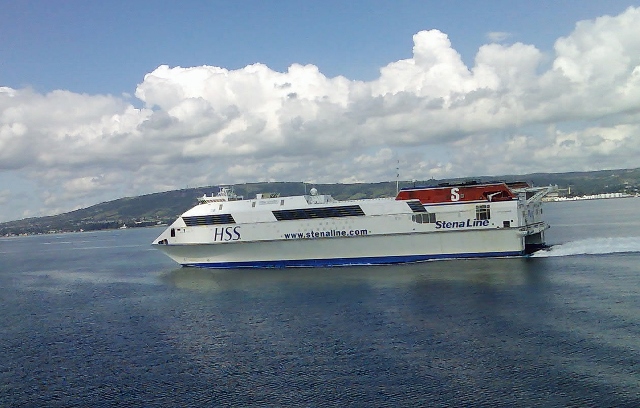
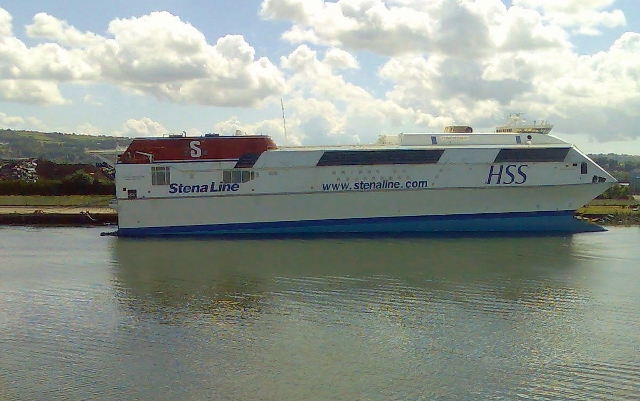
Stena HSS craft in Belfast Lough

Stena HSS craft in Belfast Lough

Built to compete with air travel on the short hop across the North Channel, the high-speed craft introduced by Stena Line in 1996 could do the the trip from Belfast to Stranraer in 85 minutes. But rising fuel costs meant a slower speed to reduce oil consumption and a journey time of two hours. The wash created by the craft entering Belfast Lough also caused problems for those walking along the shoreline in places like Holywood, Co.Down. ‘Stena Voyager’ and her sisters ‘Stena Explorer’ and ‘Stena Discovery’ took much of their technology from the world of aviation. They were described as being to the ferry industry what the jet plane was to aviation in the era of propeller aircraft. Now, preparations are being made for the departure from Belfast of the HSS ‘Stena Voyager’ on a one-way trip to the recycling yard in Sweden. The final journey was meant to take place this afternoon but the BBC (NI) reports it has been delayed until the weekend. The operation went ahead on Sunday (May 5th) and the vessel is now being towed away for “upphuggning” (that’s what the Swedish version is as you can see here). Sounds much nicer than being scrapped!

The vessels are each powered by the maritime versions of four GE Aviation gas turbines, fuelled by a light diesel oil with low sulphur content.  They have four Kamewa waterjets for propulsion. The HSS ferries were designed to allow quick turnarounds at port. Vehicles could be loaded via two of the four stern doors and park in a “U” configuration. When disembarking, vehicles drove straight off through the other two doors. When the HSS started operating in 1996, oil was just $18 a barrel. Fuel costs rose by 600% since the introduction of the ‘Stena Voyager’ and consequently slower running became the norm. In November 2011, the Voyager was withdrawn from service. With the earlier sale of the HSS ‘Stena Discovery’ to Venezuela, this leaves the ‘Stena Explorer’ as the remaining craft in service. Her deployment out of Holyhead is reduced to just one round trip a day, down from a peak of five, on a seasonal basis. The service to Dun Laoghaire will run until Tuesday September 10th and the crossing time is two and a quarter hours.

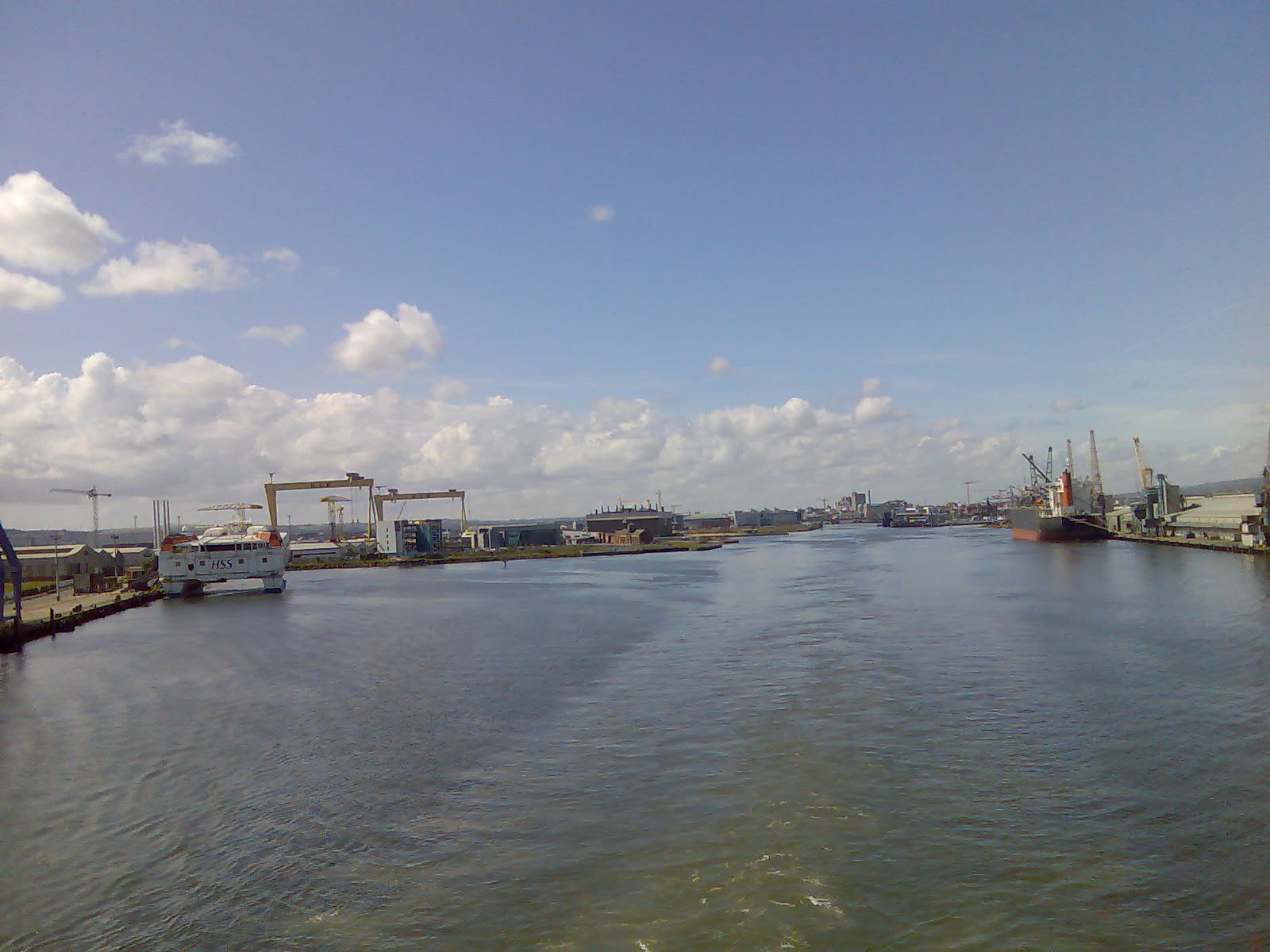
Belfast Port

Belfast Port

When the Stena Voyager was first introduced, the ferry was unique in its class and since its first sailing it carried over 17 million passengers and made over 45,000 sailings between Northern Ireland and Scotland. When commissioned by Stena Line, the HSS series of three ships, including the Stena Voyager, helped to revolutionise the look of the ferry industry. With its top speed of 40 knots, a high quality onboard travel experience for 1,500 passengers and its freight capacity of 375 vehicles, the HSS became an instant hit with customers. I used it on a number of occasions and found it very comfortable. In recent years, it was also fitted with wifi, which was an added bonus.

Stena Line’s Chief Operating Officer Michael McGrath said whilst the HSS class was a unique and highly innovative development, unfortunately the spiralling costs of operating the Stena Voyager had become all too high. “When the Voyager was first put into service fuel was approximately $20 per barrel and now the price is around $110 dollar, for a fuel hungry vessel this is simply untenable“, he said. “We live in different times now and we have to invest in more fuel efficient services for our freight and travel passengers. As a result we have now introduced two Superfast ferries on the service between Northern Ireland and Scotland and have constructed new ports in both Cairnryan and Belfast to give our customers one of the best ferry experiences on the Irish Sea.”

Stena HSS Craft in Belfast Port

Stena HSS Craft at Queen’s Island, Belfast

The Stena Voyager is being moved to the Öresundsvarvet shipyard in Landskrona, Sweden, where she will be recycled by Stena Line’s sister company, Stena Recycling. All of the Voyager’s various components will be recycled, as far as possible, helping the company to maintain its environmentally responsible reputation. Staffan Persson, MD Stena Recycling, said this would be a unique and interesting project. “There are many different types of material to recycle, and this will be done in several stages. The project requires highly experienced personnel and efficient recycling processes, which we possess. Recycling the large quantities of aluminium in the Stena Voyager will save up to 150 metric tonnes of carbon dioxide and the metal can be reused in the form of car parts or furniture for example“, he said.

The Stena Voyager was designed by another company in the Stena Sphere Group, Stena Teknik and at the time was one of the most revolutionary designed and constructed ships in the world.

DERRY’S WALLS

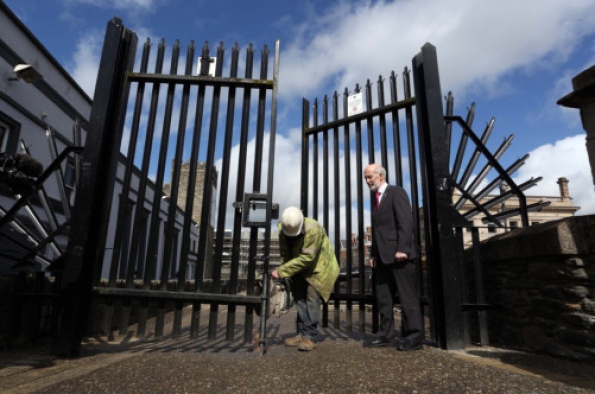
Removal of Security Gates: Photo Lorcan Doherty

Removal of Security Gates: Photo Lorcan Doherty

Derry’s walls are an integral part of the city and have survived for nearly four centuries. It’s the only remaining completely intact walled city in Ireland. With the progression of the peace process over the past fifteen years, the walls have become a tourist attraction, with guided walks daily. But the heavy metal security gates at sixteen locations  were a reminder of a troubled past. Now eleven of them are being removed.

Speaking during a visit to the walls, the NI Minister For Justice David Ford said he hoped the move would be welcomed by residents, businesses and visitors alike. He said in the year of Derry~Londonderry City of Culture, the walls would play a central role in the festivities and are a must see for any tourist visiting the city.  Derry has a real opportunity to show what the city has to offer.

He welcomed the removal of the gates for residents and tourists alike and described them as a blight on the historic walls.  The walls can now be enjoyed without the imposing structures that point to our past rather than our future, he added. Mr Ford thanked the local community, the PSNI and Derry City Council for their support and cooperation and said his department had invested £28,000 in providing additional CCTV coverage around the walls.

According to BBC Northern Ireland, Mr Ford said he hoped confidence could be built in the community so that people could feel safe and secure without the need for interface structures. “We obviously have to take account of the fact that there are small numbers of people in this city as there are elsewhere in Northern Ireland who are trying to drag us back,” he said, “but what I sense when I visit Derry is a very positive feel of people wanting to see movement forward, of the benefits of the City of Culture, of the Fleadh and all that coming forward and that is engaging with communities across Derry in a very positive way.”

Cannon from 1642 on Derry's Walls

Cannon from 1642 on Derry’s Walls

The mayor of Derry, Councillor Kevin Campbell, said the decision to remove the gates was about normalising the city. “It is about taking down symbols that have been here over thirty years,” he said. “There will still be a number of gates that are there to protect the Fountain, and you would obviously have to keep them there at the moment. But I think we have to be looking in the long term at having all those gates and barriers removed.”

DUP security spokesman Gregory Campbell also welcomed the removal of the gates, but warned against taking out the remainder. “It’s not just people in Londonderry, but tourists and visitors alike don’t like to see the aesthetics, the culture and history of the walls being encumbered by those gates which are a throwback to a previous era thankfully now past and I think everyone will welcome that,” he said.

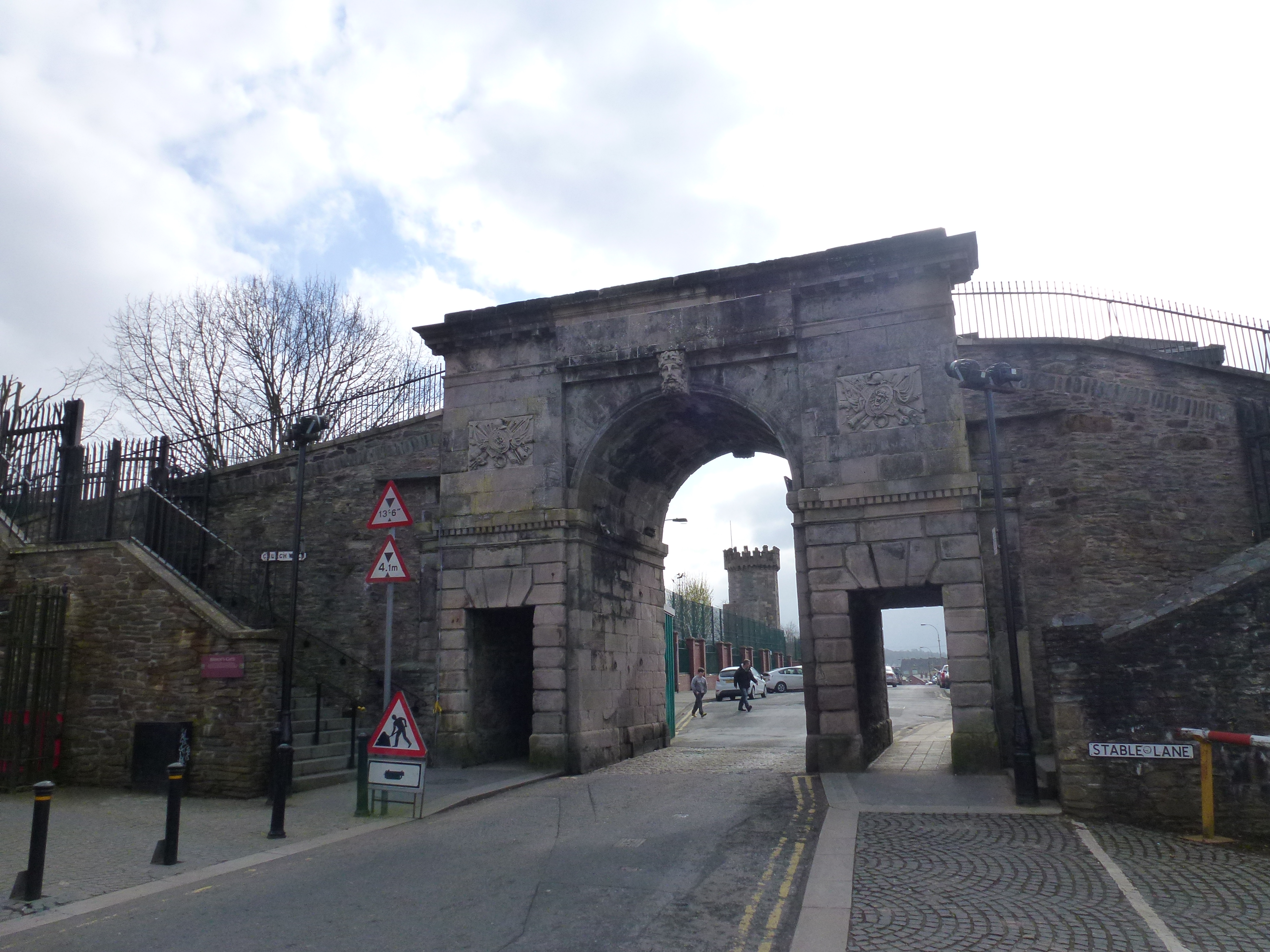
Bishop's Gate, Derry

Bishop’s Gate, Derry

Five security gates overlooking the loyalist Fountain Estate in the Bishop Street area including one at Bishop’s Gate will remain in place. Restoration work has been continuing along the walls and at several important buildings in the city centre, including the Guildhall and St Columb’s Cathedral. I saw some of these sights during a visit in March and I hope to travel to the city again by train next week to see the difference, now that the security gates are coming down.

Derry's Walls at the Guildhall

Derry’s Walls at the Guildhall