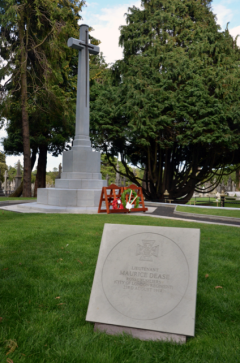
CHAPELLE D’ARMENTIÈRES CEMETERY

This CWGC cemetery where Captain Norman Leslie from Glaslough Co. Monaghan is buried is in France.

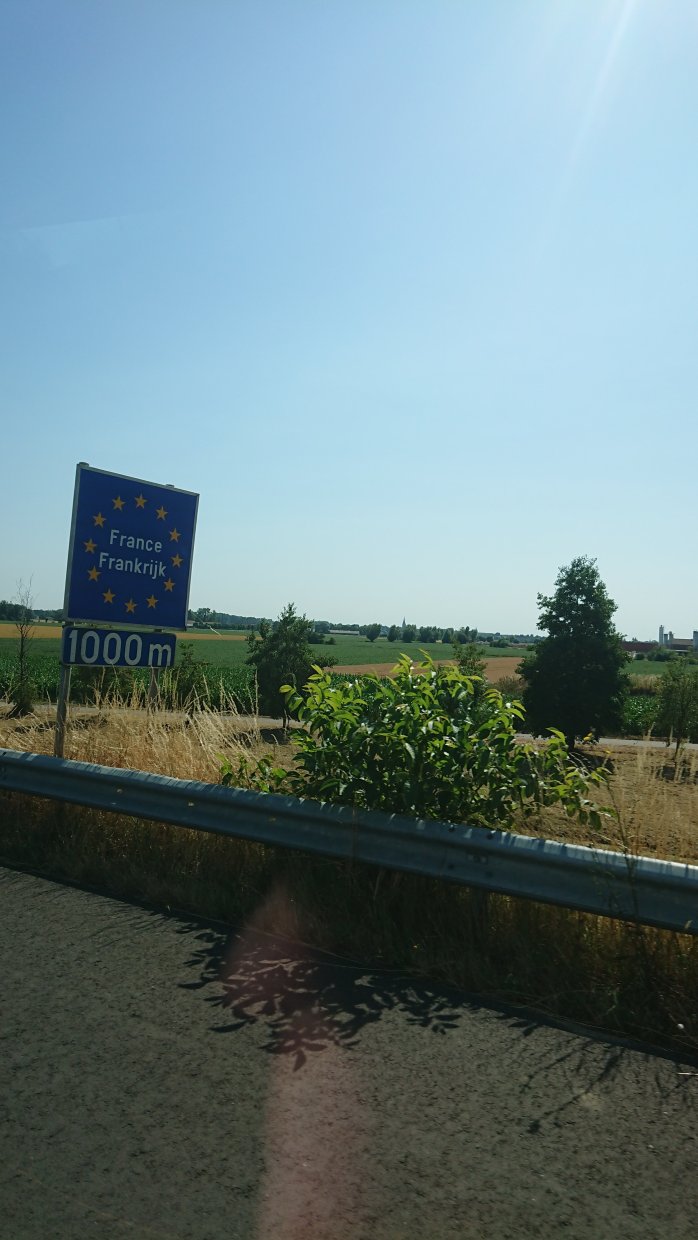
The seamless border between Belgium and France both in the Schengen Agreement

It is close to the border with Belgium at Houplines, and outside the village of La Chapelle-d’Armentieres, not far from Armentières itself.

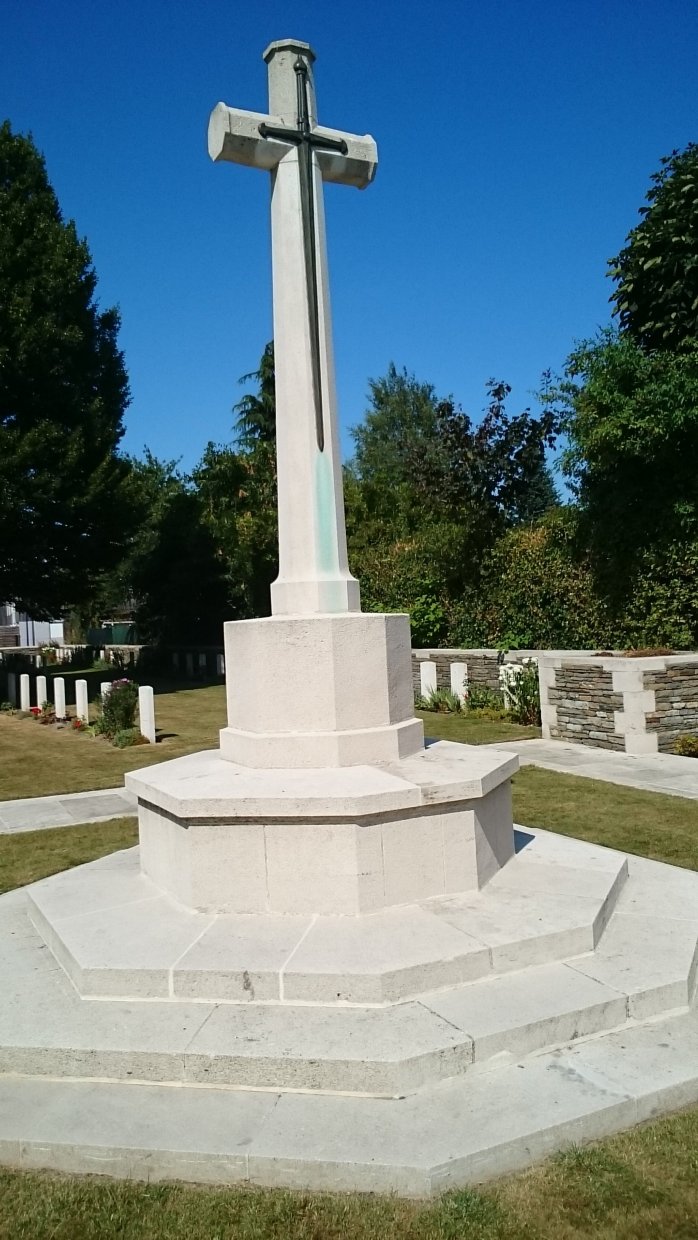
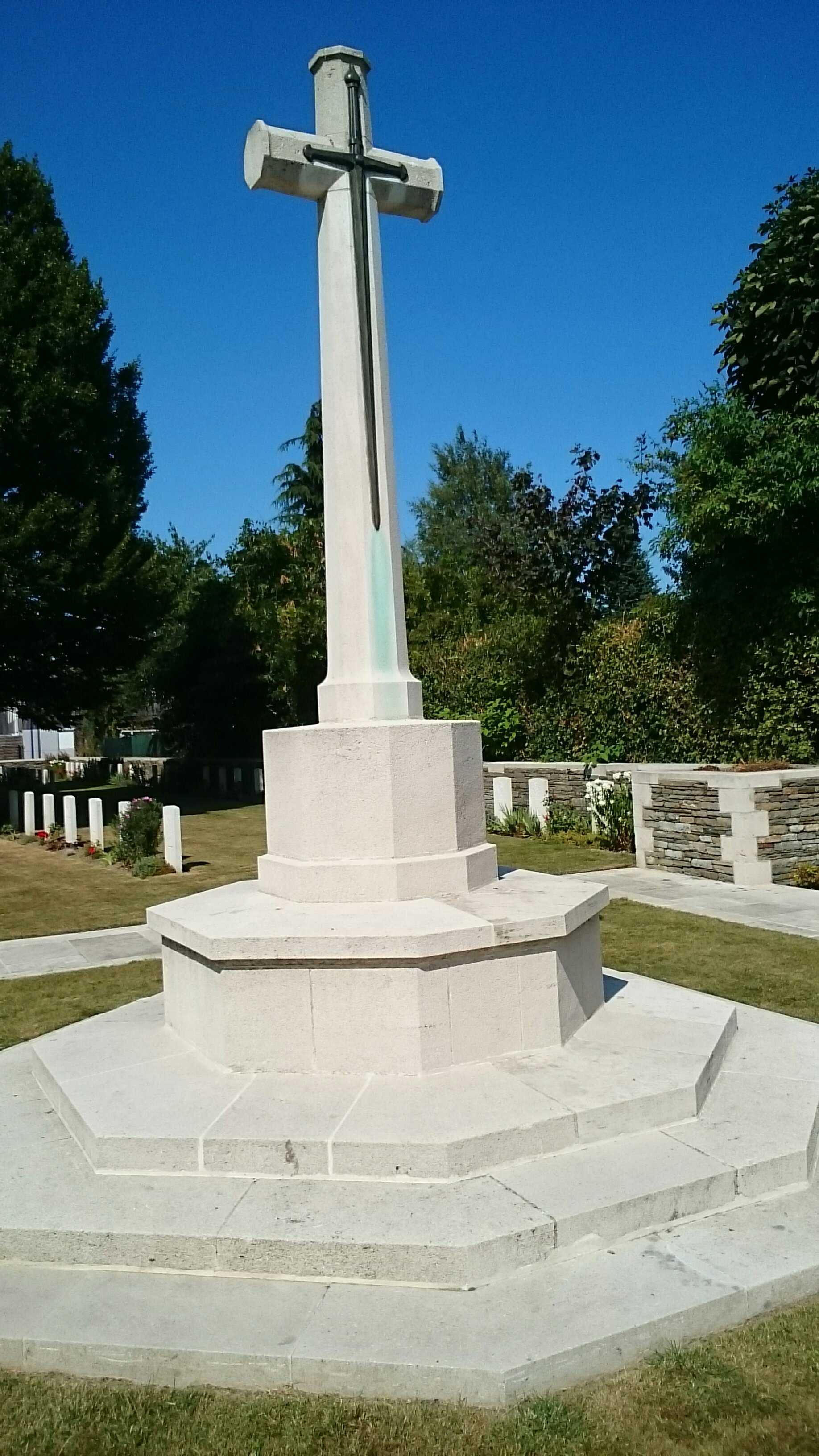
Cross of Sacrifice at Chapelle d’Armentières military cemetery

This area was in the hands of Commonwealth forces from October 1914 until the fall of Armentières on 10th April 1918. It was retaken in the following October.

Cross of Sacrifice at Chapelle d’Armentières military cemetery

During the Allied occupation, the village was very close to the front line and its cemeteries were made by fighting units and field ambulances in the earlier days of trench warfare.

Rifleman Brown of the Rifle Brigade

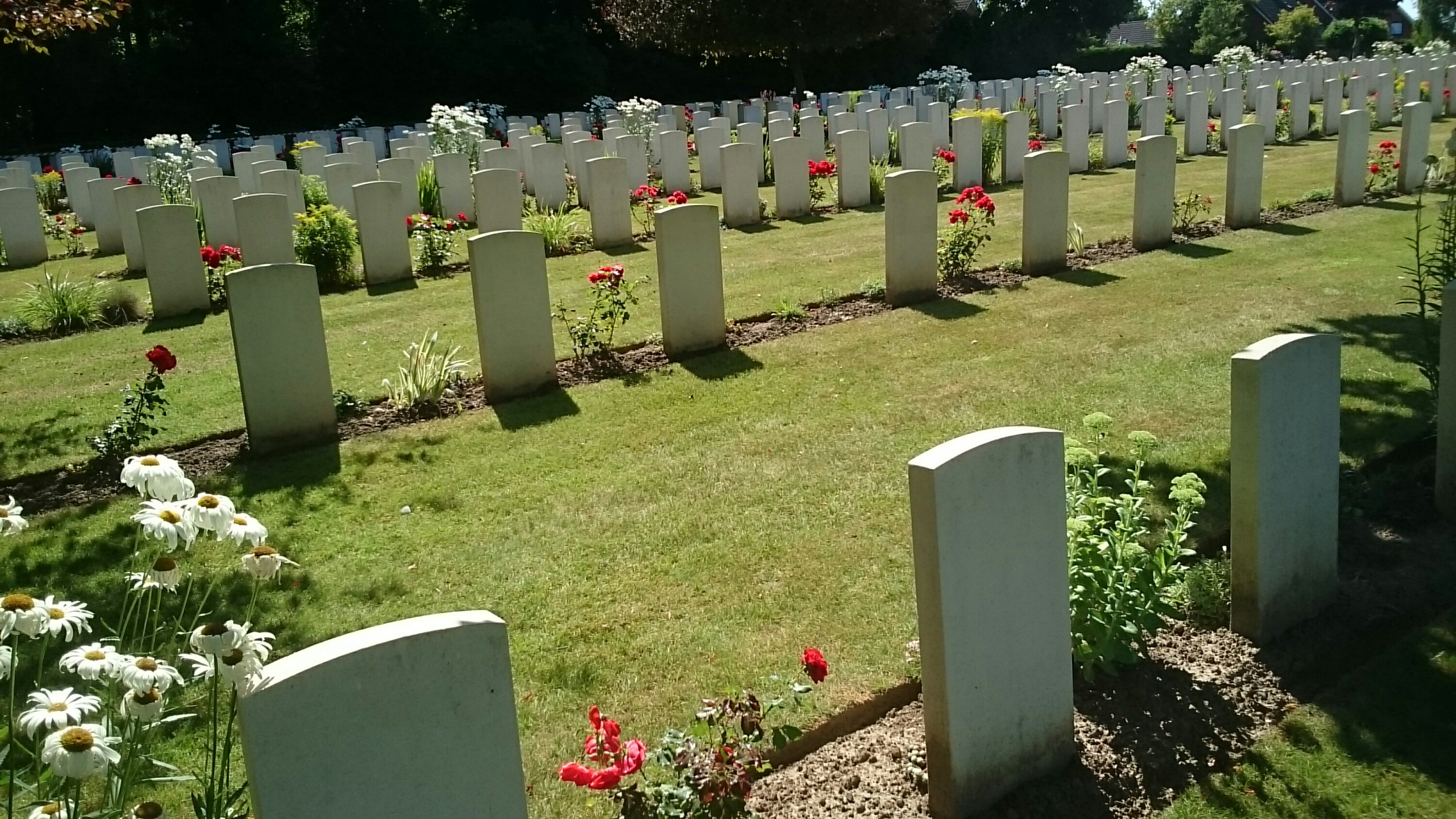
Chapelle-d’Armentières Old Military Cemetery was begun in October 1914 by units of the 6th Division and used until October 1915. The cemetery contains 103 First World War burials, three of them unidentified. The cemetery was designed by W H Cowlishaw.

Two graves of members of the Leinster Regiment

CAPTAIN NORMAN LESLIE


Untitled copy3edit

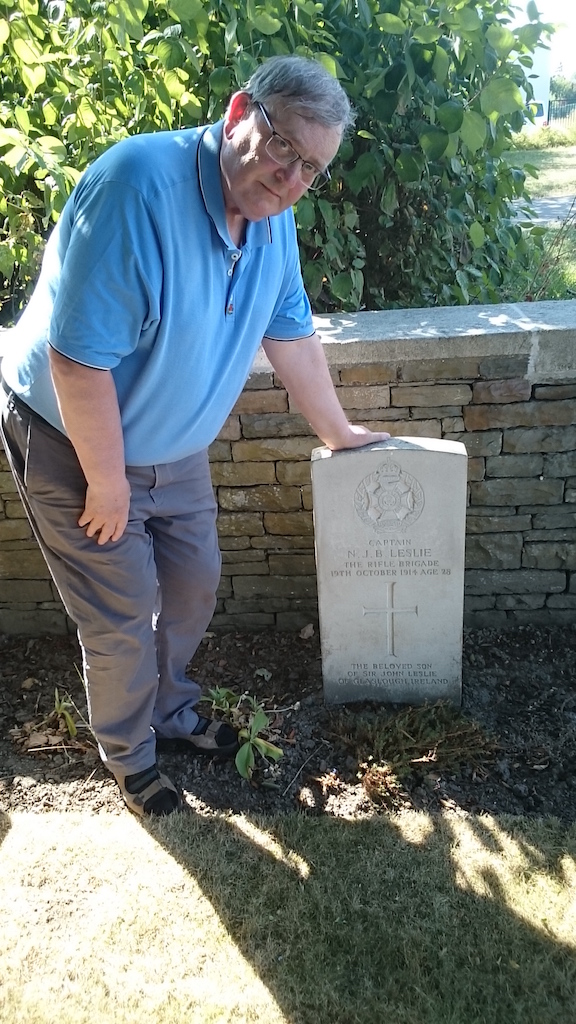
Paying respect at the grave of Captain Norman Leslie from Glaslough

Captain Norman Jerome Beauchamp Leslie from Castle Leslie, Glaslough died in the early stages of World War I. He served in the Third Battalion, the Rifle Brigade. 

Untitled copy4edit

Gravestone of Captain Norman Leslie

He was 28 when he was killed in action near Armentières on October 19th 1914. Mentioned in despatches. His grave is at La Chapelle d’Armentières military cemetery in France, not far from the border with Belgium.

Untitled copy1edit

Cross of Sacrifice 

He was the second son of Sir John Leslie 2nd Bart and Lady Leonie Leslie of Glaslough. His mother was a member of the wealthy Jerome family from New York and her sister Jennie married Lord Randolph Churchill, father of Winston. Rest in Peace.

Untitled copy2edit

Graves of Captain Norman Leslie and Captain George H Hume Kelly

Captain George Harvey Hume Kelly aged 34 of the First Battalion North Staffordshire Regiment died the day after Captain Leslie and is buried alongside him. His mother lived in East Putney, London.

LESLIE_NORMAN_JEROME_BEAUCHAMP

Around the time of the centenary of his death, Iain d’Alton wrote about the life of Captain Leslie in An Irishman’s Diary in The Irish Times. Here is some of the article:

“(Leslie) was educated at Eton and Sandhurst, was commissioned a 2nd Lieutenant in 1905 and joined the prestigious Rifle Brigade in October that year. He served as ADC to Sir John Maxwell (the suppressor of the Easter Rising) in Egypt from September 1908 to April 1910. In 1910, he was the last British officer to fight a duel – with a Turkish diplomat, over said diplomat’s wife. Packed off to India, he became ADC to Lord Carmichael, the governor of Bengal where, again, he had a scandalous romantic entanglement with a married woman.”

“When war broke out, he exhibited an almost unbelievable heartlessness about early casualties, writing to his mother in October 1914: ‘I can’t see that our losses have been heavy at all. What are 2,000 killed and 8,000 wounded out of a force of 80 or 90,000 British who repelled 200 or 300,000 Germans. It’s wonderfully small…only 2½% killed. One would imagine it would be much more like 10%.’ Leslie’s war was about the merit of being honourable. At its outbreak, he wrote to a friend: ‘Let us forget individuals and let us act as one great British unit, mixed and fearless. Some will live and many will die, but count the loss not. It is better far to go out with honour than survive with shame.'”

Less than three months after the War started, on October 18th, 1914, Captain Leslie  “was killed by a German sniper while on reconnaissance at Armentières, near Lille, and was hastily buried. His brother Shane, later a writer of renown, and serving in France, organised for his body to be recoffined in December 1914. He wrote to Leonie that: ‘He lies about a mile behind the trenches occupied by his regiment and within sound of the guns of both armies whose shells pass daily above his head . . . the sky was ripped with the flashes of the guns, while a gigantic German searchlight threw the surrounding countryside into sepulchral relief.’”

“Shane said that when the grave was opened, Norman’s clothes were unsoiled and clean. His hands were white and pink at the edges, and rested on the wound which killed him. To fit him in the new pine coffin, they had to unshoe him. Shane wrote that he did not cry until he saw ‘that lonely pair of boots’ sitting on the wretched earth. Norman, he said, seemed to have borne ‘no trace of suffering or contortion . . . as one who had reached his appointed end with credit and dignity’. Thus he acted his part, even beyond death.”

Lady Leonie Leslie “immediately wanted to visit her son’s grave, but Shane advised against it. ‘Stay at Glaslough where Norman’s memory is vivid in the minds of all whom you meet… stay there where the whole atmosphere yearns for him and where his name will outlive ours.’ But his parents could not stay away forever. Sir John Leslie wrote to his wife in late November 1918, a few days after the Armistice: ‘I should like to go to Armentières in the spring, not in cold dreary winter, and lay spring flowers on our boy’s grave, both of us together. His spirit knows what is going on, and that his life was not lost in vain.'”


KEMMEL CHATEAU CEMETERY

Kemmel Chateau Cemetery

Kemmel Chateau Cemetery outside the village of Kemmel was one of the many such graveyards and memorials designed by the famous British architect Sir Edwin Lutyens, whose work included the Irish National War Memorial Gardens at Islandbridge in Dublin.

Kemmel Chateau Cemetery Cross of Sacrifice


The Chateau itself was north-east of Kemmel village which is on the road between Ieper and Armentières, close to the border with France. The cemetery was established on the north side of the chateau grounds in December 1914. It continued to be used by divisions fighting on the southern sectors of the Belgian front until March 1918, when after fierce fighting involving both Commonwealth and French forces, the village and cemetery fell into German hands in late April.

Kemmel Chateau Cemetery

The cemetery was retaken by the Allies later in 1918, but in the interval it was badly shelled and the old chateau was destroyed. There are now 1,135 Commonwealth burials of the First World War in the CWGC cemetery and 21 from the Second World War.

Kemmel Chateau Cemetery Cross of Sacrifice

Here I found several graves of members of the Royal Dublin killed between November 30th 1916, December including  St Stephen’s Day 1916 and March 8th 1917.


IRISH PEACE PARK MESSINES

This was the second time I visited the WW1 Irish Peace Park at Messines, or Mesen as it is now known in Flemish, not far from Ieper. The first occasion was to commemorate the centenary of the start of the Battle of Messines on 7th June 2017.

With An Taoiseach Enda Kenny at the Irish Peace Park on June 7th 2017 for the Battle of Messines centenary commemoration

An Taoiseach Enda Kenny TD and Britain’s Prince William joined Princess Astrid of Belgium and Lord Dunlop, Parliamentary Under-Secretary of State at the Northern Ireland Office to honour the soldiers who fought in the battle. They laid wreaths at the foot of the Round Tower memorial, before meeting invited guests including descendants of those who fought at the Battle.

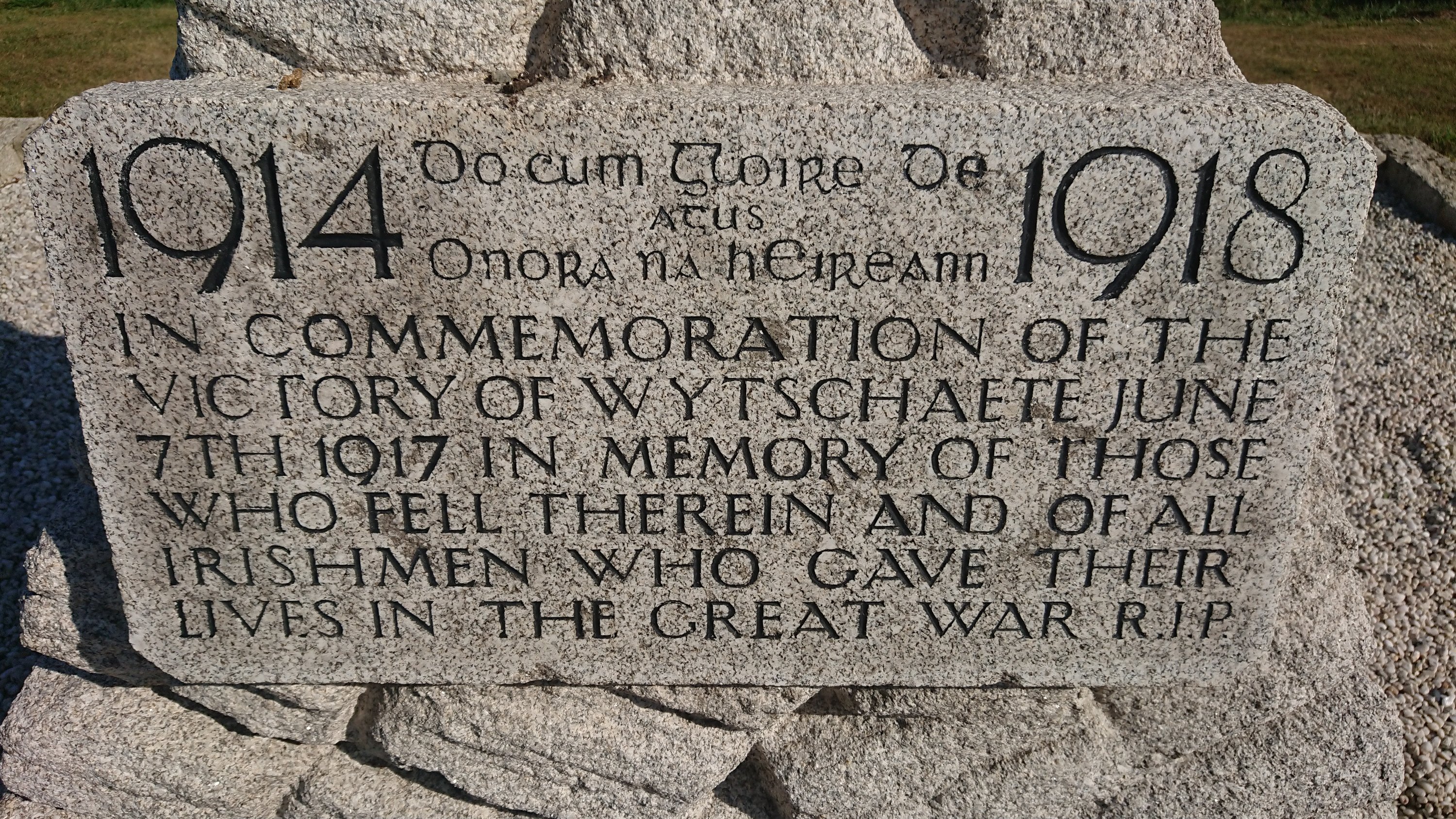
The successful Allied offensive on June 7th 1917 was the first occasion the 36th Ulster and 16th Irish divisions fought together on the front line. The two divisions predominantly comprised men who were on opposing sides of the great political upheaval back in Ireland around whether the country should be granted self-governance from Westminster.

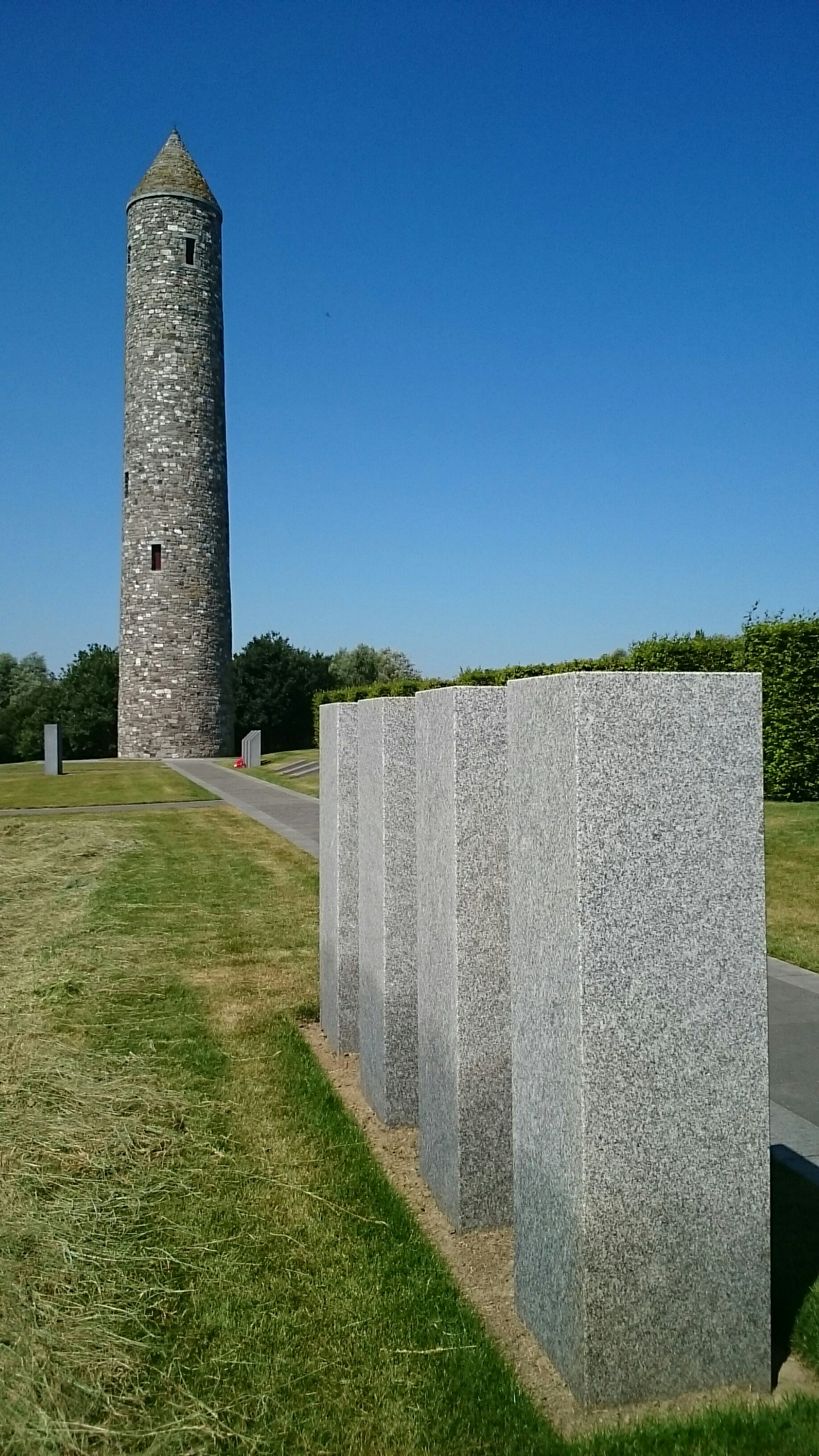
The Peace Park is dominated by a replica Irish round tower was intended as a symbol of reconciliation to bring together loyalists and nationalists, Protestants and Catholics, particularly from a younger generation in Northern Ireland and the Republic.

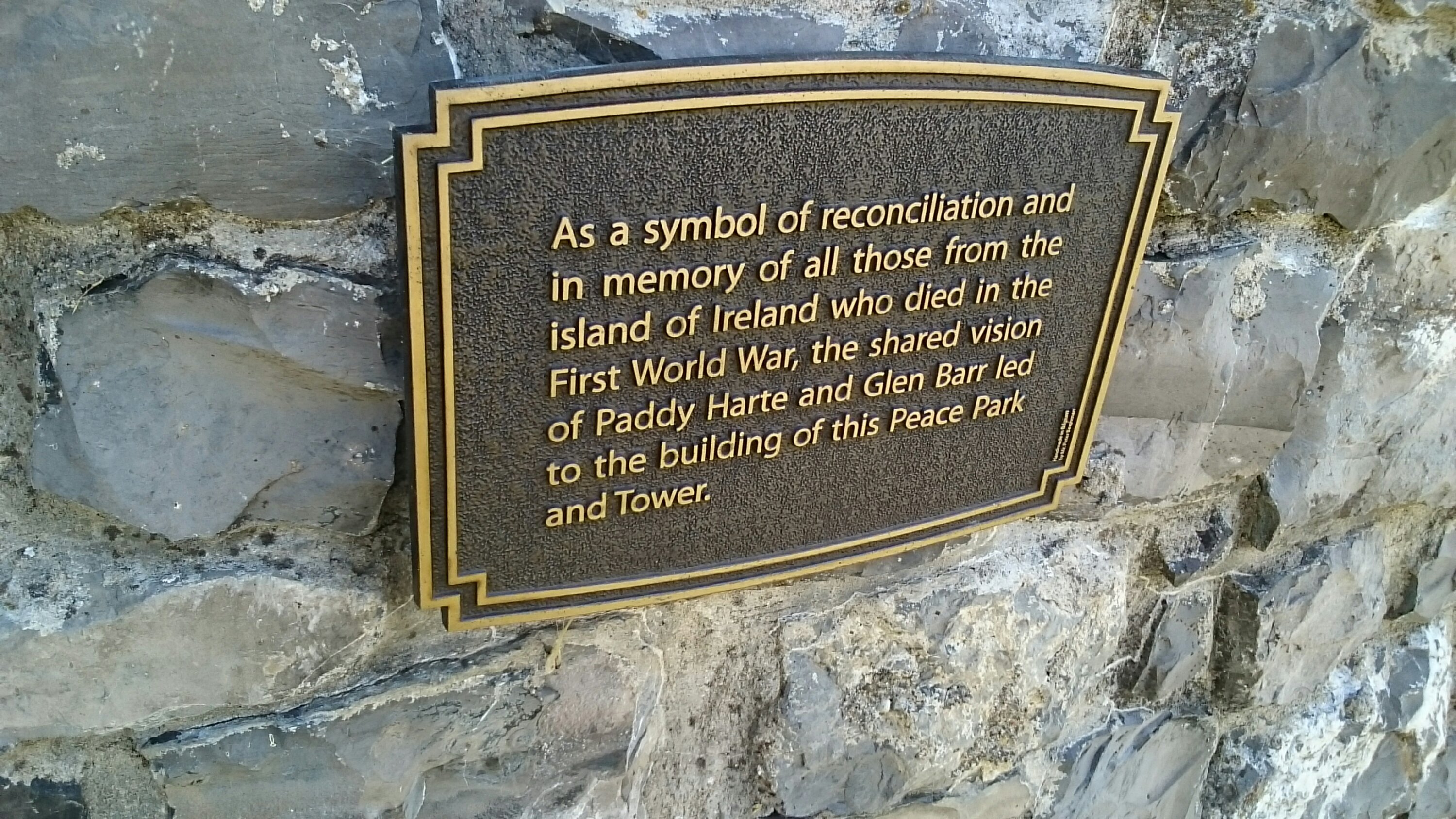
It was the brainchild of the late Paddy Harte from Co. Donegal and Glen Barr, a former loyalist paramilitary leader from Derry. There is a plaque remembering their joint efforts on the wall beside the exit.

Plaque remembering Paddy Harte and Glen Barr whose vision of a project of reconciliation came to fruition in the Peace Park

Round Tower at the Irish Peace Park

The Peace Tower is dedicated to all those from the island of Ireland who fought and died in the First World War 1914-18. It was erected by ‘a Journey of Reconciliation’ Trust, with the support of local people from Messines. On Remembrance Day 11th November 1998, eighty years after war came to an end, President McAleese unveiled a plaque in the presence of Britain’s Queen Elizabeth II and His Majesty King Albert II of Belgium.

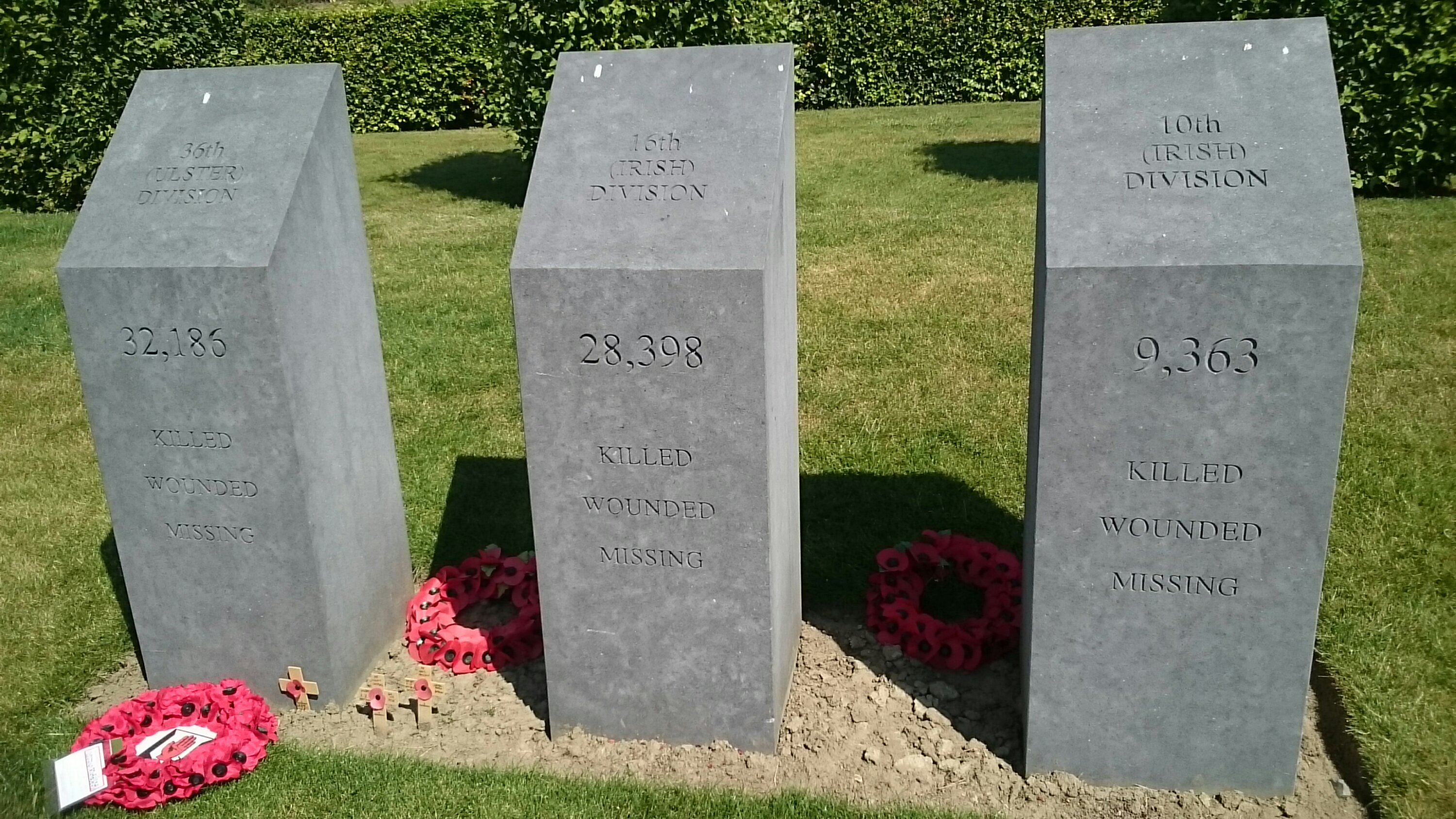
Details of the casualties suffered by the three Divisions from the island of Ireland

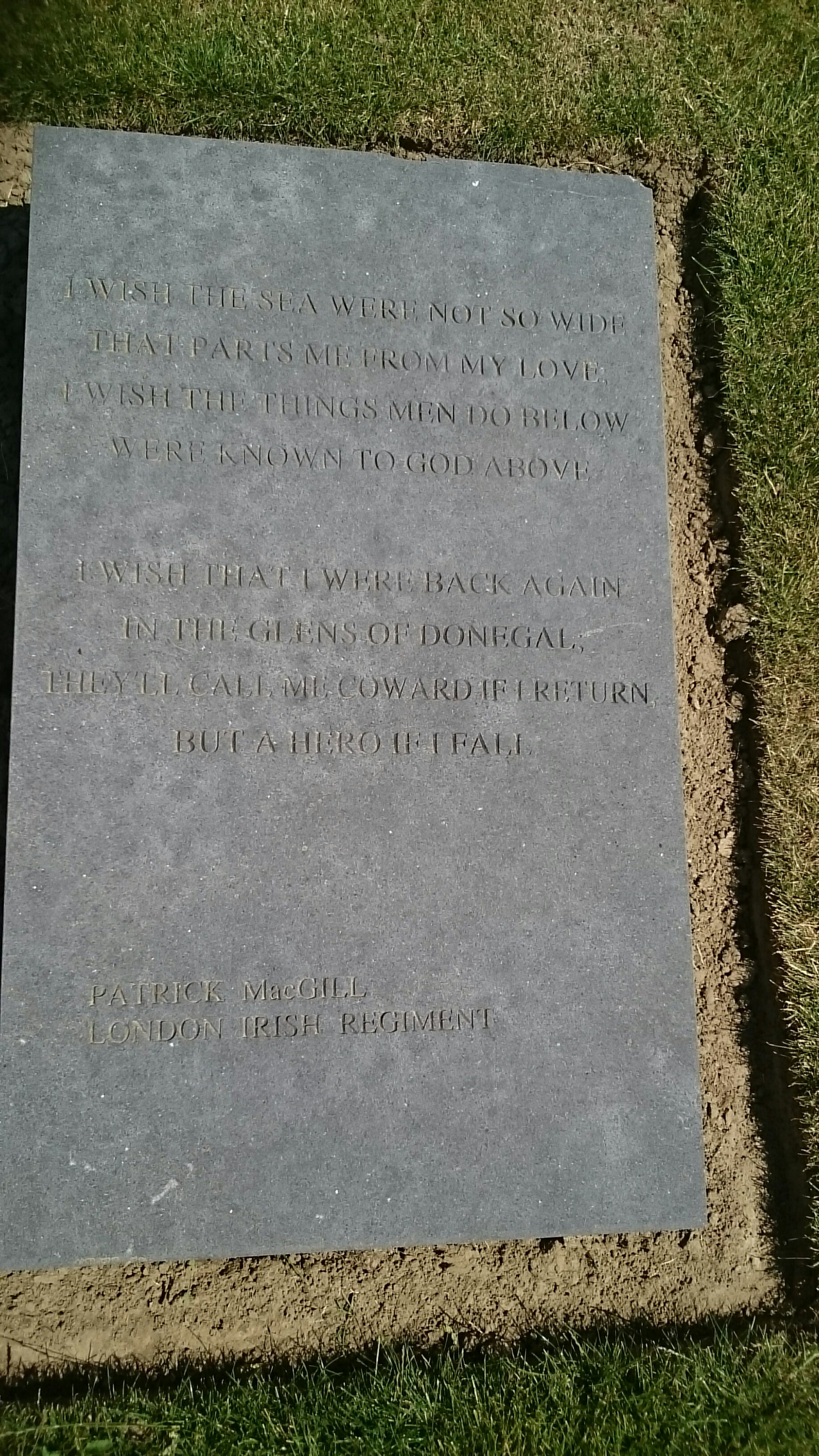
The words of ‘Navvy poet’ and soldier Patrick MacGill from Donegal

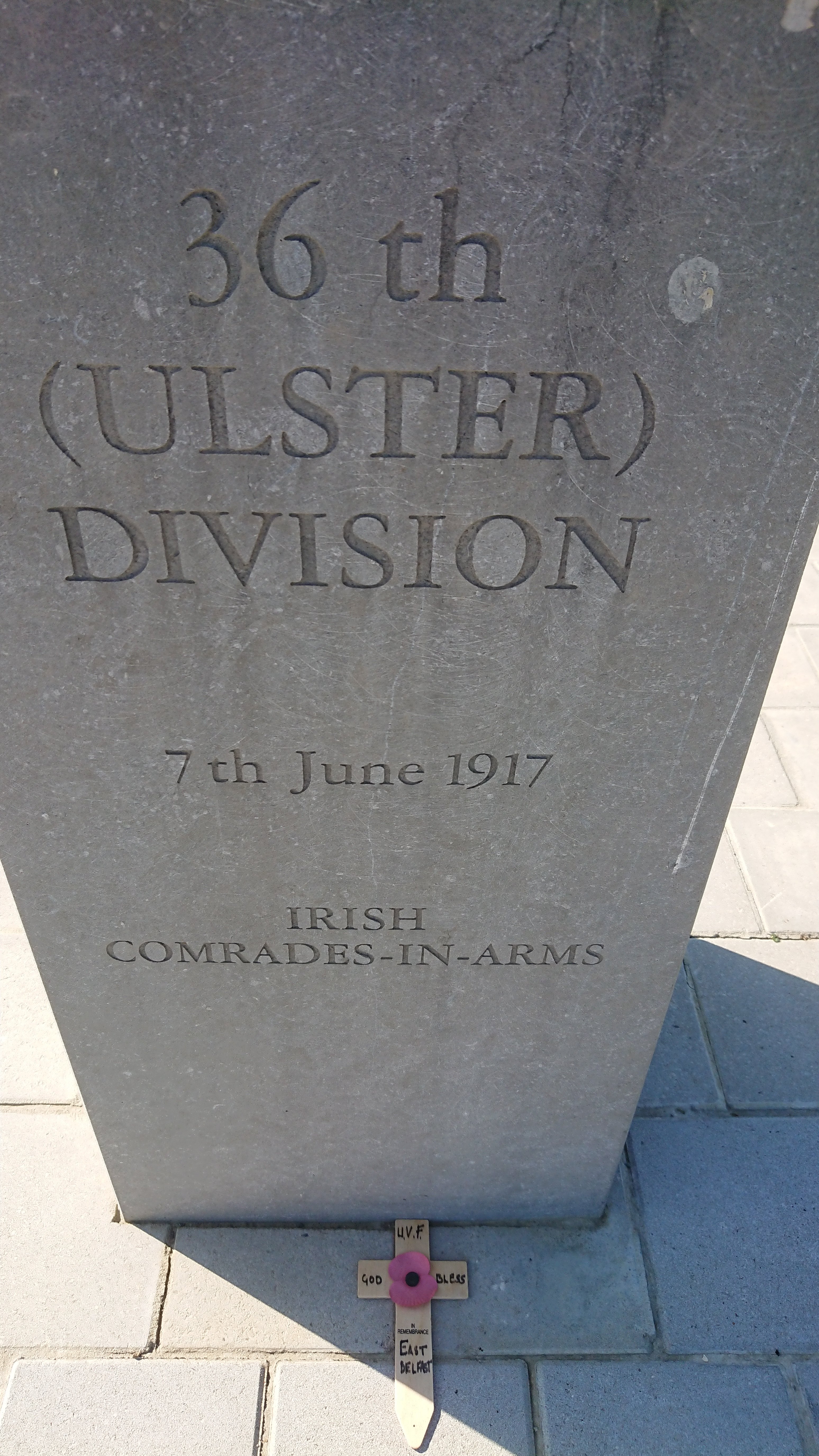
In memory of the 36th (Ulster) Division

Stone memorials in the grounds of the Irish Peace Park

LOCRE HOSPICE CEMETERY

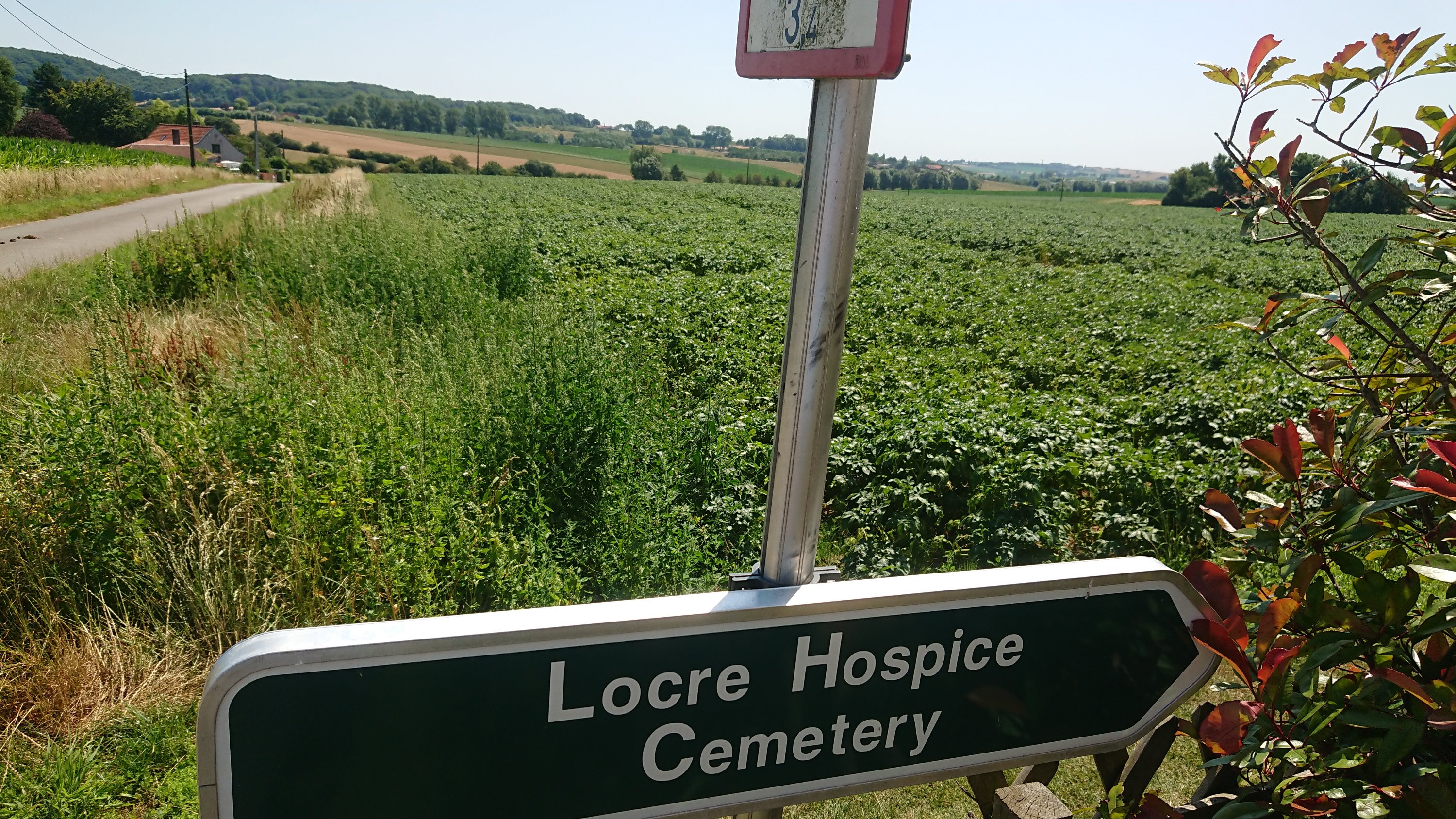
Signpost for Locre Hospice Cemetery CWGC

At Locre Hospice Cemetery maintained by the CWGC near the village of Locre (Loker as it is known in Flemish) there are some graves of soldiers from the Royal Irish Regiment. The grave of Major Willie Redmond was left outside the Cemetery close to the boundary wall in the corner of a field where it was cared for over many years by a nun from the nearby convent.

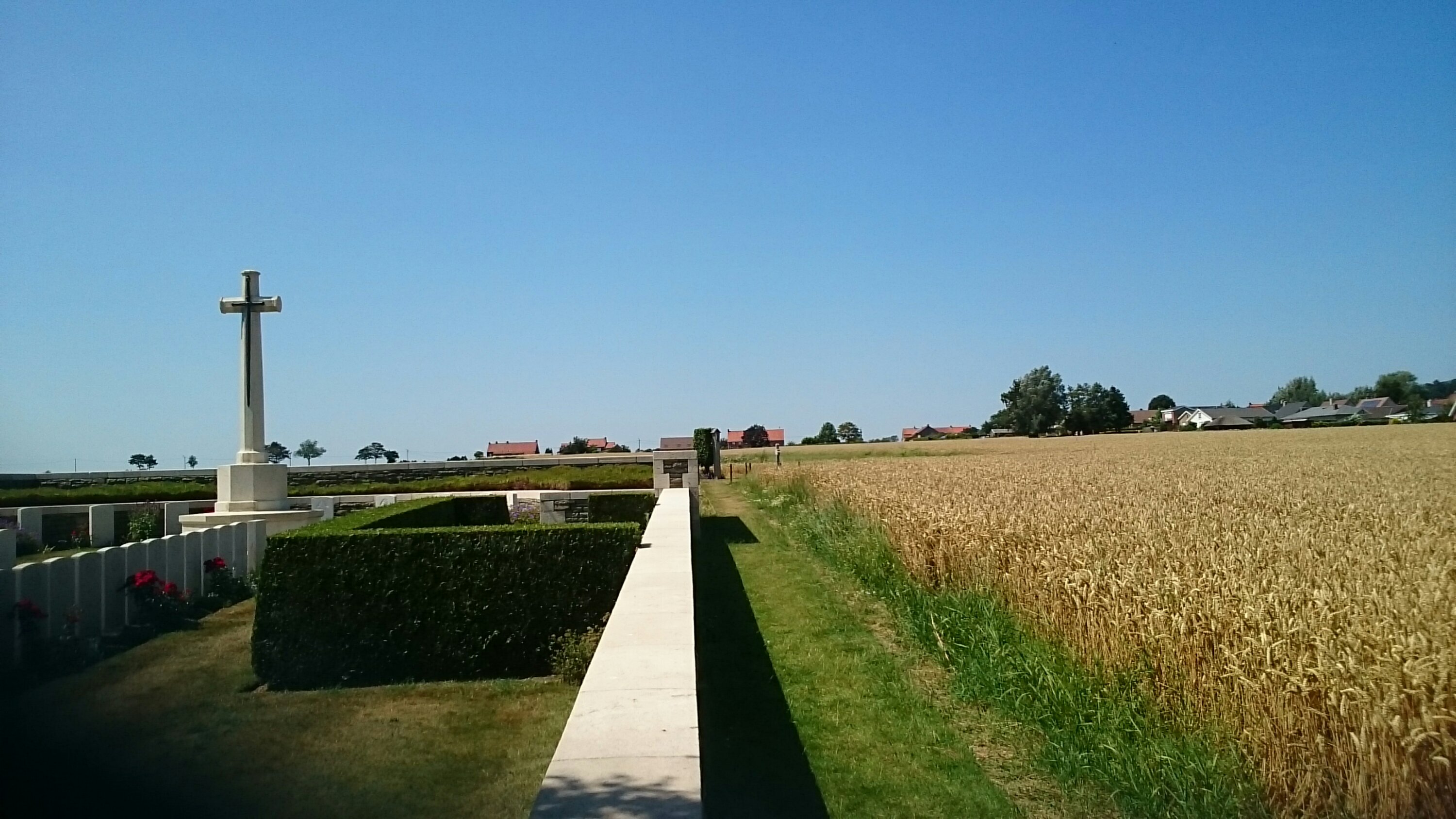
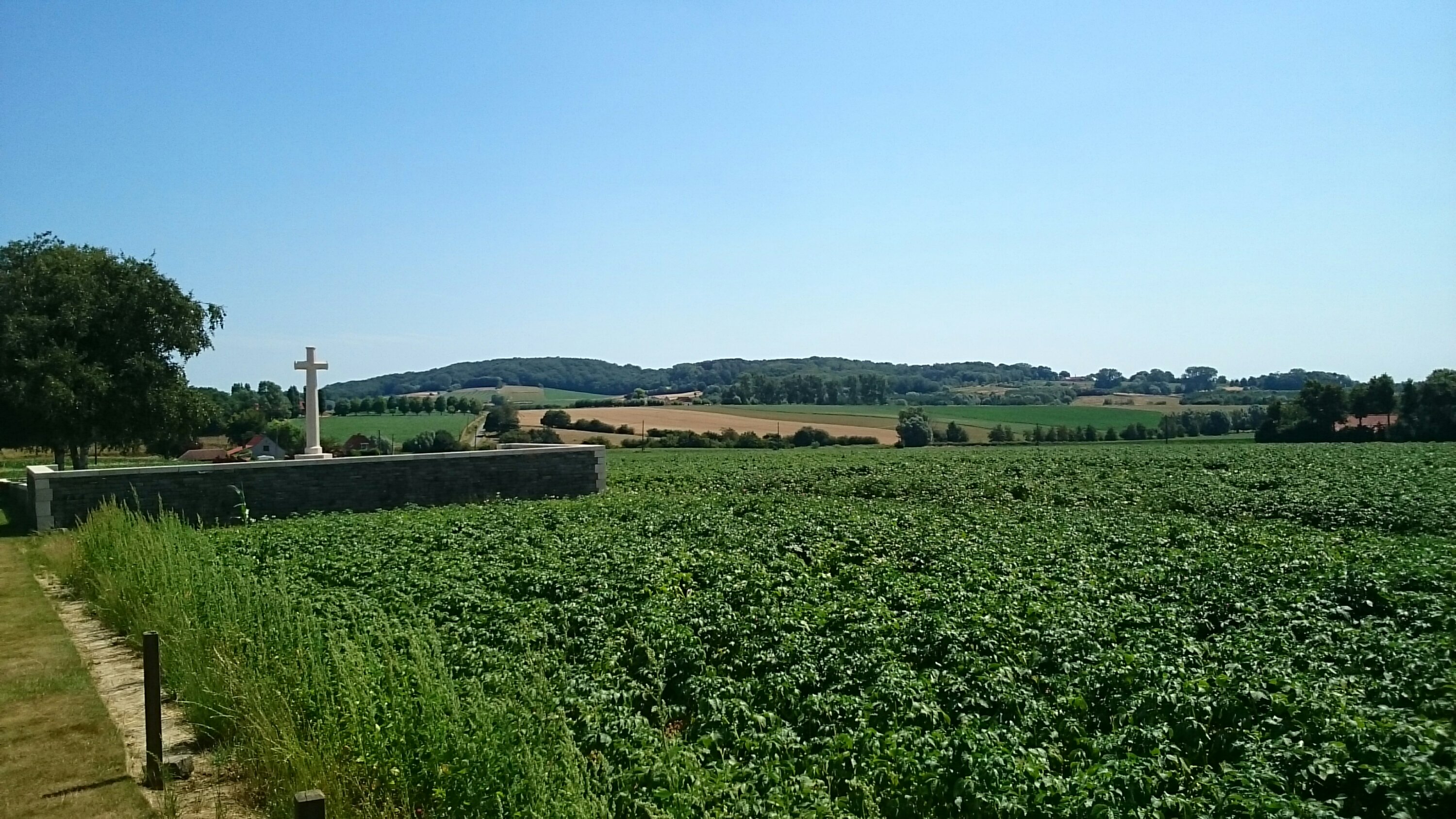
Locre Hospice Cemetery with grave of Major Redmond beside wall in middle of picture

Private T Price (4692) from the 2nd Battalion Royal Irish Regiment is buried here. He was wounded and died on 7th June 1917, the same day as Major Willie Redmond of the same Regiment on the first day of the Battle of Messines. He came from Carrick-on-Suir, Co. Tipperary.

Grave of Pte T. Price died 7th June 1917

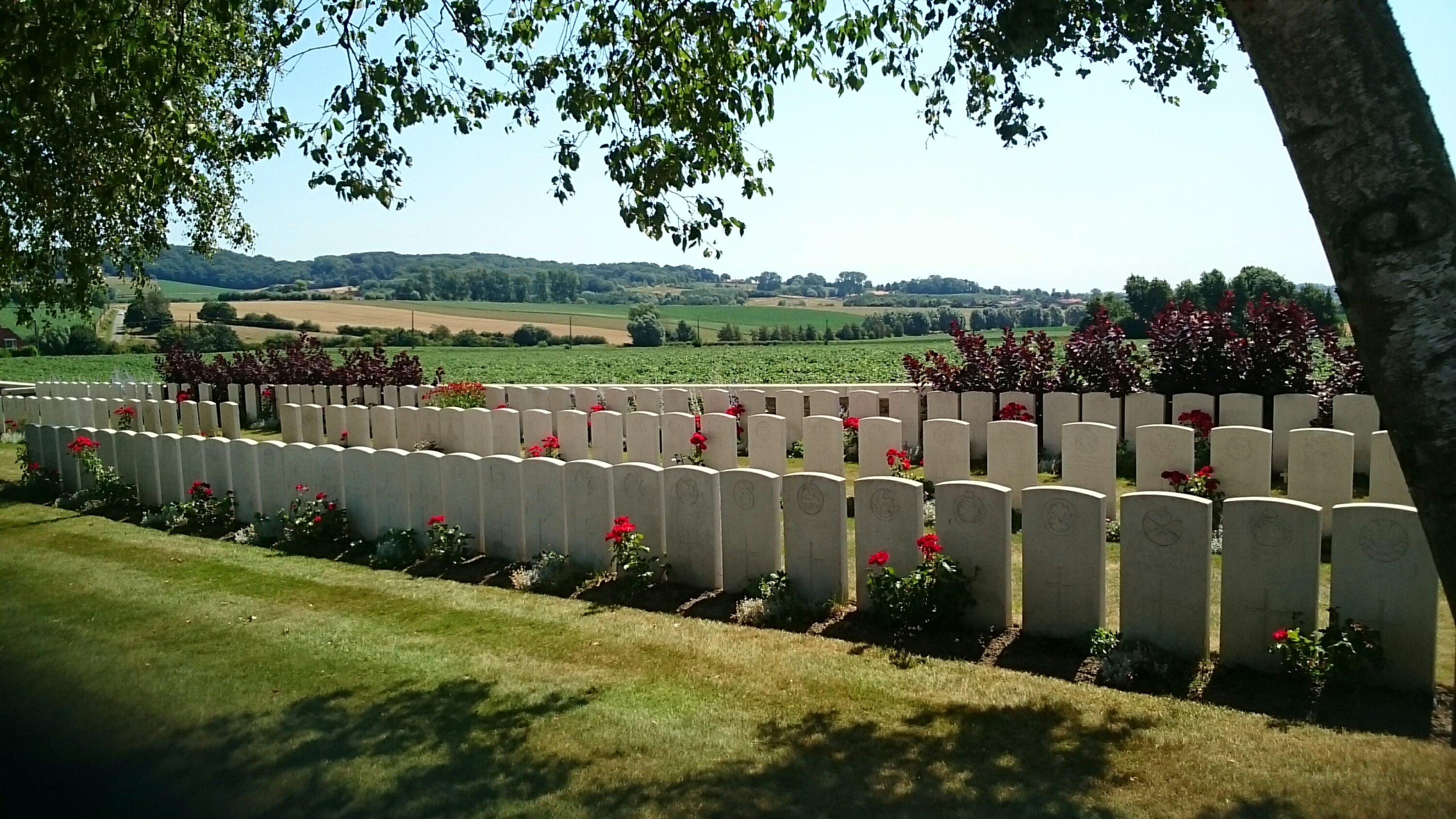
Graves at Locre Hospice Cemetery

Loker was in Allied hands during the greater part of the Great War, and field ambulances were stationed in the Convent of St Antoine. The village changed hands several times between 25th and 30th April 1918, when it was recaptured by the French. The hospice, or convent, was the scene of severe fighting on 20th May, but was not retaken until the first week in July.

The Hospice Cemetery was begun in June 1917 by field ambulances and fighting units, and was used until April 1918. After the Armistice four graves were transferred to it from the garden of the Hospice, which was ultimately rebuilt. The cemetery now contains 244 Commonwealth burials and commemorations of the First World War. Twelve of the burials are unidentified and ten graves destroyed by shellfire are now represented by special memorials. The fourteen Second World War burials date from late May 1940 and the withdrawal of the British Expeditionary Force to Dunkirk ahead of the German advance. There are also two German burials in the cemetery. The cemetery was designed by W H Cowlishaw.

A cross, marking the grave of Major W H K (Willie) Redmond, Member of Parliament for Wexford, stands 100 meters along a grass track on the northern side of the cemetery. Major Redmond was mortally wounded at the battle of Messines and was buried in the Convent garden of the Locre hospice. His widow erected this memorial to mark his grave. Until the late 1950’s the grave was maintained by a Sister from the (new) Locre hospice. In the 1990’s the land was purchased by the Belgian State and is now maintained by the Commonwealth War Graves Commission.

MAJOR WILLIE REDMOND

Major Willie Redmond of the Royal Irish Regiment was killed on the first day of the Battle of Messiness on 7th June 1917. He is buried at Locre (Loker) but in a separate grave alongside the British military cemetery at Locre Hospice.

The grave is marked by a stone cross, paid for by his family from Wexford. Someone has left a Wexford flag at the foot of the memorial as a reminder of the county of his birth.

Beside the grave there is a wooden structure containing a statue of Our Lady and a repository where the visitors’ book is kept.

dsc_25433704636949252974447.jpg

Locre Hospice Cemetery(CWGC) is beside the site where Major Redmond is buried

The following details about Major Redmond are taken from an article in Irish Legal News 05/04/19 by Seosamh Gráinséir:

“A famous Irish nationalist, William Hoey Kearney Redmond came from a (Catholic gentry) family of parliamentarians. His father, William Archer Redmond, was a Member of Parliament in Westminster for the Home Rule Party. His older brother, John Edward Redmond, was a Member of Parliament and leader of the Irish Parliamentary Party.

On 24th March 1884, Willie himself was sworn in as a new MP for his father’s old constituency, Wexford Borough, at the age of twenty-two. During his thirty-three years as an MP, Willie went on to represent Fermanagh North for seven years after the Wexford Borough constituency was abolished, and then East Clare for 25 years. Willie was succeeded in that constituency by Éamon de Valera, who won the by-election triggered by Willie’s death.

Like his father and brother, Willie was a passionate supporter of Home Rule, which he said was necessary because the Union “has depopulated our country, has fostered sectarian strife, has destroyed our industries and ruined our liberties”. An ardent opponent to landlords, Willie had been imprisoned a number of times for his work with the Land League agitation (Denman 1995).

Having served with the Royal Irish Regiment for a couple of years after finishing school, Willie was described as having always been a “soldier at heart”, the “spirit of comradeship and discipline” having appealed to him. When the Great War broke out in August 1914, he had already been involved with the Irish Volunteers. But he believed that if Germany won the war, Ireland was endangered too. Intent on joining the Royal Irish Regiment again and troubled by the idea of recruiting for the war effort without joining the fight himself, he wrote: “I can’t stand asking fellows to go and not offer myself”.

In this vein, Willie told the Irish Volunteers assembled outside the Imperial Hotel in Cork in November 1914: ‘I speak as a man who bears the name of a relation who was hanged in Wexford in ‘98 – William Kearney. I speak as a man with all the poor ability at his command has fought the battle for self-government for Ireland. Since the time – now thirty-two years ago – when I lay in Kilmainham Prison with Parnell. No man who is honest can doubt the single-minded desire of myself and men like me to do what is right for Ireland. And when it comes to the question – as it may come – of asking young Irishmen to go abroad and fight this battle, when I am personally convinced that the battle of Ireland is to be fought where many Irishmen now are – in Flanders and France – old as I am, and grey as are my hairs, I will say: ‘Don’t go, but come with me!’”

(Terence Denman, A Lonely Grave: The Life and Death of William Redmond, Irish Academic Press 1995).

House of Commons WWI Memorial with name of Major W. Redmond MP

Redmond is commemorated on Panel 8 of the Parliamentary War Memorial in Westminster Hall, one of 22 MPs who died during World War I to be named there. He is one of 19 MPs who fell in the war who are commemorated by heraldic shields in the Commons Chamber. A further act of commemoration came with the unveiling in 1932 of a manuscript-style illuminated book of remembrance for the House of Commons, which includes a short biographical account of the life and death of Redmond.

The people of Loker continue to attend to his symbolic grave with great respect, organising Commemorations, the last in 1967 (organised by a Catholic priest Father Debevere) and in 1997 (organised by Erwin Ureel), refusing to allow the grave to be moved. Redmond’s Bar, an Irish pub in nearby Loker, is named after him. I enjoyed a nice bottle of local Belgian beer (Hommelbier from Poperinge) that went down well with a mackerel salad and chips.

In Wexford town there is a bust of him by Oliver Sheppard in Redmond Park which was formally opened as a memorial to him in 1931 in the presence of a large crowd including many of his old friends and comrades and political representatives from all parts of Ireland. It was re-launched by the Wexford Borough Council in 2002.

An official wreath laying ceremony took place at Redmond’s grave on 19th December 2013, when the Taoiseach Enda Kenny TD and British Prime Minister David Cameron MP paid tribute to him. Enda Kenny reflected: “The thought crossed my mind standing at the grave of Willie Redmond, that was why we have a European Union and why I’m attending a European Council” (Lise Hand, The Irish Independent 19/12/2013).

LONE TREE CEMETERY

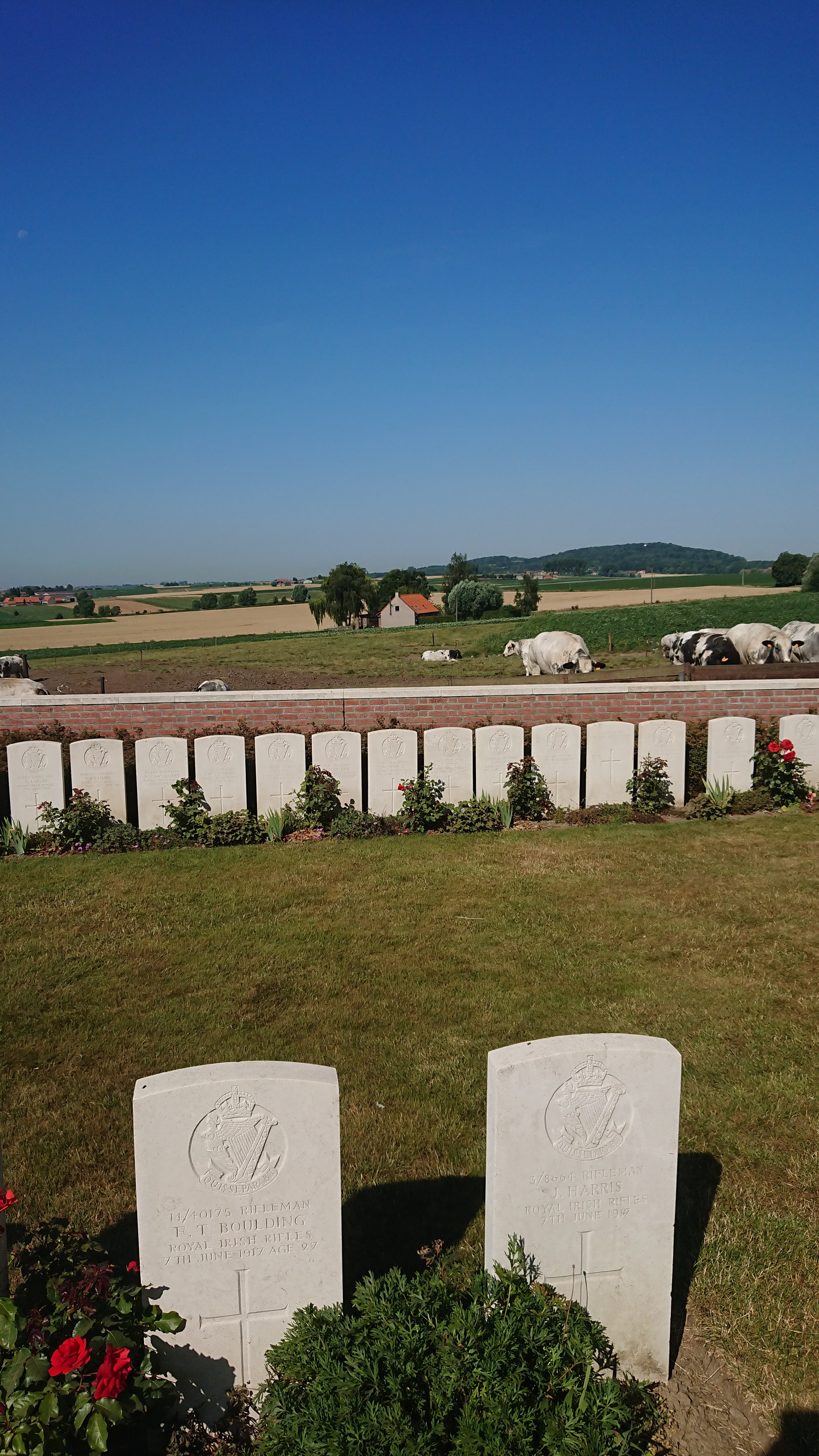
Graves of soldiers from the Royal Irish Rifles at Lone Tree Cemetery

Lone Tree Cemetery near Wijtschaete is close to the Lone Tree Crater, one of nineteen that were made immediately before the infantry attack at the Battle of Messines in June 1917. Nearly all the graves in the cemetery are those of soldiers who fell on the first day of the Battle.

The Cemetery is maintained by the CWGC and contains 88 First World War burials. The cemetery was designed by J R Truelove.

Nearly all the graves are of soldiers from the Royal Irish Rifles: Rifleman Thomas Boulding (14th Bn) died Thursday 7th June 1917 aged 27. He was from Ashford in Kent. Rifleman J Harris (8th Bn) who died the same day is listed as having a sister who lived at Upper Dorset Street in Dublin.
Some of them were killed by the explosion of the large Spanbroekmolen mine (which was blown around 15 seconds later than planned) as they advanced.

The Spanbroekmolen Crater, also known as the Pool of Peace, is the largest and most imposing mine crater in the Westhoek area. It was created by the explosion of one of the 19 deep mines detonated at the opening of the Battle.

In 1914 Spanbroekmolen was the site of a windmill (“molen” is the Dutch word for “mill”). At the end of the First Battle of Ypres in November 1914 the German Front Line was established in this location on the high ground of the Messines Ridge. Between then and the start of June 1917, the Germans spent a year and a half developing well-established positions with concrete bunkers and strong defensive positions.
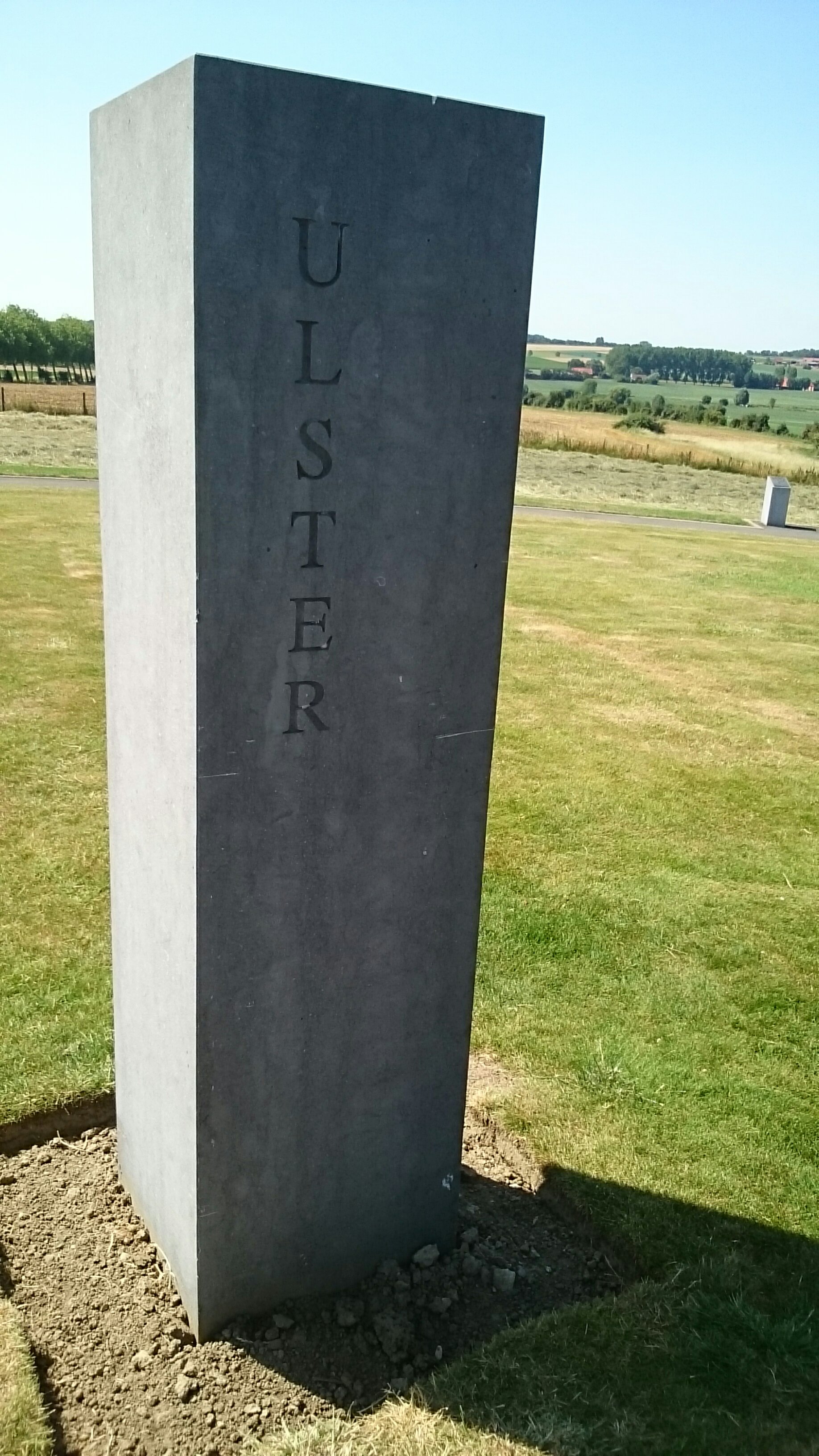
The mine at Spanbroekmoelen was started by 171st Tunneling Company, Royal Engineers, on 1st January. Six months later the mine was finished. To celebrate the mine’s completion two officers made their way into the chamber with four bottles of champagne and drinking glasses. The main charge for the mine was made up of 50 LB (pound) boxes of ammonol, totalling 90,000 lbs (pounds). The main charge was finally completed on 28thJune 1916 and officially completed, according to the War Diary, on 1st July 1916.

A branch gallery had also been driven in the direction of Rag Point, which was a German position about three quarters of a mile south of the Spanbroekmolen position. In February 1917 the Germans dug a tunnel underneath the British gallery. They set explosive charges to explode two camouflets. As a result the right hand branch of the British gallery was damaged and it was abandoned.

On 3rd March 1917 the Germans blew another camouflet which damaged about 900 feet of the main gallery. It broke the connection for the electric detonator leads for the explosive charge which had been lying silently in position under the Spanbroekmolen position since June the previous year.

A new gallery had to be mined to by-pass the damaged tunnel and the detonator leads had to be rerouted through this new tunnel to the chamber and explosives. There was serious difficulty with gas while the new tunnel was being dug. The mine was to be ready to blow at the launch of the major attack on the German lines on the Messines Ridge in June.

In a race against time the new by-pass gallery was completed and tamped. The detonating charge, consisting of 500 lbs (pounds) of ammonal and 500 lbs (pounds) of dynamite was laid on 1 June. The mine was to be fired by power and alternative firing by exploders was arranged in case the electric circuits did not function. The mine was finally completed on the night of 6th June 1917. Major Hudspeth, commander of the 171st Tunnelling Company, sent a message to the headquarters of the 36th (Ulster) Division that night. This division was to attack the German position at Spanbroekmolen at the start of the British attack set for 03.10 hours the following morning, 7th June. Major Hudspeth’s message confirmed that it was “almost certain” that the mine would blow the next morning. The commanders of the 36th (Ulster) Division could only wait in anticipation to see if it did.

The dimensions and details of the Spanbroekmolen mine are as follows:

  • depth of charge: 88 feet (26 metres)
  • diameter at ground level: 250 feet (76 metres)
  • width of the rim: 90 feet (27 metres)
  • depth below ground level: 40 feet (12 metres)
  • height of rim: 13 feet (4 metres)
  • diameter of complete obliteration: 430 feet (131 metres)
  • length of gallery: 1,710 feet (521 metres)

The crater has filled with water as a result of the high water table and the clay soil in the area. mine crater was purchased for Toc H by Lord Wakefield in the 1920s to be preserved as a memorial site on the Ypres Salient battlefields. The mine crater has subsequently been named the “Pool of Peace” and is still the property of Toc H in Poperinge (see separate article).

FLANDERS DAY TWO

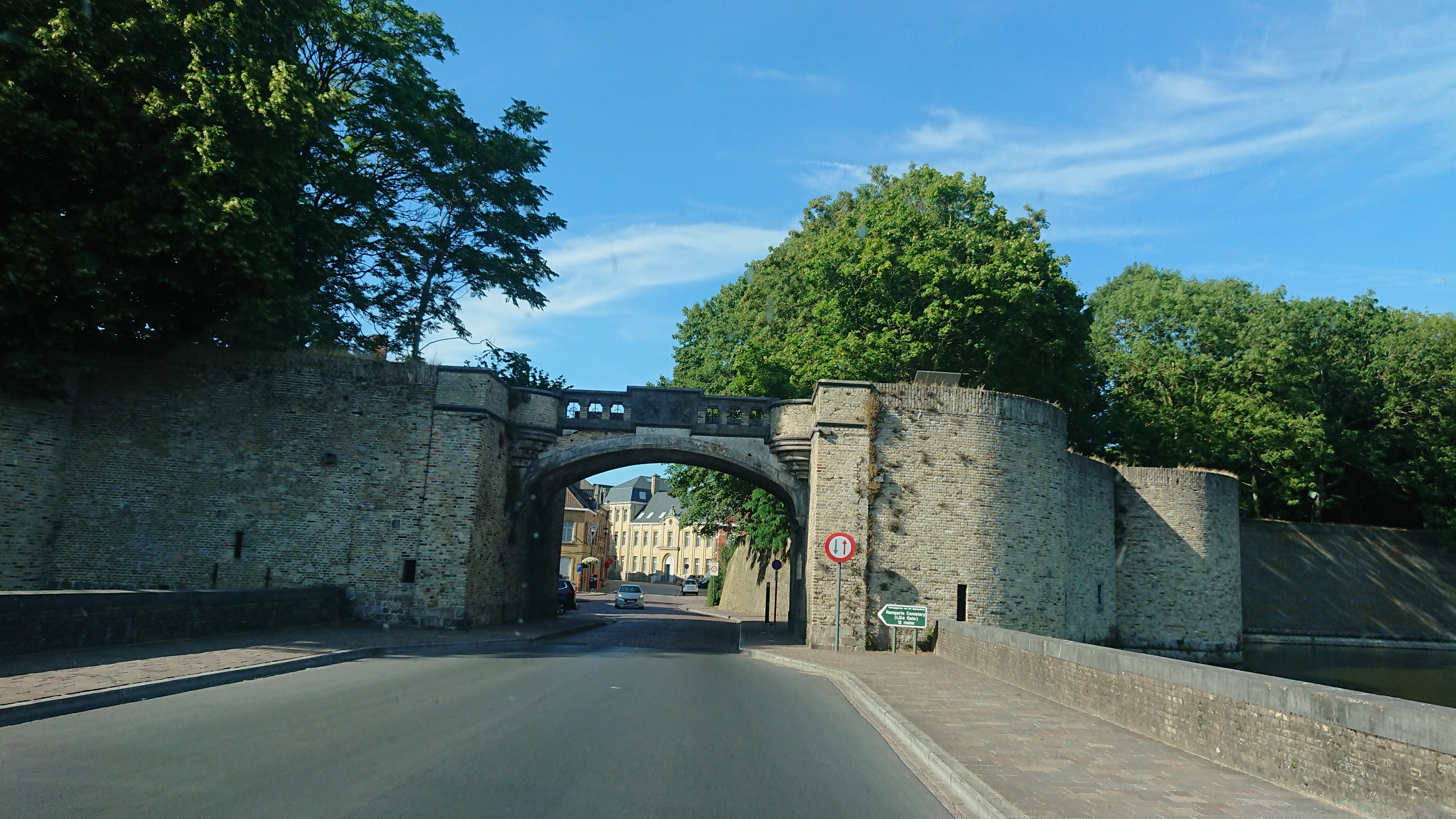
Lille Gate in Ieper (Ypres)

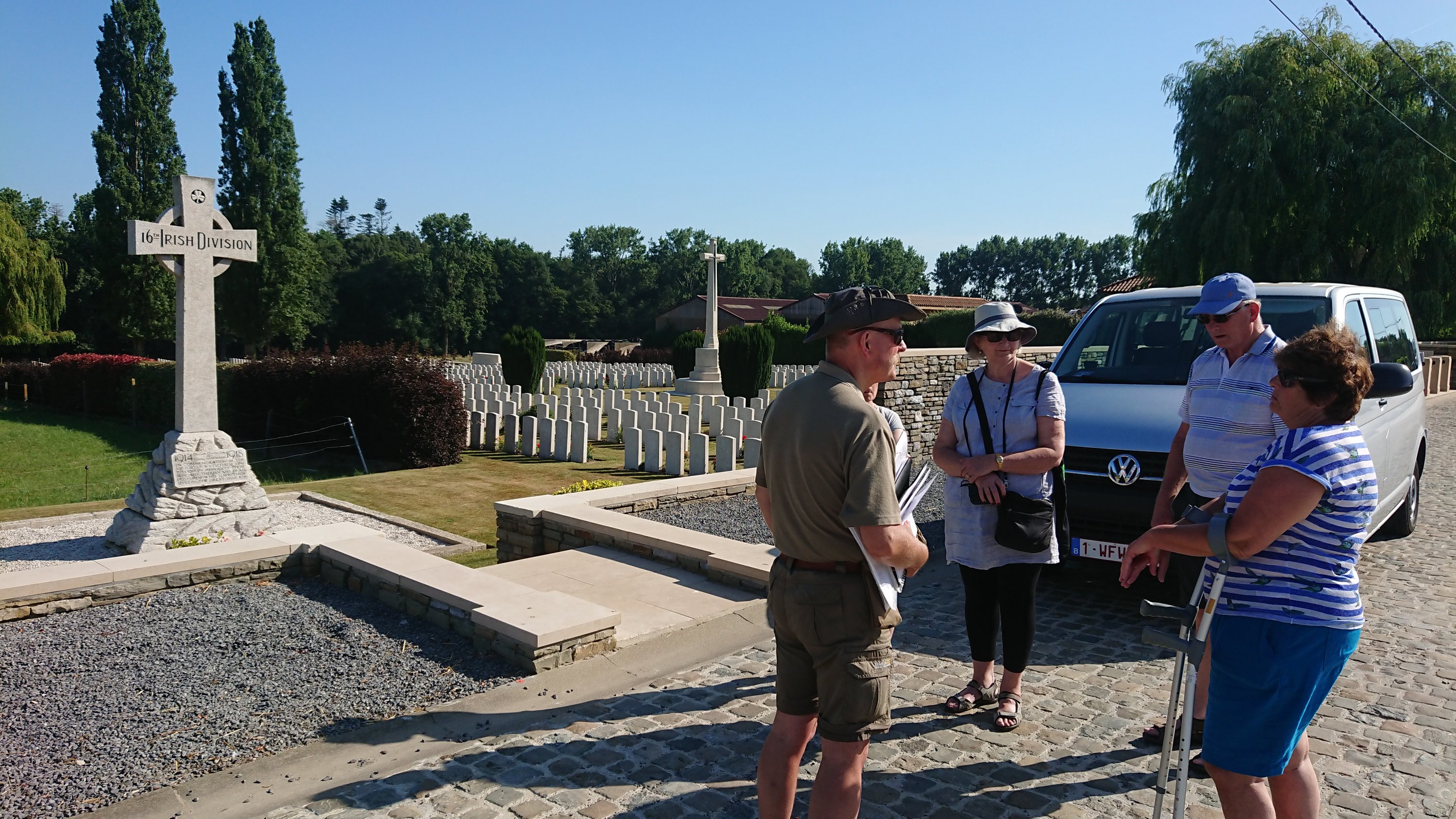
Leaving Ieper on the second day of the visit to Flanders, the group headed to Wijtschaete a village a few kilometres away to learn about the role of the 16th Irish Division in the Battle of Messines Ridge on 7th June 1917.

Group at 16th Irish Division Celtic Cross

MESSINES RIDGE, June 1917
The largely Catholic 16th (Irish) and mainly Protestant 36th (Ulster) Divisions went into battle together to take the Belgian village of Wijtschaete in the well-planned attack on the Messines Ridge. General Plumer had a scaled model of the Ridge made so troops could see what lay ahead. He had mines dug for explosives beneath German defences. About three million shells bombarded Messines for over a week.

dsc_24871888457686811490487.jpg

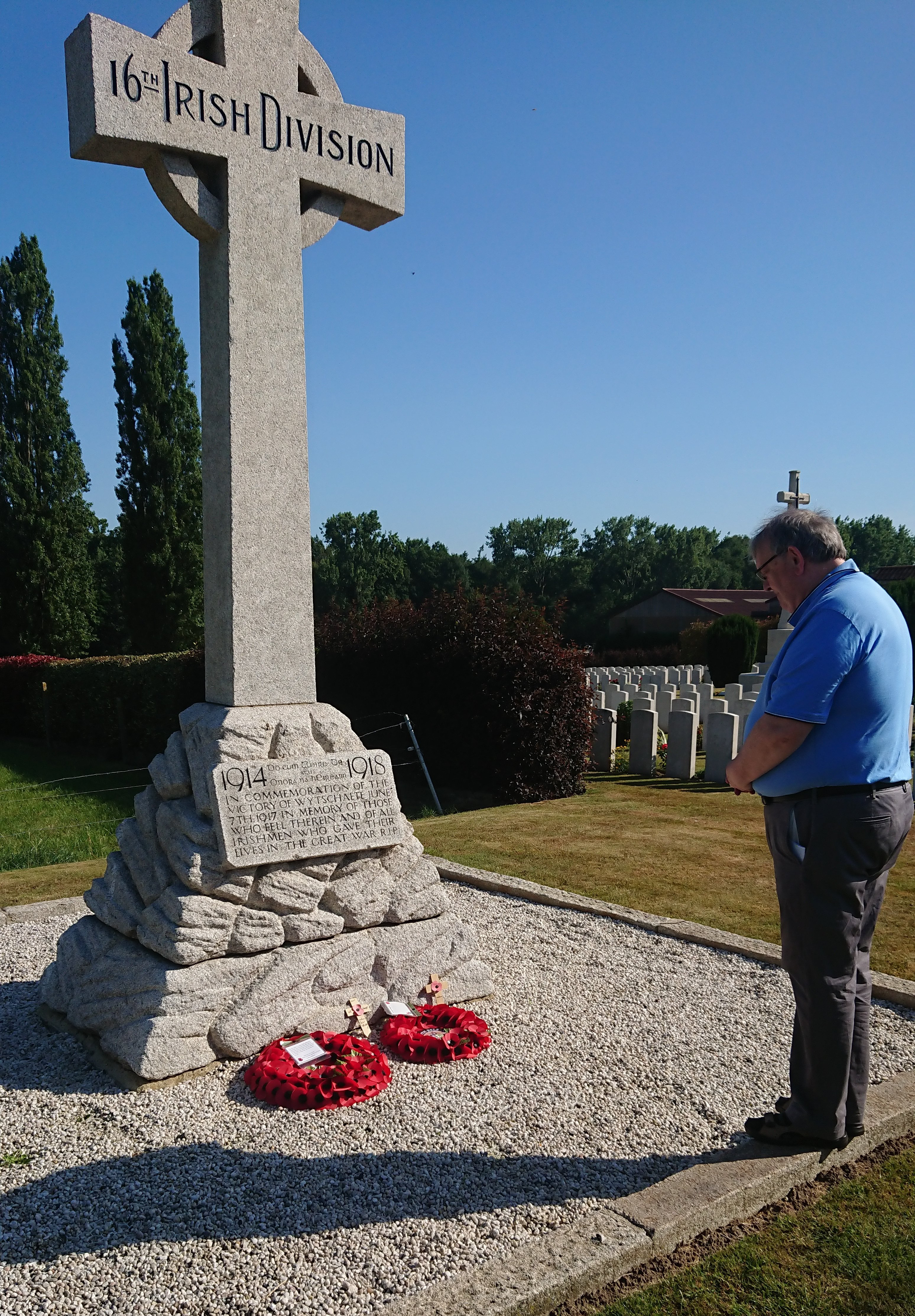
Paying my respects at 16th Irish Division Memorial Cross

Inscription at foot of the Cross

Memorial stone for 36th Ulster Division opposite 16th Irish Division Cross

dsc_24838301481994874581123.jpg

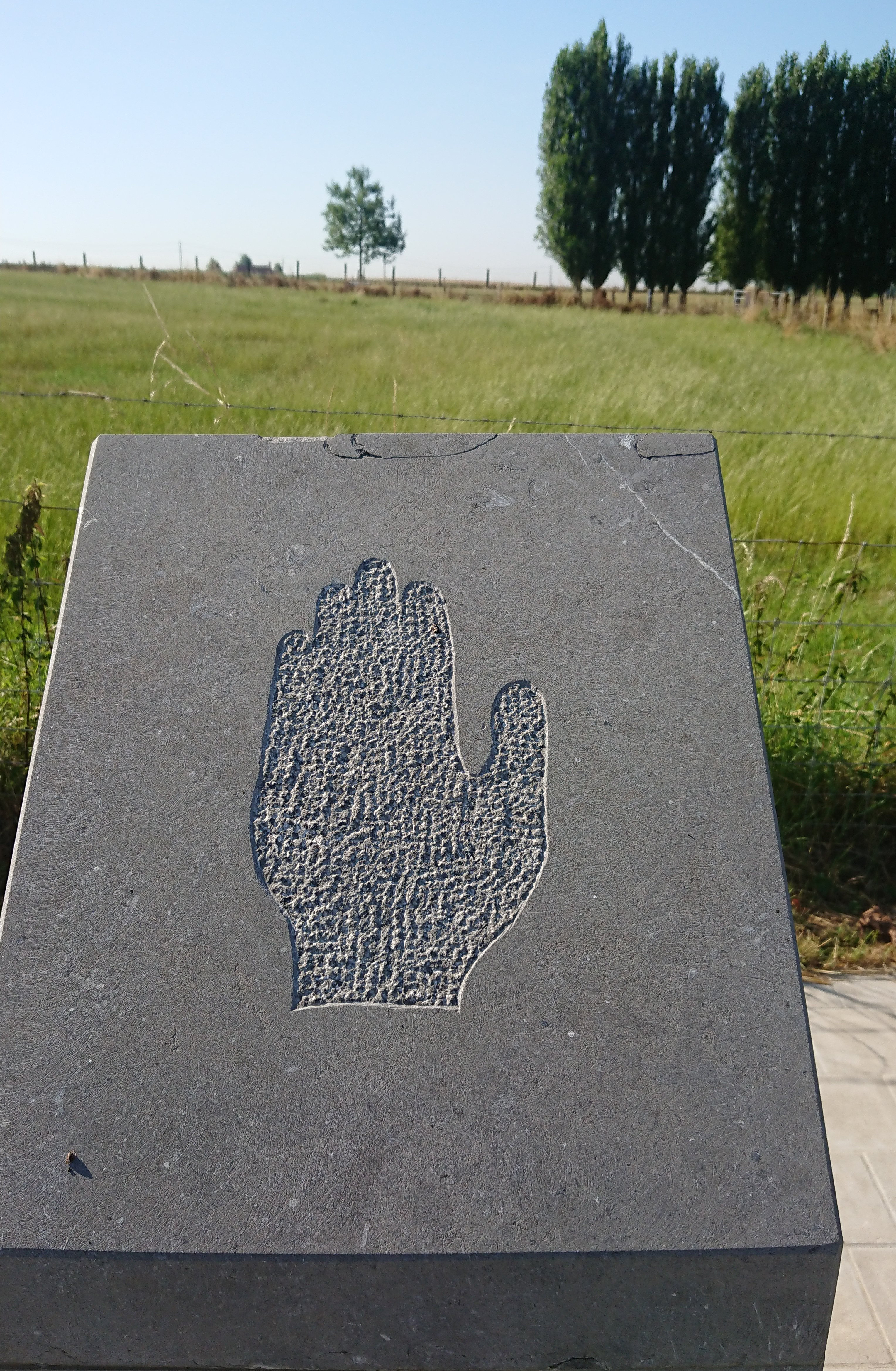
36th Ulster Division crest on memorial stone

The barrage eased just before Plumer detonated 9,500 tons of explosives under the Germans in nineteen mines. Willie Redmond MP and brother of John, leader of the Irish Party, died of wounds received in the attack.

20190804_1722455910514914466524394.jpg

Plaque explaining how Pte Meeke removed Major Redmond from the battlefield

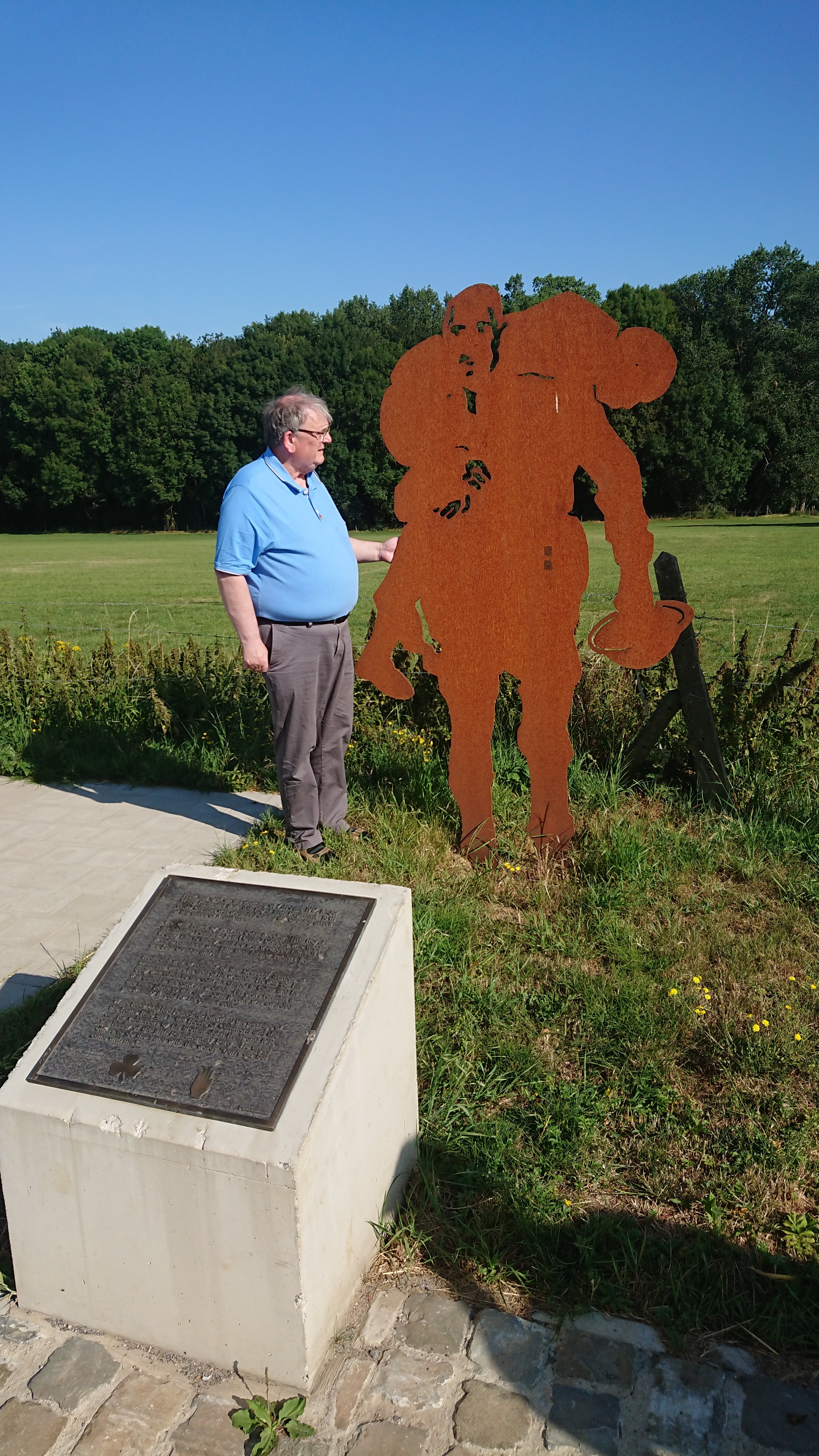
There is a memorial depicting an injured Major Willie Redmond being carried away for treatment. At this spot on the morning of June 7th 1917 Major Redmond of the 6th Royal Irish Regiment (16th Irish Division) was wounded during the opening attack of the Battle of Messines. He was found by Private John Meeke, 11th Royal Inniskilling Fusiliers (36th Ulster Division) who tried to carry him to safety until he himself was wounded. He was awarded the Military Medal for his gallant action. Redmond was evacuated to a dressing station at Locre hospice, run by nuns, where he died of his wounds.

dsc_2475714193985131941957.jpg

At the memorial marking the area where Major Willie Redmond was wounded during the battle

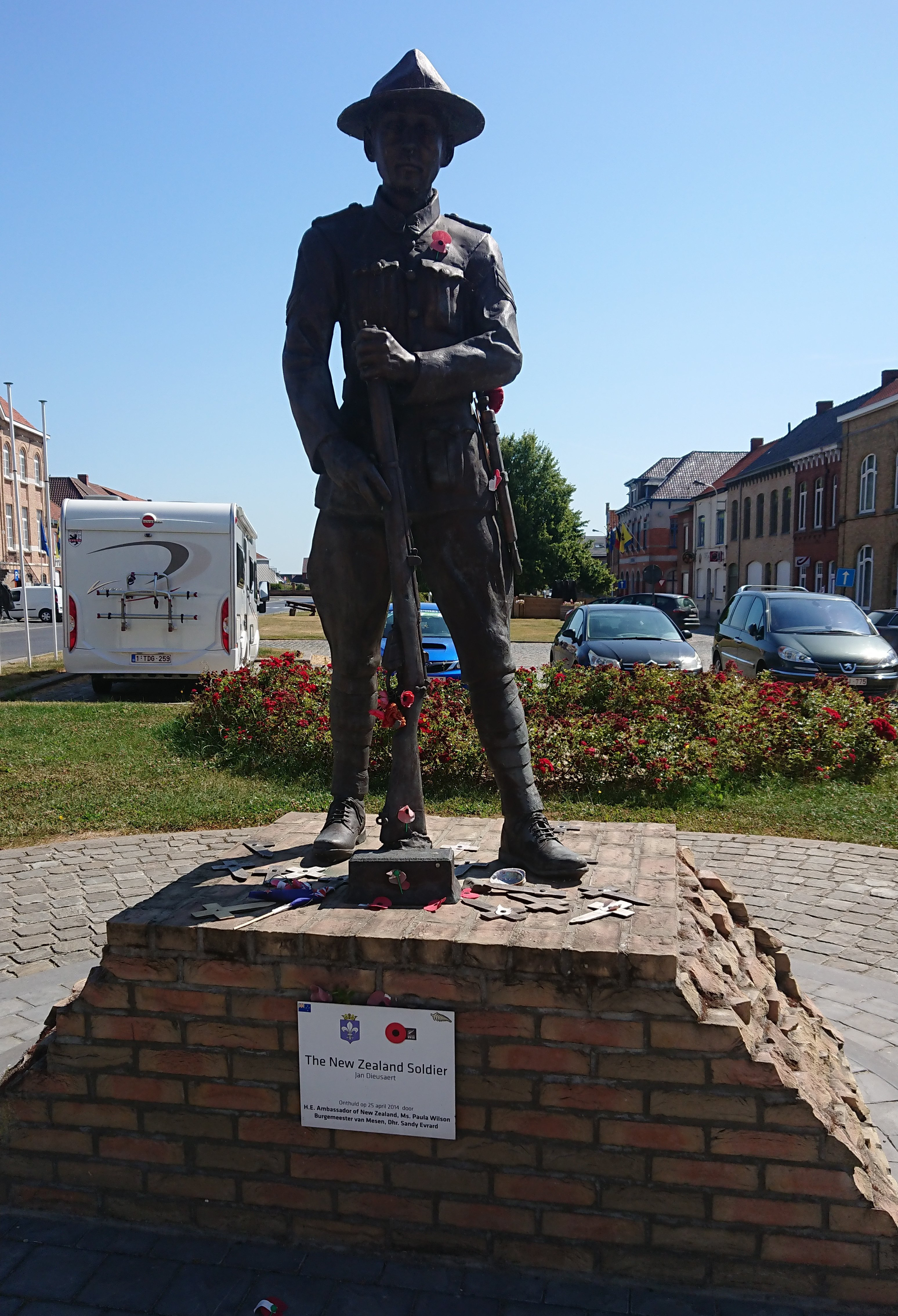
There is a statue in the centre of Mesen (Messiness), Belgium’s smallest town. It is a memorial to all soldiers of the New Zealand Division who fought at Messines Ridge.

dsc_25031153068257514189960.jpg

Statue of the New  Zealand soldier at Mesen

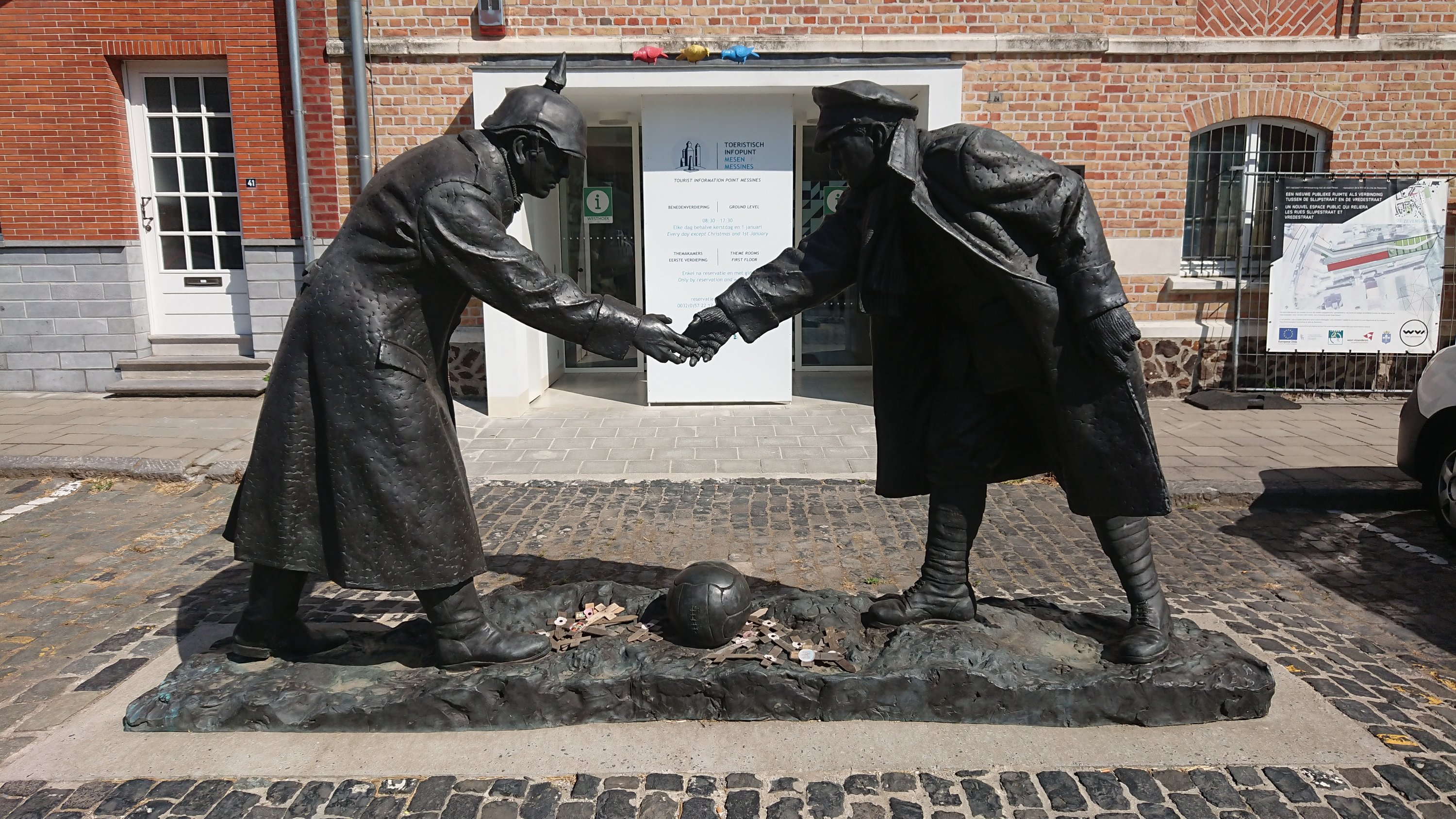
The sculpture by Andrew Edwards outside the new visitor centre of Mesen consists of two fibreglass figures, a German and an British soldier, about to shake hands at the moment when the two armies stopped fighting and played football on Christmas Day 1914. It was unveiled in Liverpool in December 2014 to mark the centenary of the event. The sculpture was taken to (Messines) Belgium where the UK Ambassador and Mayor of Mesen attended a ceremony in December 2015.

Sculpture unveiled in Mesen in December 2015 depicting the Christmas Truce 1914

ST SYMPHORIEN CEMETERY

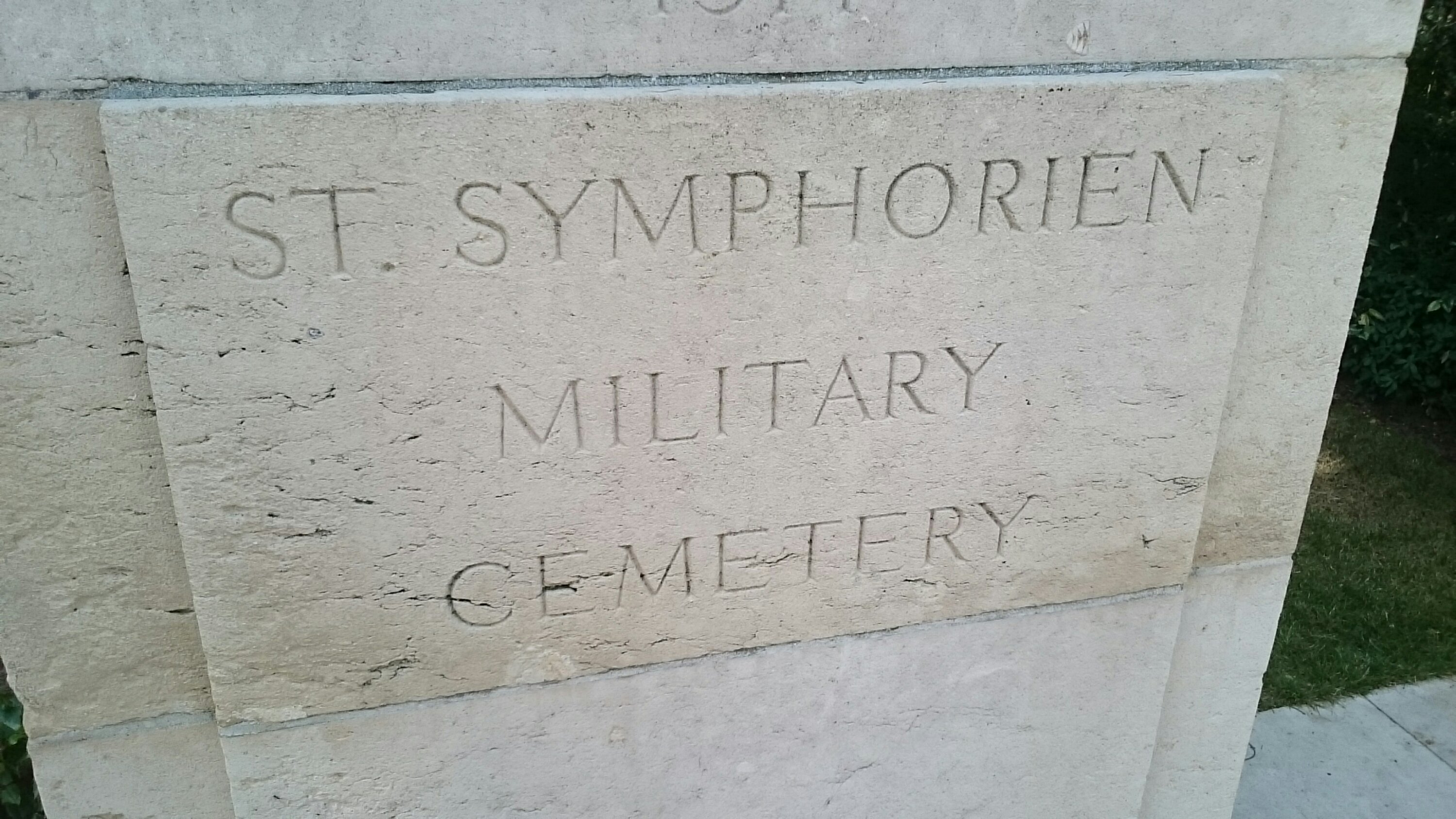
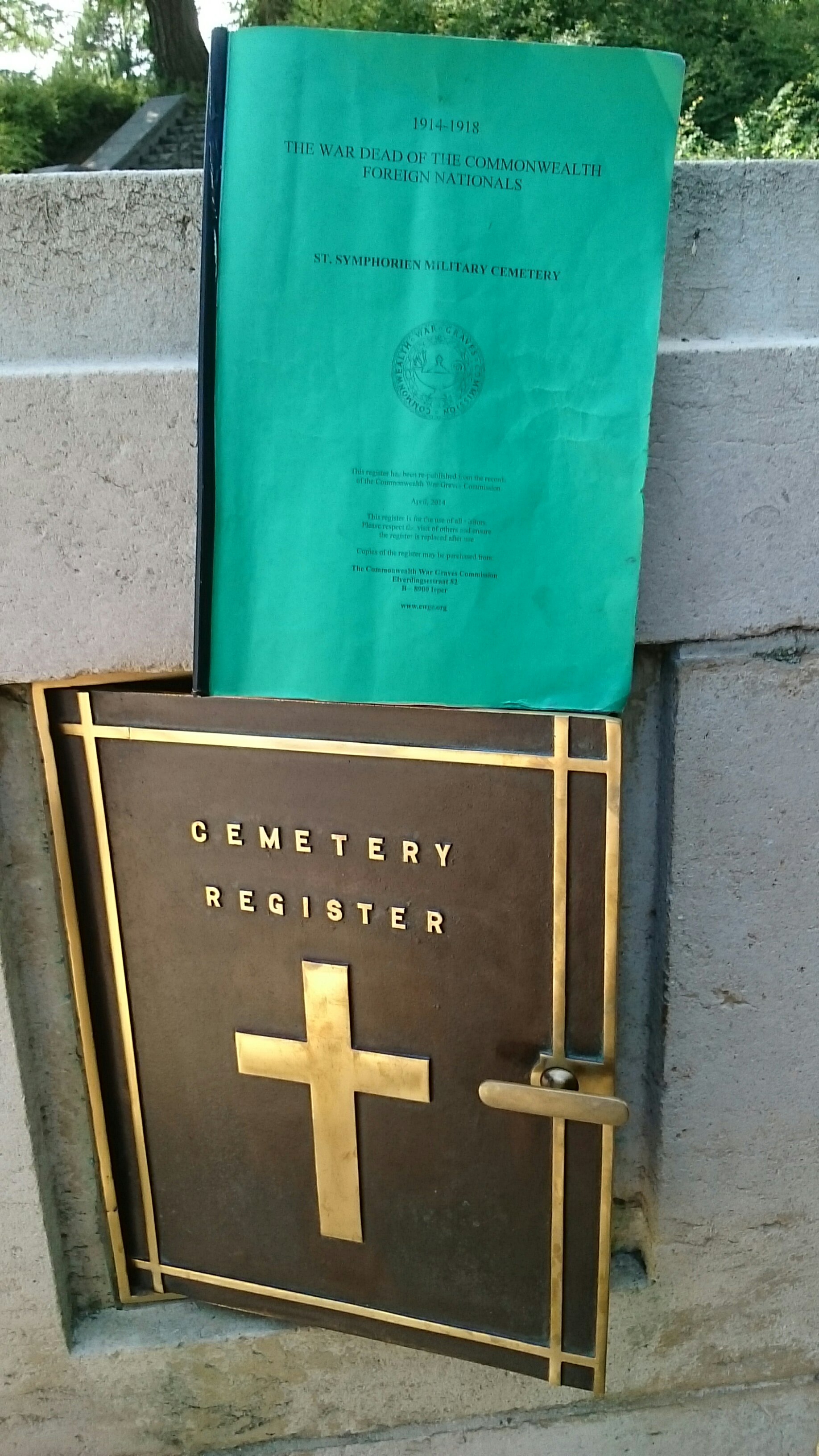
St Symphorien Cemetery is 2km east of Mons in Belgium and is maintained by the CWGC. The cemetery at St. Symphorien was established by the German Army during the First World War as a final resting place for British and German soldiers killed at the Battle of Mons. Among those buried here is Lt Maurice Dease VC.

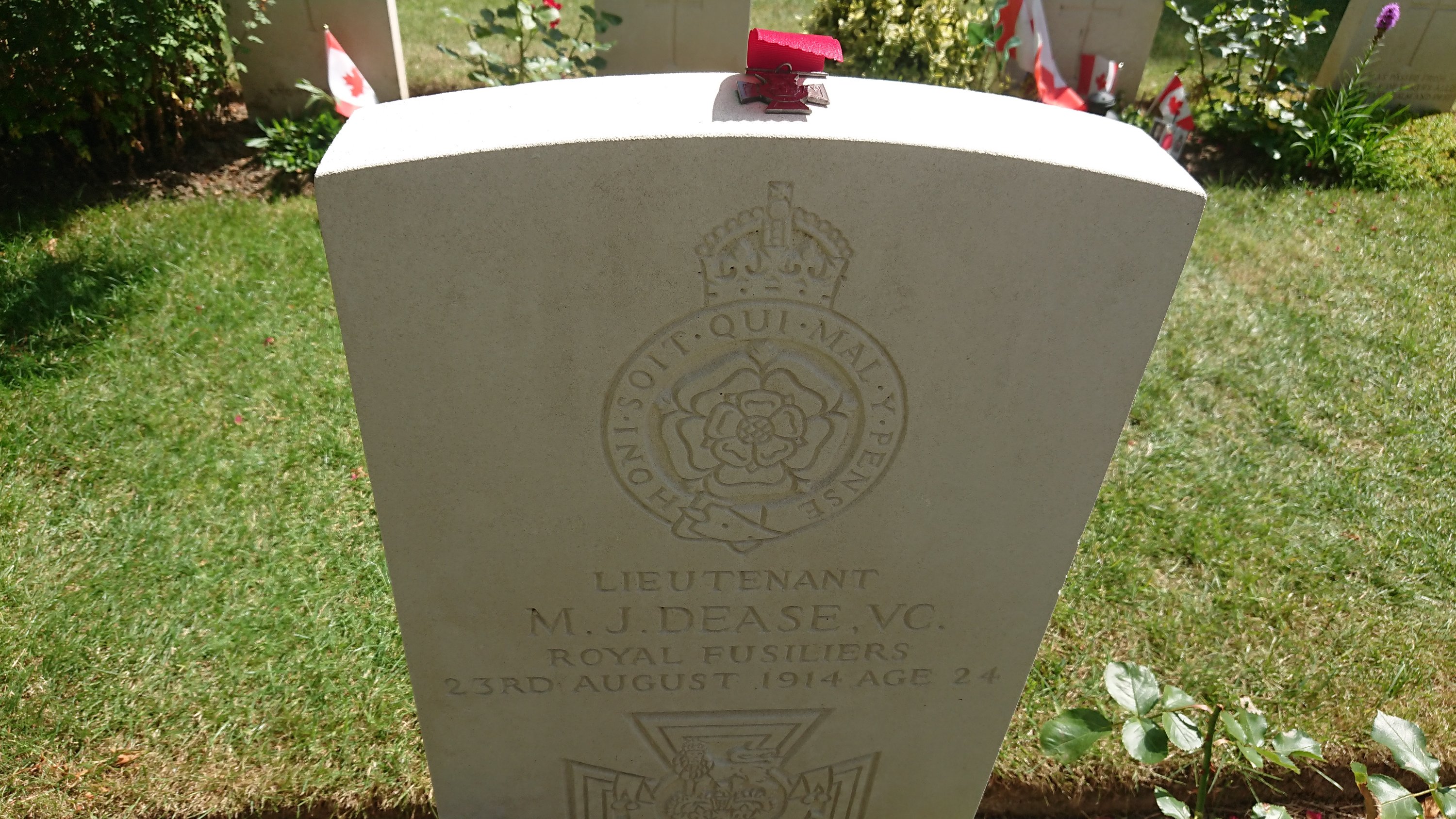
Grave of Lt Maurice Dease VC   Pic. © Michael Fisher

Another grave is that of Private John Parr of the Middlesex Regiment, who was fatally wounded during an encounter with a German patrol two days before the battle, thus becoming the first British soldier to be killed in action on the Western Front.

Grave of Pte John Parr, Middlesex Regiment

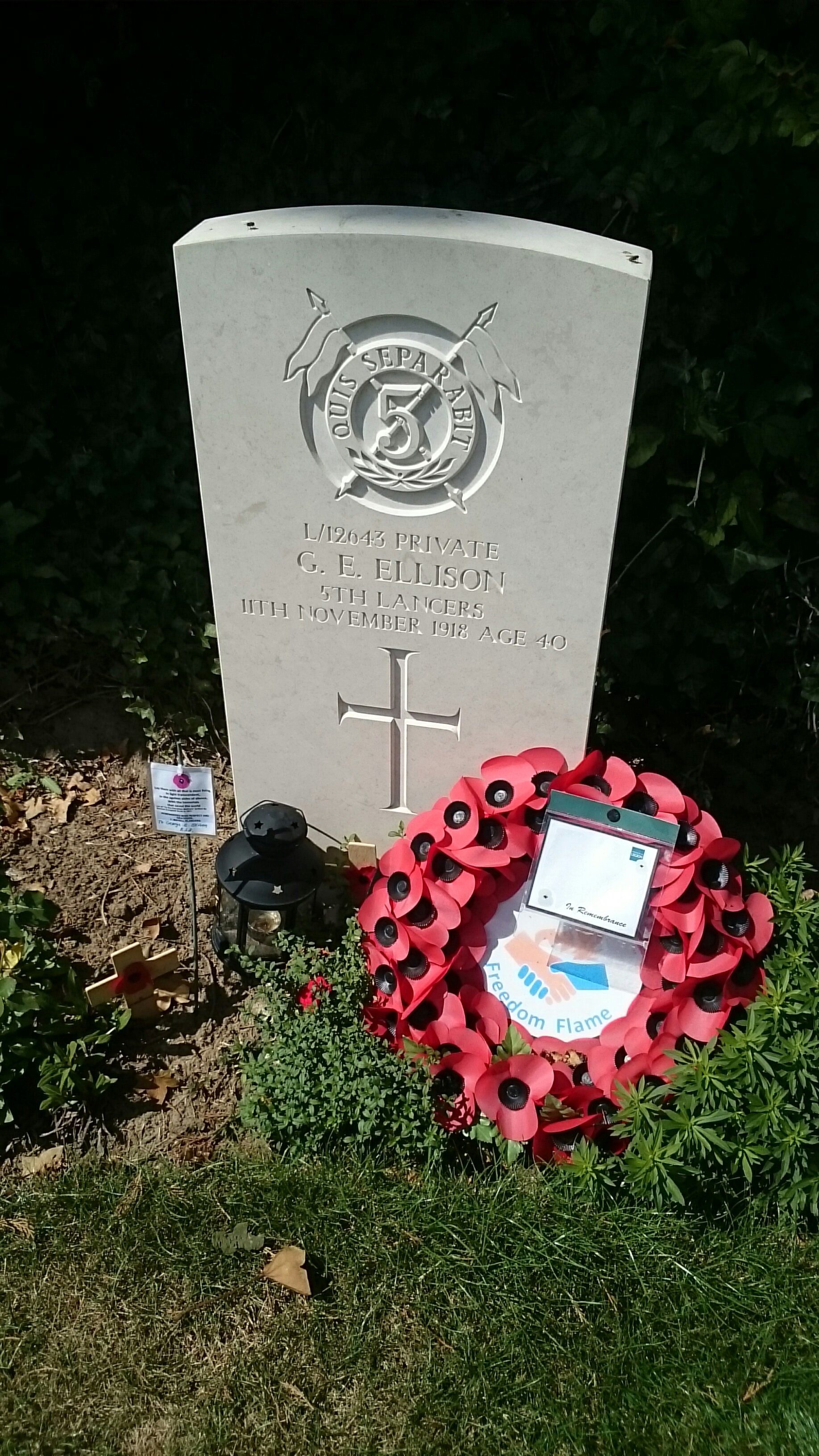
The cemetery remained in German hands until the end of the war, and afterwards came under the care of the Imperial (now Commonwealth) War Graves Commission. It also contains the graves of Commonwealth and German soldiers who died in the final days of the conflict, including Private George Ellison of the Royal Irish Lancers and George Price of the Canadian Infantry.

dsc_0602934720779.jpg

Grave of Pte George Ellison

Grave of Private George Price died 11th November 1918 last day of WWI

Ellison and Price were killed on 11 November 1918, and are believed to be the last Commonwealth combat casualties of the war in Europe. There are 229 Commonwealth and 284 German servicemen buried or commemorated at St Symphorien, of whom 105 remain unidentified.

Memorial dedicated to German soldiers buried at St Symphorien

The Battle of Mons – By the evening of 22 August 1914, the men of II Corps of the British Expeditionary Force had taken up defensive positions along the Mons-Condé Canal, preparing for a major German attack expected to come from the north the next day. The opening shots of the Battle of Mons were fired at dawn on the morning of Sunday 23 August, when the 4th Battalion of the Middlesex Regiment repulsed German cavalry who were attempting to the cross the canal over a bridge at Obourg.

The remains of four soldiers buried at Obourg were transferred to St Symphorien

The early morning was misty and wet, and the British were still uncertain of the numbers of enemy troops on the far side of the canal. By 10 a.m., the day had brightened up, artillery fire had intensified, and it became clear that they were facing a large German force. Despite being outnumbered, the British soldiers on the south bank of the canal fought tenaciously throughout the day. Many were reservists who had returned to the army just weeks before, but they were well-drilled and disciplined, with a high-level of rifle training. Their relentless fire inflicted heavy casualties among the Germans.

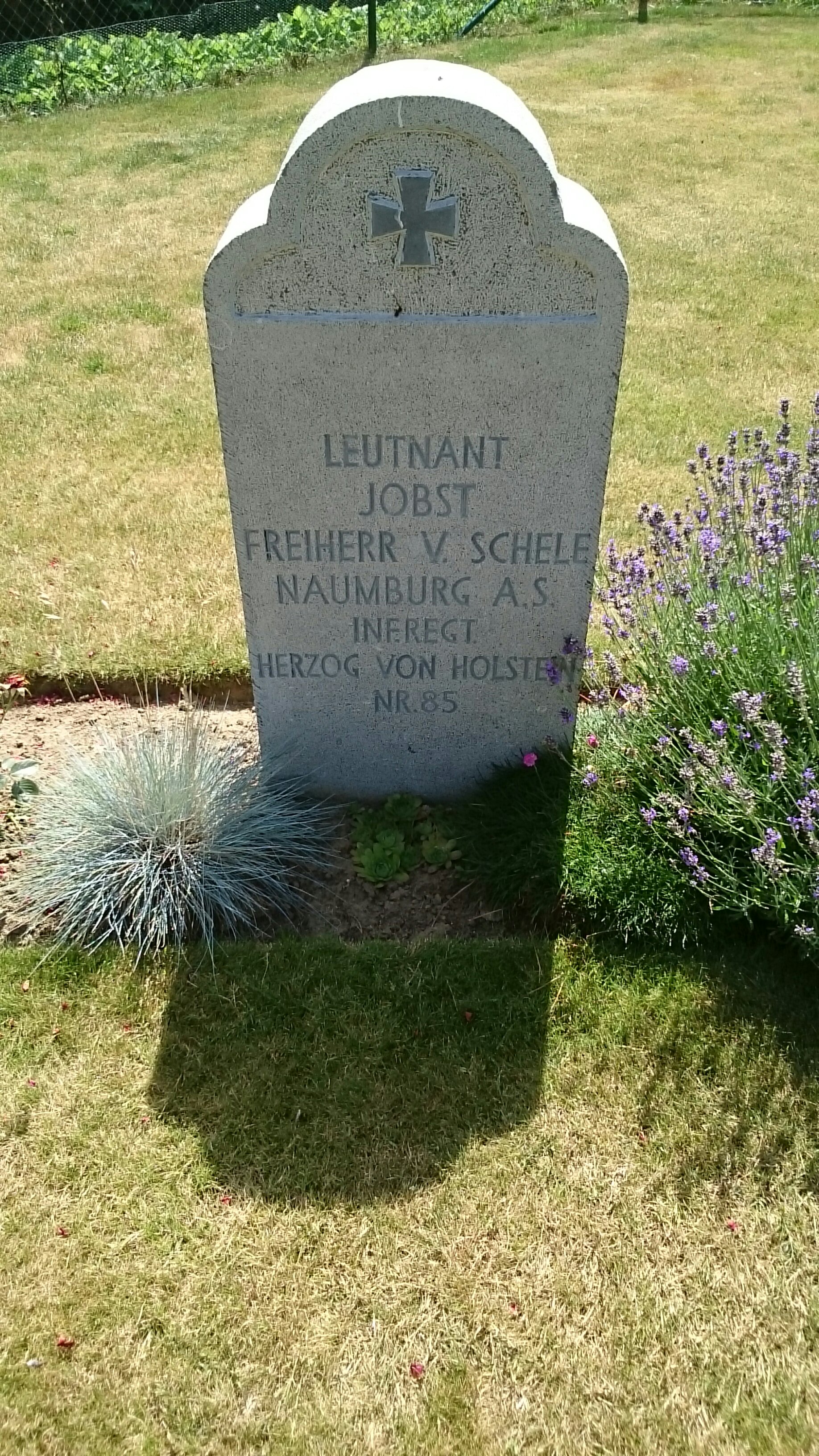
Grave of German officer (and Baron) Lt Jobst von Schele

Despite this stiff resistance, the sheer weight of German numbers and the accuracy of their artillery meant that the British struggled to hold their positions.By 10.30 a.m. the first German soldiers had crossed the canal and some British units had been forced back, and by mid-afternoon German infantry troops were crossing in force. By nightfall, the Battle of Mons was over and the British had begun a long, hard retreat towards Paris. (CWGC)

Six unmarked graves at St Symphorien Cemetery

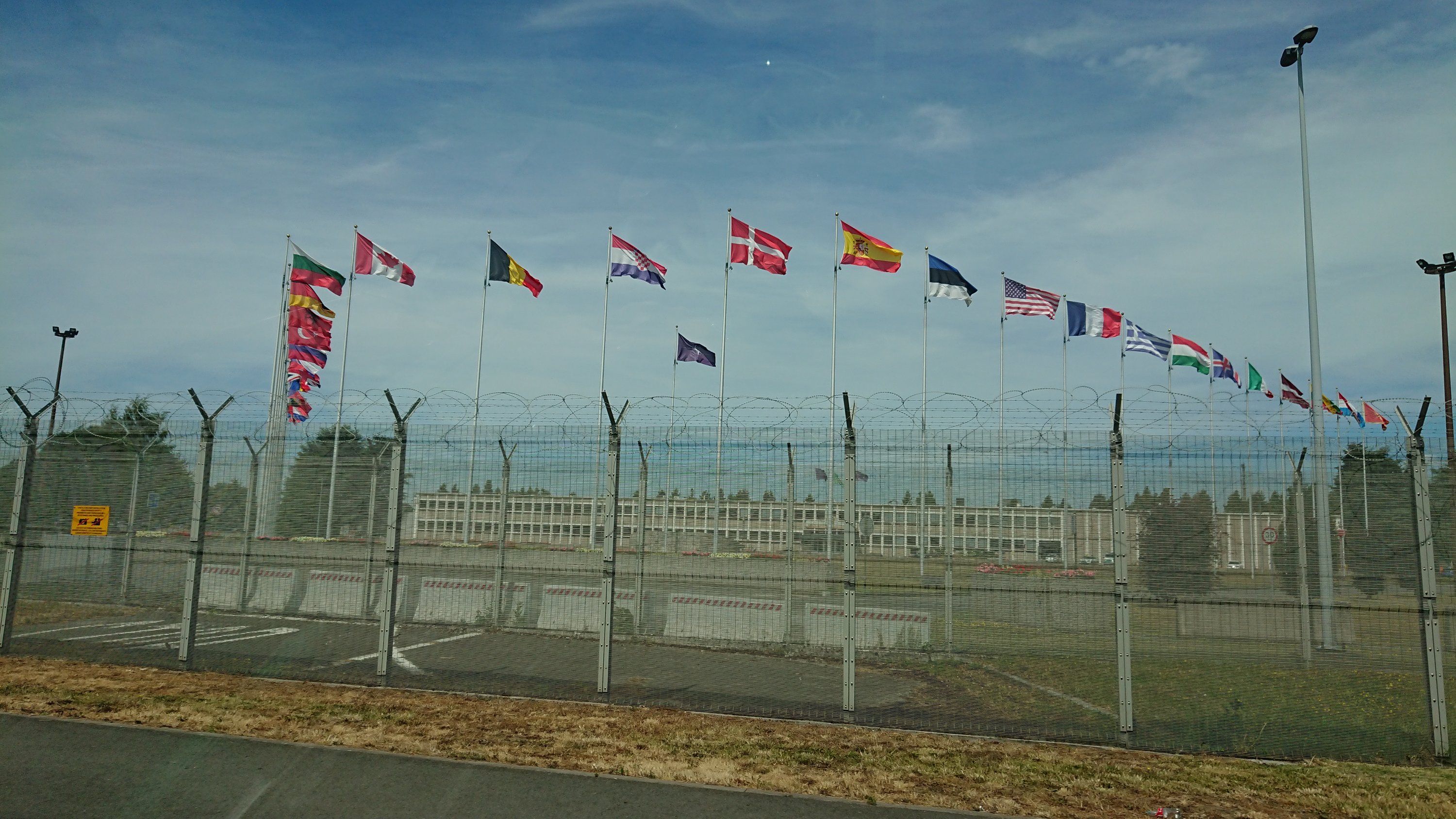
Flags of various NATO countries at the entrance to SHAPE headquartersOn our way to Mons we passed SHAPE headquarters. Supreme Headquarters Allied Powers Europe is the main base for the North Atlantic Treaty Organisation’s Allied Command Operations centre (ACO).  Since 1967 it has been located at Casteau, north of Mons. Ireland is not a NATO member but is involved in Partnership for Peace and is a member of the Euro-Atlantic Partnership Council (EAPC).

dsc_244839852247562534791.jpg

Flags from various nations fly at the entrance to SHAPE HQ at Casteau near Mons

LT MAURICE DEASE VC

Railway line at Nimy Bridge

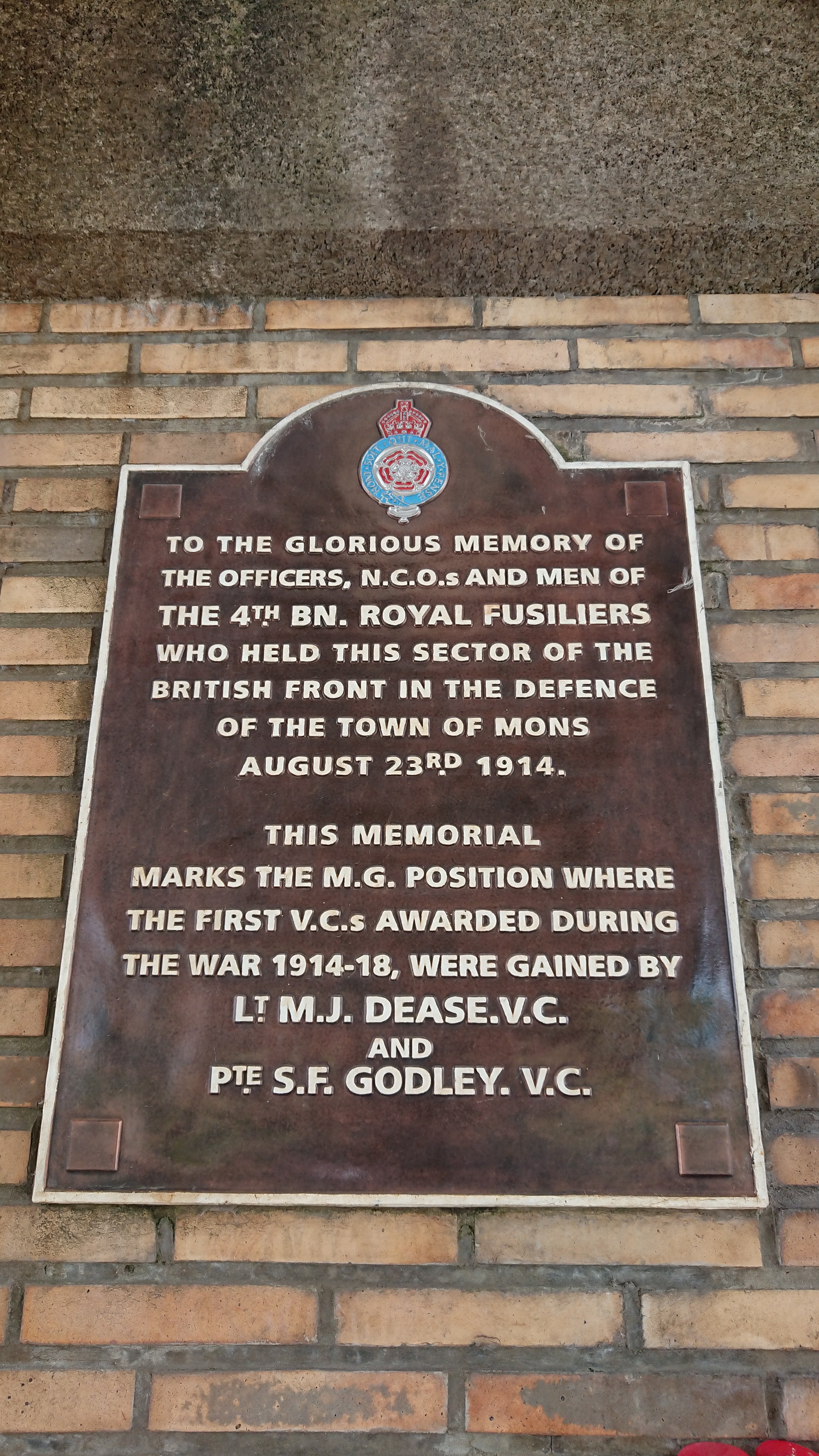
Visited Nimy Bridge where the railway line crosses the Canal. This is the spot where Lt Maurice Dease of the 4th Bn Royal Fusiliers earned the Victoria Cross, the first to be awarded (posthumously) during WWI.

Plaque underneath Nimy Bridge

Dease was of Anglo Irish stock. His parents came from Coole Co. Westmeath but at the time of his death, one month after the start of the war in August 1914, were resident in Culmullen Co. Meath. A plaque has been erected at St Martin’s Church there to commemorate him.

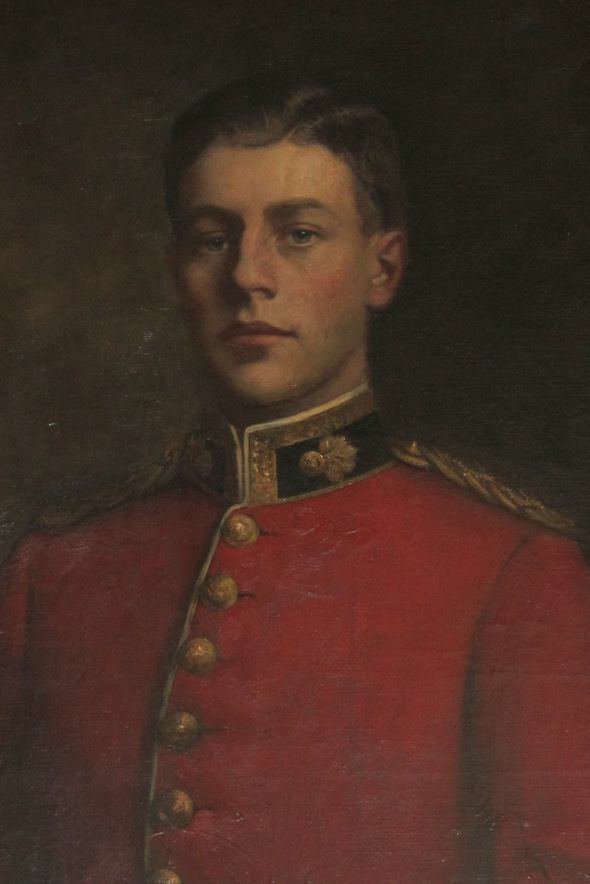
William Carter portrait of Lt Maurice Dease VC Royal Fusiliers Museum

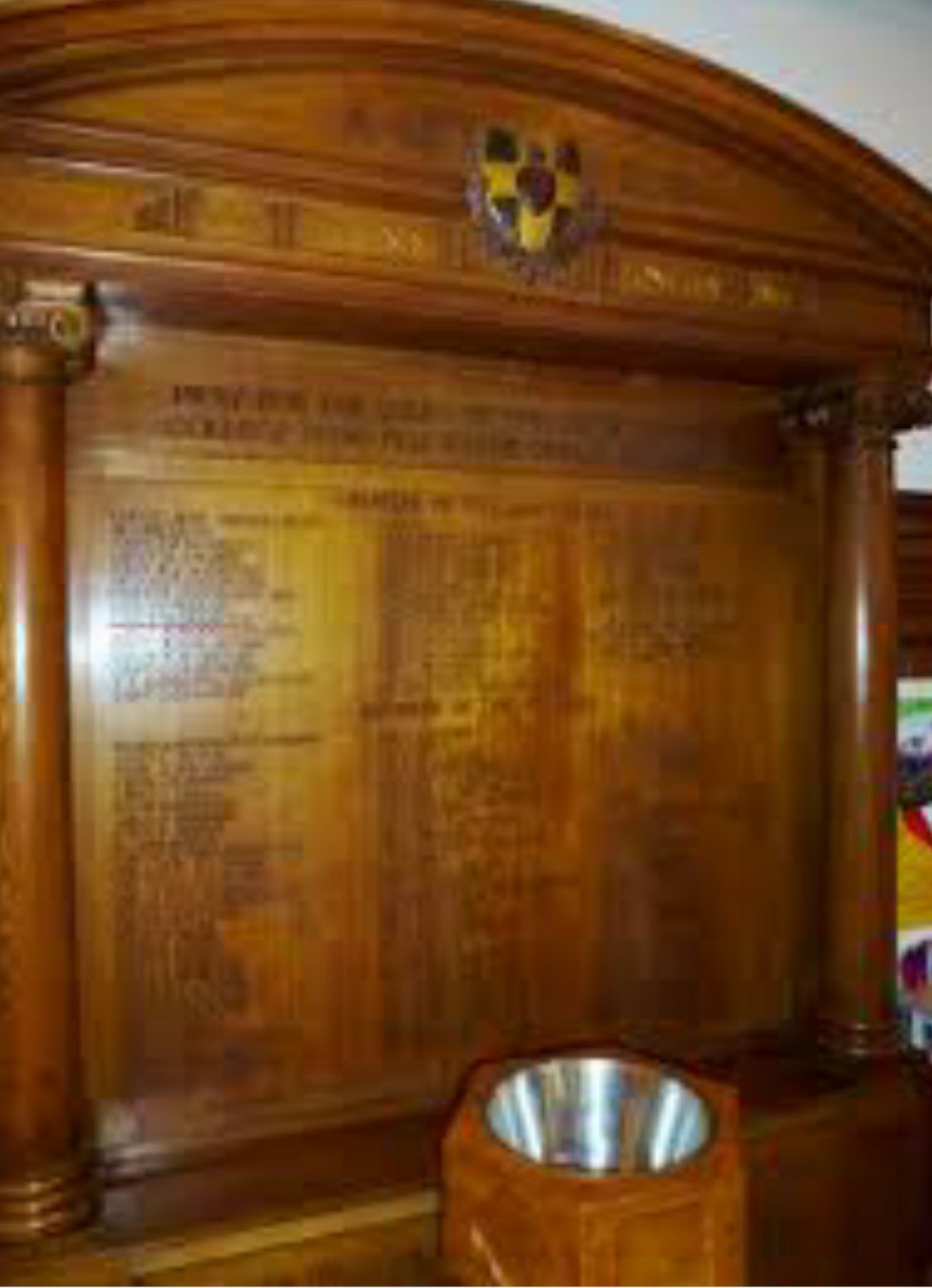
Dease was like many of his Irish contemporaries sent to a boarding school in England. He attended the Jesuit run Stonyhurst College then moved to another Jesuit linked educational establishment, the Army Department of Wimbledon College in London. His name is on the beautiful wooden panelled war memorial at the back of the Chapel in the school, which I used to pass frequently when going to Mass there. However in the four years I attended up to ‘O’ level, I never once heard his name mentioned or commemorated individually on Remembrance Sunday, when our scout troop (one of the largest Catholic ones in England) used to parade there.

War Memorial in Wimbledon College

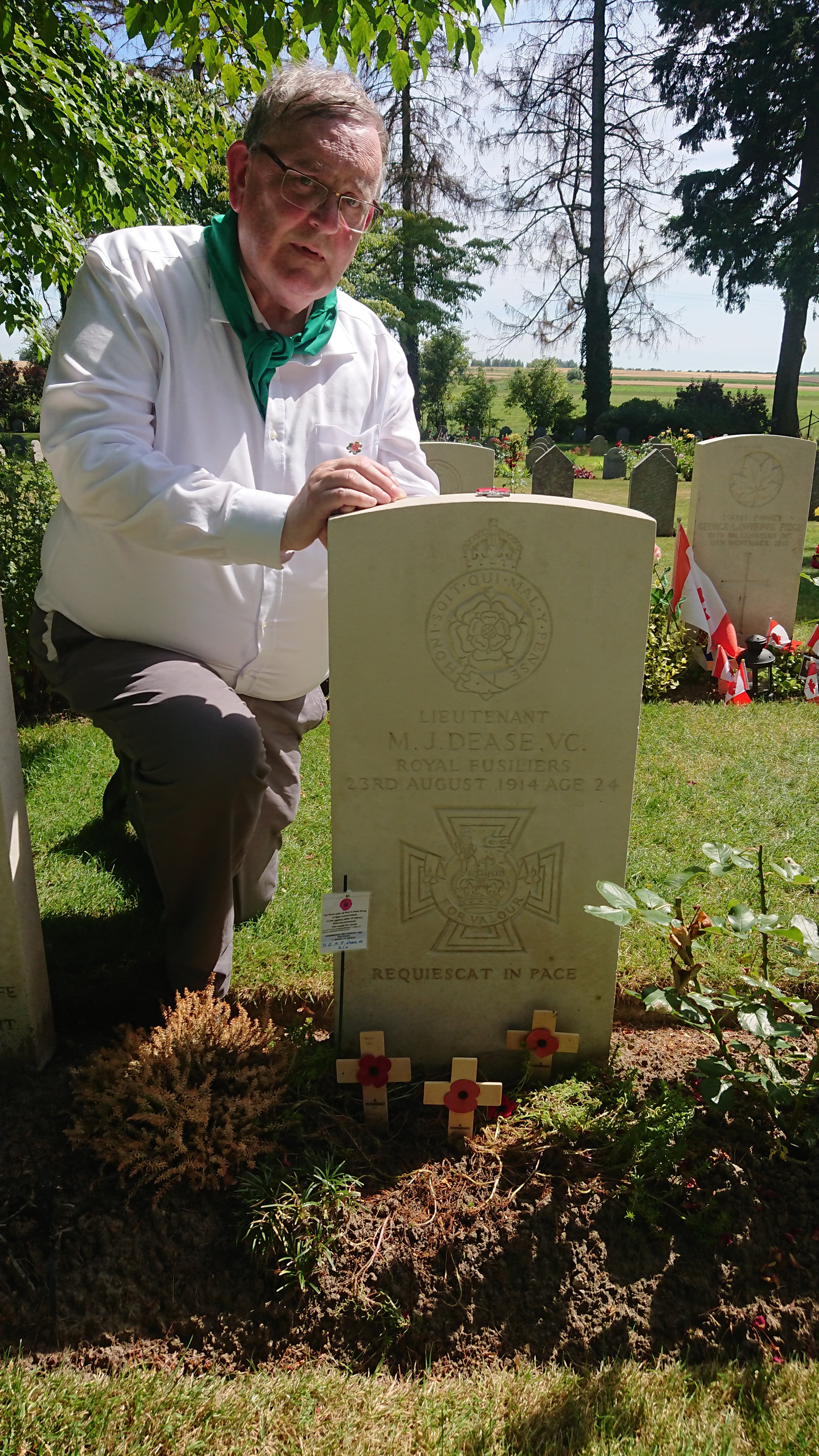
I was therefore pleased to get the opportunity to visit the site of his heroic action and subsequent death as well as his grave in the CWGC cemetery at St Symphorien. Rest in Peace., Respect. Ar dheis Dé go raibh a anam dhílis.

Visiting the grave of Lt Maurice Dease VC at St Symphorien cemetery

H. C. O’Neill wrote this account in The Royal Fusiliers in the Great War:

“The machine gun crews were constantly being knocked out. So cramped was their position that when a man was hit he had to be removed before another could take his place. The approach from the trench was across the open, and whenever a gun stopped Lieutenant Maurice Dease… went up to see what was wrong. To do this once called for no ordinary courage. To repeat it several times could only be done with real heroism. Dease was badly wounded on these journeys, but insisted on remaining at duty as long as one of his crew could fire. The third wound proved fatal, and a well deserved VC was awarded him posthumously. By this time both guns had ceased firing, and all the crew had been knocked out. In response to an inquiry whether anyone else knew how to operate the guns Private Godley came forward. He cleared the emplacement under heavy fire and brought the gun into action. But he had not been firing long before the gun was hit and put completely out of action. The water jackets of both guns were riddled with bullets, so that they were no longer of any use. Godley himself was badly wounded and later fell into the hands of the Germans.

Grave of Lt Maurice Dease VC

A commemorative paving stone for Dease was the first in a series to be unveiled at Glasnevin Cemetery in Dublin in August 2014 on the centenary of his death.

Paving Stone for Lt Dease at Glasnevin Cemetery