Get me outta here!

Michael Fisher's News

© Michael Fisher MMXXII

Menu

Skip to content
  • Home
  • About

Author Archives

borderroamerhttps://fisherbelfast.wordpress.comThe Northern Standard, Monaghan. Reporter.
borderroamer's avatar

CHRISTOPHER FITZ-SIMON

05/02/2015 by borderroamer
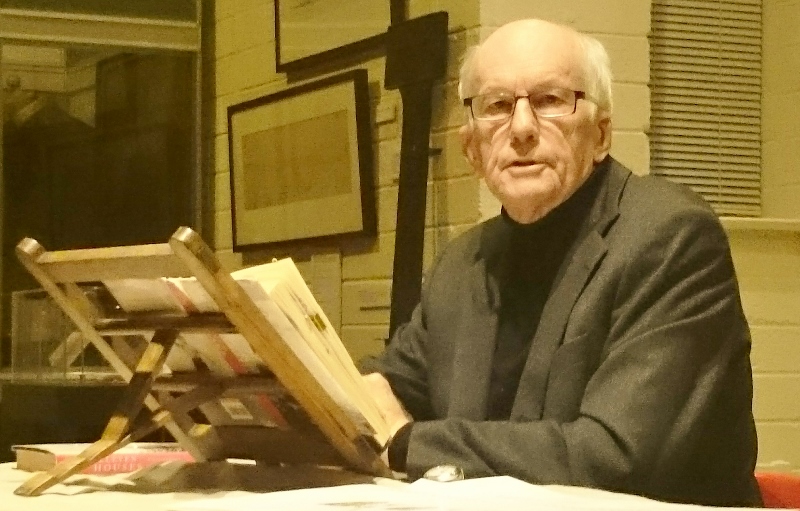
Dr Christopher Fitz-Simon     Photo: © Michael Fisher

Dr Christopher Fitz-Simon Photo: © Michael Fisher

The first in a series of talks organised by the Friends of Monaghan Museum was held tonight in the Museum. The guest speaker was Dr Christopher Fitz-Simon from Dublin. He read from his memoir of childhood ‘Eleven Houses’, published by Penguin in 2008 in which he remembers the 1940s and living at Aviemore, Hill Street, Monaghan, Annaghmakerrig, Doohat, Newbliss, Eldron, Smithborough, Mount Louise and other houses in adjoining counties. It was very witty in parts and it was a pleasure to listen to his reminiscences. Christopher is a former director of the Lyric Theatre, Belfast, Abbey Theatre, Dublin, and was a Ppoducer with RTÉ Television.

From www.ricorso.net:  born Belfast [Christopher O’Connell Fitz-simon]; descendant of Daniel O’Connell and Protestant unionists; son of army officer in WWII Middle East) and placed in care of relatives during war; raised a Catholic and brought up in Monaghan, Dublin, Down, Tyrone and Clare; grad. TCD; editor of Icarus; chair of the Dublin University Players; worked in theatre and broadcasting in N. America; appt. drama producer with RTÉ TV; appt. artistic director of the Irish Theatre Company; literary manager and artistic director of Abbey and Peacock (National Theatre Society); author of a radio plays and dramatisations on Boucicault, Bowen, Colum, Forzano, Joyce, Forest Reid, Giraudoux, Somerville & Ross, Stoker and Wilde, and others, including Irish murders; issued The Arts in Ireland (1982), The Irish Theatre (1983); with Sanford Sternlicht, ed., New Plays from the Abbey (1999); acted as visiting professor at the University of Ulster, and completed a doctorate there, “Popular Irish Drama in the Decade Leading up to the Opening of the Abbey Theatre” (PhD Diss., UU Coleraine 2003); 100 Years of the Abbey Theatre (2003); lectures on Irish theatre in four continents; his play Speranza, about Oscar Wilde’s mother, conceived as a radio monologue, was produced by Little Elf at Andrew’s Lane Studio (Aug 28 2003); lectured at Princess Grace Irish Library, Spring 2003.

WORKS:
Theatre history, The Irish Theatre [Eason Heritage Ser., 26] (Dublin: Eason 1979), 24pp., ill. [ports.]; (The Arts in Ireland: A Chronology (Dublin: Gil & Macmillan 1982), xiv, 257pp. [Bibl., pp.248-250]; The Irish Theatre (London: Thames & Hudson 1983), 208p; The Boys: A Double Biography (London: Nick Hern 1994), 320p, [16]pp. [on Michael MacLiammoir and Hilton Edwards]; The Abbey Theatre: Ireland’s National Theatre the First Hundred Years (London: Thames & Hudson 2003), 208pp., ill.; Players and Painted Stage: Aspects of the 20th-century Theatre in Ireland (Dublin: New Island 2004), 200pp. [contribs. Nicholas Grene, Emer O’Kelly, Christopher Murray, Lynda Henderson, Joe Dowling, Alan Titley & Anthony Roche]. See also “Popular Irish drama in the decade leading up to the opening of the Abbey Theatre”, 3 vols. (PhD diss., University of Ulster 2004).
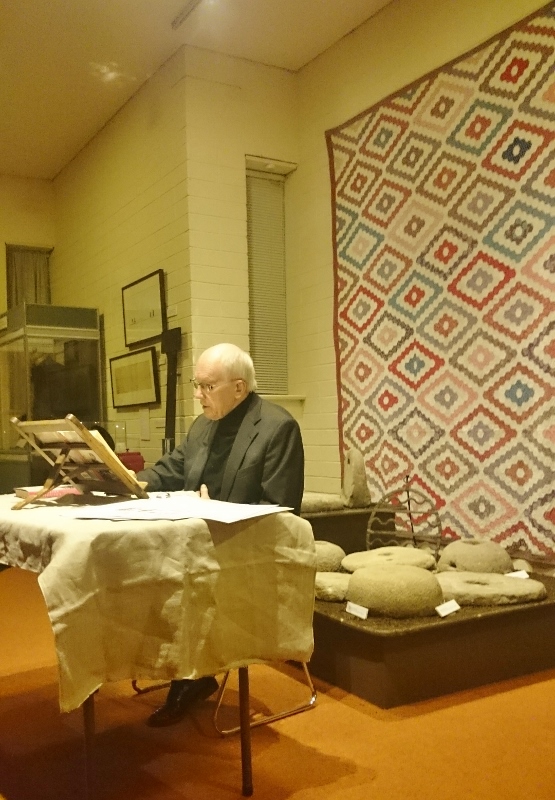
Dr Christopher Fitz-Simon     Photo: © Michael Fisher

Dr Christopher Fitz-Simon Photo: © Michael Fisher

Autobiography, Eleven Houses: A Memoir of Childhood (Penguin Ireland 2007), 304pp. Miscellaneous, The Irish Village, with photographs by Robin Morrison & commentaries by Fitz-Simon (London: Thames & Hudson 1986), [128]pp., ill. [col., map]; The Most Beautiful Villages of Ireland, with photographs by Hugh Palmer (London: Thames & Hudson 2000), 208pp. [32 cm].

Share this:

  • Share on Facebook (Opens in new window) Facebook
  • Share on X (Opens in new window) X
Like Loading...
MONAGHAN NEWS Leave a comment

MONAGHAN ON SONG AT PROMS

04/02/2015 by borderroamer

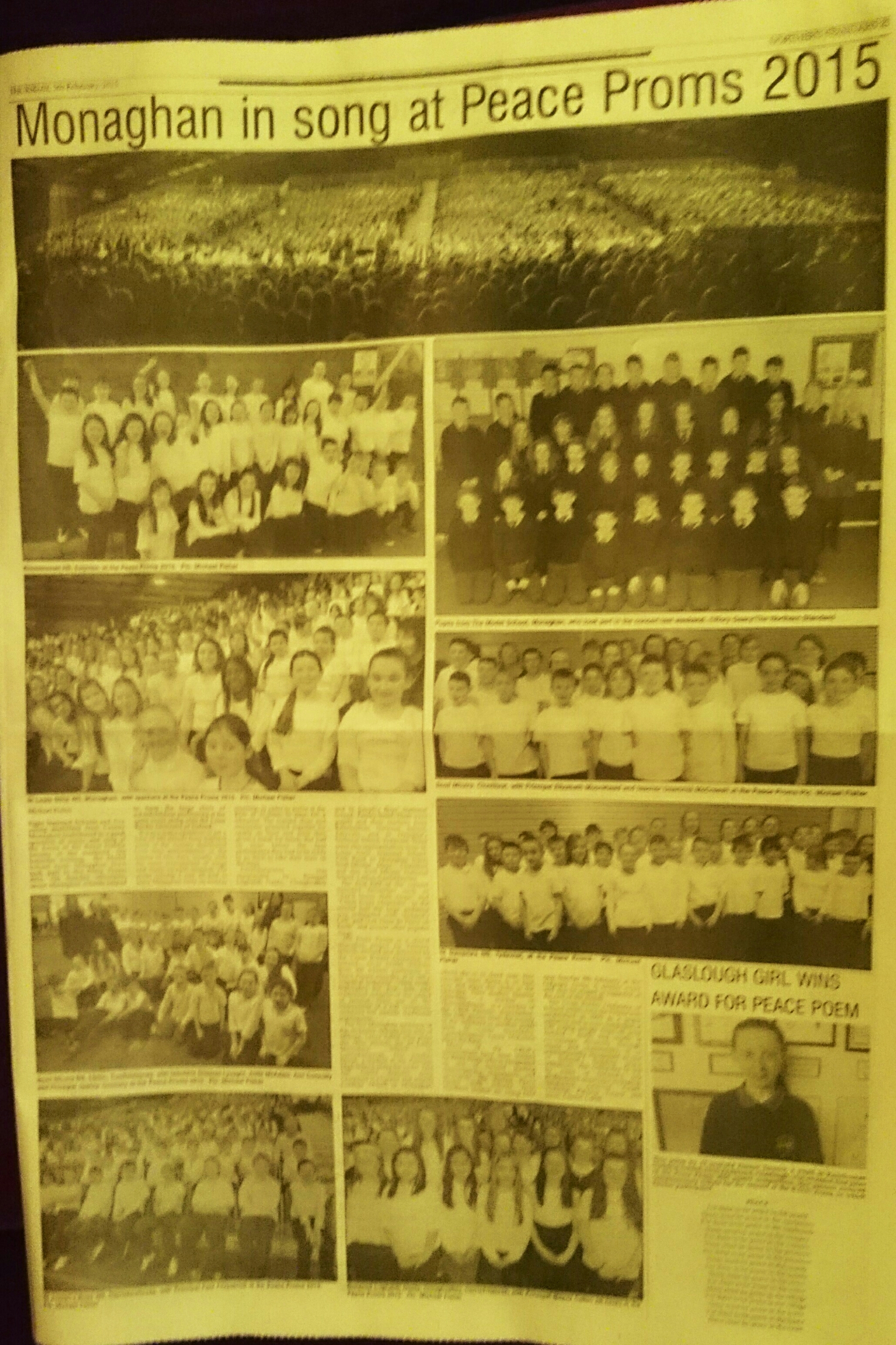
My report from the RDS Arena in Dublin on Sunday. Northern Standard Thursday 5th February 2015.

MONAGHAN IN SONG AT PEACE PROMS 2015

Knockconan NS, Emyvale   Photo: © Michael Fisher

Knockconan NS, Emyvale Photo: © Michael Fisher

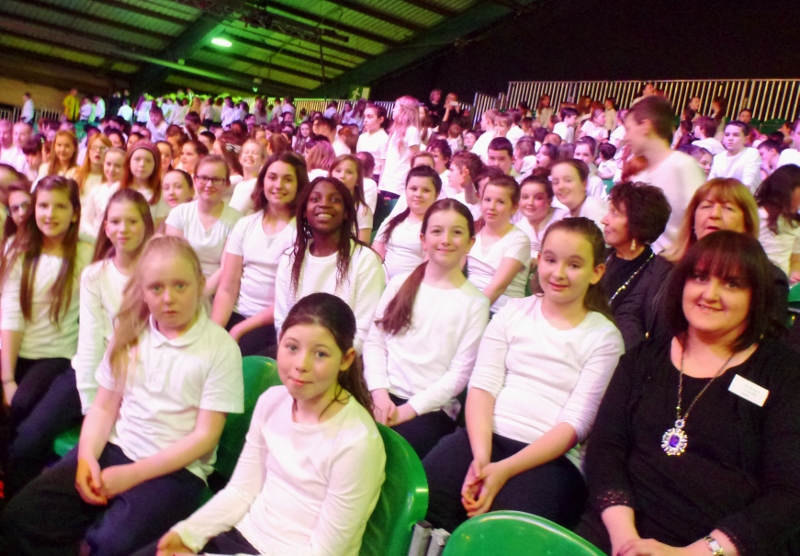
Eight national schools and five young musicians from County Monaghan contributed to a great spectacle of music and song at the Arena of the Royal Dublin Society at the weekend. On Saturday evening,  the Model School from Monaghan town took part in the Peace Proms 2015. On Sunday afternoon, seven Monaghan schools helped to form the large choir of schoolchildren performing at the same event along with the Cross Border Orchestra of Ireland.

St Dympna's NS, Tydavnet  Photo: © Michael Fisher

St Dympna’s NS, Tydavnet Photo: © Michael Fisher

It was a major operation to get a total of 180 schools from different parts of the country distributed over four performances in the course of two days, usually with the same arrangement of songs and music on each occasion. The seven schools I met all had to leave Monaghan early on Sunday morning, in order to arrive at the RDS at 11.30am in time for a rehearsal. The massed choir and musicians practised together for nearly an hour and were then given a break for lunch. But half an hour before the 2pm performance they had to be ready to go back to take their seats on the stage.

St Joseph's Boys NS Carrickmacross with Principal Paul Fitzpatrick   Photo: © Michael Fisher

St Joseph’s Boys NS Carrickmacross with Principal Paul Fitzpatrick Photo: © Michael Fisher

Carrickmacross was represented by Bunscoil Lughaidh Naofa,  Cloughvalley, and St Joseph’s Boys’ National School,  Farney Street.  There were pupils and their teachers from Knockconan National School, Emyvale, and St Dympna’s National School, Tydavnet. There were also representatives from St. Louis Girls’ National School,  Park Road in Monaghan town; Scoil Mhuire,  Moys,   Clontibret  and also Scoil Mhuire National School, Latton, Castleblayney.  

The first half of the concert included favourites such as “You’ll Never Walk Alone” and “Climb Every Mountain”. In the second half the large audience was serenaded with “Ireland’s Call” and “Let There Be Peace on Earth” and several other popular songs.  

Bunscoil Lughaidh Naofa Carrickmacross with Principal Maeve Callan   Photo: © Michael Fisher

Bunscoil Lughaidh Naofa Carrickmacross with Principal Maeve Callan Photo: © Michael Fisher

The Peace Proms is a choral education project for Primary Schools devised and delivered by the Cross Border Orchestra of Ireland.  Over 15,000 children from 300 schools participate in Peace Proms annually. It is not a “classical orchestra”. Their music  highlights the pop, folk and traditional cultures of the island of Ireland. They use all the instruments of a full symphony orchestra but include traditional instruments.

The five Monaghan members of the orchestra include two sets of siblings. Laura Rahill who plays the cello attends the St Louis Secondary School in Carrickmacross. Her brother Donal, a student at the Patrician High School, plays the violin. Tara Nic Giolla Seanáin from Clontibret is a harpist and attends Coláiste Oiriall in Monaghan, where she is in third year. Her younger sister Rossa is in first year and plays the violin in the orchestra. Their mother Eleanor Gilsenan, a teacher in Threemilehouse, is a member of the CBOI Parents’ Association. The fifth person from the county in the orchestra is another pupil from St Louis Secondary, Carrickmacross. Laura McKenna plays the flute. 

Scoil Naomh Mhuire,  Moys,   Clontibret  Photo: © Michael Fisher

Scoil Naomh Mhuire, Moys, Clontibret Photo: © Michael Fisher


Many of the CBOI’s commissions have been written by Brian Byrne who is recognised as one of Ireland leading contemporary composers and arrangers. The Belfast Peace Proms with schools from Northern Ireland are being held next Sunday 8th February at the Odyssey Arena. A similar event will also be staged in Limerick at the end of the month. 

Scoil Mhuire NS, Latton, Castleblayney  Photo: © Michael Fisher

Scoil Mhuire NS, Latton, Castleblayney Photo: © Michael Fisher


The Cross Border Orchestra of Ireland which runs the Proms was established in 1995 as a peace initiative and is now composed of 120 young people from all over Ireland – north and south. It encourages diversity through music and community. It is internationally recognised as one of Ireland’s flagship peace initiatives. The Orchestra is led  by some of Ireland’s top professional musicians including: conductor, Gearóid Grant, violinist, Patricia Treacy and tenor, Emmet Cahill.

St Louis Girls' NS, Monaghan  Photo: © Michael Fisher

St Louis Girls’ NS, Monaghan Photo: © Michael Fisher

This poem by 12 year-old Eimear Treanor, a pupil at Knockconan National School, from Faulkland, Glaslough, was awarded first prize in the Peace Proms 2015 poetry competition. Her parents received complimentary tickets for the concert at the R.D.S. Arena, in which Eimear participated.

PEACE  by Eimear Treanor:

Knockconan N.S., Emyvale, Co. Monaghan

For there to be peace in the world

There must be peace in the continents

For there to be peace in the continents

There must be peace in the country

For there to be peace in the country

There must be peace in the province

For there to be peace in the province

There must be peace in the county

For there to be peace in the county

There must be peace in the town

For there to be peace in the town

There must be peace in the village

For there to be peace in the village

There must be peace in the home

For there to be peace in the home

There must be peace in the heart. wpid-dsc_10202.jpg.jpeg

All but three are my photos. The one on the top right of the Model School Monaghan is copyright Rory Geary/Northern Standard. The top one is copyright Anamaria Meiu/Cross Border Orchestra of Ireland. Knockconan NS supplied the picture of Eimear Treanor.

Share this:

  • Share on Facebook (Opens in new window) Facebook
  • Share on X (Opens in new window) X
Like Loading...
MONAGHAN MUSIC NEWS CarrickmacrossCross Border OrchestraEmyvaleKnockconan NSMonaghanPeace Proms 2015RDS ArenaSt Dympna's NSTydavnet Leave a comment

NEW PRESBYTERIAN MODERATOR

03/02/2015 by borderroamer
Presbyterian Moderator-Elect, Reverend Ian McNie, Ballymoney  Photo: Presbyterian Church website

Presbyterian Moderator-Designate, Reverend Ian McNie, Ballymoney Photo: Presbyterian Church website

A conservative evangelical Minister whose son is in charge of two churches in North Monaghan has been elected as the next Moderator of the Presbyterian Church in Ireland. He is the Reverend Ian McNie, Minister of Trinity Presbyterian Church in Ballymoney, County Antrim.

The 64-year-old was nominated by twelve presbyteries including Monaghan out of the nineteen that met this evening (Tuesday) across Ireland to select a successor to the current Moderator, Reverend Michael Barry. Known as the Moderator-Designate, Mr McNie will officially take up office as Moderator at the start of the Church’s General Assembly on Monday 1st June.

Speaking about his nomination, Mr McNie said, “I am greatly humbled that so many of my colleagues in the ministry, and many ruling elders, within the various presbyteries have felt they could entrust me with this important responsibility within the Church.

Throughout my ministry I have sought to preach the Gospel with clarity and conviction, in such a way that people will be moved by the God’s Spirit to make a positive response to become Christians.

With God’s help and the prayer support of the Church, I would trust that during my year in office, lives would be impacted with the Gospel”, Mr McNie said.

The four nominees in this year’s annual vote were the Reverend Robert Bell, Minister of Ballyclare Presbyterian Church; Reverend Liz Hughes, Minister of Whitehouse Presbyterian Church, Newtownabbey; Reverend Ian McNie, Minister of Trinity Presbyterian Church, Ballymoney and Reverend Frank Sellar, Minister of Bloomfield Presbyterian Church in East Belfast.

Voting for each nominee was as follows:
• Rev. Ian McNie: 12 Votes – Armagh, Ballymena, Coleraine and Limavady, Down, Dromore, Iveagh, Monaghan, Newry, Route, Templepatrick, Tyrone, Omagh
• Rev. Liz Hughes: 4 votes – Ards, North Belfast, South Belfast, Derry and Donegal
• Rev. Frank Sellar: 2 votes: East Belfast, Dublin and Munster
• Rev. Robert Bell: 1 vote – Carrickfergus.

Ian McNie will be the 176th Moderator since the election of the Very Rev. Dr. Samuel Hanna in 1840. Describing himself as a ‘conservative evangelical’, he also sees his ministry substantially as a parish ministry, confining himself to work within the congregation and district.

“As a conservative evangelical, I recognise that we are living in the 21st Century and therefore seek to steer the congregation in such a way that we do not cling to the traditions of the past, but seek to be relevant today. At the same time, I also recognise that the truth of the Gospel has not changed and we should not allow society to pressure us into departing from the core values of the Scriptures.”

The ministry of the County Antrim congregation is wide reaching with a daily community playgroup, weekly mums and toddlers group, senior citizens bowling afternoon and a group for adults with special needs. The Church also works with a range of local youth organisations, conducts weekly services in various care homes and sends teams to Malawi to support the work of missionaries in the south-eastern African nation.

Born in 1950, he is married to Anne and has two sons, one of whom, Stephen, is the Minister of Ballyalbany and Glennan Presbyterian Churches in County Monaghan. Mr McNie was brought up in Antrim and attended First Antrim Presbyterian Church, becoming a Christian at the age of 13. Having attended Belfast Royal Academy, he went on to Queen’s University, Belfast graduating with a Bachelor of Divinity.

As a teenager Mr McNie wanted to become a teacher, but felt God’s call to the ministry, a step he says he has never regretted. Having attended Union Theological College, he was ordained as Assistant Minister at Alexandra Presbyterian Church, Belfast in 1978 before being installed in 1980 at Kilkeel Presbyterian Church in County Down. He became Minister at Trinity in 1991.

As well as family life – he will become a grandfather for the first time later this month – Mr McNie enjoys running and walking and takes an interest in the projects his church supports in Malawi, having visited the country on many occasions.

Reflecting on the General Assembly’s theme for 2015 ‘A caring fellowship’ Mr McNie said: “Throughout my ministry I have sought to preach the Gospel in such a way that people will be moved by the Spirit to make a positive response to become disciples of Jesus Christ. The Church today is God’s answer to both the fundamental needs of the individual and society. We need to look beyond ourselves and re-examine the ways in which we include those who are often considered outsiders and become enriched by them.”

“During my year of office I would hope to be given the opportunity to present the Gospel in many different situations, both within the church and community, to learn from the experiences of others and to encourage congregations to be proactive in their presentation of the Word of God. I would also look forward to the opportunity to encourage ministers and their families, particularly those who have just started their ministry”, he said.

Share this:

  • Share on Facebook (Opens in new window) Facebook
  • Share on X (Opens in new window) X
Like Loading...
MONAGHAN NEWS UNCATEGORISED Ian McNieMonaghanPresbyterian ModeratorStephen McNieTrinity Church Ballymoney Leave a comment

BOSE BLOW STUNS CARRICK

02/02/2015 by borderroamer

NSp1 (2)Northern Standard p.1 Thursday 28th January 2014   Michael Fisher

Bose factory, Carrickmacross  Photo:  © Michael Fisher

Bose factory, Carrickmacross Photo: © Michael Fisher

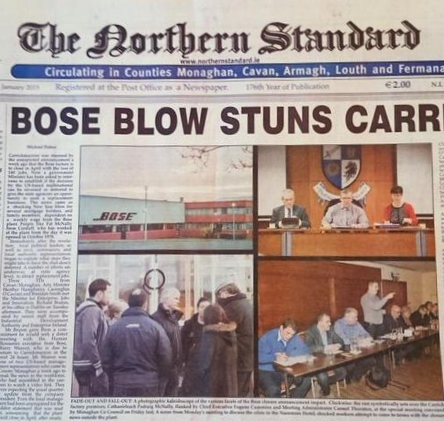
Carrickmacross was stunned by the unexpected announcement a week ago that the Bose factory is to close in April with the loss of 140 jobs. Now a government Minister has been asked to intervene to establish if the decision by the US-based multinational can be reversed or deferred to give the state agencies an opportunity to seek a replacement business. The news came as  a  shocking New Year blow for several mortgage holders, and family members,  dependent on a  weekly wage from the Bose plant. People like Pat McNally from Corduff, who has worked at the plant from the day it was opened in October 1978.
Immediately after the revelation,  local political leaders, as well as civic, community, and local authority representatives began to explore what steps they might take to have the shut-down deferred. A number of efforts are underway, at state agency level,  to attract  replacement jobs. Three TDs from Cavan/Monaghan, Arts Minister Heather Humphreys, Caoimghín O Caolaín and Brendan Smith met the Minister for Enterprise, Jobs and Innovation, Richard Bruton, at his office in Dublin on Tuesday afternoon. They were accompanied by senior staff from the Industrial Development Authority and Enterprise Ireland. Mr Bruton gave them a commitment he would seek a direct meeting with the Human Resources executive from Bose, Barry Weaver, who is due to return to Carrickmacross in the next 24 hours. Mr Weaver was one of two US-based management representatives who came to County Monaghan a week ago to break the news to the workforce, who had assembled in the canteen to watch a video link. They were expecting the usual quarterly update from the company President. Even the local management had been unprepared for the sudden statement that was read out, announcing  that the plant would close in April, after nearly 37 years in Carrick.
Mr O Caoláin said it might be necessary for Mr Bruton to seek a meeting with the top level of the Bose Corporation in the United States. The initial request to the company would be that it reverses the decision, but if it was unwilling to change its mind, then a deferral of the closure should be sought, he told the Northern Standard. The proposed April date left a very narrow window for any alternative investor, either foreign or indigenous, to be found. The workers in South Carolina had been given nearly eight months before that Bose facility is shut down. Heather Humphreys said the IDA had not been given any advance notification of the company’s plans. She said she would be working with all the constituency representatives to try to persuade Bose not to close but she said it would be wrong to raise any false hopes for the workers at this stage. Brendan Smith said they needed to send out a strong message to the Bose Board and President that the  decision, which had left the highly-skilled workforce devastated, needed to be overturned.
Following the meeting between Oireachtas members from Cavan/Monaghan and the Enterprise Minister, a briefing was held at Leinster House in the office of Sean Conlan TD for a delegation from Monaghan County Council, led by the Cathaoirleach, Cllr Padraig McNally. He was accompanied by Councillors PJ O’Hanlon, Colm Carthy, Aidan Campbell and Paudge Connolly. Senator Diarmuid Wilson also attended as did the Director of Services of Monaghan County Council, Paul Clifford, and John McEntegart, Head of Monaghan Local Enterprise Office. Mr Clifford later revealed that the factory site set up by the IDA in 1978 is no longer owned by the Authority, but is in private hands and remains under lease to Bose.
COMPANY STATEMENT
A copy of the 290-word statement announcing that US and Irish jobs would be ‘eliminated’ was issued to local public representatives and the media by an international PR company in Dublin on behalf of Bose. It stated bluntly:
“Bose Corporation has announced it will be consolidating its wholly-owned manufacturing operations, closing its facilities in Columbia, South Carolina, and Carrickmacross, Ireland, to streamline the company’s global supply chain. Operations in South Carolina will continue until September 2015; operations in Ireland will continue until April 2015. During that time, both workforces will be reduced, and work will transfer to other Bose facilities around the world with duplicative capabilities.

The Columbia, South Carolina facility opened in 1996 and currently has approximately 300 Bose employees. It houses a North American distribution/repair center, and does sub- and final-assembly for some headsets, and some remanufacturing for the region. A final decision on a new location for distribution/repair has not yet been made; other operations will transfer to Bose facilities in Arizona and Mexico. All jobs at the Bose South Carolina campus will be eliminated.
The Carrickmacross, Ireland facility opened in 1978 and currently has approximately 140 Bose employees. It provides final assembly for select home theater systems and Wave® radios for the European market, and some remanufacturing for the region. Operations will transfer to Bose facilities in Malaysia and Mexico. All work will cease at the Bose Ireland facility. Impacted employees have been informed, and all employees who lose their jobs based on these actions will receive outplacement services and severance support.
‘Our rapid global growth requires us to keep pace with our customers, dealers, distributors, resellers and stores, and serve them as efficiently as possible,’ said Bryan Fontaine, executive vice president of global operations and corporate development engineering. ‘But these are still difficult decisions because they impact our very capable teams in South Carolina and Ireland. We thank all of them for their dedication, and we thank the communities of Columbia and Carrickmacross for their years of support.’
UNION RESPONSE
SIPTU Manufacturing Division Organiser Jim McVeigh said that when the workers were informed by management last Thursday the plant was to close, it came as a complete bolt out of the blue. It was devastating news for staff, their families and the wider community. Workers were given a day off on Friday. At a packed meeting in the Nuremore Hotel on Monday evening, SIPTU representatives briefed local politicians on the situation and enlisted their support in the union’s efforts to save the jobs. Mr McVeigh added: “the vast majority of the workforce live in County Monaghan and the plant closure will have a very significant negative impact on the local economy. He said the union was committed to doing everything possible to protect the interests of the workforce.
The atmosphere at the Nuremore was in complete contrast to the gathering there in October 1978, when 150 guests enjoyed a sumptuous reception and luncheon, marking the official opening of the plant by the then Education Minister, the late John Wilson TD. The plant was first blessed by the local Parish Priest. Further details of how the IDA originally set itself a target of creating 4000 new manufacturing jobs in the North East region at the time can be found in Carrickmacross News.

BOSE which has its headquarters at Framingham in Massachusetts was founded by a college Professor of Electrical Engineering and classical music enthusiast Dr Amar Bose in 1964. Before he died in 2013, Dr. Bose donated a majority stake in his company to MIT, the Boston school where he earned three degrees in engineering and taught a course in acoustics. The company employs around 10,500 people internationally and has sales of $3.3 billion.

Carrickmacross provides final assembly for select home theatre systems and radios for the European market, as well as some remanufacturing for the region. It was chosen by the US company because of the local expertise in furniture making. Bose developed wooden cabinets for their high-fidelity speakers and these were sourced in County Monaghan. The US company’s presence attracted a spin-off for local suppliers.
The factory closure whilst having a direct impact on the 140 staff will also affect those who supply services for the plant, such as printers and couriers. This was one of the main concerns on the streets of Carrickmacross during the past week. Local people are waiting to see whether any of the initiatives promised by the politicians will bear fruit over the coming days.

Like Loading...
MONAGHAN NEWS POLITICS BOSECarrickmacrossPat McNally Leave a comment

MONAGHAN AT PEACE PROMS 2015

01/02/2015 by borderroamer
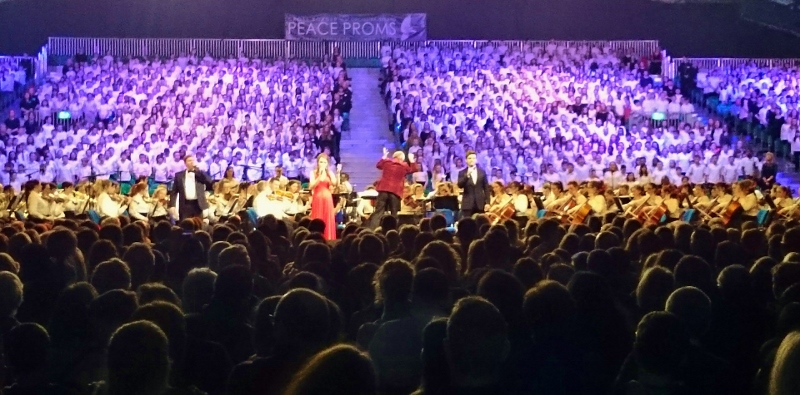
Peace Proms 2015 at RDS  Photo: © Michael Fisher

Peace Proms 2015 at RDS Photo: © Michael Fisher

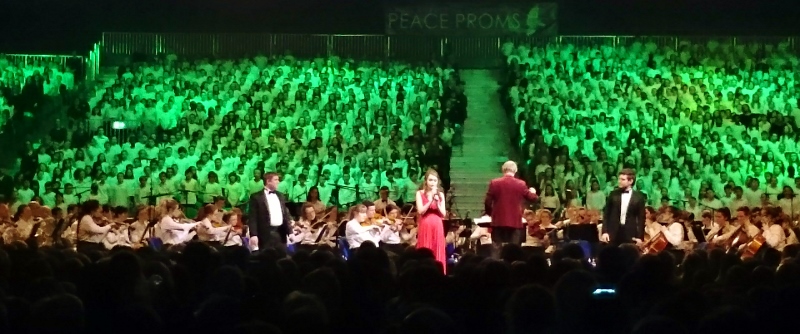
It has been a great weekend of music and song at the Royal Dublin Society’s Simonscourt Hall in Ballsbridge in Dublin. This afternoon seven national schools from County Monaghan helped to form the large choir of schoolchildren performing at the Peace Proms 2015 along with the Cross Border Orchestra of Ireland. Last night (Saturday) the Model school from Monaghan town took part. This afternoon I met all seven schools from County Monaghan, who arrived at the complex at 11:30am for a rehearsal.

Peace Proms 2015 at RDS  Photo: © Michael Fisher

Peace Proms 2015 at RDS Photo: © Michael Fisher

Two schools came from Carrickmacross, Bunscoil Lughaidh Naofa,  Cloughvalley, and St Joseph’s National School,  Farney Street. I also met pupils and their teachers from Knockconan National School, Emyvale, and my neighbours from  St Dympna’s National School, Tydavnet. There were also representatives from St. Louis Girls’ National School,  Park Road in Monaghan town; Scoil Mhuire,  Moys,   Clontibret  and finally Scoil Mhuire National School, Latton, Castleblayney.

Peace Proms 2015 at RDS  Photo: © Michael Fisher

Peace Proms 2015 at RDS Photo: © Michael Fisher

The Cross Border Orchestra of Ireland (CBOI) was established in 1995 as a peace initiative and is now composed of 120 young people from all over Ireland – north and south. It encourages diversity through music and community. The CBOI is internationally recognised as one of Ireland’s flagship peace initiatives and has become one of the most acclaimed youth orchestras that Ireland has ever produced. The Orchestra is led  by some of Ireland’s top professional musicians including: Conductor, Gearóid Grant; Violinist, Patricia Treacy; Tenor, Emmanuel Lawler; and Uilleann Piper, Patrick Martin. The CBOI undertakes a National Spring Tour annually performing at: 

  • The Waterfront Hall, Belfast / the Ulster Hall, Belfast
  • The Kingfisher Hall, NUI, Galway / Leisureland, Galway
  • City Hall, Cork
  • The Hub, Kilkenny
  • City West, Dublin / the National Concert Hall, Dublin / the Helix, DCU, Dublin
  • Letterkenny Institute of Technology, Donegal
  • The Opera House, Derry
  • The INEC Killarney, Kerry
  • Limerick University
  • Dundalk Institute of Technology

The Orchestra has performed for:

  •  President McAleese at Áras an Uachtaráin
  •  Queen Elizabeth II at Hillsborough Castle (Ensemble performance)
  • Many special international Ministerial gatherings at Slane Castle and Dublin Castle.
    Numerous national commemorations including:
  •  The Battle of the Boyne
  • 10th Anniversary of the Belfast Agreement
  • 30th Anniversary of the twinning of Listowel and Downpatrick
  • 400th Anniversary of the Flight of the Earls in Rome.

International tours and showcase of the best of Ireland:

  • ROYAL ALBERT HALL LONDON –  The CBOI performed to a capacity crowd at the Royal Albert Hall London in 2012 and is only the 3rd Irish orchestra in our history to have performed there.
  • WORLD EXPO SHANGHAI – The CBOI represented  Ireland, the UK and Europe at the historic World EXPO in Shanghai in 2010 where they received an award for the most “Outstanding International Performance”.
  • CARNEGIE HALL NEW YORK  – The CBOI has toured to the United States many times selling out prestigious venues including Carnegie Hall, New York, Chicago Symphony Hall, and Boston Symphony Hall. The CBOI as also sold out concerts in eight cities throughout California including San Fransisco and Los Angeles
  • EUROPE – The CBOI has performed in many European countries such as Italy, England, Czech Republic and Finland.

    Peace Proms 2015 at RDS  Photo: © Michael Fisher

    Peace Proms 2015 at RDS Photo: © Michael Fisher

 The CBOI plays a vital role in enhancing Music and Arts education in Ireland thourgh “Peace Proms”. Peace Proms is a choral education project for Primary Schools devised and delivered by the Cross Border Orchestra of Ireland.  Over 15,000 children from 300 schools participate in Peace Proms annually. It is not a “classical orchestra”. Their music  highlights the pop, folk and traditional cultures of the island of Ireland. They use all the instruments of a full symphony orchestra but include traditional instruments for example Lambeg Drums, Uilleann Pipes and Highland Pipes.  Many of the CBOI’s commissions have been written by Brian Byrne who is recognised as one of Ireland leading contemporary composers and arrangers. Based in Los Angeles, Brian is an IFTA winner and OSCAR nominee.

Peace Proms 2015 Commemorative Brochure

Peace Proms 2015 Commemorative Brochure

Over the past 18 years, the CBOI has played an important role in building and nurturing vital cross border and cross community relations. We are delighted to have recently established a link with the Royal Scottish Pipe Band Association Northern Ireland Branch and look forward to showcasing our combined cultural talents and working with them for a better future.
Belfast Odyssey Arena Sunday 8th February  3pm Belfast Peace Proms
Limerick  Saturday 28th February

Share this:

  • Share on Facebook (Opens in new window) Facebook
  • Share on X (Opens in new window) X
Like Loading...
MONAGHAN MUSIC NEWS UNCATEGORISED CarrickmacrossClontibretCross Border OrchestraKnockconanLattonMonaghanPeace Proms 2015RDSTydavnet Leave a comment

BAZZI DEPORTED FROM USA

31/01/2015 by borderroamer
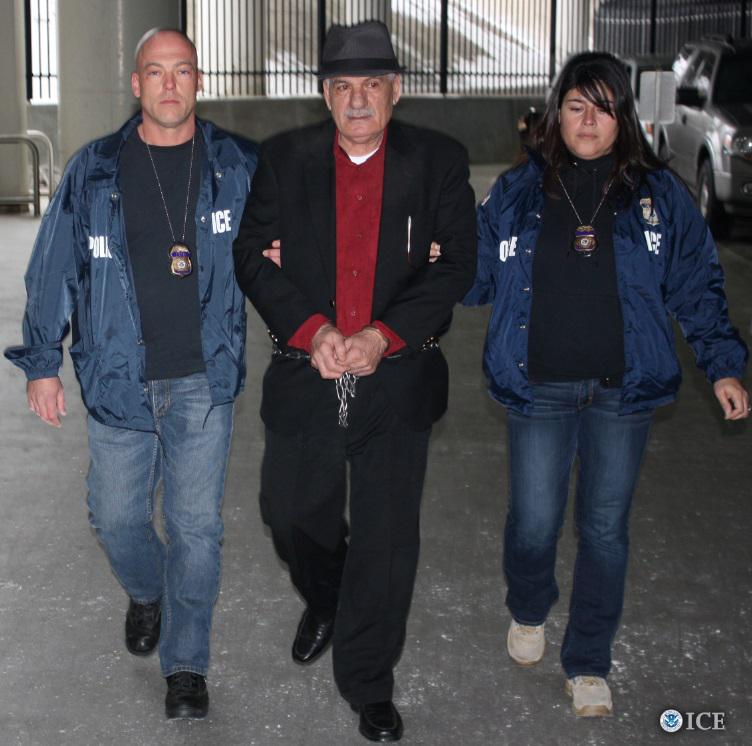
Mahmoud Bazzi deported from US to Lebanon  Photo: US Immigration and Customs Enforcement/RTE News

Mahmoud Bazzi deported from US to Lebanon Photo: US Immigration and Customs Enforcement/RTE News

On RTÉ News last night (Friday), Washington correspondent Caitriona Perry reported on the deportation from the United States to his native Lebanon of 71 year-old Mahmoud Bazzi. He is suspected of murdering two Irish soldiers on UN duty in 1980, Private Derek Smallhorne and Private Thomas Barrett, although he has denied any involvement. Last year a campaign group was set up by family members and former members of the defence forces, some of them veterans of the United Nations Interim Force in Lebanon (UNIFIL), who had served alongside the two men from the 46th Infantry Battalion.

Banner at head of Parade to US Embassy in Ballsbridge July 2014

Banner at head of Parade to US Embassy in Ballsbridge July 2014

Private Smallhorne (31) was from Bluebell in Dublin and served with the 5th Inf Bn Collins Barracks in Dublin. Private Barrett (29) was from Cork and served with the 4th Inf Bn Collins Barracks in Cork. The campaign group website has the following background about the incident:

April 6th – 18th 1980
By April 1980 the 46 Inf Bn was coming to the end of its six month tour in South Lebanon. April however would prove to be a testing time for the battalion. From April 6-12th Irish troops withstood an attack at At-Tiri by the Lebanese De Facto Forces (DFF), the so-called South Lebanon Army (SLA). The DFF were a Christian-Shi’a militia under the leadership of Major Saad Haddad. The village controlled the only road leading north onto what was known as Hill 880. From this hill the surrounding villages and the fertile Tibnin Valley could be dominated by direct fire. Due to the strategic location of At-Tiri the DFF attempted to secure the area on several occasions. During the engagement of April 6-12th one Irish peacekeeper, one Fijian peacekeeper and one DFF militiaman were killed. For the loss of their ‘brother’, DFF Major Haddad pronounced that he wanted $10,000 or two Irish bodies. The engagement became known as the Battle of At-Tiri.

Following the Battle of At-Tiri OGL negotiations secured the safe withdrawal and passage of Irish personnel from Observation Post (OP) Ras; located just outside the village of Maroun Al-Ras. On April 18th Pte Derek Smallhorne (31) a father of three, Pte Thomas Barrett (29), also a father of three and Pte John O’Mahony (28) were tasked to drive a three vehicle convoy from Tibnin to OP Ras and withdraw the Irish OP. Accompanying them were two UN Observer Group Lebanon officers, US Major Harry Klein and French Captain Patrick Vincent. Also accompanying the convoy to write about the event was photographer Zaven Vartan and US press reporter Steve Hindy.

On the outskirts of Bint Jbeil village DFF gunmen stopped the convoy and ordered everyone out. The gunmen disarmed the three Irish drivers and confiscated Zaven’s camera bag. The vehicles were commandeered and all were escorted by the gunmen to an abandoned school.

At the school all seven were questioned about their nationalities. After some time Mahmoud Bazzi allegedly entered wearing a black t-shirt indicating he was in mourning for a brother who had been killed during the recent clash with the Irish battalion at At-Tiri. It’s claimed that Bazzi along with two gunmen ordered the three Irish peacekeepers down a corridor disappearing into a room at the end. Shortly afterwards shots were fired. The OGL officers and the journalist Steve Hindy then saw Private John O’Mahony staggering from the room; it quickly became apparent to the OGL officers and the journalists that he had been badly wounded. At the same time Privates Smallhorne and Barrett bolted from the room into the yard where they were recaptured.

As this was going on, a vehicle pulled up outside carrying several of Haddad’s lieutenants known to the OGL officers. They ordered the OGL officers and the journalists to take the wounded Pte John O’Mahony; however they refused to give up Pte Derek Smallhorne and Pte Thomas Barrett. The last that was seen of the two peacekeepers was as they were driven off apparently by Mahmoud Bazzi and two gunmen. The OGL officers and the journalists raced Pte John O’Mahony back to Tibnin were he was then flown to the UNIFIL hospital in Naquora. Not long after it was announced that the bodies of Pte Derek Smallhorne and Thomas Barrett had been found near Bint Jbail. They had been tortured and executed.

April 18th 1980 to today
Mahmoud Bazzi is believed to have boasted of the incident in the Lebanese press. News reports at the time quoted Haddad as saying, “They took the two Irishmen and took their revenge. That is custom in the Middle East, especially in Lebanon.”

It is known that Mahmoud Bazzi entered the United States shortly after April 18th 1980, being given asylum and a Green Card. He settled in Detroit, Michigan working as an ice-cream man. Two decades later RTÉ Prime Time conducted a special report on the abduction and killing of the Irish peacekeepers. Travelling to the United States they tracked down Mahmoud Bazzi. He denied any involvement in the killings. He claimed that he was the fall guy and blamed Haddad for the Irishmen’s deaths.

In 2005 the then Irish Minister for Defence, Willie O’Dea TD, reopened the investigation into the deaths of Pte Derek Smallhorne, Pte Thomas Barrett and the wounding of Pte John O’Mahony. The reopening of the investigation led to a United States Dept of Justice investigation into the status of Mahmoud Bazzi living in Detroit, Michigan. Steve Hindy gave two depositions to officials, one in New York and the second in Washington D.C. John O Mahony was also interviewed by US officials. No action was taken against Bazzi on foot of this investigation.

SmallhorneBarrett7

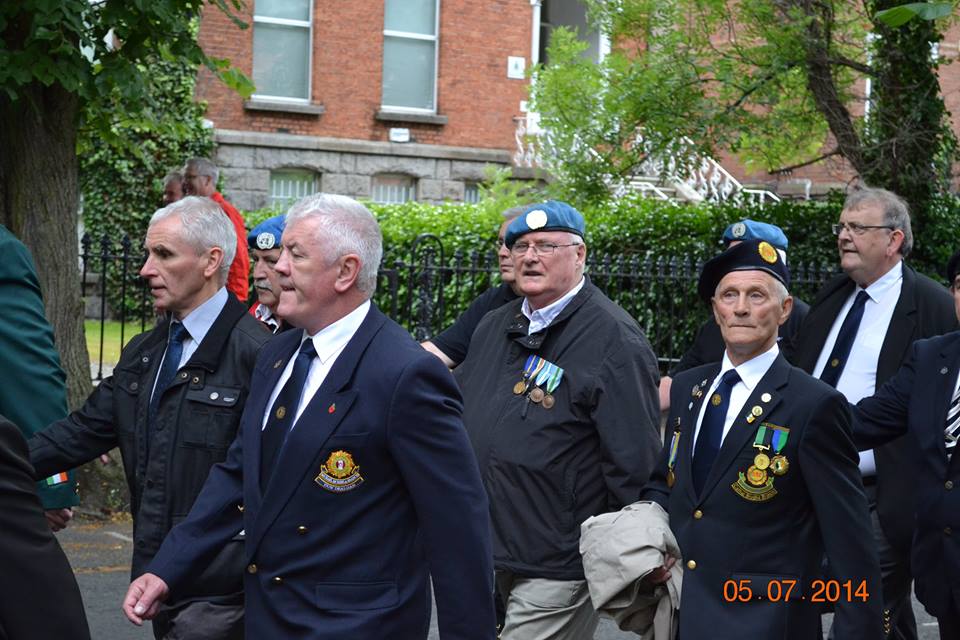
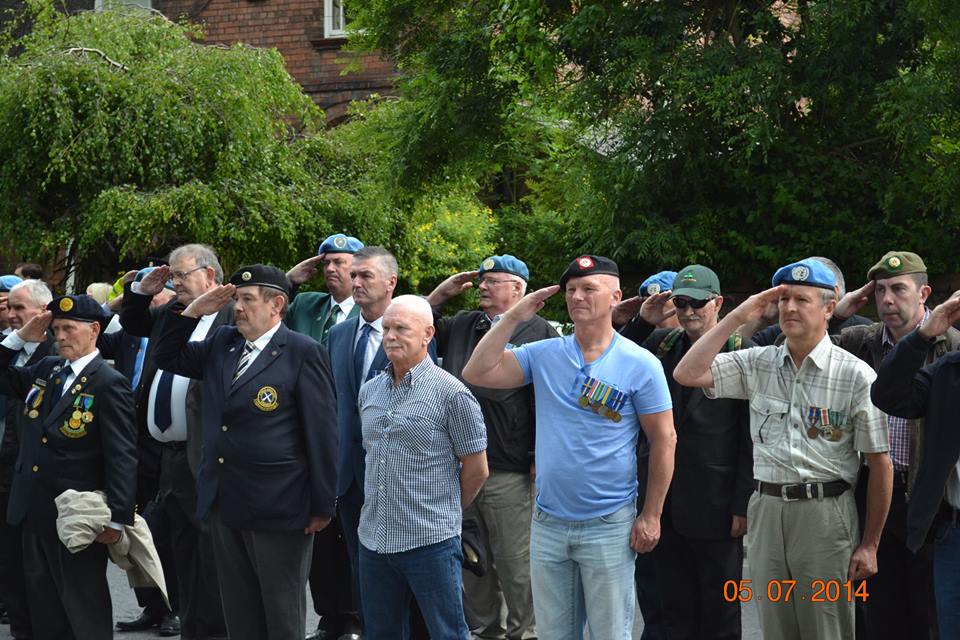
Parade in Ballsbridge July 2014

As a result of Mahmoud Bazzi applying for United States citizenship last year 2013 a new investigation was launched by the United States Department of Homeland Security (Immigration and Customs Enforcement) which found alleged immigration irregularities and possible illegal entry by Mahmoud Bazzi into the United States. The deportation is the latest step in this story.

To raise awareness about the case, the Justice for Smallhorne & Barrett group held two dignified and well-organised protests last year. In April, a Silent Vigil took place at Government Buildings in Dublin, attended by in excess of 500 Irish Veterans.  Another Silent Vigil  Ceremony in which I participated was held by the group on the 5th of July 2014  outside the US Embassy in Ballsbridge. Irish defence forces veterans from IUNVA and ONE were joined on the day by United States American Legion Veterans, French Foreign Legion Veterans, as well as some Dutch and Nordic Veterans. For a report on the protest, you can find Diarmaid Fleming’s package for the This Week programme on Radio 1 on the RTÉ Player. There are also various video clips on youtube. 

End of Parade at Lansdowne Road stadium with playing of National Anthem

End of Parade at Lansdowne Road stadium with playing of National Anthem


Share this:

  • Share on Facebook (Opens in new window) Facebook
  • Share on X (Opens in new window) X
Like Loading...
MILITARY NEWS POLITICS BallsbridgeJustice for Smallhorne & BarrettLebabanonMahmoud BazziUNIFIL Leave a comment

CARLETON ANNIVERSARY

30/01/2015 by borderroamer
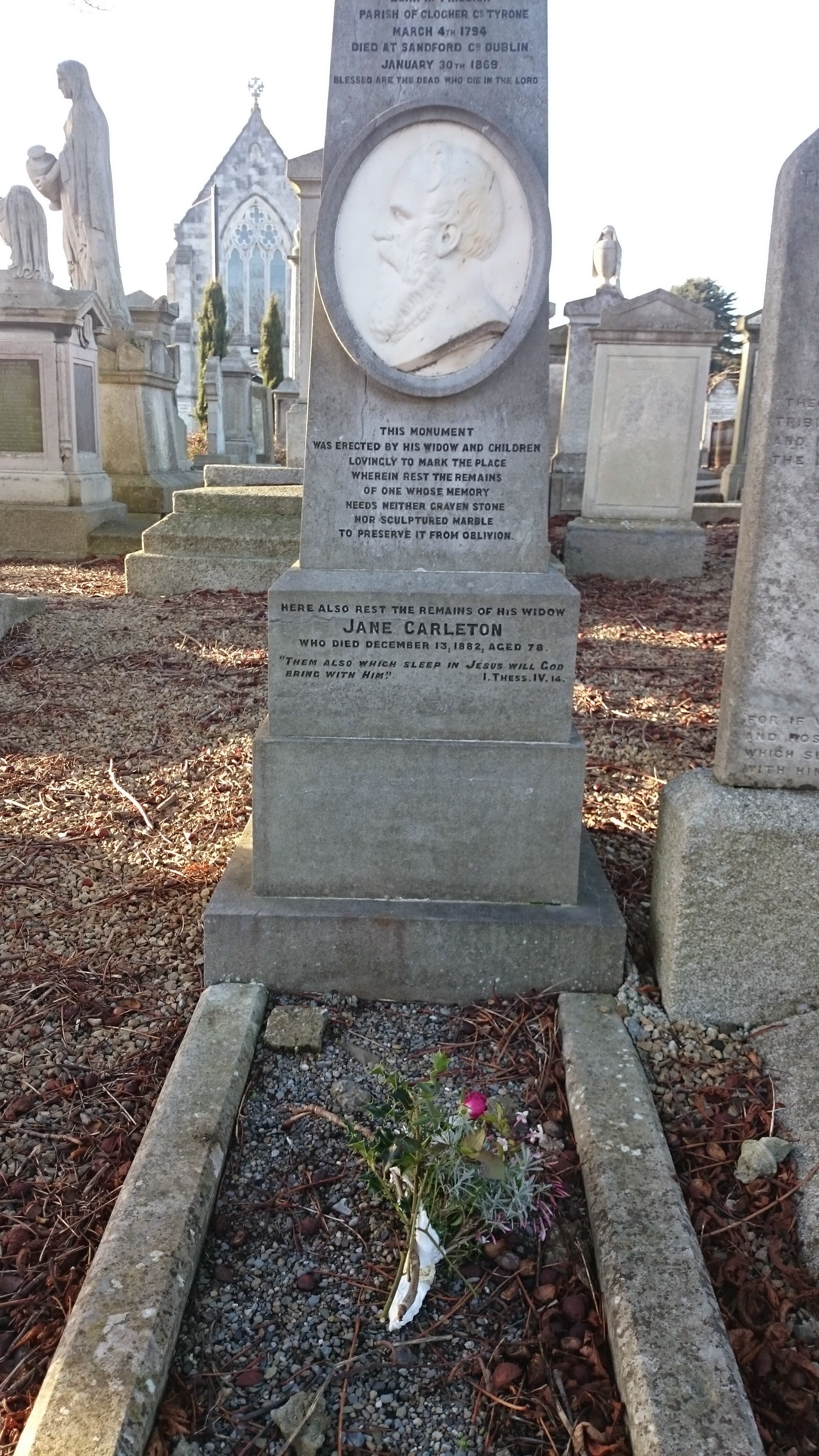
Grave of William Carleton at Mount Jerome Cemetery, Dublin  Photo: © Michael Fisher

Grave of William Carleton at Mount Jerome Cemetery, Dublin Photo: © Michael Fisher

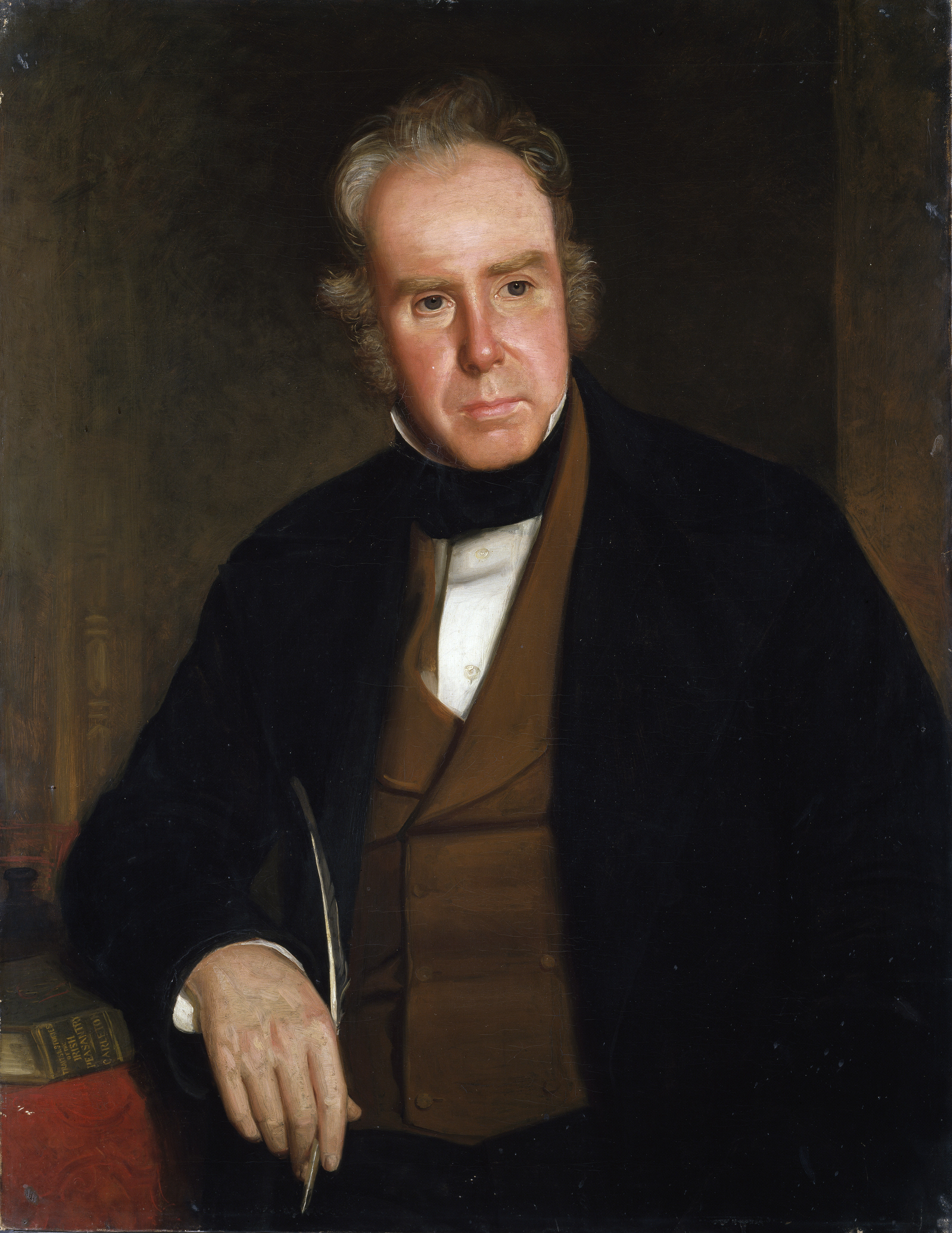
This is the 146th anniversary of the death of the leading 19thC Irish author William Carleton on January 30th 1869. He is buried at Mount Jerome Cemetery in Dublin. I left a small floral tribute at his grave there recently.

JJ Slattery oil portrait of William Carleton in National Gallery of Ireland

JJ Slattery oil portrait of William Carleton in National Gallery of Ireland

Share this:

  • Share on Facebook (Opens in new window) Facebook
  • Share on X (Opens in new window) X
Like Loading...
CARLETON MONAGHAN NEWS UNCATEGORISED Mount JeromeWilliam Carleton Leave a comment

BOSE BLOW STUNS CARRICK

29/01/2015 by borderroamer
Northern Standard  Thursday 28th January 2015   Story by Michael Fisher  © Northern Standard

Northern Standard Thursday 28th January 2015 Story by Michael Fisher © Northern Standard

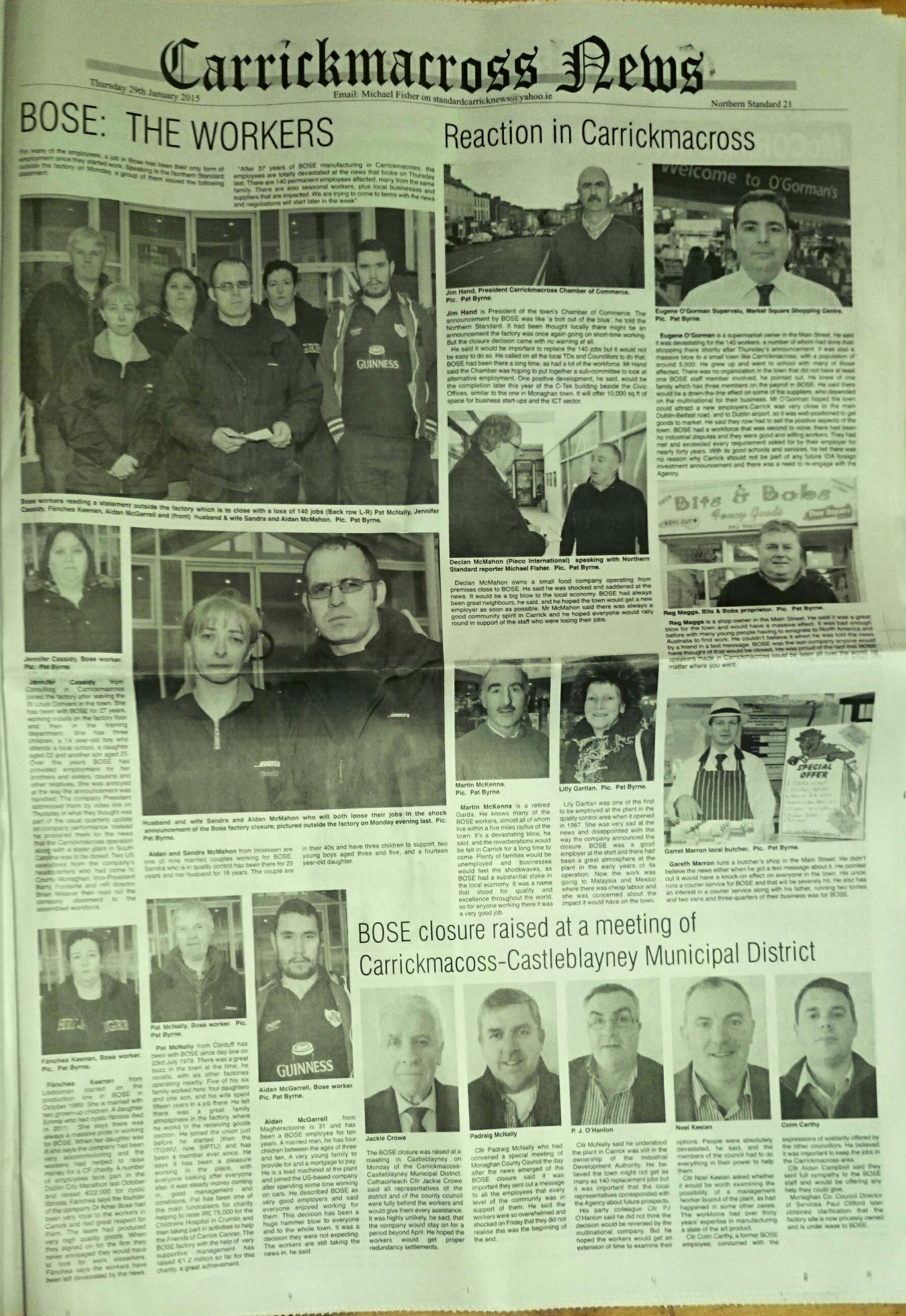
Having contributed the lead story in today’s Northern Standard Thursday 29th January about the suddenly announced the closure of the Bose factory, I also filled three pages with Carrickmacross News.

image

I also contributed two stories featuring Bishop MacDaid of Clogher.

image

image

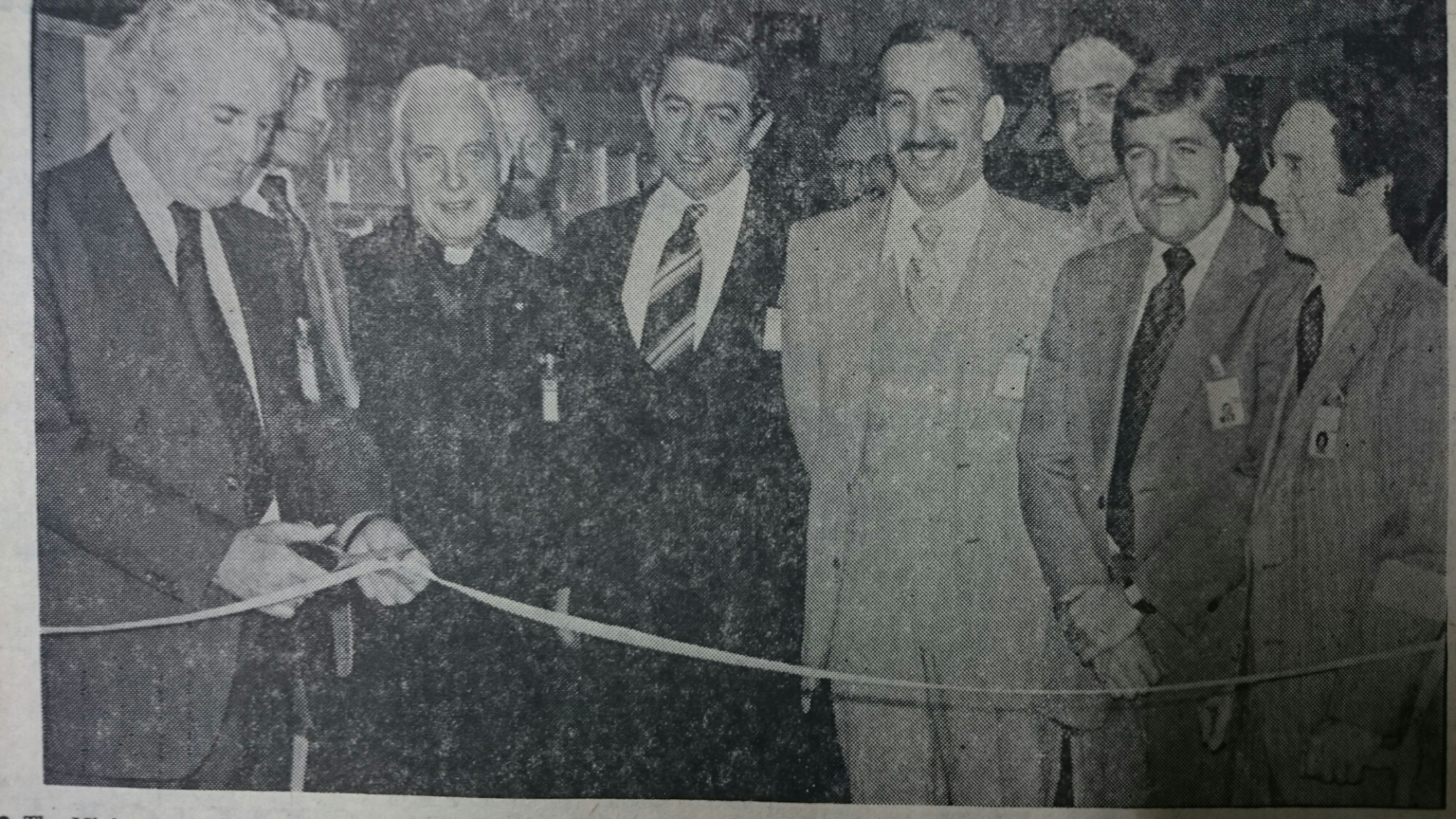
I enjoyed dipping into the archives to be shown the copy of the paper in October 1978 in which the official opening of the Bose factory was featured. It was carried out by my former Latin teacher (1967-69) the late John Wilson TD, then Minister for Education. The plant was blessed by Archdeacon Morris of Carrickmacross. Two TDs at the time Dr Rory O’ Hanlon and Jimmy Leonard are now retired.

The Minister for Education, Mr. John Wilson, T.D., cuts the tape to officially open the new Bose factory at Carrickmacross. Pictured along with top management are Monsignor Morris, Archdeacon, Carrickmacross (third from left) and Mr. Stanley. A. Hendryx, Managing Director (extreme right)

The Minister for Education, Mr. John Wilson, T.D., cuts the tape to officially open the new Bose factory at Carrickmacross. Pictured along with top management are Monsignor Morris, Archdeacon, Carrickmacross (third from left) and Mr. Stanley. A. Hendryx, Managing Director (extreme right)  Photo: © Northern Standard


The 150 guests were taken on a tour of the factory, “prior to a sumptuous reception and luncheon at Hotel Nuremore, Carrickmacross”.

A section of the crowd who attended the official opening of the new Bose Ireland factory at Carrickmacross last Friday. Included in the picture are Dr. Rory O'Hanlon, T.D.; Deputy J. Leonard, T.D.; Mr. T.J. Finlay, Chairman of Carrickmacross U.D.C., and Mr. P. McEneaney, M.C.C., Carrickmacross  Photo:  © Northern Standard

A section of the crowd who attended the official opening of the new Bose Ireland factory at Carrickmacross last Friday. Included in the picture are Dr. Rory O’Hanlon, T.D.; Deputy J. Leonard, T.D.; Mr. T.J. Finlay, Chairman of Carrickmacross U.D.C., and Mr. P. McEneaney, M.C.C., Carrickmacross   Photo: © Northern Standard


Share this:

  • Share on Facebook (Opens in new window) Facebook
  • Share on X (Opens in new window) X
Like Loading...
MONAGHAN NEWS POLITICS BOSEBrendan Smith TDCaoimghín Ó Caoláin TDCarrickmacrossDr Amar BoseHeather Humphreys TDSean Conlan TDSIPTU Leave a comment

PATRICK KAVANAGH CENTRE

28/01/2015 by borderroamer
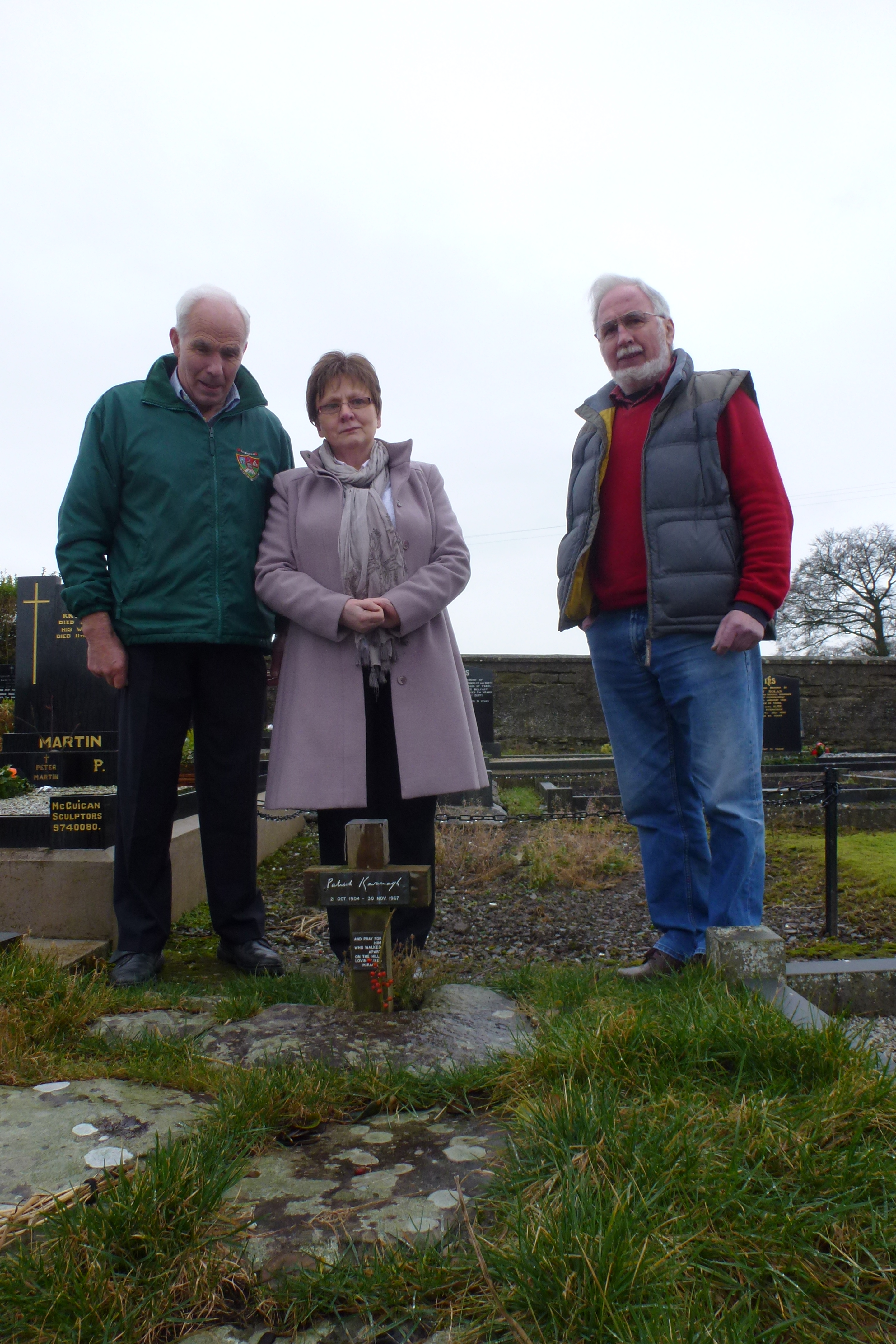
Art Agnew, Rosaleen Kearney and Patsy McKenna at the Patrick Kavanagh Centre, Inniskeen  Photo:  © Michael Fisher

Art Agnew, Rosaleen Kearney and Patsy McKenna at the Patrick Kavanagh Centre, Inniskeen Photo: © Michael Fisher

BUSY YEAR FOR KAVANAGH CENTRE

Art Agnew has taken on the mantle of Patrick Kavanagh. The former English teacher who was Principal of the St Louis school in Carrickmacross until 2005 is one of a team of volunteers behind the Kavanagh Centre in the former Catholic chapel in Inniskeen. It was officially opened by President Robinson in June 1994. Twenty years later President Higgins visited the building for the Kavanagh weekend in September 2014. He said the poet brought the Ireland of his and our times, with both its beauty and its savagery, into our consciousness. Now Art is hoping some of the initiatives they have taken as a committee will bring tangible results to boost this area of South Monaghan.

Patsy McKenna, Rosaleen Kearney and Art Agnew at Patrick Kavanagh's grave, Inniskeen  Photo:  © Michael Fisher

Patsy McKenna, Rosaleen Kearney and Art Agnew at Patrick Kavanagh’s grave, Inniskeen Photo: © Michael Fisher

An annual poetry award for secondary school students in the border area first presented in 1984 is to be expanded and will now be open to secondary school students throughout the island of Ireland. It is being sponsored by Cavan Monaghan Education and Training Board. Noel Monahan will be one of the adjudicators. Art explained that in the past, if a student or school from Dublin or Waterford had submitted an entry, then it would have to be sent back, albeit very reluctantly. Now they are hoping they will receive entries from throughout the Republic and Northern Ireland.

Billy Brennan's Barn: Inniskeen Road, July evening 2013  Photo: © Michael Fisher

Billy Brennan’s Barn: Inniskeen Road, July evening 2013   Photo: © Michael Fisher

Towards the end of last year, the Patrick Kavanagh Centre team were among the first to show an interest when ‘Billy Brennan’s Barn’ at Drumnanaliv near Inniskeen that featured in one of Kavanagh’s poems was put up for sale through a local auctioneer. The barn was used for unofficial dances in the 1930s and 1940s. The poem ‘Inniskeen Road: July evening’ is well-known among generations of Leaving Certificate students as it featured in the Irish curriculum since the early 1970s. Art is very hopeful that some form of state funding can be obtained to preserve this building. But one of his main concerns is the future of the visitor centre.

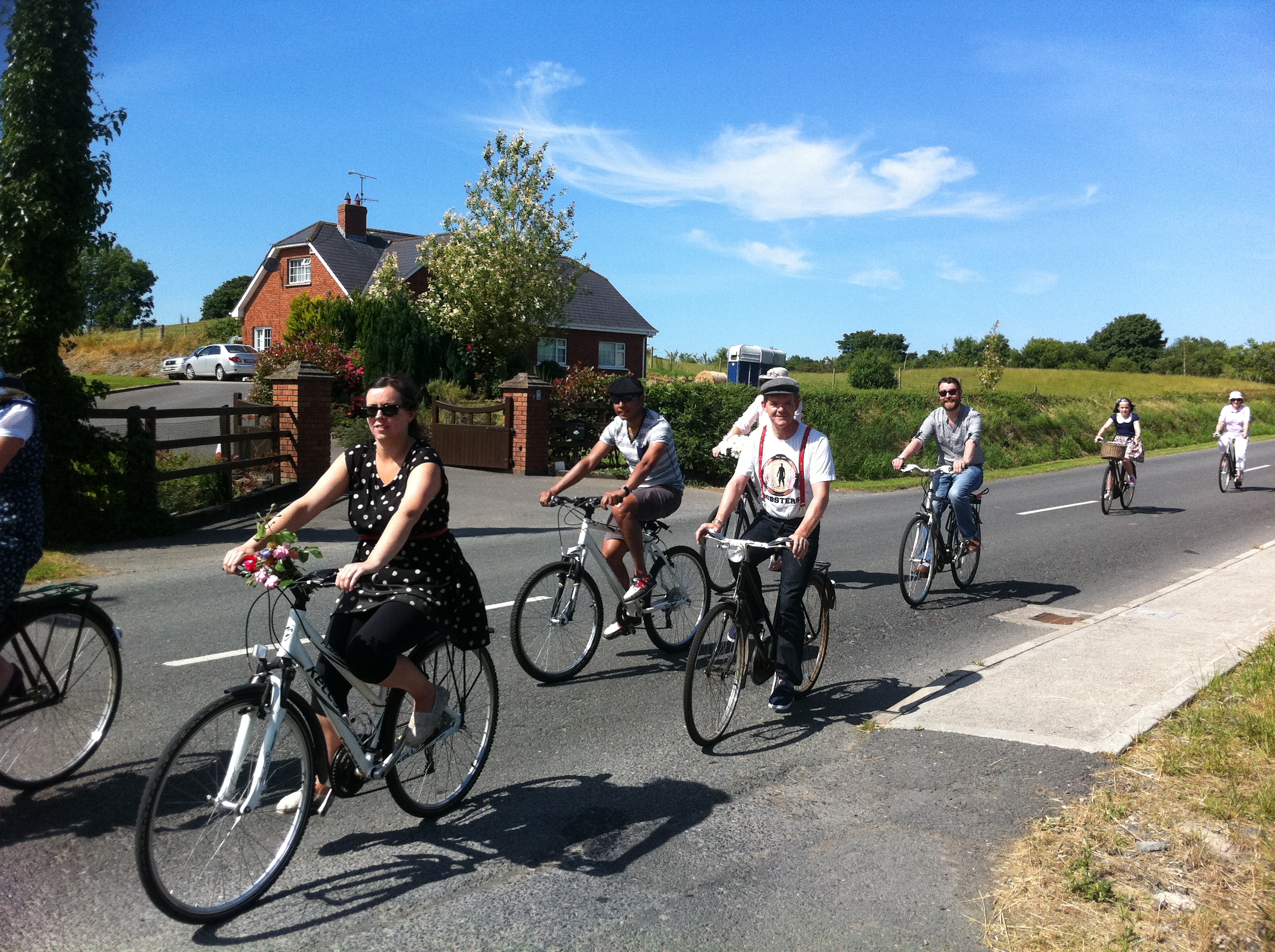
"The bicycles go by in twos and threes..."  Photo:  © Michael Fisher

“The bicycles go by in twos and threes…” Photo: © Michael Fisher

Talking to him and administrator Rosaleen Kearney in the small office at the centre, it is clear that 2015 will be an important year for their plans. First, they are hoping to reconfigure the layout of the building in order to display its contents in a more exciting way for visitors. But it will be necessary to make this old church dating to 1820 watertight. A conservation expert has just completed a survey of the building. He has found that the existing physical environment is not suitable at present in order to house the material in the exhibition. So capital investment is needed to make the display secure and safe. The accommodation for staff and visitors also needs to be improved, according to the report.

In the past the centre received support from the International Fund for Ireland and is hoping that other sources of support can now be found. The committee would like to see the material they have stored made available in a library for postgraduate students in particular. They are hoping to establish a lecture space and audiovisual area. If their plans succeed, they hope it will give a boost to tourism in South Monaghan.

Billy Brennan's Barn: Inniskeen Road, July evening 2013  Photo: © Michael Fisher

Billy Brennan’s Barn: Inniskeen Road, July evening 2013 Photo: © Michael Fisher

For the past two years with the support of Carol Lambe of Monaghan County Council, an Inniskeen Road, July Evening festival has taken place, with visitors encouraged to tour the sites associated with Kavanagh on High Nellie bicycles. So thanks to Art Agnew, Rosaleen Kearney and an active committee, a lot is being done to keep the memory of Kavanagh alive.


Share this:

  • Share on Facebook (Opens in new window) Facebook
  • Share on X (Opens in new window) X
Like Loading...
MONAGHAN NEWS Art AgnewInniskeenMonaghanPatrick KavanaghRosaleen Kearney Leave a comment

AUSCHWITZ

27/01/2015 by borderroamer
Auschwitz camp entrance  Photo:  © Michael Fisher

Auschwitz camp entrance Photo: © Michael Fisher

“Remembering is not only about (the) past itself, but rather about connecting it to the future”. A view that has much relevance in Northern Ireland, where dealing with the past continues to be a very sensitive issue, including the definition of ‘victims’. The quotation is taken from an interview with Dr. Piotr M.A. Cywiński, director of the Auschwitz-Birkenau State Museum. Today an important commemoration was held, marking the 70th anniversary of the liberation of Auschwitz=Birkenau concentration camp. It was attended by thirty world leaders and heads of state. Ireland was represented by the Minister for Foreign Affairs, Charlie Flanagan TD.

Rail tracks at Birkenau camp Photo:  © Michael Fisher

Rail tracks at Birkenau camp Photo: © Michael Fisher

More than one million people, the overwhelming majority of them Jews, were killed at the death camp, which was liberated by the Soviet Army on 27 January 1945. Speaking from Poland, Minister Flanagan said: “Auschwitz stands as a haunting symbol of one of the darkest periods in Europe’s history. The ceremony to mark the 70th anniversary of the liberation of the camps will be an occasion when all victims of the Holocaust will be remembered, most especially the few remaining survivors of Auschwitz-Birkenau, many of whom will be present at the event. We must never forget the inhuman cruelty and industrial scale murder that took place here and in other death camps across Europe”.

Mr Flanagan added: “We must continue to be alive to the fact that the Holocaust had its origins in intolerance, prejudice and racism. We must be vigilant in our promotion of equality and tolerance and our defence of fundamental human rights which remain under threat in many parts of the world today”.

Ireland will make a further contribution of €10,000 to the Perpetual Capital Fund of the Auschwitz-Birkenau Foundation, in addition to the €5,000 donated in 2013. The Fund was set up in 2009 to ensure the future conservation and preservation of the Auschwitz-Birkenau site, so that future generations can see an authentic space, the scene of one of the biggest crimes in the history of mankind.

Minister Flanagan stated: “It is vital that we ensure the conservation and preservation of the Auschwitz-Birkenau site, so that future generations can see an authentic space, honour the memory of the victims and learn the lessons of the Holocaust. Ireland’s contribution of €10,000 will assist in this.”

Auschwitz memorial  Photo: © Michael Fisher

Auschwitz memorial Photo: © Michael Fisher

Interview with Dr. Piotr M.A. Cywiński which can be found on the website

The 70th anniversary of the liberation of Auschwitz is approaching. What is the significance and the meaning of this day?

The 70th anniversary will not be the same as previous big anniversaries. We have to say it clearly: it is the last big anniversary that we can commemorate with a numerous group of Survivors. Until now, it has been them who taught us how to look at the tragedy of the victims of the Third Reich and the total destruction of the world of European Jews. Their voices became the most important warning against the human capacity for extreme humiliation, contempt and genocide. However, soon it will not be the witnesses of those years, but us, the post-war generations, who will pass this horrible knowledge and the crushing conclusions that result from it.

On this day, we must understand that the Survivors, the former prisoners, did everything they could to make us realise that the road to the most terrible tragedies is surprisingly simple. All you need is social frustration, a bit of demagoguery, an imaginary enemy, a moment of madness… Peace is a very fragile construct and you can never assume that any acquis communautaire is truly obtained for good. It may be clearly observed in at least several regions of the world, which makes it even more alarming. The future of our civilisation is in our own hands and we must take responsibility for the shape of that future. And a wise vision of future must be rooted in memory.

Ten years ago, the day of Auschwitz liberation was designated by the United Nations General Assembly as the International Holocaust Remembrance Day. Doesn’t that help?

It is an important political signal, as the General Assembly unites representatives of all member states. When I speak of remembrance, however, what I mean is not its institutionalised form. It is also necessary, but not as much as it is important for a sense of awareness of the meaning behind the extermination of European Jews and the whole tragedy of concentration camps to take root in our whole culture, politics and education system. Without internalising and understanding the reality of this atrocity, we will be unable to recognise today’s challenges for what they really are. We will not be even able to understand the post-war efforts to create emergency mechanisms, to build a common Europe or to teach attitudes of empathy, mutuality and respect.

But don’t you have the feeling that today, in the second decade of the 21st century, while the history of Auschwitz becomes more and more distant, similar horrible images reappear in other places, in different ways and contexts?

They do. And it clearly shows that teaching about Auschwitz and the Shoah is not just telling a story which had its beginning and its end, relating an isolated set of facts drifting away in time. It is also a lesson on human nature, society, the power of the media, on the politics. If today, when we see what is happening in some parts of the world, we are reminded of the Second World War, even of Auschwitz, it is because deep inside we feel that, regardless of various factors, we are facing the same pathological passions: hatred, contempt, anti-Semitism, racism, nationalisms… There are still many important steps to be taken in education before teaching about Auschwitz and the Shoah is soundly established in social and civic education or even in teaching about the most recent history.

I sincerely hope that commemoration of this day will take place all over the world, in every place inhabited by people aware of our obligation. We encourage everyone to express this memory everywhere in the world. I have to admit that what alarms me most is the still-present overwhelming passivity in the face of organised evil.

Main commemoration of the 70th anniversary will take place in a tent in front of the Gate of Death of the former Auschwitz II-Birkenau camp. It means that one of the most recognisable visual symbols of Auschwitz will become a symbol of the ceremony. What is the reason behind this choice?

Man is capable of crossing almost every boundary. For those who crossed – most frequently in cattle wagons – the gate of Birkenau, there was no way back. Nowadays, almost one and a half a million people cross the same gate every year in an attempt to face the meaning of Auschwitz. The visit starts in the former Auschwitz I Stammlager camp, where all the educational and exhibition-related aids are located. They introduce visitors to the history. Then, visitors go to Birkenau, where the immensity of the post-camp space, kilometres of barbed wire, rows of barracks, remains of gas chambers and crematoria make them fully realise the size of that tragedy and its undeniable realness. In some way, just like the gate stands today in the middle, all of us are in the middle of something as well. We know the facts, we know what happened, but the most important part still lies ahead: realising the significance of those facts, of the Shoah and of the whole genocidal policy of the Third Reich. Without this awareness we cannot hope for more responsibility.

Why is this immensity of Birkenau so significant?

Because it is authentic. Even if most wooden barracks no longer exist, even if SS officers blew up gas chambers, even if grass has reappeared where it had grown before the war, the presence of the Shoah is still evident. There are almost no museographic installations that would obscure the view. To walk along the unloading ramp, to go inside a brick barracks, to silently look at the undressing room next to the gas chambers – this is much more than any exhibition in the world or the most elaborate memorial. Provided, of course, that one has previous knowledge of history.

Which is why, for the past five years, we have focused on providing this Memorial Site with long-term ways of financing comprehensive preservation works. Thirty countries signed up to contribute to the created Perpetual Fund of the Auschwitz-Birkenau Foundation. We hope that thanks to the support of our exceptional private donators, the “Pillars of Remembrance”, we will complete the Fund by January 2015. At that time, the future of the Memorial Site and the significance of its authenticity will be much more secure. For generations.

The majority of visitors are young people. Why are they so interested in Auschwitz?

Three fourths of the visitors are young people. Their coming here is a part of developed educational programmes. Many of today’s teachers first came to Auschwitz as students themselves, so they know how such an experience can change one’s view of the world and oneself. In many countries decision-makers came to the conclusion that such visits should be planned and financed as a part of special governmental or regional programmes. People who are about to graduate from school or university and begin their adult lives should look deep into the heart of evil which Auschwitz was. It is a rite de passage for a person coming of age nowadays.

The most important guests of the commemoration will be the Survivors, the witnesses. However, the several thousand people attending will include also state delegations: politicians, people who transform the contemporary world. Can Auschwitz be a lesson for them as well?

Auschwitz is a lesson for anyone willing to learn. You might think that the scope of responsibility of a normal, average person is normal and average as well. And that a politician or a decision-maker bears far greater responsibility. That’s not entirely true. A vast majority of the Righteous Among the Nations are normal people, average, you could say, if not for their enormous sacrifice. Nevertheless, in a substantive way they saved the face of humanity. Of course, the influence of a decision a politician makes is disproportionally larger. But it cannot exempt any of us from taking our own responsibility.

Do you see any universal message coming from this place?

The message comes from the Survivors, from their memoirs, books, recordings. The message comes also from the silence of the murdered ones. I would like to recall the voice of a person who did not survive, a prisoner of the Sonderkommando, one of the leaders of the revolt in crematorium IV – the voice of a Polish Jew, Załmen Gradowski. In his notes, which he hid in the ground near the building of the crematorium, he wrote: “We have a dark premonition, because we know”. At that time he meant the fate of his friends taken into an unknown direction. But I would not want to narrow down the meaning of these unsettling words just to that. We today also now, we know perfectly well. Nothing is given forever. We must always be able to sense growing dangers and great challenges of the future. And in place of inactivity and passivity, we must develop a sense of responsibility. Remembering is not only about past itself, but rather about connecting it to the future.

Interview with Dr. Piotr M.A. Cywiński, the director of the Auschwitz-Birkenau State Museum

The 70th anniversary of the liberation of Auschwitz is approaching. What is the significance and the meaning of this day?

The 70th anniversary will not be the same as previous big anniversaries. We have to say it clearly: it is the last big anniversary that we can commemorate with a numerous group of Survivors. Until now, it has been them who taught us how to look at the tragedy of the victims of the Third Reich and the total destruction of the world of European Jews. Their voices became the most important warning against the human capacity for extreme humiliation, contempt and genocide. However, soon it will not be the witnesses of those years, but us, the post-war generations, who will pass this horrible knowledge and the crushing conclusions that result from it.

On this day, we must understand that the Survivors, the former prisoners, did everything they could to make us realise that the road to the most terrible tragedies is surprisingly simple. All you need is social frustration, a bit of demagoguery, an imaginary enemy, a moment of madness… Peace is a very fragile construct and you can never assume that any acquis communautaire is truly obtained for good. It may be clearly observed in at least several regions of the world, which makes it even more alarming. The future of our civilisation is in our own hands and we must take responsibility for the shape of that future. And a wise vision of future must be rooted in memory.

Ten years ago, the day of Auschwitz liberation was designated by the United Nations General Assembly as the International Holocaust Remembrance Day. Doesn’t that help?

It is an important political signal, as the General Assembly unites representatives of all member states. When I speak of remembrance, however, what I mean is not its institutionalised form. It is also necessary, but not as much as it is important for a sense of awareness of the meaning behind the extermination of European Jews and the whole tragedy of concentration camps to take root in our whole culture, politics and education system. Without internalising and understanding the reality of this atrocity, we will be unable to recognise today’s challenges for what they really are. We will not be even able to understand the post-war efforts to create emergency mechanisms, to build a common Europe or to teach attitudes of empathy, mutuality and respect.

But don’t you have the feeling that today, in the second decade of the 21st century, while the history of Auschwitz becomes more and more distant, similar horrible images reappear in other places, in different ways and contexts?

They do. And it clearly shows that teaching about Auschwitz and the Shoah is not just telling a story which had its beginning and its end, relating an isolated set of facts drifting away in time. It is also a lesson on human nature, society, the power of the media, on the politics. If today, when we see what is happening in some parts of the world, we are reminded of the Second World War, even of Auschwitz, it is because deep inside we feel that, regardless of various factors, we are facing the same pathological passions: hatred, contempt, anti-Semitism, racism, nationalisms… There are still many important steps to be taken in education before teaching about Auschwitz and the Shoah is soundly established in social and civic education or even in teaching about the most recent history.

I sincerely hope that commemoration of this day will take place all over the world, in every place inhabited by people aware of our obligation. We encourage everyone to express this memory everywhere in the world. I have to admit that what alarms me most is the still-present overwhelming passivity in the face of organised evil.

Main commemoration of the 70th anniversary will take place in a tent in front of the Gate of Death of the former Auschwitz II-Birkenau camp. It means that one of the most recognisable visual symbols of Auschwitz will become a symbol of the ceremony. What is the reason behind this choice?

Man is capable of crossing almost every boundary. For those who crossed – most frequently in cattle wagons – the gate of Birkenau, there was no way back. Nowadays, almost one and a half a million people cross the same gate every year in an attempt to face the meaning of Auschwitz. The visit starts in the former Auschwitz I Stammlager camp, where all the educational and exhibition-related aids are located. They introduce visitors to the history. Then, visitors go to Birkenau, where the immensity of the post-camp space, kilometres of barbed wire, rows of barracks, remains of gas chambers and crematoria make them fully realise the size of that tragedy and its undeniable realness. In some way, just like the gate stands today in the middle, all of us are in the middle of something as well. We know the facts, we know what happened, but the most important part still lies ahead: realising the significance of those facts, of the Shoah and of the whole genocidal policy of the Third Reich. Without this awareness we cannot hope for more responsibility.

Why is this immensity of Birkenau so significant?

Because it is authentic. Even if most wooden barracks no longer exist, even if SS officers blew up gas chambers, even if grass has reappeared where it had grown before the war, the presence of the Shoah is still evident. There are almost no museographic installations that would obscure the view. To walk along the unloading ramp, to go inside a brick barracks, to silently look at the undressing room next to the gas chambers – this is much more than any exhibition in the world or the most elaborate memorial. Provided, of course, that one has previous knowledge of history.

Which is why, for the past five years, we have focused on providing this Memorial Site with long-term ways of financing comprehensive preservation works. Thirty countries signed up to contribute to the created Perpetual Fund of the Auschwitz-Birkenau Foundation. We hope that thanks to the support of our exceptional private donators, the “Pillars of Remembrance”, we will complete the Fund by January 2015. At that time, the future of the Memorial Site and the significance of its authenticity will be much more secure. For generations.

The majority of visitors are young people. Why are they so interested in Auschwitz?

Three fourths of the visitors are young people. Their coming here is a part of developed educational programmes. Many of today’s teachers first came to Auschwitz as students themselves, so they know how such an experience can change one’s view of the world and oneself. In many countries decision-makers came to the conclusion that such visits should be planned and financed as a part of special governmental or regional programmes. People who are about to graduate from school or university and begin their adult lives should look deep into the heart of evil which Auschwitz was. It is a rite de passage for a person coming of age nowadays.

The most important guests of the commemoration will be the Survivors, the witnesses. However, the several thousand people attending will include also state delegations: politicians, people who transform the contemporary world. Can Auschwitz be a lesson for them as well?

Auschwitz is a lesson for anyone willing to learn. You might think that the scope of responsibility of a normal, average person is normal and average as well. And that a politician or a decision-maker bears far greater responsibility. That’s not entirely true. A vast majority of the Righteous Among the Nations are normal people, average, you could say, if not for their enormous sacrifice. Nevertheless, in a substantive way they saved the face of humanity. Of course, the influence of a decision a politician makes is disproportionally larger. But it cannot exempt any of us from taking our own responsibility.

Do you see any universal message coming from this place?

The message comes from the Survivors, from their memoirs, books, recordings. The message comes also from the silence of the murdered ones…Nothing is given forever. We must always be able to sense growing dangers and great challenges of the future. And in place of inactivity and passivity, we must develop a sense of responsibility. Remembering is not only about past itself, but rather about connecting it to the future.

Like Loading...
MILITARY NEWS POLITICS AuschwitzCharlie FlanaganPaństwowe Muzeum Auschwitz-Birkenau w Oświęcimiu. Leave a comment

Post navigation

← Older posts
Newer posts →

Recent Posts

  • DESMOND FISHER 1920-2014 30/12/2020
  • GAJ AWARDS 2020 24/12/2020
  • COVID-19 REPORTING AWARD 20/12/2020
  • HAPPY 100TH BIRTHDAY 31/03/2020
  • NUJ VOTING REMINDER 26/01/2020
  • WORLD PRESS FREEDOM 20/01/2020
  • REMINDER TO VOTE 18/01/2020
  • BOND, WE’VE BEEN EXPECTING YOU! 17/01/2020
  • NUJ MEMBERS IN IRELAND 09/01/2020
  • NUJ BLAST FROM THE PAST 08/01/2020

Archives

  • Dec 2020 (3)
  • Mar 2020 (1)
  • Jan 2020 (13)
  • Oct 2019 (10)
  • Sep 2019 (30)
  • Aug 2019 (31)
  • Jun 2019 (2)
  • May 2019 (1)
  • Sep 2018 (1)
  • Jul 2017 (1)
  • Dec 2016 (12)
  • Sep 2016 (2)
  • Aug 2016 (5)
  • Jul 2016 (5)
  • Jun 2016 (10)
  • May 2016 (15)
  • Apr 2016 (19)
  • Mar 2016 (14)
  • Jan 2016 (26)
  • Dec 2015 (2)
  • Aug 2015 (1)
  • Jul 2015 (30)
  • Jun 2015 (30)
  • May 2015 (32)
  • Apr 2015 (30)
  • Mar 2015 (31)
  • Feb 2015 (28)
  • Jan 2015 (31)
  • Dec 2014 (31)
  • Nov 2014 (14)
  • Mar 2014 (2)
  • Feb 2014 (2)
  • Jan 2014 (31)
  • Dec 2013 (19)
  • Nov 2013 (17)
  • Oct 2013 (29)
  • Sep 2013 (30)
  • Aug 2013 (31)
  • Jul 2013 (31)
  • Jun 2013 (30)
  • May 2013 (28)
  • Apr 2013 (32)
  • Mar 2013 (31)
  • Feb 2013 (28)
  • Jan 2013 (31)
  • Dec 2012 (3)
  • Oct 2012 (1)
  • Sep 2012 (1)
  • Aug 2012 (2)
  • Jul 2012 (3)
  • Jun 2012 (3)
  • May 2012 (3)
  • Apr 2012 (5)
  • Mar 2012 (1)
  • Jan 2012 (1)
  • Dec 2011 (1)
  • Nov 2011 (1)
  • Jun 2011 (1)
  • May 2011 (1)
  • Apr 2011 (2)
  • Dec 2010 (1)
  • Nov 2010 (3)
  • Oct 2010 (6)
  • Aug 2010 (1)
  • Jul 2010 (7)

Categories

Meta

  • Create account
  • Log in
  • Entries feed
  • Comments feed
  • WordPress.com

Enter your email address to follow this blog and receive notifications of new posts by email.

36th Ulster Division 2013 WPFG AFC Wimbledon An Bord Pleanála Ballinode Balmoral Show Barry McCall Battle of Somme BBC belfast Belfast Festival Belfast Lions Club Big Music Week Birmingham BOSE Bristol Carlow Carrickmacross Castleblayney Catholic Herald Clogher Clones CMAPC Defence Forces Derry Desmond Fisher Dublin EirGrid Emyvale Fine Gael GAA Geel Glaslough Heather Humphreys TD Iarnród Éireann Ice Hockey Ieper Inniskeen Irish Press Kingsmeadow London Meath Michael Fisher Monaghan Monaghan County Council NEC NEPPC Newbridge North/South Interconnector Northern Standard NUJ Odyssey Arena Patrick Comerford Pope Francis Poperinge Private Robert Hamilton PSNI Royal Irish Fusiliers RTÉ SDLP Shamrock Rovers Shared History Shared Future SIPTU St Macartan's Cathedral Tallaght Tydavnet Tyrone Ulster rugby Vatican II William Carleton William Carleton Society William Carleton summer school WW1 WWI WWII

Blog Stats

  • 243,502 hits
Blog at WordPress.com.
Michael Fisher's News
Blog at WordPress.com.
  • Subscribe Subscribed
    • Michael Fisher's News
    • Join 173 other subscribers.
    • Already have a WordPress.com account? Log in now.
    • Michael Fisher's News
    • Subscribe Subscribed
    • Sign up
    • Log in
    • Report this content
    • View site in Reader
    • Manage subscriptions
    • Collapse this bar
 

Loading Comments...
 

    %d