WILLIAM CARLETON SUMMER SCHOOL

peaceIIImonaghan

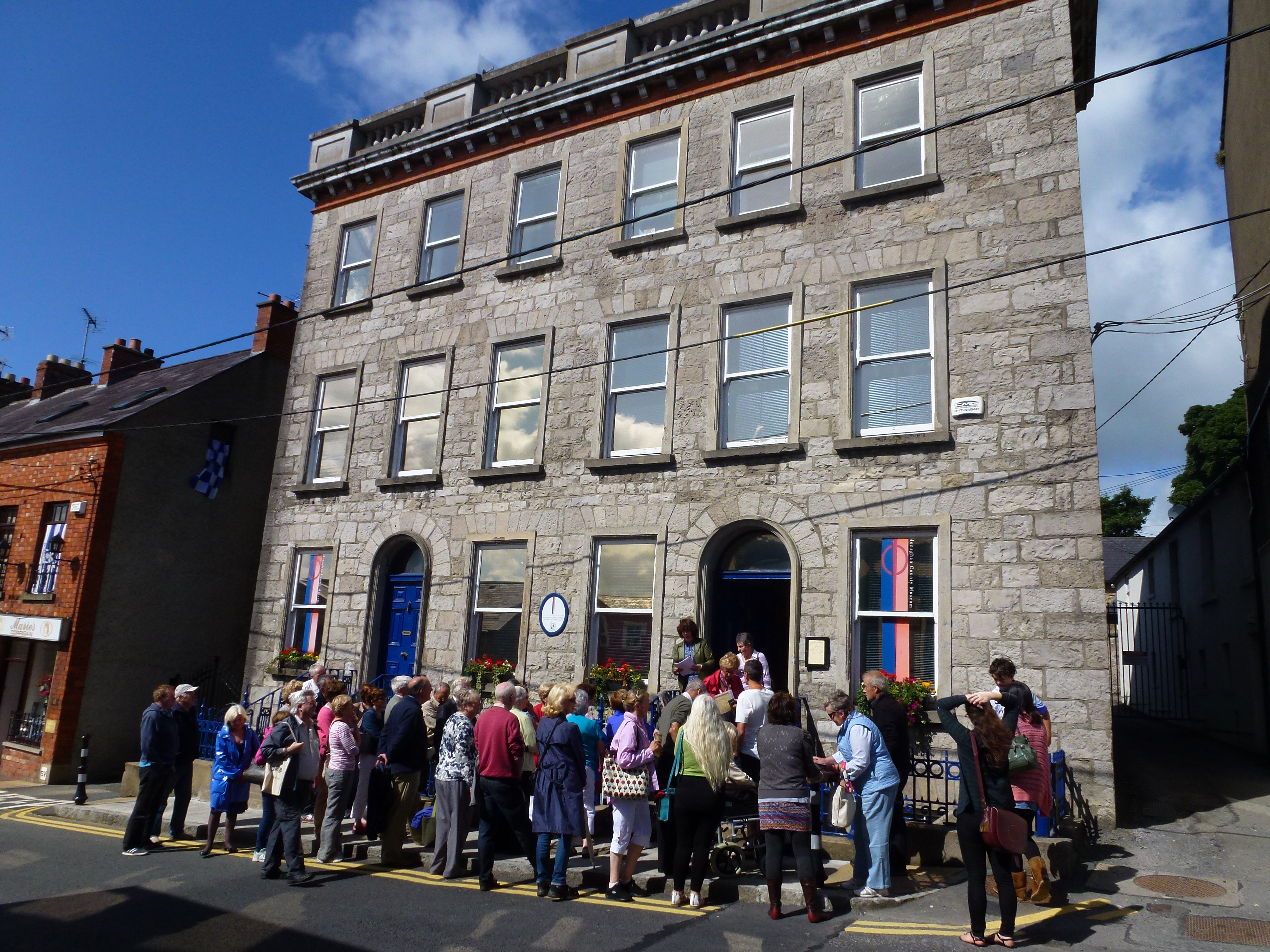
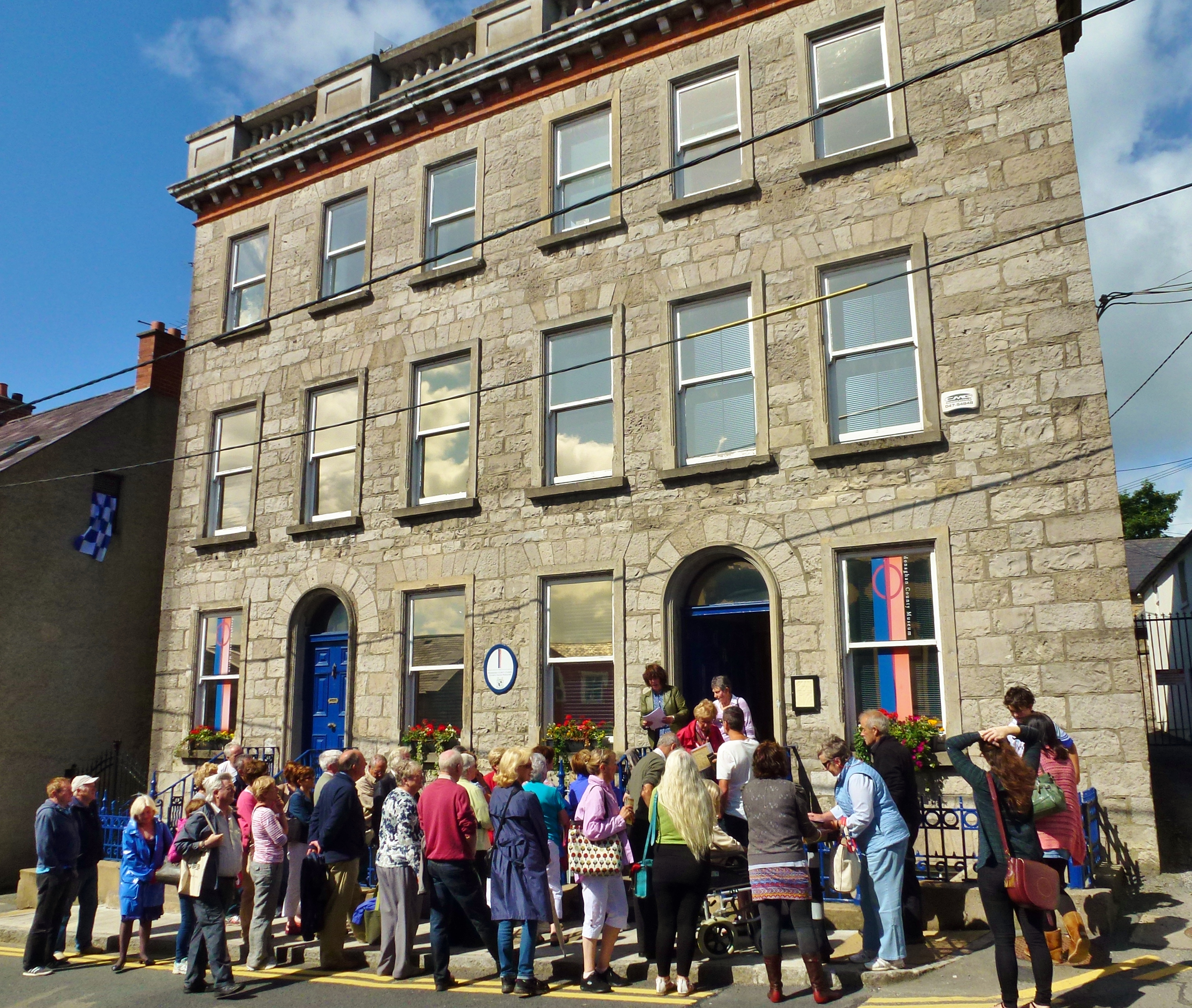
Walking tour of Monaghan town led by Grace Moloney and Theresa Loftus assembles at Monaghan County Museum, Hill Street. Photo:  © Michael Fisher

Walking tour of Monaghan town led by Grace Moloney and Theresa Loftus assembles at Monaghan County Museum, Hill Street. Photo: © Michael Fisher

NSlogo

                    WILLIAM CARLETON SUMMER SCHOOL 2013 GREAT SUCCESS

Monaghan Gospel Choir under the direction of David Drum brought to an end one of the most successful summer schools ever held by the William Carleton Society with a concert at Fivemiletown Wesleyan Hall. The Choir sang some of their favourite numbers including ‘By the Rivers of Babylon’ and ‘How Great Thou Art’. But the big hit of the night was the guest appearance by Gloria from Tydavnet. She sang with them the song which gave her a number one hit in 1978, ‘One Day at a Time’, before going on to delight the crowd with several other songs. There was a rousing finale when the Murley Silver Band directed by William Hill returned to the stage to accompany the Choir in two songs, bringing an end to a most enjoyable night.

The previous night members of the Clogher Valley Walking Club led a group of ramblers on part of the Carleton trail in the area of Fardross forest. The route passed by an old Mass rock, thought to date back to penal times. The walkers were met by two pipers, Jim Brady and Frank Gildernew as they arrived back at Somers cafe. The Ulster Scots juvenile pipe band also played for the guests and inside the cafe the McKenna family from Clogher provided traditional music.

On the Monday night at the Rathmore Bar in Clogher there was a music session with a new traditional group called SÍoda, one of whom is from Emyvale. They were joined at one stage by SeosamhÍn Ní Bheaglaioch from Dublin, a sean-nós singer and well-known broadcaster who sang a number of songs in Irish. On Sunday, she sang unaccompanied during a ceremony at the Blue Bridge at Inishdevlin, Emyvale. Summer school events in Emyvale and Monaghan were part-financed by the European Regional Development Fund through the PEACE III Programme managed by the Special EU Programmes Body and delivered through the Monaghan PEACE III Partnership.

The summer school director Michael Fisher unveiled a plaque which had been restored with the help of local craftsmen by Emyvale Development Association. In 1997, Monaghan County Council in conjunction with the Association erected a Plaque there but weather conditions eventually rotted the  plaque backing and it came away from the wall. The programme began at 4pm in Emyvale Leisure Centre with light refreshments and then a move to the Blue Bridge. Some walked while transport was laid on for the remainder. At the Bridge Peadar McMahon, chairman Emyvale Development Association,  began proceedings giving some background and then introduced entertainment from the Murphy family of Jack, Chloe and Lauren playing traditional music, Seosamhín Ní Bheaglaioch, and Edelle McMahon singing the ‘Romance of the Merrow Queen’, which has local connections.
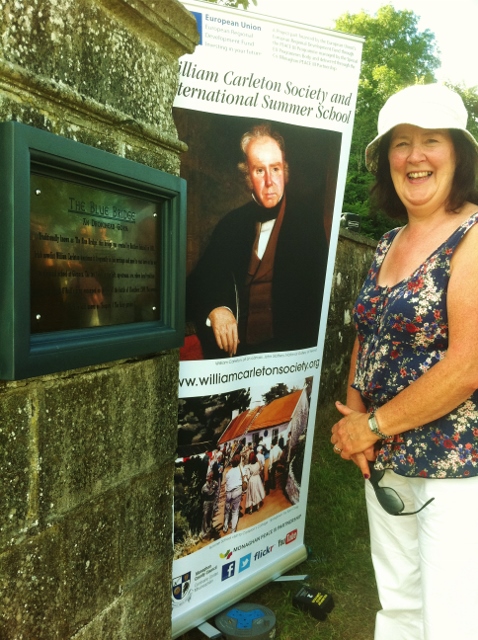
Breege Lenihan, Tullyvogey, Tydavnet inspects the restored plaque at the Blue Bridge Photo: © Michael Fisher

Breege Lenihan, Tullyvogey, Tydavnet inspects the restored plaque at the Blue Bridge Photo: © Michael Fisher

Michael Fisher then addressed the crowd and spoke about Carleton and also about another great poet and writer, Terence O’Gorman, whose works have just been launched in book form by his daughter, Patricia Cavanagh. He read a poem about Emyvale, written by Terence and contained in the book. He thanked the Bowe family and Seamus McAree for their part in the preparations for this event and then unveiled the restored Plaque. Seamus McCluskey then added some historical notes and interesting facts about the Blue Bridge, Carleton and the area in general. Finally Peadar McMahon thanked those who assisted – Truwood; Connolly Furniture; Murphy Sound and Video; The Murphy family musicians; Seosamhín and Edelle; Richard McCarron (local stonemason who, with Declan McMahon, erected the plaque and advised on stonework); the Photographers; Moran’s Transport; Norah Ryan; Jim Balfe and Paddy Sherry; George McCarron; Emyvale Leisure Centre Committee; The Emyvale Development Committee and all who attended; There was special thanks to Paul and Ann Bowe for their assistance and support, which was greatly appreciated. He then invited all to return to the Leisure Centre for a reading by the Carleton Players of the ‘Fair of Emyvale’, adapted by Liam Foley. On Saturday, around sixty people took part in a walking tour of Monaghan town led by Grace Moloney of the Clogher Historical Society and Theresa Loftus from Monaghan County Museum.

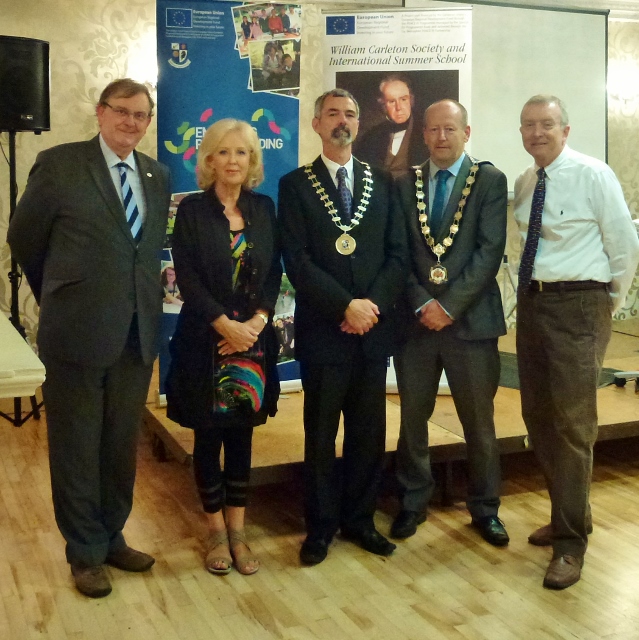
For the first time, the summer school had opened in Monaghan, with a conference on William Carleton, Patrick Kavanagh and Charles Gavan Duffy. Art Agnew from Carrickmacross who grew up in Inniskeen put in a lively performance as Kavanagh, delivering extracts from ‘The Green Fool’ and other works. International guest Professor Thomas O’Grady from Boston read some of his own poetry, including verses about Prince Edward Island, where he was born. He also talked about Kavanagh and Benedict Kiely. Earlier the summer school was officially opened by the Mayor of Monaghan Cllr Sean Conlon, who was accompanied by the Mayor of Dungannon and South Tyrone, Cllr Sean McGuigan. Mary O’Donnell who comes originally from Monaghan and is a patron of the William Carleton Society read some of her poems. Dr Brendan O Cathaoir and former Monaghan Museum curator Aidan Walsh spoke about Charles Gavan Duffy, while the final talk was given by Felix Larkin, director of the Parnell summer school in Avoca, on the Shemus Cartoons in the ‘Freeman’s Journal’.

The proceedings switched to Clogher on the Monday, in the presence of the Bishops of Clogher Right Reverend John McDowell and Dr Liam MacDaid, and Bishop Emeritus Dr Joseph Duffy, a patron of the William Carleton Society. Among the speakers were Professor O’Grady, Professor Owen Dudley Edwards, honorary director of the summer school, and the television presenter and commentator Tom McGurk, who spoke about his upbringing in Brockagh, County Tyrone.

This part of the summer school is supported by the Office of First Minister and Deputy First Minister and funded through  Dungannon and South Tyrone Borough Council under the District Council Good Relations Programme and the William Carleton Society committee gratefully acknowledges this funding.OFMDFM (1)

On Tuesday the guests included Dr Ciaran Mac Murchaidh from St Patrick’s College Drumcondra, who spoke about the Irish language in the 19thC Clogher Valley area and Dr Ian Adamson on Ulster-Scots. William Carleton Society President Jack Johnston gave a talk on the history of Augher. Josephine Treanor from Knockatallon spoke very movingly about her great great grandmother Anne Duffy, the miller’s daughter from Augher and Carleton’s first love.   Dungannon_logo
Wednesday’s session attracted national headlines with the speech of Mary O’Rourke about a proposed grand coalition between Fianna Fail and Fine Gael. There was also an interesting session on the current state of the Orange Order by Professor Jon Tonge from Liverpool. The audience included former Police Ombudsman in the North Dame Nuala O’Loan and her husband Declan, an SDLP Councillor in Ballymena.

Mary Kenny’s talk on Edward Carson, Dubliner, Irishman and Unionist was well received and provided a fitting end to the formal part of the summer school. The seventh day was devoted to a literary tour of Fermanagh, led by Gordon Brand (Secretary, William Carleton Society) and Frank McHugh, deputy director of the summer school. The tour headed to the Crom estate near Newtownbutler on Upper Lough Erne, where our guide was Vicky Herbert from Lisnaskea. She took the group on a walk to the old Crom Castle and past the famous yew trees, some of the oldest in Ireland. She also pointed out the house where the author Shan Bullock had lived as a child. His book ‘The Loughsiders’ is based around Crom and the neighbouring villages.

The Wiiliam Carleton summer school was brought to a successful end with a literary tour of Fermanagh, finishing with a visit to the Ceili House near Enniskillen. Host Tom McGowan has assembled a range of unusual objects from road signs to old rowing boats and oars to radios. The group led by summer school director Michael Fisher was met by the Chair of Fermanagh District Council, Alex Baird.

The Wiiliam Carleton summer school was brought to a successful end with a literary tour of Fermanagh, finishing with a visit to the Ceili House near Enniskillen. Host Tom McGowan has assembled a range of unusual objects from road signs to old rowing boats and oars to radios. The group led by summer school director Michael Fisher was met by the Chair of Fermanagh District Council, Alex Baird.

The day finished with a visit to the Ceili House, a private establishment run by Tom McGowan outside Enniskillen. Based in a former quarry, it includes a vast collection of memorabilia including old radios, road signs and rowing boats and oars. The group met the Chair of Fermanagh District Council, Alex Baird and after a pleasant dinner, returned to Corick House to round off a hectic week of engagements.  EU flag2colors

AUGHNACLOY RACES

Aughnacloy Races at Ravella Photo: © Michael Fisher

Aughnacloy Races at Ravella Photo: © Michael Fisher

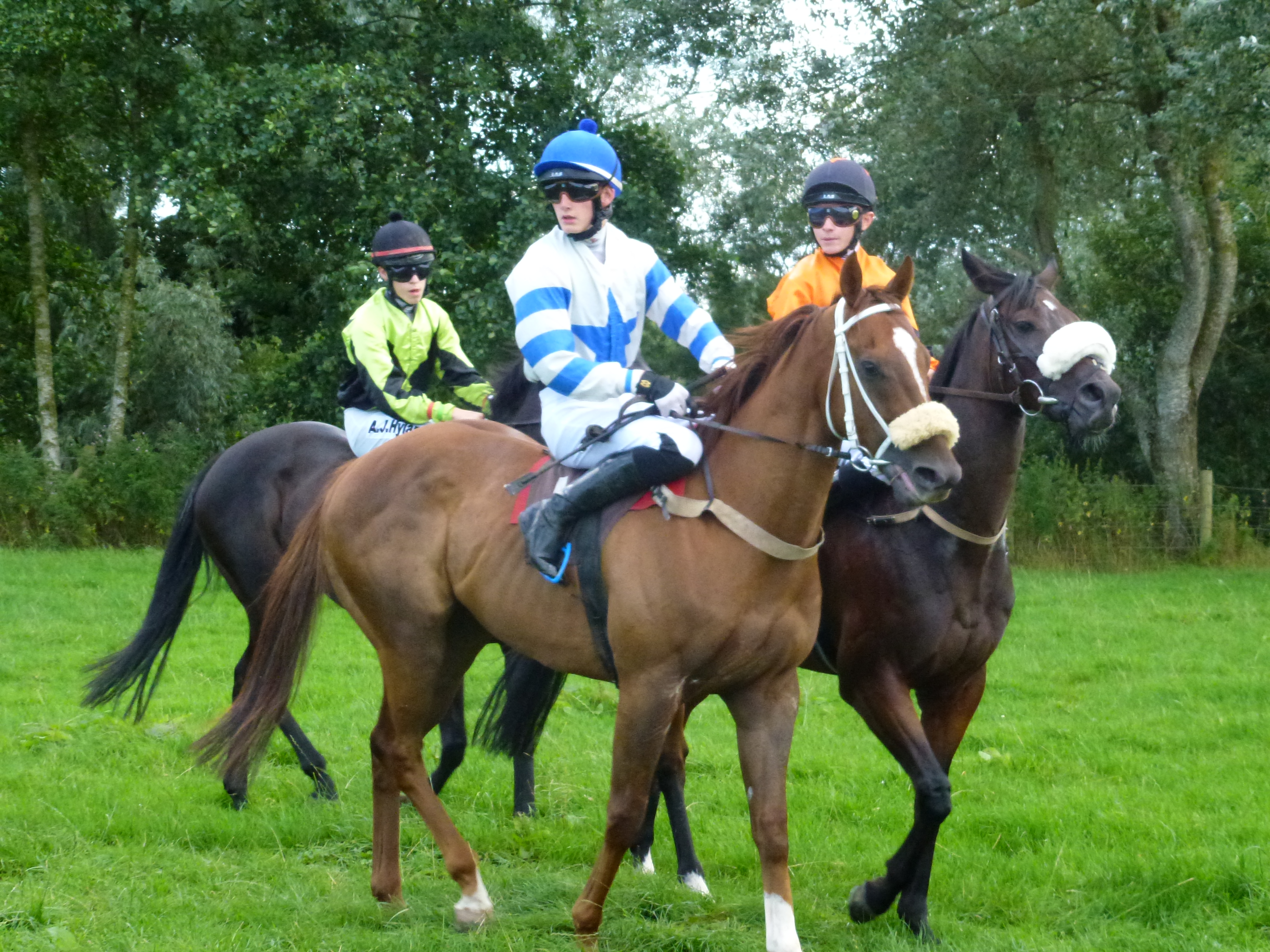
The track might not be as sophisticated as Down Royal or Downpatrick, but the setting is ideal for this annual event. Aughnacloy Horse and Pony Races are now in their eleventh year, held on land owned by the Steele family at Ravella, close to the border with County Monaghan. But the tradition of horse racing in the town is much older: my great grandfather John McCann JP of Hilton House in Aughnacloy was Secretary of the original race committee around 1910-20 (I will have to check my records to get the exact date).

Ready for the Off at Aughnacloy Races Photo: © Michael Fisher

Ready for the Off at Aughnacloy Races Photo: © Michael Fisher

The races had originally been scheduled to take place on June 1st but were cancelled following one of the wettest springs on record. Work was undertaken to get the course ready for the races to be rescheduled a fortnight later, but again the weather defeated the organisers and the event had to be postponed a second time.

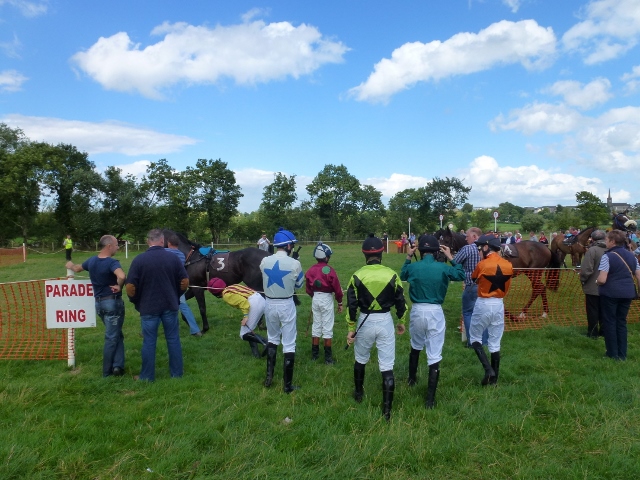
Jockeys line up for second race at Aughnacloy Races Photo: © Michael Fisher

Jockeys line up for second race at Aughnacloy Races Photo: © Michael Fisher

This afternoon jockeys and punters converged on Aughnacloy from all over Ireland, with the highlight of the day being the famous ‘Aughnacloy derby’, the fifth of the seven races on the card. Traditionally, the annual race meeting has been a breeding ground for up and coming jockeys, with the likes of Martin Harley, a previous winner at Aughnacloy, having taken the horseracing world by storm.

Martin McCarron, Secretary Aughnacloy Races and Michael Fisher

Martin McCarron, Secretary Aughnacloy Races and Michael Fisher

The committee secretary Martin McCarron was the announcer and when he spotted my presence, called me over to the microphone to do an interview, turning the tables on me! Earlier he had introduced the Mayor of Dungannon Councillor Sean McGuigan. He told him he had already attended sixty events since he assumed office in June. At the start of the month I welcomed him to Monaghan for the opening of the William Carleton summer school along with the Mayor of Monaghan Councillor Sean Conlon.

Mayor of Dungannon Cllr Sean McGuigan and Martin McCarron, Secreyary at Aughnacloy Races

Mayor of Dungannon Cllr Sean McGuigan and Martin McCarron, Secretary at Aughnacloy Races

Committee & Field Management Team: Chairperson Donald Magee; Secretary Martin McCarron; Treasurer Brian McKenna; President Peter McConnell; Assistant PR Officer John Morrison; Vice Chairman Eric Stansfield; Vice Secretary Stephen Watson; Vice Treasurer Benny McKenna; Joint Field Manager Des Sherry; Joe McMeel; Manuel Martins.

Aughnacloy Races Programme

Aughnacloy Races Programme

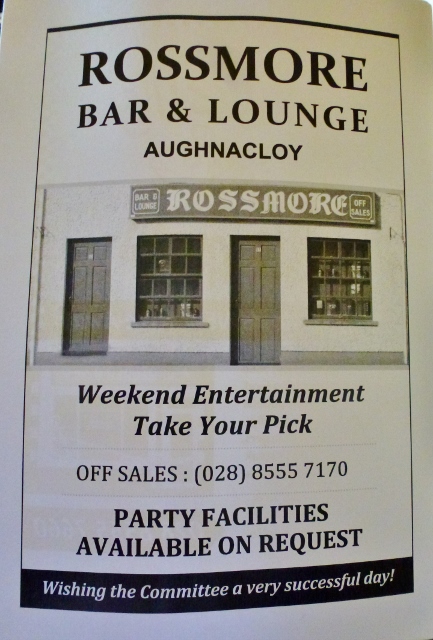
Advertisement for Rossmore Bar, Main Street Aughnacloy beside Ravella Road. This premises used to be owned by my great grandfather, John McCann, a native of Cloonycoppoge, Clogher.

Rossmore Bar advertisement

Rossmore Bar advertisement

O’ROURKE ON GRAND COALITION

Dr Frank Brennan (William Carleton Society) with Mary O'Rourke and Mary Kenny Photo: © Michael Fisher

Dr Frank Brennan (William Carleton Society) with Mary O’Rourke and Mary Kenny Photo: © Michael Fisher

A leading article in today’s Irish Times newspaper (based in Dublin) carries the following editorial, based on Mary O’Rourke’s address to what the Irish Examiner without naming us rather unfortunately called an ‘unfashionable’ summer school in Clogher, County Tyrone. You can view the speech in full here.

The William Carleton Society’s annual international summer school since its inception in 1992 has welcomed over 300 guests of such stature as the Nobel Prize winner Seamus Heaney, John Montague, Polly Devlin, Barry Devlin, Eugene McCabe, Gerald Dawe, Frank Ormsby, John Wilson Foster, Michael and Edna Longley, Bernard McLaverty, Sam McAughtry, Theo Dorgan, Susan McKay, Diarmaid Ferriter, Declan Kiberd, John F Deane as well as our patrons Dr Joseph Duffy, Maurice Harmon, Noel Monahan, Mary O’Donnell, Jim Cavanagh and Sam Craig, our honorary director Owen Dudley Edwards and the late Norman Vance, Gus Martin and one of our most enthusiastic supporters, Benedict Kiely.

Mary O'Rourke signing copies of her Memoir

Mary O’Rourke signing copies of her Memoir

A Grand Coalition?

There was nothing new in a suggestion by former Fianna Fáil minister Mary O’Rourke that her party and Fine Gael should put aside past differences and participate in a future coalition government. What was different was her attempt to present such a development as the desired legacy of her late nephew and minister for finance Brian Lenihan.

Mrs O’Rourke is a canny political operator, a trait that appears to run in the genes of the Lenihan family. Her speech to the William Carleton summer school and subsequent radio interviews were designed to open up public discussion on a possible realignment of political forces while undermining the ambitions of Sinn Féin. After decades of disparate coalition governments, the notion of a Fianna Fáil/Fine Gael arrangement may pose less of a visceral challenge to voters than the prospect of Sinn Fein entering government.

That’s the nub of the issue. Should the present Government complete its term of office or break up under fiscal pressure, Sinn Féin is likely to be in a powerful position to offer support to either Fianna Fáil or Fine Gael in a bid for power. Rather than see that happen, the former Fianna Fáil education minister has proposed a grand alliance of traditional opponents.

Such an outcome, she acknowledged, would depend on the electorate. In attributing the “thought” of such a coalition to her much-loved nephew, however, she exaggerated. Certainly he delivered a powerful speech at Beal na Blath, commemorating Michael Collins and acknowledging his contribution to the State. But he did not suggest a coalition of the civil war parties. He spoke of accepting differences of approach in good faith and of a need to work together to build a viable economy, even as keen competition remained. At the time, support for Fianna Fáil had collapsed and a deal with Fine Gael was unthinkable. By raising the prospect of coalition now, as an effective political memorial, Mrs O’Rourke is being, as always, pragmatic.  

Honorary Director WCS summer school Owen Dudley Edwards gives Mary O'Rourke a copy of Carleton's autobiography, with Bonnie Dudley Edwards Photo: © Michael Fisher

Honorary Director WCS summer school Owen Dudley Edwards gives Mary O’Rourke a copy of Carleton’s autobiography, with Bonnie Dudley Edwards Photo: © Michael Fisher

CARLETON & SHAN BULLOCK

Old Crom Castle, Co. Fermanagh Picture: © Michael Fisher

Old Crom Castle, Co. Fermanagh Picture: © Michael Fisher

Crom Castle (old) on the Crom estate in County Fermanagh was one of the highlights during a literary tour of Fermanagh on the final day (Day seven) of the 22nd annual William Carleton summer school. The visit was organised by the Secretary of the William Carleton Society Gordon Brand and deputy director of the summer school, Frank McHugh. Vicky Herbert from Lisnaskea was our guide and she pointed out many sights of interest as we walked through the beautiful grounds maintained by the National Trust.

Yew Tree at Crom estate, Co.Fermanagh Photo: © Michael Fisher

Yew Tree at Crom estate, Co.Fermanagh Photo: © Michael Fisher

CARLETON: MARY O’ROURKE

Mary O'Rourke at the Willia Carleton summer school, Clogher

Mary O’Rourke at the Willia Carleton summer school, Clogher

Mary O’Rourke’s speech at the William Carleton summer school in Clogher, County Tyrone, made headlines when she proposed a coalition between her party Fianna Fáil and Fine Gael. She also gave an interview to Lise Hand of the Irish Independent. This is her speech:

“I was very pleased to accept Michael Fisher’s invitation to come here today to Clogher and to talk on the theme “How Differences Can Be Accommodated”.  I appreciate that the theme and the speakers to it will be mostly reviewing the Northern Ireland situation.  I have chosen to talk about my own mixed political background to the theme of the Summer School. I tell in my Book “Just Mary” of my parents’ mixed political backgrounds. My father and mother met as students in University College Galway in their very late teens and early ’20s, my father studying Arts and Law and my mother studying languages on her BA course.   My father came from a pro-treaty background from his own father.   As a student, he fought in the Free State Army in Athenry and later in other skirmishes in the Civil War.  My mother’s family were strongly republican. Her mother, my grandmother, providing a safe house in Drumcliff in County Sligo at the foot of the Benbulbin Mountains.  My mother’s brother, Roger, was the boy soldier on the mountain who alerted and brought down the bodies from the skirmish on that mountain in which Michael Mac Dowell’s uncle, Brian MacNeill, was shot.  The bodies were laid out firstly in the small dairy, which was part of my grandmother’s house.  She had been left a very young widow in her late 20’s with a clutch of young children and her husband brought home to her mortally wounded in a local skirmish. I have elaborated on these details in my Book. When love struck them both political differences went out the window but I and my two brothers and one sister were always conscious of that mixed parental political background. In 1943 my father ran for the local Athlone Urban District Council. Despite the generosity of Seán Lemass and the admiration my father felt for him, he ran as a Rate Payer’s Association candidate which was then understood to be another term for Fine Gael. He made it to head the poll on that occasion and on his later Local Authority forays he ran as a Fianna Fáil candidate.  Seán Lemass and Éamon de Valera must have swayed him in that regard. He in time became Mr Fianna Fáil Athlone and later on entered the Dáil for five short years before his death. So why am I telling all of this story?   It is because I feel it will explain my later thoughts. Fast forward to Sunday, the 22nd August 2010 in County Cork when Brian Lenihan, the then Minister for Finance, spoke at the Annual Commemoration of the life and legacy of Michael Collins. Brian Lenihan was greatly honoured to havend  August 2010 in  Béal  na mBláth received this “quite unexpected offer from the Collins Family and the Commemoration Committee” and he expressed so publicly on that occasion. I have spoken to Dermot Collins since then, who initiated the invitation to Brian and he was quite emphatic that he and the Committee were unanimous in wanting Brian Lenihan to have this privilege.

I went to Béal na mBláth on that occasion with two friends from Athlone and will always be glad that I did so as I have the eternal memory of Brian standing clear and tall and confident but humble as he spoke at that hallowed spot.  I quote directly now from his Speech:

“The differences between Fianna Fáil and Fine Gael today are no longer defined by the Civil War nor have they been for many years.  It would be absurd if they were. This period of our history is  graadually moving out of living memory. We ask and expect those in Northern Ireland to live and work together despite the carnage and grief of a much more recent and much more protracted conflict. Nevertheless, keen competition between Fianna Fáil and Fine Gael remains as I am very aware every time I stand up in the Dáil but the power of symbolism cannot be denied, all the more so as we move towards the centenaries of the Easter Rising and all that follows. If today’s commemoration can be seen as a further public act of historical reconciliation, at one of Irish history’s sacred places, then I will be proud to have played my part”.

Brian went on to say in his talk that he had taken:

a particular interest in Michael Collins’ work as Minister for Finance between 1919 and 1922.   In a meeting room in the Department of Finance, where I have spent many hours over the last two years, hang pictures of all previous Ministers.  They are in sequence.   Eoin Mac Néill’s portrait is the first because he was actually the first to own that office in the first Dáil though he served for less than ten weeks.  The picture of Collins is placed second and regularly catches my eye.   He is the youngest and I dare say, the best-looking, of us all”.

Brian went on to say “there is no substantive connection between the economic and financial position we come from today and the totally different challenges faced by Collins and his contemporaries. But as I look at those pictures of my predecessors on the wall in my meeting room, I recognise that many of them, from Collins through to Ray MacSharry, had in their time to deal with immense if different difficulties.  I am comforted by what their stories tell me about the essential resilience of our country, of our political and administrative system and above all of the Irish people.

That is why I am convinced that we have the ability to work through and to overcome our present difficulties, great though the scale of the challenges may be, and devastating though the effects of the crisis have been on the lives of so many of our citizens.” Brian’s closing lines on that memorable day in Béal na mBláth were “the spirit of Collins is the spirit of our Nation and it must continue to inspire all of us in public life, irrespective of Party or tradition”. Here we are now in 2013 and here I am too, somebody who was in successive General Elections elected on behalf of the Fianna Fáil Party and proudly representing my constituency of Longford/Westmeath. And yet and yet surely it is not too fanciful for me to put forward today as the theme of this Summer School that it is time that Fianna Fáil and Fine Gael would bridge the political divide between them and give serious thought to coming together in a political coalition come the next General Election.  I know quite well that there are plenty who will dismiss my reflections here today as ‘Summer School Speak’ or even the wild rantings of somebody who has left the political system. It is very easy to dismiss my thoughts in that cavalier fashion. We, as a people, have long forgotten that the bone of contention between us as Parties since the Civil War is the Treaty signed in London in those far off days.   I put the thought out there conscious that I can do so coming, as I am, from a lifetime of observing the tribal political theatre that is Dáil Éireann – coming, as I am, from someone who has reflected in historical terms long and hard on the thoughts I am putting forward today and coming as I am from a mixed political pedigree.

I am inspired to do so by the generous thoughts and reflections in the Speech Brian Lenihan made in Béal na mBláth.  It is, to my mind one of the most generous non-tribal speeches ever made by anyone in either Fianna Fáil, Fine Gael or Labour. But I am most of all inspired by what has been able to be done in Northern Ireland, of the differences which have been overcome and  accommodated.   Is it not time to bury the totem poles and fly the common flag of Michael Collins and Éamon de Valera?   I quote finally from Brian Lenihan’s speech:

But even if we can never know how the relationship between Collins and de Valera might have evolved, surely now we have the maturity to see that in their very different styles, both made huge contributions to the creation and development of our State. Neither was without flaws but each had great strengths.  Each was, at different periods, prepared to operate with the constraints of the realities facing him without losing sight of his greater vision of a free, prosperous, distinctive and united Ireland”.

Is it not time now in this year of 2013 to note the similarities and to forgo the differences?   Is it not time now for us to think the unthinkable – to allow our minds to range over the possibilities which could emerge from the voices of the electorate in 2-3 years’ time.   It is enough that the mind is engaged and that is all I ask for.  To engage the mind on this possibility and to reflect on the courage and vision of those who have gone before us.

CARLETON IN CLOGHER

Bishops of Clogher: Rev. John McDowell & Dr Liam MacDaid with Dr Joseph Duffy

Bishops of Clogher: Rev. John McDowell & Dr Liam MacDaid with Dr Joseph Duffy

Day Four of the William Carleton international summer school was centred in Corick House Hotel, Clogher, County Tyrone. The programme continued across the border, having started in Monaghan on Friday and Saturday, then moving to Emyvale on Sunday. For more on the events in Emyvale see emyvale.net.

Caesar Otway

Caesar Otway

The opening address by the Honorary Director of the William Carleton international summer school Professor Owen Dudley Edwards was on Carleton, Caesar Otway and Irish literature.

Professor Thomas O’Grady of the University of Massachussets, Boston, spoke about Carleton’s story, ‘The Donagh’, in which he revealed the connection with the Carnmore area of Sliabh Beagh near Roslea. He later went to see the are himself for the first time.

Gerry McCullough & Raymond McCullough

Gerry McCullough & Raymond McCullough

Author of ‘Belfast Girls’ and several other books, Gerry McCullough and her singer/songwriter husband Raymond made an interesting contribution to the summer school. The programme finished with committee member Aidan Fee in conversation with well-known broadcaster and columnist Tom McGurk, who hails from Brockagh in County Tyrone. He began by recollecting his early years in the parish at a primary school where conditions were at times primitive.

Deputy Mayor of Dungannon/S.Tyrone Cllr Robert Mulligan with Jack Johnstonm President William Carleton Society

Deputy Mayor Dungannon/S.Tyrone Cllr Robert Mulligan with Jack Johnston President WCS

The day was rounded off with a session in a local pub where guests were entertained by singer Seosamhín Ní Bheaglaoich and a new Irish traditional music group, Síoda.

William Carleton Society committee members: Frank McHugh, Sam Craig, Gordon Brand, Isabel Orr

William Carleton Society committee members: Frank McHugh, Sam Craig, Gordon Brand, Isabel Orr

FAIR OF EMYVALE

Unveiling of plaque at Blue Bridge, Emyvale, by Michael Fisher

Unveiling of plaque at Blue Bridge, Emyvale, by Michael Fisher

On day three of the William Carleton summer school, the focus moved to Emyvale in County Monaghan. In association with Emyvale Development Association and with the co-operation and assistance of a number of local people, I unveiled a restored plaque about William Carleton at the Blue Bridge, Inishdevlin.

Blue Bridge, Emyvale

Blue Bridge, Emyvale

The wooden backing of the plaque had rotted and earlier this year it fell down. It was found by a walker and was handed in to the nearest house, the residence of Paul and Ann Bowe. I had been talking about the plaque already to Peadar McMahon and when I told him that the plaque had vanished at Easter, he was quick to establish its whereabouts and to ensure that it was repaired and replaced.

Restored Blue Bridge Plaque

Restored Blue Bridge Plaque

On behalf of the William Carleton Society, I would like to tank Peadar once again for all his assistance in making sure that this afternoon’s event ran smoothly. A minibus service (Morans) was provided to and from Emyvale Leisure Centre to the Blue Bridge.

Singer Seosaimhín Ní Bheaglaoich at the Blue Bridge

Singer Seosaimhín Ní Bheaglaoich at the Blue Bridge

Later the Carleton Players were joined by actor Pat Deery (narrator) for a reading of Carleton’s story, the ‘Fair of Emyvale’. Around seventy people attended and received refreshments afterwards.

Seamus McCluskey, Emyvale greets Professor Thomas O'Grady at the Blue Bridge, Emyvale

Seamus McCluskey, Emyvale greets Professor Thomas O’Grady at the Blue Bridge, Emyvale

All in all, a very pleasant afternoon in Emyvale followed by a successful performance of Carleton’s story to an appreciative audience at Emyvale Leisure Centre.

Breege Lenihan, Tydavnet at unveiling of Blue Bridge restored plaque

Breege Lenihan, Tydavnet at unveiling of Blue Bridge restored plaque

MONAGHAN WALKING TOUR

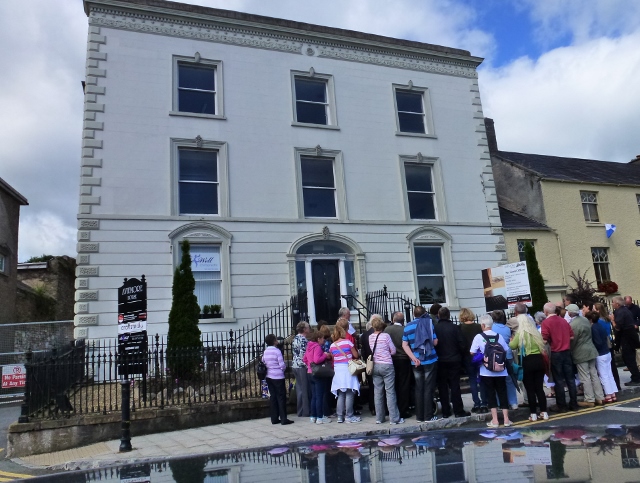
Group gathers at Monaghan County Museum for walking tour

Group gathers at Monaghan County Museum for walking tour

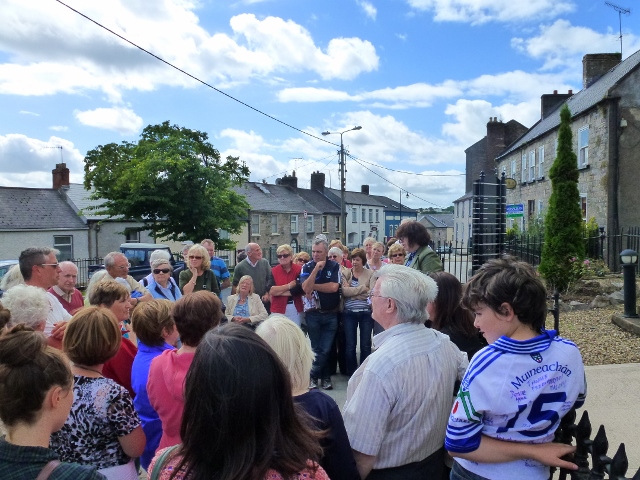
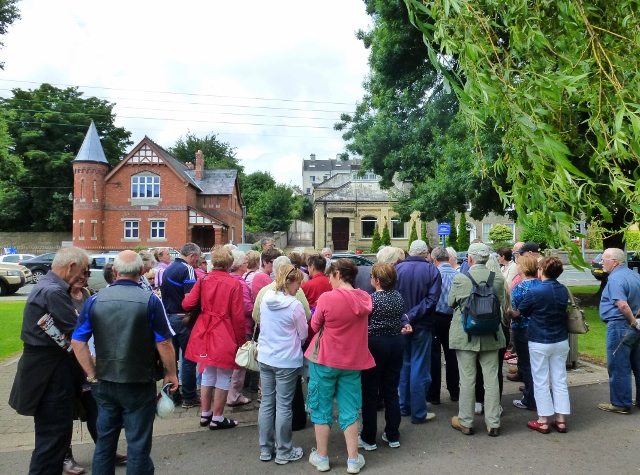
Day two of the 22nd annual William Carleton international summer school was devoted to a walking tour of Monaghan town. Around fifty people took part and were guided around some of the important buildings in the town by Grace Moloney of the Clogher Historical Society, based in Monaghan.  She has researched, written and lectured extensively about local history in the Clogher Diocese. Her main interest is the history of County Monaghan, especially maps, place-names, archaeology, natural history (forests and bogs), social history and the history of women.

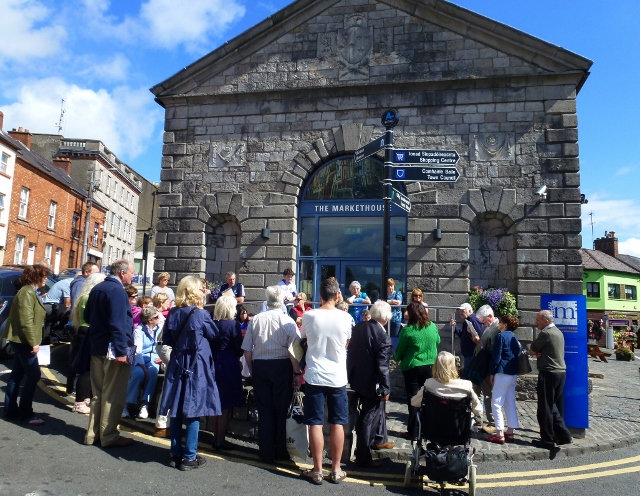
Group at the Market House, Monaghan

Group at the Market House, Monaghan

She was assisted by Theresa Loftus of Monaghan County Museum, where she has been working since 2004. Initially she worked in registration, moved to education and outreach and became Exhibition / Research Officer in 2007. She studied Local History in NUI Maynooth and Museum Practice and Management at the University of Ulster.

Group at Aviemore, Hill Street Monaghan

Group at Aviemore, Hill Street Monaghan

The tour took began at the Museum at Hill St beside Park St (site of town gate, the Market House, Aviemore – home of land agent Dacre Hamilton, reputedly the inspiration for Carleton’s Valentine McClutchy – site of 1602 building – tunnel). It then went via Mill St (the town’s first mill) to North Road (possible site of holy well, beheading of friars c1540, Orange Hall) and St Peter’s Lake (associations with ‘Honest’ Peter McPhillips a class-mate of Carleton at Fr John Keenan’s classical school), legend about two lakes.

Group at Hill Street, Monaghan

Group at Hill Street, Monaghan

The group then walked along Glaslough St (early bowling green, RIC barracks, Masonic hall)  to The Diamond (Bleckley’s school & past pupils, Westenra Hotel and memorial and mausoleum) and along Dublin St (birthplace of Charles Gavan Duffy who featured in yesterday’s conference, Baird’s pub, Orange Hall, site of town gate) and on to Old Cross Square (Presbyterian Meeting House, Market Cross, Shambles, canal, Monaghan abbey) then to the rear of the Courthouse (Plantation castle and main entrance into the Diamond, fishponds, oldest buildings in the town) and into Church Square (Courthouse, coat of arms, bomb memorial, jail (Johnny Short’s hotel), St Patrick’s Church of Ireland, Bram Stoker, Westenra family, Dawson memorial, Hive of Knowledge).

Group at Peter's Lake, Monaghan

Group at Peter’s Lake, Monaghan

Lunch was served afterwards at the Poc Fada pub where a group of traditional musicians entertained the group.

Group at Orange Hall, North Road Monaghan

Group at Orange Hall, North Road Monaghan

*********************************************************************************************

Sunday 4th August: Tomorrow in Monaghan town republicans from all over Ireland will gather for the national hunger strike commemoration, the story of which is on display at an exhibition organised by Sinn Féin in Dublin Street.

CARLETON & KAVANAGH

William Carleton summer school in Monaghan

William Carleton summer school in Monaghan

For the first time in its 22-year history the William Carleton international summer school held lectures in Monaghan town. The official opening was performed by the Mayor of Monaghan Cllr Sean Conlon in the presence of the Mayor of Dungannon & South Tyrone, Cllr Sean McGuigan. The guest speaker was Professor Thomas O’Grady from the University of Massachussets in Boston. He will be delivering the keynote address at the summer school on Monday at 2:30pm at Corick House in Clogher, talking about Carleton’s story, ‘The Donagh’. The other speakers were poet Mary O’Donnell (originally from Monaghan), Art Agnew from Inniskeen, who performed brilliantly in the role of Patrick Kavanagh, Aidan Walsh and Dr Brendan O Cathaoir on Charles Gavan Duffy and Felix Larkin who spoke about the Shemus cartoons in the Freeman’s Journal. Fifty people were there by lunchtime but the crowd grew to almost 300 by 6pm, when I launched the book: ‘Memories amidst the drumlins: Cavan and Monaghan’ by the late Terence O’Gorman. It is a beautifully produced book of his poems and stories, compiled and edited by his daughter Patricia Cavanagh. It was an honour to be asked to write a foreword for the publication and to speak at the beginning of the event. One of our guest speakers from Dublin decided to stay on for the launch and commented how he had never seen such a display of community spirit as was evident amongst the crowd.

Professor Thomas O'Grady at William Carleton summer school in Monaghan

Professor Thomas O’Grady at William Carleton summer school in Monaghan

EMYVALE PLAQUES

Donagh Oratory: Site of former courthouse and parochial hall

Donagh Oratory: Site of former courthouse and parochial hall

I happened to be passing through Emyvale, County Monaghan, on Monday on William Carleton summer school business when I was introduced to the Minister of State for the Office of Public Works and Public Service Reform, Brian Hayes TD. Accompanied by Fine Gael TD Heather Humphreys, he was carrying out a number of engagements in the constituency. He was shown around the village by a group that has erected stone plaques marking the history of five buildings.

Presentation made to Brian Hayes TD Photo: © Michael Fisher

Presentation made to Brian Hayes TD Photo: © Michael Fisher

One of the plaques is at a former orange hall LOL 581 at Bog Lane. The Minister was told it is hoped that this building at the top of the village close to the duck farm will eventually be transformed into a heritage centre. Other plaques mark the site of the old Market House, the former RIC/Garda Barracks, the former Courthouse and Parochial Hall (now the Oratory), and the former Village Inn and Courthouse.

Minister of State, Brian Hayes TD

Minister of State, Brian Hayes TD

In a separate initiative some time ago, an original name stone has been placed beside the entrance to the Leisure Centre and incorporated into a flower bed. It was the sign for a primitive Wesleyan Methodist Preaching House and Mission School (1836) that stood on the site. Emyvale Leisure Centre is the venue for a reading of William Carleton’s story, ‘Fair of Emyvale’, on Sunday 4th August at 7pm. Please note that this time is subject to change. The short story has been adapted by Liam Foley from Clogher and will be performed by the Carleton Players, who will be joined by local actor Pat Deery in the role of narrator. Admission FREE.

Name stone outside Leisure Centre

Name stone outside Leisure Centre