WILLIAM CARLETON SUMMER SCHOOL

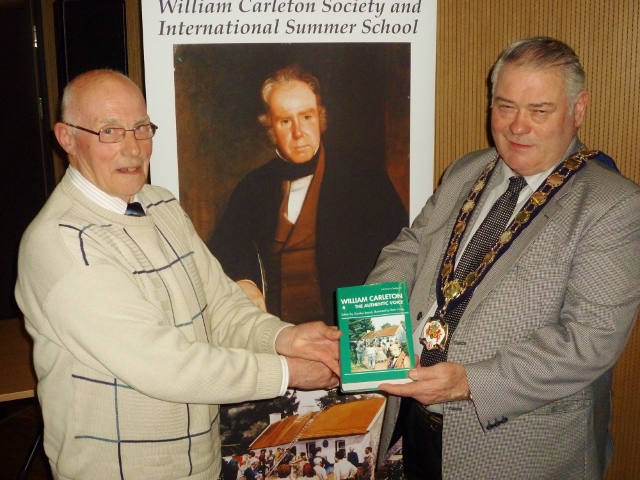
Pat Boyle presents a copy of The Authentic Voice to Mayor of Dungannon Cllr Phelim Gildernew

William Carleton Society Vice-Chair Pat Boyle presents “The Authentic Voice” to Mayor of Dungannon Cllr Phelim Gildernew

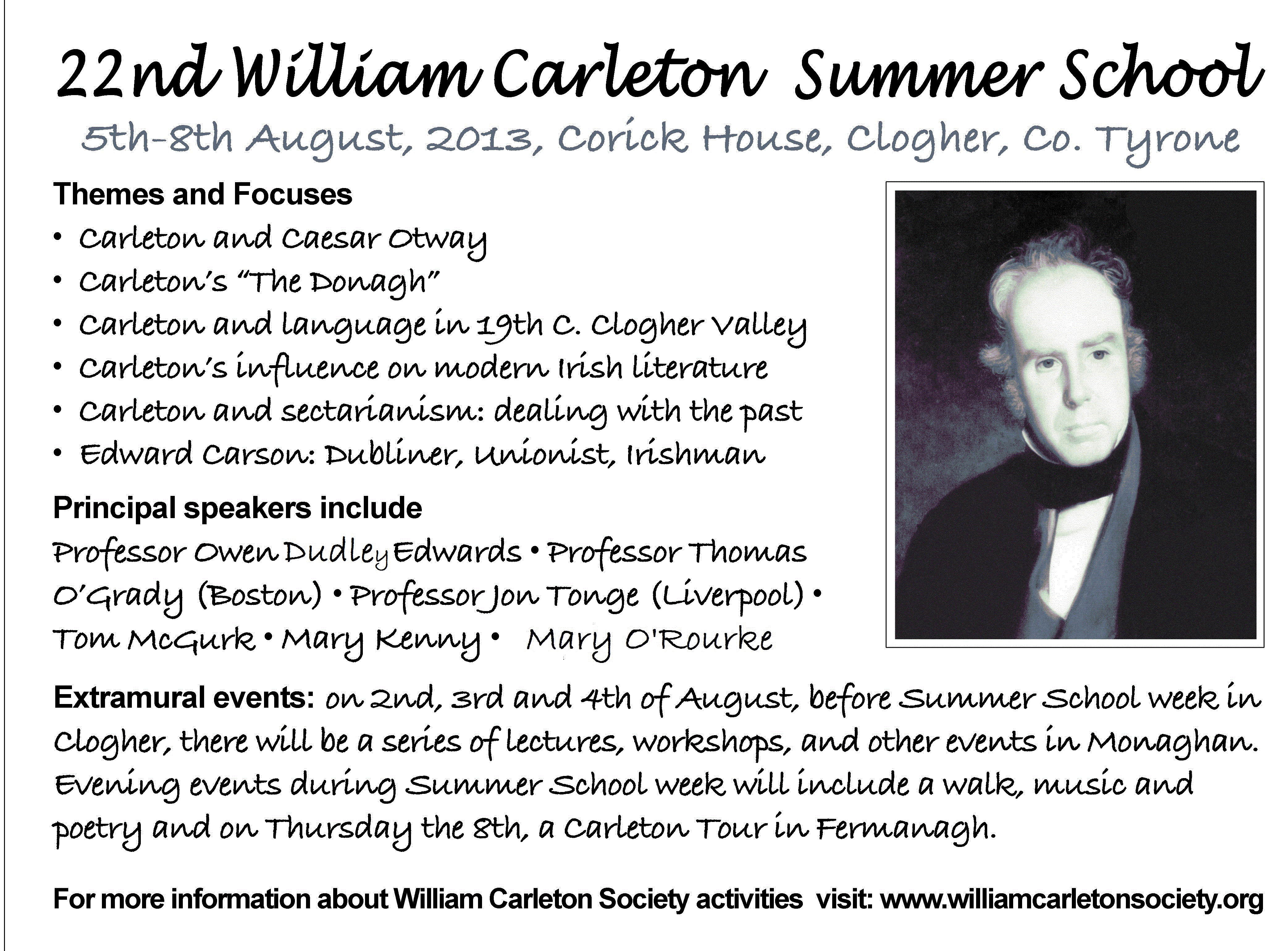
Details have been announced of the 22nd annual William Carleton summer school. The programme for 2013 was  launched at the Hill of the O’Neill Centre/Ranfurly House in Dungannon in the presence of the Mayor of Dungannon and South Tyrone Borough Council, Cllr Phelim Gildernew. He was presented with a copy of “The Authentic Voice”, edited by Gordon Brand and illustrated by Sam Craig, which contains articles about Carleton based on lectures to the summer school in previous years.

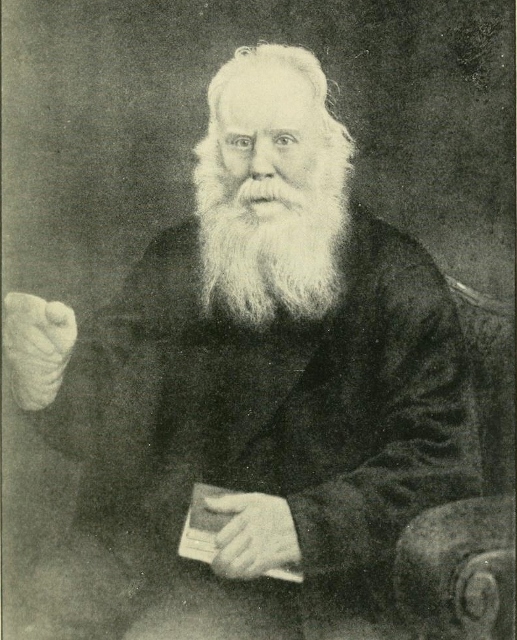
William Carleton

William Carleton

The summer school opens at 11:30am on Monday 5th August at Corick House Hotel in Clogher. The starting time has been put back to enable more people to attend who might have to travel, especially our friends and supporters in the Dublin area. Our Honorary Director Professor Owen Dudley Edwards will speak about Carleton, Caesar Otway and Irish literature. Otway was a Protestant clergyman in Dublin whose influence on the writer came at an important time in his career. Professor Thomas O’Grady from Boston will speak about “The Geography of the Imagination: Carleton’s story “The Donagh”. The final talk of the day will feature the broadcaster and poet Tom McGurk, who comes from Brackagh in County Tyrone, in conversation with one of his contemporaries at school, Aidan Fee, about Northern Ireland, past and present.

On Tuesday 6th August there will be a discussion about language in the 19thC Clogher Valley. Dr Ciaran Mac Murchaidh, St Patrick’s Drumcondra will talk about Irish and Ulster Scots will be the topic for  Dr Ian Adamson. There will be a session on literature with Ciaran Collins “The Gamal”, Tony Bailie, and Patricia Craig “Twisted Root”. Josephine Treanor will talk about her relative, Anne Duffy, the Miller’s Daughter from Augher, one of Carleton’s first loves.

Wednesday 7th August is devoted to dealing with the past and will feature Professor Jon Tonge (Liverpool), Mary O’Rourke on how different political strands can be accommodated, poet Siobhan Campbell and Mary Kenny talking about Edward Carson, unionist, Dubliner and Irishman. Actor Patrick Scully will present his one-man show on Carson, which he performed recently at the Lyric Theatre studio in Belfast.

Patrick Scully as Edward Carson

Patrick Scully as Edward Carson

The final day, Thursday 8th August, Gordon Brand and summer school deputy director Frank McHugh will act as guides for the annual coach tour. This year it will go to the neighbouring county of Fermanagh. It will focus on the work of Shan Bullock, who wrote “The Loughsiders”, based in the area around the Crom estate. The tour will depart from Corick House in Clogher at 10:30am and advance booking is necessary at wcarletonsociety@gmail.com.

Charles Gavan Duffy

Charles Gavan Duffy

This year there will be a number of events in Monaghan and Emyvale (which has a Carleton connection) preceding the summer school. On Friday 2nd August there will be a one-day conference at the Four Seasons Hotel, CARLETON, KAVANAGH and GAVAN DUFFY. Admission is free and the event is funded by the EU Peace III programme of Monaghan County Development Board.

Professor Thomas O’Grady from Boston will read some of his poems and talk about his research on the Monaghan poet, Patrick Kavanagh. Art Agnew from Inniskeen will read selected extracts from Kavanagh’s works, including The Green Fool. The afternoon is devoted to a study of Monaghan man Charles Gavan Duffy, a devotee of Carleton and one of the influential people who helped the writer to obtain a civil list pension in 1848. The speakers will be Brendan O Cathaoir from Bray and Aidan Walsh, a heritage consultant who was the first curator of Monaghan County Museum. Monaghan poet Mary O’Donnell, one of the William Carleton Society’s patrons, will read from some of her works. The programme will conclude with a talk on “The Shemus Cartoons” from the Freeman’s Journal by Felix M.Larkin from Dublin.

I am also pleased that the William Carleton Society will be hosting the launch of a book, “Memories Amidst the Drumlins: Cavan and Monaghan“, containing some of the poems and stories written about the area by the late Terence O’Gorman from Tydavnet and edited by his daughter, Patricia Cavanagh. Terence was a regular visitor to the summer school and many other similar events throughout Ireland.

On Saturday 3rd August, Grace Moloney of the Clogher Historical Society and Theresa Loftus (Monaghan Museum) will lead a walk through Monaghan town, starting at the Museum at Hill Street at 11am. This event is free. The following day, Sunday 4th August, there will be a ceremony to mark the Carleton plaque at the Blue Bridge near Emyvale. At 8pm in Emyvale Leisure Centre, the Carleton Players will perform a reading of the “Fair of Emyvale”, adapted by Liam Foley.   summerschoolad

Blue Bridge near Emyvale

Blue Bridge near Emyvale

CARLETON ON TOUR

Jack Johnston at Draperstown

Jack Johnston at Draperstown

The William Carleton story was told by Jack Johnston at The Shepherd’s Rest pub near Draperstown. The well-attended event was hosted by Ballinascreen Historical Society. It include a reading by the Carleton Players from “The Party Fight and Funeral”, adapted by Liam Foley. William Carleton Society is part of the “Shared History, Shared Future” project financed by the EU Peace III initiative and administered by Magherafelt District Council on behalf of the South West Peace III Partnership. On Tuesday 14th May at 6:30pm at Ranfurly House/Hill of the O’Neill centre in Dungannon we will be launching the programme for the 22nd annual William Carleton international summer school. All welcome.

summerschoolad

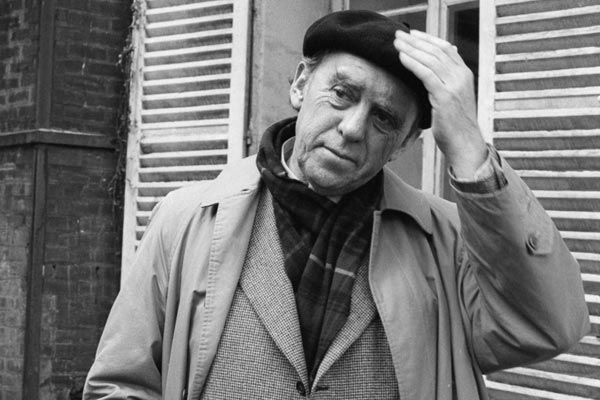
HEINRICH BӦLL

With his permission, I am re-publishing Patrick Comferford’s blog: Remembering Heinrich Böll on Achill Island

Heinrich Böll … commemorated on Achill Island this weekend
I am staying on Achill Island this weekend, taking part in the ninth annual Heinrich Böll Memorial Weekend which opened on Friday, 3rd May and which continues until Monday 6th May. Heinrich Theodor Böll (1917-1985) was one of Germany’s foremost writers in the aftermath of World War II and was awarded the Nobel Prize for Literature in 1972. He was a leader of the German writers who tried to come to grips with the memory of World War II, the Nazis, and the Holocaust and the guilt that came with them. Böll lived with his wife in Cologne and in the Eifel region, but they also spent time on Achill Island off the coast of Co Mayo during the 1950s and 1960s.

I am staying in Gray’s Guest, close to his cottage in Dugort, which is now used as a guesthouse for international and Irish artists. Many of his experiences in Achill are recalled in his book, Irisches Tagebuch (Irish Journal), which describes in loving detail his journey to Achill and his observations of island life. Heinrich Böll was born into a liberal Catholic and pacifist family in Cologne on 21 December 1917. He was conscripted into the German army during World War II and fought on the Russian and French fronts. He was wounded four times before being captured and held in a US prisoner-of-war camp. He began writing after World War II, drawing on his experiences as a soldier. His first novel was published in 1949 and he went on to publish over 20 books. He also translated Irish writers, including GB Shaw and JM Synge, into German.

Like Paul Henry and Graham Greebe, Böll may have read Synge before he first visited Achill. Böll first travelled to Achill Island in the early 1950s, travelling by train from Dublin to Westport with his family. The details of this visit, along with his observations of Irish ways and customs – from tea drinking to priests wearing safety pins to the popularity of ice cream – are recorded with humorous detail in his Irish Journal.

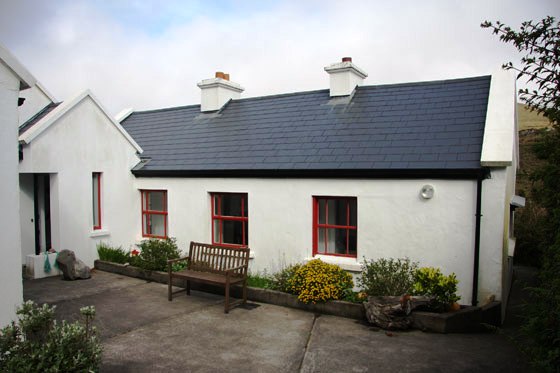
Heinrich Böll’s cottahe near Dugort on Achill Island
Life on Achill in the 1950s gave him plenty of material to indulge his penchant for the absurd and the incongruous, not least the casual relationship with time. His first book was called The Train Was On Time, and that first train from Dublin arrived in Westport right on time. Böll was soon introduced to the Irish saying: “When God made time he made plenty of it.” Achill Island, with its “classless society” and its casual attitude to time, held an immense appeal for him.

Recounting the time he went to a movie in Keel, Böll noted that regardless of the advertised start time the movie could only begin when all the priests – “the local ones as well as the ones on holiday” – were assembled in full strength. In the mid-1950s, Böll wrote in his Irish Journal: “Of the eighty children at Mass on Sundays, only forty-five will still be living here in forty years; but these forty-five will have so many children that eighty children will again be kneeling in church.”

Sixty years later I wonder if 80 people will be kneeling at Mass in the same church in Achill tomorrow morning. Heinrich Böll and his family continued to travel to Achill during the 1950s and 1960s, living in a cottage in Dugort, close to Saint Thomas’s Church. Heinrich Böll died on 16 July 1985. Thanks to his family, the Böll Stiftung in Cologne, and Mayo County Council, his cottage is now an artists’ residence, providing a short-term retreat for writers, poets and artists.

CLOGHER VALLEY RAILWAY

CVR train in Main St Caledon (TG4 photo)

CVR train in Main St Caledon (TG4 photo)

The picture shows a train from the Clogher Valley Railway in the Main Street of the border village of Caledon, County Tyrone. In the middle you can see the clock tower of the courthouse. The train is number 6, called Erne.  It was built by Sharp, Stewart No. 3374 of 1887;  0-4-2 tank. It was in service until the railway closed on December 31st 1941 and was scrapped the following year.  The other engines were Caledon (1), Errigal (2), Blackwater (3), Fury (4), Colebrooke (5) and Blessingbourne (7), built by Hudswell, Clarke & co.

Jack Johnston

Jack Johnston

The story of the railway was told at the restored Caledon courthouse this evening by Jack Johnston, who has written extensively about the history of the Clogher Valley. He illustrated the talk with slides, many of them black and white pictures of the operation of the railway which had been taken in the last century. Jack is also President of the William Carleton Society, one of five groups along with Caledon Regeneration Partnership, Donaghmore Historical Society, Killeeshil and Clonaneese Historical Society and South Lough Neagh Regeneration Association taking part in the EU Peace III-funded “Shared History, Shared Future” project.

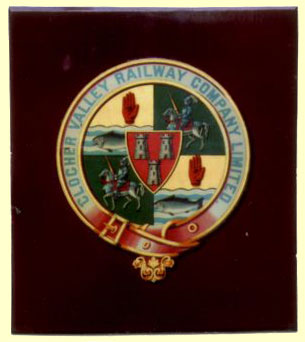
CVR Coat of Arms

CVR Coat of Arms

The 3ft gauge Clogher Valley Tramway was incorporated on 26th May 1884, the second project under the terms of the 1883 Act.  It opened for traffic on 2nd May 1887 linking Tynan in County Armagh and Maguiresbridge in County Fermanagh, both on the broad gauge Great Northern Railway, a distance of 37 miles.  The route covered the Clogher Valley in County Tyrone serving the towns of Caledon, Aughnacloy, Ballygawley, Augher, Clogher and Fivemiletown.  The railway followed public roads for much of its length and ran down the main streets of Caledon and Fivemiletown.

The railway had a dismal financial performance throughout its lifetime, belying the glowing picture of returns painted in its prospectus.  Nevertheless the Company had extremely ambitious plans for expansion aimed at providing access to the port of Newry and connections with the Cavan and Leitrim line.  None came to fruition however and the CVR remained a local line.

The Clogher Valley Railway lay within the six counties of Northern Ireland when partition occurred in 1922.  The new government in Belfast recommended the takeover of the CVR by the broad gauge Great Northern Railway.  The GNR refused to do this and the CVR retained its independence.  In 1927 however the directors were replaced by a Committee of Management appointed by Tyrone and Fermanagh county councils.

Clogher Valley Railway (TG4 picture)

Clogher Valley Railway (TG4 picture)

The Committee did much to revitalise the line with more and speedier services.  In 1932 a pioneering articulated passenger diesel railcar built by Walkers of Wigan was delivered, along with a diesel tractor unit which could tow a coach or a few wagons.  These were successful in cutting costs and speeding up the service but could only postpone the inevitable end of the basically uneconomic line. For almost all of its existence the railway made a loss and it needed a subsidy from local ratepayers. The greatest profit ever made by the company was in 1904, only £791.

Plaque on ceremonial wheelbarrow: cutting first sod in 1885.

Plaque on ceremonial wheelbarrow: cutting first sod in 1885.

It was around this time that my great-grandfather John McCann J.P., an auctioneer in Aughnacloy, became a director of the railway. He served on the board for a number of years, under the chairmanship of Hugh de Fellenberg Montgomery of Blessingbourne, Fivemiletown, I still have a season ticket belonging to him.

CALEDON AND ITS REGENERATION

Caledon Courthouse

Caledon Courthouse

For many years during the troubles in Northern Ireland the border village of Caledon in County Tyrone looked shabby, with many derelict and unused buildings along the main street. It looks very different nowadays, as the restored courthouse building testifies.

In 1984 the village was designated as a Conservation Area and six years later, this was reviewed and the boundary extended. DoE (NI) Planning Service produced a Conservation Area Guide to accompany the original designation, which included design guidance intended to help protect the historic fabric of the village.

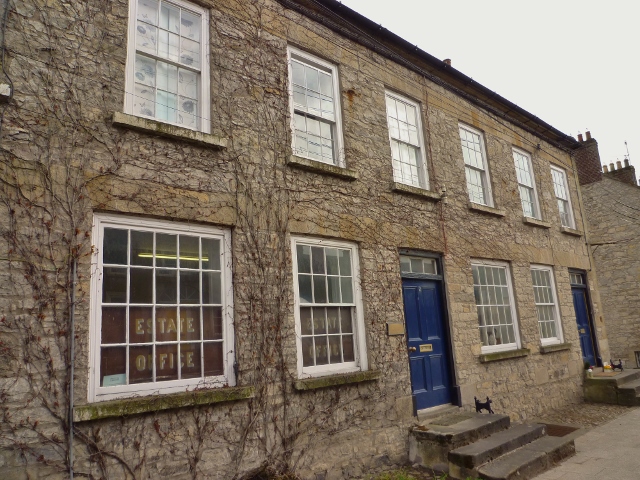
Caledon Estate Office

Caledon Estate Office

The Caledon Regeneration Partnership was formed in 1994 to take forward a planned social, economic and environmental regeneration strategy for the County Armagh village. It is made up of representatives from the local community, local authority and Caledon Estates Company, which has an office in the main street.

Beam Engine House, Caledon

Beam Engine House, Caledon

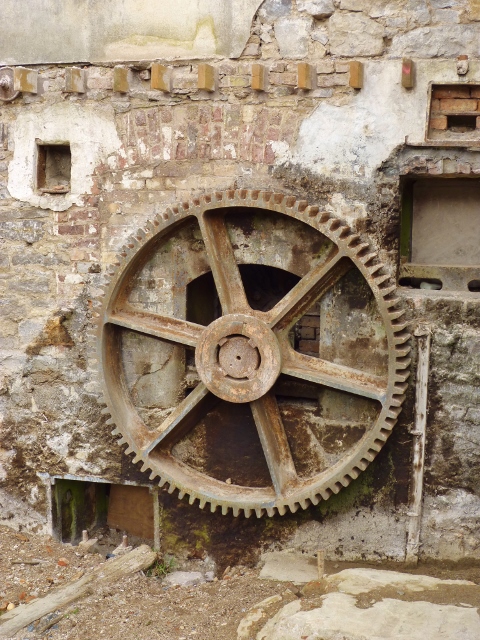
One of the projects being undertaken is the restoration of a beam engine and engine house. Last year a total of £220,000 in funding was secured to finance the first phase.  It is hoped that the engine will eventually be restored to a fully operational state, and become a tourist attraction for the area. The unique piece of equipment dates back to the early 1830s and is one of the earliest surviving steam engines in Ireland. It was once used to power the Caledon Flour Mill and then Caledon Woollen Mills.

Beam Engine House, Caledon

Beam Engine House, Caledon

William Beattie of Caledon Regeneration Partnership said he believed the beam engine is unique in these islands:-  “There are only about eight beam engines in Ireland, and this one is the only one which has a housed engine, making it a very important piece of industrial archaeology. This is the only relic remaining of Caledon’s once famous mill industry, which produced quality woollen garments until the 1930s. The mill, which was built in the early 1800s, was demolished in 1985. During the summer, wood and coal was used to power the beam engine, when the water-flow was not strong enough to move the wheel. The hope is to get the engine functioning again, and to create a viable tourism attraction which will also faithfully record the history of the village”, he said.

In addition a Grade B listed property, a former worker’s building on the Caledon Estate, which has lain derelict for years, has received funding worth £30,000 under the Historic Buildings Grant-Aid Scheme.

Caledon estate was bought from the seventh Earl of Cork for £94,400 in 1776 by James Alexander (later first Earl of Caledon), an East India Company Nabob. The Earls of Cork and Orrery had only acquired the estate by marriage from the Hamilton family in 1738, but during the forty years of ownership, they had made it into a by-word for fashionable landscape design, complete with a gate lodge decorated with statues and Latin epigrams, a hermitage and a bone house.

Gate Lodge Caledon Estate

Gate Lodge Caledon Estate

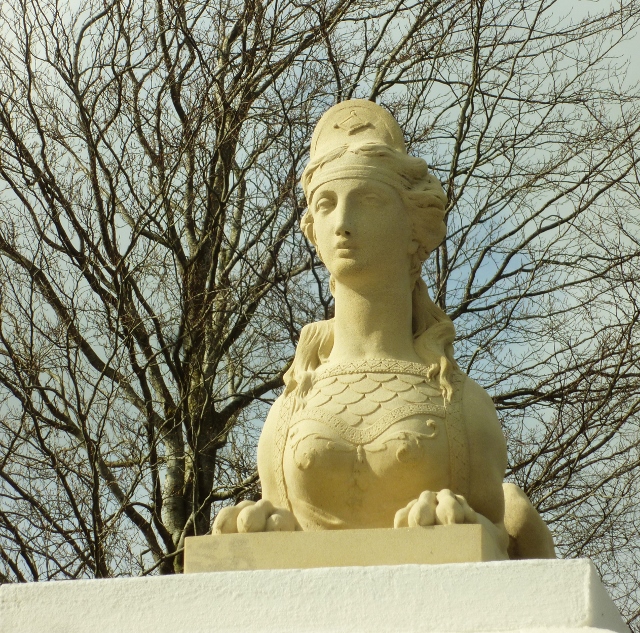
Sphinx Statue at Gate Lodge

Sphinx Statue at Gate Lodge

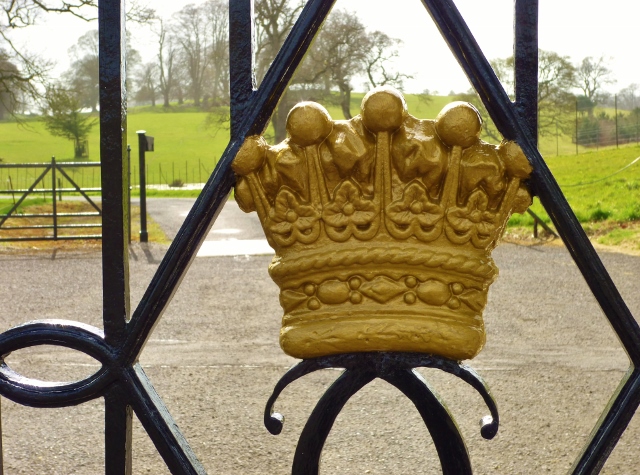
Detail on Gate

Detail on Gate

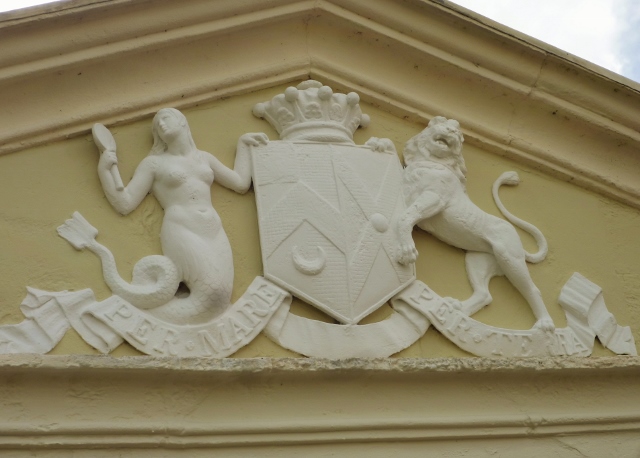
Pediment Relief: Coat of Arms

Pediment Relief: Coat of Arms

Caledon Regeneration is one of five groups taking part in the “Shared History, Shared Future” project under the Peace III programme run by Dungannon and South Tyrone Borough Council. On Thursday evening (25th April) at 7pm, the historian Jack Johnston of the William Carleton Society will give a talk on the Clogher Valley Railway. The narrow gauge line ran through the main street of the village until its closure in 1941.

CVR train in Main St Caledon (TG4 photo)

CVR train in Main St Caledon (TG4 photo)

.

ULSTER ENGLISH AGENCY?

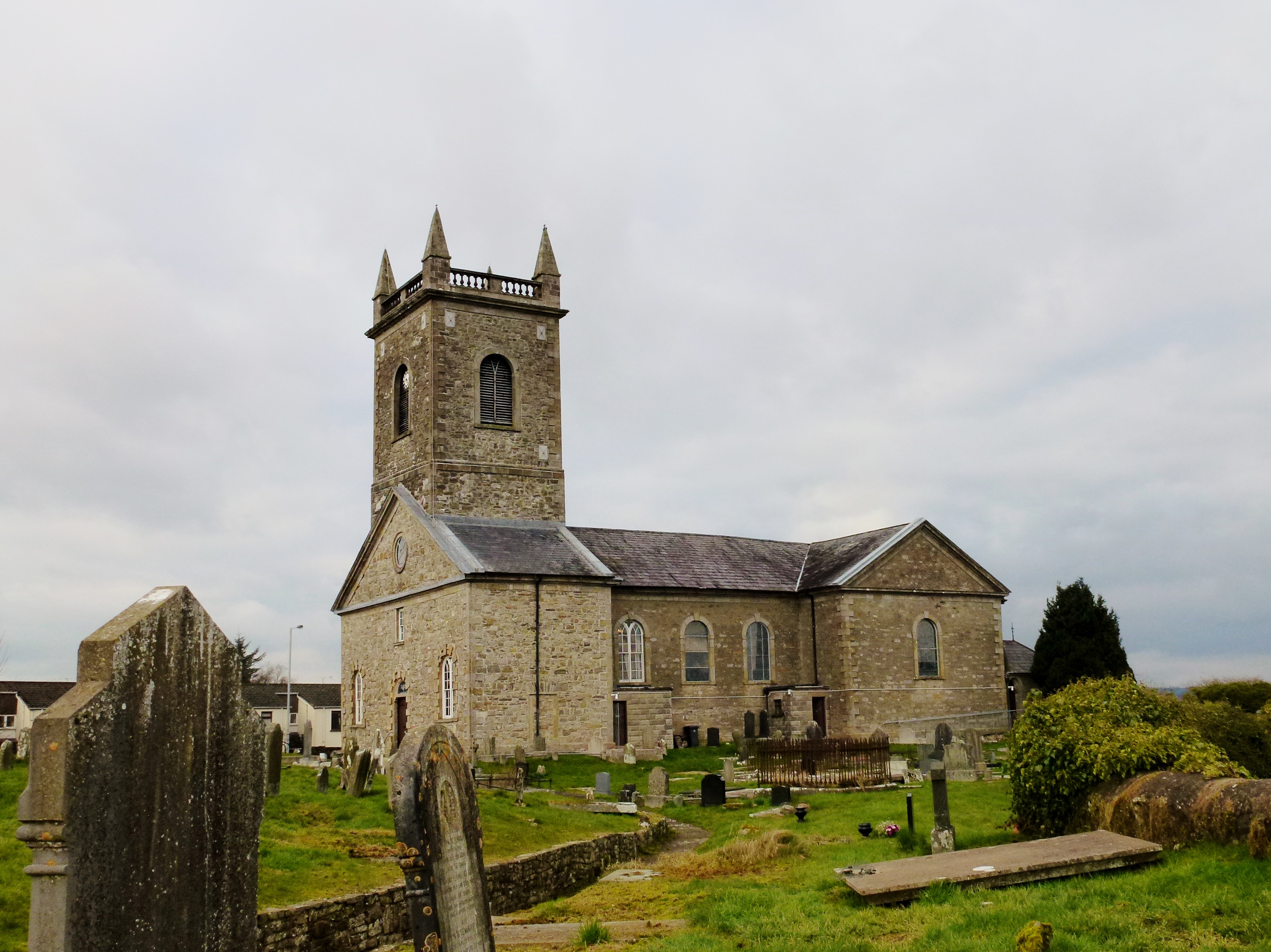
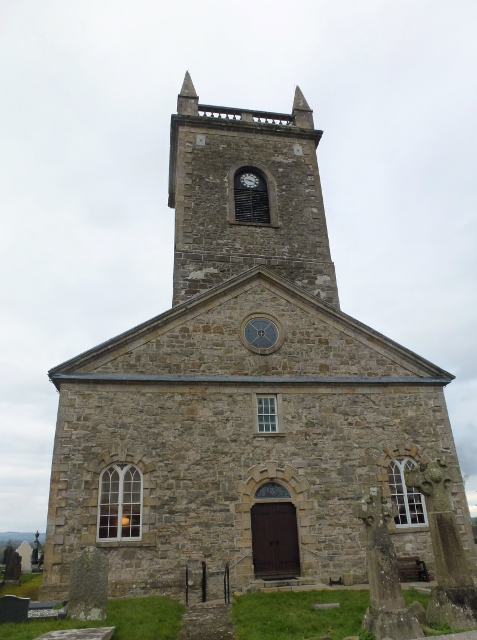
St Macartan's Cathedral, Clogher

St Macartan’s Cathedral, Clogher

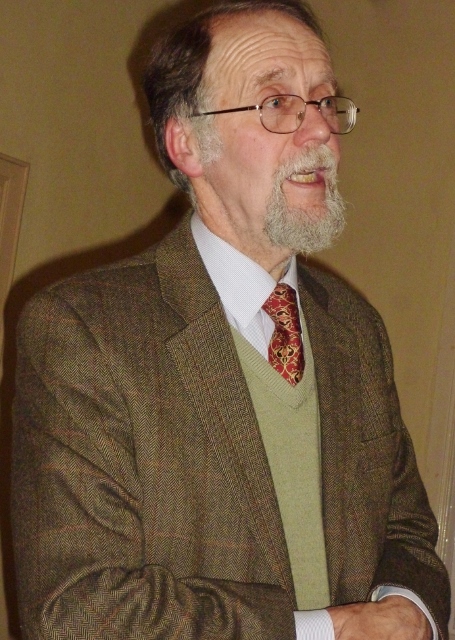
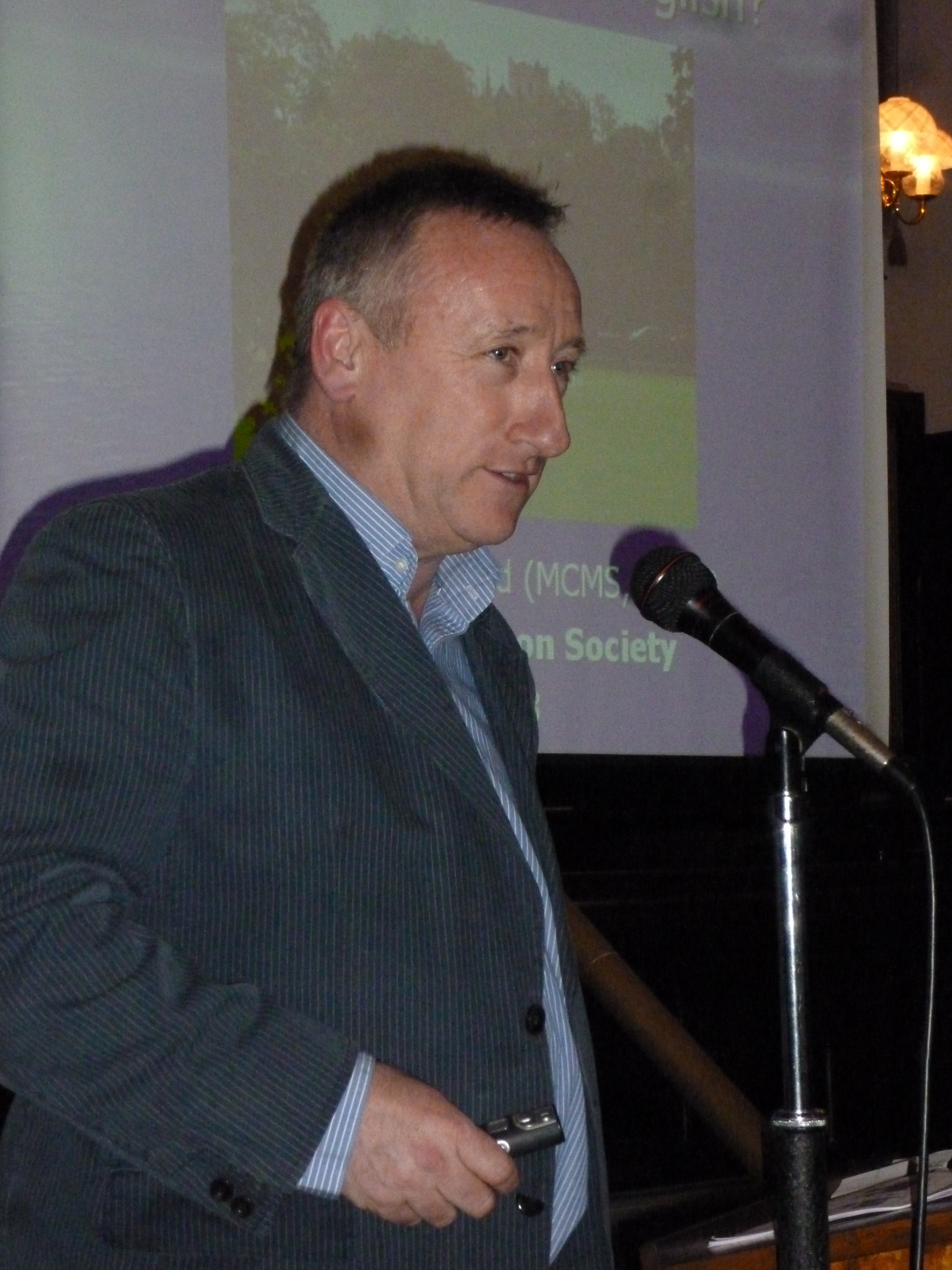
Dr Paddy Fitzgerald

Dr Paddy Fitzgerald

Much of the discussion about the two communities in Northern Ireland refers to the different backgrounds of the Irish (Gaelic) race and Ulster-Scots. But there is little to be found about a third category that dates back to the time of the Plantation in 1607, Ulster-English. This was the subject of a fascinating talk hosted on St George’s Day at St Macartan’s Cathedral in Clogher, County Tyrone and organised by the William Carleton Society.

The speaker was Dr Paddy Fitzgerald of the Centre for Migration Studies at the Ulster-American folk park in Omagh, a member of the Executive Committee of the Society. Earlier this year he gave an interesting talk about Archbishop John Hughes who came from the Augher area.

Dr Fitzgerald gave an outline of his own family history, which he pointed out had an Ulster-English connection. He explained that this was a different strand than the Ulster Scots. English settlers arrived after 1607 in the Belfast Lough area, moving through the Lagan Valley and South Antrim towards North Armagh and then along the Clogher Valley into Fermanagh. At the end of his talk, he posed the question whether we should have an Ulster-English Agency, because he said the authorities seemed to be promoting Ulster-Scots as the only alternative to the Gaelic and nationalist tradition.

Attendance at St Macartan's Cathedral

Attendance at St Macartan’s Cathedral

The British Museum guide on accents and dialects of Northern Ireland says:-

The Plantation of Ulster…was a planned process of settlement aimed at preventing further rebellion among the population in the north of Ireland. This part of the island was at that time virtually exclusively Gaelic-speaking and had shown the greatest resistance to English colonisation. From the early seventeenth century onwards, Irish lands were confiscated and given to British settlers — or ‘planters’ — who arrived in increasing numbers, bringing the English Language with them. Large numbers of settlers came from southwest Scotland and thus spoke a Scots dialect, while the remaining settlers came predominantly from the north and Midlands of England….

For some considerable time the colonists remained surrounded by Gaelic-speaking communities in County Donegal to the west and the counties of Louth, Monaghan and Cavan to the south. Thus English in the northeast of the island developed in relative isolation from other English-speaking areas such as Dublin, while the political situation over the course of the twentieth century has meant that Northern Ireland has continued to develop a linguistic tradition that is distinct from the rest of Ireland. Scots, Irish Gaelic, seventeenth century English and Hiberno-English (the English spoken in the Republic of Ireland) have all influenced the development of (Ulster) Northern Irish English, and this mixture explains the very distinctive hybrid that has emerged.”

Dr Paddy Fitzgerald

Dr Paddy Fitzgerald

The William Carleton Society would like to express its thanks to Precentor Noel Regan, for making the Cathedral available for this event. In his absence, the diocesan Curate Reverend Alistair Warke said the Cathedral enjoyed a good relationship with the annual William Carleton summer school and was pleased to be able to host the Society’s first talk in its programme for 2012/13. The talk was part of the “Shared History, Shared Future” project, supported by the EU Peace III programme delivered by Dungannon and South Tyrone Borough Council.      SWPeaceIII_logo_options_2b

DSTBC LogoEU flag2colors

ULSTER ENGLISH

St Macartan's Cathedral, Clogher

St Macartan’s Cathedral, Clogher

Much of the discussion about the two communities in Northern Ireland refers to the different linguistic backgrounds of Irish (Gaelic) and Ulster-Scots. But there is little to be found about a third category that dates back to the time of the Plantation in 1607, Ulster-English. This is the subject of tonight’s talk (7:30pm) hosted on St George’s Day at St Macartan’s Cathedral in Clogher, County Tyrone and organised by the William Carleton Society.  

Dr Paddy Fitzgerald & Malcolm Duffey

Dr Paddy Fitzgerald & Malcolm Duffey

The speaker is Dr Paddy Fitzgerald of the Centre for Migration Studies at the Ulster-American folk park in Omagh, a member of the Executive Committee of the Society. Earlier this year he gave an interesting talk about Archbishop John Hughes who came from the Augher area. The British Museum guide on accents and dialects of Northern Ireland says:-

 “The Plantation of Ulster…was a planned process of settlement aimed at preventing further rebellion among the population in the north of Ireland. This part of the island was at that time virtually exclusively Gaelic-speaking and had shown the greatest resistance to English colonisation. From the early seventeenth century onwards, Irish lands were confiscated and given to British settlers — or ‘planters’ — who arrived in increasing numbers, bringing the English Language with them. Large numbers of settlers came from southwest Scotland and thus spoke a Scots dialect, while the remaining settlers came predominantly from the north and Midlands of England…. 

For some considerable time the colonists remained surrounded by Gaelic-speaking communities in County Donegal to the west and the counties of Louth, Monaghan and Cavan to the south. Thus English in the northeast of the island developed in relative isolation from other English-speaking areas such as Dublin, while the political situation over the course of the twentieth century has meant that Northern Ireland has continued to develop a linguistic tradition that is distinct from the rest of Ireland. Scots, Irish Gaelic, seventeenth century English and Hiberno-English (the English spoken in the Republic of Ireland) have all influenced the development of (Ulster) Northern Irish English, and this mixture explains the very distinctive hybrid that has emerged.”

Admission to the talk is free. It is part of the “Shared History, Shared Future” project, supported by the EU Peace III programme delivered through Dungannon and South Tyrone Borough Council.    EU flag2colorsDSTBC LogoSWPeaceIII_logo_options_2bpaddyfitz

WILLIAM CARLETON

William Carleton

William Carleton

Donaghmore Historical Society in County Tyrone concluded its season of talks in The Heritage Centre on Monday, 8th April, when Michael Fisher gave an illustrated talk entitled, “From Prillisk to Beechmount: a Tyrone man’s journey to Dublin: the story of William Carleton.” Born and reared as a Catholic in the Clogher Valley , where his father was a small farmer, Carleton has never had the recognition he deserves, either in his native area or in the ranks of Irish novelists. He spent most of his adult life in Dublin , where his works were written, including the famous “Traits and Stories of the Irish Peasantry,” the first such significant stories to be published in the English language in Ireland and Britain . When he settled in the capital city, he came under the influence of a Protestant clergyman, who persuaded him to change his religion in order to gain a living as a writer. His stories describe the society he grew up in, which often featured sectarian confrontation between orange and green factions, such as “The Party Fight and Funeral.”

Michael Fisher Talk

Michael Fisher Talk

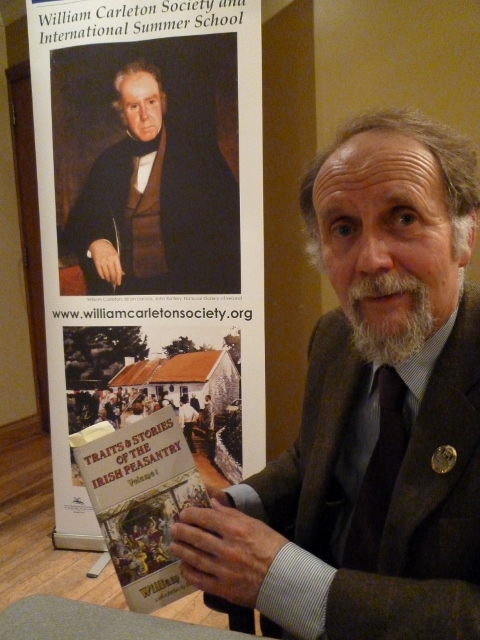
Michael Fisher is Director of the William Carleton Society’s international summer school. A freelance journalist, he retired from RTÉ. News in Belfast in September 2010, having joined the broadcaster in Dublin in 1979. He is a former BBC. News trainee in London and worked in Birmingham as a local radio reporter. A native of Dublin , Michael has family connections with County Tyrone as well as County Monaghan . He is a graduate of UCD. and QUB., where he completed an MA. in Irish Studies in 2001, including a dissertation on The Big House in Counties Fermanagh and Monaghan. He was introduced to the works of Carleton during his time as a student at University College in Dublin by one of his lecturers on Anglo-Irish literature, Maurice Harmon, who is now a patron of the William Carleton Society.

Michael FisherTalk

Michael FisherTalk

Those who remember Michael’s soft modulated, dulcet tones from his days on our television screens will have a chance to see and hear him in person in The Heritage Centre on Monday night at 8 o’clock, when he will be telling the story of a County Tyrone writer, who, surprisingly enough, is virtually unknown in this part of the county.

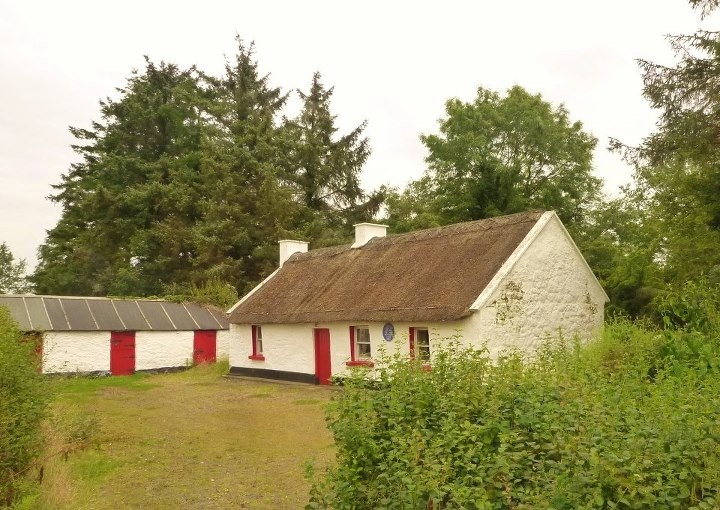
Carleton's Cottage, Springtown

Carleton’s Cottage, Springtown

William Carleton                    1794 – 1869

William Carleton was born the youngest of a family of 14 children in the townland of Prolusk (‘Prillisk’ in his autobiography) near Clogher in Co.Tyrone, on Shrove Tuesday, 20th February,1794. Although there is little suggestion that the Carletons were upwardly mobile, they did move house frequently within the Clogher area and were established at the townland of Springtown when William left the family home. Carleton obtained his education at local hedge schools which he was to write about, fictionalising the pedagogue Pat Frayne as the redoubtable Mat Cavanagh. From other retrospections of his home district, we learn of Carleton’s delight in his father’s skill as a seanachie and the sweetness of his mother’s voice as she sang the traditional airs of Ireland; of his early romances- especially with Anne Duffy, daughter of the local miller; of Carleton the athlete, accomplishing a ‘Leap’ over a river, the site of which is still pointed out; of the boisterous open air dancing. Initially an aspirant o the priesthood, Carleton embarked in 1814 on an excursion as a ‘poor scholar’ but, following a disturbing dream, returned to his somewhat leisurely life in the Clogher Valley before leaving home permanently in 1817. Journeying via Louth, Kildare and Mullingar, he found work as a teacher, librarian and,  eventually, as a clerk in the Church of Ireland Sunday School Office in Dublin. In 1820, he married Jane Anderson who bore him several children. By 1825, Carleton. who had left the Roman Catholic Church for the Anglican Church of Ireland, met a maverick Church of Ireland cleric, Caesar Otway, who encouraged him to put his already recognised journalistic talents to such prosletysing purposes as satirising the attitudes reflected in pilgrimages to ‘St Patrick’s Purgatory’ at Lough Derg, a totemic site in Irish Catholicism. Further writings in the Christian Examiner & Church of lreland Magazine led in 1829 and 1833 to the publication of what is arguably Carleton’s best known work: Traits and Stories of the Irish Peasantry. In these stories Carleton returned imaginatively to the Clogher Valley, drawing on comedy, farce, melodrama and tragedy to present a tableau of the life of the country people of the north of Ireland before the famines of the 1840s altered their pattern of existence for ever. Carleton went on to respond to the challenge of the novel, in his tirne a comparatively undeveloped genre amongst Irish writers, and published Fardorougha the Miser (1839), Valentine McClutchy (1845), The Black Prophet (1847), The Emigrants of Aghadarra (1848), The Tithe Proctor (1849), The Squanders of Castle Squander (1852). In these works he addresses many of the issues affecting the Ireland of his day such as the influence of the Established Church and landlordism, poverty, famine and emigration but does so with an earnestness that regrettably often caused his more creative genius to be swamped in a heavy didacticism. Carleton continued to write in a variety of forms, including verse, until his death in 1869, but critics are agreed that the quality of the work is uneven. Despite his prolific output, Carleton never really made a living from his writings and welcomed the pension voted to him by the government following the advocacy of such contrasting figures as the Ulster Presbyterian leader, Dr Henry Cooke, and Paul Cardinal Cullen, Catholic Archbishop of Dublin. His last project, uncompleted when he died, was his Autobiography, which was re-issued through the efforts of the Summer School Committee in 1996. Carleton was buried in the cemetery at Mount Jerome in Dublin and over his grave a miniature obelisk records the place “wherein rest the remains of one whose memory needs neither graven stone nor sculptured marble to preserve it from oblivion”.           (Summer School handbook 1998)

P1100802 (2)

Donaghmore Sunset

SWPeaceIII_logo_options_2b  DSTBC Logo

CLOGHER CELEBRATES

St Macartan's Cathedral, Clogher

St Macartan’s Cathedral, Clogher

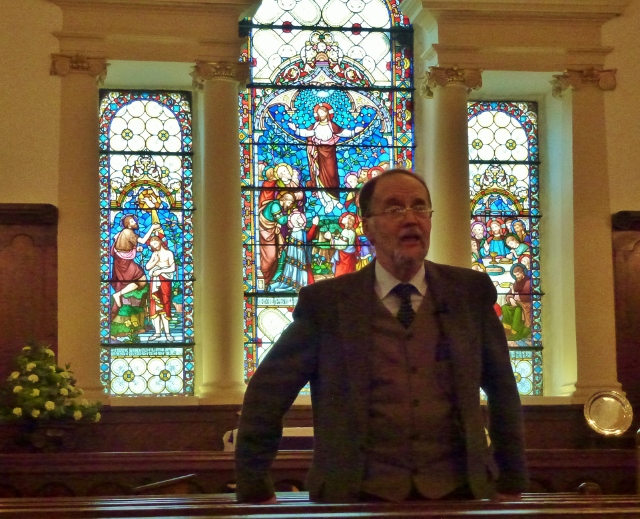
Saint Patrick might be known widely for the foundation of his see in Armagh, of which he was the first Bishop. But it is predated by his legacy in Clogher. To mark Saint Patrick’s Day, archivist Jack Johnston gave a talk on the history of Saint Macartan’s Anglican Cathedral. He pointed out that Saint Patrick came to Clogher and established a church there under Macartan before he went to Armagh, which is now the seat of the all-Ireland Primate in both the Church of Ireland and Catholic churches. The see of Clogher was founded by Saint Patrick, who appointed one of his household, Macartan, as first bishop in 454. Macartan was the ‘strong man’ of Patrick, who established the church in Clogher and spread the gospel in Tyrone and Fermanagh. It is said that Saint Brigid, Macartan’s niece, was present at the founding of the see.

Jack Johnston talk

Jack Johnston talk

Jack Johnston's talk

Jack Johnston’s talk

The Precentor of Saint Macartan’s Cathedral Chapter, Reverend Noel Regan, who is originally from Sligo, organised a series of events to mark Saint Patrick’s Day, starting with the weekly Sunday morning Holy Communion service. There was a Lenten lunch to raise funds for  the Us missionary organisation. It was followed by some musicians playing in the Cathedral, including a chance to hear the wonderful organ played by Glenn Moore, Director of Music at the other (later) diocesan Cathedral, St Macartin’s in Enniskillen.

The day was rounded off with an ecumenical evensong, featuring the choir of the Cathedral group of parishes and members of the choir from St Patrick’s Catholic church in Clogher, to a setting by Thomas Tallis. Canon Regan said, “As members of the Church of Ireland we have the great privilege of worshipping in some of the most significant and important sites in the Christian history of this land. In Clogher we have a fine Cathedral which stands on one of the most important Christian sites in the area. We are delighted to open our doors that others might come and together with us learn something of our common heritage and enjoy the surroundings of this holy and special place”.

St Macartan's Cathedral, Clogher

St Macartan’s Cathedral, Clogher

SHARED HISTORY: SHARED FUTURE

Shared History: Shared Future Launch

Shared History: Shared Future Launch

“Shared History: Shared Future” brings together six historical, literary and regeneration groups from South Tyrone in a cross-community project delivered by Dungannon and South Tyrone Borough Council through the Peace III phase 2 programme financed by the European Union.  It was launched at the Hill of the O’Neill and Ranfurly House Visitor Centre in Dungannon by the Mayor of Dungannon and South Tyrone, Councillor Phelim Gildernew. Brian Lambkin, Director of The Ulster American Folk Park in Omagh, was the guest speaker.

 Mr Lambkin gave an informative talk on comparative local history: what do we tell the children? He spoke about the significance of townlands, the smallest unit in civil administration, and said they were the key to a better understanding of any local area. He hoped there would be a synergy between the various groups and that their projects would have a wider value in the areas of tourism and genealogy.

 The Shared History Shared Future Project is funded through the European Union’s Peace & Reconciliation Fund and delivered by the South West Peace Cluster and Dungannon & South Tyrone Borough Council. The project was awarded over £25,000 to develop an interlinked schedule of activities over the coming months. It promises to be a very interesting and informative project which encapsulates figures of literary importance such as William Carleton right through to the social history of local engineering and entrepreneurship of John Finlay and Sylvester Mallon, pioneers in quarry engineering to exploring the history of our waterways and townlands.

The project is made up of six societies who have come together to share with each other and with the wider community an awareness of their own fields of expertise and use it towards a shared understanding of our history and future. The groups are:-

O’Neill Country  Historical Society;

Caledon Regeneration Partnership;

William Carleton Society;

Donaghmore Historical Society;

Killeeshil and Clonaneese Historical Society;

South Lough Neagh Regeneration Association.

During the evening, each group gave an overview of their origins and the focus of previous work. While maintaining the individuality of each of their projects all agree that the contribution to  this project enhances and increases awareness of who they are and what they are about.

Brian Lambkin & O'Neill Country Historical Society

Brian Lambkin & O’Neill Country Historical Society

The O’Neill Country Historical Society, represented by Art Daly from Benburb, was established in 1985. Their aim is to research, record and publish the history of the area along the valley of the River Blackwater straddling the border between counties Armagh and Tyrone. The group promote knowledge and understanding of this area’s heritage and folklore through publications, lectures and seminars and interact with other local historical groups and bodies with a view to promoting interest in our history.

Caledon Regeneration Partnership was established in 1996 and comprises representation from the local community, Dungannon and South Tyrone Borough Council and Caledon Estates Company.  William Beattie outlined how the Partnership actively promote the conservation and protection of the built and natural heritage of the area and have undertaken a number of major restoration projects within Caledon Village. The restoration of the Caledon Beam Engine Complex is currently underway.  Caledon Regeneration Partnership are actively involved in a number of community projects. Caledon Village Allotments were opened in 2011. Chairman Jim Brady said “the Partnership are delighted to join together with like-minded groups across the region in this exploration of our cultural and industrial heritage”.

Pat Boyle & Jim Cavanagh

Pat Boyle & Jim Cavanagh

The William Carleton Society is a cross-community, cross-border group which is dedicated to promoting the works of the well-known Irish author from County Tyrone and his life and times. The Chair, Jim Cavanagh, explained how it seeks to use his stories of faction-fighting and sectarianism in 19th Century Ireland as the basis for talks and discussions on history and literature and the lessons for modern-day society. By discussing issues such as sectarianism the Society hopes to open up a meaningful debate and an educative process around this issue, which is still relevant to the current situation in Northern Ireland. Its main event is a four-day annual international summer school in Clogher in the first week of August . This year’s is the 22nd since its inception in 1992.

The Society will be organising a cross-community concert in Fivemiletown Methodist Hall with the Murley Silver Band and Monaghan Gospel Choir on Wednesday August 7th. On the previous evening, August 6th, there will be a cross-community walk “in the footsteps of Carleton”, followed by music from the diferent traditions. There will also be a series of talks in the coming months including one by Dr Paddy Fitzgerald on the “Ulster English” and two others given by members of the Society about Carleton and the Clogher Valley area. Although Carleton grew up in the Clogher area and one of the places he lived at Springtown still survives, “Carleton’s Cottage”, he spent most of his life in Dublin, where he changed his religion to Anglicanism. In January, members of the Society in Tyrone held a study trip to Dublin to visit Sandford Church of Ireland in Ranelagh, where he worshipped. They also visited his grave at Mount Jerome cemetery, where Precentor Noel Regan from St Macartan’s Cathedral in Clogher led a prayer and summer school director Michael Fisher laid flowers to mark the 144th anniversary of his death.

Donaghmore Historical Society’s Townlands project is dedicated to the importance of these geographical divisions of land that have existed for thousands of years, long before towns and villages developed. They are a most important element of our heritage. Since the Post Office ceased using town lands in the early 1970s and introduced road names instead, there has been a steady decline in the awareness of our town lands by all of us but more especially by the younger generations. Members of Donaghmore Historical Society intend to study a number of townlands in the parish of Donaghmore to find things like the acreage, the meaning of the name and any other features of interest and to chart the changes that have taken place in them over the past two hundred years.

Patricia Bogue outlined how they intend to research all available records of the people who lived in the townlands and to record all their findings in book form. The aim of the publication will be to help genealogists and family history researchers seeking information about the many emigrants from the parish, living in all parts of the world. To help raise awareness of townlands in the new generations, the group also intend to involve schools from the parish in the project.

Killeeshil and Clonaneese Historical Society described how it was formed in March 2009 from the coming together of people throughout the areas of Killeeshil and Clonaneese, Co. Tyrone who have a keen interest in local history. Richard Knox said the Society’s aims are to broaden the knowledge of the area’s long and wonderful history and to provide a mechanism whereby local people and those from further afield can access this knowledge through literature, talks & events and the internet.

The Society is keen to promote the fact that the area has a rich shared history which should be enjoyed by everyone and as such the Society’s ethos is cross-community. If you would like to become a member of the Society please contact the Secretary or come along to the various events they will be holding in the coming months through the Shared History Shared Future Project.

Six Groups in Shared History Project

Six Groups in Shared History Project

Like the other five members in the project, the South Lough Neagh Regeneration Association is a voluntary cross-community group. It aims to attract and encourage investment in the economic, social and environmental well-being of the southern shores of Lough Neagh; to generate activity, employment, enthusiasm and pride in the community. They are interested in the area of the “Derrys”: covering Derrymacash, Derryadd, Derrytrasna, Derryinver, Derrylard, The Birches, Maghery, Derryloughan and Derrytresk.

Local historian Tommy Glenny told the launch that the group plans to make a video about the walkways of the defunct Ulster Canal, which once played an important role in transportation in the area. There are plans by Waterways Ireland to restore part of the canal, which linked Lough Neagh through Monaghan and Clones with Upper Lough Erne in County Fermanagh, as part of a tourism project. The group takes a special interest in the stretch between Maghery and Benburb and will be holding events in May on the old canal towpath.
DSTBC LogoThe PEACE III Programme is part-funded by the European Union (€225 million from the EU with further national contributions of €108 million) through its Structural Funds Programme. The four Councils of Cookstown, Dungannon and South Tyrone, Fermanagh and Magherafelt came together to manage the PEACE III Programme for Measure 1.1 – ‘Building Positive Relations at a Local Level’ across the four Council areas. This area is referred to as the South West Cluster. The full title of the PEACE III Programme is the EU Programme for Peace and Reconciliation in Northern Ireland and the Border Region of Ireland. The programme is available in Northern Ireland and the Border Counties of the Republic of Ireland and covers the period 2007-2013.

The four Councils of the South West Cluster were allocated a budget of £3,461,440 for Phase I of the PEACE III Programme (2007-2010) and a further allocation of £3,461,743 has been awarded to deliver Phase II of the Programme for the period 2011-2013. The Phase II Action Plan has been developed after extensive consultation with local stakeholders and analysis of the needs of communities across the the South West Cluster.    erdfimages