CARLETON AND IRISH

William Carleton

William Carleton

The historian John Paul McCarthy immediately caught my attention in his column in the Sunday Independent p.16 10/02/13 with his mention of William Carleton in the sub-heading. He is writing about the poet Liam O Muirthile from Cork. Under the heading “Language of love and friendship”, he says that Liam’s latest collection of peoms is in the humane Carleton tradition. He goes on to make a very interesting comparison of the works of both men.  I am therefore publishing his comments here because of my interest in Carleton.

It is good to see the work of Liam O Muirthile getting recognition. I worked with him in the RTÉ newsroom in Dublin, where he was part of the Nuacht team. After he left RTÉ, he devoted his time to literature and he used to have a regular column in The Irish Times.

Liam O Muirthile, file (poet)

Liam O Muirthile, file (poet)

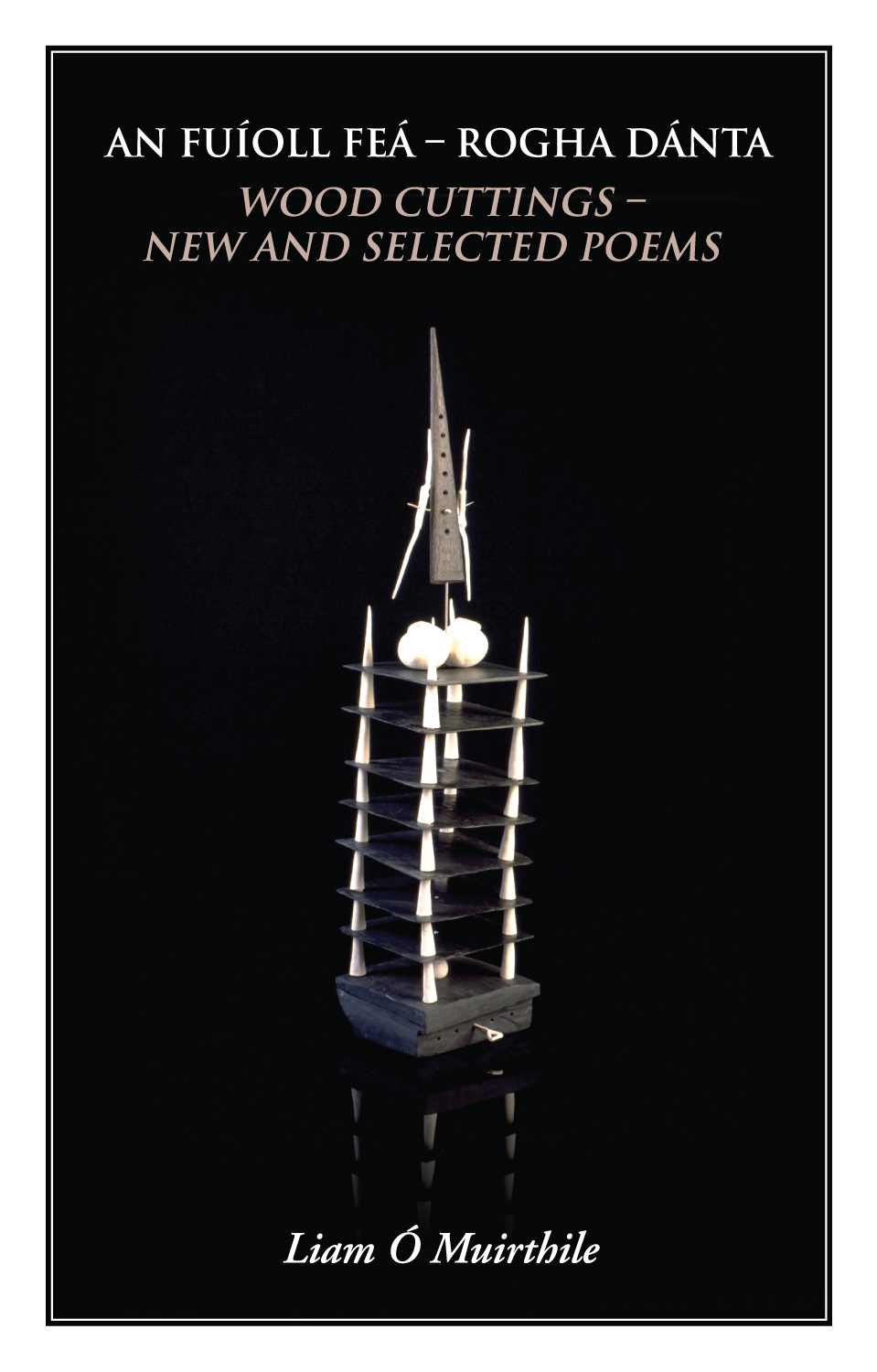
Liam’s latest work is called An Fuíoll Feá – Rogha Dánta or Wood Cuttings, new and selected poems, published by Cois Life and there’s more about it on their blog. Gabriel Rosenstock has translated the poems. The book is available in harback and softback (€30/€20). It also comes with a CD of O Muirthile reading some of his work.Fuíoll Feá - Rogha Dánta

Here is an edited version of what John Paul McCarthy has to say on the subject:-

In his essay on Irish swearing, the great Victorian chronicler of Gaelic Ireland, William Carleton, said “the Irish language actually flows with the milk and honey of love and friendship”. Irish for him was the medium of prayer and domestic tranquility. That aspect of Irish has struggled to get a hearing in our time, if only because of the relentlessly political focus that has disfigured large parts of modern Irish letters. The introspection of the Gaeltachtai has not helped matters either. Liam O Muirthile’s latest collection of poems, An Fuioll Fea-Wood Cuttings (Cois Life), is very much in the humane Carleton tradition though.

O Muirthile’s Irish is the Irish of the city street, the factory floor and the urban tavern. His focus is on what Patrick Kavanagh once called “ordinary plenty”….

Like Carleton again, O Muirthile found politics to be inescapable. He translates parts of Wolfe Tone’s diaries in a series of poems before tending to the Guildford Four. The Firing Squad suggests some fundamental ambivalence about revolutionary aristocrats, especially the ones who plague people with their consciences in pubs.

The last poem of this collection then, Thuaidh (or North) draws these disparate threads together. The poet is commemorating an ancient IRA ambush, and proceedings are rather hijacked by an abrasive northerner. “‘Daoine boga sibhse theas,’ arsa cara. ‘Muidne thuaidh cruaidh.'” (You lot are soft down south, we’re hard in the north)”.

MOUNT JEROME CEMETERY

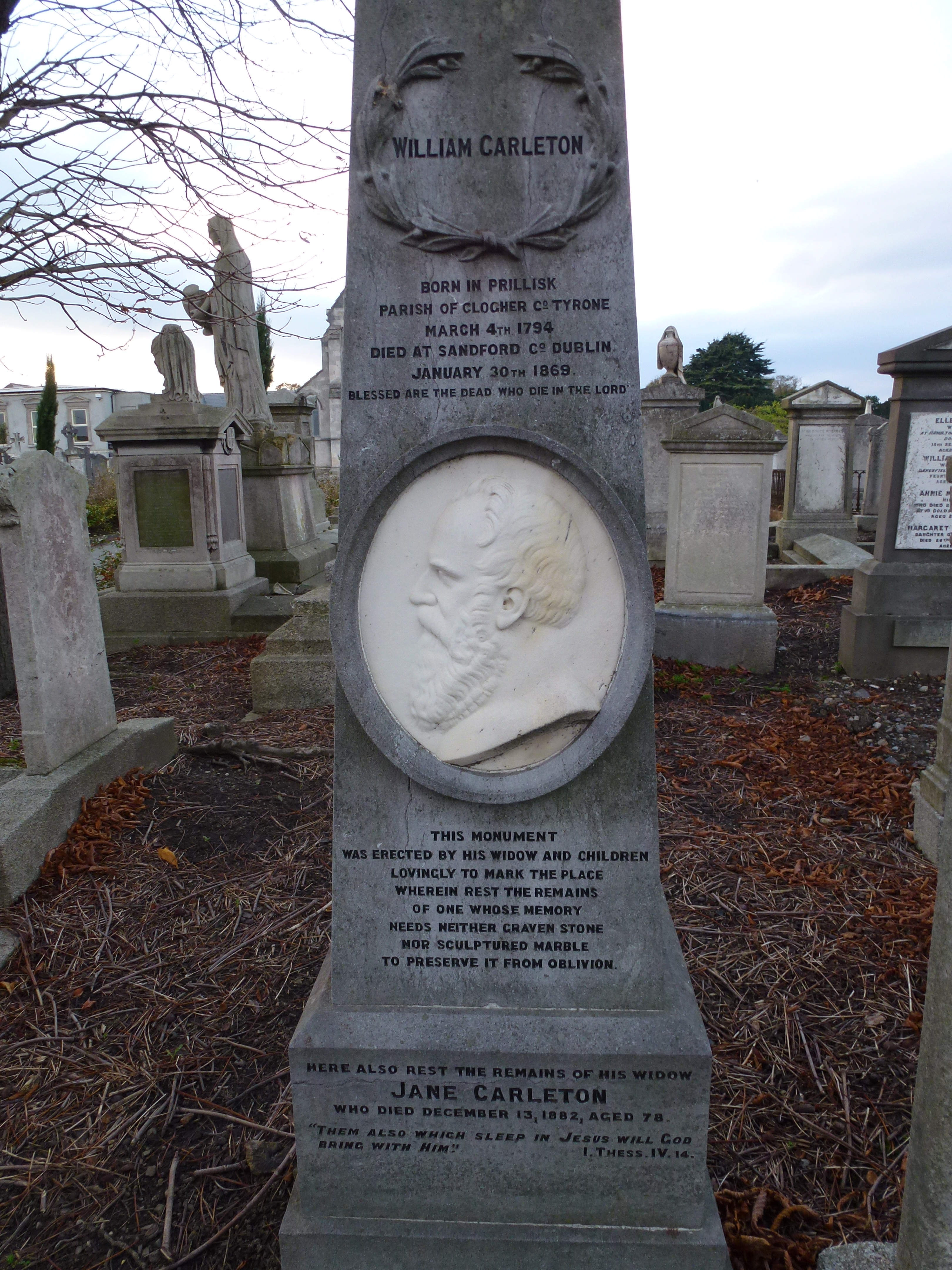
William Carleton's Grave

William Carleton’s Grave

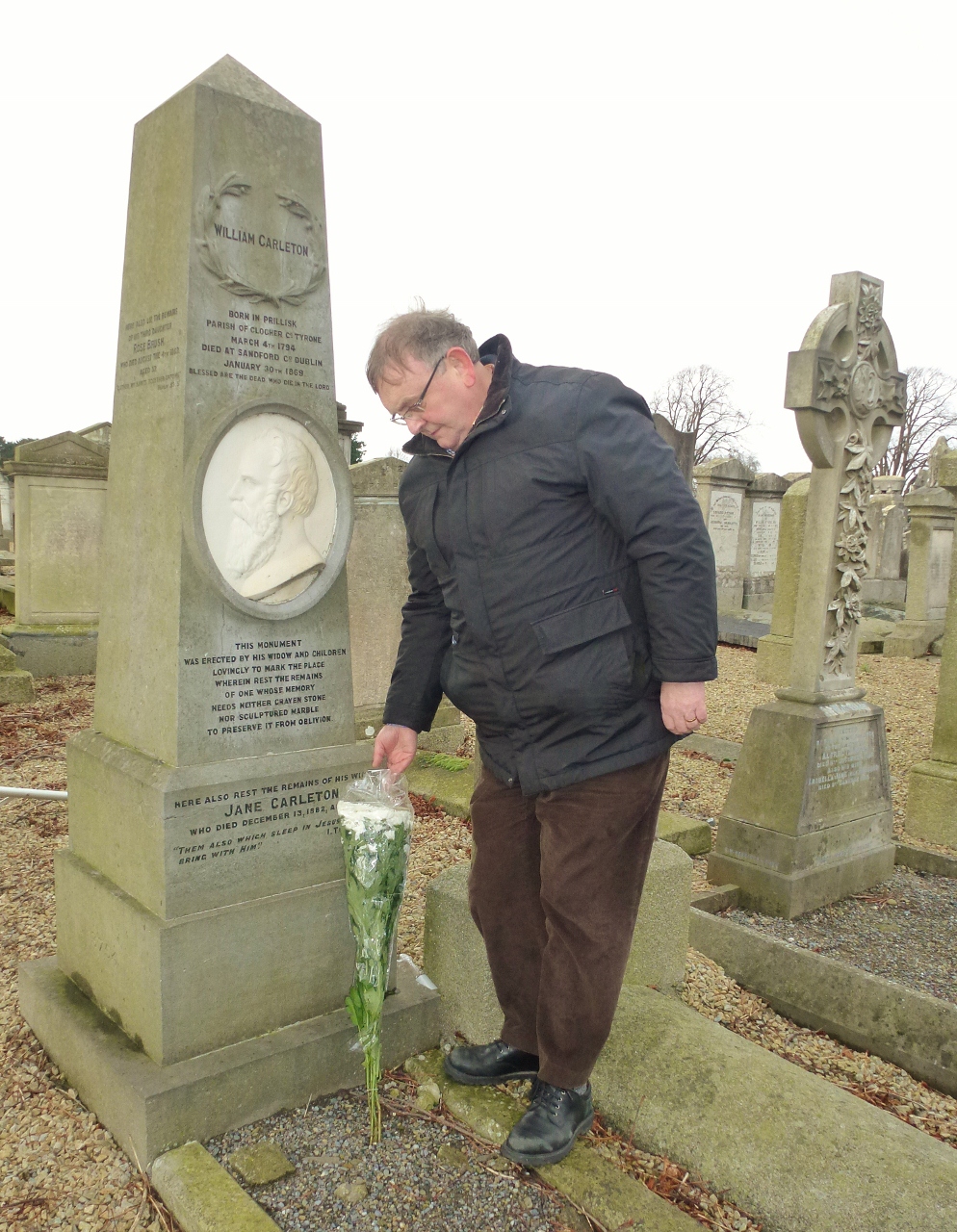
Commemorating the 144th anniversary of the death in January 1869 of the leading Irish author William Carleton last weekend, I laid flowers at his grave at Mount Jerome Cemetery in Dublin. It also gave a group of us an opportunity to visit the graves of several other famous Irish people. The graveyard contains one of the finest collections of Victorian memorials, tombs, vaults and crypts in Ireland.

Carleton’s last resting place is relatively easy to find, as it is on close to the main avenue leading up to the church, on the right hand side. It is marked by a small obelisk, raised ‘to mark the place wherein rest the remains of one whose memory needs neither graven stone nor sculptured marble to preserve it from oblivion’. It includes a sculptured portrait of Carleton by James Cahill, set in stone. It was restored and unveiled on 15th August 1989, thanks to the William Carleton Memorial Committee that included the writer Benedict Kiely, Barbara Hayley (NUI Maynooth) and Vivien Igoe. In her book, “A Literary Guide to Dublin“, Methuen 1994, she recalls how:-

“Kiely said in his oration that Carleton, as a novelist, had taken up the issues of tenants’ rights, emigration and famine and had put down on record the Irish people as he remembered them before the famine, before they were practically wiped out. Irish people have not much changed, he said”.   

Sir William Wilde grave

Sir William Wilde grave

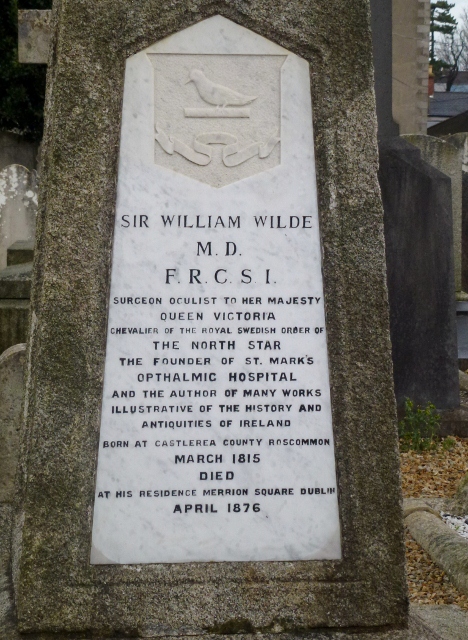
The next significant grave close to the entrance to the church is that of Dr William Wilde, eye and ear surgeon, father of Oscar and husband of Lady Jane Wilde, neé Elgee. She was an important figure in her own right, a poet and writer, who published under the name “Speranza” and played a part in the Irish literary revival. Oscar is buried in Paris. The side of the memorial carries the inscription: “In Memoriam Jane Francesca, Lady Wilde, ‘Speranza’ of The Nation, Writer, Translator, Poet and Nationalist, Author of Works on Irish Folklore, Early Advocate of Equality for Women and Founder of a Leading Literary Salon. Born Dublin 27 December 1821              Died London 3 February 1896.  Wife of Sir William and Mother of William Charles Kingsbury Wilde, Barrister and Journalist 1852-1899 Oscar Fingal O’Flahertie Wills Wilde, Poet Wit and Dramatist 1854-1900 Isola Francesca Emily Wilde 1857-1867 “Tread lightly, she is near, Under the snow, Speak gently, she can hear The lilies grow“.

JM Synge grave

JM Synge grave

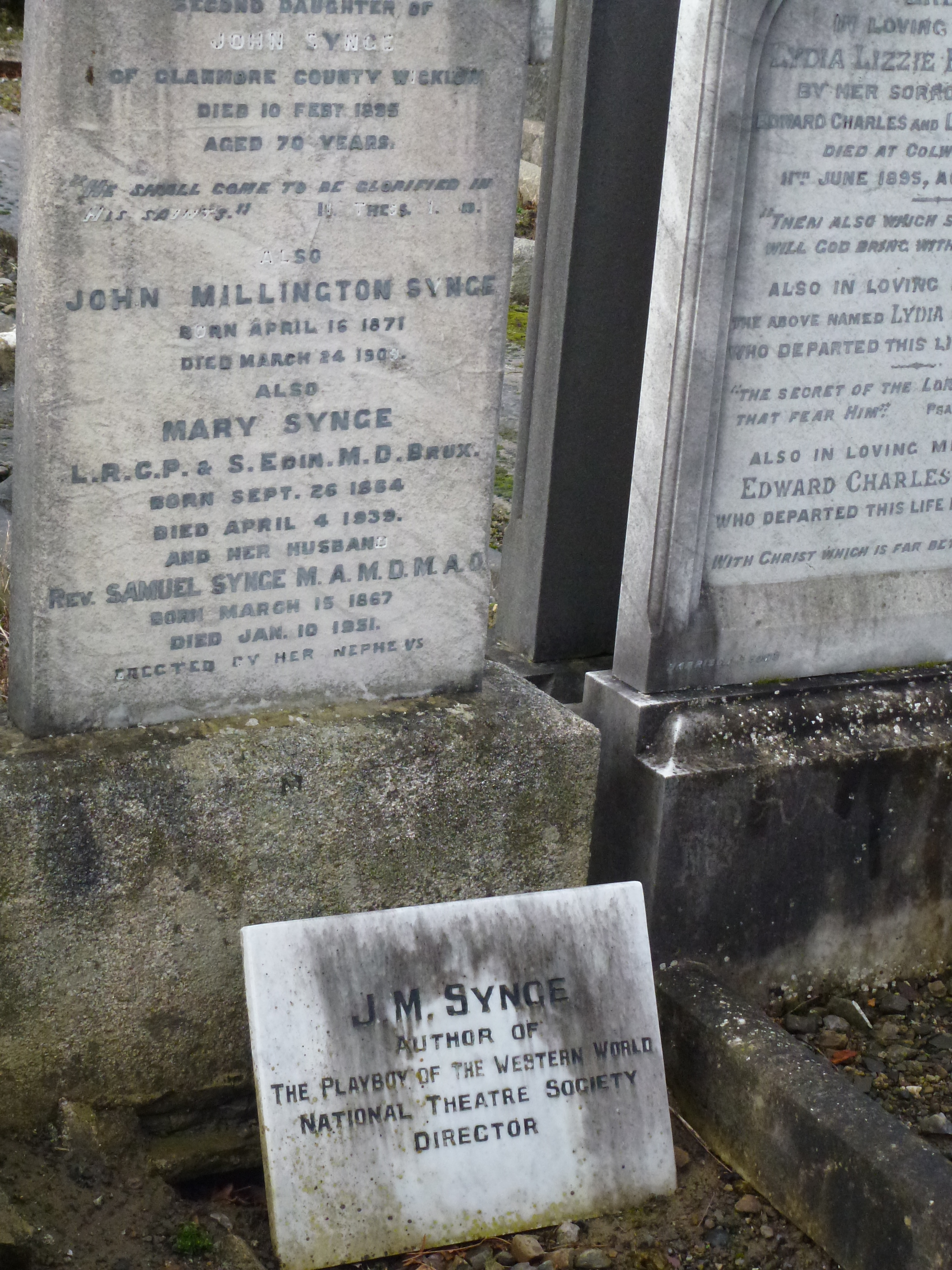
Another important figure in the Irish literary renaissance was the playright, John Millington Synge. His grave was more difficult to find. Synge was born in Rathfarnham, Co.Dublin on April 16th 1871 and died on March 24th 1909. He is best known for writing “The Playboy of the Western World“.  His brother, Reverend Samuel Synge who was a missionary in China is also buried there along with his wife Mary and his aunt Jane, second daughter of John Hatch Synge of Glanmore, Co.Wicklow.

Jack B. Yeats grave

Jack B. Yeats grave

WB Yeats was another leading figure in the Irish literary revival. His grave is in Drumcliff churchyard, under bare Ben Bulben’s head in Co.Sligo. But his brother, the painter Jack Butler Yeats, lies in Mount Jerome. He died on March 28th 1957, although the faded bronze lettering on the tombstone makes his grave difficult to spot. He was elected a member of the Royal Hibernian Academy in 1916. In 1999 one of his paintings was sold at Sotheby’s in London (where he was born in 1871) for over £1.2 million pounds. His wife Mary Cottenham Yeats predeceased him by ten years.

Buried in a different section is another member of the RHA, Sarah Purser. One of her paintings of a coastal scene in the West of Ireland was sold by Ross’s auctioneers of Belfast in 2007 f0r £2400. Not far from her grave is buried the writer Joseph Sheridan Le Fanu, but his exact burial spot could not be found, despite the assistance of a map. I think I saw two graves lying side by side near a tree and next to the path, but I could not find any inscription on the stones.

Sarah Purser grave

Sarah Purser grave

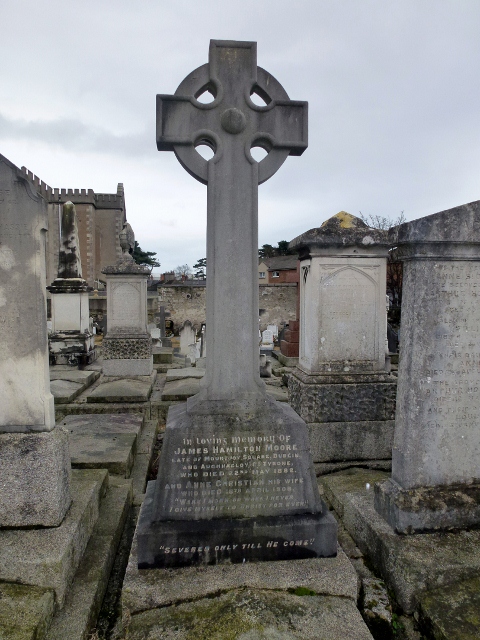
While wandering around I noticed a Celtic Cross and looked at the inscription. It turned out that the person buried there, James Hamilton Moore,  came from Aughnacloy, Co.Tyrone where some of my relatives on my mother’s side come from. Further research revealed his name in the British Parliamentary Papers on Ireland in a report on the (sectarian) riots in Belfast in July and September 1857. It seems things have not changed much in over 150 years! Moore is listed in an Appendix as part of evidence presented on behalf of the Orange Society (Order), of which he was a senior member.

James Hamilton Moore grave

James Hamilton Moore grave

Moore was Grand Treasurer of the Trinity College Grand District and was a solicitor with an address at 56 Lower Gardiner Street in Dublin (then a fashionable Georgian street). He is also listed as Deputy Grand Secretary of the Grand Orange Lodge of Ireland which met at Molesworth Street in Dublin in November 1856 and his address is given as Gardina Lodge, Monkstown, Co. Dublin.  So next time you have to attend a funeral or cremation at Mount Jerome, take the opportunity to think of all the others who found their place of eternal rest there. They include the writer AE (George Russell), Benjamin Guinness of the brewing family and Sir William Rowan Hamilton, mathematician and astronomer. Since the 1920s Catholics have been buried at the cemetery. In 1994 the remains of the well-known criminal Martin Cahill “The General” were brought there and his grave is now unmarked owing to vandalism.

COMMEMORATION OF CARLETON

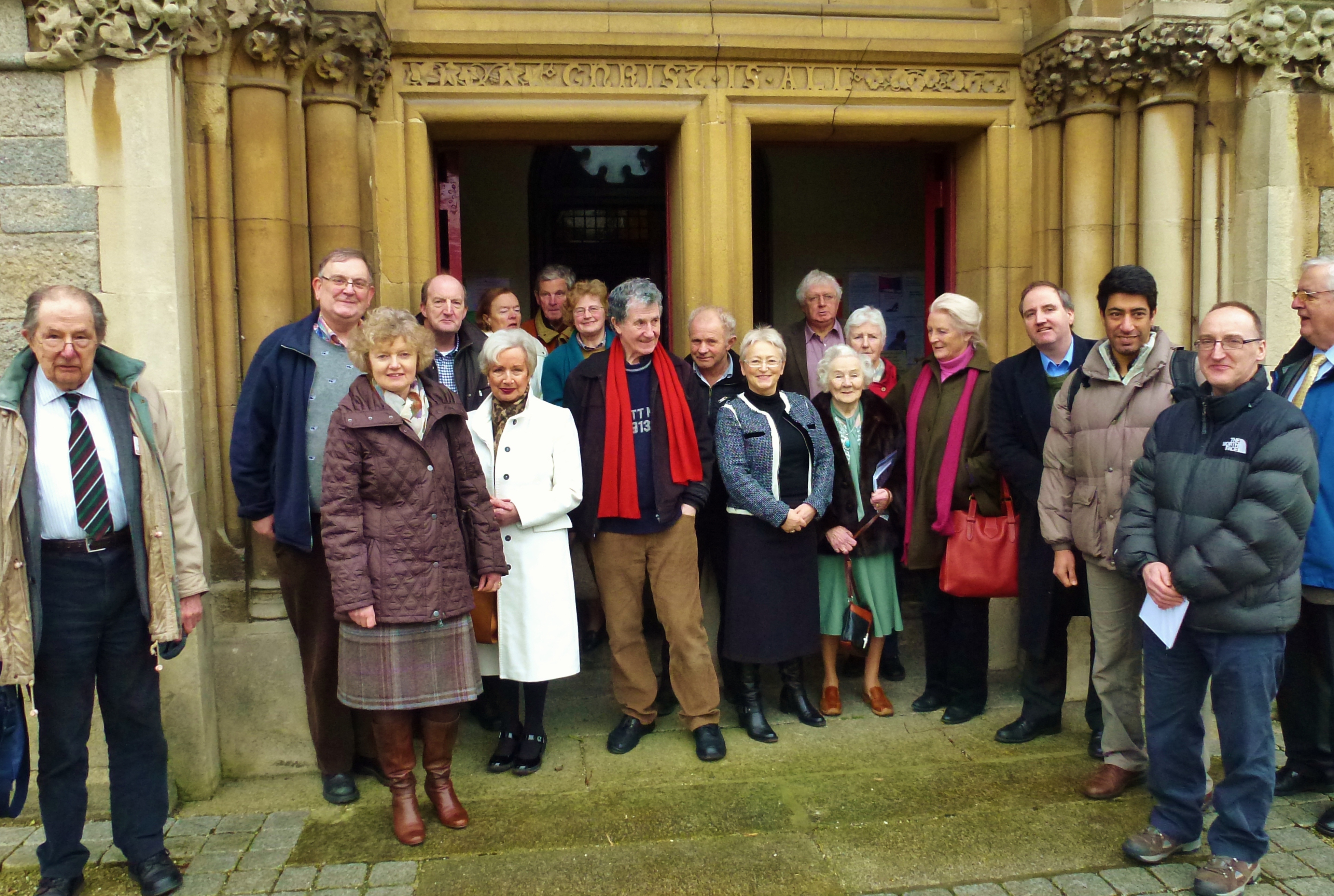
William Carleton Society at Sandford Parish Church

William Carleton Society at Sandford Parish Church

IN THE FOOTSTEPS OF CARLETON:

The William Carleton Society based in the Clogher Valley and Monaghan came to Dublin to mark the 144th anniversary of the death of the famous 19thC Irish author from County Tyrone. Carleton grew up as a Catholic, but would later convert to Protestantism in the Anglican church. He was the youngest of fourteen children born to a small farmer in  Clogher. Dr Frank Brennan a member of the Executive Committee met us at Castleknock and gave our coach party a guided trip through the city centre, starting with the Phoenix Park with its numerous historical monuments and associations going back hundreds of years. We passed Aras an Uachtaráin, the Polo Grounds, Phoenix Cricket Club, the oldest cricket club in Ireland and Dublin Zoo, also taking in the Wellington monument.  We then travelled along Dublin’s quays, with views of Collins Barracks which I have fond memories of, now part of the National Museum of Ireland. On the other side of the Liffey we saw Heuston station and the HSE Headquarters at what was Dr Steevens’ Hospital, with St Patrick’s Hospital and beside it Guinness’ brewery. We saw the Four Courts and crossed Grattan bridge travelling towards City Hall and what was once the headquarters of the British administration In Ireland, Dublin Castle, now in use for the state’s Presidency of the European Union.

P1050799 (2) (960x1280)

Reverend Precentor Noel Regan

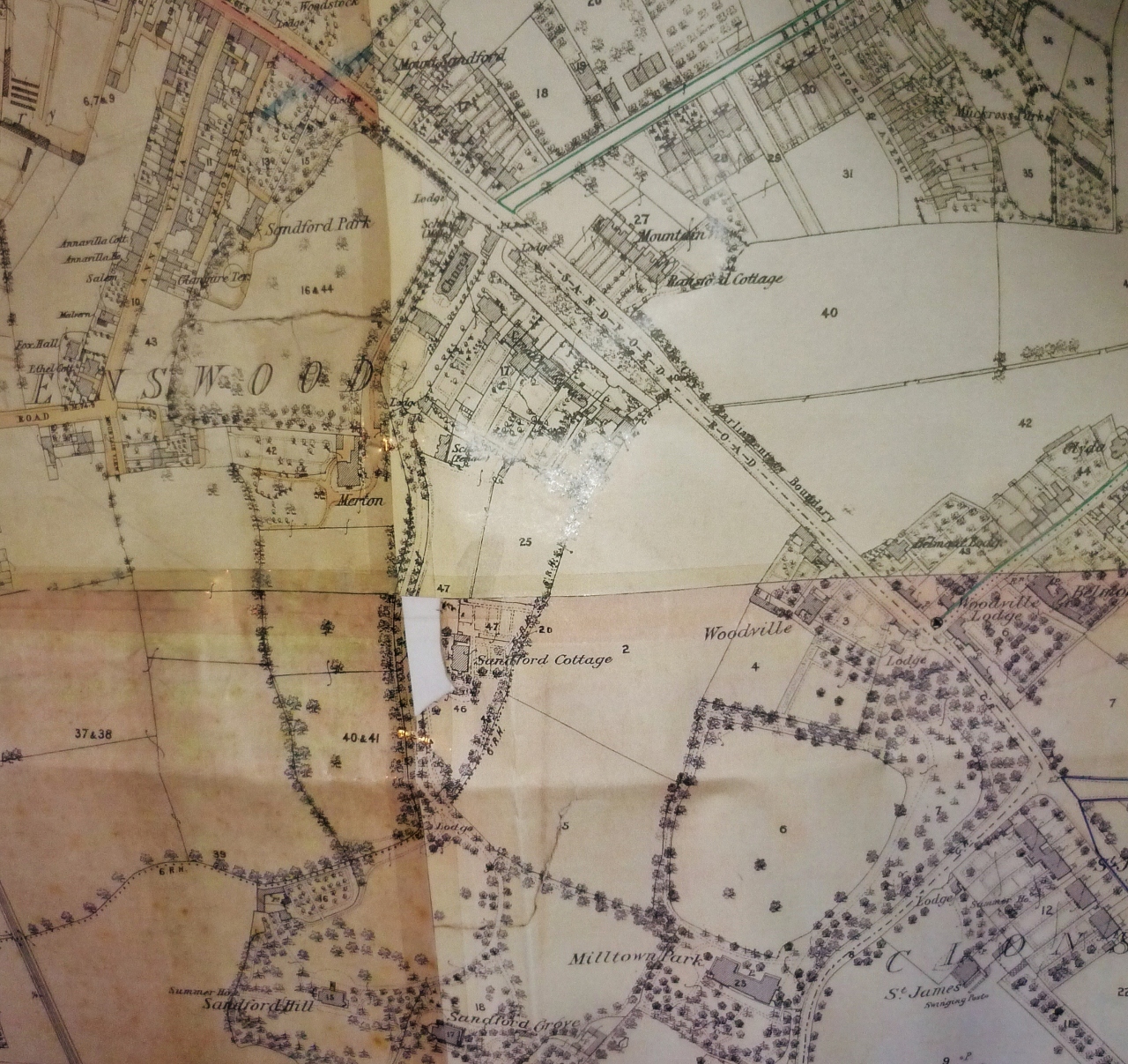
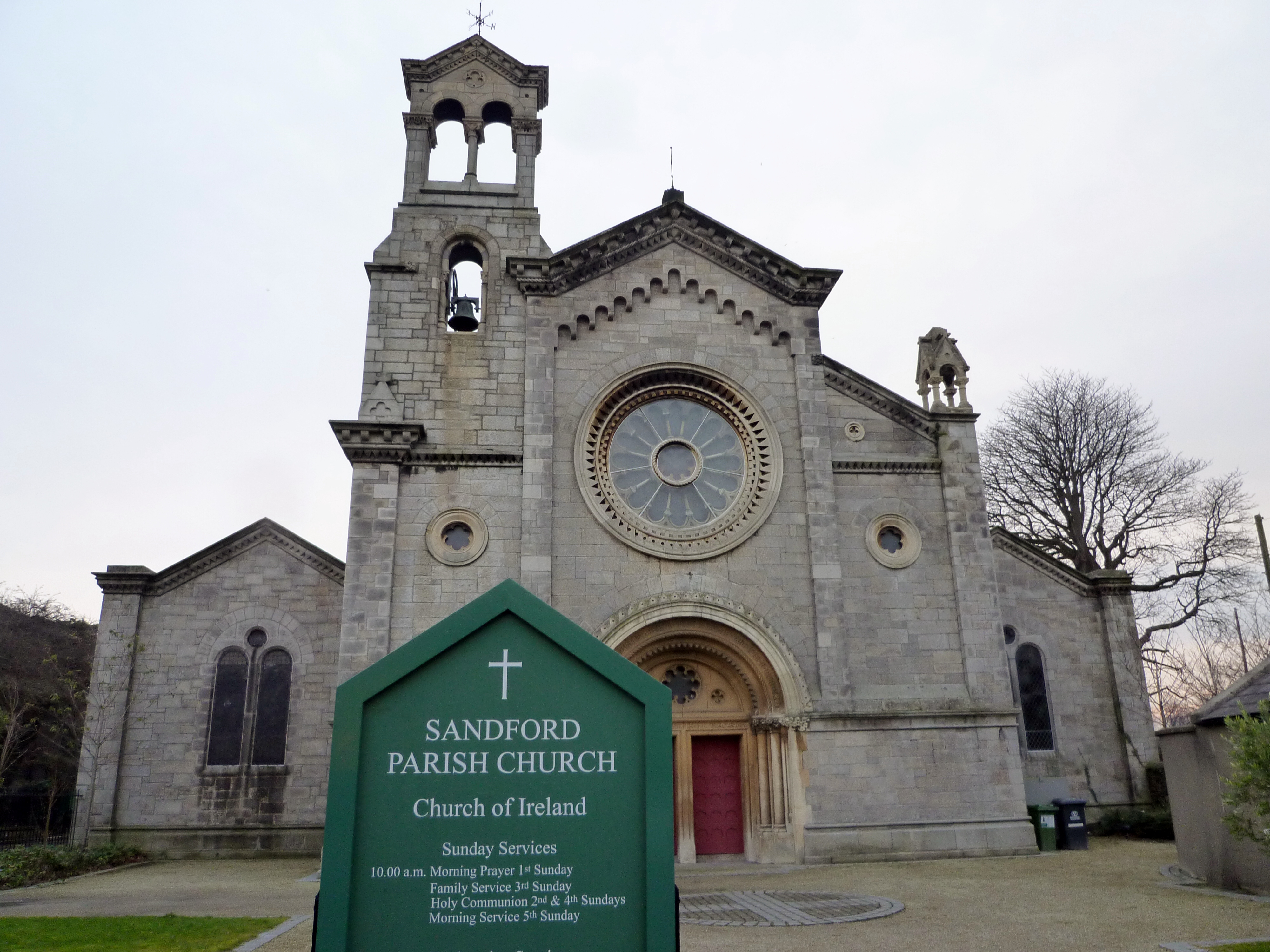
On then to the two cathedrals, Christ Church where there was a festival on in the grounds and St Patrick’s Cathedral where the Reverend Precentor Noel Regan from St Macartan’s Cathedral in Clogher provided some useful background about the two buildings. We moved on through the former Jewish area and into Ranelagh which developed as a genteel middle class suburb after the Act of Union. At Sandford Church we were addressed by a local teacher, who is a member of the congregation, on the history of Sandford church and its connection with Carleton. Susan Roundtree, an architectural historian, also spoke about the development of 19thC Ranelagh and brught along an old map of the area from 1870, which showed Woodville, a row of houses along the Sandford Road close to the entrance to Milltown Park, where Carleton had spent his final years.

1870 map shows Woodville

1870 map shows Woodville

 The residence at Woodville, (beside the entrance to Milltown Park) is now demolished. In his latter years Carleton was friendly with a Jesuit priest Fr Robert Carbery, who was based at Milltown Park. Brian Earls reminded us that in the last weeks before his death in January 1869, the priest offered through Carleton’s wife Jane to give him the last rites of the Catholic church. In response, in one of his last communications, the author told the Jesuit:

“For half a century & more I have not belonged to the Roman Catholic religion. I am now a Protestant and shall will die such”     (LA15/319 DJ O’Donoghue papers, UCD Archives)

We then went to Mount Jerome cemetery for a short ceremony to commemorate the 144th anniversary of William Carleton’s death, followed by a short tour of the graveyard. We travelled to lunch at O’Briens at Sussex Place, Upper Leeson Street, one of Patrick Kavanagh’s haunts, which as a 1900’s grocery and bar reminded him of Carrickmacross. The journey to lunch took us through two Georgian squares (Fitzwilliam and Merrion) and past Leinster House and Government Buildings. Finally after lunch Frank Brennan brought us into Donnybrook and Ballsbridge, passing the British Embassy, AIB and the Aviva Stadium otherwise known as Lansdowne Road. We passed the Grand Canal Theatre, National Convention Centre, and saw some relics of the Celtic Tiger on our route home. Thanks to all who came and I hope you enjoyed the day.

At grave of William Carleton

At grave of William Carleton

The William Carleton Society is a partner in the Shared History, Shared Future project run by Dungannon and South Tyrone Borough Council through the EU funded South West Peace III Partnership Programme and this activity is being delivered through it.

DSTBC LogoSWPeaceIII_logo_options_2berdfimages

CARLETON IN RANELAGH

CARLETONportrait (2)IN THE FOOTSTEPS OF CARLETON:

I am in Dublin today with a group from the William Carleton Society based in the Clogher Valley and Monaghan to mark the 144th anniversary of the death of the famous 19thC Irish author from County Tyrone. Carleton grew up as a Catholic, but would later convert to Protestantism in the Anglican church. He was the youngest of fourteen children born to a small farmer in  Clogher.  He came to Dublin in 1819 with 2s 9d in his pocket and after trying various occupations, became a clerk in the Church of Ireland Sunday School Office.

Our coach party departs from Enniskillen at 7:30am and is picking up passengers at Maguiresbridge, Clogher, Aughnacloy and Monaghan (at the entrance to St Macartan’s College. 8:15am) for the trip to Dublin. Dr Frank Brennan a member of the Executive Committee will be our guide on reaching Castleknock.

“Frank Brennan will conduct a tour through Phoenix Park with its numerous historical monuments and associations going back hundreds of years, travel along Dublin’s quays, Four Courts, Guinness’ brewery, Dublin Castle, the two cathedrals, Jewish area and into Ranelagh which developed as a genteel middle class suburb after the Act of Union. At Sandford Church we will be addressed by a local teacher, who is a member of the congregation, on the history of Sandford church and its connection with Carleton. The Ranelagh Arts Society will then provide a talk by Susan Roundtree, an architectural historian, on the development of 19thC Ranelagh and the connection with the Plunkett family, who played a major role in Irish history.

We then go to Mount Jerome cemetery for a short ceremony (2pm) to commemorate the 144th anniversary of William Carleton’s death. A member of the Ranelagh Arts Society will then conduct a short tour of the graveyard. We travel to lunch (4pm) at O’Briens at Sussex Place, Upper Leeson Street, one of Patrick Kavanagh’s haunts, which as a 1900’s grocery and bar reminded him of Carrickmacross. The journey to lunch will take us through Dublin’s two Georgian squares  and past Government Buildings. Finally after lunch (which participants will pay for themselves) Frank Brennan will bring us past the Grand Canal Theatre, National Convention Centre, and some other of the better relics of the Celtic Tiger before our return home.”

SANDFORD CHURCH RANELAGH DUBLIN 12:30pm for 1pm   

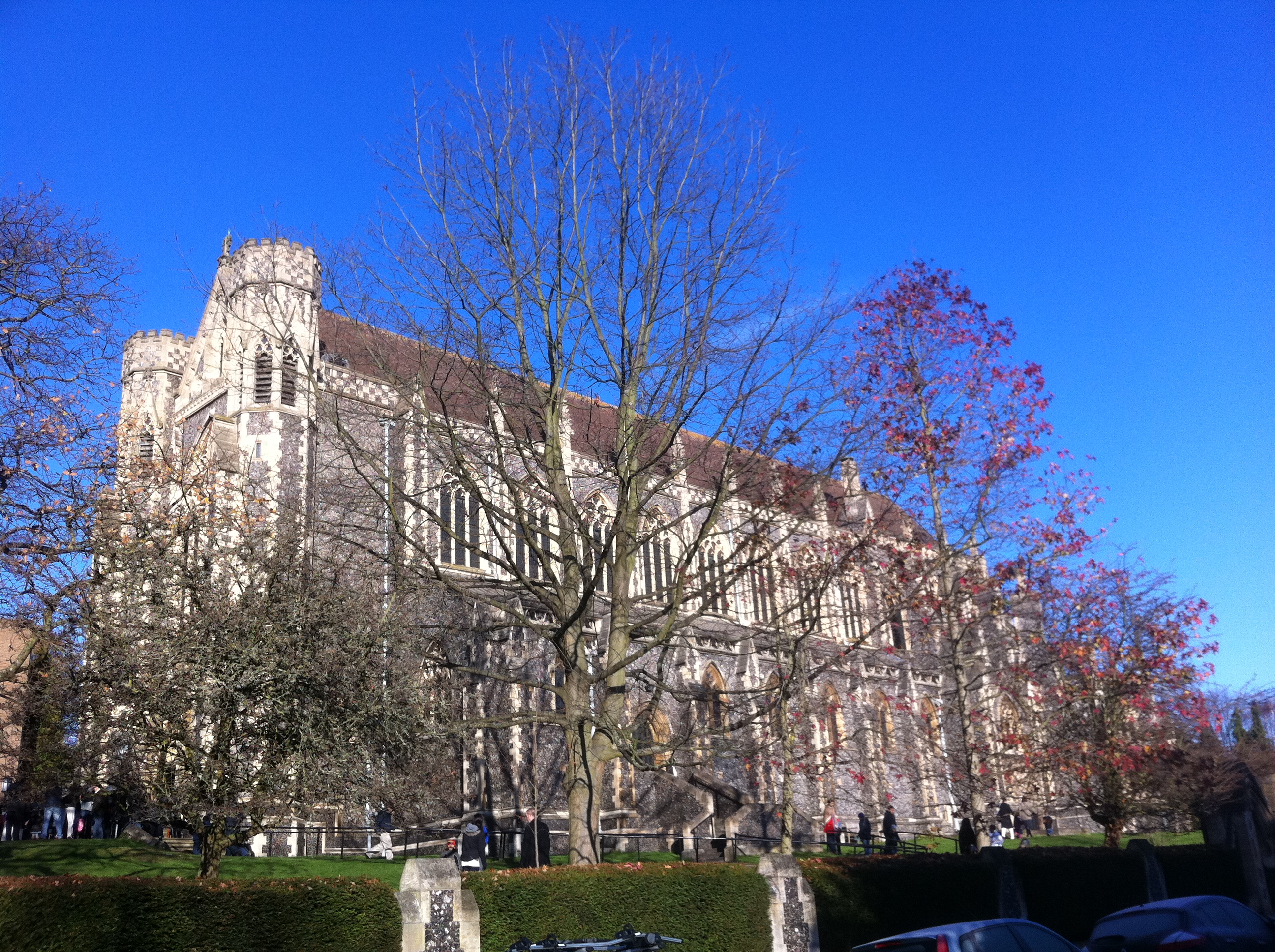
Sandford Church, Ranelagh

Sandford Church, Ranelagh

Those joining the event in Ranelagh should assemble at the church at Sandford Road Ranelagh (junction with Marlborough Road) around 12:30pm. The group from the bus is hoping to walk from the site of Carleton’s now demolished former residence at Woodville, Sandford Road (beside the entrance to Milltown Park) to the church, weather permitting. In his latter years Carleton was friendly with a Jesuit priest Fr Robert Carbery, who was based at Milltown Park.  In the last weeks before his death in January 1869, the priest offered through Carleton’s wife Jane to give him the last rites of the Catholic church. In response, in one of his last communications, the author told the Jesuit:

“For half a century & more I have not belonged to the Roman Catholic religion. I am now a Protestant and shall will die such”     (LA15/319 DJ O’Donoghue papers, UCD Archives)

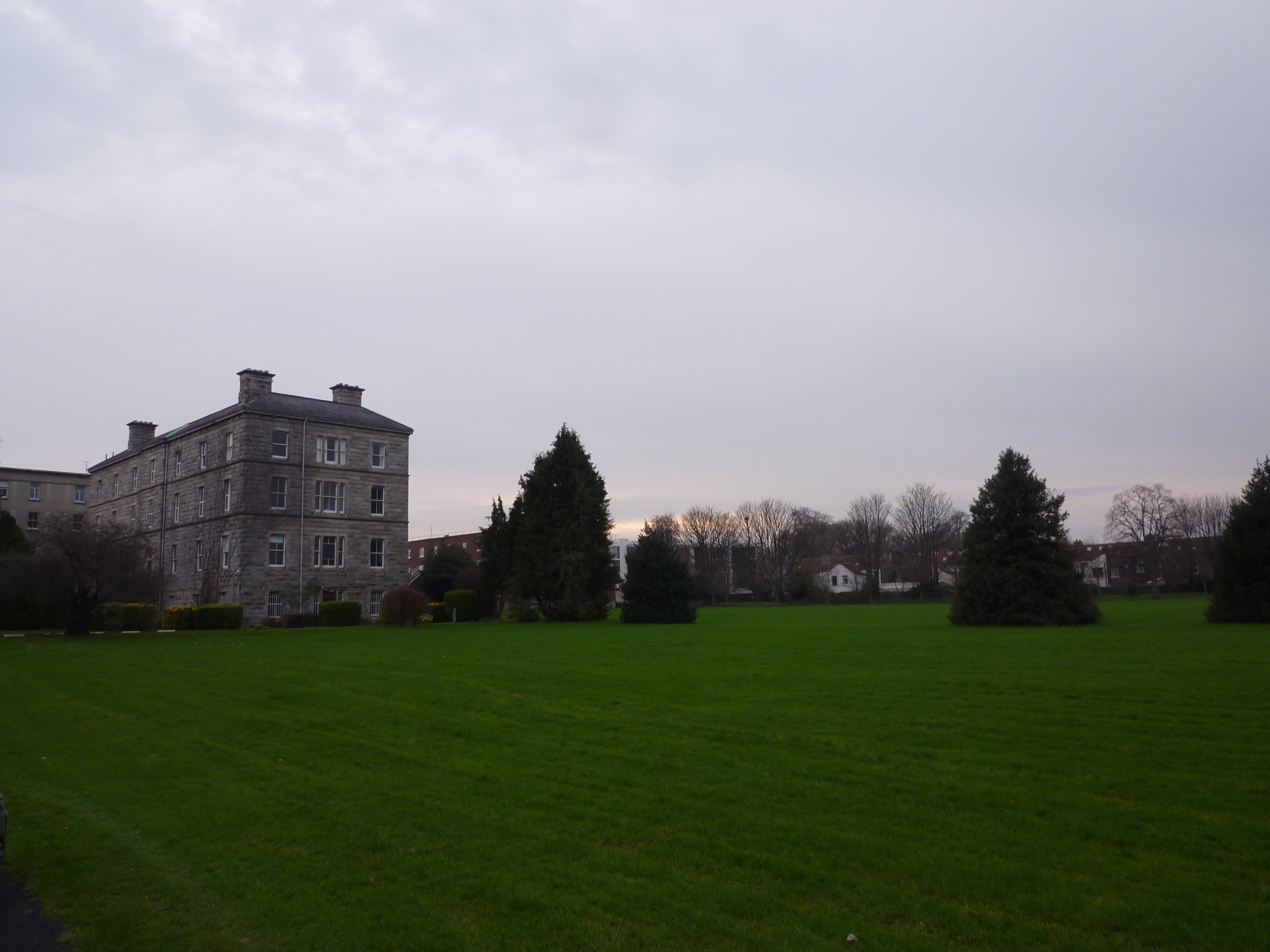
Milltown Park looking towards area where Carleton used to live

Milltown Park looking towards area where Carleton lived

Our thanks to the Reverend Sonia Gyles, Rector of Sandford and St Philip’s Milltown, for making the church available. Admission to the talks is FREE but membership of the William Carleton Society (€5) will be available for those interested. There is no charge for the tour at Mount Jerome cemetery. Participants will pay for their own lunches.

Woodville Ranelagh

House at Sandford, in which Carleton died

It promises to a be stimulating and interesting day.  The coach will return to Enniskillen by 9pm.  The William Carleton Society is a partner in the Shared History, Shared Future project run by Dungannon and South Tyrone Borough Council through the EU funded South West Peace III Partnership Programme and this activity is being delivered through it.

DSTBC LogoSWPeaceIII_logo_options_2berdfimages


AFC WIMBLEDON ON THE BOX

IMG_4538 (2)AFC WIMBLEDON 2 BRADFORD 2 

A draw tonight for the Dons but if you are looking for a match report, look further down! I am going to reflect first of all on how my past was catching up with me today, taking in Dublin, Belfast and of course London, where the League Two match was played. I started the day in Dublin and as I began my journey northwards this afternoon, passed Milltown Park, where the Jesuit Provincialate is based. The complex used to be used for the training of Jesuit priests but now many of the buildings are leased. The Irish School of Ecumenics has its headquarters there. I was investigating the story of William Carleton, which I will be writing about on Saturday when we visit Sandford church.

I was on the trail of a Fr John Carbery SJ, who was based at Milltown Park and was in touch with Carleton, a neighbour, before his death in 1869. I was given some helpful information about the Jesuit archives. As I left the building I saw a rugby pitch which is now leased to nearby Gonzaga College, where I went to school for two years. In those days, the school rugby pitches were beside Glenmalure Park, home of Shamrock Rovers FC. I have written about their history and revival at Tallaght here.

Sacred Heart Church, Wimbledon

Sacred Heart Church, Wimbledon

In conversation with a Jesuit brother, I discussed how the order has decided to withdraw from the Sacred Heart parish in Wimbledon, where I grew up, owing to the shortage of priests. It was during my schooldays at Wimbledon College from 1963 that I started following Wimbledon FC at Plough Lane, then in their last season in the Isthmian League, having won the FA Amateur Cup thanks to Eddie Reynolds.  The following season they entered the Southern League first division as semi-professionals. Tonight as I followed them live on Sky Sports, I was wearing a Wimbledon supporters’ badge dating to the 1974/75 season when they were Southern League champions.

I went to (the) Chelsea to watch the match: my local bar on the Lisburn Road in Belfast. Another London connection! Anyway the televisions were showing some music channel but the bar staff kindly offered to turn over to Sky so that I could see the Dons in action, minus the commentary. I was delighted to see Jack Midson getting the opening score and then making it a double strike thanks to a penalty. His was one of the few recognisable names as the players came out of the tunnel before the kick-off. AFC Wimbledon were then unlucky I thought to concede a goal to Port Vale just before half time, making it 2-1. A lucky bounce on a well-struck drive eluded the keeper Neil Sullivan.

Jack  MIdson

Jack Midson

The second half saw some good chances for AFC Wimbledon including an effort by Midson that could have brought his hat-trick but was ruled offside. Then a bad back pass by Mat Mitchel-King and a mistake by Sullivan saw Port Vale equalising 2-2. The Dons held out against the league leaders and manager Neil Ardley will be pleased enough to come away with one point. But the Dons are still perilously close to the bottom place in the table and need to start winning a few games if they are to escape relegation back to the Conference. A full report on the match “Plucky Dons Deny Vale” can be found on the club ‘s website.

WILLIAM CARLETON IN DUBLIN

William Carleton's Grave

William Carleton’s Grave

IN THE FOOTSTEPS OF CARLETON:

Next Saturday (26th January) a group from the William Carleton Society travels to Dublin to mark the 144th anniversary of the death of the famous 19thC Irish author from County Tyrone. Carleton grew up as a Catholic, the youngest of fourteen children born to a small farmer in the Clogher area. He was educated at a hedge school near Glaslough in County Monaghan. He came to Dublin in 1819 with 2s 9d in his pocket and after trying various occupations, he became a clerk in the Church of Ireland Sunday School Office. Subsequently he would convert to Protestantism. In his autobiography (second part, finished by DJ O’Donoghue) we are told that:-

he soon became acquainted with the Rev. Caesar Otway, who was personally a most estimable man, a very pleasant writer, an enthusiastic antiquarian, but a determined proselytizer. He was one of a very remarkable group of men in Dublin at that period — when Catholic emancipation was in the air — whose lives were devoted to the task which they described as the rescue of Ireland from Popery“.

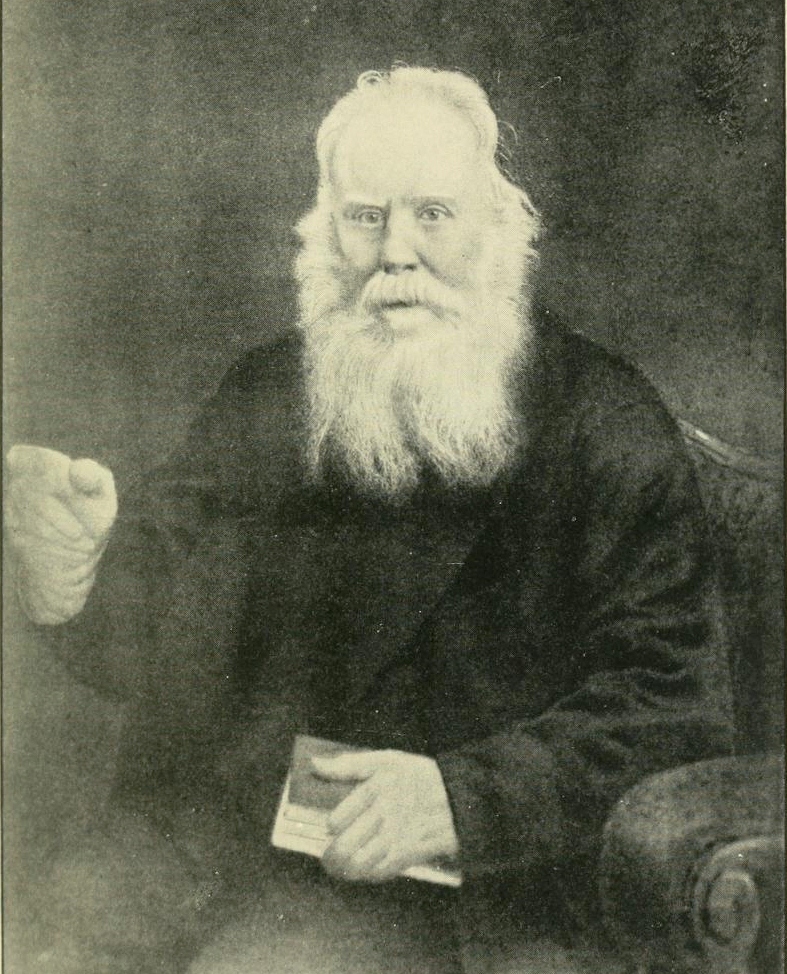
William Carleton aged 72 living in Dublin

William Carleton aged 72 living in Dublin

Otway gave Carleton an opportunity to use his journalistic talents for such proselytising purposes as satirising Catholic pilgrimages to ‘St Patrick’s Purgatory’ at Lough Derg. Further writings in the Christian Examiner & Church of Ireland Magazine led, in 1829 and 1833, to the publication of what is probably Carleton’s best known work: Traits and Stories of the Irish Peasantry – a tableau of the life of the country people of the north of Ireland before the famines of the 1840s altered their pattern of existence forever. There then followed such novels as Fardorougha the Miser (1839), Valentine McClutchy (1845), The Black Prophet (1847), The Emigrants of Ahadarra (1848), The Tithe Proctor (1849), The Squanders of Castle Squander (1852) in which he addresses many of the issues affecting the Ireland of his day such as the influence of the Established Church and landlordism, poverty, famine and emigration.

William Carleton Junior © Glenn Carleton

William Carleton Junior © Glenn Carleton

Carleton married Jane Anderson in 1820 and they had several children. Seven were born in Dublin, the first being Mary Anne in 1821. One of them, William Carleton junior, born in 1826, emigrated to Australia and was a known there as a poet. We are still not sure when and where his second daughter Jane Carleton was born. We know that she lived for time at Balham High Street in South West London, close to Tooting Bec. Deputy director of the summer school Frank McHugh reported on his research on the family tree at the 2012 event in Clogher. Thanks also to Glenn Carleton and Paul Brush in Australia, the William Carleton Society has been able to build up further details of Carleton’s genealogy.

COACH TRIP

On Saturday 26th a coach will be departing from Enniskillen at 7:30am and picking up passengers at Clogher, Aughnacloy and Monaghan (at the entrance to St Macartan’s College. 8:15am) for the trip to Dublin, which will cost £10 and will include membership of the William Carleton Society for those who have not yet joined. There will be a stop at Lusk services on the M1 before travelling into Dublin using a route which will give us an opportunity to see some of the sights, with Dr Frank Brennan as our guide.

“Frank Brennan will conduct a tour through Phoenix Park with its numerous historical monuments and associations going back hundreds of years, travel along Dublin’s quays, Four Courts, Guinness’ brewery, Dublin Castle, the two cathedrals, Jewish area and into Ranelagh which developed as a genteel middle class suburb after the Act of Union. At Sandford Church we will be addressed by a local teacher, who is a member of the congregation, on the history of Sandford church and its connection with Carleton. The Ranelagh Arts Society will then provide a talk by Susan Roundtree, an architectural historian, on the development of 19thC Ranelagh and the connection with the Plunkett family, who played a major role in Irish history.

We then go to Mount Jerome cemetery for a short ceremony (2pm) to commemorate the 144th anniversary of William Carleton’s death. A member of the Ranelagh Arts Society will then conduct a short tour of the graveyard. We travel to lunch (4pm) at O’Briens at Sussex Place, Upper Leeson Street, one of Patrick Kavanagh’s haunts, which as a 1900’s grocery and bar reminded him of Carrickmacross. The journey to lunch will take us through Dublin’s two Georgian squares  and past Government Buildings. Finally after lunch (which participants will pay for themselves) Frank Brennan will bring us past the Grand Canal Theatre, National Convention Centre, and some other of the better relics of the Celtic Tiger before our return home.”

SANDFORD CHURCH RANELAGH DUBLIN 12:30pm

Those joining the event in Ranelagh should assemble at the church at Sandford Road Ranelagh (junction with Marlborough Road) around 12:30pm. The group from the bus is hoping to walk from the site of Carleton’s now demolished former residence at Woodville, Sandford Road (beside the entrance to Milltown Park) to the church, weather permitting. Our thanks to the Reverend Sonia Gyles, Rector of Sandford and St Philip’s Milltown, for making the church available. Admission to the talks is FREE but membership of the William Carleton Society (€5) will be available for those interested.
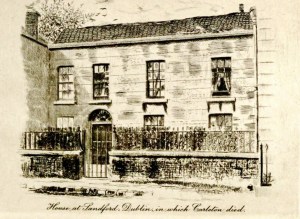
Woodville Ranelagh

Woodville Ranelagh

It promises to a be stimulating and interesting day.  The coach will return to Enniskillen by 9pm. Please contact us by email, if you are interested or telephone me at (048 code from the Republic) 9066 2945 as there are a limited number of places available on the bus. The William Carleton Society is a partner in the Shared History, Shared Future project run by Dungannon and South Tyrone Borough Council through the EU funded South West Peace III Partnership Programme and this activity is being delivered through it.

DSTBC LogoSWPeaceIII_logo_options_2berdfimages

FROM SLANE TO OMAGH

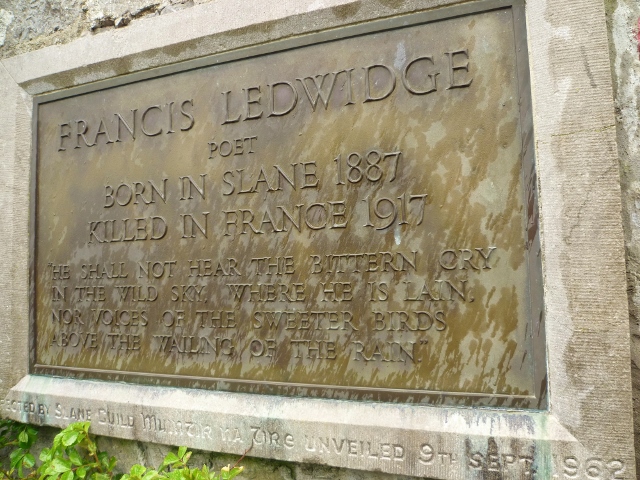
Plaque at Ledwidge Cottage

Plaque at Ledwidge Cottage

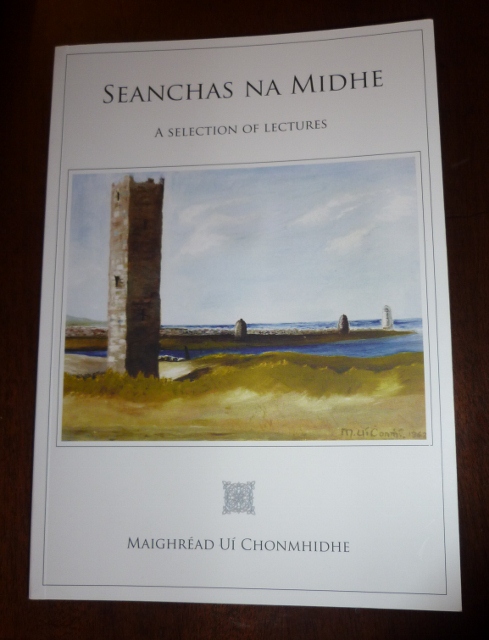
My journey this evening took me along the N2 heading Northwards from Dublin and past a sign indicating “Ledwidge Country” outside Slane in Co. Meath. It’s a good staring point as I mentioned it at the end of yesterday’s blog about Maev Conway-Piskorski. Her mother Margaret (Maighréad Uí Chonmhidhe) had given a lecture at the folk school in Bettystown in 1966 about the poet-soldier Francis Ledwidge. I quote from the book “Seanchas na Midhe” (eds. Ní Chonmhidhe Piskorska & Brück 2009):

“Margaret Conway remembered meeting the poet when she was a young girl in Colga, when he visited her brothers and “fellow poets” at their home. Her painting of the Maiden Tower at Mornington, reproduced on the cover of this booklet, depicts a scene romantically associated with Francis Ledwidge and with Ellie, the young woman who inspired many of his poems” 

Meath Lore

Meath Lore

Ledwidge was born in Slane in 1888 and after joining the Volunteers in 1913 enlisted in the British Army the following year in the Royal Inniskilling Fusiliers. He was killed at the battle of Ypres (Ieper) in Flanders in July 1917.

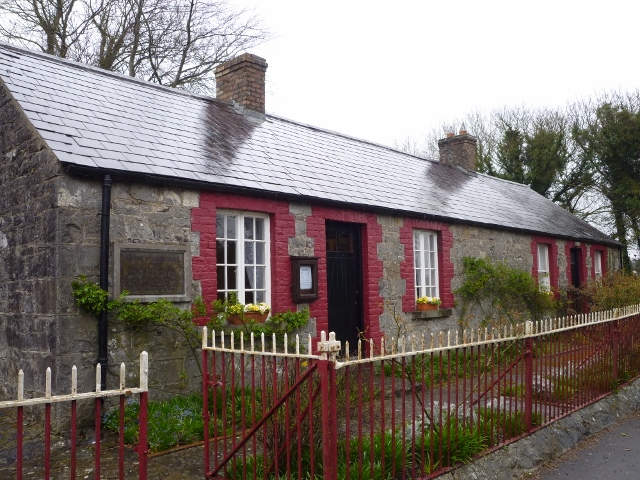
In 1982 a museum was opened by the Omagh writer Benedict Kiely in the cottage where Ledwidge was born. There is a plaque in his memory attached to the front wall of the cottage. It states that it was erected by the Slane guild of Muintir na Tíre on September 9th 1962. A copy of the plaque is set in stone at the approach to the bridge over the River Boyne at Slane.

Ledwidge Cottage & Museum

Ledwidge Cottage & Museum

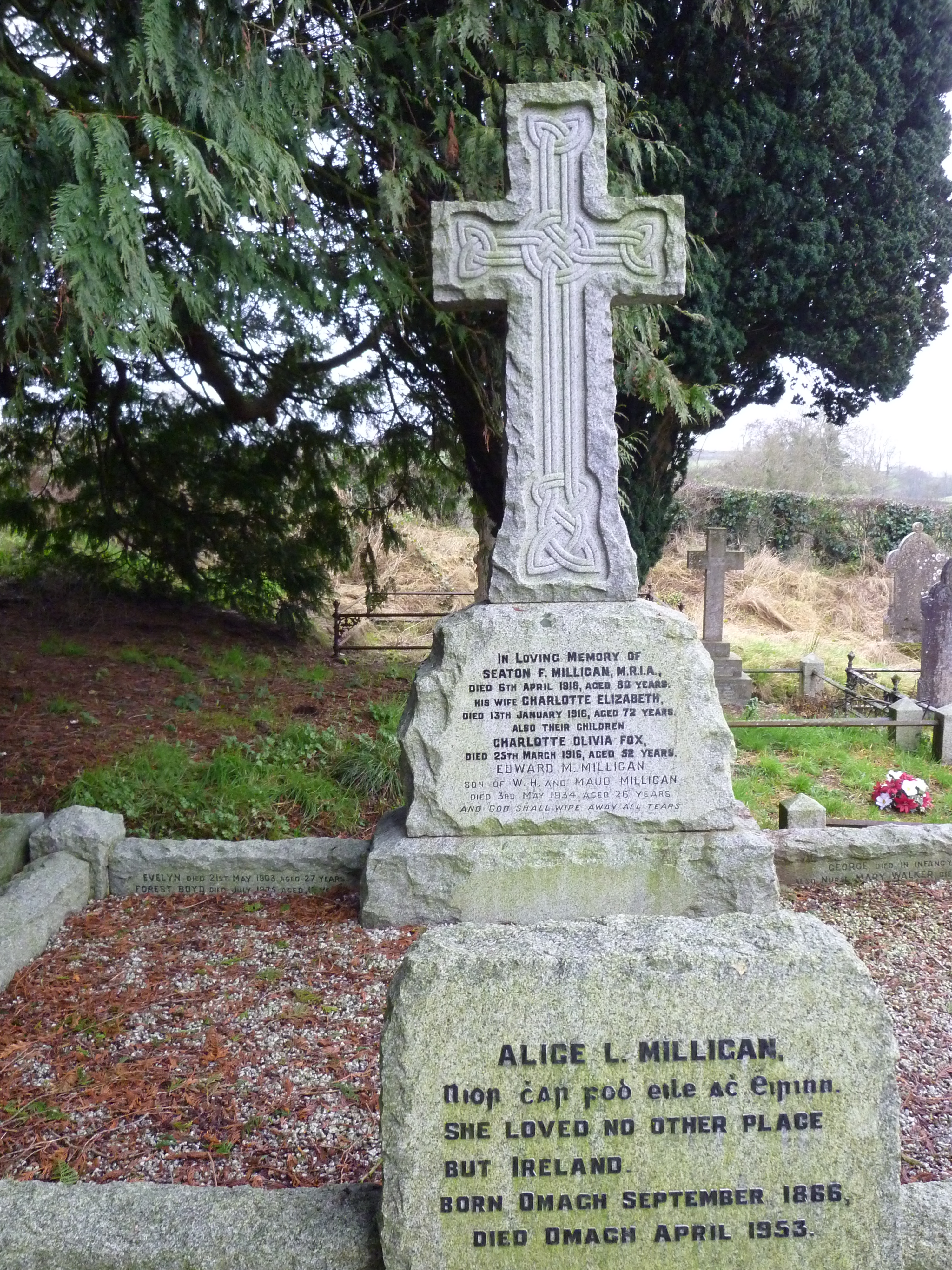
Continuing past Slane I stopped in County Louth close to the county boundary with Monaghan, where the province of Ulster begins. I watched another Tyrone writer and journalist Martina Devlin being interviewed on the RTÉ Nationwide programme about her home town of Omagh. Talking about the education she received at Loreto primary school, she mentioned the influence of the local poet, novelist and writer, Alice Milligan, whose background is very interesting. From a Protestant family and educated at Methodist College, Belfast, she went on to become an Irish nationalist and a leading figure in the Irish literary revival, who mixed with people like Yeats, Casement and James Connolly. She edited a magazine produced in Belfast at the end of the 19thC, Shan Van Vocht and was an organiser for the Gaelic League. Born at Gortmore, outside Omagh in September 1866, she died in April 1953 and is buried in the Church of Ireland cemetery at Drumragh.

Grave of Alice Milligan

Grave of Alice Milligan

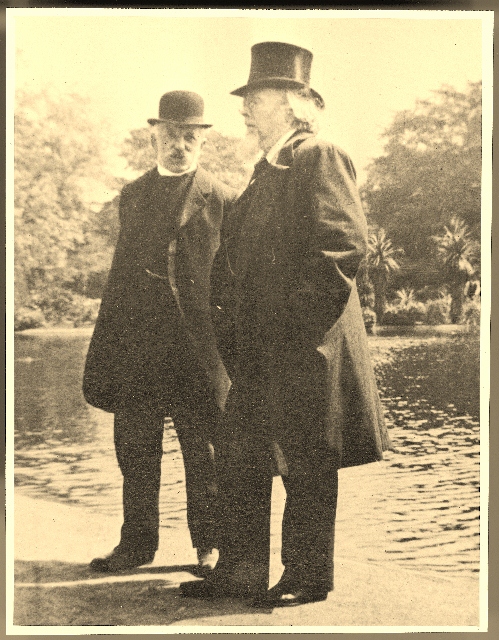
DJ O'Donoghue & George Sigersondiscussing memorial

DJ O’Donoghue & George Sigerson
discussing memorial

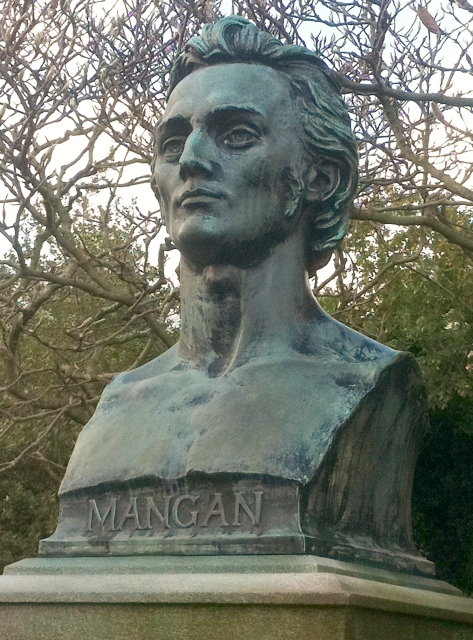
While researching William Carleton in the UCD Archive I found a number of letters from Alice Milligan then living at University Road Belfast (near Queen’s University) written to the biographer DJ O’Donoghue (librarian at University College). One of the letters enclosed five poems (LA15/1149). She also agrees to contribute to the Mangan memorial fund, a project which O’Donoghue was working on with George Sigerson to provide a memorial to the poet at St Stephen’s Green. The photo of the two men chatting about the Mangan project is copyright © IVRLA  (Irish Virtual Research Library and Archive)  and is reproduced with the kind permission of Professor Helen Solterer  from an original in  UCD Library Special Collections. The bust of James Clarence Mangan can be seen if you are walking through St Stephen’s Green not far from Newman House and near the middle of the park.

James Clarence Mangan

James Clarence Mangan

UPDATE: Thanks to Charles Fitzgerald for having read the above and sending in the following quotation from a Ledwidge poem (Ceol Sidhe):

“And many a little whispering thing
Is calling the Shee.
The dewy bells of evening ring,
And all is melody”.

The poem and other works by Ledwidge can be found here.

WILLIAM CARLETON SUMMER SCHOOL

Barry Devlin

Horslips founder member Barry Devlin from Ardboe makes a return visit to County Tyrone next month to participate in the 21st William Carleton summer school.  It takes place once again at Corick House hotel in Clogher. The 17th Century country house used to be the home of the local landlord Squire Story, mentioned in Carleton’s writings. The summer school will be officially opened at 10:30am on Monday 6th August by the Mayor of Dungannon and South Tyrone, Cllr Phelim Gildernew. The invited guests include the two Bishops of Clogher, Most Reverend Dr Liam MacDaid and Right Reverend John McDowell.

Bishops MacDaid & McDowell

The keynote address on “Carleton and famine’s darkest secret” will be given by Professor  Cormac Ó Gráda of UCD. Dr Melissa Fegan from Chester will give a lecture about Carleton and famine. The summer school director former RTÉ News reporter Michael Fisher will talk about DJ O’Donoghue, Carleton’s biographer. Barry Devlin fresh from a Horslips reunion gig in Castlebar will then talk about his career at 4:30pm. On Tuesday 7th there will be a talk by Frank McHugh about Carleton’s Australian relatives, and a contribution from Josephine Treanor from Clogher about one of her relatives, Anne Duffy, the miller’s daughter, who was a contemporary of Carleton and mentioned by him.

Mary Guckian

Mary Guckian

A literary symposium will be held including Leitrim poet Mary Guckian, Monaghan writer  and poet Mary O’Donnell and Carlo Gébler from Enniskillen. There will also be a one-man show on Charles Dickens by actor Laurence Foster from Dublin and a reading by poet John F. Deane. On Wednesday 8th there will be contributions by Dr Sophia Hillan on Jane Austen’s Irish Nieces, on Carleton on the stage by Christopher Fitz-Simon  and a concluding address by Professor Owen Dudley Edwards, honorary director of the summer school. Liam Foley from Augher has adapted Carleton’s humorous story “Phil Purcel the Pig Driver” for a reading by the Carleton Players.

Carlo Gébler

Carlo Gébler

Evening entertainment has been arranged for each night. Traditional music with the Maguire family from County Fermanagh features on Monday evening at the Rathmore bar, along with a return visit by poet PJ Kennedy, a farmer from Belturbet. On Tuesday evening there will be a walk in the scenic Fardross area with the Clogher Valley ramblers followed by a reception at Clogher Valley country park. Young musicians from Tydavnet in Co. Monaghan “The Mountain Lark” will entertain the guests. There will be a concert of sacred and secular music at St Patrick’s church in Clogher on Wednesday 8th at 8pm with the Fermanagh choral society, directed by Don Swain. All evening events are £5 or €5.
Fermanagh Choral Society

On Thursday 9th August the annual tour in the Clogher Valley area will be led by Jack Johnston, focusing on Carleton and his contemporaries, including Archbishop Hughes of New York. His original family homestead near the border is now in place at the Ulster American Folk Park in Omagh, which will be visited. Cost £25 including lunch and afternoon tea. The four-day programme in detail can be found at: www.williamcarletonsummerschool.org. Contact: Michael Fisher, Summer School Director e: wcarletonsociety@gmail.com

WILLIAM CARLETON SUMMER SCHOOL

Cllr Kenneth Reid & Michael Fisher

It promises to be an interesting four days in the Clogher Valley in August. The William Carleton Society’s summer school programme was launched at a reception kindly hosted by the Mayor of Dungannon & South Tyrone Cllr Kenneth Reid (who opened last year’s school) at the Council offices in Dungannon. Once again we are please to have booked Corick House Hotel in Clogher as the venue for 2012. The school will be officially opened on Monday 6th August and the keynote address by Professor CORMAC Ó GRÁDA is on the subject of “Carleton & others on famine’s darkest secret”. Dr MELISSA FEGAN (Chester) will speak about Carleton & the famine era. In the afternoon I am due to give a lecture on Carleton’s biographer DJ O’Donoghue, based on my researches at the UCD archive. The afternoon is rounded off on a lighter note with a reflection by County Tyrone native BARRY DEVLIN on life after Horslips. Tuesday’s events will start with a talk by the Society’s Vice-Chair FRANK McHUGH on Carleton’s Australian relatives. JOSEPHINE TREANOR from Knockatallon, Co.Monaghan, who joined us on the walk last year, will talk about her distant relation, Anne Duffy, the miller’s daughter (mentioned by Carleton). The Leitrim poet JOHN F. DEANE will give a reading from his works before lunch. The afternoon session begins with a performance by LAURENCE FOSTER (Dublin) of his one man show on Charles Dickens, who was born 200 years ago. For this year’s literary symposium we have invited CARLO GÉBLER from Fermanagh and MARY GUCKIAN a poet originally from Leitrim who attended the Carleton commemoration in Dublin in January. They will be joined by Monaghan native MARY O’DONNELL, a writer and poet, whose work has appeared in a number of collections. On Wednesday 8th August Dr SOPHIA HILLAN will speak on Jane Austen’s Irish nieces. Professor OWEN DUDLEY EDWARDS, the summer school honorary director, will give us his own unique insights into the work of William Carleton. Committee member LIAM FOLEY has once again adapted one of Carleton’s works for a reading: this year it will be “Phil Purcel the Pig Driver” followed by a discussion. The final act of the summer school will see CHRISTOPHER FITZ-SIMON, a former artistic director at the Lyric Theatre in Belfast, reflect on “Carleton on the stage: forgotten popular plays adapted from Traits & Stories”. Thursday 8th will be the day for a tour of the local area led by JACK JOHNSTON, Society President. The theme will be Carleton & his contemporaries, including Archbishop Hughes of New York. There will be a visit to his birthplace beside the border with Co.Monaghan and to Omagh.

UCD Archive COPYRIGHT Photograph of D.J.O’Donoghue (left) and George Sigerson (right) beside the pond in St. Stephen’s Green, Dublin, when choosing a site for the Mangan Memorial.

The evening events include: Monday:  Rathmore Bar Clogher Maguire family (traditional music); PJ Kennedy, poet (Belturbet) 9pm. Tuesday: Walk & talk Carleton with the Clogher Valley walking club to Fardross forest  & Music by The Mountain Lark (Tydavnet) & reception at caravan park  8:30pm Wednesday: Concert with Fermanagh Choral Society (conductor Don Swain) at  St Patrick’s church Clogher 8pm. More details at:   http://www.williamcarletonsummerschool.org

A TALE OF TWO SCARVES

This is a tale of two scarves. Both have been in demand during the cold snap. They are football scarves but with a difference as neither has a club’s name in large letters across its length. By coincidence each was used on an occasion linked to my activities with the William Carleton Society, of which I am Chair.
AFC Wimbledon scarf
The first is an AFC Wimbledon scarf, described by the online shop as “a new era grey knit scarf with yellow and blue to ends with embroidered crest”. I purchased it last season and wore it on two recent trips to Europe and another to London. I was in Berlin at the opening of an art exhibition at the Irish embassy by an artist friend Patricia Lambert when I had this scarf with me. Thankfully the temperature in the German capital remained just above freezing during the weekend I was there in November. A few weeks later I was in Vienna and again the scarf kept me warm as I visited the Christmas markets in the Austrian capital. Most importantly, the scarf is comfortable to wear and does its job properly. As my season ticket seat at Kingsmeadow is in the front row of the stand I will be glad to wear it at any games I attend in the winter months. I brought it with me when I attended the league 2 game between AFC Wimbledon and Accrington Stanley, which we lost 2-0. The next day I went into the centre of London to meet someone I had never met before, so I wore my AFC Wimbledon wooly hat as well as the scarf.
Paul Brush met Michael Fisher at a Whitehall pub

As it turned out, Paul Brush who was in England from Australia along with his wife and two daughters turned out to be a Crawley FC supporter. He had attended their match the previous day when they beat Burton Albion 3-0 in front of a crowd of 3001. Paul pointed out he was the “1” on the end of that figure! The reason we arranged to meet was because he is a distant relative of the 19thC Irish author William Carleton from Co.Tyrone. I am Chair of the newly-formed William Carleton Society, which runs an annual summer school at the beginning of August every year. Paul provided me with some useful information and promised to remain in contact as he attempts to explore his family tree.

Now for the second scarf. It’s green and white. Some thought it was a Celtic one. Others might regard it as an Ireland one suitable for soccer or rugby. But it’s none of those. It was purchased at Tallaght stadium when I organised my tickets for the three home games that Shamrock Rovers FC played in the Europa League. I wanted to show my loyalties especially when it came to the last match against Spurs. It proved to be the final game for the Hoops’ manager Michael O’Neill after three years in charge. Rovers went down 0-4 to the English Premiership side but O’Neill got a rousing farewell along with Enda Stevens, who joins Aston Villa next month.

Shamrock Rovers 0 Spurs 4

The scarf was needed when I went on the annual mulled wine walk at Knockmany Hill near Clogher in County Tyrone. It is run by a number of ramblers groups from both sides of the border and also cross-community. I joined in the carol service after enjoying some warm gluehwein and mince pies. Then I proceeded to relate to the assembled crowd a story by William Carleton called A Legend of Knockmany. I did not have time to read it all but I summarised part of the tale about the giants Fin McCool and his great rival Cuchulain. When I returned home I posted a picture on facebookshowing me wearing the green and white scarf and remarked that this did not mean that William Carleton was a Shamrock Rovers fan! I then reflected on the matter and discovered that after all, there was a connection (albeit very tenuous) between Shamrock Rovers founded in 1901 and Carleton, who died over thirty years earlier in January 1869.

Addressing ramblers at Knockmany wearing Shamrock Rovers scarf

So here goes…….William Carleton in the days before his death was visited by Rev William Pakenham Walsh, rector of Sandford Parish Church, Ranelagh in Dublin, who also conducted his funeral. The chuch is beside an avenue that leads up to Gonzaga College SJ. The school colours are also green and white, by the way. When I went there in 1967 the back rugby pitches near Milltown Park were bounded on one side by a wall which also bordered Glenmalure Park, once home of Shamrock Rovers FC which had the best playing surface in Ireland. The Jesuits leased the land to the football club and there is a letter in the club shop at the new ground at Tallaght from the then SJ Provincial at the time the Hoops moved. So maybe the Shamrock Rovers scarf was appropriate in memory of the Sandford connection with William Carleton. In the case of Paul Brush, he would no doubt have preferred if I had worn a Crawley FC scarf to identify myself: no chance of that!