SHOW TIME

Launch of Bailey's Champion Cow 2013

Launch of Bailey’s Champion Cow 2013

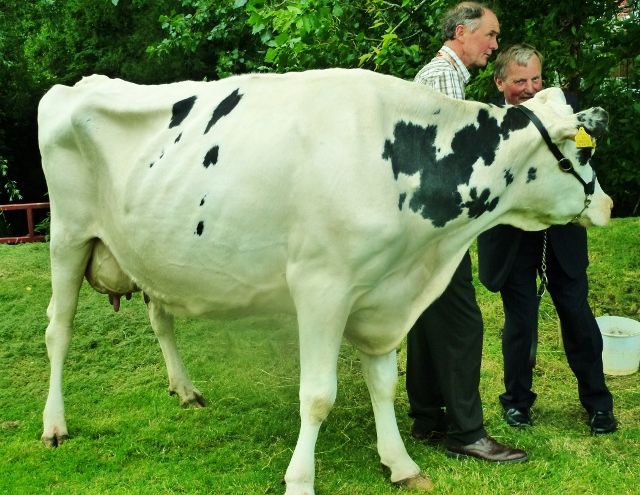
Meet Caislean Oman Rose. Her owner standing alongside her is County Dublin dairy farmer John Murphy, from High Down Hill in Newcastle (wearing a check shirt). He comes originally from Kerry. John is a member of the Irish Holstein Friesian Association and milks a herd of forty. The milk which was once supplied to Premier Dairies in Rathfarnham (Dublin’s last remaining dairy until 1997) now goes to Glanbia (formerly Avonmore Waterford) and is taken by tanker to Ballitore in County Kildare for processing.

Four months ago some members of the Irish Farmers’ Association held a protest at the Ballitore plant over the price being paid to dairy farmers for their milk. I do not know whether John was among them. But the price paid to suppliers is just one of the problems a small farmer has to contend with, another being the weather and the resultant fodder shortage.

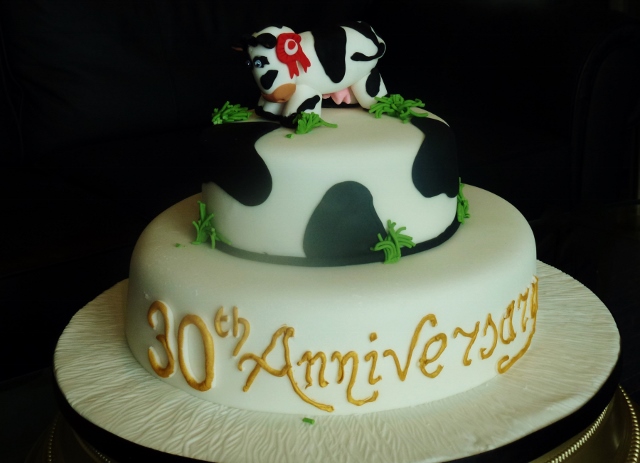
Caislean Oman Rose was brought in for a photocall at the Diageo plant at Nangor Road Clondalkin in Dublin to launch the Bailey’s Champion Cow competition 2013, which will be held at the Virginia Show in County Cavan on Wednesday 21st August, four days after the Tydavnet Show in North Monaghan. This is the thirtieth anniversary and a special cake was produced to mark the occasion.

30th Anniversary Cake

30th Anniversary Cake

Last year the top prizes went to Ridge­field Dundee Portea, owned by Pat & Derek Fraw­ley, from Croagh in County Limerick. At the presentation of prizes by the late Shane McEntee TD, Minister of State for Agriculture, the Glan­bia Chair­man Liam Her­lihy said “these top Irish cows are pro­duc­ing milk for Bai­leys which ends up all over the world, so this com­pe­ti­tion is an excel­lent show­case for our dairy produce.”

Champion Cow Trophy

Champion Cow Trophy

The first winners of the perpetual trophy in 1983 were the Crawford brothers from County Fermanagh. Farmers from Northern Ireland are still keen to compete at Virginia, but the restrictions on cross-border movements of cattle mean that they have to have passed TB and brucellosis tests thirty days before they are allowed into the Republic. The strict regulations are set out in the information about the Charleville Show in County Cork, which is on next weekend (29th/30th June).  This requirement however means that the Northerners might not be in a position to send their cattle southwards, if their own shows (Antrim Agricultural Show on July 27th was one example) take place around the same time as another show in the Republic, as the Vice Chair of Holstein NI Gaston Wallace pointed out.

WILLIAM CARLETON SUMMER SCHOOL

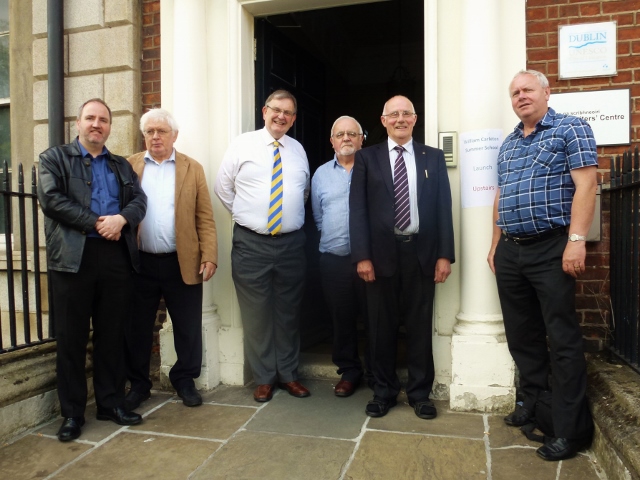
William Carleton Society committee members at Irish Writers' Centre, Dublin

William Carleton Society committee members at Irish Writers’ Centre, Dublin

Launch of the William Carleton summer school programme 2013

The William Carleton Society made another trip to Dublin this evening for the launch of the programme for the 22nd William Carleton international summer school. The line-up this year is broader than before, with a number of events in Monaghan and Emyvale before the start of the school itself on Monday 5th August at Corick House in Clogher.
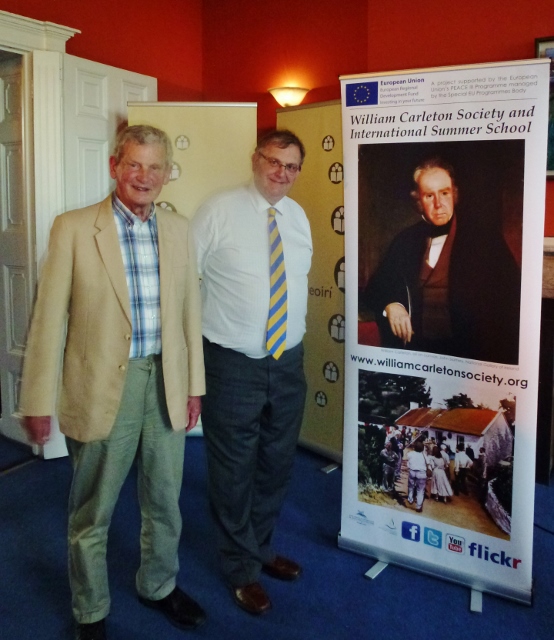
Maurice Harmon and summer school director Michael Fisher

Maurice Harmon and summer school director Michael Fisher

Our patron Maurice Harmon read four of his poems and the President of the William Carleton Society, Jack Johnston from Clogher, revealed details of his recent research on Carleton’s addresses in Dublin, where the famous 19thC author spent most of his life, although he was born near Clogher in 1794 and was a Tyrone man!

William Carleton Society President Jack Johnston talking about Carleton

William Carleton Society President Jack Johnston talking about Carleton

Committee member Patricia Cavanagh from Tydavnet gave more details of her late father Terence O’Gorman’s book, which she has compiles from his poems and stories, “Memories Amidst the Drumlins: Cavan and Monaghan”. The book will be launched at the Four Seasons Hotel at 6pm on Friday 2nd August.
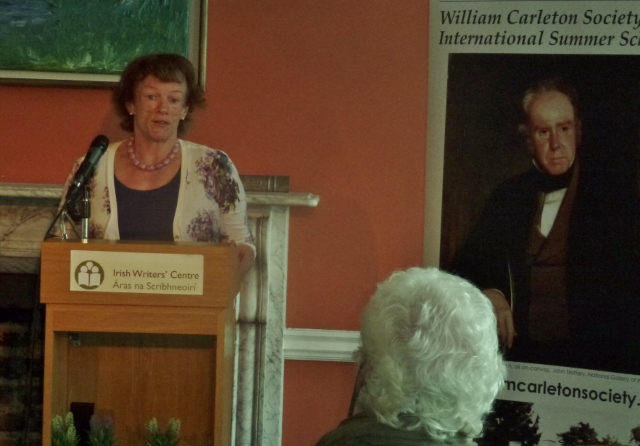
Patricia Cavanagh, Tydavnet, at William Carleton summer school launch

Patricia Cavanagh, Tydavnet, at William Carleton summer school launch

WILLIAM CARLETON INTERNATIONAL SUMMER SCHOOL 2013

Friday 2nd August    

Four Seasons Hotel, Coolshannagh, MONAGHAN    CONFERENCE:        CARLETON, KAVANAGH & GAVAN DUFFY

10:30am registration FREE ADMISSION            Tea/coffee

11am  Professor Thomas O’Grady (Boston/Prince Edward Island) on his poetry and Patrick Kavanagh

12 noon  Art Agnew (Inniskeen) on Patrick Kavanagh

Lunch Break

2:30pm Charles Gavan Duffy: Journalist and Patriot:  Brendan O Cathaoir (ex Irish Times) and Aidan Walsh (former curator, Monaghan County Museum)

3:30pm  Break

3:40pm  Mary O’Donnell (Monaghan poet and author)

4:45pm  Shemus cartoons in The Freeman’s Journal: Felix M. Larkin

6:00pm Reception and Book Launch:

Memories Amidst the Drumlins: Cavan & Monaghan: Terence O’Gorman poems and stories

 Saturday 3rd August

11am meeting at Monaghan museum, Hill Street.

Walking tour of Monaghan town with Grace Moloney, Clogher Historical Society, & Theresa Loftus, Monaghan Museum. FREE.

Lunch afterwards at pub with traditional music.

 Sunday 4th August  

4:00pm Assemble at Emyvale Leisure Centre (refreshments) or Edenmore school.

4:30pm walk to Blue Bridge, Emyvale

5:00pm to 6:00pm

Carleton commemoration at the Blue Bridge Emyvale and new plaque unveiled

6:30 Gather at Emyvale Leisure Centre

7:00pm Fair of Emyvale reading at Emyvale Leisure Centre. FREE. All Welcome.

8:00pm Refreshments.

***All Monaghan events are part funded by the EU’s ERDF through the Peace III programme financed through Monaghan Peace III Partnership***

Monday 5th August

Corick House Hotel,  Corick, CLOGHER, Co. Tyrone  BT76 0BZ

10am Registration, tea and coffee

11am Photocall

11:30am   Opening by Mayor of Dungannon & South Tyrone Borough Council

11:40am   Summer School Honorary Director:

Prof. Owen Dudley Edwards on “Carleton, Otway and Irish Literature”

1pm Lunch

2:30pm Keynote address Professor Thomas O’Grady, Boston

The Geography of the Imagination: Carleton’s “The Donagh”

3:30pm Tea/coffee break & bookstall

3:45pm Author Gerry McCullough (“Belfast Girls”) & Raymond McCullough

(singer & songwriter)

4:45pm  Broadcaster & commentator Tom McGurk in conversation with Aidan Fee:  “Northern Ireland: past and present”

6pm Close of session

 Tuesday 6th August                                           

09:30am registration  Tea/coffee

10:15am Language in the Clogher Valley of 19th Century. Irish: Dr Ciaran Mac Murchaidh, St Patrick’s Drumcondra.  Ulster Scots: Dr Ian Adamson

11:50am break

12:00 noon  President of the William Carleton Society, Jack Johnston:

“Augher: from landlord, Sir Thomas Ridgeway to George Duffy, the Miller”

12:45pm lunch

2:15pm  Josephine Treanor tells the story of her relative, mentioned by Carleton:

“Anne Duffy, the Miller’s daughter from Augher”

3:00pm  Break

3:15pm Focus on modern Irish writing: Ciaran Collins (“The Gamal”) + Patricia Craig (“Twisted Root”) + Anthony Quinn (“Disappeared”) + Tony Bailie (“A Verse to Murder”)

4:15pm Tea/coffee break

4:30pm Seminar continues & discussion to close of session 6:00pm.

Wednesday 7th August     

09:30am registration tea/coffee

10:00am Dealing with the past: Professor Jon Tonge (Liverpool)

Discussion: Alex Kane and Dr Margaret O’Callaghan (QUB), chair John Gray

11:45am Break

12:00pm  Former politician and commentator Mary O’Rourke on how differences can be accommodated

1:00pm  Lunch

2:30pm Poet Siobhan Campbell MA on writing about the past

3:30pm  Tea/coffee Break

3:45pm Patrick Scully extracts from one man show on Edward Carson

4:30pm Writer & author Mary Kenny (Edward Carson: Dubliner, Unionist, Irishman)

6:00pm Close of summer school

Thursday 8th August

Coach tour in Co.Fermanagh by Frank McHugh & Gordon Brand with particular reference to Shan Bullock: “The Loughsiders”, based around Crom estate. Booking required: for more details contact Frank McHugh e: f.mchugh4@btinternet.com

Cost: £30 including meals

Evening Events: (supported by Shared History, Shared Future Project funded by South West Peace III partnership )

Monday 5th August

Traditional Music session with female Irish traditional group Síoda &

singer Seosaimhin Ni Bheaglaoich,   Rathmore Bar, Main St Clogher 8pm

Tuesday 6th August

Walk on the Carleton Trail with the Clogher Valley Ramblers.  7:00pm

Bagpipers & traditional Music with the McKenna family (Clogher) at Somers Cafe, Fardross (off A4 road)  8:30pm   Free admission

Wednesday 7th August

Concert at Fivemiletown Wesleyan Hall 8pm

Murley Silver Band and Monaghan Gospel Choir: Special Guest Gloria  Admission Free.

More information at: www.williamcarletonsociety.org

e: wcarletonsociety@gmail.com

Costs:-
Daily: £40/€47 including lunch and tea/coffee break;
concession £33/€35 (saving of €3)
Morning:  £13/€15 or one session £7/€8   including tea/coffee;
concession £10/€12  or one session  £4/€5
Afternoon: £16/€20 or one session £8/€10 including tea/coffee;
concession £12/€14  or one session  £4/€5
Lunch £11/€13  

Tour Thursday including meal: £30/€35
Season ticket 4 days £150/€175 or concession £130/€140 (saving of €10)

Accommodation:

Dinner, B&B Packages at Corick House Hotel, Clogher:

3B&B plus 2 Evening Meals@ £170pps (double/twin occupancy)

3B&B plus 2 Evening Meals @ £220 (single occupancy)

2B&B plus 2 Evening Meals @ £140pps (double occupancy)

2B&B plus 2 Evening Meals @ £180 (single occupancy)

Double Room Rates B& B only

1 night £55pps

2 nights £50pps

3 nights or more £45pps

Single Rate B&B only

1 night B&B £70

2 nights or more B&B £65 per night

Accommodation also available at Glenvar guest house, 111 Tullyvar Road, Aughnacloy BT69 6BL

GEEL GROUP DEPARTS

Geel group ready for departure from Tydavnet

Geel group ready for departure from Tydavnet

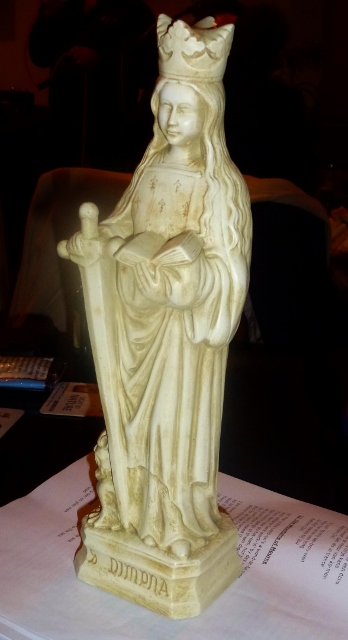
Gift from Geel to Tydavnet: statue of St Dympna

Gift from Geel to Tydavnet: statue of St Dympna

 They came here as part of The Gathering. A group of fourteen visitors from Geel led by Mayor Vera Celis has returned to Belgium following a five day stay in Tydavnet, County Monaghan, with which the town in Flanders is twinned. The common connection is St Dympna, whose story is reflected in both areas.

Geel Mayor Vera Celis & Cllr Nadine Laeremans collect water from St Dympna's Well, Tydavnet Photo: © Patricia Cavanagh

Geel Mayor Vera Celis & Cllr Nadine Laeremans collect water from St Dympna’s Well, Tydavnet Photo: © Patricia Cavanagh

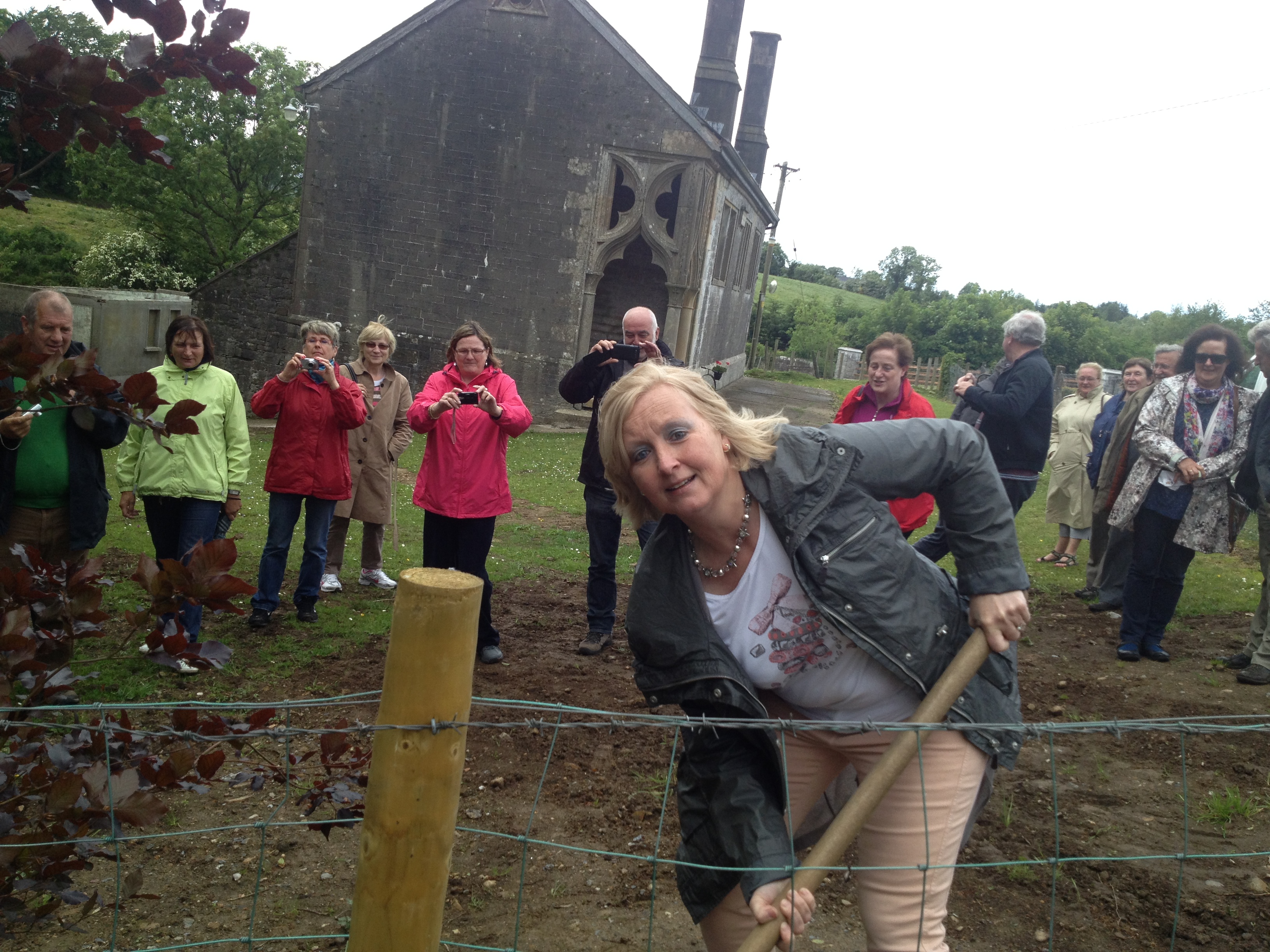
The well of St Dympna at Culdavnet has had access restored and the visitors went there to collect some of the water. The Mayor of Geel Vera Celis also planted a tree at the former national school at Cornagilta, which the local community hopes to open as a heritage centre.

The group also visited the mens’ shed project in Monaghan town and were given a tour of the new educational complex on the site of the former military barracks, as well as a tour of the new Garage Theatre. It was an interesting programme put together by the hard-working local committee of volunteers in Tydavnet, with the support of Monaghan County Council. On Sunday morning the visitors attended the 10am Mass at St Dympna’s church in Tydavnet and they were brought afterwards to the community centre for refreshments.

Geel Mayor Vera Celis planting tree at Cornagilta school Photo: © Paudge Connolly

Geel Mayor Vera Celis planting tree at Cornagilta school Photo: © Paudge Connolly

The visitors stayed with local families and in return, visitors from Tydavnet are hosted by local people when they travel to Geel. An invitation was made by Vera Celis and Councillor Nadine Laeremans for the Tydavnet group to travel to Geel in May 2015 when the next St Dympna pageant (“Omegang”) will take place, a celebration held every five years.

Before they departed, Mayor Vera Celis presented Marie McAree representing the Tydavnet group with a gift: a statue of St Dympna from Geel. A suitable place must now be found to display it, perhaps in the chapel.

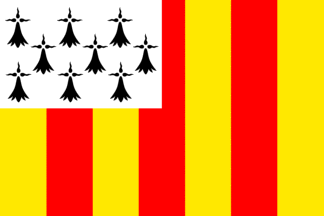
Flag of Geel

Flag of Geel

ULSTER & IRISH VOLUNTEERS

Quincey Dougan on the UVF

Quincey Dougan on the UVF

A very interesting night on Wednesday at Monaghan County Museum, where the CaDoLeMo group that promotes orange bands and culture in the border counties of Cavan, Donegal, Leitrim and Monaghan held a talk on the two rival sets of Volunteers that emerged in the early 1900s before partition. It was an appropriate setting as the museum is currently displaying the Walking the Colours exhibition, which I wrote about in April.

Monaghan UVF Flag

Monaghan UVF Flag

Quincey Dougan spoke about Monaghan unionists, in particular their contribution to the formation of the Ulster Volunteer Force. For a more detailed look at the subject, you can find his article on the subject here. One of the flags included in the exhibition comes from the 2nd Battalion of the UVF in Monaghan, which Quincey explained had its headquarters in Clones under the command of Lt Colonel Madden of Hilton Park outside the town. After the outbreak of World War I, Madden was replaced by a prominent solicitor Michael Knight, also Grandmaster of the County Orange.

According to Dougan, in August 1913 it was listed as having just 408 men, but within 12 months it had became bigger than the first battalion with 1058 men enlisted. The main drill areas were Drum, which included Scotshouse, Corrygarry, Drum and Carn; Clones including Clones, Stonebridge and Drumully, and Ballybay which included Laragh and Aughnamullen. Newbliss had a section, as did Dartrey in the form of Doohat and Dartrey. The Castleblayney and Carrickmacross area was not listed on the original returns and appears to have been slow to organise, but by early 1914 it also had men drilling. The Mullyash area of East Monaghan had a large unionist presence, but its natural hinterland was the South Armagh town of Newtownhamilton and it appears that the area drilled with County Armagh.

Professor Terence Dooley

Professor Terence Dooley

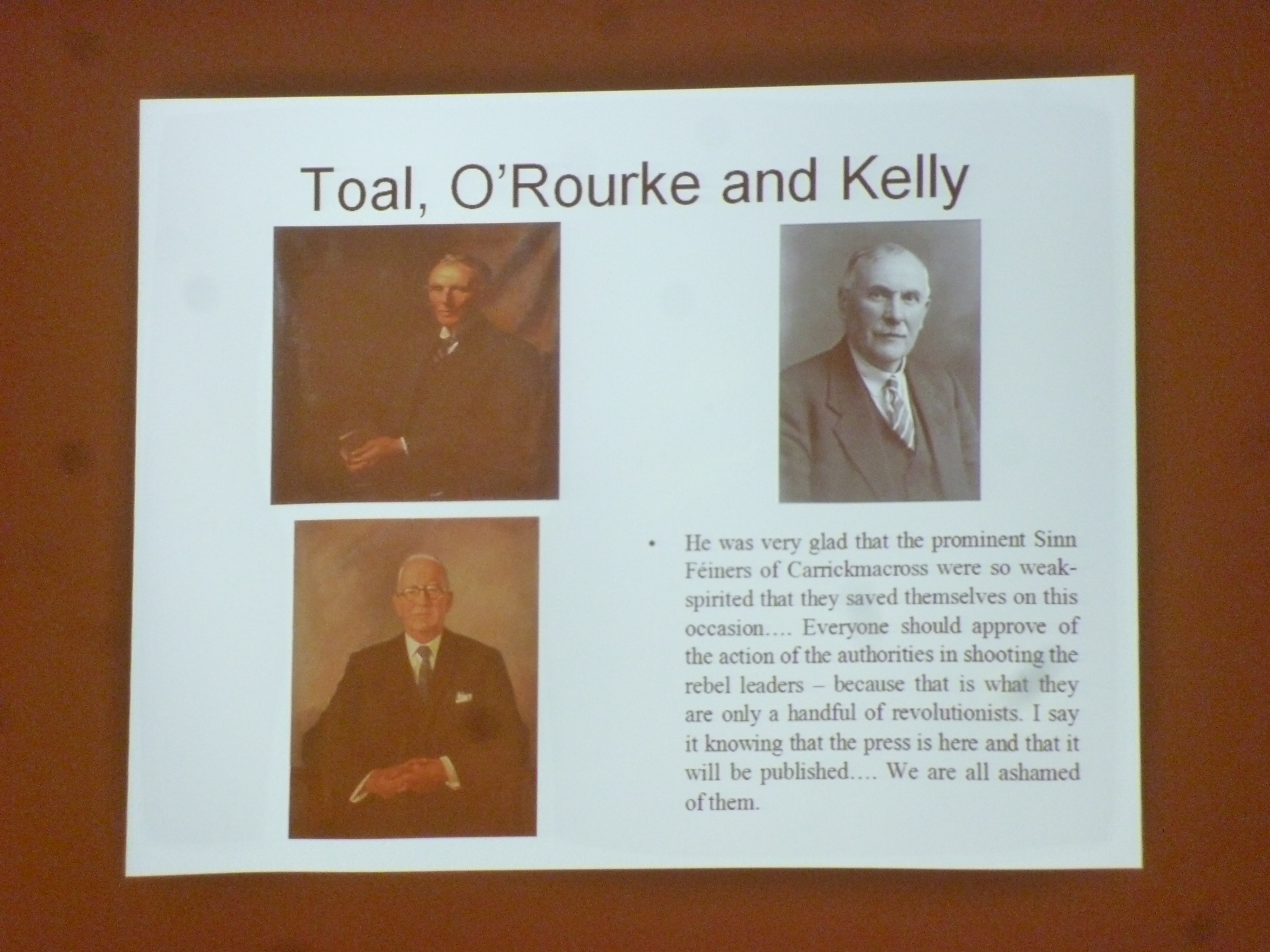
The second part of the evening was devoted to the story of the Irish Volunteers in County Monaghan. The guest speaker was Professor Terence Dooley, NUI Maynooth, who comes from Killanny near Carrickmacross. It was fascinating to hear the story of three Monaghan nationalists who went on to become politicians, Thomas Toal of Smithborough, Edward “twister” Kelly and ? O’Rourke.

Story of Toal, O'Rourke & Kelly

Story of Toal, O’Rourke & Kelly

MONAGHAN WELCOMES GEEL

Civic reception by Monaghan County Council for Geel group

Civic reception by Monaghan County Council for Geel group

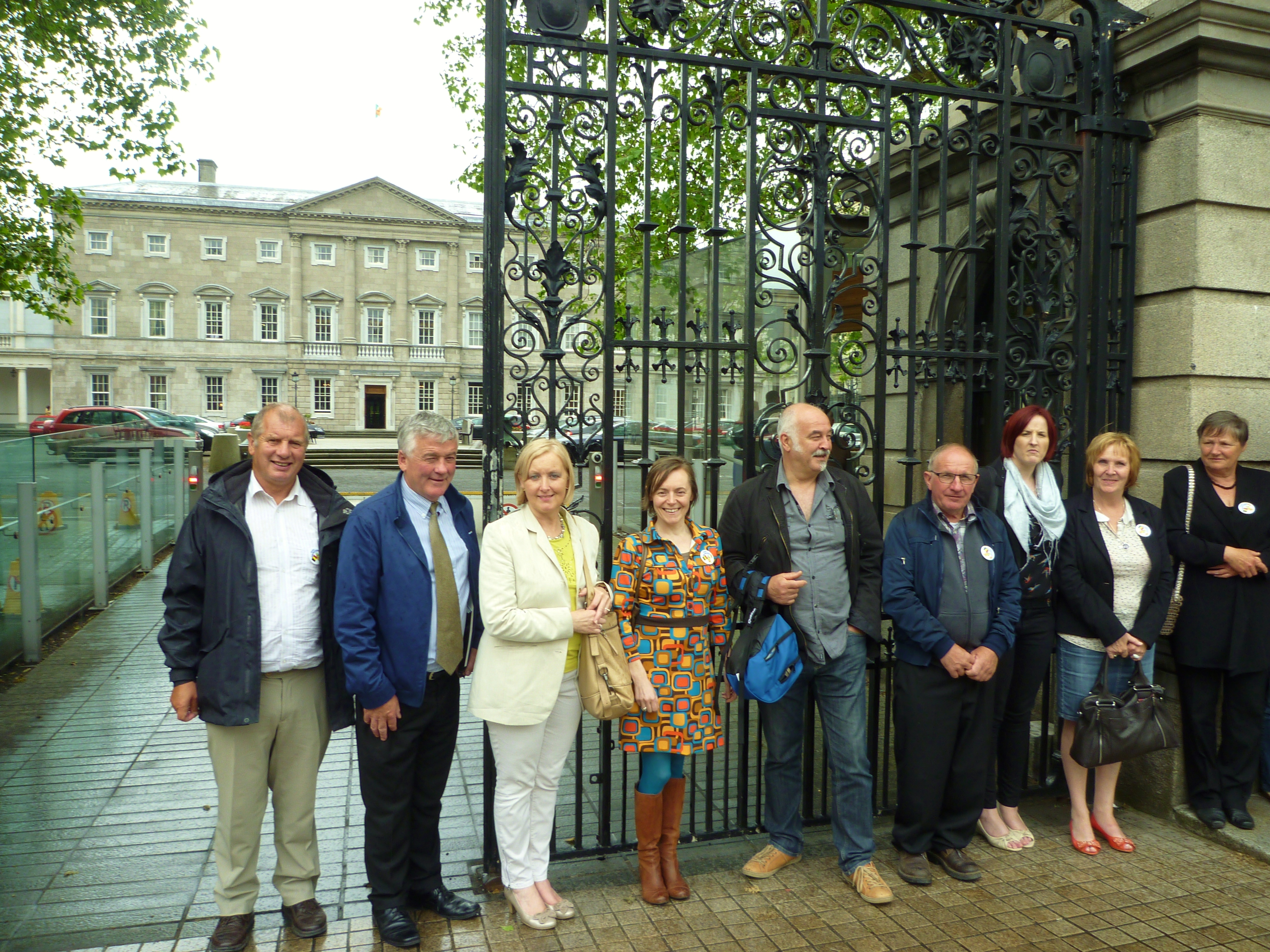
Geel group led by Mayor Vera Celis visits Leinster House

Geel group led by Mayor Vera Celis visits Leinster House

WELKOM! Tydavnet in County Monaghan has welcomed a group of fifteen visitors from Geel in Belgium, led by the new Mayor Vera Celis. Tydavnet is twinned with Geel in the province of Antwerp through the common link of St Dympna (Davnet). The group, some of whom have been here before, are staying with host families in the parish. They flew in to Dublin airport from Brussels and were then taken on a tour of Leinster House organised by Cllr Paudge Connolly, followed by lunch in the members’ restaurant. During the visit the Taoiseach Enda Kenny met them briefly, which was appreciated as it was a busy day for him in the Daíl.

An Taoiseach Enda Kenny TD and Burgemeester van Geel Vera Celis, New Flemish Alliance party, Flemish Parliament

An Taoiseach Enda Kenny TD and Burgemeester van Geel Vera Celis, New Flemish Alliance party, Flemish Parliament

I met the group as they departed for Tydavnet, where they were entertained last night in the community centre, having stopped to visit the restored workhouse building in Carrickmacross en route . Last August I joined a group from Tydavnet and Monaghan that went to Geel for the “Eurofeesten” involving twelve European countries. On Thursday the visitors were taken on a walking tour of the St Davnet’s complex in Monaghan. They were then given a civic reception at the Westenra Hotel, hosted by the Mayor of County Monaghan Hugh McElvaney and the Monaghan town Mayor, Seamus Treanor, both of whom participated in the visit to Geel last year. Councillor McElvaney presented Vera Celis with a framed piece of Clones lace and the Burgemeester made presentations to Tydavnet group organiser Sheila McKenna and to the county Mayor. This afternoon the group was taken to visit the new educational campus and the Garage theatre on the Armagh road and they were then due to be taken on a walk around Monaghan town. They will visit Derry on Saturday and will attend Sunday Mass in Tydavnet.

Group from Geel at Leinster House

Group from Geel at Leinster House

Monaghan Mayor Hugh McElvaney presents a gift of Clones Lace to Geel Mayor Vera Celis

Monaghan Mayor Hugh McElvaney presents a gift of Clones Lace to Geel Mayor Vera Celis

Tydavnet Group organiser Sheila McKenna is presented with a gift by Mayor of Geel Vera Celis

Tydavnet Group organiser Sheila McKenna is presented with a gift by Mayor of Geel Vera Celis

Flag of Geel

Flag of Geel

MONAGHAN IN LOURDES

Fr Jerry Caroll, Carrickmacross, Air Corps chaplain in Baldonnel

Fr Jerry Caroll, Carrickmacross, Air Corps chaplain in Baldonnel

NORTHERN STANDARD Thursday 6th June 2013

With around 30,000 pilgrims in Lourdes last weekend most of them attending the 55th annual international military pilgrimage, Michael Fisher managed to find several Monaghan connections among the Defence Forces contingent that travelled from Dublin……
Among the six chaplains with the 300-strong party was Fr Jerry Carroll from Carrickmacross. He is chaplain to the Air Corps at Baldonnel in Co. Dublin.

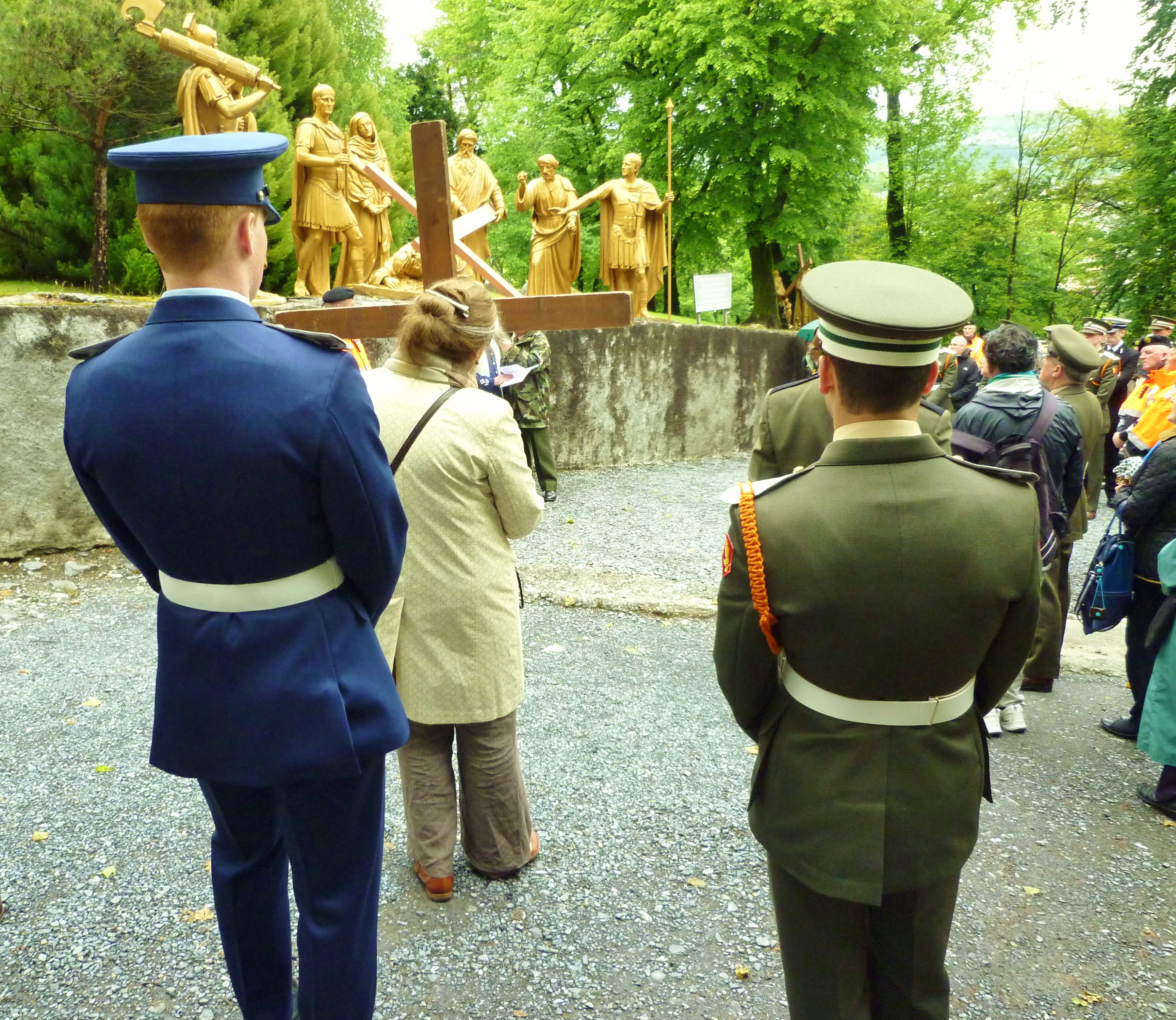
Stations of the Cross at Lourdes

Stations of the Cross at Lourdes

He led the group in making the Stations of the Cross. During the procession Evelyn Fisher from Drumcoo Woods, Tydavnet, was asked to carry the cross at the eighth station (Jesus meets the women of Jerusalem) to the next one (Jesus falls the third time).

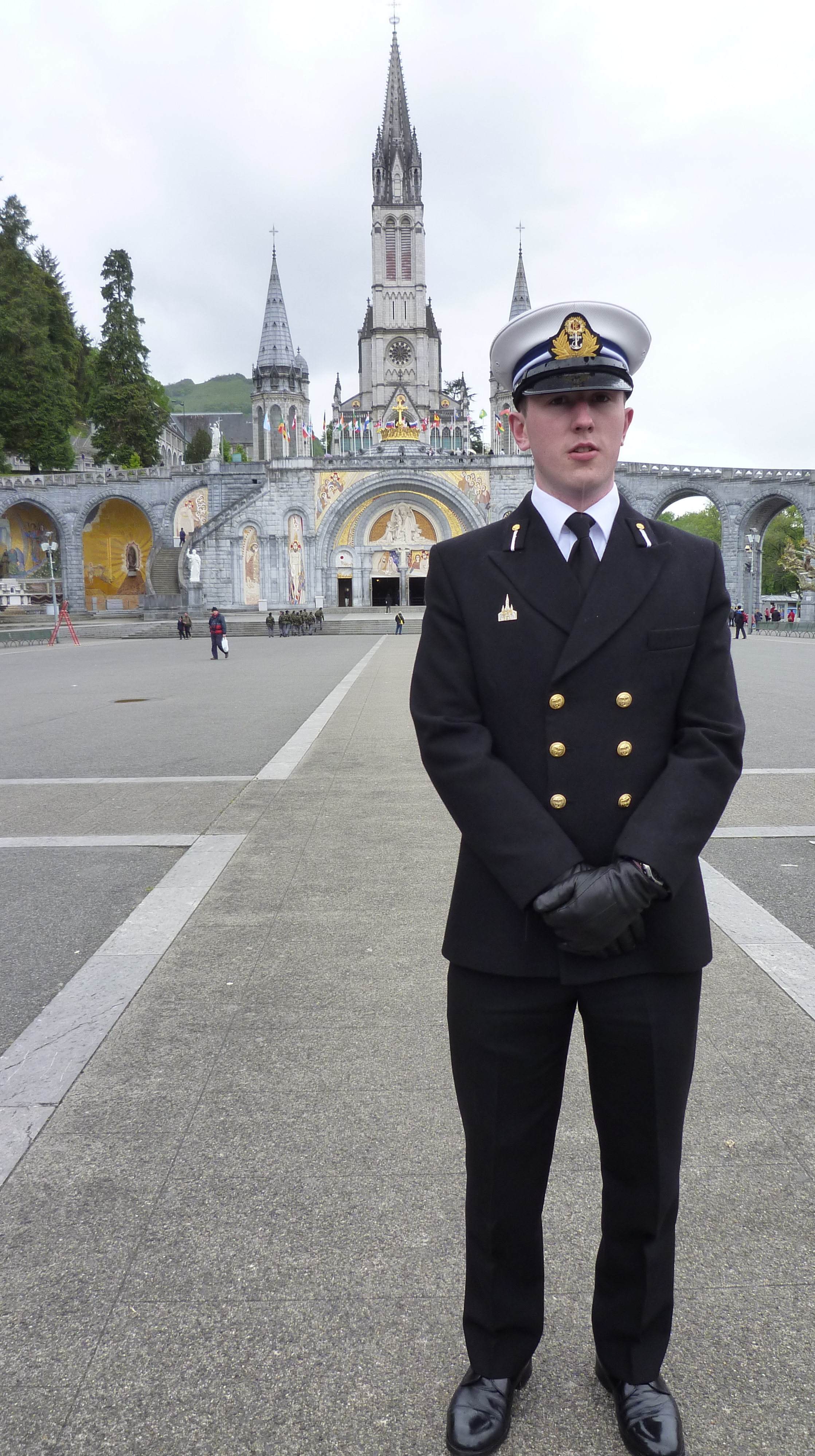
Naval Cadet and former member of the Reserve Defence Force in Monaghan, Aron Nutley, was among the 51st cadet class who travelled overland from Haulbowline in Cork with their chaplain Fr Des Campion to take part in the visit to the shrine of Our Lady and to the Grotto.

Naval Cadet Aron Nutley, Monaghan

Naval Cadet Aron Nutley, Monaghan

Mass for English-speaking countries including Ireland, the UK, USA and Norway was concelebrated by Bishop Richard Moth, Chaplain to the British forces along with the Defence Forces Head Chaplain Monsignor Eoin Thynne and a number of other priests. Aron from Coolshannagh is a former pupil of Beech Hill College in Monaghan. Accompanying the party from the 89th Army Cadet Class at the Curragh, the Air Corps and Navy cadets was a group of nineteen from the Civil Defence drawn from eight counties.

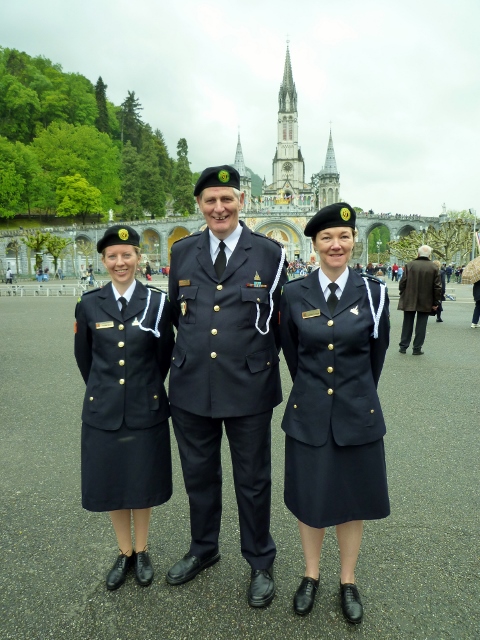
They included a number from Westmeath, based in Mullingar. One of them was Siobhan Courtney from Clones, a former pupil at Largy College. The Civil Defence have been accompanying the military on the pilgrimage since 1994 and for three of them, this was their 20th trip.

Siobhan Courtney & Civil Defence group from Co.Westmeath

Siobhan Courtney & Civil Defence group from Co.Westmeath

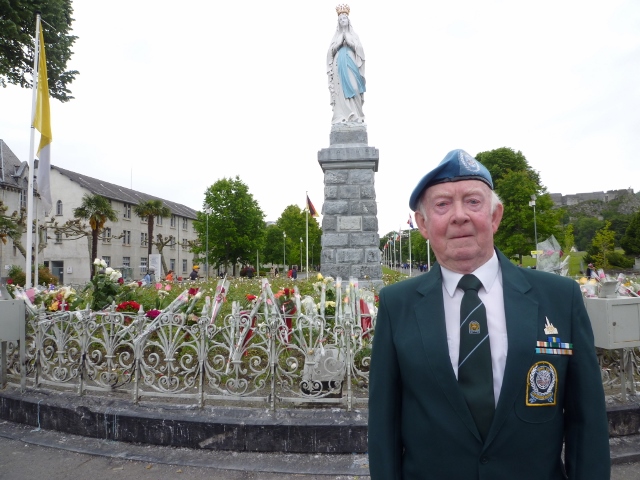
Paddy Reilly, Monaghan

Paddy Reilly, Monaghan

A number of former soldiers took part in the pilgrimage, including Paddy Reilly from Glenview Drive in Monaghan. He is a UN Veteran who served in Monaghan town and for a number of years was in charge of the local FCÁ unit (now the Reserve Defence Force). He was also active with the Civil Defence. The final Monaghan connection was through one of the Joe Walsh Tours guides, Carmel Power (McGinty). She lives in Skerries, Co. Dublin and is a former pupil of Clochar Lughaidh Muineachain, where she was a boarder for a number of years.

Former St Louis Monaghan pupil Carmel Power (McGinty), JWT travel rep in Lourdes

Former St Louis Monaghan pupil Carmel Power (McGinty), JWT travel rep in Lourdes

Groups from the Dioceses of Raphoe (Donegal) and Ossory (Kilkenny) were in Lourdes at the same time as the military pilgrimage. The Minister of State for Defence Paul Kehoe TD joined the group and read one of the lessons at the International Mass on Sunday in the underground basilica of St Pius X. He also laid a wreath at the Irish memorial at the town cemetery in Lourdes which commemorates all those Irish pilgrims who died there, including Monsignor James Horan from Knock and Cardinal O Fiaich.

Minister of State Paul Kehoe TD lays wreath at Irish memorial in Lourdes

Minister of State Paul Kehoe TD lays wreath at Irish memorial in Lourdes

ENNISH FLAX MILL

Howard Bennett at Ennish Scutch Mill

Harold Bennett at Ennish Scutch Mill

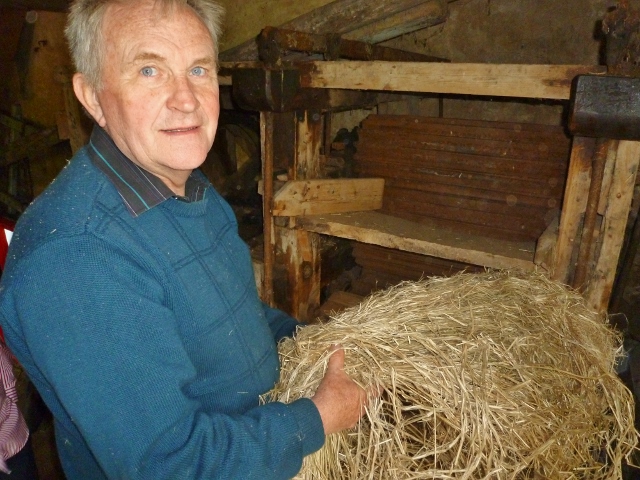
For over ten years Harold Bennett from County Tyrone has been devoted to preserving an important part of Ulster’s industrial heritage. Ennish Flax Mill between Aughnacloy and Dungannon is the third generation of his family to own the mill., which closed in 1950. In the early 2000s he decided to renovate the mill, a project which has taken considerable time, money and effort an is still a wok in progress. He has been supported in his efforts by the Killeeshil and Clonaneese Historical Society, which is currently undertaking a project on engineering in the area under the “Shared History, Shared Future” project, of which the William Carleton Society is a member.

Barbeque at Ennish Mill

Barbeque at Ennish Mill

Flax after scutching

Flax after scutching

An open day and barbeque was held at the mill to show it in operation and to give a younger generation an idea of how the mill operated. Ennish started off as a corn mill around 1770 and was owned by the Burges family of Parkanaur Manor near Castlecaulfield. In 1917 William S Bennett purchased the mill from Colonel YS Burges for £255. At that time the flax industry, which was important in Ulster in the 18th and 19th Centuries, was booming. The mill was converted to process flax, which was first scotched in October 1917.

Mill Wheel at Ennish

Mill Wheel at Ennish

Up to 1944 the mill was driven by the mill wheel but because of dry seasons there was insufficient water to turn the wheel. The then owner, William Bennett’s son Hugh John, was obliged to instal an engine to drive the mill. It was installed by AS McKee & Sons of Cranslough, who also carried out a number of renovations in order to accommodate the new engine. Farmers came from surrounding areas such as Crilly, Minteburn, Rehaghey, Brantry, Newmills, Clonavaddy and Castlecaulfield to get their flax scutched. After flowering and ripening in July, the farmers pulled the flax by hand and then soaked it in a water-filled dam for one to two weeks to ret (break down the outer coating). It was then spread on a field to dry before being taken to the mill.

Scutching handles behind the berths

Scutching handles behind the berths

The mill has seven “berths”, the space in front of each flax handle where the scutchers worked. Sometimes they worked in pairs. The first was a “buffer”, who took the rough off the flax, the second was the “cleaner”, who completed the scutching. Good flax could be scutched into long, strong fibres, which could eventually be turned into fine linen cloth. When the scotching was finished, the flax was taken to Union Street in Cookstown for inspection and if it passed the grading process, it was then taken to a linen mill in Belfast and woven int linen fabric. The poorer quality flax containing many shorter fibres was called “tow” and was less valuable. Any cloth made from it was rough and inferior. Usually the mill owner kept the tow as payment or part payment for the scutching.

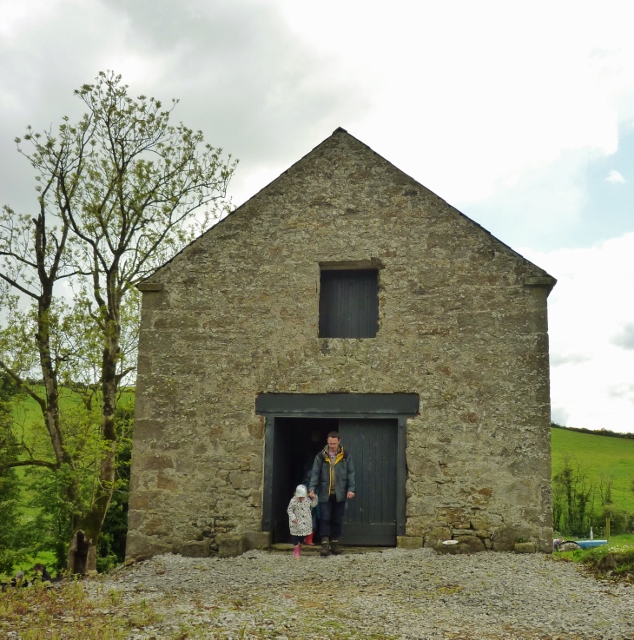
Ennish Flax Mill

Ennish Flax Mill

Scutching: a dusty process

Scutching: a dusty process

The waste from scutching known as “shoves” or “shows” was a cheap and popular fuel on the hearths of mill workers. A properly lit fire of shoves would burn for hours, emitting an intense heat. It must have been difficult for the seven scutchers working in a confined space and with the noise of the machinery as well as the dust. Harold’s demonstration gave an idea of what conditions must have been like for them, but this picture was with only one blade in action!

According to the mill records for 1945, the workforce consisted of six scutchers, three strickers, one roller and a handyman, whose job it was to remove the shoves from behind the handles. Scutchers were paid by the number of stones scutched and in a good week would earn between £3 and £4. The roller was on a set wage of £2.14.6 and the strickers earned £2.10.0 a week. In 1918 scutchers were paid a bounty of £6.0.0. to secure their services for the next scutching season. The details are taken from an information leaflet kindly provided by Harold Bennett.

Thresher in action

Thresher in action

This is one of only three such flax mills still remaining in Northern Ireland. Another one is at Gorticashel near Gortin, also in Tyrone. The scutching  demonstration was complemented by a display of threshing in the adjoining field. The straw was brought in for the occasion. The thresher carried the name “Boyd” and appeared to come from Maghera.

While researching the history of the linen industry, I discovered a newspaper cutting from the USA which shows that even before the new engine was installed at Ennish, the linen industry was in decline. The Delmarva Star from Wilmington in Delaware carried a report on March 3rd 1935 (p.22) headlined: “Shortage of Flax Threatens Ulster Makers of Linen: Numbers of Mills Face Necessity of Closing Down: Prices Have Made Unexpected Rise“. The news from Belfast (March 2) states that:-

Ulster’s world-famed linen industry today finds itself menaced by an acute shortage of its necessary raw material, flax.

Unless the crisis in the industry is overcome within the next few months, numbers of linen mills in Northern Ireland will be faced with the necessity of closing down.

The outstanding reason for the present crisis is a shortage of flax from Soviet Russia. The linen mills of Northern Ireland, which employ about 85,000 workers, are dependent on Soviet Russia for more than 90 per cent of their raw materials. The Soviet Union itself is the world’s biggest flax producer, growing between 90 and 95 per cent of the world’s total flax supply.

In recent months Germany has bought ever-increasing quantities of Russian flax to take the place of wool and cotton which it has been unable to import owing to exchange restrictions. At the same time the Soviet Union itself has begun to absorb large quantities of its own raw flax to manufacture in its new factories.

The result of these unexpected developments has been a leap upwards in the price of flax. Ulster linen manufacturers state that they have only sufficient flax on hand to meet the needs of the next four or five months, after which they expect the cost of flax to be so prohibitive that it will be impossible to produce linen goods in Northern Ireland at economic prices.

With a steep rise in the price of linen goods expected the next few months, it is understood that United States and other foreign importers of Irish linen have made large purchases in Belfast before prices soar still higher“.

MONAGHAN AT THE MAZE

Tom Cloonan, Castleshane with helper Charlie Barker, Ballybay

Tom Cloonan, Castleshane with helper Charlie Barker, Ballybay

Even in a crowd of thousands the chances are you will always meet someone with a Monaghan connection. So it was at the new-look Balmoral Show, transferred by the Royal Ulster Agricultural Society from its usual venue at the King’s Hall in Belfast to the Maze/Long Kesh development site near Lisburn. Amidst the rubble of the H-Blocks and with some of the watchtowers and remainder of the security wall from the former high security prison in the background I came across Charlie Barker from Derryvalley in Ballybay.

The former nurse at St Davnet’s hospital is a volunteer with the Riding for the Disabled Association Ireland, based at Geraldine Bellew’s Cloncaw Equestrian Centre in Glaslough. He was helping Tom Cloonan from Castleshane to take part in a riding display involving games in one of the outdoor arenas. It was organised by RDA groups from the North.The Monaghan group meets every Tuesday morning and helps a dozen or so people with learning difficulties to enjoy riding a pony, in this case “Major”, which Geraldine had transported to the show. Keeping them company was Mary Foley from Lemaculla, Ballinode.

Trevor Keith, Glaslough, Hugo Maguire, TMC Ltd., Brendan Greenan, Ardaghy, David Boyd, Glaslough, Eddie Rafferty, Tydavnet, Paddy Rafferty, Monaghan at TMC stand

Trevor Keith, Glaslough, Hugo Maguire, TMC Ltd., Brendan Greenan, Ardaghy, David Boyd, Glaslough, Eddie Rafferty, Tydavnet, Paddy Rafferty, Monaghan at TMC stand

Another Glaslough connection encountered at the new Balmoral Park was David Boyd from Mullaghduff, a Holstein cattle breeder and dairy farmer, who had a number of them entered in the show. He has been on the Irish judges’ panel for the past twenty years and has judged at shows throughout Ireland, England, Portugal and Italy. In March he was a judge at the European Holstein Championships in Switzerland. It was Holsteins that took the two top spots for the dairy interbreed section at Balmoral. David was among the visitors at the Town of Monaghan Co-op stand, where chairman Hugo Maguire from Clones was on hand to greet suppliers, their families and friends and provide them with a welcome cup of tea and delicious scones with cream and jam. The visitors included another Glaslough man, Trevor Keith, along with two brothers, Paddy Rafferty from Monaghan and Eddie from Sheetrim, Tydavnet. They were accompanied by Brendan Greenan from Ardaghy.

Joyce Blackburn, Monaghan & Ann Connolly, Tydavnet

Joyce Blackburn, Monaghan & Ann Connolly, Tydavnet

In another part of the 65 acre complex beside the main arena I met Ann Connolly from Tydavnet, who was with Joyce Blackburn from Monaghan, enjoying a break after a long day at the show. Their excursion might have brought them into contact with Liz McGuinness from Tydavnet, who brought her range of Kiwi Country Clothing to the shopping village. She told me that after one year in business she was now exporting her goods to a number of countries. In another part of the complex, Castle Leslie in Glaslough was promoting its leisure breaks.

Kiwi Country Clothing Stand

Kiwi Country Clothing Stand

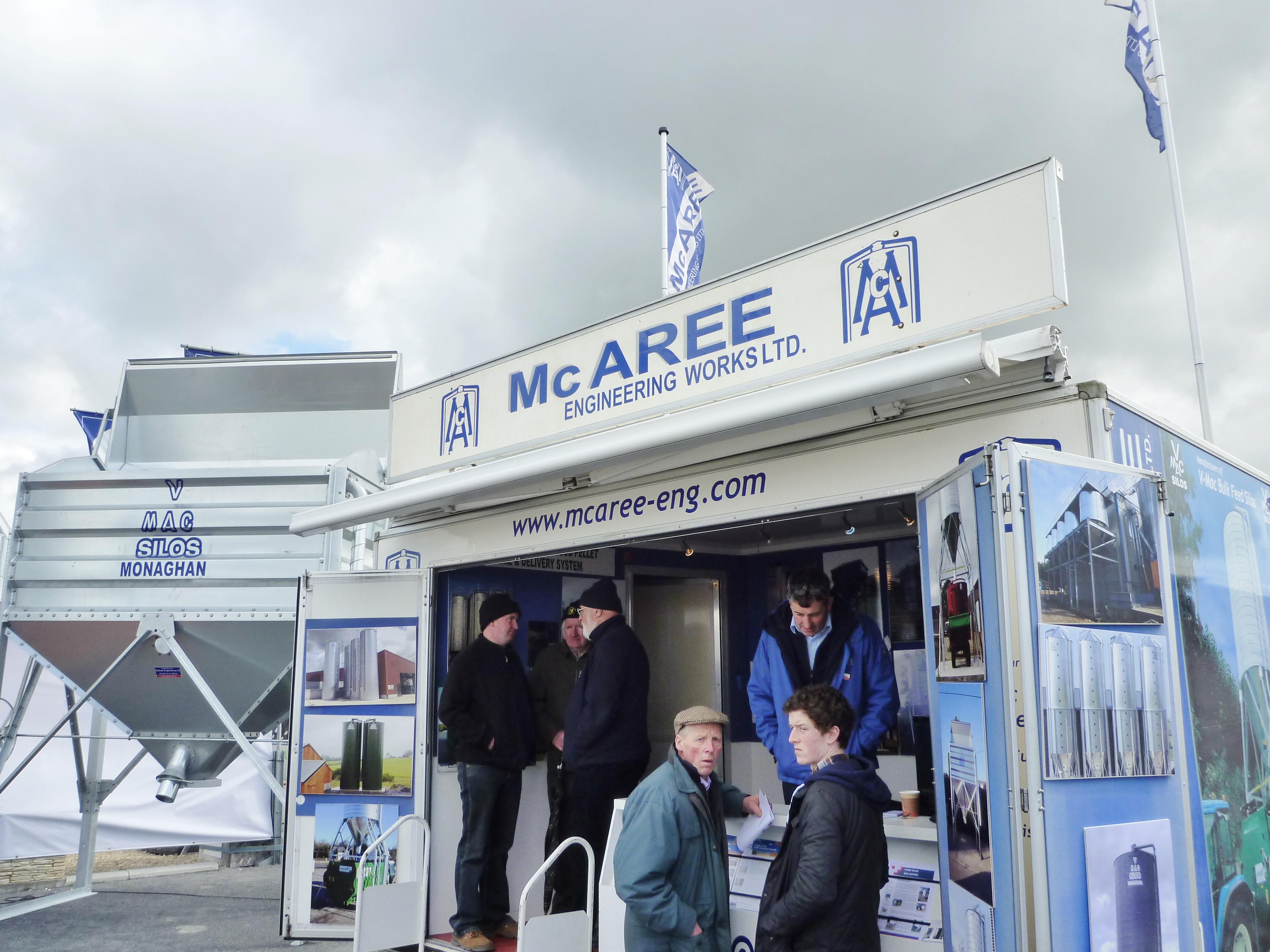
But one of the most impressive displays from Monaghan was from McAree engineering of Ballinode, regular exhibitors at the trade stands. Eamonn McMeel and Noel Kiely were busy showing their range of V-Mac silos, hoppers and tote bins to prospective clients. The company used the show to test the water for its latest product, which immediately caught my attention when I visited the stand.

V-Mac one ton bag hopper

V-Mac one ton bag hopper

The V-Mac bag hopper with adjustable “legs” can be transported on a tractor with a buck rake or grab to collect a one ton bag of meal from the merchant and then bring it back to the farm and store it. The hopper has a chute at the bottom to dispense whatever amount of feed is required. Hopefully this design will prove to be another success for the company and we can expect to see more of them in use around the county.

Noel Kiely, McAree Engineering Ballinode, chatting to clients

Noel Kiely, McAree Engineering Ballinode, chatting to clients

McAree Engineering, Ballinode, stand at Balmoral Show

McAree Engineering, Ballinode, stand at Balmoral Show

The Balmoral show had something to attract all ages and when I saw a young lad in a Monaghan GAA top I immediately went over to his parents to discover it was Joe McCarey from Dundian, Carrickroe,   enjoying a day out with his wife Pauline and three sons, one of them a baby, Páidí, named after the great Kerry footballer who died last year. Cathal (standing in the front of the picture) is becoming a media personality, having appeared in the Irish News and also on the RTÉ Sport coverage of the Monaghan v Meath division III final when the camera zoomed in for a close-up of him, apparently!

Joe McCarey, Dundian, his wife Pauline & three sons, baby Páidí, Darragh and Cathal

Joe McCarey, Dundian, his wife Pauline & three sons, baby Páidí, Darragh and Cathal

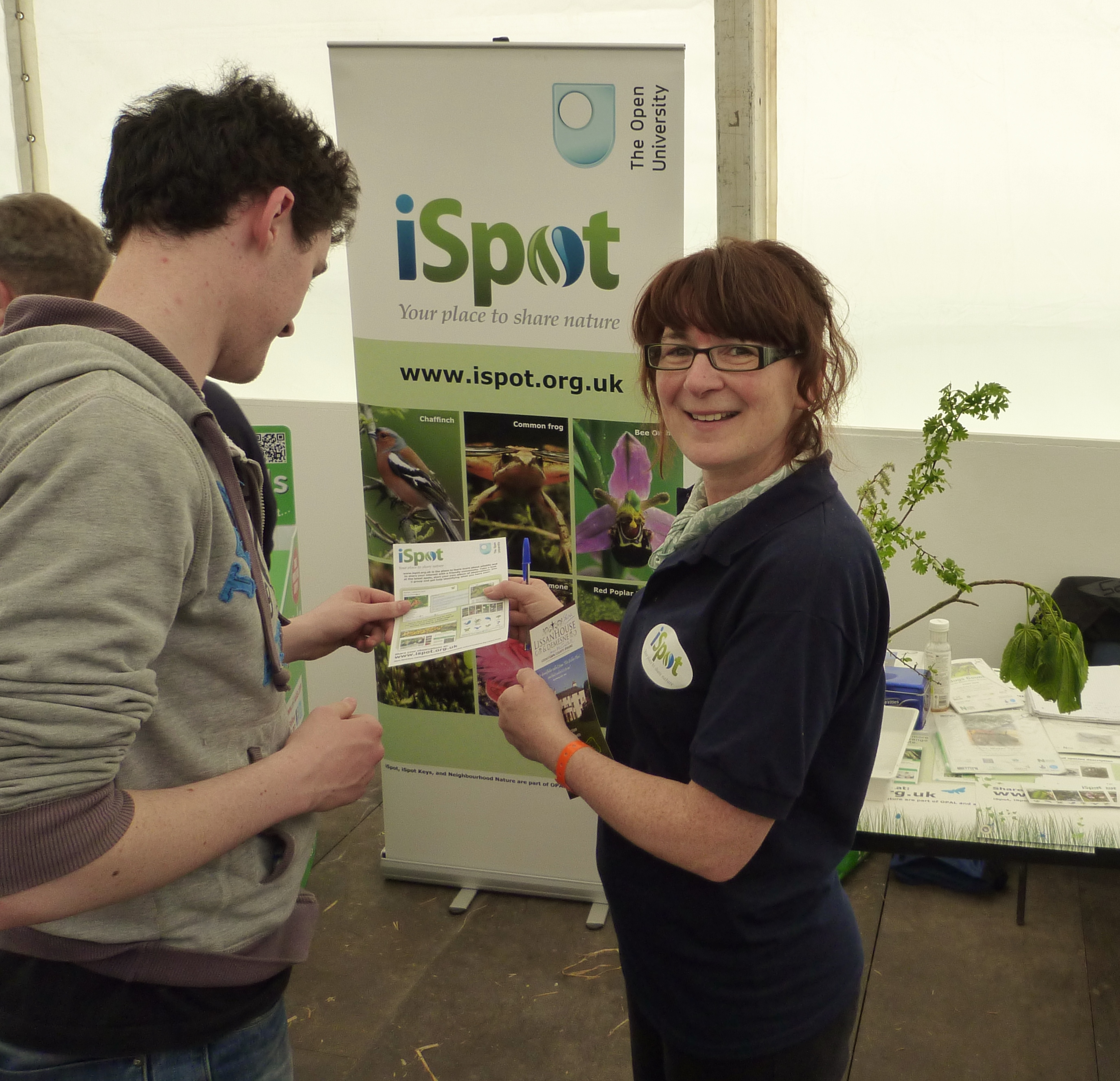
Over at the childrens’ farm, earth science expert Gretta McCarron from Monaghan had set up a stand for the Open University iSpot programme, encouraging people to identify and record wildlife and plants. All in all it was a very successful show at the new Balmoral Park, with a strong Monaghan presence.

Gretta McCaron, Monaghan, at the iSpot stand for identifying plants and wildlife

Gretta McCarron, Monaghan, at the iSpot stand for identifying plants and wildlife

EMYVALE CC GRAND PRIX

Tydavnet Community Centre

Tydavnet Community Centre

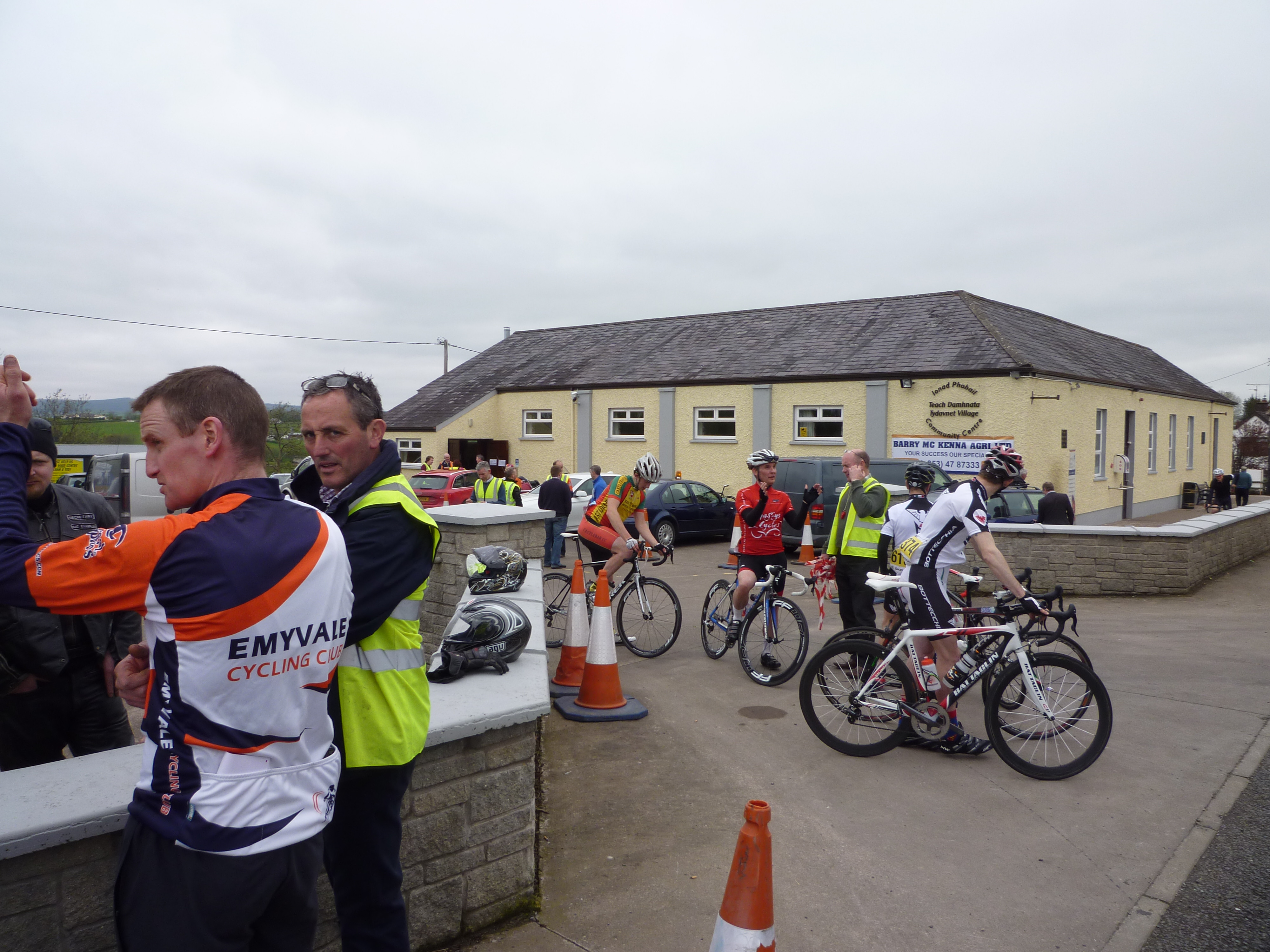
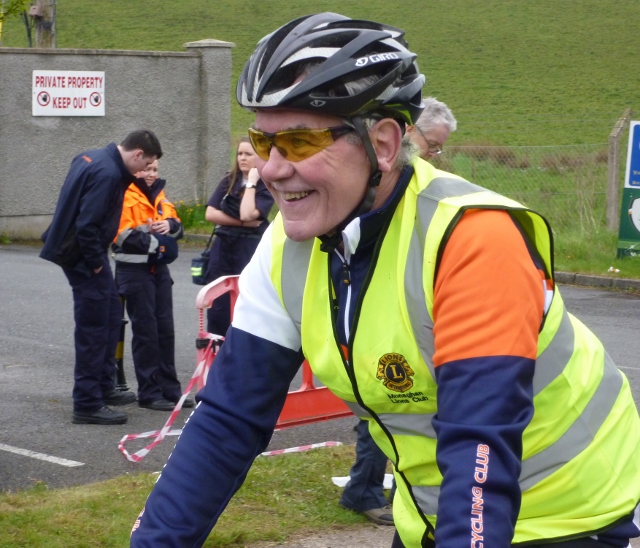
Tydavnet community centre was the base for the annual Grand Prix races held last Sunday (19th May) by Emyvale cycling club. The event brought a few hundred riders and their supporters as well as spectators into the village. The circuit for the adult competitors went from Tydavnet  to Clintacasta and on towards Knockatallon, turning back towards McNally’s Cross and then straight through to Lemaculla cross, where a sharp left turn brought them back to  the village. Malcolm Totten’s excellent pictures from the turn at Lemaculla can be found here.

 The youth riders faced a different circuit from normal owing to the ongoing roadworks on the N2 which have resulted in the closure of a number of roads in the area. I arrived late when the senior race had just finished. I noticed in the temporary car park two riders wearing UCD jerseys. One of them was folding up his bike and packing it away in his car. I think it was the overall winner of the main race, Ciaran O Conluain, who received the John Colton Cup.

Cyclists leaving Tydavnet community centre

Cyclists leaving Tydavnet community centre

The Cycling Ulster report says that in the race for A1 and A2 riders the pace split the bunch in three group early on. The head of the pack included riders such as William Larmour and Glen Kinning of East Antrim, Ciaran O Conluain (UCD), Greg Swinand (Usher IRC), Neil Delahaye Dunboyne) and Stamullan duo David Wherrity and Craig Sweetman. Sean Bracken (Usher IRC) was also riding strongly in this group along with John Murray of Lakeside Mullingar and Sean McKenna of UCD. Phoenix duo Cathal Smyth and Fergus Rooney had made this break but were later shot out.

They were chased by riders such as Cathal Doyle and Johnny Taylor of Carn Wheelers, Des Woods (Newry Wheelers), East Tyrone’s, Steven Hutchinson and Gary Jeffers and Marcel Kock (Phoenix CC)  amongst others. With a few minor changes to the lead group they managed to stay ahead and in the last lap Kinning and O Conluain left the leaders and began the trek to the line. Ciaran O Conluain proved strongest on the day and emerged as the victor. Greg Swinand (Usher IRC), Neil Delahaye (Dunboyne), David Wherrity (Stamullan), Craig Sweetman (Stamullan), John Kenny (Navan RC), and Sean Bracken (Usher IRC) took the remaining points in that order. Another report and pictures can be found at emyvale.net.

Tydavnet community centre

Tydavnet community centre

BLACKWATER 10k

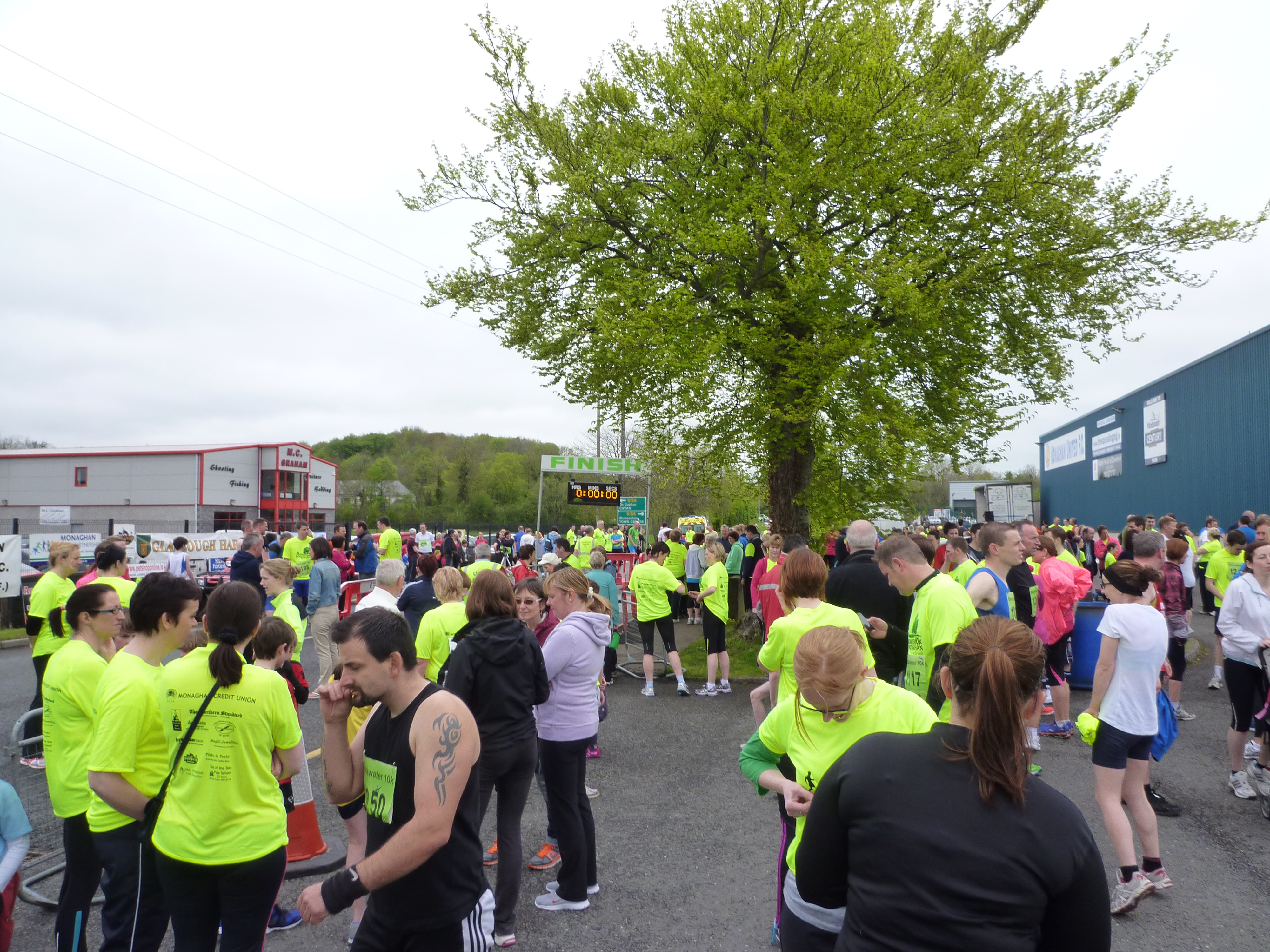
Runners gather at Gortakeegan

Runners gather at Gortakeegan

It’s a year since I was at the soccer ground at Gortakeegan in Monaghan. A lot has happened since then. On the last visit, Monaghan United FC drew 0-0 with Shamrock Rovers in the Airtricity League Premier Division. Roddy Collins was managing the team and Stephen Kenny was in charge of Rovers and I interviewed both afterwards. Collins now manages Athlone Town and Kenny is at Dundalk. Within a few weeks of that match, during the mid-season break, the Mons had pulled out of the league and professional football.

Yesterday I passed through the same club rooms and dressing rooms as the runners and walkers prepared for the sixth annual Blackwater 10k. This time, I knew that the soccer club is now devoted to youth teams only, some of which have performed well in their various leagues. But the building was buzzing as the dozens of volunteers sorted out last minute arrangements for registration, marshalling and catering.

Lorna Wilson, Past President Monaghan Lions Club

Lorna Wilson, Past President Monaghan Lions Club

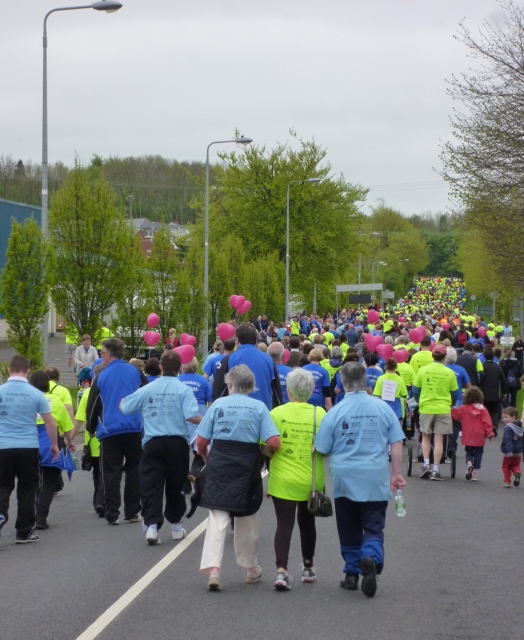
Monaghan Lions Club with their President Ann Bowe was one of the groups helping with the organisation. Around 1200 runners and walkers took part in the event and hundreds more arrived to cheer them on. This year Monaghan Special Olympics had been designated as the charity to be supported and many of their members with families and friends as well as helpers turned out for the event.

Heading off from Gortakeegan: a blaze of colour

Heading off from Gortakeegan: a blaze of colour

The course was out the Newbliss Road towards the entrance to Rossmore Forest Park. However it followed a different route this year as part of the forest is being cultivated by Coillte and the paths on that side were not in a suitable condition for runners. The first 10k competitor to cross the line in a time of 33 minutes 50 seconds was Simon Ryan and Donna Evans the first female in 38 minutes 47 seconds. My neighbour from Tydavnet John James McKenna ran it in 1:14:29. Each runner was given a special chip which ensured their time was recorded when they crossed a rubber mat at the finishing line. The list of finishing times for runners can be found here. Another neighbour George Meehan did the walk.

Northern Sound's Sean McCaffrey heading to another engagement

Northern Sound’s Sean McCaffrey heading to another engagement

Well done to all those who took part for the run or just for the fun and helped to raise money for some very worthwhile causes. Great work done by all the backroom teams as well to ensure that the event passed off smoothly, including members of Monaghan civil defence. Sean McCaffrey from Northern Sound provided commentary before and during the race.

Volunteer helping with marshalling along the 10k route

Volunteer helping with marshalling along the 10k route