DR MCKENNA CUP

mckennacuppowerni images

Power NI Dr McKenna Cup competition

Driving back to Belfast tonight along the M1 I saw a strong white light emanating from the direction of the Castleblayney Road near Dundalk. It was the floodlights from  Pairc Grattan at Inniskeen, County Monaghan, a ground which has been developed in recent years to accommodate county team matches. Monaghan were playing neighbours Fermanagh in their third Dr McKenna Cup match in Section A. Victory by 1-12 to 0-07 meant that the home side has qualified for the knock-out stages. Their next opponents will be Down, at the Athletic Grounds Armagh at 2pm on Sunday. I passed Newry as they were seeing off the challenge from their neighbours Armagh by 2-11 to 1-10 in Section B. In other matches, a weakened Donegal side narrowly beat St Mary’s 1-14 to 2-10 and in Section C, Tyrone easily beat UUJ 1-18 to 0-09 and Derry drew 1-13 apiece with Antrim. So the other semi-final on Sunday will see Tyrone meet Fermanagh, the best runner-up.

ulstergaaimages

Ulster Council GAA

This year there has been controversy over the decision by some county managers to include QUB students in their squads. It has led to the withdrawal of Queen’s University from the competition, as they believed they were being put at a disadvantage. The competition has a very interesting history. The cup is called after a fomer Bishop of Clogher Dr Patrick McKenna from Truagh parish in County Monaghan, who presented it to the Ulster Council of the GAA in 1925. The first competition was in 1927. Monaghan are the most successful side in the tournament with thirteen wins, the last being 2003. Maybe they can make it fourteen this year! For two years, 2001 and 2002, the competition was not held but it was resurrected in 2003. Since 2007 it has been sponsored and the latest company to do so is Power NI, formerly NI Electricity, appropriate now that (as I observed at the start) many of the matches like tonight’s are played under floodlights!

monaghangaa

Monaghan GAA Crest

GEEL DISCOVERY

Extraordinary discovery in Geel (Het Nieuwsblad)

Extraordinary discoveries in Geel                   (Het Nieuwsblad)

St Dympna is the connection between Tydavnet (Tigh Damhnait) in Monaghan and the town of Geel in the province of Antwerp in Belgium, with which it is twinned.  I have visited Geel on a number of occasions, most recently in August last year. So I was interested to see an online article in the Belgian paper Het Nieuwsblad about an important archaeological discovery showing evidence of prehistoric remains, including a large graveyard from the Bronze Age. The find was made in the area called Sint-Dimpna, close to the church of that name, I think, at a site being excavated to make room for a new sports centre. I have used Google to attempt to translate the article, to find out a bit more about the discovery. This is what the report says, give or take a phrase or two!

Extraordinary discoveries in Geel (caption for photo).
Unique archaeological traces at St. Dympna:
Geel Historical Society has worked with the city archives to organise a lecture on the results of the excavations at St. Dympna. The archaeologists will explain how their research was done, what traces were found and what they mean. The excavations were carried out for the construction of the new sports and play park. During the investigation many archaeological traces from different periods came to light. The researchers found four main buildings from the Iron Age (circa 800-50BC), a yard from the Middle Ages (10th-12th century AD) and numerous smaller outbuildings or nails that served as storage for food. There were also some wells found (dating from) the Middle Ages. Besides these traces of habitation there were also traces of a large graveyard from the Bronze Age (2000-50 BC) that came to light. And it is this last discovery that makes the archeological site so unique and interesting. Finding such burial sites is extremely rare for archaeologists in Flanders. “The combination of the cemetery and a settlement is truly exceptional. In Geel everything was also very well preserved, “said Connie Leysen from the Geel city archives. The lecture will take place on Friday 25th January at 8pm in the Winery.

GRAFFITI

Corragh Orange Hall

Corragh hall

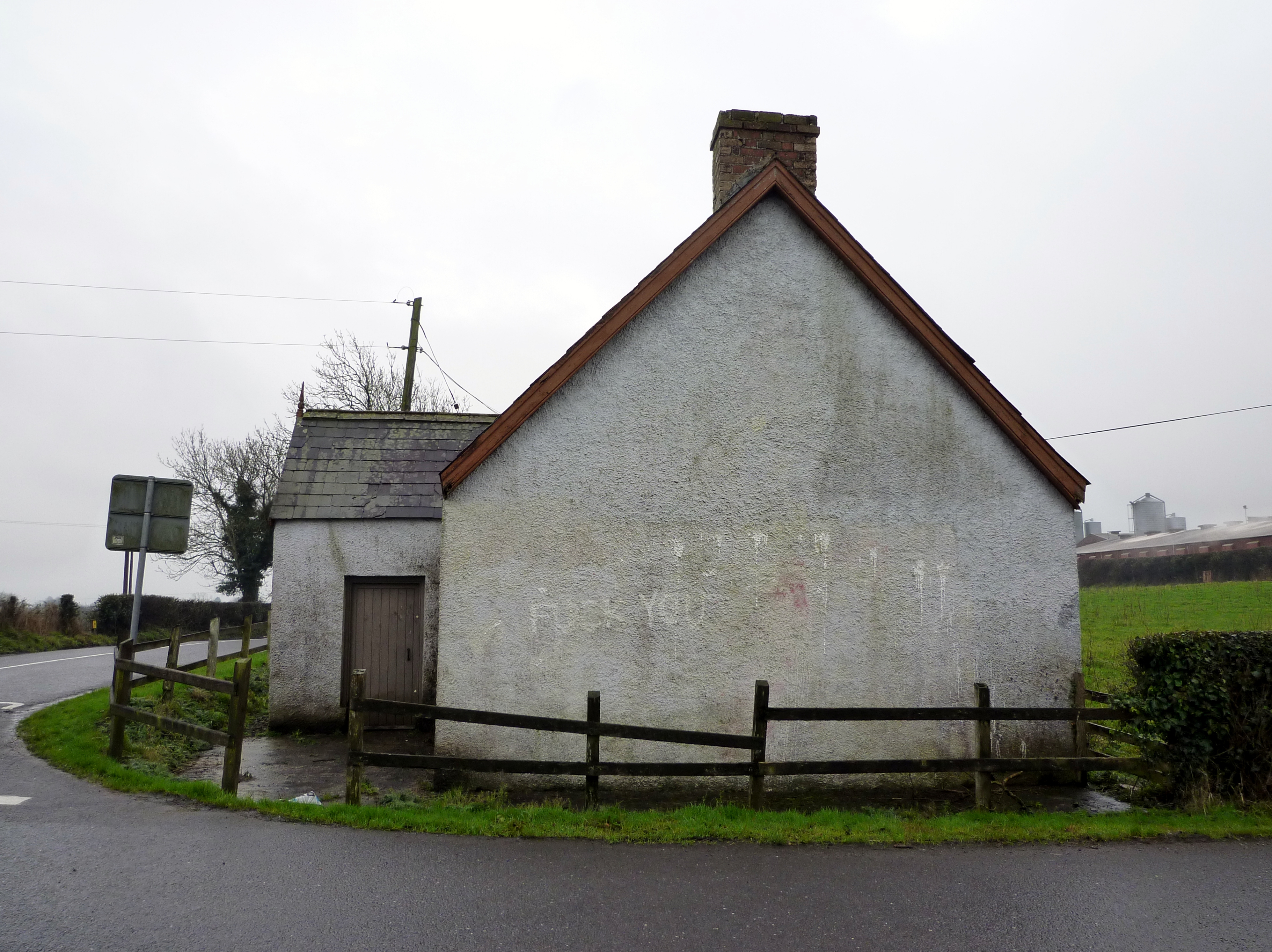
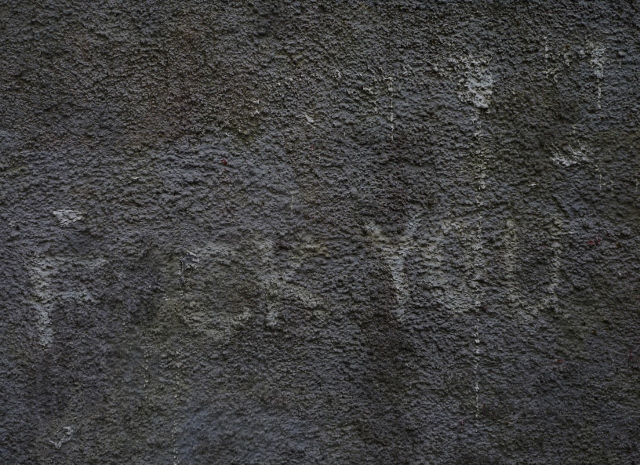
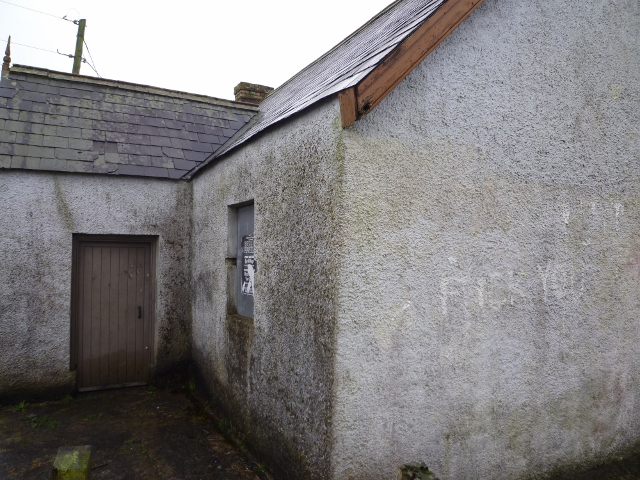
Driving past a small orange hall in a rural part of County Monaghan at Corraghbrack near Tydavnet on Saturday night the car headlights revealed two offensive words “F**K YOU” had been painted on the gable wall and came up very clearly in the car headlights. The hall is used infrequently and does not have any sign outside and I have been past it many times before. My initial reaction posted yesterday and now corrected here was that this could be described as a sectarian act, possibly in reaction to the flags row in the North. Going back to visit the scene in daylight hours, the offensive slogan was not as apparent, depending on what angle you looked at it. But the wall showed signs of previous acts of graffiti having been painted out. Damage was done to the windows and front door of the hall in 2005, when a nearby hall in Glaslough was also attacked. On that occasion the local parish priest in Donagh, Fr Sean Clerkin, spoke out strongly at Mass against the attack.

Hopefully action will be taken to remove the unwanted graffiti. Further enquiries have revealed that the paintwork (which at the time seemed fresh to me) is not recent and there are no slogans accompanying the crude message to suggest it is a political act. It seems it is not intended in any way as a sign to the people who own the property. As I stated previously, Tydavnet and other parts of Monaghan generally have very good relations between Catholics and Protestants. It is to be hoped that this unsightly work will be attended to in due course and that the good relations between all sides of the community will prevail.

ORANGE HALL GRAFFITI

Corragh Orange Hall

Corragh Orange Hall

THIS STORY HAS SINCE BEEN UPDATED. FOR THE LATEST VERSION SEE GRAFFITI PUBLISHED MONDAY 14th JANUARY.

Sectariansim in the Republic: Driving past a small orange hall in a rural part of County Monaghan near Tydavnet last night (Saturday) the car headlights revealed what can only be described as an act of sectarian abuse. Two words “F**K YOU” had been painted on the gable wall and came up very clearly in the car headlights. The orange hall is used infrequently but is one of several small ones remaining since partition. Members of the Orange Order from County Monaghan can often be seen parading in Northern Ireland and I have seen them on several occasions taking part in the main parade in Belfast.

Graffiti on wall (edited)

Graffiti on wall (edited)

Going back to visit the scene in daylight hours, the offensive slogan was not as apparent, depending on what angle you looked at it. But the wall showed signs of previous acts of graffiti having been painted out. Sadly, this is not the first time the building has been targeted. Damage was done to the windows and front door in 2005, when a nearby hall in Glaslough was also attacked. At the time, the Orange Order called on President McAleese to condemn the attacks. Some time later, she visited Brakey orange hall near Bailieborough in County Cavan, which had been damaged and repaired. It is worth quoting from her speech on that occasion: 

“It is possible to be both Irish and British, possible to be both Orange and Irish. We face into a landscape of new possibilities and understandings. The momentum of these times is, of course, difficult for some and so they lash out in intemperate acts of vandalism that have been visited on some Orange Halls, including Brakey. Such acts are a throw-back to another time, and we condemn them utterly and unequivocally”.

Across the nearby border in Northern Ireland several rural orange halls have been attacked and burned down. Attacks on the orange order and its members are often carried out in a tit-for-tat retaliation for something the other (green) side disapproves of. In this case, one explanation might be the ongoing row involving loyalists protesting over the restrictions placed on the flying of the union flag at Belfast City Hall. Leading politicians from North and South will meet in Belfast next Thursday to discuss the situation. In the meantime, I expect politicians of all shades in the Republic will be united in condemning another apparent attack on the minority community in Monaghan.

Corragh Orange Hall entrance

Corragh Orange Hall entrance

Hopefully action will be taken to remove the offensive and unwanted graffiti. It does not reflect the sentiment of the majority community locally. Tydavnet and other parts of Monaghan generally have very good relations between Catholics and Protestants. Members from both religions turn up at each other’s church services such as funerals or weddings. At a funeral Mass this morning local priest Fr Sean Clerkin spoke about value and respect for people. Sadly there are some people out there who do not think those sentiments are important. Sectarianism south of the border reared its ugly head a year after the Good Friday agreement was signed when Ian Paisley’s Free Presbyterian church at Coragarry, Drum in County Monaghan was targeted. Unfortunately it still seems to be with us.

TYRONE TRAGEDY

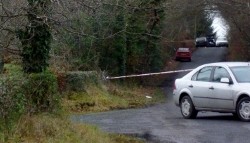
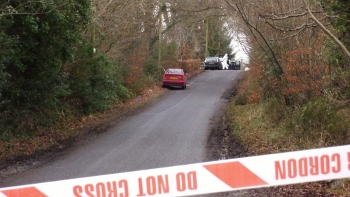
Police cordon at Aghindarragh Road

Police cordon at Aghindarragh Road

TYRONE has seen many tragedies over the years, including ones that have affected the GAA community, both directly and indirectly. I have reported on some in the past. The latest tragic death in the county took place in the countryside around Augher, in the parish of Clogher, close to the border with County Monaghan. As the crow flies, it is only a few miles to the scene of another community in mourning, the parish of Donagh, where the body of 19 year-old Jason McGovern (Knocknagrave, Tydavnet) was returned home in a candlelit vigil last night. The links between the two areas, cut off when the main cross-border road was blocked, remain close. Jason’s father Seamus comes from the parish of Clogher. The two deaths however are unconnected.

The PSNI say they have begun a murder enquiry following the death of a 60 year-old man whose body was found at Aghindarragh Road near Augher on Friday evening. The location is not far from the historic site known as St Patrick’s chair and well in Altdaven wood. An 18 year-old man was arrested and is continuing to help police with their enquiries. The man who died was Wishie (Aloysius) Hackett. He worked as a joiner and was a prominent member of St Macartan’s GAA Club in Augher. Clogher parish priest Canon Lawrence Dawson said the family were numb and could not explain what had happened. He described Mr Hackett as a wonderful community man who had done much for the area and for local (Gaelic) football. A statement from the GAA club said the family had appealed for privacy at this time of mourning. A one minute’s silence in memory of Mr Hackett was held before Tyrone’s Dr McKenna Cup match against Derry at Healy Park in Omagh. Sinn Féin MP Michelle Gildernew said she expressed her sympathies to all concerned especially family and friends who were sadly dealing with this news. She said her thoughts and prayers were with those affected by the death. Ulster Unionist councillor Allan Rainey said the man’s death had shocked and numbed the community. “They just can’t really take it in that something of this nature could happen,” he added. A forensic team spent most of Saturday carrying out investigations beside a house and the surrounding area was cordoned off for several hours.

House at Aghindarragh Road

House at Aghindarragh Road

UPDATE:  An 18 year-old man has been charged with the murder of Wishie Hackett. The teenager, who was detained on Friday, was charged after detectives were given until (tonight) Monday evening to charge or release him. He is due to appear before Omagh Magistrates’ Court on Tuesday. The PSNI say a 17-year-old youth arrested in connection with the incident on Sunday has been released, pending a report to the Public Prosecution Service. It is believed three of Mr Hackett’s children were out of the country when news of his death emerged. They are travelling home for his funeral which is due to take place at St Macartan’s Church (the Forth chapel) at Ballynagurragh near Augher on Wednesday.

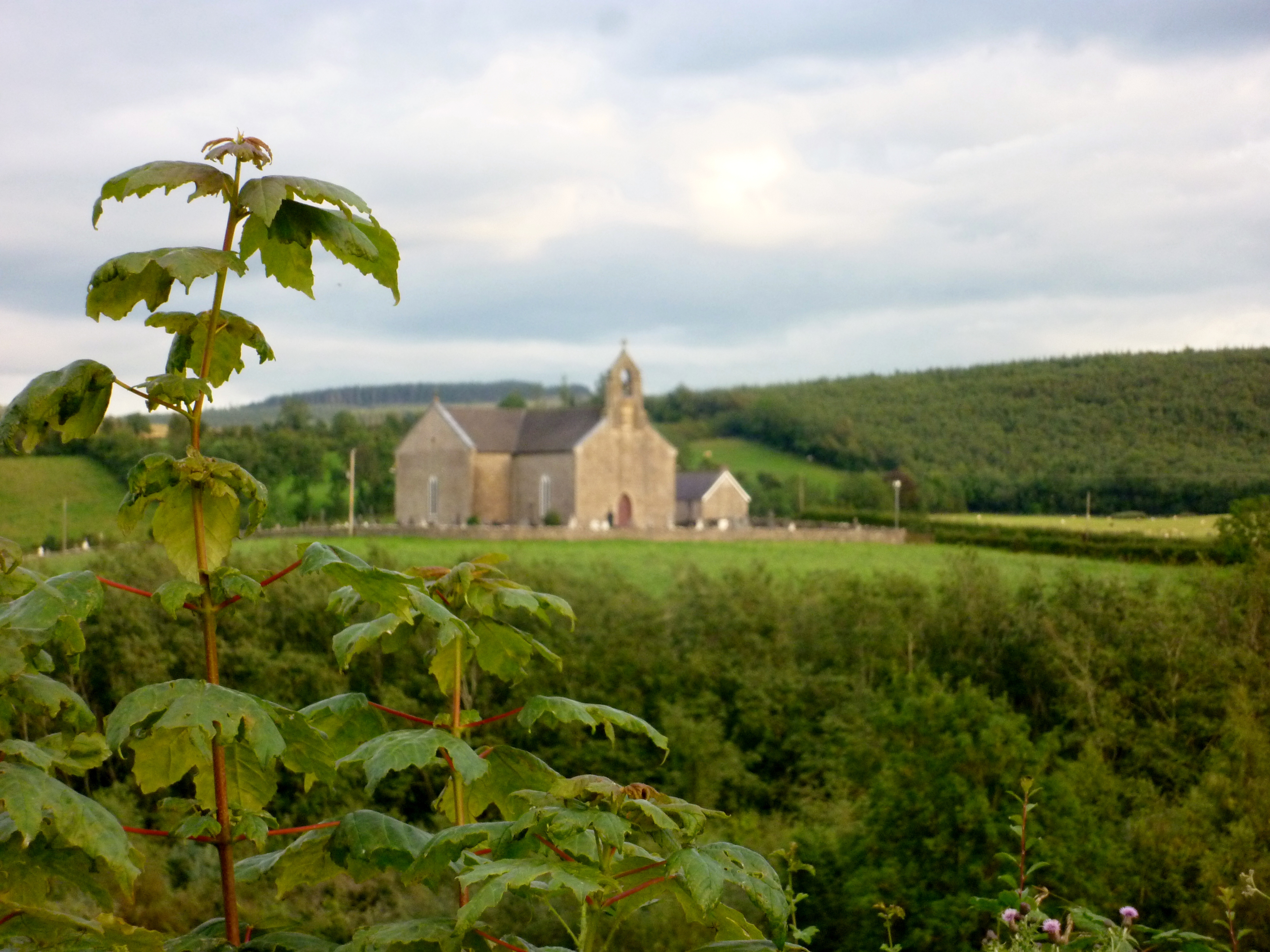
St MacCartan's church, Augher

St Macartan’s church, Augher

Photos: © Michael Fisher 2013

OMAGH COURT

My journey yesterday was on the road to OMAGH in County Tyrone. This morning I was there for the court sitting……

Omagh Magistrates' Court

Omagh Magistrates’ Court

Four men and a juvenile, all from Omagh, have appeared at the town’s magistrates’ court charged in connection with the death of Jason McGovern, a student from Tydavnet in County Monaghan. One of them was also charged with assaulting a friend of the teenager after a night out in Omagh last weekend. All faced a charge of unlawfully fighting causing an affray in the early hours of New Year’s Eve. Mr McGovern from Knocknagrave was attacked on two separate occasions. He was found dead at a friend’s house at Mullan village near Emyvale in County Monaghan on New Year’s Eve. Appearing at Omagh Magistrates Court were James O’Brien from Rylagh Road, Mark Donnelly from Greencastle Road, both 21, Aaron Davis, aged 19, from Beattie Villas and 18 year-old Aaron Bradley, from Waterworks Road in Omagh. Mr Bradley was also charged with assaulting a friend of Mr McGovern’s.  The juvenile cannot be named for legal reasons. An investigating officer said the PSNI were objecting to bail because there were a large number of witnesses and it would take a few weeks to speak to them all. The district judge agreed to bail subject to a number of conditions. Suitable addresses for the defendants would have to be found at least three miles outside Omagh and approved by the PSNI. If this condition is met, they would be released on their own bail of £500 and two sureties of £750. They were ordered not to enter Omagh, except for court appearances, to be tagged, and to report to police three times a week. They also had a curfew imposed by the district judge and they are not allowed to enter licensed premises or to contact witnesses in the case.

UPDATE:  A 21 year-old woman arrested in connection with the murder of Jason McGovern has been charged with perverting the course of justice and is due to appear at Omagh Magistrates Court on Tuesday 29th January.

FROM SLANE TO OMAGH

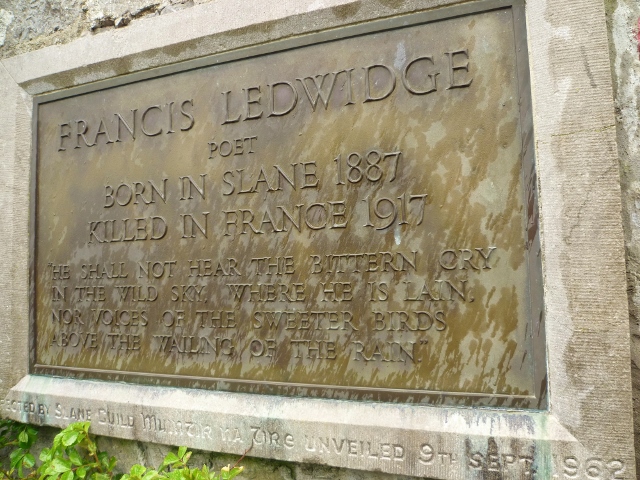
Plaque at Ledwidge Cottage

Plaque at Ledwidge Cottage

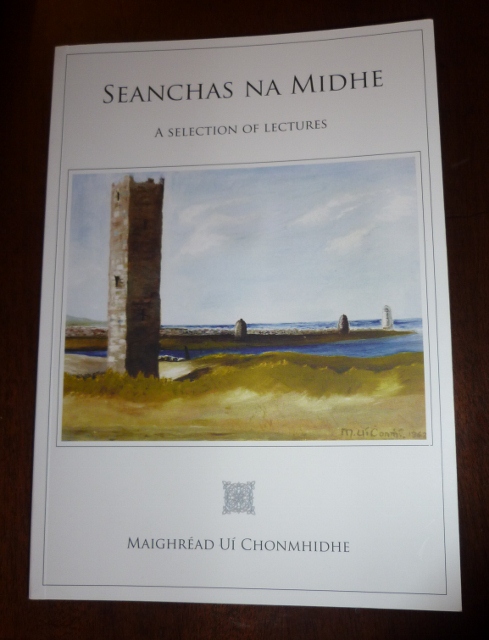
My journey this evening took me along the N2 heading Northwards from Dublin and past a sign indicating “Ledwidge Country” outside Slane in Co. Meath. It’s a good staring point as I mentioned it at the end of yesterday’s blog about Maev Conway-Piskorski. Her mother Margaret (Maighréad Uí Chonmhidhe) had given a lecture at the folk school in Bettystown in 1966 about the poet-soldier Francis Ledwidge. I quote from the book “Seanchas na Midhe” (eds. Ní Chonmhidhe Piskorska & Brück 2009):

“Margaret Conway remembered meeting the poet when she was a young girl in Colga, when he visited her brothers and “fellow poets” at their home. Her painting of the Maiden Tower at Mornington, reproduced on the cover of this booklet, depicts a scene romantically associated with Francis Ledwidge and with Ellie, the young woman who inspired many of his poems” 

Meath Lore

Meath Lore

Ledwidge was born in Slane in 1888 and after joining the Volunteers in 1913 enlisted in the British Army the following year in the Royal Inniskilling Fusiliers. He was killed at the battle of Ypres (Ieper) in Flanders in July 1917.

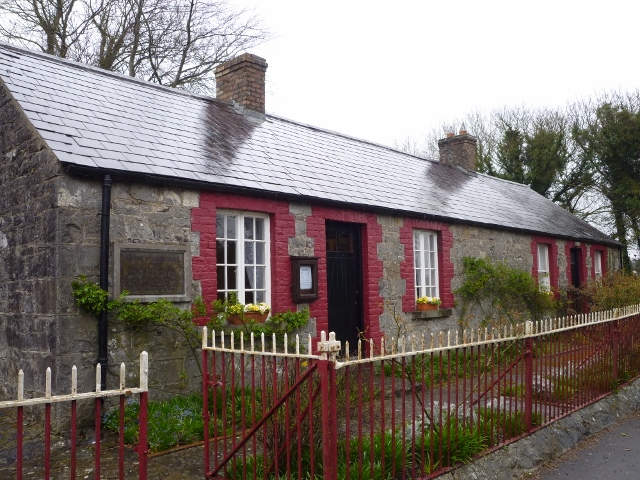
In 1982 a museum was opened by the Omagh writer Benedict Kiely in the cottage where Ledwidge was born. There is a plaque in his memory attached to the front wall of the cottage. It states that it was erected by the Slane guild of Muintir na Tíre on September 9th 1962. A copy of the plaque is set in stone at the approach to the bridge over the River Boyne at Slane.

Ledwidge Cottage & Museum

Ledwidge Cottage & Museum

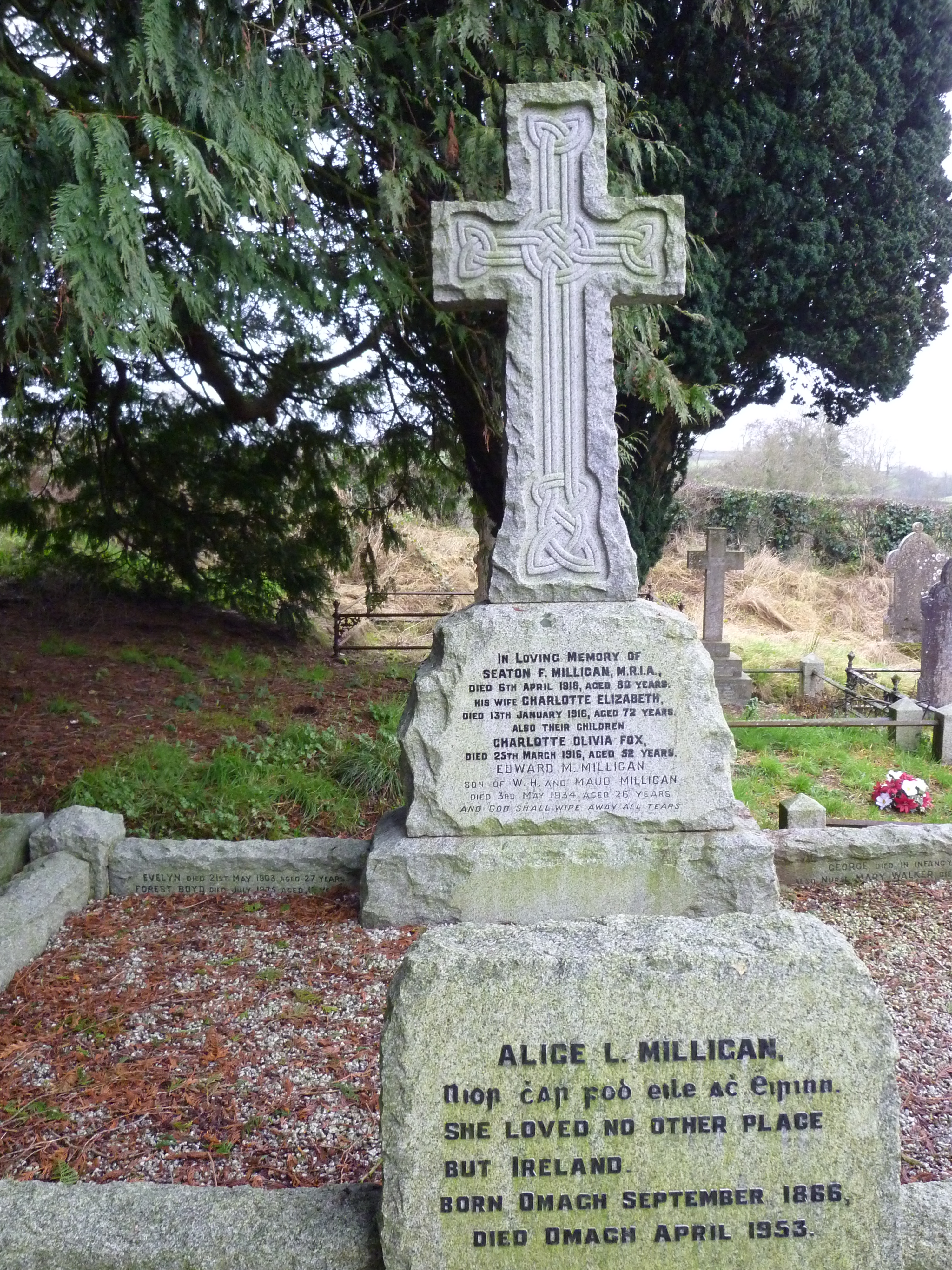
Continuing past Slane I stopped in County Louth close to the county boundary with Monaghan, where the province of Ulster begins. I watched another Tyrone writer and journalist Martina Devlin being interviewed on the RTÉ Nationwide programme about her home town of Omagh. Talking about the education she received at Loreto primary school, she mentioned the influence of the local poet, novelist and writer, Alice Milligan, whose background is very interesting. From a Protestant family and educated at Methodist College, Belfast, she went on to become an Irish nationalist and a leading figure in the Irish literary revival, who mixed with people like Yeats, Casement and James Connolly. She edited a magazine produced in Belfast at the end of the 19thC, Shan Van Vocht and was an organiser for the Gaelic League. Born at Gortmore, outside Omagh in September 1866, she died in April 1953 and is buried in the Church of Ireland cemetery at Drumragh.

Grave of Alice Milligan

Grave of Alice Milligan

DJ O'Donoghue & George Sigersondiscussing memorial

DJ O’Donoghue & George Sigerson
discussing memorial

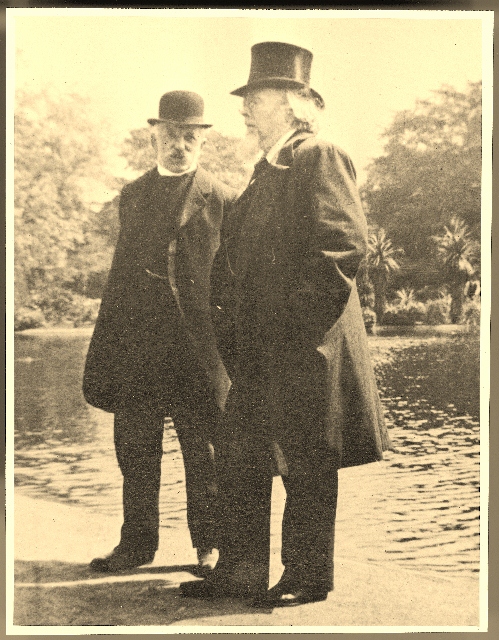
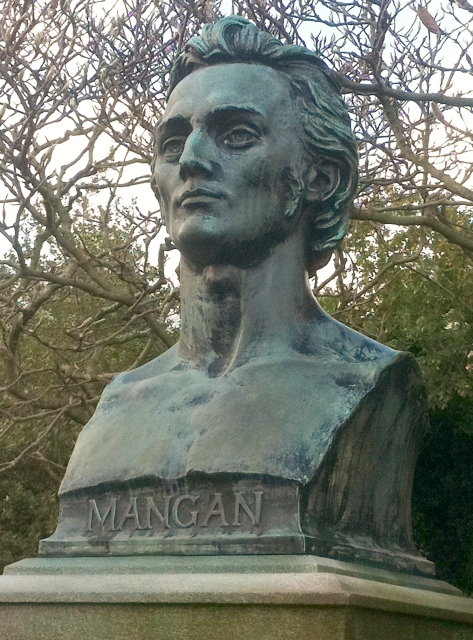
While researching William Carleton in the UCD Archive I found a number of letters from Alice Milligan then living at University Road Belfast (near Queen’s University) written to the biographer DJ O’Donoghue (librarian at University College). One of the letters enclosed five poems (LA15/1149). She also agrees to contribute to the Mangan memorial fund, a project which O’Donoghue was working on with George Sigerson to provide a memorial to the poet at St Stephen’s Green. The photo of the two men chatting about the Mangan project is copyright © IVRLA  (Irish Virtual Research Library and Archive)  and is reproduced with the kind permission of Professor Helen Solterer  from an original in  UCD Library Special Collections. The bust of James Clarence Mangan can be seen if you are walking through St Stephen’s Green not far from Newman House and near the middle of the park.

James Clarence Mangan

James Clarence Mangan

UPDATE: Thanks to Charles Fitzgerald for having read the above and sending in the following quotation from a Ledwidge poem (Ceol Sidhe):

“And many a little whispering thing
Is calling the Shee.
The dewy bells of evening ring,
And all is melody”.

The poem and other works by Ledwidge can be found here.

NEW YEAR GRIEF IN MONAGHAN

Jason McGovern

Jason McGovern

Death makes no distinctions of time. But losing a loved one during a holiday period when celebrations are going on all around is particularly tragic. The parish of Donagh in North Monaghan is grieving the loss of 19 year-old student Jason McGovern from Knocknagrave, Tyadvnet (which happens to be the townland of my late father-in-law). PSNI detectives are carrying out an investigation following the incidents in Omagh early on New Year’s Eve morning which are thought to have led to the death of Jason from head injuries. Canon Macartan MacQuaid described Jason as a very caring and affable young man and said his family was struggling to cope with his death. As more details emerged surrounding the death of Jason, I thought about another New Year’s Eve tragedy that happened in the nearby parish of Tydavnet, when two young schoolgirls lost their lives in a drowning accident at a frozen Hollywood Lake near Scotstown. The news came through as I was about to join some Belfast neighbours at a New Year’s Eve party and next morning on New Year’s Day I was at the scene to watch the Garda operation as they searched for the two bodies in the frozen lake. The two who died were cousins, 12 year-old Louise McAloon from Hollywood and Veronica McAloon aged 10 from Aghabog. As I passed St Mary’s church at Urbleshanny, Scotstown, this afternoon I stopped briefly at the grave of the two girls, who were laid to rest beside each other twelve years ago on January 3rd 2001.

Urbleshanny graveyard

Urbleshanny graveyard

Rest in peace Louise & Veronica; sympathy also to the family and friends of Jason McGovern.

Louise McAloon

Louise McAloon

Veronica McAloon

Veronica McAloon

THE FLAGGY SHORE

Flaggy Shore

Flaggy Shore

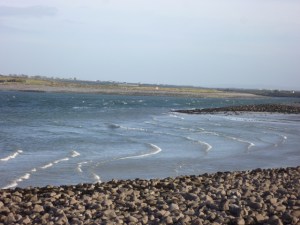
A New Year trip to Kinvara County Galway gave me the opportunity to explore some of the beautiful scenery around the Burren in County Clare. Our host brought us for a walk along the Flaggy Shore at New Quay. The final section of the loop gave us a good view of the limestone flag stones along the shoreline. Across the bay in the distance we could see Galway, Salthill and the Barna Road leading towards Spiddal. In the distance you could spot the martello tower at Finnevarra. But on this occasion we did not have time to visit the tower. After parking the car at the beach, walking westwards, we took a left hand turn and started a gently uphill ascent past Mount Vernon.

Mount Vernon

Mount Vernon

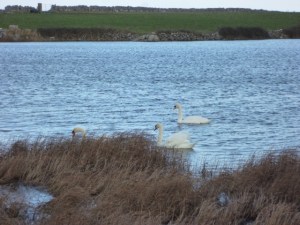
Checking the origin of the property on my return home I discovered the building was once the summer home of Lady Gregory of Coole Park and it has a place in Irish literary history. Among those entertained there were WB Yeats, AE (George Russell), Synge, O’Casey and George Bernard Shaw. It is now part of Hidden Ireland’s Historic Houses, offering upmarket accommodation and dining. There is a more recent literary connection. This stretch of shoreline was mentioned by Nobel Laureate Seamus Heaney in his poem Postscript (1996). He refers to a flock of swans at “a slate-grey lake” and  sure enough when you walk over the hill and along the other side you come to Lough Murree. There as the path continues along the lough shore, a group of swans was busy ducking and diving at one end of the lake.

Lough Murree

Lough Murree

This is certainly a scenic spot but underneath the beauty there is also a story of a tragedy over 40 years ago that claimed the lives of nine schooldchildren. Looking at the short distance across the water from the harbour at New Quay to Aughinish Island it is hard to imagine so many casualties occurred here. But a more close look at the tide will reveal just how dangerous a spot this is, with currents from different directions meeting in the middle and clashing with each other. Here on June 29th 1969 nine schoolchildren lost their lives when a boat on its maiden voyage overturned in the choppy waters. The disaster was covered by Kerry photojournalist Padraig Kennelly and pictures of the search operation can be found in his archive.

Shoreline near New Quay

Shoreline near New Quay

CHRISTMAS SWIM

CHRISTMAS SWIM

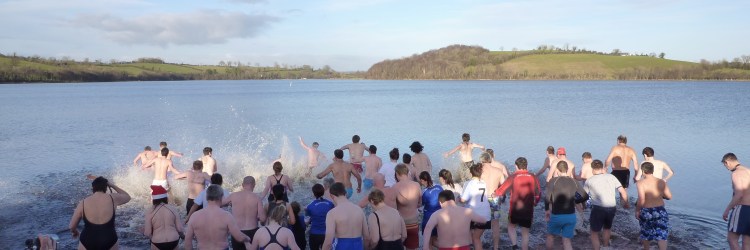
EMY LOUGH SWIM: Congratulations to all who took part in the annual Emy Lough Christmas dip for charity near Emyvale in County Monaghan. Organised by the friends and parents of people with intellectual disability. I spotted Paul Bowe father of the rugby international Tommy who is recovering from injury and also Sammy Leslie from Castle Leslie in nearby Glaslough among the participants. My car temperature said 8C but I’m sure the water was considerably colder, even though the sun shone and it was the mildest such day for the dip in many years. More pictures can be seen at http://www.emyvale.net/swim2012.html