MUSHROOMS CRISIS

mushroom

MUSHROOM INDUSTRY ‘IN TURMOIL’ SINCE BREXIT VOTE

IFA SEEKS GOVERNMENT ASSISTANCE FOR PRODUCERS

Michael Fisher    Northern Standard  Thursday 29th September p.1

The Irish mushroom industry has been thrown into turmoil since the UK voted to withdraw from the European Union, according to producers. Chief Executive of Monaghan Mushrooms Ronnie Wilson said they were facing a very difficult crisis, partially caused by the change in the rate between the Euro and sterling. The IFA’s mushroom committee chairman Gerry Reilly said €7m worth of exports and 130 jobs had been lost since the Brexit vote in June.

Both men made a presentation on Tuesday to the Oireachtas agriculture committee alongside Micheál McGovern, chair of Monaghan-based Commercial Mushroom Producers (CMP), Lesley Codd of Codd Mushrooms from Tullow, Co Carlow; and Rowena Dwyer, IFA chief economist.

Among the legislators who heard their evidence was Senator Robbie Gallagher from Monaghan (Fianna Fáil). He said it was imperative the government in the forthcoming budget provided the industry with a bridge to get them over this difficult period.

mushyrooms.jpgCurrently, Irish growers produce around 70,000 tonnes of mushrooms, of which 80%, worth €120m at farm gate (double the value of Irish potatoes), is marketed to UK multiples through a network of marketing agents. There are around sixty growers and they employ 3,500 people, most of them in rural Ireland, especially Monaghan. Only four European countries produce more than Ireland.

Mr Reilly told the committee: “Since the UK vote to leave the EU, the mushroom industry in Ireland has been thrown into turmoil, and growers are in loss-making territory, resulting from the sudden and significant weakening of sterling,” he said.

WEAKENING OF STERLING

The weakening of the sterling is having such a damaging effect because the marketing companies that sell Irish mushrooms negotiate their contracts in sterling. In addition, mushroom prices are forward agreed, generally for contract periods of up to twelve months. As they are fixed contracts, mushroom producers cannot renegotiate the price the receive.

MMushrooms.jpgThe immediate difficulty is that contracts have been agreed in sterling, when sterling was at a much stronger position against the Euro. For the first six months of this year, the average exchange rate was £0.78 to €1. This meant a payment of £1 was worth €1.28 to Irish producers. Today, that same pound is worth only €1.16, sterling having weakened by over 13% since the Brexit vote. CMP estimates that €10m will be lost on an annual basis across the CMP farms in the Republic, translating to an average loss per farm of somewhere between €250,000 and €300,000.

greilly.jpg

IFA Horticulture Chair Gerry Reilly

Mr Reilly reminded the Oireachtas members: “mushrooms are a perishable product with a relatively short shelf life, produced 52 weeks a year. The ‘best before’ date is five – seven days after harvesting. There is no viable alternative market for such a highly perishable fresh product.

Currently the UK is our only market. We send more than 50 Artic loads to the UK, seven days a week, 365 days a year. Resulting from the closure of the Russian market, mushrooms from eastern Europe, produced at much lower production costs, are now entering the UK retail market and displacing Irish produce.

mushroomwhite.jpgSHORT-TERM SUPPORTS

On behalf of the IFA and CMP, Mr Reilly called on the government to introduce a number of short-term supports:

  1. Immediate payment by the government of the producer organisation (PO) funding due to the CMP (53 producers) for their 2015 programme.
  2. A temporary reduction in the lower rate of employer PRSI (from 8.5% to 4.25%) to be introduced in October’s budget to directly affect employment costs for mushroom producers.
  3. An extension of the tax relief measure for startup companies to existing companies in the mushroom sector. This would be capped at €15,000 per annum, thereby recognising the limitations imposed by State aid rules for the agriculture sector.
  4. No increase in excise rates on agricultural diesel or other road fuels.
  5. Direct support to mushroom producers through CAP market support measures.
  6. Agricultural Diesel – there must be no increase in excise rates for Marked Gas Oil (agricultural diesel). In addition, given the importance of maintaining competitiveness, the IFA would have to question any move by the Government to increase excise rates on other road fuels at this time.

mushroooms.jpgPOLISH PRODUCT

The IFA submission stated that a significant and longer-term market pressure for Irish producers is the foothold that has been gained in the UK retail market by Polish product. This is very worrying as their cost base is only a fraction of ours e.g. their labour rate is 28% of the minimum wage in Ireland.

The dominant power of the retailers and significant food price deflation in fresh produce, has resulted in serious downward price pressure on our mushroom exports, which has now been compounded by the sterling decline.

Mushroom production is highly labour intensive and the threats now faced by the industry could result in significant job losses. It will also impact on the tillage sector, as the mushroom industry is a significant purchaser of wheaten straw and on the poultry sector, as poultry litter is used in mushroom compost.

In the past, a reduction in production or closure of a mushroom business was replaced by increased production from fellow growers. However, market share lost by the Irish mushroom industry as a result of the current crisis will simply be replaced by other European suppliers.

The IFA has met the Minister for Horticulture Andrew Doyle to impress on him the immediate need to take a number of actions to support our mushroom sector in the wake of the light of Brexit and the weakening of sterling. We also note the recent comments by Minister for Agriculture Michael Creed acknowledging the particular issues of the mushroom sector, and his commitment to provide support to the sector in the Budget process, Mr Reilly said.
Wilson.jpg

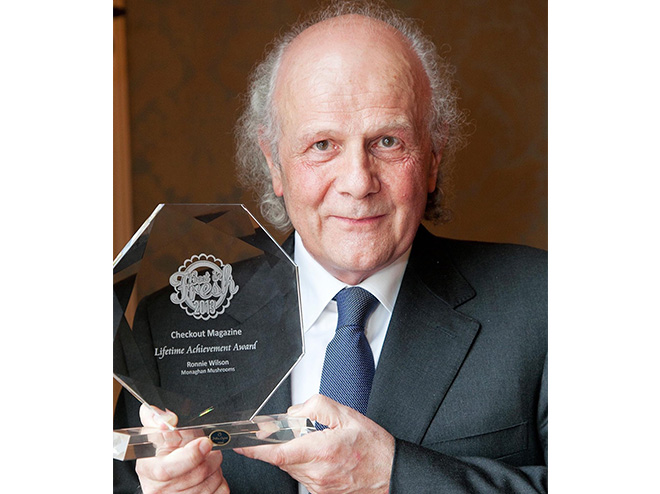
Ronnie Wilson, CEO Monaghan Mushrooms

A DIFFICULT CRISIS

Ronnie Wilson of Monaghan Mushrooms said the situation now was very different from eight years ago when the industry was expanding and they were able to compete throughout Europe. He said the two problems for producers were retail discounters and food deflation. The concept of cheap food was now politically very acceptable, he told the committee.

“It’s a very difficult situation. If we let the industry go into freefall that really would be a disaster”, he said. We must stop the industry from going into freefall, he emphasised. Already they were not able to supply all their contracts which were mainly with UK multiples. They were currently purchasing product in Poland and Holland to service the UK contracts.

“We can continue to do so for a little while but can’t go on very long”, he said. The first thing they had to ensure was to stop producers closing, because contracts would be under threat if that happened.

Mr Wilson said one measure the government could take that would be very supportive of the industry would cost very little. The industry required flexibility of labour and worked unsociable hours. He wondered if it would be possible to have a permit scheme introduced to bring in harvesters from non-EU countries in eastern Europe and that would be a very advantageous element, in his view. One or two growers had stopped operating because of the currency exchange rate, but there was also an element of some labour difficulties.

The chair of the committee Pat Deering TD told him that was a suggestion they could include in their budget submission as well.

Gallagher.jpg

Senator Robbie Gallagher

EFFECT ON MONAGHAN

Senator Robbie Gallagher from Monaghan (Fianna Fáil) congratulated the mushroom industry representatives on their achievements over the past thirty years. He said they deserved great credit for building up the industry and creating 3500 jobs.

He knew Ronnie Wilson quite well, who he said had been a leading name in the mushroom industry for up to thirty years. He was a very large employer and they were fortunate to have him in County Monaghan. Of the 3500 jobs in the industry, around 1000 are in Monaghan and of those up to half were employed by Mr Wilson.

So it was a particularly difficult issue for a county like Monaghan. No other county was more exposed to this crisis than Monaghan, he said. Senator Gallagher told the committee he was sure this was a particularly stressful time for everybody in the industry, when external factors over which they had very little control could determine the future. “I can only imagine what you and everybody in the industry is going through”, he told the committee.

Words like ‘crisis’ and ‘freefall’ had been used in the presentation and it was clear to see that they were not being overused. Senator Gallagher said it was imperative that the government stepped in at this time to give the mushroom producers a bridge to get over this difficult period and to reasses where they were going.

It seemed to him that there were two main issues, namely the current threat from the fluctuation of sterling and the threat from Polish producers. The Irish producers seemed to have more concern about the first threat, he said, judging by their presentation. He wondered where they saw the industry going in future and were they confident about it? In view of the freefall in the industry he also wondered if they had had any contact with any government department in the aftermath of the Brexit referendum in the UK.

SIEGE OF JADOTVILLE

jadotvillefilm

Poster for The Siege of Jadotville Netflix film starring Jamie Dornan

Michael Fisher

The launch of the Netflix film “The Siege of Jadotville” last week marked the 55th anniversary of an important event in Irish military history. The bravery of the unit involved, ‘A’ company, 35th Battalion which was serving on United Nations peacekeeping duties in the Congo, has only now been acknowledged by the authorities.

Over the years, this group of men under the leadership of Commandant Patrick Quinlan was never given proper recognition for the courage they showed in Jadotville. The Irish soldiers resisted the secessionist Katangese forces for six days as they waited for reinforcements to reach them, but had to surrender after their supplies were exhausted. The men were then taken as prisoners of war for close to a month, but none of the 155-strong contingent was killed. 

Jadotville ceremony  Custume Barracks Athlone  (5).jpg

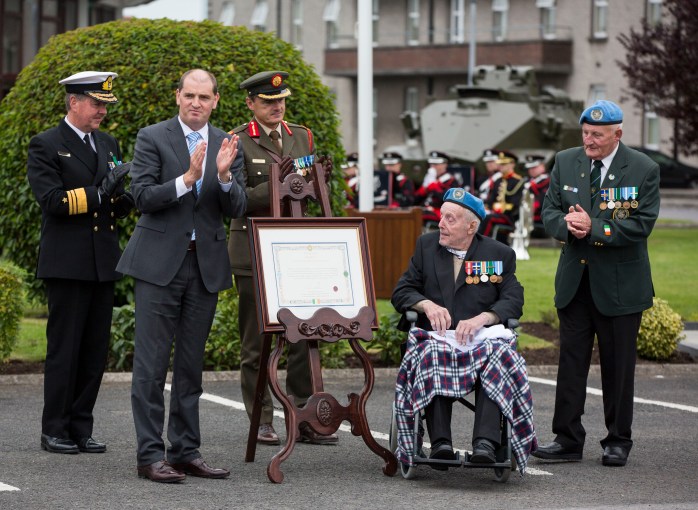
Minister of State for Defence Paul Kehoe TD accompanied by Chief of Staff Vice Admiral Mark Mellett presents the unit citation to Sergeant Harry Dixon 35th Infantry Battalion     Pic: Merrionstreet.ie

Last Saturday 17th September the Minister with Responsibility for Defence, Paul Kehoe T.D. hosted an event at Custume Barracks, Athlone marking the collective actions of the men of ‘A’ Company, 35th Infantry Battalion and its attachments at the Siege. The Minister presented a unit citation to the Company in recognition of their bravery and heroism. A copy of the citation was presented to each member or next-of-kin of the unit. This was the first time a unit citation had been awarded within the Irish Defence Forces. In marking this unique occasion, Minister Kehoe also commissioned an insignia recognising the professional performance of the men of ‘A’ company.

Speaking at the event the Minister said: “I am very pleased to present this Unit Citation which recognises the bravery and courage of ‘A’ Company during the Siege of Jadotville whilst cut-off from support and reinforcements. The United Nations Operation in Congo was the first peacekeeping mission in which significant numbers of Irish soldiers took part. A total of 6,000 Irish soldiers served in the Congo from 1960 until 1964 and I want to take the opportunity to recall the contribution of all who served in the various Irish contingents over the course of this long Mission.”

The Minister concluded by saying “Ireland can be justifiably proud of all our brave men and women who have contributed to the cause of peace and security. Our continued participation in United Nations missions illustrates the very positive and practical difference that small countries, like Ireland, can make in the world’s trouble spots.”

Jadotville was an event that occurred during Ireland’s peacekeeping mission in the Congo in September 1961. ‘A’ Company of the 35th Infantry Battalion took responsibility for the UN post at Jadotville on the 3rd of September. On the 9th of September they were surrounded by a large force supporting the breakaway province of Katanga. Early on the morning of the 13th September the Company came under attack from this force. Over the coming days until 17th September they endured almost continuous attacks from ground and air.

Despite their courageous resistance and the sustained efforts of 35 Infantry Battalion HQ to provide assistance, ‘A’ Company was taken into captivity on 17th September. By this time ‘A’ Company had no water and several men had been wounded. ‘A’ Company remained in captivity until finally released on 25th October 1961.

soldiers

Group of Jadotville Soldiers Picture: RTE

The men of ‘A’ Company were drawn mostly from Custume Barracks, Athlone and what was the Western Command. The Citation is as follows:-

UNIT CITATION AWARDED TO ‘A’ COMPANY, 35TH INFANTRY BATTALION

“This Citation recognises the leadership, courage, bravery and professional performance of “A” Company 35th Infantry Battalion and its attachments who, under challenging circumstances at Jadotville, while besieged by overwhelming numbers of Katanganese Gendarmerie and cut-off from support and reinforcements, did valiantly defend their position from the 13th September 1961 to 17th September 1961.”

IRISH JOURNALISTS VISIT THE SOLDIERS HELD PRISONER IN JADOTVILLE

My father the late Desmond Fisher was one of three leading Irish journalists who managed to visit the soldiers when they were held prisoners. He was accompanied on the trip by Raymond ‘Congo’ Smith from the Irish Independent and John Ross from RTE. In the accompanying article my father does not admit that he was the person who was driving the hired car that failed to stop at a gendarmerie checkpoint, but luckily they all survived to tell the tale. Nor does he mention what apparently became of the ballot papers that the journalists brought with them to hand out to the troops, who were experiencing a shortage of modern domestic essentials in their confinement. The story ends with my father’s memory of the soldiers cheering them after their one-hour visit and singing as the reporters departed: “It’s a long way to Tipperary…”

The Irish Press October 2nd 961 p.1

AN 80 M.P.H. DASH TO CAMP . . .AND THE PRISONERS CHEERED

I meet the men of Jadotville siege

(From Desmond Fisher)

JADOTVILLE, Sunday —- Today I became one of the first Irishmen since the fighting in Katanga to drive down the famous Jadotville Road, across the Lufira Bridge — which two relief columns could not pass — into the town itself to meet the 181 Irish prisoners there. The outstanding impression from our visit was that all the boys were in the best form and delighted to get the bag of mail we brought to them.

Special permission for our trip was given by President Tshombe. General Muke, head of the Katangese gendarmerie, provided an escort of a gendarmerie adjutant and a paracommando officer to ensure our safe conduct.

 Our trip had minor historic significance — with us we brought ballot papers which, if inevitable Congolese differences are straightened out in time, may enable the prisoners to vote in the General Election.

The ballot papers arrived by air from Leopoldville (a) half hour before we left. They were handed over to us at a heavily-guarded Indian roadblock outside Elizabethville by Lt.-Col. Jock Casserley, who was accompanied by Col. McNamee, O.C. of the 35th.

 The trip began at gendarmerie headquarters in Avenue de La Reine, Elizabethville, where we picked up the escort. For eighty miles we drove at eighty miles an hour in a large hired American car which, after crashing through a gendarmerie roadblock, we discovered had no brakes. By the time we had pulled up on the dead straight road the gendarmerie were out of sight and the paracommando with us laughed — and waved us on.

But we made sure to pull up at Lafira Bridge, where a strong guard and roadblocks were still maintained round the clock. We got out of the car to inspect the bridge, which has now gone into Irish history, on account of the two gallant rescue efforts to relieve the Jadotville garrison.

It was very easy to see why the rescue columns could not get through. Steep banks lead down to muddy waters and on both sides of the river is swampy ground. Upstream, about fifty yards, is the wreck of a concrete bridge blown up during the fighting.

Warning call

Clambering down the embankment to get a closer view of the bridge, we clutched for support to a strong yellow cable. Gendarmerie called out a warning that the cable was a trip-wire for the mined bridge.

On arrival at the sunbaked mining town of Jadotville, fuller of soldiers than of miners, and with boarded sidewalks closely

To page 3

The Jadotville story (p.3)

From page 1

resembling the scene for a Western film, we drove to gendarmerie headquarters. Here there was more red tape for an hour, while we drank ice-cold Simba beer and gave diplomatic pats to a naked toddler tumbling on the dusty floor of the guardroom.

In true Congolese manner the Colonel in charge demonstrated authority, but a hesitant mention of President Tshombe, whose picture hung on the wall (as on every wall) proved an open sesame.

On the steps

Finally we reached the camp, not the prison camp, but a hotel in the middle of the town which was ringed off with barbed wire and blocks across the road. Across the street from the hotel, sitting at tables in a pavement café, were Katangese gendarmerie, while others were at the road blocks.

There, sitting on the steps of the verandah of the hotel, were the Irish prisoners. When they saw us they could hardly believe we were Irish too. Then we greeted them and they were all around us, smiling and laughing.

Soon we were swapping news — we giving them the latest from the free world while they told us about their heroic four-day stand and how they felt about being prisoners. On one point they reassured us — and through us the people at home — that they are being treated very well indeed.

Best of food

They get the best of food. They also get a fry for breakfast and also have a light lunch and a good dinner. On the menu is meat, soup, cheese, vegetables, fruit and jam.

The gendarmerie do the shopping for them in the town. While it is true that they are confined to the hotel, the building is large and airy. They do physical exercises on the roof and “play games of cards, chess and so on”.

The chaplain, Father Fagan, said: “The boys also do a lot of praying”.

Co-operation

The uppermost thought in everyman’s mind is — “when will I be free?” We were able to assure them that the peace talks are going well and that there should be good news for them soon. Our own observation showed us what seemed to be genuine co-operation between the Irish prisoners and the gendarmerie.

The spirit of goodwill between the Katangans and the Irish prisoners was expressed to us in another way by our guard on the way home. “Irish, our friends,” he said. “During the fighting we could have wiped them out altogether but we bore them no (ill-will)”.

The only civilian in the camp is the interpreter with the 35th Battalion, Mike Nolan. He is a great help to the prisoners because he understands French, Swahili and other African dialects.

Heroic stand

The medical officer, Commandant J.J. Clune, said that he examined all the men and they were in the best of form. The wounded were not seriously injured and they were all responding well to treatment.

The men crowded round us for the full hour we were allowed to stay there, telling us about themselves, recording interviews and being photographed for papers, television and army records.

Of the many battles in which the Irish distinguished themselves in the Katanga fighting, none was more heroic in the face of overwhelming odds than the Jadotville garrison, and we can bear this out after our visit here.  (NOTE THIS PARAGRAPH IN PARTICULAR)

Most of the men were at Mass and those manning trenches found their positions there being rushed, and the shooting started.

4-day attacks

Commandant Quinlan thought at first that it was a local incident and told the men not to use maximum fire, though they could have mown down the gendarmerie who were moving up. For four days the Irish were under heavy attack.

First came heavy mortar barrage and Irish mortar replied with good effect. As positions spread out, Commandant Quinlan decided to withdraw after dark to stronger positions astride the main road about a mile from the town.

The men holding the forward positions fought with great courage under fire while new positions were being dug. All the troops fell back safely to the new strong positions, but they were completely surrounded on all sides. It is estimated that the gendarmerie had 3,000 in the area.

Jet attacks

The Irish were being fire at from the front, rear and sides. They had laid in water supplies when the fighting started but this became putrid. They could not leave the trenches during those four days of fierce fighting.

There were flies all over the place. The jet plane joined in the attacks and bombs fell very near the trenches where the Irish were. The jet also machine-gunned them. The Irish fired back with small arms and the jet did not come in as low afterwards.

More jet attacks followed on the Thursday, Friday and Saturday and there was also heavy mortar fire. Propaganda warfare too.

‘Indigestion’

A man purporting to be from the Red Cross rang up the Irish to say that tribesmen were coming in to attack them and would eat them. Commandant Quinlan replied “If you come and try and eat us, we will give you indigestion.”

Commandant Quinlan warned too that if there were any more mob attacks the Irish would mow them down mercilessly. Convoys were heard at night moving on to Lufira Bridge to meet the breakthrough attempt by the first relief column.

quinlan

Commandant Pat Quinlan, Commanding Officer ‘A’ Coy 35 Inf Bn

Commandant Quinlan told me of the ceasefire arranged on Saturday evening, a condition that the jet would be grounded and that the men would get water and hold their positions.

But the jet came over again on Sunday morning and the water was still not turned on. Commandant Quinlan protested about the jet and he was assured it would not happen again.

Delaying game

After the big breakthrough attempt at Lufira Bridge had been repulsed on Saturday — and Irish and Indians withdrew to Elizabethville — Katangans pulled back paracommando elite troops from the bridge to Jadotville for an all-out final attack on the Irish.

Gendarmeries were now infiltrating Irish positions on all sides and a big force was massed.

“My men were now utterly exhausted,” Commandant Quinlan said. On Sunday, he said, they played a delaying game, holding out for a ceasefire and hoping against hope that reinforcements would get through.

“When I finally realised there was no hope of relief and that if I continued the fight all my men would be massacred by vastly superior forces, I decided to save the lives of the men by parleying with Munongo, Minister of the Interior, who arrived in the late afternoon,” said Commandant Quinlan.

Signed terms

The terms signed by Commandant Quinlan were as follows “I, Commandant Patrick Quinlan, Officer Commanding Irish United Nations Troops in Jadotville, do hereby agree to the terms of surrender of Minister Munongo because the Irish force is here on a peaceful police role and any further action would result in the loss of African and Irish lives.

“I also wish to state that my troops fought only in self-defence having been fired on while attending Mass on the morning of 13th September 1961. It is also agreed that the Irish troops will have their arms stored.”

Thus ended the glorious stand which would otherwise have surely resulted in heavy loss of life on the Irish side.

As we left Jadotville after the short hour with the prisoners they gave us three rousing cheers and sang cheerfully, though rather wistfully, “It’s a Long Way to Tipperary.”

‘LIGHTNING’ STRUCK BY SUSPENSION

BOXER.jpg

Christina McMahon was given a warm reception in Carrickmacross last year after her WBC interim bantamweight title win  Pic. Michael Fisher

CHRISTINA MCMAHON SUSPENDED BY BOXING REGULATOR

Michael Fisher    Northern Standard  Thursday 25th August 2016 p.5

Carrickmacross boxer ‘Lightning’ Christina McMahon has been suspended by the World Boxing Council after she gave interviews about a number of concerns she had before, during and after her WBC super flyweight title challenge against Zulina Munoz in Mexico in March. She was controversially defeated by Munoz on points. Her husband and manager Frick recently revealed evidence of what he claims was glove tampering and improper anti-doping procedures in addition to dubious scorecards.

Christina McMahon still ranks as the WBC interim World Bantamweight Champion received a Facebook message yesterday (Wednesday) from the Chair of the WBC Female Championship Committee Malte Müller-Michaelis informing her of her suspension in the wake of revelations to a number of media outlets which cast serious doubt over the result of the fight in Juarez. She made her comments during the Olympic Games in Rio, when an Irish boxer Michael Conlan was judged to have been beaten by a Russian opponent.

GEMMA PRINCE

Dungannon soprano and harpist, Gemma Prince

Dungannon soprano and harpist Gemma Prince performed some of Thomas Moore’s Irish Melodies at St Macartan’s Cathedral Clogher. “Sing, Sweet Harp” provided a fine opening to the 25th annual William Carleton Society Summer School. The school director Aidan Fee introduced Gemma, with a talk on Moore. Cathedral organist Diane Whittaker provided the music at the start and finish of the performance.

MONAGHAN MOURNS NICE DEATHS

MONAGHAN EXPRESSES SYMPATHY WITH FRANCE IN AFTERMATH OF NICE CARNAGE

President Hollande on Official Visit to Ireland

Michael Fisher  NORTHERN STANDARD  Thursday 21st July 2016

As County Monaghan continued to express condolences with the people of France, President François Hollande arrived in Dublin this morning on an official visit to Ireland. It’s just a week since an attack in Nice claimed by “Islamic State” killed 84 people and injured 200 others during Bastille Day celebrations. A lorry driver deliberately ploughed into the large crowd gathered on the promenade and drove for nearly 2km before being shot dead by police.

The incident came eight months after a series of IS attacks in Paris left 130 dead. On both occasions, the sympathy of Monaghan people has been passed on to the French state.

BOOKS OF CONDOLENCES

Monaghan County Council Cathaoirleach PJ O’Hanlon opened a book of condolences on Monday at the civic offices in Carrickmacross. The Council’s Chief Executive Eamonn O’Sullivan then signed. Books were also made available in Monaghan town (at the Council offices), in Ballybay, Clones and Castleblayney. Both Council representatives had attended Bastille Day celebrations in Dublin at the Ailesbury Road residence of the French Ambassador Jean-Pierre Thébault.

Referring to the attack in Nice, Councillor O’Hanlon said it was very, very hard to comprehend and understand. But it was very important that as a nation we condemned “this horrendous terrorist attack” on what we all represent as Europeans, which is freedom of speech and democracy. We must show sincere and genuine sympathy to the people of France, he added.

 BASTILLE DAY CELEBRATIONS IN DUBLIN

The Monaghan delegation at the Bastille Day celebrations included Eugene O’Gorman of the Carhaix/Carrickmacross twinning committee. The Chief Executive of Lacpatrick Co-op Gabriel D’Arcy represented business interests.

DSC_1310

French Ambassador Jean-Pierre Thébault with Canon Robert Marsden in February 2016 after he received the Légion d’Honneur award  Pic. Michael Fisher

Two men with Monaghan connections had been presented in the past year with France’s main honour, the Légion d’Honneur, for their roles in the British Army in World War Two, helping to liberate France. They were the retired Church of Ireland (Clogher diocese) rector, Canon Robert Marsden from Dublin and the late Sir John (Jack) Leslie of Glaslough. Canon Marsden attended the French National Day celebrations along with Mark Leslie, nephew of Sir Jack. Irish Times columnist Frank McNally from Carrickmacross was also among the invitees.

FRENCH AMBASSADOR ON LINKS WITH IRELAND

The French Ambassador told guests that Ireland must retain its strong trade relationship with France in the wake of the UK vote to leave the European Union. He said the period ahead would be full of challenges and opportunities and also of threats.

“We have learned recently, with great sadness, that a member of the EU will intend to leave this community and this will create challenges. We are all sad because of it,” he said.

“At the same time, we need to manage this tradition in the best way possible, taking into account the interest of our people and we must also pay attention to the voices that are expressing concerns everywhere in Europe, ” he added.

Monsieur Thébault said: “I think it is very important that France and Ireland must contribute actively to the redefinition of what a sensible, pragmatic but meaningful Europe should be.” The United Kingdom voted to leave the EU in a referendum three weeks ago.

The Ambassador said President Hollande’s visit to Ireland would be a significant moment. “This visit could not happen at a better moment because the president of France can pay tribute to Ireland and recognise the Irish people and our shared history”, he said.

Mr Thébault also paid tribute to the Irish soccer fans’ good behaviour while at the Euro 2016 tournament in France. “The green army which peacefully invaded France was fantastic and continued for several weeks”, he said.

VISIT BY PRESIDENT HOLLANDE

President Hollande is here to discuss the impact of Brexit on the island. He will meet President Higgins and will also hold discussions with the Taoiseach. However he will no longer be unveiling a new memorial in Glasnevin dedicated to the Irish who died while fighting in France during his visit. The memorial is a gift by the French government to Ireland. The unveiling has been postponed until a later date.

Speaking last month following the outcome of the British referendum, President Hollande described the British people’s choice to leave the European Union as painful, but one which must be respected and all the consequences fully accepted. He said: “The UK will no longer be a member of the European Union. The procedures set forth in the treaties will be implemented quickly – that is the rule and the consequence. France, for both its own sake and that of Great Britain, will continue to cooperate with this great ally, particularly on defence issues.”

He said this posed a grave test for Europe, which would now have to show solidity and strength by responding as necessary to control the economic and financial risks of the UK’s exit. “Measures are already underway and I am confident they will be effective,” the French President said. To move forward, Europe must also reassert its values of freedom, tolerance and peace, and be a sovereign power taking its own destiny in hand and defending its model. “There is a huge danger in the face of extremism and populism. It always takes less time to undo than to do, to destroy than to build. France – a founding country of Europe – will not accept that,” President Hollande asserted.

France would therefore be leading efforts to ensure Europe focused on the key issues:

  • Security and defence of the European continent, to protect its borders and keep the peace amid the threats its faces;
  • Investment in growth and jobs, to implement industrial policies in terms of new technologies and energy transition;
  • Tax and social harmonisation to shore up European economies with rules and safeguards;
  • Strengthening of the eurozone and its democratic governance.

It is President Hollande’s belief that “Europe […] must bring projects to the table rather than get bogged down in red tape. It must be understood and overseen by its citizens. Where it is expected to make decisions, these must be made swiftly, while decisions that are solely for the Member States to make must be left up to them, once and for all”.

“Europe is more than just a great market: it is a great ideal. This has too often been forgotten and it is surely this fact that has made it lose its way. Europe needs to remain a source of hope for young people, as it is their horizon. Today, history is on our doorstep,” declared François Hollande. “This is a historical turning point and we therefore need to be equal to the situation we are facing.”


THIEPVAL COMMEMORATION

13327586_1116707298391527_2727274521458333741_n

Ulster Tower, Thiepval  Pic. IRFU Charitable Trust

REMEMBERING THOSE WHO DIED AT THE SOMME 100 YEARS AGO

 Michael Fisher in Thiepval  Northern Standard  Thursday 7th July 2016

13606789_1155637621124346_7274108435410088020_n.jpg

Northern Standard, Thursday 7th July 2016

As she laid a wreath at the Ulster Tower in France last week, Minister Heather Humphreys stepped back and reflected on the carnage that had taken place on the battlefields of the Somme exactly one hundred years ago. She thought of the young men, including those from Ulster and other parts of Ireland, who had joined the British Army and had gone out to fight for their country and what they believed in. Some had written home to their mothers days before the offensive began and would die in the conflict.

The memorial which is similar to Helen’s Tower at Clandeboye, Co. Down, is beside Thiepval Wood where soldiers from the 36th Ulster Division including some Monaghan men left the trenches at 7.30am on July 1st 1916 to advance towards the German lines. Heather Humphreys laid a wreath along with the North’s First Minister Arlene Foster MLA, the Northern Secretary Theresa Villiers MP and Britain’s Prince Charles.

27917351082_57fb329fa1_z

NI Secretary of State Theresa Villiers M.P. at the Thiepval Memorial commemoration #Somme16

The service included representatives of the four main churches in Ireland. For the first 6time, the Catholic Archbishop of Armagh, Dr Eamon Martin, was present at Thiepval along with his Church of Ireland counterpart, Archbishop Richard Clarke. The Presbyterian Moderator Dr Frank Sellar and the Methodist President Reverend Bill Mullally joined them.

They jointly called for Christians of all traditions in Ireland to pray for peace in these challenging times.  The Church leaders said: “Let us put our faith into action: love our neighbours, reach out to the stranger, care for the vulnerable, build community and be agents for peace, forgiveness and reconciliation.”

Addressing the service Archbishop Clarke referred to how the Somme and Ulster had belonged together in the imagination of succeeding generations over the last century. He noted that the Somme represented “a connectedness for all time with many men and women, and not only in Ulster nor only for one Christian tradition.”

He also recalled the recent pilgrimage to the Somme last month which he jointly led alongside Archbishop Martin, and which included a cross-community group of young people from across the island of Ireland. Archbishop Clarke encouraged the present generation to relate the sacrifice of the Somme to its hopes, prayers and aspirations for the future. “We must believe in a hope of the future for our young people, as they must believe in it for themselves”, he said.

The Presbyterian Moderator, Dr Frank Sellar, spoke afterwards of how for many families like his own, the Battle of the Somme was still personal. He said the Great War had changed the course of human history and a century later the world is still living with the consequences of its aftermath. The Somme, as a particularly poignant part of that conflict, changed the lives of countless thousands and indelibly shaped whole communities in Ulster and throughout the island of Ireland. It was a time of terrible carnage and incredible heroism, he added.

“For us today, 100 years on, it is difficult to imagine, or even contemplate, the shear scale of the loss of life and the impact that it had then. My grandfather lost two of his brothers on the battlefield, while a third, who survived, received the Military Medal for his bravery,” Dr Sellar said.

“For many families, like my own, the events of 1916 are still personal. It is however an enormous privilege and honour to represent the Presbyterian Church in Ireland at such an historic occasion, as we pause and remember those who died and reflect on their loss.”

“I am also reminded of our own fractured society and troubled world we live in and the vital importance of critical reflection and inclusive remembering. I am also very conscious of the necessity to always search for true reconciliation and for the creative reimagining of a civil society humbly modeled on Christ Jesus for the common good,” he said.

The objective of the 36th Ulster division was to dominate the area between Beaucourt to the north and Thiepval to the south, necessitating the capture of all German trench systems in front of them, particularly the strongly defended Schwaben Redoubt. In addition to its twelve battalions, there were four battalions of Tyneside Irish and seven regular Irish battalions distributed in other divisions, giving a total of twenty-three Irish infantry battalions involved on this front.

The Somme campaign lasted 147 days, from 1st July to 24th November 1916. The Allies captured 120 square miles of land, and advanced six miles. They suffered 419,654 casualties: forty men killed or wounded for every yard advanced.

27405808214_d08119522a_z.jpg

Wreaths Laid at the Memorial Stone, Thiepval Memorial

At the start of her visit last Thursday, the Minister laid a wreath at the Ginchy Cross in Guillemont. It remembers the sacrifice of the 16th Irish Division of the British Army, which entered the Battle of the Somme in September 1916. Minister Humphreys will return there for a separate ceremony to mark the centenary in September.

She then visited one of the many cemeteries in the Picardy area maintained by the Commonwealth Graves Commission. Delville Wood contains the graves of over 5,500 servicemen, of whom 3,500 remain unidentified. They include some Irish casualties.

Heather Humphreys also attended a special Abbey Theatre production of ‘Observe the Sons of Ulster Marching Towards the Somme’, which was supported by her Department, at the Maison de la Culture in Amiens. It was attended by the playwright, Frank McGuinness.

On Friday morning the Cavan/Monaghan TD accompanied President Higgins at the Thiepval Memorial for an international service marking the start of the Battle of the Somme on July 1st 1916. This ceremony was attended by a number of senior members of the British royal family, the British Prime Minister David Cameron, and the North’s First Minister Arlene Foster MLA along with her counterparts from Scotland and Wales.

The Minister said it was very important that the Irish Defence Forces led by Chief of Staff Vice Admiral Mark Mellett had been included in the ceremony along with British and Commonwealth servicemen and women.

CQMS Gerry White from Cork read from the last letter of Lt Tom Kettle, journalist and soldier with the 16th Irish Division. Students from St Paul’s community college in Waterford also played a role at the service, which was attended by 10,000 guests, mainly from the United Kingdom. Solicitor Brendan O’Reilly from Cootehill and his son Aoghan from Dernakesh National School travelled from Co. Cavan. They saw the grave of Mr O’Reilly’s grand uncle Rifleman J.P. O’Reilly. He served in the Royal Irish Rifles and was killed in September 1916. He is buried at the nearby Lonsdale Cemetery.

Speaking about her visit to France Minister Humphreys said:

“The Battle of the Somme was a seismic event, which had a huge impact on the island of Ireland. The Somme has particular resonance in my own province of Ulster, due to the very heavy losses suffered by the 36th Ulster Division on the first day of the battle. There were more than 5,500 casualties in the 36th on July 1st 1916, including 2,000 deaths. Over the four years of World War One, it is estimated that 50,000 Irish men were killed while serving in the British, Commonwealth or United States armies.”

“This had a profound effect on the island of Ireland, and almost certainly had an impact on every community across the country. For decades, the stories of these men went largely untold, and many of those who returned home from the Somme and other battles, felt forced to conceal their own experiences. The Decade of Commemorations has allowed us to explore some of these stories for the first time, giving those who fought and those who died their rightful place in Irish history.”

“During 2016, our centenary year, it has been incredibly important to me that we remember those who died fighting abroad, as well as those who died fighting during the Rising here at home. One hundred years on from both the Easter Rising and the Battle of the Somme, we are hearing a more complete narrative on the Irish experience in 1916, and the impact the events of that year had on our culture, our society and our psyche.”

DUBLIN MONAGHAN BOMBS

12132667_932217406826523_8479667504633800142_o.jpg

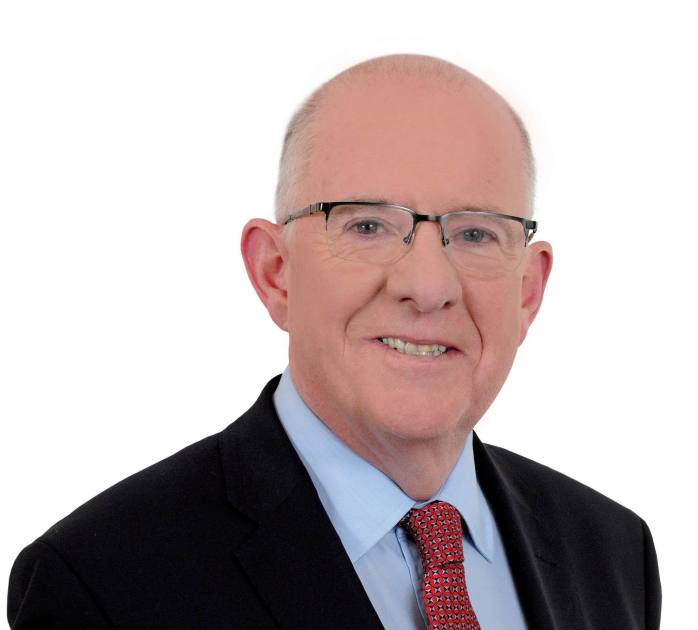
Charles Flanagan T.D., Minister for Foreign Affairs and Trade 

GOVERNMENT CONTINUES TO PRESS BRITISH ON ISSUE OF DUBLIN-MONAGHAN BOMBS: FLANAGAN

Michael Fisher  Northern Standard  Thursday 14th July 2016

The Minister for Foreign Affairs Charles Flanagan TD has said pursuing the British government on the issue of the Dublin Monaghan bombings in 1974 was a major priority for him and for the Irish government. He told the Dáil his commitment was reflected in the Programme for a Partnership Government that was agreed in May.

In a written response to questions tabled by the Fianna Fáil leader Micheál Martin and that party’s spokesperson on Foreign Affairs, Deputy Darragh O’Brien, Minister Flanagan said the all-Party Dáil motion on the Dublin-Monaghan bombing that was adopted in the House on 25th May had been conveyed to the British Government. This motion, like the two previously adopted in 2008 and 2011, called on the British Government to allow access by an independent, international judicial figure to all original documents relating to the bombings.

Mr Flanagan continued: “The Government is committed to actively pursuing the implementation of these all-Party Dáil motions relating to the Dublin Monaghan bombing atrocities. To this end, I wrote to the Secretary of State for Northern Ireland in late May, conveying a copy of the recent resolution. In addition, I raised the matter in my bilateral meeting with the Secretary of State for Northern Ireland in Belfast last week. In this meeting I advised the Secretary of State that this latest motion represents the consensus political view in Ireland that an independent, international judicial review of all the relevant documents is required to establish the full facts of the Dublin Monaghan bombings.”

“I underlined that the absence of a response from the British Government was of deep concern to the Government and indeed this House and emphasised the urgent need to respond to the three Dáil motions. Secretary of State Villiers recognised the importance that the Government and Dáil Éireann attach to this case and she indicated that the British Government is considering a response which would adequately address the motions.”

“The Government will continue to raise this matter with the British Government, urging them to provide a satisfactory response to the motions that have been adopted by this House. I have made clear to the Secretary of State that there is a pressing need to provide answers to the families of the victims. The Taoiseach has also raised this issue with Prime Minister Cameron emphasising the Government’s continued support for the Dáil motions.”

“Many families continue to deal not only with the awful pain of losing a loved one, but also with the struggle for answers decades after these traumatic events. Accordingly, the establishment of a new comprehensive framework for dealing with the past, as envisaged in the Stormont House Agreement, is a priority for the Government.”

In conclusion, the Minister said he continued to engage with the British Government, the NI Executive and the Northern Ireland political parties in discussions to find a route to a final agreement on legacy issues. He said the Irish government believed that the legacy institutions agreed under the Stormont House Agreement offered the best hope of helping the thousands of families impacted by the troubles. He was therefore working to secure the necessary political agreement to get the legacy bodies established and up-and-running as soon as possible.

HRH CHARLES LIKED DONEGAL

28019297475_f657d212ab_z

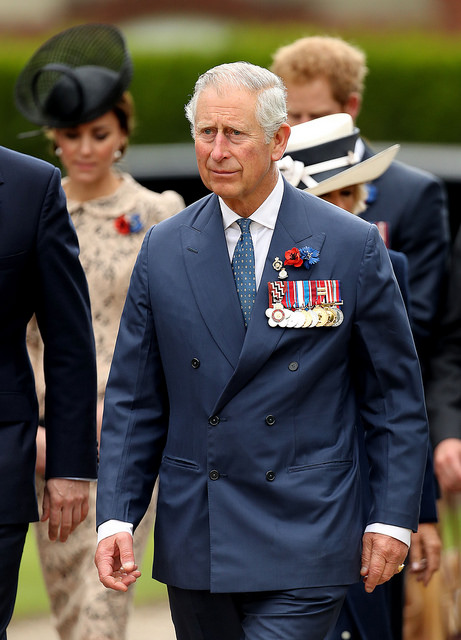
Prince Charles at the Somme Centenary Service at the Thiepval Memorial  Pic. PA

PRINCE CHARLES HOPES TO MAKE ANOTHER VISIT TO IRELAND

President and Minister Humphreys Participate in Battle of Somme Centenary

Michael Fisher  NORTHERN STANDARD Thursday 7th July 2016 p.1

Britain’s Prince Charles has told Minister Heather Humphreys during an informal meeting at the Somme Centenary in France he would be happy to return to Ireland on another visit. The Minister who chairs the consultation group on commemorations said the Prince of Wales told her he had been very impressed with Glenveagh National Park in County Donegal.

Six weeks ago Minister Humphreys welcomed Prince Charles and his wife Camilla Duchess of Cornwall to Glenveagh. The Minister described it as one of the jewels of Ireland’s natural heritage. It is one of six national parks in Ireland and is run by the National Parks and Wildlife Service, which comes under the brief of Minister Humphreys.

The Cavan/Monaghan TD accompanied President Higgins at the Thiepval Memorial last Friday for a service marking the start of the Battle of the Somme on July 1st 1916. The Minister said it was very important that the Irish Defence Forces led by Chief of Staff Vice Admiral Mark Mellett had been included in the ceremony along with British and Commonwealth servicemen and women.

ULSTER TOWER

Following the poignant service attended by 10,000 guests Minister Humphreys represented the government at a wreath-laying ceremony at the nearby Ulster Tower. It is beside Thiepval Wood where soldiers from the 36th Ulster Division including some Monaghan men left the trenches at 7.30am on July 1st 1916 to advance towards the German lines. She laid a wreath along with the North’s First Minister Arlene Foster MLA and the Northern Secretary Theresa Villiers MP.

The previous day Heather Humphreys paid tribute to the 16th Irish Division who had entered the battle two months later at Guillemont and also sustained heavy losses. The Minister attended a special performance in Amiens by the Abbey Theatre of the play “Observe the Sons of Ulster Marching Towards the Somme”.

STATE COMMEMORATION

On Saturday, the Minister will attend the main state event to commemorate the Somme Centenary, which is being held in conjunction with the Royal British Legion. It will take place in the Irish National War Memorial Gardens at Islandbridge in Dublin at 12 noon and will be televised live by RTÉ.

Invited guests will include members of the government, Council of State, elected representatives, members of the diplomatic corps and judiciary, and representatives of a large number of veterans’ organisations. It will involve a wreath-laying by the President Higgins. Ambassadors of the countries that fought at the Somme and the Presidents of the Royal British Legion from the Republic and Northern Ireland will also lay wreaths.

Speaking to the Northern Standard on her return from France, Minister Humphreys said the services in Thiepval had been very moving. She said the representation of the Irish government and Defence Forces at the Ulster Tower had been very much appreciated. She met representatives of the Orange Order there, building on contacts developed when she attended the visit by Prince Charles in May to a new Museum of Orange Heritage at Loughgall, Co. Armagh, which had been part-funded by the Irish government.

The Minister said she had wanted the programme of events for the centenary commemorations to be inclusive and respectful and it had been. It had opened up our understanding of events in 1916. It was not about one narrative, but concerned all the narratives and it was important to hear all the personal accounts from that era. People like 18 year-old Katie McGrane from Magheracloone, who in a letter to her mother dated May 2nd, 1916 had described the streets of Dublin city centre in the aftermath of the Easter Rising.

We had matured as a nation in our ability to accept and hear about the events and stories of one hundred years ago, the Minister said. We had reconnected with our history and there was now a great sense of pride, she said. She felt there had been great community engagement for the commemorative programme, including in County Monaghan. This included the distribution of the national flag to national schools with talks on civic duty and citizenship.

She believed it was important to keep the momentum going. She complimented the great work done for the 1916 Centenary by Monaghan County Council, the County Museum, the library service as well as local arts and heritage groups.

MOORE STREET SITE

Minister Humphreys also responded to criticism she was failing to protect buildings at Moore Street in Dublin city centre connected with the Easter Rising. Last month the government decided to bring an appeal to the Supreme Court over a High Court ruling which declared Moore Street to be a 1916 “battlefield site” and was therefore due to be protected. Earlier this year, a court action had been successfully taken by the 1916 Relatives Group which sought to prevent the destruction of buildings on the street.

Sinn Féin leader Gerry Adams TD condemned the decision by the government to appeal the High Court judgement. He said it was scandalous that in the centenary year of the Rising the government would refuse to uphold a court judgement that would protect Moore Street and its environs that were part of the legacy of 1916. Instead of defending and protecting the historical legacy of the Rising the government was putting the rights of developers and profiteers first, Mr Adams claimed.

Minister Humphreys said she was the first Minister to do anything about purchasing the site at 14-17 Moore Street last year. They had then embarked on a programme of conservation for the four buildings, to show what they were like in 1916 with the holes between the houses used by the rebels to move from one room to another. This site was where the Rising’s leaders held their last council of war and decided to surrender.

The Minister argued that other buildings on the street had been constructed after 1916 and were not historically significant. The vast bulk of the surrounding properties were privately owned. Her remit extended to the National Monument, which was being preserved. These houses retained significant 18th-century elements, including staircases, partitions, plasterwork, doors, floors, fittings and fixtures. The development of the wider street was a matter for Dublin City Council, she said.

However in his High Court judgment, Mr Justice Max Barrett said the wealth of evidence before the court pointed to historical significance in some of the other buildings. These included number 10, a portion of the parting wall at number 13 and number 18, as well as the building at 20-21 Moore Street.

Minister Humphreys said owing to the potential widespread implications of the “battlefield” judgement for planning and development nationally, the government had decided to appeal the decision. If the whole street was a national monument, then how would this translate to other historical sites, she asked. She said she fully understood that Moore Street was a location that held great importance for many people.

The Minister said she intended to establish a consultative group on Moore Street with an independent Chair as a means to make positive progress in relation to the future of the street. The group would include cross-party Oireachtas members and other relevant stakeholders including the 1916 relatives. She hoped they would sit down and see how they could progress the situation and make sure the four precious buildings were restored.

The completed project would be a permanent legacy to the leaders of 1916. She hoped the group could chart a way forward. The government was committed to looking after the four buildings with their original fabric, she said.


DÁIL QUESTIONS ON INTERCONNECTOR

CALLS IN DÁIL FOR ELECTRICITY INTERCONNECTOR TO BE PUT UNDERGROUND

Minister awaits decision by An Bord Pleanála

Michael Fisher  Northern Standard  Thursday 23rd June p.14

At question time in the Dáil last week, Deputy Seán Fleming (Fianna Fáil, Laois-Offaly) asked the new Minister for Communications, Climate Change and Natural Resources Denis Naughten to support putting the North-South electricity interconnector underground using high-voltage direct current technology. He asked the Minister if he would make a statement on the matter.

13411743_10206605579242715_3461134040631709056_o.jpg

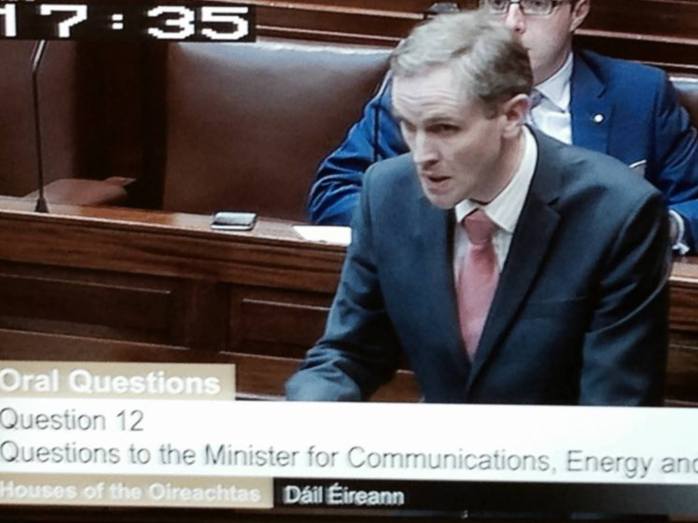
Shane Cassells TD asking question in Dail to Climate Change Minister Denis Naughten TD

Deputy Shane Cassells (Fianna Fáil, Meath West) also asked the Minister if he would support the undergrounding of the North-South interconnector using the technology now available. Will the Minister put a halt to the current plan?, he enquired. Deputy Cassells said the current EirGrid proposal for which planning permission was being sought would destroy the landscapes of Meath, Cavan and Monaghan if monstrous pylons were to be constructed in these three counties.

Deputy Denis Naughten: In fairness, all Deputies in the region have contacted me at this stage on this issue. EirGrid is the designated transmission system operator. Its roles include the operation, maintenance and development of the electricity transmission network in Ireland. As detailed in the government policy statement on the strategic importance of transmission and other energy infrastructure, the government does not seek to direct EirGrid in the development of energy infrastructure to particular sites or routes or technologies.

EirGrid made a formal application for a North-South 400 kV interconnector project to An Bord Pleanála on 9th June 2015. This is the subject of a statutory independent planning process and is currently before An Bord Pleanála. Part of this process included an oral hearing that concluded last month. As the planning process is still ongoing, it would not be appropriate for me to comment further.

Deputy Shane Cassells: I am appealing to the Minister, on behalf of the people of these counties, to become involved because this is a major issue for Meath, Cavan and Monaghan. Not only would it destroy the landscapes of these counties, it would destroy people’s homes. I have sat in the homes of people throughout County Meath. These monstrous pylons will be built beside their homes and will destroy their lives. It is amazing to think that in 2013 the EirGrid chairman, John O’Connor, sat before a Dáil committee and said he would not want to live beside one of these pylons. However, he seems to think it is good enough for the rest of the people in these counties.

The North East Pylon Pressure Campaign is led by Aimée Treacy and Padraig O’Reilly. They have spearheaded a campaign to stop the project but they are being thwarted by the formidable legal people of EirGrid. I was at the High Court hearing some months ago when the project was challenged. The Minister’s office, under the previous officeholder, and EirGrid used powerful legal teams to fight against the community groups. We need the Minister to stand up for the people rather than EirGrid. EirGrid is spending money relentlessly on public relations campaigns to try to curry public favour, but it is destroying people’s lives. I appeal to the Minister to get involved and arrange to put these pylons and cables underground. The people need the Minister to stand up for them.

Deputy Denis Naughten: I understand the frustration among people in this case, but the government does not direct EirGrid on what mechanism it should use. We need an interconnector. People agree that we need an interconnector. The debate has been how that connection would be made. The government has not directed EirGrid in any way in this matter. This project is before An Bord Pleanála at the moment. An Bord Pleanála has weighed up the options and all the arguments on all sides. We are going to get a decision from An Bord Pleanála.

I have read some of the numerous reports into undergrounding. However, the reality is that the North-South transmission project is required to ensure security of supply of electricity to Northern Ireland. The existing 225 kV double circuit overhead transmission line between Louth and Armagh is simply insufficient to meet the needs.

Deputy Shane Cassells: The Minister referred to the An Bord Pleanála hearing. I was there and gave evidence at the hearing in Monaghan as well. Representatives from EirGrid came in on numerous occasions during the hearing and changed aspects of their application during the hearing. They came with images that bore no resemblance to the application. These people are ruthless in the pursuit of their aim and do not care about the people. This Chamber is here to care about the people. The government can most certainly become involved.

The previous two Ministers had no wish to hear from the people’s side. Therefore, I am appealing to the Minister not to read out the material prepared by the Department but to listen to the voices. This can be stopped before the September ruling by An Bord Pleanála. We need to see an intervention by government in this respect.

Deputy Denis Naughten: I have listened to a number of Members from the areas concerned, all of whom have expressed their concerns on this matter. I have not yet come across one person who takes the view that we do not need the interconnector. It is needed because if the existing line were to go down, there simply would not be enough electricity reaching the north east of the island to keep the lights on.

Deputy Shane Cassells: I agree with the Minister.

Deputy Denis Naughten: We have a single electricity market and we need it. It is helping to drive down the cost of electricity for every person throughout the country. 

Deputy Shane Cassells: The point is that it should be done underground.

Deputy Denis Naughten: I hear what Deputy Cassells is saying and I have heard and listened to what other colleagues in the House have said as well. I understand the frustration that exists but a statutory process is ongoing.

Deputy Shane Cassells: The frustrating thing is that Pat Rabbitte said the project would drive up prices.

ENERGY PRICES

In an earlier question on energy prices, Deputy Mick Barry asked the Minister whether the Electricity Supply Board should consider reducing its charges for electricity, given its reported profits of €635 million in 2015; he said high energy prices were being maintained to make the ESB an attractive proposition for privatisation. Surely the Minister is not satisfied with the minimal 6% cut in electricity prices by Electric Ireland. Does he agree that the company must go much further than this? Does he believe the ESB is being fattened up for privatisation?… 

Deputy Denis Naughten: Prices are not being kept high. No one in this country can keep prices high because they are unregulated. There is an open market. Representatives of ESB tell me the company makes little of its money from the Electric Ireland arm. Thankfully, ESB is in the black and making profits a little short of €300 million. A considerable amount of this profit comes from other arms of the company, including the network and electricity generation arms. I am told that of the pre-tax profits generated by the ESB, approximately 14% relate to the retail arm.

Other companies in the sector make margins as well. It does not seem to me to be excessive. The Commission for Energy Regulation is accountable to the House and the relevant Dáil committee. I call on Deputy Barry to make direct contact with the Chairman of that committee and bring the commissioners before the committee to quiz them on the issue.

Deputy Mick Barry: There the Minister goes again. Like Pontius Pilate he is washing his hands of the situation. I will ask the Minister a far simpler question. How does the Minister feel about the fact that consumers in this country are paying the second highest electricity rates in the European Union, while, at the same time, the ESB is making profits which, whether we use the Minister’s figures or my figures, run to hundreds of millions of Euro?

Deputy Denis Naughten: Electricity prices are higher here than in most parts of Europe. However, we need to remember that Ireland is on an island. We have a small electricity market. It includes the North and South and we have had reference to the single electricity market on the island of Ireland. There are geographic issues.

The other point is that we have to important a substantial amount of our energy. We are not self-sufficient in the energy sector and that adds to the costs. As a result of the size of the market, there are additional transmission costs and such costs are not incurred in continental Europe. As a result these particular challenges are built into the cost.

I am not trying to wash my hands of it. By law I cannot directly intervene in this matter. However, Deputies can question the Commission for Energy Regulation. I am calling on Deputy Barry to use the tools available to him in the parliamentary committee to raise these questions.

TYDAVNET SHOW LAUNCH

LAUNCH OF 65th TYDAVNET SHOW PROGRAMME

Michael Fisher  Northern Standard   Thursday 23rd June

Tydavnet Show is preparing for its 65th event in August, making it one of the longest running and most successful agricultural shows in Ireland. Once again the hard-working voluntary committee has been working busily behind the scenes since the end of last year’s show. It will be a show with something for everyone, young and old, from the cattle and horse enthusiasts to those competing in home industries and those who just want an enjoyable day out.

Every year at the launch of the show programme, the committee invites a guest speaker. In the past, they have included personalities such as the journalist Frank McNally, Mairead McGuinness MEP and last year the former Governor of Mountjoy prison, John Lonergan.

This year’s speaker they invited Tony Ward from Lough Egish. An accountant by profession, he is Director of Finance at “The Wheel”, the leading support and representative network for the community and voluntary sector in Ireland. In an inspirational address, he spoke about losing most of his sight when he was in his mid-20s, and overcoming the setbacks this impairment had brought. In recent years he has completed five marathons and three long-distance cycles, and has represented Ireland in middle distance races in the European and World Athletic Championships. He won a bronze medal in the word cross-country championships in Portugal in 2001.

Tony reminded the audience how in his earlier years he had played football for Aughnamullen and had suffered a number of bad defeats by Scotstown! He explained how he had grown up on a farm. When he was diagnosed with retinitis pigmentosa (a degenerative eye disease causing severe vision impairment), he said he was not sure what would happen to him in the future.

65 years of the Tydavnet show was an extraordinary and great testament to the local community. Tydavnet, after all, was not the centre of the universe — a comment that brought laughter from the attendance. But it was an incredible record and proof of a lot of hard work by local people. He pointed out that other Monaghan villages such as Latton, Cremartin, Magheracloone or Killanny did not have their own shows. Mr Ward hoped they would get good weather for the show.

He explained how he was really interested in sport and would sometimes get up early in the morning to go training, when he would usually have someone to accompany him. He spoke of how two winning athletes at the Sydney Olympics had explained that the secret of their success amounted to 10% self-belief, 10% talent and 80% hard work.

He said there was clearly a sense of community and dedication in Tydavnet. Their roots were in farming. The one thing he could think of when he received his diagnosis was the work he did on the farm to assist his father at weekends, putting on his wellingtons and doing chores like milking the cows. When his sight deteriorated he could still go out and bring the cattle into the milking parlour.

Tony told the audience it was really important to preserve country and farming life. He recalled how he used to read through the Tydavnet Show results in the Northern Standard. What the show committee had achieved so far was great and he hoped they would pass it on to the next generation.

PRO Barry Sherry welcomed the sponsors and said the show would not be a success without them. He welcomed representatives of the Armagh and Clogher Valley shows. He said Tydavnet remained one of the major shows in the country. It took a lot of effort and commitment for it to happen, with lots of hard work from the beginning of the year.

After a thirty-year absence they had revitalised the Show Queen competition. They held a very successful night in April when Sinéad McCarey from Barratitoppy was selected for the title. Unfortunately she was not able to join them for the launch of the show programme.

Chair of Tydavnet Show Peggy Treanor from Clontybunnia welcomed the national school pupils who were prizewinners in the art competition for designing the cover of the programme. She also thanked the sponsors, advertisers and judges for their support, as well as the landowners at Drumshevra for making the site available for the show. The stewards, helpers, committee members and officers had also shown dedication and enthusiasm and she thanked them all.

Prizes were presented to the designer of the cover for the show competition schedule and catalogue as follows:

1st prize, Aoibhe Genoe, Magherarney N.S., Smithborough. She received a €50 Eason voucher.

2nd prize, Grace Kelly, Tydavnet N.S.

3rd prize, Eimear Treanor, Tydavnet N.S.

MAIN EVENTS AND TIMES

09.30am Sportsman Jumping (clear round format)           10.00am Horse & In-hand Pony & Cob Classes commence
10.00am Riding Pony & Cob Classes commence
10.00am Home Industries & Juvenile Classes judging begins                                                                             11.00am Dairy & Beef Cattle Classes commence
11.00 a.m. Sheep Classes commence
11.00 a.m. Poultry & Eggs Classes commence
11.00 a.m. Trade Stands, Heritage Crafts, Vintage Exhibits, Demonstrations                                                                 1.00pm-2.00pm Fermanagh Harriers demonstration         2.00pm Working Hunter events commence                       2.00pm Bonny Baby Competition, followed by:             Grandparent and Grandchild Competition
Fancy Dress Competition (McELVANEY CUP)
Most Appropriately Dressed Lady (KERRY-LEE TROPHY)
Most Appropriately Dressed Teenagers
Little Miss Monaghan (3-5 years)                                             Little Mr Monaghan (3-5 years)                                            2.30pm Dog and Pet Show                                                     2.30pm Dancing on the Deck                                                                                               3.00pm approx. Riding for people with a Disability          4.00pm Children’s Fun Races                                           4.30pm Presentation of Cups – Home Industries & Juvenile  5.00pm Removal of Home Industries & Juvenile exhibits 5.00pm Tydavnet’s Fittest Family