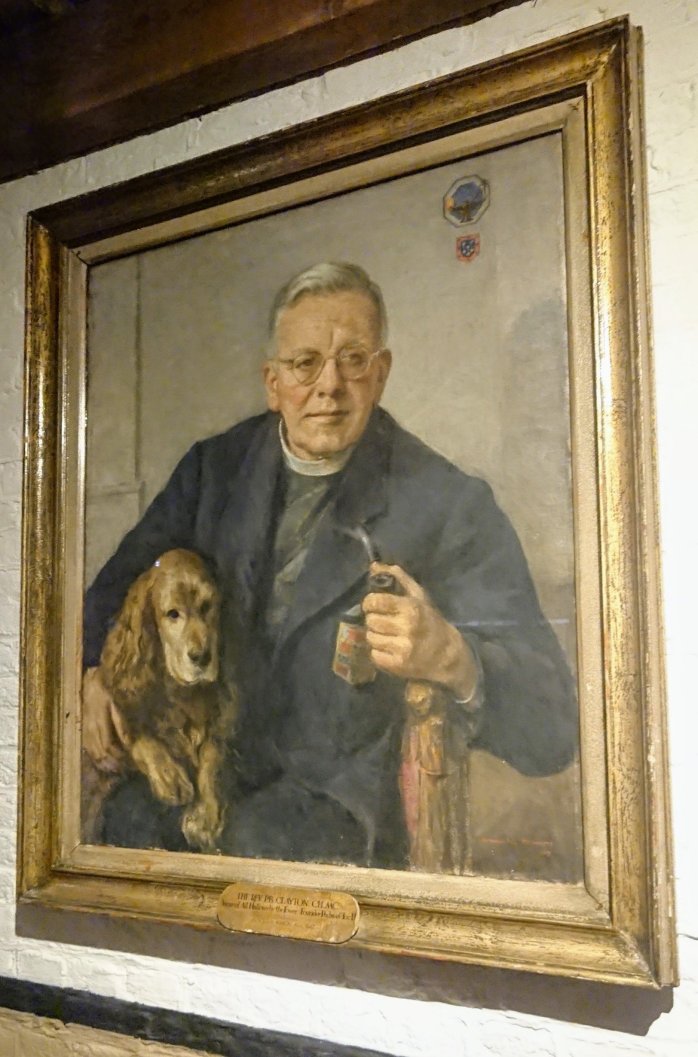
TOC-H FOUNDER

Picture of Revd Philip ‘Tubby’ Clayton in Talbot House

Mark K. Smith (2004) has written about the founder of TOC-H, Army padre Reverend Philip Clayton. See: Smith, M. K. (2004) ‘Philip “Tubby” Clayton and TocH’, the encyclopedia of informal education.
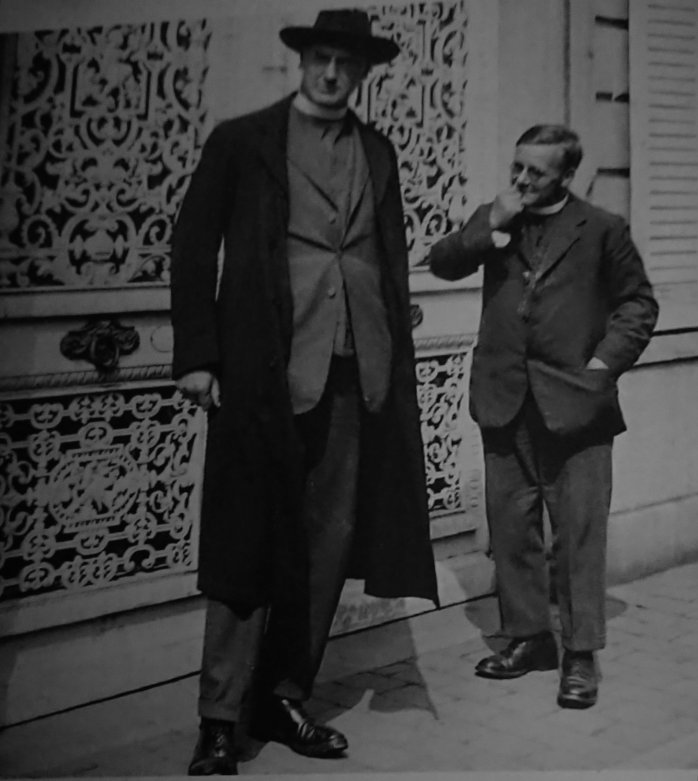
Revd. Philip (Tubby) Clayton and Toc H

Army Chaplains Neville Talbot (left) and Philip ‘Tubby’ Clayton opened a club for soldiers in the heart of Poperinge in December 1915. For more than three years, Talbot House provided rest and recreation to all soldiers entering, regardless of rank.
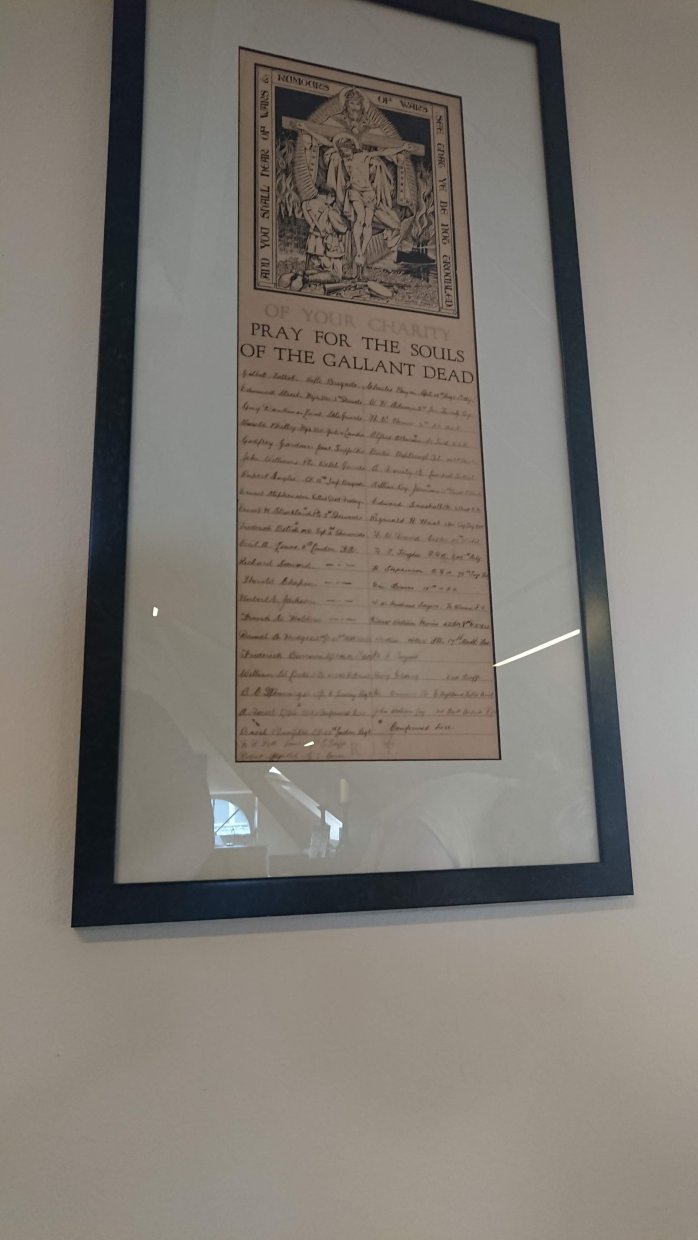
Remembering those souls who have died

Philip Thomas Byard Clayton (1885-1972), Philip Thomas Byard Clayton (1885-1972) was known to his friends as Tubby. He was born on December 12th 1885 in Queensland. At the age of two his parents returned to England. Educated at St Paul’s School in London and then at Exeter College, Oxford, he gained a First Class Degree in Theology. While reading for orders under the Dean of Westminster he became involved with the boys’ club work of the Oxford Medical Mission in Bermondsey.

John Stansfeld (‘The Doctor’), the founder of the Mission, had, according to Philip Clayton, ‘passed like the Pied Piper, through the ‘Varsity and bidden us to the boys’ clubs at Dockhead, Gordon and Decima’ (quoted by Baron 1952: 206). He worked there one night a week, joining a remarkable group of workers that included Alec Paterson and Barclay ‘Barkis’ Baron (who was later to join the central staff of Toc H and edit the Toc H magazine).

TOC-H POPERINGE

Talbot House, Poperinge

TOC-H (TH) is an international Christian movement. The name is an abbreviation for Talbot House, ‘Toc’ signifying the letter T in the Signals spelling alphabet used by the British Army in World War I.

Front door of Talbot House, Poperinge

A soldiers’ rest and recreation centre named Talbot House was founded in December 1915 at Poperinge in Belgium. It aimed to promote Christianity and was named in memory of Gilbert Talbot, son of Edward Talbot, then Bishop of Winchester, who had been killed at Hooge in July 1915.

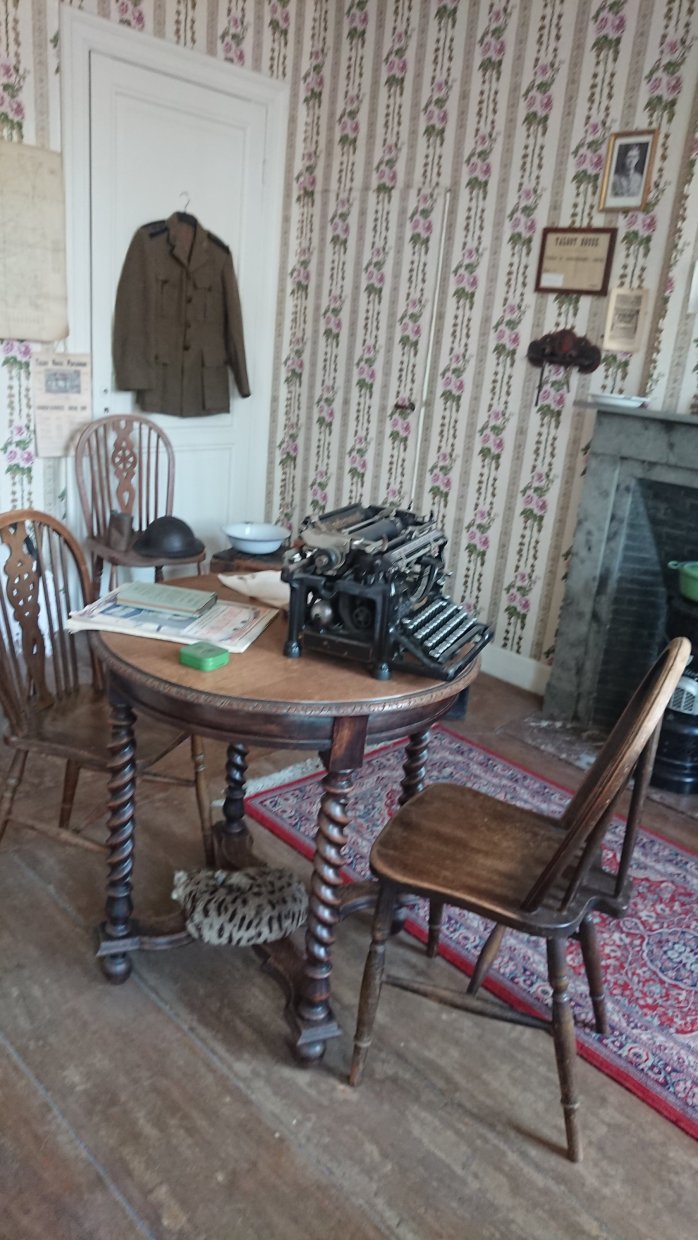
Room in Talbot House

The founders were Gilbert’s elder brother, Neville Talbot, then a senior army chaplain, and the Reverend Philip Thomas Byard (Tubby) Clayton.

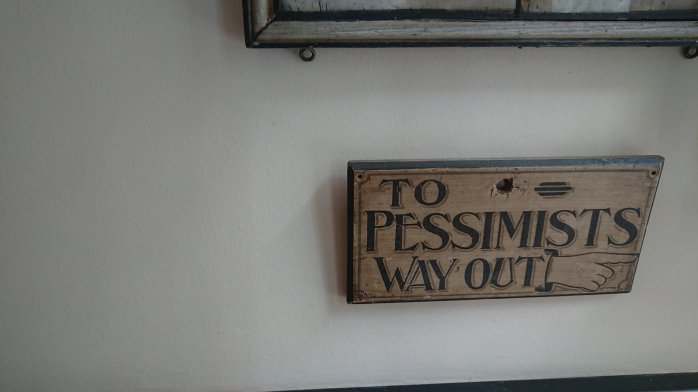
Talbot House

Talbot House was styled as an “Every Man’s Club”, where all soldiers were welcome, regardless of rank. It was “an alternative for the ‘debauched’ recreational life of the town”.

Entrance to Chaplain’s Room

In 1920, Clayton founded a Christian youth centre in London, also called Toc H, which developed into an interdenominational association for Christian social service.

The original building at Poperinghe has been maintained and redeveloped as a museum and tourist venue.

Map of WWI Battlefield around Ypres in Flanders

Branches of Toc H were established in many countries around the world. An Australian branch was formed in Victoria in 1925 by the heretical Reverend Herbert Hayes. Another was formed in Adelaide the same year.

Caption for WWI Map

Toc H members seek to ease the burdens of others through acts of service. They also promote reconciliation and work to bring disparate sections of society together. Branches may organise localised activities such as hospital visits, entertainment for the residents of care homes and organising residential holidays for special groups.

Our group arrives at Talbot House, Poperinge

POPERINGE

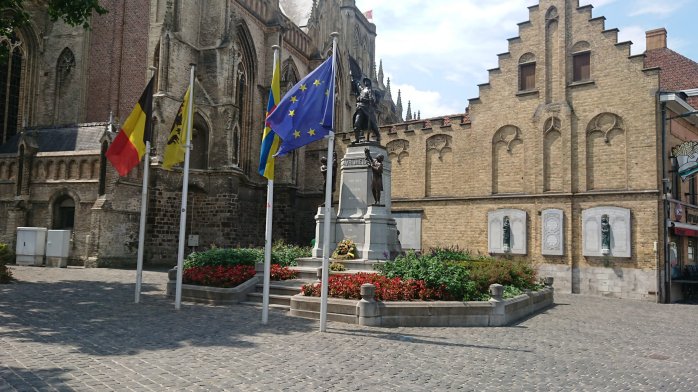
Poperinge war memorial

Poperinge or simply ‘Pop’ as the Tommies referred to it is a village about eight miles west of Ieper in West Flanders. The region is famous for growing hops.

Sint Bertinuskerk tower with carillon

During World War One the town was one of only two in Belgium not under German occupation. It was used to billet British troops and also provided a safe area for field hospitals. Known familiarly as “Pop”, it was just behind the front line and formed an important link for the soldiers and their families, especially through the rest house known as Talbot House (or “Toc-H“). A grim reminder of that time remains within the town hall, where two death cells are preserved, and outside in the courtyard, where there is a public execution post used by firing squads.
Another reminder is the location of a number of military cemeteries on the outskirts of the town with the graves of Canadian, British, Australian, French, German, US servicemen and men of the Chinese Labour Corps. One of these is Lijssenthoek Military Cemetery for soldiers who had been wounded near Ypres and later died in the large Allied casualty clearing stations located in the area.

Ginger sculpture in Market Square Poperinge

A new statue on the market place brings Eliane Cossey or “Ginger” back to Poperinge. Ginger was a red haired girl that worked at the La Poupée café and had a mesmerising effect on many soldiers. An initiative that bring “Little Paris” back to life.

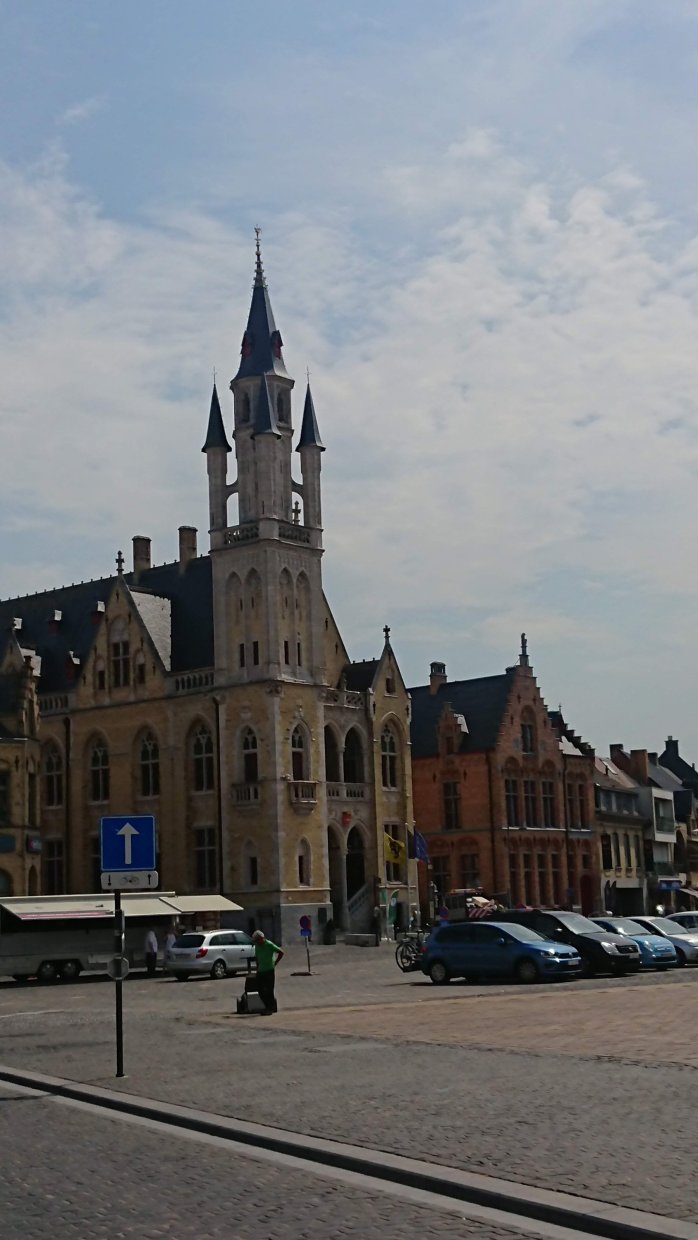
Poperinge Town Hall

Willie Redmond MP wrote in his war diary about Ginger’s: “A cheery spot it is, bedecked with the flags of the Allied nations. All the appointments of the place ara good: clean cloths upon the little tea-tables, little bunches of flowers here and there, and altogether an air of brightness and comfort about. Very grateful indeed to eyes weary of the drab dismalness of trench and hut. In the hours of the afternoon the tea-room is crowded with officers from various units, and it is of interest to observe that they represent very often branches of the army in the field from almost every corner of the Empire.

ALL THE FINE YOUNG MEN

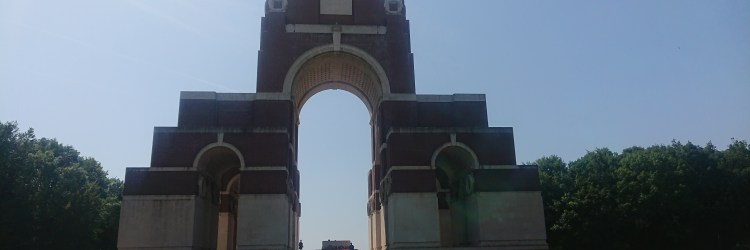
Turning back to the huge Tyne Cot CWGC memorial. My friend Noeleen Berry from Dublin went there on a similar visit to mine in April this year. She immediately thought of Mary Black’s version of the Eric Bogle song ‘All the Fine Young Men’ and this video is the result. The song starts a few seconds into the video.

ALL THE FINE YOUNG MEN

Eric Bogle / Munro
They told all the fine young men,
“Ah, when this war is over,
There will be peace,
And the peace will last forever.”
In Flanders Fields,
At Lone Pine and Bersheeba,
For king and country,
Honour and for duty,
The young men fought and cursed and wept and died.They told all the fine young men,
“Ah, when this war is over,
In your country’s grateful heart
We will cherish you forever.”
Tobruk and Alamein,
Bhuna and Kokoda,
In a world mad with war,
Like their fathers before,
The young men fought and cursed and wept and died.For many of those fine young men
All the wars are over,
They’ve found their peace,
It’s the peace that lasts forever.
When the call comes again,
They will not answer,
They’re just forgotten bones,
Lying far from their homes,
Forgotten as the cause for which they died.
Ah, Bluey, can you see now why they lied?

MONAGHAN ARMY MEMORIAL

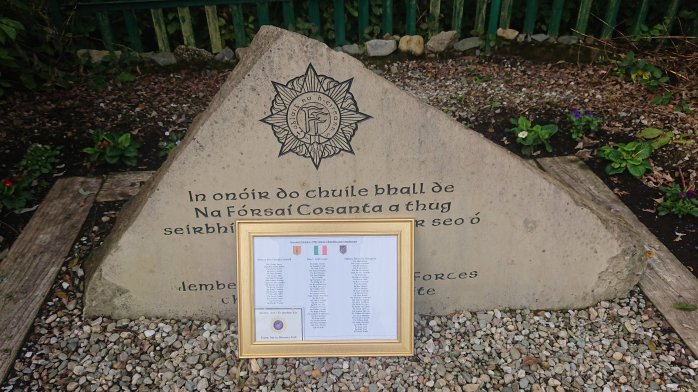
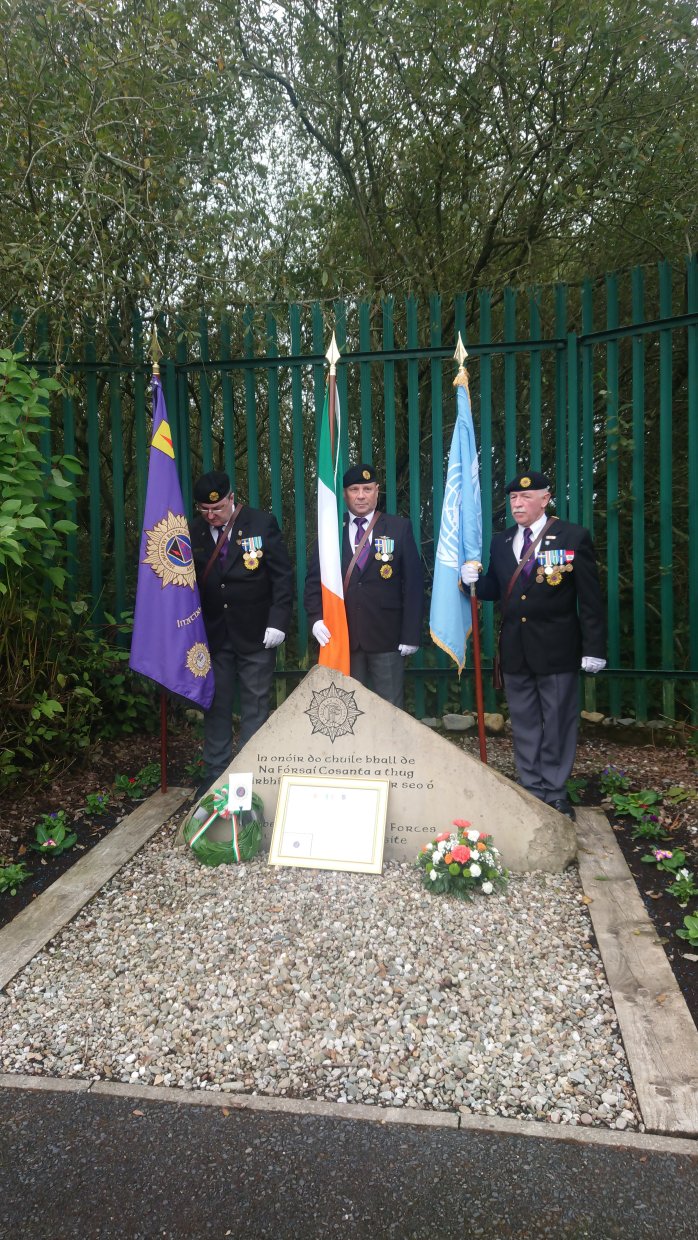
Defence Forces memorial at the former Monaghan military barracks site

Corporal Ernie Carter was like myself a Dubliner who lived in Tydavnet. He was one of the original members of the 29th Infantry Battalion Association in Monaghan.

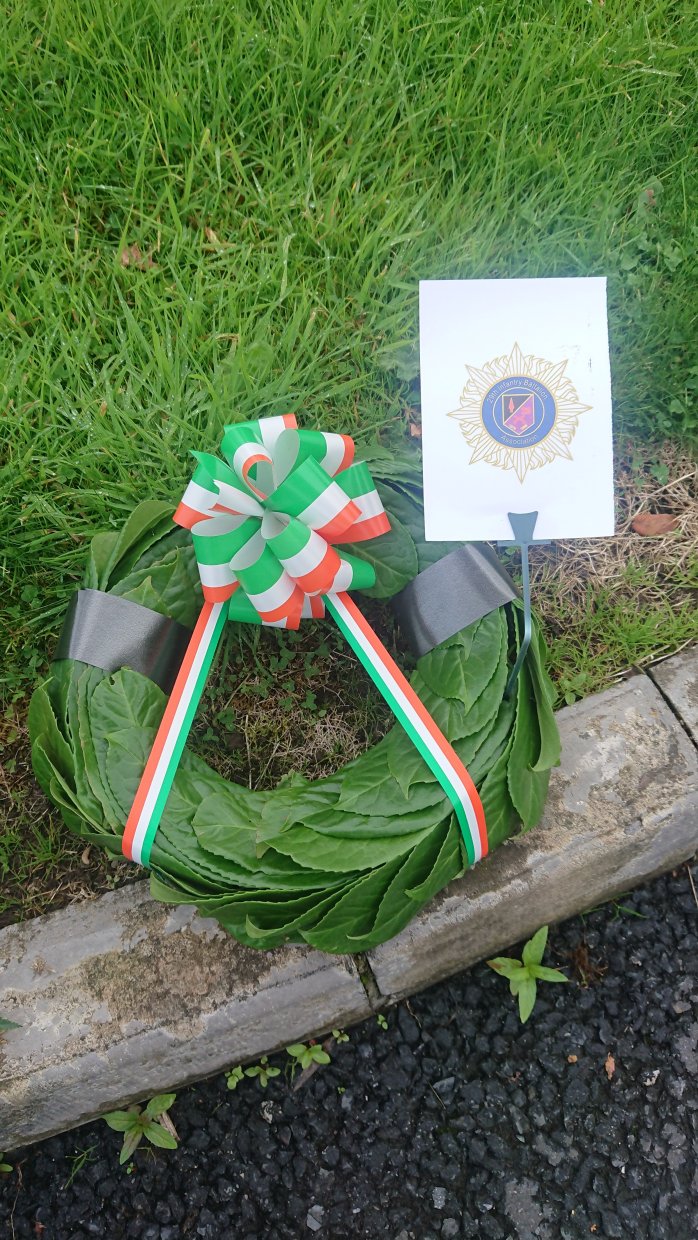
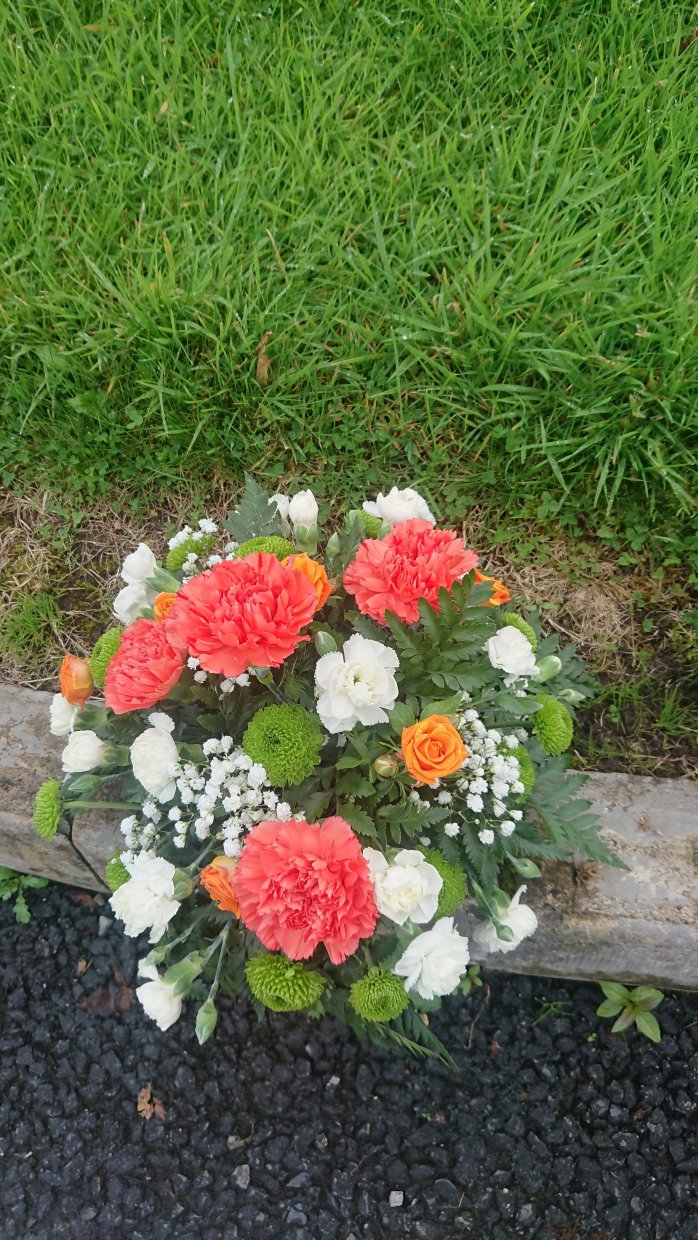
One of the wreaths from the 29th Infantry Battalion Association

One of his tasks as Secretary of the Association was to help organise a memorial stone at the site of the former military barracks (now the education campus) beside the Garage Theatre on the Armagh Road.

Colour party at the memorial stone

He died in June last year. The third annual commemoration took place this afternoon, with prayers led by a former army chaplain from Co. Cavan. I was asked to read out the poem for veterans ‘A Soldier’.

Michael Fisher reads the poem ‘A Soldier’. Pic. © Denis Barry

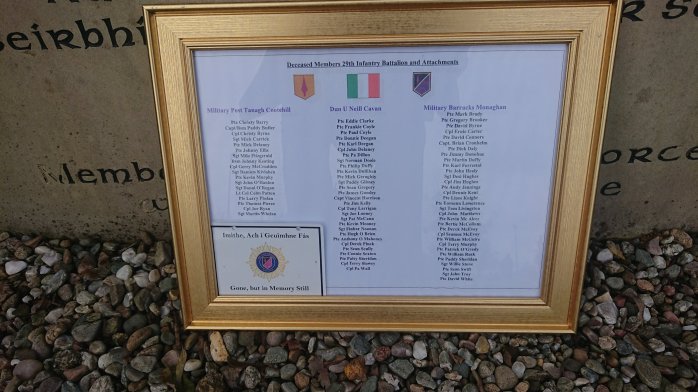
There were 79 names of the deceased listed on a framed sheet beside the memorial. They were soldiers who served in Dún Uí Neill Cavan, the Tanagh outpost in Cootehill and the barracks in Monaghan. We will remember them. REST IN PEACE.

The names of the deceased from 29th Infantry Battalion

Paying respect to deceased members of the 29th Infantry Battalion

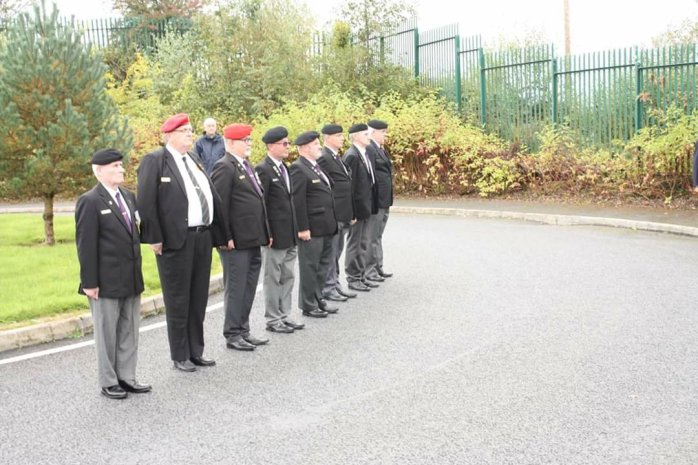
Standing to attention during the ceremony

One of the wreaths laid by Denis Barry

Paying respect at the memorial stone

ROYAL MUNSTER FUSILIERS

Royal Munster Fusiliers Memorial Ieper

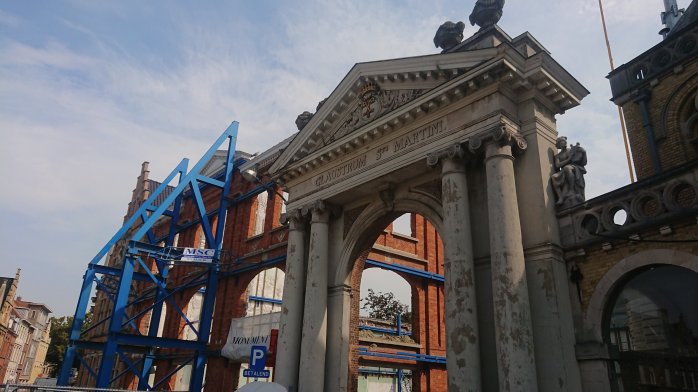
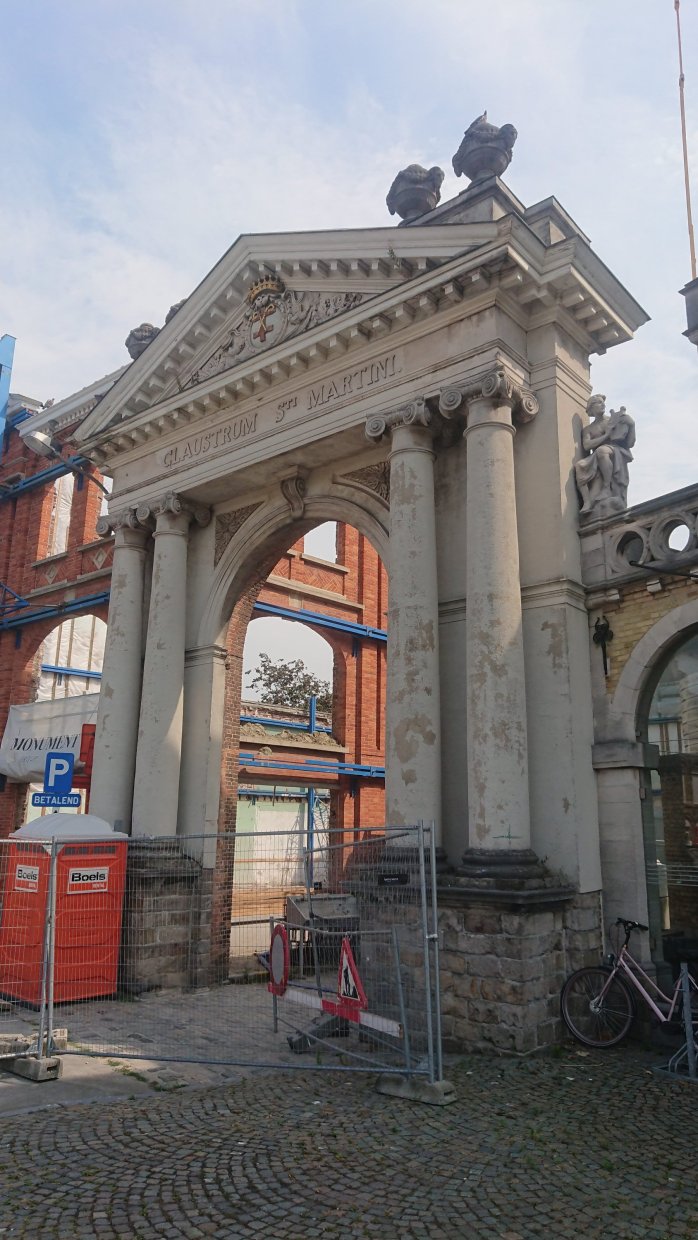
Behind St Martin’s Cathedral in Ieper there is a Celtic cross that forms a memorial for the Royal Munster Fusiliers soldiers who died in World War One.

Royal Munster Fusiliers Memorial Ieper

A tricolour flies from a flagpole alongside the monument to mark its connection with Ireland and Co. Cork in particular. The plaque contains the coat of arms for Munster (the three antique crowns of the medieval lordships).

The symbol of Munster engraved on the memorial in Ieper

It reads: “In memory of those men of Munster who died fighting for freedom. A tribute erected by the people of the province and Cork its capital city.”

A tribute from Cork and Munster

There is also a similar inscription in Irish and one in French, where two wreaths had been laid.

Inscription in French

The Irish version of the English inscription reads as follows:

Irish inscription, Royal Munster Fusiliers Memorial

ST MARTIN’S CATHEDRAL

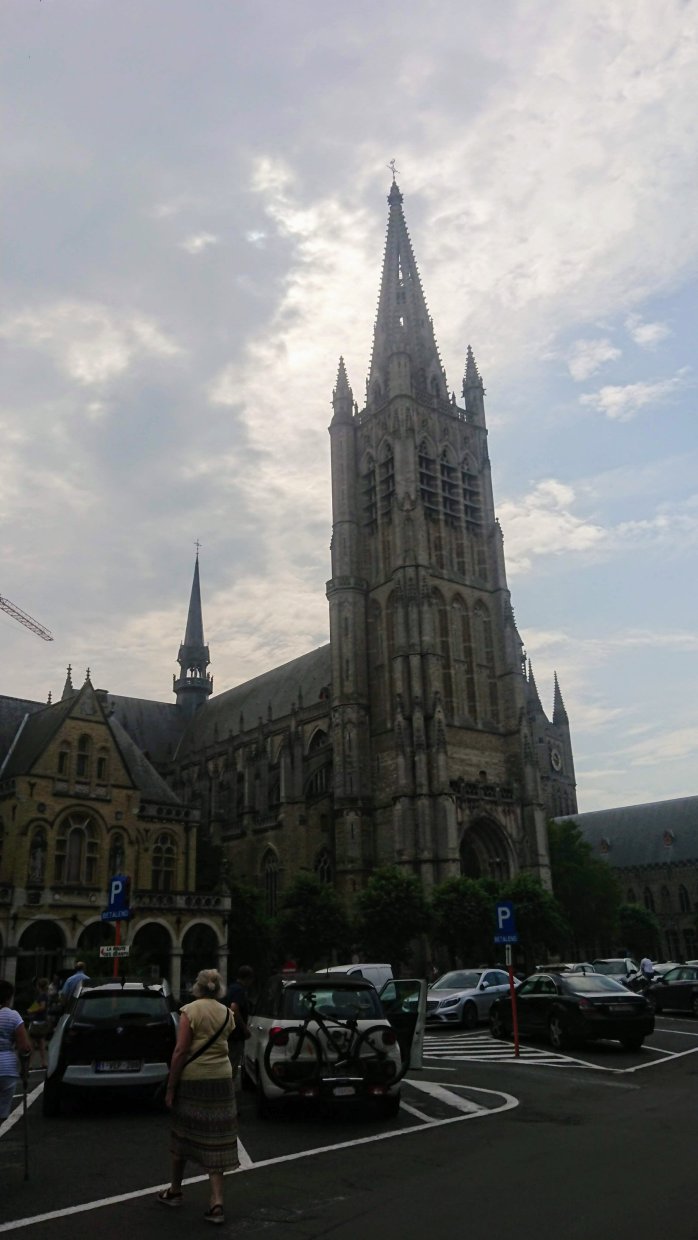
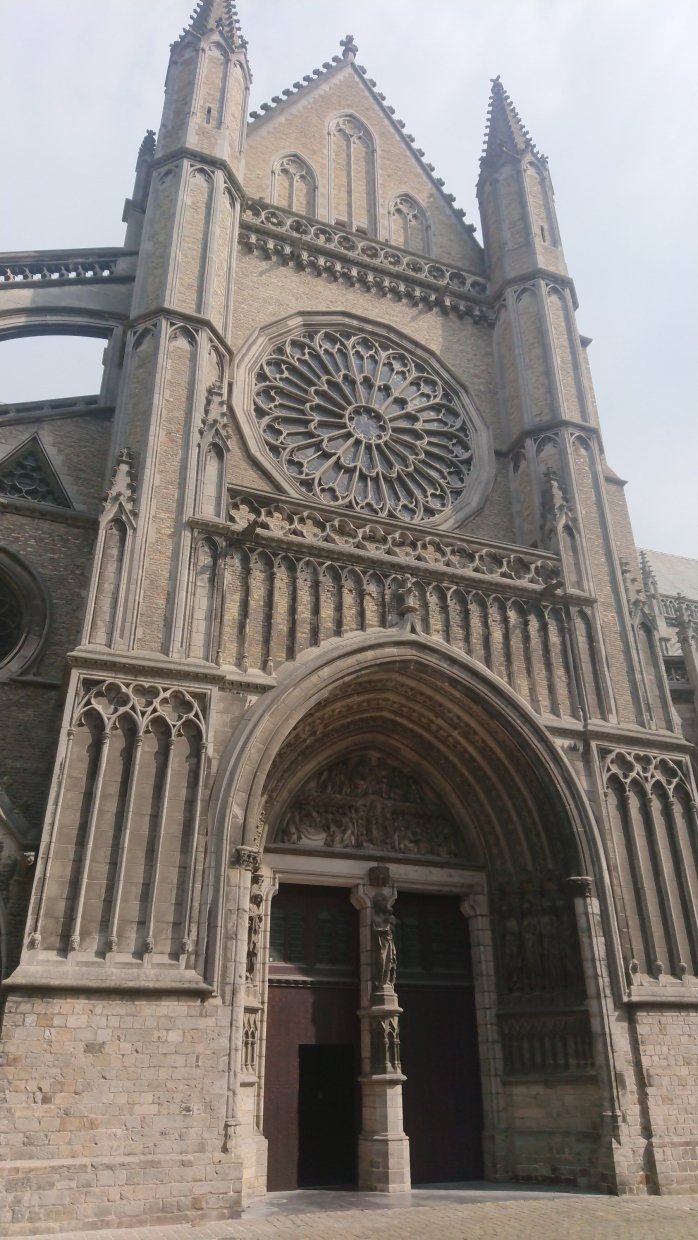
St Martin’s Cathedral, Ieper

St Martin’s Cathedral (Flemish: Sint-Maartenskathedraal), also called St Martin’s Church (Sint-Maartenskerk), is a church and former cathedral in the city of Ypres. It was a cathedral and the seat of the former diocese of Ypres from 1561 to 1801, and is still commonly referred to as such. It is among the tallest buildings in Belgium at 102m (335ft) tall.

Corner of Square leading to the Cloth Hall, Ieper

Construction started on the church in 1230, and was finished in 1370. There had previously been a Romanesque church in the area, dating from the 10th or 11th century.

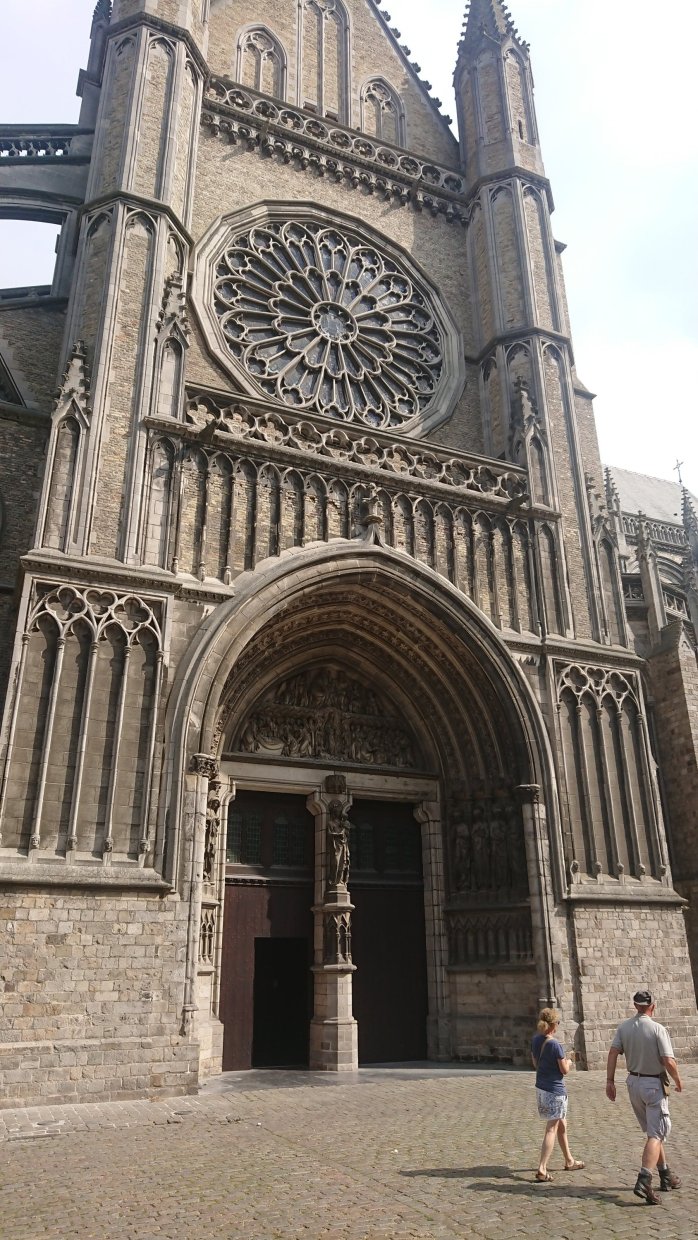
Side of Cathedral

After the 1801 Concordat between Napoléon and Pope Pius VII, Ypres was incorporated into the diocese of Ghent and Saint Martin’s lost its status as a cathedral. As with many former cathedrals (pro-Cathedrals), it is often still referred to as a cathedral by locals.

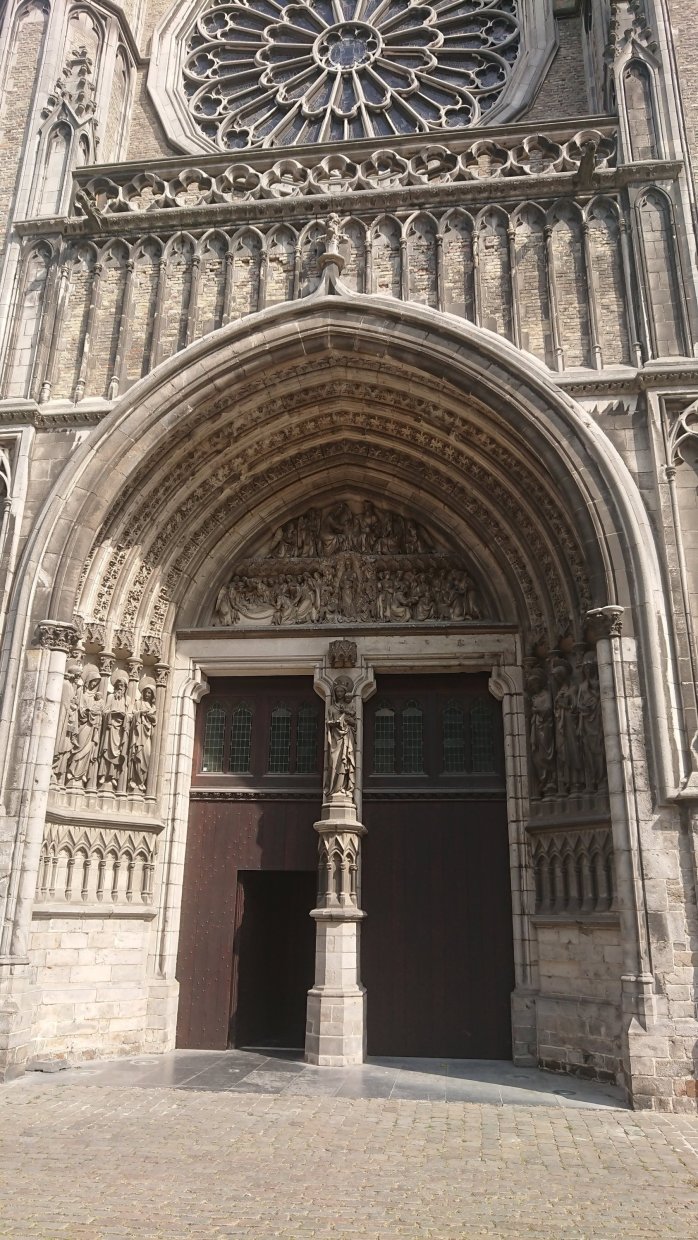
Main entrance to St Martin’s Cathedral, Ieper

It suffered heavy damage during the Great War. Subsequently (1922–1930) the ruin was cleared and the church was entirely rebuilt following the original plans, although the tower was built with a higher spire than the original.

St Martin’s Cathedral

Cornelius Jansen, the father of the theological movement Jansenism, was Bishop of Ypres from 1635 to 1638. He is buried in the cathedral. Count Robert III of Flanders, popularly known as The Lion of Flanders, is also buried there.

St Martin’s Cathedral, Ieper

Because a funeral Mass was about to start and the bell was tolling as we arrived at the church, it was not officially open for visits. But joining a short queue at the main entrance and going into the Cathedral we paid our respects to the deceased whose remains were resting in a coffin at the back of the church, then remained standing at the doors to say a few prayers whilst taking in the vast interior. This seems to be a local custom. The mourners and undertaker must have wondered who we were gatecrashing a funeral….!

ST GEORGE’S: IRISH LINKS

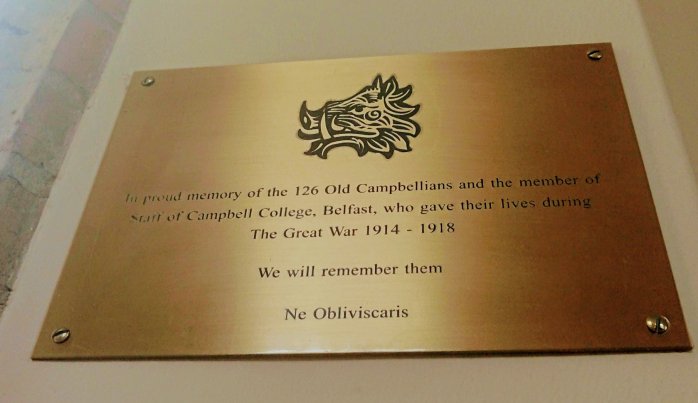
Campbell College plaque

Seat covers with badges of different Regiments including Royal Inniskilling Fusiliers

Window with Campbell College plaque alongside

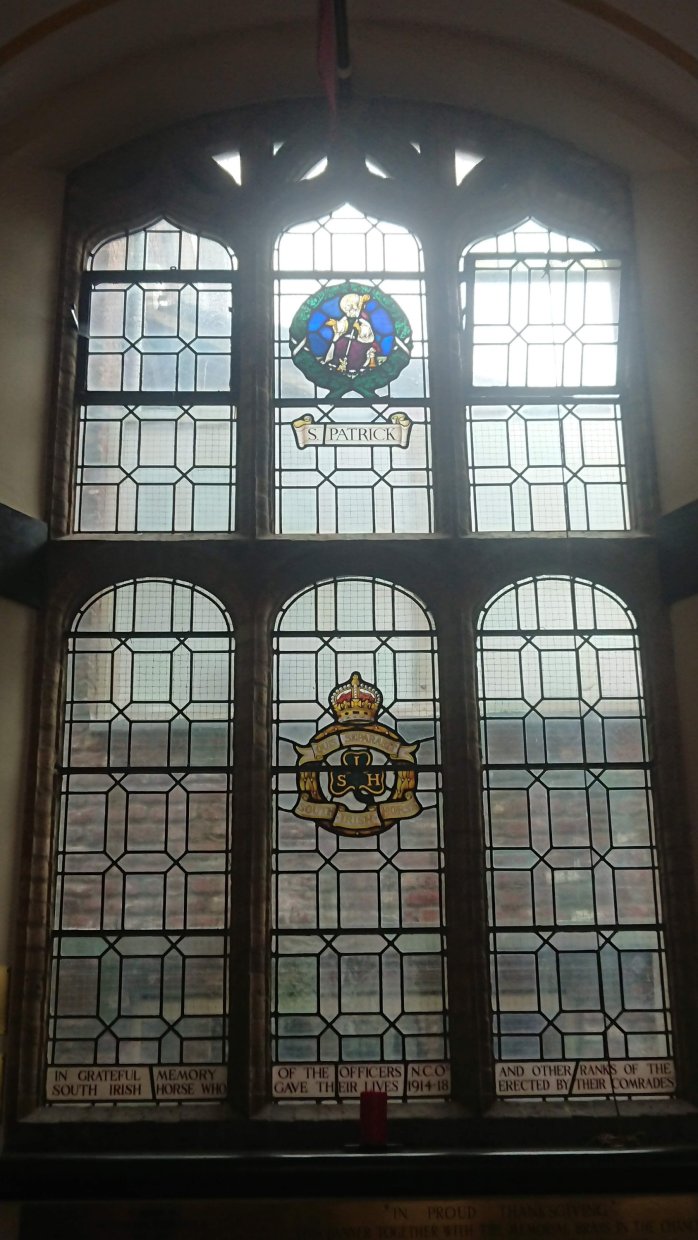
Memorial window North Irish Horse

Memorial window with regimental badges

Wreath for Royal Dublin Fusiliers

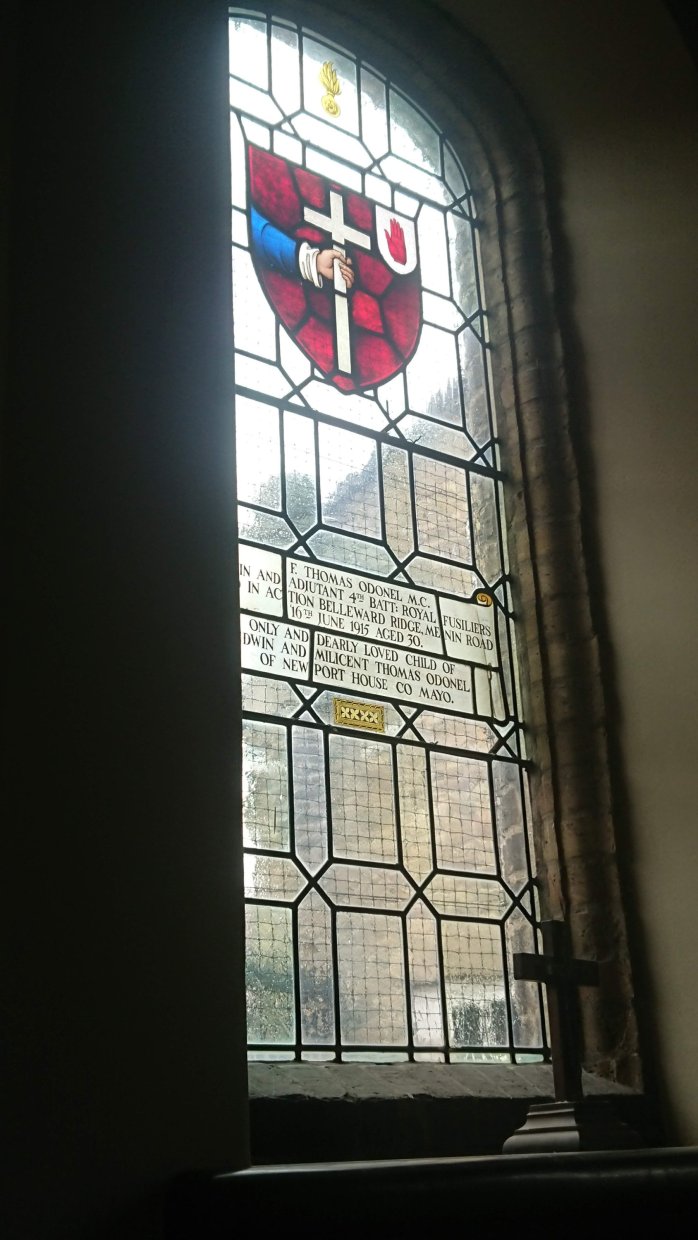
Memorial window Capt Thomas O’Donel MC from Newport Co. Mayo

ST GEORGE’S, IEPER

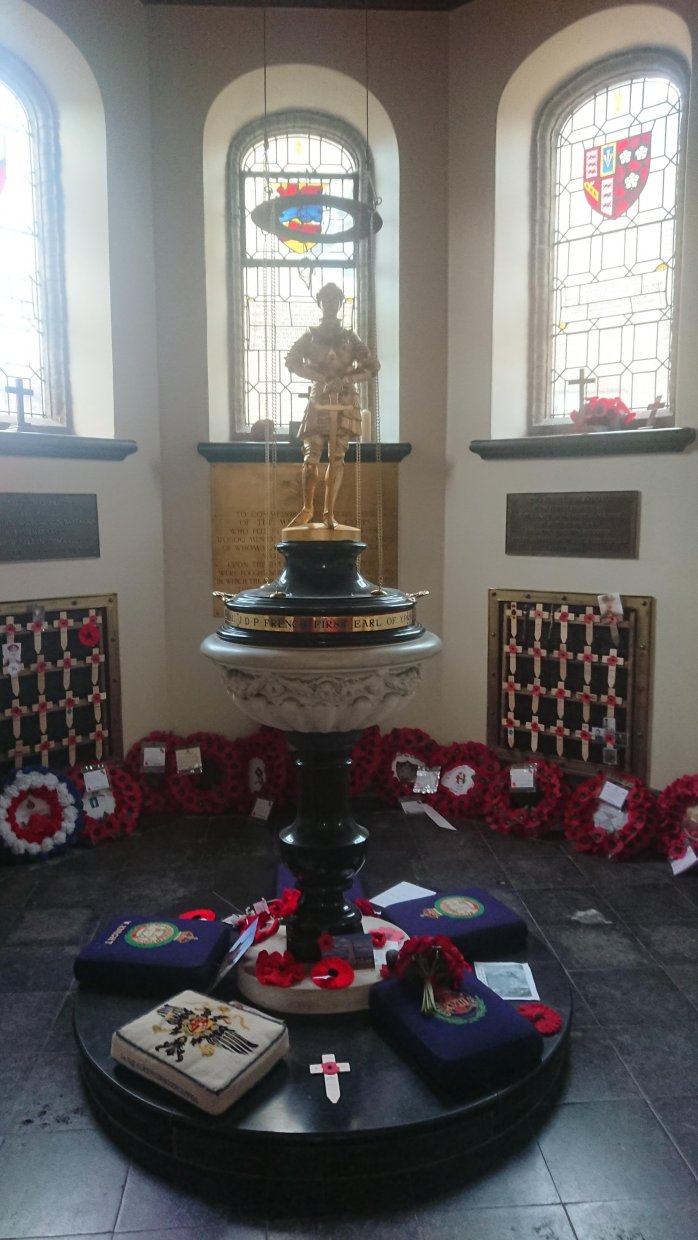
Baptismal font at St George’s Church Ieper

St George’s is an Anglican Church within the Church of England’s Diocese in Europe. The Diocesan Bishop is the Lord Bishop of Gibraltar in Europe who shares his responsibilities with the Suffragan Bishop in Europe.

St George’s is a Pilgrimage Church for the many thousands of people who visit the World War One sites of the Ypres Salient Battlefields. There is a small resident congregation who live in Ypres and surrounding area of Belgium and Lille in northern France.

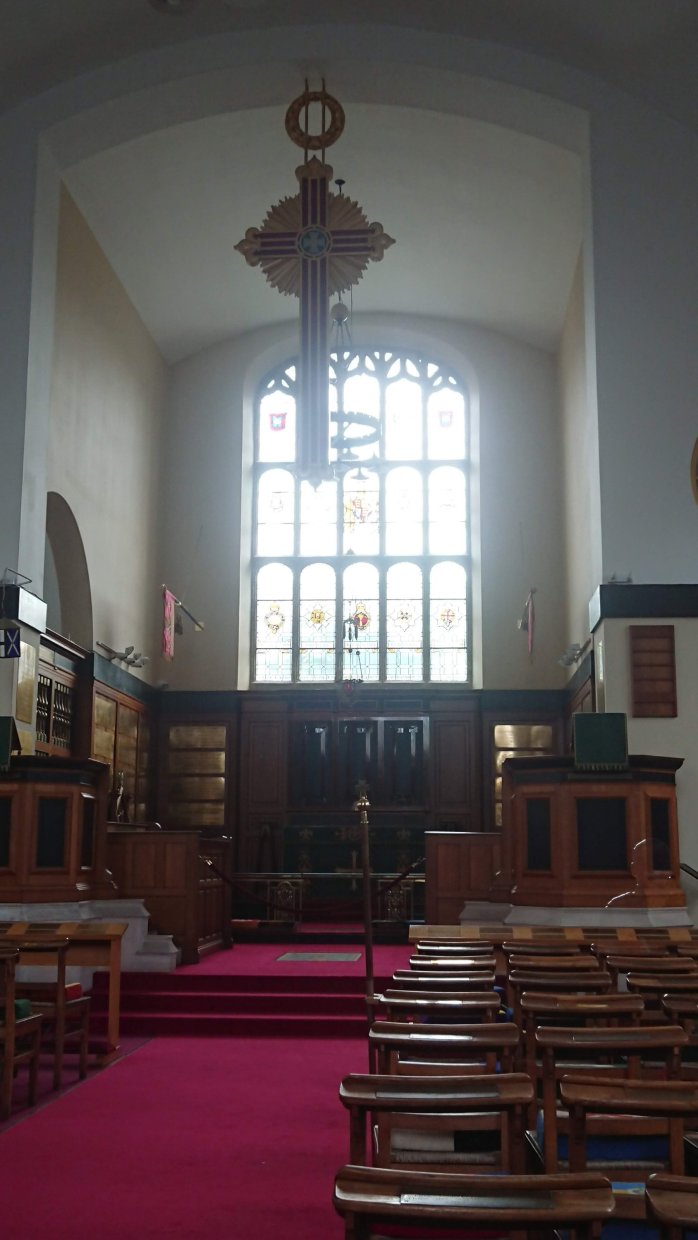
St George’s Church Ieper

Figure of a ‘Tommy’ among the pews

Here the congregation offer Christian worship and prayer in the Anglican tradition to be ‘still in the presence of the Lord’ in a place filled with the memorials of stained glass, brass and stone, to those who fought for peace and justice, who gave their lives for their country in two World Wars.

The Church welcomes tourists. pilgrims and school students from many countries, churches and world faiths. The pastors are committed to ecumenical partnerships working together with fellow Christians.

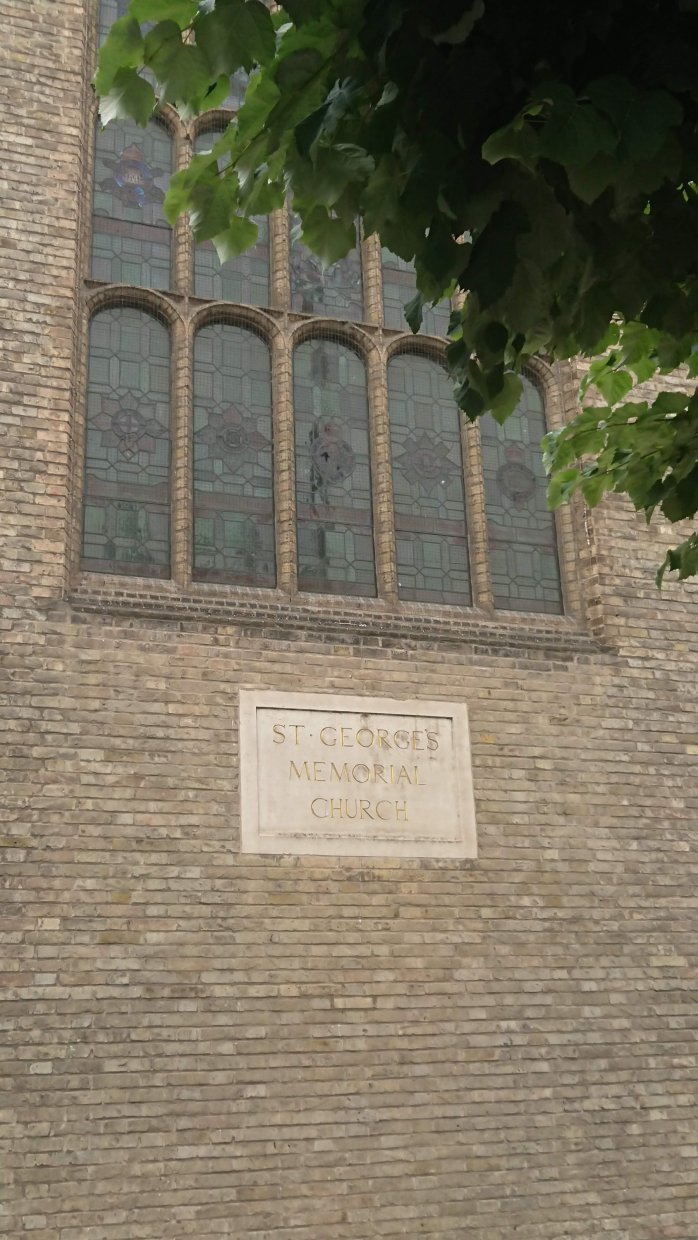
Exterior wall of St George’s Church Ieper

Memorial for British Army 1914 commander Field Marshal French

The team minister to the British Community, the Commonwealth War Graves Commission, and to all who enter the Church.

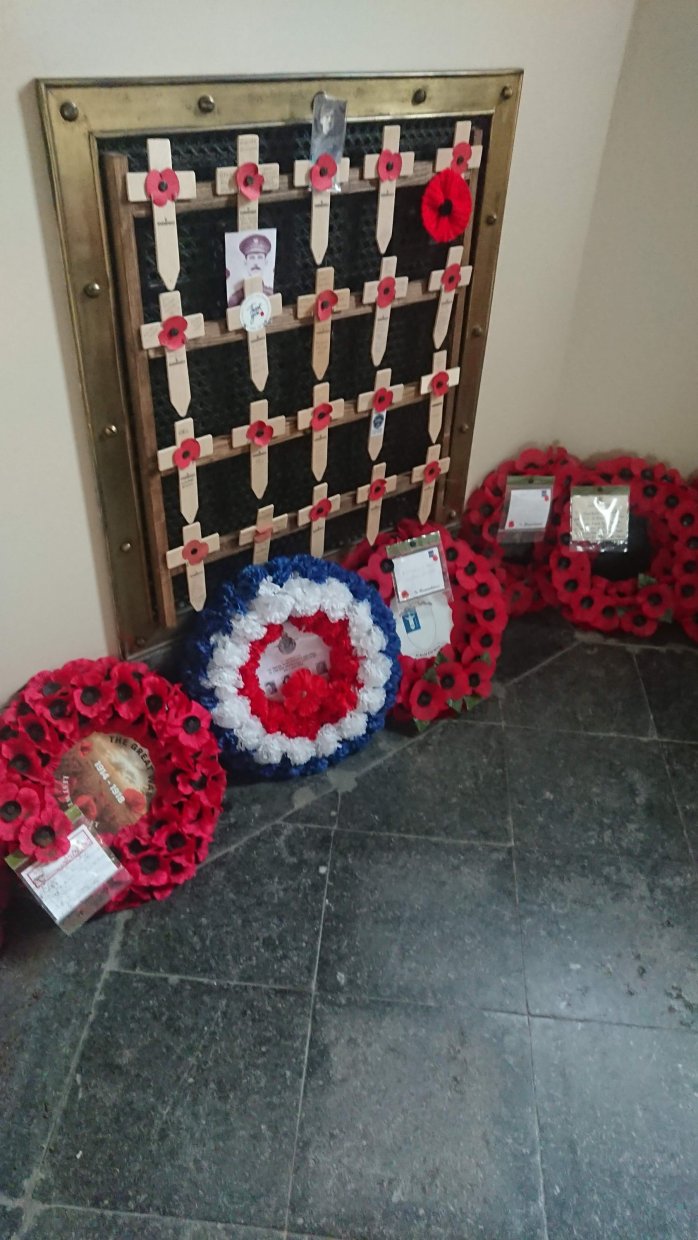
Memorial crosses and wreaths at St George’s Church Ieper

The Church gives Christian burial to the recovered remains of soldiers of the Great War (1914—1918), some known. others known only to God. The Church is a house of God and a place of remembrance.