TROOPER WILLIAM REID, GEEL

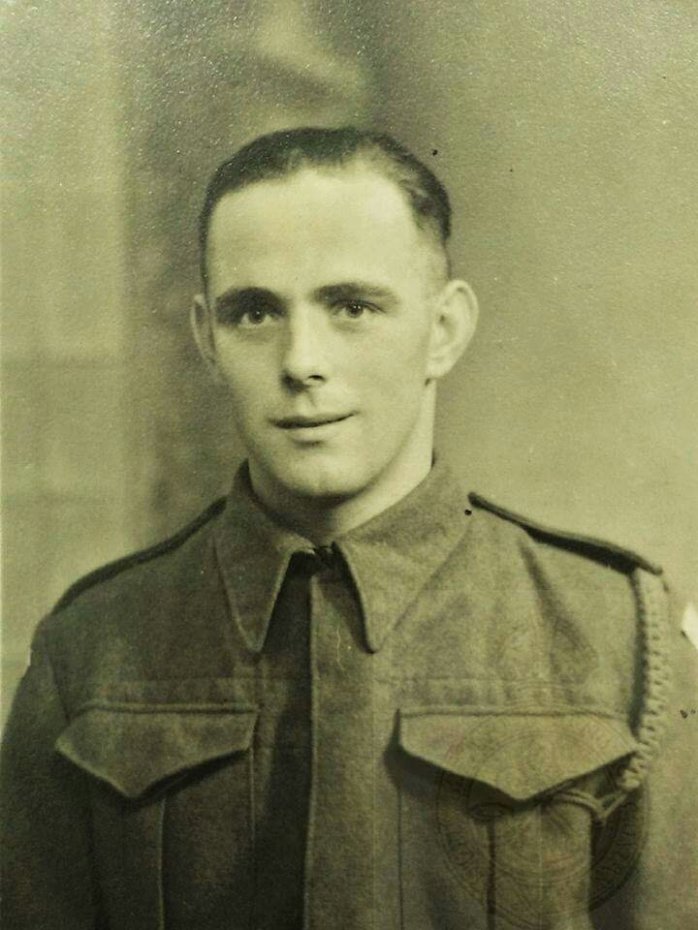
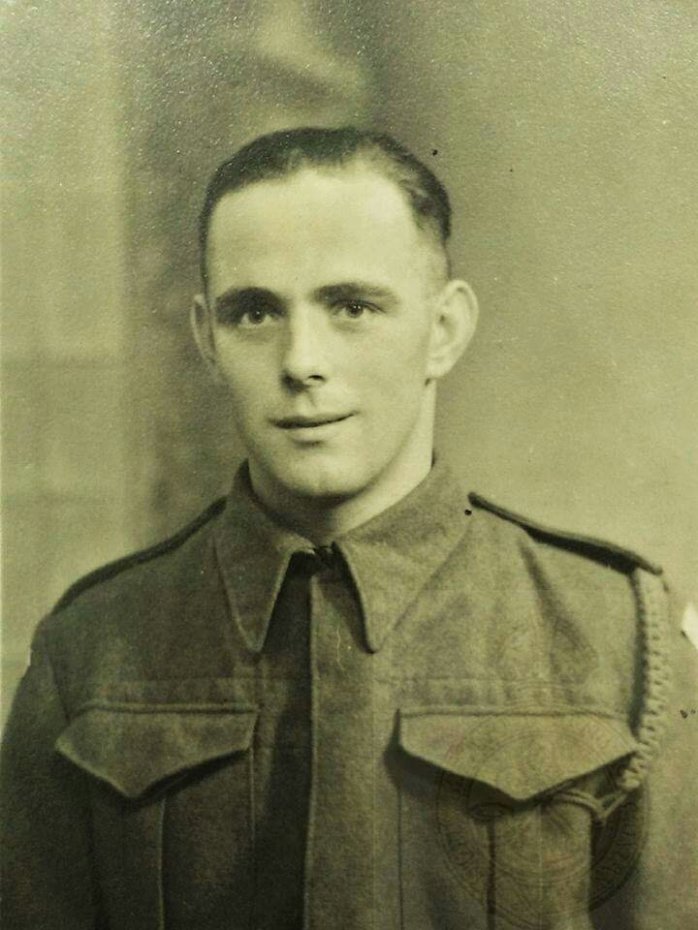
Trooper William Reid. Pic. Sherwood Rangers Yeomanry.

Remembering Trooper William Reid aged 21 from Inchicore in Dublin.

Regimental badge

A member of the Sherwood Rangers Yeomanry, he was killed 75 years ago on Sunday 10th September 1944 when his C Squadron tank was hit at the Doornboom crossroads during the battle to secure the bridgehead over the Albert Canal at Geel in Belgium.
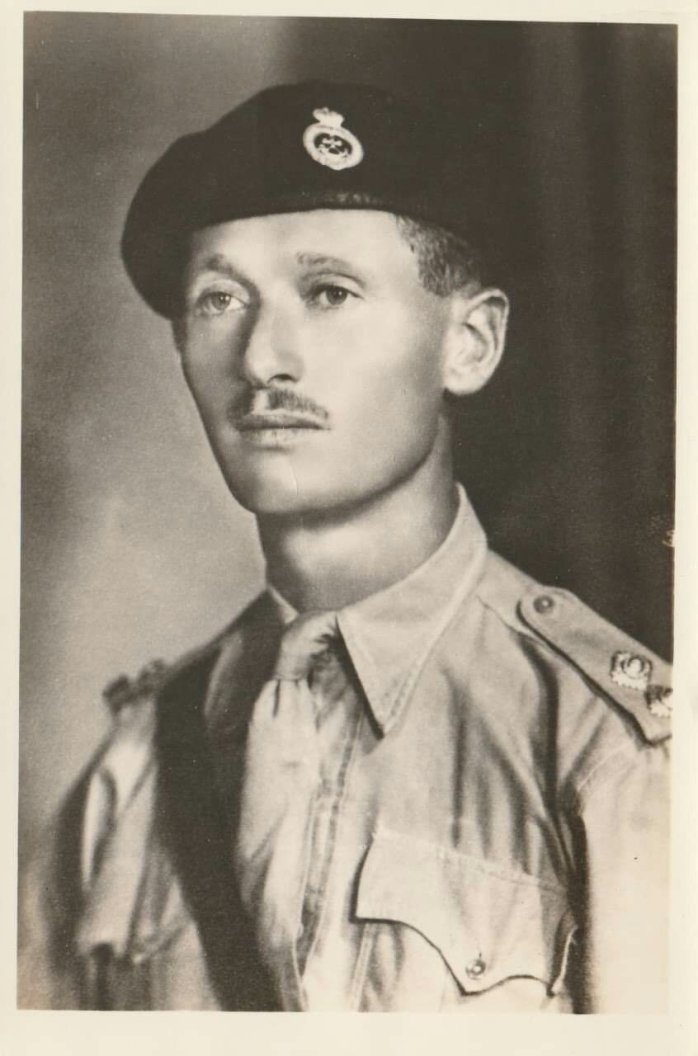
Captain John E. Mann MC

The rest of the crew, the commander Captain John E. Mann MC, Trooper Ernest Winchester and Trooper John Saunders, were also killed. All were buried by the unit’s chaplain Reverend Leslie Skinner in St Apollonia’s churchyard at Stelen two days later, where they still lie.
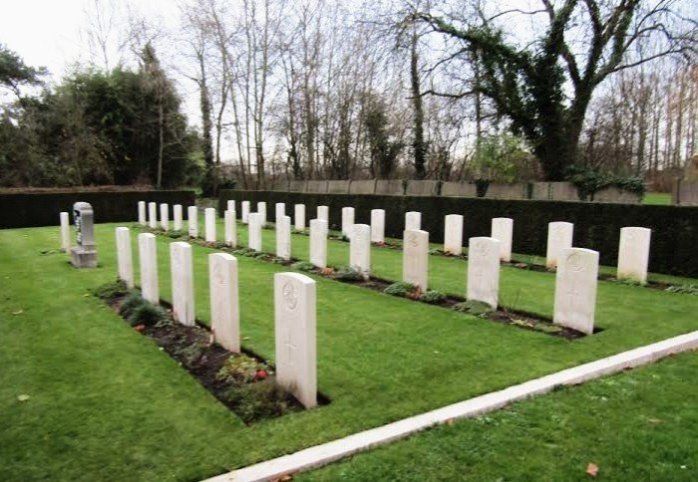
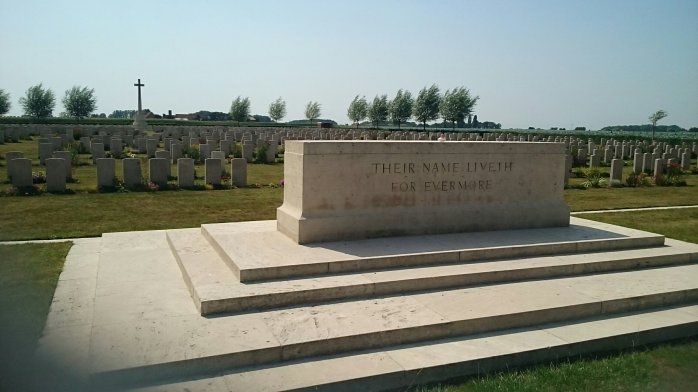
CWGC Cemetery Stelen Pic. Ricky van Dyck (ww2talk.com)

The padre was the first chaplain to land on the Normandy beaches on D-Day in June 1944 with the unit.
Geel is twinned with Tydavnet and Monaghan.
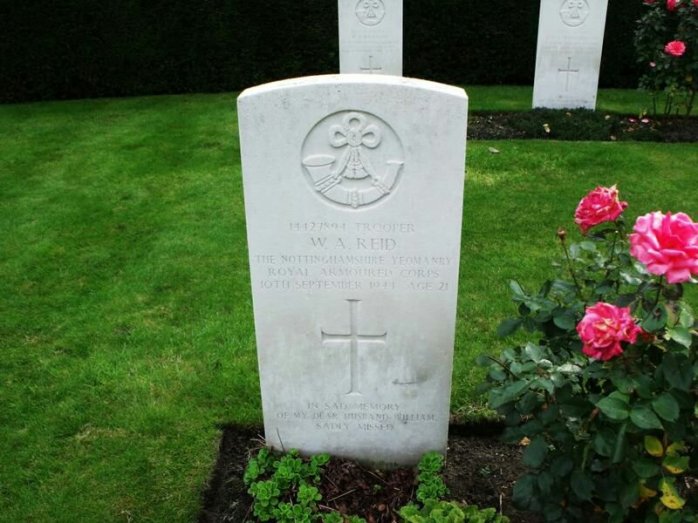
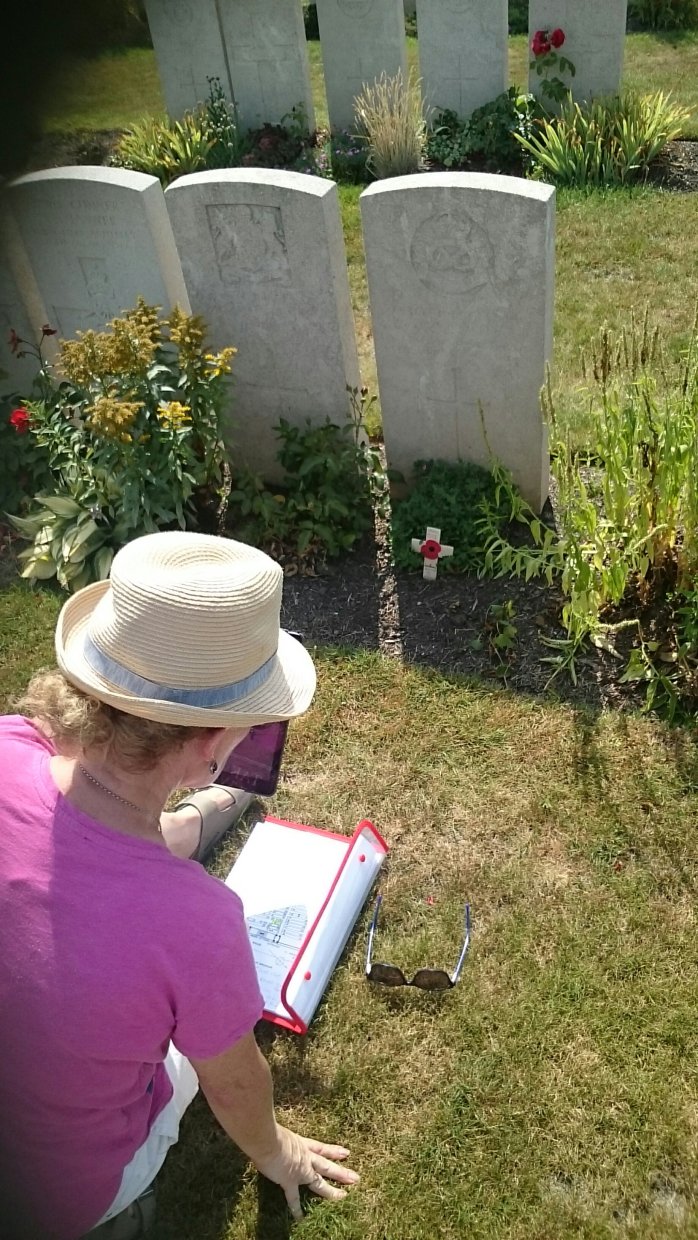
Grave of Trooper William Reid (ww2talk.com)

Name: REID, WILLIAM ANTHONY
Rank: Trooper
Regiment/Service: Royal Armoured Corps
Unit Text: Nottinghamshire Yeomanry
Age: 21
Date of Death: 10/09/1944
Service No: 14427894
Additional information: Son of John and Annie Reid; husband of Kathleen Reid, of Inchicore, Dublin, Ireland.
Grave/Memorial Reference: Brit. Plot, grave 15.
Cemetery: GEEL (Stelen) Churchyard
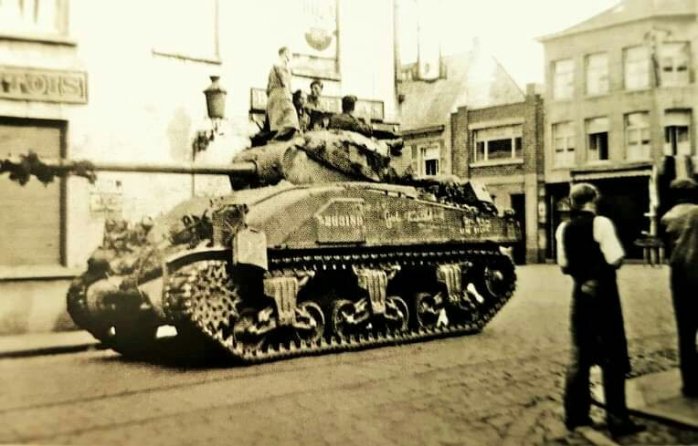
A tank of the Sherwood Foresters Yeomanry at Stationstraat Geel on 10th September 1944. Pic. Willem van Broeckhoven in ‘September Helden’ (Geerings G).

75th anniversary of Battle of Geel is marked by the Belgian Defence Forces
BRITISH CEMETERY GEEL

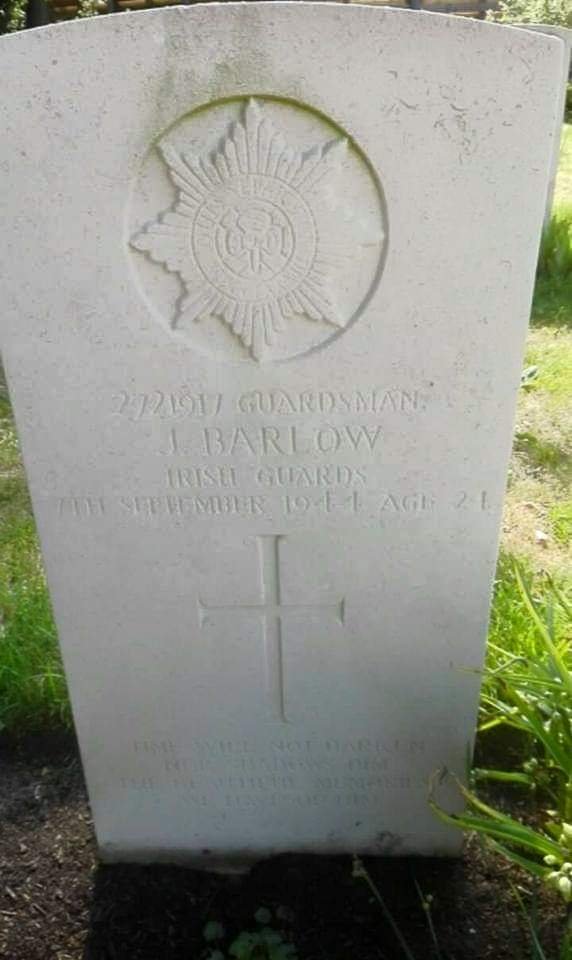
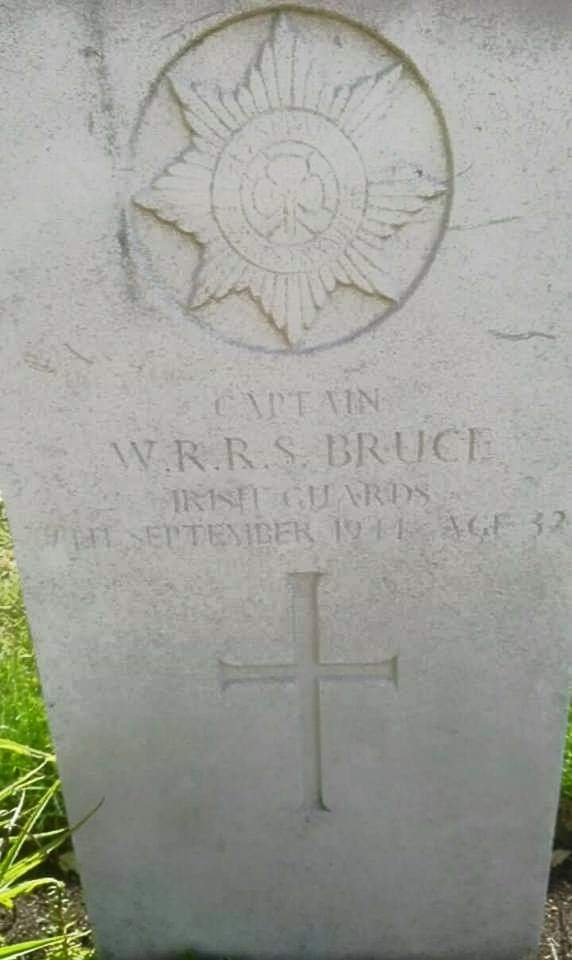
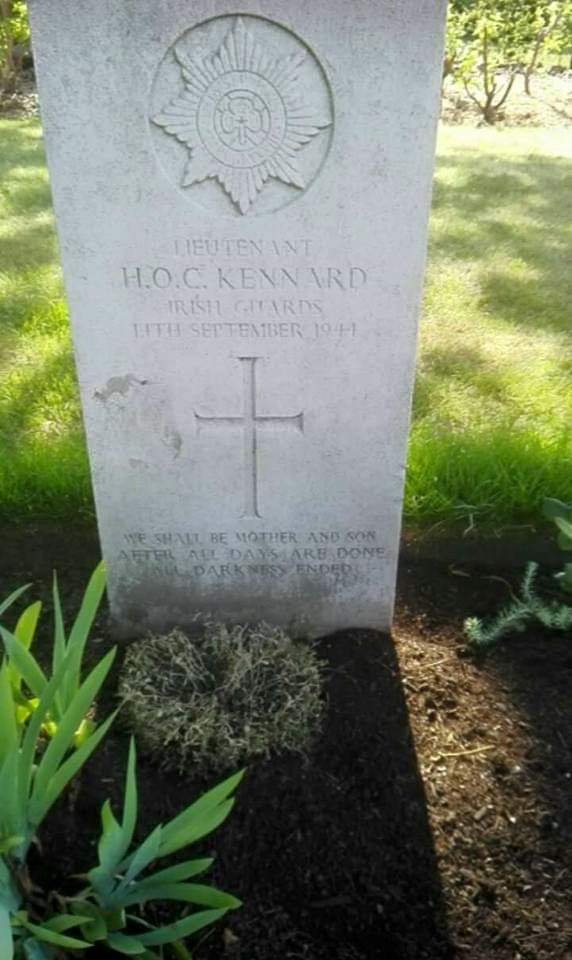
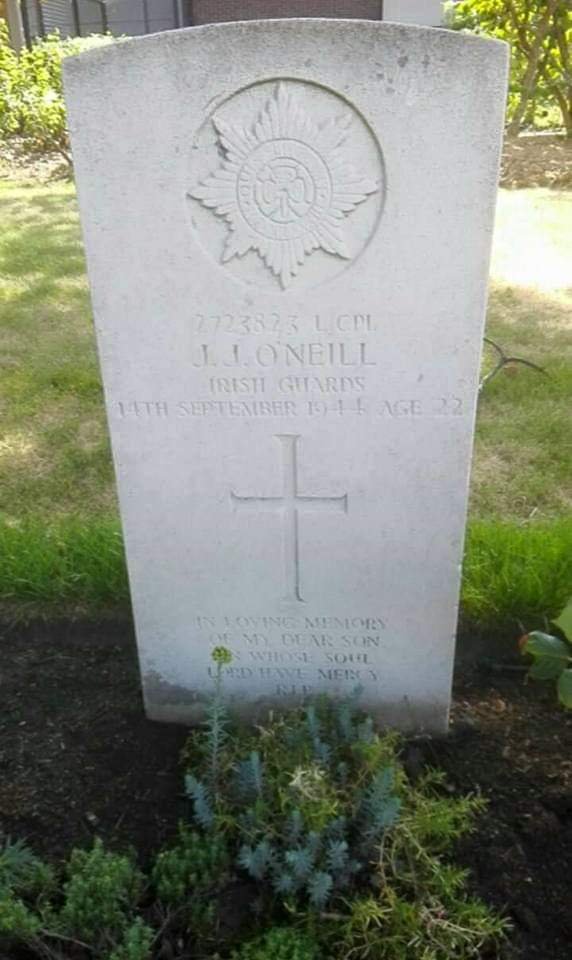
On the 75th anniversary of the Battle of Geel we remember those members of the Irish Guards and others buried in the CWGC cemetery in Geel.

They were killed in the advance across Belgium (following D-day in June 1944) establishing a bridgehead across the Albert and the Meuse canals in Geel in September 1944. Fourteen are buried at the CWGC British cemetery in Geel. Twelve headstones are pictured here. They include a Guardsman Simpson from Portadown Co. Armagh. Thanks for the pictures Leo Haeseldonckx We will remember them.
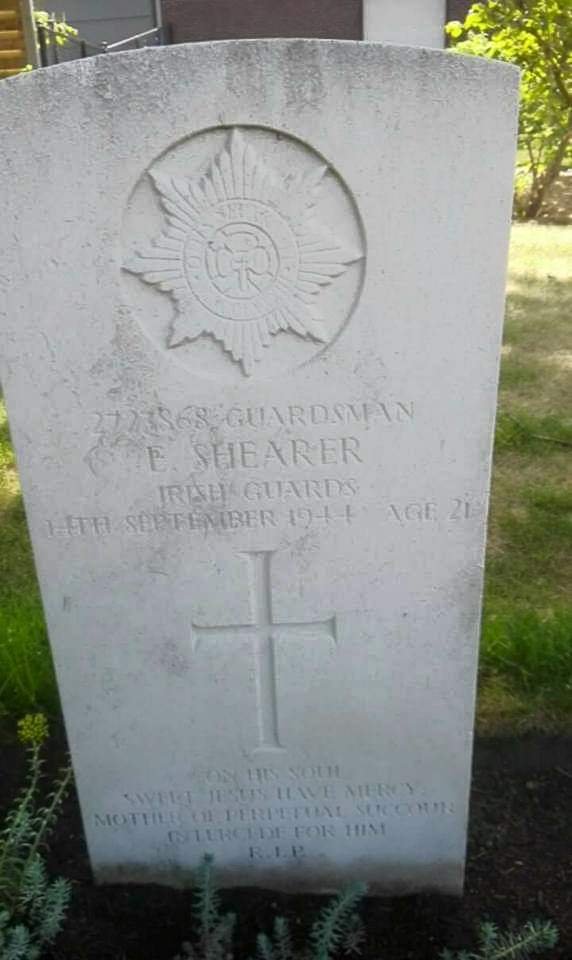
Guardsman E. Shearer

21 yr old Guardsman Edward Shearer (no family details) died on 14/09/44 3rd Battalion Irish Guards.

Guardsman William Simpson from Portadown

Guardsman William Simpson aged 20 from Portadown 3rd Bn Irish Guards died 07/09/44.

Guardsman J. Barlow

24 yr old Guardsman Jack Barlow from Macclesfield 3rd Bn Irish Guards died 07/09/44.

Guardsman E. J. Breslin

28 yr old Guardsman Edward Joseph Breslin 3rd Bn Irish Guards (a Donegal name).

Captain William R.R. Bruce, aged 32, 3rd Bn Irish Guards died 07/09/44.

Lance Serjeant T. Davidson

Lance Serjeant Thomas Davidson aged 29 from Nottingham 3rd Bn Irish Guards died 07/09/44.

Lance Corporal W. Houghton

Lance Corporal Wilfred Houghton, aged 24, 3rd Bn Irish Guards died 14/09/44.

Guardsman L. Hutchman

Guardsman Lawrence Hutchman aged 35 from Pontypridd 3rd Bn Irish Guards died 14/09/44.

Sgt Tom Johns aged 28 3rd Bn Irish Guards died 07/09/44.

Lt Humphrey O. C. Kennard

Lt Humphrey Oscar Coleridge Kennard from Chelsea, London 3rd Bn Irish Guards died 14/09/44.

Lance Corporal JJ O’Neill

Lance Corporal John James O’Neill aged 22 from Liverpool 3rd Bn Irish Guards died 14/09/44.

Guardsman Alan Parsons aged 22 3rd Bn Irish Guards of Tydd St Giles Cambridgeshire died 07/09/44.

Lance Serjeant John Proe

Lance Serjeant John Proe of Whiston, Lancashire aged 23 died 07/09/44 3rd Bn Irish Guards buried in Geel.

Guardsman Rudolph Edwin John Stone died 3rd Bn Irish Guards (no age or family details) died 07/09/44. We will never forget them.

BATTLE OF GEEL

Moving away from WWI to WWII but staying in Belgium, this is the 75th anniversary of the Battle of Geel. A number of commemorative events are taking place, including a weekend of re-enactments and other activities.

Belgium Remembers

The Battle of Geel occurred on 10th and 11th September 1944. Many of the British soldiers who fought in the Sherwood Rangers and other regiments such as the Irish Guards are buried in the CWGC cemetery in Geel. This town in Belgium is twinned with Tydavnet and Monaghan. I notice that one of the casualties was a Trooper Reid from Dublin. He is buried at Stelen churchyard.

Trooper William Reid from Dublin

From the Sherwood Rangers Yeomanry 1939-45 page:

Remembering today….Trooper William Reid

Tpr. Reid, aged 21 from Dublin, Ireland, was killed on Sunday 10th September 1944 when his B Squadron tank was hit at the Doornboom crossroads during the battle to secure the bridgehead over the Albert Canal at Geel, Belgium.
The rest of the crew, Capt. John Mann MC, Tpr. Ernest Winchester and Tpr. John Saunders, were also killed and all were buried by Padre Leslie Skinner in Stelen churchyard two days later, where they still lie.

Geel commemoration for WWII

‘They are here!’ Remembering the liberation of Flanders by the Allies 1944/45

BARD COTTAGE CEMETERY

Bard Cottage Cemetery

For much of the First World war, the village of Boezinge directly faced the German line across the Yser canal. Bard Cottage was a house a little set back from the line, close to a bridge called Bard’s Causeway. The cemetery was made nearby in a sheltered position under a high bank. Burials were made between June 1915 and October 1918 and they reflect the presence of the 49th (West Riding), the 38th (Welsh) and other infantry divisions in the northern sectors of the Ypres Salient, as well as the advance of artillery to the area in the autumn of 1917.

Grave of Lance Corporal Charles H. Smith, South Staffordshire Regiment

Among the graves is that of Lance Corporal Charles H. Smith, South Staffordshire Regiment. He died on 16th August 1917, aged 29, and came from Altrincham near Manchester.

Margaret Nolan, Co. Kilkenny, searching for the graves at Bard Cottage Cemetery

There are now 1,639 Commonwealth casualties of the First World War buried or commemorated in this cemetery. Of these burials, 39 are unidentified but special memorials commemorate three casualties known to be buried among them. The cemetery was designed by Sir Reginald Blomfield.

DRIVER P. MCKENNA

Grave of Driver P. McKenna from Kilkenny

Driver P. McKenna service number 77374 was from Kilkenny, where his father Michael lived, according to the CWGC records. He served with D Battery 121st Brigade of the Royal Field Artillery.

CWGC memorial book at Bard Cottage cemetery

He died on August 19th 1917, aged 34. He is buried at Bard Cottage cemetery at Boezinge north of Ieper.

Bard Cottage Cemetery

ARTILLERY WOOD CEMETERY

Artillery Wood Military Cemetery

Artillery Wood Military Cemetery at Boezinge near Ieper is the final resting place of the poet Lance Corporal Francis Ledwidgand the Welsh bard Hedd Wyn.

Artillery Wood Military Cemetery

he cemetery was established in 1917 after fighting in the immediate area – the Battle of Picked Ridge – had moved away and was used for burials until March 1918.

At the point of the armistice there were some 141 graves in the cemetery. Concentration from the battlefields and three smaller cemeteries (Boesinghe Chateau Grounds, Brissein House and Captain’s Farm) enlarged this to the present 1307.

Artillery Wood Military Cemetery

Artillery Wood Military Cemetery

Artillery Wood Military Cemetery

LANGEMARK GERMAN CEMETERY

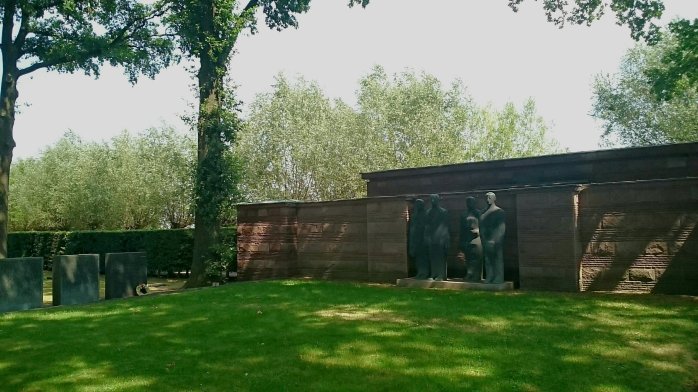
Not far from Ieper and just north of Langemark village on Klerkenstraat is the sombre Langemark German Cemetery. There are relatively few German cemeteries on the Western Front battlefields. As they had invaded, the land that France and Belgium was prepared to grant them was limited, in comparison to their British allies.

Although this cemetery is much smaller in area than Tyne Cot, in fact it contains many more burials because they are effectively in the form of several mass graves, although there are headstones (which are laid flat to the ground) as well. There are also occasional clusters of small crosses, but these are not grave markers.

Langemark German Cemetery

On entering the cemetery itself there is an inscription on a flat stone with a sculpted wreath. This records that 44,061 men are buried here. Ahead is the mass grave of nearly 25,000 men. The names of those known to be buried here are recorded on eighty-six upright bronze panels beyond this entrance.

Just to the left of this central inscription, on the edge of the first of the upright bronze panels is a plaque commemorating two British soldiers: Privates Albert Carlill (Loyal North Lancs) and Leonard Lockley (Seaforth Highlanders). Both died late in 1918. Carlill died as a prisoner of war aged 19, just a week before the end of the war.

Plaque to the two British soldiers buried at Langemark

The “Deutscher Soldatenfriedhof” (German Soldier’s Cemetery) in Langemark is particularly poignant because of its strength and simplicity. Over 44,000 Germans are buried behind the monumental gate made of pink Weserberg sandstone and almost 25,000 of these are buried in a mass grave. More than 3,000 student volunteers of the 22nd up to and including the 27th Reserve Corps found their last resting place here. They were killed in battle in October and November 1914 during repeated attacks in the First Battle of Ypres. The name of “Studentenfriedhof” (Student Cemetery) was given to the cemetery because of the large number of students among these volunteers.

toegangspoort Duitse begraafplaats_gecomprimeerd

At the entrance there is a heavy building reminding one of a bunker. It was erected in red Weser/Vesder sandstone and was meant to make the transition from everyday life to the cemetery itself and in that way create some distance.
There are three rooms in the entrance building: the central passage and two side rooms.
On the oak panels of the “room of honour” to the right, are inscribed the known names of 6,313 soldiers killed in battle who were buried in the original (lower part of the) cemetery. Fencing the cemetery, there is a low wide wall made of the same stone as the entrance building. Pollard willows grow on street side (as a guard of honour) and the right part of the former poppy field is surrounded by a wide ditch symbolising the flooding of the Yser front.

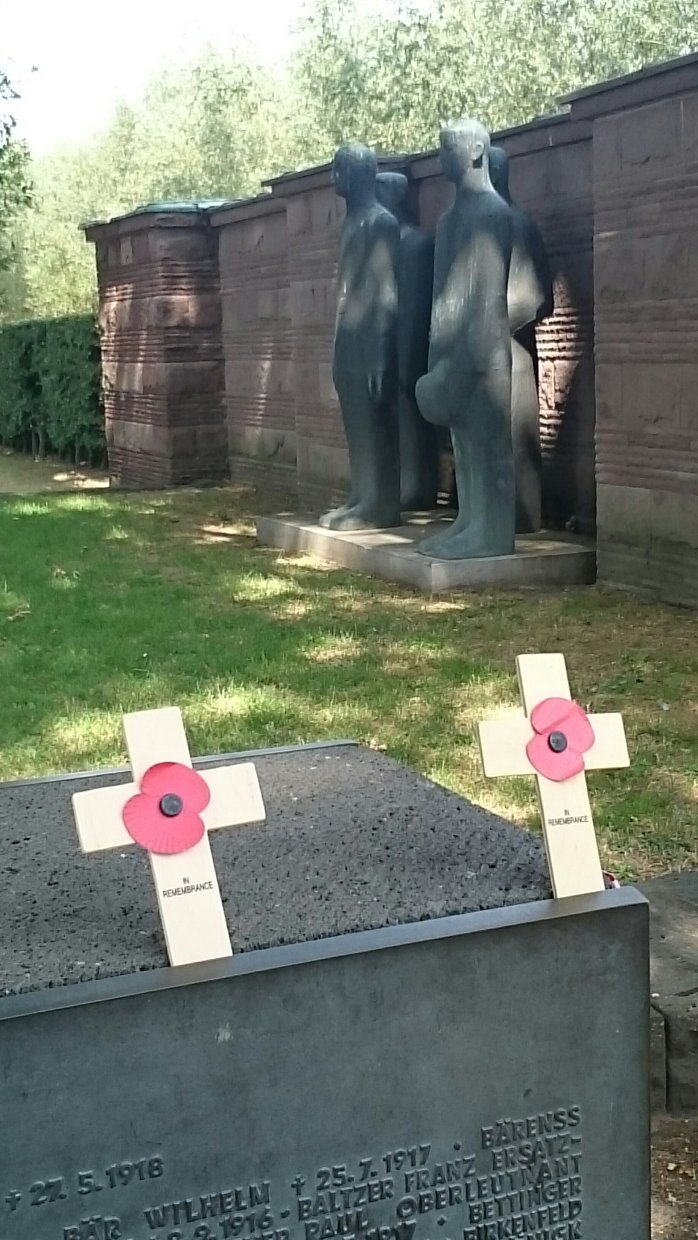
Poppy memorial outside Langemark German Cemetery

PTE THOMAS CARTHY

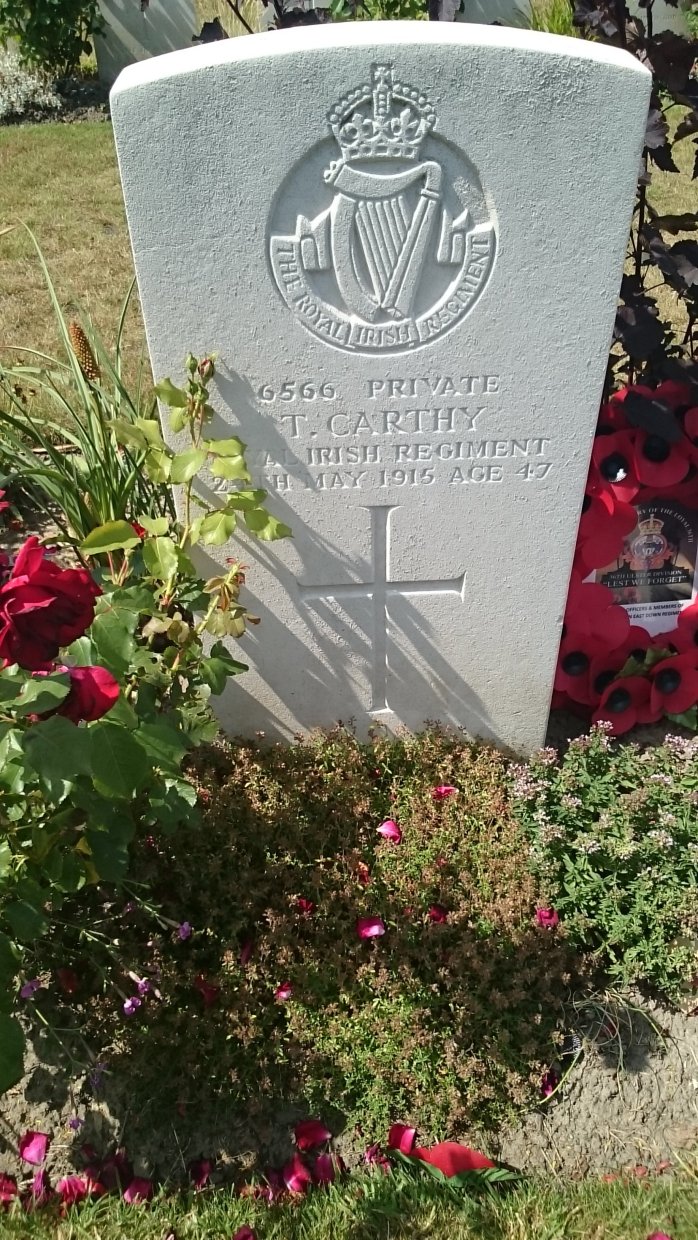
Grave of Pte Thomas Carthy

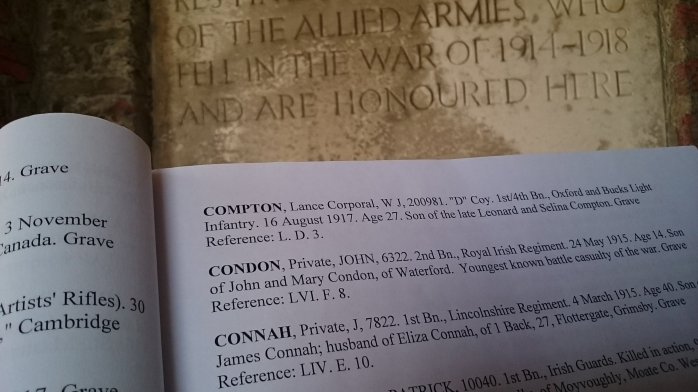
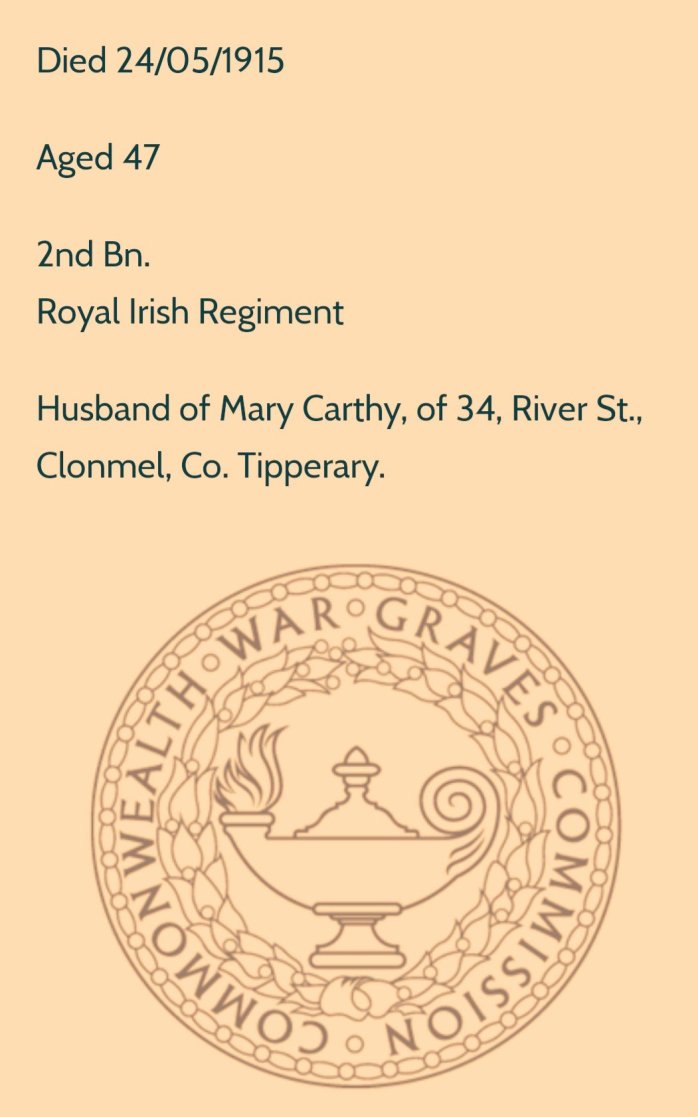
Private Thomas Carthy was from Clonmel, Co. Tipperary. He was the husband of Mary Carthy of 34 River Street. He was killed on May 24th 1915 aged 47.

CWGC details of Pte Carthy

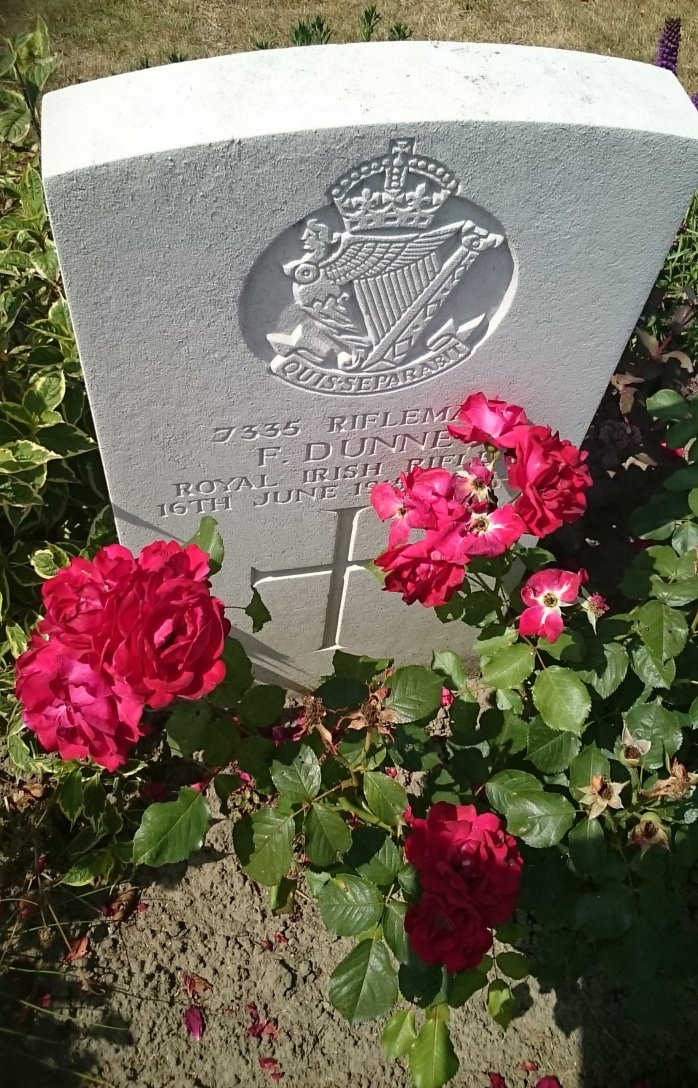
Private Carthy served with the Second Battalion, Royal Irish Regiment. He is buried in Poelkapelle Military Cemetery near Ieper. Another Irish grave I came across there was that of 7335 Rifleman Francis Dunne of the Royal Irish Rifles. He died on 16th June 1915 aged 29. The CWGC details do not reveal where he came from.

Grave of Rifleman F. Dunne

POELKAPELLE CEMETERY

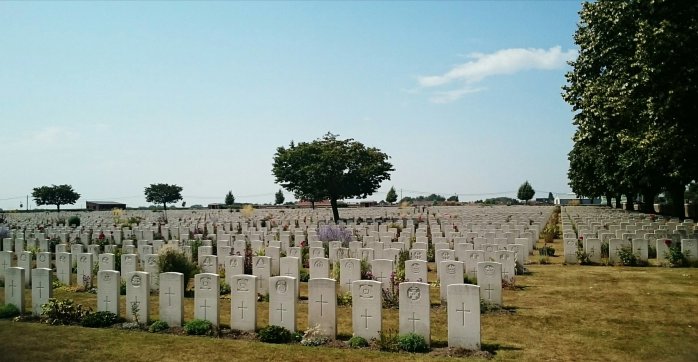
Poelkapelle Military Cemetery

Poelkapelle cemetery is the third largest Commonwealth Graves Commission cemetery in the Westhoek area near Ieper in Belgium.

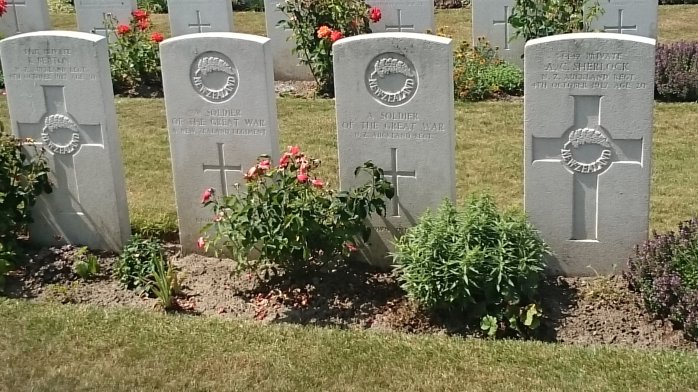
New Zealand soldiers are buried at Poelkapelle

Among the soldiers buried there are some from New Zealand.

The great majority of the graves in this cemetery date from the last five months of 1917, and in particular October, but certain plots contain many graves of 1914 and 1915.

There are now 7,479 Commonwealth servicemen of the First World War buried or commemorated in Poelkapelle British Cemetery. Of the burials, 6230 are unidentified but special memorials commemorate eight casualties known or believed to be buried among them.

Other special memorials commemorate 24 servicemen buried by the Germans in other burial grounds in the area whose graves could not be located. There is also one burial dating from the Second World War.

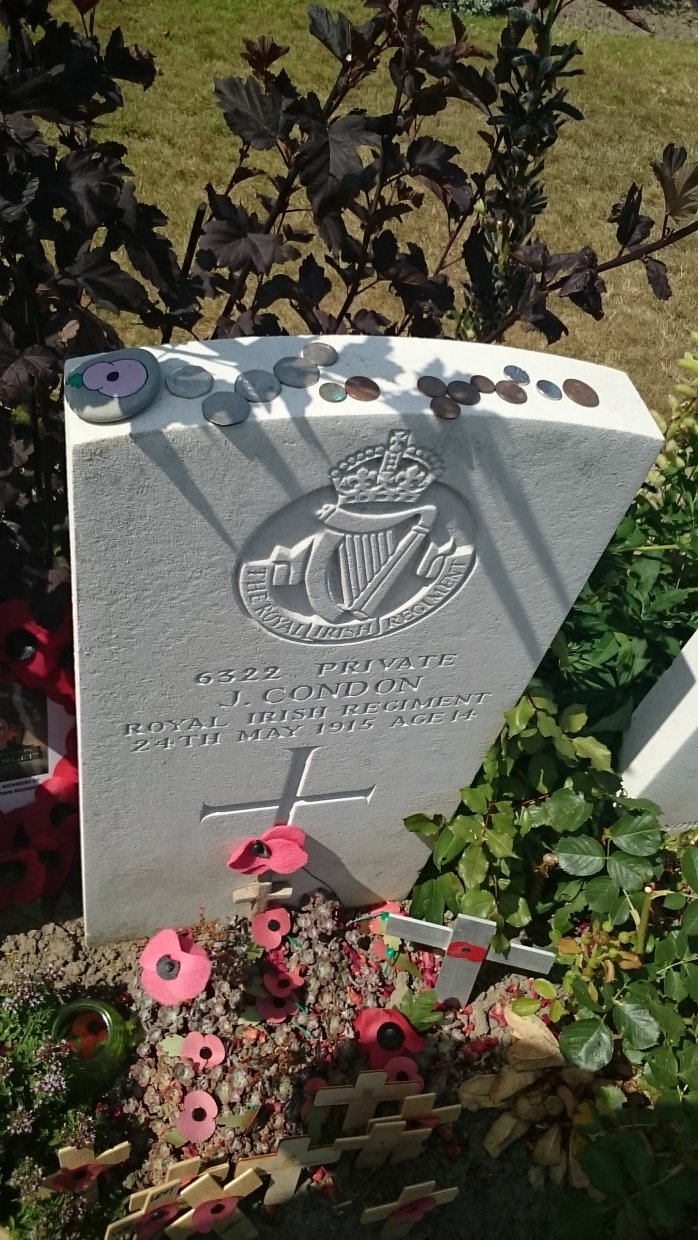
The cemetery was designed by Charles Holden. Among those buried in the cemetery is Private John Condon of the Royal Irish Regiment, who at 14 is thought to be the youngest battle casualty of the First World War commemorated by the Commonwealth Graves Commission.

PTE JOHN CONDON

Grave of Private John Condon

The youngest soldier to be killed in the Great War of 1914-18 was 2622 Private John Condon, of the 2nd Battalion Royal Irish Regiment and came from Waterford in Ireland. Like a quarter of a million other boy soldiers from all over Ireland and Great Britain, John was underage. He arrived at the Western Front in March 1915 and two short months later he was dead. Killed in a German Gas attack at a place called Mouse Trap Farm near Ypres, Belgium on the 24th of May, a day they say when a greenish yellow mist crept from the German lines with deadly poison. John’s grave is in Poelkapelle Military Cemetery (CWGC) and is now reputedly the most visited grave on the entire Western Front for obvious reasons. There, amongst thousands of white headstones, there is usually an array of poppies, flags and wooden crosses around the final resting place of young John Condon and a gravestone that says it all. 6322 Private John Condon 24th May 1915 Age 14.

CWGC memorial book at the cemetery