BLAYNEY BLADES

image

Northern Standard Thursday 12th March 2015 p.35

Blayney Blades Celebrate 20 Years and International Women’s Day

By Michael Fisher

The spirit of the late Sr Celine McArdle was very much present as the Blayney Blades women’s group in Castleblayney celebrated their twentieth anniversary and International Women’s Day with a special event at the Íontas Centre. No doubt she was smiling down on the assembled group of around sixty women, particularly when the Arts Minister, Heather Humphreys T.D., announced that funding to allow the continuation of the various courses and services had been secured. Olive Bolger, Co-ordinator at the centre, said she imagined Sr Celine, who had a love of nature and died in 2013 aged, appeared every now and then in the form of a robin. Or even perhaps a squirrel, as a poem written by Sr Celine and read by her friend Nan Duffy reminded the audience:-

THE SQUIRREL  By Sr Celine McArdle (1988)  

Today I saw a squirrel, a-skip from tree to tree,

Red nimble little body, tail bushy as could be.

He nibbled here; he nibbled there, and then sat upon his rump,

To examine his collection, then scamper a tree stump.

He hid behind the swelling, upon the oldest tree.

And somehow as I looked at him, he reminded me of me!

A-scurrying through the branches of each day’s busy tree.

Picking up the husks and shells of dreams that used to be,

Dreams of stored up treasure, thirty years from when

I gave my all in ’59 – what happened to it then??

Or is there wealth I cannot see, stored up by God above

The fruit of all my scurrying, transformed by His faithful love?

Today, just like the squirrel, I sit upon my rump

And gather up the nourishment I’ll be needing in the slump.

When days are dark and dreary and my soul’s as dry as dust,

When nothing seems to touch my heart, and my knees won’t bend with rust.

Then may I find the store house, in some crevice of life’s tree,

And know again the certainty of God’s love for squirrels and me.

Minister for the Arts, Heritage and the Gaeltacht, Heather Humphreys T.D., said there was no better place to mark International Women’s Day than at Blayney Blades. This day is all about empowerment and positive action and this year’s theme is ‘make it happen’, she said.

The Minister said she had taken part in a Fine Gael event last week to acknowledge women who ‘make it happen’ in their local area. She went on: “We all know inspirational women in our own walks of life. I have no doubt that you could all easily name a woman who has inspired you, who has encouraged and supported you to become who you are today. This room is full of inspirational women. Women who are making it happen for other women in Castleblayney”.

She said the Blades had been making it happen for the last two decades. Since the group was set up in 1995, it had been empowering, encouraging and enabling women and their families in the Castleblayney area, so that they could realise their full potential and play an active role in this community.

The Minister described the range of services provided by Blayney Blades as very impressive; from education and training, counselling, support initiatives for young people and targeted programmes for new communities in this area. “I take my hat off to you”, she said.

Referring to the difficulties over grant aid in previous years, which made it difficult at times to keep the group going, she said she was very pleased to announce that concerns relating to the funding for the National Collective of Community Based Women’s Networks, of which Blayney Blades is a member, had been addressed.

Funding will now be provided by the Department of Justice, safeguarding the future of Blayney Blades and the Dochas Drop-in Centre for Women in Monaghan, and fifteen other projects across the country. The Minister said she had huge respect and appreciation for the work of the NCCWN, particularly the support the network provided to disadvantaged women, so she was very glad that the funding issue had been resolved.

She told the group that the work of Blayney Blades and NCCWN could be summed up in one word: empowerment. A big word, but it could also be a series of small things. A helping hand; a word of encouragement; or a nudge in the right direction. She said that step by step, week upon week and year after year, the Blades had been empowering women and helping them to make a difference in their own lives and in other people’s lives since 1995. You have been making this a better community, she added.

The Minister said her mother Emily had been a great inspiration for her. On the family farm at Drum there was no job a woman could not do. She had taught me from an early age how to drive a tractor and to milk the cows, she said.

She also spoke about the very important influence that two women had on her during her formative years. Both were teachers at St Aidan’s comprehensive school in Cootehill. One was Geraldine O’Brien, her economics teacher, who encouraged students to stand up for what they believed in. The other was Joan Hannon, who taught English and debating. She encouraged students to get out there and make their point known. Both women had sown the seeds for her to enter politics, she said.

Referring to the overall picture, Minister Humphreys said women had made great strides in Irish public life over the last two years. She herself was proud to be one four women sitting around the Cabinet table. Women occupied the roles of Tanaiste, Garda Commissioner, Chief Justice, Arrorney General, Minister for Justice, Education Minister and…of course….Minister for Arts, Heritage and the Gaeltacht! But we still have barriers to break down, she said.

“You will be aware that next year, we will be celebrating the 100th anniversary of the proclamation of this republic. I am leading the Government’s plans for Ireland 2016 – which will commemorate the 1916 Rising – the event which led to the foundation of this State.  I want the role of women in the Rising to be fully recognised.

The Proclamation was a visionary document which specifically mentioned the men AND women of Ireland, at a time when women didn’t even have the vote. Women like Constance Markievicz were complete trail blazers. I want us to recognise these women, to remember the bravery of Cumann na mBan, but also to ask ourselves how, in the following 100 years, women were forced into the background. In some cases, they were written out of history”, she said.

She went on: “We now have a situation where we have to introduce gender quotas to increase the number of women in politics. I hope you will join me as we remember the men AND women who brought about the foundation of this State. After all, a true Republic is a country that values all of its citizens equally”. The Minister concluded by wishing everyone involved in the group all the very best for the next twenty years.

Afterwards in a question and answer session, the Minister spoke about the need for the gender quota and said it was very important that women should be at the decision-making table in government. She believed women needed to get involved in politics and she urged some of them to come forward so they could highlight what needed to be changed.

Last year the Blayney Blades along with other women’s community development groups began a campaign to have funding for their projects ring-fenced. Following the announcement by the Minister, they said they were delighted that the campaign had been successful. It would now give the NCCWN long-term core funding, thus offering continuity to projects. The Blades thanked all those who had supported their campaign and the local representatives who had supported them. They said it was very heartening and affirming to have the work of the NCCWN and Blayney Blades acknowledged and valued.

In her speech, Chairperson Noeline O’Neill said the occasion was tinged with sadness as Sr Celine McArdle was not present to celebrate with them. The Sister of Mercy had the foresight and vision to bring us to where we are today, she said. In the early days of the Blayney Blades, she remembered someone asking them if their group made razor blades! They had grown and developed over the years and she outlined the various stages achieved since the first meeting at the Parish Centre in Castleblayney on January 16th 2005. She outlined some of the courses hey had successfully run and now in 2015 they were about to embark on a new journey. She thanked the staff including the four support workers for their dedication despite the uncertainty over funding last year.

Co-ordinator Olive Bolger, a long-serving member of the group, said Sr Celine’s vision and dream for the group had at first seemed impossible to realise. They had made a trip to see some other centres in Cavan and Tipperary and then received a small bit of funding to initiate the project. She referred to the establishment of a community crèche, the first in the county, which had been set up in a house at Henry Street in Castleblayney. Then they realised other services were needed such as a homework club for older children. She explained how the concept of the Íontas Centre had emerged from its original plan as a small resource centre and how it had been established while Sr Celine was still in good health.

Olive then called on Rose Laverty from Dundalk to light candles in memory of Sr Celione and two former members of the Board of Management who had died, Carmel Redmond and Olivia Rice McCarron.

Development Worker Lorraine Cunningham said the past few months had been very trying because of the uncertainty over finance. She thanked the 43 TDs and Ministers who had attended their lobby at Leinster House a few months ago and had helped to save their funding. She praised Olive Bolger for dedicating her life to making the support group function effectively. The Blades had a very supportive Board of Management and unlike statutory agencies, the work they carried out did not stop at 5pm. She presented Olive with a piece of jewellery in recognition of her long service.

The guest speaker was a St Louis nun based in Dublin, Sr Catherine Brennan. She is a former teacher, who has run courses mainly for women’s groups in Inniskeen, Dundalk, Castleblayney and Dublin. She spoke about the inner journey people must make to understand themselves and the explore their potential. In changing ourselves, change happens all around us, she told the audience.

Following her talk, the Blayney Blades presented Sr Catherine with their award for Woman of the Year 2015. The citation said that Catherine was no stranger to Blayney Blades and had been one of the first tutors to work with the group. She trained in Ireland and England in Adult Education. She delivered the NUI Maynooth Certificate Course in Counselling, which some of our members received. Catherine delivered Personal Development courses, Ennegram, Myers Briggs and Parenting Programmes. Catherine was much more than a tutor. She became a great friend and supporter to all Blades and participants from all over the county and beyond. Catherine has a great love for the environment and encourages us all to become aware of the necessity to protect it. We have all benefitted from her expertise.


FAREWELL LORD JIM

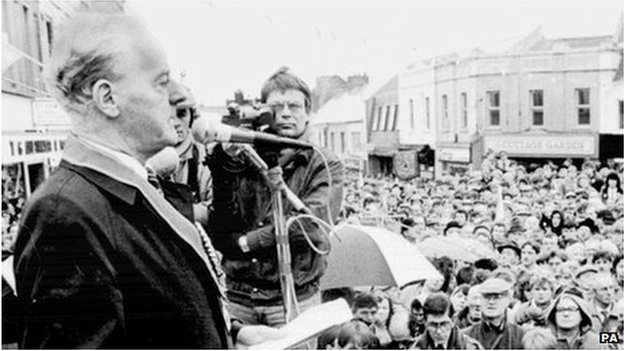
UUP leader James Molyneaux being filmed at a rally by RTÉ News cameraman John Coughlan. Looks like mid-1980s. Photo: Press Association/BBC website

UUP leader James Molyneaux being filmed at a rally by my former colleague RTÉ News cameraman John Coughlan. Judging by the camera, it looks like mid-1980s.  Photo: Press Association/BBC website

I was sorry to hear of the passing of the former Ulster Unionist Party leader (1979-85), Lord Molyneaux. He was always a very courteous man, willing to give interviews to RTÉ News to put across his party’s position. He never came across well on television, however, but that did not bother him much, I reckon. A few years before I retired (so that must be at least six years ago) a former reporter passed on a hint that Jim (as he was usually referred to) was on his last legs and that it might be time to prepare an obituary. Thankfully he remained with us for many more years and died at the age of 94.

Among the things that I remember about Lord Molyneaux are that he served during the Second World War in the Royal Air Force and was among a group of Allies that liberated  Belsen concentration camp in 1945. There is a very powerful description of this event in a documentary made by the BBC a few years ago. He was an Orangeman, who served for a time as Sovereign Grand Master of the Royal Black Preceptory (1971-95).   He was from Killead, beside Aldergrove in County Antrim. While his health allowed him, he used to join in the choir on Sundays at the local parish church beside the former RAF base. The BBC’s Mark Devenport has filed a very good obituary on their website.

James Molyneaux, M.P. at an Orange rally  Photo: Press Association/BBC website

James Molyneaux, M.P. at an Orange rally Photo: Press Association/BBC website

His political career spanned more than three decades. He joined the party in 1946 and went on to become one of its longest-serving leaders from 1979 to 1995. At the end of World War Two, he was among the first British troops to enter the newly liberated Belsen concentration camp in Germany. He was knighted in 1996 and was granted a life peerage in the 1997 Birthday Honours list, becoming Lord Molyneaux of Killead.

Ulster Unionist Party leader Mike Nesbitt said: “He brought a stability to the unionist party at a time when it was much needed. “Times were fraught, not just in terms of the exceptional level of barbaric terrorism that was being imposed upon the people of Northern Ireland, but this very difficult political situation where the then-prime minister Margaret Thatcher was persuaded to sign the Anglo-Irish Agreement with the government of the Republic of Ireland, which was incredibly destabilising for Northern Ireland.”

James Molyneaux held his party together in the face of a continued challenge from DUP leader Ian Paisley. He was MP for South Antrim from 1970 to 1983 and for Lagan Valley from 1983 to 1997. In 1979, he succeeded Harry West as UUP leader.

Lord Trimble, who succeeded Lord Molyneaux as Ulster Unionist leader in 1995, said: “He was one who did things quietly and consensually – there was plenty of discussion about the way in which things were evolving – there was a collective leadership and it was effective.”

Current DUP leader Peter Robinson said Lord Molyneaux was “first and foremost a committed unionist”.
“Through his service in the RAF in World War Two and 27 years as a member of parliament, he was marked by a quiet determination and diplomacy,” he said.
“Jim’s leadership encompassed many difficult years for unionism and his skills were key to ensuring that the Ulster Unionist Party held together when there were competing viewpoints about how to move forward.”

Former Prime Minister John Major described Lord Molyneaux as one of the “unsung heroes of the peace process”. Secretary of State for Northern Ireland, Theresa Villiers, paid tribute to his “fortitude, courage and unswerving commitment to democracy”. “It is right that we remember his distinguished years of public service, as a parliamentarian and leader of the Ulster Unionist Party,” she added. “In that role he helped to steer Northern Ireland through its darkest days from the 1970s to the 1990s and for that we should all be grateful.”

President Michael D Higgins said Lord Molyneaux became an “icon in the Unionist tradition” and would be missed by many “who were appreciative of a life devoted to public service and the world of politics”.  Sinn Féin president Gerry Adams said: “Famously, he described the 1994 IRA cessation as one of the most destabilising events for unionism and the Orange state since partition, and he campaigned against the Good Friday Agreement. “We had obvious and strong political differences, but this is a sad time for Mr Molyneaux’s family and friends and I wish to extend on my own behalf and that of Sinn Féin our condolences and sympathy to them.”

Ulster Unionist assembly member Danny Kennedy said: “He fought for our nation in war, and gave strong and determined leadership in the most difficult period of our country’s history. “He was highly regarded and respected as leader of our party, and his legacy remains in the values he represented and passed on.”
Former Ulster Unionist MP Lord Kilclooney said: “He was a quiet man of politics, but a very genuine gentleman who gave great leadership to the Ulster Unionist Party at a time when it was riven by division.”
Pat Ramsey of the SDLP paid tribute to Lord Molyneaux’s “distinguished career”. “For many years he was a household name and a key player in Northern Irish politics,” he told the Assembly.

Alliance Party leader David Ford said Lord Molyneaux’s experience at the liberation of Belsen “must have touched him enormously and gave him a commitment and drive for public service”. He told the Assembly: “He was the leader of his party for 16 years, something that few of us in this chamber can appreciate exactly how he managed to do this, and he certainly had an impact over some of the most turbulent years in this region as he carried through that role of leadership.”
TUV leader Jim Allister said: “He was a giant in our political scene who moved through it in that quiet, unassuming way that characterised him, and he was above all, a unionist through and through.”
Ulster Unionist Party chairman Lord Empey said: “Affectionately known to his senior colleagues as ‘the wee man’, Jim Molyneaux was never one to be carried away by the high offices he held over the years.
“Whether as a long serving member of parliament, as party leader or as a member of the House of Lords, Jim was always a no-frills politician.”

DIANE DODDS MEP CAP ROADSHOW

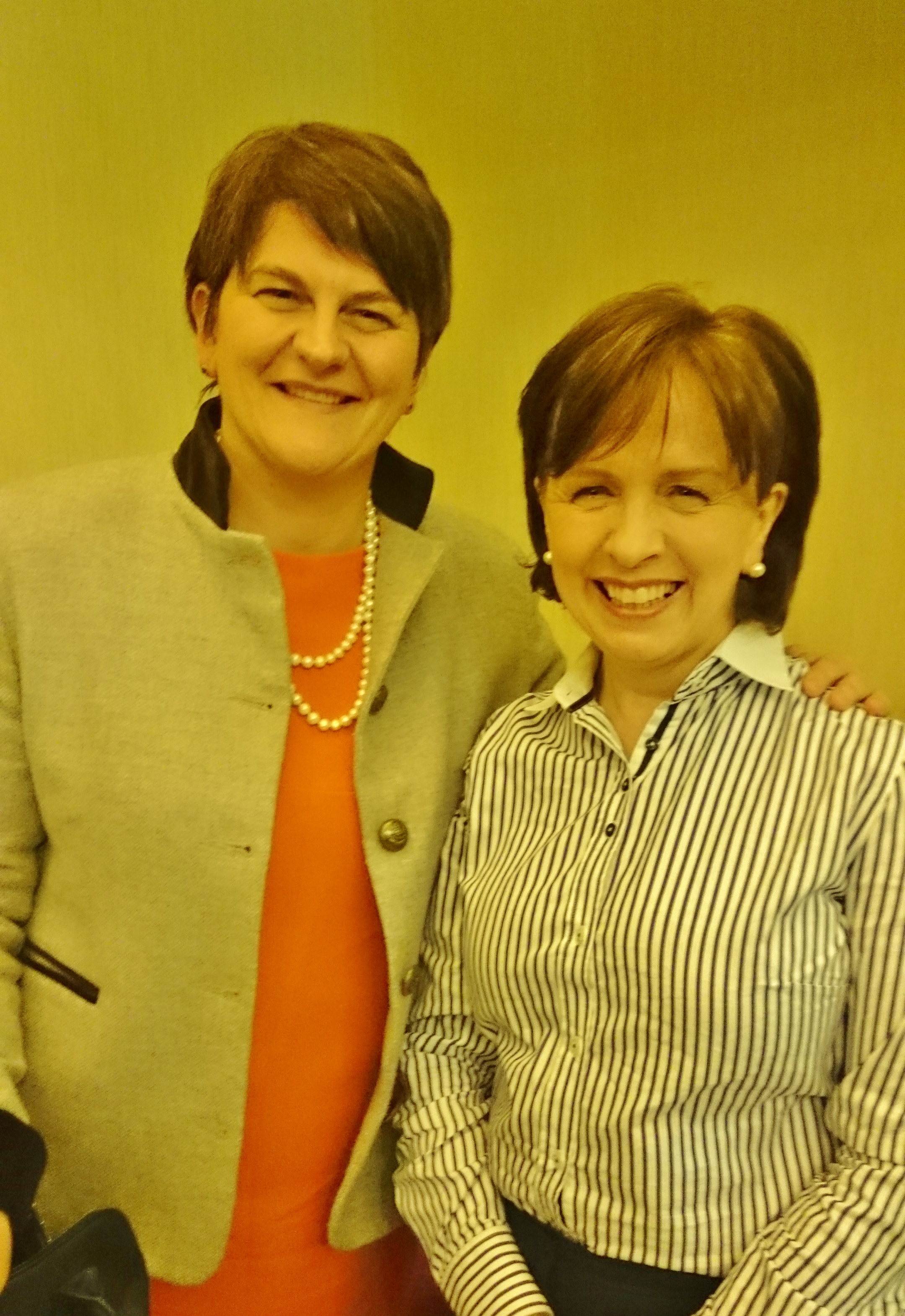
Arlene Foster MLA and Diane Dodds MEP Photo: © Michael Fisher

Arlene Foster MLA and Diane Dodds MEP Photo: © Michael Fisher

Apart from weddings and large-scale social events, Corick House Hotel in Clogher has hardly ever been so packed for a public meeting. Around 250 farmers from the Clogher Valley and Fermanagh attended the second in a series of roadshows on CAP reform, organised by the DUP Member of the European Parliament, Diane Dodds. They had expected around 80 and some latecomers had to sit outside the room to follow the proceedings. One of the first people I met at the hotel was my colleague from the Guild of Agricultural Journalists (Northern Ireland), Brian Donaldson of the Impartial Reporter. Now if only our William Carleton Society summer school in August (which we were planning tonight at Corick) could attract such a crowd this year to the same room…

The MEP was joined by senior DARD officials, who outlined the detail around how the new Common Agricultural Policy will be implemented in Northern Ireland. The meetings will move on to Templepatrick, Portadown and Portrush over the next two weeks and consist of a question and answer session which allows an opportunity for individual concerns to be addressed. One farmer had concerns about the effect of flooding on good farming land caused when waters rose up to fifteen feet in the Colebrooke River. He wondered if it would affect his grant application, if an inspector from the Department came around to check on the extent of his land immediately after the flooding. The answer involved something about force majeure coming into play.

Diane Dodds MEP

Diane Dodds MEP

Announcing the meetings, Diane Dodds said: “As someone who has been heavily involved in the reform of the common agricultural at a European level and one of its greatest critics the outworkings are now reaching farmers on the ground. I have organised in conjunction with DARD, a range of meetings to update and clarify for the implementation of the policy will take effect in Northern Ireland.

“The reform of the common agricultural policy will be the main emphasis for these meetings, given the upcoming single application deadline in May 2015 and ongoing decisions which will ultimately have a lasting impact on the farm business for years to come.

“During the course of the meetings, there will be a presentation on the upcoming requirements of the new CAP scheme, and within this a wide range of topics will be covered, including the basic payment scheme, active farmer definition, eligibility criteria, greening, young farmer and national schemes, cross compliance and the farm business improvement scheme.

Diane Dodds MEP addressing the packed room at Corick House Hotel Photo: © Michael Fisher

Diane Dodds MEP addressing the packed room at Corick House Hotel Photo: © Michael Fisher

“I also recognise that farmers have individual questions and I will ensure that a question and answer session is available. I want to provide an opportunity for farmers to have as much information as possible in a timely fashion to make decisions and prepare for the upcoming changes. DARD has now received clarity and made decisions on the majority of the reformed CAP implementation and have produced guidance. Hence why I feel this is a unique opportunity to gain additional clarity.

“I would strongly urge the farming community to make use of this opportunity, which will help prepare for the single application form in May 2015,” she said.

A farmer asks a question about flooding at the CAP roadshow Photo: © Michael Fisher

A farmer asks a question about flooding at the CAP roadshow Photo: © Michael Fisher

Diane Dodds was joined at the event by her party colleagues Lord Morrow and the Enterprise Minister Arlene Foster. The DUP point out that agriculture is the back-bone to much more than the Northern Ireland economy; it is the fabric of local communities. Agri-food is a key driver of the NI economy. It sustains an estimated 100,000 jobs and contributes some £5 billion in sales. It is also a key exporter of produce, with some £2.6 billion in external sales.

SEARCH FOR THE DISAPPEARED

Dympna Kerr and her brother, Oliver McVeigh at the Mass in Carrickroe    Photo:  © Michael Fisher

Dympna Kerr and her brother, Oliver McVeigh at a Mass in Carrickroe, Emyvale, County Monaghan, at which a new appeal was made for information about the location of Columba McVeigh’s remains Photo: © Michael Fisher

The Minister for Justice Frances Fitzgerald has confirmed the Irish government will continue its commitment to help fund the search for the so-called ‘disappeared’. Following the Good Friday Agreement in 1998, the Irish and British Governments set up the Independent Commission for the Recovery of Victims Remains. Its aim was to locate the remains of those killed by republican paramilitaries and secretly buried during the ‘troubles’ – people commonly referred to as the ‘disappeared’.

RTÉ’s Northern Editor Tommie Gorman in a special Nationwide programme tonight reported on the ongoing work of the Commission, with the remains of six people still to be recovered.

The Commission has a confidential telephone number and post box, and the information it receives can only be used to help recover the dead. In many of the ten cases where remains have been found, republicans and/or others used these facilities to provide crucial information.

Frances Fitzgerald T.D., Minister for Justice and Equality  Photo: Fine Gael

Frances Fitzgerald T.D., Minister for Justice and Equality Photo: Fine Gael

With a search for one of the six still missing, Belfast-born Joe Lynskey, due to begin in County Meath this month, the Minister for Justice has confirmed the Irish government’s ongoing commitment to help fund the work. Frances Fitzgerald said the government remained as strongly committed now to the humanitarian aim of locating the victims for their families as at the outset of the process, and would continue to support the ongoing efforts to locate those victims who have yet to be found. The Minister said she would encourage anyone with information that could help to locate those still missing to give that information, in full confidence, to the ICLVR without delay. “The families of the missing victims have suffered enough.  Out of common human decency, I appeal to anyone who can help bring an end to that suffering to do so”, she said.

Of the six people still missing, five are thought to be buried south of the Irish border and a sixth, Seamus Ruddy, is believed to be buried in a forest in France. The INLA admitted killing Seamus Ruddy.  The five other deaths are attributed to the IRA. The remaining ‘Disappeared’

In February 2010 Joe Lynskey was added to the official list of the disappeared. He was a member of the IRA. He went missing from his west Belfast home during the summer of 1972; his body has never been recovered. Joseph Lynskey was a former Cistercian monk from the Beechmount area of west Belfast. A new search for his remains is due to begin in Co Meath later this month.

Columba McVeigh  Photo: Irish Times

                                                                    Columba McVeigh Photo: Irish Times

Columba McVeigh disappeared on November 1st 1975 and his body has never been recovered. He was from Donaghmore, County Tyrone. He had been working as a painter in Dublin and had only returned to the North a few days earlier. Although extensive searches, based on information received, have been carried out at Bragan Bog near Emyvale in North Monaghan, his remains have not yet been discovered.

Kevin McKee and Seamus Wright disappeared on 2 October 1972. The two of them were from Belfast – Seamus Wright worked as an asphalt layer.  He was aged 25 and married when he went missing. It is thought they were both members of the IRA and were suspected of passing on information to the security forces. The Commission has carried out extensive but unsuccessful searches in the Coghalstown area of Co Meath for the remains of the men.

Captain Robert Nairac disappeared in 1977.  He was an officer with the British Army’s Grenadier Guards on a tour of duty in Northern Ireland when he went missing. It’s thought he was on an intelligence-gathering operation and was singing republican songs at a pub in Silverbridge, South Armagh, on the night of his abduction.  He was 29.  A man was convicted of his murder in 1977 and served a prison sentence. Captain Nairac received a posthumous George Cross.

Seamus Ruddy disappeared in Paris on 9 May 1985. A native of Newry, he had links to the INLA and its political wing, the IRSP.  He was involved in negotiations on behalf of INLA prisoners in the MAZE during the 1981 Hunger Strikes and helped to carry the coffin of hunger striker, Michael Devine, at his funeral in Derry.  In May 1985 he was working as an English teacher in Paris.  It is thought he got into a dispute with INLA members who were attempting to procure weapons in France. . In December 1995 the INLA admitted responsibility for his death. In February 1999 information emerged to suggest that his body was buried in Rouen, France, but despite searches having been carried out his remains have not yet been recovered.

It is believed that information provided by republicans and/or others assisted in eight of the ten cases where remains were recovered.  With Jean Mc Conville (2003) and Eugene Simons (1984), the discoveries were made by chance.

Brendan Megraw was 23-years-old when he was taken from his flat in Twinbrook, west Belfast by the IRA in April 1978.  His wife was expecting their first child at the time. His remains were recovered at Oristown Bog, near Kells in County Meath in autumn 2014.

Peter Wilson was 21 when he went missing in West Belfast in 1973.  Described as a vulnerable person with learning difficulties, his remains were located at Waterfoot beach in County Antrim in November 2010.

Gerard Evans from Crossmaglen in South Armagh was last seen hitch-hiking in County Monaghan in March 1979. In March 2008 his aunt received a map, claiming to identify the location of his remains.  They were eventually recovered from the site near Hackballscross in County Louth in October 2010.

Charlie Armstrong was a 54-year-old father of five who had no connections with paramilitary organisations.  He went missing one Sunday morning in 1981 when he left his Crossmaglen home to collect a neighbour to go to Mass.  His remains were located in a County Monaghan bog in 2010, 29 years after his abduction.

Danny McIlhone went missing from his West Belfast home in 1981.  His remains were found in the Wicklow mountains in November 2008 – two earier, unsuccessful searches were carried out in the area.

Jean McConville was a widowed mother of ten, she was taken from her Belfast flat by the IRA in 1972.  A man out walking on Shelling Beach near Carlingford in County Louth found her remains in August 2003.

Eamon Molloy was abducted from his home in North Belfast in 1975. His body was discovered in a coffin left in Faughart graveyard, close to the border, near Dundalk in 1999.

Brian McKinney was aged 22 when he went missing in Belfast in 1978. His remains were located in a Co Monaghan bog in 1999.

John McClory was aged 17 when he went missing with his friend, Brian McKinney in Belfast in 1978. Their remains were found in the same area of Co Monaghan bogland 21 years later.

Eugene Simons was a 26 year old who went missing form his home near Castlewellan in Co Down in January 1981.  His body was discovered by chance in May 1984 in a bog near Dundalk, Co Louth.

ROAD REPAIRS

roadworksCOUNCILLOR SAYS ROADS BUDGET IS AN ABSOLUTE SCANDAL

Councillors in South Monaghan are arranging an urgent meeting with the Chief Executive of Monaghan County Council to discuss what one of them said was the “absolute scandal” of the roads budget for the coming year. Municipal District members from Carrickmacross-Castleblayney expect to meet Eugene Cummins at their Roads Area Meeting in Monaghan on Monday afternoon, following a meeting of the County Council.

Cllr PJ O'Hanlon  Photo: © Michael Fisher

Cllr PJ O’Hanlon Photo: © Michael Fisher

Councillor PJ O’Hanlon said they seemed to be going back to a budget that was as bad as fifteen years ago. It was one of the most important issues that had arisen since the new Council was introduced last year. The Councillors called for a meeting next week with the five Dáil deputies in the constituency, including the Arts Minister, and for a follow-up meeting to be arranged with the Minister for Transport, Tourism and Sport, Paschal Donohoe. Councillor Colm Carthy proposed and his party colleague Councillor Noel Keelan seconded a motion that the Municipal District should write to the Taoiseach and to the Transport Minister to request extra funding for roads in the constituency, in order to upgrade roads that are in serious disrepair. In addition the members called on local Oireachtas members to push this issue with the Departments involved. The motion was agreed.

Cllr Colm Carthy  Photo: © Michael Fisher

Cllr Colm Carthy Photo: © Michael Fisher

Councillor Colm Carthy referred to what he said was the ridiculous situation whereby Bus Eireann was refusing to allow a school bus service to drive along certain local roads because of their bad condition. He said the state of the roads was the top issue being referred to him regularly by members of the public.

Councillor O’Hanlon also referred to the withdrawal by Bus Eireann of a school bus service because of the bad state of repair of a local road. He proposed and Cllr Padraig McNally seconded a call for the Council to write to Bus Eireann and the Transport Minister to say that under no circumstances should a school bus and service bus be taken off the road due to the bad condition of the road without first notifying the relevant authority, i.e. County Council, and that a period of four weeks be given for the works to be done. This was passed unanimously.

Fianna Fáil Councillor PJ O’Hanlon claimed the Fine Gael-led government seemed to have no interest in the maintenance of roads in the county. They needed to sit down with the Transport Minister and ask him how they were expected to promote tourism on the one hand and on the other improve the roads in their area with the budget that had been allocated.

PAT FINUCANE ANNIVERSARY

Peter Madden addressing the meeting  Photo: Madden & Finucane

Peter Madden addressing the meeting Photo: Madden & Finucane

Speaking on the 26th anniversary of the killing of the Belfast solicitor Pat Finucane, his partner from the legal practice Peter Madden has renewed the call for an independent, international inquiry into the shooting. At a meeting in North Belfast he also rejected the findings of the 2012 de Silva review into the case ordered by British Prime Minister David Cameron. Mr Madden accused British QC Desmond de Silva of exonerating the secret British army unit Force Research Unit (FRU) of its role in the Finucane killing when he concluded that the unit, based in the British army’s headquarters at Thiepval Barracks, Lisburn, did not know the UDA was targeting Pat Finucane.

Mr Madden also asserted that de Silva was being “selective” in respect of the intelligence material he analysed saying “the de Silva review is one man’s analysis of a large amount of material”. Mr Finucane, who was 39, was shot dead at his home in North Belfast in front of his family by the Ulster Freedom Fighters, a cover name for the UDA, on February 12th 1989.

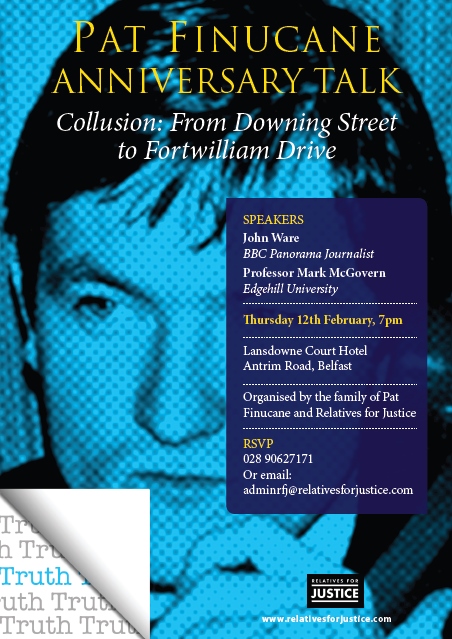
Also speaking at the event organised by the Finucane family and Relatives for Justice (RFJ), held in the Lansdowne Court Hotel on February 12th 2015 was the veteran BBC journalist John Ware, whose Panorama programmes revealed to a sceptical British audience the extent of collusion between the British army, RUC and loyalist paramilitaries.

Geraldine Finucane with Panorama reporter John Ware  Photo: Relatives for Justice

Geraldine Finucane with Panorama reporter John Ware Photo: Relatives for Justice

The first to address the packed hall was Mark McGovern, who for the past number of years has been working with RFJ examining the “patterns of collusion and collusion as a policy” focusing mostly in the Mid-Ulster area. Mr McGovern also raised the need, when analysing collusion, to look at the hundreds of people killed by loyalists in the early 1990s, after the importation of arms from South Africa and the political objectives of that campaign.

Pat Finucane Anniversary Talk  Photo: Madden & Finucane

Pat Finucane Anniversary Talk Photo: Madden & Finucane

BOSE TALKS

Marian Harkin MEP meets SIPTU and Bose workers in Carrickmacross  Photo:  SIPTU

Marian Harkin MEP meets SIPTU and Bose workers in Carrickmacross Photo: SIPTU

Workers from the Bose factory which the company has announced will be closed by June have held a meeting held in Carrickmacross with the Independent MEP Marian Harkin. They were accompanied by the SIPTU Industrial Organiser Jim McVeigh. Monaghan Councillor Paudge Connolly also attended the discussions, which explored whether the European Globalisation Adjustment Fund (EGF) could be activated for the 140 workers due to lose their jobs.

Marian Harkin said afterwards the Fund could be used for retraining or increasing skills, or for workers who might like to set up their own business. In certain cases subsidies could be paid to local employers who would take on redundant Bose workers for a guaranteed period of time. The MEP is the author of the regulation for the Fund that is available for redundant workers across the EU. This Fund can be applied for wherever jobs are lost due to globalisation and the impact of the redundancies on the local area is significant. The fund is also available to any other workers who lose jobs that are involved in supplying the Bose factory or in transport, haulage, or related services, or any workers whose employment is dependent on the Bose factory.

Marian Harkin MEP  Photo: European Parliament

Marian Harkin MEP Photo: European Parliament

There is also an opportunity to apply to the Fund for an equal number of young people from the region who are not in employment, education or training. This means that up to 300 people might be able to avail of the Fund. Marian Harkin said the Fund might provide opportunities for workers made redundant and while it was only a start, it could at least be a stepping stone to future employment.

A public meeting is going to be organised in Carrick in the next few weeks for all the workers and members of the public who are interested. Details will be made available within the next few days. The MEP said she had worked with many other groups of workers who had accessed the Globalisation Fund, such as DELL workers and the Waterford Crystal workers. “ I would be more than happy to assist Bose workers in any application they might make for the Fund and its rollout”, Marian Harkin concluded.

CARRICKMACROSS WATER

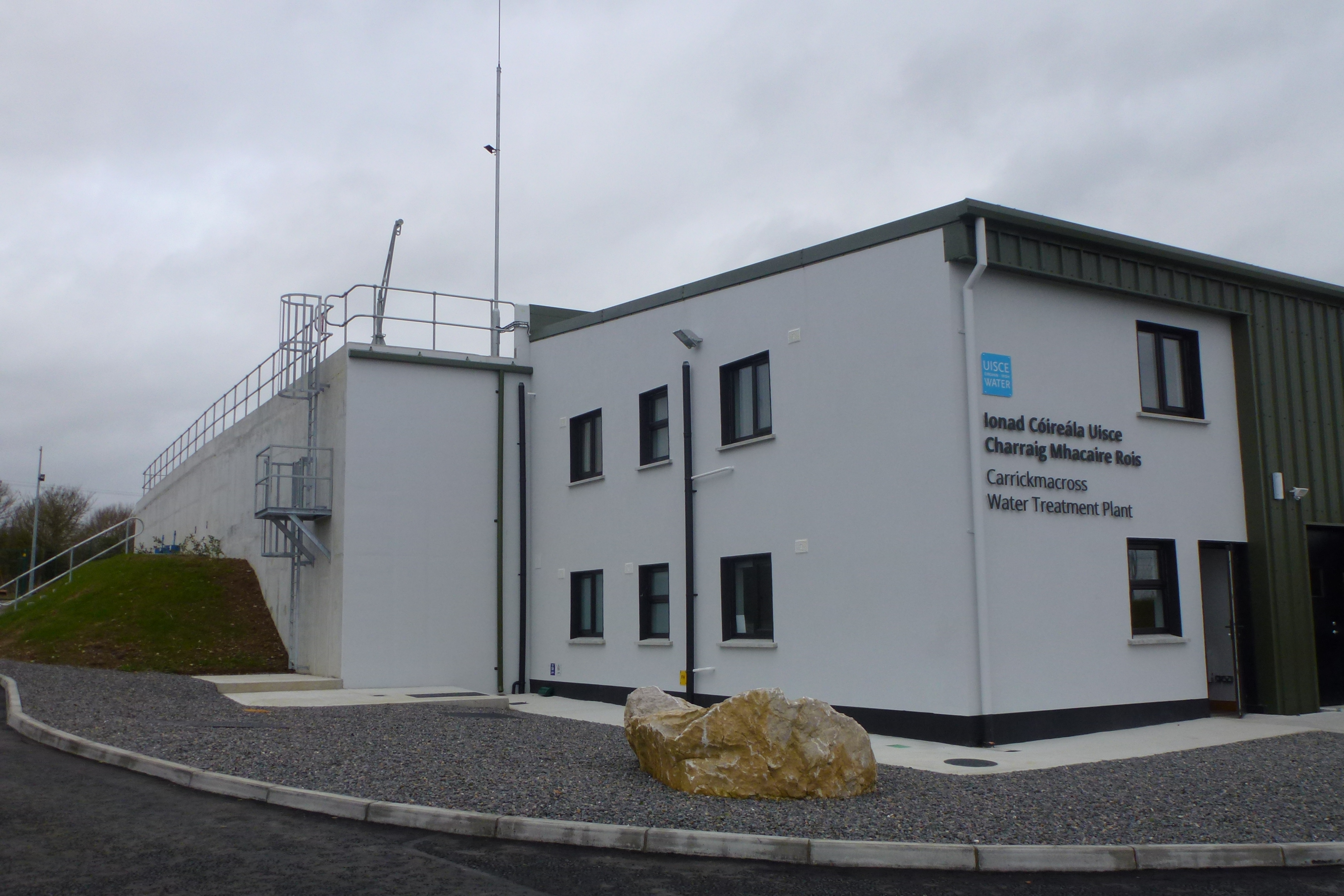
Carrickmacross Water Treatment Plant, Nafferty

Carrickmacross Water Treatment Plant, Nafferty

The Environment Minister, Alan Kelly T.D., has officially opened  the new €3.5 million Carrickmacross Water Supply and Treatment Plant, situated at Nafferty on a hill on the outskirts of the town, near the Ballybay Road. A small group of protestors from Carrickmacross says No to Irish Water staged a protest near the entrance as the Minister arrived.

Construction of the plant began in May 2013 and it was commissioned in November 2014. Built on the site of the previous reservoir, the facility will supply water to domestic and business customers in Carrickmacross town and the surrounding area. Carrickmacross currently requires approximately 1.2 million litres of water a day for domestic, industrial and agricultural use. The new plant has the capacity to treat 160,000 litres of water per hour ensuring an adequate supply of treated water to meet current and future customer demands.

In 2009 the Environmental Protection Agency (EPA) issued a direction to Monaghan County Council placing the supply on a Remedial Action List. It was therefore critical that the new plant included a robust design, using proven technology for the treatment and continuous monitoring of water quality. The previous supply was susceptible to changing weather conditions, such as heavy rainfall or flash flooding, causing the quality of the ground water supply to change. The new plant is supplied by four different water sources with the quality of water from each being monitored on a continuous basis. In the event of any change in water quality an automatic alarm is notified to the operator and the water treatment process can be adjusted or a different water source can be selected to ensure customers always get a top quality water supply.

A full range of treatment processes including filtration, UV treatment, disinfection and fluoridation will also be deployed at the new plant ensuring compliance with current regulations. As a result Irish Water and Monaghan County Council successfully applied to the EPA and the HSE to remove the scheme from the Remedial Action List.

Commenting on today’s opening, Jerry Grant, Head of Assets, Irish Water said; “Providing a safe and secure water supply for our communities and businesses is vital and Irish Water has prioritised investment in improving drinking water quality standards. The recent EPA Drinking Water Report highlighted the inadequacy of a significant proportion of our treatment plants supplying drinking water and the scale of the investment needed to ensure all communities have access to clean drinking water. The opening of Carrickmacross Water Treatment Plant is a great example of how Irish Water working in partnership with Monaghan County Council can deliver real benefits in terms of security of supply, quality and value for money to the local community.”

Minister for the Environment, Alan Kelly T.D.

Minister for the Environment, Alan Kelly T.D.

Minister for the Environment, Community and Local Government, Alan Kelly, said: “I’m delighted to open this water treatment plant in Carrickmacross. This new facility has seen strong cooperation between Irish Water, Monaghan County Council and private sector partners to ensure the town and surrounding areas have a modern, state-of-the art water treatment facility. The project was delivered on time, and under budget and I congratulate all involved.

Having a secure, high quality water supply is vital to every town’s daily life and economic development. With this new water treatment plant Carrickmacross will have the reliable, drinking water supply it needs for the years and decades ahead, so that its families, firms and farms can go about their daily activities and the local economy can progress.

With the reform of the water sector and the establishment of Irish Water, investment in water infrastructure is increasing. I am confident that Monaghan will experience improved water services and sustainable water investment as a result of the Government’s reforms”, the Minister concluded, before being given a tour of the facility.

Jerry Grant along with local representatives accompanied Mr Kelly on a tour of the facility.

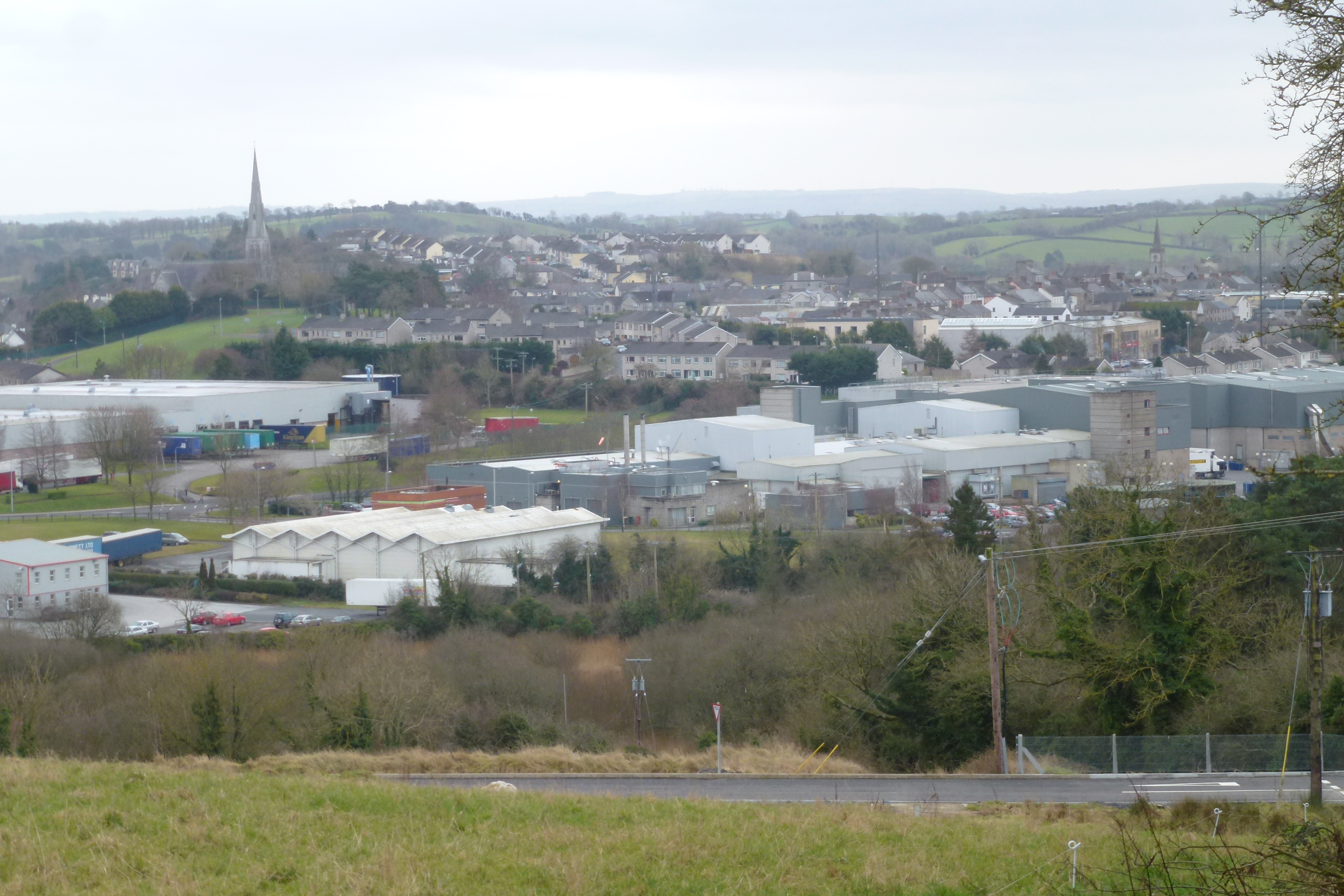
View of Carrickmacross from Nafferty  Photo: © Michael Fisher

View of Carrickmacross from Nafferty Photo: © Michael Fisher

Irish Water is responsible for 855 water treatment plants that supply over 1.6 billion litres of water every day to 3.3 million people. The company invested €340m in improving water and waste water services in 2014 and will invest over €410 million in improving water services during 2015, this spend will increase over subsequent years.


TAOISEACH IN MONAGHAN

Northern Standard Thursday 12th February p.1

Northern Standard Thursday 12th February p.1

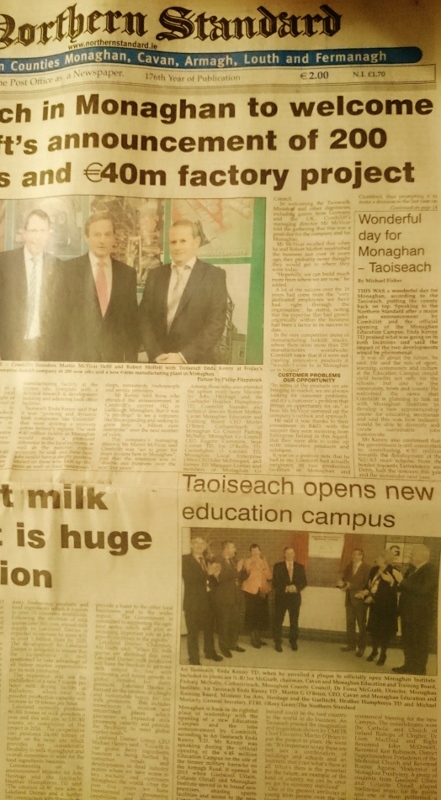
My front page story in this week’s Northern Standard Thursday 12th February including a brief interview I got with Enda Kenny as he was leaving the Monaghan Education Campus after the official opening. He was already an hour behind schedule, heading for Virginia in County Cavan, but provided me with a few good quotes about how important a day it was for Monaghan, and the impact of the new Campus and 200 new jobs at Combilift would be ‘phenomenal’.

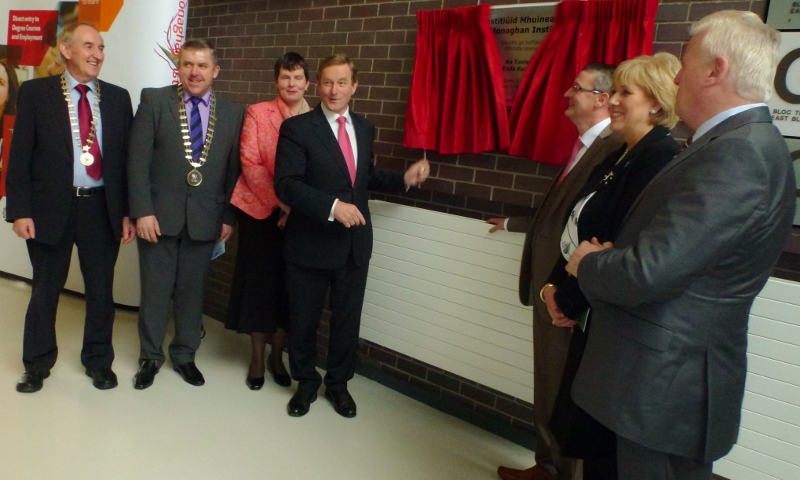
Taoiseach Enda Kenny unveiling plaque at Monaghan Institute with Director Dr Fiona McGrath, Cllr Padraig McNally & Joe McGrath, Chair CMETB  (left) and CEO CMETB Martin O'Brien, Heather Humphreys TD & Michael Moriarty ETBI  Photo: © Michael Fisher

Taoiseach Enda Kenny unveiling plaque at Monaghan Institute with Director Dr Fiona McGrath, Cllr Padraig McNally & Joe McGrath, Chair CMETB (left) and CEO CMETB Martin O’Brien, Heather Humphreys TD & Michael Moriarty ETBI Photo: © Michael Fisher

This was a wonderful day for Monaghan, according to the Taoiseach, putting the county back on top. Speaking to the Northern Standard after a major jobs announcement by Combilift and the official opening of the Monaghan Education Campus, Enda Kenny T.D. praised what was going on in both locations and said the impact of the two developments would be phenomenal.

It was all about the future, he said. He said the mix of sport, learning, community and culture at the Education Campus would yield benefits not only for the schools, but also for the community, town and county. He welcomed the news that Combilift is planning to link in with Monaghan Institute to develop a new apprenticeship course for educating mechanics and said this was how industry would be able to diversify and create sustainable jobs nationwide.

Mr Kenny also confirmed that the government is still committed to contributing €50 million towards the development of the N2/A5 road scheme from the border towards Letterkenny and Derry, half of the amount this year and the remainder next year.”

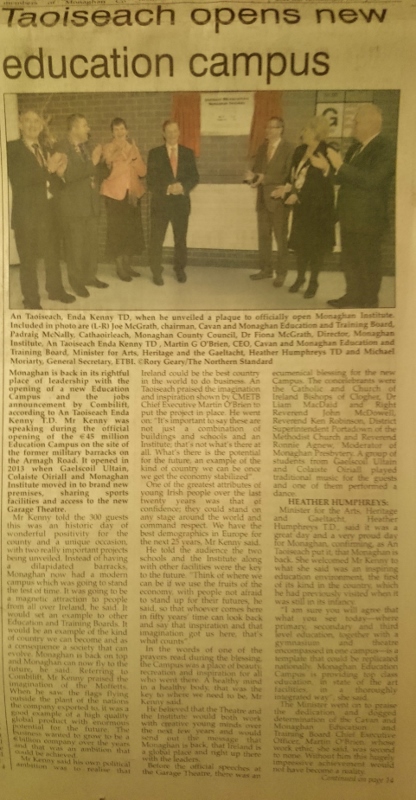
Taoiseach Opens New Education Campus: Northern Standard 12/02/15 p.1

Taoiseach Opens New Education Campus: Northern Standard 12/02/15 p.1

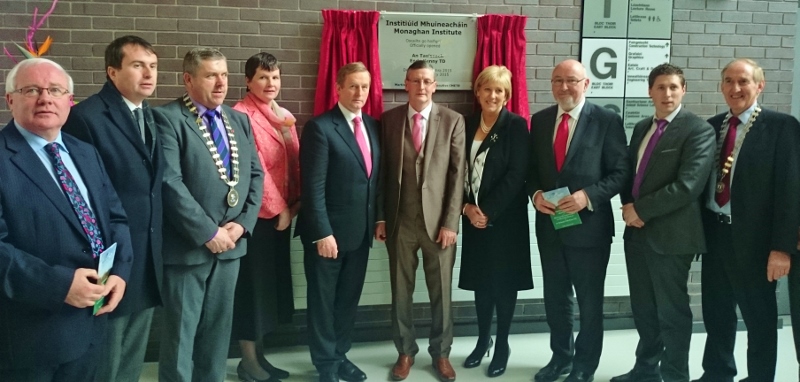
Opening of Monaghan Institute: Taoiseach Enda Kenny TD unveils plaque in the main entrance hall.

Taoiseach Enda Kenny unveiling plaque at Monaghan Institute with Director Dr Fiona McGrath, Cllr Padraig McNally, Joe McGrath, Chair CMETB, Sean Conlan TD & Brendan Smith TD  (left) and CEO CMETB Martin O'Brien, Heather Humphreys TD, Caoimghín Ó Caoláin TD, Matt Carthy MEP & Michael Moriarty ETBI  Photo: © Michael Fisher

Taoiseach Enda Kenny unveiling plaque at Monaghan Institute with Director Dr Fiona McGrath, Cllr Padraig McNally, Sean Conlan TD & Brendan Smith TD (left) and CEO CMETB Martin O’Brien, Heather Humphreys TD, Caoimghín Ó Caoláin TD, Matt Carthy MEP & Joe McGrath, Chair CMETB (right) Photo: © Michael Fisher

BOSE FACTORY TALKS

Bose factory, Carrickmacross  Photo:  © Michael Fisher

Bose factory, Carrickmacross Photo: © Michael Fisher

Union representatives and local politicians have welcomed the decision by the US-based management of Bose to extend the operation of the Carrickmacross plant until June. SIPTU Industrial Organiser Jim McVeigh met the Human Relations Director Barry Weaver in Carrick a week ago and is due to hold more discussions with him tomorrow (Thursday). It was agreed that the closure announced on January 22nd would be postponed beyond April, while talks continued on acceptable redundancy terms and other issues. Mr Weaver also met the Minister for Jobs, Enterprise and Innovation, Richard Bruton T.D. in Dublin along with Pat McAdam of Bose Carrickmacross.

Sean Conlan T.D. Photo: © Michael Fisher

Sean Conlan T.D. Photo: © Michael Fisher

Fine Gael T.D. Sean Conlan said since the closure announcement was made he had lobbied both Mr Bruton and the IDA to ensure everything within their power would be done to save the 140 jobs. Following this representation Mr Bruton  agreed to meet a delegation of Bose workers, the IDA and a SIPTU representative in Carrickmacross last Friday. A very constructive meeting took place with all involved and they discussed the future prospects of the Bose workers along with the need to ensure that
redundancy packages acceptable to the workers are put in place.

Deputy Conlan said the Bose plant was a state of the art plant and very well placed geographically given its close proximity to Dublin airport and the port. He said it was of the utmost importance the Industrial Development Authority used every resource available to market this plant globally in the best possible way in an effort to attract a new employer, and he was hopeful one would be found.  The IDA who were represented by Emmanuel Dowdall confirmed that their eighteen overseas offices were looking for an alternative employer.

SIPTU Industrial Organiser Jim McVeigh   Photo: © Michael Fisher

SIPTU Industrial Organiser Jim McVeigh Photo: © Michael Fisher

Jim McVeigh of SIPTU said the focus was on asking the IDA to try to attract other investors and to ensure alternative employment for the Bose workforce. Mr Mc Veigh added: “We welcome the agreement by the company to delay the proposed closure while other opportunities are examined by all of those concerned including the Minister and the agencies responsible for finding alternative employment. The closure of this plant, in Carrickmacross since 1978, is devastating for our members, a dedicated and skilled workforce, and for the town and surrounding areas in county Monaghan”.