LEINSTER REGIMENT MEMORIAL BIRR

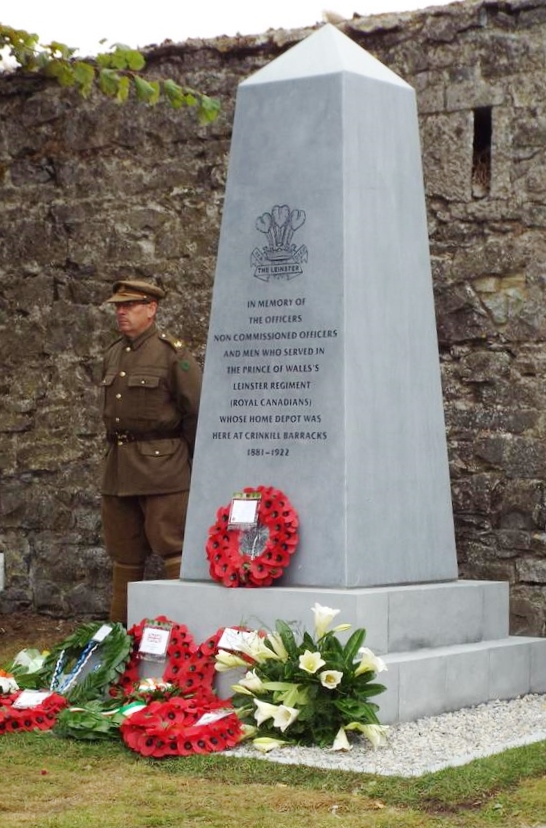
Leinster Regiment Memorial in Birr Photo: © Ray Hayden

Leinster Regiment Memorial in Birr Photo: © Ray Hayden

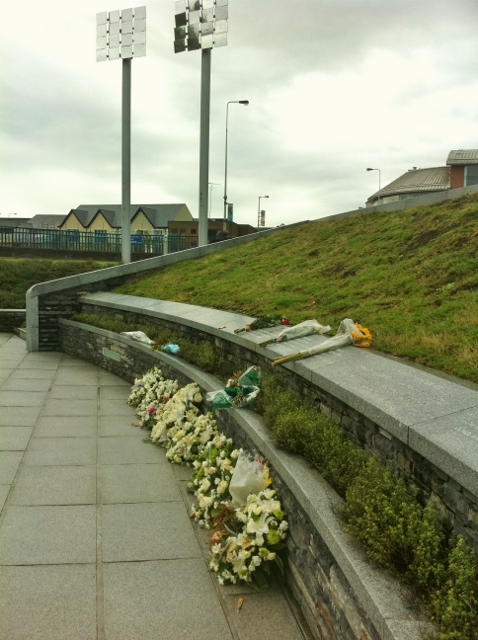
Having written yesterday about the Menin Gate I am continuing the theme of the involvement of the British Army in the First World War. Courtesy of Ray Hayden who was honouring the memory of relatives, I am publishing these pictures from the ecumenical service in County Offaly where a new memorial was unveiled to the members of the Prince of Wales’s Leinster Regiment (Royal Canadians) based at the former Crinkill Barracks near Birr.

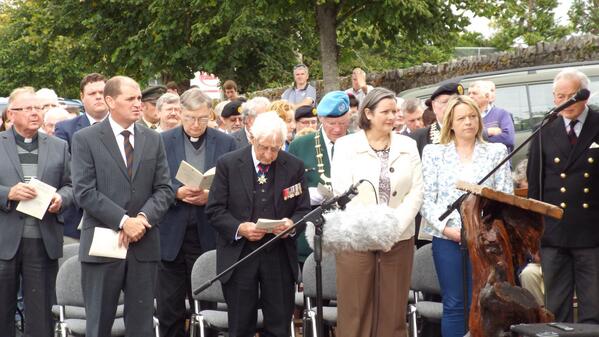
Irish & British Army veterans on parade at Crinkill Photo: © Ray Hayden

Irish & British Army veterans on parade at Crinkill Photo: © Ray Hayden

The regiment was formed in 1881 and their depot was based at Crinkill barracks. The Leinsters occupied one square of the barracks whilst the second square was occupied by visiting regiments. The average length of stay was one year. During the first world war recruitment in Birr resulted in a constant flow of recruits from the surrounding area for the first eighteen months. After that there was a steady decline. Nearly 6.000 men in total were recruited. In 1917 an aerodrome was built on the 14 acres site and three planes were kept there.

Irish & British Army veterans on parade at Crinkill Photo: © Ray Hayden

Irish & British Army veterans on parade at Crinkill Photo: © Ray Hayden

Leinster Regiment Cap Badge

Leinster Regiment Cap Badge

The Regiment raised seven battalions for service with the British Army during World War I, which saw action on the Western Front and in the Middle East. The 1st Battalion served with the 27th Division and the 10th (Irish) Division. The 2nd Battalion with the 6th Division, 24th Division, 16th (Irish) Division and the 29th Division. The 6th Battalion served with the 10th (Irish) Division, 14th (Light) Division, 34th Division and 66th Division. The 7th Battalion with the 16th (Irish) Division.

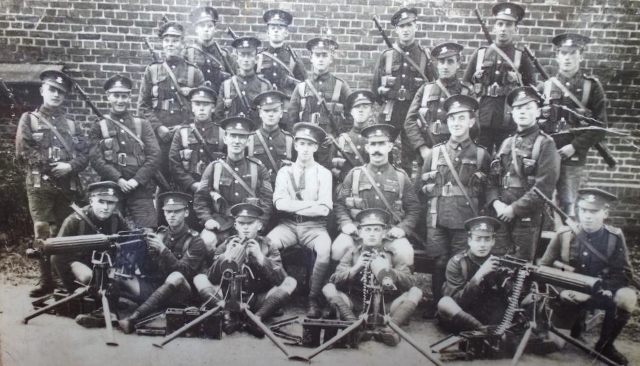
Leinster Regiment soldiers prepare to set off for WWI Archive Photo via Ray Hayden ©

Leinster Regiment soldiers prepare to set off for WWI Archive Photo via Ray Hayden ©

The Anglo-Irish treaty was signed in December 1921 and on March 11th 1922 the British Army issued orders for the disbandment of the Prince of Wales’s Leinster Regiment along with five other corps and infantry battalions. The regimental colours were laid up at St George’s Chapel in Windsor Castle. Soon afterwards the IRA 3rd Southern Division took control of the barracks and on 14th July 1922 they set fire to the barracks.

Paul Kehoe TD and Maj Gen The O'Morchoe at the unveiling Photo: © Ray Hayden

Paul Kehoe TD and Maj Gen The O’Morchoe at the unveiling Photo: © Ray Hayden

The ruins became dangerous and in 1985 all internal buildings were demolished, including the landmark clock tower. All that remains today are the perimeter walls and gates. The new memorial is situated beside one of the walls. Among those who attended the ceremony at Crinkill were the government Chief Whip Paul Kehoe TD and Major General The O’Morchoe CB CBE, President of the Leinster Regiment Association and President of the Royal British Legion (Ireland) and local Fine Gael TD Marcella Corcoran Kennedy.

Stained Glass Window at St Brendan's Church Birr for Leinster Regiment Photo: © Andreas F. Borchert

Stained Glass Window at St Brendan’s Church Birr for Leinster Regiment Photo: © Andreas F. Borchert

This was part of a weekend of events in the Birr area marking the connection with the Leinsters. In Birr there is a memorial window for the Leinster Regiment at St Brendan’s church. A delegation from the Belgian town of Ledegem in Flanders came to Offaly and laid a wreath at the new memorial. On October 14th 1918 in a fierce engagement resulting in the award of two Victoria Crosses to Leinster Soldiers,  the 2nd battalion Leinster Regiment led the advance into Ledegem on the  first day of what is now known as the Battle of Courtrai. In that advance the  Leinsters, supported by the 4/Worcesters, cleared the town of enemy forces and  in so doing ended the four year occupation of a community that had become a  major supply depot for the German occupation in West Flanders.

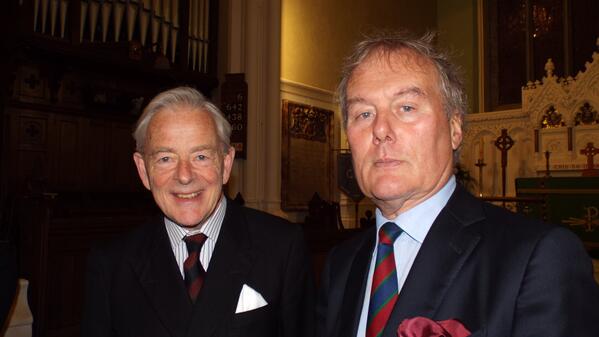
Lord Rosse of Birr Castle and Kevin Myers Photo: © Ray Hayden

Lord Rosse of Birr Castle and Kevin Myers Photo: © Ray Hayden

MEETING AT MENIN GATE

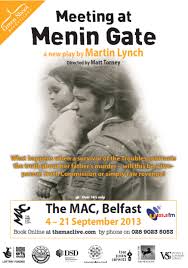
Meeting at Menin Gate at the MAC arts centre Belfast (flyer)

Meeting at Menin Gate at the MAC arts centre Belfast (flyer)

This new play by Belfast writer Martin Lynch, Meeting At Menin Gate, is the final instalment of The Ulster Trilogy series which explore the state of Northern Ireland today. Presented by Green Shoot Productions, Sam Millar’s Brothers In Arms looked at the views of republican dissidents. Ron Hutchinson’s Paisley And Me examined the loyalist position post-conflict. This third play deals with the issue of victims and survivors, a very topical subject at the moment with politicians at Stormont unable to agree what exactly constitutes a “victim” of the Troubles. The final performance was tonight at the Mac centre in Belfast and I saw it last night (Friday) during Culture Night Belfast, although it was not one of the 250 free events which were part of that festival. Meeting at Menin Gate will now be touring throughout the North. The title comes from the Menin Gate in Ypres in Flanders, Belgium, where a last post ceremony is held every night to remember the tens of thousands of soldiers who lost their lives in World War I.

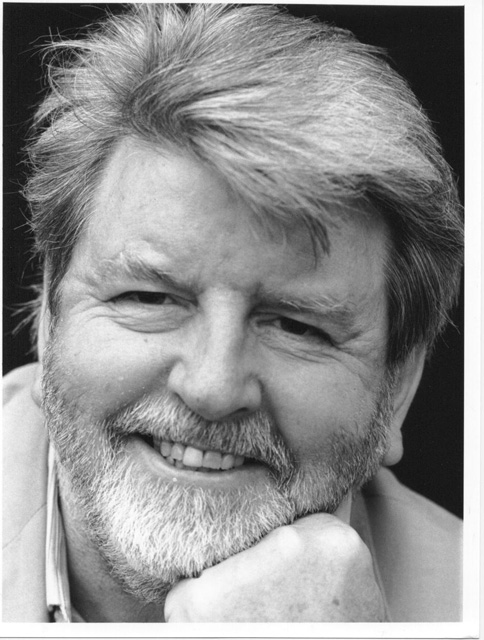
Martin Lynch: Photo © Bobby Hanvey

Martin Lynch: Photo © Bobby Hanvey

A powerful and insightful drama, Menin Gate explores the world left behind by the Troubles. In the small Belgian town of Ypres Liz, a Protestant nurse and daughter of an RUC man and an ex-IRA man from West Belfast, Terry, meet during a cross-community trip to WWI battle sites to promote reconciliation and become romantically involved. It transpires that Terry was one of two gunmen who had shot dead Liz’s father at his home which for the purposes of the play is said to be Dromore, County Down but is based on a true story.

Act One is very witty throughout with plenty of Ulster humour. The second act however strikes a very different note which some patrons will find hard to deal with as the

GLASNEVIN CEMETERY

Crest from Memorial at RIC Burial Plot Glasnevin Cemetery Photo: © Michael Fisher

Crest from Memorial at RIC Burial Plot Glasnevin Cemetery Photo: © Michael Fisher

From a distance the crest looks similar to many you will find at graveyards in Northern Ireland: those of Royal Ulster Constabulary members, or possibly a deceased soldier from a British Army regiment. But this photo which I took this afternoon is from Glasnevin Cemetery, the largest in Dublin.

RIC Plot Glasnevin Cemetery Photo: © Michael Fisher

RIC Plot Glasnevin Cemetery Photo: © Michael Fisher

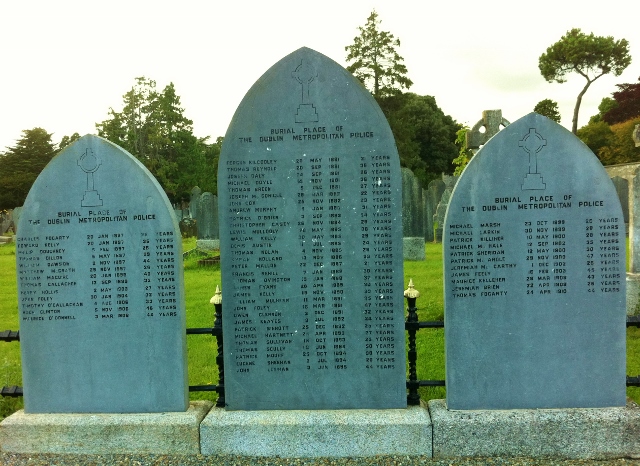
A year ago over one hundred people attended a ceremony at the newly restored graves of a number of RIC members who died during the period from the 1880s and during the War of Independence, before partition when the force was disbanded. The latest burial appears to have been in 1953. Opposite the RIC plot is a separate memorial for members of the Dublin Metropolitan Police from May 1881 up to 1910.

DMP Plot Glasnevin Cemetery Photo: © Michael Fisher

DMP Plot Glasnevin Cemetery Photo: © Michael Fisher

The service last year attracted a bit of controversy. This year the commemoration took place at Mount Argus Church because the organisers, two retired Gardaí, had been told they did not have the required insurance cover. It’s reported that both plots are still the responsibility of the British Home Office. There are many other interesting graves there including those of Michael Collins and the founder of Sinn Féin Arthur Griffith, to name but two.

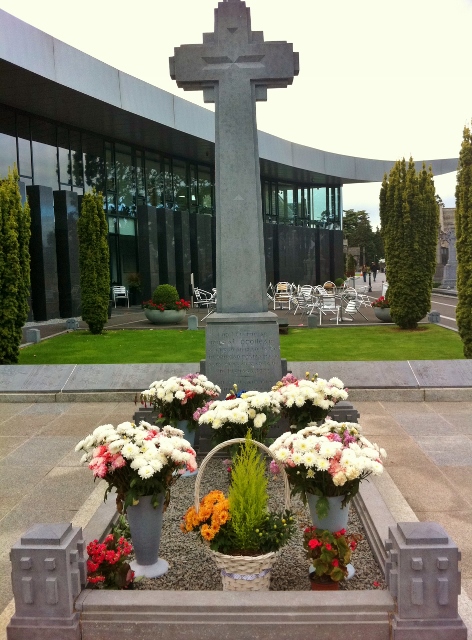
Grave of Arthur Griffith TD Photo: © Michael Fisher

Grave of Arthur Griffith TD Photo: © Michael Fisher

Grave of Michael Collins Photo: © Michael Fisher

Grave of Michael Collins Photo: © Michael Fisher

REMEMBERING US SERVICEMEN

Lisnabreeny Memorial Photo: © Michael Fisher

Lisnabreeny Memorial Photo: © Michael Fisher

The Mourne granite memorial at the former American military cemetery at Lisnabreeny in Castlereagh has 148 names etched on three sides. As the crowd gathered on Saturday for the dedication of the monument, I noticed a namesake (but not a relation) among them: FISHER, PATRICK A S/Sgt.

Names on Lisnabreeny memorial: Staff Sergeant Patrick A Fisher Photo: © Michael Fisher

Names on Lisnabreeny memorial: Staff Sergeant Patrick A Fisher Photo: © Michael Fisher

I thought of him during the service and afterwards I tried to find out if there was any record of his military service. I found two servicemen of the same name from different states in the USA but both were listed as Privates when they joined in 1942. The older one was from Pennsylvania and would have been around 31 when he enlisted in 1942. In civvy life his occupation was described as “express messenger and railway mail clerk(s)”. I would welcome any further information either via the comments below or by contacting me on twitter @fishbelfast.
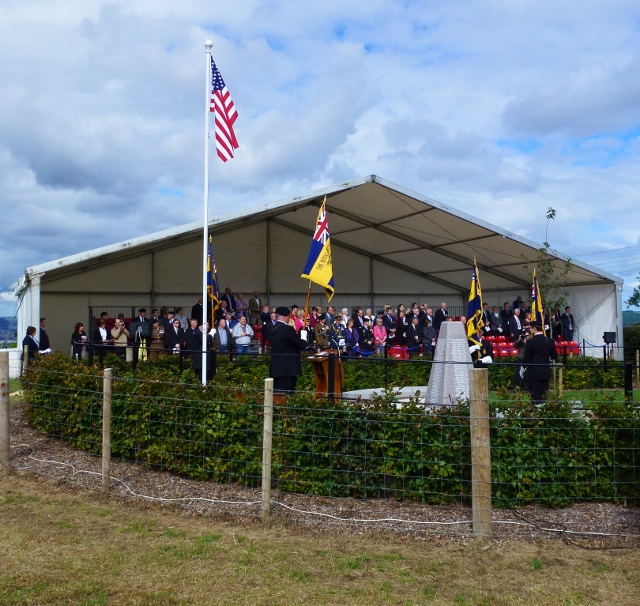
Ceremony at Lisnabreeny Photo: © Michael Fisher

Ceremony at Lisnabreeny Photo: © Michael Fisher

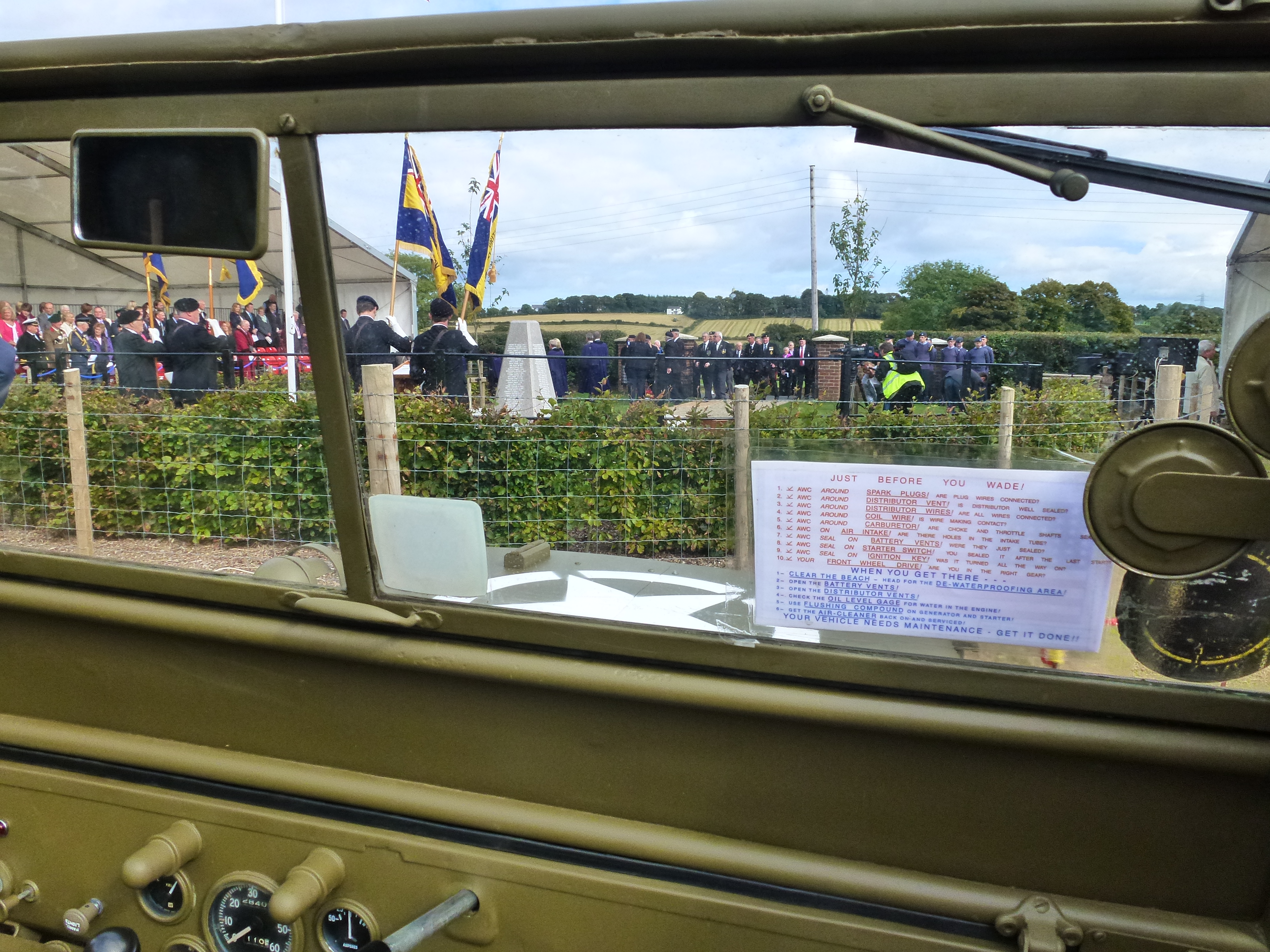
The ceremony was organised by Castlereagh Borough Council, which also reinstated the entrance to the former US military cemetery and provided the monument. It began with a formal parade from Lagan College, headed by the Mayor Councillor David Drysdale, who was driven in a former US Army jeep of the type used in World War II. The pipes and drums of 152 (Ulster) Transport Regiment, Royal Logistics Corps, followed with the other members of the Council, the Air Training Corps Cadets and members of local branches of the Royal British Legion.
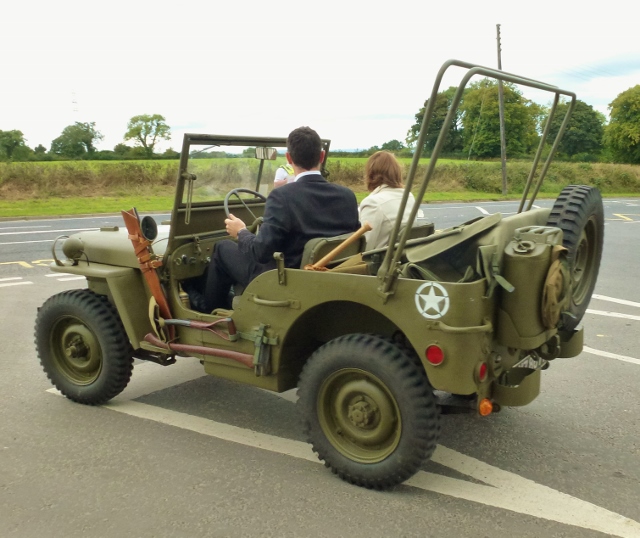
WWII US Army Jeep in Castlereagh Photo: © Michael Fisher

WWII US Army Jeep in Castlereagh Photo: © Michael Fisher

The guests included the Lord Lieutenant of County Down, David Lindsay, the Acting US Consul General Gabrielle Moseley and the First Minister and DUP leader Peter Robinson. Wreaths were laid at the memorial at the end of the dedication service.

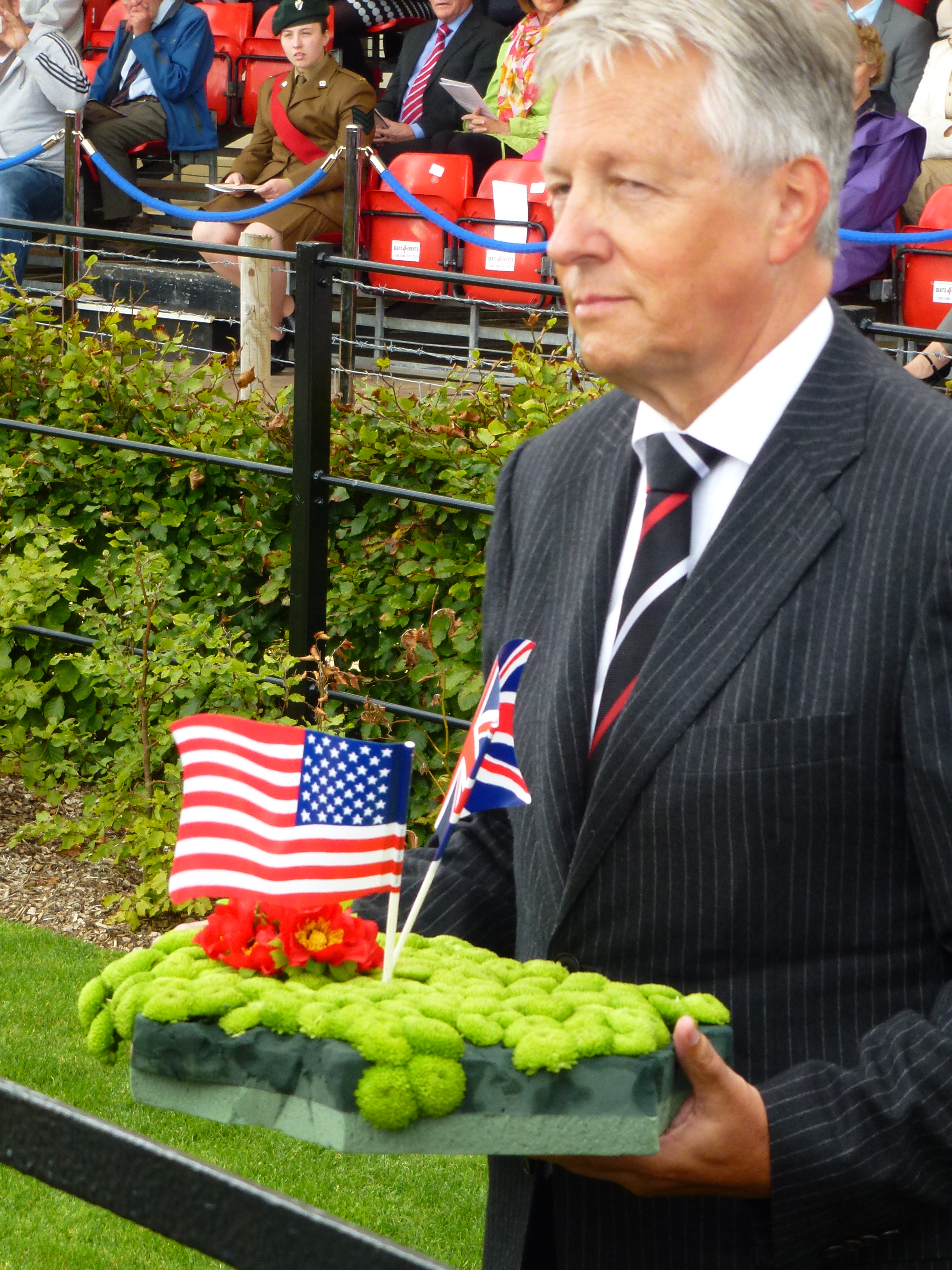
NI First Minister Peter Robinson lays a wreath at Lisnabreeny Photo:© Michael Fisher

NI First Minister Peter Robinson lays a wreath at Lisnabreeny Photo:© Michael Fisher

Councillor Drysdale explained the Council’s involvement with the site at the start of the ceremony.  He said:-

“Over the last few years, the Council has been involved in an extensive restoration project to reinstate the original entrance to the former Lisnabreeny American Military Cemetery and create a lasting commemoration to the American servicemen who lost their lives in the Second World War.  A dedicated monument has been erected as part of the project, which will provide an opportunity for the people of Castlereagh to visit the site for generations to come and learn more about these brave servicemen who made the ultimate sacrifice for our freedom today”.  

View of ceremony from jeep Photo: © Michael Fisher

View of ceremony from jeep Photo: © Michael Fisher

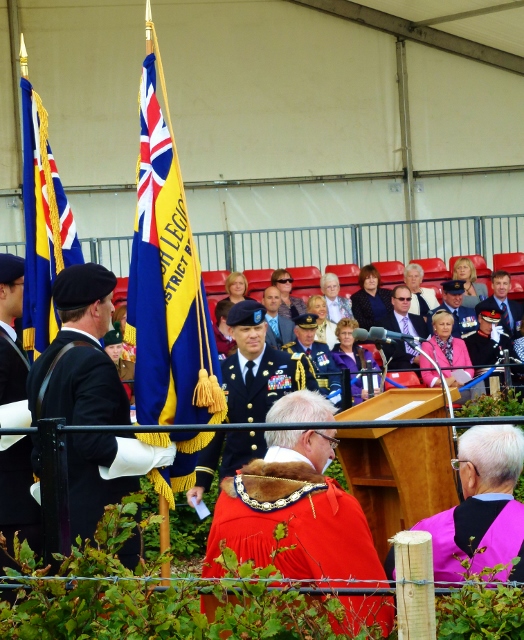
The service of dedication of the memorial was led by the Mayor’s chaplain, Pastor George Moffett. Lieutenant Colonel Travis Phillips, Assistant Army Attaché at the US Embassy in London expressed thanks to the Council for acknowledging the legacy of US military personnel who had paid the ultimate sacrifice in the Allied war effort. He said the recent restoration of the former cemetery underpinned the shared history and special ties of kinship between Northern Ireland and the USA. After an American Serviceman’s Medley sung by Donaghadee Male Voice Choir, Lt Col Phillips read the poem ‘His Rest is Won’.

Lt Col Travis Phillips US Army (centre) Photo: © Michael Fisher

Lt Col Travis Phillips US Army (centre) Photo: © Michael Fisher

After the wreath laying ceremony, the Mayor’s Chaplain led the Act of Remembrance, which was followed by a two minutes silence. “They shall grow not old, as we that are left grow old; Age shall not weary them, nor the years condemn. At the going down of the sun, and in the morning, We will remember them”. “When you go home, tell them of us and say, for your tomorrow, we gave our today“.

The ceremony concluded with the singing of the British and US national anthems.

Star Spangled Banner

Oh, say can you see by the dawn’s early light
What so proudly we hailed at the twilight’s last gleaming?
Whose broad stripes and bright stars through the perilous fight,
O’er the ramparts we watched were so gallantly streaming?
And the rocket’s red glare, the bombs bursting in air,
Gave proof through the night that our flag was still there.
Oh, say does that star-spangled banner yet wave
O’er the land of the free and the home of the brave?

Air Vice Marshall, David Niven of the Royal Air Force added:-

I am proud to be asked to place a wreath, on behalf of all three Services, at this dedication ceremony.  We are, in mid-September, commemorating the service and sacrifice of our servicemen during the Battle of Britain, a battle which prevented the invasion of the United Kingdom. We are also remembering, at the Service of Dedication of this cemetery, the sacrifice of our American Allies who served and died, here, in Northern Ireland. They came from the United States to fight alongside us, in our hour of need, when the rest of Europe had been over-run by the Nazi war machine.  The sacrifice of our American Allies, commemorated in granite, and standing proud in the rolling Castlereagh hills, shall never be forgotten.”

A spectacular end to the ceremony was provided by a restored B-17 Flying Fortress bomber Sally B, which made a number of low level flypasts en route to the Flightfest in Dublin the following day.
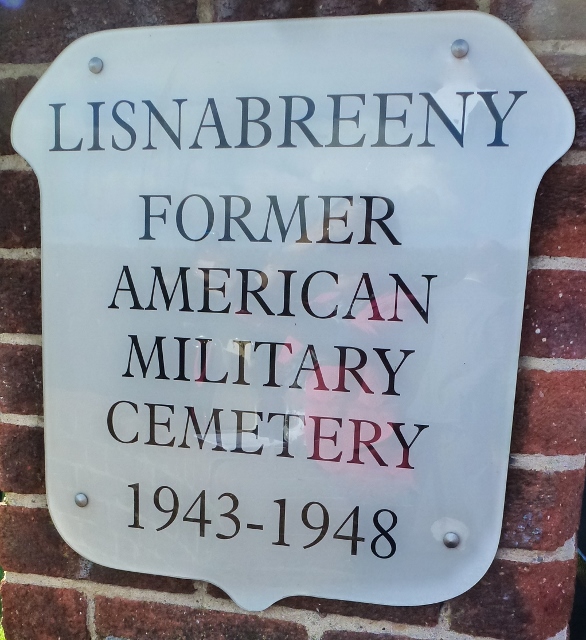
Restored entrance to former US Military Cemetery Photo: © MIchael Fisher

Restored entrance to former US Military Cemetery Photo: © MIchael Fisher

On  26th January 1942 the first American troops arrived at the Dufferin Dock  in Belfast as the first phase of Operation MAGNET, the defence of  Northern Ireland, As agreed between President Roosevelt and Prime  Minister Winston Churchill during a meeting in Washington DC in December 1941. Over the next three years there were seldom less than 120,000 US  servicemen in NI at any one time. A  US Special Army Observer Group had been acting as an American Military  mission in London since 1941. This group approached the war office in  London on 9 December 1941 to obtain burial grounds for American forces  in the United Kingdom.

Two plots were initially set aside for emergency  burials in Northern Ireland, one in Derry and the other in  Belfast. The Belfast plot, located within the City Cemetery, and  extending to one sixth of an acre was chosen. The  first American servicemen to die in Northern Ireland were 3 members of  the US Navy who lost their lives in an accident at the American Naval  Base in Londonderry. The first burial in the Belfast City Cemetery plot took  place on 12th March 1942. From then until October 1942 a total of  41 American servicemen were interred there. At that  stage the plot had reached capacity and it was decided to ship deceased personnel across to England for interment until an alternative  could  be found.
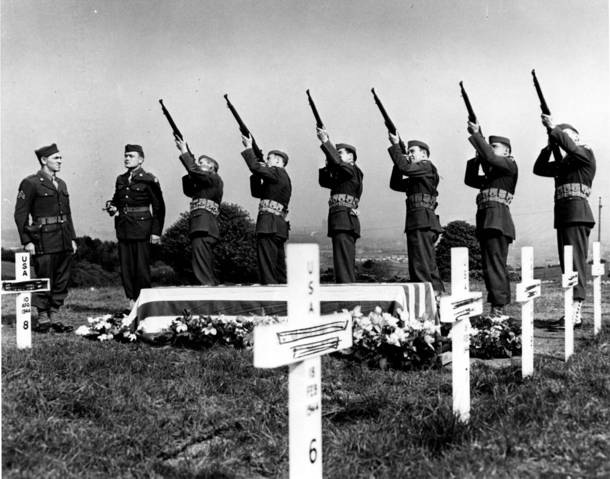
Burial at Lisnabreeny 6th May 1944 of Pte Steve Fellin 56th Field Artillery Bn, 8th Infy Division

Burial at Lisnabreeny 6th May 1944 of Pte Steve Fellin 56th Field Artillery Bn, 8th Infy Division

On  2nd December 1943 a ten and a half acre plot of land at Rocky Road was  officially opened as the (link to photo chimneyrockb26crash.com) Lisnabreeny American Military Cemetery. It  was decided to re-locate all deceased personnel to this new site, and  between 23rd May 1944 and 1st June 1944 all of the 41 bodies previously  interred in the City Cemetery were exhumed and re-interred at  Lisnabreeny. By the end of the war a total of 148 American servicemen  were buried in Lisnabreeny, the majority being Army Air Force but also including US Army and US Navy personnel

The  Cemetery was accessed via a red brick entrance with iron gates on the  Rocky Road. A white gravel driveway, lined with cherry trees, led to a  flagstaff where the Stars and Stripes was hoisted daily. The graves were  laid out in rows with 25 to each row, and each grave had a simple white  marker, either a Cross or a Star of David, depending on religious  denomination, bearing name, rank, unit and date of death.

The Cemetery  was looked after by 5 US Army personnel with a minimum of 2 on duty at  any one time. A Nissan type hut was located on site and provided storage  and office space for maintenance equipment and Cemetery records. The  Cemetery was maintained to a very high standard with grass regularly  mown, trees and shrubs clipped and pruned, and the stone paths borders  whitewashed weekly. Following  the end of the war, the Cemetery continued to be maintained right up to 1948 when all deceased were exhumed, and either transferred to the  permanent American War Cemetery in Cambridge, or repatriated to the  United States, at the request of their families. At that point the  cemetery was deactivated. Some more information on the cemetery can be found on this American source:

Graves registration activities of the Quartermaster Corps in the European Theatre (of WWII) began in December 1941, when the United States asked the British War Office about burial facilities for our military personnel expected to arrive in 1942 in Northern Ireland, where they would aid the British in their defence of that part of Ireland. Sadly, as was expected, American lives were lost after the men arrived. These burials had been in swampy ground in local cemeteries, but the U.S. Army negotiated with the British and secured a plot of land at Lisnabreeny, a suburb of Belfast, where the Americans were reinterred“.

From “A Salute to Patriotism: The Life and Work of Major General Howard L. Peckham”, who worked for the American Graves Registration Command in Paris, quoted by his daughter, Jean Peckham Kavale in A Personal Look at U.S. Army History.

DEALING WITH THE PAST

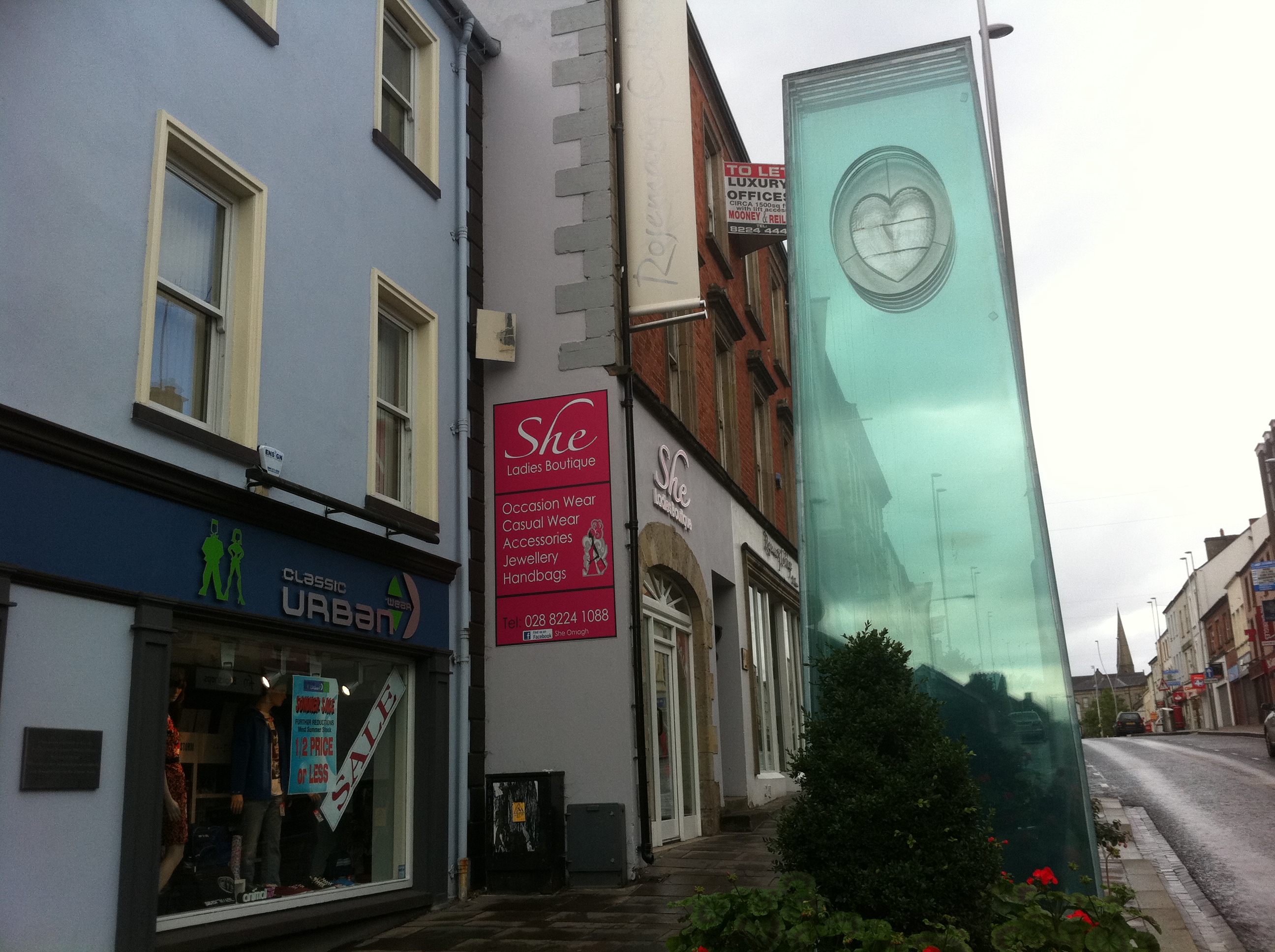
Market St Omagh: site of car bomb Photo: © Michael Fisher

Market St Omagh: site of car bomb Photo: © Michael Fisher

Recently I wrote about the commemoration of the Ballygawley Bus Bomb 25 years ago in which eight British soldiers were killed. I heard two women who were eye witnesses travelling in a coach following behind the bus with the young squaddies tell their story about what it was like that night at the scene, which they were visiting again for the first time since that awful night in August 1988. Painful memories came back to them during the couple of minutes they spent answering a question from a local journalist. It was just one example of how we have still to deal with the grief and trauma in the wake of the ‘troubles’.

Omagh Bomb Memorial Garden Photo: © Michael Fisher

Omagh Bomb Memorial Garden Photo: © Michael Fisher

Before the ceremony near Ballygawley on the main A5 road, I travelled to Omagh and visited the memorial garden where flowers had been left to mark the fifteenth anniversary of the Real IRA bomb. An opportunity to reflect on how a group of relatives of those who died is still trying to seek justice.

Plaque at site of car bomb, Market Street, Omagh Photo: © Michael Fisher

Plaque at site of car bomb, Market Street, Omagh Photo: © Michael Fisher

This morning they received the news that the Secretary of State for Northern Ireland Theresa Villiers MP had decided the British government would not be holding a public enquiry into the bombing. The attack on August 15th 1998 was the worst single atrocity of the ‘troubles’. 29 people dead, including a woman pregnant with twins. Ms Villiers said it was not an easy decision to make and all views had been carefully considered.

Michael Gallagher, whose son Aiden (21) was among the victims, condemned the decision, describing the reasons given by Ms Villiers for ruling out a public inquiry as “trivial”. Members of the Omagh Support and Self Help Group are seeking a judicial review. But another group of relatives Families Moving On including Kevin Skelton whose wife Philomena (39) was killed in the bomb believes a public enquiry will not achieve anything.  amnesty

All this has emerged on the same day that Amnesty International produced a report on Northern Ireland and dealing with the past. The 78-page investigation  ‘Time to Deal with the Past‘ finds that victims and their families have been failed by successive attempts to investigate abuses.  It says that without the political will on all sides to acknowledge and confront past abuses, the lessons of history will go unheeded and the pain caused by Northern Ireland’s past will continue to cast a long shadow over its future.

BBC PAYOUTS

bbcPlenty of questions remain about the extent of payouts made to senior executives at the BBC during the tenure of Mark Thompson as Director General. One Conservative MP Chris Heaton-Harris quoted in The Guardian said today’s hearing by the Public Accounts Committee at Westminster was “the most bizarre game of whack-a-mole I’ve ever seen in my life, where you hit something down and it throws up another load of questions”.

At the end of a three hour hearing by the committee, former DG Thompson and the Chair of the BBC Trust Lord Patten disagreed over who knew what about the executive payoffs. In July a report by the National Audit Office found that in nearly a quarter (14) of 60 cases it reviewed, the BBC had paid departing senior managers more salary in lieu of notice than they were contractually entitled to. A total of 150 senior managers had received severance payments totalling £25m. A supplementary report published a week ago confirmed that 22 former executives received £1.4m more than what the Corporation was contracted to offer in the severance payoffs agreed in the three years to December 2012 (NAO). The NAO said weak governance arrangements had led to payments that exceeded contractual requirements and put public trust at risk. The BBC Trust accepted at the time there had been a “fundamental failure of central oversight and control” at the Corporation.

nujlogo_burgundySpeaking before the PAC meeting the General Secretary of the National Union of Journalists Michelle Stanistreet said “this sorry tale is one of a management that became out of touch with its staff and with the ethos of public service broadcasting. The BBC should have put the interests of licence-fee payers first, rather than fill the pockets of its own”. In total more than £25m was given out in redundancy payments to executives.

The written evidence presented in advance to the PAC by former DG Mark Thompson, Lucy Adams BBC HR Director, Andrew Scadding BBC Head of Corporate Affairs, Marcus Agius, non-executive director, BBC Executive Board and former Chairman of the BBC Executive Board Remuneration Committee, as well as by the BBC Trust can be found here.

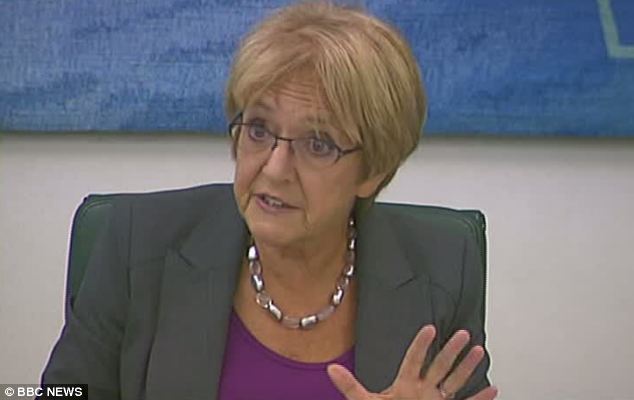
Margaret Hodge MP Photo: BBC News

Margaret Hodge MP Photo: BBC News

The PAC Chair Margaret Hodge MP described the appearance by the BBC executives as “grossly unedifying” and said it could only “damage the standing and reputation” of the BBC. “At the best I think what we have seen is incompetence, a lack of central control, a failure to communicate. At its worse we may have seen people covering their backs by being less than open”, she said.

Former BBC Chair Lord Grade told Newsnight the Corporation had “a lost sense of the value of money”.


ROYAL VISITOR

Prince Edward meets WPFG organisers at Hillsborough Castle Photo: © Michael Fisher

Prince Edward meets Dame Mary Peters & WPFG organisers at Hillsborough Castle Photo: © Michael Fisher

A British royal visitor Prince Edward came and went without any major disruption, except perhaps for the residents of Hillsborough who found some traffic and parking restrictions during the afternoon. The occasion was the annual Secretary of State’s garden party at Hillsborough Castle. Earlier the Earl of Wessex had presented a group of young people with their Duke of Edinburgh awards in a brief ceremony at the Belfast Harbour Commissioners building. The Lord Lieutenant of Belfast Dame Mary Peters was there to greet him along with the deputy Lord Mayor Alderman Christopher Stalford.

Dame Mary was also present at Hillsborough but in a different capacity, this time as patron of the World Police and Fire Games 2013. She introduced His Royal Highness to representatives of the local organising committee.

COMMEMORATION OF 1913 LOCKOUT

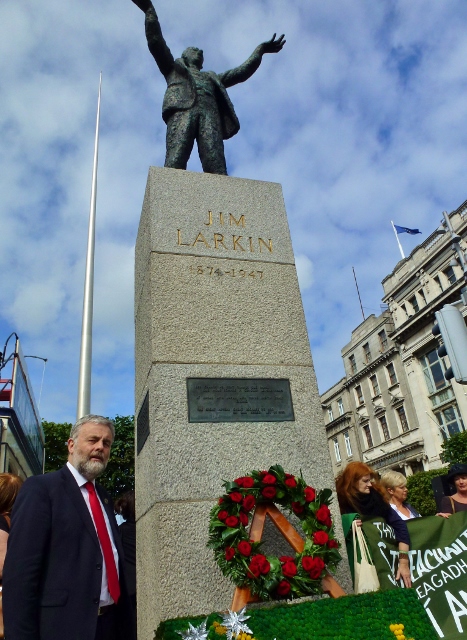
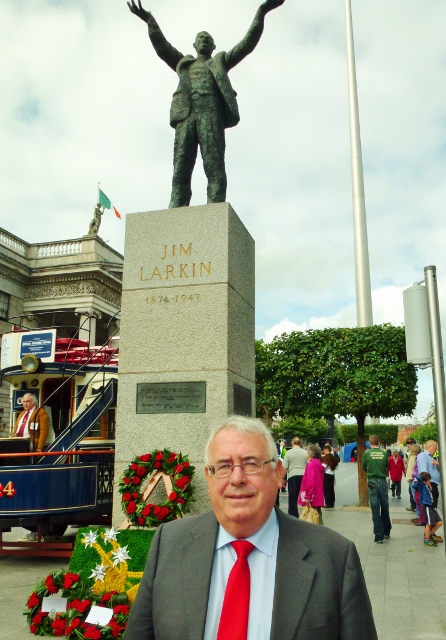
SIPTU President Jack O'Connor at Jim Larkin statue Photo: © Michael Fisher (NUJ)

SIPTU President Jack O’Connor at Jim Larkin statue Photo: © Michael Fisher (NUJ)

Thousands of people gathered in Dublin’s O’Connell Street yesterday (Saturday 31st August) to commemorate the 1913 Lockout in which an estimated 20,000 workers had been involved. President Higgins laid  a wreath at the Jim Larkin statue after a salute by the Army No 1 band. Tánaiste Eamon Gilmore attended along with Ministers Ruairi Quinn, Pat Rabbite, Jimmy Deenihan and Minister of State Joe Costello. Trade unionists were led by ICTU General Secretary David Begg and included SIPTU President Jack O’Connor (the successor of the ITGWU, founded by Larkin).

In traditional costumes and dress people recreated scenes from the 100-year old events, chanting “Down with Murphy, up with Larkin” while DMP police stood by. Readings from the novel Strumpet City were performed by by Bryan Murray and Angela Harding and an excerpt from the play “Lockout 1913”,  set on top of a tram placed in front of the GPO.
The Lord Mayor of Dublin Oisin Quinn welcomed everyone to the event saying it was about paying tribute to “thousand of working men and women who took part in this campaign to achieve decent treatment and fairness of work”. Hundreds of people dressed in period costumes as dockers, some as Jacobs workers and others as the poor of Dublin. This part of the event was organised by the North Inner City Heritage Group with Dublin Council of Trade Unions. The President remained as a spectator for a dramatisation of Larkin’s famous speech from a hotel window off O’Connell Street, his subsequent arrest and the riot that led to a police baton charge resulting in more than 300 injuries.

Joe Costello TD, Minister for Trade & Development at Jim Larkin statue Photo: © Michael Fisher (NUJ)

Joe Costello TD, Minister for Trade & Development at Jim Larkin statue Photo: © Michael Fisher (NUJ)

EBAF: GAEILGE/IRISH IN EAST BELFAST

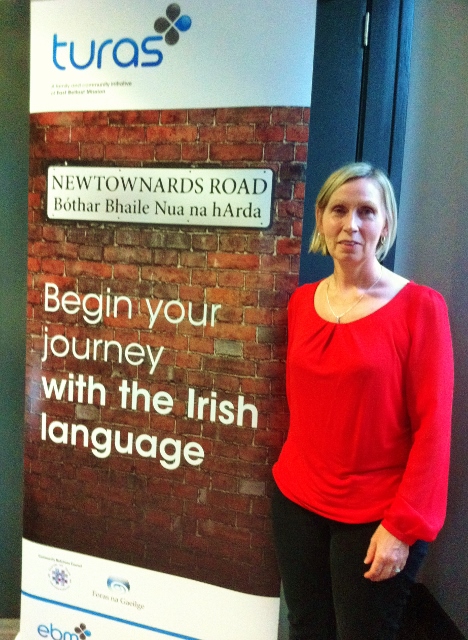
Linda Ervine at East Belfast Arts Festival Photo: © Michael Fisher

Linda Ervine at East Belfast Arts Festival Photo: © Michael Fisher

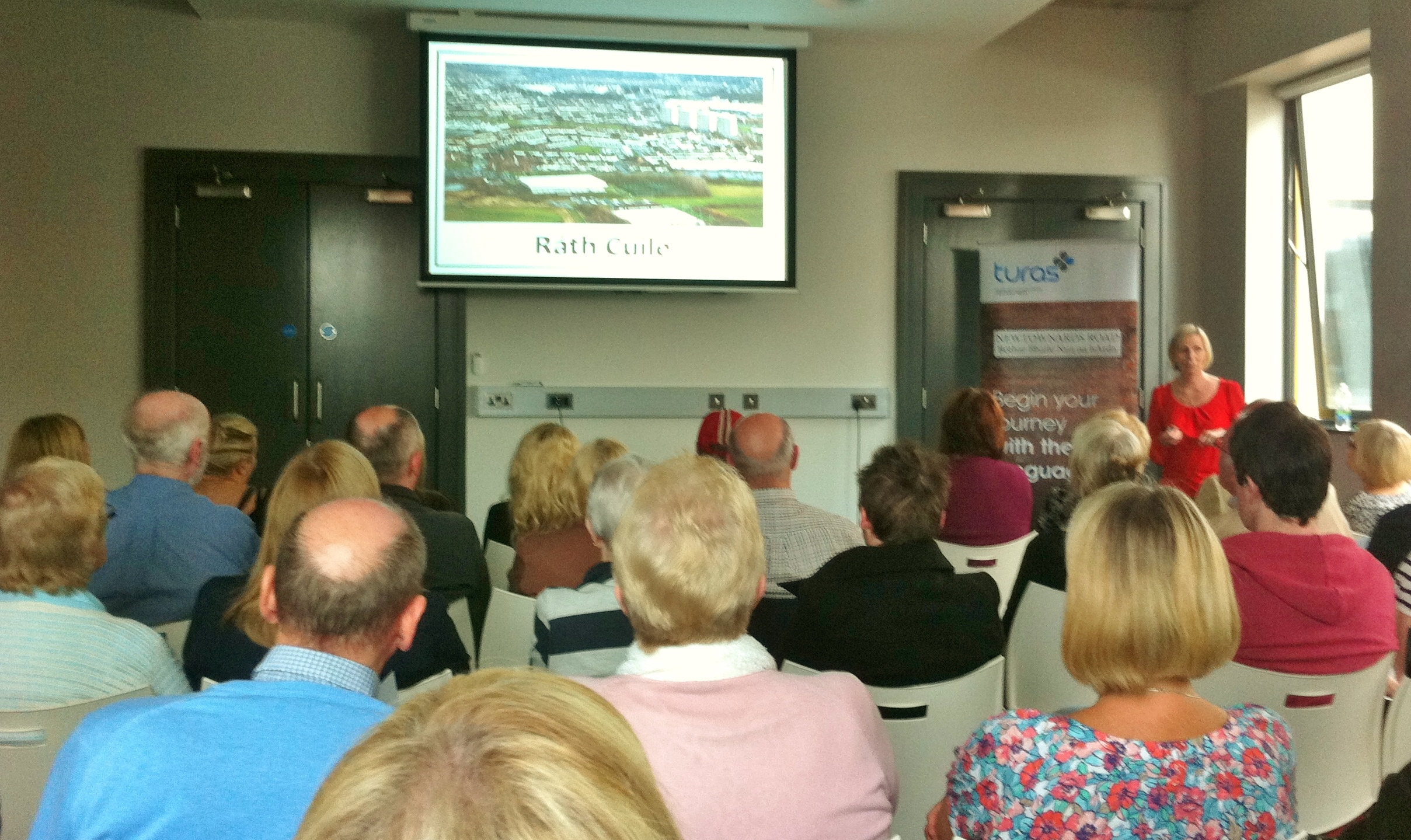
‘Fáilte roimh’ were the Irish words of welcome Linda Ervine used at the start of her interesting talk in the heart of loyalist East Belfast. The venue was the ‘Skainos’ centre on the Lower Newtownards Road. The name comes from the Greek word for tent or dwelling. Skainos speaks of the importance of practical engagement with a community by figuratively pitching a tent in its midst, and it hints at the notion of hospitality and the extended family. The East Belfast Mission (Methodist church) has been closely involved with the development of this cross-community facility.

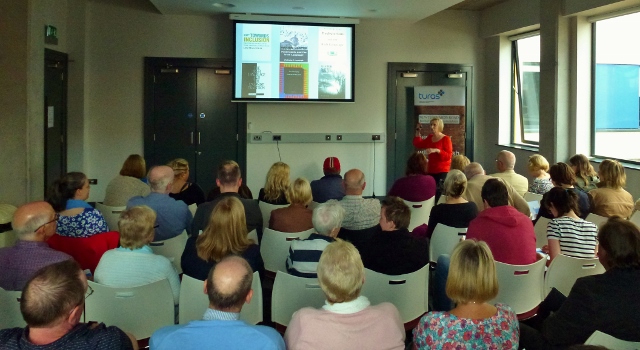
Attentive audience for Linda Ervine Photo: © Michael Fisher

Attentive audience for Linda Ervine Photo: © Michael Fisher

This area is known as Ballymacarrett. As Linda points out, Irish names are all around. It comes from Baile Mhic Gearóid meaning “MacGearóid’s settlement”. Linda started her ‘turas’ meaning journey or pilgrimage or even tour about the Irish language a few years ago after the death of her brother-in-law David Ervine, former leader of the Progressive Unionist Party who had served time for a UVF-related offence in the Maze prison, where he came under the influence of Gusty Spence. Gusty had an interest in the Irish language (Gaeilge) and wore a silver fainne in his buttonhole, awarded to Irish speakers.

That story was one of the many surprises Linda had for most of her audience. She went on to explain how she had done some research on David’s family in the 1911 Census. There she discovered his grandfather John Ervine, then aged 36, living at Frome Street off the Newtownards Road and not far from the Skainos centre. He was head of the family at the time and he and the rest of them were entered as being able to speak Irish and English, as well as being able to read and write. Update: it has been pointed out that if you look closely at the actual census record by enlarging it, there is a fine line drawn through the words ‘Irish & English’ by the census enumerator, in the entry for the Ervine family and those in the same street.

Explaining the derivation of Rathcoole (loyalist estate): Ráth Cúile: nook of the ringfort

Explaining the derivation of Rathcoole (loyalist estate): Ráth Cúile: nook of the ringfort

Linda is Irish Language Development Officer for East Belfast and is based at the Skainos Centre. She  started learning Irish two years ago as part of a cross-community project with women from the nearby nationalist Short Strand. Now she runs five classes a week for beginners as well as lower and upper intermediate level, delivered by three specialist teachers. It is supported by Foras na Gaeilge, and there is a growing demand for more. Linda is passionate about helping Protestants, unionists and loyalists to dis

Linda Ervine recommends books by the Ultach Trust

Linda Ervine recommends books by the Ultach Trust

Linda has found much useful background material in the publications of the Ultach Trust, such as ‘A History of Protestant Irish Speakers’. She referred to the Reverend John Feeley, a Wesleyan preacher who went round the country on horseback, died in Holywood in 1860 and who is buried at a church on the Newtownards Road:-

The foremost Methodist preacher in Irish was Gideon Ousely (1762-1839) from Sligo, who at the height of his powers travelled 4,000 miles a year, preaching about 20 times a week. He was accompanied by John Feely (Seán Ó Fithcheallaigh), who had trained to be a Catholic priest, and thus guaranteed curiosity wherever he appeared. Together they were known as the ‘black caps’ because of their close-fitting skull caps designed to protect their heads from stones; Ousely preferred to stand in front of apothecaries’ windows to deter missiles (Hempton and Hill 1992: 41). Ousely’s strange clothes, comical leer (the result of a shooting accident), and habit of ringing a bell to announce his arrival also ensured large audiences“.

Noel McGee as Robert McAdam Photo: Aisling Ghéar

Noel McGee as Robert McAdam Photo: Aisling Ghéar

Linda mentioned other leading Irish speakers in the 19th Century who were Protestants: Robert McAdam a Presbyterian who is remembered in the former Presbyterian Church on the Falls Road in West Belfast, now known as the Cultúrlann McAdam Ó Fiaich. His story ‘SEO Robert: The Search for Robert McAdam’ will be presented by the Aisling Ghéar theatre company on Sunday evening at the BMC Tower Street campus as part of the East Belfast festival at 7:30pm. Admission £5. It is a one-man show by Noel McGee directed by Bríd Ó Gallchoir and is mainly in English, with some Irish which is translated by the performer. McAdam was involved in setting up a library, a harp society, a museum and a literary society. He designed and mended steam turbines, made the windows for the Pasha’s Palace in Cairo and still found time to compose music and amass one of the largest collections of Irish cultural treasures on the island.

Having given her audience an interesting introduction to the use of Irish in Northern Ireland where 95% of placenames are derived from Gaeilge, Linda ended on an amusing note. For those who seek to use the republican slogan “Tiocfaidh ár lá”, or “our day will come”, there should be one response: “Ní ghéillfimid”, meaning we will not yield, or in the local version as demonstrated in this final slide featuring senior DUP and Sinn Féin figures,”No surrender!”.

How to say "No Surrender" in Irish!

How to say “No Surrender” in Irish!

O’HERLIHY ON GRAND COALITION

Dr Frank Brennan introduces Mary O'Rourke at the William Carleton summer school

Dr Frank Brennan introduces Mary O’Rourke at the William Carleton summer school

Former deputy leader of Fianna Fáil Mary O’Rourke made an interesting suggestion in her address to the 22nd annual William Carleton summer school in Clogher, County Tyrone, earlier this month. Her speech was reported and analysed by the Irish Independent and Sunday Independent. It was the subject of reports and editorials in the Irish Times and The Examiner (the latter very unfairly in my view referred to an unnamed ‘unfashionable’ summer school as the location for her talk).

During her speech which can now be viewed on youtube, she referred to an address made at Béal na mBláth by her nephew, the late Brian Lenihan (junior) TD, who was then Minister for Finance, in August 2010. She put forward the suggestion that the time had come for a realignment of the main parties that emerged from the Irish Civil War, Fianna Fáil and Fine Gael, into a Coalition.

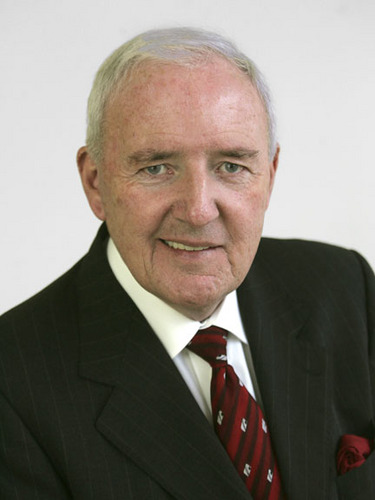
Bill O'Herlihy

Bill O’Herlihy

Now at the same commemoration of the death of Michael Collins at the hands of anti-treaty forces at Béal na mBláth in August 1922, former Garret FitzGerald media advisor Bill O’Herlihy has made a similar suggestion. The PR executive and broadcaster told the crowd he had been ‘fascinated’ by the suggestion made by Mary O’Rourke eighteen days ago.

Mr O’Herlihy’s speech had been widely reported on RTÉ News as well as in the Irish Times and Irish Independent, along with TheJournal.ie. For a full copy of his comments, you can click here (link via Irish Times website).

Béal na mBláth memorial for Michael Collins Photo: © Coppeen Heritage Colum Cronin

Béal na mBláth memorial for Michael Collins Photo: © Coppeen Heritage Colum Cronin