CHURCH & STATE

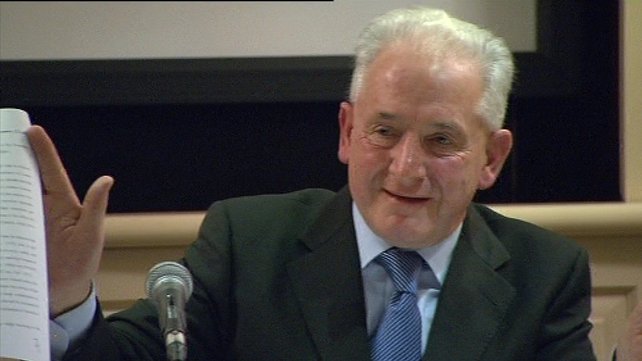
Taoiseach Enda Kenny in Knock (Picture RTÉ News)

Taoiseach Enda Kenny in Knock (Picture RTÉ News)

Listening to an interview given by the Taoiseach Enda Kenny to RTÉ News (This Week) at Knock airport in his Mayo constituency, he answered one question with the comment: “I have my own way of speaking to my God”. He had been asked about the Catholic hierarchy’s response to the proposed legislation for limited abortion, the Protection of Life During Pregnancy Bill. Cardinal Brady who was visiting the Marian shrine at Knock held out the threat of refusing communion to politicians who supported the bill, saying “that (excommunication) is down the line at the moment as far as we are concerned”. During a national prayer vigil for the right to life of mothers and babies the Catholic Primate of all-Ireland pointed out that the exact legislation that would be introduced was not yet known. “We know what the law is about excommunication, about abortion, that’s a fact. But…the most important issue at this moment is to win the hearts and minds of the people of Ireland to decide with the pro-life“, he said.

Cardinal Sean Brady (Picture RTÉ News)

Cardinal Sean Brady (Picture RTÉ News)

On Friday, after a meeting of the hierarchy, Cardinal Brady said the scandal involving clerical child sex abuse did not exempt the bishops from the duty of proclaiming the good news of the gift of life. He also said that while the job of TDs and senators was to legislate, they did not have the “power over life”. In response to the Cardinal’s intervention in the debate, Mr Kenny said “My book is the Constitution, the Constitution is determined by the people, it’s the people’s book.”

As Fr Tony Flannery points out in The Journal, many people in this country no longer follow the teaching of the Catholic Church and it is the task of our politicians to legislate for all citizens. He says Cardinal Brady comes across as “stiff and authoritarian” and the choice of him as a spokesperson for the bishops’ campaign is a big mistake. Another good point he makes is that by coming out so strongly, in such an aggressive and black-and-white way against the proposals, the Catholic hierarchy have effectively ruled themselves out of any real engagement in the process from now on. “They will condemn, and they will lobby individual legislators, but their public position is now fixed and unbending. This is not the way to go about influencing a democratic process“, he says.

Fr Tony Flannery (RTÉ News)

Fr Tony Flannery (RTÉ News)

So there we have it. The battle lines are being drawn up for what will be a major turning point in church and state relations in Ireland, a debate that is no doubt occupying the minds of many Fine Gael backbenchers are the moment. I think this has been a particularly important weekend which will show the waning influence of the Catholic hierarchy in Irish politics. Added to the previous debates about contraception and divorce and the ongoing discussions about the level of Catholic religious involvement in education, I think we are witnessing a very significant step in the increasing secularisation of the Republic.

DERRY’S WALLS

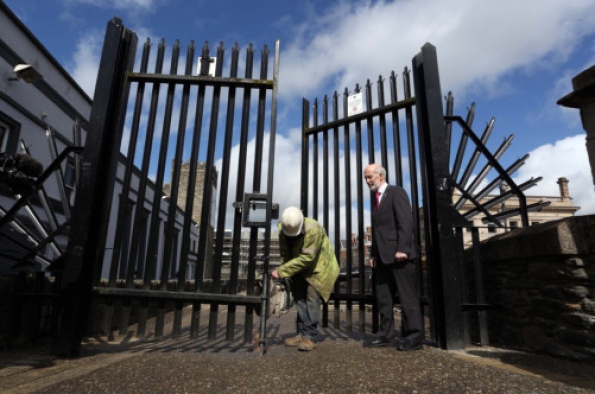
Removal of Security Gates: Photo Lorcan Doherty

Removal of Security Gates: Photo Lorcan Doherty

Derry’s walls are an integral part of the city and have survived for nearly four centuries. It’s the only remaining completely intact walled city in Ireland. With the progression of the peace process over the past fifteen years, the walls have become a tourist attraction, with guided walks daily. But the heavy metal security gates at sixteen locations  were a reminder of a troubled past. Now eleven of them are being removed.

Speaking during a visit to the walls, the NI Minister For Justice David Ford said he hoped the move would be welcomed by residents, businesses and visitors alike. He said in the year of Derry~Londonderry City of Culture, the walls would play a central role in the festivities and are a must see for any tourist visiting the city.  Derry has a real opportunity to show what the city has to offer.

He welcomed the removal of the gates for residents and tourists alike and described them as a blight on the historic walls.  The walls can now be enjoyed without the imposing structures that point to our past rather than our future, he added. Mr Ford thanked the local community, the PSNI and Derry City Council for their support and cooperation and said his department had invested £28,000 in providing additional CCTV coverage around the walls.

According to BBC Northern Ireland, Mr Ford said he hoped confidence could be built in the community so that people could feel safe and secure without the need for interface structures. “We obviously have to take account of the fact that there are small numbers of people in this city as there are elsewhere in Northern Ireland who are trying to drag us back,” he said, “but what I sense when I visit Derry is a very positive feel of people wanting to see movement forward, of the benefits of the City of Culture, of the Fleadh and all that coming forward and that is engaging with communities across Derry in a very positive way.”

Cannon from 1642 on Derry's Walls

Cannon from 1642 on Derry’s Walls

The mayor of Derry, Councillor Kevin Campbell, said the decision to remove the gates was about normalising the city. “It is about taking down symbols that have been here over thirty years,” he said. “There will still be a number of gates that are there to protect the Fountain, and you would obviously have to keep them there at the moment. But I think we have to be looking in the long term at having all those gates and barriers removed.”

DUP security spokesman Gregory Campbell also welcomed the removal of the gates, but warned against taking out the remainder. “It’s not just people in Londonderry, but tourists and visitors alike don’t like to see the aesthetics, the culture and history of the walls being encumbered by those gates which are a throwback to a previous era thankfully now past and I think everyone will welcome that,” he said.

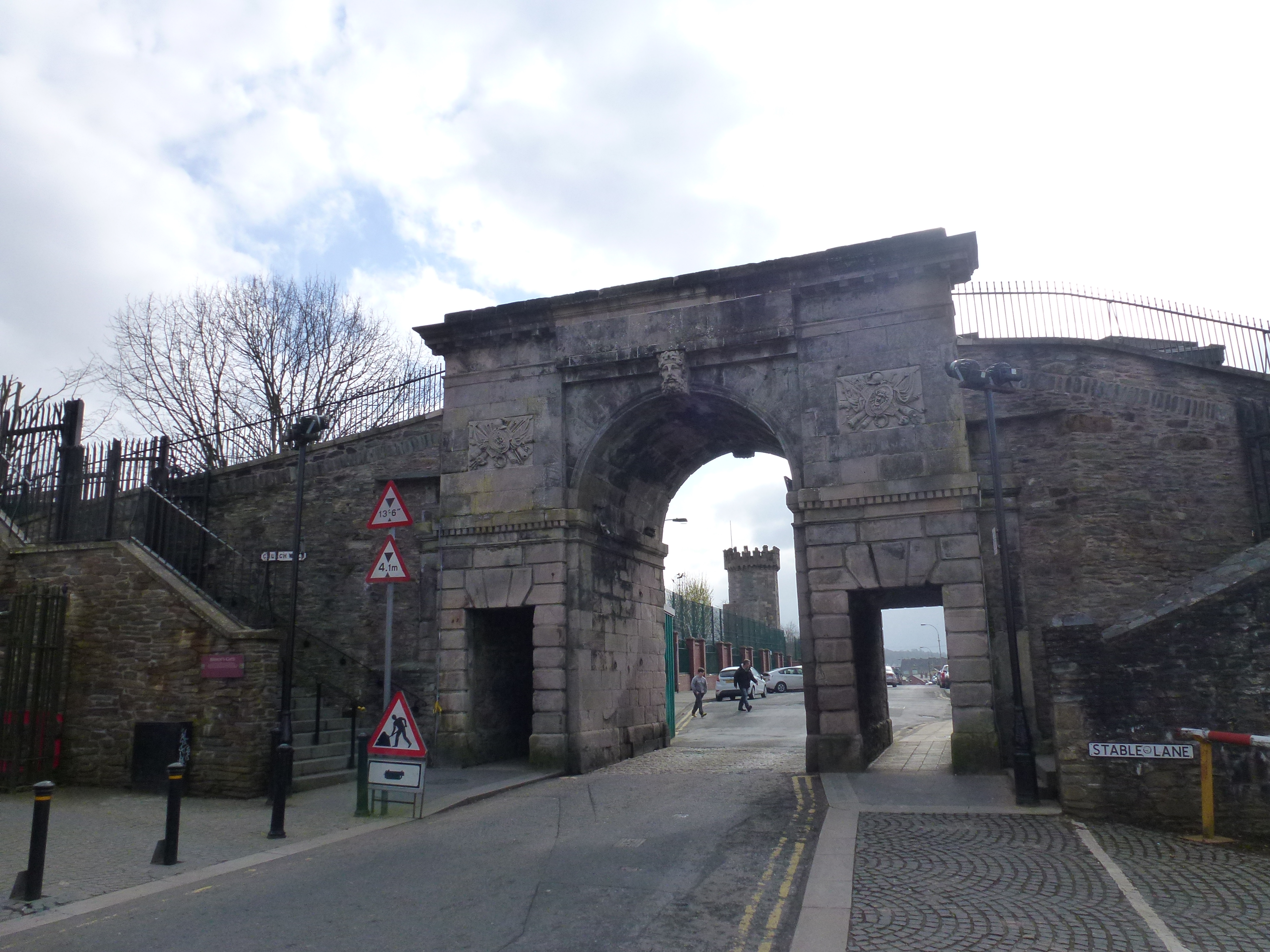
Bishop's Gate, Derry

Bishop’s Gate, Derry

Five security gates overlooking the loyalist Fountain Estate in the Bishop Street area including one at Bishop’s Gate will remain in place. Restoration work has been continuing along the walls and at several important buildings in the city centre, including the Guildhall and St Columb’s Cathedral. I saw some of these sights during a visit in March and I hope to travel to the city again by train next week to see the difference, now that the security gates are coming down.

Derry's Walls at the Guildhall

Derry’s Walls at the Guildhall

WALKING THE COLOURS

Monaghan Museum

Monaghan Museum

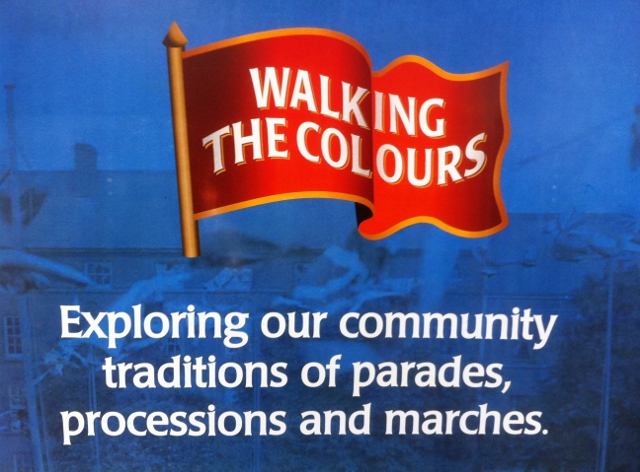
With the marching season now underway, it is perhaps timely that an exhibition is coming to Monaghan Museum about the history and traditions of walking the colours in Ulster, both orange and green. It opens on Wednesday 10th April at 6pm and will run until the end of July. Unfortunately it will have finished by the time the William Carleton Society’s one day conference takes place in Monaghan on Friday 2nd August (Bank Holiday weekend in the Republic), when the issues of a divided community will be raised.

Incidentally, it was noticeable that the usual start of the marching season on Easter Monday (as well as the republican commemorations on Easter Sunday) with the Apprentice Boys of Derry main parade in Enniskillen passed off without incident. I remember standing at the Ormeau Bridge in Belfast or in Ardoyne on previous Easter Mondays and sometimes these feeder parades were highly contentious.     photo (12) (640x472)

Everyone displays their colours in one way or another – hence the title of this ground breaking exhibition; “Walking the Colours”. The cross border exhibition will feature the incredible collection of marching banners held by Monaghan County Museum. This collection has never been displayed together before and will illuminate the gallery with an explosion of colour. This is one exhibition that should not be missed. The display explores the origins of parades looking at the guilds, trades and orders who hark back to the middle ages while also trying to explore the current scene. It includes the role of youth organisations, along with civic parades and public celebrations.

The exhibition forms part of the Cultural Fusions project, which is a heritage based project being delivered by Mid-Antrim Museum Service and Causeway Museum Service across the local councils of Ballymena, Larne, Ballymoney, Coleraine, Limavady and Moyle. It is supported by the PEACE III Programme through funding from the Special EU Programmes Body administered by the North East PEACE III Partnership

THE LIFE OF INEZ

Inez McCormack celebration

Inez McCormack celebration

This was a special afternoon in South Belfast. The President of Ireland Michael D. Higgins along with one of his predecessors Mary Robinson joined trade unionists, community and human rights activists to say thanks for the life of a good friend. Few people could have imagined such a gathering anywhere in Northern Ireland 25 years ago or more during the troubles.

Mary Robinson

Mary Robinson

Some of Mary Robinson’s visits to Belfast in the past were very controversial, especially the one in 1993 when she shook hands with Gerry Adams of Sinn Féin. The person who worked behind the scenes to organise the meeting was Inez McCormack, who died in January aged 69. It was a mark of the woman and her achievements over 69 years of life that such a group assembled at the Elmwood Hall.

In 2006 Inez had founded “Participation and the Practice of Rights”, a group to put human rights at the service of the most disadvantaged members of society. So it was PPR who organised this celebration of the life and work of Inez, reflecting the various stages of her work from the days of her involvement in the civil rights campaign, her trade union activity in particular her concern for the low-paid and in latter years, her dedicated work as a human rights activist.

The theme of the two and a half hour event was “Out of the Ballrooms: peace, participation and equality”. Compered skilfully by the writer Susan McKay, it opened with the launch of the Inez McCormack Fund, set up to support the continuation of her work and to build on her unique legacy.

Vinny McCormack

Vinny McCormack

Her husband Vinny McCormack from Derry said the number and variety of causes Inez gave herself to were remarkable. Irrespective of whether the issue involved an individual, a family or prorecting an institution like the NHS, she gave herself to it body and soul. She reached across all barriers in search of common ground, based upon equality and justice. Vinny’s note in the programme for the event singled out a number of characteristics of Inez:-

Friendship was her forte; laughter her default; generosity and loyalty were her nature; belief in the best of human nature the ground she stood on“.

President Higgins said he had thought about Inez when he and his wife Sabina had hosted a reception earlier this month at Áras an Uachtaráin to mark International Women’s Day. He told the guests on that occasion that Inez was a passionate and committed human rights activist who fought relentlessly for the creation of a fairer society for workers, for minorities and for women. In her pursuit of a better and more equal world she was never afraid to push against the boundaries of injustice and intolerance, he said.

At the Belfast commemoration he again paid tribute to her dedication and courage. He said: “Her ability to constantly question the status quo demonstrated not only the strength of mind which was such an integral part of Inez’ personality but also the emancipatory thinking that marks out the true progressive; the person prepared to challenge false inevitabilities and question the taken for granted assumptions of the world we inhabit and the future we wish to craft together.” He added: “It takes great courage and moral strength to stand up to the perceived norms within society and to question the bureaucratic controls that can so often stifle progress. It takes enormous determination and persistence to constantly challenge the rigid mindsets that obstruct creative thinking and to refuse to give in to the easier alternative of remaining silent.”

Vinny McCormack, President Higgins & Sabina Higgins

Vinny McCormack, President Higgins & Sabina Higgins

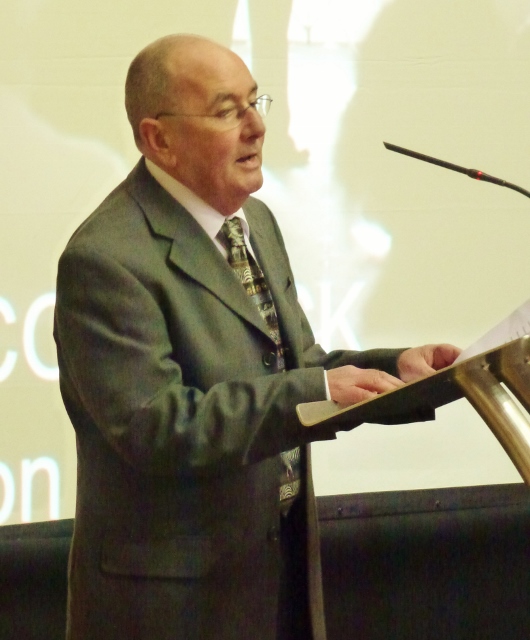
 Mary Robinson who said she wore a red jacket in memory of Inez described her as a remarkable and an extraordinary organiser. “Inez was many things to many people, and to me her defining characteristic was her innate sense and belief in the dignity and value of every human being,” she said. “She always challenged what was wrong and worked to secure the rights of people; on many occasions this was without any public recognition as Inez was a very private person.”

The guests were shown a short video by the group “Right to work: right to welfare” which has been holding workshops on the jobs and benefits issues in association with PPR and the Golden Thread Gallery in Belfast, where it will launch a report and an art exhibition based on the experiences of unemployed people at the DHSS office in Great Patrick Street on Monday (25th) at 12 noon.

Barra McGrory QC, DPP, reads a Yeats poem

Barra McGrory QC, DPP, reads a Yeats poem

A BRIDGE TOO FAR?

Proposed Narrow Water Bridge

Proposed Narrow Water Bridge

First things first. If you came here looking for a commentary on the Allied advance in the Second World War and battles such as the bridge at Arnhem, then you will be disappointed. I am sorry if I misled you. But the title seemed appropriate for the ongoing controversy over the proposed bridge at Narrow Water at the head of Carlingford Lough. They have been talking about the project since 1976 when the East Border Region committee was formed by ten councils on both sides of the border, years before the Anglo-Irish agreement or the Good Friday agreement.

The proposed structure would link County Down just beyond Narrow Water Castle with the opposite side of the shore near Omeath in County Louth. The project eventually received planning permission and the prospect of EU funding of €17.4m last year. This green light was welcomed by the East Border Region Committee Chair, Councillor Jackie Crowe, a Sinn Féin member from Monaghan.

Proposed Bridge

Proposed Bridge

The approved scheme is for a single carriageway cable-stayed bridge across Carlingford Lough, which will be able to open to enable tall ships, leisure craft and other marine vessels access to Victoria Lock and the Albert Basin in Newry. The total length of the scheme is 620m while the towers have a height of 90m and 37m respectively. The design is by Roughan O’Donovan Consulting Engineers, who were also responsible for the new Boyne Bridge on the M1 near Drogheda.In his statement welcoming the project on 24th October 2012, Councillor Crowe is quoted as saying that the proposed bridge was:-

a genuinely symbolic cross border project providing the first bridge linking Ireland and Northern Ireland and will provide a momentous tourism and economic catalyst for the whole of the region. The Bridge development will provide much needed jobs in the construction sector in the short term and will undoubtedly enhance the tourism potential of the region as it acts as a gateway to the Mournes and Cooley Mountains”.

And I thought Sinn Féin always referred to the island of “Ireland” as a 32-county entity……but perhaps this was a statement drawn up by someone else. It also seems to contain an error often repeated by others that this is the first such cross-border bridge. Surely Councillor Crowe has heard of the projects successfully pursued with the Irish government by his party colleagues in Monaghan to get two small cross-border bridges rebuilt which the British Army had blocked in the early 1970s? Annaghroe and Knockaginny bridges across the River Blackwater connected Glaslough in County Monaghan and Caledon in County Tyrone and were re-opened in October 2010 by the then Transport Minister Noel Dempsey, whose colleague in government Dermot Ahern was very supportive of the Narrow Water project as a Louth TD and Minister for Justice.

It seems the progress of the Narrow Water project, described by its promoters as “iconic” and “histooric”, is not going to be as smooth as they hoped. Is it a bridge too far for unionists? Last November the First Minister and DUP leader Peter Robinson requested an investigation into the decision to grant EU funding. He rejected a claim by the SDLP MP for South Down Margaret Ritchie that he wanted money channelled away from North-South infrastructure schemes towards community projects involving former loyalist paramilitaries. The following month, Finance Minister Sammy Wilson told the Assembly there was a “political smell” about the application for funding. He questioned the speed with which the Stormont Environment Minister, Alex Attwood of the SDLP, had granted planning permission for the bridge.

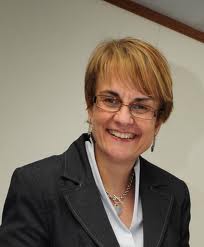
Margaret Ritchie MP

Margaret Ritchie MP

Now Margaret Ritchie has accused Sammy Wilson of dragging his feet and hiding behind other government departments when it comes to approving funding for the project. She quoted Mr Wilson’s argument that he could not approve the outstanding £2m for the Narrow Water Bridge until the Department of Regional Development had prepared a Roads Order. Ms Ritchie said she had now received confirmation from the Department for Regional Development that it is currently preparing the draft Roads Order, which is expected to published next month. But according to the Minister Danny Kennedy, she said, the formal making of the Order will not happen until the Department for Finance approves the business case.

Ms Ritchie said this response clearly states that the Minister for Finance can make the decision to approve the Narrow Water Bridge funding now and that this decision is not held back by the work of the Department of Regional Development, despite claims to the contrary. She said if it remained the case that Sammy Wilson is not prepared to approve the funding then the First and Deputy First Ministers must ensure a decision is taken without further delay, in the interests of the wider community and the tourism industry in the Mourne area and throughout the island. Furthermore as this is an important North-South economic development project there is now a clear need for the direct intervention of the British and Irish Governments to ensure that this project faces no more unnecessary delay, she added.

The MP has taken a keen interest in the project since her involvement with the East Border Region Committee as a Councillor in 1985. She paid tribute to people such as her predecessor Eddie McGrady, Jim McCart, Donal O’Tierney and Barney Carr, who she said had never faltered from their belief in the bridge and who had shaped the economic debate for it and kept the project alive during very difficult political times in the North.

Narrow Water project

Narrow Water project

SPIRIT OF ENNISKILLEN

Remembrance Sunday, Enniskillen 2012

Taoiseach at Remembrance Sunday, Enniskillen 2012

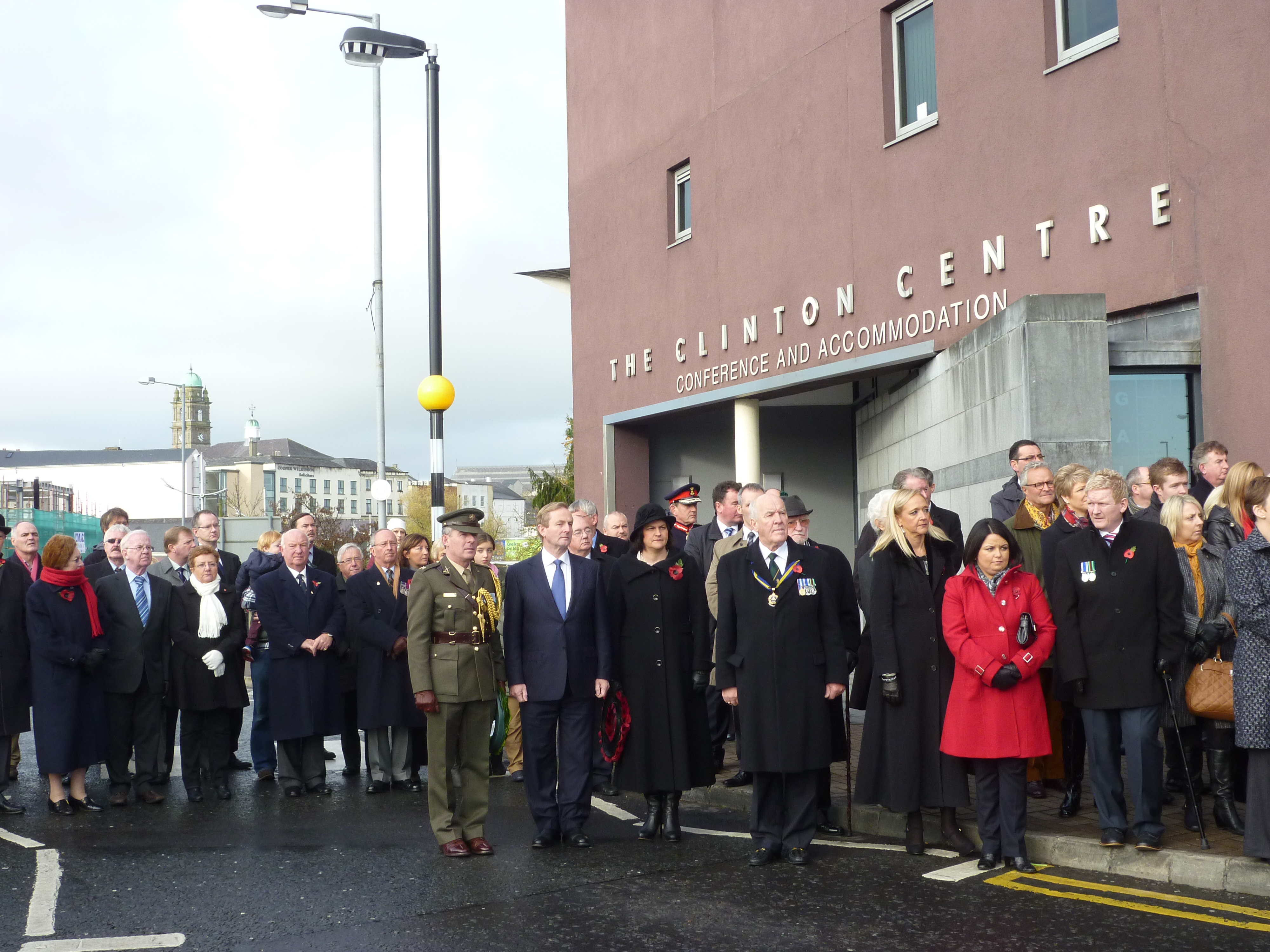
Enniskillen has come a long way since the terrible attack at the war memorial in 1987 as people gathered for a Remembrance Sunday commemoration. The peace process has helped society to move on, to the extent that the Taoiseach Enda Kenny was able to paticipate in last year’s service on the 25th anniversary of the IRA bomb, in which 11 people were killed and over 60 were injured. Mr Kenny laid a green laurel wreath at the war memorial on behalf of the people of Ireland.

One of the outstanding memories after that horrific day on November 8th 1987 was the compassion and public expression of forgiveness to those who planted the bomb shown by Gordon Wilson. His daughter Marie was among the dead and he himself was injured in the blast. A local businessman, he went on to become a peace campaigner and served for a time as a member of Seanad Éreann.

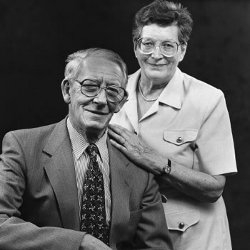
Gordon & Joan Wilson

Gordon & Joan Wilson

Inspired by Gordon’s words and his great desire for reconciliation following the Poppy Day bomb, a Trust was established in 1989. Its aim was to encourage young people from Northern Ireland aged from 16 to 19 to travel outside the island and to use their experience to help build community bridges at home. The Spirit Of Enniskillen Trust worked to encourage young people from both Catholic and Protestant backgrounds to come together and work towards a shared society and to learn from their experiences of visiting other areas of conflict. It supported a number of inter-linked projects working with young people in their schools, communities and other divided regions internationally. The Trust facilitated background leadership training, mentoring and resource support for school pupils, young volunteer facilitators, parents and teachers.

Wendy Austin

Wendy Austin

I remember attending the news conference when the Trust was launched and Wendy Austin was appointed as Chair. She proved to be an excellent mentor for the young ambassadors and any time I heard her speak, she always had words of encouragement for the teenage participants. She went on to become a life President of the group. When she launched the group’s millenium programme in 1998, she said its good work which had taken participants to countries such as Cyprus, Israel and the USA, was only just beginning.  She said it was a very exciting time to be involved in this kind of work. At this stage in the peace process there is almost more need for it now than ever before, she added.

spirit_of_enniskillen_logoThe Spirit of Enniskillen Trust supported groupings of young people from differing cultural traditions both locally and overseas  into discussion of their own contentious and contemporary issues, finding areas of commonality and cooperation, as well as learning to ‘agree to disagree’. Alongside this process, it provided personal feedback, training and support to nurture the critical understanding, awareness and skills that enable positive dialogue. Most of the Trust’s learning projects and workshops were facilitated and run by young people who had themselves been trained through Trust programmes. During its 23 years, over 16,000 young people participated in the various programmes, such as Future Voices and Building Citizenship and Diversity, working in 100 destinations abroad and fifty schools.

Now all the achievements of the project have sadly been brought to an end. The news emerged in The Detail (Kathryn Torney) following a decision by the trustees a week ago. Financial problems caused by a fall in property values and a deficiency of £250,000 in the Trust’s pension commitments led to the closure, according to its solicitor. Even when the Trust’s only property in the Malone Road area of Belfast is sold, there will still be a deficit, but this is expected to be met by the Pensions Trust. It is not the only charity in Northern Ireland in this situation.

The umbrella body NICVA said it had engaged expert pensions advice and it does not face closure. Its deputy chief executive said the SoE situation should act as a wake-up call to other charities to pay sharp attention to their finances.  nicva_logo

The Spirit of Enniskillen website containing details of all its activities has already been closed down. So one of the only places to find out more information about the work done by Chuck Richardson (director until May 2011) and the team of five is on the CredNI website. The ‘Spirit of Enniskillen Alumni’, a group of former participants in the scheme, has set up a facebook page, with over 320 likes so far and has published a statement endorsed by all:-

“At a time of limited prospects for young people, [the Trust] offered a rare opportunity for participants to lead change in their communities. It engaged the energy, idealism and commitment of young people to make a difference. The programmes provided a safe space for young people to address their own prejudices and confront sectarian attitudes, fears and misconceptions within our society…..The 375 individuals who endorse this statement wish to see Northern Ireland continue to progress. It is a tragedy that an organisation which was making a tangible contribution to this has not been saved. They wish to commemorate the legacy of the Trust and celebrate what it achieved. However as an organisation with much more to give, its premature and sudden closure is a great loss for Northern Ireland.”

Fourteen secondary school principals also expressed their concern at the closure of the Trust. To get some idea of just how successful the work of the charity was, this article last October by Brian Donaldson in the Impartial Reporter gives a good idea. As the 25th anniversary of the Enniskillen bomb approached, the widow of Gordon Wilson said she was thrilled that the Spirit of Enniskillen Trust was still flourishing. Joan Wilson, who attended a special presentation by young people who had been on the international exchange programme last summer, said Gordon would have been delighted at how the Trust had developed over the years.

Four young people from Fermanagh were among the forty who took part in last year’s Explore programme for international exchange and leadership: Michael Richmond and Jillian Ellis, who travelled to Berlin, Ashley Robinson, who travelled to the South of France and Donnchadh Tierney, who was in Sweden. Now the curtain has come down on these opportunities for young people to travel and broaden their horizons.

SHARED HISTORY: SHARED FUTURE

Shared History: Shared Future Launch

Shared History: Shared Future Launch

“Shared History: Shared Future” brings together six historical, literary and regeneration groups from South Tyrone in a cross-community project delivered by Dungannon and South Tyrone Borough Council through the Peace III phase 2 programme financed by the European Union.  It was launched at the Hill of the O’Neill and Ranfurly House Visitor Centre in Dungannon by the Mayor of Dungannon and South Tyrone, Councillor Phelim Gildernew. Brian Lambkin, Director of The Ulster American Folk Park in Omagh, was the guest speaker.

 Mr Lambkin gave an informative talk on comparative local history: what do we tell the children? He spoke about the significance of townlands, the smallest unit in civil administration, and said they were the key to a better understanding of any local area. He hoped there would be a synergy between the various groups and that their projects would have a wider value in the areas of tourism and genealogy.

 The Shared History Shared Future Project is funded through the European Union’s Peace & Reconciliation Fund and delivered by the South West Peace Cluster and Dungannon & South Tyrone Borough Council. The project was awarded over £25,000 to develop an interlinked schedule of activities over the coming months. It promises to be a very interesting and informative project which encapsulates figures of literary importance such as William Carleton right through to the social history of local engineering and entrepreneurship of John Finlay and Sylvester Mallon, pioneers in quarry engineering to exploring the history of our waterways and townlands.

The project is made up of six societies who have come together to share with each other and with the wider community an awareness of their own fields of expertise and use it towards a shared understanding of our history and future. The groups are:-

O’Neill Country  Historical Society;

Caledon Regeneration Partnership;

William Carleton Society;

Donaghmore Historical Society;

Killeeshil and Clonaneese Historical Society;

South Lough Neagh Regeneration Association.

During the evening, each group gave an overview of their origins and the focus of previous work. While maintaining the individuality of each of their projects all agree that the contribution to  this project enhances and increases awareness of who they are and what they are about.

Brian Lambkin & O'Neill Country Historical Society

Brian Lambkin & O’Neill Country Historical Society

The O’Neill Country Historical Society, represented by Art Daly from Benburb, was established in 1985. Their aim is to research, record and publish the history of the area along the valley of the River Blackwater straddling the border between counties Armagh and Tyrone. The group promote knowledge and understanding of this area’s heritage and folklore through publications, lectures and seminars and interact with other local historical groups and bodies with a view to promoting interest in our history.

Caledon Regeneration Partnership was established in 1996 and comprises representation from the local community, Dungannon and South Tyrone Borough Council and Caledon Estates Company.  William Beattie outlined how the Partnership actively promote the conservation and protection of the built and natural heritage of the area and have undertaken a number of major restoration projects within Caledon Village. The restoration of the Caledon Beam Engine Complex is currently underway.  Caledon Regeneration Partnership are actively involved in a number of community projects. Caledon Village Allotments were opened in 2011. Chairman Jim Brady said “the Partnership are delighted to join together with like-minded groups across the region in this exploration of our cultural and industrial heritage”.

Pat Boyle & Jim Cavanagh

Pat Boyle & Jim Cavanagh

The William Carleton Society is a cross-community, cross-border group which is dedicated to promoting the works of the well-known Irish author from County Tyrone and his life and times. The Chair, Jim Cavanagh, explained how it seeks to use his stories of faction-fighting and sectarianism in 19th Century Ireland as the basis for talks and discussions on history and literature and the lessons for modern-day society. By discussing issues such as sectarianism the Society hopes to open up a meaningful debate and an educative process around this issue, which is still relevant to the current situation in Northern Ireland. Its main event is a four-day annual international summer school in Clogher in the first week of August . This year’s is the 22nd since its inception in 1992.

The Society will be organising a cross-community concert in Fivemiletown Methodist Hall with the Murley Silver Band and Monaghan Gospel Choir on Wednesday August 7th. On the previous evening, August 6th, there will be a cross-community walk “in the footsteps of Carleton”, followed by music from the diferent traditions. There will also be a series of talks in the coming months including one by Dr Paddy Fitzgerald on the “Ulster English” and two others given by members of the Society about Carleton and the Clogher Valley area. Although Carleton grew up in the Clogher area and one of the places he lived at Springtown still survives, “Carleton’s Cottage”, he spent most of his life in Dublin, where he changed his religion to Anglicanism. In January, members of the Society in Tyrone held a study trip to Dublin to visit Sandford Church of Ireland in Ranelagh, where he worshipped. They also visited his grave at Mount Jerome cemetery, where Precentor Noel Regan from St Macartan’s Cathedral in Clogher led a prayer and summer school director Michael Fisher laid flowers to mark the 144th anniversary of his death.

Donaghmore Historical Society’s Townlands project is dedicated to the importance of these geographical divisions of land that have existed for thousands of years, long before towns and villages developed. They are a most important element of our heritage. Since the Post Office ceased using town lands in the early 1970s and introduced road names instead, there has been a steady decline in the awareness of our town lands by all of us but more especially by the younger generations. Members of Donaghmore Historical Society intend to study a number of townlands in the parish of Donaghmore to find things like the acreage, the meaning of the name and any other features of interest and to chart the changes that have taken place in them over the past two hundred years.

Patricia Bogue outlined how they intend to research all available records of the people who lived in the townlands and to record all their findings in book form. The aim of the publication will be to help genealogists and family history researchers seeking information about the many emigrants from the parish, living in all parts of the world. To help raise awareness of townlands in the new generations, the group also intend to involve schools from the parish in the project.

Killeeshil and Clonaneese Historical Society described how it was formed in March 2009 from the coming together of people throughout the areas of Killeeshil and Clonaneese, Co. Tyrone who have a keen interest in local history. Richard Knox said the Society’s aims are to broaden the knowledge of the area’s long and wonderful history and to provide a mechanism whereby local people and those from further afield can access this knowledge through literature, talks & events and the internet.

The Society is keen to promote the fact that the area has a rich shared history which should be enjoyed by everyone and as such the Society’s ethos is cross-community. If you would like to become a member of the Society please contact the Secretary or come along to the various events they will be holding in the coming months through the Shared History Shared Future Project.

Six Groups in Shared History Project

Six Groups in Shared History Project

Like the other five members in the project, the South Lough Neagh Regeneration Association is a voluntary cross-community group. It aims to attract and encourage investment in the economic, social and environmental well-being of the southern shores of Lough Neagh; to generate activity, employment, enthusiasm and pride in the community. They are interested in the area of the “Derrys”: covering Derrymacash, Derryadd, Derrytrasna, Derryinver, Derrylard, The Birches, Maghery, Derryloughan and Derrytresk.

Local historian Tommy Glenny told the launch that the group plans to make a video about the walkways of the defunct Ulster Canal, which once played an important role in transportation in the area. There are plans by Waterways Ireland to restore part of the canal, which linked Lough Neagh through Monaghan and Clones with Upper Lough Erne in County Fermanagh, as part of a tourism project. The group takes a special interest in the stretch between Maghery and Benburb and will be holding events in May on the old canal towpath.

DSTBC LogoThe PEACE III Programme is part-funded by the European Union (€225 million from the EU with further national contributions of €108 million) through its Structural Funds Programme. The four Councils of Cookstown, Dungannon and South Tyrone, Fermanagh and Magherafelt came together to manage the PEACE III Programme for Measure 1.1 – ‘Building Positive Relations at a Local Level’ across the four Council areas. This area is referred to as the South West Cluster. The full title of the PEACE III Programme is the EU Programme for Peace and Reconciliation in Northern Ireland and the Border Region of Ireland. The programme is available in Northern Ireland and the Border Counties of the Republic of Ireland and covers the period 2007-2013.

The four Councils of the South West Cluster were allocated a budget of £3,461,440 for Phase I of the PEACE III Programme (2007-2010) and a further allocation of £3,461,743 has been awarded to deliver Phase II of the Programme for the period 2011-2013. The Phase II Action Plan has been developed after extensive consultation with local stakeholders and analysis of the needs of communities across the the South West Cluster.    erdfimages

NAMA LAND

Frank Daly

Frank Daly

Meet one of Northern Ireland’s biggest property owners. Frank Daly is Chairman of the Republic’s National Asset Management Agency. It was set up by the Irish government in December 2009 to deal with 12,000 risky loans in Irish banking arising from the collapse of the property market. Five institutions particpate in the scheme: Allied Irish Banks (trading in the North as First Trust Bank); Bank of Ireland; Anglo Irish Bank (IBRC); Irish Nationwide Building Society; and EBS Building Society, now a subsidiary of AIB.

Mr Daly did not have an up-to-date figure to hand about the value of property securing acquired loans in Northern Ireland now controlled by NAMA. But he quoted a figure of around €1.34 billion, which was the market value of property in November 2009 and represented around 4% of NAMA’s portfolio. He said there had been extensive engagement with the Stormont Executive and that the Agency had developed a very good relationship with the Finance Minister, Sammy Wilson.

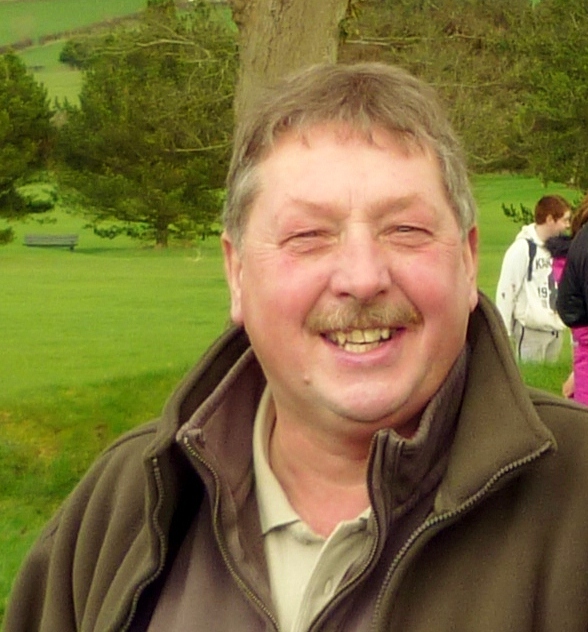
Sammy Wilson

Sammy Wilson

When both men met in June last year, more loans must have been transferred to NAMA because it was estimated that their property portfolio in the North was worth over £3 billion. At the time Mr Wilson according to a BBC report stressed the importance of  the Agency’s involvement in Northern Ireland. He said he was pleased with the finance being made available by NAMA for the development and purchase of sites there. He believed it would help to stimulate some much needed activity in the local property and construction markets and that its work was going to be very important for years to come.

NAMA publishes a list of land and properties subject to enforcement action. At the end of last year, it had a total of 143 in every county in Northern Ireland. The list includes (in a random examination) properties in Dungannon and Aughnacloy in Tyrone, Enniskillen and Lisnaskea in Fermanagh, Armagh; Dromore, Banbridge and Newry in County Down, and Coleraine in County Londonderry. In County Antrim, it includes areas such as Lisburn and Belfast, where some pubs are listed as well as the high-rise Windsor House office building.

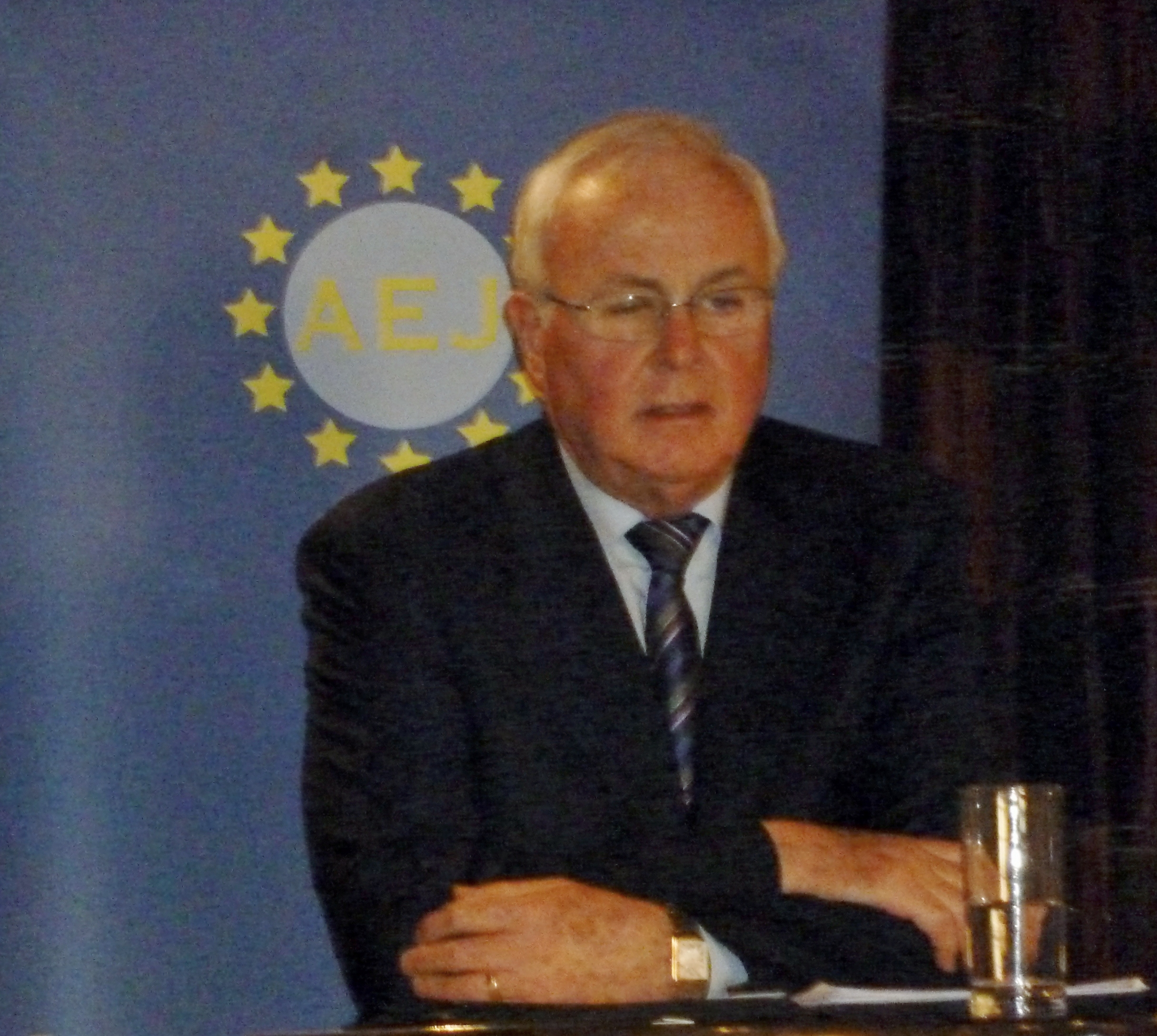
Mr Daly told a lunch in Dublin organised by the Association of European Journalists that the Agency’s approach is the same on both sides of the border, namely to work with debtors to enhance the value of assets and to keep businesses trading. Its primary commercial objective is to obtain the best achievable return for the Irish taxpayer, he said.

Frank Daly addressing AEJ

Frank Daly addressing AEJ

The bad loan agency has generated sales worth €11 billion since its inception. Mr Daly said the Irish government’s recent decision to liquidate Irish Bank Resolution Corporation (formerly Anglo Irish Bank) and direct NAMA to acquire the unsold residual element of its loan portfolio would significantly increase the Agency’s workload.“Potentially, depending on the scale of loan transfers, the size of our balance sheet could increase by close to 50 per cent”, he explained. The liquidator has until August to decide what to do with IBRC assets. The overwhelming majority of assets on NAMA’s balance sheet are of a commercial property nature and if the Agency took on the IBRC’s mortgage portfolio, it would be a new departure for them.

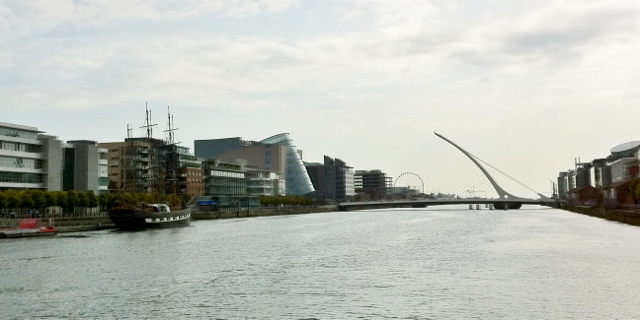
The NAMA Chairman said it might be time for some entity at a national level to take a central, co-ordinating, policy development role in relation to the residential property market. He also announced details of their plans to develop new commercial and residential projects as part of a €2 billion investment programme in Ireland, including the development of significant additional office accommodation in the Dublin Docklands. He said the Agency was firmly on target to achieve targets for reducing debts by the end of 2013 by 25% and fully by 2020. The full script of Mr Daly’s speech can be found here on the NAMA website.

Dublin Docklands

Dublin Docklands

AIDAN McANESPIE

Aidan-McAnespie

Aidan McAnespie

The killing of Aidan McAnespie (24) at a border checkpoint outside Aughnacloy in County Tyrone 25 years ago today was one of the most controversial killings during the “troubles”.  It led to a diplomatic row between London and Dublin. At the request of Charles Haughey’s government, Deputy Garda Commissioner Eugene Crowley was sent to Monaghan to investigate, although his report was never made public. Prime Minister Margaret Thatcher said the Irish government could investigate anything it wished, but not North of the border.

Grenadier Guardsman David Holden claimed his hands were wet after cleaning the sangar in the watchtower and that he had accidentally fired three rounds from a heavy machine gun as he moved it. Three days after the shooting Guardsman Holden appeared at Cookstown magistrates court where he was charged with the unlawful killing of Mr McAnespie. The same day, Irish and British Ministers held an Anglo-Irish conference in Dublin.

P1100296 (2)

Memorial near Aghaloo GFC

I remember seeing the soldier standing in the dock as the charge was put to him. His lawyer said he would plead innocent to the charge. The magistrate remanded him into police custody. The charge was withdrawn six months later after a decision by the Director of Public Prosecutions on the basis that in his judgement there was insufficient evidence to sustain it.

Twenty years after the killing, a PSNI Historical Enquiries Team report concluded that the soldier’s account of events that the fatal shot which hit Aidan in the back was “a tragic accident” was the least likely explanation of what had occurred. The report said that:-

an impartial and independent observer must question the likelihood of an accidental random discharge striking the roadway only a few feet behind what would be from the vantage point of the machine gun post a miniscule figure at a distance of 283.4 meters. The statistical odds, as outlined by (an) independent ballistic expert…..are strongly against the accidental discharge theory.”

This finding in October 2008 brought huge relief to the McAnespie family. His niece Una McCabe said the claim that Aidan had been killed by a ricochet bullet fired at random because a soldier had wet slippy fingers which inadvertently came in contact with the trigger and that Aidan was not being tracked at that precise moment had been firmly rebutted. She said the official scenario, as accepted by the British Army and the prosecution service, could be regarded as so remote that it could be virtually disregarded.

The memory of Aidan lives on. Tonight the former Tyrone football star and current Fermanagh manager Peter Canavan will be in Aughnacloy to address a candlelit vigil near the spot where Aidan died. Alongside the road where he was killed, there is a small stone memorial and a cross, which has been freshly painted. This evening a crowd will assemble beside the site of the former lookout post, which dominated the main  road to Dublin.

Roadside Cross

Roadside Cross

Speaking ahead of the event, Peter Canavan said the killing of Aidan had sent huge shock waves around the country. He said the GAA community, particularly in counties Tyrone and Monaghan, had been stunned that one of its members had been callously cut down following what he said had been years of threats and torment by the British army.

Outside the McAnespie house in Aughnacloy flies the flag of the largest GAA Club in Boston in the United States. It is named after Aidan, a sign of how his death took on international significance. His mother Elizabeth and his sister Eilish have now passed away. But his father John remembers how in the few months before the incident, his wife always used to walk with Aidan to and from the security checkpoint, when he was going to work in Monaghan, or returning. He said Aidan always used to park his car beyond the watchtower, close to the GAA Club, because of the continual harassment he used to get from soldiers, who tracked his movements. A year before the incident, John McAnespie was stopped by a British soldier at the checkpoint, who told him: “We have a bullet here (in the gun) for him”. 

John McAnespie

John McAnespie

On that day on Sunday February 21st  1988 the Aghaloo Gaelic football team from Aughnacloy, whose pitch is alongside the main road and close to the border with County Monaghan was due to play Killeeshil. Aidan had been walking past the checkpoint and was on his way to the club when he was killed. To mark the anniversary a number of Aghaloo and Killeeshil players from that era, with others, will line out on Saturday 23rd February at 4.00pm to compete for the Aidan McAnespie Trophy. The event will be attended by leading GAA personalities and officials, including Tyrone County Chair Ciaran McLaughlin, Ulster GAA Secretary Danny Murphy and the former GAA President, Dr Mick Loftus from Mayo.

Aghaloo GFC

Aghaloo GFC

Northern Standard report 21/02/13

Northern Standard report 21/02/13

FRANCIE MCCARRON RIP

Francie McCarron (picture: Northern Standard)

Francie McCarron (picture: Northern Standard)

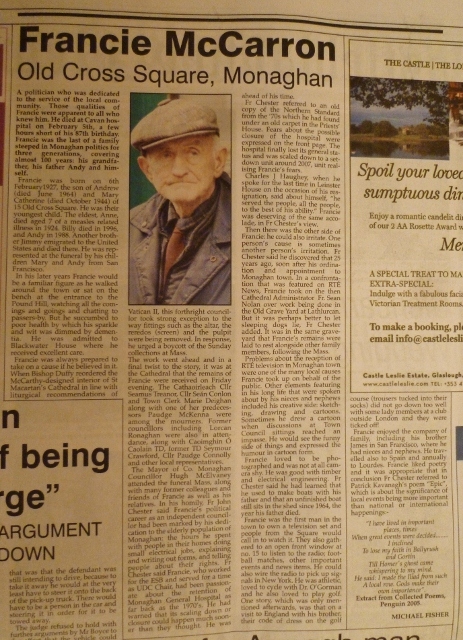
OBITUARY: FRANCIE MCCARRON             Old Cross Square, Monaghan             Northern Standard Feb.14th 2013

A politician who was dedicated to the service of the local community. Those qualities of Francie were apparent to all who knew him. He died at Cavan hospital on February 5th, a few hours short of his 87th birthday. Francie was the last of a family steeped in Monaghan politics for three generations, covering almost 100 years: his grandfather, his father Andy and himself.

Francie was born on 6th February1927, the son of Andrew (died June 1964) and Mary Catherine (died October 1944) of 17 Old Cross Square. He was their youngest child. The eldest, Anne, died aged 7 of a measles related illness in 1924. Billy died in 1996, and Andy in 1988. Another brother Jimmy emigrated to the United States and died there. He was represented at the funeral by his children Mary and Andy from San Francisco.

In his later years Francie would be a familiar figure as he walked around the town or sat on the bench at the entrance to the Pound Hill, watching all the comings and goings and chatting to passers-by. But he succumbed to poor health by which his sparkle and wit was dimmed by dementia. He was admitted to Blackwater House where he received excellent care.

Francie was always prepared to take on a cause if he believed in it. When Bishop Duffy reordered the McCarthy-designed interior of St Macartan’s Cathedral in line with liturgical recommendations of Vatican II, this forthright councillor took strong exception to the way fittings such as the altar, the reredos (screen) and the pulpit were being removed. In response, he urged a boycott of the Sunday collections at Mass.

The work went ahead and in a final twist to the story, it was at the Cathedral that the remains of Francie were received on Friday evening. The Cathaoirleach Cllr Seamus Treanor, Cllr Seán Conlon and Town Clerk Marie Deighan along with one of her predecessors Paudge McKenna were among the mourners. Former councillors including Lorcan Ronaghan were also in attendance, along with Caoimghin Ó Caolain TD, former TD Seymour Crawford, Cllr Paudge Connolly and other local representatives.

The Mayor of Co. Monaghan Councillor Hugh McElvaney attended the funeral Mass, along with many former colleagues and friends of Francie as well as his relatives. In his homily, Fr John Chester said Francie’s political career as an independent councillor had been marked by his dedication to the elderly population of Monaghan: the hours he spent with people in their homes doing small electrical jobs, explaining and writing out forms, and telling people about their rights. Fr Chester said Francie, who worked for the ESB and served for a time as UDC Chair, had been passionate about the retention of Monaghan General Hospital as far back as the 1970’s. He had warned that its scaling down or closure could happen much sooner than they thought. He was ahead of his time.

Fr Chester referred to an old copy of the Northern Standard from the ‘70s which he had found under an old carpet in the Priests’ House. Fears about the possible closure of the hospital were expressed on the front page. The hospital finally lost its general status and was scaled down to a set-down unit around 2007, unit realising Francie’s fears.

Charles J Haughey, when he spoke for the last time in Leinster House on the occasion of his resignation, said about himself, “he served the people, all the people, to the best of his ability.” Francie was deserving of the same accolade, in Fr Chester’s view.

Then there was the other side of Francie: he could also irritate. One person’s cause is sometimes another person’s irritation. Fr Chester said he discovered that 25 years ago, soon after his ordination and appointment to Monaghan town. In a confrontation that was featured on RTÉ News, Francie took on the then Cathedral Administrator  Fr. Sean Nolan over work being done in the Old Grave Yard at Lathlurcan. But it was perhaps better to let sleeping dogs lie, Fr Chester added. It was in the same graveyard that Francie’s remains were laid to rest alongside other family members, following the Mass.

Problems about the reception of RTÉ television in Monaghan town were one of the many local causes Francie took up on behalf of the public. Other elements featuring in his long life that were spoken about by his nieces and nephews included his creative side: sketching, drawing and cartoons. Sometimes he drew a cartoon when discussions at Town Council sittings reached an impasse. He would see the funny side of things and expressed the humour in cartoon form.

Francie loved to be photographed and was not at all camera shy. He was good with timber and electrical engineering. Fr Chester said he had learned that he used to make boats with his father and that an unfinished boat still sits in the shed since 1964, the year his father died.

Francie was the first man in the town to own a television set and people from the Square would call in to watch it. They also gathered to an open front window at no. 17 to listen to the radio; football matches, other important events and news items. He could also wire the radio to pick up signals in New York. He was athletic, loved to cycle with Dr. O’Gorman and he also loved to play golf.  One story, which was only mentioned afterwards, was that on a visit to England with his brother, their code of dress on the golf course (trousers tucked into their socks) did not go down too well with some lady members at a club outside London and they were ticked off!

Francie enjoyed the company of family, including his brother James in San Francisco, where he had nieces and nephews. He travelled also to Spain and annually to Lourdes. Francie liked poetry and it was appropriate that in conclusion Fr Chester referred to Patrick Kavanagh’s poem “Epic”, which is about the significance of local events being more important than national or international happenings:-

I have lived in important places, times
When great events were decided……..

I inclined
To lose my faith in Ballyrush and Gortin
Till Homer’s ghost came whispering to my mind.
He said: I made the Iliad from such
A local row. Gods make their own importance”.

[Extract from Collected Poems, Penguin 2005]

MICHAEL FISHER

P1100203 (2) (463x640)