BUGLE BABES

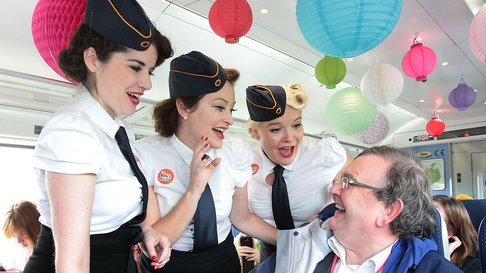
The Bugle Babes entertaining on the RTÉ Big Music Week train Photo: RTÉ ten

The Bugle Babes entertaining on the RTÉ Big Music Week train Photo: RTÉ ten

The Bugle Babes have headed northwards for a SOLD OUT! event tonight in Antrim town. The tea dance at the Old Courthouse building in the Market Square features some of their Andrews Sisters vintage routine. My first experience of their delightful entertainment was during the RTÉ Big Music Week train journey from Dublin’s Connolly station to Carlow at the end of September.

The programme describes what patrons can look forward to:-

“As part of the 4 Corners Music Festival, the tea dance will go out for the evening in the company of the very beautiful and very talented Bugle Babes! Singing the Billboard hits from the Golden eras of Swing and Jive, the Bugle Babes are a 1940’s style close-harmony trio inspired by the Andrews Sisters and the Hollywood stars of stage and screen. Whether adorned in military costume, or soft satin dresses, the Bugle Babes style is pure Vintage from their Victory Rolls all the way down to the toes of their seamed stockings. Formed by Derby Browne in 2007, the Bugle Babes have performed all over Ireland from the National Concert Hall to the Cork Opera House and their television appearances include the Late Late Show and Ryan Tubridy. Put on your dancing shoes, add a touch of vintage glamour and join these gorgeous girls as they perform their repertoire of classic songs and contemporary pop hits with a twist all served up with lots of scintillating glamour, fun and nostalgia……”

The Bugle Babes in vintage mode Photo: © Michael Fisher

Eileen, Derby & Lou: The Bugle Babes in vintage mode in Carlow Photo: © Michael Fisher

Eileen Coyle from Co. Cavan began singing at an early age and studied at the Royal Irish Academy of Music. She has been a member of several choirs including the Maynooth Choral Society, the Limerick Choral Union, and the Lassus Scholars. As a core member of the Lassus Scholars Eileen performs regularly all over Ireland, also travelling to Europe, and deputising for the Westminster Cathedral Choir in London. Her favourite composers include William Byrd and Orlando de Lassus. As a member of the jazz harmony group The Bugle Babes, Eileen has enjoyed much success, featuring on The Late Late Show, TV3’s Ireland AM, and on Sean Moncrieff’s show on Newstalk 106.

Truly DiVine (Lou) has been singing her heart away since she discovered her voice at age 13. In her teens, this Dutch lady covered tunes from the musicals and the latest hits in pop and rock. She moved into the world of jazz and blues when she arrived in Dublin in 2004. She played gigs with a variety of musicians for five years and since 2009 has broadened her world to include the burlesque and cabaret scene. She is part of the Bugle Babes, a 40s- style harmony group based on the Andrew Sisters; she regularly performs with rockabilly band The Pavement Kings; her latest show is a Marlene Dietrich tribute, ‘Dietrich’s Angels’.

When not performing with the Bugle Babes, Derby Browne specialises in French café music: the life of Edith Piaf (Pigalle), Jacques Brel, Yves Montand, Charles Aznavour and the style of guinguette and bal-musette. 

The Bugle Babes in Carlow  Photo: © Michael Fisher
The Bugle Babes in Carlow Photo: © Michael Fisher

WHEN JFK WAS SHOT

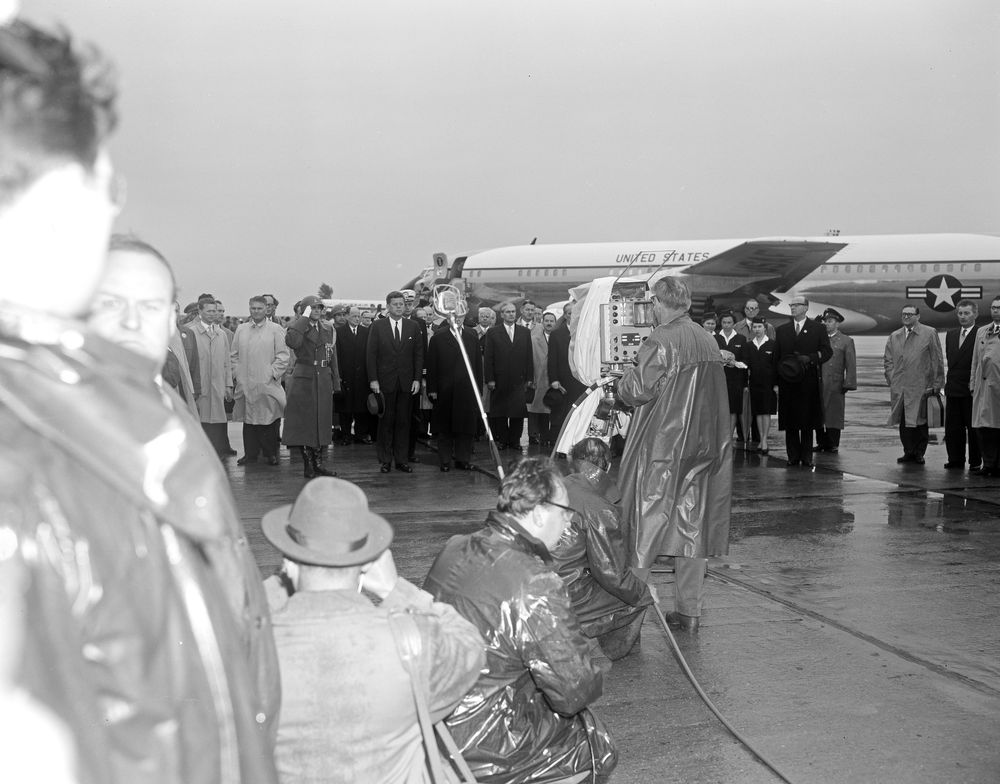
President Kennedy arrives for Vienna Summit June 3rd 1961 © White House Photographs: JFK Library & Museum

President Kennedy arrives for Vienna Summit June 3rd 1961 © White House Photographs: JFK Library & Museum

Much has been written about the 50th anniversary of the assassination of President John F Kennedy of the United States in Dallas, Texas, fifty years ago on November 22nd 1963. My father contributed this letter to the Irish Times in response to an interesting article by Dennis Staunton in a special supplement marking the anniversary.

‘Sir, – Denis Staunton’s interesting article (JFK, 50 Years after Dallas supplement, November 22nd) on JFK’s presidency rightly credits his “patience, caution and willingness to compromise with his Soviet counterpart Nikita Khrushchev” as helping to avert a nuclear war over the Cuban crisis in 1962.

It would, however, be wrong to give Kennedy all the credit for saving the world from nuclear war 50 years ago. His diplomatic skills were hard-learned. Only six months in office and still a novice in international politics, the US president faced the Soviet leader, Nikita Khrushchev, in a summit meeting in Vienna.

President Kennedy meets Nikita Khruschev in Vienna 1961 Photo: © US Dept of State, JFK Library & Museum

President Kennedy meets Nikita Khruschev in Vienna 1961 Photo: © US Dept of State, JFK Library & Museum

The summit’s main issues were the Soviet threats to close off Berlin to the Western powers and to locate nuclear weapons in Cuba, only 90 miles from Florida. Deadlock on both matters culminated in the world’s two most powerful leaders threatening nuclear war, Kennedy warning of “a long, hard winter” and Khrushchev adamant that “If the US wants war, that’s its problem”.

Pierre Salinger Photo: US Congress / Wikimedia Commons

Pierre Salinger Photo: US Congress / Wikimedia Commons

As the Irish Press’s London editor, I was covering the meeting and succeeded in getting an exclusive interview with the White House press secretary, Pierre Salinger. His version of the meeting was that Khrushchev gave Kennedy a frightening picture of the likely consequences of a nuclear war, with the major American cities being flattened like Hiroshima and Nagasaki, a picture that the gung-ho US military top dogs had hidden from him .

That evening Kennedy told the New York Times top reporter, James “Scotty” Weston, that “he (Khrushchev) beat the hell out of me . . . the worst thing of my life”. It was Kennedy’s real introduction to diplomacy. – Yours, etc

DESMOND FISHER, Roebuck, Dublin 14′.

CAVAN COUNTY MUSEUM

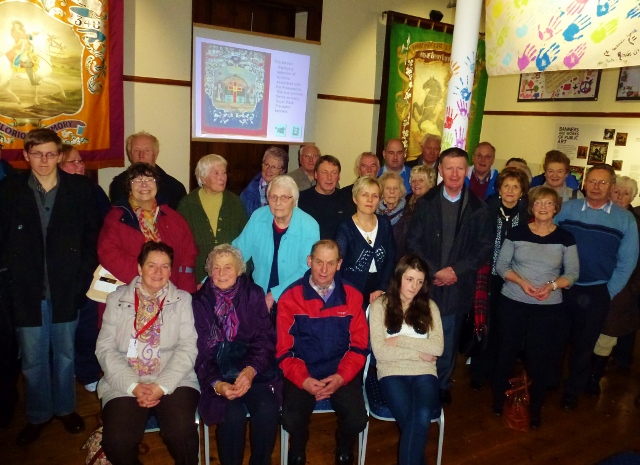
Members of the group at Cavan County Museum  Photo: © Michael Fisher

Members of the group at Cavan County Museum Photo: © Michael Fisher
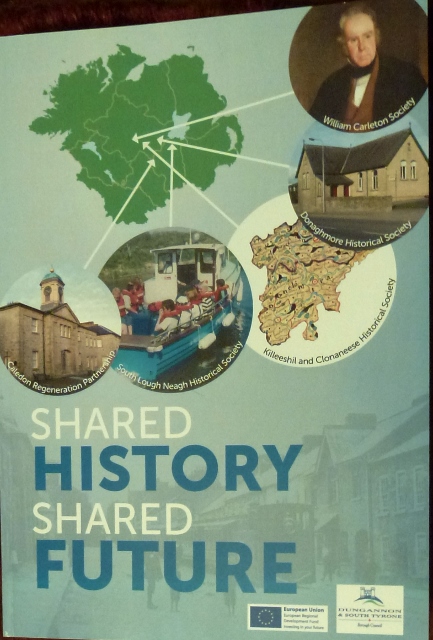
Visit to Cavan County Museum, Ballyjamesduff, by members of the ‘Shared History, Shared Future’ project from South Tyrone. Members of the William Carleton Society joined the other groups on this study trip from Dungannon via Broomfield (coffee break at An Eaglais), the Boyne Valley and Navan to County Cavan. An evening meal was organised at the Lavey Inn.

Coffee Break at An Eaglais, Broomfield Co.Monaghan

Coffee Break at An Eaglais, Broomfield Co.Monaghan

CHURCH OF IRELAND

Once again I am turning to the Reverend Patrick Comerford for today’s contribution. A very interesting talk about the Church of Ireland: Church, Culture and being relevant. It was part of a series of talks on Anglicanism being delivered by him at the Mater Dei Institute of Education in Dublin.

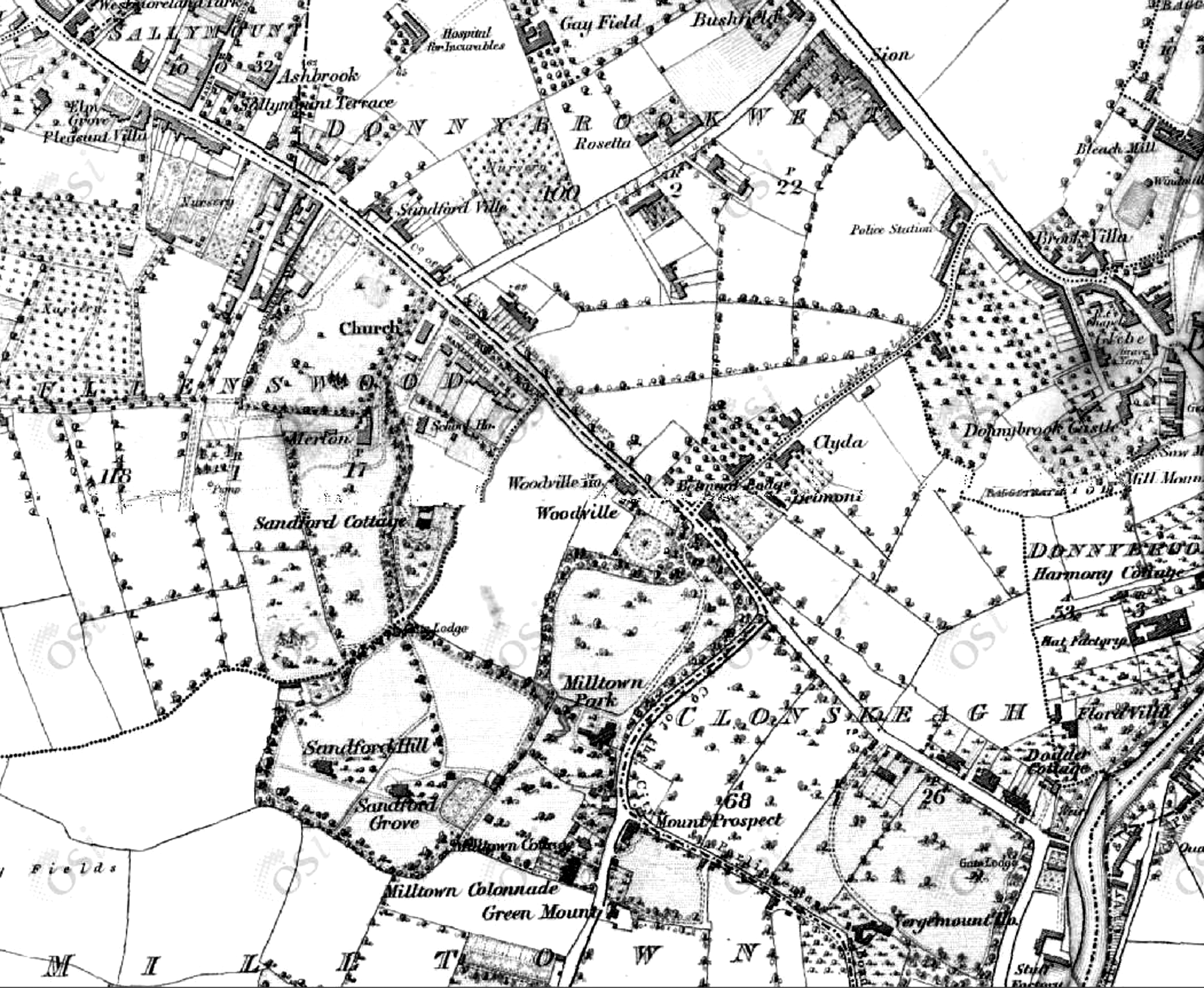
Map of Sandford Road Ranelagh c.1850 showing Woodville, where Carleton lived (Dublin City Library)

Map of Sandford Road Ranelagh c.1850 showing Woodville, where Carleton lived (Dublin City Library)

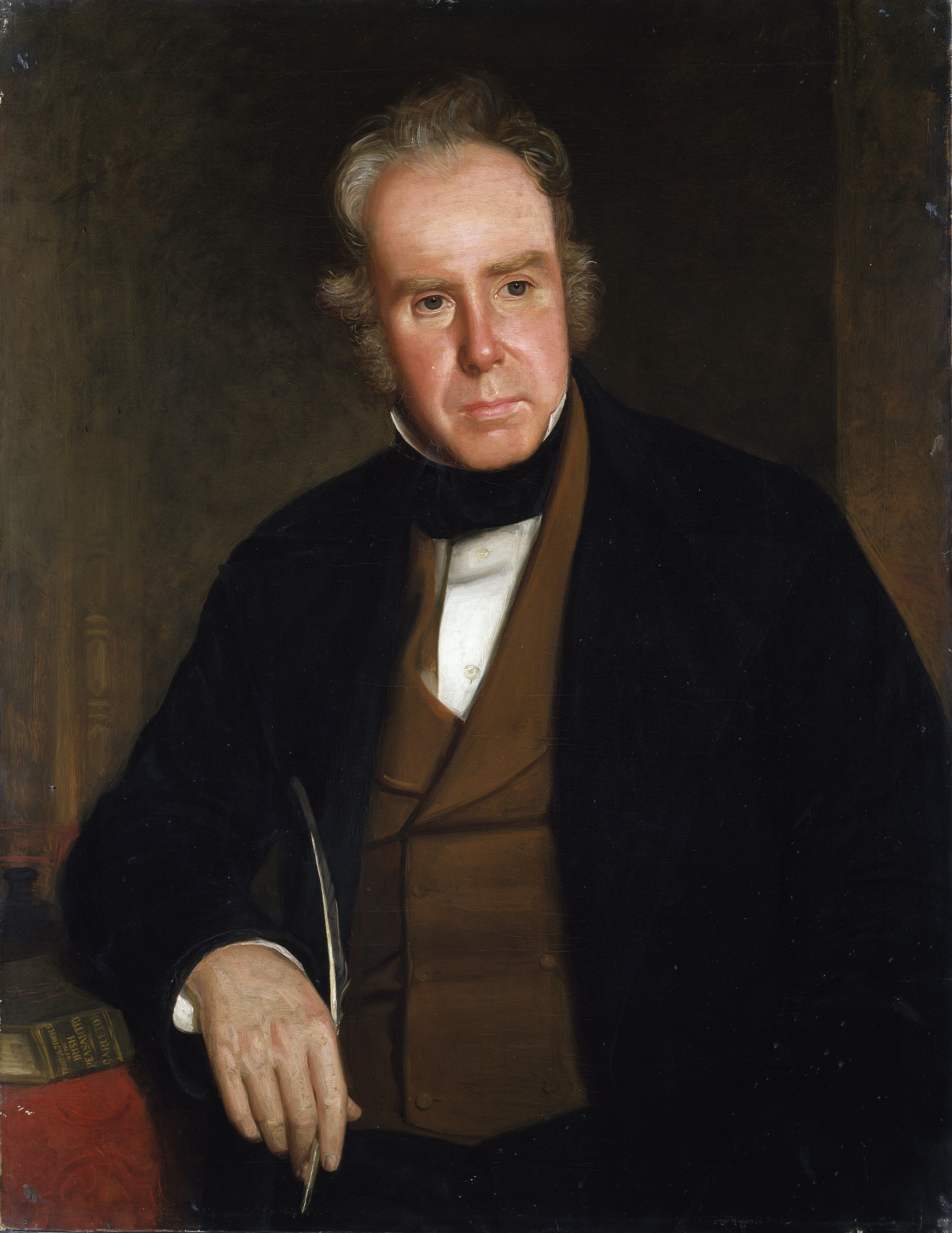
He might have added William Carleton (1794-1869) to the list of writers who were members of the Church of Ireland, although he came from a Catholic background and wrote mainly about the poor tenant farmers in the Clogher Valley: ‘Traits and Stories of the Irish Peasantry’. Carleton died in Ranelagh and is buried at Mount Jerome cemetery in Dublin and he spent most of his adult life in the city. This article on the Life of William Carleton was published in the William Carleton Society summer school booklet 2013 and is also included in a new publication due to be launched in Dungannon next Tuesday (19th November) on the ‘Shared History, Shared Future’ project involving five local historical and cultural societies.

John Slattery portrait of William Carleton from National Gallery of Ireland collection

John Slattery portrait of William Carleton from National Gallery of Ireland

William Carleton (1794 – 1869) was born the youngest of a family of fourteen children in the townland of Prolusk (spelled ‘Prillisk’ in his autobiography) near Clogher in Co.Tyrone, on Shrove Tuesday, 20th February, 1794. Although there is little suggestion that the Carletons were upwardly mobile, they did move house frequently within the Clogher area and were established at the townland of Springtown when William left the family home. Carleton obtained his education at local hedge schools which he was to write about, fictionalising the pedagogue Pat Frayne as the redoubtable Mat Cavanagh. From other retrospections of his home district, we learn of Carleton’s delight in his father’s skill as a seanachie and the sweetness of his mother’s voice as she sang the traditional airs of Ireland; of his early romances- especially with Anne Duffy, daughter of the local miller; of Carleton the athlete, accomplishing a ‘Leap’ over a river, the site of which is still pointed out; of the boisterous open air dancing. Initially an aspirant o the priesthood, Carleton embarked in 1814 on an excursion as a ‘poor scholar’ but, following a disturbing dream, returned to his somewhat leisurely life in the Clogher Valley before leaving home permanently in 1817. Journeying via Louth, Kildare and Mullingar, he found work as a teacher, librarian and,  eventually, as a clerk in the Church of Ireland Sunday School Office in Dublin. In 1820, he married Jane Anderson who bore him several children. By 1825, Carleton. who had left the Roman Catholic Church for the Anglican Church of Ireland, met a maverick Church of Ireland cleric, Caesar Otway, who encouraged him to put his already recognised journalistic talents to such prosletysing purposes as satirising the attitudes reflected in pilgrimages to ‘St Patrick’s Purgatory’ at Lough Derg, a totemic site in Irish Catholicism. Further writings in the Christian Examiner & Church of lreland Magazine led in 1829 and 1833 to the publication of what is arguably Carleton’s best known work: Traits and Stories of the Irish Peasantry. In these stories Carleton returned imaginatively to the Clogher Valley, drawing on comedy, farce, melodrama and tragedy to present a tableau of the life of the country people of the north of Ireland before the famines of the 1840s altered their pattern of existence for ever. Carleton went on to respond to the challenge of the novel, in his tirne a comparatively undeveloped genre amongst Irish writers, and published Fardorougha the Miser (1839), Valentine McClutchy (1845), The Black Prophet (1847), The Emigrants of Aghadarra (1848), The Tithe Proctor (1849), The Squanders of Castle Squander (1852). In these works he addresses many of the issues affecting the Ireland of his day such as the influence of the Established Church and landlordism, poverty, famine and emigration but does so with an earnestness that regrettably often caused his more creative genius to be swamped in a heavy didacticism. Carleton continued to write in a variety of forms, including verse, until his death in 1869, but critics are agreed that the quality of the work is uneven. Despite his prolific output, Carleton never really made a living from his writings and welcomed the pension voted to him by the government following the advocacy of such contrasting figures as the Ulster Presbyterian leader, Dr Henry Cooke, and Paul Cardinal Cullen, Catholic Archbishop of Dublin. His last project, uncompleted when he died, was his Autobiography, which was re-issued through the efforts of the Summer School Committee in 1996. Carleton was buried in the cemetery at Mount Jerome in Dublin and over his grave a miniature obelisk records the place “wherein rest the remains of one whose memory needs neither graven stone nor sculptured marble to preserve it from oblivion”.

http://bit.ly/1gP8fsG

NUJ IRELAND BDC

IEC Cathaoirleach Gerry Curran addresses the BDC  Photo: © Michael Fisher
IEC Cathaoirleach Gerry Curran addresses the BDC Photo: © Michael Fisher
Conferences for the NUJ in Ireland are held every two years. The wider union is also moving to a two-year cycle for the Delegate Meeting, which had already been shifted to an eighteen months interval in order to save money. The next DM will be held in Eastbourne in April and motions for it need to be submitted to our branch meeting by midday on Friday week (22nd November). Please contact Branch Secretary Gerry Carson.

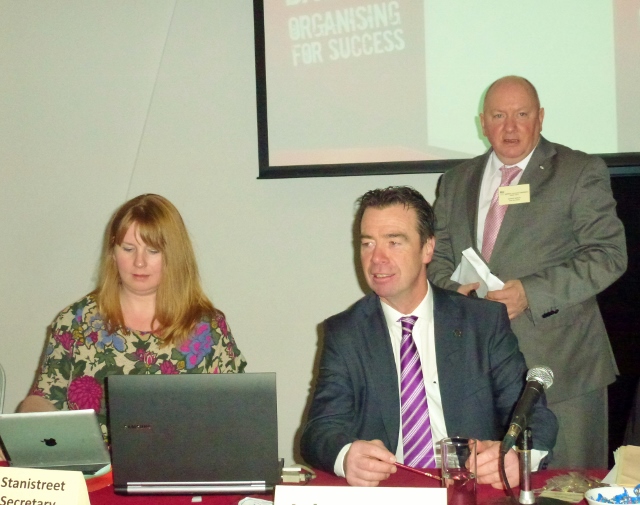
NUJ General Secretary Michelle Stanistreet with ICTU President John Douglas and Irish Secretary Seamus Dooley  Photo: © Michael Fisher

NUJ General Secretary Michelle Stanistreet with ICTU President John Douglas and Irish Secretary Seamus Dooley Photo: © Michael Fisher
On Saturday, ICTU President John Douglas addressed the NUJ in Ireland biennial delegate conference, which was held once again in the Cusack stand conference centre at the GAA headquarters at Croke Park. Another meeting was being held on the same level in a different section further along the corridor and above the GAA Museum on the ground floor.

Michael Cusack statue & stand, Croke Park  Photo: © Michael Fisher

Michael Cusack statue & stand, Croke Park Photo: © Michael Fisher
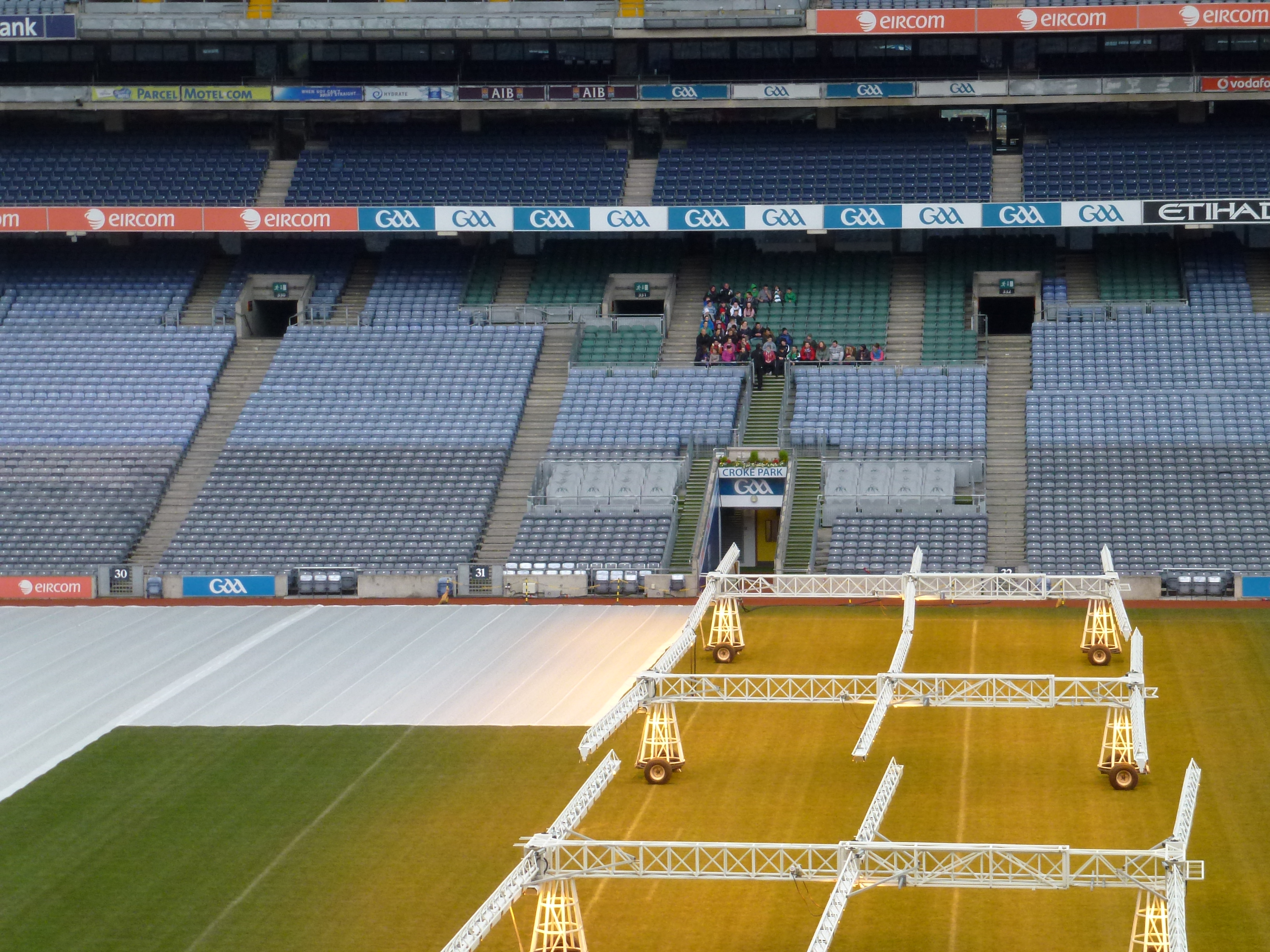
From our vantage point we could see that repair work was continuing on the pitch to protect it during the winter. In the Hogan stand, groups were being taken on tours of the impressive stadium.

Croke Park pitch  Photo: © Michael Fisher
Croke Park pitch Photo: © Michael Fisher

The NUJ website contains some details of the proceedings. Good to see that the government has withdrawn amendments relating to the Freedom of Information legislation that would have introduced new charges.

NUJ General Secretary Michelle Stanistreet addressing the BDC  Photo: © Michael Fisher
NUJ General Secretary Michelle Stanistreet addressing the BDC Photo: © Michael Fisher
The union called for immediate publication of Irish government proposals for legislation guaranteeing workers the right to collective representation and bargaining. The NUJ also called for the appointment of a Minister for labour affairs of cabinet rank in order to give greater priority to the rights of workers.

In his report to the conference, Séamus Dooley, NUJ Irish Secretary, said the official commemoration of the 1913 Lock Out will be remembered as “a hypocritical charade”, if the government commitment to publish legislation on collective bargaining is not honoured by the end of this year. He said the inadequate protection for workers and the absence of the legal right to collective representation is a scandal which cannot be ignored. The NUJ and SIPTU, through the ICTU, are preparing a complaint to the Geneva-based International Labour Organisation on the denial of the right to representation.

ICTU President Gerry Douglas addresses NUJ BDC Photo: © Michael Fisher

ICTU President John Douglas addresses NUJ BDC Photo: © Michael Fisher
The report highlights the failure of successive governments to honour commitments to bring about legislative change to protect freelance workers. In the report, Séamus Dooley says:

“We consider the failure to implement the solemn commitments regarding the right of freelance workers to collective representation through amendment of Competition Law as a betrayal. It is ironic that the state should celebrate the contribution of Larkin, who organised self-employed workers, but force unions to seek relief through the ILO after more than a decade of broken promises,”

The last national agreement, Towards 2016, contains a specific commitment to reform of competition law which still has not been honoured. The union is also calling for the establishment of a minister for labour affairs of cabinet rank as a means of ensuring that employment rights are given greater priority, a call first made by the NUJ in 2007.

The NUJ conference also passed two motions dealing with the ‘JobBridge’ programme. In his report, Séamus Dooley called on the government to abandon the scheme. He said there was clear evidence that JobBridge was being used by a range of media organisations as a source of free labour.

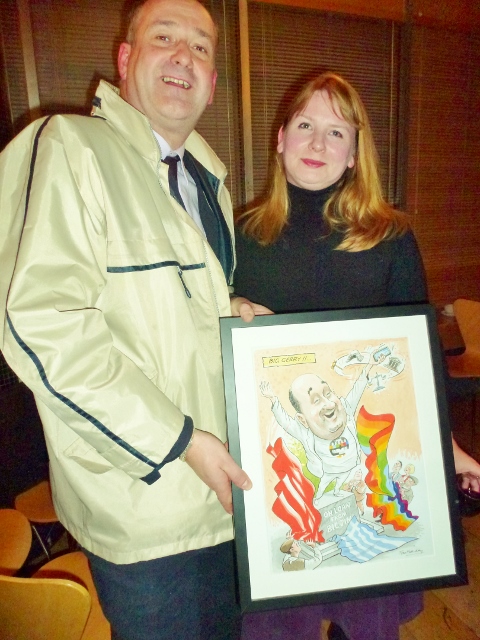
IEC Cathaoirleach Gerry Curran received a gift of a framed cartoon. Pictured with Michelle Stanistreet  Photo: © Michael Fisher
IEC Cathaoirleach Gerry Curran received a gift of a framed cartoon. Pictured with Michelle Stanistreet Photo: © Michael Fisher

BRENDAN BEHAN

Brendan Behan's typewriter & NUJ Card: Photo: Dublin Writers Museum

Brendan Behan’s typewriter & NUJ Card: Photo: Dublin Writers Museum

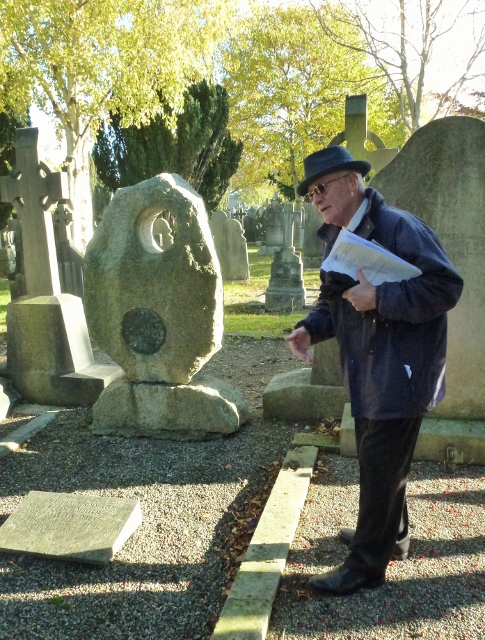
Brendan Behan’s NUJ card and Remington portable no.2 typewriter along with a first edition of ‘The Quare Fellow’ (1954) are on display at the Dublin Writers Museum in Parnell Square. His membership of the union was discussed during a tour by an NUJ group of the graves of writers and other famous people at Glasnevin cemetery in Dublin on Sunday.

Tour Guide Paddy Gleeson points out Brendan Behan's Grave  Photo: © Michael Fisher

Tour Guide Paddy Gleeson points out Brendan Behan’s Grave Photo: © Michael Fisher

I am told that Joe Jennings (later CIÉ Press Officer) was his proposer when Behan started writing a weekly column and joined The Irish Press chapel in 1954. I also know that when my father was London Editor of The Irish Press (1954-1962), the playwright had called into the Fleet Street office, probably looking for an advance of some sort.

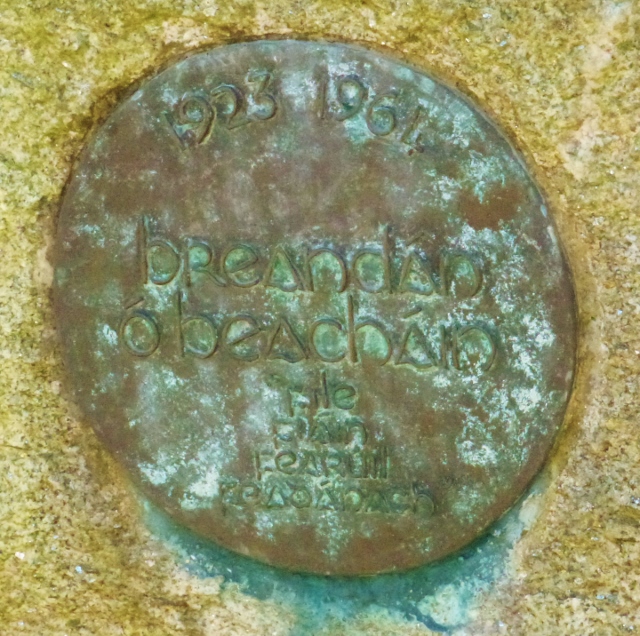
Plaque on Behan's Grave  Photo: © Michael Fisher

Plaque on Behan’s Grave Photo: © Michael Fisher

In May 1956, The Quare Fellow’ opened at the Theatre Royal Stratford East, in a production by Joan Littlewood’s Theatre Workshop. The play later transferred to the West End. Behan died on March 20th 1964, aged 41.

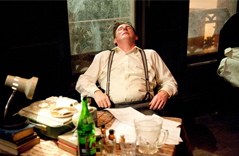
Adrian Dunbar in 'Brendan at the Chelsea'  Photo: Lyric Theatre

Adrian Dunbar in ‘Brendan at the Chelsea’ Photo: Lyric Theatre

In May 2011, a play called ‘Brendan at the Chelsea’, written by Behan’s niece, Janet Behan, was the first work to be performed in the Naughton Studio at the new Lyric Theatre in Belfast. The production tells the story of Behan’s residence at New York’s Hotel Chelsea in 1963. It was a critical success and was revived for a tour to the Acorn Theatre in New York in September, before returning to the Lyric in October. Again, it received favourable reviews.

“In Adrian Dunbar’s riveting central performance, Behan plays the stage Irishman to perfection, a song permanently on his lips, his slurring, alcohol-soaked wit delighting a succession of hangers-on with its scathing, self-deprecating observations.” (‘The Stage’)

Brendan Behan's Grave  Photo: © Michael Fisher

Brendan Behan’s Grave Photo: © Michael Fisher

Starting tonight, the play has moved to the Project Arts Centre in Behan’s native Dublin and will run for five nights until Saturday. More information can be found here.

Adrian Dunbar plays Brendan Behan in this warm and funny drama of an Irish national treasure. It is 1960s New York in the legendary bohemian bolt hole, The Chelsea Hotel. Arthur Miller is just across the hall and the symphony of 24th Street is rising up and in through the open window of Brendan Behan’s room. He is broke, hung over and way past the delivery date of his latest book, the first line of which he is yet to write. He was told to stop drinking or he’d be dead in six months – that was two years ago. Today is not going well. His mistress keeps ringing, the bills aren’t paid and a wire arrives from Dublin with the kind of news that’s guaranteed to put his blood pressure through the roof…

Adrian Dunbar (who sings a song in Irish) and Janice Behan were interviewed on the John Murray Show this morning on RTÉ Radio 1.

Brendan Behan    Source: John Murray Show website

Brendan Behan Source: John Murray Show website

UVF EXHIBITION IN DUBLIN

Armistice Day Belfast  Picture: BBC News NI

Armistice Day Belfast Picture: BBC News NI

As the centenary of the start of the First World War approaches, a couple of important developments happened today on either side of the border on Armistice Day. Representatives of victims of the troubles were at Stormont to call on politicians to agree new mechanisms to investigate past human rights violations and abuses.

A Sinn Féin Lord Mayor of Belfast, Máirtín Ó Muilleoir. became the first member of his party to take part in the official ceremony at City Hall. BBC Northern Ireland report here. As I commented elsewhere (on twitter), this was in my view the ‘right call to attend Armistice Day event: your presence at a Belfast ceremony was significant, not about wearing a poppy’. He was accompanied by some of the chaplains he had appointed at the start of his mayoral term, among them Fr Des Wilson from West Belfast, and a couple of party colleagues including Councillor Tom Hartley, a local historian.

Preparing the exhibition at Glasnevin  Photo: © Michael Fisher

Preparing the exhibition at Glasnevin Photo: © Michael Fisher

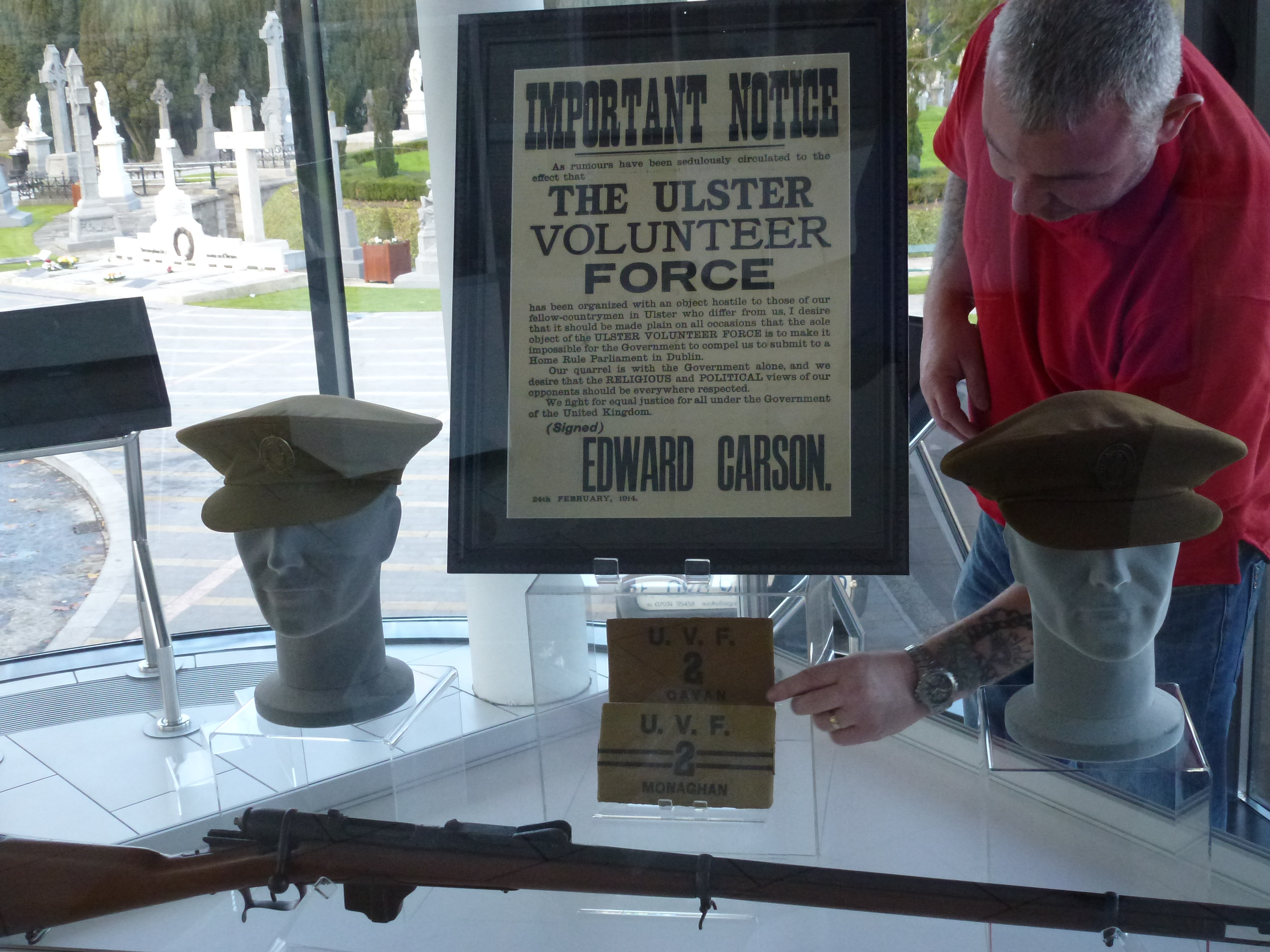
Meanwhile in Dublin, an exhibition developed under the auspices of the Unionist Centenary Committee and containing the largest collection of UVF memorabilia ever seen in the Republic was opened in the visitor centre at Glasnevin cemetery. This is the burial ground for some of the best-known figures in Ireland’s history, such as Daniel O’Connell and Michael Collins, and including many republicans. The Unionist Centenary Committee was formed in 2010 as a steering group made up from stakeholders from the Unionist community to oversee the decade of centenaries between 2012-2021.

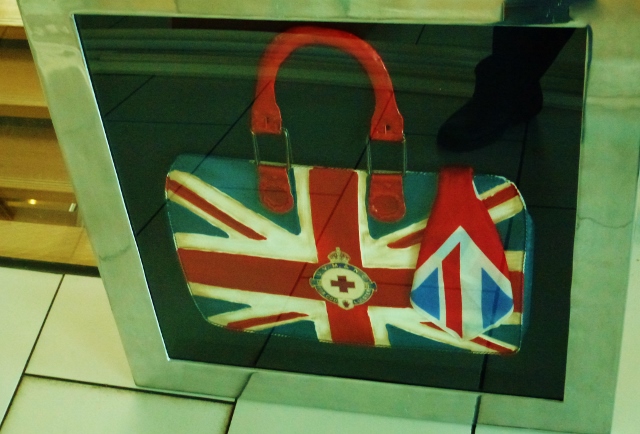
Bag used by UVF Medical & Nursing Corps  Photo: © Michael Fisher

Bag used by UVF Medical & Nursing Corps Photo: © Michael Fisher

Arts Minister Jimmy Deenihan   Photo: © Michael Fisher

Arts Minister Jimmy Deenihan Photo: © Michael Fisher

The Ulster Volunteer Force was formed to resist plans to make Ireland self-governing, but many members went on to fight in the British Army in the First World War. The exhibition is called Home Rule Crisis… the unionist response. It covers the period from 1912-1914 and was officially opened by the Minister for Arts and Heritage Jimmy Deenihan, who had read a lesson at the Remembrance Sunday service at St Patrick’s Cathedral in Dublin yesterday.

Some unionist politicians also attended the Glasnevin event. A priest read prayers before people in UVF costumes laid wreaths at the war graves commission memorial to those from the Republic who died fighting for the allies in the two world wars.

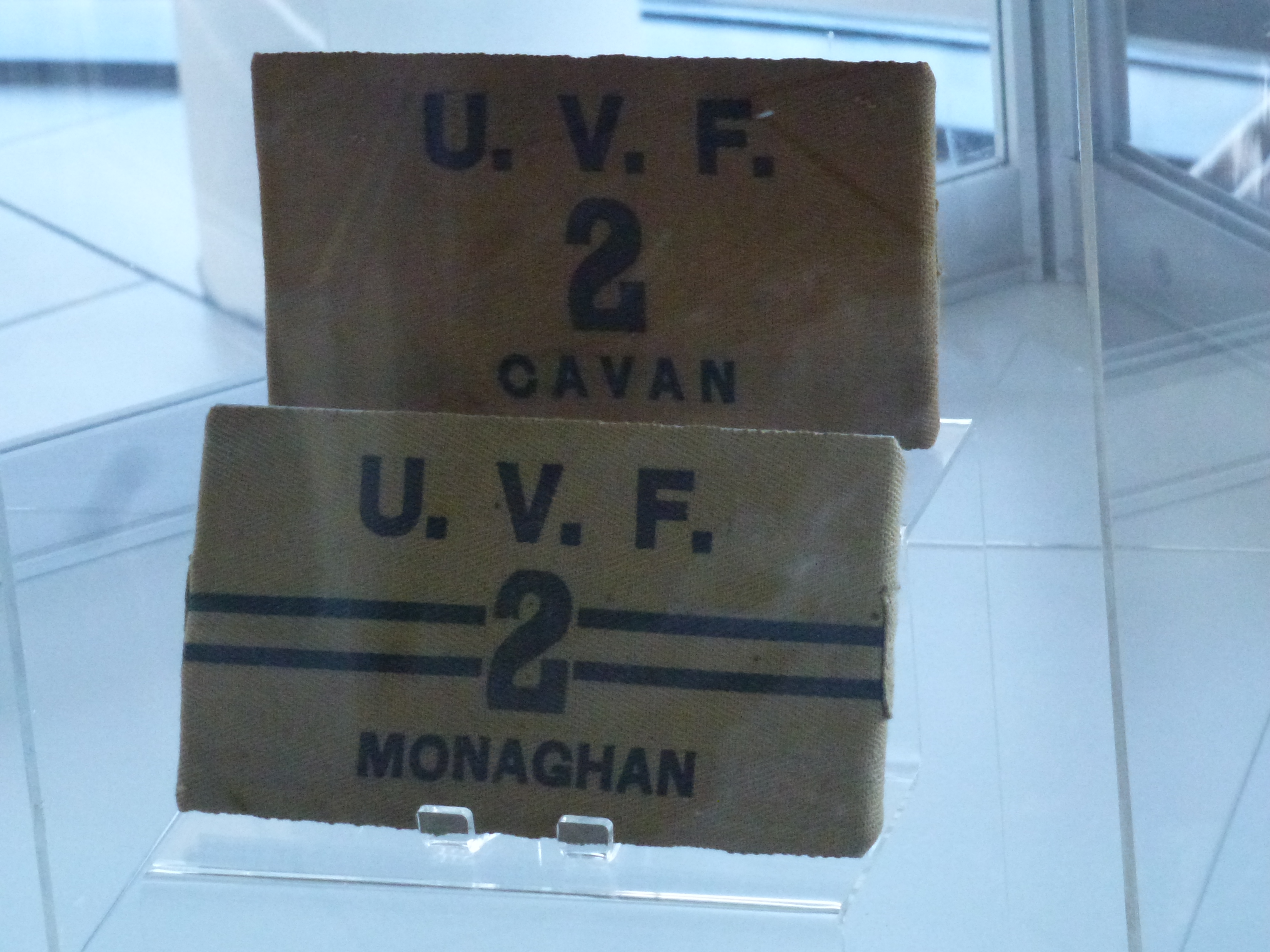
The collection of artefacts from the Home Rule period includes personal items  of James Craig, uniforms, and literature from that pivotal period. Tours of the exhibition will be provided free of charge. The exhibition focuses on the unionist reaction to events during 1912-1913,  particularly the Ulster Covenant and the formation of the UVF.

UVF armbands from Cavan and Monaghan  Photo: © Michael Fisher

UVF armbands from Cavan and Monaghan Photo: © Michael Fisher

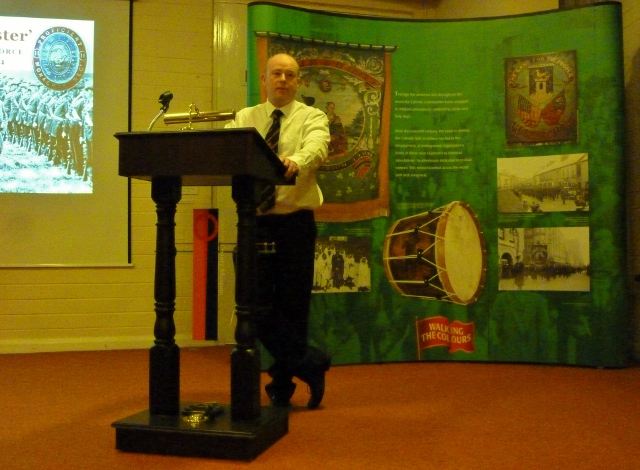
The launch included a talk by Philip Orr and a drama depicting discussions  between Carson, Craig and Crawford at the time, and music. On Saturday 16th November, Quincey Dougan and Jason Burke will provide lectures on Unionism 100 years ago. The exhibition is free and will run for two weeks until the end of November. It will be followed by an exhibition on the Irish Volunteers, the formation of which was planned at a committee meeting 100 years ago today in Dublin.

Quincey Dougan, talking about the UVF in Monaghan in June  Photo: © Michael Fisher

Quincey Dougan, talking about the UVF in Monaghan in June Photo: © Michael Fisher

Unionist Centenary Committee Chair David Hagan said:

We are excited to be bringing such a major collection of Unionist artefacts to Glasnevin Cemetery. Traditionally a site steeped in Republican and Nationalist history, it shows the progress we are making in embracing and learning more about our shared history. Over the course of the week we are also holding lectures which provide a deeper insight into Unionist thinking at the time and we will have historians on hand around the exhibition to provide further information on the collection. We have already exhibited some of the collection around Northern Ireland and have received really positive feedback, so we are looking forward to offering the people of Dublin the opportunity to learn more about Unionism in Ireland 100 years ago.”

Figure of UVF member  Photo: © Michael Fisher

Figure of UVF member Photo: © Michael Fisher

GLASNEVIN: REMEMBRANCE SUNDAY

Glasnevin Cemetery, Dublin 11am   Photo: © Michael Fisher

Glasnevin Cemetery, Dublin 11am Photo: © Michael Fisher

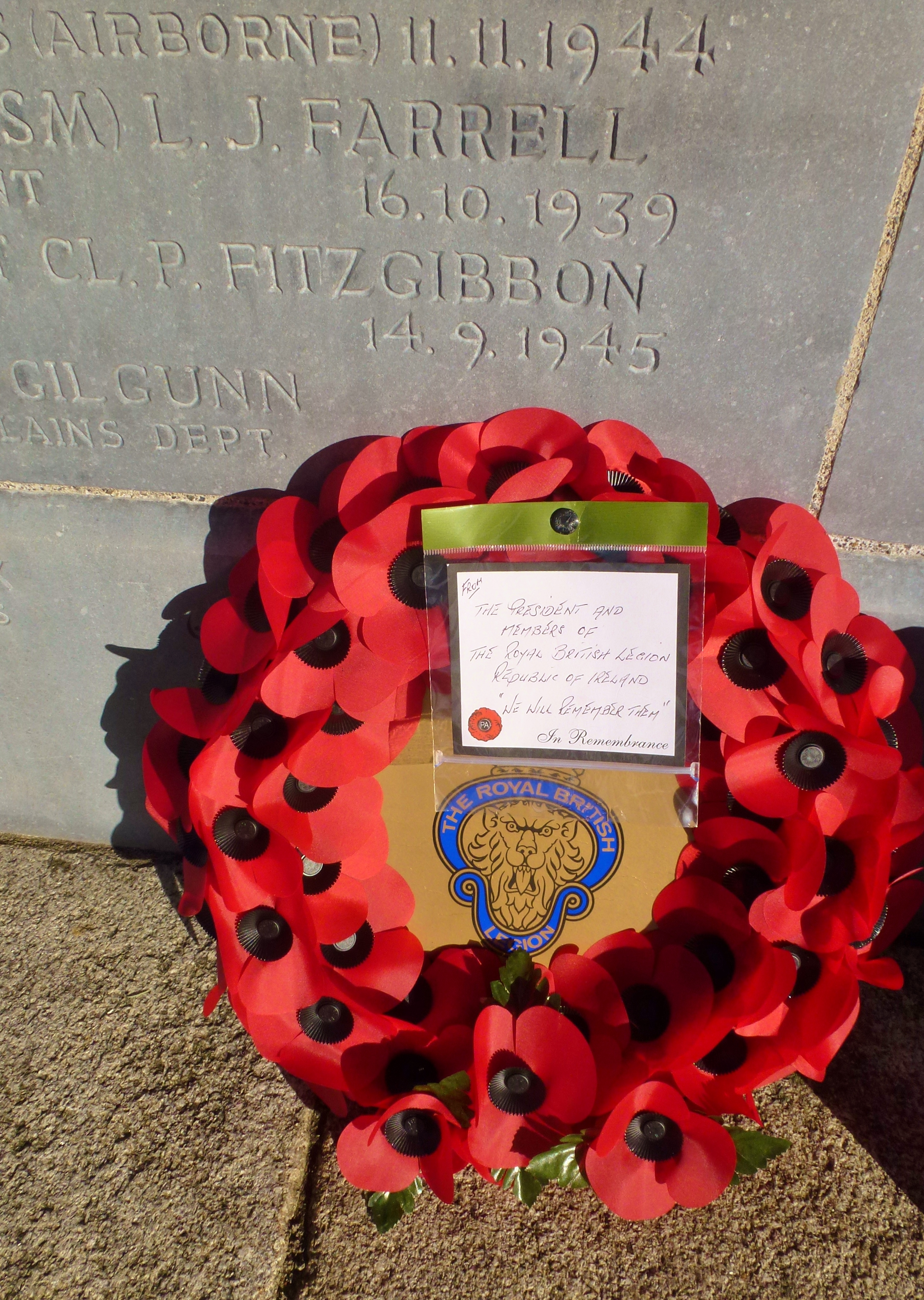
At 11am on Remembrance Sunday our group was gathering at the entrance to Glasnevin cemetery in Dublin for a tour of graves. One of the first I noticed was the memorial to Irishmen who had served as British soldiers in the Great War and the Second World War. The monument had been restored in 2011 by the Commonwealth Graves Commission. The Royal British Legion had placed a wreath there and on Monday there will be special ceremonies taking place on the 11th hour of the 11th day of November, with a number of VIPs expected to attend.

IRELAND BEAT SAMOA

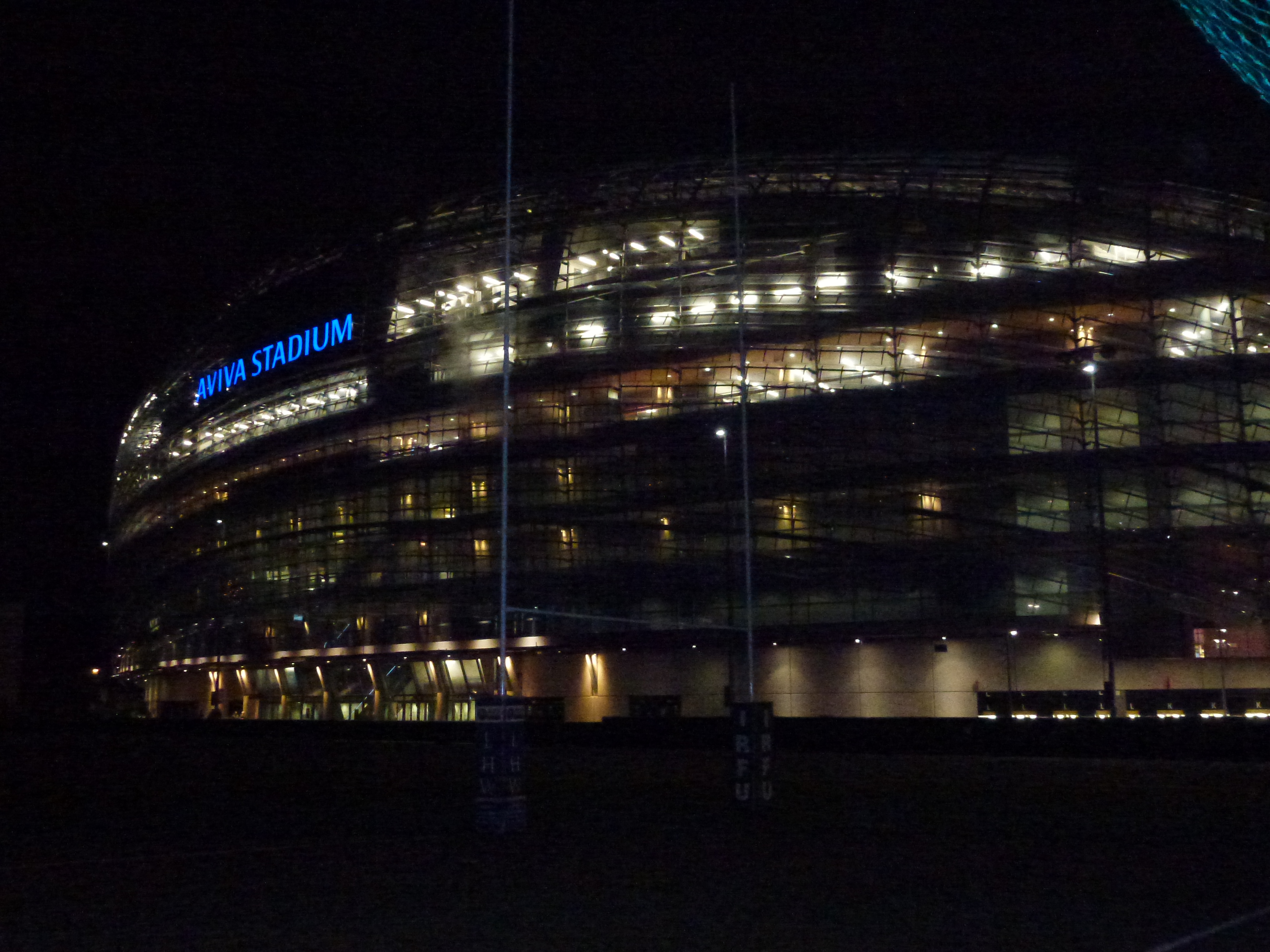
Aviva Stadium (Lansdowne Road)  Photo: © Michael Fisher

Aviva Stadium (Lansdowne Road) Photo: © Michael Fisher

Rugby: Ireland beat Samoa 40-9 in their first game under the management of Joe Schmidt at Lansdowne Road (Aviva stadium).  Tougher games to come against Australia and New Zealand.
Ireland scored five tries, most of them in the second half. Ireland led 14-6 at the break.