RACING AT YORK

York Racecourse

York Racecourse

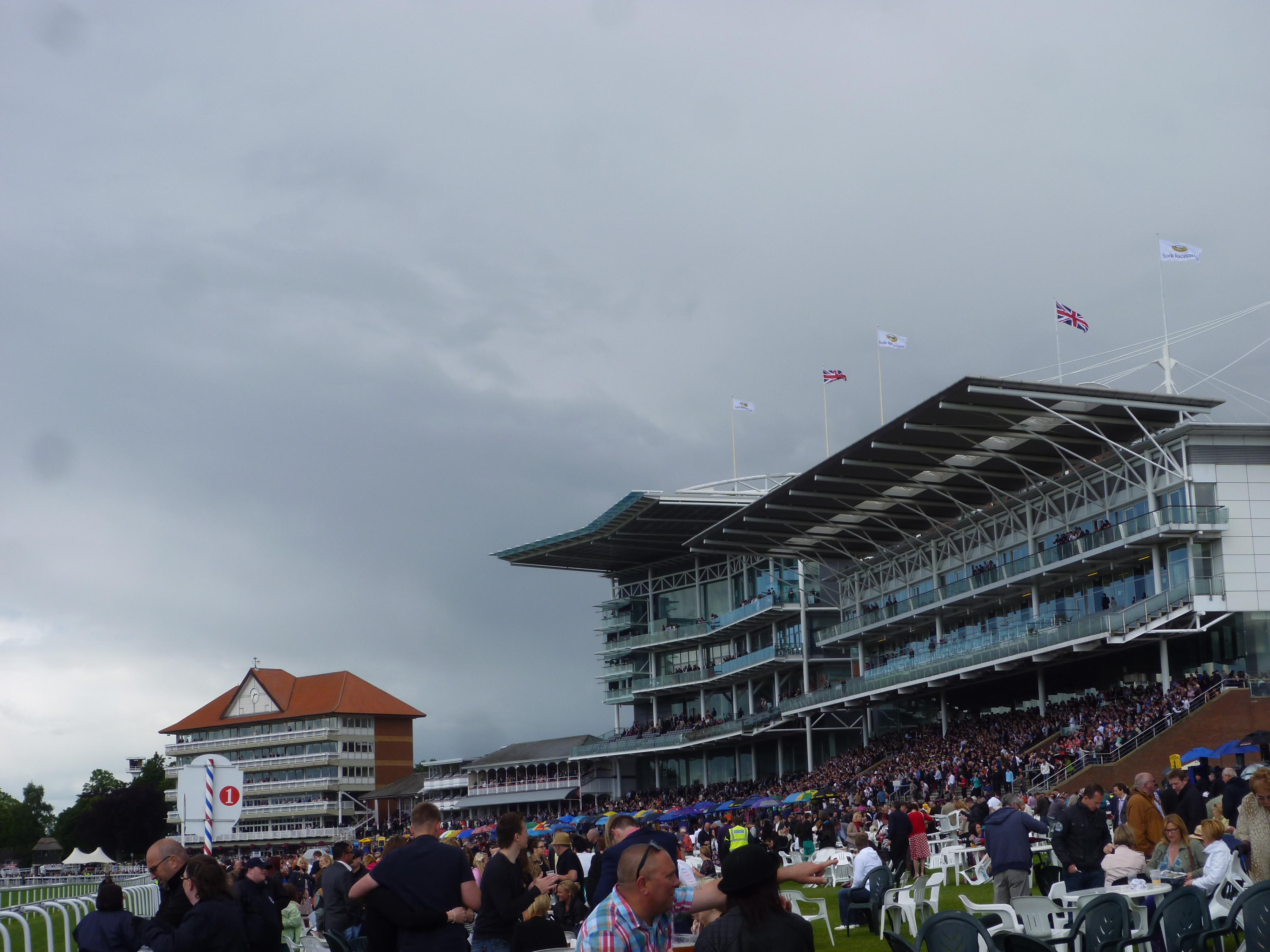
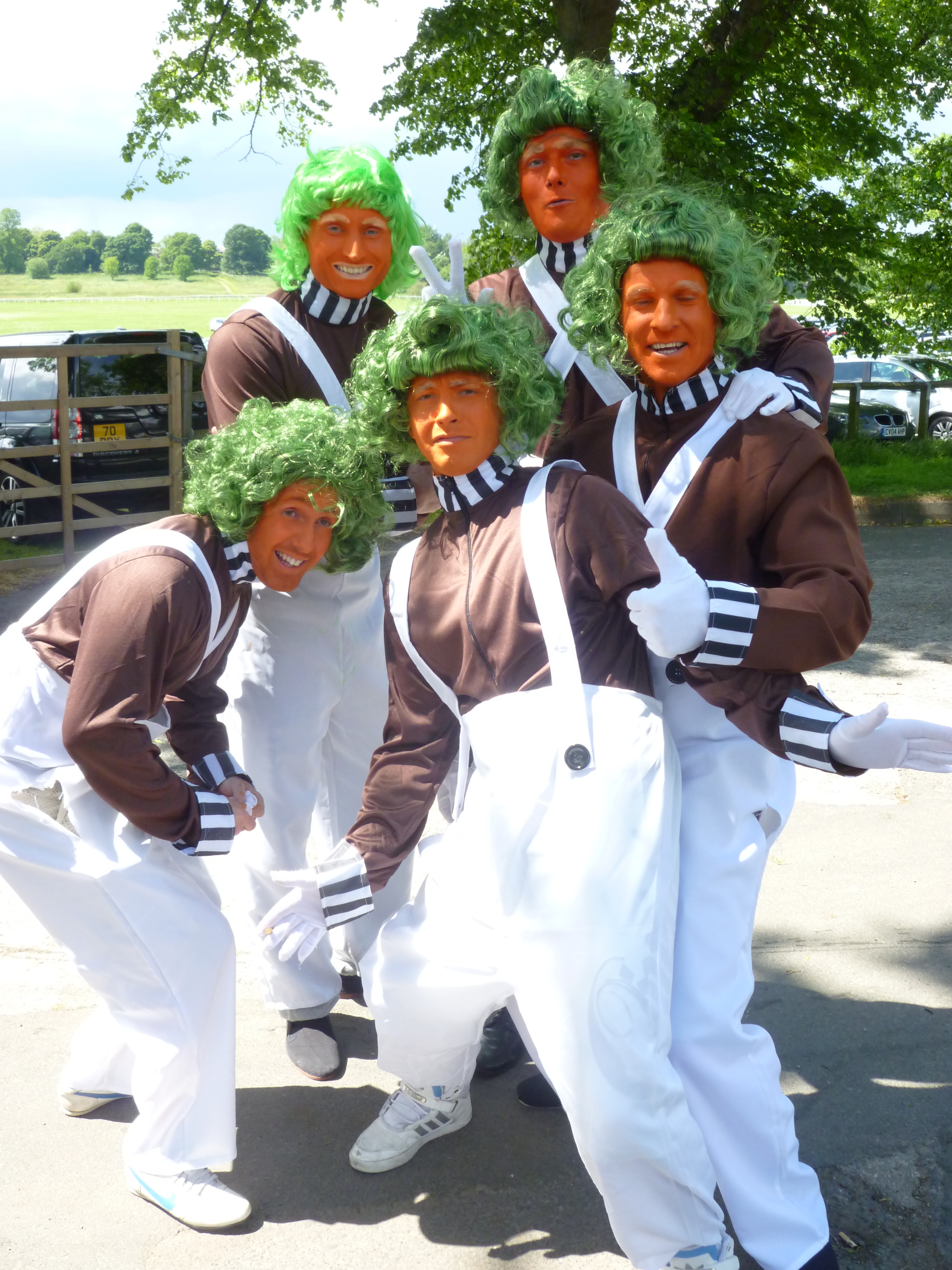
I thought that when it came to partying, especially on a sporting occasion, that nothing could beat Dublin. I have seen them celebrating in Newcastle in the North East of England at weekends and felt they also knew how to enjoy themselves. But their near neighbours in Yorkshire must come top of the list, especially when there is racing on at York. This has been a thoroughly enjoyable day out. I saw three races and got as good a view of them as any of the punters in the large county stand did, from the rails just beyond the one furlong marker. This evening the centre of the historic city turned into one big fashion show. One tip for the ladies: high heels and cobbled stones do not mix, as some of them discovered!   

Happy Punters at York

Happy Punters at York

MONAGHAN WELCOMES GEEL

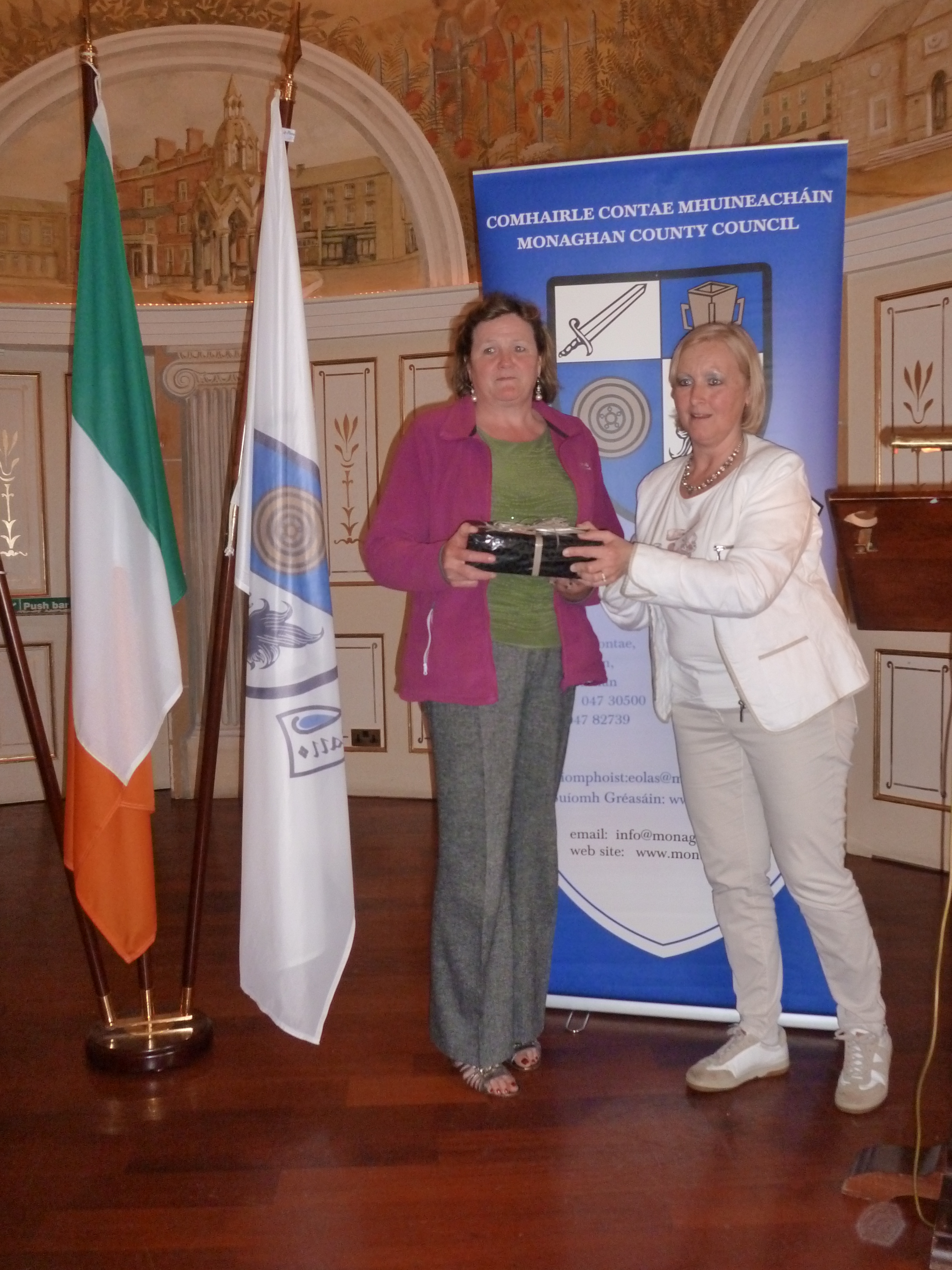
Civic reception by Monaghan County Council for Geel group

Civic reception by Monaghan County Council for Geel group

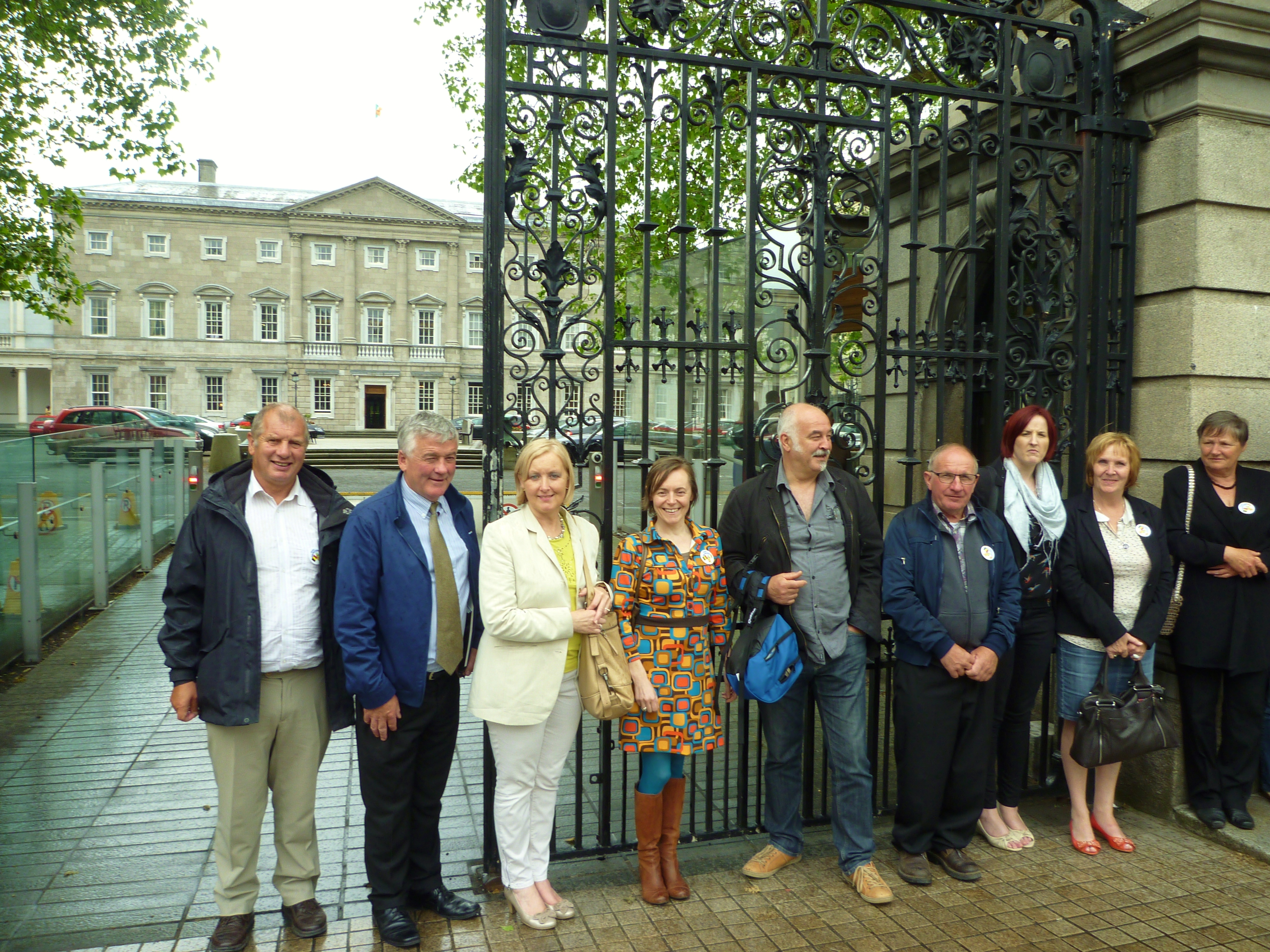
Geel group led by Mayor Vera Celis visits Leinster House

Geel group led by Mayor Vera Celis visits Leinster House

WELKOM! Tydavnet in County Monaghan has welcomed a group of fifteen visitors from Geel in Belgium, led by the new Mayor Vera Celis. Tydavnet is twinned with Geel in the province of Antwerp through the common link of St Dympna (Davnet). The group, some of whom have been here before, are staying with host families in the parish. They flew in to Dublin airport from Brussels and were then taken on a tour of Leinster House organised by Cllr Paudge Connolly, followed by lunch in the members’ restaurant. During the visit the Taoiseach Enda Kenny met them briefly, which was appreciated as it was a busy day for him in the Daíl.

An Taoiseach Enda Kenny TD and Burgemeester van Geel Vera Celis, New Flemish Alliance party, Flemish Parliament

An Taoiseach Enda Kenny TD and Burgemeester van Geel Vera Celis, New Flemish Alliance party, Flemish Parliament

I met the group as they departed for Tydavnet, where they were entertained last night in the community centre, having stopped to visit the restored workhouse building in Carrickmacross en route . Last August I joined a group from Tydavnet and Monaghan that went to Geel for the “Eurofeesten” involving twelve European countries. On Thursday the visitors were taken on a walking tour of the St Davnet’s complex in Monaghan. They were then given a civic reception at the Westenra Hotel, hosted by the Mayor of County Monaghan Hugh McElvaney and the Monaghan town Mayor, Seamus Treanor, both of whom participated in the visit to Geel last year. Councillor McElvaney presented Vera Celis with a framed piece of Clones lace and the Burgemeester made presentations to Tydavnet group organiser Sheila McKenna and to the county Mayor. This afternoon the group was taken to visit the new educational campus and the Garage theatre on the Armagh road and they were then due to be taken on a walk around Monaghan town. They will visit Derry on Saturday and will attend Sunday Mass in Tydavnet.

Group from Geel at Leinster House

Group from Geel at Leinster House

Monaghan Mayor Hugh McElvaney presents a gift of Clones Lace to Geel Mayor Vera Celis

Monaghan Mayor Hugh McElvaney presents a gift of Clones Lace to Geel Mayor Vera Celis

Tydavnet Group organiser Sheila McKenna is presented with a gift by Mayor of Geel Vera Celis

Tydavnet Group organiser Sheila McKenna is presented with a gift by Mayor of Geel Vera Celis

Flag of Geel

Flag of Geel

MARTIN O’HAGAN

Martin O'Hagan: Photo Kevin Cooper

Martin O’Hagan: Photo Kevin Cooper

Last week I wrote about the case of NUJ colleague Martin O’Hagan, shot dead by the LVF in Lurgan in September 2001. We remembered him and other journalists who had been killed in the course of their work during the IFJ Congress at Dublin Castle. In January the Northern Ireland Director of Public Prosecutions Barra McGrory announced there was to be no prosecution regarding his killing.

Yesterday in Belfast (June 11th) there was an interesting development when, according to a BBC report, also carried on the RTÉ 6:01 news and on UTV, Mr McGrory revealed that the Public Prosecution Service has referred the case of  Neil Hyde back to court amid allegations that he did not tell the “full truth” in his dealings with the authorities. In January last year Hyde signed a contract with them under the Serious Organised Crime and Police Act to become an “assisting offender”.

The loyalist supergrass testified against those allegedly responsible for murdering the Sunday World journalist. In return, his 18-year sentence was reduced to three years. He pleaded guilty to 48 offences, including drug dealing, arson, possession of firearms and withholding information in connection with Mr O’Hagan’s murder.

Mr McGrory told a news conference there was sufficient evidence that Hyde had knowingly breached the terms of his agreement. He added: “It’s in the interests of justice that the case be referred back to the original sentencing court.” Papers have been lodged and a judge will decide later this year whether Hyde broke his agreement and will review his sentence. It is believed to be the first time in the UK that a case of this type has been referred back to court.

PPSNI

MOUNT ANVILLE ALUMNI

Samantha Power, interviewed by me for RTÉ News March 2008

Samantha Power, interviewed by me for RTÉ News March 2008

The appointment by President Obama of human rights adviser Samantha Power to the post of US ambassador at the United Nations was greeted with particular interest at Mount Anville girls’ school in Goatstown in South Dublin. It means that three past pupils educated there by the Sacred Heart nuns now hold some of the most important positions in the world. It is also the Alma Mater of the former Irish President Mary Robinson, now UN Special Envoy to the Great Lakes in central Africa,  and of the Secretary General of the European Commission, Catherine Day, who was a near neighbour of ours in Mount Merrion when I moved back to Dublin in 1967.

I was already familiar with Mount Anville from the 1960s as my aunt is a member of the Sacred Heart congregation (RSCJ) and entered the religious life there. She taught for a while in the Montessori school, where she ran soccer games for the children, as my former secondary school class colleague Peter Mathews TD once recalled! Over the years we have been privileged to celebrate a number of important family occasions with the community there. Now as in many towns and cities in Ireland, the nuns no longer occupy the convent, but tomorrow (June 7th) on the feast of the Sacred Heart, they will be gathering for Mass at the original convent building, once the home of engineer William Dargan. The school has a classical-style chapel, designed by EW Pugin and GC Ashlin in 1866. I understand they are hoping to open a heritage centre later this year, in which the history of the convent and the associated schools will be displayed.

Mary Robinson

Mary Robinson

One of the highlights of the calendar last year was the visit by President Robinson to deliver the Barat lecture, named after the founder (1826) of the Society of the Sacred Heart, St Madeleine Sophie.  In her speech Mary Robinson spoke warmly and movingly about the main points of her career as a lawyer, Senator, President of Ireland (her greatest honour she said), UN High Commissioner for Human Rights, and lately, her work for climate justice.  She also participated in a questions and answers session with the secondary school students.  She spoke about her time spent as a boarder in Mount Anville in the late 1950s (Mary Bourke from Ballina in County Mayo). She recalled reading in the school library about Eleanor Roosevelt, someone she said who had inspired her in her formative years. In March, she was in Belfast for a memorial service to celebrate the life of the former trade unionist and human rights activist, the late Inez McCormack.

Catherine Day

Catherine Day

Catherine Day was profiled recently in the Village magazine. She was appointed Secretary General of the European Commission in Brussels in 2005.  Born in Dublin in 1954, she was brought up in Mount Merrion and educated at Mount Anville. She has a BA in economics and an MA in International Trade and Economic Integration from University College Dublin. I remember her interest in the “Yes to Europe” campaign which we ran as students (Young European Federalists) in the 1972 referendum on Ireland’s entry to the EEC, as it was then known.  She joined the European Commission in 1979 and the cabinet of Ireland’s Richard Burke in 1982 at the age of 28, staying for a term with his Irish successor, Peter Sutherland, competition commissioner. She then transferred to the cabinet of the UK’s Leon Brittan for two terms. She returned to work for him in 1996 as director for relations with third-world countries. She became deputy director in Chris Patten’s external relations where she was deeply involved with the enlargement of the Union from 15 countries to today’s 27. Before her appointment as head civil servant she was in charge of the Environment Directorate-General.

Samantha Power (Photo: broadsheet.ie)

Samantha Power (Photo: broadsheet.ie)

Samantha Power was interviewed by Donal Lynch for the Irish Independent during a visit to Galway in April 2008 shortly after she had made a “blooper” about Hillary Clinton (I was able to get Samantha’s response during an earlier visit to Belfast). She explained how her parents had lived in Ballsbridge in Dublin. Her father, from Athlone, was a dentist and her Cork-born mother was training to be a doctor. She attended the Montessoro school at Mount Anville.  Her parents’ marriage was floundering and her mother went for further study to America, taking Samantha then aged nine and her five-year-old brother with her.

“I can clearly remember my first day of American public school in Pittsburgh. I had to wear my Mount Anville school uniform in front of all those kids because my mom didn’t have any money for new clothes. It was totally humiliating for life. The shirt, black leather shoes and pleated skirt. Years of therapy later I’m still not over it”, she laughs. “If you really want to know how I got interested in war zones you’d have to go back to that first day of school in the Mount Anville uniform.”

Those remarks were picked up by a blogger “Irish Media” in an article on “Samantha Power and Sacred Heart nuns – Magan’s World, Sept 2008”. She recalled that:-

my very best friend between the ages of four to eight in Mount Anville, Montessori School, at the Sacred Heart convent in Dublin had been called Samantha Power. We had spent every free moment together, gossiping and playing make-believe in our special den under a bush beside the tennis courts“.

So confirmation of her association with the nuns.

In 2007 the nuns handed over control to the laity and the schools now come under the aegis of the Sacred Heart Education Trust. The boarding school which my sister attended for a while on our return from London closed in 1981. Other famous past pupils include former Fine Gael Education Minister and TD Gemma Hussey, consultant geriatrician and former IMO President Dr Christine O’Malley, Sheila Humphreys of Cumann na mBan, an activist during the war of independence, the late television documentary maker Mary Raftery, the actress and model Alison Doody and the social entrepreneur Caroline Casey of Kanchi (formerly the Aisling Foundation), to name but a few!

MARTIN O’HAGAN

Martin O'Hagan: Photo Kevin Cooper

Martin O’Hagan: Photo Kevin Cooper

Passing through the centre of Lurgan in County Armagh last night (Tuesday) on my way back to Belfast from Clogher, I was thinking of Martin O’Hagan. The 51 year-old Sunday World reporter was shot dead by loyalist paramilitaries as he made his way home from a pub in the town centre, along with his wife Marie. It happened on a Friday night, September 28th 2001. The “Red Hand Defenders” a cover name used by the UVF claimed responsibility. No-one has yet been prosecuted for the murder of Martin, the only journalist to be killed during the conflict in the North. In January this year the Northern Ireland Director of Public Prosecutions announced that there would be no prosecution in relation to the killing, a decision that was criticised by the NUJ.

IFJ Congress in session at Dublin Castle

IFJ Congress in session at Dublin Castle

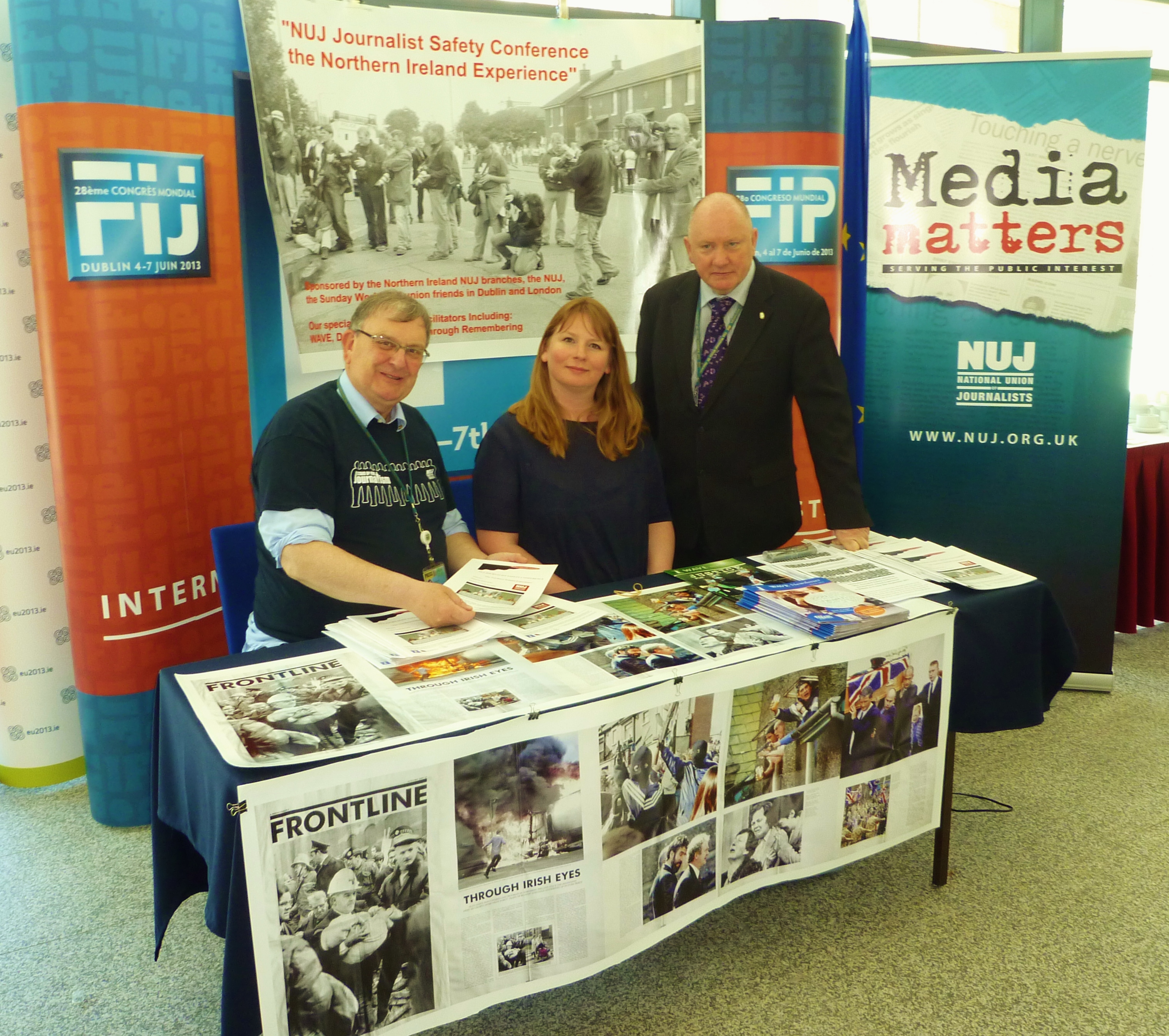
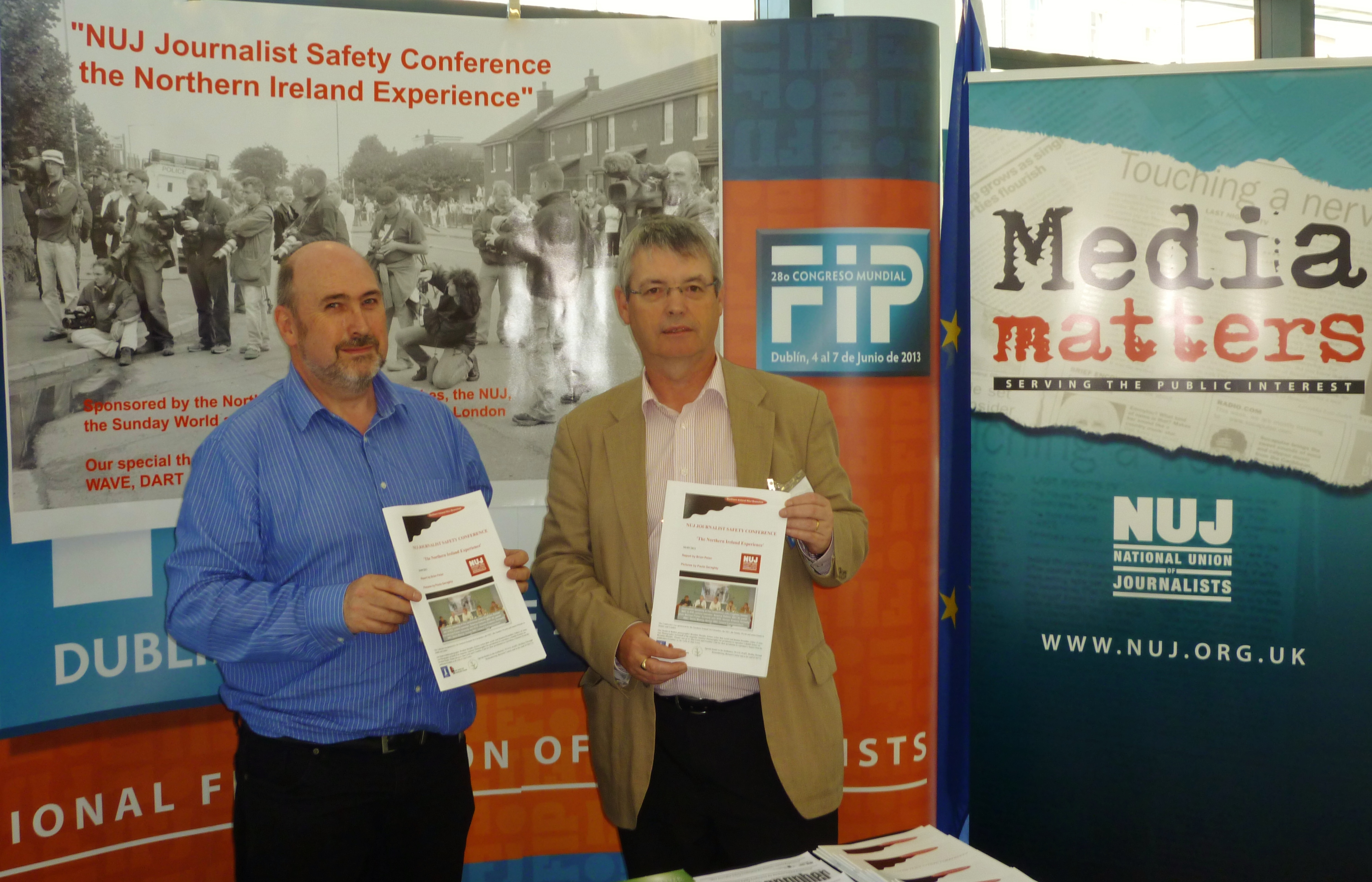
Today I was in Dublin where the International Federation of Journalists is holding its 28th world congress at Dublin Castle on the theme “Leading the Global Fightback”. Kevin Cooper and myself ran an information stand at lunchtime for the delegates about journalist safety. It was the theme of a conference in Belfast organised by the Belfast and District Branch of the NUJ in September 2011, at which the anniversary of Martin O’Hagan’s death was commemorated. Copies of the report of that conference will be available at the stall at Printworks. It also coincided with another conference on the safety of media workers held in Belfast’s Linenhall Library this morning, organised by Gerry Carson, Secretary of the NUJ Belfast & District Branch.

NUJ Belfast & District Vice Chair Michael Fisher with NUJ General Secretary Michelle Stanistreet & Irish Secretary Seamus Dooley

NUJ Belfast & District Vice Chair Michael Fisher with NUJ General Secretary Michelle Stanistreet & Irish Secretary Seamus Dooley

Kevin Cooper, Belfast & District Branch with NUJ President Barry McCall

Kevin Cooper, Belfast & District Branch with NUJ President Barry McCall

This evening a simple commemoration took place.

Standing Up for Journalism:

Delegates assembled on the steps of the Printworks at 7pm following close of business for a series of symbolic events demonstrating our commitment to journalism while commemorating those who have died in the service of our profession since 27th World Congress 2010

19.10  Distribution of floral tributes

19.20 Wreath laying at Veronica Guerin monument, Dubh Linn Garden, Dublin Castle

19.30 Freedom Walk to Dublin City Hall

19.50 Arrival at Dublin City Hall

20.00 Welcome by Gerry Curran, Cathaoirleach, Irish Executive Council, NUJ

20.10- 21.30: Reception and social evening 

IFJ President Jim Boumelha

IFJ President Jim Boumelha

Time to Vote! NUJ President Barry McCall

Time to Vote! NUJ President Barry McCall

DUBLIN’S FALLEN HERO

Nelson Pillar after the explosion March 1966 NLI Ref.: WALK138A  National Library of Ireland on The Commons @ Flickr Commons

Nelson Pillar after the explosion March 1966 NLI Ref.: WALK138A
National Library of Ireland on The Commons @ Flickr Commons

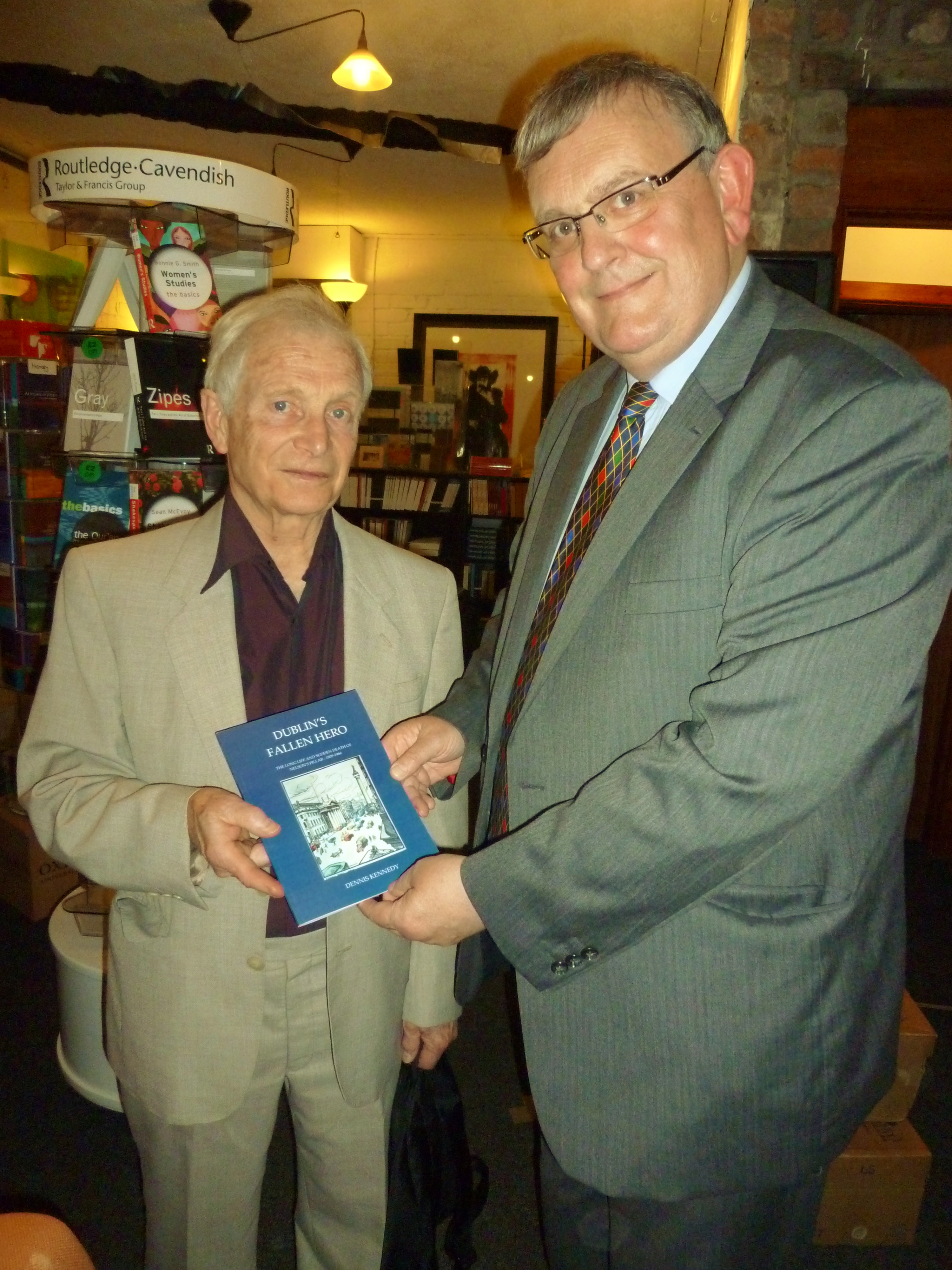
Author Dennis Kennedy and myself

Author Dennis Kennedy and myself

This evening (Tuesday) I launched a book in Belfast by the former Irish Times journalist Dennis Kennedy about the history of the Nelson Pillar in Dublin. It used to mark the centre of the city in O’Connell Street (formerly Sackville Street) beside the GPO. Now we have The Spire.

The Spire: Photo  © Michael Fisher

The Spire: Photo © Michael Fisher

A bomb explosion in the early hours of March 8th 1966 toppled Admiral Horatio Nelson from his perch and damaged a section of the 121 ft high column. The remaining stump and the large base which contained the entrance where you used to be able to go in and climb up 168 steps to the top to view the skyline had to be blown up by Irish Army engineers six days later. In the process they succeeded in causing more damage to premises in the surrounding area than the original explosion. The blast is thought to have been the work of a couple of former IRA members, although that group denied responsibility. It coincided with the 50th anniversary of the Easter Rising. The pillar had been opened in October 21st 1809, the fourth anniversary of the Battle of Trafalgar. The inscription on the memorial plaque read as follows:-

 “By the blessing of Almighty God To Commemorate the Transcendent Heroic Achievements of the Right Honourable Horatio Lord Viscount Nelson Duke of Bronti in Sicily, Vice-Admiral of the White Squadron of his Majesty’s Fleet, Who fell gloriously in the Battle of Cape Trafalgar On the 21st Day of October, 1805, when he obtained for his Country a Victory over the Combined Fleets of France and Spain, Unparalleled in Naval History. This first stone of a Triumphal Pillar was laid by His Grace, Charles Duke of Richmond and Lennox, Lord Lieutenant General & General Governor of Ireland, On the 15th Day of February, In the Year of Our Lord 1808, And in the 48th Year of the Reign of our most Gracious Sovereign, GEORGE THE THIRD, In Presence of the Committee, appointed by the Subscribers, for erecting this Mounument“.

Dublin's Fallen Hero: Dennis Kennedy

Dublin’s Fallen Hero: Dennis Kennedy

The book launch was at No Alibis bookshop on Botanic Avenue at 5:30pm. The book is published by Ormeau Books, 3 Mornington, BELFAST BT7 3JS and costs £10 or can be purchased for €15 including free postage.

Author Dennis Kennedy and myself outside No Alibis bookstore

Author Dennis Kennedy and myself outside No Alibis bookstore

Nelson’s Pillar was the subject of a Scannal documentary on RTE1 in 2010. In January 2010 my nephew wrote the following in his blog on Dublin life and culture “Come Here to Me“:

For 157 years, he kept “a watchful half-eye over Ireland’s capital city”.

January 28, 2010 by Sam:

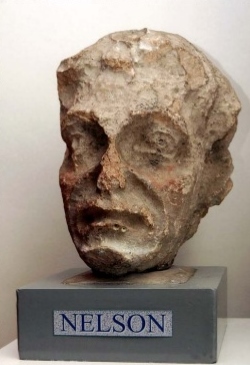
Earlier this week, RTE broadcast a very well made documentary on the history of Nelson’s Pillar. The programme contains amazing archive footage along with contributions from Des Geraghty, Jimmy Magee and David Norris……Though it focuses on the bombing of 1966, the documentary tells also tells the fascinating story of how in 1955 a group of UCD students, involved with the Irish National Student Council (INSC), occupied the pillar. Dropping a banner of Kevin Barry over the edge, they tried to melt Nelson’s statue with homemade “flame throwers”. Gardaí used hammers to break into the pillar and tried to arrest the students but they had to be released after the Gardaí were attacked by sympathetic members of the public. After the statue was blown up in May 1966, Nelson’s head was stolen by NCAD students from a storage shed in Clanbrassil Street as a fund-raising prank to help clear their debts. Wearing sinister black masks, they held a very civil press conference explaining their motives. The head made several secret appearances over the next six months including making its way onto the stage of a Dubliners concert in The Olympia Theatre!

Nelson’s head now rests peacefully in the Gilbert Library in Pearse Street. Photo by Alastair Smeaton, Dublin Public Libraries.

Head of Nelson

Head of Nelson

LONDON TRANSPORT

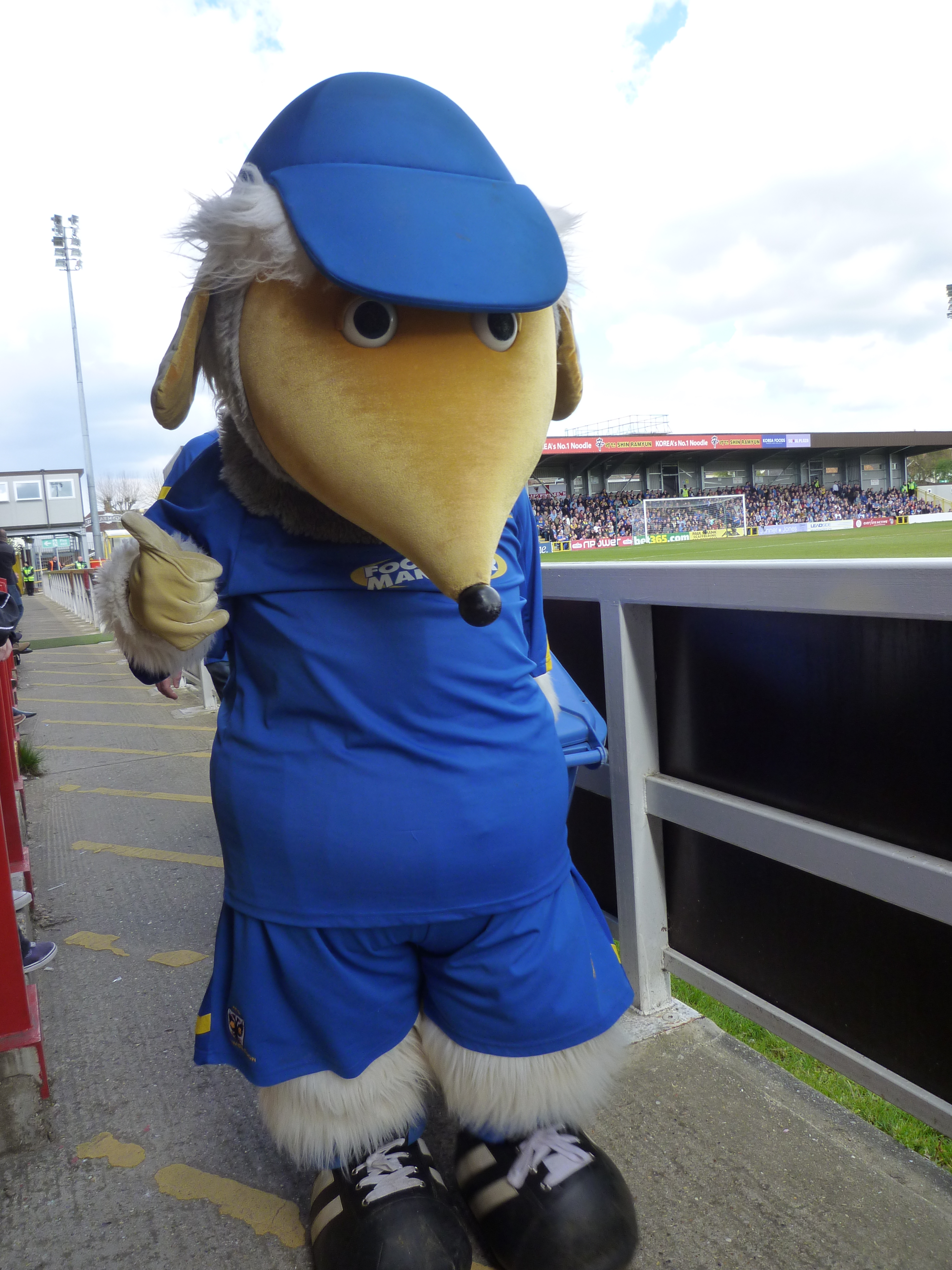
Haydon the Womble: AFC Wimbledon mascot

Haydon the Womble: AFC Wimbledon mascot

While I was writing yesterday about the Church of Ireland, one of its clergy the Reverend Patrick Comerford was blogging about a favourite subject of mine, the London Undeground: Mind the Gap, Avoid eye contact and Move along the Platform! He even mentioned my beloved Wombles of Wimbledon Common, a place where I used to go for walks around “Caesar’s Camp“, Cannizaro Park and the windmill (1817) near the golf course.

I think that title sums up well many of the features of tube travel, particularly during rush hour. He made the point that the largest part of the underground is in fact overground. Certainly many sections of the various lines run out into the suburbs. Even the original Metropolitan Line running from Baker Street and Aldgate now serves places like Amersham and Chesham in Buckinghamshire, Watford in Hertfordshire and Uxbridge. The section of the District line from Wimbledon as far as West Brompton (the stop for Chelsea FC at Stamford Bridge) is overground and crosses the River Thames at Putney.

There is now a London Overground network, interconnecting with many of the stations on the Underground. Construction is also proceeding on the £14.8 billion Crossrail project. In his blog Patrick also mentions one of my favourite London termini, namely Waterloo station, which serves Wimbledon and is the starting point for the South West routes to the Coast including Southampton and Portsmouth.

++++++++++++++++++++++++++++++++++++++++++++++++++++++++++++++++

Patrick Comerford

Mind the Gap, avoid eye contact,  and move along the platform

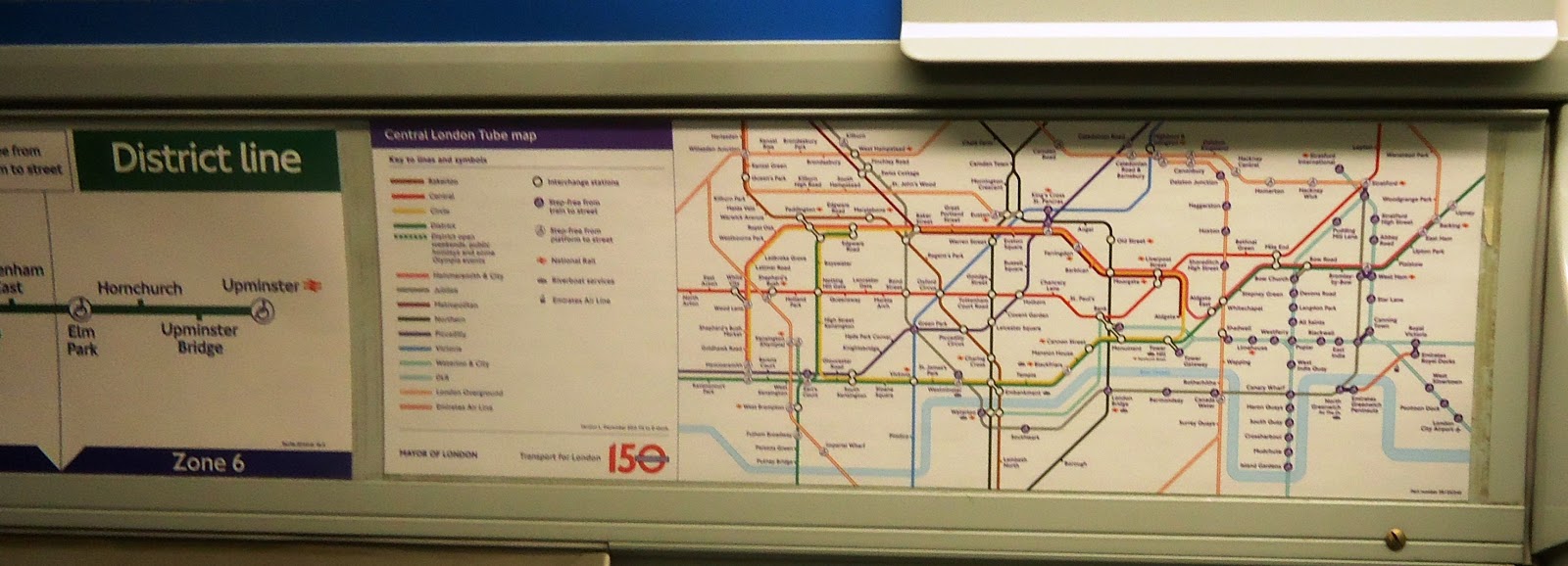
Harry Beck’s map of the Underground, first produced in 1931, was inspired by electrical circuit diagrams

For a few days recently, I took part in a number of meetings at the London offices of Us, the Anglican mission agency previously known as USPG (the United Society for the Propagation of the Gospel), including a planning meeting for the annual conference of Us at the High Leigh Conference Centre later this month.

The offices of Us are on the top floor of a former factory building in Great Suffolk Street, Southwark. On one side, we were looking out at the London Eye; on the other side was the Gherkin, a modern iconic building in the financial heart of the City of London; below us, trains were trundling away into the Tube station at Southwark.

During that week, I made a number of cross-London journeys on the Underground between the stations at Southwark and Westbourne Park for the Anglican Communion Office at Tavistock Crescent.

My mild colour-blindness and short-sightedness make it difficult for me to read the Tube maps in the heave-ho of rush-hour commuting (Photograph: Patrick Comerford)

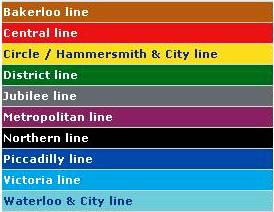
The map of the Underground is so familiar to many people, that even if they never visit London they easily associate the primary colours with different lines: Red (Central), Yellow (Circle), Green (District), Blue (Victoria), and so on.

Constantly, though, my mild colour-blindness and short-sightedness make it difficult for me to read the Tube maps, particularly in the heave-ho of rush-hour commuting, at times unable to distinguish between Northern Black and Piccadilly Dark Blue, between Victoria Blue and Piccadilly Dark Blue, and Metropolitan Dark Red and Central Red. But then, colour-blindness and ham-fisted efforts to use my pidgin Italian recently left me boarding the wrong train, on the wrong platform, at the wrong time in Tuscany.

Mapping the Underground

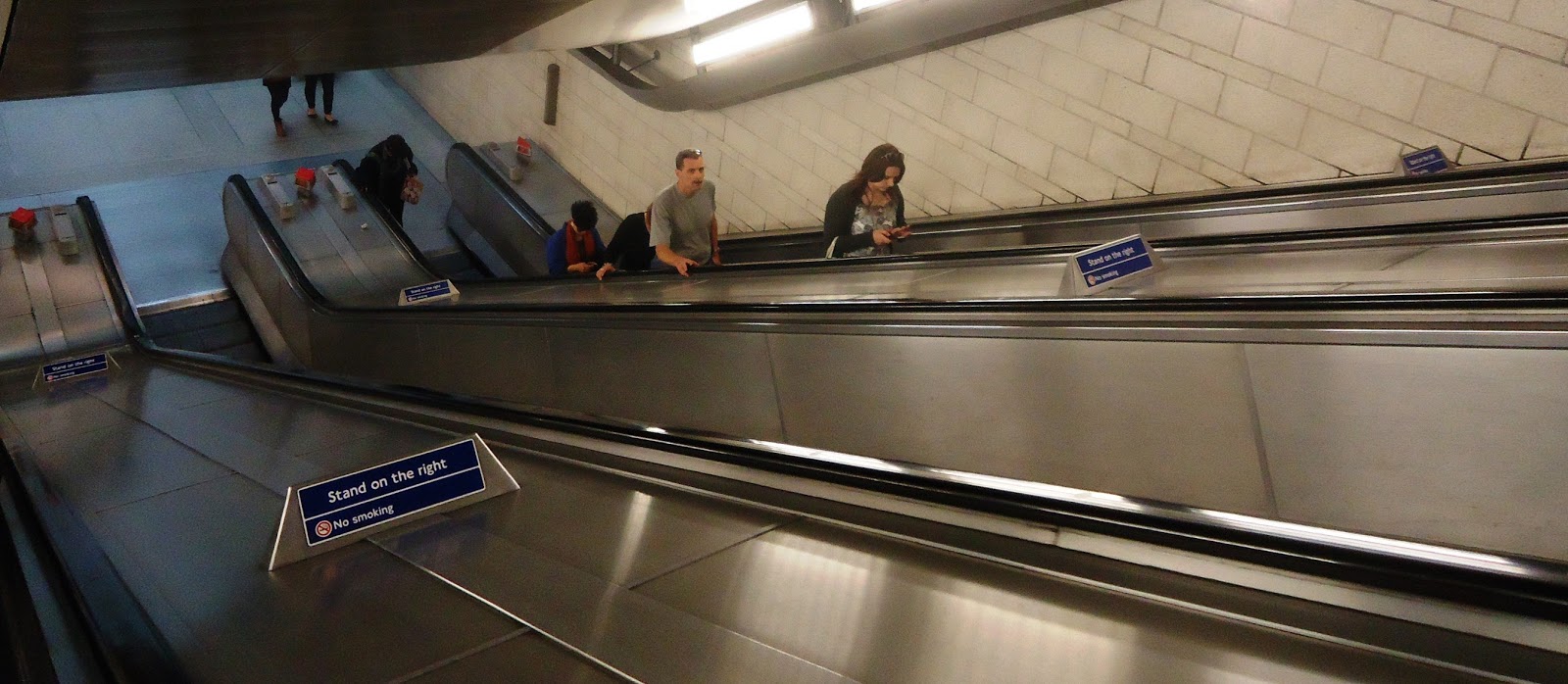
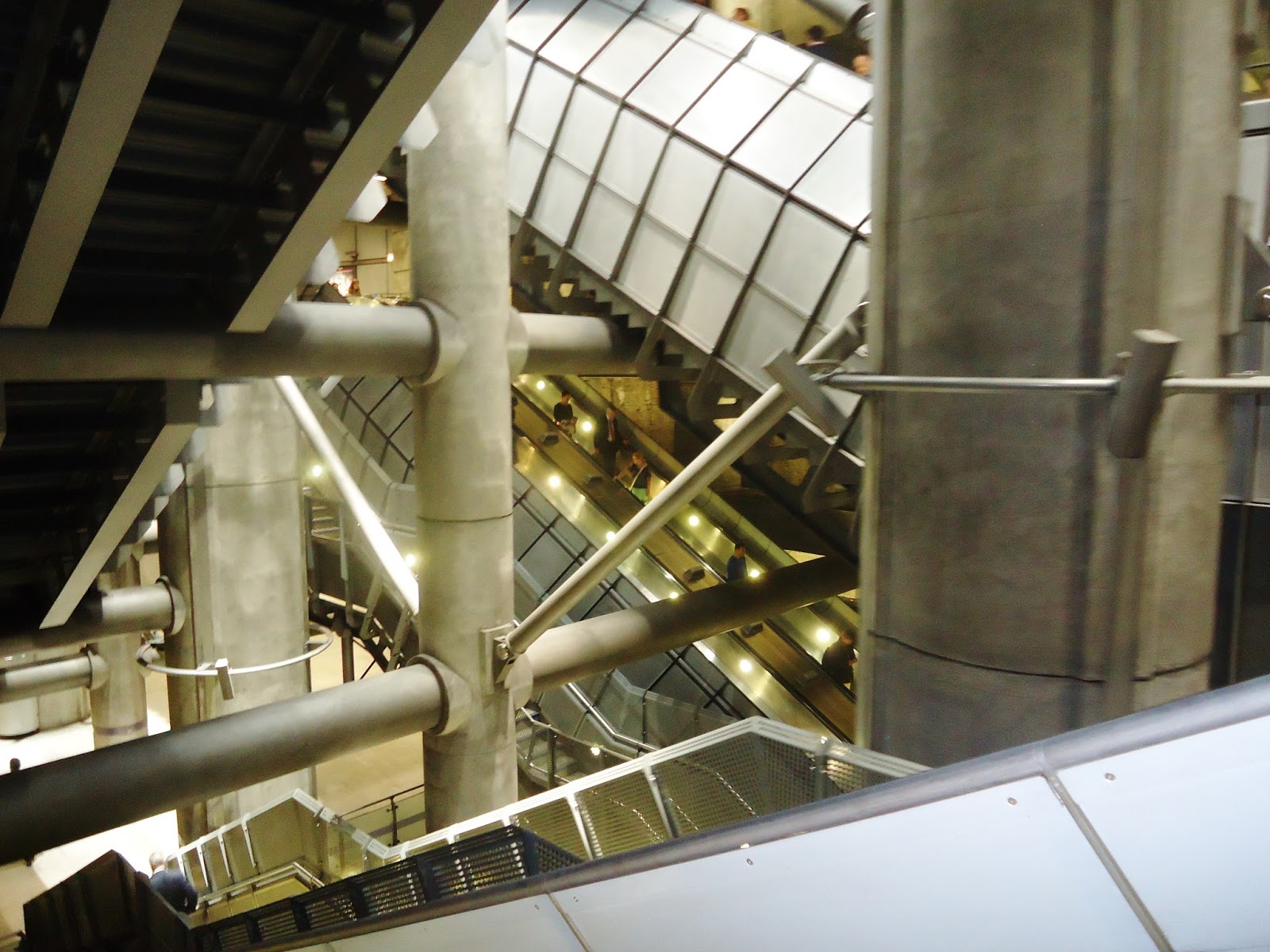
There are 426 escalators on the Underground and with 23 Waterloo has the most (Photograph: Patrick Comerford)

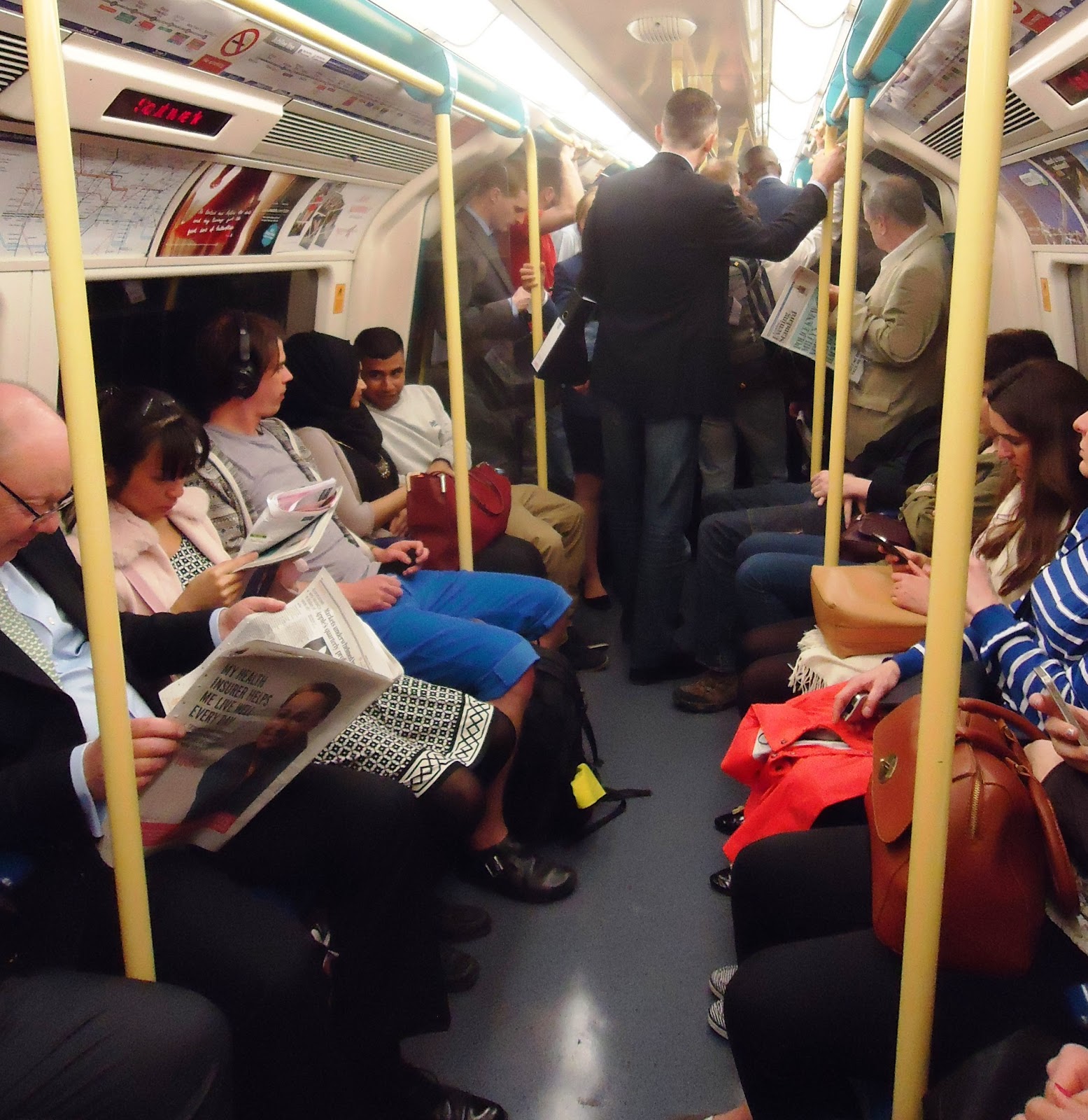
I suppose most of us who use the London Underground on a regular basis just keep our heads down, avoid eye contact and get into “auto-drive” mode as we work our way between stations and change lines. We never really get to appreciate where we are or where we are going.

At Southwark station one afternoon, a woman asked the cheapest way to her destination. “By walking” was the witty reply. “But it’s much slower.”

Many of us can read the London Underground map, but few of us would ever be able to follow the route if we had to walk between places more than one or two stations apart.

Mark Mason, in his new book Walk The Lines – The London Underground, Overground. has done precisely that. He has walked the entire length of the London Underground, but has walked it overground, passing every station on the way and flagging up all the sights, sounds and soul of what he claims is “the greatest city on earth.”

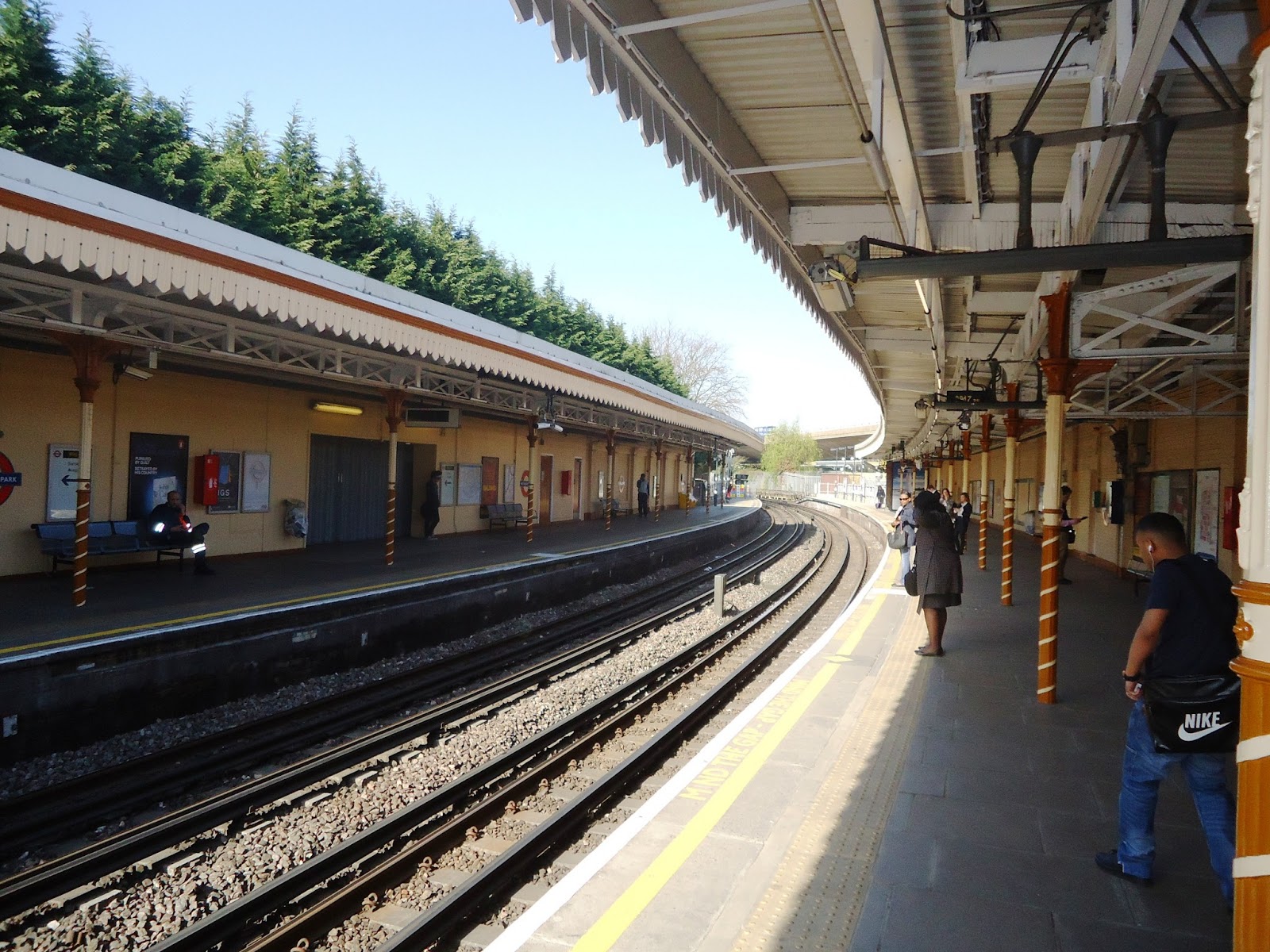
Underground mainly means overground … waiting on the platform at Westbourne Park (Photograph: Patrick Comerford)

Standing at Wetsbourne Park station in warm sunshine recently, I realised the largest part of the London Underground runs overground. I was reminded of ‘The Wombling Song’ from The Wombles:

Underground, overground, wombling free,

The Wombles of Wimbledon Common are we.

And, of course, Uncle Bulgaria came to mind too, “with his map of the world” that would take him to Tobermory.

Indeed, almost 60 per cent of the Underground runs overground – 146 miles or 58% of the 253 miles of the tracks run above ground; only 93 miles run in deep tunnels, and a further 20 miles in shallow tunnels. There is a prevalent north/south divide, with less than 10 per cent of stations south of the Thames.

Celebrating a century and a half

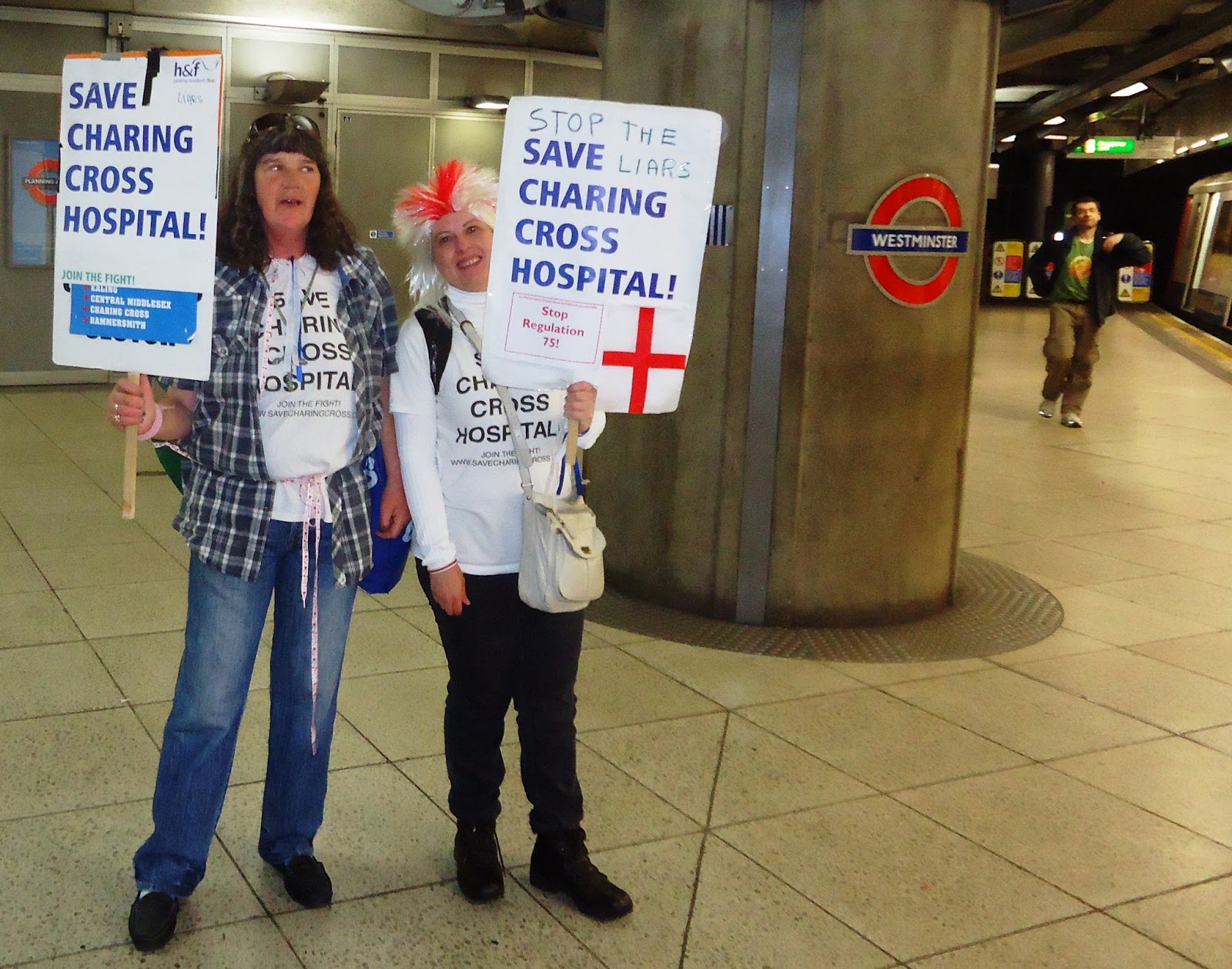
Protesters can be found at many stations any day, but since 2003 buskers need a licence (Photograph: Patrick Comerford)

Earlier this year, London Underground marked the 150th anniversary of the first Tube journey on 9 January 1863. The London Underground was the vision of Charles Pearson (1793-1862), who first thought of a Fleet Valley rail tunnel in 1845.

The engineering designs were produced by Sir John Fowler (1817-1898), who also designed the Forth Railway Bridge. Most of the District Line was designed by Sir John Wolfe-Barry (1836-1918), who also designed Tower Bridge. But the first Tube journey did not take place for another 20 years.

The first Tube line was built by the Metropolitan Railway, a private company. It took 21 years to complete the Inner Circle, and when the Circle Line opened in 1884, The Times described travelling on it as “a form of mild torture.”

By then, over 800 trains were running on the Inner Circle each day. A full journey from Stockwell to the City on the City and South London Railway, now part of the Northern Line, took just 18 minutes.

The Waterloo and City Line was the only other line built before the turn of the century. The Great Northern and City Line, between Moorgate and Finsbury Park, was mostly completed by 1902.

The Underground became known as the “Tube” in the early 1900s, when the Central London Railway (now the Central Line) was nicknamed the “Twopenny Tube” by the Daily Mail five days after it opened.

The “Twopenny Tube” line significantly boosted profits for shops around Oxford Street and Regent Street, and in 1909, Selfridges lobbied – unsuccessfully – to have Bond Street station renamed after Selfridges.

War-time shelter

Passenger etiquette often demands “eyes down” and “avoid eye contact” (Photograph: Patrick Comerford)

Women began to make up staff shortages on the Underground during World War I. When Maida Vale station opened in 1915, it was entirely staffed by women.

Police reports estimate 300,000 people took shelter in Tube stations during the German bombing raids on London in 1917. A memorial at Baker Street commemorates 137 Metropolitan Line workers killed in World War I.

Finding the right line is a problem for anyone who is colour-blind

The Underground expanded rapidly in the 1930s. But this came to an abrupt halt with the outbreak of World War II. Within a few days, the Underground was used to evacuate 600,000 Londoners, mainly children and pregnant women, to the countryside.

During the war, signs at Underground stations warned passengers to carry their gas masks, and .posters warned them not to use the stations as air-raid shelters. However, when the East End suffered the first of many heavy bombing raids on 7 September 1940, there was a rush to the Underground stations.

Many got round the sheltering ban by buying cheap penny travel tickets and then refusing to leave the platforms. Trains continued to run throughout the Blitz, leading to crowded stations. Soon, about 177,000 people were sheltering in the Underground each night. A government U-turn on 8 October 1940 brought an end to the unenforceable ban on sheltering in the Tube.

Between September 1940 and May 1941, 198 people were killed when Tube shelters were hit directly by bombs. In one of the worst incidents, 64 people were killed. When Bank station was hit on 13 January 1941, 56 people were killed, but details were strictly censored. In the worst single incident on 3 March 1943, 173 people were crushed to death in a stairwell at Bethnal Green station – but not one bomb was dropped on London that night.

Maps and designs

The Underground’s red circle logo first appeared in 1908 (Photograph: Patrick Comerford)

In the 1860s, there was only basic signage, with the station name and exit. The Underground’s red circle logo first appeared in 1908, although about 60 stations on the Metropolitan line continued to use a red diamond until the 1970s.

One of the first rail maps, produced by the District line in 1892, featured the slogan “Time Is Money.” The first free Underground map was published collaboratively in 1908 by companies running separate lines.

Harry Beck’s map of the Underground, first produced in 1931, was inspired by electrical circuit diagrams. He was paid 10 guineas (£10 10s) for his design. Beck’s map was received enthusiastically, and he remained involved with changes and updates for over 25 years. Eventually, he fell out with London Transport and his name was removed from the map in 1959. But his name reappeared on the map in the 1990s, when he was once again acknowledged as its designer.

In 2006, the London Underground map came second in a BBC competition to find the public’s favourite British design of the 20th century. The angular representation of the River Thames was briefly removed from the map in 2009, but was quickly replaced after a public outcry.

During the three-hour morning peak, the busiest Tube station is Waterloo, with 57,000 people moving through (Photograph: Patrick Comerford)

The Scottish sculptor Eduardo Paolozzi designed the mosaic murals at Tottenham Court Road station, which were completed in 1984. The ceramics on the City and South London Railway, now part of the Northern line, were inspired by the work of William Morris. Charles Holden based his design for Arnos Grove on Stockholm Public Library, while Gants Hill was inspired by the Moscow Metro.

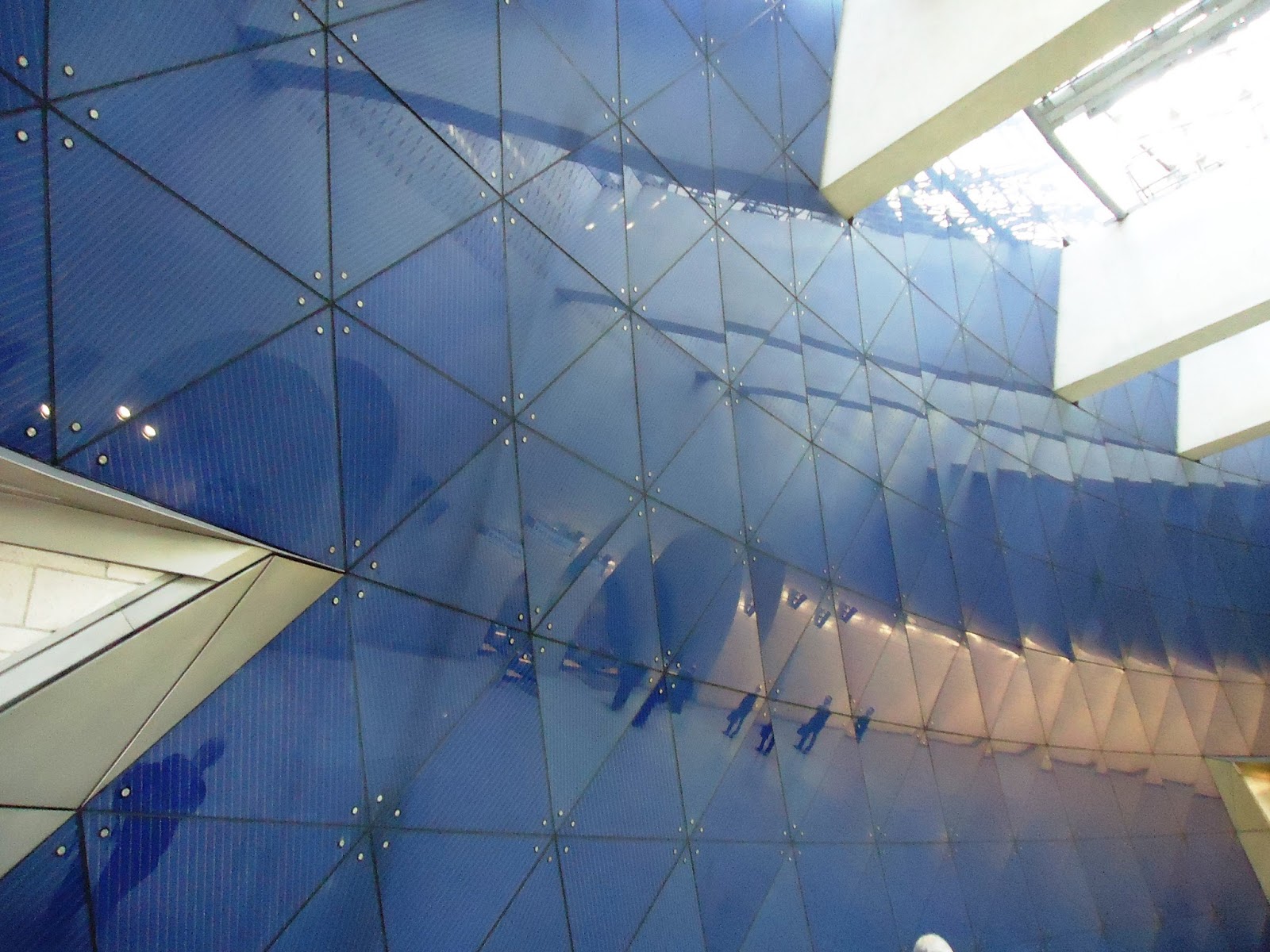
Southwark Station’s blue cone wall, built as part of the Jubilee line extension’s new generation of stations, was inspired by an 1816 stage set for Mozart’s ‘The Magic Flute’ (Photograph: Patrick Comerford)

The Victoria Line commissioned artists to produce original tile motifs for each station, including the seven trees that give Seven Sisters its name. All 46 stations designed by Leslie Green have distinctive tile patterns and all his stations – such as Covent Garden – were steel-clad to allow premises to be built on top of them.

Rush hours and busy hours

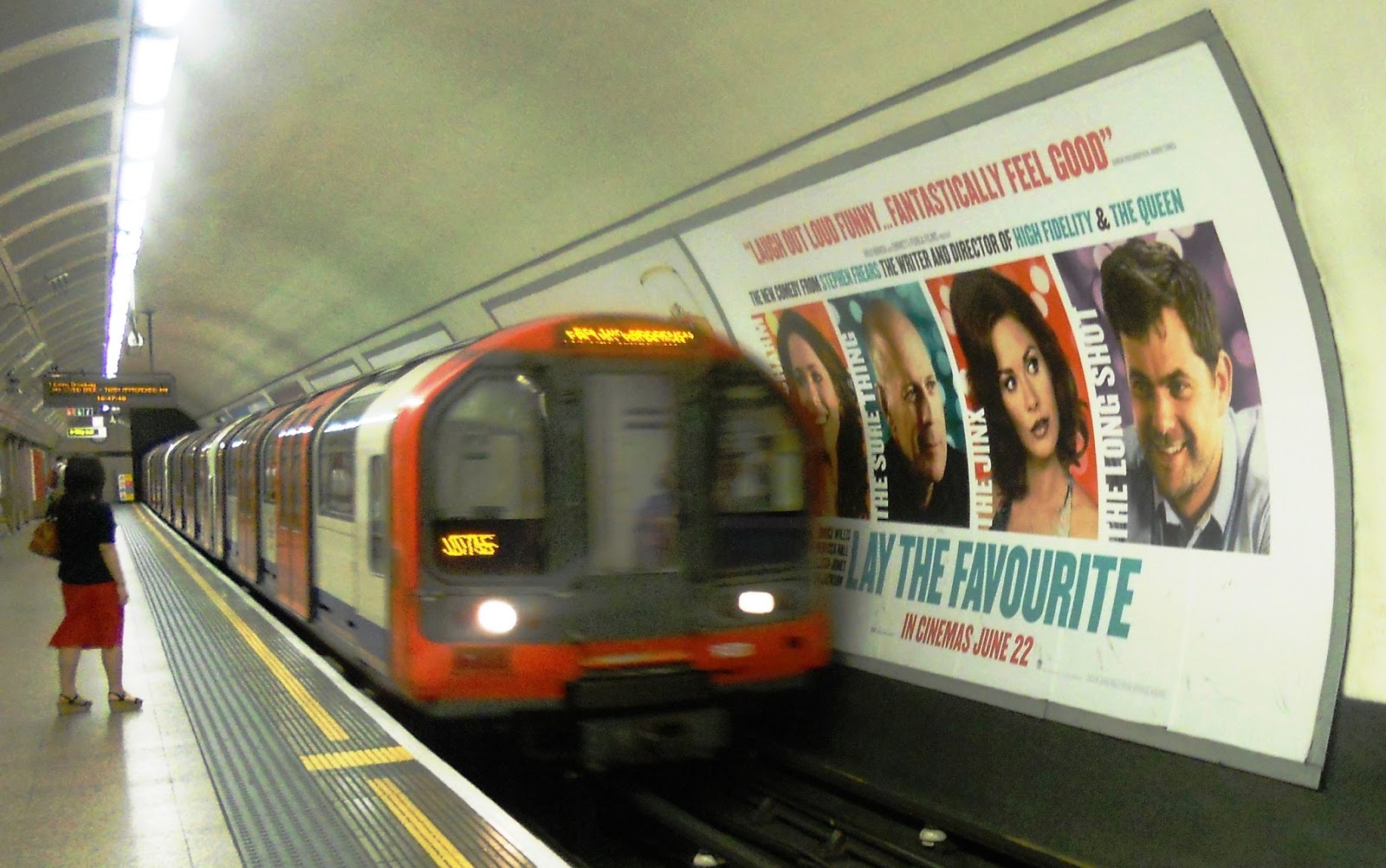
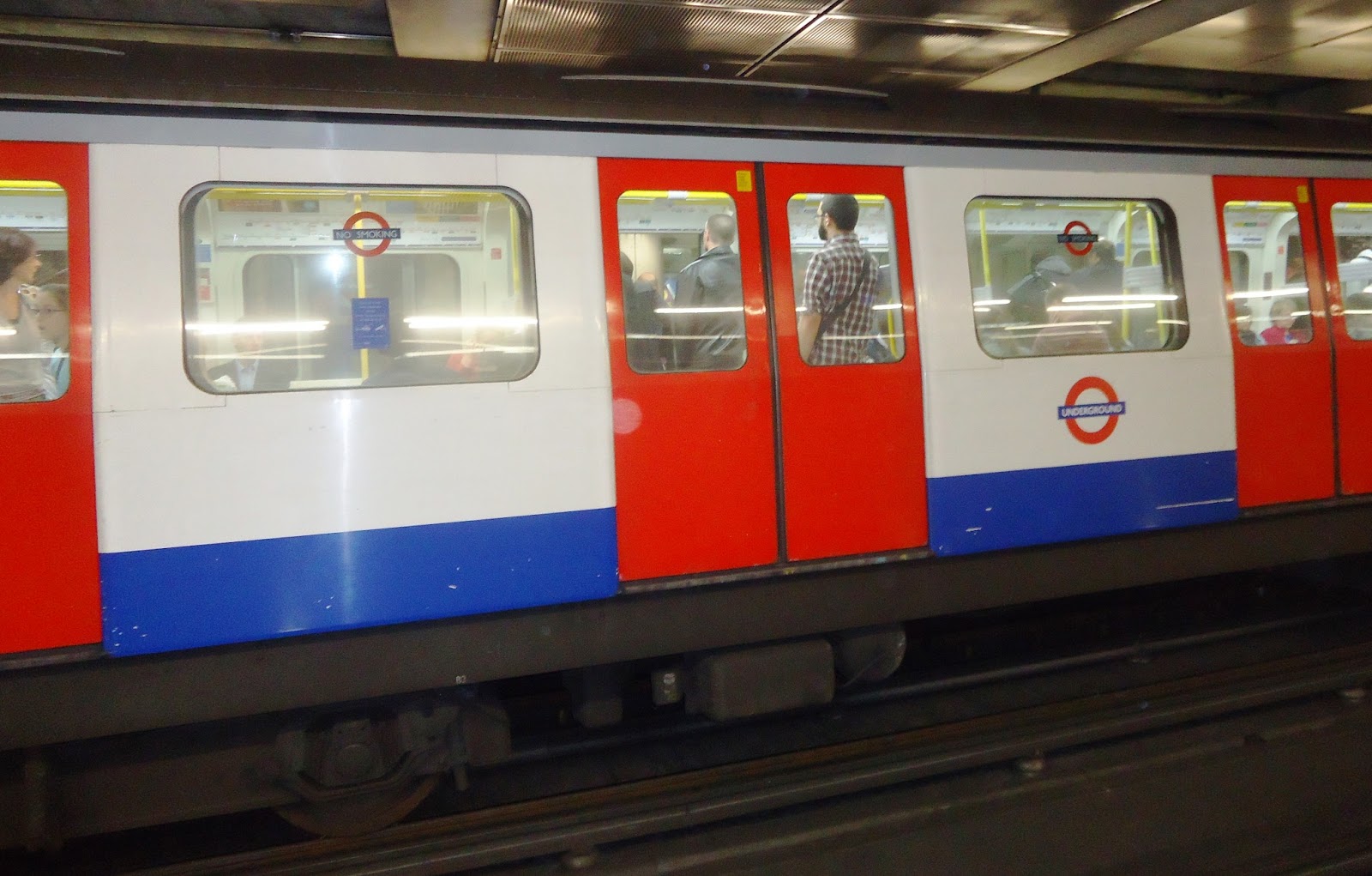
Due to a rise in graffiti, the silver tube trains were replaced in the 1990s with the red, white and blue ones seen today (Photograph: Patrick Comerford)

About 1.1 billion passengers now use the Underground each year. The busiest station is Waterloo, with 57,000 people passing through during the three-hour morning peak and 82 million passengers travelling through each year.

The average speed of a Tube train is 33 kph (Photograph: Patrick Comerford)

Each year, each Tube train travels 184,269 km, and the average speed is 33 kph. The longest distance between two stations is between Chesham and Chalfont and Latimer on the Metropolitan Line, which are 6.3 km apart. The shortest distance between two stations is from Leicester Square to Covent Garden on the Piccadilly Line, which are 300 metres apart. If you pay the full cash fare between Covent Garden and Leicester Square, a mere 0.16 miles, it works out at the equivalent of over £28 a mile.

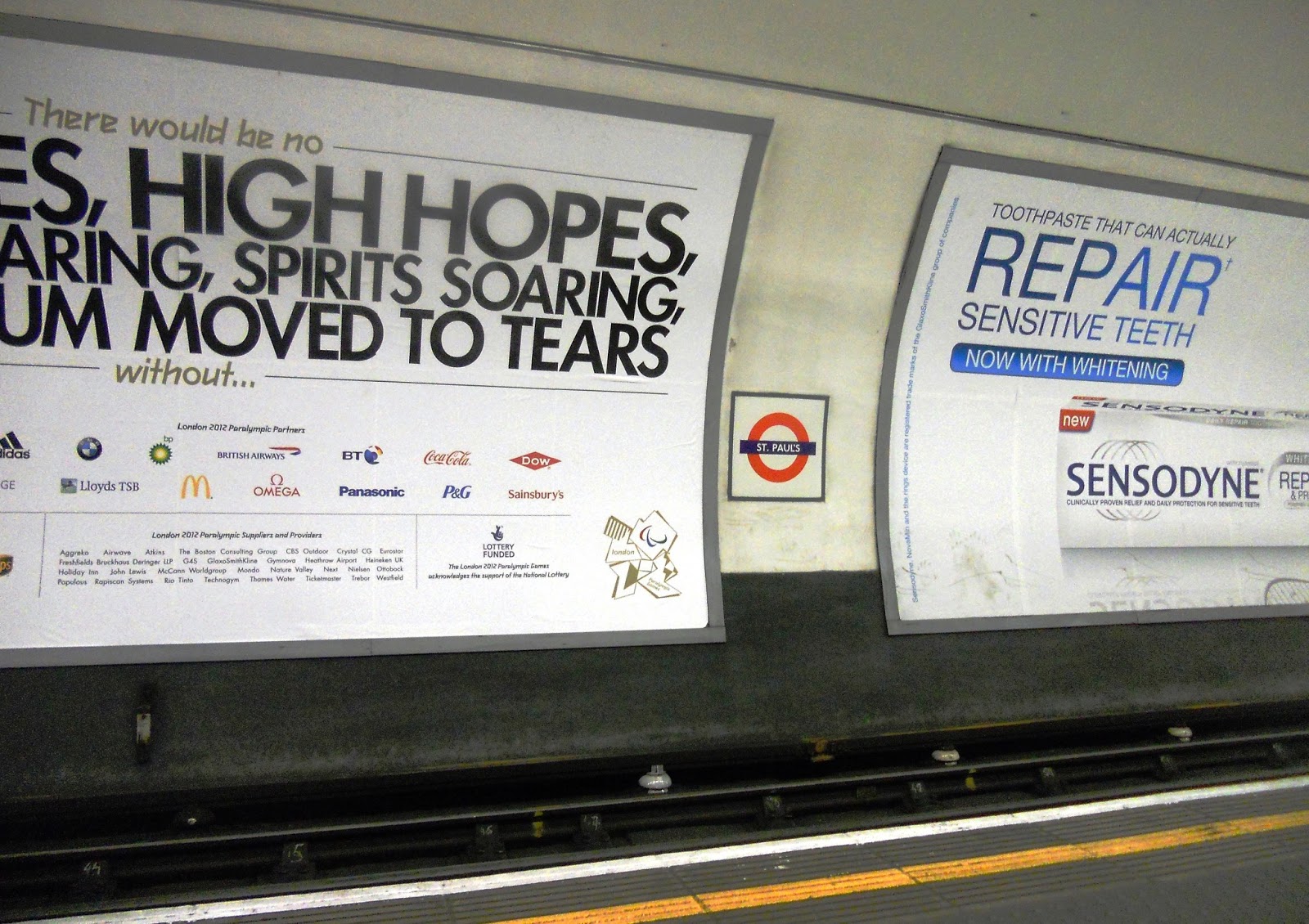
Advertising hoardings at Saint Paul’s Underground station (Photograph: Patrick Comerford)

The longest journey you can take without changing is 59.4 km from West Ruislip to Epping on the Central Line. The longest continuous tunnel, between East Finchley and Morden (via Bank), is 27.8 km long. The total number of stations in use today is 270; Waterloo station alone has 23 escalators, and Baker Street has 10 platforms.

In central London, trains cannot drive faster than 30-40mph because of the short distances between stations. But the Victoria Line can reach speeds of up to 50 mph because the stations are further apart. And the Metropolitan line has the fastest speeds, sometimes reaching over 60 mph.

‘Mind the Gap’

Rush-hour traffic and pressure can make it difficult to read maps and find your way (Photograph: Patrick Comerford)

But wherever you go this summer – underground or overground, slowly or at speed – always remember: “Mind the Gap.”

The original recording of “Mind the Gap” was made in 1968 featuring the voice of Peter Lodge. Most lines still use Peter Lodge’s recording, but others use a recording by voice artist Emma Clarke, and the Piccadilly Line uses the voice of Tim Bentinck, better known as David Archer from The Archers.

● Further reading: David Bownes, Oliver Green and Sam Mullins, Underground: How the Tube Shaped London (Allen Lane, £25); Andrew Martin, Underground Overground: A Passenger’s History of the Tube (Profile, £8.99); Mark Ovenden, London Underground by Design (Particular, £20).

Canon Patrick Comerford is Lecturer in Anglicanism and Liturgy, the Church of Ireland Theological Institute, and an Adjunct Assistant Professor, Trinity College Dublin. This essay was first published in the June 2013 editions of the Church Review (Dublin and Glendalough) and the Diocesan Magazine (Cashel and Ossory.

ST MACARTAN’S CATHEDRAL CLOGHER

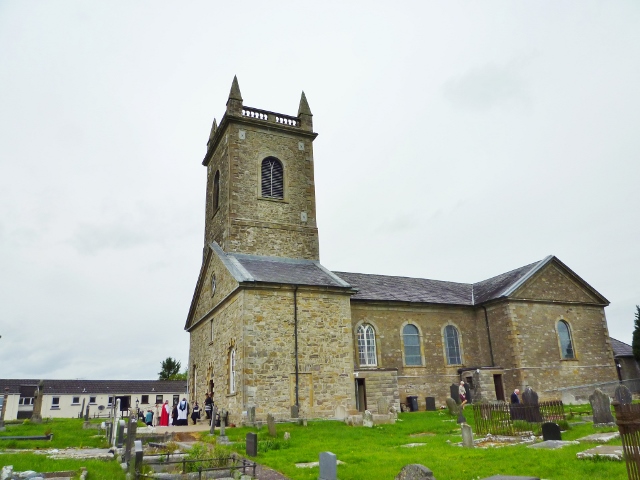
St Macartan's Cathdral, Clogher

St Macartan’s Cathdral, Clogher

The Bishop of Clogher Right Reverend John McDowell has praised those who help to preserve small Anglican Cathedrals in towns throughout Ireland. It’s not an easy task with small congregations in many parishes. In the case of St Macartan’s, the Friends of Clogher Cathedral have made a major contribution over the years to keeping the structure and the interior maintained. The William Carleton Society has co-operated with them on a number of occasions during the annual summer school. The Society held a talk there about the Ulster English on St George’s Day. In March, the Cathedral organised a number of events to celebrate St Patrick’s Day.
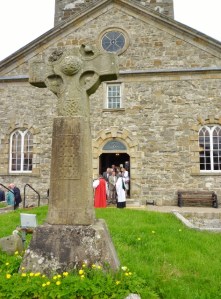
St Macartan's Cathedral

St Macartan’s Cathedral

The Friends  come from different Christian churches, including Presbyterians, Methodists and Catholics. Every year they hold a service in the Cathedral to coincide with their AGM. I attended their Choral Evensong this afternoon, led by the Precentor Noel Regan, a Sligoman, along with the curate Reverend Alistair Warke. Bishop McDowell preached the homily.

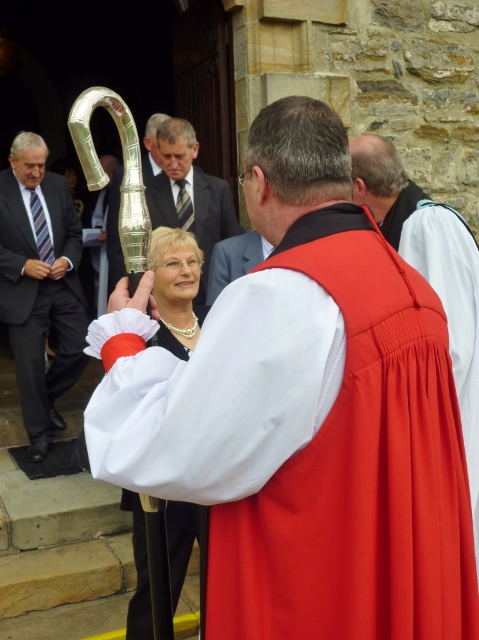
Bishop McDowell & Canon Noel Regan greet members of the congregation

Bishop McDowell & Canon Noel Regan greet members of the congregation

ORDER FOR EVENING PRAYER

The Precentor sang the Vestry Prayer

Processional Hymn:  Praise My Soul the King of Heaven

Sentences of Scripture

Bishop of Clogher Rt Rev John McDowell

Bishop of Clogher Rt Rev John McDowell

Exhortation: Dean of Clogher Kenneth Hall, St Macartin’s Cathedral, Enniskillen

General Confession

The Absolution: Pronounced by the Bishop

Opening Versicles according to the Book of Common Prayer:

Priest: O Lord, open thou our lips: Choir: And our mouth shall shew forth thy praise. Priest: O God, make speed to save us: Choir: O Lord, make haste to help us. Priest: Glory be to the Father, and to the Son, and to the Holy Ghost. Choir: As it was in the beginning, is now, and ever shall be, world without end. Amen. Priest: Praise ye the Lord. Choir: The Lord’s Name be praised.

Bishop McDowell greeting the congregation

Bishop McDowell greeting the congregation

The Psalm: Psalm 84 How lovely is your Dwelling Place, O Lord of Hosts!

Lesson from the Old Testament Genesis 4: 1-16

Bishop McDowell greets the congregation

And Bishop McDowell greets the congregation

Magnificat: The Song of the Blessed Virgin Mary St Luke 1: 46-55

My soul doth magnify the Lord, and my spirit rejoiceth in God my Saviour. For he hath regarded the lowliness of his hand-maiden. For behold, from henceforth, all generations shall call me blessed. For he that is mighty hath magnified me, and holy is his Name. And his mercy is on them that fear him throughout all generations. He hath shewed strength with his arm, he hath scattered the proud in the imagination of their hearts. He hath put down the mighty from their seat, and hath exalted the humble and meek. He hath filled the hungry with good things, and the rich he hath sent empty away. He remembering his mercy hath holpen his servant Israel, as he promised to our forefathers, Abraham and his seed for ever. Glory be to the Father, and to the Son, and to the Holy Ghost; As it was in the beginning, is now, and ever shall be: world without end. Amen.

St Macartan's Cathedral, Clogher

St Macartan’s Cathedral, Clogher

Lesson from the New Testament: St Mark 5: 21-43

Nunc Dimittis: The Song of Simeon  St Luke 2: 29-32

Lord now lettest thou thy servant depart in peace: according to thy word. For mine eyes have seen thy salvation, which thou hast prepared before the face of all people. To be a light to lighten the Gentiles, and to be the glory of thy people Israel. Glory be to the Father, and to the Son, and to the Holy Ghost; As it was in the beginning, is now, and ever shall be: world without end. Amen
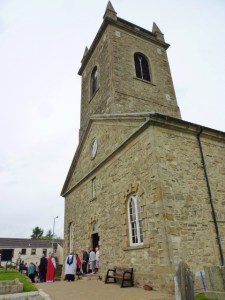
St Macartan's Cathedral, Clogher

St Macartan’s Cathedral, Clogher

The Apostles’ Creed

I believe in God the Father Almighty, Maker of heaven and earth: And in Jesus Christ, His only Son our Lord, who was conceived by the Holy Ghost, born of the Virgin Mary, suffered under Pontius Pilate, was crucified, dead and buried. He descended into hell; the third day he rose again from the dead; he ascended into heaven, and sitteth on the right hand of God the Father Almighty; from thence he shall come to judge the quick and the dead. I believe in the Holy Ghost; the holy Catholic Church; the Communion of Saints; the forgiveness of sins; the Resurrection of the body, and the life everlasting. Amen

Priest: The Lord be with You Choir: And with Thy Spirit Priest: Let us Pray Choir: Lord, have mercy upon us. Christ have mercy upon us. Lord have mercy upon us.

The Lord’s Prayer

Our Father, which art in heaven, Hallowed be thy Name; Thy kingdom come; Thy will be done in earth; as it is in heaven. Give us this day our daily bread. And forgive us our trespasses, as we forgive them that trespass against us. And lead us not into temptation: but deliver us from evil. Amen

O Lord, shew thy mercy upon us:  And grant us thy salvation.

O Lord, save the Queen: And mercifully hear us when we call upon thee.

Endue thy ministers with righteousness: And make thy chosen people joyful.

O Lord, save thy people: And bless thine inheritance.

Give peace in our time, O Lord: Because there is none other that fighteth for us, but only thou, O God.

O God, make clean our hearts within us: And take not thy Holy Spirit from us.

Bell Tower window

Bell Tower window

The Collect of the First Sunday of Trinity:  The Precentor sings:

O God, the strength of all them that put their trust in thee, mercifully accept our prayers; and because through the weakness of our mortal nature we can do no good thing without thee, grant us the help of thy grace, that in keeping of thy commandments we may please thee both in will and deed, through Jesus Christ our Lord. Amen.

The Second Collect: for Peace

O God, from whom all holy desires, all good counsels and all just works do proceed: Give unto thy servants that peace which the world cannot give; that both our hearts may be set to obey thy commandments and also that by thee we being defended from the fear of our enemies may pass our time in rest and quietness; through the merits of Jesus Christ our Saviour. Amen

The Third Collect for Aid against all Perils

Lighten our darkness, we beseech thee, O Lord; and by thy great mercy defend us from all perils and dangers of this night for the love of thy only Son, our Saviour, Jesus Christ. Amen

Hymn: All People that on Earth do Dwell

St Macartan's Cathedral, Clogher

St Macartan’s Cathedral, Clogher

The Sermon: The Right Reverend F John McDowell, Bishop of Clogher

Hymn: (The Breastplate of St Patrick)

Christ be with me, Christ within me,
Christ behind me, Christ before me,
Christ beside me, Christ to win me,
Christ to comfort and restore me.

Christ beneath me, Christ above me,
Christ in quiet, Christ in danger,
Christ in hearts of all that love me,
Christ in mouth of friend and stranger.

PRAYERS led by the Diocesan Curate Reverend Alistair Warke

Almighty and merciful God, who in days of old didst give to this land the benediction of thy holy Church, withdraw not, we pray thee, thy favour from us, but so correct what is amiss, and supply what is lacking, that we may more and more bring forth fruit to thy glory, through Jesus Christ our Lord.

The General Thanksgiving:

Almighty God, Father of all mercies,  we thine unworthy servants do give thee most humble and hearty thanks for all thy goodness and loving kindness to us and to all men. We bless thee for our creation, preservation, and all the blessings of this life; but above all for thine inestimable love in the redemption of the world by our Lord Jesus Christ; for the means of grace, and for the hope of glory. And, we beseech thee, give us that due sense of all thy mercies, that our hearts may be unfeignedly thankful; and that we show forth thy praise, not only with our lips, but in our lives, by giving up our selves to thy service, and by walking before thee in holiness and righteousness all our days; through Jesus Christ our Lord, to whom, with thee and the Holy Spirit, be all honour and glory, world without end. Amen.

A Prayer of St Chrysostom:

Almighty God, who hast given us grace at this time with one accord to make our common supplications unto thee and dost promise that when two or three are gathered together in thy Name thou wilt grant their requests. Fulfil now, O Lord, the desires and petitions of thy servants as may be most expedient for them; granting us in this world knowledge of thy truth, and in the world to come life everlasting.

The grace of our Lord Jesus Christ and the love of God and the fellowship of the Holy Spirit be with us all evermore. Amen.

Hymn with the Collection of Alms: God, whose city’s sure foundation

Heather McKeown playing the bells

Heather McKeown playing the bells

God, whose city’s sure foundation
stands upon his holy hill,
by his mighty inspiration
chose of old and chooseth still
men of every race and nation
his good pleasure to fulfil.

Here in Ireland through the ages,
while the Christian years went by,
saints, confessors, martyrs, sages,
strong to live and strong to die,
wrote their names upon the pages
of God’s blessed company.

Some there were like lamps of learning
shining in a faithless night,
some on fire with love, and burning
with a flaming zeal for right,
some by simple goodness turning
souls from darkness unto light.
As we now with high thanksgiving                                                                                                                                                                                                                                                                                     their triumphant names record,

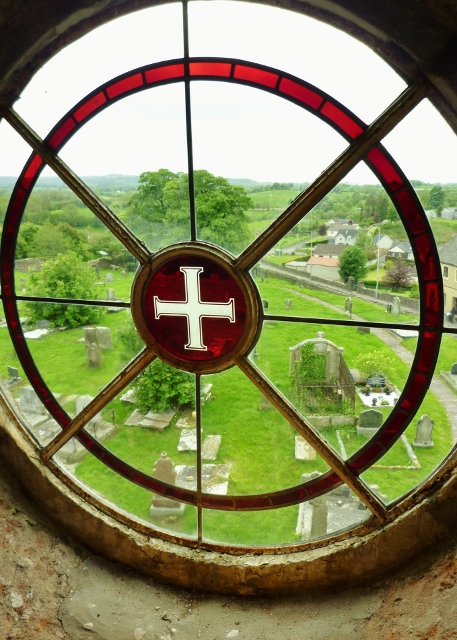
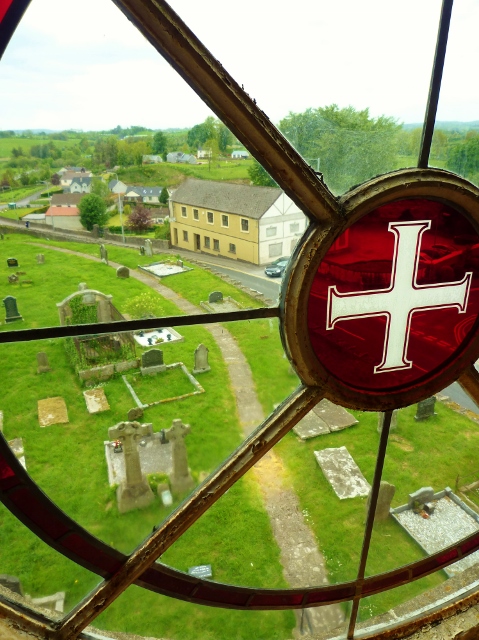
View of graveyard from bell tower window

View of graveyard from bell tower window

grant that we, like the, believing
in the promise of thy word,
may, like them, in all good living
praise and magnify the Lord.

The Blessing: The Bishop sings the blessing

The peace of God, which passes all understanding, keep you in your heart and mind in the knowledge and love of God, and of his Son, Jesus Christ our Lord, and the blessing of God Almighty, the Father, the Son. and the Holy Spirit, be with you and remain with you always. AMEN.

Hymn: Abide with me

Abide with me; fast falls the eventide;
The darkness deepens; Lord with me abide.
When other helpers fail and comforts flee,
Help of the helpless, O abide with me.

Swift to its close ebbs out life’s little day;
Earth’s joys grow dim; its glories pass away;
Change and decay in all around I see;
O Thou who changest not, abide with me.

I need Thy presence every passing hour.
What but Thy grace can foil the tempter’s power?
Who, like Thyself, my guide and stay can be?
Through cloud and sunshine, Lord, abide with me.

I fear no foe, with Thee at hand to bless;
Ills have no weight, and tears no bitterness.
Where is death’s sting? Where, grave, thy victory?
I triumph still, if Thou abide with me.

Hold Thou Thy cross before my closing eyes;
Shine through the gloom and point me to the skies.
Heaven’s morning breaks, and earth’s vain shadows flee;
In life, in death, O Lord, abide with me.

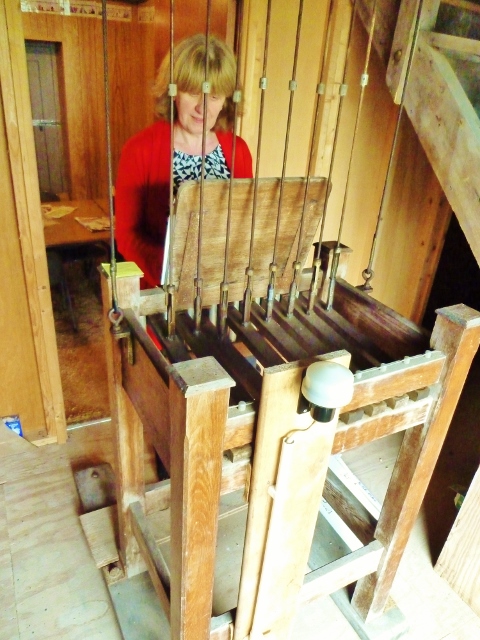
As I arrived at the service, it was nice to hear the Cathedral bells ringing. So afterwards as they rang again while the congregation left the church, I went into the bell tower to look at them, expecting to find a group of bell ringers pulling ropes. Instead I found Heather McKeown at the console of the chime, with eight bells individually numbered and a wooden lever to press down to ring the bell.

"Be Still and Know" on the Chime

“Be Still and Know” on the Chime

She encouraged me to have a go, so I tried playing the hymn “Be Still and Know”. If it sounded a bit strange, I can only apologise, and I did make at least one error in ringing the wrong bell! But second time round it proved a lot easier to ring the bells in the right order and tempo.

Heather McKeown & the 8-bell chime

Heather McKeown & the 8-bell chime

Diocese of Clohger: Arms
Diocese of Clogher: Arms

For more information about the Friends of Clogher Cathedral, please contact the Reverend Precentor Noel Regan, The Deanery, 10 Augher Road, Clogher.

Copyright: photos © Michael Fisher

Material from Book of Common Prayer: © The Representative Body of the Church of Ireland 2004

The Irish Church Hymnal — Fifth Edition:  © The Standing Committee of the General Synod of the Church of Ireland 2000

LOURDES

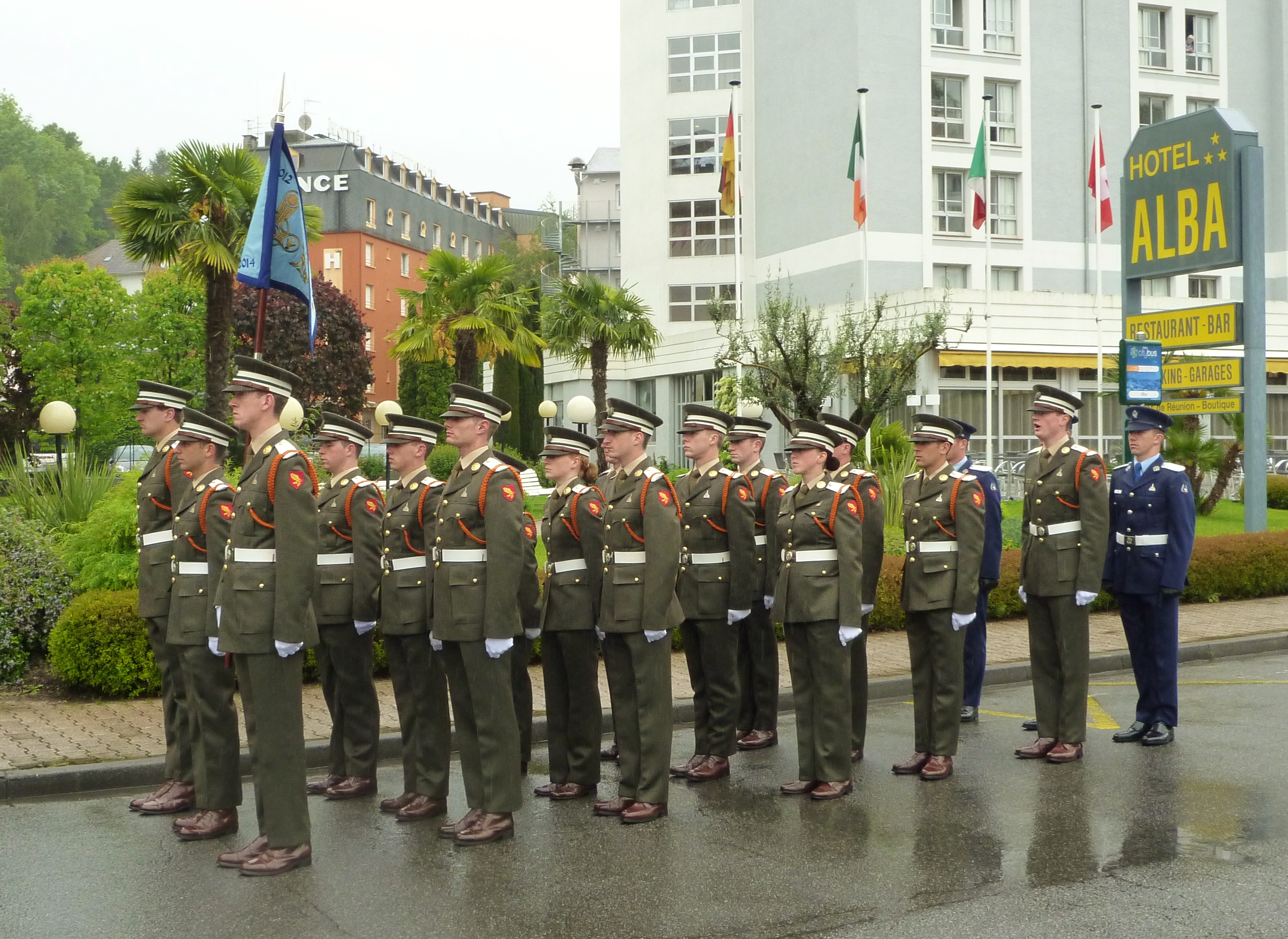
89th Cadet Class ready to march to shrine

89th Cadet Class ready to march to shrine

Brigadier Michael Finn (right) joins parade to shrine at Lourdes

Brigadier Michael Finn (right) joins parade to shrine at Lourdes

I travelled to Lourdes to see the shrine to Our Lady for the first time. I flew from Dublin with a group from the Defence Forces to take part in the 55th international military pilgrimage. Minister of State at the Department of Defence and government Chief Whip Paul Kehoe TD (Wexford) joined the group two days later. The military pilgrims were led by Brigadier Michael Finn GOC 2nd Brigade (formerly Eastern), who was also making his first visit to the shrine in the Pyrenees.

Sgt Liam Bellew helps prepare the DF pilgrimage candle

Sgt Liam Bellew helps prepare the DF pilgrimage candle

 The tradition of the International Military Pilgrimage (IMP) to the French Shrine of Our Lady of Lourdes began in 1958, after what was initially a regional pilgrimage and later national pilgrimage was made international to recognise officially the many soldiers that had been arriving.

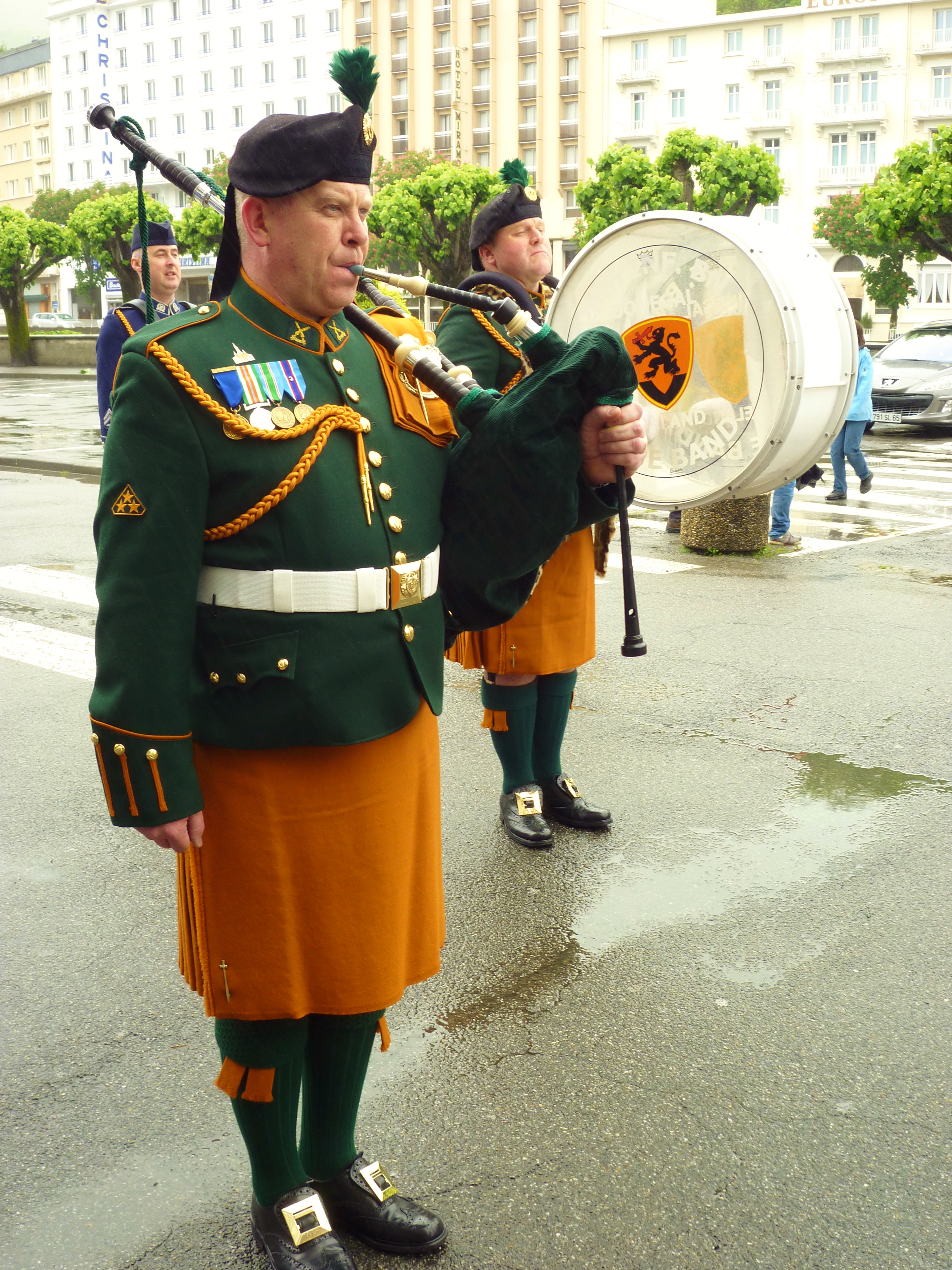
Pipe Band prepare to lead parade to Shrine

Pipe Band prepare to lead parade to Shrine

The Irish contingent arrived on Wednesday 22nd and this year’s international pilgrimage took place from May 24th-26th. I am now updating this blog following my return. Major events during the stay in the foothills of the French Alps included a parade on Friday, adoration in the Basilica of Our Lady of the Rosary and on Sunday a Mass in the large underground Basilica of St. Pius X  followed by a closing ceremony in the afternoon, in which all the bands particpate. Many other activities took place within the individual national groups, including the Irish.

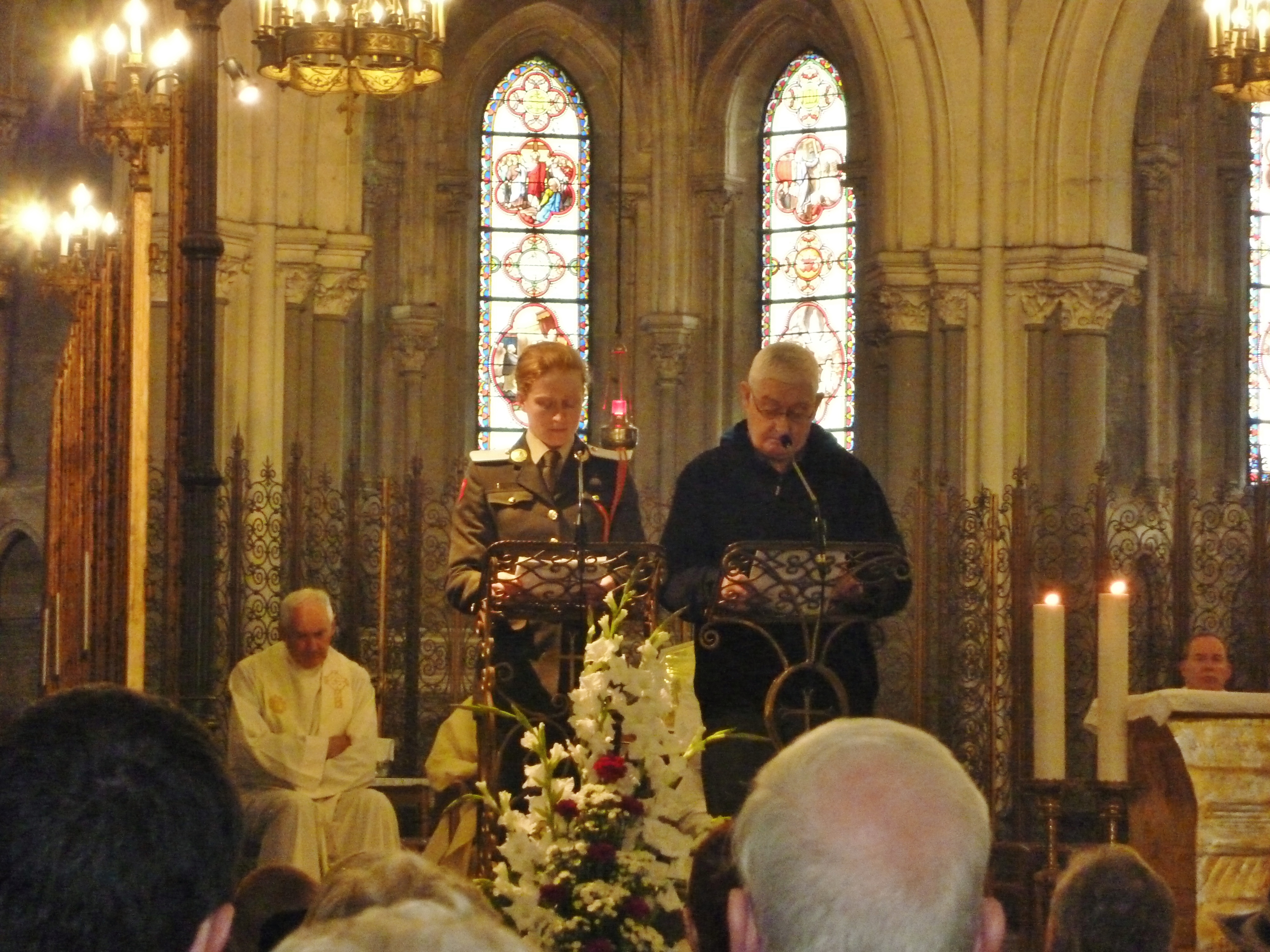
An Army Cadet & Brig. General Carl Dodd read out names on the UN Roll of Honour during Mass in Upper Basilica

An Army Cadet & General Carl Dodd read names on UN Roll of Honour at Mass in Upper Basilica

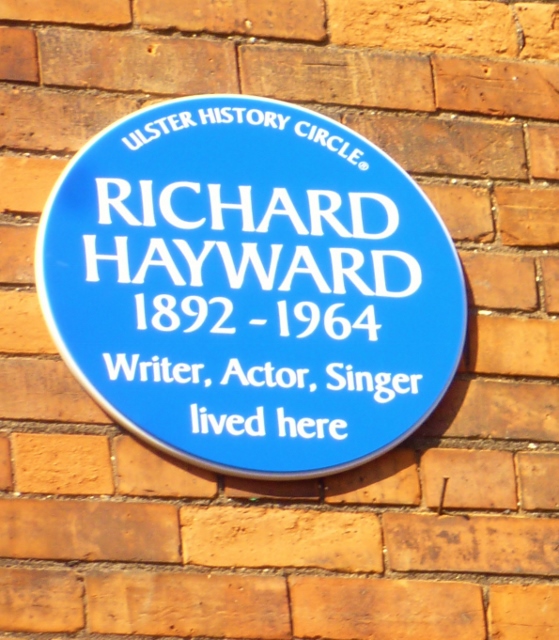
BLUE PLAQUE: RICHARD HAYWARD

Richard Hayward Blue Plaque, Antrim Road Belfast

Richard Hayward Blue Plaque, Antrim Road Belfast

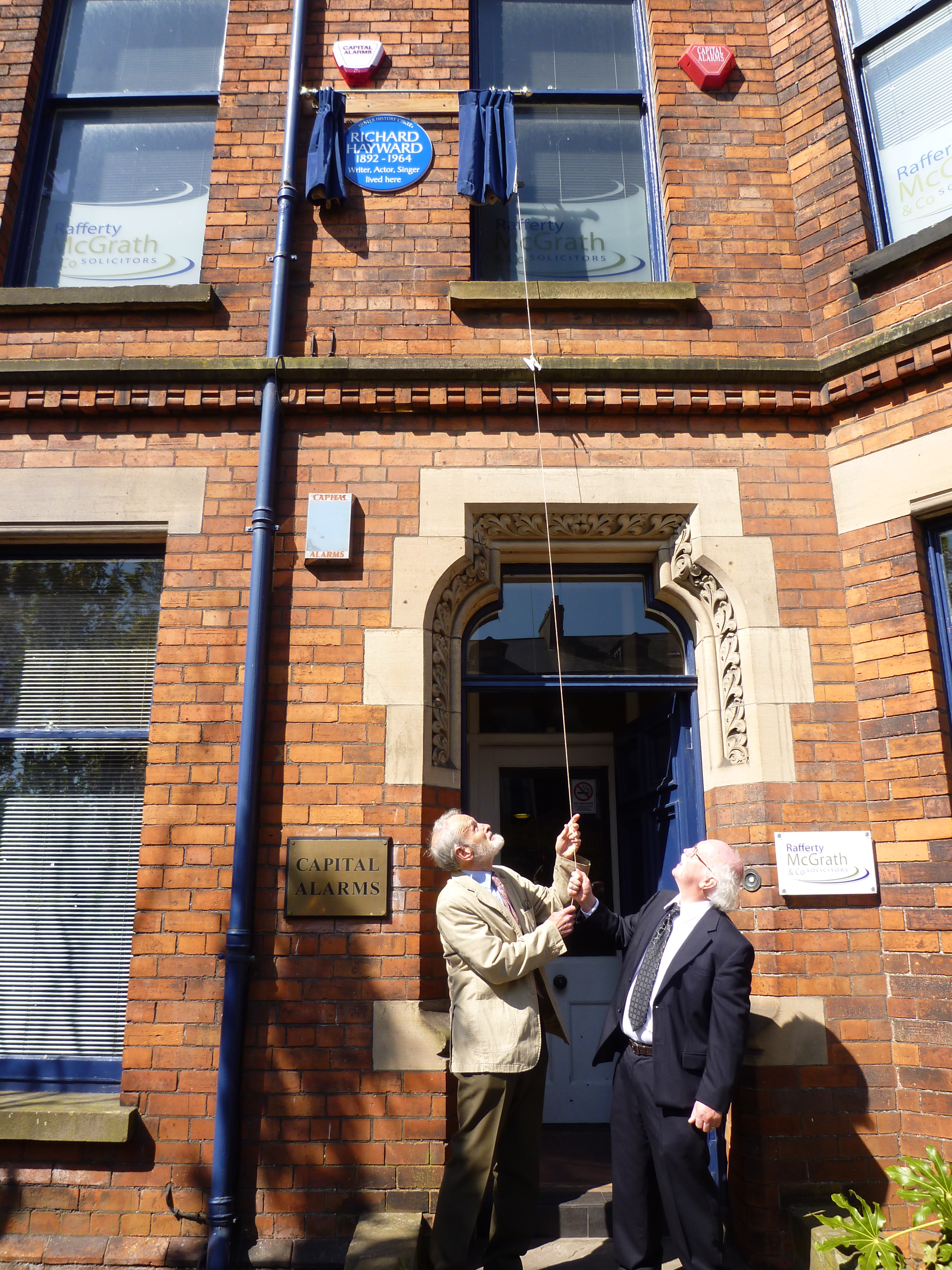
Nearly 160 blue plaques have been erected over the past thirty years by the Ulster History Circle. The latest is on the Antrim Road house in North Belfast where Richard Hayward lived. The plaques mark locations where famous men and women were born, of have lived or worked. They are distinguished people from the arts, literature, stage and screen, academia, medicine, science, industry, the military and other callings. Former BBC journalist Paul Clements spoke at the unveiling ceremony.
Hayward fitted into a number of those categories as a writer, actor and singer. The Ulster History Circle gives some details of his biography. He was born on 24 October 1892 in Southport, Lancashire, a son of Captain Scott Hayward, yachtsman and boat designer, and Louise Eleanor. The family moved to Ireland about 1894 and lived briefly in Larne, Co. Antrim, before settling in nearby Greenisland, and Richard and his three brothers were educated at Larne Grammar School.

Hayward’s first work was in connection with ship repair and maintenance in Liverpool. After world war I he became a sales representative, travelling throughout Ireland. On 9th July 1915 he married Wilhelmina (known as Elma) Nelson (1896-1961). They lived on the Antrim Road and had two sons, Dion Nelson and Richard Scott.

Plaque unveiled by Richard Hayward;s son & grandson

Plaque unveiled by Richard Hayward’s son Richard (jnr.) from England & grandson Paul

When in his twenties Richard and Elma began acting with the Ulster Literary Theatre. He also worked for a time at the Gaiety Theatre in Dublin. In 1929 Hayward and J. R. Mageean founded the Empire Players (the Belfast Repertory Theatre Company) at the Empire Theatre, Belfast. They performed many of shipyard playwright Thomas Carnduff’s works, and Hayward hoped that a permanent home would be found for the company, creating a vital theatrical force comparable to the Abbey Theatre in Dublin. However Belfast was not yet ready for this and the Empire Players was wound up in December 1937.

When the Northern Ireland station of the BBC opened in Belfast in 1924, Hayward was one of the first artists to broadcast. He and Elma were soon taking part in scenes from Shakespeare and, with Tyrone Guthrie, Hayward founded the Belfast Radio Players. In 1924 Hayward started making gramophone records. By 1950 he had produced more than 140 recordings. These were mainly recorded by Decca and included such popular local classics as “The Ould Orange Flute”,My Lagan Love” and “The Inniskilling Dragoon”. In 1933 he recorded “The Protestant Boys” with the famous orange song “The Sash My Father Wore” on the “A” side. A recording can be found on youtube.

Hayward’s untrained singing voice gave his recordings an informal ballad-like quality, and this added to their popularity. His first involvement with films was as a singer and actor including The Voice of Ireland (1932) and other similar films in the 1930s. Hayward even had a small part in The Quiet Man (1952) and was also co-producer of The Luck of the Irish (1935).

Hayward’s first publication was a book of poems in 1927, followed by a novel Sugarhouse Entry (1936). Two years later he produced In Praise of Ulster which established his reputation as a descriptive writer. Its success lay in its blend of local history archaeology and folklore, giving a broad and enthusiastic picture of the village or area. After this came Where the River Shannon Flows (1940) The Corrib Country (1943), and In the Kingdom of Kerry (1950). Hayward’s almost total exclusion of religion, politics and the bitterness which colours much of Irish popular history contributed to the widespread appeal of his writings. Publication of the series of five books, covering the four provinces of Ireland was spread over the remainder of his life, culminating in Munster and the City of Cork only a few months before his death. The series was illustrated with pencil drawings by Raymond Piper, producing probably the most satisfactory of his many collaborations.

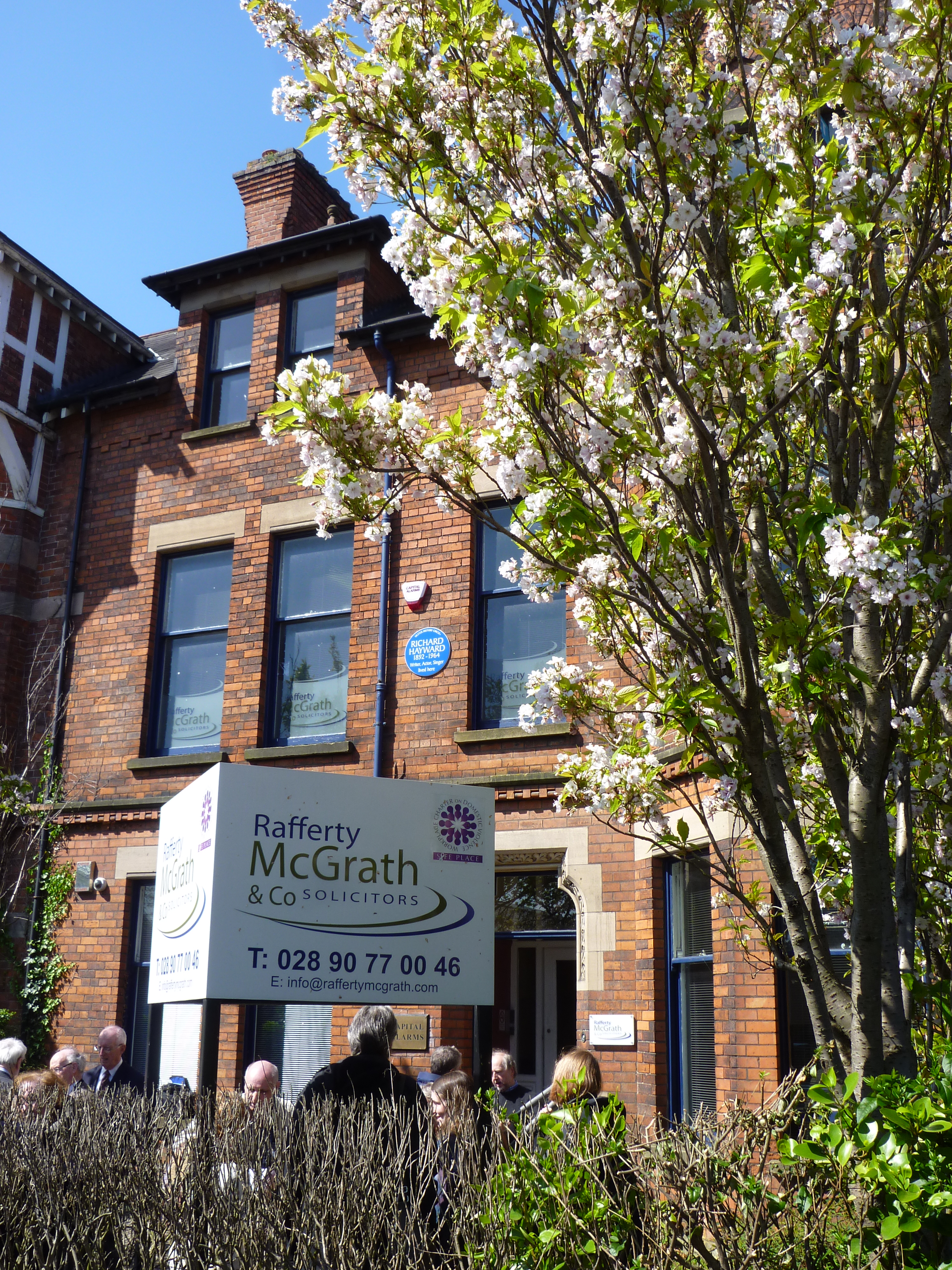
House on Antrim Road, now a Solicitor's Office

House on Antrim Road, now a Solicitor’s Office

Hayward’s last activity of note was with the Belfast Naturalists’ Field Club, which he joined in 1944. He was elected president for 1951-2. Public recognition of Hayward’s work included the award of an honorary DLitt from Lafayette University in Pennsylvania in 1959 and an OBE in 1964. Following the death of Elma, Hayward married Dorothy Elizabeth Gamble on 23rd February 1962. He died near Ballymena on 13th October 1964, having suffered a heart attack while driving. He was cremated and later a memorial service for him was held at St Anne’s Cathedral in Belfast.