
 DAY TWO: The walk began this morning at Petts Wood station near Croydon. Today’s section of the 43-mile route goes for about fifteen miles as far as Erith. My chosen charity apart from the AFCW Community fund is Diabetes UK and details of how to donate can be found in my JustGiving page or click the Sponsor me button at the top of the page. Or Text WFFW67 £5 to 70070 on your mobile.
Category Archives: UNCATEGORISED
WFFW6 STARTS
DAY ONE: The walk began this morning in South West London. The main group started off from the AFC Wimbledon stadium at Kingsmeadow at 9am. I started two miles along the route at Malden Manor station so that I would not delay their start and was able to catch up with them at a convenient location near the Hogsmill River. Today’s section of the 43-mile route goes for about nineteen miles as far as Whytleafe where there are a number of hills. My chosen charity apart from the AFCW Community fund is Diabetes UK and details of how to donate can be found in my JustGiving page or click the Sponsor me button at the top of the page. Or Text WFFW67 £5 to 70070 on your mobile.
WALK FOR WIMBLEDON 6

WFFW5 at Barnet April 2012
Setting off tomorrow (Thursday) on a fundraising 40+ miles walk in the greater London area. It’s called Walk Further for Wimbledon 6 as it is the sixth year such a trek has been undertaken. For me, it is my third year of involvement, having started in April 2011. The idea is to raise funds for our supporter-owned football club AFC Wimbledon and a charity of the walker’s choice. This time any funds for the soccer club will be channelled into a new Community Fund.
My choice of a separate charity is Diabetes UK (NI) via Belfast Lions Club. In February the Club heard from a representative of the group at its monthly meeting in the Wellington Park Hotel. Nearly 76,000 people in Northern Ireland have a health problem related to diabetes. If you wish to make a donation, please do so through my JustGiving page and if you are a UK taxpayer you can add Gift Aid automatically.
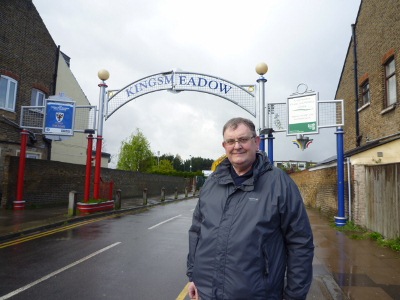
WFFW5 leaving Kingsmeadow
I am flying from Belfast International early in the morning and hoped to join the group of walkers about two miles into the walk near Malden Manor station. They will be setting off from the AFC Wimbledon ground at Kingsmeadow, Norbiton but I will not be able to join them in time for a 9am start, so will pick up the trail about half an hour later, as I did at the O2 in Greenwich two years ago.
Some of the walk is along the London Loop, part of which we walked last year on the way to the match at Underhill in Barnet. This year’s destination is Gillingham FC. A full house of around 11,500 is expected at Priestfield, including 1133 Dons’ fans. Gillingham have already won the title but AFC Wimbledon are dangerously close to the relegation zone as their first season (back) in the Football League comes to an end, with only this game and one home game on Saturday week remaining. Last year I raised £442 and £72 Gift Aid for the Lions International Korle Bu eyesight project in Ghana and I would like to thank once again those who donated so generously. In 2011 my participation in the same walk (which took me past HMS Belfast on the River Thames) raised over £200 for another charity supported by Lions, St Dunstan’s, now known as Blind Veterans UK.

WFFW4 at Kingsmeadow 2011
DAY ONE of the walk (Thursday) is the longest section from Kingsmeadow to Whyteleafe, around 19 miles, ending with a hilly section around Kenley airfield. Created by dwarfer77
Walk further for Wimbledon 6, Day 1 19.2 miles / 30.9 km
Walk further for Wimbledon 6, Day 2 15.4 miles / 24.8 km
Walk further for Wimbledon 6, Day 3 9.2 miles / 14.8 km
DONATE HERE: http://www.justgiving.com/Michael-FisherAFCW
BELVEDERE HOUSE
 Sitting on the shore of Lough Ennell near Mullingar in County Westmeath you will find an example of an Irish country house, now in the care of the local County Council. It was built in 1740 as a hunting lodge for Robert Rochfort, 1st Earl of Belvedere by architect Richard Castle, one of Ireland’s foremost Palladian architects.
Belvedere House, although not very large, is architecturally significant because of its Diocletian windows and dramatic nineteenth-century terracing. When Robert Rochfort decided to use Belvedere as his principal residence he employed Barthelemij Cramillion, the French Stuccadore, to execute the Rococo plasterwork ceilings which are among the most exquisite in the country (Wikipedia).

“Jealous Wall” Folly
The landscaped demesne of 160 acres boasts the largest and most spectacular folly in Ireland, called the The Jealous Wall. It was built by Robert Rochfort to block off the view of his estranged brother’s house nearby. There is also a Victorian walled garden and many hectares of forest. The house has been fully restored and the grounds are well maintained, attracting some 160,000 visitors annually.

Stucco Ceiling, Belvedere House

Drawing Room overlooking lake
On arrival at the car park and on the walk down towards the courtyard café, I noticed a recent addition to the landscape, donated by the Defence Forces. A 25pdr Field Gun from 4th Field Artillery Regiment, which used to be based in Mullingar. As the highest decorated regiment in the Defence Forces, the officers, NCOs, gunners and their families served the community of Mullingar and the people of Ireland at home and overseas from 17th February 1948 until 28th March 2012 when Columb Barracks closed. On 30th November 2012 the 4th Field Artillery Regiment were disbanded and became the 2 BDE Artillery Regiment (information on plaque).

Irish Army 25-pounder Gun
Following the second world war Charles Howard-Bury, a soldier and mountaineer, restored the house and gardens. He never married and on his death in 1963 the estate was inherited by the actor Rex Beaumont. Rex had been Howard-Bury’s friend and companion for 30 years and he sold the estate to Westmeath County Council in 1982. The contents were auctioned by Christie’s in 1980. Following a multi-million pound restoration the house and gardens are now open to visitors.
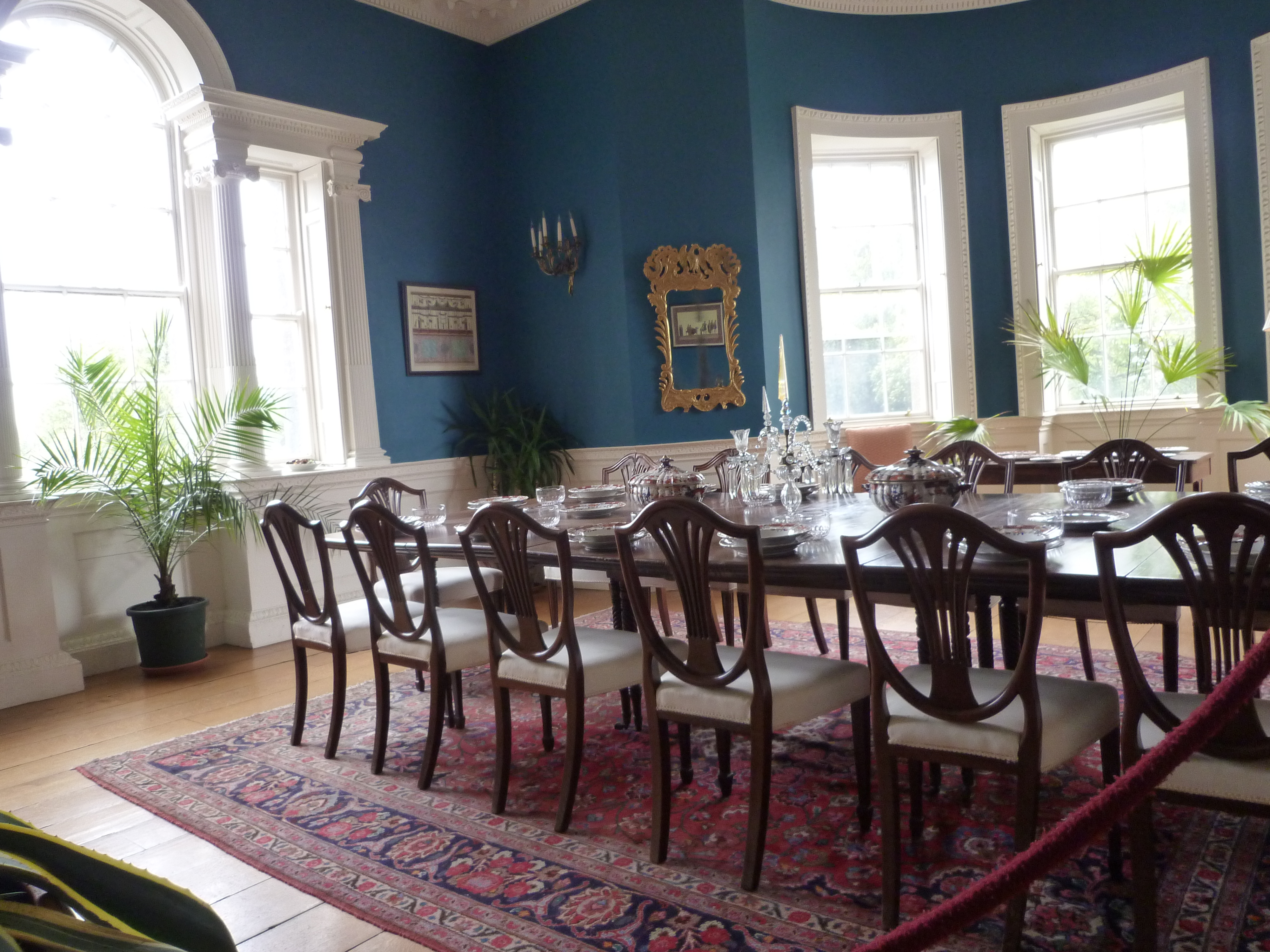
Dining Room, Belvedere House
ROCK OF CASHEL
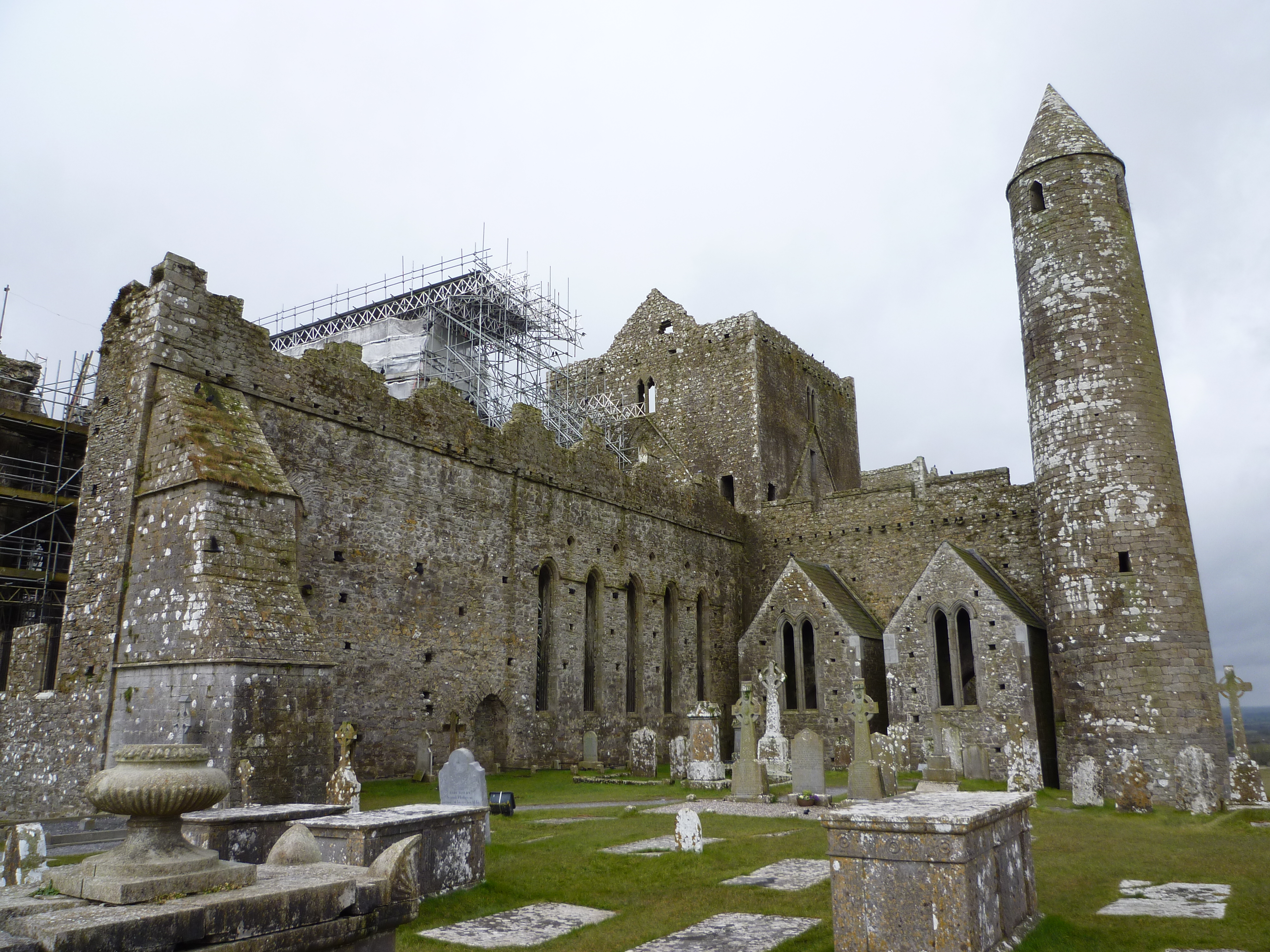
Rock of Cashel
The Rock of Cashel in County Tipperary is one of the finest historical sites in Ireland. It was once the seat of the Kings of Munster. The medieval buildings include a 12thCcentury round tower, High Cross and Romanesque Chapel, 13th century Gothic cathedral, 15th century Castle and the restored Hall of the Vicars Choral. The monument is in the care of the Office of Public Works.
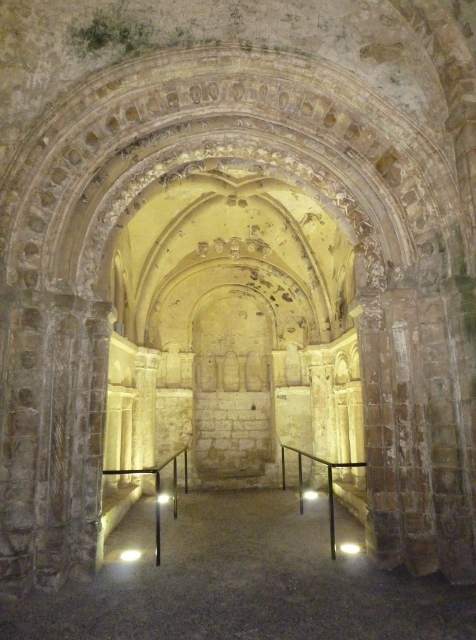
Cormac’s Chapel
One of the most interesting parts of the site is Cormac’s chapel, (the chapel of King Cormac Mac Carthaigh), which was begun in 1127 and consecrated in 1134. It is undergoing major restoration work as the scaffolding in the picture shows and contains one of the only examples of frescoes in Ireland from this period.
It was one of the sites seen by Queen Elizabeth II during her first state visit to Ireland in May 2011. The visitor book she signed along with Prince Philip is on display, along with the pen she used. It was interesting to note that in the small cemetery beside the ruins of the Cathedral, there are at least four graves of local men who served in the British Army during the First World War, with gravestones provided by the Commonwealth Graves Commission. I have some photographs of them here and at some stage might do some more research into the stories of these soldiers. One was a veteran of the Second World War, it seems, Sergeant Martin O’Brien MM, who served in the 2nd Royal Irish Regiment and died in 1965, aged 84.
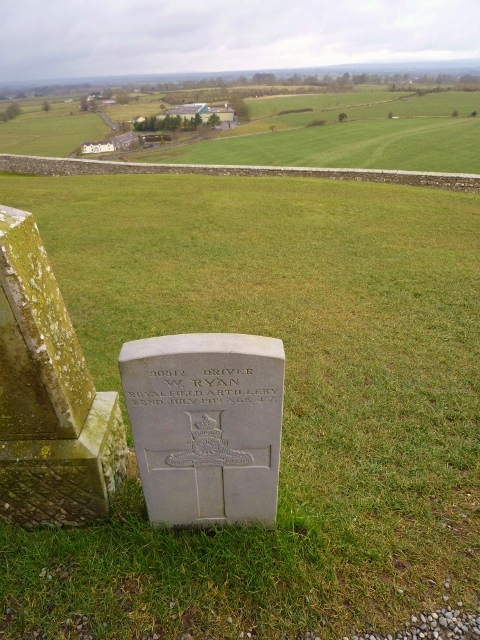
Driver W.Ryan RFA

Grave of Sgt Martin O’Brien MM

Pte J. O’Donohue Leinster Regiment
KINSALE FORTS

Kinsale Harbour from Charles Fort
Two 17thC forts guard the entrance to Kinsale harbour in County Cork. The view shown here is from Charles Fort, built later than James’ Fort, a similar star-shaped stronghold on the other side of the inlet. This was designed to resist attack by cannon.

Entrance to Charles Fort
Charles Fort is built on the site of an earlier defence, Ringcurran Castle, which featured prominently during the Siege of Kinsale in 1601. The fort, named after King Charles II, was designed in the 1670/80 period by the Surveyor-general Sir William Robinson, who also designed the Royal Hospital in Kilmainham, Dublin. It was one of the largest forts built in Ireland and had three bastions, projecting outwards from the main wall, facing the land, and two half-bastions where the walls reached the water. When combined with the guns on the opposite side of the approach to Kinsale, these guns would be a serious deterrent to any potential invading force.
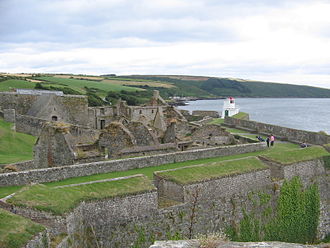
Charles Fort (Wikimedia Commons)
The fort was besieged by John Churchill, 1st Duke of Marlborough (a relative of Winston Churchill) in 1690 during the Williamite War. Repairs were made following the siege, and the fort remained in use as a British Army barracks for several hundred years afterwards. It had its own hospital block as well as a parade ground. A very helpful guide from the Office of Public Works gave a very interesting presentation on the history of the site.
An early lighthouse was established here in the 17th century. British forces left the fort following the Anglo-Irish Treaty in 1921, but it fell out of use after being burned by the retreating anti-Treaty forces during the Irish Civil War in 1922. The complex was declared a National Monument in 1971 and has been partly restored by the heritage service, Dúchas.

Abandoned buildings, Charles Fort
ROSALINE KELLY RIP

Rosaline Kelly (Belfast 2005), Jim Corrigal (President) & Michael Fisher Photo: © Kevin Cooper
Tributes have been paid to Rosaline Kelly, the first woman elected President of the National Union of Journalists. Ms Kelly (90) died at St Columcille’s Hospital, Loughlinstown, County Dublin following a short illness. Ms Kelly worked as a magazine journalist in London and served as President of the NUJ from 1975 to 1977. On retiring from active journalism she returned to Ireland. She lived in Wicklow and was instrumental in establishing the retired members section of the NUJ in Ireland. She was also made a Member of Honour of the union.
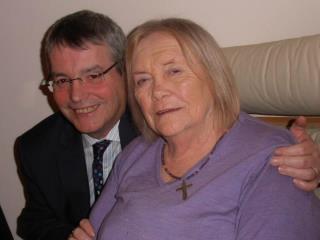
Barry McCall & Rosaline Kelly at 90
NUJ President Barry McCall described Ms Kelly as an NUJ institution and said her passing would be mourned throughout the union. Mr McCall said: “Before the phrase ‘glass ceiling’ was coined Rosaline Kelly was setting a headline for woman activists. She was elected to the union’s National Executive Council in 1972 and quickly established a reputation for commitment, energy and a direct debating style which was to become her hallmark. Rosaline had a long association with the NUJ Standing Orders Committee and was regarded as an expert on procedures. She had a strong commitment to the welfare of members and this was reflected in her deep involvement in the union’s charities and in the establishment of a retired members section in Ireland. She never lost her enthusiasm and only ill health prevented her from attending our delegate meeting in Newcastle on Tyne last October. It would have been her 50th consecutive delegate meeting. Rosaline Kelly was an NUJ institution and her passing will be mourned throughout the union.”
NUJ General Secretary Michelle Stanistreet also paid tribute to Ms Kelly. She said: “Rosaline Kelly was one of the outstanding characters within the NUJ. She retained throughout her life an abiding commitment to the principles of social justice. Rosaline was fiercely proud of the NUJ and took particular pride in the Code of Conduct. Rosaline believed in the highest professional standards and was a strong supporter of our work at the Leveson Inquiry. Decades after her retirement from journalism she was sharing her advice and wise counsel. Her presence at union gatherings will be greatly missed.”
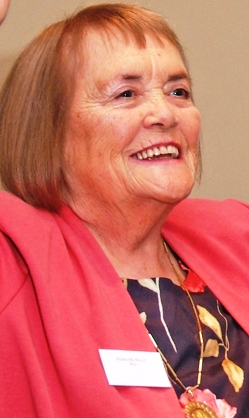
Rosaline Kelly 1922-2013
NUJ Irish Secretary Séamus Dooley expressed sympathy on behalf of the Irish Executive Council. He said: “Rosaline spent her working life in England but in retirement she became active in Ireland, becoming the voice of retired members and ensuring that their interests were represented at all times. She hated the term ‘Woman President’.
“I was a President who happened to be a woman. You won’t find the term ‘Woman President’ in the Rule Book,” she once chided a branch officer who thought he was doing the right thing by referring to Rosaline’s historic role in breaking through the male dominated fortress that was the NEC. But there is no doubt she was a role model for women in a male dominated industry. She will be remembered for her qualities of integrity, her selfless dedication and her commitment.”
“In Ireland Rosaline and (former Irish Secretary) Jim Eadie formed and shaped the retired members section. As Chair for more than a decade she dominated committee meetings. I recall watching with fascination as she whipped into shape seasoned union activists. She was a stickler for procedure and protocol and refused to grant special dispensations to anyone – President, General Secretary or committee member, who she deemed to have transgressed her standing orders.”
“With the former Irish Secretary Jim Eadie she led the way in ensuring that retired members continued to play a role. She will be remembered for her style, her humour and her forthright manner. Rosaline disliked the term ‘woman president’ but there is no doubt she was a role model for women in a male dominated industry. Her integrity, her selfless dedication and her commitment made Rosaline a role model for all union members and it’s for those qualities that she will be remembered”, Mr Dooley said.
Imbued with a sense of justice and fairness Rosaline was also a long standing supporter of the union’s charities, which she served with distinction. Kevin Cooper’s picture at the top shows her on a visit to Belfast, when she accepted a cheque for £7000 on behalf of the NUJ Provident Fund, being the proceeds of the Belfast Press Ball 2004. That commitment reflected a deep personal and largely private faith. While delegates recovered from late night carousing Rosaline would inevitably find a church in whatever obscure corner in which ADM or the Irish Delegate Conference was being held to attend Sunday Mass. On her return she would occasionally tease atheistic colleagues that she had prayed for their souls or lit a candle for members of SOC as they tried to conclude Sunday’s agenda.
Séamus Dooley also recalled how Rosaline liked visiting the NUJ offices and kept in touch with staff and retired employees. She never arrived empty handed and usually brought boxes of sweets. When the new Irish office was opened she presented the IEC with her collection of vintage style NUJ posters. Recently the Dublin office got around to framing them and they hang in the foyer in her memory.
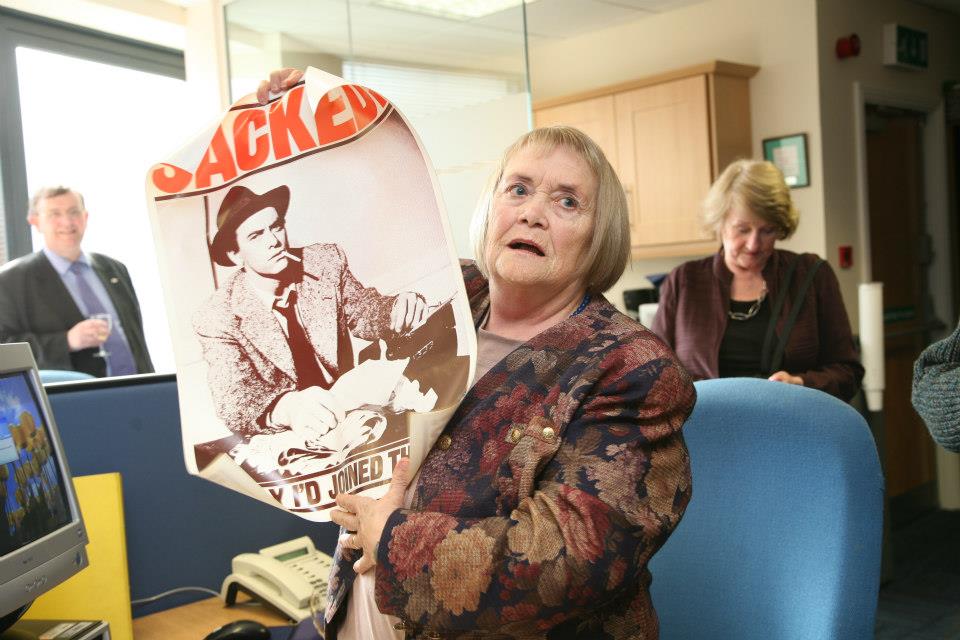
Rosaline Kelly presents NUJ posters
Rosaline’s remains were brought on Friday evening to St Patrick’s church in Wicklow town. Requiem Mass was held at 10am Saturday April 13th in St Patrick’s, followed by cremation at 12.30pm in Mount Jerome, Harold’s Cross, Dublin.
Among the mourners at the removal were her niece Evelyn and her nephew Patrick, a former NUJ President (1973-74) John Bailey (and his wife Maureen) who was a great friend of Rosaline, John Brophy, Kieran Fagan, Patrick Kinsella and myself representing her many NUJ colleagues.
Damien Tiernan (Irish South East branch) who kept in contact with Rosaline in her latter years was among the mourners at the Mass in Wicklow, where a guard of honour paid her a final NUJ tribute. It included the IEC Cathaoirleach Gerry Curran. John Bailey delivered a eulogy and at the crematorium, Seamus Dooley gave a short oration, followed by former Irish Secretary Jim Eadie. Rest in Peace.
Irish Times death notice: KELLY Rosaline – April 11, 2013, aged 90, Wicklow, London, Drogheda. Member of Honour and first woman elected President of NUJ, (peacefully), after short illness, in St. Colmcille’s Hospital, Loughlinstown. Reposing at McCrea’s Funeral Home Dublin Road, Wicklow Town with removal to St. Patrick’s Church, Wicklow Town today (Friday) at 6.15 o’clock arriving at 6.45 o’clock Funeral Mass tomorrow (Saturday) at 10 o’clock followed by cremation Service at Mount Jerome Crematorium, Harold’s Cross, Dublin at 12.30 o’clock Rosaline will be a force missed by her niece Evelyn and nephew Patrick and the wider family, friends, neighbours and trade union colleagues here and abroad. Family flowers only. Donations, if desired, to Bothar – care of McCrea’s Funeral Directors, Dublin Road, Wicklow Town, County Wicklow. Rest In Peace.

St Louis Convent Carrickmacross
It was only after we had said our farewells to Rosaline and I was talking to Jim Eadie that I discovered she had a Monaghan connection. Her niece confirmed that her aunt who came from Drogheda had attended the Convent of St Louis in Carrickmacross as a boarder. The boarding school closed in 1979. The nuns who came to the town in 1888 helped to establish the famous Carrickmacross lace by setting up a lace school. So because I was passing Carrickmacross on my way back to Monaghan after the service at Mount Jerome, I stopped at the convent and reflected on whether that was where Rosaline had learned her skills of managing conference standing orders and re-writing motions to ensure they were correct!
Former NUJ President John Devine who was another great friend of Rosaline’s and was among the mourners in Dublin reflected on those skills she had:-
“Rosaline, whom I have know since she came on the NEC, was from a generation that could parse, analyse and conjugate and she did not let anyone forget it. She did The Times crossword up until a couple of months ago and still drove her car through Wicklow Town and did most of her own shopping until last Autumn. Have any of you seen the streets of this historic town? She emerged from Magazine and Book at a time when “the suits” were on the wane. M and B generationally, socially and politically was new order just as Hutt and Heald and co. were orthodox and holding on magnificently to the power they wielded in the NUJ. Rosaline’s trade unionism wasn’t based on whims, or short-term causes, or single issues. Her commitment to the uplifting of wages and conditions for media workers across the board required the discipline she applied to what she did on the shop floor. Sloppiness or populism she discouraged within her sphere of influence, not always successfully but mostly. I worked with her on the NEC and on Standing Orders in the days when the ADM could be an organisational nightmare and learned to admire her ability to spoon-fillet people who tried to be smart-assed when their co-operation was being required when several motions and amendments were being composited. The only combination I saw sharper than Rosaline and the late Phil Cutler were Rosaline and Pauline Norris, both lifetime pals. Towards the end of last summer she invited herself to stay with myself and Fran in Bangor, Co. Down. That was her way. She said soon after arrival: “you know I have never seen Lough Neagh the biggest lake in these islands.” I told her that would be arranged. Next day we went to the shores of Lough Neagh first at Lurgan and then near Maghery. We had lunch, for which she paid, and then she adjourned to the external balcony of Edenmore Golf and Country Club in the middle of beautiful pastoral countryside and puffed and puffed on her cigarettes. The receptionist, after providing the second light of the afternoon, brought her a cigarette lighter which she assured Rosaline she could keep. Her great friend John Bailey, whom she appointed to look after her affairs when the end came, organised for himself, Maureen his wife, Lionel Morrison and Liz his and myself and my wife Fran to go to Wicklow last November to organise a 90th birthday party for Rosaline without her knowledge. We took a house for a week and moved into Wicklow and lived as natives. Rosaline had been expecting Fran and I to come down anyway to take her out for a meal but we never mentioned birthday. Once the party was organised, to which The President, and John Brophy were invited and attended, I phoned Rosaline and told her would be along to pick her up. When driving out of her road I turned right heading out of the town. She said “you’re going the wrong way.” I said I had to make a call and say hello to a few friends for a few minutes and maybe she would be good enough to come with us. She agreed. Liz, whom she did not recognise answered the door, and welcomed her enthusiastically. Then when she entered the room and saw all the old friends she was dumbfounded for all of a minute (some class of a record for Rosaline) before announcing that it was the best birthday she ever had. I had my ups and downs with Rosaline during the long years of our acquaintance but she would never let me quit. She never let anybody quit. On the shores of Strangford Lough she sang: ” The sea oh the sea, is grá geal mo chroi, Long may it roll between England and me, it’s a sure guarantee that some day we’ll be free, Thank God we’re surrounded by water.” When chided about being ungrateful to England, where she made her life and developed some of the great friendships of her life, she just laughed.” (John Devine April 12th 2013)
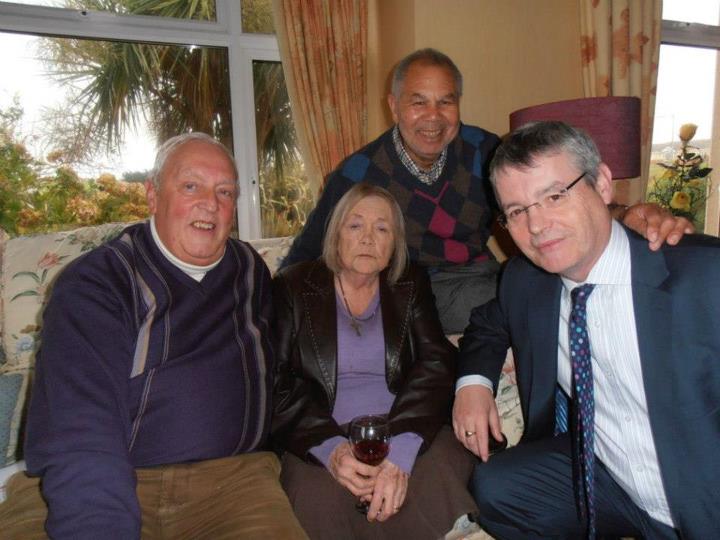
John Devine, Lionel Morrison & Barry McCall with Rosaline
April 11 1912, Titanic sails from Ireland
See my comments on how a coachload of fifty visitors (including myself) from Co. Monaghan and Tyrone was unable to gain access to Cobh yesterday to visit the heritage centre.

On the afternoon of April 11 1912, the Titanic picks up her last 123 passengers at Queenstown County Cork, Ireland. Joining the 2,105 already on board are 113 who will travel in 3rd class, 7 for 2nd class, and 3 as 1st class passengers.
For some on board, this was a great adventure, crossing the Atlantic on board a luxurious new ship. Many may have been excited by the prospect of a new life in the New World, while many more would be feeling great sorrow at leaving loved ones behind, not knowing when or where they will meet again.
And so the RMS Titanic steams out of Cork Harbour for a meeting with destiny no one on board could envisage.
BLARNEY STONE
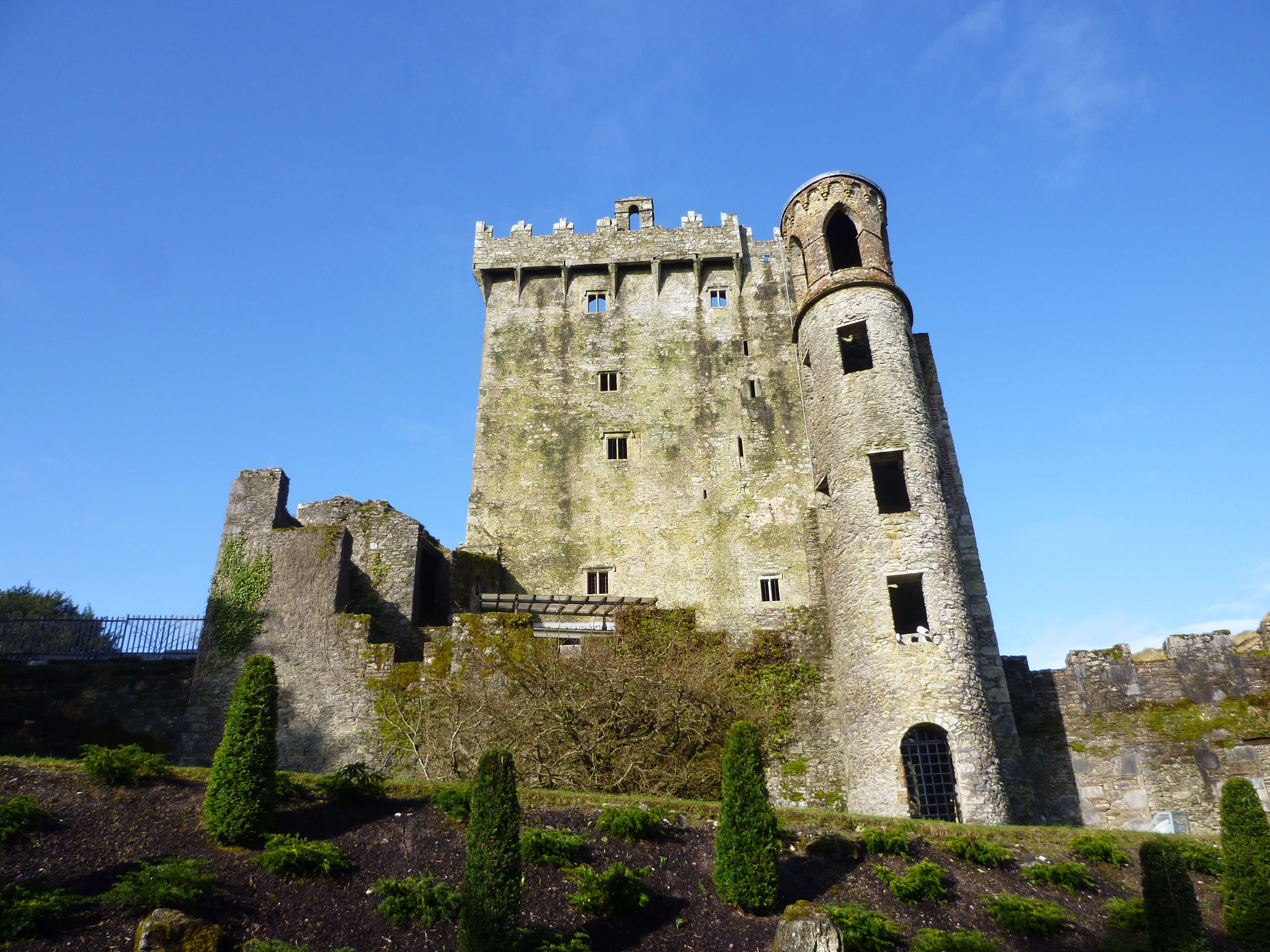 Many years ago when I was a child on holidays I remember my father bringing us to Blarney Castle and kissing the stone. At least I have a vague memory of it and if it has done me any good then nearly forty years of broadcasting can be my proof!

Blarney Castle
Although I remember that visitors had to lean backwards to kiss the stone, while being helped to hold on to two iron bars, one on each side, I cannot remember the surroundings very well. So it was a pleasure to be able to visit the Castle once again, this time with a coach party of fifty (**in deference to my wife and at least two others I must add the word: MAINLY) retired people from the Tyrone and Monaghan areas.
The 100 or so steps inside the castle tower are narrow and steep and you have to be careful not to knock your head when you go through entrances or archways. But the view from the battlements is worth the climb.
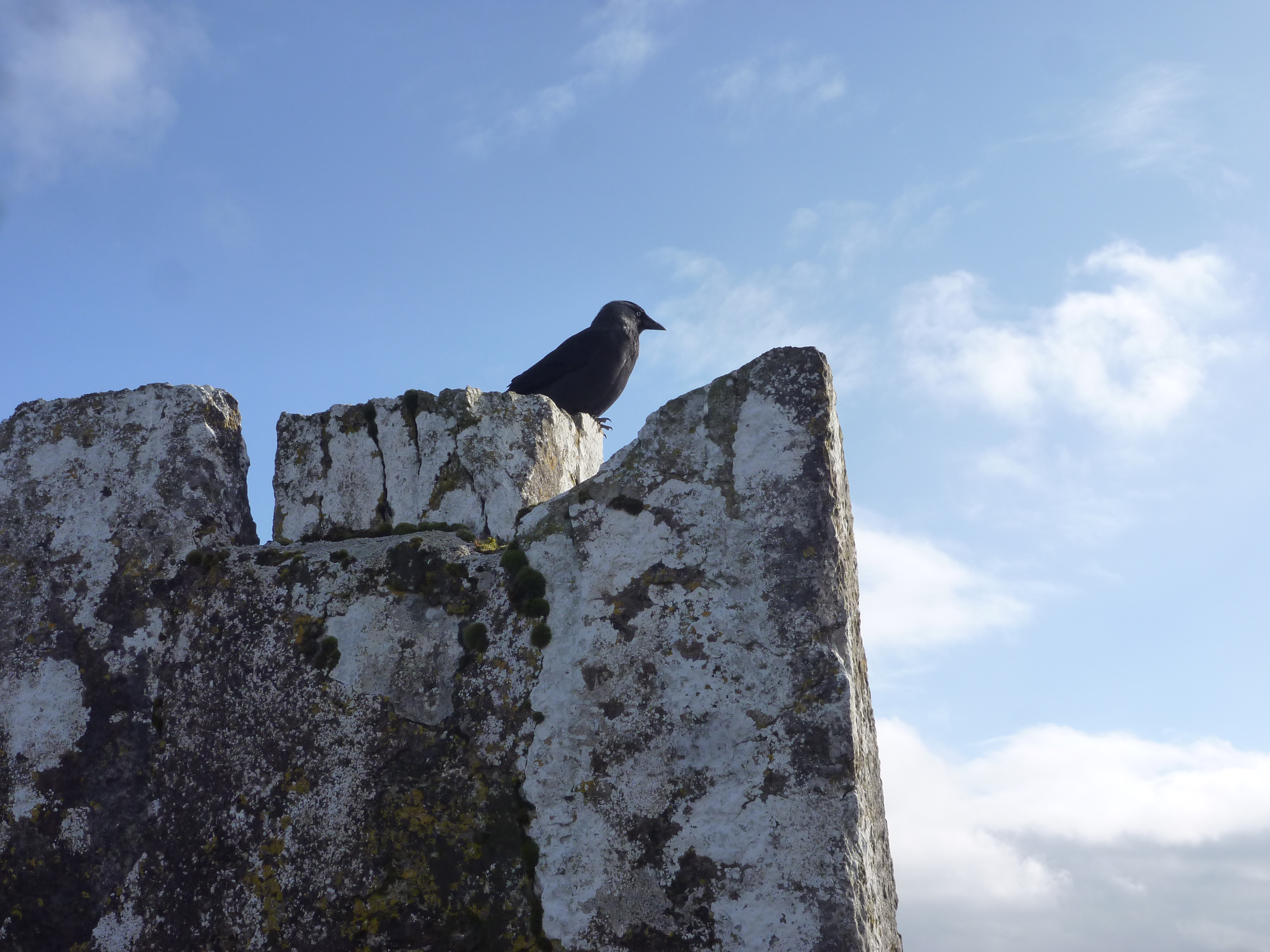
Battlements, Blarney Castle
Kissing the famous stone is said to give you the “gift of the gab”. The story has featured in movies, including one starring Bing Crosby, as one of the information boards reminds visitors. The history of the Castle can be found here. Blarney Castle, as viewed by the modern day visitor, is the third building to have been erected on the site. The first in the tenth century was a wooden structure. Around 1210 A.D. this was replaced by a stone structure which had the entrance some twenty feet above the ground on the north face. This building was demolished for foundations. In 1446 the third castle was erected by Dermot McCarthy, King of Munster and the keep still remains standing.

Blarney House
Blarney House was designed by Sir Thomas Lanyon and was built in 1874 by the Jefferyes family. It is in the same Scottish baronial style as Stormont Castle or Castle Leslie. It is private and only open to the public during the summer. It is the home of Sir Charles Colthurst. It was interesting to see him interviewed in a recent television documentary on Ireland presented by James Nesbitt on UTV. 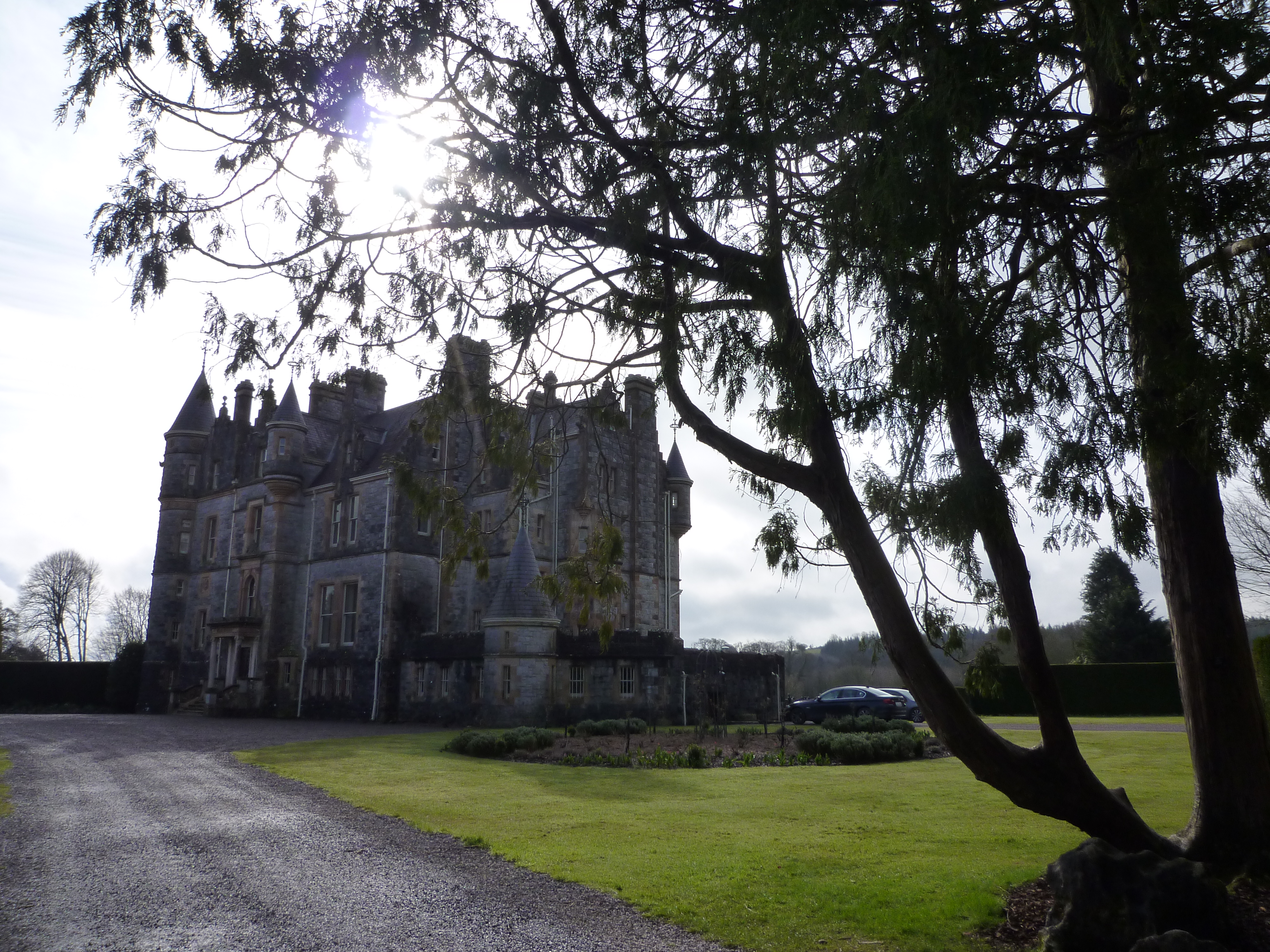
GERTRUDE ROSE
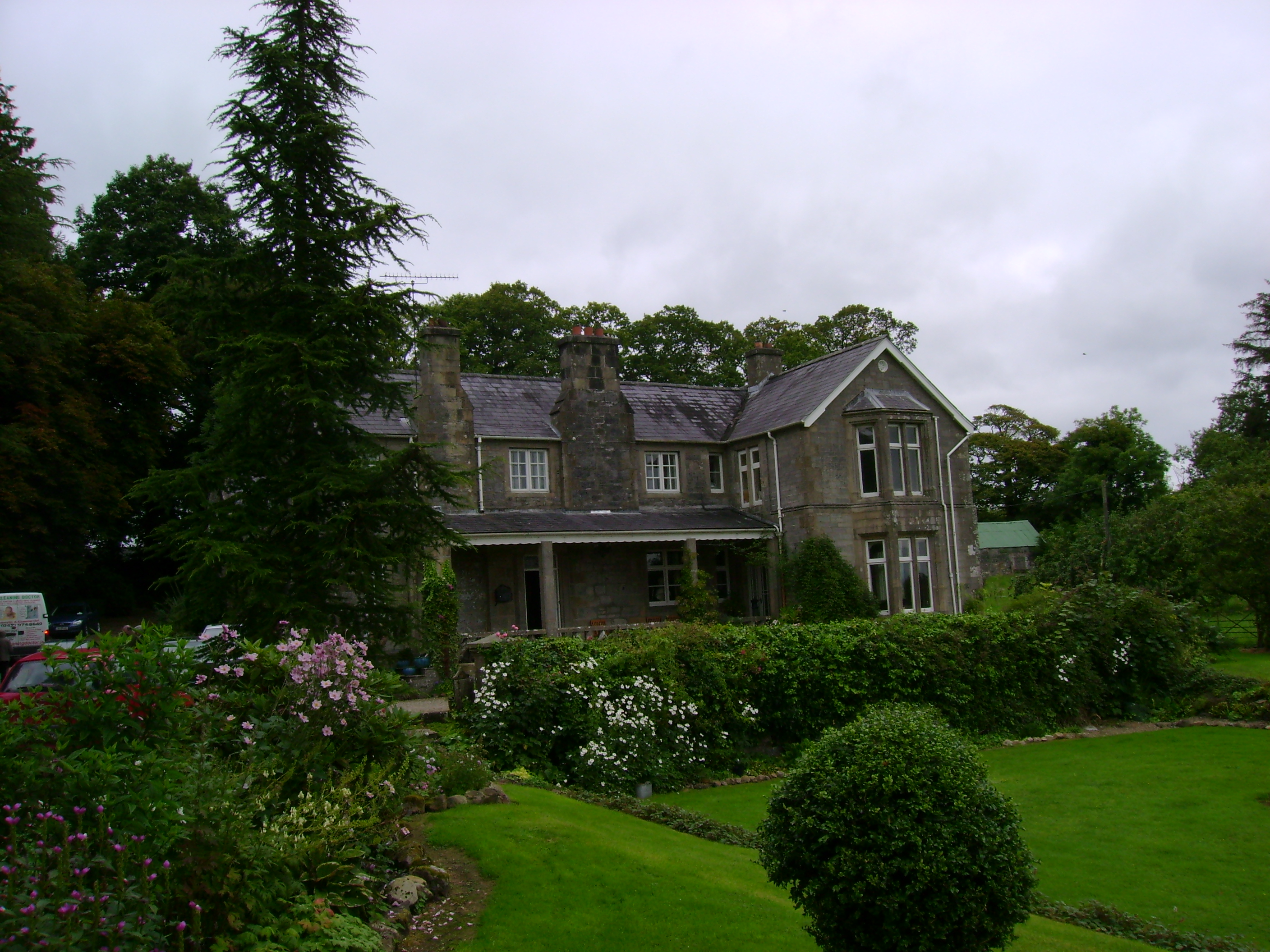
Mullaghmore House, 2007
The story of Mullaghmore House in the parish of Tydavnet, County Monaghan and the Rose estate yesterday gave only a brief mention to one of its most interesting landlords, Gertrude Rose. If anyone can provide a picture of her, I will add it to the blog. (This image has been sourced by Grace Moloney of the Clogher Historical Society and it is from a catalogue published by Dreweatts Auctions in England: added 29th May 2013).
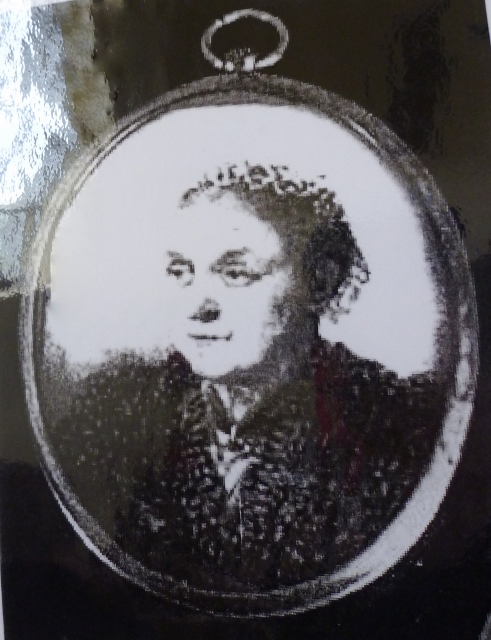
Brooch Picture of Gertrude Rose: Created by artist Kathleen Rashleigh. Image courtesy of Dreweatts Auctions, England
I have found a picture of the Anglican clergyman who was her friend and adviser, Frederick Temple, who went on to become Archbishop of Canterbury. What we did get at the very interesting talk at Cornagilta school on Thursday evening, courtesy of Patsy Brady, was a copy of an obituary from, I think, The Northern Standard in January 1907. I am reproducing it here, to give some idea of the background of this progressive and forward-thinking landlord:-
THE LATE MISS ROSE, MULLAGHMORE
“A gentleman who was for many years an intimate personal friend of Miss Rose, of Mullaghmore, whose lamented death we referred to in last week’s issue, has sent us the following interesting sketch:-
By the death of Miss Rose the neighbourhood of Monaghan has lost one of its most interesting inhabitants. She was a lady of many parts, of great initiative, ability, and kindness of heart, a sterling friend, and a good neighbour. She has left a void which cannot easily be filled. Coming into the property of Mullaghmore about 50 years ago, on the death of her uncle, she at once set herself to perform the duties of her position with zeal and devotion. We believe it was her first intention to sell the property, but the late Archbishop Temple, with whom she was on terms of intimate friendship, impressed upon her the duties of her position; so she retained the property and faced its duties with very high ideals which she ever kept before her and strive to realize. She was a young woman then*, and from that time, till now that she has been removed by death, she had devoted herself to the service of her people and the betterment of their condition.
Scotch by race, English by birth, French by education, she expressed the sterling qualities of each nation. She had the fixity of purpose, the unbending, uncompromising character of the one, — the ‘granite’, — (but ‘granite on fire’, as her friend Archbishop Temple** was described); the great common sense and love of justice of the other, and with this the graceful winning courtesy of the French. As soon as she came into the property, she built herself a home suitable to her position, and from that time till now, she has lived continuously amongst her people, ever influencing them, inspiring them by her example and sympathy. Improved farms, stock, tillage were brought about by her efforts, and on her ‘home-farm’, was to be seen some of the finest live stock in the north of Ireland.
But not merely in the material improvement of her tenants was Miss Rose interested. She built a large school***, and supplemented the teacher’s income, so that the children might have the benefit of a good education. In many ways was Miss Rose considerably before her time, and because of this, was likely to be misunderstood, but time has proved she was right. Around her, at Mullaghmore, she kept a large staff of employees, and on them she expended a wealth of devotion and care. Were they sick she attended them; and everything that her house contained, that would be for their good, was at their disposal. A doctor told us that 28 years ago, he first met Miss Rose. When he was a very young man, he was called upon to attend a herd(sman) in her farm yard, and by the patient’s bed-side, ministering to him, he met her. Since then the acquaintance casually made ripened into the closest friendship; and he found Miss Rose ever the same — ministering to the wants of others.
How much will her social qualities be missed. Her house was ever open; she was the essence of hospitality. The friend and associate of the very highest in the land next Royalty; the friend and patron of the poor; the valued friend of many in the neighbourhood of Monaghan. Who will understand more fully their loss by experiencing it?
Any remarks regarding Miss Rose would be imperfect that would omit noticing her intellectual capacity. She possessed mental powers of a high order. Hughly educated, she read books of a high class, and brought her mind to bear on the ethical and social problems that are agitating the thinking world of to-day. She was a delightful and instructive person to meet; and one always felt, whether one agreed with her conclusions or no, they were not formed without thought and consideration. She has gone to rest in a good old age, but we can ill spare her. It may be said of her — ‘She did her duty’.
____________________
Miss Rose was the daughter of Dr. Thomas Rose, a surgeon in the 2nd Life Guards, and she was the youngest of seven children, three of whom died in one week of diphtheria.” (end of page)
*Gertrude Rose was 21 when she inherited the estate from her uncle in March 1849.
**Archbishop Frederick Temple, who died four years before Gertrude Rose, was Archbishop of Canterbury 1896-1902 and had been a chaplain-in-ordinary to Queen Victoria.
***the school she built was at Cornagilta, described in yesterday’s blog.
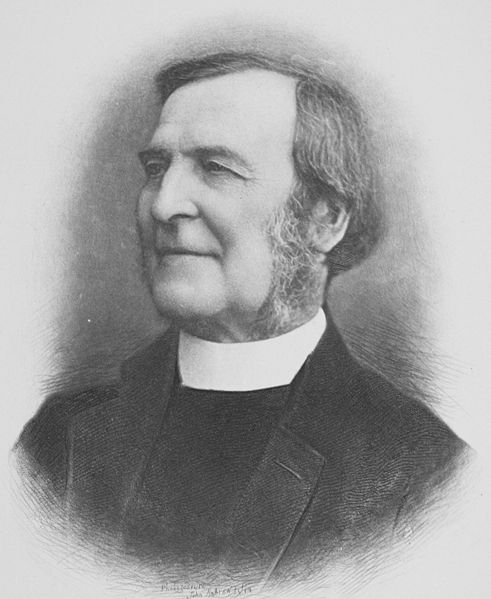
Archbishop Frederick Temple (photo: Wikimedia Commons)
 Michael Fisher's News