HOLOCAUST MEMORIAL

Auschwitz

Auschwitz

The words (or some of them) of Pastor Martin Niemöller have been quoted in various forms as sectarian tensions rose in Belfast over the flags issue.  In World War I, he served as a German naval officer on board submarines. He was a Protestant theologian and his attitude to the Jews has been the subject of debate. In this quotation, he was referring to the inactivity of German intellectuals during the Nazis’ rise to power:

“First they came for the communists,
and I didn’t speak out because I wasn’t a communist.

Then they came for the socialists,
and I didn’t speak out because I wasn’t a socialist.

Then they came for the trade unionists,
and I didn’t speak out because I wasn’t a trade unionist.

Then they came for the Jews,
and I didn’t speak out because I wasn’t a Jew.

Then they came for the Catholics,
and I didn’t speak out because I wasn’t a Catholic.

Then they came for me,
and there was no one left to speak for me.”

Having signed a petition by Protestant churchmen that was critical of Nazi policies, he was put on trial for activities against the state. During the second world war, he was interned in the concentration camps of Dachau near Munich and Sachsenhausen.
Blessed Rupert Meyer SJ

Blessed Rupert Mayer SJ

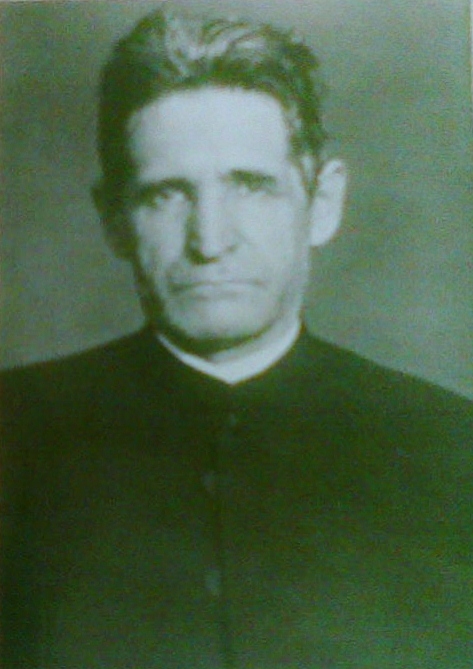
Another clergyman to have been imprisoned at Sachsenhausen was a Catholic priest, Blessed Rupert Mayer SJ, known as the Apostle of Munich. A member of the Jesuit order, he was a powerful preacher, who spoke out against the evils of Hitler and Nazism. He too served in the first world war as a military chaplain. He is buried at St Michael’s church in Munich. He was arrested by the Gestapo in November 1939 shortly after the outbreak of the second world war and was deported to Sachsenhausen concentration camp, where he remained for several months. He was then sent to the monastery at Ettal near Garmisch in Bavaria and placed under house arrest. Released in May 1945 he returned to Munich but died in November that year while saying Mass. He was beatified by Pope John Paul II in 1987.

Auschwitz

Auschwitz

Another story of courage by a Catholic priest in a concentration camp is that of Saint Maximilian Kolbe OFM, a Franiscan. He was arrested by the Gestapo at a friary near Warsaw in 1941 and taken to Auschwitz. He celebrated Mass each day in his prison cell, which I saw five years ago when I visited the former camp.  A memorial there says up to 1.5 million men, women and children mainly Jews were murdered there by the Nazis.

Memorial at Auschwitz

Memorial at Auschwitz

St Maximilian Kolbe OFM

St Maximilian Kolbe OFM

Fr Kolbe offered himself in place of a married man when the  deputy commander of the camp ordered ten men to be starved to death, following the escape of three prisoners. A remarkable story of self-sacrifice which was recognised by the Catholic church when he was canonised by Pope John Paul II in 1982. This evening at 7:30pm in the Queen’s Hall at Newtownards, the annual Holocaust Memorial Day Commemoration in Northern Ireland will take place, organised by the Office of the First Minister and deputy First Minister for the past eleven years. It honours those communities destroyed in the Holocaust under Nazi Persecution. But the commemoration has also been extended to remember modern day victims of genocides in Cambodia, Rwanda, Bosnia and Darfur, as well as the atrocities in Armenia.

FROM BRADFORD TO WEMBLEY

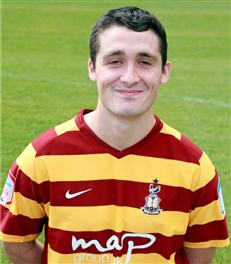
Bradford City FCIt was, as the BBC reporter described it, the stuff of fairy tales. Minnows Bradford City became the first League Two (fourth tier) side in English football to reach the final of the League Cup in fifty years. The last was Rochdale in 1962. Getting to Wembley is expected to earn the club £1 million pounds. Not bad going for a side who had two pre-season friendlies in Ireland (both wins) against Wexford Youths and Bray Wanderers. Shortly afterwards at the start of the season, they hammered the team I support, AFC Wimbledon, 5-1 at the Coral Windows stadium at Valley Parade in front of a crowd of nearly 9,500. On the bench that day was a young Donegal lad Carl McHugh from Lettermacaward, who had just joined the Bantams and made his League Cup debut a few days later against Watford. In October the 19 year-old defender had his Football League debut and the following month his header helped Bradford to win their FA Cup match against Watford.

Carl McHugh, Bradford City

Carl McHugh, Bradford City

It was another header from McHugh that helped City win the first leg of their semi-final in the League Cup against Aston Villa. Although going down 2-1 last night in the return leg at Villa Park, their home win meant they went through 4-3 on aggregate. Ironically the first leg goal by McHugh was put past one of his football heroes, Irish international keeper Shay Given, who is also a Donegal man. Mc Hugh is clearly a rising star. He began on a scholarship with Reading when he was 16, then played on loan for Swindon Supermarine and then Dundalk in the Eircom League. He has represented his country at under 17 and under 19 level.

This is the biggest achievement by Bradford since they won the FA Cup in 1911. Looking at their history, I discover that like Wimbledon, they were once in the Premiership. At the end of the 1999/2000 season,  “Sunday 14th May saw Liverpool at the Bradford & Bingley Stadium (as it was then called) and Bradford knew they had to better Wimbledon’s result, who were playing at Southampton, to ensure they stayed in the Premiership and condemn fellow strugglers the Dons, who were level with City on points but had a better goal difference. A 12th minute header from David Wetherall and a 2-0 defeat for Wimbledon sent the whole of Bradford into raptures and saw Premiership football at Valley Parade for another season.”  It was the finish of a fourteen year stay in the top tier for the Dons, who were managed by Terry Burton at the time and were playing their home games at Selhurst Park. It was also the beginning of the end for the club, as moves began against the wishes of most fans to relocate to Milton Keynes, sixty miles away.    capitalonecup

I wish Bradford every success on February 24th at Wembley against Swansea City, who had a goalless draw against Chelsea tonight and won on aggregate 2-0. But I very much hope AFC Wimbledon’s form will have improved by February 16th, when their home match against Bradford is scheduled. The Dons lost to Stevenage 3-1 in the first round of the Capital One Cup in August. They are currently struggling second from bottom, in the relegation zone of nPower League Two but you can watch them in action tomorrow night against Port Vale LIVE on Sky Sports, kick-off 19:45 (weather permitting). Today a major snow-clearing operation was mounted with the help of 60 supporters and under-18 players, in order to ensure that the pitch at Kingsmeadow would be playable.

FR TONY FLANNERY

Fr Tony Flannery (RTÉ News)

Fr Tony Flannery (RTÉ News) 

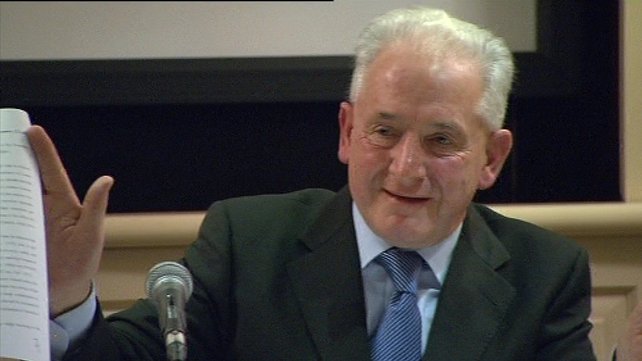
The Vatican is threatening to dismiss an Irish priest from the Redemptorist order who has unorthodox views on the question of women priests and contraception. Fr Tony Flannery was told nearly a year ago he was suspended from his ministry in County Galway. He was advised to go to a monastery and in the Latin expression credited to Saint Ignatius of Loyola, to think with the church: “sentire cum ecclesia”. He had been a founding member of the Association of Catholic Priests in Ireland in autumn 2010. Now the 66 year-old cleric who was ordained in 1975 has been given an ultimatum by the Congregation of the Doctrine of the Faith. According to the Irish Times, he told a news conference in Dublin he will only be allowed back into ministry if he writes, signs and publishes an article – to be pre-approved by the CDF – accepting that the Catholic Church can never ordain women to the priesthood and accepting all church stances on contraception, homosexuality, as well as the refusal of the sacraments to people in second relationships.

As Fr Flannery himself summed up his situation: “I either put my name to a document that would be a lie, and would impugn my integrity and my conscience, or I face the reality of never again ministering as a priest”. Fr Flannery says he believes the real aim of the CDF is to suppress the Association of Catholic Priests. But he is adamant that “no matter what sanctions the Vatican imposes on me I will continue, in whatever way I can, to try to bring about reform in the church and to make it again a place where all who want to follow Christ will be welcome”.

The letters columns in the Irish Times contains a number of responses to the situation the priest finds himself in. From another rebel cleric self-styled “Bishop” Pat Buckley from Larne came the following:  “Sir, – Twenty-six years ago they came for me and no one did anything. Today they have come for Fr Tony Flannery. Tomorrow they will come for you”. A lay group called We Are Church Ireland will be staging a vigil at the Papal Nunciature in Dublin on Sunday 27th January at 3pm in support of the Redemptorist. A representative of the group also welcomed the statement from Fr Flannery’s order. They said although not all Redemptorists would accept Fr Flannery’s views on all matters, they do understand and support his efforts to listen carefully to and at times to articulate the views of people he encounters in the course of his ministry. They expressed the hope that even at this late stage, an agreed resolution could be found. Update: THIS STATEMENT TO WHICH I HAD PROVIDED A LINK HAS NOW BEEN REPLACED ON THE IRISH CONGREGATION’S WEBSITE BY A NEW STATEMENT FROM THE SUPERIOR GENERAL (see below).

One correspondent from County Dublin however poses the following question: why does Fr Tony not have the courage of his convictions by officially becoming a Protestant? The writer claims that the cleric’s views are Protestant ones, not Catholic. Fr Tony certainly finds himself now with a very difficult choice to make. Many non-Catholics might be left wondering whether the curia in Rome is more intent on expelling turbulent priests who disagree with some church teachings, rather than cracking down on the problem of clerical sexual abuse in Ireland and elsewhere, which remained hidden for so many years.

In further developments, the Rome-based Superior of the Redemptorist Order, Fr Michael Brehl C.Ss.R., has said he deeply regrets the recent actions by Fr Flannery who as mentioned earlier, had held a news conference in Dublin. The full statement by Fr Brehl in which he asks Fr Flannery to renew efforts to find an agreed solution to the concerns raised by the Congregation for the Doctrine of the Faith can be found here, replacing a statement issued earlier in the week by Fr Flannery’s confreres in the Irish Province.

In the Irish Times, Patsy McGarry reports that documents seen by the paper confirm that Fr Flannery was threatened with excommunication by the Vatican. It looks like there will be more developments in this case over the next few months.

GRAFFITI

Corragh Orange Hall

Corragh hall

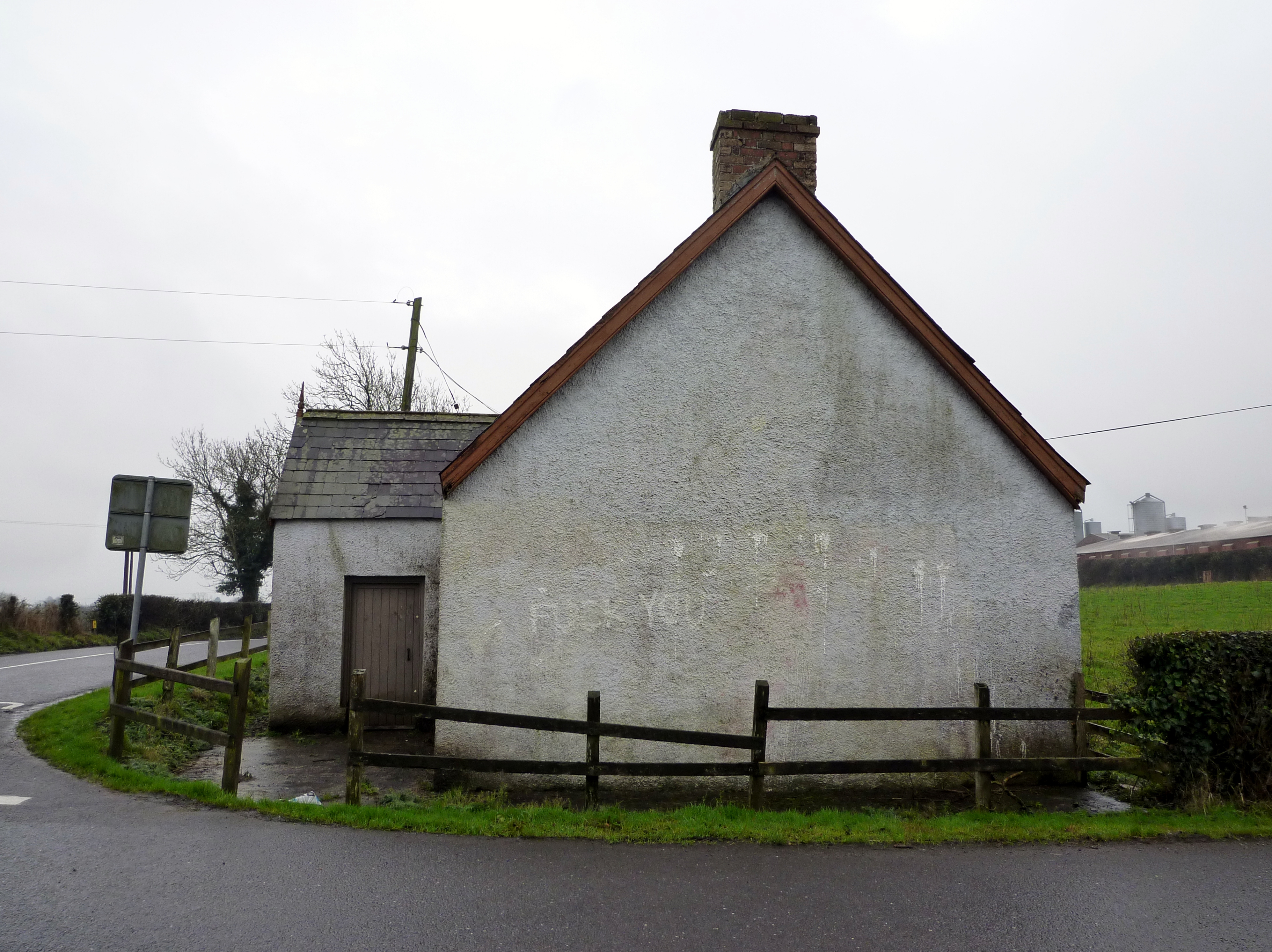
Driving past a small orange hall in a rural part of County Monaghan at Corraghbrack near Tydavnet on Saturday night the car headlights revealed two offensive words “F**K YOU” had been painted on the gable wall and came up very clearly in the car headlights. The hall is used infrequently and does not have any sign outside and I have been past it many times before. My initial reaction posted yesterday and now corrected here was that this could be described as a sectarian act, possibly in reaction to the flags row in the North. Going back to visit the scene in daylight hours, the offensive slogan was not as apparent, depending on what angle you looked at it. But the wall showed signs of previous acts of graffiti having been painted out. Damage was done to the windows and front door of the hall in 2005, when a nearby hall in Glaslough was also attacked. On that occasion the local parish priest in Donagh, Fr Sean Clerkin, spoke out strongly at Mass against the attack.

Hopefully action will be taken to remove the unwanted graffiti. Further enquiries have revealed that the paintwork (which at the time seemed fresh to me) is not recent and there are no slogans accompanying the crude message to suggest it is a political act. It seems it is not intended in any way as a sign to the people who own the property. As I stated previously, Tydavnet and other parts of Monaghan generally have very good relations between Catholics and Protestants. It is to be hoped that this unsightly work will be attended to in due course and that the good relations between all sides of the community will prevail.

IRISH HISTORY: ROBERT KEE RIP

Ireland: A History

Ireland: A History

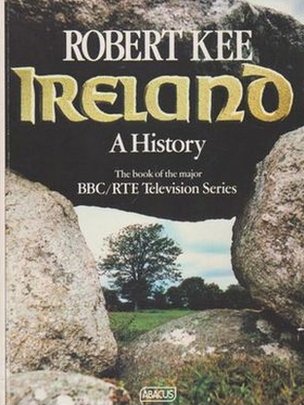
The death of writer, journalist and historian Robert Kee who died on Friday January 11th aged 93 is an opportune moment to look back not just at the television series he presented on Irish history, but on other similar series. First I acknowledge the assistance of a very useful article by Cathal Brennan in The Irish Story about how important events in Irish history such as the Easter Rising in 1916 have been covered by Irish television, starting in the 1960s when Telefís Éireann had opened.

1965 saw Telefís Éireann attempt their first history series entitled The Irish Battles. 1966 began with a new television series called The Course of Irish History edited by F.X. Martin and T.W. Moody. The series dealt with Irish history from prehistoric times up to the present and finished with a debate between the contributors involved” (Brennan).

F.X.Martin was an Augustinian priest who was Professor of Medieval History at UCD from 1962 to 1988. I remember seeing him occasionally in the corridors when I was a student at Earlsfort Terrace and Belfield. He was deeply involved in the campaign to preserve the Viking site at Wood Quay in Dublin. More details about him can be found in Charles Lysaght’s “Great Irish Lives: An Era in Obituaries” p.260. Certainly I remember the impact that the black-and-white televised series had. I only moved back to Dublin in 1967, with little or no knowledge of Irish history at the time, so I found the Martin/Moody book a very useful educational aid. T.W.Moody was a Quaker and was Professor of Modern History at Trinity College.

The eruption of the troubles in the North in 1969 and the introduction of censorship through Section 31 legislation meant a lack of any further series on history on RTÉ until the 1980s. However in 1969/70 I remember attending an hour-long programme about Northern Ireland recorded at the RTÉ studios at Donnybrook and presented by the late Liam Hourican, who was then Northern Editor for RTÉ News, based at Fanum House in Belfast.

Robert Kee’s thirteen-part series on Ireland: A Television History was broadcast in 1980/81 on RTÉ and BBC. It charted the history of the island from the time of Brian Boru up to the struggle for independence. It won a Jacob’s award for Kee, as the BBC obituary noted. Ruth Dudley Edwards has written an obituary for the Sunday Independent which sums up his achievements during a long and successful career.

In 1981 Thames Television produced a six-part documentary series The Troubles, which was shown on UTV. In more recent times there have been programmes on RTÉ such as Hidden History (2007) and in 2011 a five-part series presented by my former colleague in RTÉ News Belfast, Fergal Keane, entitled The Story of Ireland and broadcast on RTÉ and BBC. For those interested in pursuing the subject further, I notice that UCD is running an adult education course starting later this month on “Television and Irish History“. The tutor is David Ryan. I wonder what the tv historians will make of the current flags protest in Belfast and other parts of the North. Will the restriction placed on the flying of the union flag at Belfast City Hall in December become one of the most significant dates in Northern Ireland history since the signing of the Good Friday agreement?

TYRONE TRAGEDY

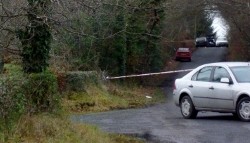
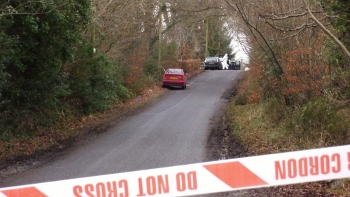
Police cordon at Aghindarragh Road

Police cordon at Aghindarragh Road

TYRONE has seen many tragedies over the years, including ones that have affected the GAA community, both directly and indirectly. I have reported on some in the past. The latest tragic death in the county took place in the countryside around Augher, in the parish of Clogher, close to the border with County Monaghan. As the crow flies, it is only a few miles to the scene of another community in mourning, the parish of Donagh, where the body of 19 year-old Jason McGovern (Knocknagrave, Tydavnet) was returned home in a candlelit vigil last night. The links between the two areas, cut off when the main cross-border road was blocked, remain close. Jason’s father Seamus comes from the parish of Clogher. The two deaths however are unconnected.

The PSNI say they have begun a murder enquiry following the death of a 60 year-old man whose body was found at Aghindarragh Road near Augher on Friday evening. The location is not far from the historic site known as St Patrick’s chair and well in Altdaven wood. An 18 year-old man was arrested and is continuing to help police with their enquiries. The man who died was Wishie (Aloysius) Hackett. He worked as a joiner and was a prominent member of St Macartan’s GAA Club in Augher. Clogher parish priest Canon Lawrence Dawson said the family were numb and could not explain what had happened. He described Mr Hackett as a wonderful community man who had done much for the area and for local (Gaelic) football. A statement from the GAA club said the family had appealed for privacy at this time of mourning. A one minute’s silence in memory of Mr Hackett was held before Tyrone’s Dr McKenna Cup match against Derry at Healy Park in Omagh. Sinn Féin MP Michelle Gildernew said she expressed her sympathies to all concerned especially family and friends who were sadly dealing with this news. She said her thoughts and prayers were with those affected by the death. Ulster Unionist councillor Allan Rainey said the man’s death had shocked and numbed the community. “They just can’t really take it in that something of this nature could happen,” he added. A forensic team spent most of Saturday carrying out investigations beside a house and the surrounding area was cordoned off for several hours.

House at Aghindarragh Road

House at Aghindarragh Road

UPDATE:  An 18 year-old man has been charged with the murder of Wishie Hackett. The teenager, who was detained on Friday, was charged after detectives were given until (tonight) Monday evening to charge or release him. He is due to appear before Omagh Magistrates’ Court on Tuesday. The PSNI say a 17-year-old youth arrested in connection with the incident on Sunday has been released, pending a report to the Public Prosecution Service. It is believed three of Mr Hackett’s children were out of the country when news of his death emerged. They are travelling home for his funeral which is due to take place at St Macartan’s Church (the Forth chapel) at Ballynagurragh near Augher on Wednesday.

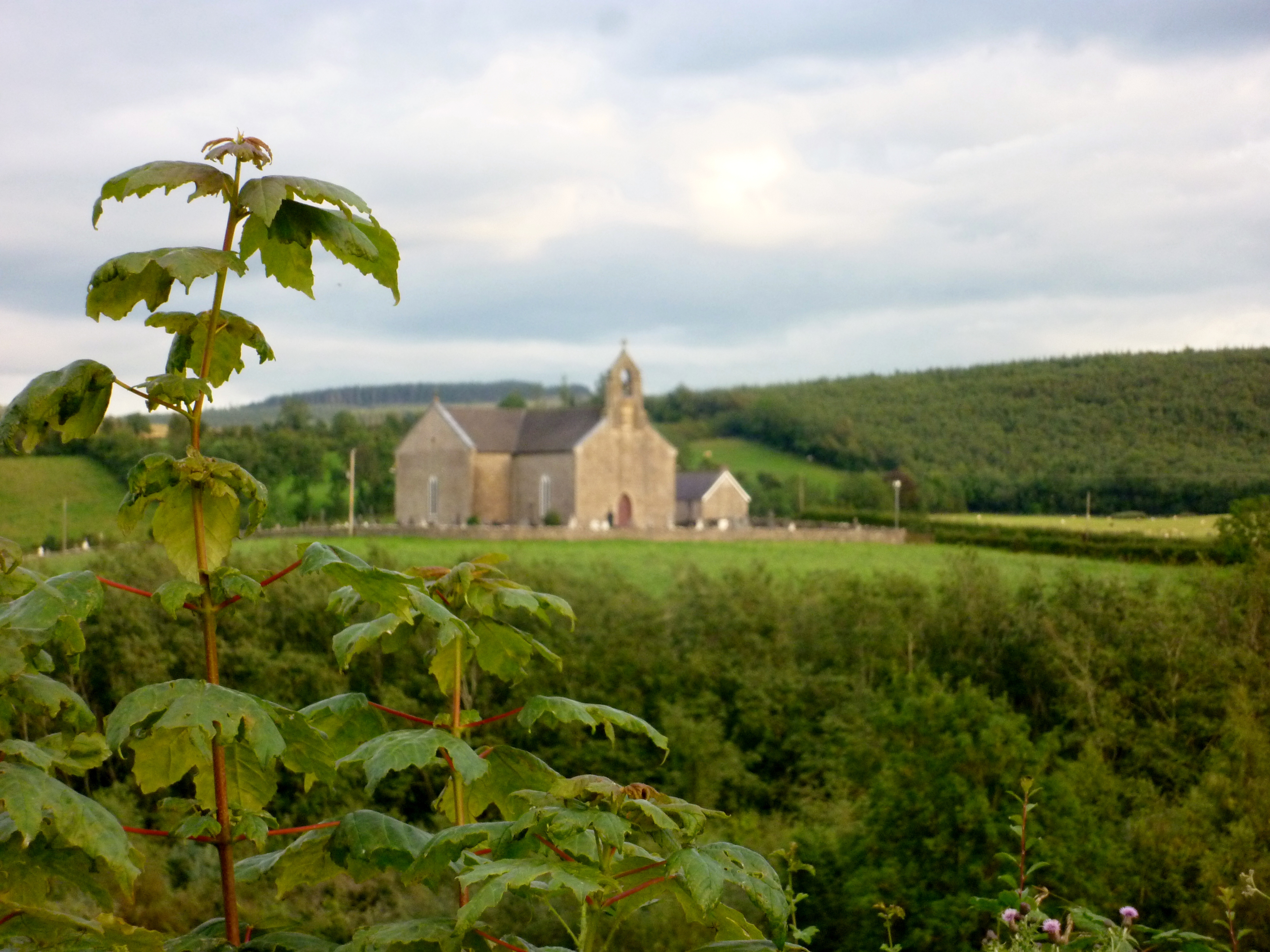
St MacCartan's church, Augher

St Macartan’s church, Augher

Photos: © Michael Fisher 2013

OMAGH COURT

My journey yesterday was on the road to OMAGH in County Tyrone. This morning I was there for the court sitting……

Omagh Magistrates' Court

Omagh Magistrates’ Court

Four men and a juvenile, all from Omagh, have appeared at the town’s magistrates’ court charged in connection with the death of Jason McGovern, a student from Tydavnet in County Monaghan. One of them was also charged with assaulting a friend of the teenager after a night out in Omagh last weekend. All faced a charge of unlawfully fighting causing an affray in the early hours of New Year’s Eve. Mr McGovern from Knocknagrave was attacked on two separate occasions. He was found dead at a friend’s house at Mullan village near Emyvale in County Monaghan on New Year’s Eve. Appearing at Omagh Magistrates Court were James O’Brien from Rylagh Road, Mark Donnelly from Greencastle Road, both 21, Aaron Davis, aged 19, from Beattie Villas and 18 year-old Aaron Bradley, from Waterworks Road in Omagh. Mr Bradley was also charged with assaulting a friend of Mr McGovern’s.  The juvenile cannot be named for legal reasons. An investigating officer said the PSNI were objecting to bail because there were a large number of witnesses and it would take a few weeks to speak to them all. The district judge agreed to bail subject to a number of conditions. Suitable addresses for the defendants would have to be found at least three miles outside Omagh and approved by the PSNI. If this condition is met, they would be released on their own bail of £500 and two sureties of £750. They were ordered not to enter Omagh, except for court appearances, to be tagged, and to report to police three times a week. They also had a curfew imposed by the district judge and they are not allowed to enter licensed premises or to contact witnesses in the case.

UPDATE:  A 21 year-old woman arrested in connection with the murder of Jason McGovern has been charged with perverting the course of justice and is due to appear at Omagh Magistrates Court on Tuesday 29th January.

FROM SLANE TO OMAGH

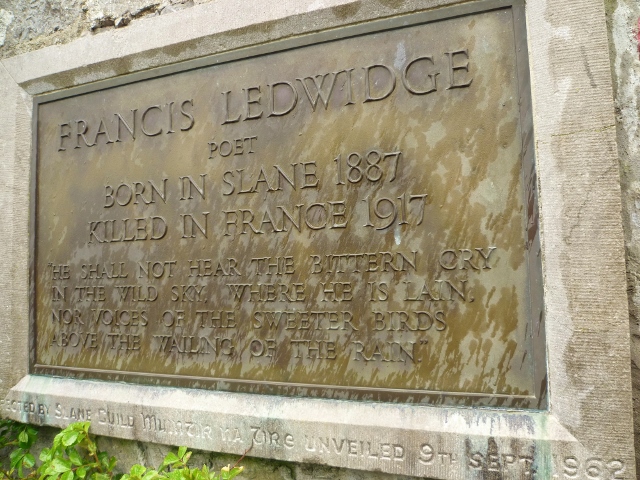
Plaque at Ledwidge Cottage

Plaque at Ledwidge Cottage

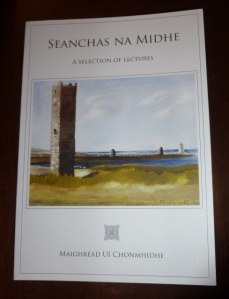
My journey this evening took me along the N2 heading Northwards from Dublin and past a sign indicating “Ledwidge Country” outside Slane in Co. Meath. It’s a good staring point as I mentioned it at the end of yesterday’s blog about Maev Conway-Piskorski. Her mother Margaret (Maighréad Uí Chonmhidhe) had given a lecture at the folk school in Bettystown in 1966 about the poet-soldier Francis Ledwidge. I quote from the book “Seanchas na Midhe” (eds. Ní Chonmhidhe Piskorska & Brück 2009):

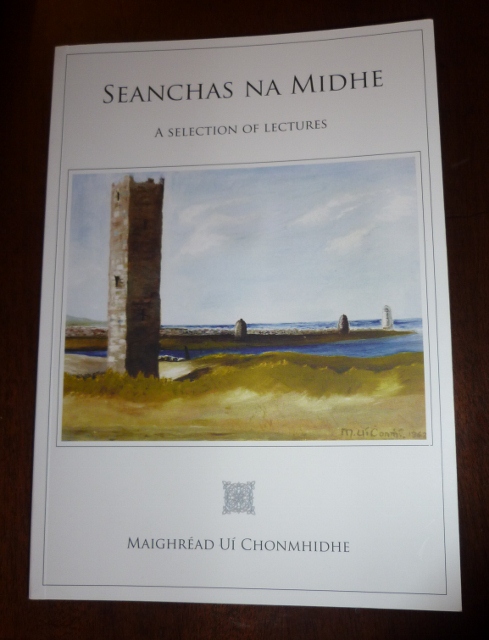
“Margaret Conway remembered meeting the poet when she was a young girl in Colga, when he visited her brothers and “fellow poets” at their home. Her painting of the Maiden Tower at Mornington, reproduced on the cover of this booklet, depicts a scene romantically associated with Francis Ledwidge and with Ellie, the young woman who inspired many of his poems” 

Meath Lore

Meath Lore

Ledwidge was born in Slane in 1888 and after joining the Volunteers in 1913 enlisted in the British Army the following year in the Royal Inniskilling Fusiliers. He was killed at the battle of Ypres (Ieper) in Flanders in July 1917.

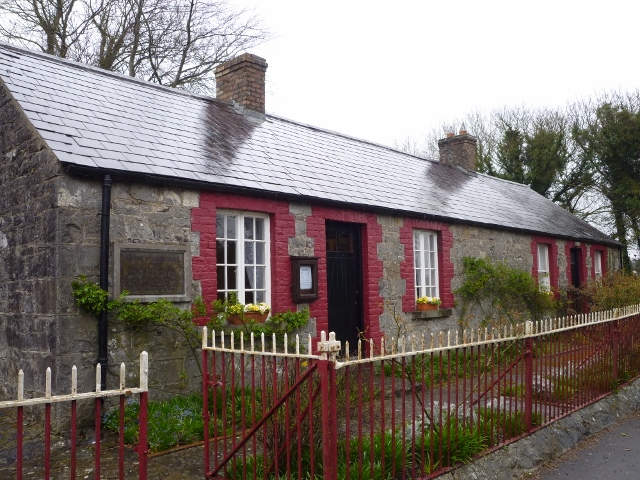
In 1982 a museum was opened by the Omagh writer Benedict Kiely in the cottage where Ledwidge was born. There is a plaque in his memory attached to the front wall of the cottage. It states that it was erected by the Slane guild of Muintir na Tíre on September 9th 1962. A copy of the plaque is set in stone at the approach to the bridge over the River Boyne at Slane.

Ledwidge Cottage & Museum

Ledwidge Cottage & Museum

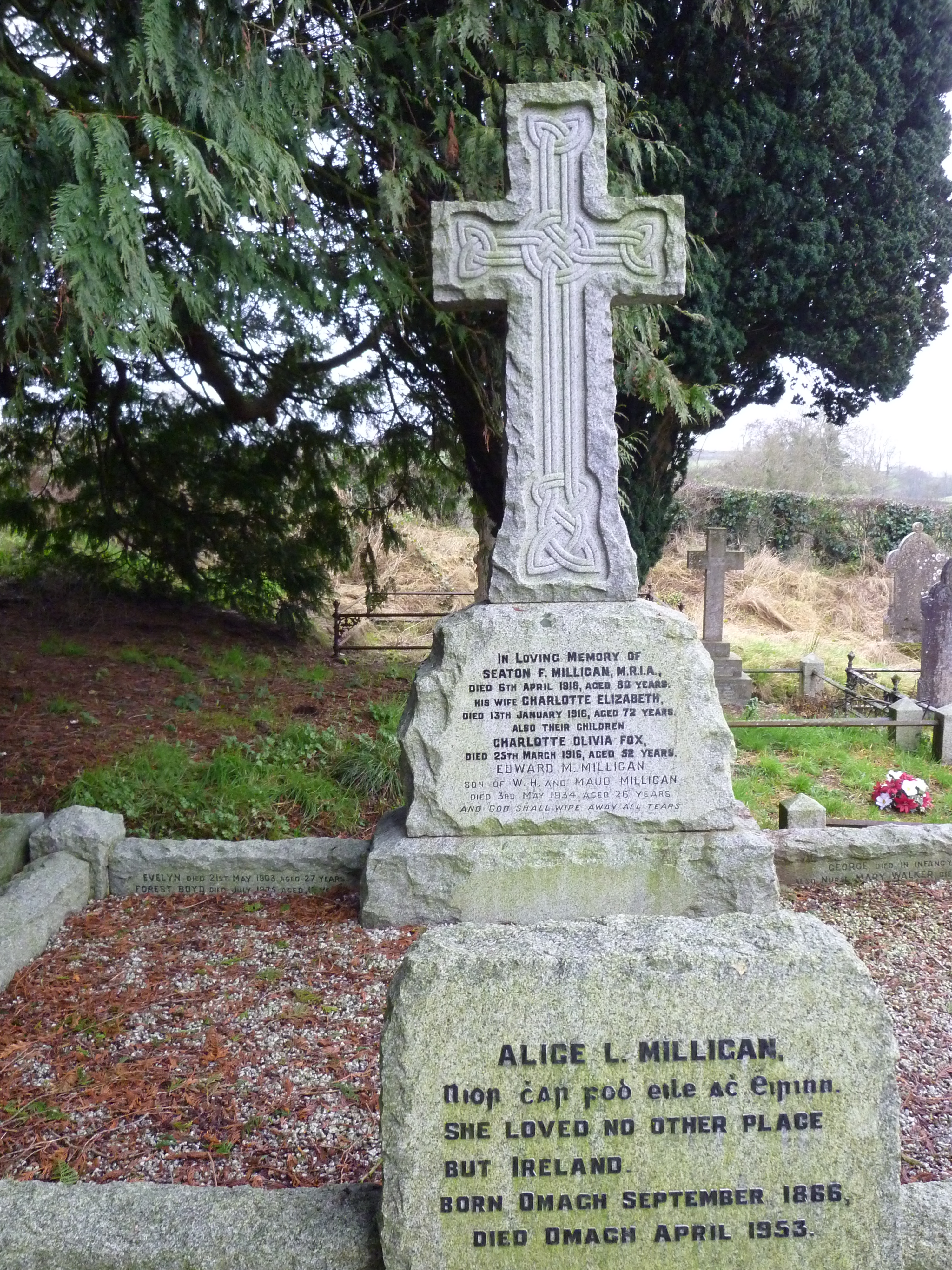
Continuing past Slane I stopped in County Louth close to the county boundary with Monaghan, where the province of Ulster begins. I watched another Tyrone writer and journalist Martina Devlin being interviewed on the RTÉ Nationwide programme about her home town of Omagh. Talking about the education she received at Loreto primary school, she mentioned the influence of the local poet, novelist and writer, Alice Milligan, whose background is very interesting. From a Protestant family and educated at Methodist College, Belfast, she went on to become an Irish nationalist and a leading figure in the Irish literary revival, who mixed with people like Yeats, Casement and James Connolly. She edited a magazine produced in Belfast at the end of the 19thC, Shan Van Vocht and was an organiser for the Gaelic League. Born at Gortmore, outside Omagh in September 1866, she died in April 1953 and is buried in the Church of Ireland cemetery at Drumragh.

Grave of Alice Milligan

Grave of Alice Milligan

DJ O'Donoghue & George Sigersondiscussing memorial

DJ O’Donoghue & George Sigerson
discussing memorial

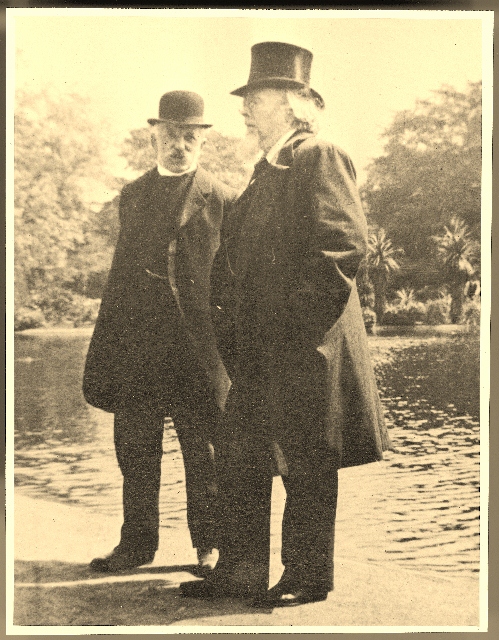
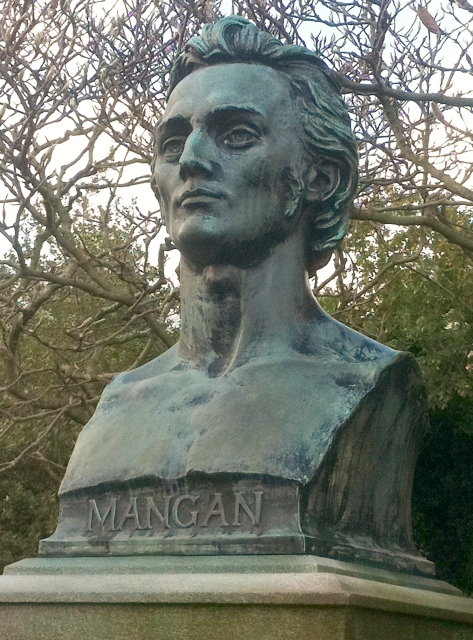
While researching William Carleton in the UCD Archive I found a number of letters from Alice Milligan then living at University Road Belfast (near Queen’s University) written to the biographer DJ O’Donoghue (librarian at University College). One of the letters enclosed five poems (LA15/1149). She also agrees to contribute to the Mangan memorial fund, a project which O’Donoghue was working on with George Sigerson to provide a memorial to the poet at St Stephen’s Green. The photo of the two men chatting about the Mangan project is copyright © IVRLA  (Irish Virtual Research Library and Archive)  and is reproduced with the kind permission of Professor Helen Solterer  from an original in  UCD Library Special Collections. The bust of James Clarence Mangan can be seen if you are walking through St Stephen’s Green not far from Newman House and near the middle of the park.

James Clarence Mangan

James Clarence Mangan

UPDATE: Thanks to Charles Fitzgerald for having read the above and sending in the following quotation from a Ledwidge poem (Ceol Sidhe):

“And many a little whispering thing
Is calling the Shee.
The dewy bells of evening ring,
And all is melody”.

The poem and other works by Ledwidge can be found here.

TV EXECUTIVE AND PLACENAME SCHOLAR

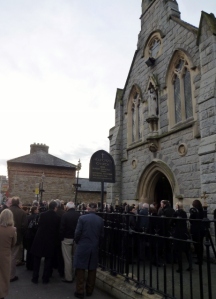
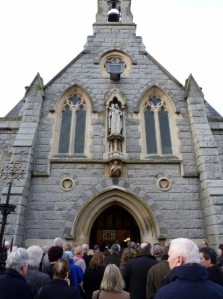
Funeral of Maedhbh Ní Chonmhídhe-Piskorska

Funeral of Maedhbh Ní Chonmhídhe-Piskorska

Funeral of Maedhbh Ní Chonmhídhe-Piskorska

Funeral of Maedhbh Ní Chonmhídhe-Piskorska

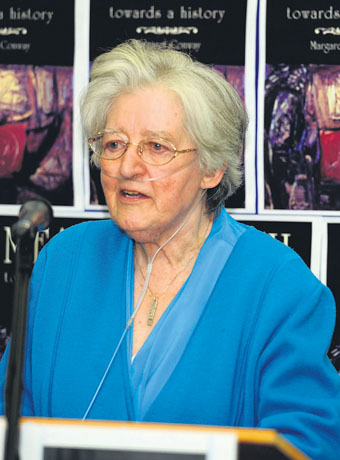
Many will fondly remember the television series “Wanderly Wagon” on RTÉ (1967-82). They may not however recall who the executive in charge of childrens’ television was. Maedhbh Ní Chonmhídhe-Piskorska (Maeve Conway-Piskorski) died at her home in Dublin on New Year’s Day after a short illness, aged 83. After becoming head of childrens’ programming in RTÉ she was appointed head of the education department in 1969. As the Irish Times reports, she came from Ballivor in County Meath and received her secondary education at the St Louis Convent, Carrickmacross, Co. Monaghan. She studied at UCD and received an MA in French literature, then joined the Irish Placenames Commission (An Coimisiún Logainmeacha) as a temporary assistant in 1952 along with Ciarán Mac Mathúna, who was also to join Radio Éireann later. After two years in the Commission, she started as a producer in Radio Éireann in 1954. Maeve retired from RTÉ nearly 22 years ago in 1991. She took part in the group Age and Opportunity and belonged to Parlaimint na mBan (womens’ Parliament), which sought to gain recognition for women in the Irish language and cultural movement. She also published two books of writings – including Seanchas na Midhe (Meath lore & history) – by her mother, the teacher and archaeologist Maighréad Ní Chonmhidhe (Margaret Conway, founding editor of Ríocht na Midhe). Copies of the “Seanchas” were brought to Holy Cross Church in Dundrum where Maedhbh’s funeral was held this morning. The book contains a selection of lectures given by Margaret to groups such as the Irish Countrywomens’ Association and Macra na Tuaithe on subjects such as Oliver Goldsmith and the Slane poet-soldier Francis Ledwidge.

Meath Lore

Meath Lore

Former RTÉ editor of religious programmes Fr Dermod McCarthy was a concelebrant. Many retired RTÉ staff were among the mourners, including Mike Burns and Padraig O Gaora, as well as former Directors General George Waters, Bob Collins and Cathal Goan. Pádhraic Ó Ciardha represented TG4. Former NUJ Irish Secretary Jim Eadie and Press Ombudsman John Horgan were also there to say farewell to a person who in different ways made a big contribution to Irish culture both on and off the box. Sympathy goes to her husband Ryszard and son Stefan and the family circle. Ar dheis Dé go raibh a hanam dílis. Maedhbh was buried in her native Ballivor. Her obituary appeared in the Meath Chronicle with a picture of her speaking at the launch of the writings of her mother, “Meath: Towards a History”.

Meadhbh Ní Chonmhídhe-Piskorska

Meadhbh Ní Chonmhídhe-Piskorska

THE FLAGGY SHORE

Flaggy Shore

Flaggy Shore

A New Year trip to Kinvara County Galway gave me the opportunity to explore some of the beautiful scenery around the Burren in County Clare. Our host brought us for a walk along the Flaggy Shore at New Quay. The final section of the loop gave us a good view of the limestone flag stones along the shoreline. Across the bay in the distance we could see Galway, Salthill and the Barna Road leading towards Spiddal. In the distance you could spot the martello tower at Finnevarra. But on this occasion we did not have time to visit the tower. After parking the car at the beach, walking westwards, we took a left hand turn and started a gently uphill ascent past Mount Vernon.

Mount Vernon

Mount Vernon

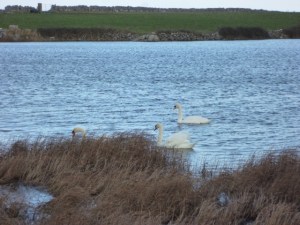
Checking the origin of the property on my return home I discovered the building was once the summer home of Lady Gregory of Coole Park and it has a place in Irish literary history. Among those entertained there were WB Yeats, AE (George Russell), Synge, O’Casey and George Bernard Shaw. It is now part of Hidden Ireland’s Historic Houses, offering upmarket accommodation and dining. There is a more recent literary connection. This stretch of shoreline was mentioned by Nobel Laureate Seamus Heaney in his poem Postscript (1996). He refers to a flock of swans at “a slate-grey lake” and  sure enough when you walk over the hill and along the other side you come to Lough Murree. There as the path continues along the lough shore, a group of swans was busy ducking and diving at one end of the lake.

Lough Murree

Lough Murree

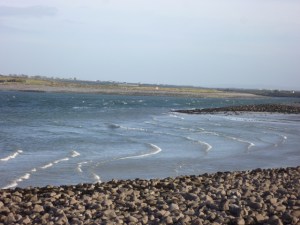
This is certainly a scenic spot but underneath the beauty there is also a story of a tragedy over 40 years ago that claimed the lives of nine schooldchildren. Looking at the short distance across the water from the harbour at New Quay to Aughinish Island it is hard to imagine so many casualties occurred here. But a more close look at the tide will reveal just how dangerous a spot this is, with currents from different directions meeting in the middle and clashing with each other. Here on June 29th 1969 nine schoolchildren lost their lives when a boat on its maiden voyage overturned in the choppy waters. The disaster was covered by Kerry photojournalist Padraig Kennelly and pictures of the search operation can be found in his archive.

Shoreline near New Quay

Shoreline near New Quay