AIR CORPS TWIN PILOTS

The two Air Corps Lieutenant Mohans with their grandmother Teresa (centre), parents Brian and Geraldine and brother Barry (left) and sister Aoife Swarbrick (right)  at the ceremony in Baldonnel. Photo courtesy of Brian Mohan

The two Air Corps Lieutenant Mohans with their grandmother Teresa (centre), parents Brian and Geraldine and brother Barry (left) and sister Aoife Swarbrick (right) at the ceremony in Baldonnel. Photo courtesy of Brian Mohan

HIGH FLYING MOHAN TWINS CELEBRATE AIR CORPS COMMISSIONS  

Northern Standard  Carrickmacross News Thursday 16th April

It was a proud moment for grandmother Teresa Mohan from Woodlands in Carrickmacross as she saw her twin grandson Frankie Mohan receive his Air Corps pilot’s wings and his commission as an army Lieutenant. There was a double reason for celebration at the Air Corps headquarters at Baldonnel in County Dublin. Frankie was joining his twin brother Eugene, who had been commissioned in February last year, and is already serving in the Air Corps. The two Lieutenants were accompanied by their parents, Garda Inspector Brian Mohan (based in Dundalk) and Geraldine, who is originally from Essexford, Killany.

Brian’s brother Niall Mohan, his wife Lorraine and son Barry, all from Carrickmacross, were at the ceremony, along with his sister Sadie Maloney, now living in Ennis. His brother-in-law Francie Thornton and his wife Anne, also from Carrickmacross, were there along with other family and friends. They included the twins’ sister Aoife, who is married to Dave Swarbrick, an airline captain based in Dubai, and their five months old son Harry.

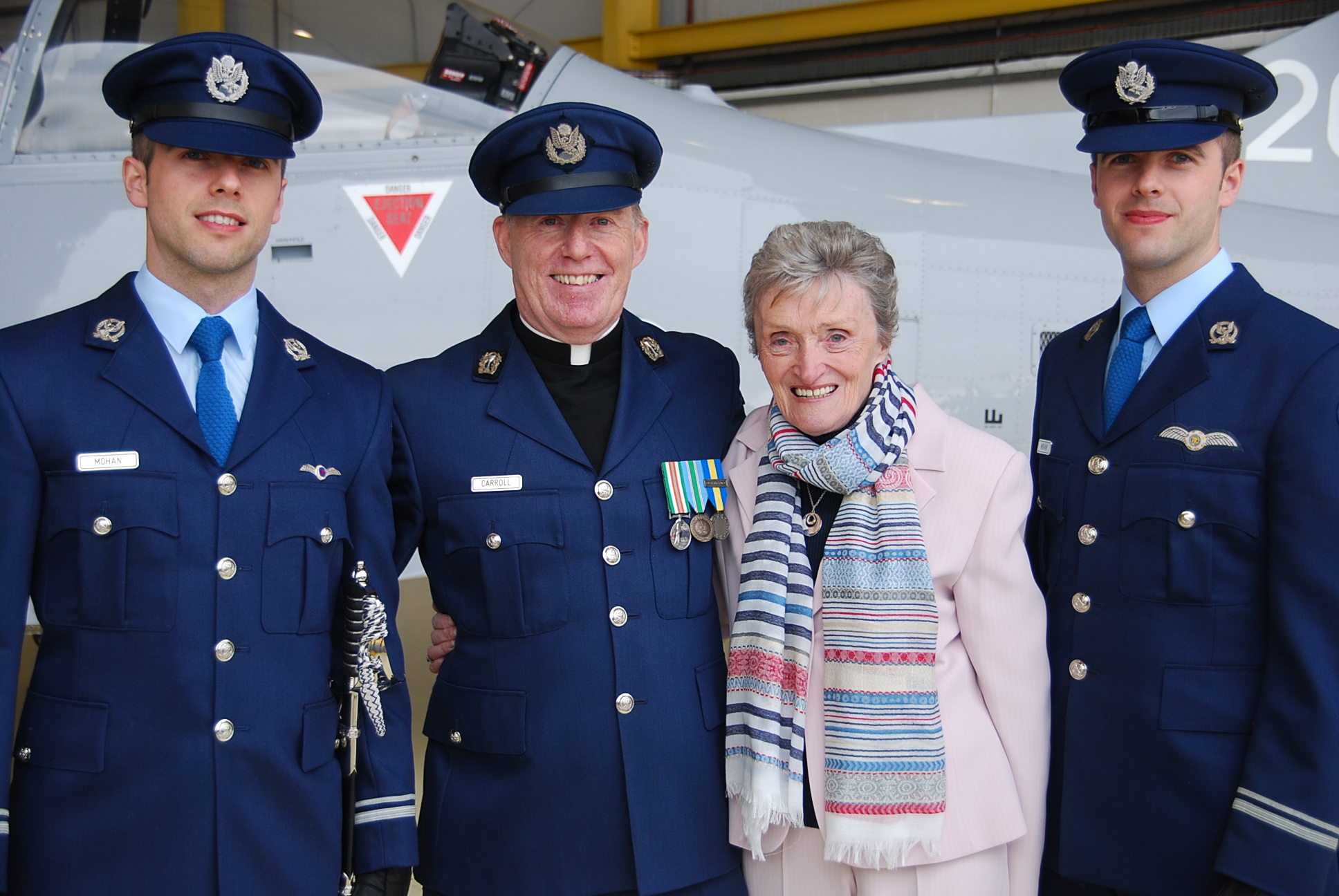
Lieutenants Frankie and Eugene Mohan with Air Corps Chaplain Fr Jerry Carroll and their grandmother Teresa Mohan from Carrickmacross.  Photo courtesy of Brian Mohan

Lieutenants Frankie and Eugene Mohan with Air Corps Chaplain Fr Jerry Carroll and their grandmother Teresa Mohan from Carrickmacross. Photo courtesy of Brian Mohan

The ceremony at Baldonnel began with Mass celebrated by the Air Corps chaplain, Fr Jerry Carroll from Carrickmacross. He is a former pupil of St Macartan’s College, Monaghan, which he attended along with Brian Mohan. Fr Jerry anointed the hands of the new pilots, who were presented with their wings by the General Officer Commanding the Air Corps, Brigadier General Paul Fry. In the presence of the Defence Forces Chief of Staff, Lieutenant General Conor O’Boyle, they were then presented by the Minister for Defence Simon Coveney T.D. with their presidential commissions. The other four class members were

Mark Doyle, David Finnegan, Kevin Fitzgerald and James Northover. During the Wings ceremony, Brigadier General Fry congratulated the new pilots on their achievements and thanked their families and friends for supporting them throughout their cadetship.

Frankie Mohan was one of five in the 31st Regular Air Corps Cadet Class and began his cadetship in September 2012. The first ten months was the most challenging, as it was spent on military socialisation in the Curragh. It involved rigorous physical training, military drills, deportment, field craft and weapons handling.

Frankie went to Baldonnel to begin his flight training in July 2013. This lasted for eight months and involved instruction on fifteen diverse aviation related subjects, ranging from principles of flight to human performance and limitations. The class trained internally in the Flight Training School and externally with the Irish Aviation Authority, qualifying them to EASA Airline Transport Pilots License standard.

Eugene Mohan was one of three members of the 30th Air Corps Cadet Class and began his cadetship in September 2011. He went through the same arduous training and has recently completed his training as a helicopter pilot. Their parents Brian and Geraldine extended a huge congratulations to the twins, who they said had worked extremely hard to achieve their dreams. Eugene, who studied engineering at DIT Bolton Street had applied to join the Cadets on five occasions and never gave up hope that one day he would be an Air Corps pilot. Frankie, an engineering graduate of TCD, gave up a lucrative commercial diving engineer’s job to realise his dream of becoming a pilot. Now the Mohan twins are flying high together, in the service of the state.

NINE DART FEAT IN MONAGHAN

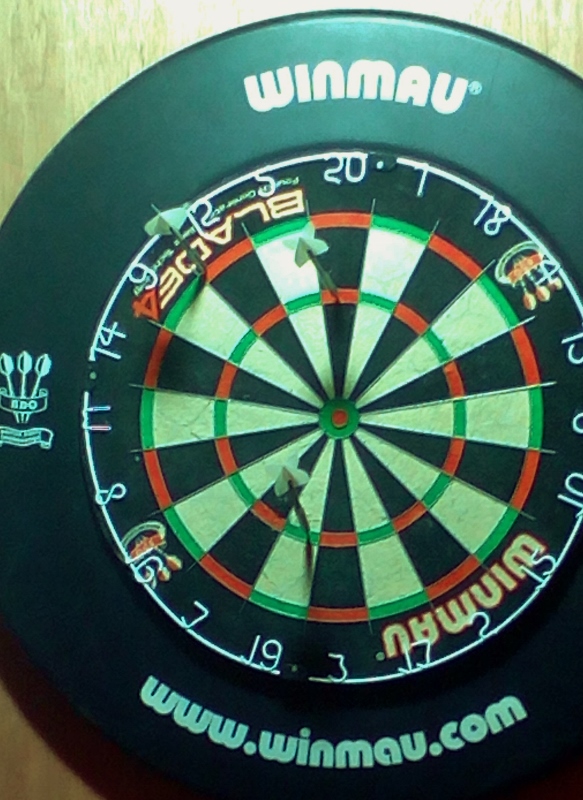
Hughie Martin, Inniskeen, after his perfect nine in the darts competition at Aughnamullen Social Centre, Co. Monaghan

Hughie Martin, Inniskeen, after his perfect nine in the darts competition at Aughnamullen Social Centre, Co. Monaghan

HUGHIE ON TARGET IN DARTS COMPETITION
Inniskeen’s Hughie Martin made history in county Monaghan when he achieved a dart player’s dream last Saturday 18th April. He hit the perfect nine darts in a competition at Aughnamullen social centre. Hughie is the current Monaghan county champion and he says he will never forget this night. 

A nine-dart finish is a perfect leg in the game of darts, using only nine darts, the fewest possible, to checkout from 501. It is notoriously difficult to achieve, even by the game’s top professionals. It is considered to be the highest single-game achievement in the sport, similar to a maximum 147 break in snooker or a 300-point game in bowling.

There are 3,944 possible paths for a nine-dart finish playing a 501 double-out dart leg. A single game (known as a leg) of darts requires a player to score 501 points, ending with either the bullseye or a double. Each shot consists of exactly three darts and 60 is the maximum that can be scored with any one dart. Thus 180 is the maximum score of a shot, and nine throws are the minimum necessary to win.

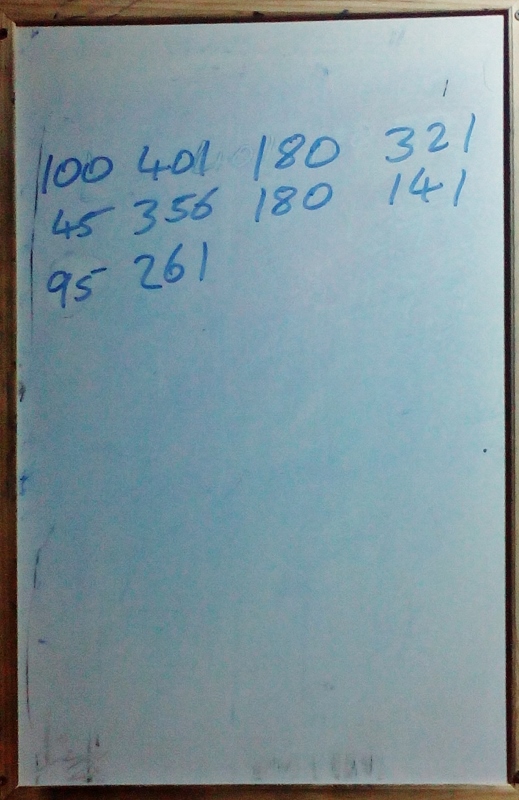
Scoreboard at Aughnamullen Social Centre confirming the perfect nine

Scoreboard at Aughnamullen Social Centre confirming the perfect nine

Although other combinations are possible, the traditional nine-dart finish requires a score of 60 (treble 20) with each of the first six throws, that is, with the first two shots of three. This leaves 141 to score on the final shot (of three darts), known as the outshot. This outshot is traditionally performed in one of three ways:

treble 20 (60), treble 19 (57) and double 12 (24)

(how Hughie finished: see photo)

treble 20 (60), treble 15 (45) and double 18 (36)
Another way is to score 167 with each set of three darts, scoring a perfect 501 total, in the following way:
treble 20 (60), treble 19 (57) and bullseye (50)

This eliminates the chance of any dart being deflected by an already thrown dart into the wrong scoring area by throwing each dart at a different location on the board. It is only usually seen in exhibition matches, as in tournaments, players are inclined to aim for the triple 20, only switching to the triple 19 for a cover shot.

Arguably the most difficult nine dart finish would be 180 (3xT20), 171 (3xT19), and 150 (3xBULL) – owing to the difficulty of getting all three darts in the bullseye: it is the smallest double on the board. A nine dart finish is also attainable in games which require a double to commence scoring. In such games, throwing for double 20 first can lead to a maximum score of 160 with the first throw, leaving the thrower commonly requiring 180 then 161 (T20,T17,BULL) in their remaining six darts, though other outcomes are possible. It is worth noting that in these games, only throwing for double 20, double 17, or bullseye to start the leg can result in a nine dart finish.

Perfect nine dart finish by Hughie Martin, Inniskeen: Monaghan's first such feat

Perfect nine dart finish by Hughie Martin, Inniskeen: Monaghan’s first such feat

A nine-dart finish, however, does not guarantee success in a game. In December 2014 in the third round of the 2015 PDC World Darts Championship, Adrian Lewis hit his second World Championship nine-dart finish and his third overall. He lost the match 4-3 to Raymond van Barneveld. On Saturday night in Aughnamullen, Hughie was eventually beaten 5-3 in the semi-final by overall winner Graham Unwin.

CALLS FOR UNDER-GROUND INTERCONNECTOR

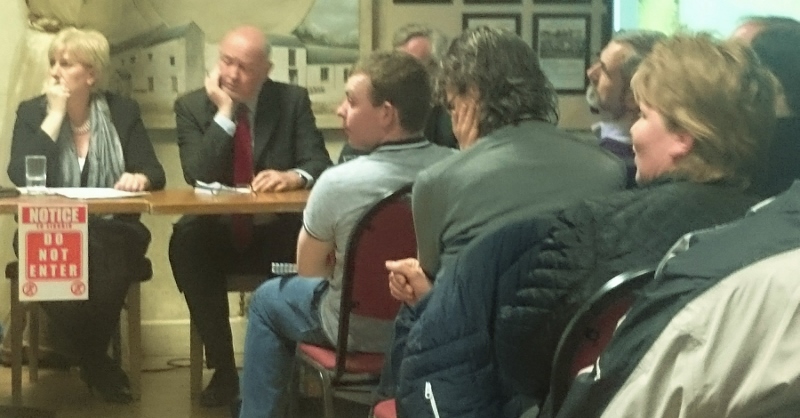
Heather Humphreys T.D. and Caoimhghin Ó Caolain T.D. at the anti-pylons meeting in Aughnamullen Social Centre Photo © Michael Fisher

Heather Humphreys T.D. and Caoimhghin Ó Caolain T.D. at the anti-pylons meeting in Aughnamullen Social Centre Photo © Michael Fisher

PACKED MEETING TELLS EIRGRID: MAKE THE INTERCONNECTOR UNDERGROUND

Michael Fisher  Northern Standard Thursday 23rd April p.16

It’s a controversial issue and feelings were running high at times. After nearly three hours a clear message emerged from the crowded hall in Aughnamullen Social Centre in Lough Egish on Monday night. The verdict of the meeting was that EirGrid’s proposed second North/South electricity interconnector must be put underground. Over 300 people attended the meeting organised by the County Monaghan anti-pylon committee. After hearing from four of the five local TDs and then a lively question and answer session, a motion was put forward by Fianna Fáil Councillor Seamus Coyle. It was seconded by Fine Gael Councillor Hughie McElvaney.

The motion instructs TDs to place a Dáil motion asking the government to instruct EirGrid to cease all work on the proposed North/South link and to direct Eirgrid to underground fully the North/South interconnector as a high-voltage direct current (HVDC-VSC) cabling along roads, as in the company’s proposal for a section of the GridWest link. Asked by a member of the large crowd if she supported the motion, local Fine Gael T.D. and Minister for the Arts, Heritage and Gaeltacht, Heather Humphreys said she would take time to read the motion before she agreed to it.
Seán Conlan T.D.  Photo:  © Michael Fisher

Seán Conlan T.D. Photo: © Michael Fisher

Deputy Sean Conlan said he would be bringing the motion to a meeting of the Fine Gael Parliamentary Party at Leinster House due to be held last night (Wednesday). Sinn Féin TD Caoimhghin Ó Caolain and Deputy Brendan Smith of Fianna Fáil also contributed to the meeting and there was an apology from Joe O’Reilly T.D. and Matt Carthy MEP.

COUNCILLORS PRESENT

Thirteen of the eighteen Monaghan Councillors were present, including all six from the Carrickmacross-Castleblayney Municipal District. An apology was received from Cllr Cathy Bennett. Concerns raised during the meeting that lasted nearly three hours ranged from the potential health impact of the overhead line, the devaluation of people’s land and property if the proposed project goes ahead and the environmental impact and unsightliness of the pylons. Many speakers claimed that the people of Monaghan, Cavan and Meath were being treated as second class citizens compared to those living in areas that would be affected by EirGrid’s two other major supply projects, GridWest and GridLink. They said communities in County Monaghan had not been consulted by EirGrid about a possible underground option for the 140km line, which the company has estimated would be five times more expensive than the overhead plans.

The meeting was opened by the Chairman of the Anti-Pylon Committee, Donal McDaid. He said it was probably the most important meeting ever to be held in this community in recent times. It might well decide for the next 100 or 200 years whether they would have a blight on the community for generations to come. He said if the proposed planning application by EirGrid ended up in the courts then the cost to everyone would be twice as much.

A planning application for the proposed interconnector route from Meath to Tyrone will shortly be put before An Bord Pleanála by EirGrid. Nigel Hillis set out the timetable of developments in the project since their last public meeting in January last year. He said if the planning application was lodged in May, with a seven weeks period for formal consultation, it was possible there would be an oral hearing held in September or October.

Each of the TDs present was given an opportunity to comment on the situation. Seán Conlan T.D. said land owners had made it clear they wanted the link put underground. Minister for the Arts, Heritage and the Gaeltacht Heather Humphreys T.D. told those present she supported them, but they must understand that she was limited as a Minister as to what she could do. Responding to a call by her party colleague Seán Conlan that she should veto at the Cabinet table any EirGrid decision on an overhead route for the interconnector, she said there was a misconception about her role in Cabinet and emphasized that she did not have any such veto. But if the issue was raised at Cabinet, then she would be making her views known.

The Minister said she had already raised local concerns with the Taoiseach, the Energy Minister Alex White T.D. and within the Fine Gael Parliamentary Party. “All I want is fair play and equal treatment for the people of this area”, she said. She repeated what EirGrid had said, that the proposed interconnector was a strategic and critical addition to the grid, allowing the operators on both sides of the border to operate a single market for electricity. The power requirements for the West and South-East of the country were different, she said. The Minister said she was in attendance to listen to the concerns of local people.

Sinn Féin T.D. Caoimhghín Ó Caolain told the meeting there had been a persistent refusal by EirGrid to engage properly on the proposed route. It would take the resolve of the local people and the support of political voices to change any decision. He would work with the committee and its supporters in passionate opposition to what was proposed.

Fianna Fáil T.D. Brendan Smith said the South East and West of the country were being treated differently from the North-East. The people of Cavan/Monaghan were not being offered the same treatment in the GridWest and GridLink options, which allowed for possible underground power lines. He would continue to lobby to have the interconnector put underground and would be conveying the concerns expressed at Tuesday’s meeting of the Joint Oireachtas Committee on Transport and Communications.

Terry Lynch from Ardragh, Corduff, whose family farm would be affected by one of the proposed pylons, claimed that they were being treated a second class citizens. He asked the speakers at the top table: “What are you going to do about it?” He said 400kV cables were being undergrounded all around Europe, across London, Madrid and even China and wondered why it could not be done in Ireland. “What kind of state are we in?”, he asked.

Naoise Gordon from Annyalla who lives adjacent to the proposed line asked Minister Heather Humphreys why the government was not supporting a clean and affordable underground option for the interconnector. Jim McNally, also from Annyalla, pointed out the effect it would have on the small farm homesteads in the area, many of them occupied by elderly residents.

The IFA Chairman in County Monaghan Brian Treanor told the meeting the Association’s position over the years had been very consistent since the project was first mooted in 2008. They would represent any farm families when EirGrid presented all its options, properly costed, to An Bord Pleanála, and the planning authorities would make the decision, which he hoped would be the right one. They needed to have all options on the table, he said. Mr Treanor said the farmers’ group was not anti-progress and they wanted to see development. He wondered if a smaller 250kV project was required, and whether there was a need for a high voltage interconnector to the North. There was a huge responsibility on EirGrid, he said, to do the least damage to the farm environment and to farm families. In response to criticism from the floor, he said the IFA had always demanded that EirGrid looked at all the options, but the IFA were not technicians or experts. They were demanding that best practice be operated.

The chair of the meeting Alan McAdam pointed out that over 90% of farmers on the proposed route were IFA members and they were against having pylons on their land. Patrick Lynch from Corduff asked who would want to buy any property where a pylon was situated: it would be left valueless. He claimed elected representatives had been shirking their responsibility.

In his closing remarks the Anti-Pylon Committee Chairman Donal McDaid said it was possible to get the government to change policy, as had been done when pressure was put on former Minister Pat Rabbitte T.D. over Irish Water. He re-iterated that people in Monaghan were being treated as second-class citizens. It was the duty of the Oireachtas to protect the Constitution and to ensure that all people were treated equally, he said. It was the duty of government to see to it that people in this community were not treated as second-class citizens. They wanted answers and an assurance that the government was prepared to protect the Constitution. We do not want to stop progress, but we do want justice, he concluded.

At the end of the meeting all present stood and observed one minute’s silence in memory of the anti-pylons campaigner, the late Councillor Owen Bannigan from Loughmorne, Castleblayney, who was described as ‘a giant of a man’. A vote of sympathy was passed to the local Fine Gael organization and to Mr Bannigan’s family. His son Councillor Eugene Bannigan was among those present.

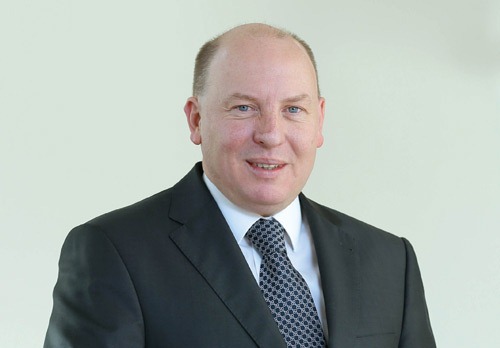
EirGrid CEO Fintan Slye  Photo: www.agendani.com

EirGrid CEO Fintan Slye Photo: http://www.agendani.com

EIRGRID CHIEF’S STATEMENT TO OIRECAHTAS COMMITTEE 

On Tuesday, EirGrid’s Chief Executive Fintan Slye gave evidence to the Oireachtas Joint Committee on Transport and Communications in Dublin. Mr Slye was accompanied by Rosemary Steen, director of public affairs, John Fitzgerald, director of grid development and Aidan Geoghegan, EirGrid’s project manager on the North-South interconnector.

Fintan Slye outlined the history of the project thus far. He said that last month the company published a draft strategy for the development of Ireland’s transmission grid and was now seeking public feedback. It was shaped by three key pillars, namely open engagement with communities, making the most of new technologies and a commitment to make the existing grid work harder before building new transmission infrastructure. The strategic review included an independent report from Indecon which showed that investment in the electricity grid would directly benefit Ireland’s economy and could help to reduce energy costs. A modern transmission grid, he said, would put Ireland in a strong position to continue to attract foreign investment and support new and emerging opportunities in the energy sector. This approach would also support Ireland’s current policy objectives, including the government’s Action Plan for Jobs and the IDA’s regional development strategy.

He said the review showed there remained a clear need for the North-South interconnector project and that a 400 kV overhead line remained the most appropriate solution, linking a substation in Woodland, County Meath, with a new substation in Turleenan, County Tyrone. It would provide a second high capacity transmission line between the Republic and Northern Ireland. The project would more than double the power transfer capacity between North and South, thereby improving the efficiency of the all-island electricity market. It would enhance the security of the electricity supply throughout the island of Ireland, which Mr Slye said was essential for economic growth, the creation of jobs and improving the standard of living and quality of life for all. It would also enable more renewable energy supplies to be connected to the network.

Mr Slye said the interconnector was needed now, as a cross-border bottleneck had developed on the all-island electricity system, which was having serious financial consequences. Last year the Economic and Social Research Institute reported that the second interconnector would remove the bottleneck and reduce electricity costs by €30 million per year. The proposed scheme had been the subject of public scrutiny and debate for some time, with the focus on whether it could be put underground.

Several independent reports on the issue have been published. The government-appointed independent panel, headed by Mrs. Justice Catherine McGuinness, acknowledged that the evaluation of undergrounding of the North-South interconnector was compatible with the methodologies being employed on the Grid West and Grid Link projects. Two themes emerge from all the reports, the most prominent of which was the finding that undergrounding the project would be more expensive. The international expert commission’s report concluded that an underground solution would be three times more expensive than an overhead option.  eirgridLogo

Mr Slye said that EirGrid’s own estimate was that an underground system for the North-South route would cost in excess of €500 million more than the overhead option. As a state-owned company the mission of which was to develop, maintain and operate a secure, economical and efficient transmission system, this was an additional cost EirGrid could not pass on to consumers. It was an additional cost that would not be acceptable to the Commission for Energy Regulation.

Whilst undergrounding was the only technically feasible option available for the East-West interconnector, the same could not be said for the North-South interconnector project. There were technical options to be considered and they had been, Mr Slye told the Committee.

EirGrid has recently republished its proposed line route that will form the basis of a planning application in the coming weeks to An Bord Pleanála. The company had been liaising with the board on the application for some months and had been doing so because eighteen months ago the European Commission designated the interconnector a project of common interest. This meant that the project was subject to a new EU regulation for trans-European energy infrastructure that was designed to facilitate a more efficient permit granting process. An Bord Pleanála was designated as the competent authority for managing the PCI process in Ireland and, in accordance with the EU regulation, EirGrid submitted a draft application file to it for review. Last month we submitted additional information to the Board which it is now reviewing, he said. Once it is satisfied with the draft application, it will draw up a schedule for formally submitting the planning application and the company expects this to happen very soon.

Mr Slye said open engagement with communities was a key pillar of the draft strategy. During the course of the project the company had endeavoured to meet every landowner affected by the development and had had productive discussions with many. Others have chosen not to deal with EirGrid directly, appointing intermediaries to represent them. This was their undoubted right and prerogative but was also a barrier to effective engagement and the company encouraged all landowners to talk to them.

Offices have been opened in counties Meath and Monaghan (Carrickmacross) and a new office would open shortly in Cavan. Mr Slye said they were encouraging anyone interested in the project to call in and discuss it with the project team. These offices would remain open right through to the submission of the planning application and afterwards. EirGrid staff will be on hand in the local offices to provide assistance for landowners and members of the public who wish to make a submission to An Bord Pleanála once the statutory consultation process starts following the submission of the planning application.

Concluding his statement, Mr Slye said the North-South interconnector was critical to ensuring a safe, secure supply of electricity throughout the island of Ireland. It would bring major cost savings and address significant issues around security of electricity supply, particularly in Northern Ireland.

LOCAL TDs RESPOND TO EIRGRID CHIEF’S STATEMENT 

The first of three local TDs to be given an opportunity at the Oireachtas Committee to question the EirGrid Chief Executive Fintan Slye was Fine Gael Deputy Seán Conlan.

He said the communities in Cavan-Monaghan were very concerned that they had not been treated in the same fair and equitable manner as people in Grid Link and Grid West. There was a fundamental difference in the way they had been treated in terms of consultation compared with the people in the West and South. His constituents did not feel that they had been treated equally with people in other parts of the country. He said he had presented a petition from 95% of the landowners affected to the Minister for Communications, Energy and Natural Resources, Alex White T.D. They want a specific underground route option and they want to be consulted on it, he said.

He mentioned the meeting attended by around 350 people on Monday night in Aughnamullen community centre and said they were all totally opposed to the overgrounding of this project. There is huge community disquiet about the approach taken by EirGrid, he told the Committee. He also said there was no regional gain in Cavan or Monaghan from the interconnector project because the company had not included any converter stations. EirGrid had pointed out for the first time (in Mr Slye’s answers) that it was technically feasible to put the project underground for the 140km length of the line and that was welcome.

The company has said that it will take €500 million more to put it underground than the cost for overground. A number of questions were asked at last night’s meeting about the fact that the valuation of property has not been included in the cost of the overground option when compared with the underground option. There was also the question of the effect on tourism in the region if the lines were put overground. Deputy Conlan said Mr Slye had stated that the project was needed in its current form because of bottlenecks between transfer of energy between the North and South. But it was his understanding that the daily flow of electricity between the North and South was between 150 MW and 170 MW and that based on the company’s own figures and safety requirements, the current interconnector could take a capacity of 400 MW per day, but only 150 MW to 170 MW was being used at a maximum at tea time while the average is around 100 MW per day. There are three power stations in Northern Ireland producing up to 2,300 MW of energy per day.  The average daily consumption of energy in Northern Ireland is 1,200 MW to 1,300 MW. They can produce 2,300 MW per day. The maximum daily use ever of energy in Northern Ireland was 1,700 MW in December 2010 during the very bad weather, Deputy Conlan pointed out.

He went on: “Mr. Slye said there was consultation but the question I asked was why there was no public consultation about underground routes in the North-South project.

Mr Fintan Slye: Correct.

Deputy Seán Conlan:   So there was not?

Mr Fintan Slye: The underground routes were published and made available but there was not a specific consultation on an underground route. The Deputy is right. However, a specific underground route was examined and published. Members who have looked at the back of the PB Power report will see an Ordnance Survey map that sets out the route corridor.”

Mr Slye said EirGrid was proposing a community fund for the wider community and also a proximity allowance payable to householders in recognition of the fact that transmission infrastructure had a greater impact on those immediately adjacent to it in terms of their visual amenity. Responding to Mr Conlan he said:

“The Deputy raised the issue of bottlenecks in the current flow of the existing line, power capacity in Northern Ireland and projections for security supply in Northern Ireland…The Generation Capacity Statement, published every year and it approved by the regulators North and South clearly articulates the security supply issue that (would be) emerging in Northern Ireland in 2020 as security of supply margins dip below what is acceptable. That is due in part to the impending closure of some of the power stations in Northern Ireland. Security of supply is incredibly important to business, industry and the economy. Hence, reliance on the single line between North and South is limited by the fact that it is a single line and any one thing could potentially take it out of commission”, Mr Slye said in his response.

Deputy Conlan said the most significant point made by Eirgrid in his view was Fintan Slye’s admission that there had been no public consultation about any specific underground routes for the North- South interconnector. The international expert group had already reported in 2012 that undergrounding was feasible.
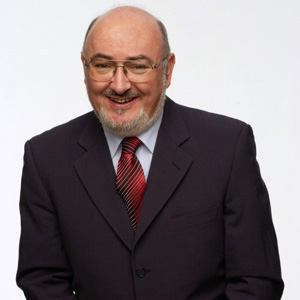
Caoimhghín Ó Caolain T.D.  Photo: Sinn Féin

Caoimhghín Ó Caolain T.D. Photo: Sinn Féin

In a comment to The Northern Standard after the Oireachtas Committee engagement with Eirgrid’s Chief Executive, Sinn Féin Deputy Caoimhghín Ó Caoláin said that important acknowledgments were made and other important questions had yet to be answered. “Mr Slye’s acceptance that an undergrounding approach to the North-South interconnector project is both ‘engineering and technically possible’ is important and is now firmly on the record” stated Deputy Ó Caoláin. “His comments regarding ‘other advantages’, though unspecified, and that consideration of the underground option was not just about cost was also important. The acknowledgement in answer to Deputy Conlan that “no underground route consultation with the public” had taken place regarding the North-South project was also an important confirmation of a truth the public had all known.

“I am awaiting response to other questions I posed and additional detail, including regarding the estimated additional cost per consumer per annum, and over what timeframe, if the underground option is to be proceeded with. Mr Slye’s initial response suggested a 3% to 5% increase in the cost per consumer, with a likely greater cost being placed on non-domestic customers. Having already stated on the public record that I would be prepared to accept an additional cost as a domestic consumer rather than have my neighbours and friends across the path of Eirgrid’s planned pylon supported project suffer the imposition of these monstrosities, I am keenly interested to explore Mr Slye’s calculation. The bottom line from this encounter is that Eirgrid are under no pressure from this government regarding the North-South interconnector project proceeding as Eirgrid intends. Until senior government voices make it abundantly clear that the underground option is the only way to proceed, then Eirgrid will keep to its plan”, concluded Deputy Ó Caoláin.
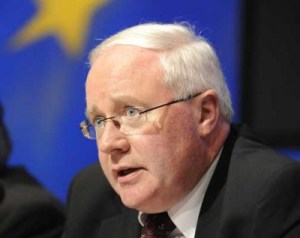
Brendan Smith TD

Brendan Smith TD

Fianna Fáil Spokesperson on Border Region Development Brendan Smith TD commented that a very important statement had been made at the Oireachtas All-Party Committee by the Chief Executive of Eirgrid. He said Fintan Slye had confirmed, in response to a question from the Fianna Fáil Energy Spokesperson Michael Moynihan TD, that the undergrounding of the North/South Interconnector was feasible in terms of engineering”.

Speaking to the Northern Standard Deputy Smith explained: “I outlined to the Eirgrid Chief Executive that there had been no meaningful discussions with local communities, that there was very serious concern and anger among communities in Monaghan, Cavan and Meath arising from the government’s decision to press ahead with the construction of overhead power lines for the North-South interconnector, despite carrying out a review of the other two GridLink and GridWest projects.  The people of the North- East will not allow themselves be treated as second-class citizens and will continue to demand an examination of the current proposals”, he said.

“In 2009 it was estimated that undergrounding the cables would cost more than 20 times the cost involved in keeping these transmission lines above ground.  This cost argument has been totally diminished and it is now widely accepted that the costs in laying the cables underground is now less than 1.7 times the cost of overgrounding.

The Cavan-Monaghan TD stated, “It is reprehensible that EirGrid are not factoring in the devaluation of land, the severe break-up of farm holdings, major disruption to households and the threat to the entire tourism and heritage landscape”.

Representatives of the County Monaghan Anti-Pylons Committee will appear before the Oireachtas Committee next Tuesday 28th April, at 11:30am when it’s expected they will respond to the EirGrid submission. The hearing can be watched on Oireachtas TV.

‘I CAME UPON A PLACE’

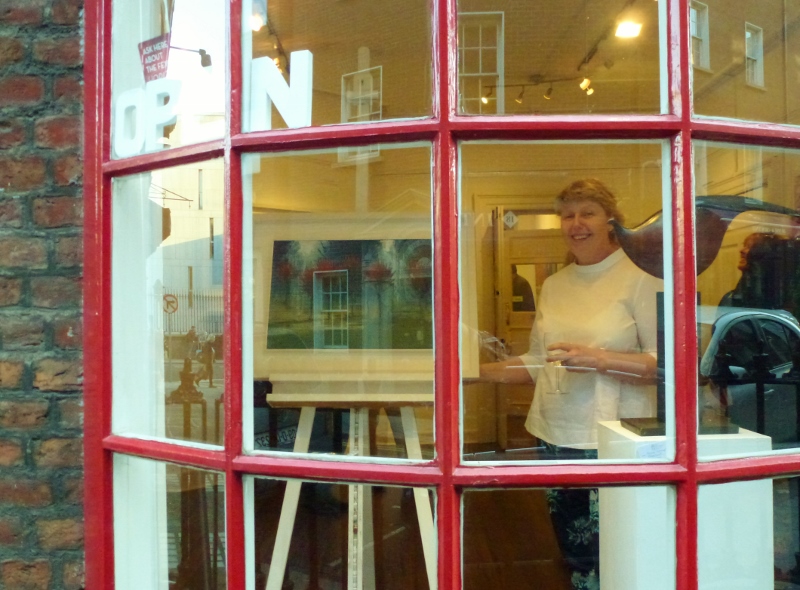
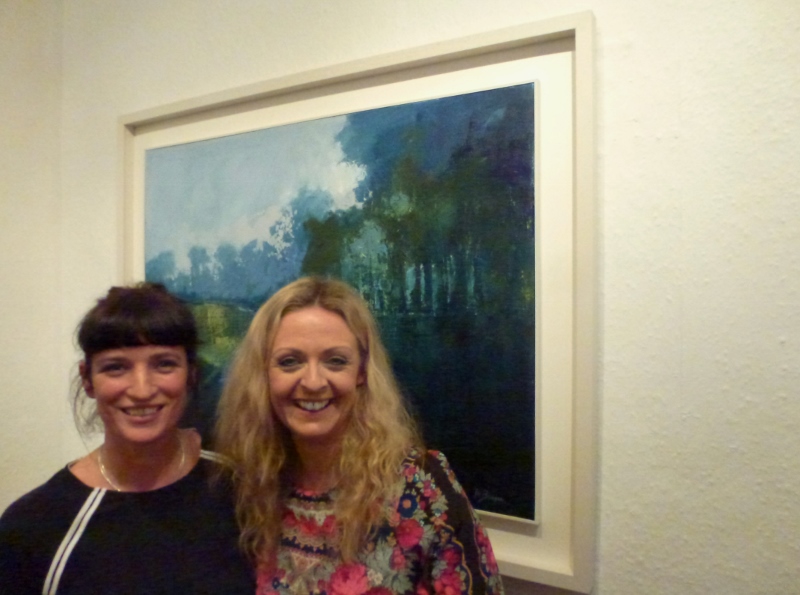
Kate Beagan at The Doorway Gallery Photo © Michael Fisher

Kate Beagan at The Doorway Gallery Photo © Michael Fisher

KATE BEAGAN SOLO EXHIBITION IN DUBLIN’S DOORWAY GALLERY 

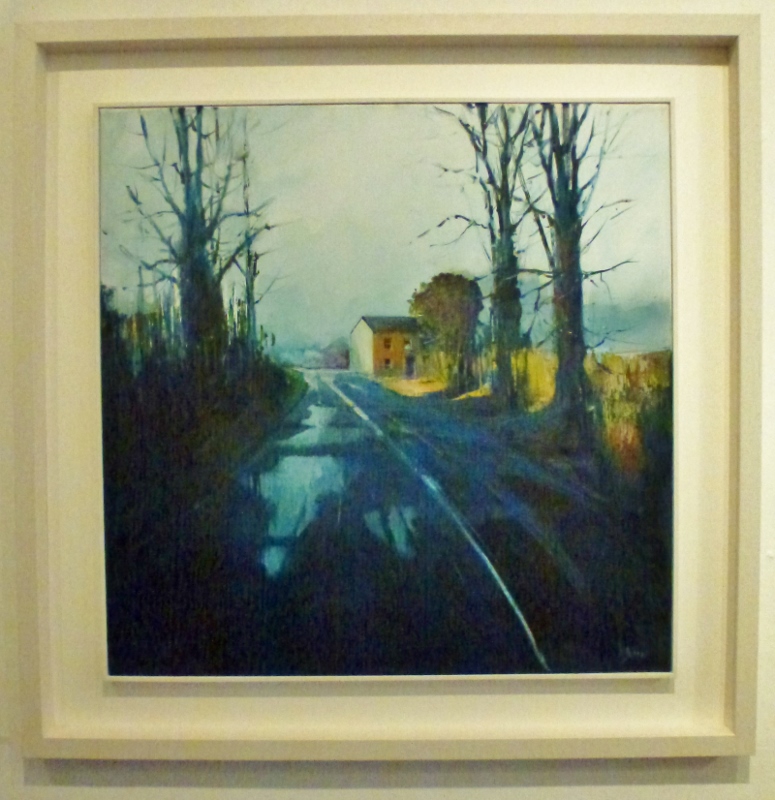
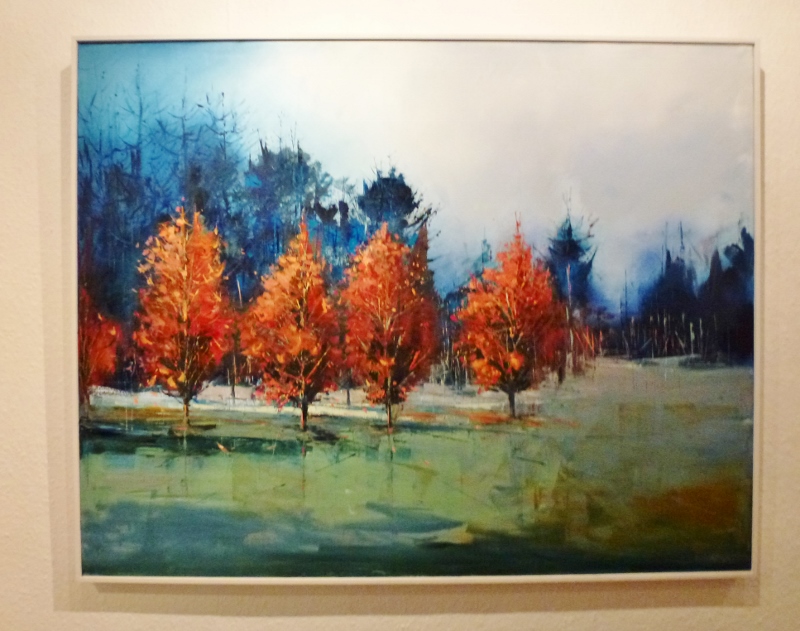
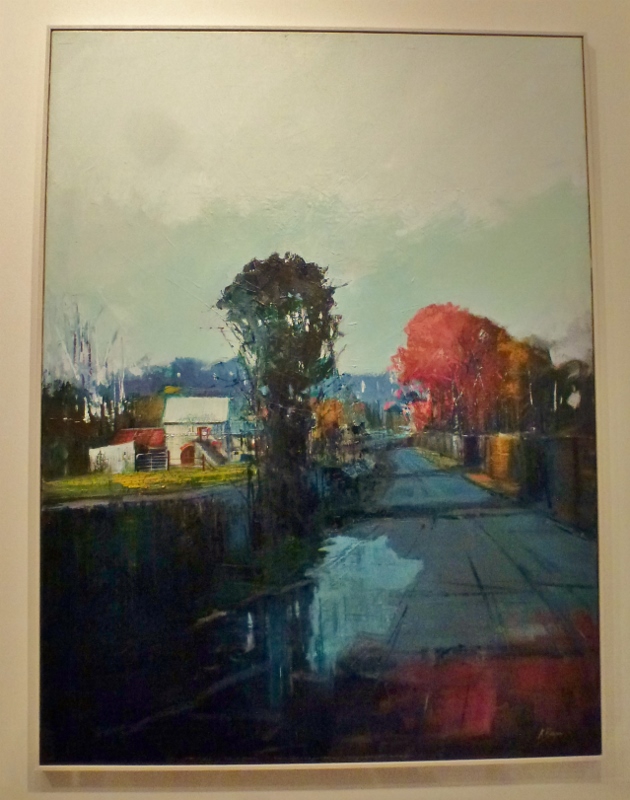
Kate Beagan's 'House on the Corner'  Photo © Michael Fisher

Kate Beagan’s ‘House on the Corner’     €1200     Photo © Michael Fisher

MICHAEL FISHER Northern Standard Thursday 16th April p.34  Carrickmacross News

Kate Beagan's 'Storm on the Horizon'   Photo © Michael Fisher

Kate Beagan’s ‘Storm on the Horizon’     RESERVED €1800     Photo © Michael Fisher

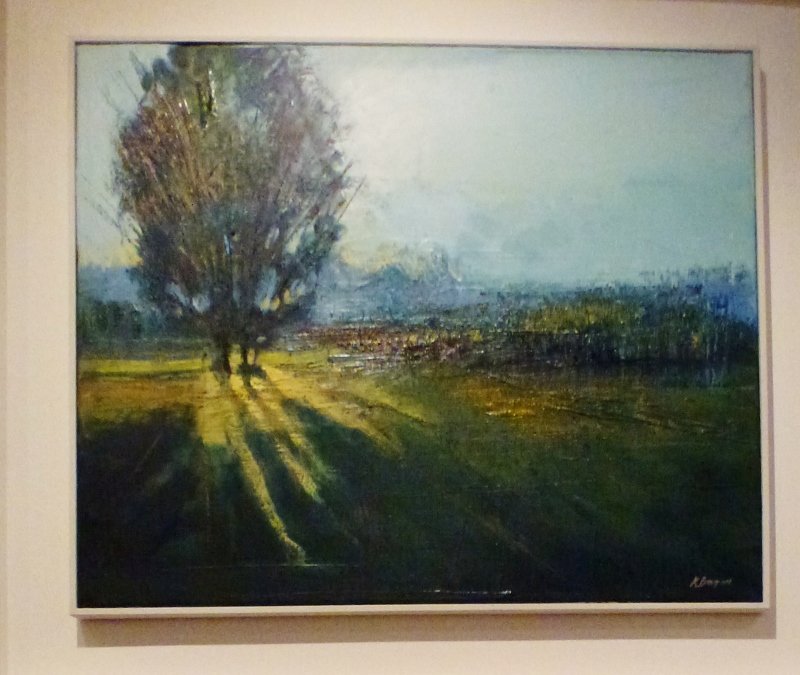
When the Northern Standard visited Kate Beagan in January at her studio in Donaghmoyne overlooking Manaan Castle golf course, she was busy preparing to exhibit her work in London and Dublin. She concentrates on painting contemporary landscapes, inspired by scenes close to where she lives.

Kate Beagan's 'Perbeach in Winter' Photo © Michael Fisher

Kate Beagan’s ‘Perbeach in Winter’     €2600     Photo © Michael Fisher

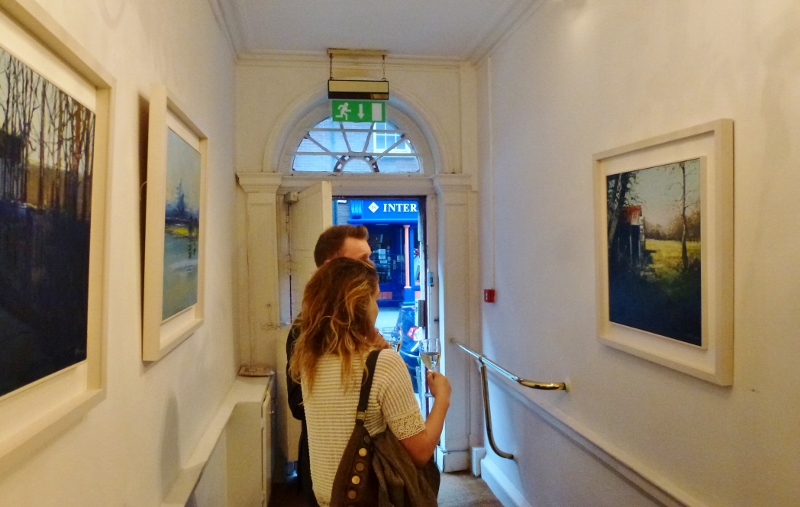
Old houses and fields provide the inspiration for much of her work. As she spoke to me three months ago, she was working on a large canvas. So it was a delight to be able to see the finished work, ‘Perbeach in Winter’ displayed prominently at the Doorway Gallery in Dublin at the opening of her solo exhibition last Thursday.

Kate Beagan's 'A Shaft of Light'  Photo © Michael Fisher

Kate Beagan’s ‘A Shaft of Light’     SOLD €800   Photo © Michael Fisher

The gallery at South Frederick Street was opened last year by Deirdre Carroll and Denise Donnelly.

Owners of The Doorway Gallery, Deirdre Carroll and Denise Donnelly Photo © Michael Fisher

Owners of The Doorway Gallery, Deirdre Carroll and Denise Donnelly Photo © Michael Fisher

‘I came upon a Place’ features 33 of Kate’s colourful works, with prices ranging from €350 for a small canvas up to €2600 for the large painting. Among the visitors on the opening night were her sister Karen Carleton, manager of the Mill Theatre in Dundrum and the artist and poet Roisin Duffy from Sreenty near Carrickmacross.

Kate Beagan and her sister Karen Carleton Photo © Michael Fisher

Kate Beagan and her sister Karen Carleton Photo © Michael Fisher

Some of Kate’s previous works have been sold to private collectors. Others have gone to clients in the public sector, including the Office of Public Works, and the business sector. Kate went to the St Louis Convent in Carrickmacross. She went to art college in Galway but did not finish her degree.

'After the Storm' by Kate Beagan Photo © Michael Fisher

‘After the Storm’ by Kate Beagan      SOLD €1800      Photo © Michael Fisher

She emigrated to Australia, where she spent ten years before returning to Ireland and took up her brushes again. Kate is married to Kevin and they have two daughters in their early 20s and a son aged 17. Another solo exhibition is due to be held in Mullingar in September.

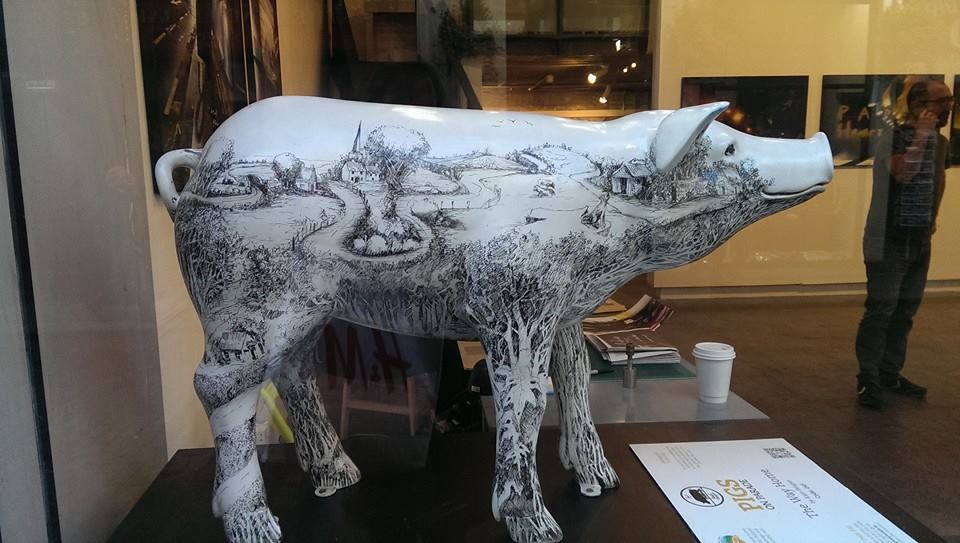
'The Way Home' by Kate Beagan for Jack & Jill Foundation Auction Photo: Zoe Kelly facebook

‘The Way Home’ by Kate Beagan for Jack & Jill Foundation Auction Photo: Zoe Kelly facebook

Kate was one of two County Monaghan artists who contributed to the ‘Pigs on Parade’ in March in aid of Jonathan Irwin’s childrens’ charity, the Jack and Jill foundation. Her pig ‘The Way Home’ was sold at auction for €950.

'Baba Muc' by Niamh O'Connor for Jack & Jill Foundation Auction

‘Baba Muc’ by Niamh O’Connor for Jack & Jill Foundation Auction

Niamh O’Connor a friend of hers and fellow artist from Ballinode also created a pig ‘Baba Muc’ that fetched €600.

Kate’s latest exhibition runs until Thursday April 30th so if you are visiting Dublin, it’s worth visiting the Doorway Gallery, which is close to Trinity College and Leinster House.

Opening hours from 10:30am to 6:30pm Monday to Saturday.

Her pictures, at least fourteen of which have already been sold and one reserved, can also be viewed on the gallery’s website:

http://www.thedoorwaygallery.com.

Kate Beagan's Paintings at The Doorway Gallery, Dublin  Photo © Michael Fisher

Kate Beagan’s Paintings at The Doorway Gallery, Dublin Photo © Michael Fisher

Kate Beagan's 'A Wet Morning'  Photo © Michael Fisher

Kate Beagan’s ‘A Wet Morning’     €800     Photo © Michael Fisher

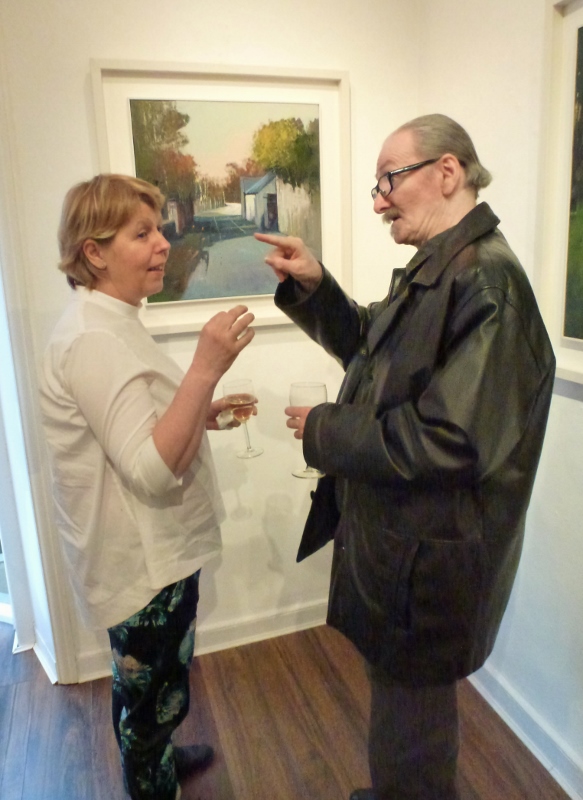
Kate Beagan and Joseph Murphy, Dublin, at The Doorway Gallery exhibition Photo © Michael Fisher

Kate Beagan and Joseph Murphy, Dublin, at The Doorway Gallery exhibition Photo © Michael Fisher

TYDAVNET STUDENT’S ART AWARD

Frances Treanor, Tydavnet (middle), is congratulated by  her parents Sean and Anne, her brother Ronan (left) and twin sister Maeve (right). Photo: facebook

Frances Treanor, Tydavnet (middle), is congratulated by her parents Sean and Anne, her brother Ronan (left) and twin sister Maeve (right). Photo: facebook

Celebrations in Dublin this afternoon by my friends and neighbours, the Treanor family from Drumdart, Tydavnet in County Monaghan. I was working away in The Northern Standard finishing the Carrickmacross pages when news came through of the great achievement by 18 year-old Frances Treanor, a former student at the St Louis Secondary School in Monaghan. She has won top prize of €1500 in the 61st Texaco Children’s Art Competition, which I remember from my own schooldays.

Frances Treanor (Tydavnet) Self-Portrait in Ballpoint Pen: Overall Prizewinner in Texaco Children's Art competition Photo: Texaco Art webpage

Frances Treanor (Tydavnet) Self-Portrait in Ballpoint Pen: Overall Prizewinner in Texaco Children’s Art competition Photo: Texaco Art webpage

Her entry was a self-portrait drawn with a ballpoint pen. Congratulations also to Rachel McKenna also from St Louis Secondary School who won a special merit award in the 16-18 year-old category for her entry ‘The Script – Tired of Posing’ and wins €150 and an art box. Well done Sophia Goodman, Scoil Naoimh Éanna, Killanny, Carrickmacross, who came third in the age group 7-8 years old and to Kate Norton of the same age group and school who received a special merit award for ‘The Cute Kittens’.

It’s a double national success for Monaghan as Sarah Leddy from Inniskeen won first prize in the 11-13 category in the Irish League of Credit Unions art competition two months ago. Clearly there are some very talented artists in this county.

UTV Ireland carried the story as did The Irish Times, and this is their report:

A self-portrait drawn with a ballpoint pen has taken the top prize at this year’s Texaco Children’s Art Competition.

Frances Treanor (18), from Tydavnet, County Monaghan, a first-year fine art student at the National College of Art and Design(NCAD), won the first prize of €1,500 in category A (16 to 18-year-olds) for her drawing, Self Portrait.

Judging panel chairman Professor Declan McGonagle,director of the NCAD, called it a very powerful work drawn with the skill and delicacy of a master. He said it was a fantastically realised self-portrait, with a very intense stare. “It is a delicate use of the medium. Nearly every single strand of hair is represented,” Professor McGonagle said.

It is the third time Ms Treanor has entered the competition. She won second place in her age category in 2012, and last year her entry was selected for the Texaco Art Competition calendar.

The 21 top prize winners across seven categories were announced at the Hugh Lane Gallery in Dublin. Another 105 artists won special merit awards. The winners, ranging in age from five to 18, were chosen from 30,000 entries.

The competition, now in its 61st year, is the longest sustained sponsorship of art in Ireland.

“Each of you have achieved a very high standard, and you should be very proud of yourselves. I’d like to recognise the support that you received from your families, from your teachers and from the wider school community. And I’d like to acknowledge their commitment and encouragement that has helped to keep our competition so vibrant since 1955,” said Valero Ireland director James Twohig. The company markets fuel in Ireland under the Texaco brand.

This year, for the first time, one of the winning entries was made using digital technology. Oliwia Widuto (16), a student at Loretor College in Coleraine, County Derry, won the top category’s second prize of €1,000 for her work Gramps on Morphine.

“It doesn’t look like a digital work. It looks like a traditional work, but it’s done entirely through digital technology. It is a different kind of skill altogether, which is amazing as well,” Professor McGonagle said. The winners will receive their awards at a ceremony in the Royal Hospital Kilmainham in Dublin next month.

The 21 top prize-winning pieces will remain on display upstairs in the Hugh Lane Gallery until Sunday May 31st. In August, all 126 pieces will be on display in the Cork Vision Centre and in the Highlanes Art Gallery in Drogheda.

Results: Overall winner: Frances Treanor, St Louis Secondary School, Monaghan

Age 16-18 : 1st, Frances Treanor; 2nd, Oliwia Widuto, Loreto College Coleraine; 3rd, Janné Strydom, Gorey Community School

Age 14-15: 1st, Vitaly Dergachev, Wesley College, Ballinteer; 2nd, Lucy Deegan, Gaelcholáiste Cheatharlach, Carlow; 3rd, Cliona Fitzpatrick, Malahide Community School

Age 12-13: 1st, Nicole Forster, Wilson’s Hospital Secondary School, Multyfarnham; 2nd, Sadhbh Simpson, Loreto Dalkey Primary School; 3rd, Ethan Cheung, Bangor Grammar School

Age 9-11: 1st, Stephen Walsh, Ratoath Senior National School; 2nd, Orla Nolan, Newtown Dunleckney National School, Bagenalstown; 3rd, Charvi Goyal, Loreto Primary School, Rathfarnham, Dublin

Age 7-8 years: 1st, Laoise McDonald, The Paint Box, Barna, Co Galway; 2nd, Pippa McIntosh, Kinsale Art Academy; 3rd, Sophia Goodman, Scoil Naoimh Éanna, Carrickmacross

6 years and younger: 1st, Ciara Ward, St Malachy’s Primary School, Castlewellan; 2nd, Sean O’Reilly, St Anthony’s Boys National School, Ballinlough, Co Cork; 3rd, Poppy Love, Hansfield Educate Together National School, Huntsfield, Dublin

Children with special needs: 1st, Conor Marley, St Gerard’s School and Support Services, Belfast; 2nd, Róisín Murray, St Michael’s School Holy Angels, Chapelizod; 3rd, Michael Ahern, Our Lady of Good Counsel, Ballincollig, Co Cork

PYLONS CONTROVERSY

ANTI-PYLON GROUP STEPS UP CAMPAIGN AGAINST EIRGRID PLANS FOR ELECTRICITY INTERCONNECTOR
Michael Fisher

EirGrid substation at Ballykelly, Co. Louth near Inniskeen for North/South Interconnector Photo © Michael Fisher

EirGrid substation at Ballykelly, Co. Louth near Inniskeen for North/South Interconnector Photo © Michael Fisher

A group representing landowners and householders opposed to EirGrid plans for an overhead North/South electricity connector that would be routed through south and mid Monaghan met last night to arrange a fresh campaign against the proposals. A public meeting has been organised by the County Monaghan Anti-Pylon Committee to be held on Monday April 20th at Aughnamullen Community Centre, Lough Egish. All of the county’s TDs and councillors are being invited to attend. Committee member Nigel Hillis told the Northern Standard their opposition to the plans was stronger than before.

Last week EirGrid’s Chief Executive Fintan Slye visited Carrickmacross as the company announced its new draft strategy for the future development of Ireland’s electricity transmission grid. It included updated plans for the North/South 400 kV Interconnection Development that would cross five counties from Meath to Tyrone.

EirGrid banner for North/South Interconnector Photo © Michael Fisher

EirGrid banner for North/South Interconnector Photo © Michael Fisher

EirGrid and its Northern counterpart SONI (System Operator for Northern Ireland) are jointly proposing a new high capacity electricity interconnector between the two networks. The draft strategy says there remains a clear need for the North/South Interconnector, and that the existing preference for a 400kV overhead line is still the most appropriate solution for the project.

The development would link a substation at Woodland, Batterstown in County Meath with a planned substation in Turleenan, in the Dungannon area of County Tyrone. EirGrid intends to submit a planning application for the North/South Interconnector in the coming weeks. Currently there is only a single interconnector, that runs past Ballykelly on the Carrickmacross to Dundalk road in County Louth (a few kilometers from Inniskeen)  to Tandragee in County Armagh.

Shane Brennan of EirGrid (right) points out the route of the proposed interconnector Photo © Michael Fisher

Shane Brennan of EirGrid (right) points out the route of the proposed interconnector Photo © Michael Fisher

At their public information office in Carrickmacross, SONI Eirgrid Project Manager Shane Brennan from Clontibret explained to me that the new interconnector would increase the capacity and reliability of interconnection between the two networks. It would allow the two independent networks to operate together as if they were one system, thus improving competition, and securing the electricity supply throughout the island of Ireland. EirGrid maintains that operating the two networks as if they were one system will bring cost savings for all electricity consumers as larger electricity systems can be operated more efficiently than smaller ones.

The increase in interconnection capacity will also facilitate the development of wind generation, which will help achieve Ireland’s renewable energy targets. Last November EirGrid submitted its draft application to An Bord Pleanála for review.  The following month, An Bord informed EirGrid that it has reviewed the draft and that certain specified missing information was required to be submitted. Last month EirGrid sent in further information, as requested.

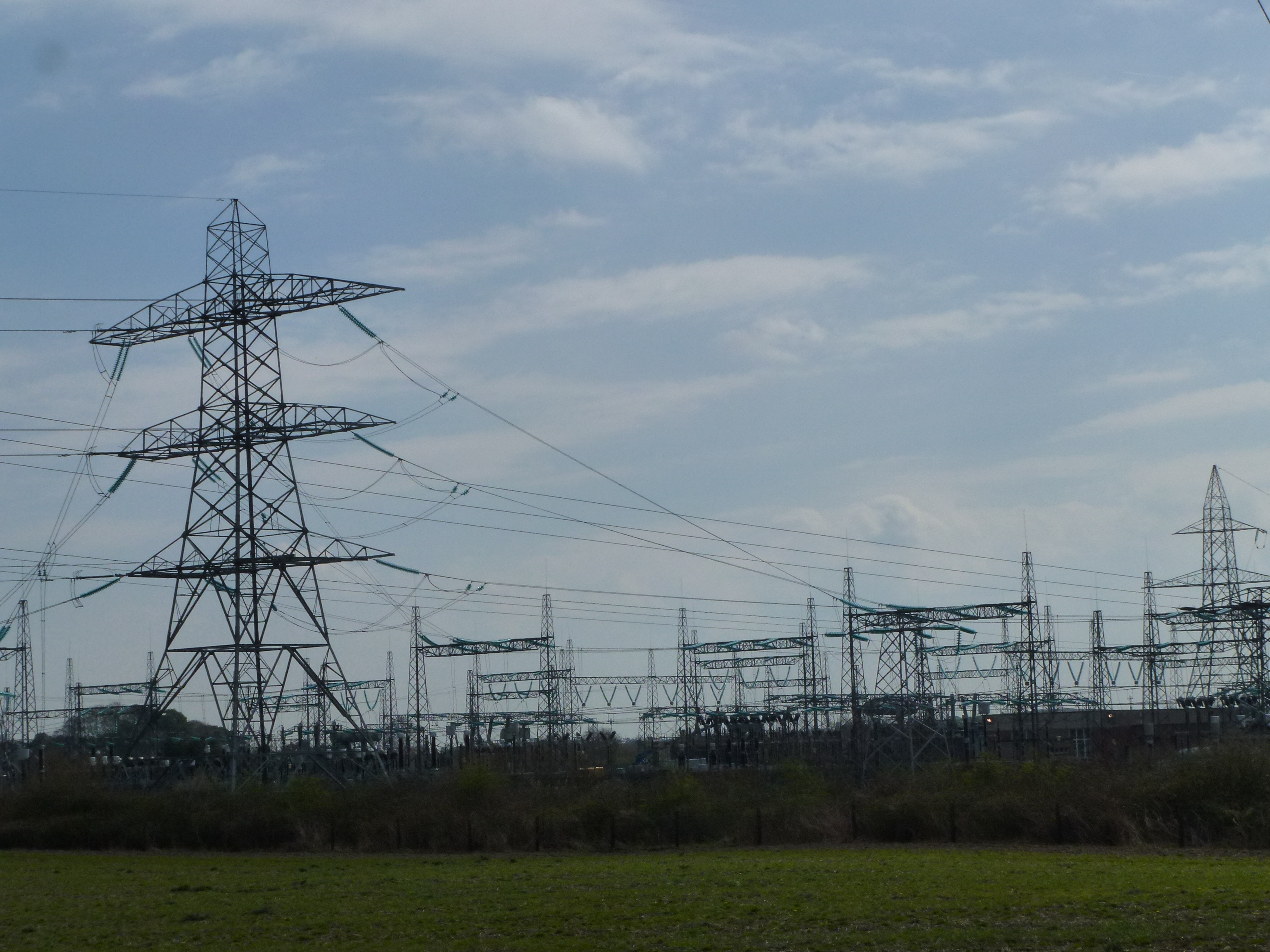
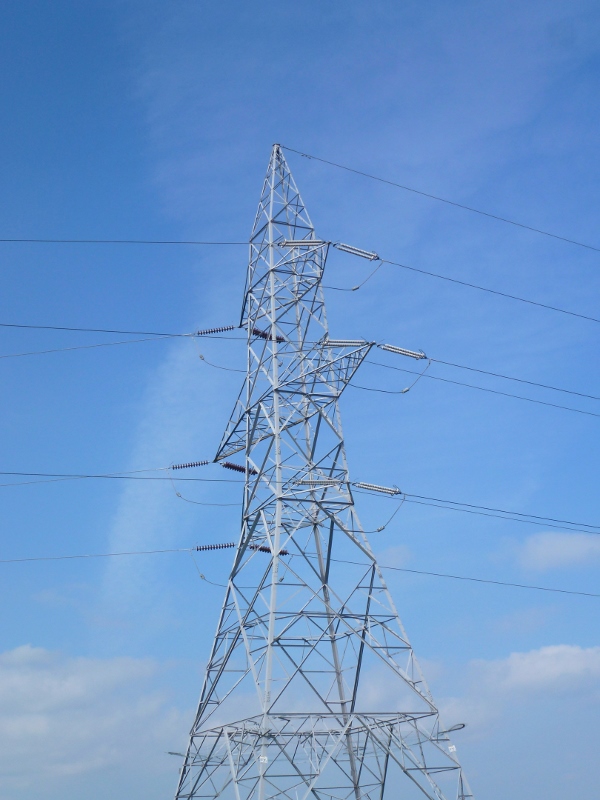
EirGrid pylon at Ballykelly, Co. Louth near Inniskeen Photo © Michael Fisher

EirGrid pylon at Ballykelly, Co. Louth near Inniskeen Photo © Michael Fisher

Meanwhile EirGrid has re-published its proposed line route which will form the basis of an application for planning approval to be submitted to the planning authority in the coming months. This follows a review of the December 2013 line design. The review resulted in some of the proposed pylon locations being re-positioned along the proposed route, but the alignment itself was not changed.

Maps have now been made available showing the proposed route in County Monaghan. It takes in parts of Kingscourt, Co. Cavan, Magheracloone, Corduff/Raferagh then on to a controversial section around Lough Egish. The route continues to Drumhowan, Doohamlet, Annyalla and Clontibret where it skirts the battlefield site and then joins the Northern grid in County Armagh.

EirGrid has opened three project information offices, including one at the Workhouse in Carrickmacross where those with an interest can  call in and meet the project team. The Carrick office on the Shercock Road is open on Mondays and Thursdays 12 noon – 6pm.

EirGrid information office Carrickmacross Photo © Michael Fisher

EirGrid information office Carrickmacross Photo © Michael Fisher

According to Fintan Slye of EirGrid, there remains a clear strategic need for a second north-south interconnector.
“We committed last year, to be open with people and find out what it is they want from this most critical of infrastructure.  We are now asking people to give us their views on our draft strategy”, he said. Mr Slye concluded: “EirGrid must ensure the necessary grid is in place to ensure that Ireland remains competitive – fostering economic growth, attracting new investments, and supporting indigenous jobs. It must do this without placing too great a burden on communities, or too high a cost on industry. When we have received people’s feedback we will submit this draft to the Department of Communications, Energy and Natural Resources for its consideration before publishing the final strategy later this year.”

The County Monaghan Anti-Pylon Committee has been campaigning against the overhead route for the past seven years. It has argued that the lines should be placed underground. Nigel Hillis, an engineer, said the need for a new interconnector had not been identified by EirGrid and they had not persuaded people living in the affected area that it was needed. This was not the case with another major infrastructure development when the main N2 road was being improved with by-passes around Castleblayney and Carrickmacross.

He said there was still serious opposition to the plans. One of the main concerns from the start, he said, had been the scale of the project, because the size and topography of the small farms in the county had not been taken into account when the positioning of pylons was being worked out. He said EirGrid had not identified the need for having big pylons on top of hills, close to a farmyard or houses. (The company said the centre of the proposed high voltage line would be no nearer to a residence than 50 metres).

Mr Hillis questioned why EirGrid was suggesting that part of the proposed GridWest scheme (up to 30km) could be situated underground using trenches alongside roads. He claimed that people in Monaghan were being treated as second class citizens and said they wanted to be treated the same as others.

The Dáil Communications Committee chaired by John O’Mahony T.D. has invited EirGrid to appear before them in the coming weeks to answer questions about the North/South interconnector. Mr Hillis hopes his group will also be given a chance to put their views across as well. From the first day of their formation the committee had argued for an underground route and that was now feasible, he said, as this option was being considered for the other two major grid projects.

Eirgrid says there are technical issues with putting 400kV AC lines underground over long distances and there would be operational complexities. It maintains that underground cables for the North/South route would be too expensive and difficult to install. Local residents however think the cost to them, their livelihoods, their homes and to local tourism would be equally damaging.

Northern Standard Thursday April 9th p.31 with pictures by © Pat Byrne

Northern Standard Thursday April 9th p.31 with pictures by © Pat Byrne

LARAGH DUCK RACE

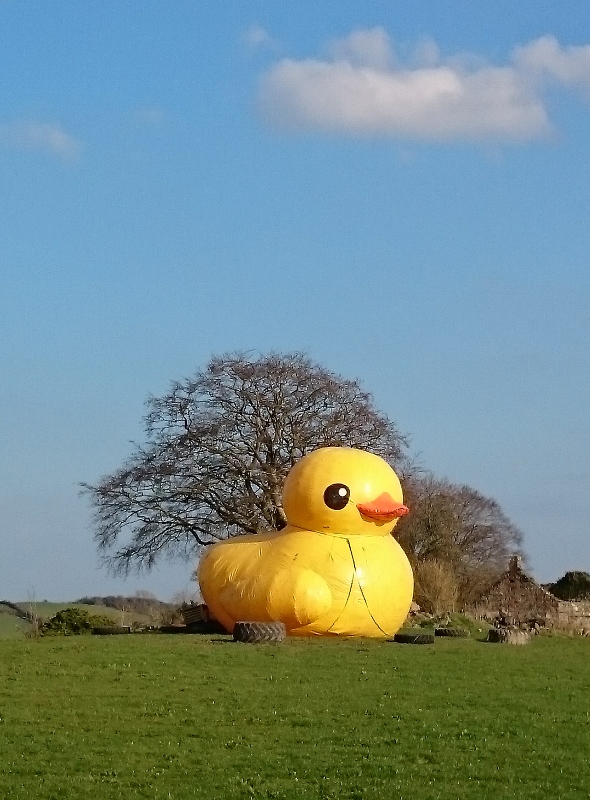
Laragh Duck sitting in a field beside the N2 at Broomfield  Photo:  © Michael Fisher

Laragh Duck sitting in a field beside the N2 at Broomfield Photo: © Michael Fisher

LARAGH DUCK RACE Northern Standard Thursday April 9th p.2
The Easter Ramble Run & Rubber Duck Race takes place in Laragh on this Sunday 12th April 2pm-5pm. The 5k walk leaves from Laragh at 2pm (registration from 1pm). The duck races begin at 3pm.

All roads lead to Laragh on Sunday 12th April Photo:  © Michael Fisher

All roads lead to Laragh on Sunday 12th April Photo: © Michael Fisher

All proceeds will go towards the restoration of The Millers Cottages in Laragh, which were built in the 1800’s and housed those who worked at Laragh tweed mill. There will be a number of rubber duck races (all sponsored by local businesses in the area) in the fast flowing river beside St Peter’s Tin Tabernacle. The main sponsor of the event is IGWT, Broomfield and its managing directors Raymond and Mary McCaughey are delighted with the opportunity to support the local community in their endeavours. They provided the field beside the N2 Monaghan to Castleblayney road where the giant Laragh duck has been sitting to promote the event. Ducks cost €2 each or you can adopt 3 ducks for €5. You can order your ducks through the Laragh Heritage facebook page http://www.facebook.com/laraghheritagemonaghan or alternatively you can get ducks on the day of the race.

Laragh Duck article Northern Standard Photo: Jimmy Walsh

Laragh Duck article Northern Standard Photo: Jimmy Walsh

The next major event this year will take place to coincide with National Heritage Week on August 30th. The Laragh Linen & Flax Festival will take place in Laragh Village. The community will sow flax seed in the coming weeks and demonstrate the process in advance of the festival, which celebrates the rich tradition which is so strongly associated with Laragh.

MONAGHAN IN DUBLIN

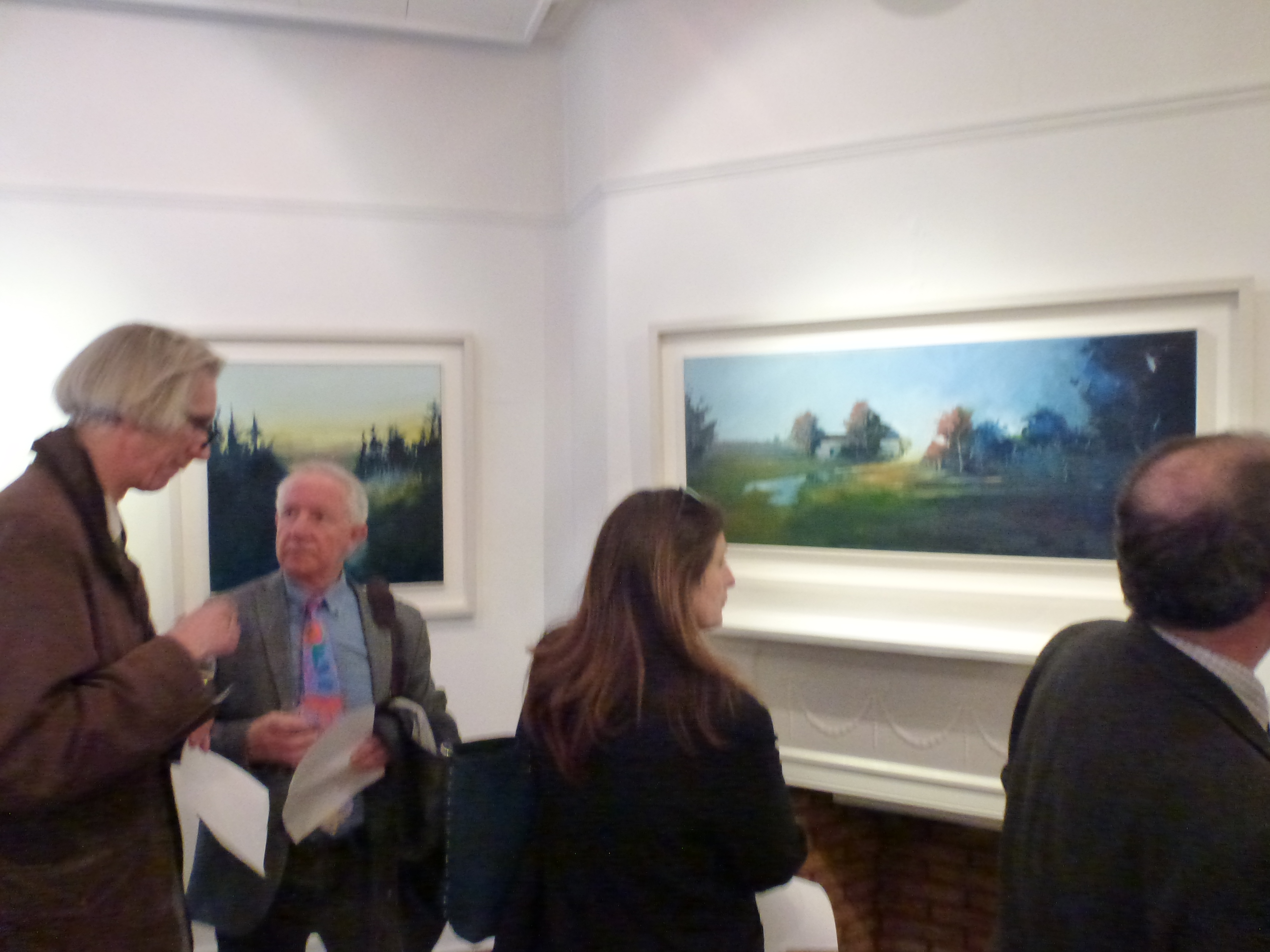
Kate Beagan exhibition at Doorway Gallery Photo:  © Michael Fisher

Kate Beagan exhibition at Doorway Gallery Photo: © Michael Fisher

As the capital prepares for a Monaghan invasion for the return match against the Dubs at Croke Park on Sunday in the National League football semi-final, tonight (Thursday) was also an important (and busy) night for Monaghan folk in Dublin in the arts world. Donaghmoyne artist Kate Beagan was launching a new exhibition of her paintings “I Came Upon A Place” in the Doorway Gallery at South Frederick Street. thoseaprilfeversforwebMary O’Donnell from Monaghan town was celebrating the publication of a new collection of poetry, “Those April Fevers” by Arc Publications. There were many familiar faces in the Benedict Kiely room at the Irish Writers Centre in Parnell Square, including several supporters of the William Carleton summer school such as poets Maurice Harmon and Iggy McGovern.

Mary O'Donnell  Photo:  © Michael Fisher

Mary O’Donnell Photo: © Michael Fisher

MONAGHAN ARMY MEMORIAL

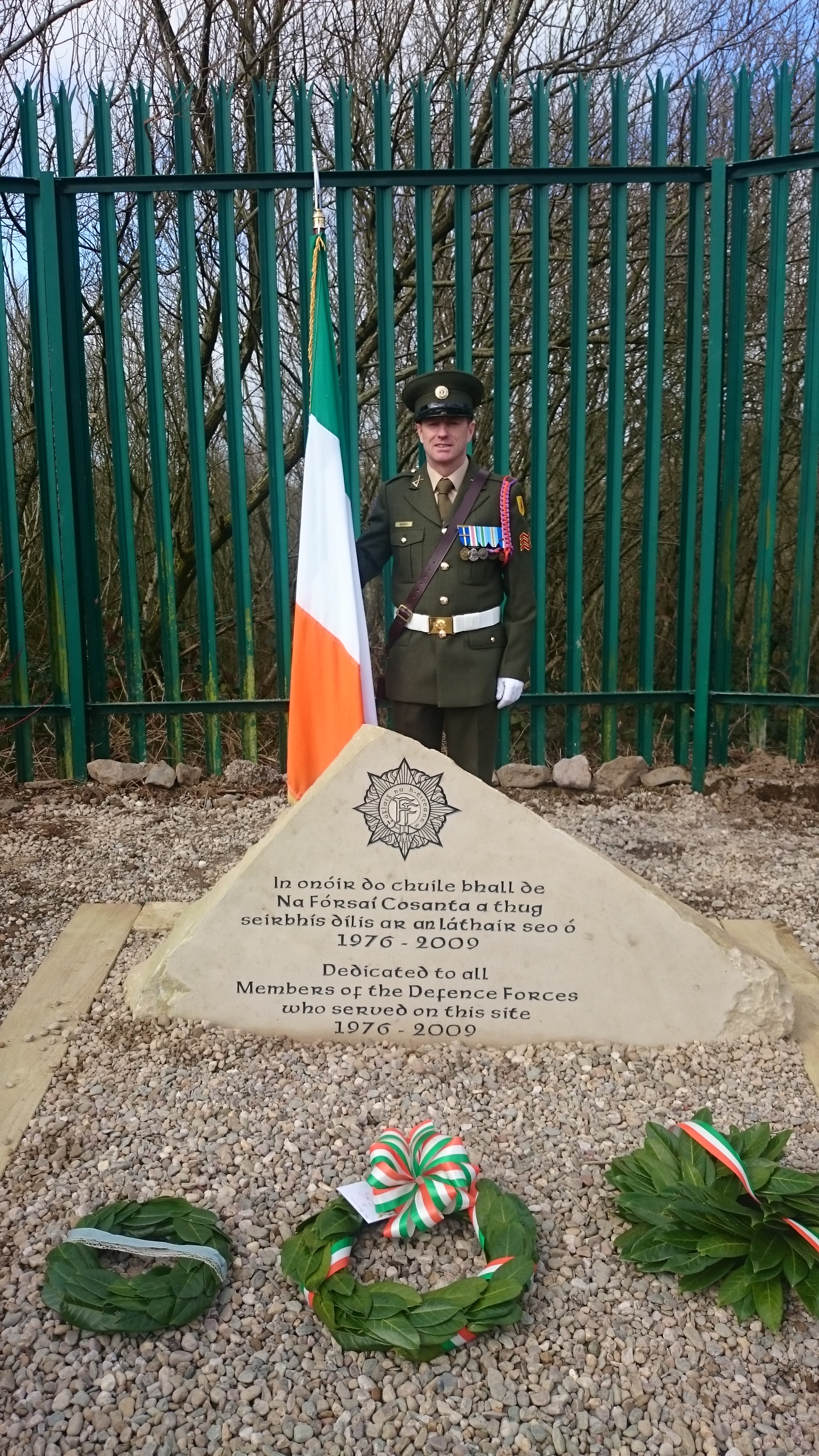
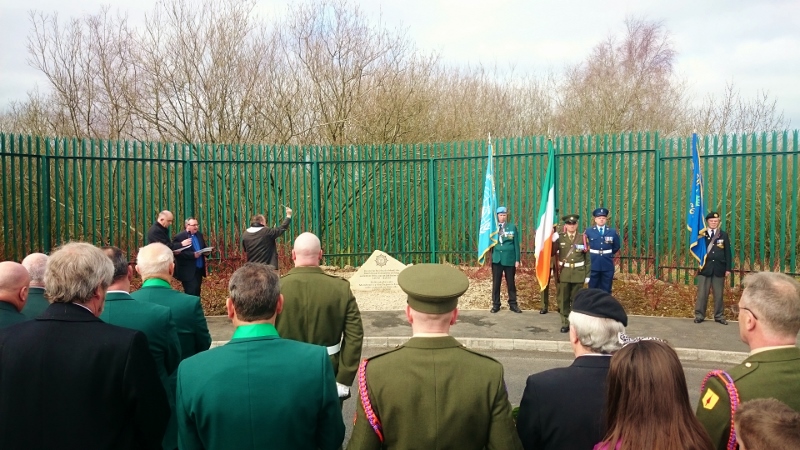
Commemorative stone for DF members who served in Monaghan Barracks 1976-2009, designed by Marc Kelly, Emyvale. Photo:  © Michael Fisher

Commemorative stone for DF members who served in Monaghan Barracks 1976-2009, designed by Marc Kelly, Emyvale. Photo: © Michael Fisher

ARMY’S CONTRIBUTION TO MONAGHAN COMMEMORATED AT FORMER BARRACKS SITE

MICHAEL FISHER  The Northern Standard  Thursday March 26th p.

Blessing of commemorative stone by army chaplain Fr Bernard McKay Morrissey, CF Dundalk  Photo:  © Michael Fisher

Blessing of commemorative stone by army chaplain Fr Bernard McKay Morrissey, CF Dundalk Photo: © Michael Fisher

The tricolour was lowered for the last time at Monaghan Army Barracks in January 2009 and the gates were closed as the Defence Forces moved out. It was one of four army posts put up for sale by the government. Most of the soldiers based there transferred to the Headquarters of the 27th Infantry Battalion at Aiken Barracks in Dundalk.

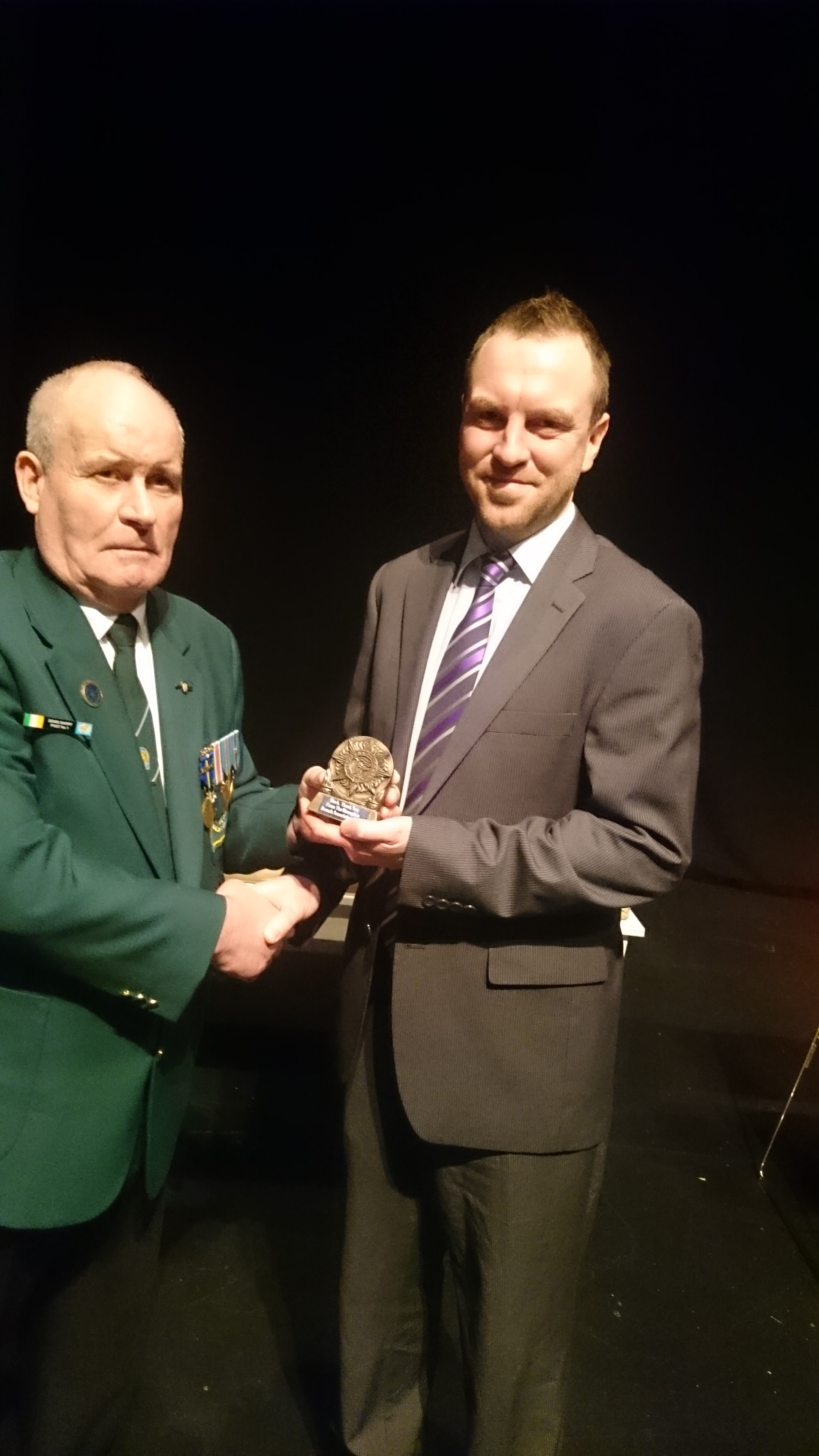
Former Sgt Dennis Barry (centre), Monaghan Barracks Association with colour party: Mick Donoghue IUNVA Post 15 Cavan (left) and Wally Barry ONE Tanagh Branch (right) Photo:  © Michael Fisher

Former Sgt Dennis Barry (centre), Monaghan Barracks Association with colour party: Mick Donoghue IUNVA Post 15 Cavan (left) and Wally Barry ONE Tanagh Branch (right) Photo: © Michael Fisher

It might have remained a derelict site for many years. But it has since been transformed into an Education Campus that includes a new Garage Theatre, as well as two schools and the Monaghan Institute. The complex which was developed by the Cavan Monaghan Education Board under its Chief Executive Martin O’Brien was officially opened last month by An Taoiseach Enda Kenny.

Dennis Barry presents sculptor Marc Kelly with a DF crest to mark the occasion Photo:  © Michael Fisher

Organiser Dennis Barry presents sculptor Marc Kelly with a DF cap badge crest to mark the occasion Photo: © Michael Fisher

In order to remember the contribution of thousands of army personnel who passed through the post, a Monaghan Barracks Association was formed by a former Sergeant, Dennis Barry. A native of Clonmel in County Tipperary, he was stationed at the Armagh Road complex for many years. Their way of marking the contribution of the military and their colleagues from the Air Corps and Navy was to commission a stone from Emyvale sculptor Marc Kelly.

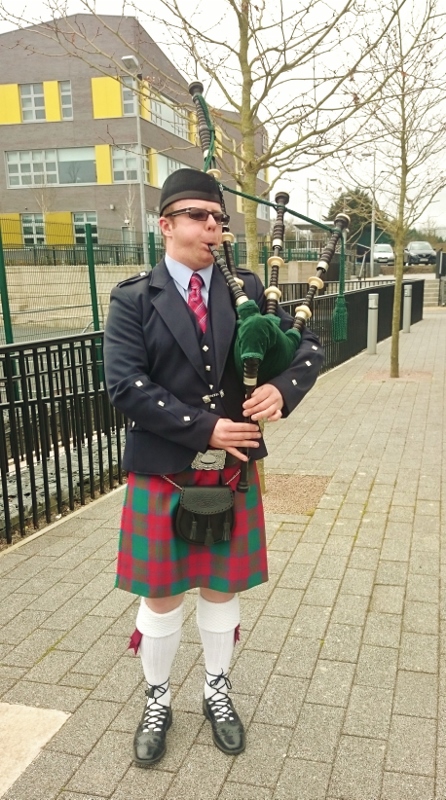
Piper Kevin Murphy, 27 Inf Bn Dundalk, who played a lament as the stone was unveiled Photo:  © Michael Fisher

Piper Kevin Murphy, 27 Inf Bn Dundalk, who played a lament as the stone was unveiled Photo: © Michael Fisher

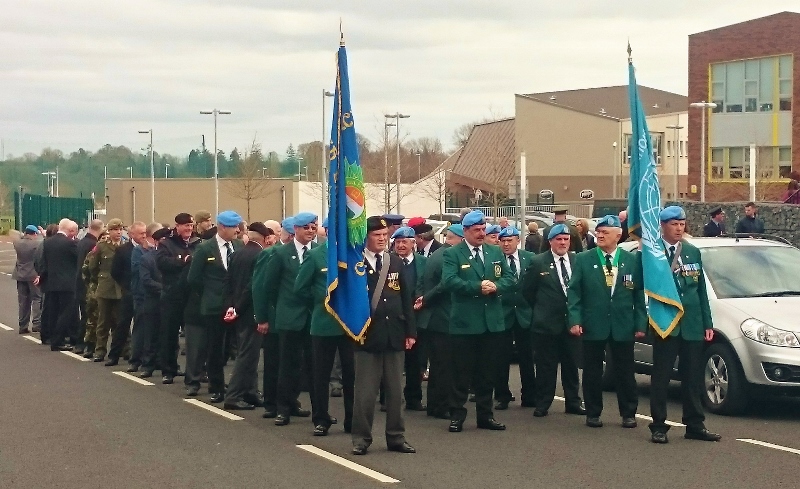
Last Saturday (March 21st) former army colleagues including UN veterans joined serving members of the 27th Infantry Battalion and the Reserve, along with their families and friends, at the unveiling of the stone.

It was blessed by former Monaghan barracks chaplain, Fr Seán McDermott from Ballinagh, Co. Cavan, Canon Ian Berry, Rector of Monaghan, and Fr Bernard McCay-Morrissey, chaplain of the 27th Infantry Battalion in Dundalk.

Nathan Healy, Castleshane, unveiled the commemorative stone  Photo:  © Michael Fisher

Nathan Healy, Castleshane, unveiled the commemorative stone Photo: © Michael Fisher

The honour of unveiling the stone was given to 10 year-old Nathan Healy from Cavancreevy, Castleshane. His father Private John Healy of the 27th Infantry Battalion came from Dublin and joined the army when he was 19. Private Healy died in October and was given military honours at his funeral in Monaghan.

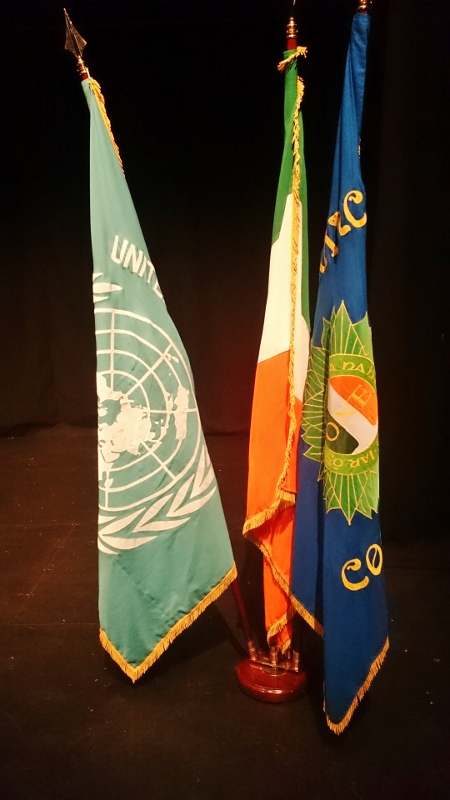
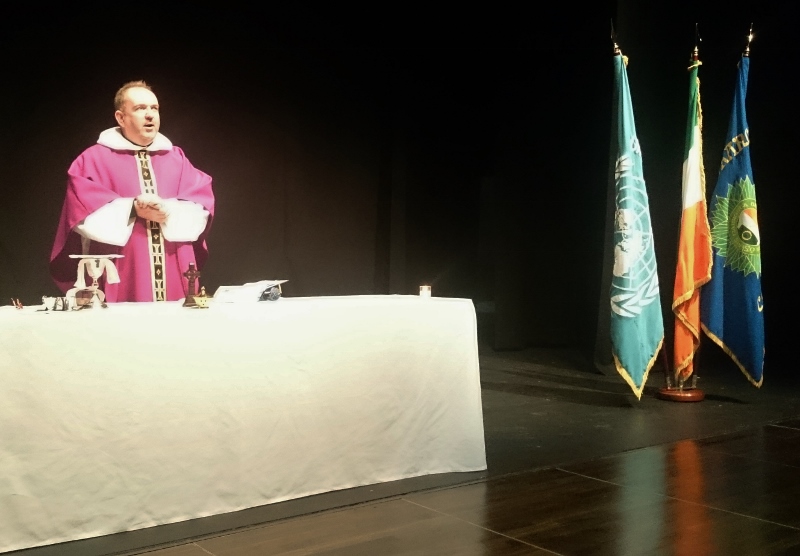
Flags on the stage during the Mass Photo:  © Michael Fisher

Flags on the stage during the Mass Photo: © Michael Fisher

The memorial stone is dedicated to all members of the Defence Forces who served on the site 1976-2009.

Army Chaplain Fr Bernard McKay Morrissey, CF Dundalk celebrated Mass at the Garage Theatre, Monaghan  Photo:  © Michael Fisher

Army Chaplain Fr Bernard McKay Morrissey, CF Dundalk celebrated Mass at the Garage Theatre, Monaghan Photo: © Michael Fisher

At the start of the commemoration, a Mass was held in the Garage Theatre, celebrated by Fr McCay-Morrissey. He said when the announcement of the closure of the barracks came, it was unexpected. It was a time of anxiety and uncertainty for those affected. But good things had eventually emerged from it, although some were still adapting to the move to Dundalk. Prayers were said for all those who had worked in the barracks, the NCOs and officers and the staff.

Reflection during Mass by John Wilson, remembering all who had been stationed at Monaghan Barracks Photo:  © Michael Fisher

Reflection during Mass by John Wilson, remembering all who had been stationed at Monaghan Barracks Photo: © Michael Fisher

Fr Seán McDermott was chaplain when the barracks closure was announced and recalls that he was with some members of the unit serving overseas at the time.

Colour Party escorting the tricolour Photo:  © Michael Fisher

Colour Party escorting the tricolour Photo: © Michael Fisher

The decision to construct a barracks in Monaghan was made in November 1973 and the complex was opened in December 1976 by then Taoiseach Liam Cosgrave at the height of the troubles in the North. The soldiers who were then part of the 29th Infantry Battalion operated border patrols and served in aid of the civil power (Gardaí). They often found themselves called out to monitor unnapproved border crossings where local residents were filling in craters that had been caused by the British Army. The troops also supported the Department of Agriculture during the foot and mouth, BSE and poultry disease crises.

Not many local people signed up for military service initially, but as the years went by, more recruits came from the Monaghan area. Soldiers of the 27th Infantry Battalion have served in numerous peacekeeping missions around the world, most notably in Lebanon.

Colour party marches off at end of unveiling and blessing Photo:  © Michael Fisher

Colour party marches off at end of unveiling and blessing Photo: © Michael Fisher

UN veterans were among those who paraded from the Garage theatre to the site of the memorial stone in what was once the transport yard of the barracks.

Parade from Garage Theatre to memorial stone in former transport yard Photo:  © Michael Fisher

Parade from Garage Theatre to memorial stone in former transport yard Photo: © Michael Fisher

Following the ceremony, refreshments were served in the school canteen and young Nathan Healy from Castleshane was given the task of cutting the special cake that had been made for the occasion.

Nathan Healy, Castleshane, cuts the Monaghan Barracks Association cake Photo:  © Michael Fisher

Nathan Healy, Castleshane, cuts the Monaghan Barracks Association cake Photo: © Michael Fisher

ICA MONAGHAN 60 YEARS

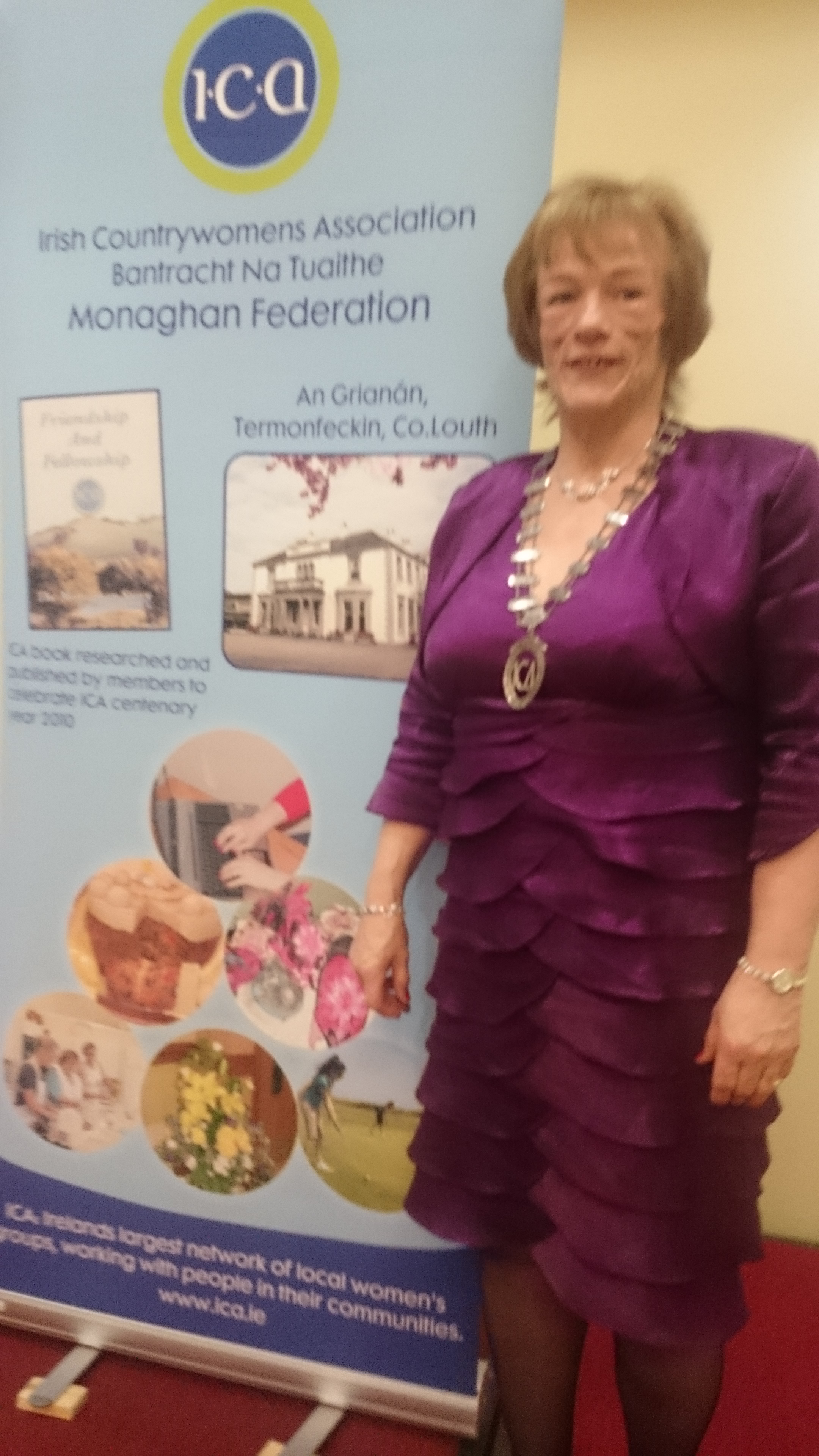
ICA President Liz Wall with her chain of office  Photo:  © Michael Fisher

ICA President Liz Wall with her chain of office
Photo: © Michael Fisher

MICHAEL FISHER   Northern Standard Thursday 26th March

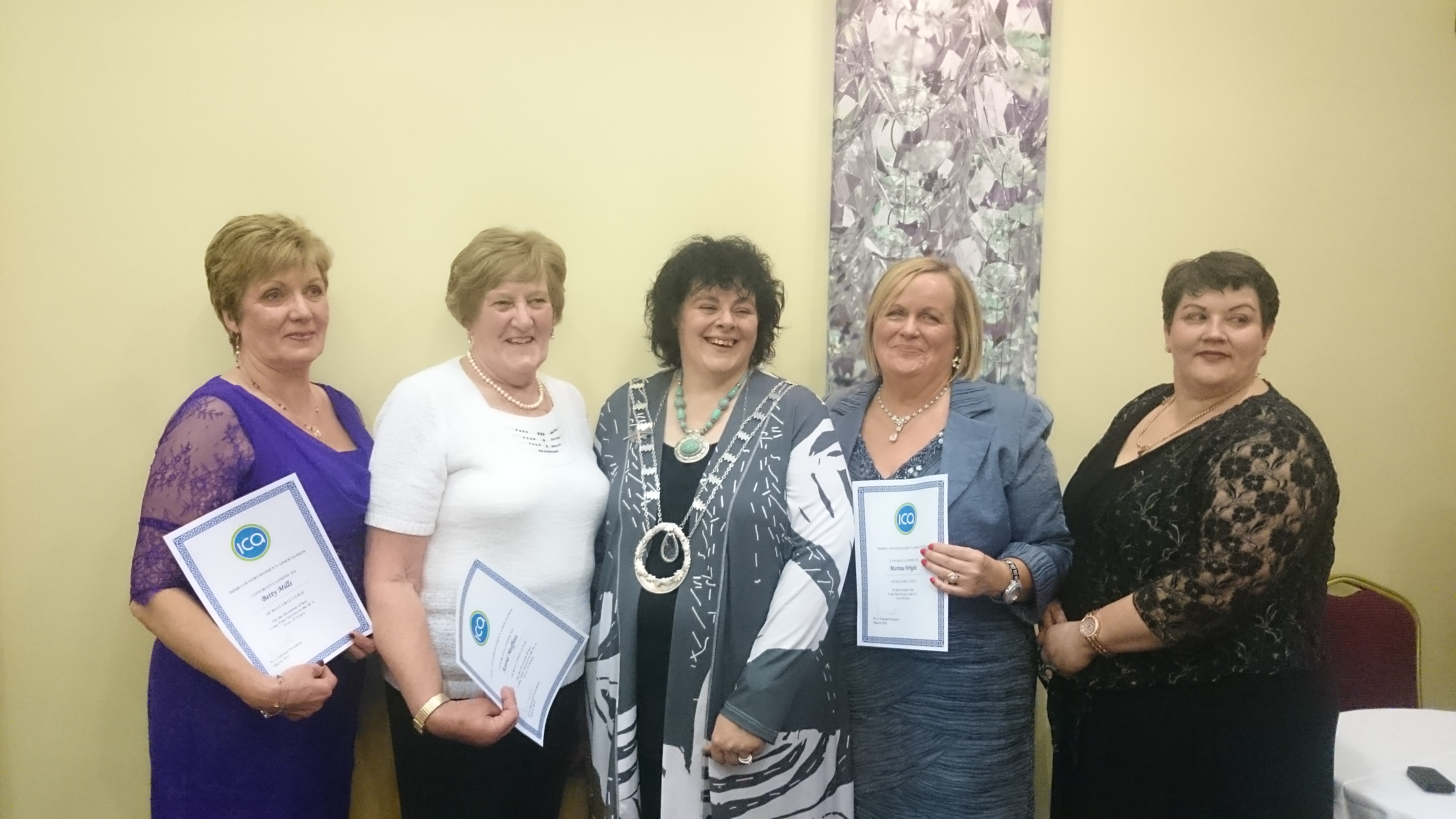
“We are not a group of fuddy-duddies, although many people have that perception. Just look at the number of women out on the dance floor tonight, enjoying themselves”. The President of the Irish Countrywomen’s Association Liz Wall was speaking to me after presenting 161 members in thirteen Monaghan guilds with their long service certificates. When the sums were done, the result was that all these ladies had given a total of 4400 years’ dedication to the aims of the ICA in the county, what seems to be a unique record for any voluntary organisation. Two guilds, Aghabog and Clones, accounted for over a quarter of that figure.

ICA President Liz Wall presents members of Ballybay Guild with their long service certificates  Photo:  © Michael Fisher

ICA President Liz Wall presents members of Ballybay Guild with their long service certificates
Photo: © Michael Fisher

Liz has made three previous visits to the county during her three years in office, which will end in May when her successor will be elected at the AGM in Portlaoise. In October 2013 she opened a conference in Monaghan on Recovery, organised by the Solas Drop-in Centre Monaghan. It was an example of the work the ICA does to promote mental health.

With over 500 guilds throughout the country and around 10,000 members, Liz is very anxious to keep in touch with the members at grassroots level. She finds out their views by sending out questionnaires during the year. These included the Mental Health Survey, the abortion questionnaire, the audit of lace work in Ireland and a rural communities questionnaire.

ICA President Liz Wall presents members of Ballybay Guild with their long service certificates  Photo:  © Michael Fisher

ICA President Liz Wall presents members of Threemilehouse  Guild with their long service certificates
Photo: © Michael Fisher

The ICA National President recently added her  voice to the Save Rural Ireland campaign. “If rural Ireland dies, we won’t be able to bring it back”, she told me. “I think it’s a very important campaign. Unless someone puts down a marker to do something, nothing will happen.” The campaign includes groups such as Muintir na Tire, the Irish Cattle & Sheep Farmers Association, the Irish Postmasters’ Union, Macra na Feirme, and the Irish National Flood Forum.

The issues raised at its launch include the need for high-speed rural broadband, the continued threat of rural post-offices closures, the theft of scrap metal, the unavailability of insurance in flood areas, and the need for more rural GP cover.

The number of post offices has fallen from 2,300 in 1984 to about 1,100 now. “When the post office goes, the shops go, the chemist goes and then the public bus service goes,” Liz Wall says. “Our members feel that rural Ireland is being totally destroyed. It needs help before it is too late for rural communities.”

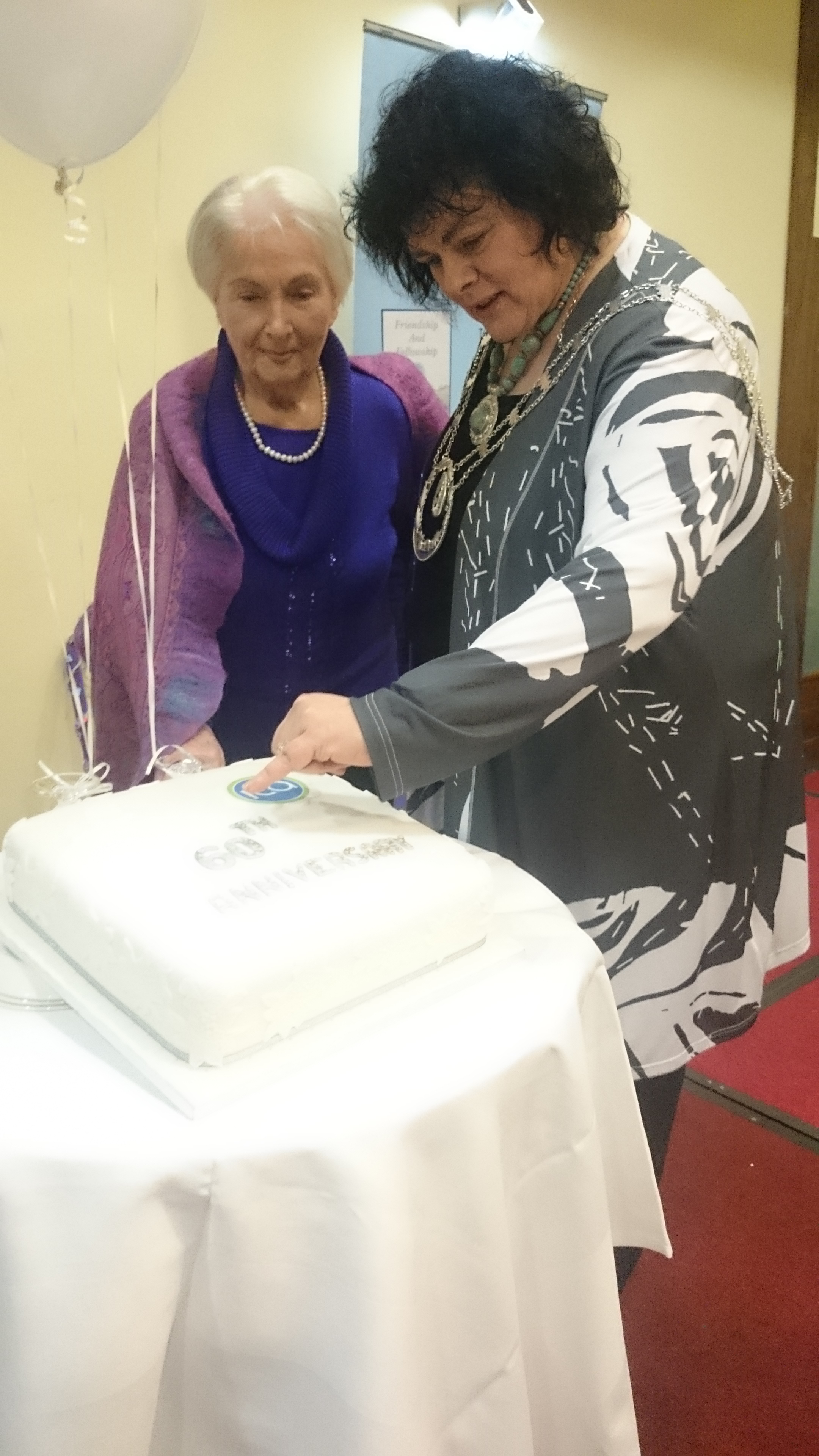
ICA National President Liz Wall cuts the 60th anniversary cake (by Mary Reilly Rockcorry) with one of her predecessors Mamo McDonald from Clones  Photo:  © Michael Fisher

ICA National President Liz Wall admires the 60th anniversary cake (by Mary Reilly Rockcorry) with one of her predecessors Mamo McDonald from Clones
Photo: © Michael Fisher

She paid tribute to one of her predecessors, Mamo McDonald, who helped her cut the cake at the diamond jubilee dinner. She had played a very big role during her term as National President, Liz said.

Before taking on the role of President, Liz Wall served as National Secetary of the ICA. She has visited guilds all over the Republic and has clocked up over 110,000 miles on her car. Last weekend, including the visit to Carrickmacross, she would cover 1500 miles and visit Dundalk and Galway before returning home to Ashford in County Wicklow. She is married and has three daughters who are university students and a 17 year-old son who is in Leaving Certificate year. Before the night concluded at The Shirley Arms Hotel in Carrickmacross, a cheque was presented by the Monaghan Federation to the National President for €2,800 towards the restoration of An Grianán, the Association’s residential college and conference centre in Termonfeckin, County Louth.

ICA Monaghan Federation President Patricia Cavanagh presents cheque to National President Liz Wall for €2800 for restoration of ICA College Termonfeckin  Photo:  © Michael Fisher

ICA Monaghan Federation President Patricia Cavanagh presents cheque to National President Liz Wall for €2800 for restoration of ICA College Termonfeckin Photo: © Michael Fisher

Outgoing ICA Monaghan Federation President Patricia Cavanagh, Ballinode Guild Photo:  © Michael Fisher

Outgoing ICA Monaghan Federation President Patricia Cavanagh, Ballinode Guild Photo: © Michael Fisher

ADDRESS BY OUTGOING ICA MONAGHAN FEDERATION PRESIDENT PATRICIA CAVANAGH
A Uachtarain Naisiunta agus a chombhaill. Ta athas orm faílte a chuir roimh go leir chuig an ocaid speisialta seo anocht.
Madame President, fellow members and special guests, I am delighted to welcome you all here this evening. This year Monaghan Federation ICA celebrates its Diamond jubilee and as part of our celebrations, tonight we will receive our long service certificates for those who are 15 years or longer in ICA in Monaghan. Many thanks to our National President Liz Wall for agreeing to come and be with us on this very special occasion.

Rosa Patterson, founder member of ICA Guild Ballybay 60 years ago Photo: ICA Monaghan book

Rosa Patterson, founder member of ICA Guild Ballybay 60 years ago Photo: ICA Monaghan book

Sixty years ago as Rosa Patterson cycled to and from her work as a primary school teacher in the Ballybay area she stopped and spoke to the local women as they went about their many daily chores on the farm and in the home and realised the need to form a women’s group in the area where women could come together, socialise, learn new crafts and generally discuss items of interest that was common to them all. She maintained that every woman had their own individual potential and skills and encouraged the use of them. Ballybay Guild opened in January 1954 and in June 1955 Monaghan Federation held its first meeting in Hatton’s hotel Ballybay with at least six guilds in the County at this stage. Rosa Patterson became its first President and from there we ventured forward to make our mark in the world of ICA as we know it today.

Monaghan can be proud that two National Presidents were elected from its midst. The first was Josephine Carroll 1972 -1975. Josephine worked tirelessly for the Save Monaghan Hospital campaign and was a skilled craftworker and craft teacher with a keen interest in country markets. She was responsible for the setting up of two branches of country markets, here in Carrickmacross and in Monaghan town. Secondly Mamo McDonald, who joins us here this evening. She became President in 1982.

ICA National President Liz Wall, Honorary President Mamo McDonald and outgoing Monaghan Federation President Patricia Cavanagh Photo:  © Michael Fisher

ICA National President Liz Wall, Honorary President Mamo McDonald and outgoing Monaghan Federation President Patricia Cavanagh Photo: © Michael Fisher

There have been many events and gatherings over the years and many women have gained so much from being part of this wonderful organisation at all levels. In 1993 Monaghan ICA was alarmed by the introduction of probate tax in the budget which was going to involve the surviving spouse where joint ownership did not exist facing a new tax. A resolution was passed and brought to National Council calling for its abolition which was then brought to government. An alliance was formed with other interested parties which led to many exemptions being secured.

ICA Monaghan Federation celebration dinner, Shirley Arms Hotel  Photo:  © Michael Fisher

ICA Monaghan Federation celebration dinner, Shirley Arms Hotel Photo: © Michael Fisher

In 1994 when the teachers’ centre in Monaghan was in danger of being downgraded, the ICA got behind the campaign and petitioned for it to be retained. In 1996 Monaghan Education centre was upgraded to a full-time education centre. At our last Federation meeting we discussed the downgrading of the library service in County Monaghan, where we are going to be amalgamated with County Cavan library services. Once again we hope to petition against this. I could speak of many of our events and achievements, but at this stage I would like to pay tribute to members who are no longer with us. We hope that into the future that ICA will remain strong and vibrant and continue to support women to support each other on their journey through life.

I will finish with this short poem written by a member of Threemilehouse Guild, Kathleen Kieran, who sadly is no longer with us:-
As we celebrate our 60th,
Let’s cast back our thoughts today,
To the women of foresight and courage,
Who founded the ICA,

They gave women a stance in our country,
The voice that was silent now heard,
To speak out for fair play and justice,
That the wealth of our country be shared.

A BUSY THREE YEARS AS FEDERATION PRESIDENT

Patricia Cavanagh from Tullyvogey in Tydavnet was one of the founder members of the ICA’s Ballinode guild at a meeting in the community centre in Otober 1983. Her sister Breege Lenihan also joined. She has had a very busy three years as President of the Monaghan Federation. It is one of five areas in the country that has seen a growth in members, whereas other counties have been in decline. There are around 260 members in the thirteen guilds in the county. The work the Association does to encourage crafts was one of the reasons Patricia joined. Learning skills that can be passed on to a younger generation.

Their trips over the years to the ICA college at An Grianán introduced them to a wide variety of crafts and courses such as cookery, aromatherapy, healthy lifestyle, ballroom dancing and gardening. The Ballinode guild has around thirty members and meets in Tydavnet community centre on the second Thursday of each month. It raises funds annually for different charities and every year their entries feature in Tydavnet Show.

Patricia says the ICA has played a major role in the social, educational and cultural lives of Irish women since its inception. It now aims to attract younger and new members. Any female over 16 is eligible to join. Although it is perceived widely as a predominantly rural group, the “country” in the title stands for Ireland, and the biggest ICA guild is in Blanchardstown, County Dublin.

ICA National President Liz Wall congratulates Killanny Guild members on their long service certificates, among them Mary Callan (right), mother of comedian Oliver Callan  Photo:  © Michael Fisher

ICA National President Liz Wall congratulates Killanny Guild members on their long service certificates, among them Mary Callan (right), mother of comedian Oliver Callan Photo: © Michael Fisher

The outgoing Federation President says she is proud to have been part of the Association and what it stands for. It has brought friendship, fellowship and comradeship, she says. Patricia gained a particular insight into the history of the organisation when she consulted the ICA minute books held in the National Archives in Dublin. Along with a committee, she helped to produce a book “Friendship and Fellowship: ICA, The Monaghan Story” to mark the national centenary in 2010.

During her term Patricia has visited most of the thirteen guilds in Monaghan. As a former psychiatric nurse, one of the highlights for her was when the ICA along with the Solas centre marked World Mental Health Day in 2013 by organising a Recovery conference in Monaghan, which the National President attended. Liz Wall also came to Carrickmacross for a very successful craft day. The ICA has been to the forefront in helping to preserve both Carrickmacross Lace and Clones Lace.

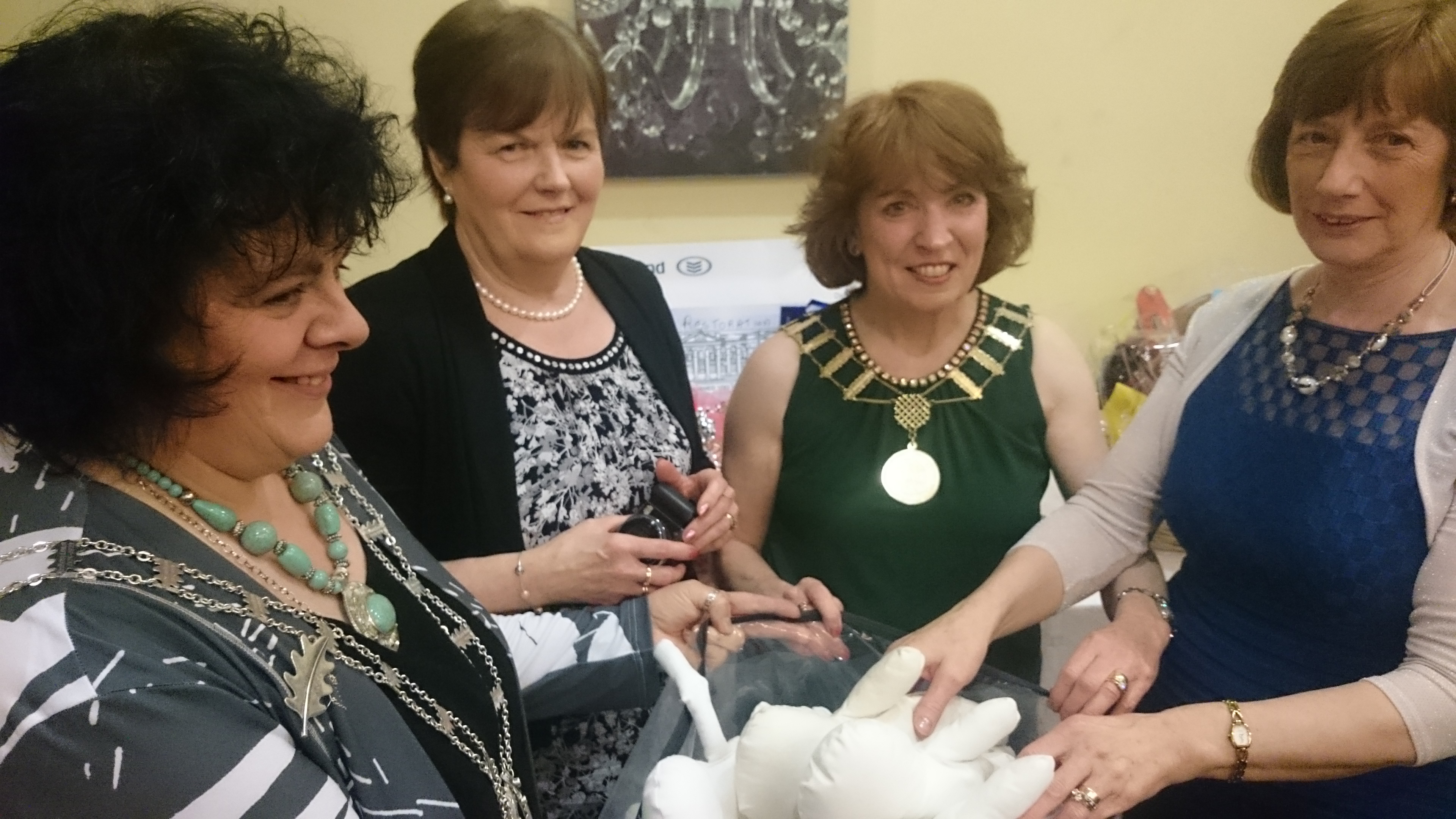
Calico dolls made for Temple St Children's Hospital by members of ICA Guilds in Clones and Ballinode   Photo:  © Michael Fisher

Calico dolls made for Temple St Children’s Hospital by members of ICA Guilds in Clones and Ballinode Photo: © Michael Fisher

During the celebration there was an example of how ICA members can use their skills to help others. The play therapists at Temple Street Children’s Hospital in Dublin contacted the women’s group to see if any members could make calico dolls. These dolls are used with the young patients, allowing them to colour in and make unique to themselves their illness or condition and to explain to them their treatment. Sacks of the dolls were handed over at the dinner and will be forwarded by the ICA to the hospital. As a mark of thanks for her service in Monaghan, Patricia Cavanagh was presented with a silver oak leaf brooch by the National President at the end of a very enjoyable evening marking the achievements of the Irish Countrywomen’s Association.

HONORARY NATIONAL PRESIDENT MAMO McDONALD CLONES GUILD

ICA Honorary President Mamo McDonald, Clones Guild, receives her certificate from National President Liz Wall for 60 years of ICA membership  Photo:  © Michael Fisher

ICA Honorary President Mamo McDonald, Clones Guild, receives her certificate from National President Liz Wall for 60 years of ICA membership Photo: © Michael Fisher

Mamo McDonald from Clones Guild served as National President of the ICA for three years from 1982 to 1985. She said it was the beginning of an adventure that was fulfilling, exciting, educational, exhausting and always challenging. In ‘Friendship and Fellowship’, the history of the ICA in County Monaghan published in 2010, the ICA’s Centenary year, Mamo revealed that it was the leadership of another National President from Monaghan, Josephine Carroll, that encouraged her to run for the position. This was at a time when the ICA membership was at an all-time high of 27,000 members.

“Mamo originally joined the Association in Croom, County Limerick, in 1947 and went on to help found the Clones Guild. It was just after the Second World War and there were many scarcities. Mamo recalled: “In one of my first meetings we learned to cure lamb skins and to make slippers and soft shoes lined with fleece. Today my Guild has lots of younger members, many of whom have joined in the last few years. What do they want to learn? They want to learn to knit, sew, make Clones lace and to learn other craft skills. We have come full circle”.

In another ICA publication Mamo said one of the highlights for her was bridging the gap with the radical feminist movement. “Before my time they were considered “the enemy” and it was a huge challenge for both sides to accept each other and realise that we were usually singing from the same hymn sheet and were able to work more together”, she said. During her presidency the different women’s groups grew closer and closer, supporting each other, and the ICA became more a part of the Irish Women’s movement.

Mamo said she believed the opportunity to travel was one the greatest opportunities she got as National President and the other was the chance to sit on national committees and to really make a difference.

“Before I became President of ICA I had been concentrating on raising my large family and the only holidays I got were short visits to An Grianán”, she said. “Then as President I travelled many times to London working with the Associated Country Women of the World, further afield working with the Confederation of Family Organisations in the EU and I travelled to Canada and to Nairobi in Africa as a delegate to the United Nations International Conference on Women. Being invited to join government- appointed committees was also a great opportunity”.

Mamo recalled: “As a businesswoman with a drapery shop in County Monaghan, I knew a lot about the responsibilities that go with the rights of consumers, so I often spoke out about it. I was invited to join the Committee for Consumer Education. As I was travelling widely at the time, I noticed differences in the welcome received in hotels and establishments in these countries that was often lacking in Ireland. After a visit to Vancouver where I had been very impressed with the customer service I spoke out about the failings in the hospitality sector in a speech entitled ‘Céad Míle Faults?’ and was then invited to join Bord Fáilte”.

The great disadvantage during her presidential term, she said, was being away from home and from her family and that proved very difficult at times. “I have eleven children and I always felt guilty when I was away. When I came in as President some of my children where working, some were in university, some in secondary education and even little ones still in primary school. My husband Eugene died in 1979 so during my presidency, I relied on the wonderful support and great friendship of Patsy our housekeeper and wonderful friend; I couldn’t have done the work of President without her. When I was at home I spent a lot of time baking so that there would be loads of loaves of brown bread in the freezer for everyone and then when I was at home, I felt guilty about not being at work for ICA!”

After her term in office Mamo became involved in the politics of ageing. She is a founder member of Age and Opportunity and the Older Women’s Network. When she was 70, Mamo McDonald returned to full-time education and did a higher diploma followed by a Masters in Women’s Studies in UCD. She delights in her thirty-two grandchildren and four great-grandchildren who visit her regularly.

(from an interview with ICA News)

Irish Countrywomen's Association

Irish Countrywomen’s Association