THIEPVAL VISITOR CENTRE

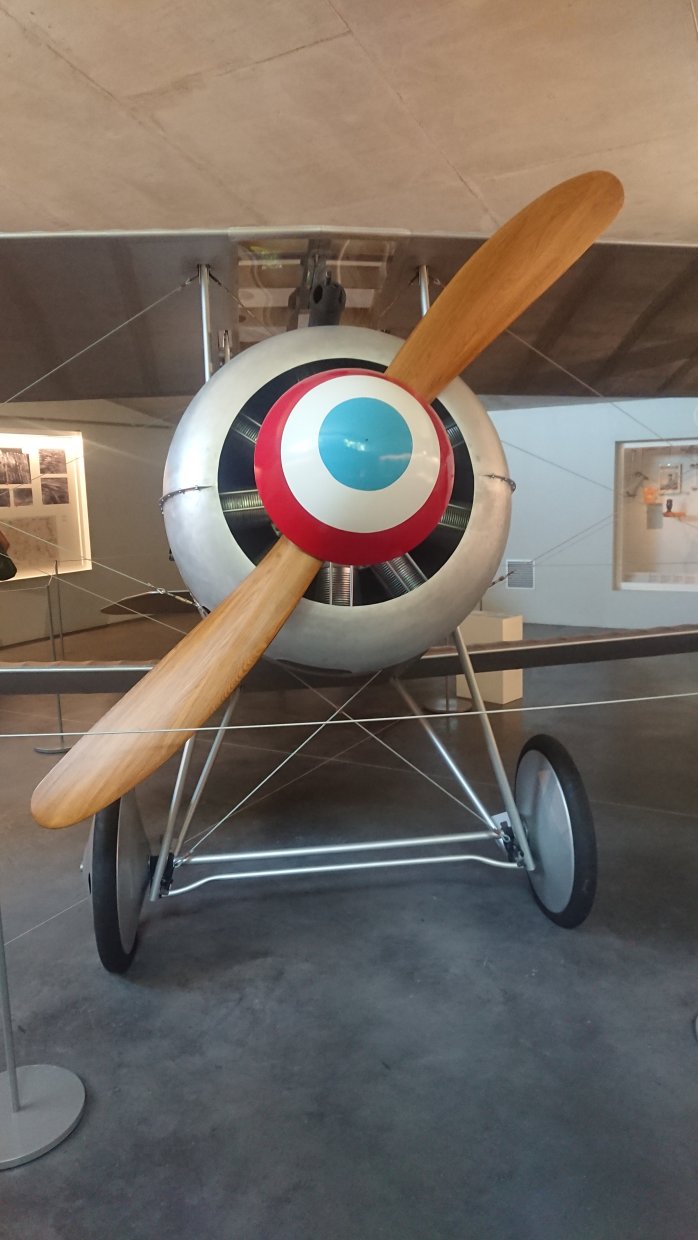
When you arrive at the CWGC memorial at Thiepval, there is a visitor centre you can enter. There is a museum with WWI artefacts, including a full scale replica of a Nieuport 17 ‘Vieux Charles V’ biplane piloted by Georges Guynemer, a famous French flying ace. He was reported as missing in action in 1917, after more than fifty successful combat missions against the Germans.

Replica of the WWI plane flown by Georges Guynemer

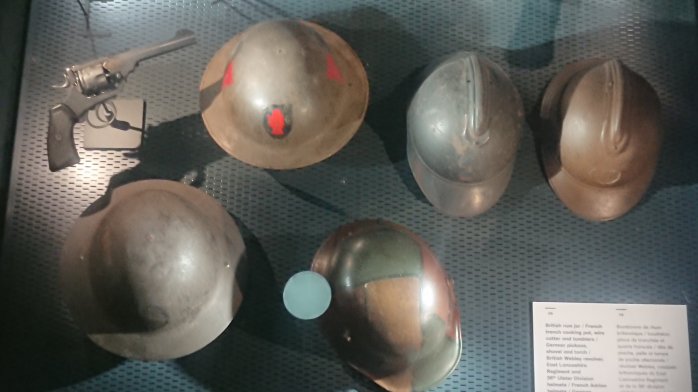
There are examples of ordnance including shells and weapons such as a Vickers machine gun. A helmet with the red hand symbol of the 36th Ulster Division can be seen in one of the exhibition cases.

Helmets including one from 36th Ulster Division

The visitor centre, built in 2004, also incorporates the Thiepval Museum. The museum opened in June 2016 to mark the centenary of the 1916 Battle of the Somme. The visitor centre and museum are located a short distance from the Thiepval Memorial to the Missing of the Somme and the Thiepval Anglo-French Cemetery. The idea for a visitor centre museum was first discussed at the annual ceremony of Remembrance on 1st July 1998. Sir Frank Sanderson led a small group in the campaign to build this educational centre. The Anglo-French project was brought to fruition with the help of generous donations to meet the British fundraising target of £660,000.

The visitor centre has been imaginatively constructed at ground level so that it does not impact as an obtrusive building on the local area around the Thiepval Memorial. It welcomes many thousands of visitors to the Thiepval Memorial to the Missing each year. At the centre the memorial is put in the context of the battlefield. Display panels in three languages — English, French and German — provide an overview of the course of the Great War from 1914-1918. Display panels focus on the events during the Battle of the Somme in 1916 which occurred at the small village of Thiepval and its surroundings.

Vickers machine gun

In British service, the Vickers gun fired the standard .303 inch cartridges used in the Lee Enfield rifle, which generally had to be hand-loaded into the cloth ammunition belts. There was also a 0.5 in calibre version used as an anti-aircraft weapon and various other calibres produced for foreign buyers. The gun was 3 feet 8 inches (112 cm) long and its cyclic rate of fire was between 450 and 600 rounds per minute. In practice, it was expected that 10,000 rounds would be fired per hour, and that the barrel would be changed every hour—a two-minute job for a trained team.

Vickers machine gun

Three films, each lasting approximately 10 minutes, have been specially compiled covering the subjects of Thiepval, The Battle of the Somme and Memory. The museum provides information, maps, photographs and audivisual experiences to help visitors understand the battles that took place in the Department of the Somme.

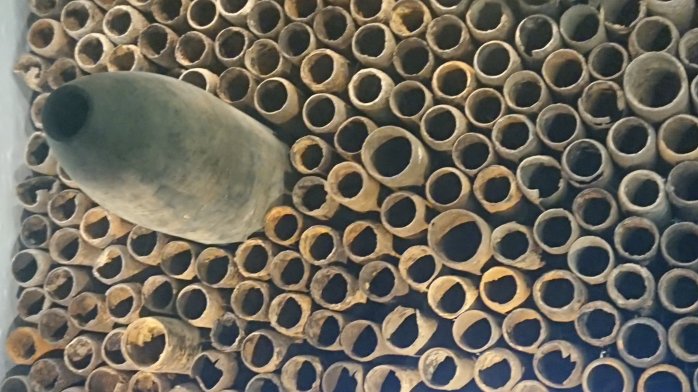
WWI shells at Thiepval museum

OCEAN VILLAS WW1 MUSEUM

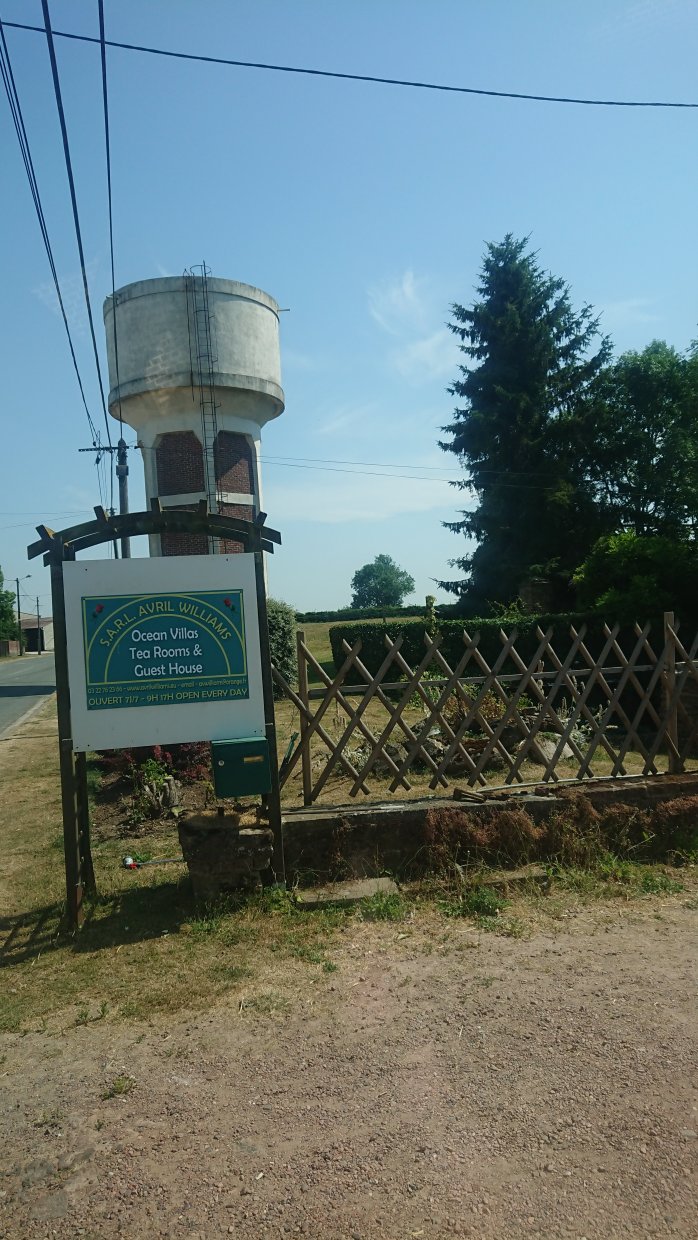
Sign for Ocean Villas Tea Rooms, Auchonvillers

In 1992 Avril Williams and her two children arrived at Auchonvillers and moved into an abandoned farmhouse. Over the past twenty-five years the family has renovated the farmhouse and it has become well-known as a popular venue for visitors to the Somme battlefields. Among the many regimental and other plaques on the wall was one left by my colleagues in the Military Police Association of Ireland, who were there last year.

MPAI plaque at Ocean Villas

The village of Auchonvilliers was renamed “Ocean Villas” by the British soldiers after they arrived on this part of the Somme battlefront in the summer of 1915.

Avril and her family named their farmhouse “Ocean Villas” and have expanded the site to comprise numerous educational facilities for visitors, including a venue for lectures, the museum and an orignal section of British trench.

This is a collection of rare and important militaria and memorabilia from the First and Second World Wars, gathered over many years by military historian and collector André Coillot. To prevent the collection from being dispersed Avril Williams purchased it in its entirety and has re-housed it in a refurbished building next to her guest house and tea rooms.

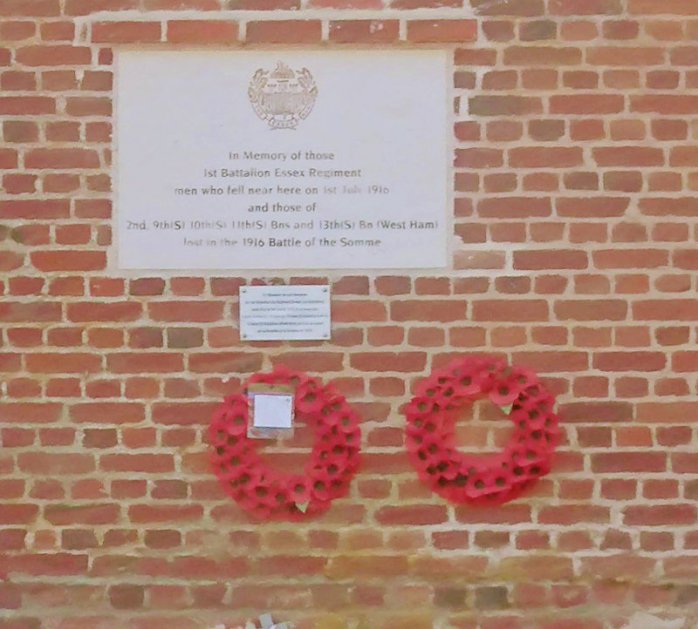
Plaque at Hamel for Essex Regiment, Battle of the Somme

This plaque on the side of the rebuilt church at nearby Hamel remembers the men of the 1st Battalion Essex Regiment killed there on the first day of the Battle, July 1st, and the other Essex battalions who fought on the Somme in 1916. It is not far from Thiepval Wood where the 39th Ulster Division went into action.

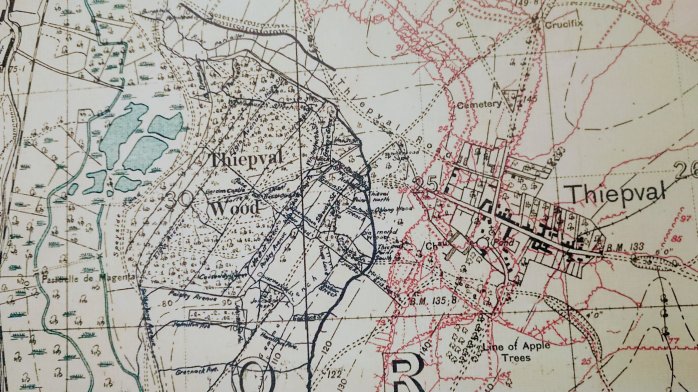
Map (table mat) of British lines around Thiepval 1916

This museum at Auchonvillers is the only military collection on the Somme battlefields which comprises First and Second World War artefacts. This museum was opened on 1st July 2008 by Major Tonie and Mrs Valmai Holt.

Plaques on the wall including MPAI at Ocean Villas tea rooms and museum

PTE THOMAS HUGHES VC

Private Thomas Hughes of the 6th Battalion Connaught Rangers was born in Corravoo, Castleblayney, in 1885. He was 29 when the Great War began. He was awarded the V.C. for actions at Guillemont in France during the Battle of the Somme on 3rd September 1916. Plaques at the Catholic church in Guillemont commemorate him and two other holders of the Victoria Cross. Our group visited the church on the third day of our visit to World War One sites.

The citation read: “For most conspicuous bravery and determination. He was wounded in an attack but returned at once to the firing line after having his wounds dressed. Later seeing a hostile machine gun, he dashed out in front of his company, shot the gunner and single handedly captured the gun. Though again wounded, he brought back three prisoners”.

4628754536_541x408-355600925.jpg

King George V presents Pte Hughes with his VC in Hyde Park in 1917

Walking with the aid of crutches, Hughes was personally awarded the Victoria Cross by King George V at an investiture at Hyde Park in London on 2nd June 1917. He also received the 1914–15 Star, British War Medal and Allied Victory Medal. Hughes was later promoted to the rank of Corporal. It was his custom each year to attend the Armistice Day ceremony at the Cenotaph in London. When he returned to Ireland, it was a very different country to the one he had left. Soldiers who had gone to fight in the British cause were often shunned and their exploits were largely forgotten.

Thomas Hughes died on 8th January 1942, aged 56, and is buried in the cemetery at St Patrick’s Church, Broomfield. His Victoria Cross medal is held by the National Army Museum, Chelsea in London.

16819128_1883349765278339_3642773320443749856_o-1405427655.jpg

Grave of Pte Hughes in Broomfield, Co. Monaghan Pic. Monaghan Heritage

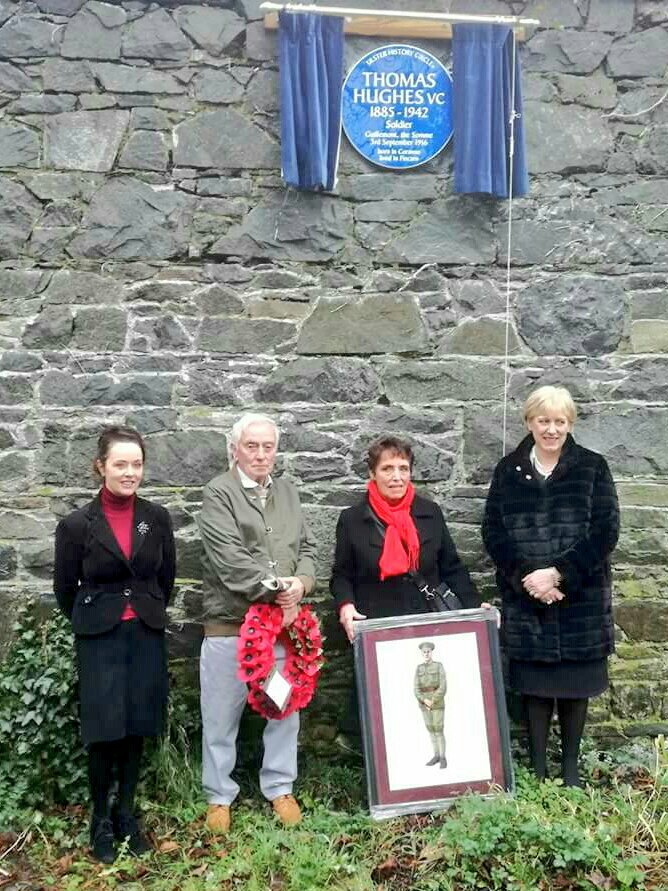
Speaking at the unveiling of a blue plaque memorial for Pte Hughes in Castleblayney in February 2017, Minister Heather Humphreys said she had travelled to Thiepval and Guillemont in July and September in 2016, to mark the 100th anniversary of the Battle of the Somme, and to remember the many Irish men who died there from the 36th Ulster Division and the 16th Irish Division. In the small, beautiful church in Guillemont, a tiny village in Northern France, she saw the plaques on the wall in honour of Thomas Hughes.

Hughes is one of 27 Irish holders of the Victoria Cross for whom the British government arranged a paving stone to be placed at Glasnevin Cemetery in Dublin, paid for by the Commonwealth War Graves Commission.

4630431030_357x468

Stone for Pte Hughes VC unveiled at Glasnevin

Despite the romance sometimes portrayed in newspaper columns such as the Northern Standard, recruitment to the British Army remained very low for the county for the entire war. By October 1916 only 738 men from County Monaghan had answered the call to enlist, the majority being Protestants (although they represented approximately one-fifth of the population at the time). Slow recruitment was blamed several times on the prominence of agriculture in the county, with the farming classes accused of not wanting to go to war because they were prospering financially.

In total around 2,500 Monaghan men served in the Great War. There were notable contributions from some families. Seven Roberts brothers from Killybreen in Errigal Truagh all joined the British army at different stages. Seven sons of Sir Thomas Crawford of Newbliss served, and three of these were decorated for gallantry. Four Steenson brothers from Glaslough joined up and two were killed. In all, nearly 540 Monaghan men were killed in the war, about half of them Protestant and half Catholic.

img_20190818_185504-627168101.jpg

Blue plaque in Castleblayney for Private Thomas Hughes VC

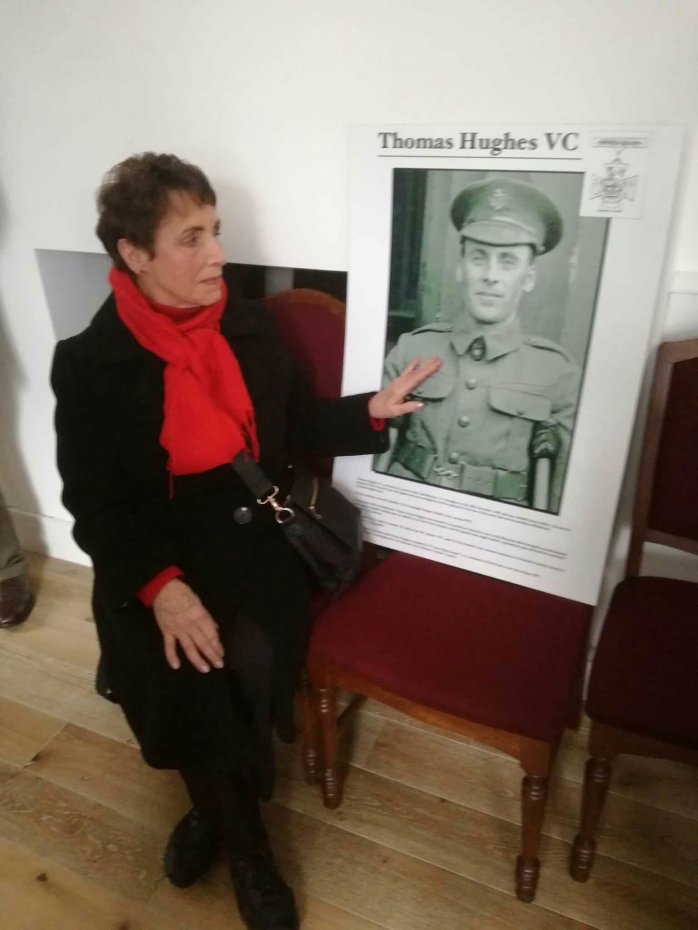
The unveiling of the Ulster History Circle blue plaque for Private Hughes in Castleblayney was attended by his niece Josephine (Hughes) Sharkey from Dundalk, and her daughter Siobhan. Other relatives included PJ McDonnell, (originally from Broomfield), Chair of the Monaghan Association in Dublin. His father’s mother and the mother of Thomas Hughes were sisters. Other relations came from the Donaghmoyne area, including Ann Christy, a grand niece, Brian Conway from Castleblayney, Pauline McGeough (Broomfield), Rosemary Hughes-Merry (Castleblayney), Angela McBride from Carrickmacross and a distant cousin, Frank Hughes, originally from Laragh.
img_20190818_185519-1750593536.jpg

Niece of Pte Hughes, Josephine Sharkey from Dundalk, with his portrait

The attendance included former members of the Irish Defence Forces from the Blayney Sluagh group, representatives of the Royal Inniskilling Fusiliers and the regimental museum in Enniskillen, members of the Lisbellaw and south Fermanagh WW1 Society (who also visited the grave of Private Hughes), and the curator of Monaghan County Museum, Liam Bradley, who had organised a number of events for the 1916 Somme centenary.

Siobhan (Hughes) Sharkey read a poem which had been specially composed for the occasion of the presentation of the Victoria Cross to Private Hughes in 1917. On his return to Castleblayney, the urban district council with Lord Francis Hope arranged an address of welcome for Hughes to celebrate his bravery on winning the “coveted trophy which is emblematical of the highest bravery on the battlefield”. Local dispensary Dr J.P. Clarke said it was with great pleasure he read in the press of the coveted decoration “being pinned to the breast of our hero.” He did not know whether it was time for poetry or not, but anyhow he could recite them a few lines he had composed for the occasion (in Castleblayney in 1917)…

POEM: THOMAS HUGHES V.C.

Before the Kaiser’s war began with frightfulness untold,

How many a peaceful hero worked in many a peaceful fold,

How many a valiant soldier strove to keep the home fires bright,

How saddened skies weep over their graves in pity through the night.

From Suvla Bay to doomed Ostend, from Jutland to Bordeaux,

They fought and bled and died to save these countries from the foe;

In Flanders, France and Belgium, from Seine to Grecian shore,

Brave were the deeds and bright the hopes of boys we’ll see no more.

‘Mongst them times forty thousand men picked out from Ireland’s sons,

Who went to fight the Austrians, the Bulgars, Turks and Huns,

How few returned with due reward their valour to repay,

But Thomas Hughes of Corravoo, V.C., is here to-day.

A Blayney man whose noble deeds uphold our country’s pride,

Who saved his comrades, took the gun, cast thought of self aside,

And changed defeat to victory in blood-soaked trenches when,

He ranked with bravest of the brave — the Connaught Rangers men.

Tom Hughes was reared where sun at dawn makes shadows lightly fall,

Across Fincarn’s ancient hill so sacred to us all;

For there tradition tells an Irish hero proudly rests,

Strong Finn McCool, the warrior, enshrined in Irish breasts,

Near by the road in Lackafin, beside lone Corravoo,

Remains of Irish chiefs are found in cromlech plain to view,

Among these scenes his youth was passed, no recreant was he,

For when his chance to fight arrived he well won his V.C.

He faced grim death while all around like Autumn leaves men fell,

He fought good fight and gained the day despite the raging hell

Of bullets, bayonets, shrapnel, Jack Johnson’s gas set free.

Now raise three cheers, and three times three, for Thomas Hughes V.C.!”
img_20190818_185512534402841.jpg

Unveiling of plaque in Castleblayney by Minister Heather Humphreys TD (right) and relatives of Pte Hughes VC

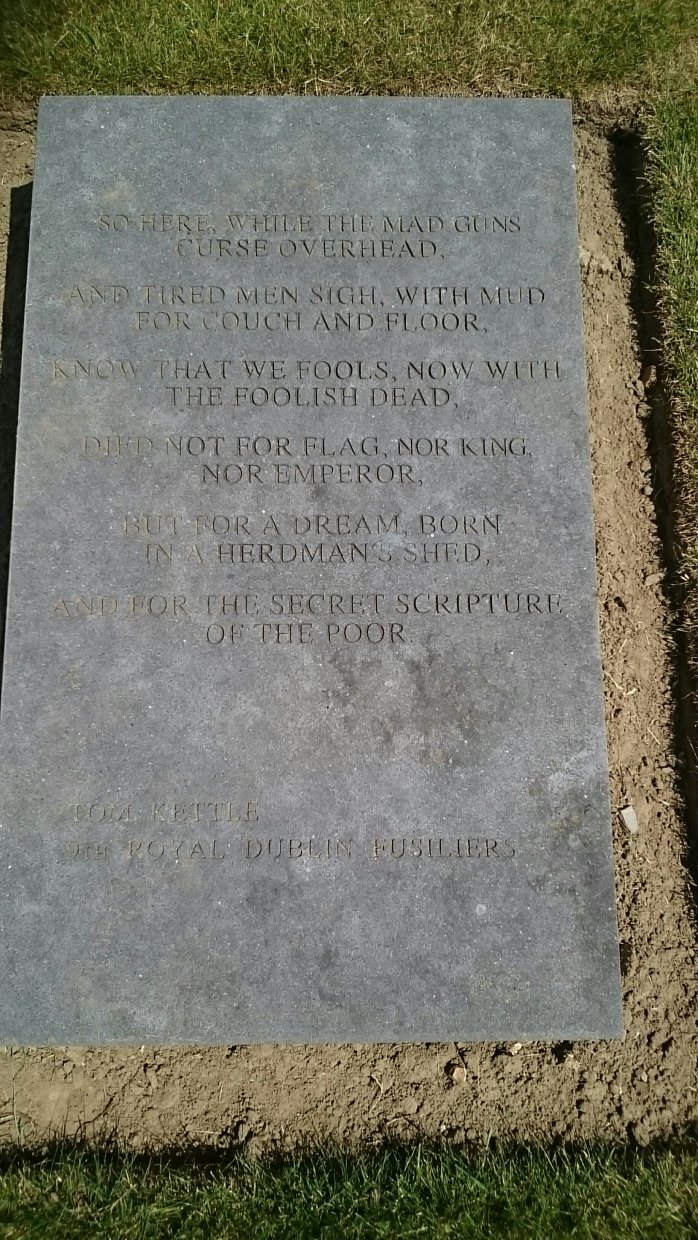
LT TOM KETTLE

Looking out at Trônes Wood near Ginchy from Guillemont Road Cemetery

From Guillemont Road cemetery you can look across the fields to what was once known as Trônes Wood, outside the village of Ginchy. Although the scene today is that of a beautiful rural landscape, it would have been very different during the Somme offensive in 1916.

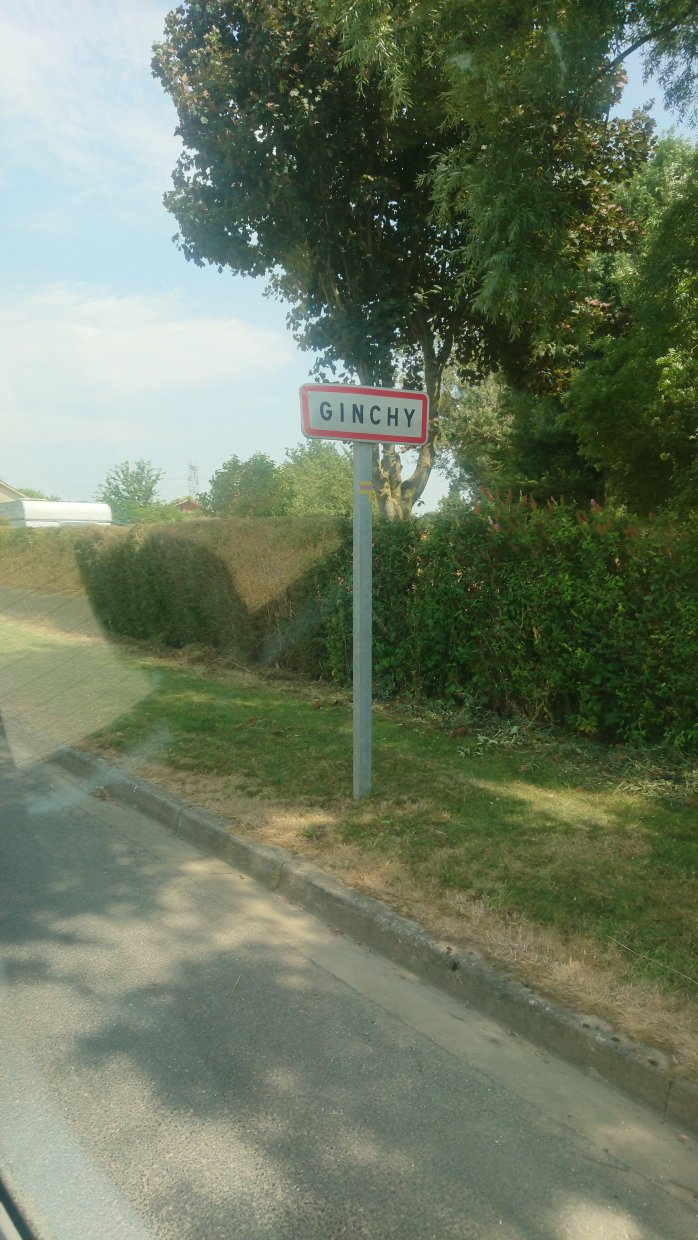
Ginchy is a small village

The trees in the wood would have been burned down and just scarred and scorched trunks remained.

The countryside near Ginchy

It was in this area that Lt Tom Kettle met his death. He was a temporary Captain with ‘B’ Company of the 9th Battalion of the Royal Dublin Fusiliers.

Tom_Kettle

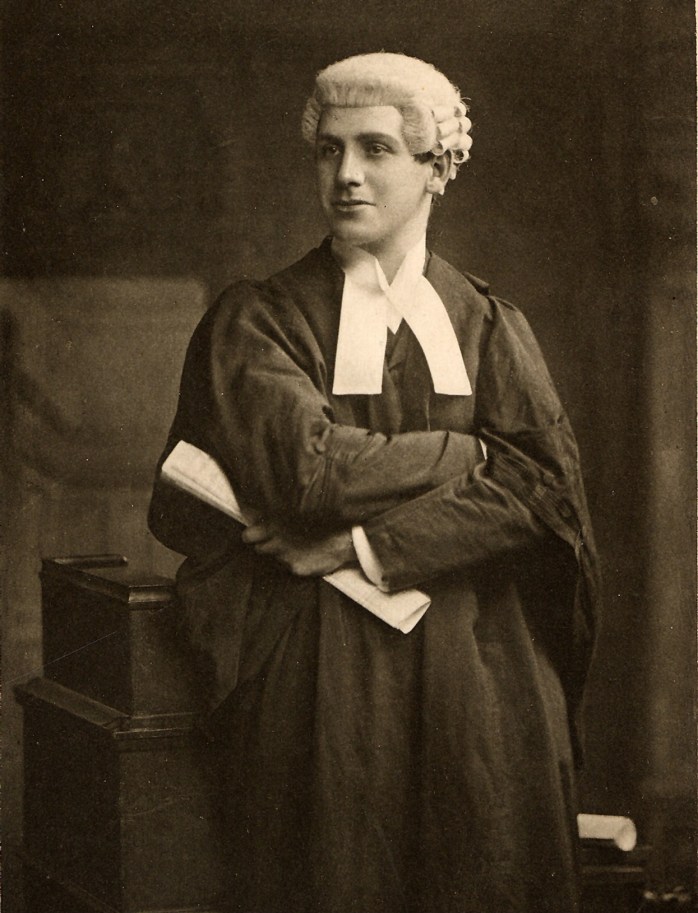
Tom Kettle BL c.1905

Kettle (then aged 36) was involved in an attack on German lines on 9th September 1916, near the village of Ginchy. During the advance Kettle was felled when the Dublin Fusiliers were ‘struck with a tempest of fire’. Having risen from the initial blow, he was struck again and killed outright.

The view from Guillemont Road Cemetery

His body was buried in a temporary grave by the Welsh Guards, but it could not be located when hostilities ceased. His name is etched on the huge monumental arch for the missing of the Somme at Thiepval.

Thiepval Memorial

The erection by of a commemorative bronze bust of Kettle in Dublin, commissioned from the sculptor Albert Power and finished in 1921, was beset for almost twenty years by controversy and bureaucratic obstruction owing to the antipathy of the state authorities post-Independence towards Irishmen who had fought in World War 1. It was finally raised in 1937, without an unveiling ceremony, in St Stephen’s Green.

A stone tablet commemorates him in the Island of Ireland Peace Park at Messines in Belgium.

Memorial at Irish Peace Park quoting Lt Tom Kettle, poet and soldier

He is listed on the bronze plaque in the Four Courts in Dublin which commemorates the 26 Irish barristers killed in the Great War. Kettle is also commemorated on the Parliamentary War Memorial at Westminster Hall in London, one of 22 present and former Members of Parliament that lost their lives during World War 1 to be named on that memorial.

WWI Memorial at Westminster Hall

A further act of commemoration came with the unveiling in 1932 of a manuscript-style illuminated book of remembrance for the House of Commons, which includes a short biographical account of the life and death of Kettle.

FLANDERS DAY THREE

Monument at Lochnagar Crater

Day three of our travels saw the group leave Ieper and head back across the border towards the town of La Boiselle in France. There we visited the Lochnagar crater.

Paying respect at Lochnagar Crater

Lochnagar Crater

Lochnagar Crater is in private ownership. The site was bought by Richard Dunning and the area is now run by a Trust.

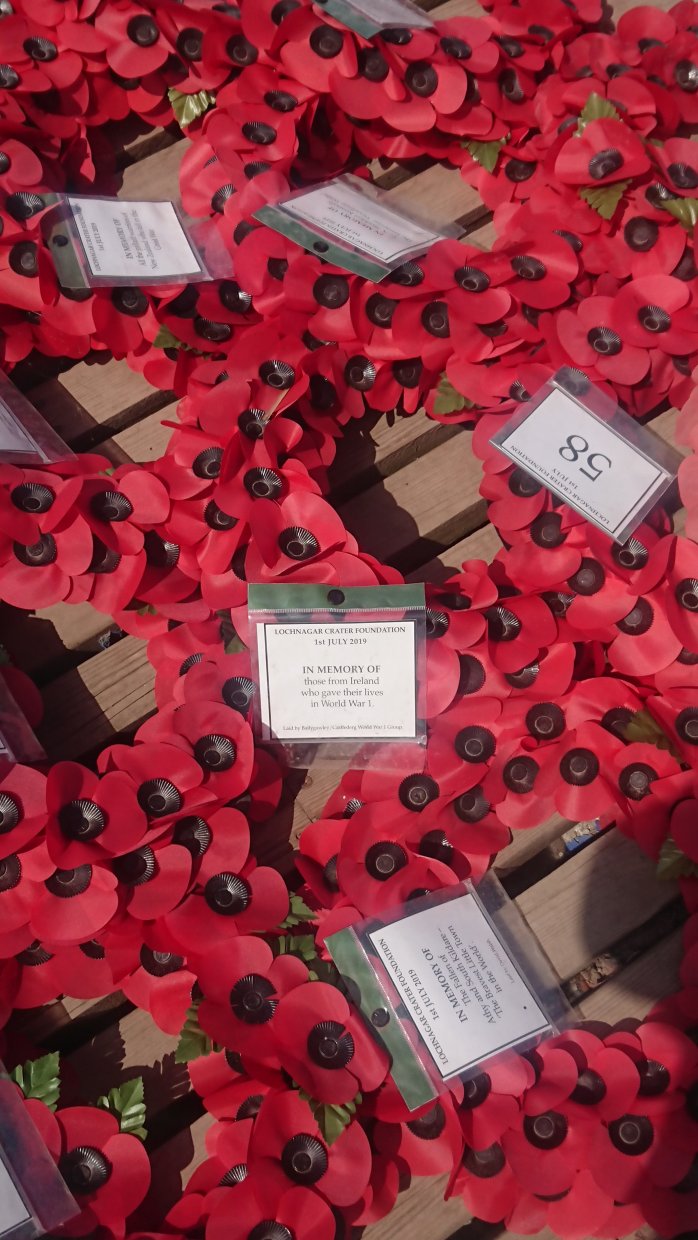
Wreaths left at the Lochnagar Crater

The British named the mine after Lochnagar Street, the British trench from which the gallery was driven. The charge at Lochnagar was one of nineteen mines that were placed beneath the German lines on the British section of the Somme front, to assist the infantry advance at the start of the battle.

The mine was sprung at 7:28 a.m. on 1 July 1916 and left a crater 98 ft (30 m) deep and 330 ft (100 m) wide, which was captured and held by British troops. The attack on either flank was defeated by German small-arms and artillery fire, except on the extreme right flank and just south of La Boisselle, north of the Lochnagar Crater. The crater has been preserved as a memorial and a religious service is held annually on 1st July.

Lochnagar Crater

More pictures of the Lochnagar Crater.

Path around the Lochnagar Crater which is owned by a Trust set up by Richard Dunning

Lochnagar Crater

Memorial to women who lost their lives serving in WWI

CHAPELLE D’ARMENTIÈRES CEMETERY

This CWGC cemetery where Captain Norman Leslie from Glaslough Co. Monaghan is buried is in France.
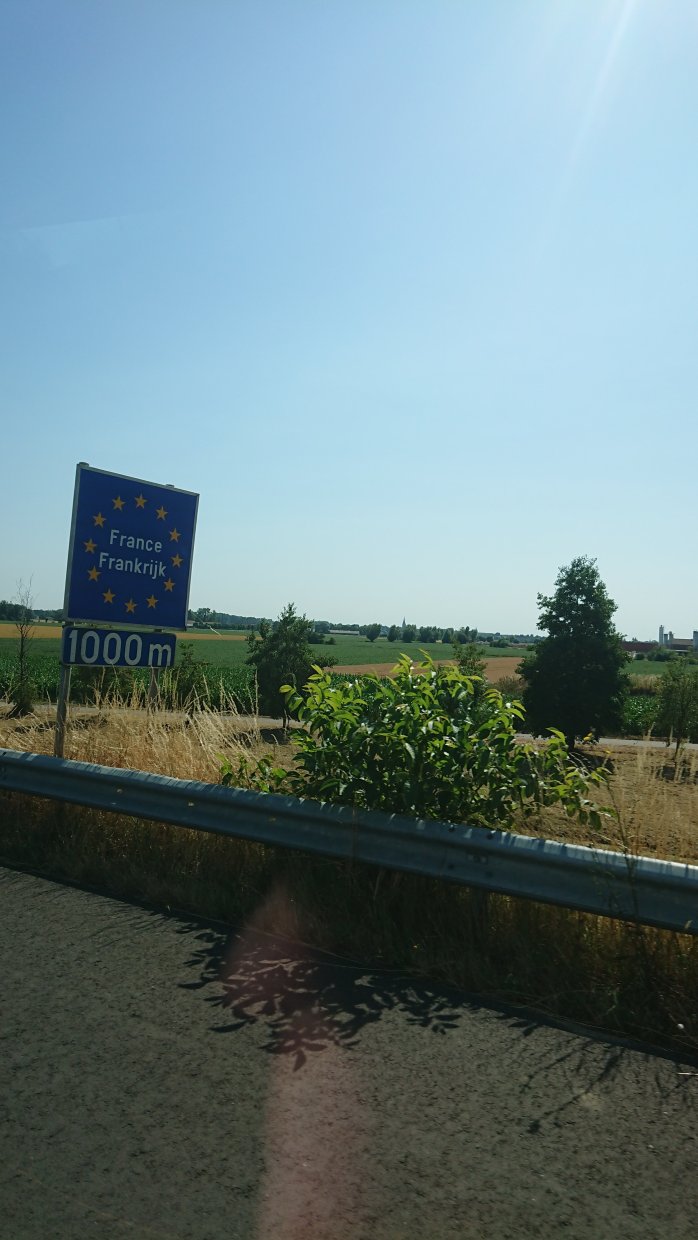
The seamless border between Belgium and France both in the Schengen Agreement

It is close to the border with Belgium at Houplines, and outside the village of La Chapelle-d’Armentieres, not far from Armentières itself.

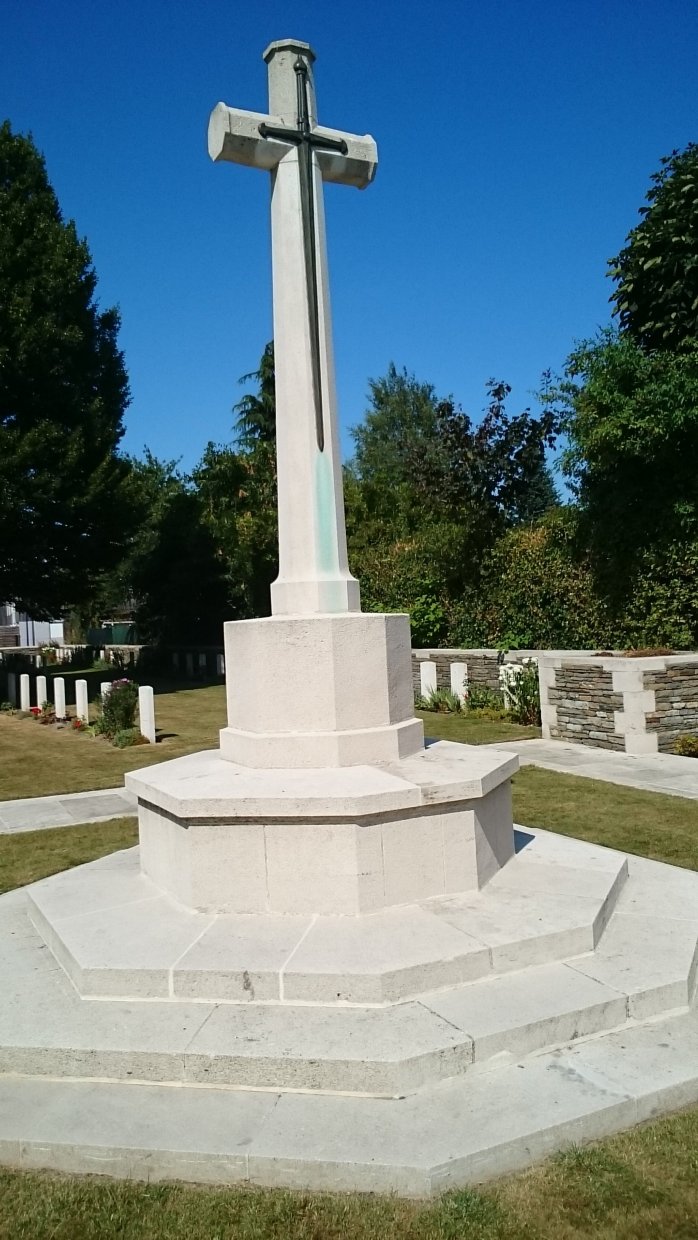
Cross of Sacrifice at Chapelle d’Armentières military cemetery

This area was in the hands of Commonwealth forces from October 1914 until the fall of Armentières on 10th April 1918. It was retaken in the following October.

Cross of Sacrifice at Chapelle d’Armentières military cemetery

During the Allied occupation, the village was very close to the front line and its cemeteries were made by fighting units and field ambulances in the earlier days of trench warfare.

Rifleman Brown of the Rifle Brigade

Chapelle-d’Armentières Old Military Cemetery was begun in October 1914 by units of the 6th Division and used until October 1915. The cemetery contains 103 First World War burials, three of them unidentified. The cemetery was designed by W H Cowlishaw.

Two graves of members of the Leinster Regiment

CAPTAIN NORMAN LESLIE


Untitled copy3edit

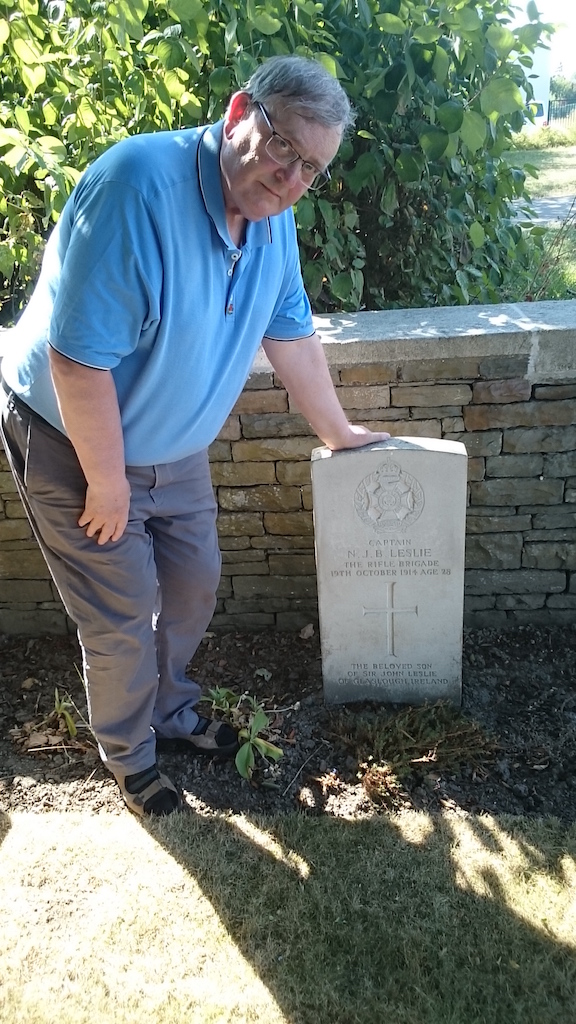
Paying respect at the grave of Captain Norman Leslie from Glaslough

Captain Norman Jerome Beauchamp Leslie from Castle Leslie, Glaslough died in the early stages of World War I. He served in the Third Battalion, the Rifle Brigade. 

Untitled copy4edit

Gravestone of Captain Norman Leslie

He was 28 when he was killed in action near Armentières on October 19th 1914. Mentioned in despatches. His grave is at La Chapelle d’Armentières military cemetery in France, not far from the border with Belgium.

Untitled copy1edit

Cross of Sacrifice 

He was the second son of Sir John Leslie 2nd Bart and Lady Leonie Leslie of Glaslough. His mother was a member of the wealthy Jerome family from New York and her sister Jennie married Lord Randolph Churchill, father of Winston. Rest in Peace.

Untitled copy2edit

Graves of Captain Norman Leslie and Captain George H Hume Kelly

Captain George Harvey Hume Kelly aged 34 of the First Battalion North Staffordshire Regiment died the day after Captain Leslie and is buried alongside him. His mother lived in East Putney, London.

LESLIE_NORMAN_JEROME_BEAUCHAMP

Around the time of the centenary of his death, Iain d’Alton wrote about the life of Captain Leslie in An Irishman’s Diary in The Irish Times. Here is some of the article:

“(Leslie) was educated at Eton and Sandhurst, was commissioned a 2nd Lieutenant in 1905 and joined the prestigious Rifle Brigade in October that year. He served as ADC to Sir John Maxwell (the suppressor of the Easter Rising) in Egypt from September 1908 to April 1910. In 1910, he was the last British officer to fight a duel – with a Turkish diplomat, over said diplomat’s wife. Packed off to India, he became ADC to Lord Carmichael, the governor of Bengal where, again, he had a scandalous romantic entanglement with a married woman.”

“When war broke out, he exhibited an almost unbelievable heartlessness about early casualties, writing to his mother in October 1914: ‘I can’t see that our losses have been heavy at all. What are 2,000 killed and 8,000 wounded out of a force of 80 or 90,000 British who repelled 200 or 300,000 Germans. It’s wonderfully small…only 2½% killed. One would imagine it would be much more like 10%.’ Leslie’s war was about the merit of being honourable. At its outbreak, he wrote to a friend: ‘Let us forget individuals and let us act as one great British unit, mixed and fearless. Some will live and many will die, but count the loss not. It is better far to go out with honour than survive with shame.'”

Less than three months after the War started, on October 18th, 1914, Captain Leslie  “was killed by a German sniper while on reconnaissance at Armentières, near Lille, and was hastily buried. His brother Shane, later a writer of renown, and serving in France, organised for his body to be recoffined in December 1914. He wrote to Leonie that: ‘He lies about a mile behind the trenches occupied by his regiment and within sound of the guns of both armies whose shells pass daily above his head . . . the sky was ripped with the flashes of the guns, while a gigantic German searchlight threw the surrounding countryside into sepulchral relief.’”

“Shane said that when the grave was opened, Norman’s clothes were unsoiled and clean. His hands were white and pink at the edges, and rested on the wound which killed him. To fit him in the new pine coffin, they had to unshoe him. Shane wrote that he did not cry until he saw ‘that lonely pair of boots’ sitting on the wretched earth. Norman, he said, seemed to have borne ‘no trace of suffering or contortion . . . as one who had reached his appointed end with credit and dignity’. Thus he acted his part, even beyond death.”

Lady Leonie Leslie “immediately wanted to visit her son’s grave, but Shane advised against it. ‘Stay at Glaslough where Norman’s memory is vivid in the minds of all whom you meet… stay there where the whole atmosphere yearns for him and where his name will outlive ours.’ But his parents could not stay away forever. Sir John Leslie wrote to his wife in late November 1918, a few days after the Armistice: ‘I should like to go to Armentières in the spring, not in cold dreary winter, and lay spring flowers on our boy’s grave, both of us together. His spirit knows what is going on, and that his life was not lost in vain.'”


KEMMEL CHATEAU CEMETERY

Kemmel Chateau Cemetery

Kemmel Chateau Cemetery outside the village of Kemmel was one of the many such graveyards and memorials designed by the famous British architect Sir Edwin Lutyens, whose work included the Irish National War Memorial Gardens at Islandbridge in Dublin.

Kemmel Chateau Cemetery Cross of Sacrifice


The Chateau itself was north-east of Kemmel village which is on the road between Ieper and Armentières, close to the border with France. The cemetery was established on the north side of the chateau grounds in December 1914. It continued to be used by divisions fighting on the southern sectors of the Belgian front until March 1918, when after fierce fighting involving both Commonwealth and French forces, the village and cemetery fell into German hands in late April.

Kemmel Chateau Cemetery

The cemetery was retaken by the Allies later in 1918, but in the interval it was badly shelled and the old chateau was destroyed. There are now 1,135 Commonwealth burials of the First World War in the CWGC cemetery and 21 from the Second World War.

Kemmel Chateau Cemetery Cross of Sacrifice

Here I found several graves of members of the Royal Dublin killed between November 30th 1916, December including  St Stephen’s Day 1916 and March 8th 1917.